This Stunning Oklahoma State Park Hides the Only Gypsum Cave in America You Can Actually Walk Through

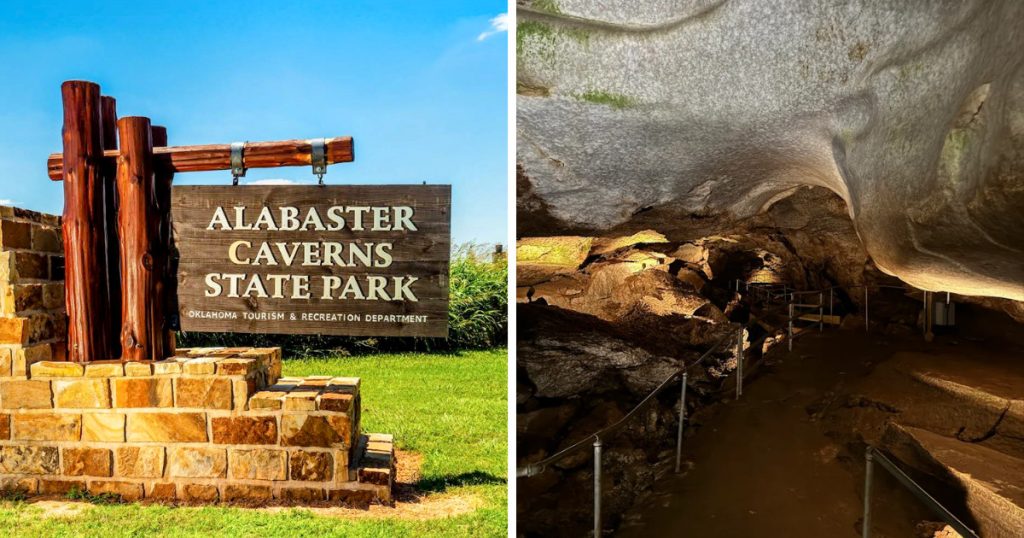
My idea of a perfect road trip detour has always involved something underground. There’s a version of me that, given the choice between a roadside diner and a sign reading “CAVE TOURS — NEXT RIGHT,” will choose the cave every single time. No apologies.
Most caves in the United States are limestone. You’ve probably been to one. Stalactites dripping from the ceiling, cool damp air, a guide pointing a flashlight at a formation that vaguely resembles Abraham Lincoln.
They’re wonderful. But they all share a certain family resemblance.
Alabaster Caverns is something else entirely.
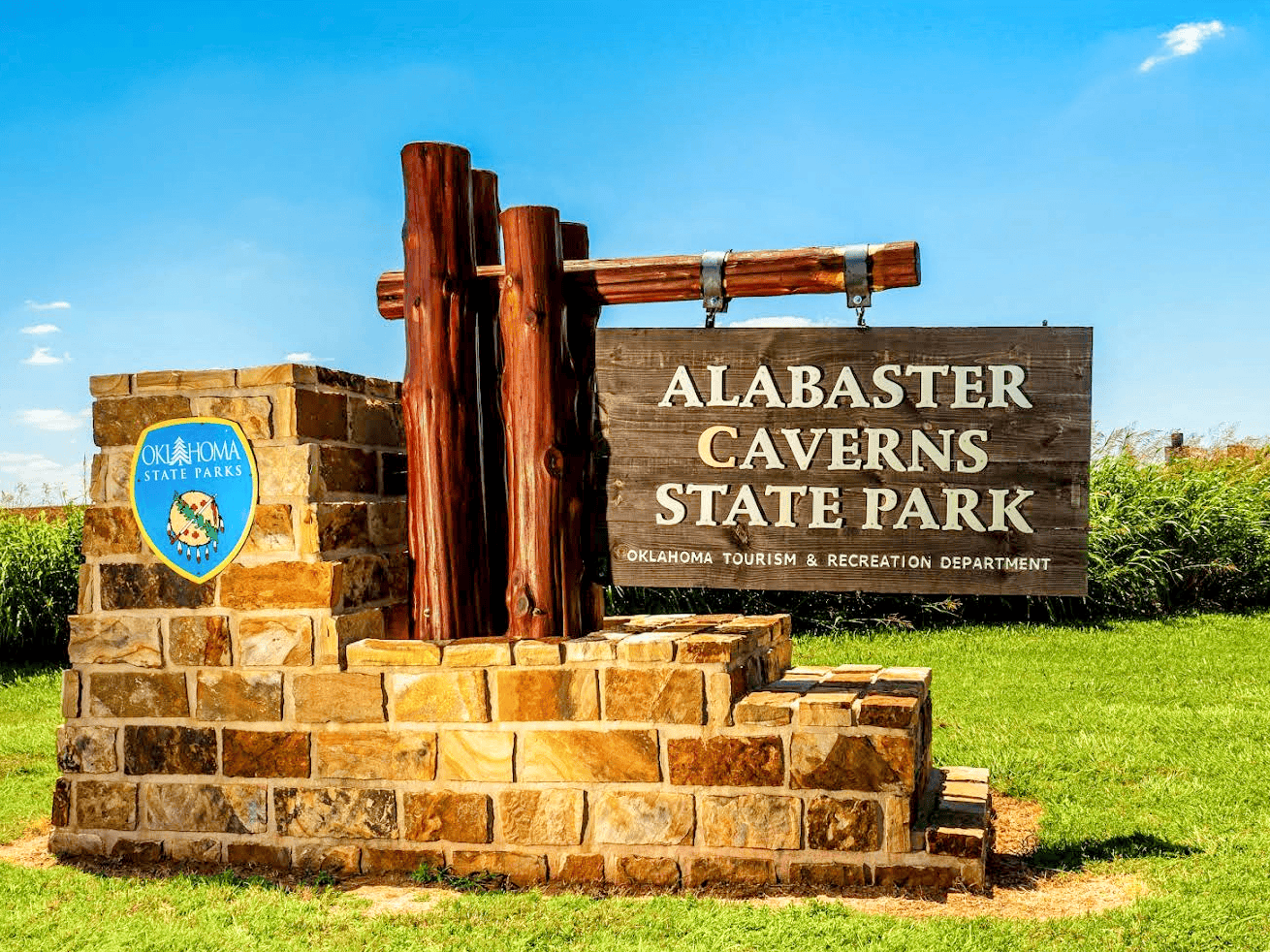
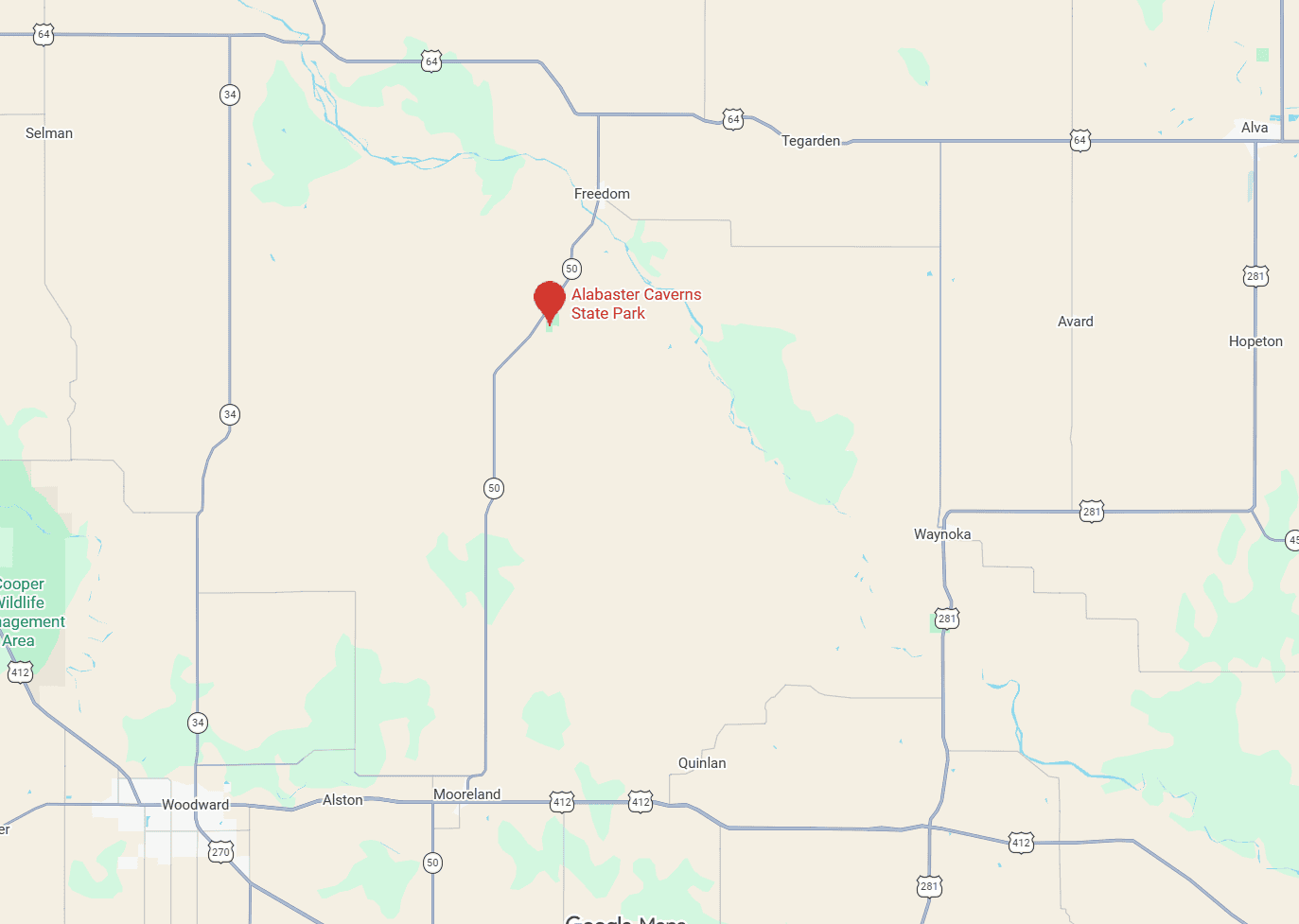
Tucked into the rolling high plains of northwestern Oklahoma, about 4.5 miles south of a tiny town called Freedom, this 200-acre state park holds a geological distinction that sounds almost too remarkable to be true: it’s home to the only natural gypsum cave in the entire United States open for public underground tours.
That’s not a regional claim. That’s the whole country.
What Makes This Cave So Different
Most people are familiar with limestone caves, formed when slightly acidic water slowly dissolves rock over millions of years. Gypsum caves form through an entirely different process — and they look completely different on the inside.
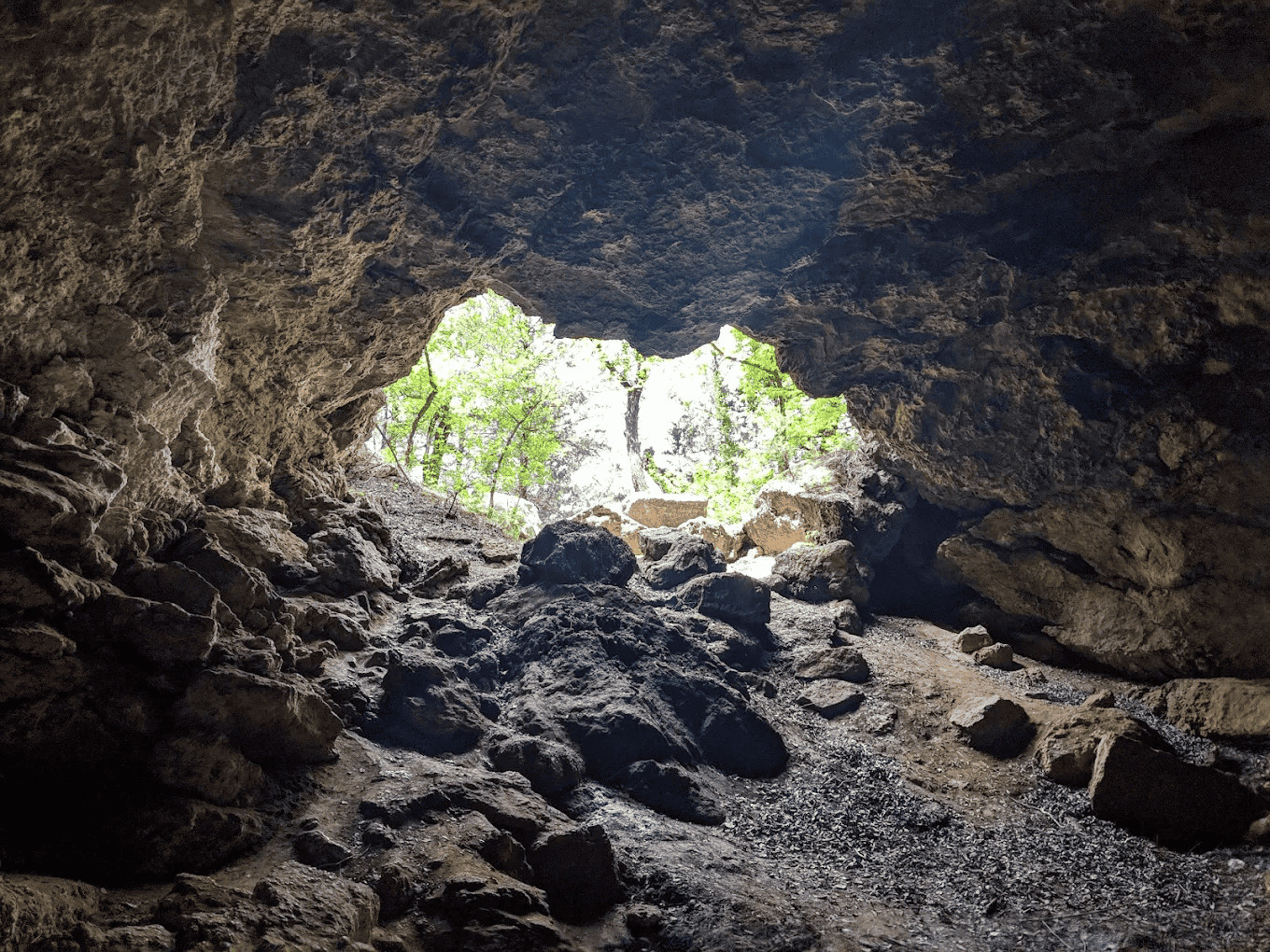
The walls of Alabaster Caverns have a smooth, almost luminous quality. They glow in the light. They look like something a sculptor would be proud of, except no sculptor was involved. It was just time, water, and chemistry, working quietly underground for two hundred million years.
The cave contains three distinct varieties of alabaster: pink, white, and the extraordinarily rare black. Black alabaster, caused by the presence of manganese crystals, is found in only three places on the entire planet: here in Oklahoma, in Italy, and in China.
That’s worth reading twice.
Scattered throughout are formations of selenite — a translucent, crystalline form of gypsum that can grow in long, blade-like shapes and catches light in a way that feels almost theatrical.
Here’s the part that makes it even more special: guides allow visitors to touch much of the cave surface.
In most show caves, “don’t touch anything” is rule number one. Here, the alabaster rock actually invites contact. Feeling the texture of a wall that formed during the age of dinosaurs is the kind of moment that stays with you.
Two Hundred Million Years of History, Right Under Your Feet
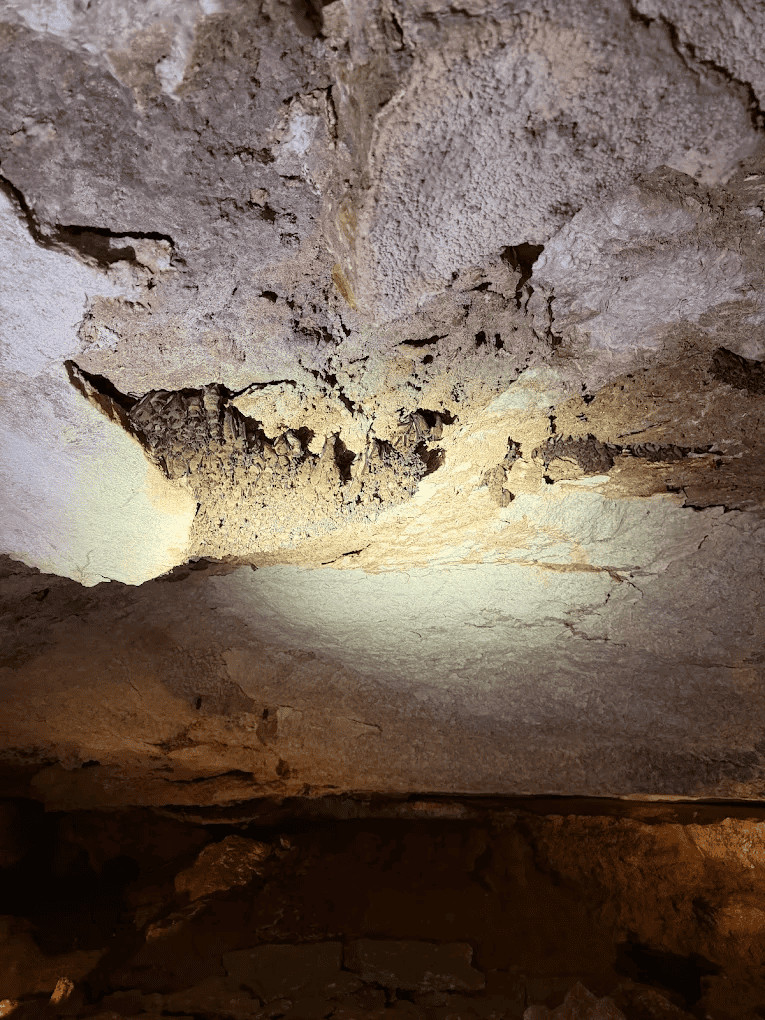
Geology at this scale is hard to picture, but it’s worth trying.
During the Permian Period, roughly 200 to 250 million years ago, a vast inland sea covered what is now Oklahoma. Over thousands of years, that sea slowly evaporated. As it did, it left behind enormous deposits of gypsum and other minerals.
Upheavals in the earth eventually pushed that gypsum bed closer to the surface. Water streams tunneled through it over millennia, carving passages and chambers that eventually became the cave system visitors explore today.
The main cavern stretches nearly three-quarters of a mile underground. In places, it reaches 60 feet wide and 50 feet tall.
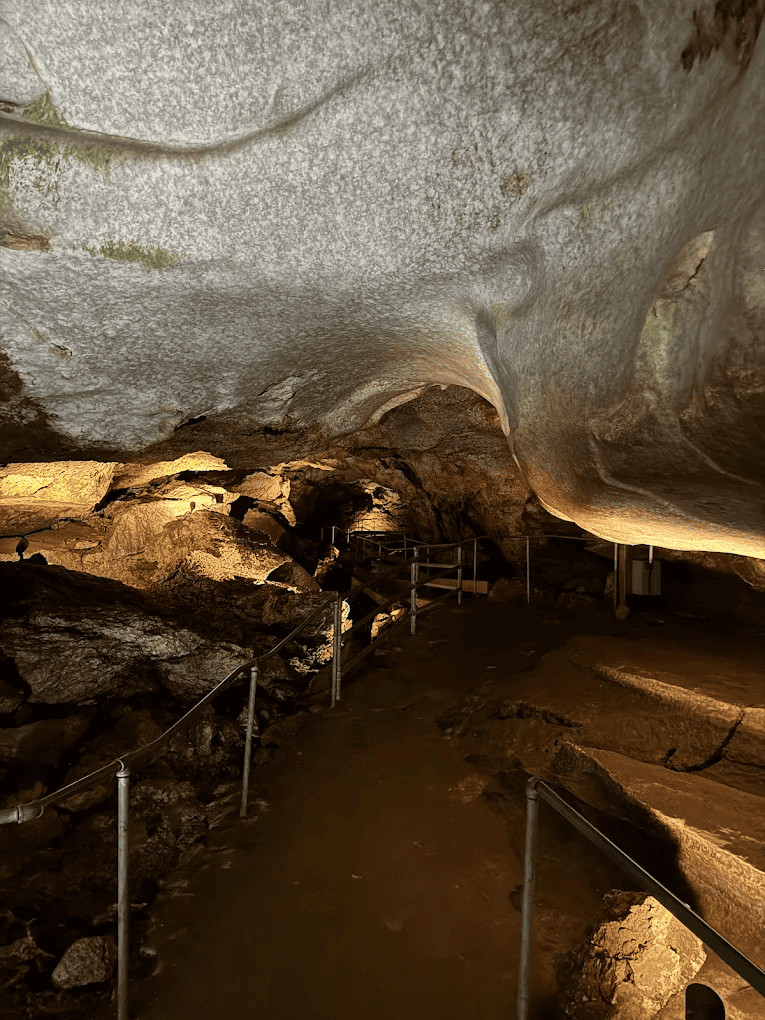
A small perennial stream still flows through portions of it, fed by tunnels and seepage from the roof — a reminder that the cave is still very much alive and changing.
The cave’s more dramatic past is written in its walls. Evidence of rapidly flowing water, which once could fill the cavern completely, is visible in the sculpted rock. Those formations even have names: “Ship’s Prow,” “Devil’s Kitchen,” and “Crystal Vault,” among others.
None of this was discovered through formal exploration. There’s no official record of who first found the caverns. What is known is that outlaws used them as hideouts in the 19th century — which, honestly, only adds to their appeal.
The Guided Tour Experience
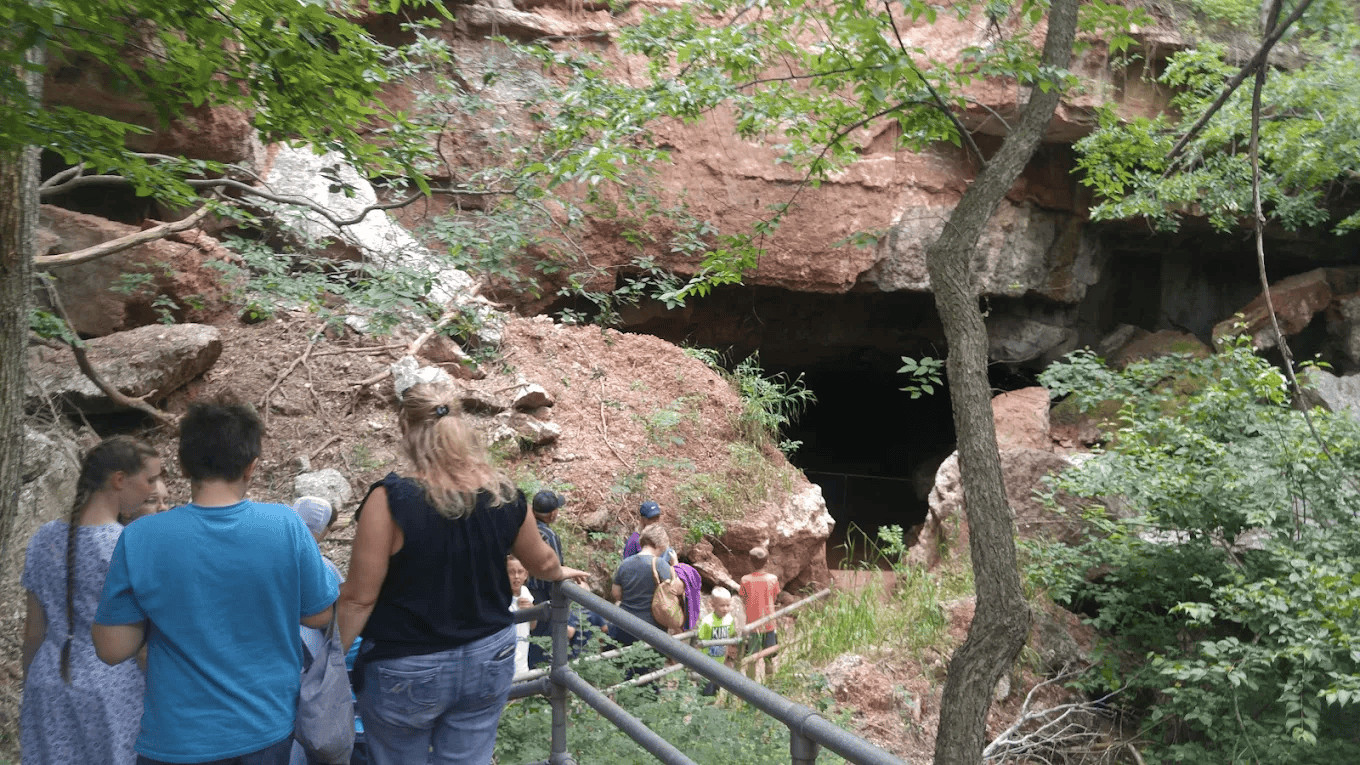
Tours run every hour on the hour from 9 AM to 4 PM, seven days a week. Each tour lasts approximately 45 minutes and is capped at around 40 visitors.
That’s small enough to feel personal — large enough that you might end up alongside a fascinating mix of people, from geology-obsessed kids to retirees on their very first cave tour.
The guides here are genuinely remarkable. Reviewers mention them over and over — not just as pleasant, but as knowledgeable, funny, and patient in a way that elevates the whole experience.
Some have been leading tours for decades. One guide named Kim had been at it for over 34 years when visitors wrote about her. That kind of institutional knowledge shows.
The tour path is well-lit with plenty of handrails. It’s not a stroll, though — expect around 330 stairs and about three-quarters of a mile of walking.
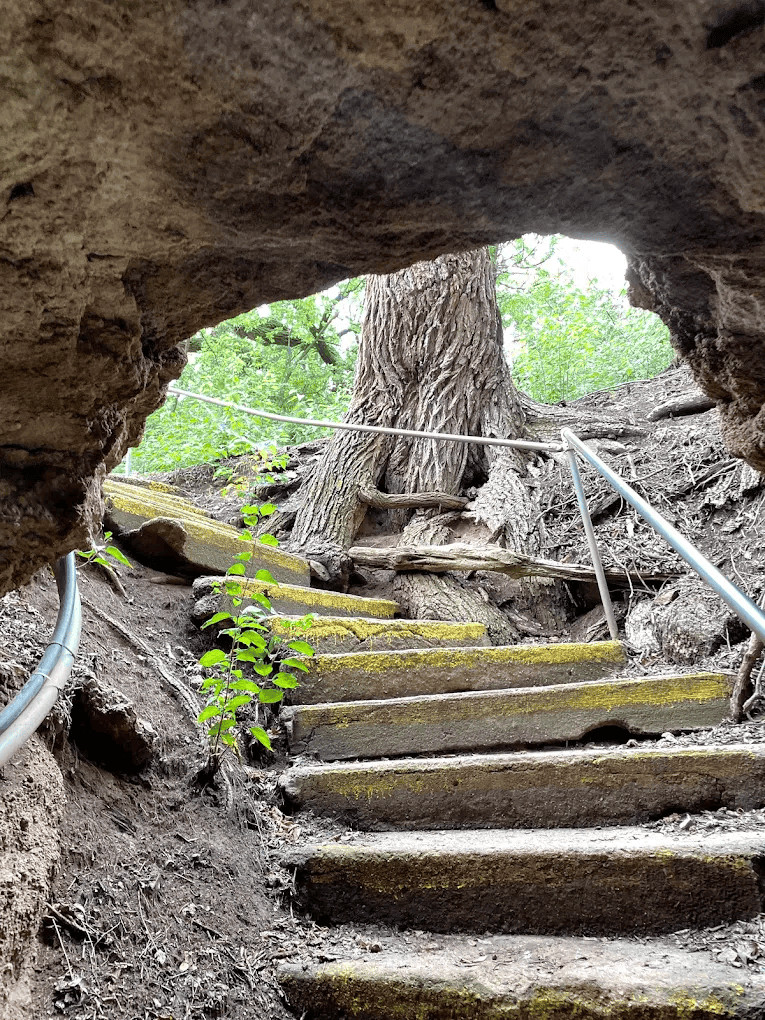
The terrain descends gradually. Visitors have noted you drop perhaps 15 to 20 feet over the entire tour, spread across sections of stairs and flat passages rather than one steep drop.
Wearing closed-toe shoes with good grip is strongly recommended. The cave floor can be damp in spots, and some passages require a slight duck under low clearances.
Rather than feeling inconvenient, that somehow only adds to the sense of genuine exploration.
The cave maintains a temperature between 52 and 58 degrees Fahrenheit year-round. On a blazing Oklahoma summer afternoon, walking into that cool underground air feels like the best kind of reward.
Even in winter, that consistent chill means a light jacket is always a smart call regardless of what the thermometer says outside.
Admission for the guided tour is $10 for adults, $8 for seniors and active military, $5 for children ages 5 to 12, and free for children under 5.
The Bats — More Than You’d Expect
Nobody thinks they’re going to be charmed by bats. Then they see thousands of them sleeping two feet overhead, bundled together in fuzzy clusters that one visitor memorably described as “looking like a clump of furry figs,” and suddenly bats are the best thing they’ve ever seen.
The cave is home to five species: the cave myotis, eastern pipistrelle, western big-eared bat, western big brown bat, and Mexican free-tailed bat. A count conducted in January 2024 found over 12,000 individual bats living in the cave system.
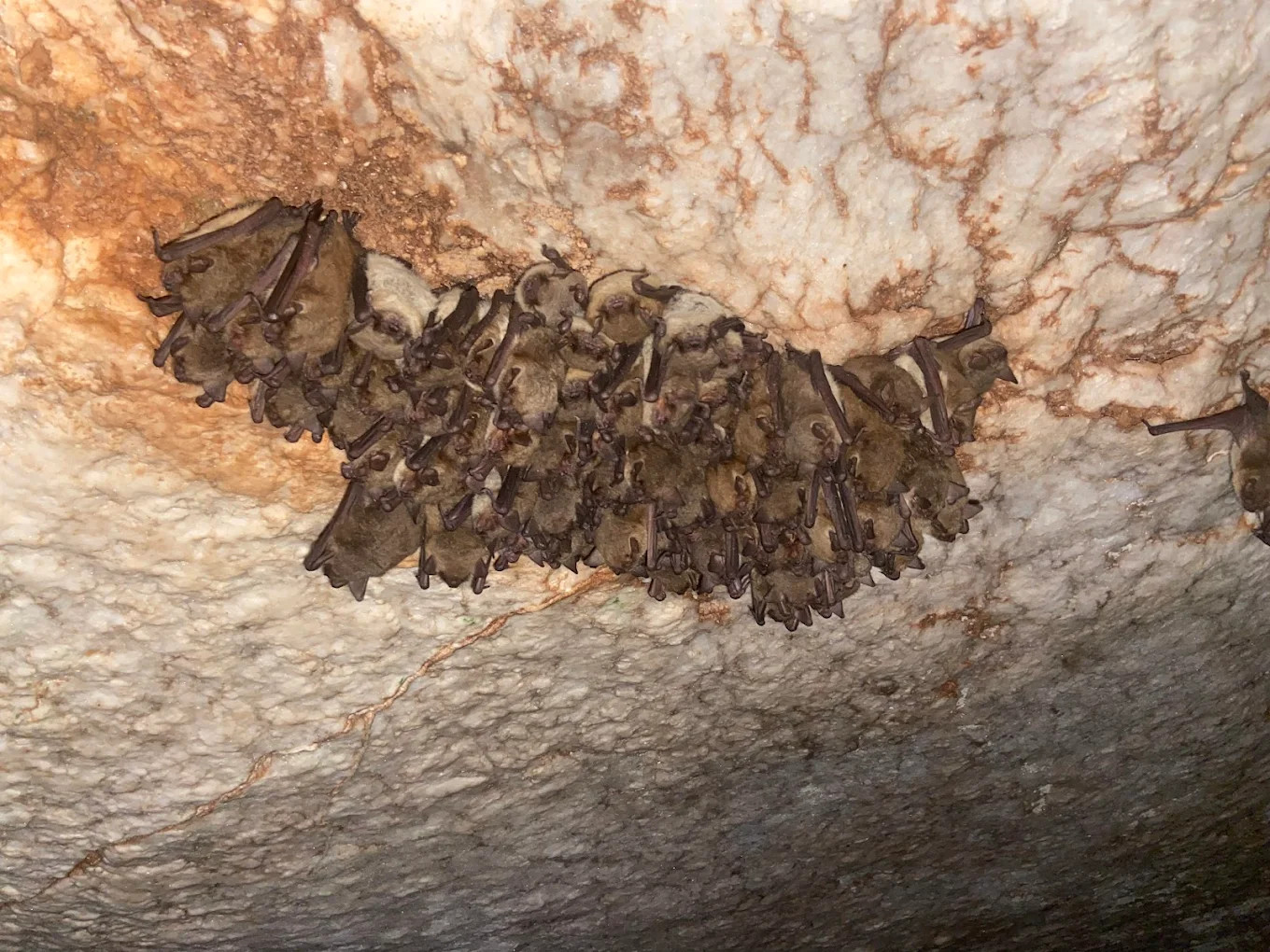
The Mexican free-tailed bats are seasonal travelers. They migrate up from Mexico each spring to raise their young in the cave, then return south in fall. The others are year-round residents, wintering in the cave and roosting through the cold months in large, visible colonies.
If you visit between November and March, hibernating bat clusters are often visible right from the tour path — close enough to see clearly, remarkable enough to photograph.
From spring through early fall, the bats are active at night. Campers have described watching hundreds of them pour out of the cave at dusk like a living dark cloud.
The park takes its bat population seriously, which is part of why wild caving is restricted during hibernation season. It’s a small concession for conservation that protects one of the cave’s most spectacular features.
Wild Caving for the Truly Adventurous
The guided tour is wonderful. But for visitors who want to go deeper — literally — the park offers something few places can match.
Four additional caves on the property are open for wild caving, also known as spelunking, on a permit basis. These are unlit, unimproved, untamed caves where nature is fully in charge. There are no handrails, no spotlights pointing at interesting formations, no guided narration.
Just you, your equipment, and the cave.
Wild caving participants need their own gear: a helmet, a reliable headlamp, gloves, and sturdy boots. The fee is $8 per person, and permits are obtained at the park office.
Wild caving is available from May 1 through September 30 — the October through April window is reserved for the hibernating bats.
Wild caving hours are 8 AM to 3 PM.
It’s also worth noting that one of those caves allows overnight camping inside it, by reservation. A handful of adventurous visitors have called it one of the most memorable nights of their lives — and that’s the kind of endorsement worth taking seriously.
Hiking, Camping, and Everything Above Ground
The cave draws people in, but the park has more than enough to fill a full day or a long weekend.
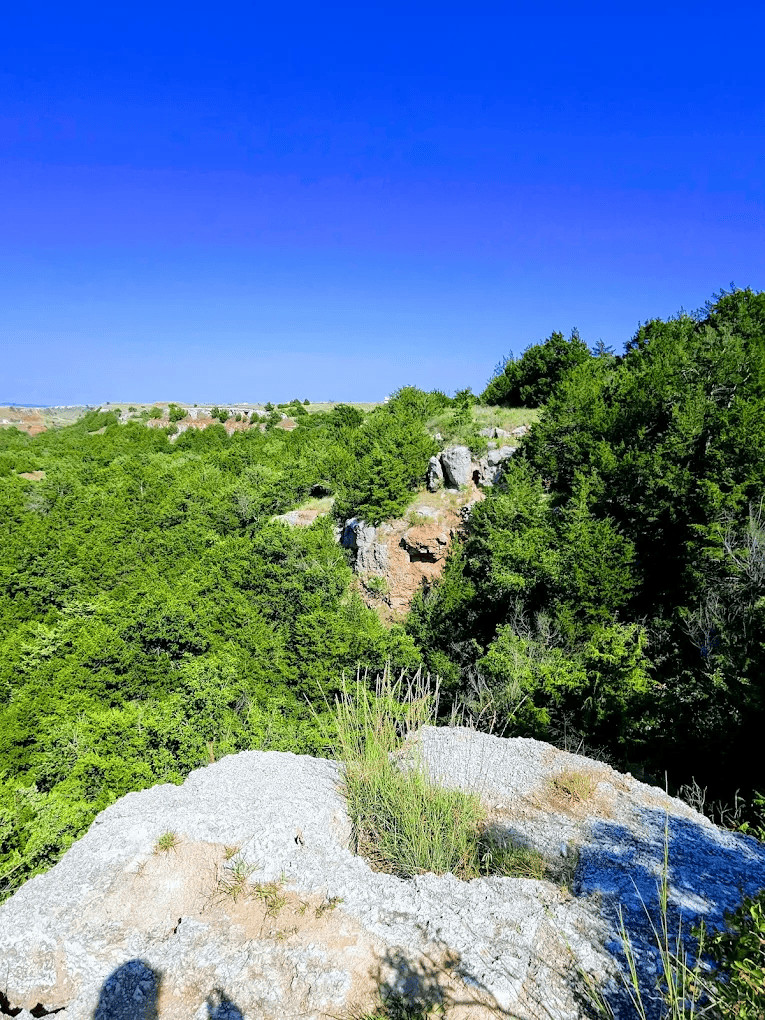
Above ground, Alabaster Caverns sits in canyon country that surprises most visitors who assumed northwestern Oklahoma was nothing but flat fields.
The terrain dips into cedar canyons with dramatic red rock formations and wide-open skies that make for genuinely beautiful hiking.
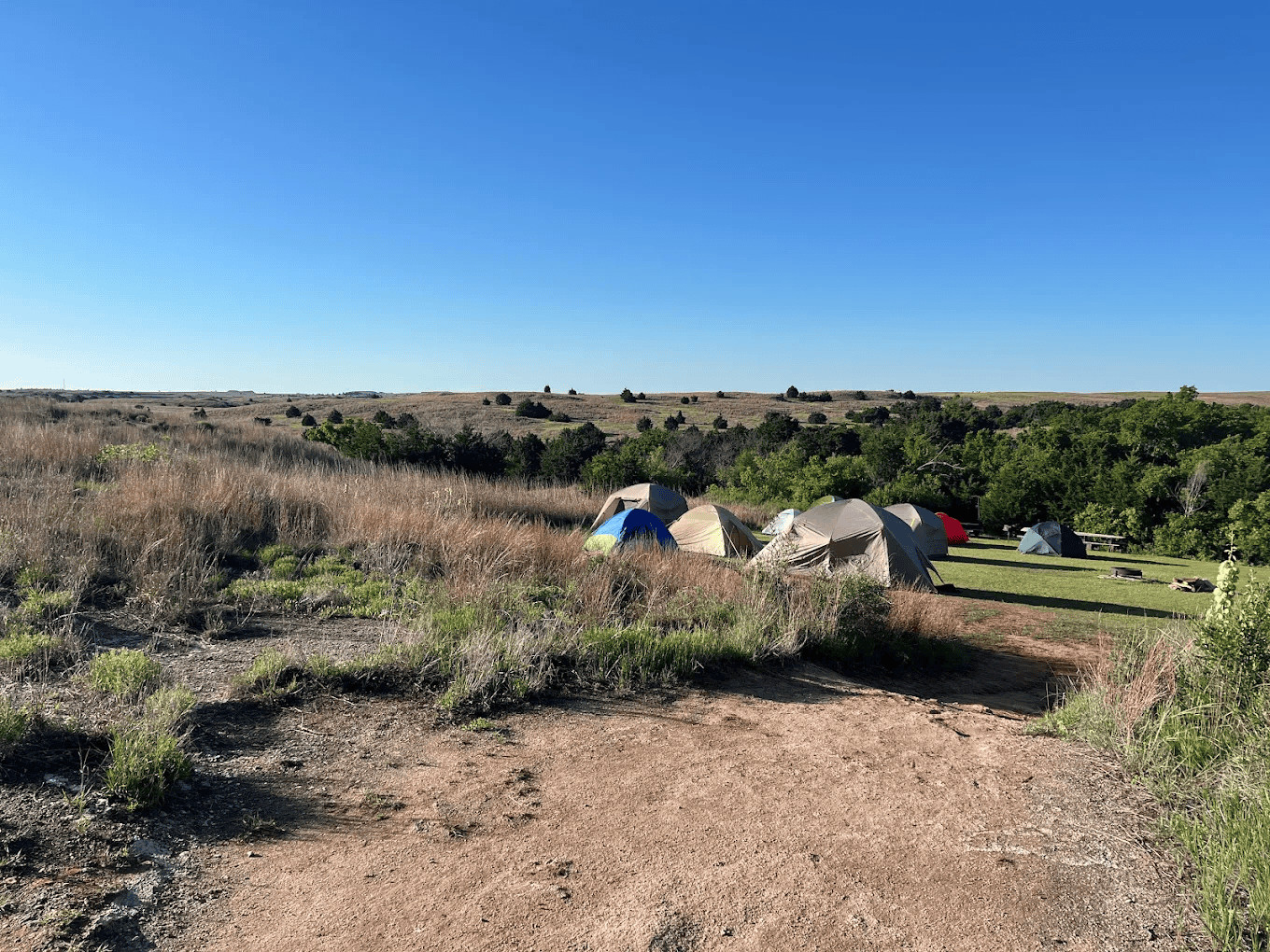
Trails wind through the park at various difficulty levels. Some offer canyon rim views; others follow creek beds through dense vegetation. Serious hikers have noted that some of the terrain can be steep and hot in summer, so starting early and bringing plenty of water are both wise moves.
The campground accommodates both tent campers and RVs, with electric and water hookups available. Sites are paved, level, and clean — reviewers consistently praise the maintenance of the grounds and facilities.
A dump station sits near the entrance, and showers are on-site. The park’s distance from cities means the stargazing after dark is exceptional.
A playground, picnic areas, group shelters with electricity and grills, a volleyball court, and a horseshoe pit round out the amenities. It’s a surprisingly complete package for a park this far off the main travel corridor.
One more thing about that location: there’s no cell service in the canyon. For some visitors, that’s listed as a downside. For others, it’s quietly listed as a perk.
A History as Colorful as the Walls
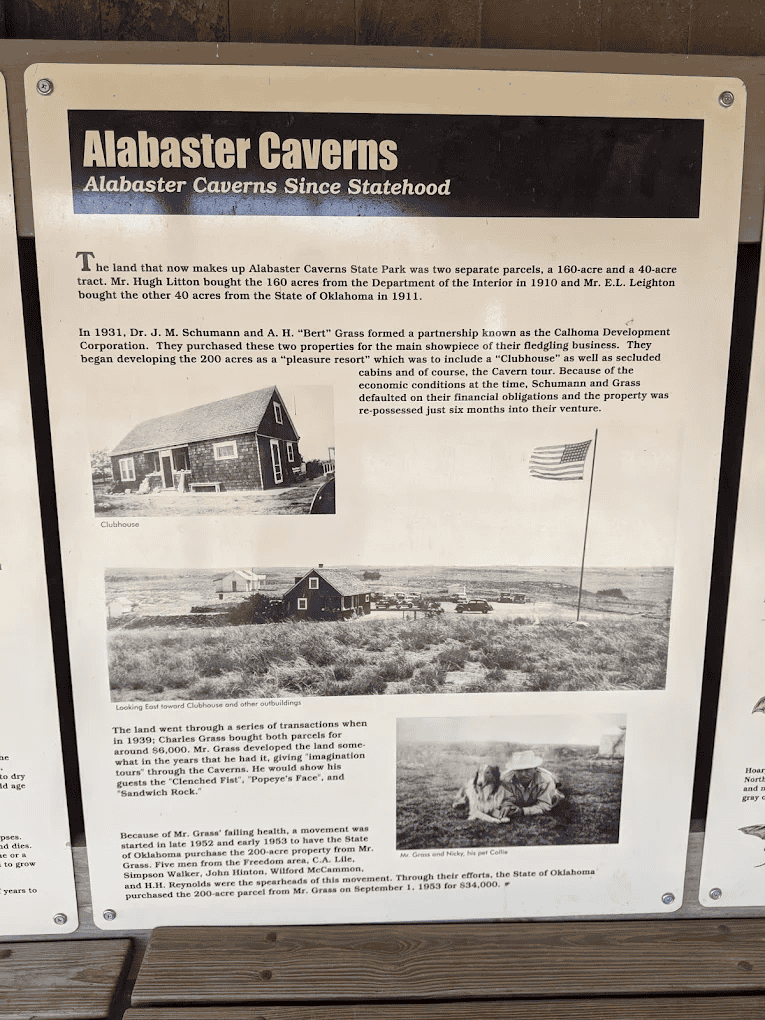
There’s no official record of who first discovered Alabaster Caverns, but it’s known that outlaws sheltered in them during the 19th century. The first documented exploration happened in 1898, shortly after a homesteader named Hugh Litton settled the surrounding land in 1893.
Through the 1920s and ’30s, various people leased the land and offered limited tours, calling the caves “bat caves” in homage to their most visible residents.
Then, in 1939, an Englishman named Charles Grass purchased the land, renovated the caves, opened them for public tours, and gave them the name they carry today.
When Grass’s health began to fail in the early 1950s, a group of local businessmen from Freedom — along with members of the Waynoka Railroad Labor League — pushed hard for the state of Oklahoma to acquire the property.
Their advocacy worked. The state purchased the 200 acres from Grass in 1953 for $34,000, and officially reclassified it as a state park in 1956.
During the Cold War, the caves briefly served another purpose entirely. In the mid-1950s, they were designated as a nuclear fallout shelter with a capacity of approximately 3,000 people.
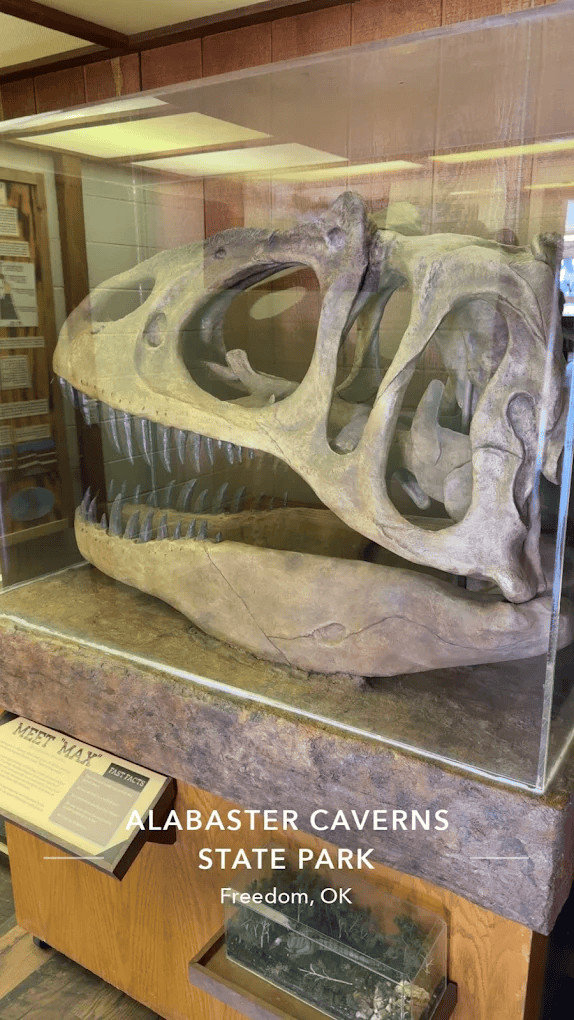
Barrel rations were stored inside — a surreal footnote in the cave’s long history that guides occasionally mention on tour.
In October 2018, heavy rainfall caused a cave-in of approximately 2,200 tons of rock near the original cave entrance, partially blocking access to the section containing the rare black alabaster vein.
Tours now enter from the former exit and follow a return path. Restoration of the blocked section carries an estimated cost of $6.5 million as of 2023 — a reminder that this park, like every great natural wonder, deserves ongoing support.
What Visitors Keep Saying
A visit to the reviews for Alabaster Caverns reads like a collection of people who drove out expecting something modest and came away genuinely moved.
“You’d never think this would be in Oklahoma,” one visitor wrote, calling the rare black alabaster formations a 10-out-of-10 experience. Another described the cave as “much more impressive than I was expecting.”
Several visitors mentioned coming as children, then returning decades later to bring their own families — proof that first impressions made underground tend to stick.
The phrase “hidden gem” comes up over and over. So does some version of this sentiment: “I had no idea this was here.”
That is exactly the kind of place worth writing about.
Getting There
Alabaster Caverns State Park sits at 217036 State Highway 50A in Freedom, Oklahoma — about 4.5 miles south of Freedom in the northwestern corner of the state. It’s roughly a three-hour drive from Oklahoma City, making it a genuine road trip destination rather than a quick errand.
The surrounding high plains drive is beautiful in its own right, with sweeping landscape and the kind of wide-open sky that gradually shifts the pace of your thinking before you even arrive.
The park is open daily, with guided cave tours running from 9 AM to 4 PM on the hour. The tour office is closed from November 1 through February 28, though the park itself remains accessible.
Calling ahead — (580) 621-3381 — is recommended to confirm tour availability, especially if you’re planning a trip during peak season or with a large group.
Arrive with comfortable shoes, a light jacket, and no particular agenda. The cave will take care of the rest.
More stories

Share this story