19 Bathroom Flooring Ideas Worth Walking Barefoot On

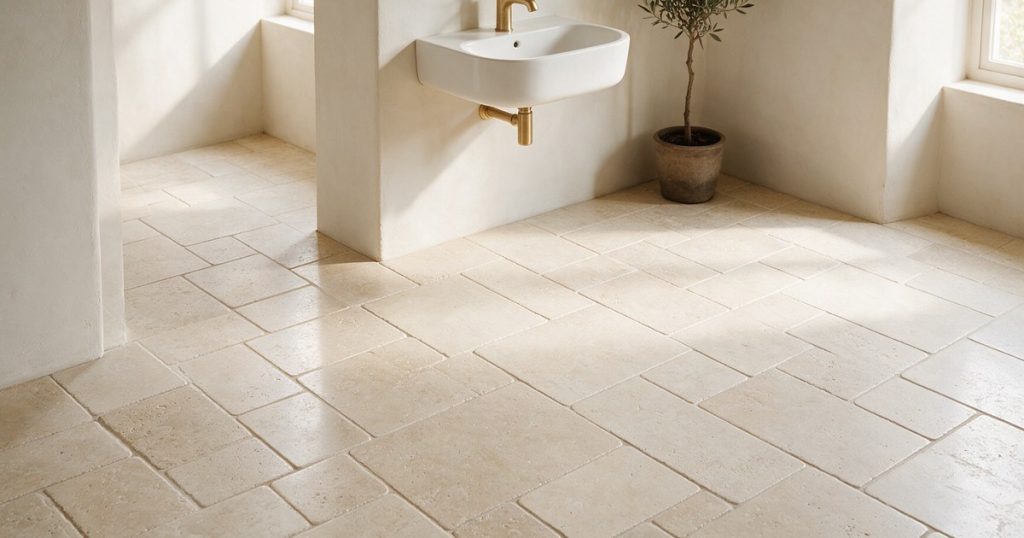
Here is a thing nobody tells you about bathrooms: the floor does most of the emotional work, and it is the last thing anyone budgets for. We agonize over the vanity and the tap, then throw builder-grey tile down like an afterthought. Backwards, if you ask me.
The floor is the one surface your bare feet actually negotiate with every single morning. It sets the whole mood before you have even reached for the kettle.
Below are nineteen ways to get it right, from honed marble to warm wood-look porcelain, each with the palette, the real material spec, and the one move I would start with.
1. Marble Bathroom Flooring
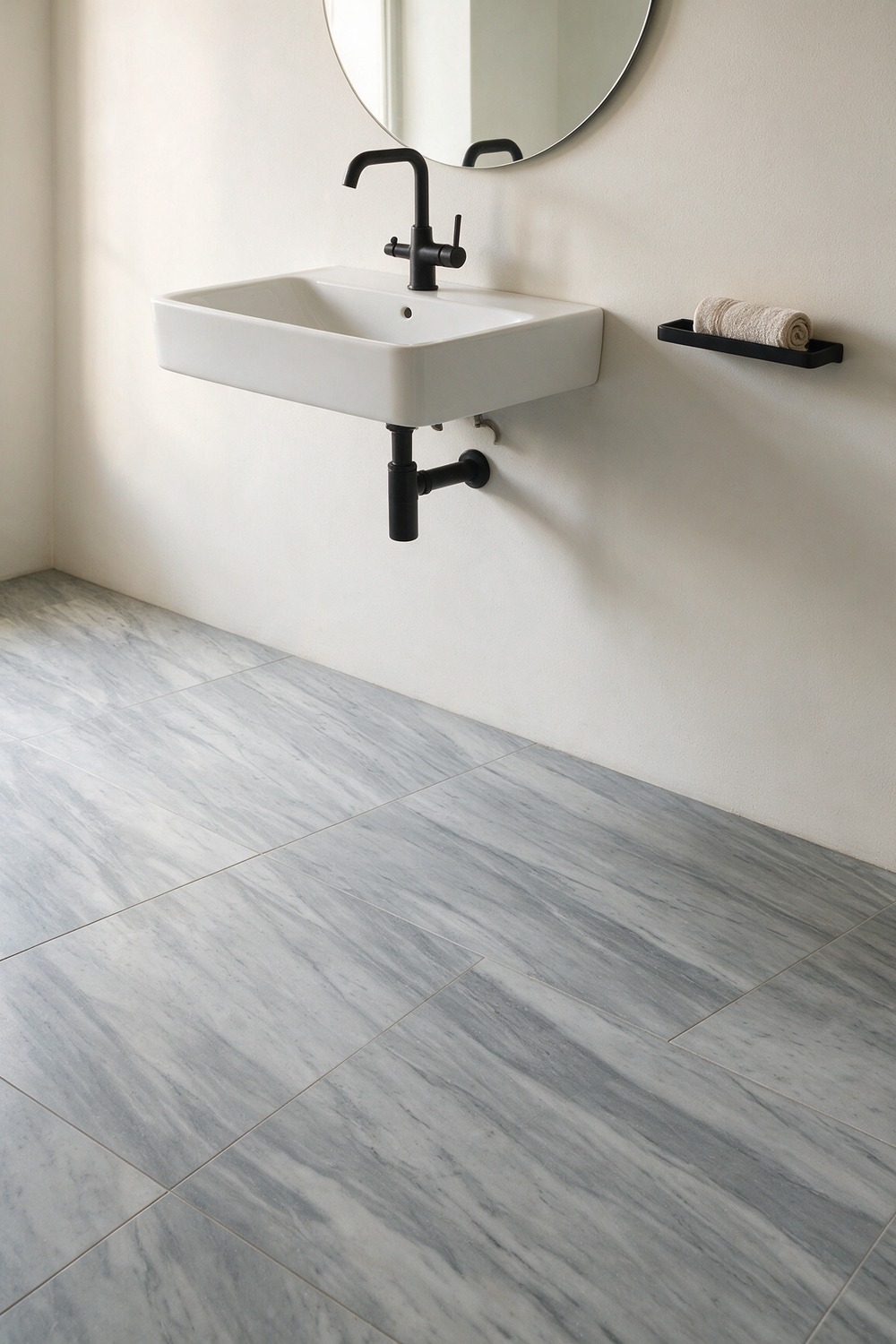
Marble is the floor that makes people lower their voices. The veining alone does the decorating, so everything above it can stay quiet.
My honest take? A soft grey Bardiglio, honed not polished, hides more than bright-white Carrara ever will. Set chalky off-white walls like Benjamin Moore White Dove above it and start with the stone.
2. Natural Stone Bathroom Flooring
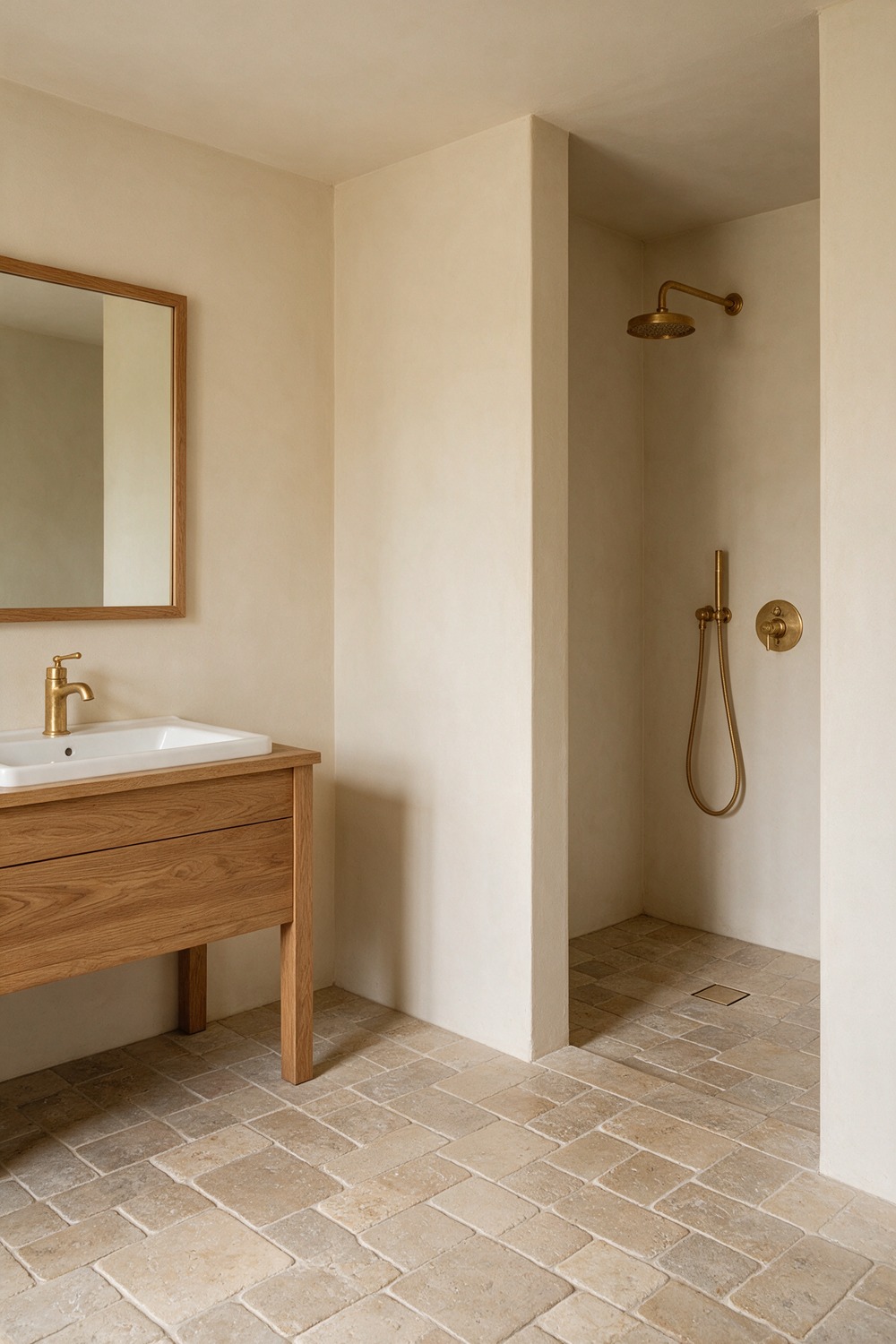
Natural stone is the opposite of a showroom floor, and that is the point. No two slabs match. You get a floor with a pulse, something that looks quarried rather than printed.
Think tumbled stone in warm greige and sand tones, laid in a tight rectangular bond, every tile a slightly different shade so no two match. The palette is earthy: oatmeal walls (Dulux Natural Hessian is close), oak joinery, a brass tap gone slightly unlacquered.
Seal it properly and it ages like good leather. Pro tip: order ten percent extra, so the colour range stays balanced across the whole room.
3. Limestone Bathroom Flooring
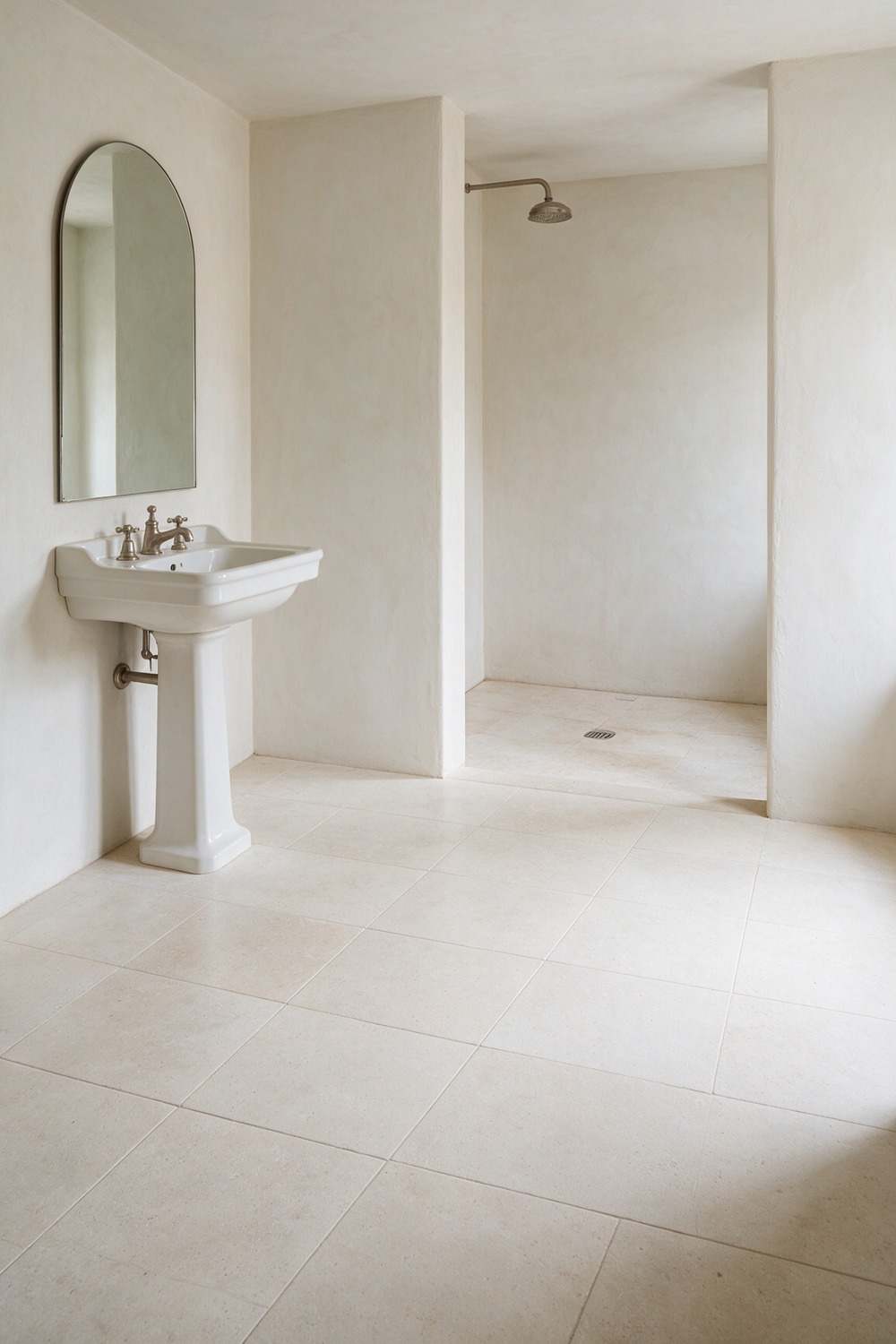
Limestone is the soft-spoken cousin in the stone family. Chalky, matte, forgiving, with a cool-to-the-touch calm that reads expensive without ever shouting about it.
I love a pale French limestone, honed, in big square format with the thinnest grout line going. Echo it in limewash walls, think Bauwerk’s chalky lime, then run the same stone up into the shower so the floor never visually stops.
4. Terrazzo Bathroom Flooring
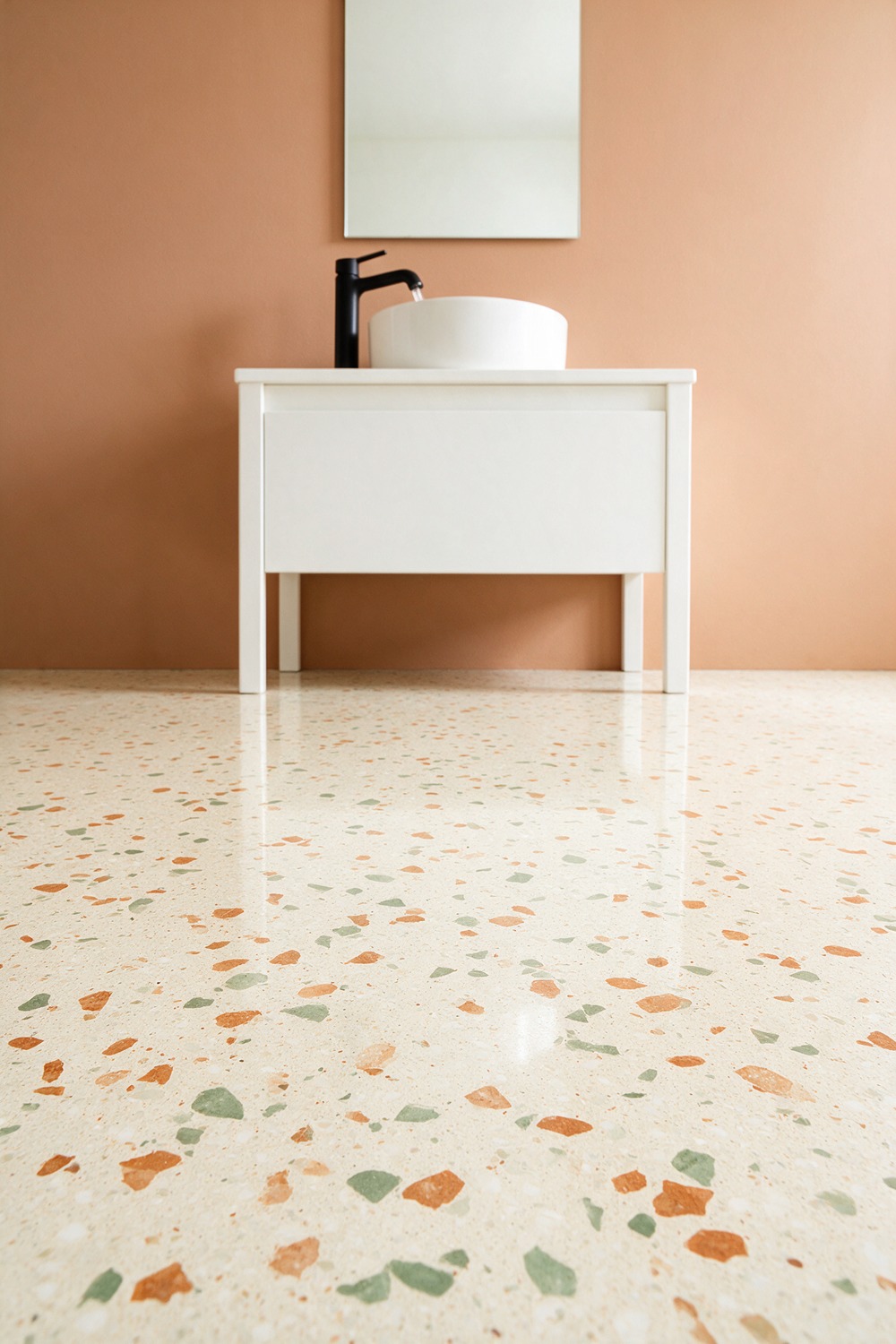
Terrazzo is having a moment, and for once the hype is earned. Those confetti chips of marble and glass in a poured base are genuinely joyful underfoot.
It is the floor equivalent of a good mood, and it photographs even better than it lives. Go bold or go home here.
A creamy base scattered with warm terracotta and sage chips feels fresh without being loud. Match it to one solid wall colour pulled straight from a chip, maybe a soft terracotta like Farrow & Ball Red Earth.
Keep cabinetry plain so the floor stays the star. The trick is matching one wall tone to one chip colour, and letting everything else stay quiet and neutral.
5. Porcelain Tile Bathroom Flooring
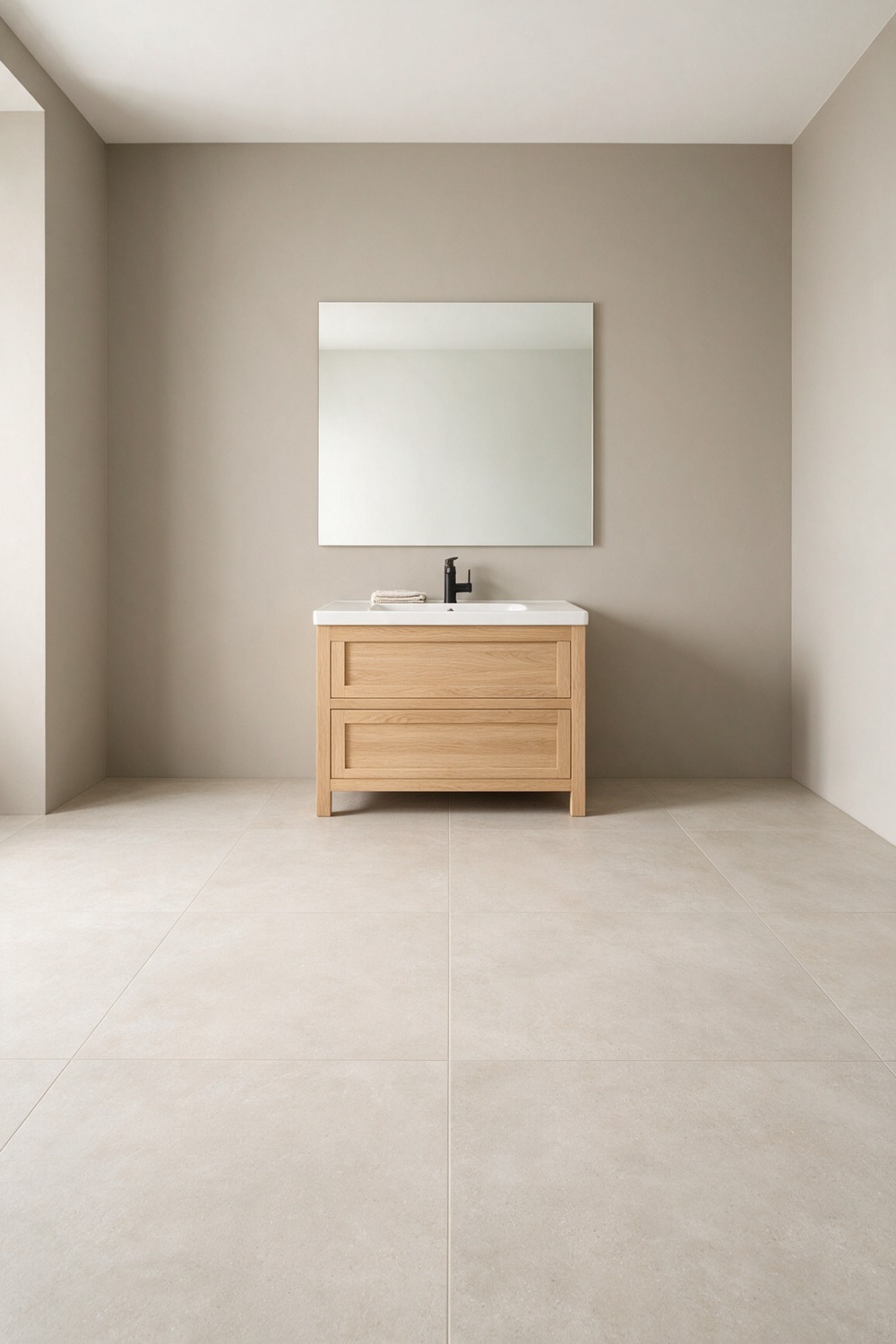
Porcelain is the sensible friend who is secretly the most fun. It is denser than ceramic, nearly waterproof, and it fakes stone and concrete so well now that your guests will not know.
My pick is a large-format matte porcelain in a soft limestone or microcement look, 60 by 60 or bigger, with a colour-matched grout so the floor reads as one calm plane. Palette: warm greige walls (Sherwin-Williams Agreeable Gray earns its name), pale oak, black hardware.
Because it is so hard-wearing, this is the one I would choose for a busy family bathroom. Start by choosing matte, never gloss, underfoot.
6. Ceramic Tile Bathroom Flooring
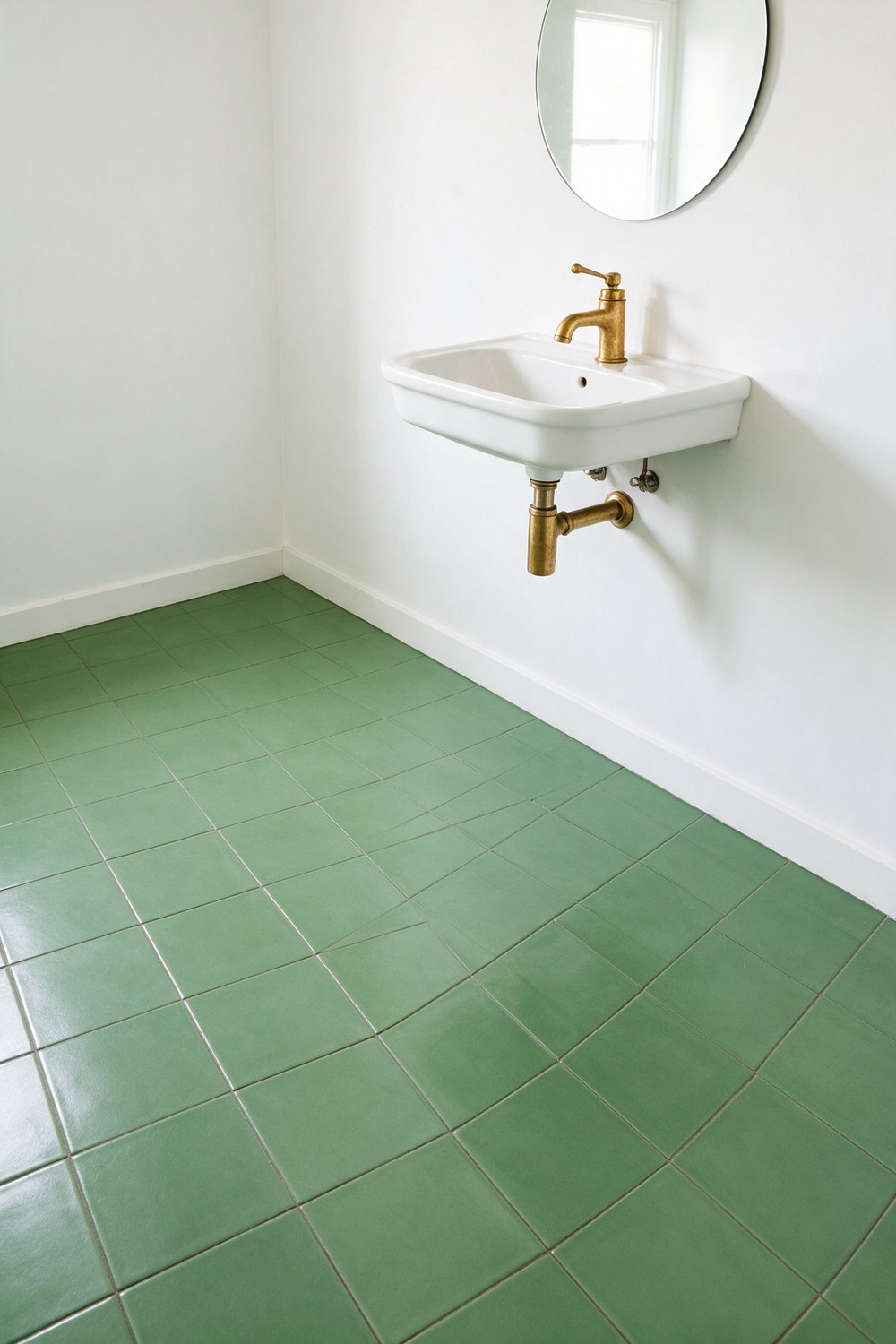
Ceramic is the budget hero nobody gives enough credit to. Cheaper than porcelain, endlessly varied, and in the right colour it looks like a decision rather than a compromise.
Pick a saturated colour-body ceramic, a soft ochre or a sage, in a simple square laid wall to wall, with Little Greene’s Olive Colour on the woodwork to echo it. Let the floor be the colour, and keep the rest pale.
7. Slate Bathroom Flooring
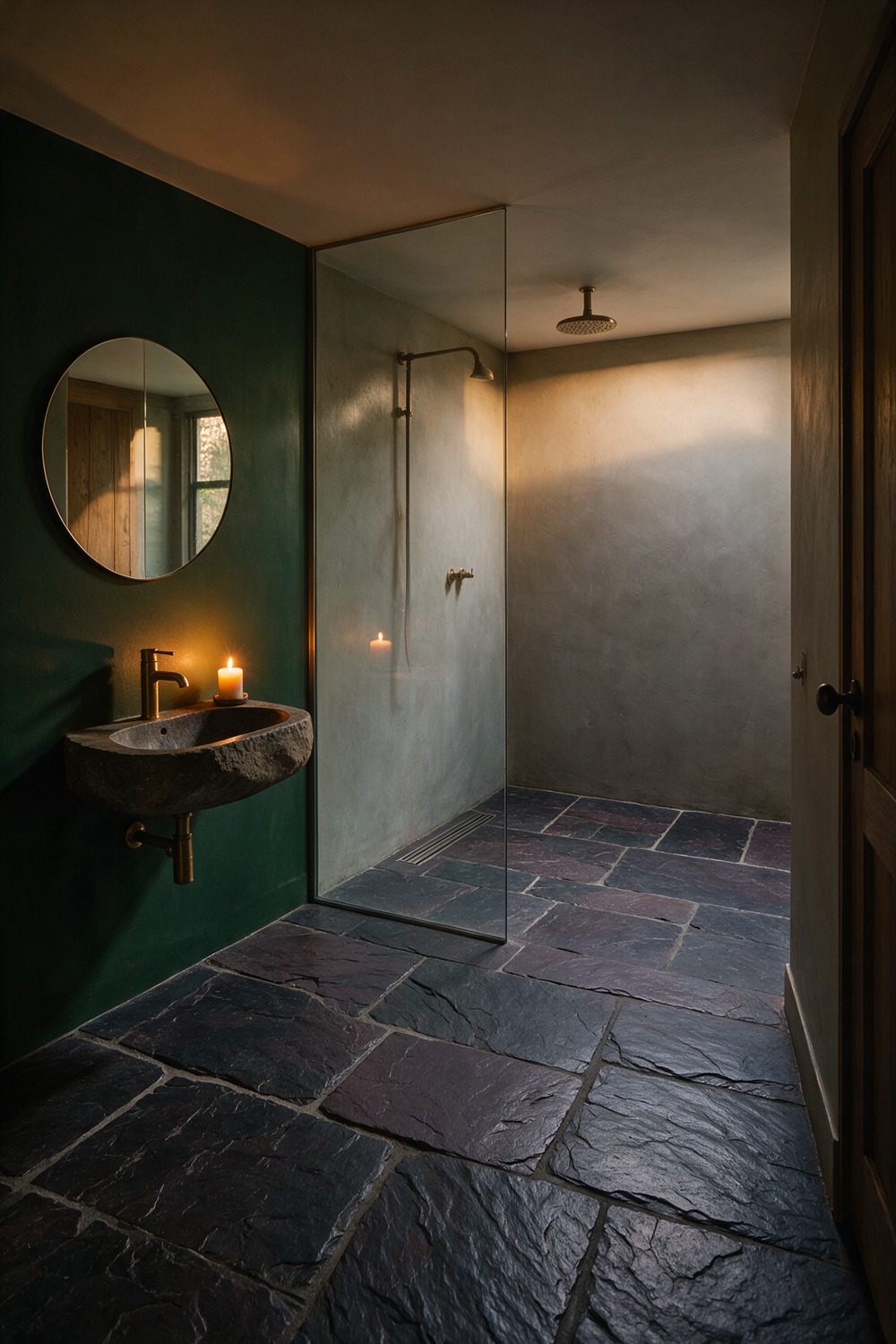
Slate brings the drama. It is dark, textured, a little rugged, and in a bathroom it feels like a Scandinavian cabin with underfloor heating. (Please add the underfloor heating.)
There is a smell I associate with these rooms too, cold stone and a lit candle, that no pale tile ever conjures.
I would use a riven or honed slate in charcoal and plum-grey tones, its natural clefts catching the light. Lean into the darkness: deep green walls like Farrow & Ball Studio Green, warm brass to lift it, and plenty of candlelight.
The floor’s texture does the heavy lifting, so keep the styling spare. Begin with a slate sample held against your wall colour at night, when the room matters most.
8. Travertine Bathroom Flooring
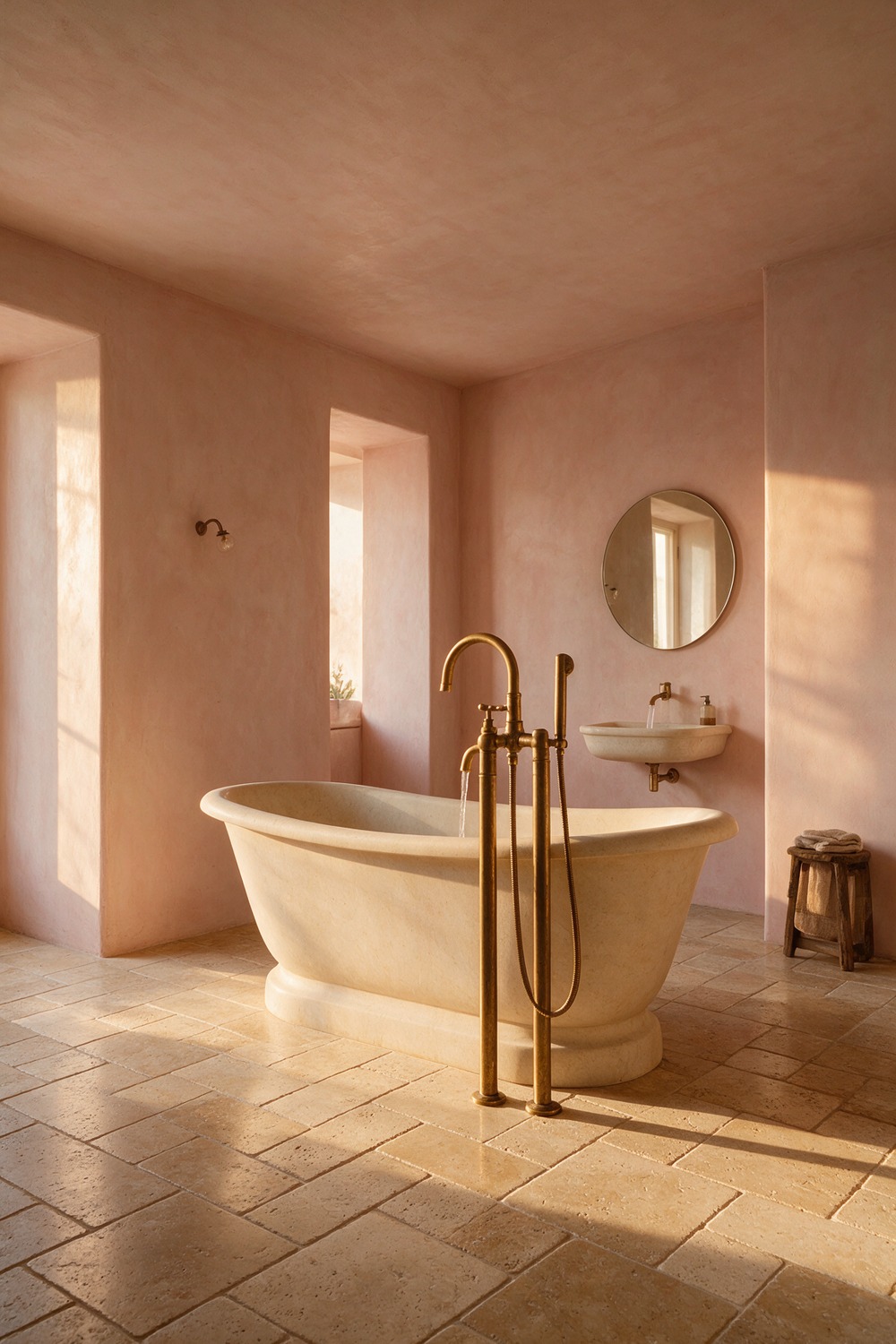
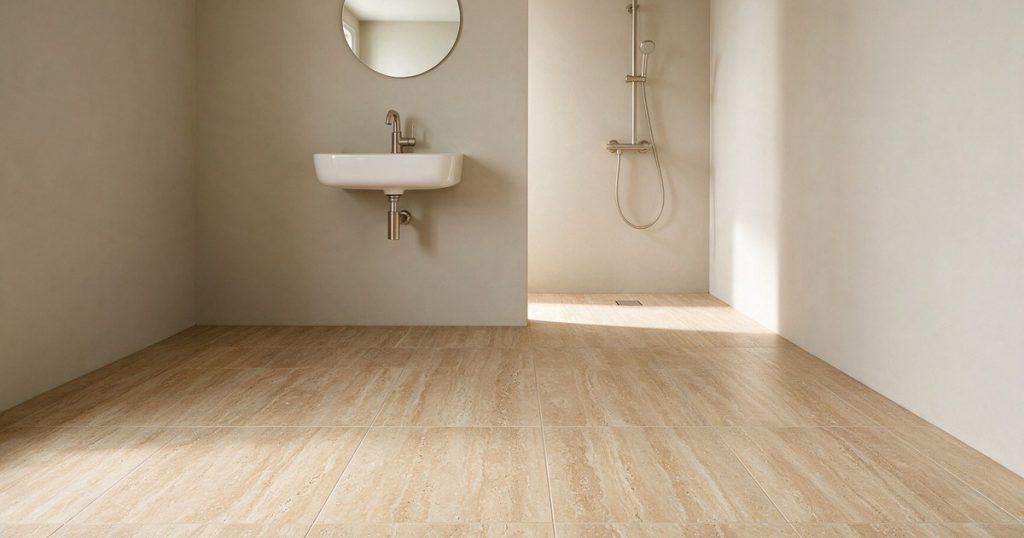
Travertine is sunlight turned into stone. Those warm honeyed tones and soft pitting give a room an instant Mediterranean hush, the kind of floor that makes you want to move slower.
Use a filled-and-honed travertine in cream to walnut tones, laid in a classic French pattern of mixed sizes. Keep the palette warm throughout: plaster-pink walls, think Backdrop’s Mane Attraction or any soft terracotta-cream, and aged brass.
It is a wabi-sabi floor, so a little imperfection is the beauty, not a flaw. Start with the stone and let a single warm wall colour answer it.
9. Pebble Bathroom Flooring
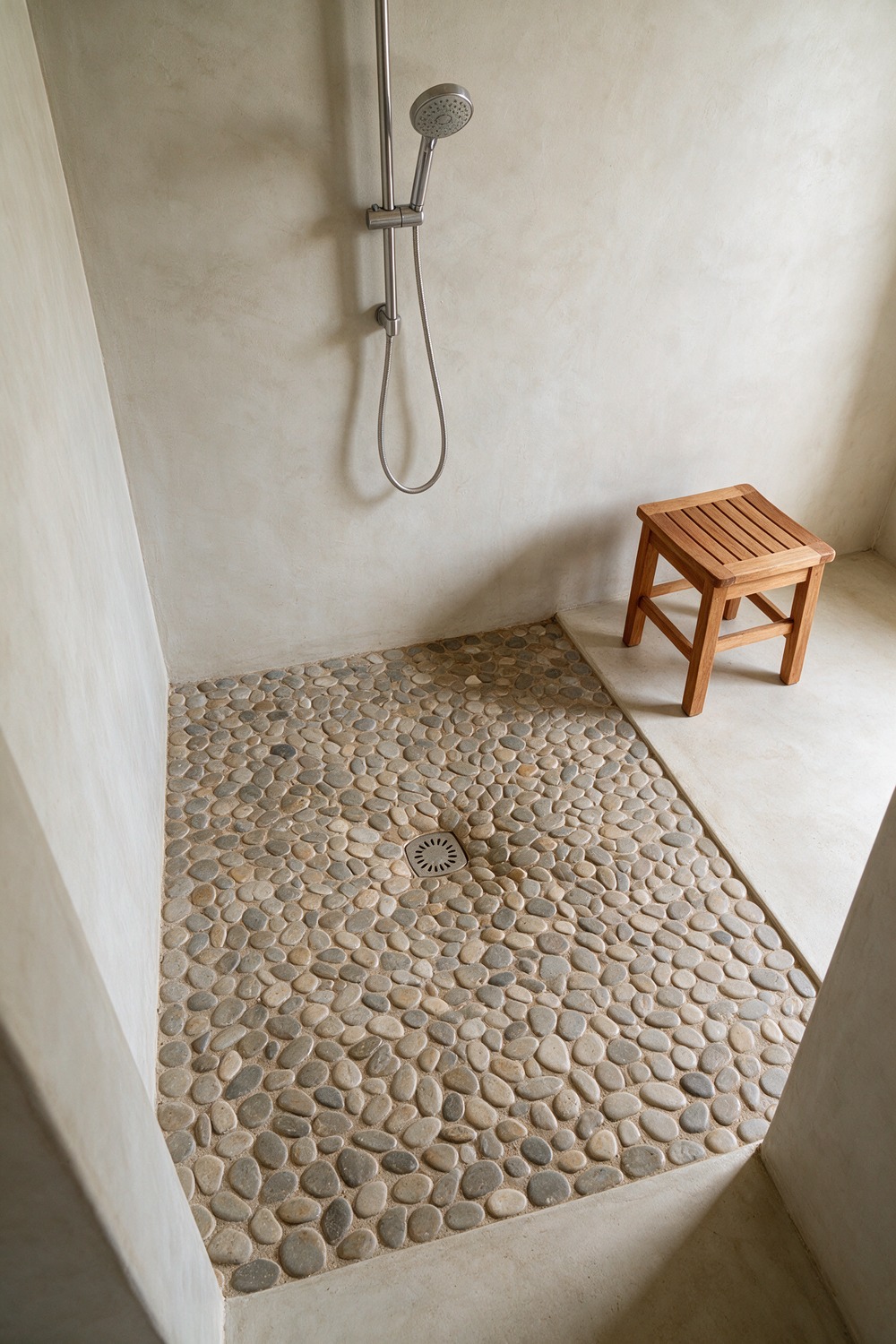
Pebble flooring is the one that surprises people. Underfoot it is a tiny reflexology session, all those smooth river stones pressing back. In a shower it is pure spa.
Honestly, I keep it to the shower floor and surround it with pale microcement, so the pebbles read as a deliberate texture. Choose flat-sided sliced stones in warm greige, set tight with sandy grout, and pick ones that are smooth, not sharp.
10. Concrete Bathroom Flooring
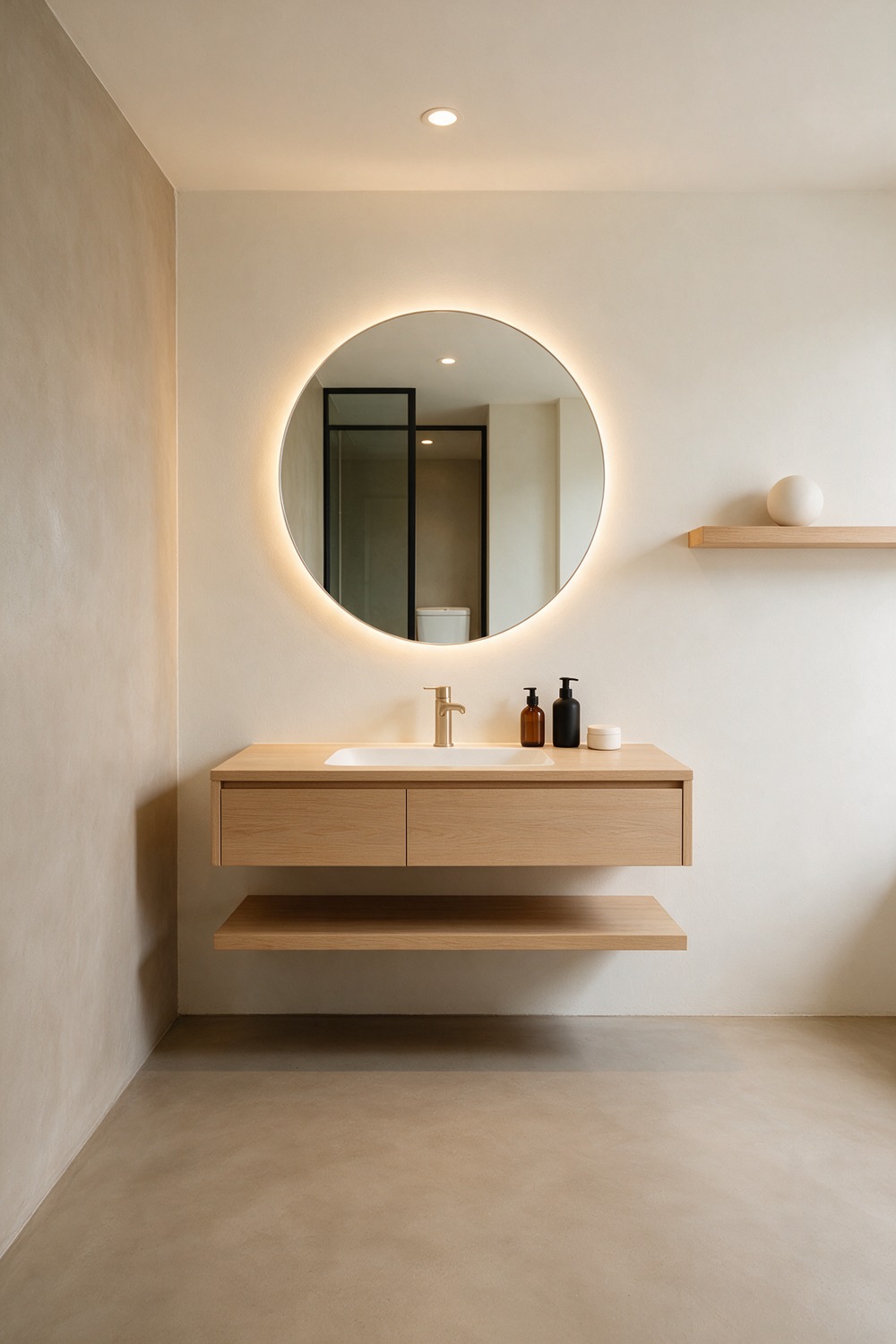
Concrete is quietly the most modern floor you can lay, and in a bathroom it goes soft rather than industrial.
Poured seamless, it has a cloud-like matte depth that tile can only imitate, and it is cool and smooth in a way your feet notice.
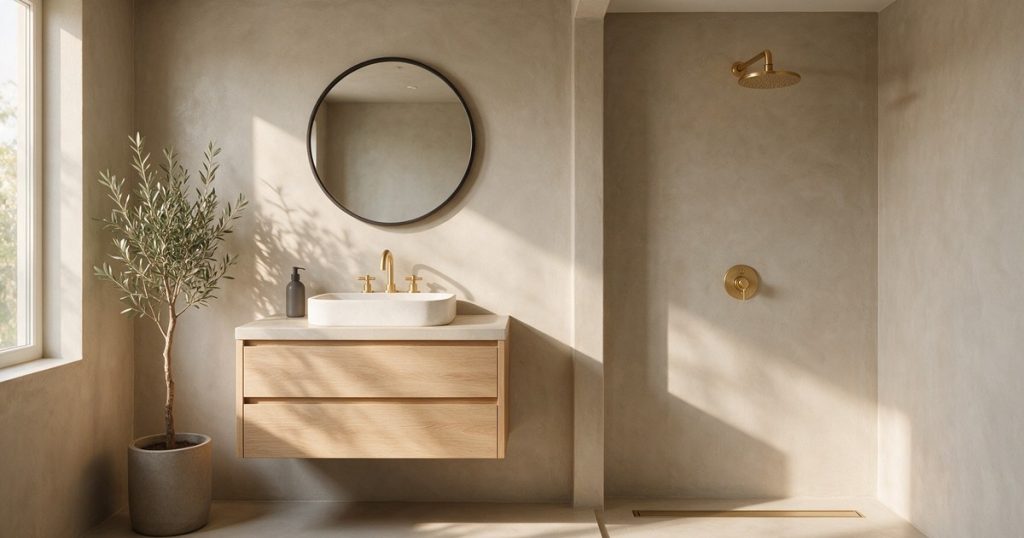
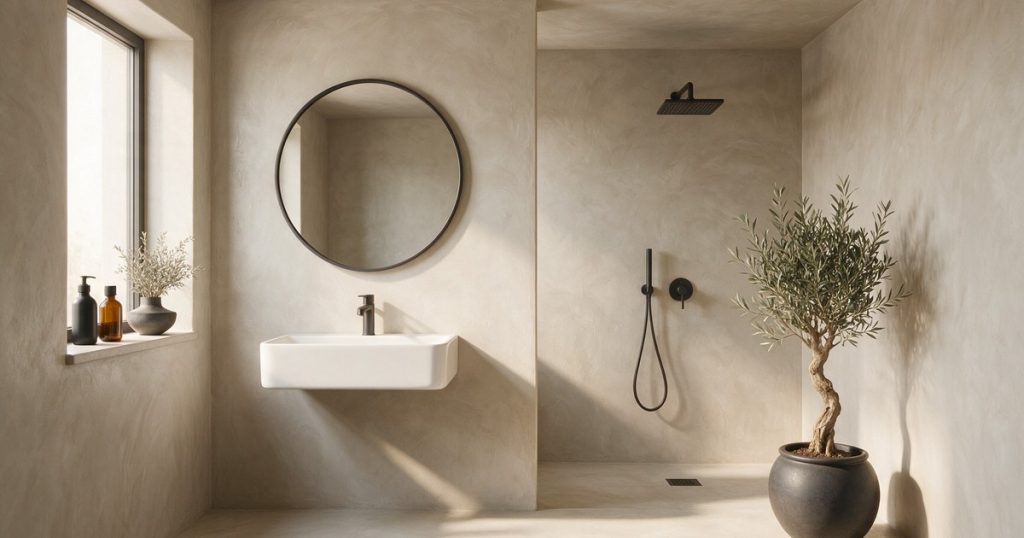
Go for a poured microcement in a warm grey or greige, run continuous with no grout lines at all, ideally up a wall for that monolithic look. The palette stays minimal: off-white walls, pale timber, one sculptural tap.
One gentle definition: microcement is a thin troweled cement coating, so you get the concrete look without ripping up the subfloor. Start there if you rent or want less mess.
11. Brick Bathroom Flooring
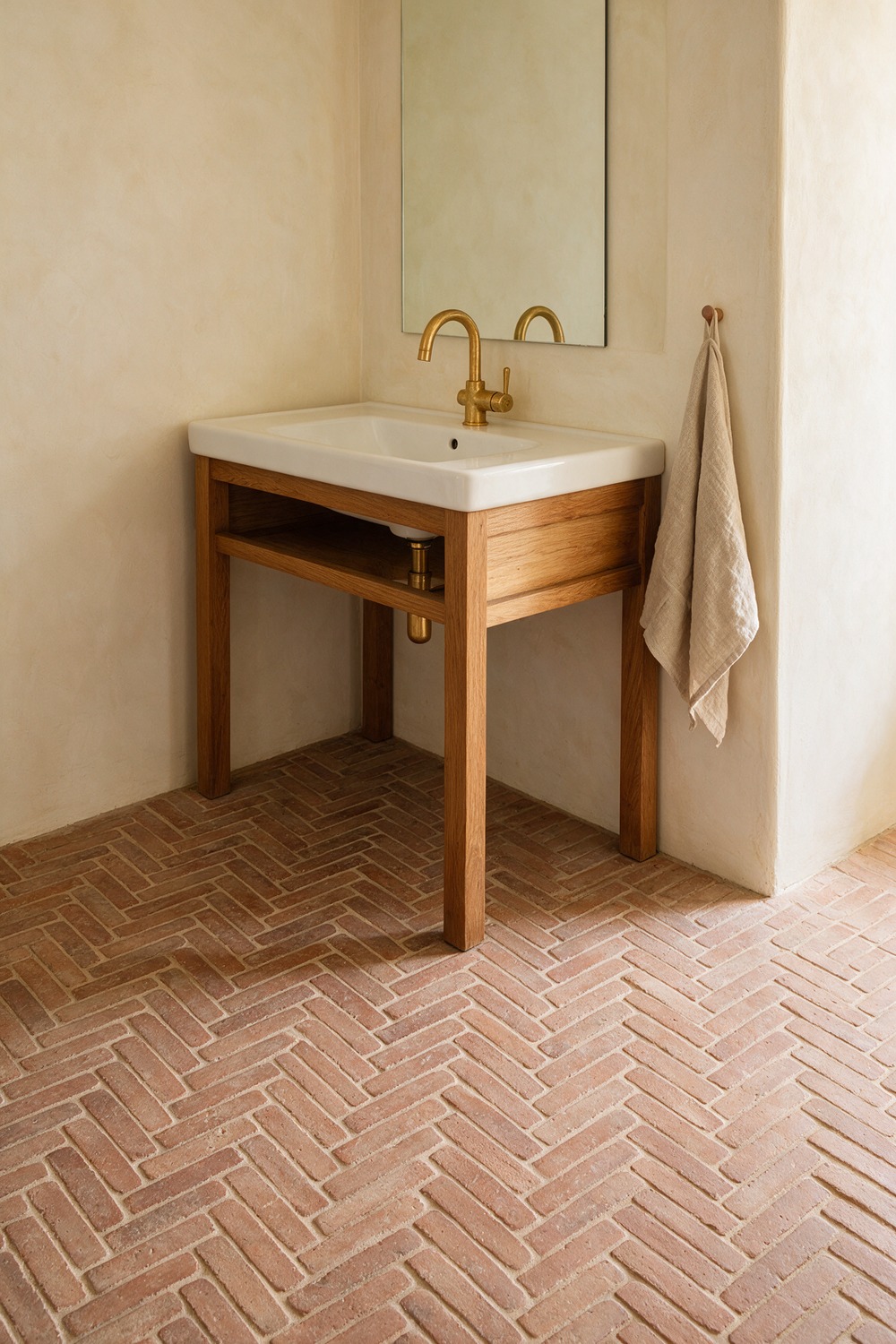
Brick underfoot sounds wrong until you see it, and then you cannot unsee how good it is. It brings this grounded, farmhouse-meets-Georgian warmth that no tile quite nails.
Use thin brick-slip pavers in a soft red-brown, laid in a herringbone or basketweave, sealed matte so they are water-safe. The colour wants warm company: creamy limewash walls, unlacquered brass, a timber vanity.
It is a floor with patina built in, which means it only gets better. My starting move: lay a sample in your actual light, because brick tone shifts hugely between cool and warm rooms.
12. Hexagon Tile Bathroom Flooring
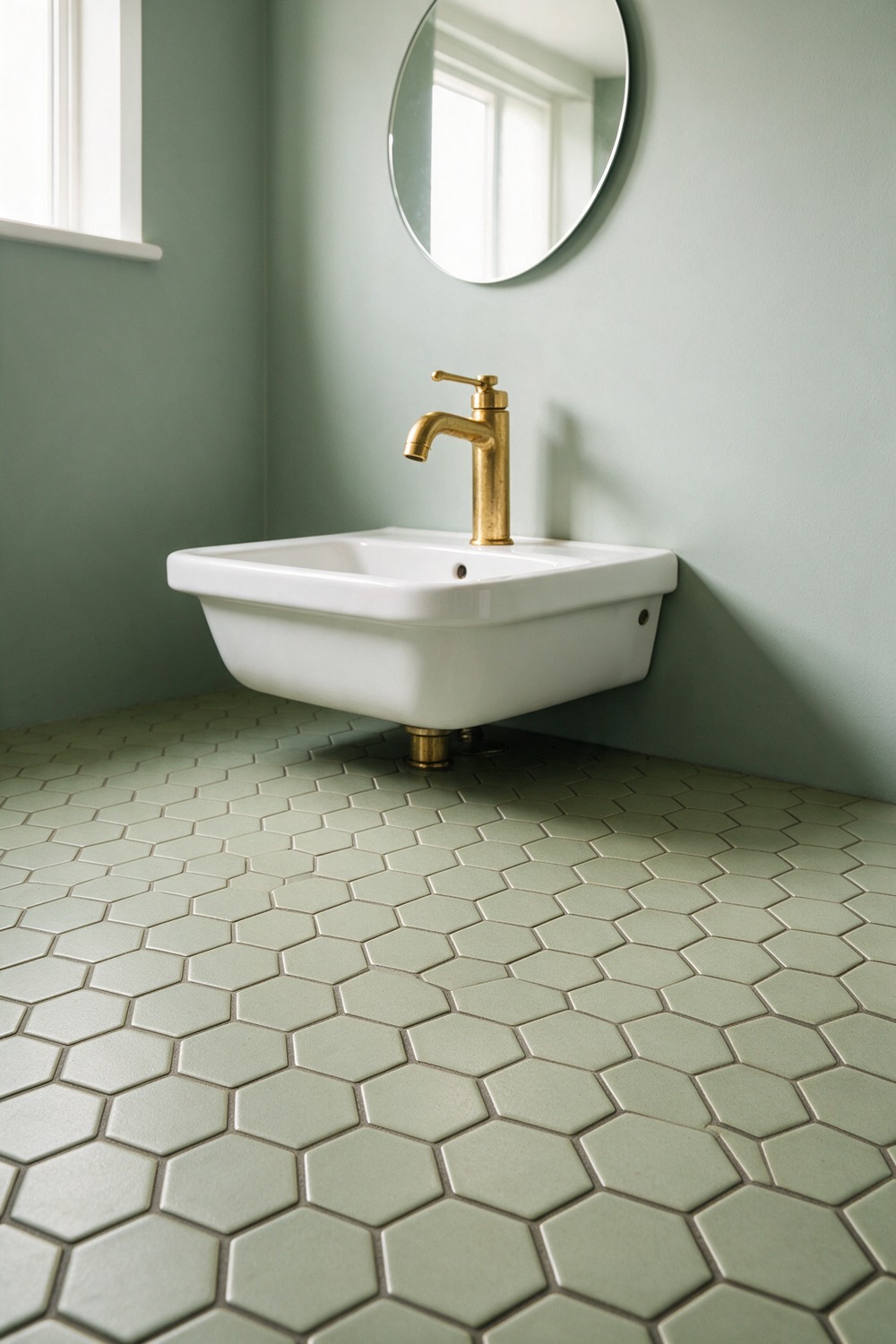
The hexagon is the floor shape with the best manners. It reads vintage and modern at once, a rare trick, and it makes a small bathroom feel considered.
Go medium hexagons, around four inches, in a soft putty or sage rather than stark white, with a contrasting grout to show off the geometry. Choose that grout colour first, because on a hexagon it is half the design.
13. Mosaic Tile Bathroom Flooring
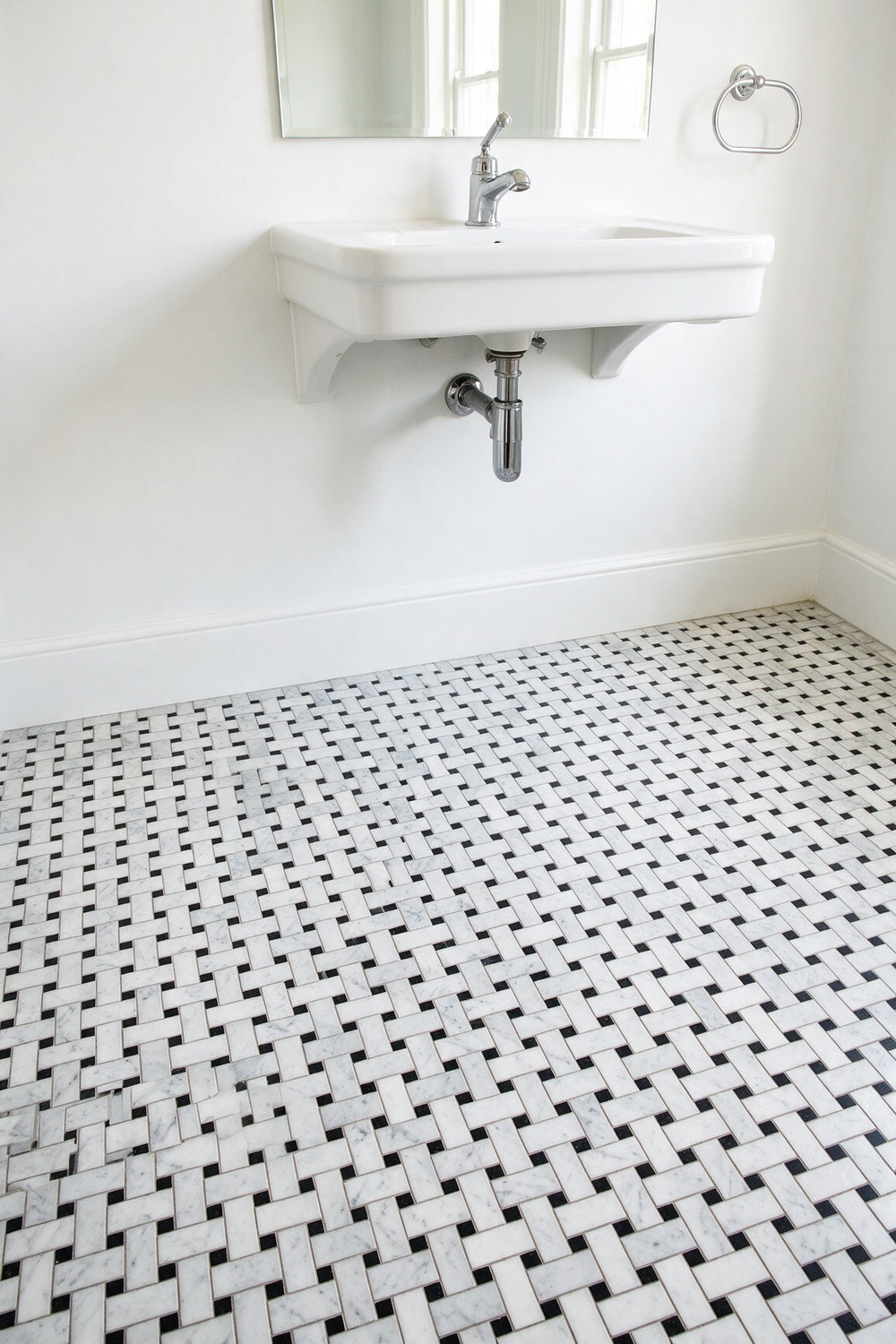
Mosaic is where you get to be a little extravagant on a small surface. Those tiny tiles catch the light in a way a big format never can, and the grid of grout is secretly brilliant for grip.
My favourite is a tonal marble or glass mosaic in soft greys and whites, or a classic black-and-white basketweave for period charm. Palette: crisp white walls, Farrow & Ball All White is the clean classic, and polished nickel.
Keep the pattern to the floor and nowhere else. Begin with the pattern you love, then quiet the whole room around it.
14. Encaustic Cement Tile Bathroom Flooring
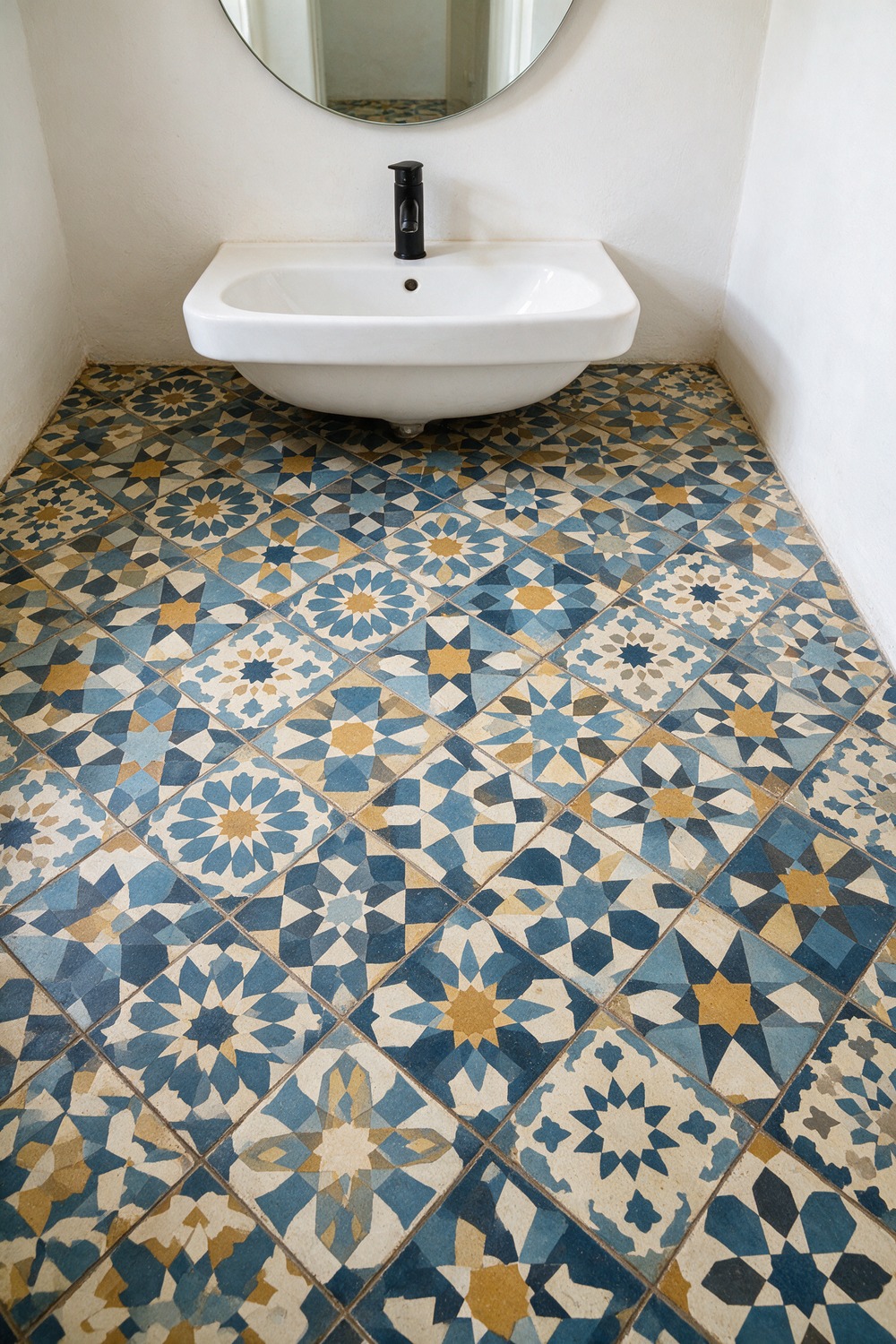
Encaustic tile is a floor with a passport. Those patterns are pressed from coloured cement rather than printed, so the design runs right through the tile.
They carry centuries of Moroccan and Spanish and Portuguese history in them. Walk across one and the room suddenly has a story to tell.
Go for a bold geometric or floral in muted blues, ochres and off-white, laid as a full carpet of pattern or a framed central rug of it. Let the walls go quiet in a soft white or a single pulled-out blue, maybe Little Greene’s Hicks’ Blue.
Matte-black fittings ground it. One rule: seal cement tiles well, they are thirsty, and that is the only upkeep they ask.
15. Terracotta Tile Bathroom Flooring
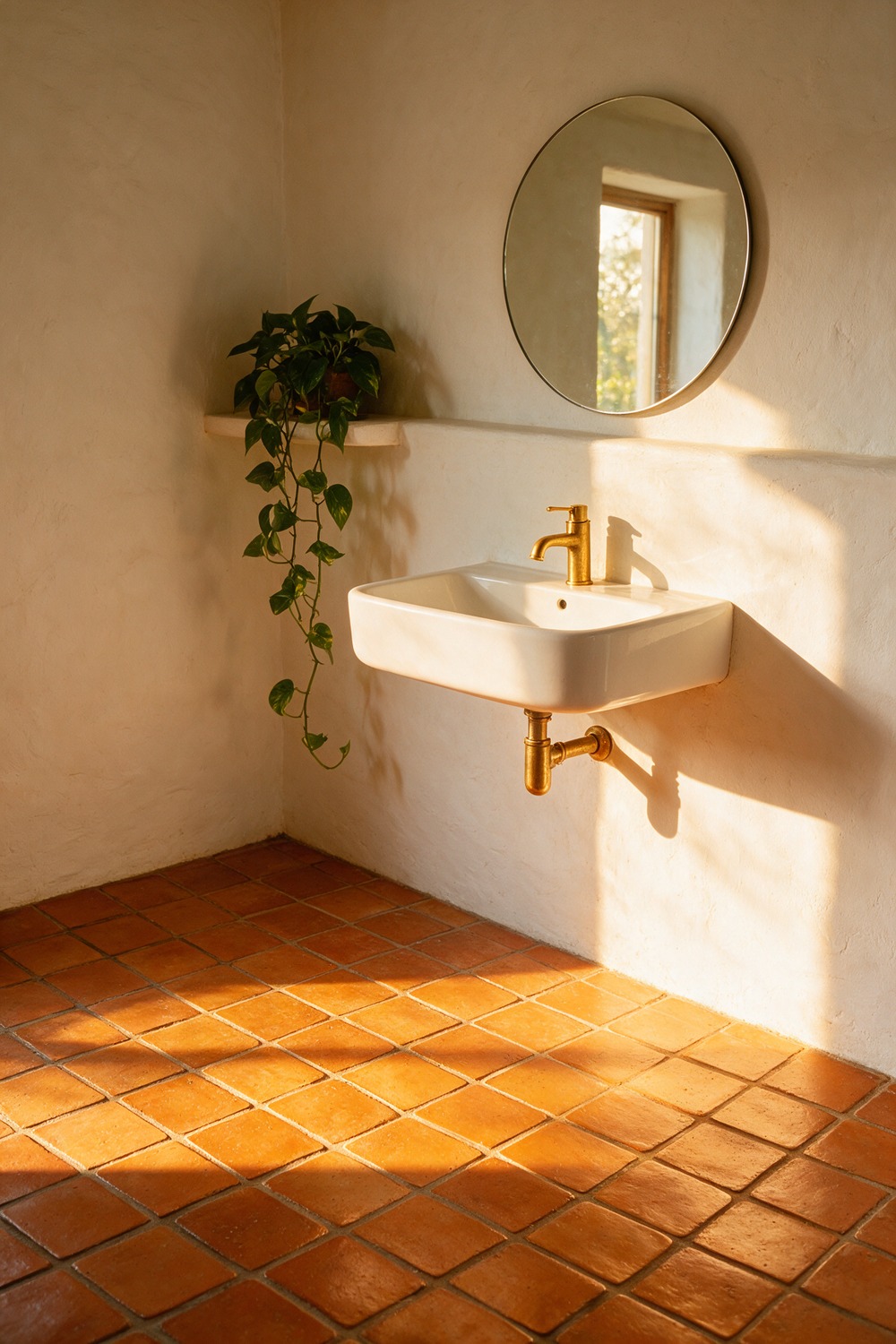
Terracotta is sunshine you can stand on. That earthy clay orange has a warmth no manufactured colour reproduces, and it turns even a north-facing bathroom golden.
Use handmade-look terracotta in a warm burnt-orange, square or hexagon, matte-sealed so water beads off. Surround it with warm-white limewash (Bauwerk again), a trailing pothos, and plenty of light, then pull one soft wall tone from the tile’s lightest fleck.
16. Herringbone Tile Bathroom Flooring
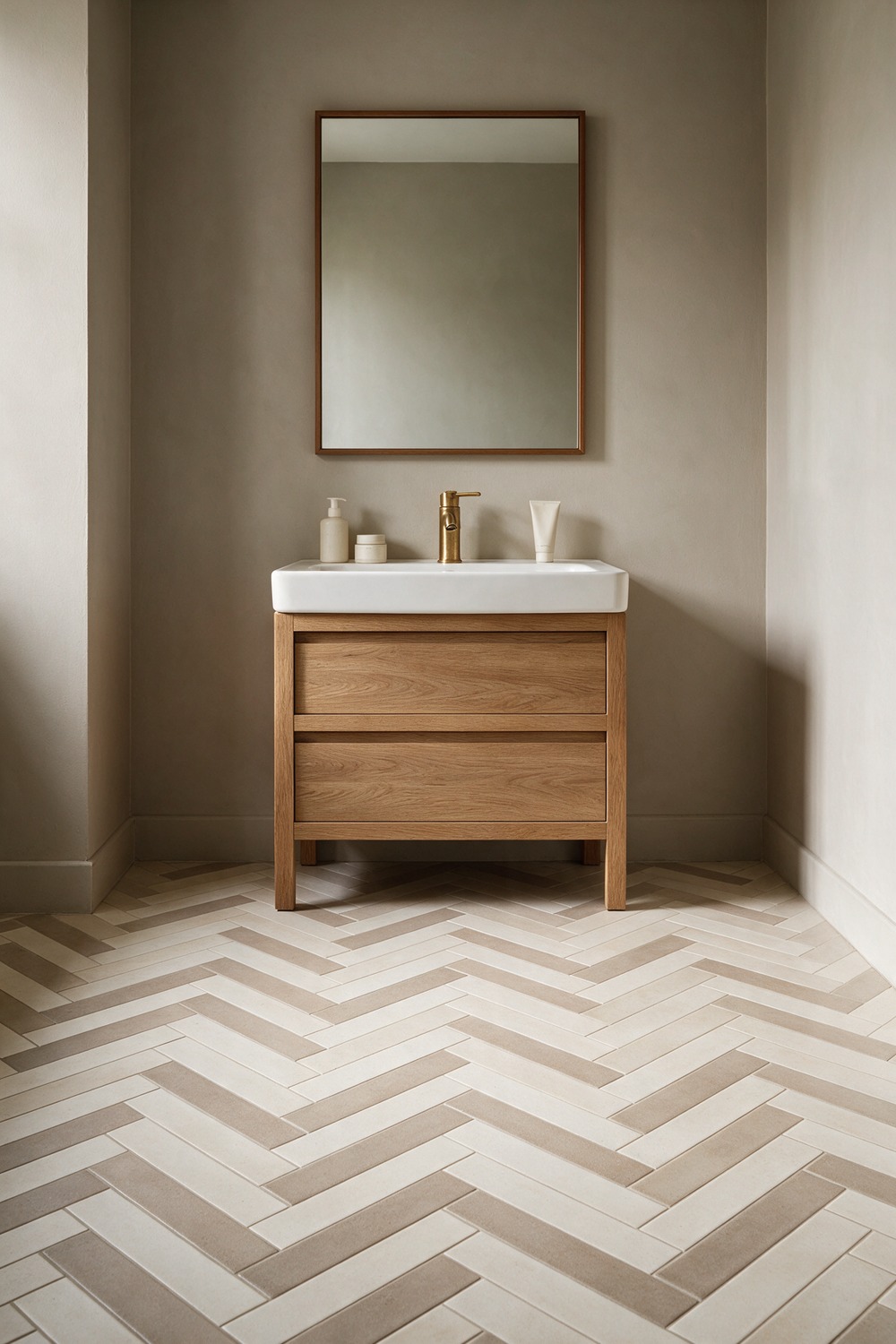
Herringbone is the lazy person’s statement floor, and I mean that as the highest praise. The tile does the showing-off through its angle alone, so you can use the plainest colour and still look clever.
Lay a matte porcelain or stone-look plank in a soft taupe or warm white in a true herringbone, grout matched close so the zigzag reads as texture. The palette can stay serene: warm greige walls (Dulux Egyptian Cotton is a gentle one), oak, brushed brass.
The direction of the lay matters most, so run the point of the herringbone toward the door you enter from. That is the whole trick.
17. Penny Tile Bathroom Flooring
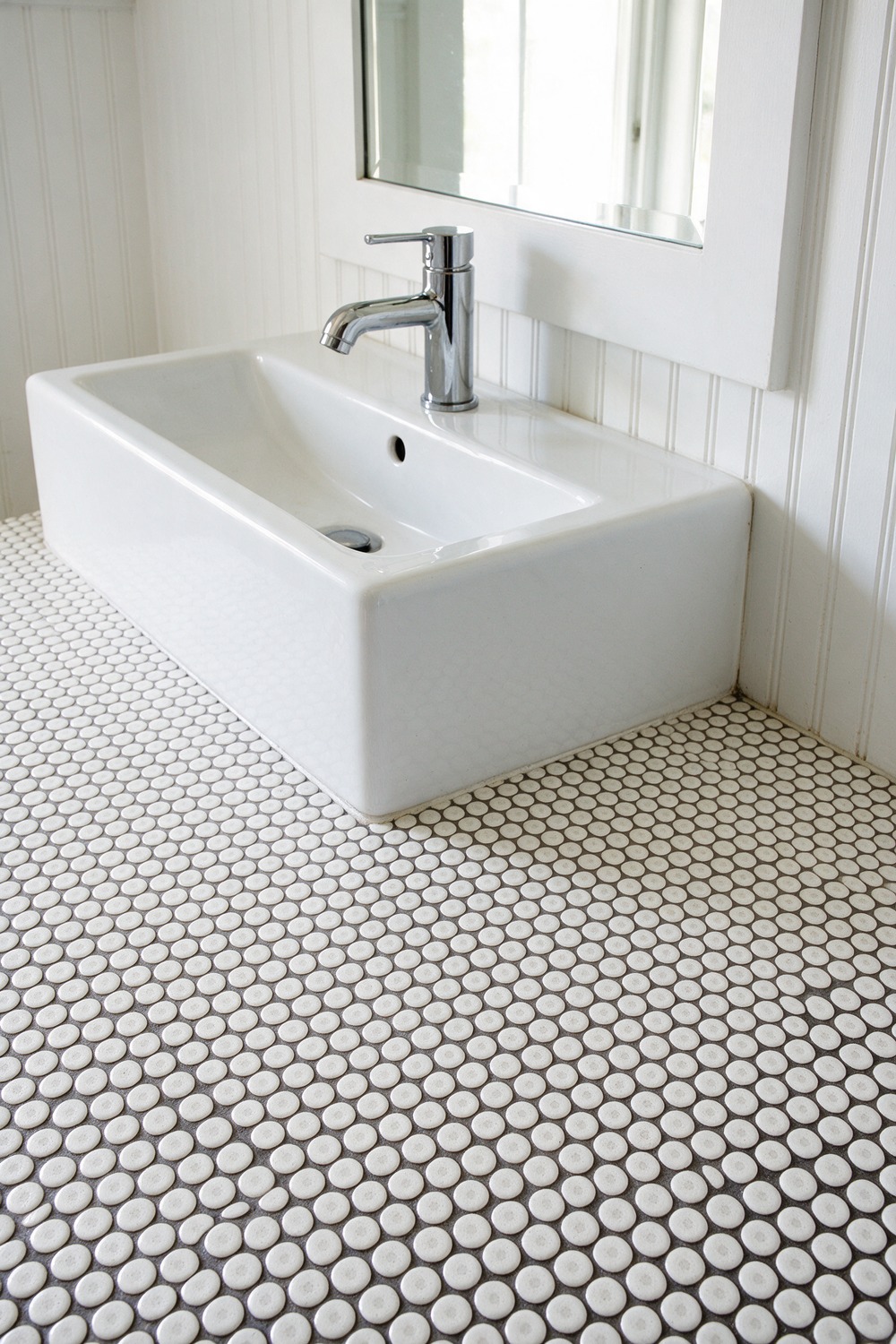
Penny tile is pure charm, those little coin-sized rounds that have been making bathrooms adorable since the 1920s.
There is something cheering about a floor made of circles, and your feet get a quiet little massage into the bargain.
I love a classic matte white penny with a darker grout for that soft dotted texture, or a tonal mix of warm greys for something gentler. It suits a period-leaning room: beadboard walls in Benjamin Moore Simply White, a console basin, polished chrome.
The round tiles and generous grout make it one of the grippiest floors going. Start with the grout colour, because on penny tile the grout is most of what you see.
18. Large Format Tile Bathroom Flooring
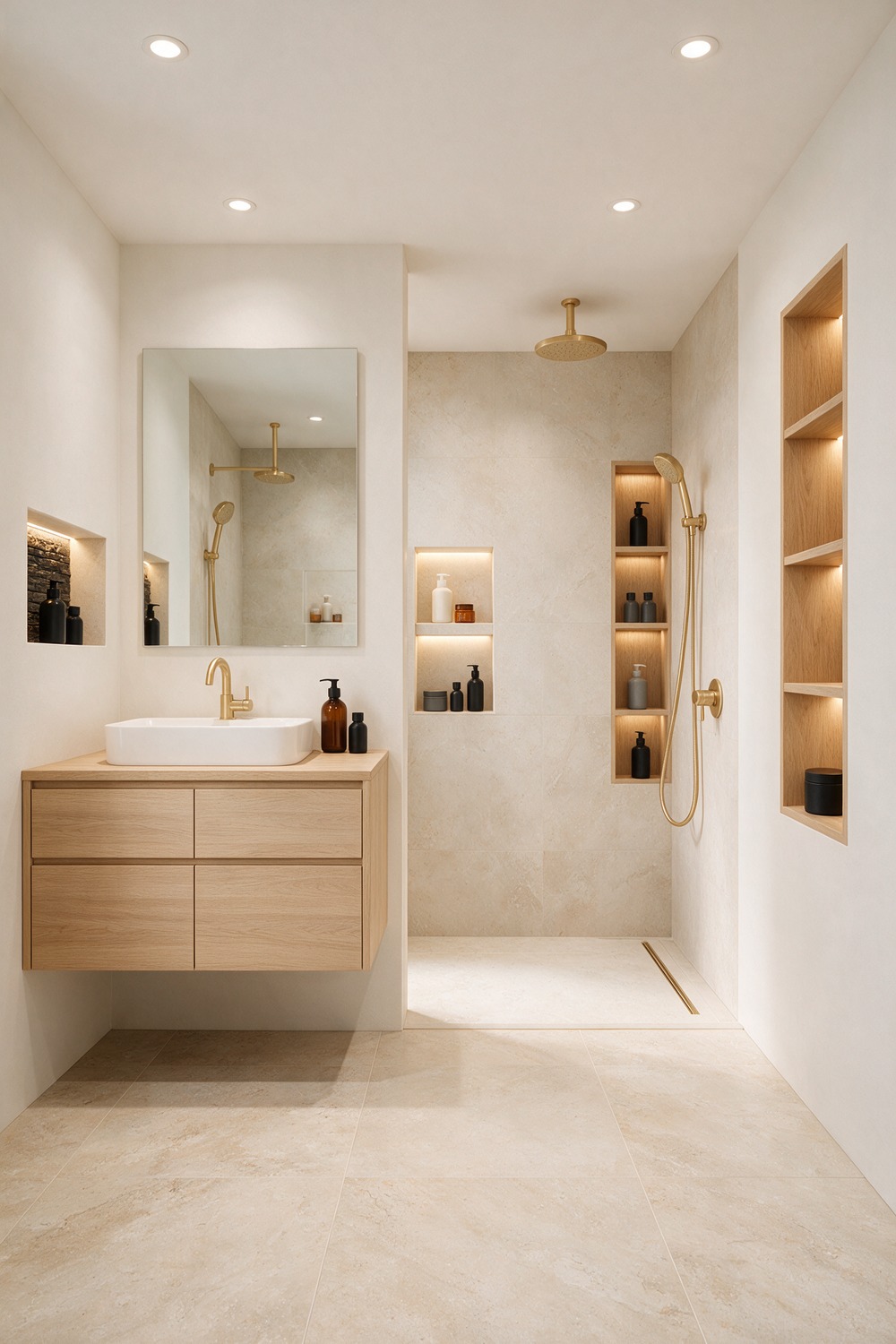
Large format is the floor that makes a small bathroom feel twice its size. Fewer grout lines, fewer interruptions, one calm continuous surface, and the single easiest way to look high-end.
Go as big as your floor allows, 60 by 120 slabs in a honed stone or matte concrete look, soft white walls and pale oak above. My one instruction: match the grout to the tile exactly, because a contrasting line undoes the whole seamless effect.
19. Wood Look Tile Bathroom Flooring
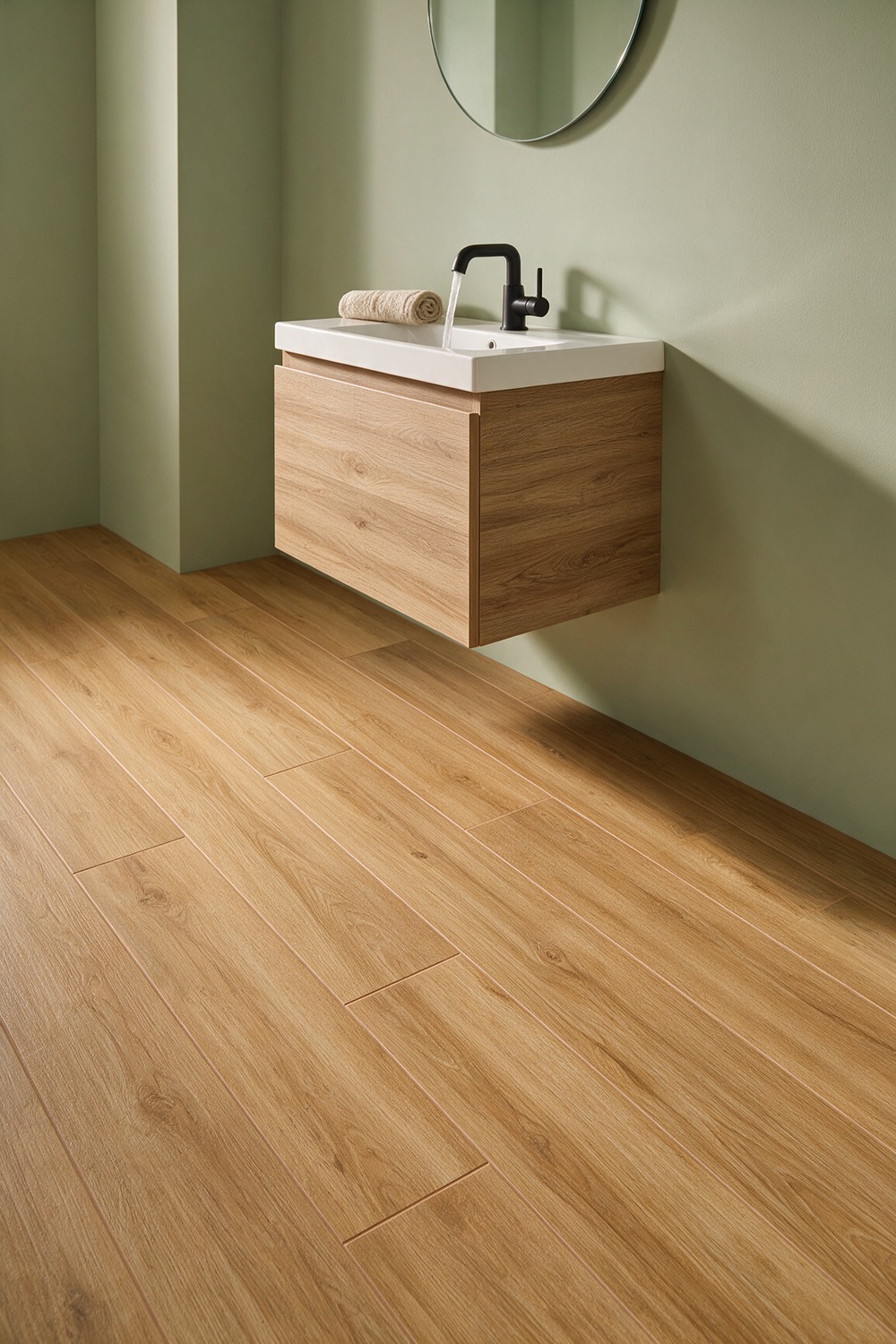
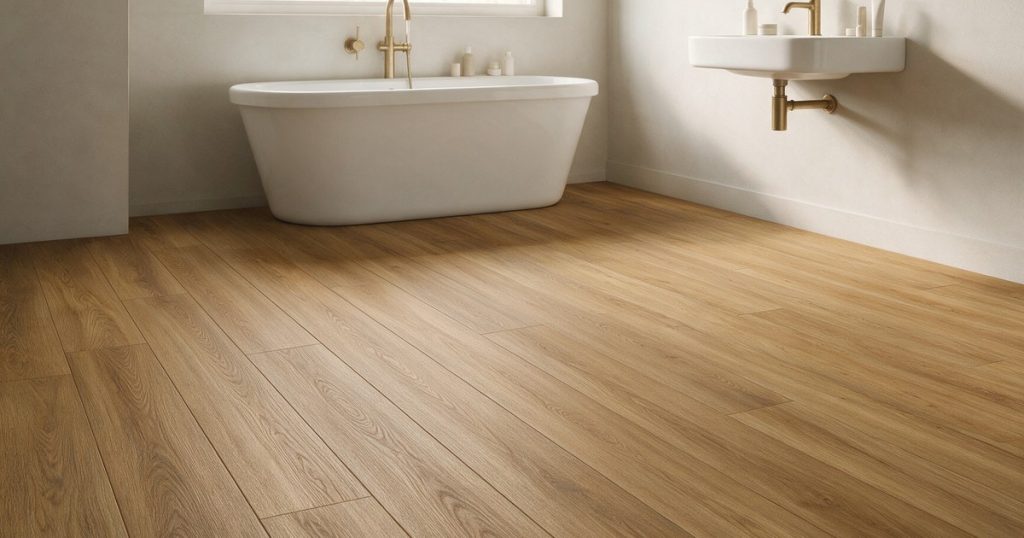
Wood-look tile is the having-your-cake floor. You get the warmth and grain of timber with none of the water worry, and the good ones now are genuinely hard to tell from the real plank.
Choose a matte porcelain plank in a warm honey oak or a soft greige, laid in a straight run or a gentle herringbone, with a grout tinted to the mid-tone of the wood.
The warmth then lets you cool the rest: sage or soft white walls, think Behr Cracked Pepper on the vanity for contrast, and black hardware.
It is the coziest hard floor there is. Start with a plank sample on the actual floor, because grain direction matters more than you would think.
Which Bathroom Flooring Is Right for You
Let me make this easier. If you want calm and timeless and have the budget, marble, limestone or travertine will never let you down. They are the floors you forget to notice because they just feel right.
If you have a busy household and want to stop worrying, porcelain in any guise, large-format, wood-look or herringbone, is the practical answer that still looks considered. It is the one I point most people toward.
Craving character and a bit of story? Encaustic cement, terracotta, brick and penny tile all bring personality that a plain floor cannot buy. And if you are chasing that pure-spa feeling, pebble underfoot or seamless microcement concrete is where the magic is. Pick the feeling first, the material second.
Bathroom Flooring, Your Questions Answered
What is the most budget-friendly option? Ceramic and porcelain tile sit at the friendly end, with wood-look porcelain giving you the biggest look for the least money. Natural stone like marble and travertine is the splurge, and encaustic cement tile lands in the middle once you factor in sealing.
Can I lay this myself or do I need a pro? Peel-and-stick and simple square tile are weekend-doable if you are handy. Anything in a herringbone, a mosaic sheet, large-format slabs, or real stone is a job for a tiler, where the cuts and the level really matter.
How long does a bathroom floor take? A straightforward retile runs a few days once the old floor is up, plus drying and sealing time. Poured microcement and natural stone want longer for curing and sealing, so plan a week rather than a weekend.
What is worth spending extra on? Spend on the material you walk on and on the waterproofing beneath it. A good underfloor membrane and proper sealing outlast any trend. If you can swing underfloor heating, do, it is the upgrade nobody regrets.
What do I ask the tiler for? Ask for the grout colour matched to your tile (or deliberately contrasted on hexagon and penny), the smallest sensible grout line, and a slip rating suitable for a wet room. Bring your actual tile sample to the conversation, not a photo.
Whatever pulls you in, start with one sample on your real floor, in your real light, and stand on it barefoot. Your feet will tell you the truth faster than any mood board. Then go make the room yours.
More stories
Share this story