17 Bathroom Flooring Ideas That Shrug Off Water and Look Gorgeous

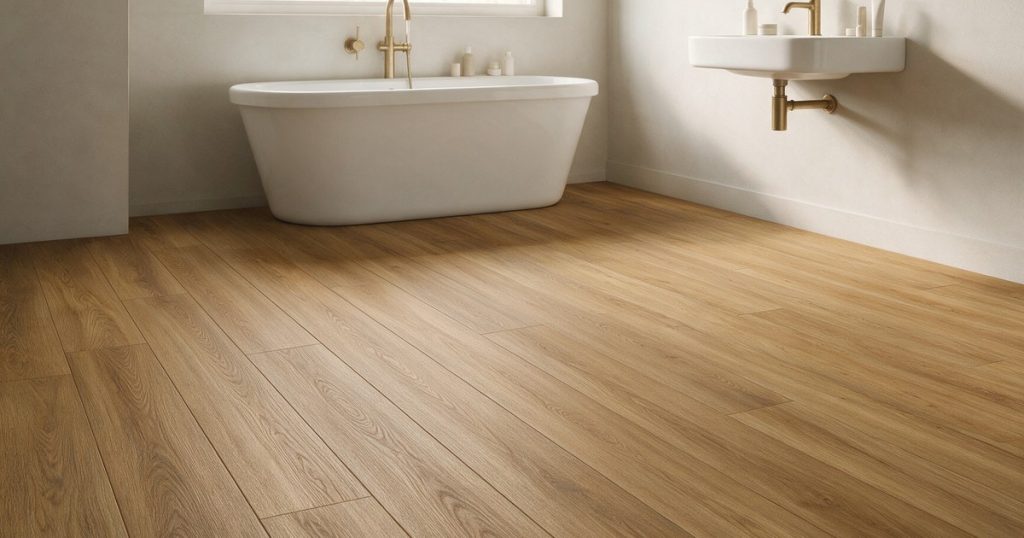
I used to think a bathroom floor had one job: don’t rot. Survive the splashes, the dripping towels, the steam, and call it a win. Then I started really looking at floors, and I changed my mind.
A bathroom floor can be the quiet showpiece. The thing that pulls the whole room together before you have hung a single mirror. Water resistance is the price of entry, not the point.
Below are 17 bathroom flooring types worth knowing, each with a real look, a palette, and a get-the-look kit so you can actually recreate it. I will tell you which ones I love and which I would walk past. Let’s find your floor.
1. Vinyl Sheet Bathroom Flooring
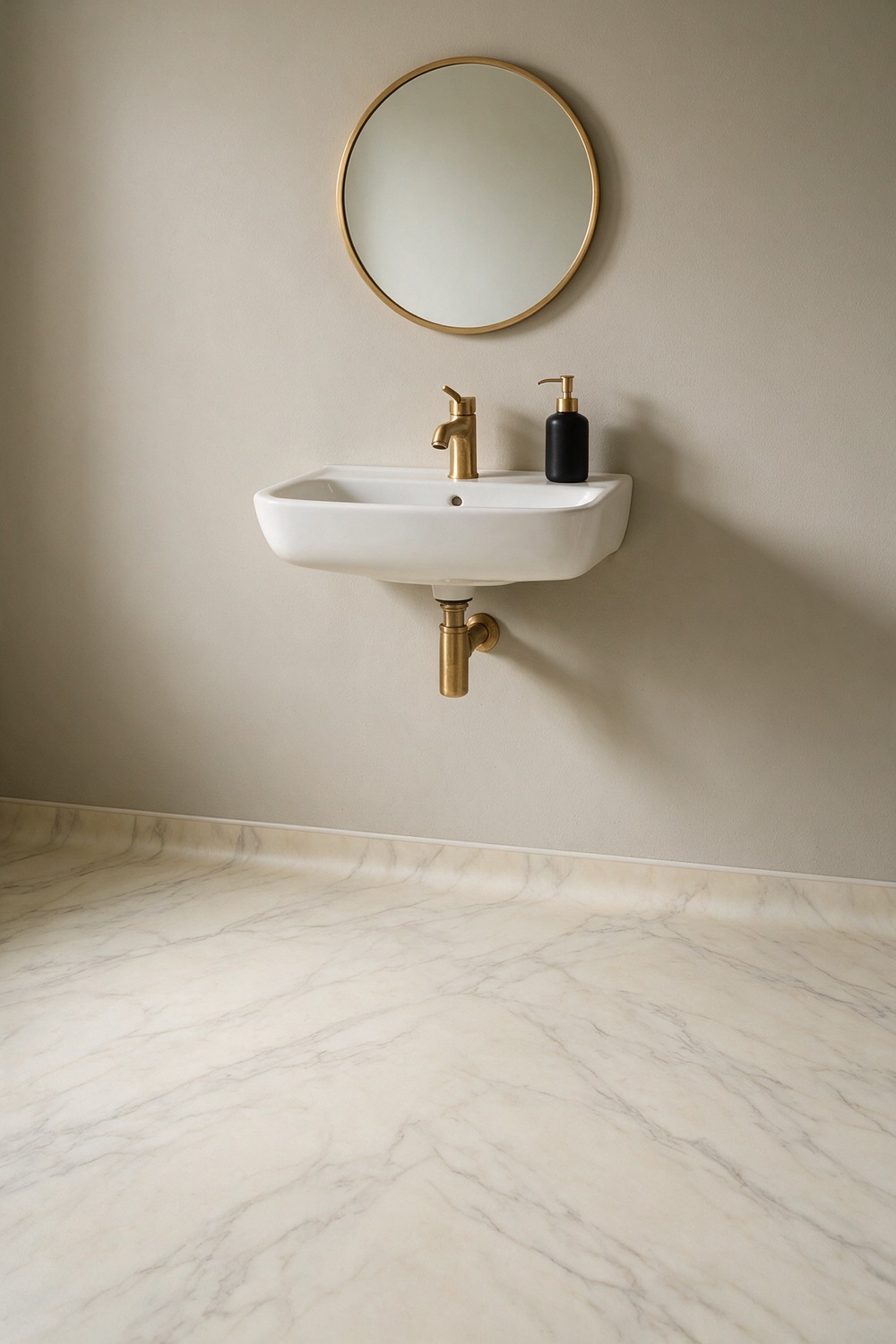
Here is the underrated one. Sheet vinyl rolls out in a single continuous piece, so water finds almost no seam to sneak through.
I love it in a soft Carrara marble print, the veining running right up to coved edges, warm greys drifting over cream, a 2mm cushioned layer kind to bare feet. Pair it with a brass mixer and the room already looks considered.
2. Luxury Vinyl Plank Bathroom Flooring
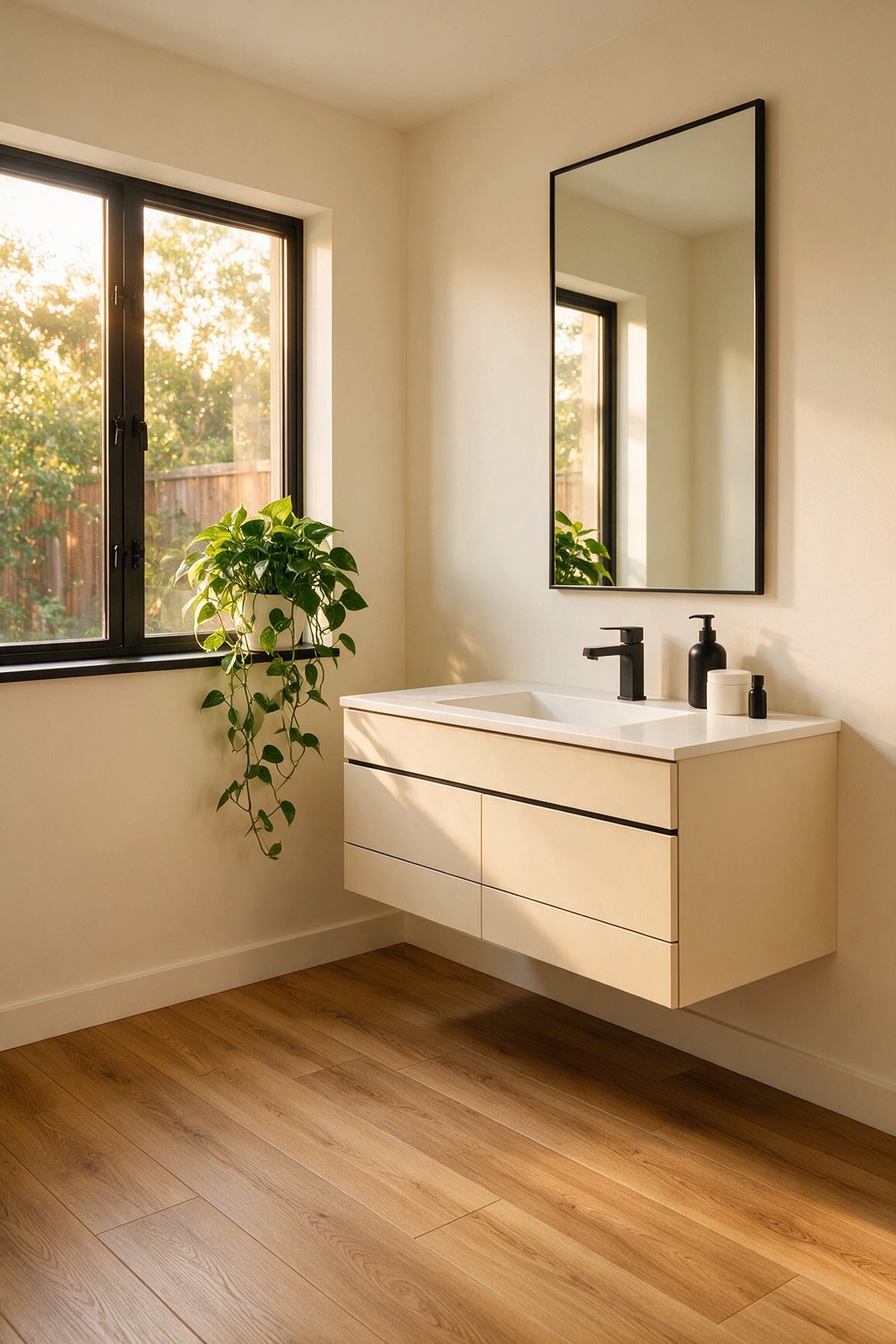
LVP is the plank that convinced everyone vinyl grew up. Rigid, fully waterproof, printed with wood grain so convincing you have to crouch to catch it out.
My favorite version leans warm honey oak, wide boards with a gentle hand-scraped texture and beveled edges that read as real timber. Karndean and Amtico both nail this look.
Lay it in long runs toward the window to stretch the room. A matte black tap, a cream vanity, one trailing pothos on the sill, and the warm oak floor carries the rest. Start with the floor, and the palette follows.
3. Luxury Vinyl Tile Bathroom Flooring
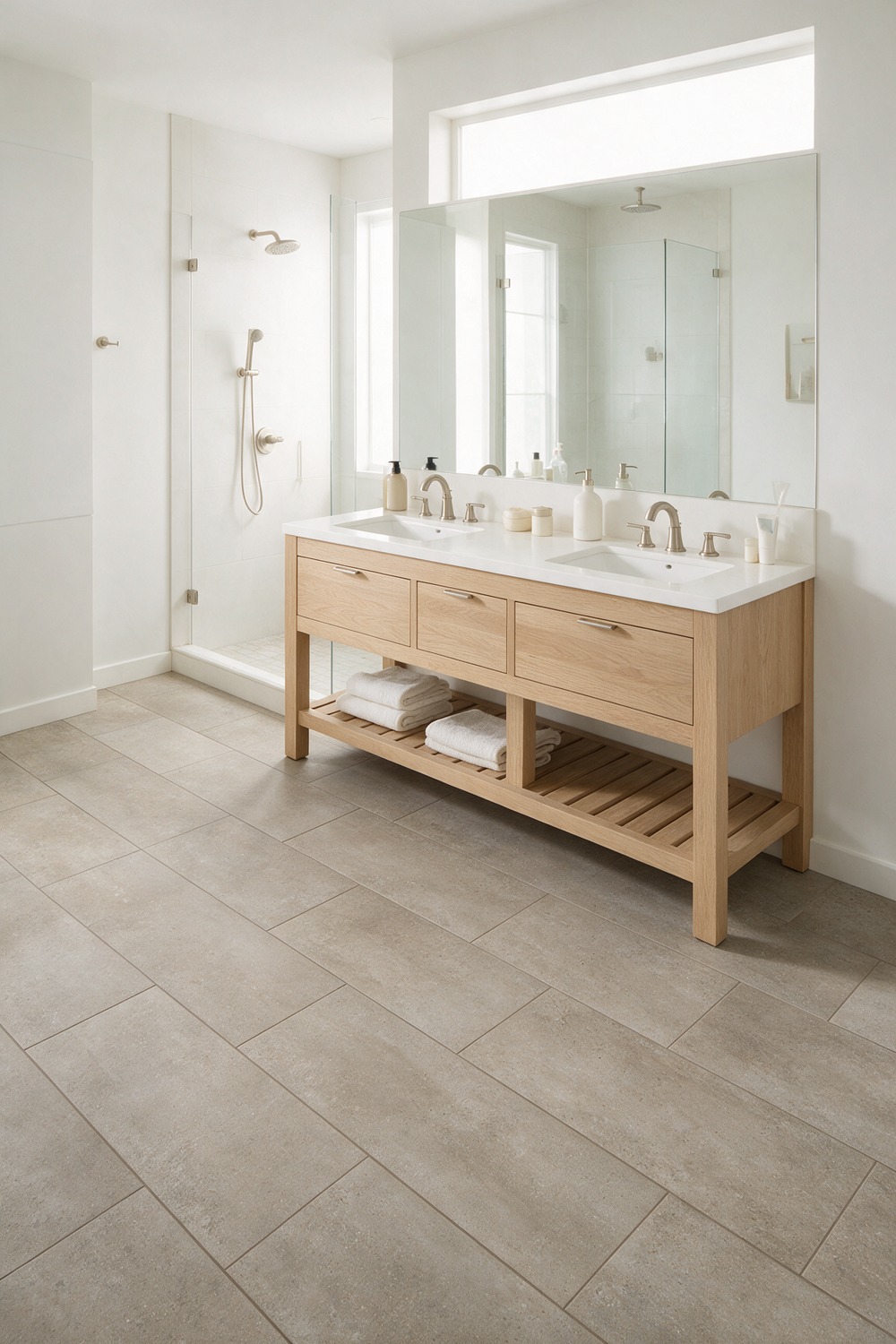
LVT is LVP’s tile-shaped cousin. Same waterproof rigid core, cut into squares that mimic honed limestone or cement, grout-look lines and all.
I would go large format, a soft greige stone look in 12 by 24 pieces with a thin grout a shade darker, so it passes for real quarried stone. Brushed-nickel taps, a pale oak vanity, done.
4. Vinyl Tile Bathroom Flooring
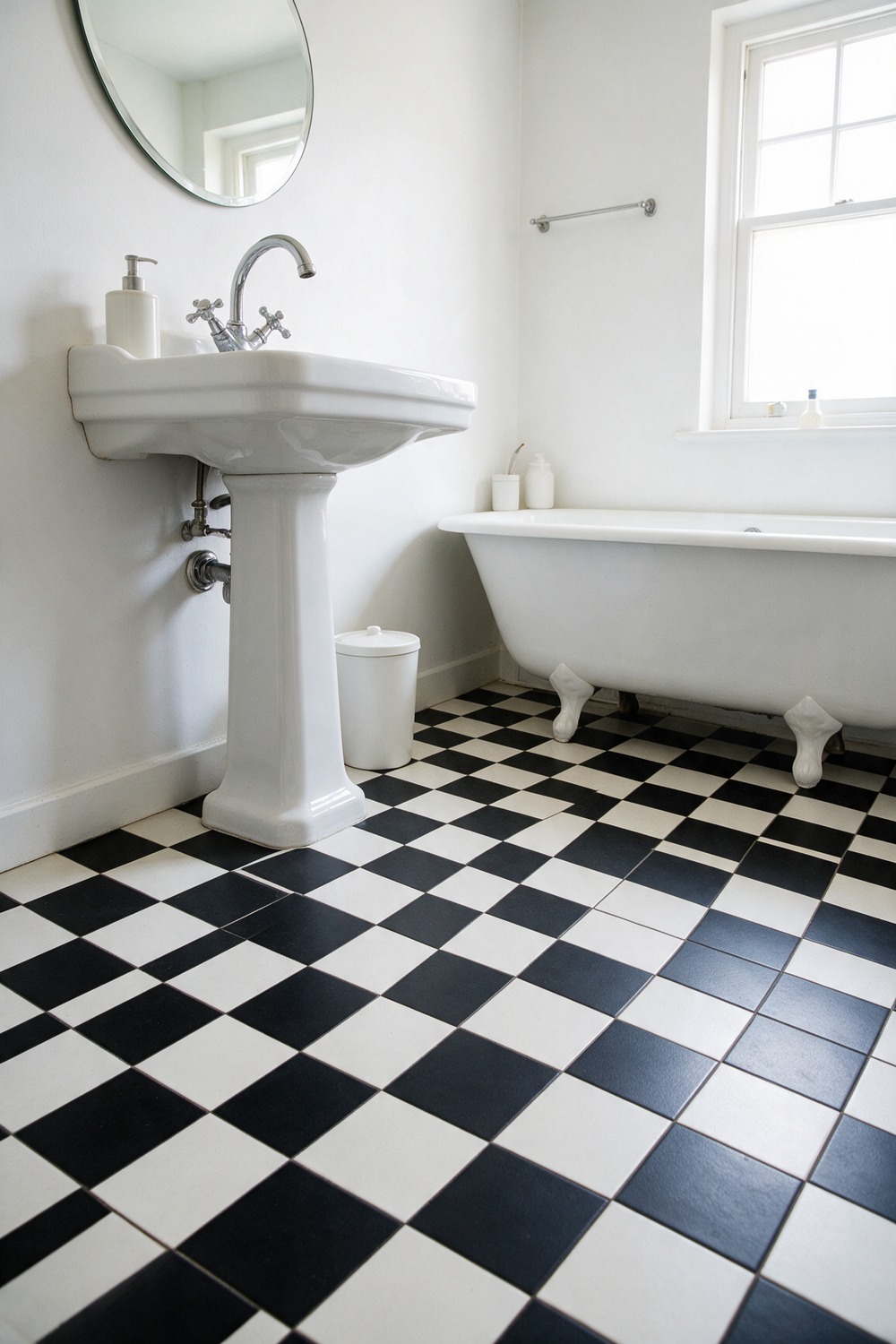
This is the humble, glue-down classic, and I have a soft spot for it. Plain vinyl tiles in a crisp black-and-white check turn a tiny bathroom into a little bistro.
Keep the tiles a true matte, 12 by 12, laid dead straight, with a pedestal sink and an old-school cross-handle tap. Two tile colours, no third. Walls go quiet in Benjamin Moore White Dove and let the chequerboard sing.
5. Vinyl Wood Bathroom Flooring
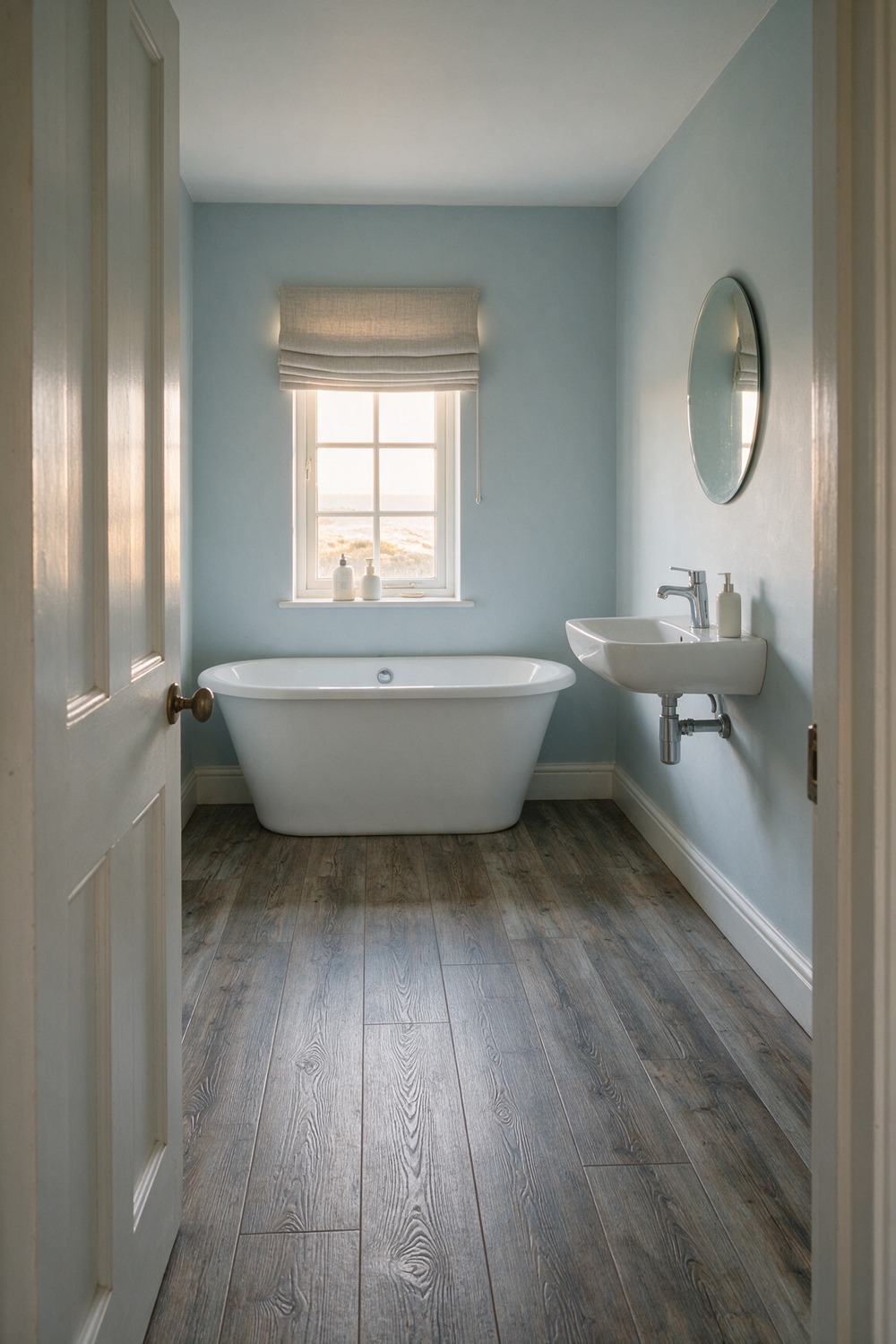
Wood-look vinyl is the cabin feeling without the cabin worry: vinyl printed and embossed to look, and even feel, like timber.
I like a cooler, weathered grey-brown plank here, driftwood for a coastal room. Run it the long way, add a white freestanding tub, and a 2700K bulb keeps the grey warm instead of cold.
6. SPC Bathroom Flooring
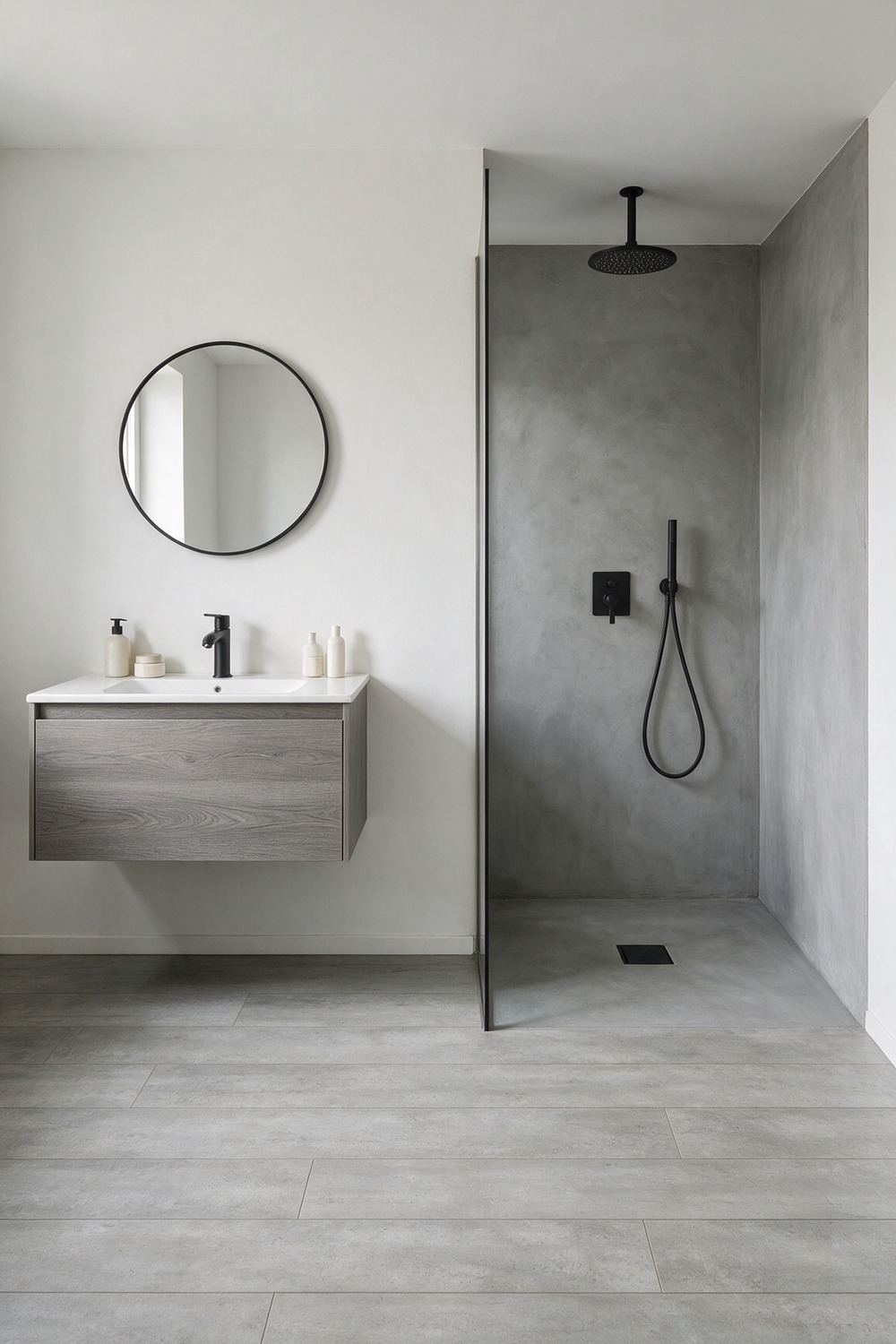
SPC means stone plastic composite, the toughest plank on this list. A dense limestone-and-vinyl core, roughly 5mm, that will not dent, swell, or bow, even over a heated subfloor.
It shines in a pale concrete-grey stone look, dead matte, almost industrial. This is the floor I would put in a busy family bathroom and forget about. A floating oak vanity, a frameless walk-in shower, black hardware, and the tough grey floor ties it together.
7. Linoleum Bathroom Flooring
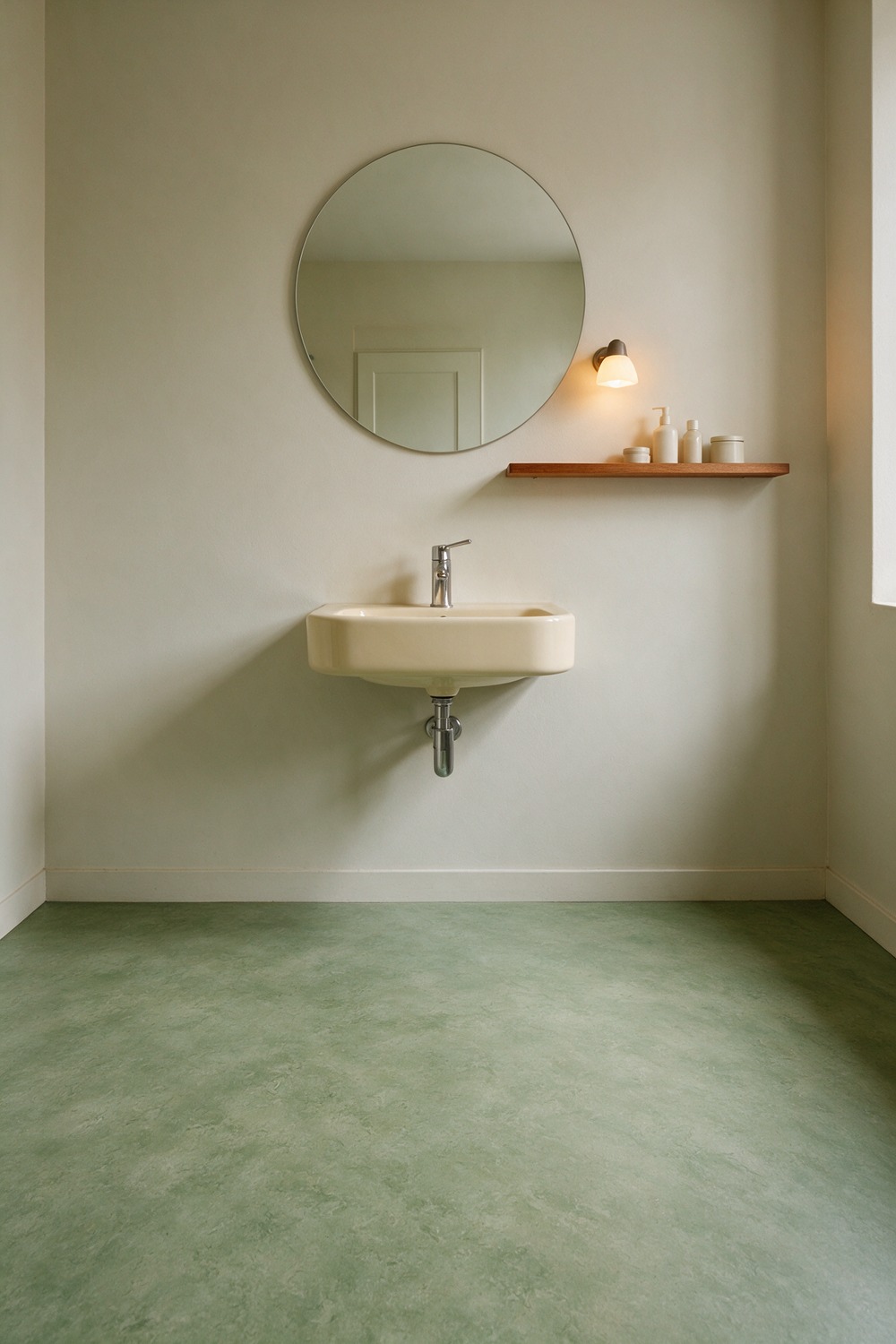
Real linoleum is not vinyl. It comes from linseed oil, cork dust, and jute pressed onto a backing, which makes it one of the most natural floors you can lay.
And it is quietly having a moment. I adore it in a muted solid colour with that signature marbled movement, a soft sage or a warm mustard. Forbo Marmoleum is the name to know, warm and matte with a gentle 1950s lean.
To get it, choose one grounded colour and build the room around it. A cream basin, a timber shelf, a single mid-century sconce, and linoleum reads intentional and current rather than retro by accident.
8. Laminate Bathroom Flooring
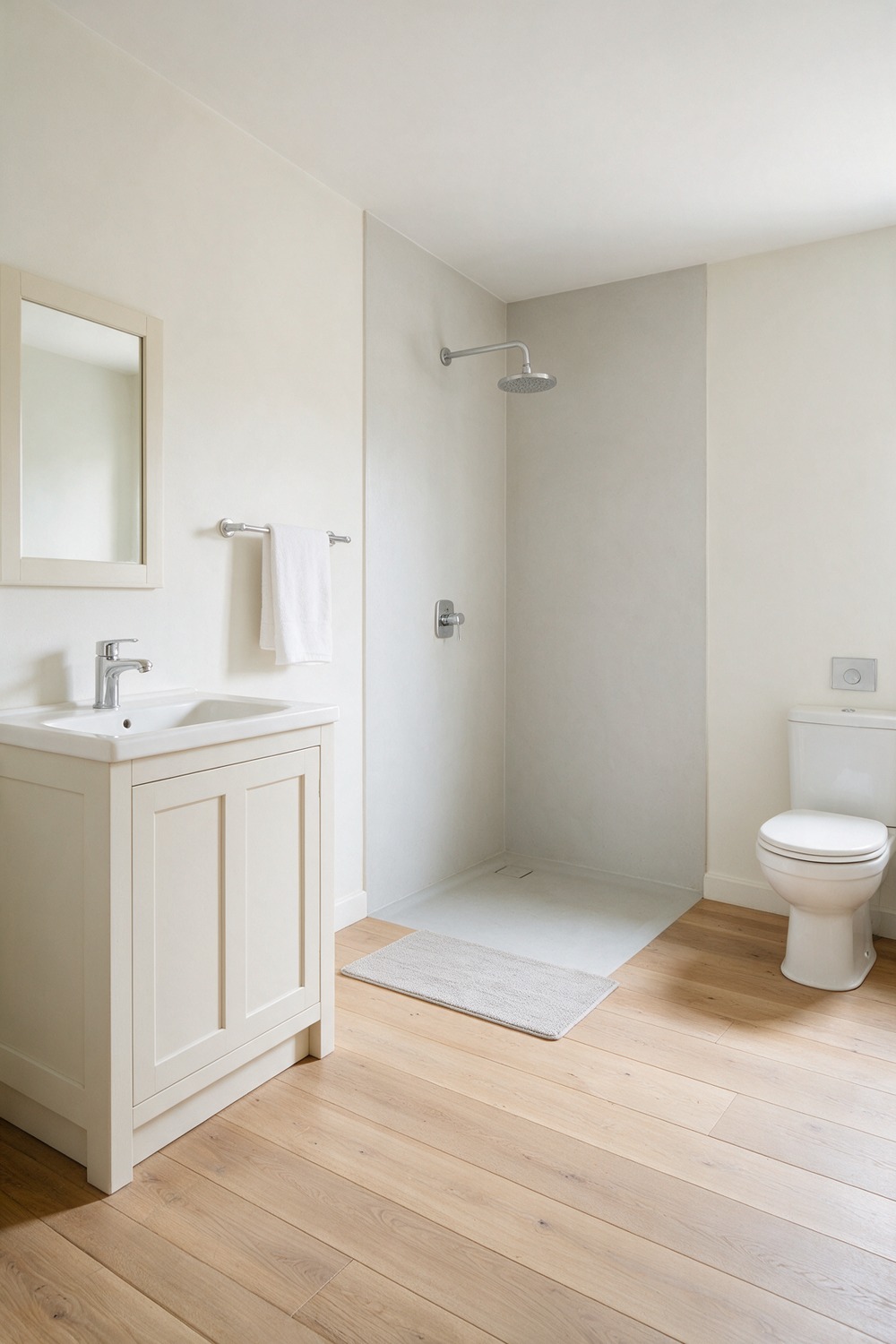
Laminate used to be a bathroom no-no, but water-resistant ranges changed that. My pick is a light natural oak with a low sheen, the kind Pergo does well.
Seal the perimeter, add a shaker vanity in Farrow and Ball Pointing, and the warmth of wood arrives at a friendlier effort than the real thing.
9. Cork Bathroom Flooring
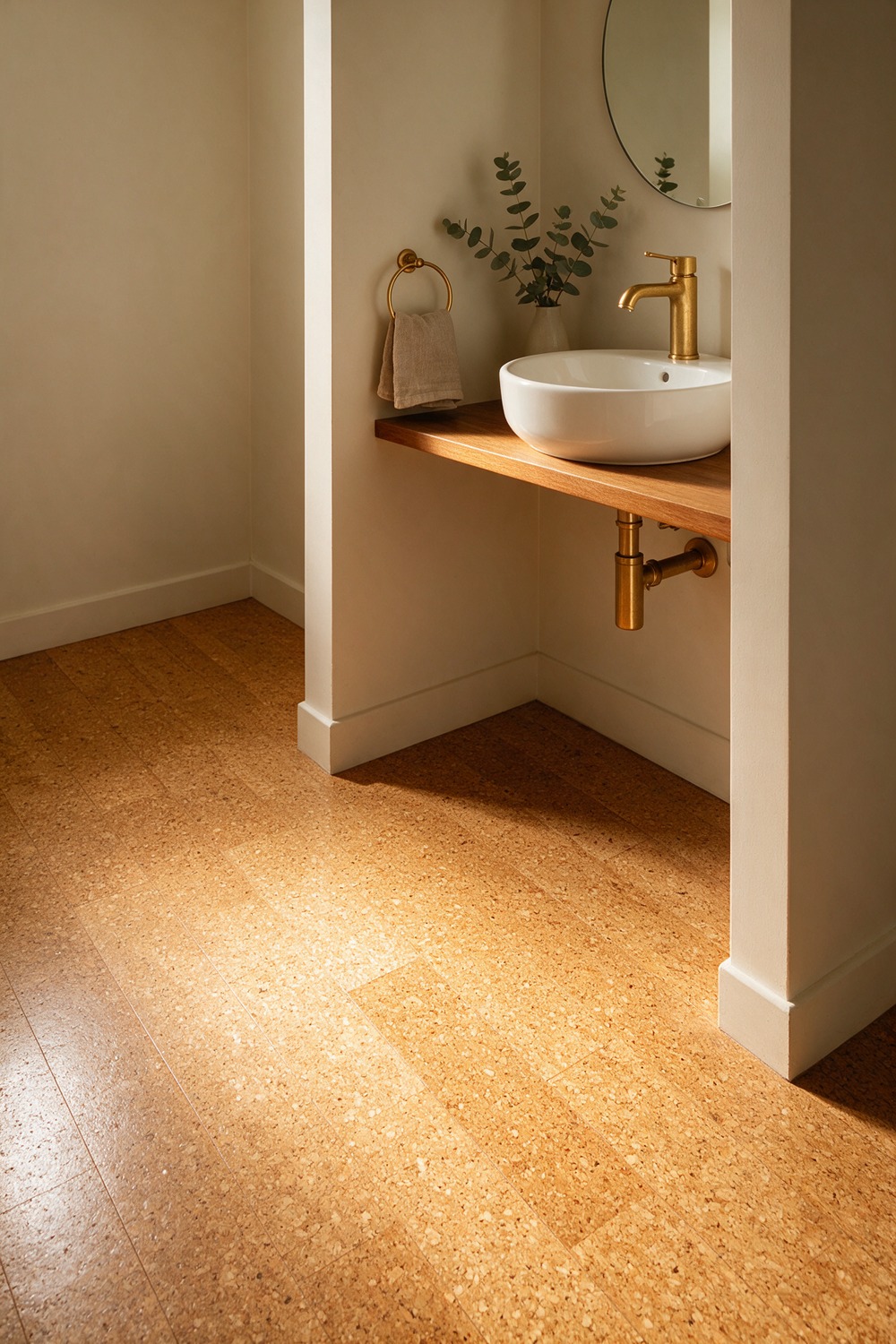
Cork is the one people forget, and it is secretly perfect. Warm underfoot on a cold morning, naturally soft, and once properly sealed it handles bathroom humidity with ease.
I love its speckled honey texture, all those tiny flecks catching the light, alive in a way hard tile never is. Keep the rest simple: a round white basin, a warm brass tap, a linen hand towel, a few eucalyptus stems. Seal it well and this floor loves you back.
10. Wood Bathroom Flooring
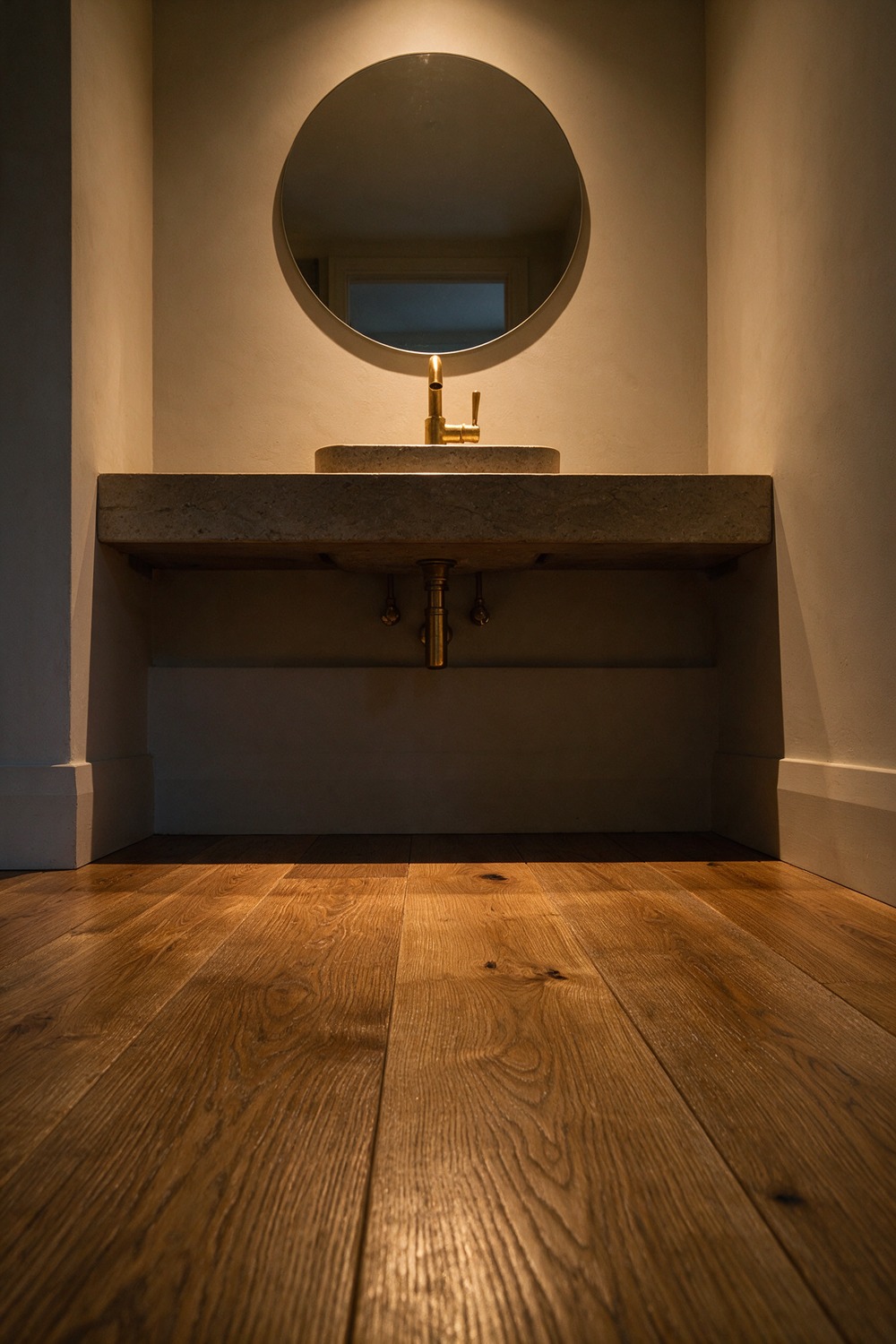
Real wood in a bathroom is a bold, beautiful choice, and done right it is a showstopper.
Engineered boards on a stable plywood base handle humidity far better than solid planks, so that is the version I would choose every time.
Give me a rich, honey-oiled oak, wide boards with real grain and a few natural knots. There is nothing like the genuine thing warming up a cool, tiled space.
The one piece worth the money is a quality hard-wax oil finish, think Osmo, over a plasticky varnish. Add a stone basin and unlacquered brass, and let the oak age gracefully.
11. Parquet Bathroom Flooring
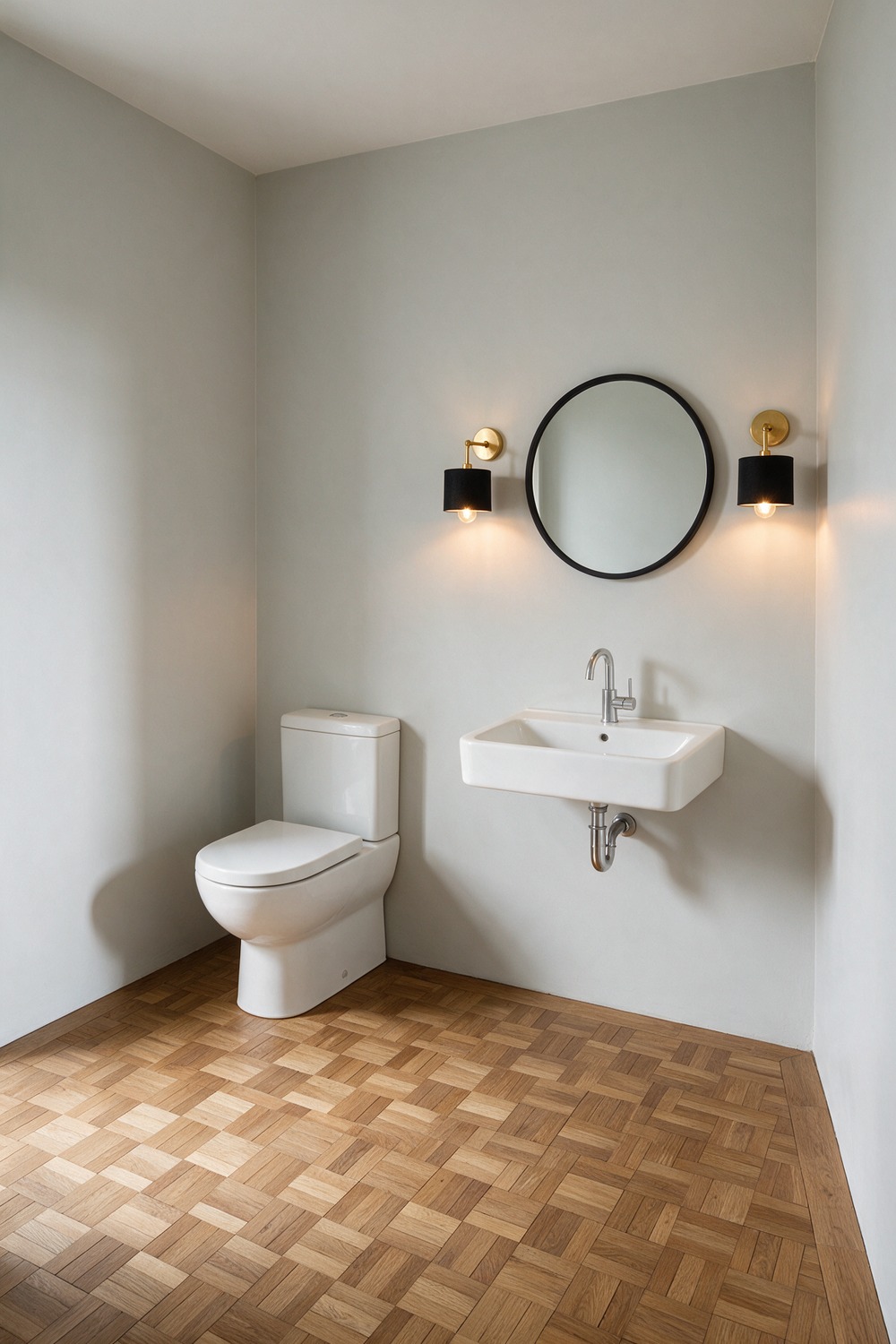
Parquet is wood with a pattern, and in a bathroom it feels like a secret piece of a grand old apartment. Small blocks of timber laid into a geometric basketweave or mosaic.
I would keep the blocks small in a mid-brown oak so the pattern reads charming rather than vast. Let it be the star: a simple white suite, walls in Little Greene French Grey, brass sconces framing the mirror. Pro tip, calm everything else right down.
12. Bamboo Bathroom Flooring
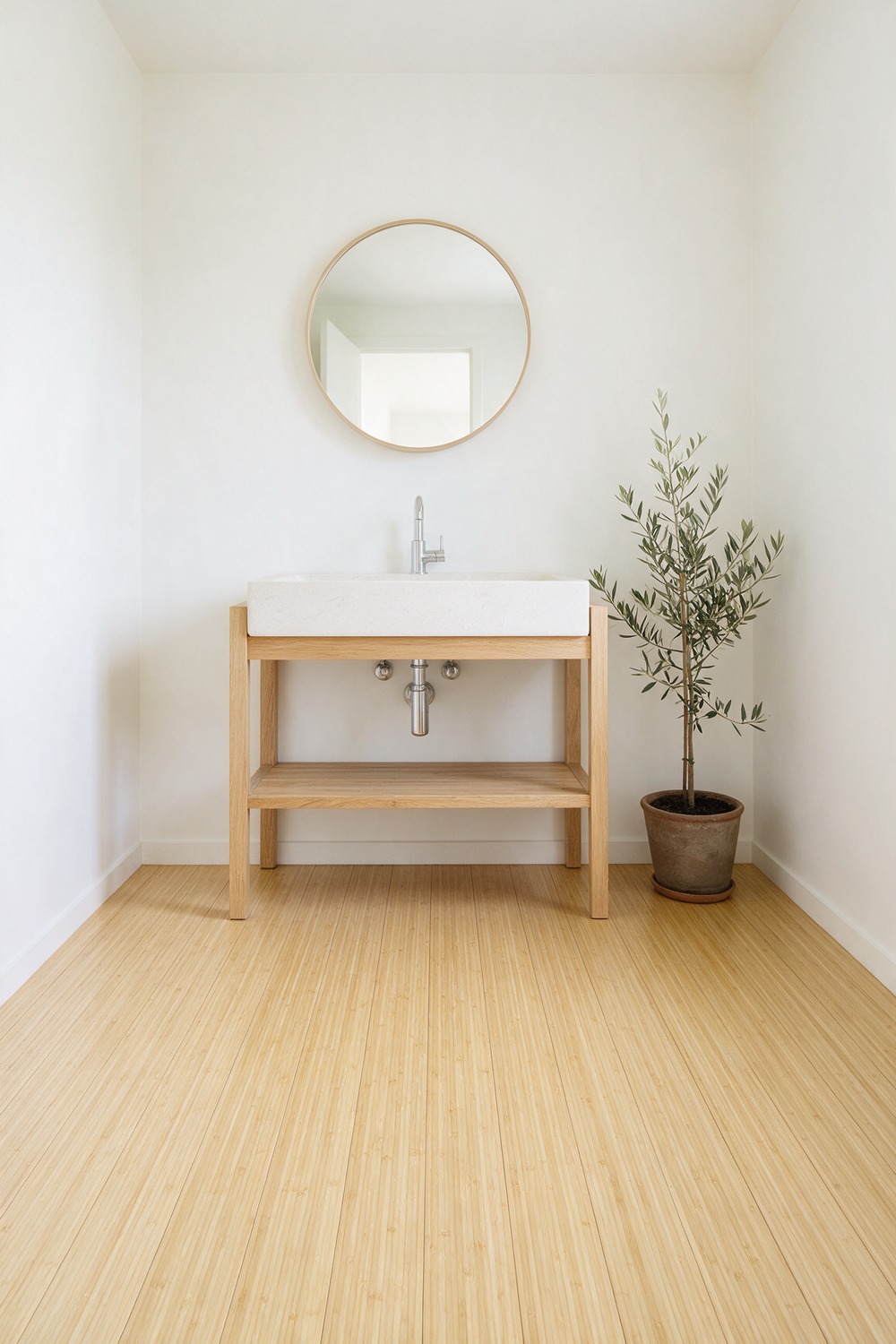
Bamboo is technically a grass, which always delights me, and strand-woven bamboo is harder than most oak. I love its blond, almost golden tone, with fine grain lines running straight down the plank.
Build a spa feeling around it: a white stone trough basin, soft walls in Sherwin-Williams Alabaster, one olive tree glowing in the corner.
13. Rubber Bathroom Flooring
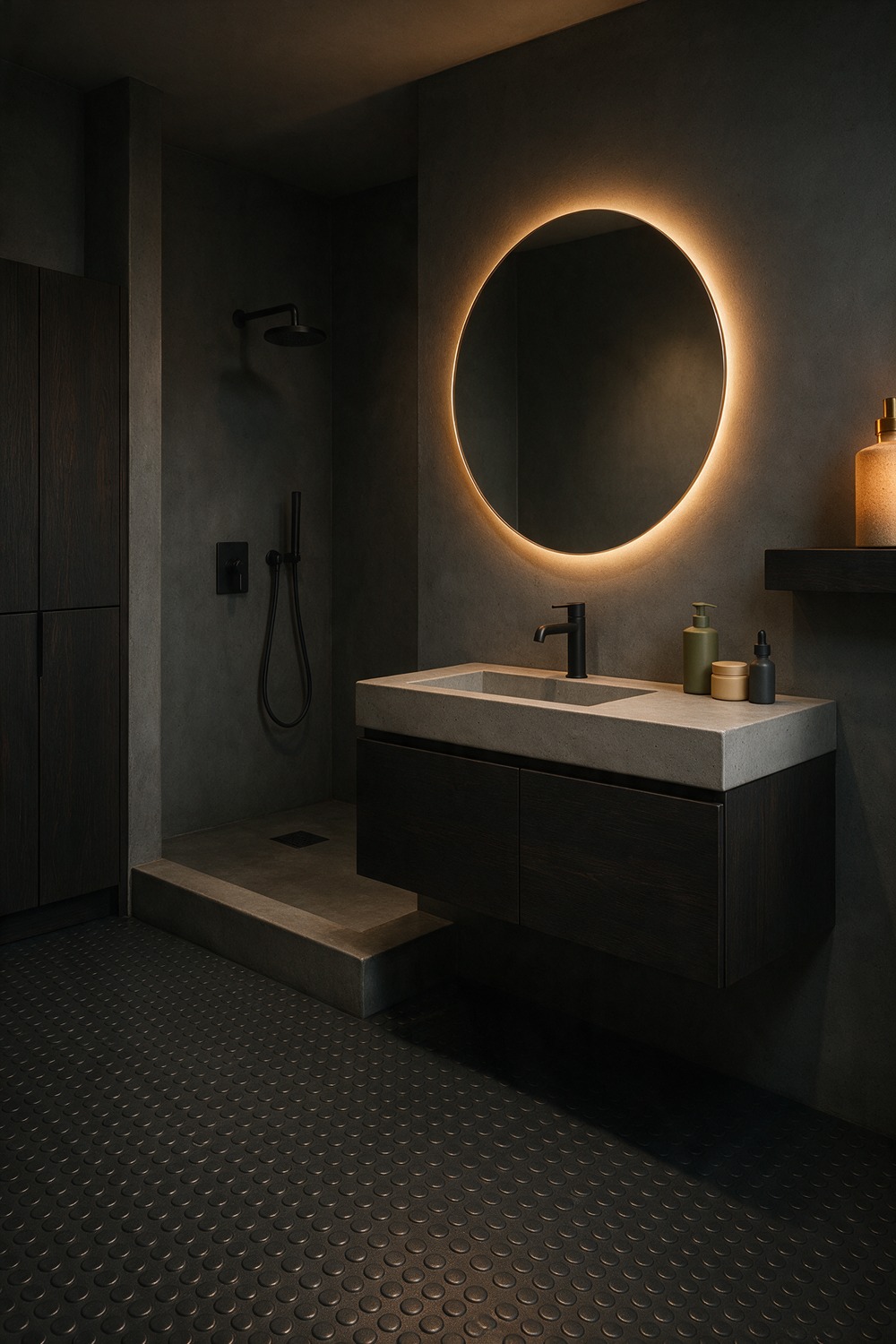
Rubber is the practical rebel, and I am here for it. Soft, warm, grippy even when wet, and almost impossible to hurt, it turns up in the chicest modern bathrooms now.
My favorite is a charcoal coin-pattern rubber, around 4mm, dead matte and a little architectural, leaning into an industrial look it has owned since the 1970s. Go all in: a concrete basin, black fixtures, a big round backlit mirror. The soft dark floor underfoot is the comfort nobody expects.
14. Peel and Stick Bathroom Flooring
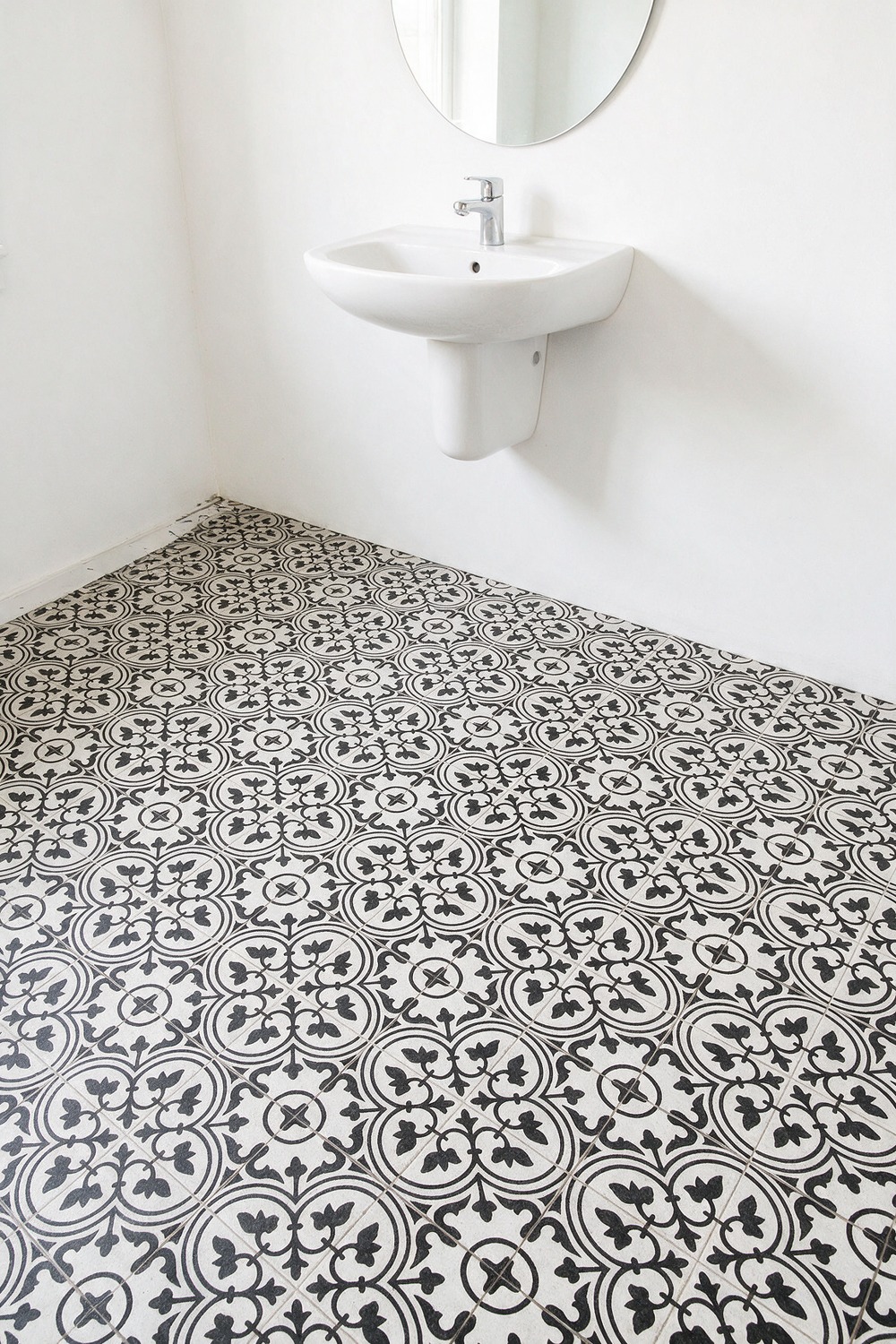
Renters, this one is for you. Peel-and-stick tiles are self-adhesive, cut with a craft knife, and lift back off, which makes them the lowest-risk makeover in the house.
I would pass on the faux wood and go bold instead: a black-and-white encaustic pattern, 12 by 12, the kind that mimics a hand-painted Moroccan cement tile. Real personality for an afternoon’s work.
Lay them over a clean, flat, bone-dry floor and press hard. Keep the walls plain white so the patterned floor carries the whole room. That is the whole trick.
15. Teak Bathroom Flooring
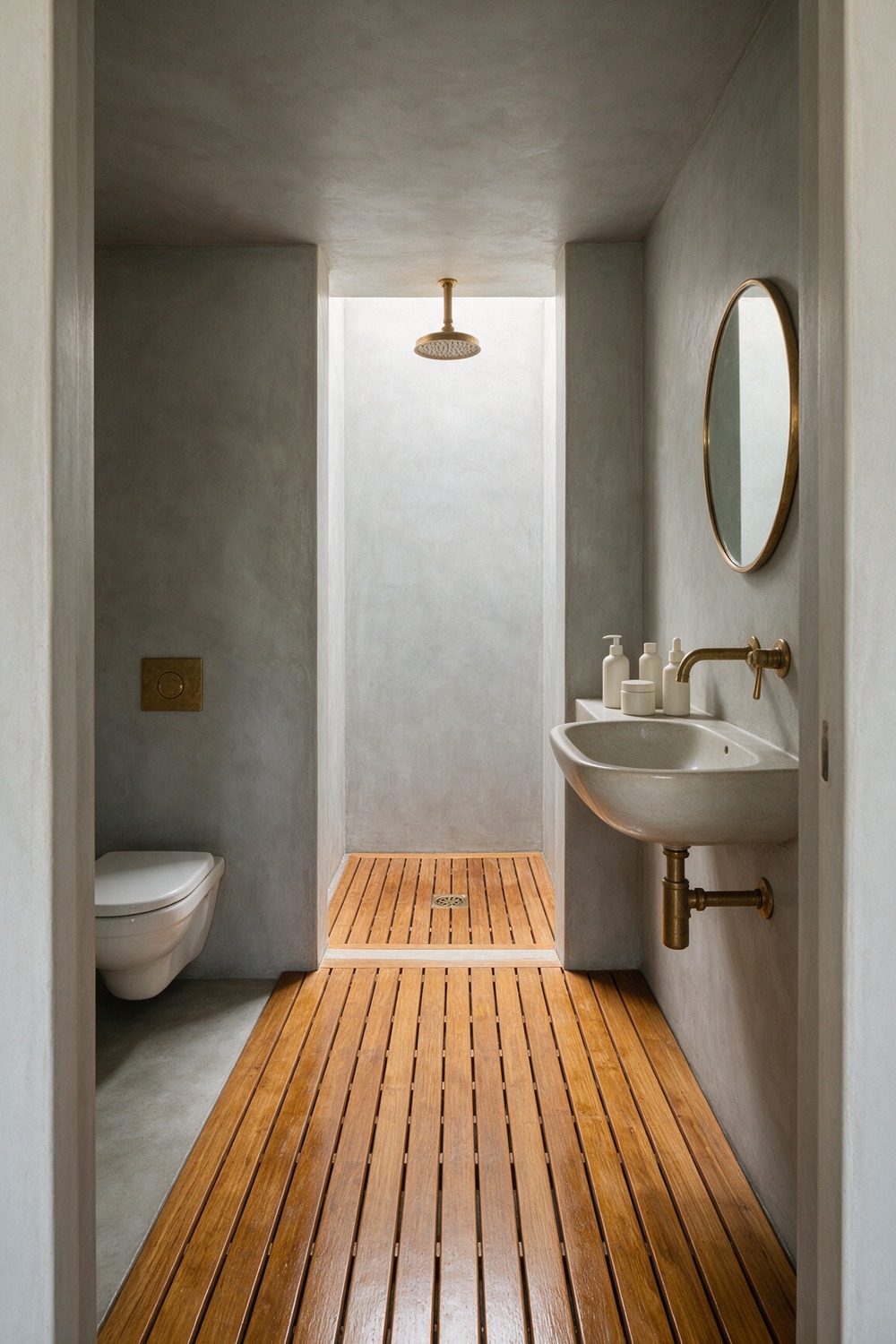
Teak is the wood born for water, the same timber they build boat decks from, naturally oily and rot-resistant. I love it as slatted decking-style boards with small gaps, so water drains straight through and you step out onto warm, golden-brown wood.
Pair it with a wet-room layout, a rainfall shower, stone-grey walls, and aged brass fittings. Pure spa, every morning.
16. Herringbone Vinyl Plank Bathroom Flooring
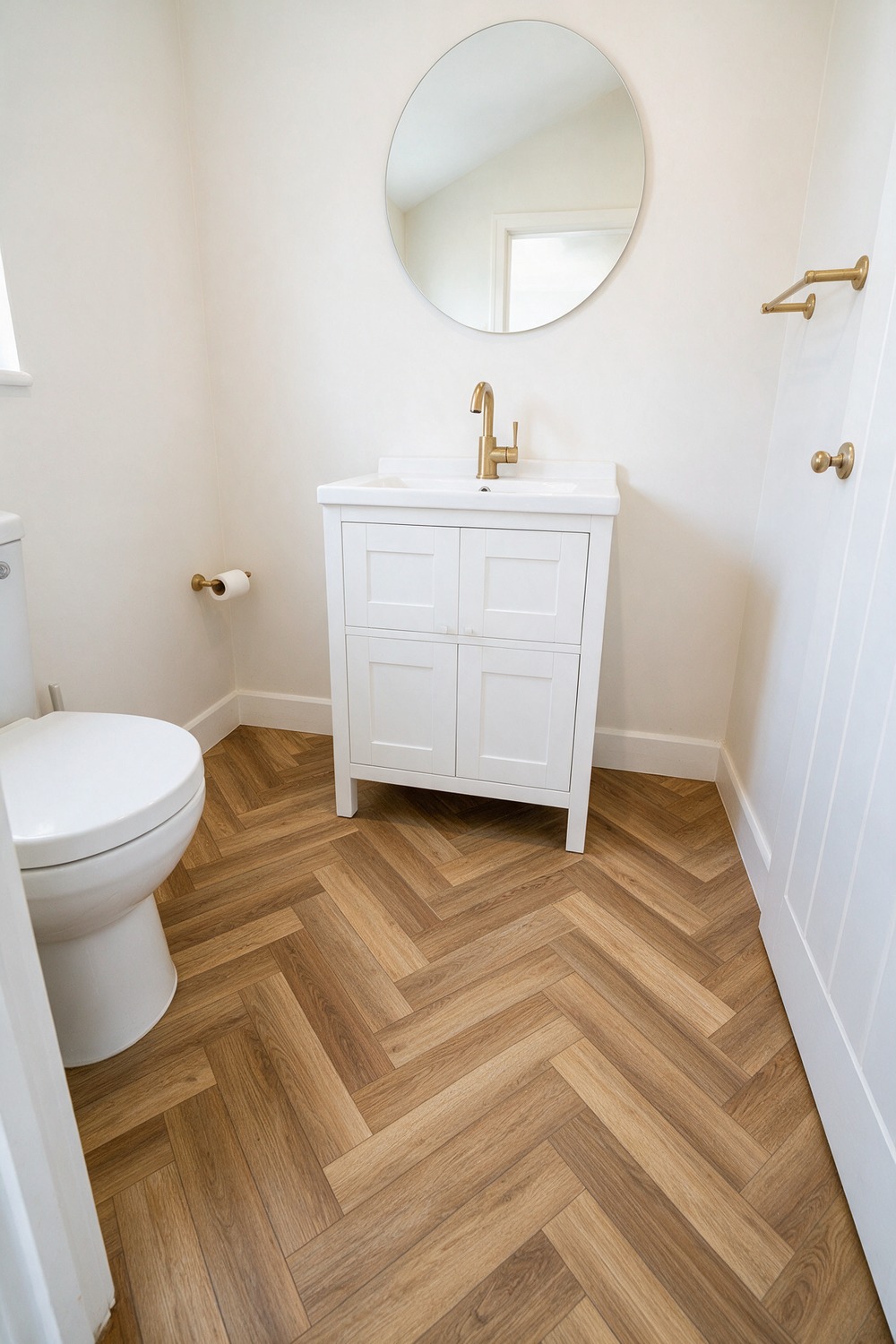
Take everything good about waterproof vinyl plank and lay it in a herringbone zigzag. Suddenly a practical floor has the tailored, parquet-grand look, without a drop of worry.
I like a warm mid-oak here, the planks slim so the V-shapes come thick and fast across the floor. It flatters a small bathroom more than people expect.
Let the floor be the pattern, keep the tap simple: a white vanity, a brushed brass mixer, and the herringbone doing all the talking below.
17. Stone Look Vinyl Bathroom Flooring
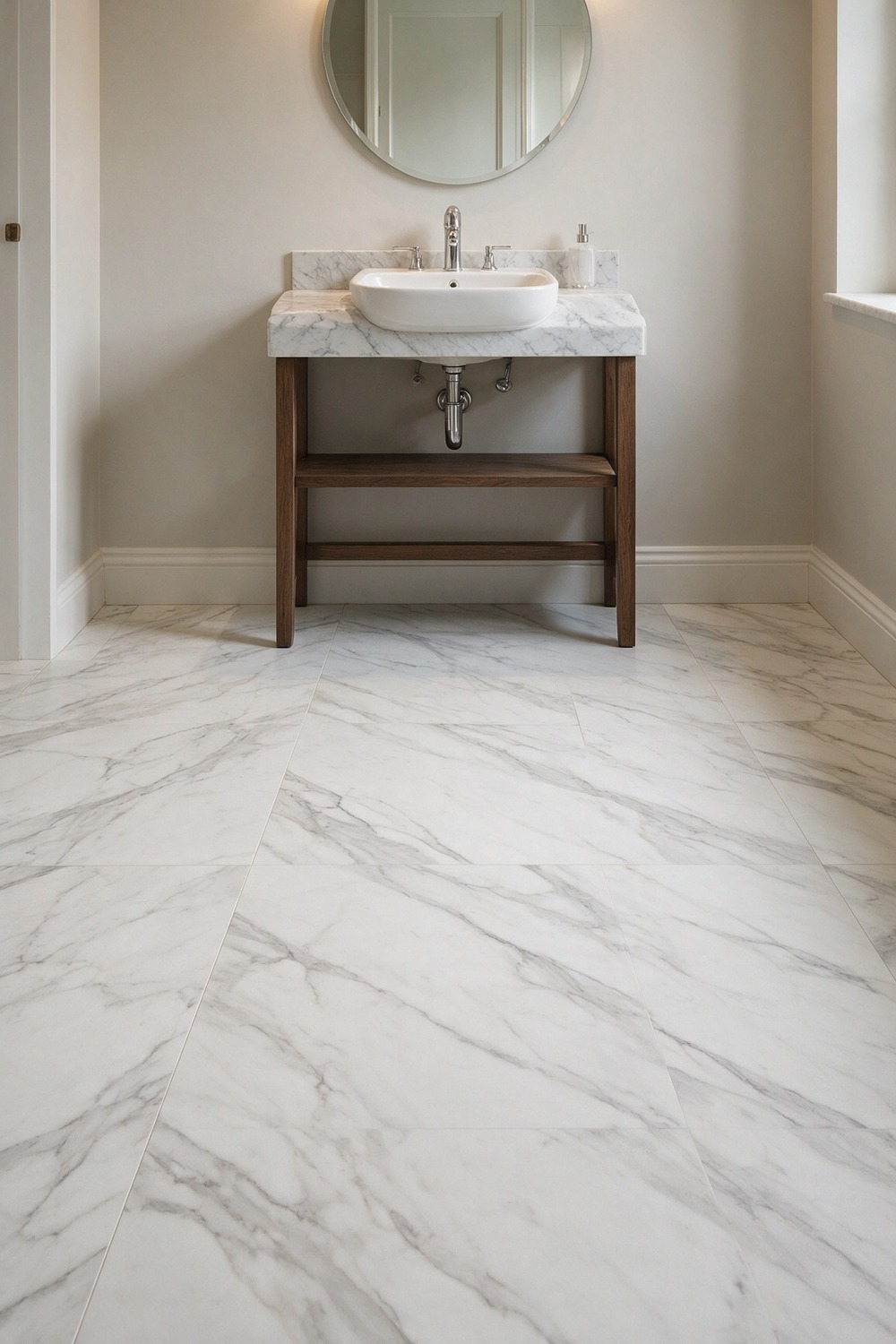
This is the cheat code I recommend most. Stone-look vinyl gives you the face of honed marble or travertine with none of the cold, the sealing, or the cracking.
My pick is a large-format marble look, soft white with grey veining, in big 18 by 36 pieces so it reads like a slab floor in a boutique hotel.
Keep the fittings elegant: a marble-topped vanity, polished chrome, a round mirror. The floor whispers luxury while quietly shrugging off every splash.
Which Bathroom Flooring Is Right for You
If you rent, start with peel-and-stick or a loose-lay sheet vinyl. Zero risk, big payoff, and nothing your landlord will frown at. You can change your mind next year.
If you want warm and natural, cork and bamboo are your friends, with real wood or teak when you are ready to look after them a little. They reward the care.
If you just want it tough and handsome and done, this is where SPC, LVP, and stone-look vinyl win every time. Waterproof, hard-wearing, and genuinely good-looking.
And if pattern is your love language, parquet, herringbone vinyl, or a black-and-white check will make the floor the thing people notice first. Follow the look that makes you grin.
Bathroom Flooring, Answered
What is the most waterproof bathroom floor? Sheet vinyl and rigid SPC are the safest bets, because both shrug off standing water. Sheet vinyl wins on seamlessness, SPC wins on toughness underfoot.
Can I really put wood or laminate in a bathroom? Yes, with care. Choose engineered wood or a water-resistant laminate, seal every edge, and wipe up puddles. A well-ventilated family bathroom handles it beautifully.
What is the most budget-friendly option that still looks good? Peel-and-stick and basic vinyl tile sit at the low end, sheet and laminate in the middle, and real wood, teak, and parquet at the splurge end.
Which is easiest to install myself? Peel-and-stick is the true weekend job. Click-together LVP, SPC, and laminate are very doable too. Sheet vinyl and parquet are the ones I would hand to a pro.
How long does a bathroom floor take to fit? A small peel-and-stick refresh is an afternoon. A click-plank floor is a weekend. Sheet vinyl or a glued parquet, plan for a pro and a day or two.
What should I ask the fitter for? Ask for a moisture-sealed perimeter, a waterproof underlay where the product suits one, and silicone, not grout, where the floor meets the bath or shower tray.
Pick the floor that makes you happy to walk in barefoot, then start small. One sample board set on the floor, one quiet morning to look at it, and you will know. Your best bathroom starts from the ground up.
More stories
Share this story