20 Wet Room Bathroom Ideas for a Seamless, Spa-Like Space

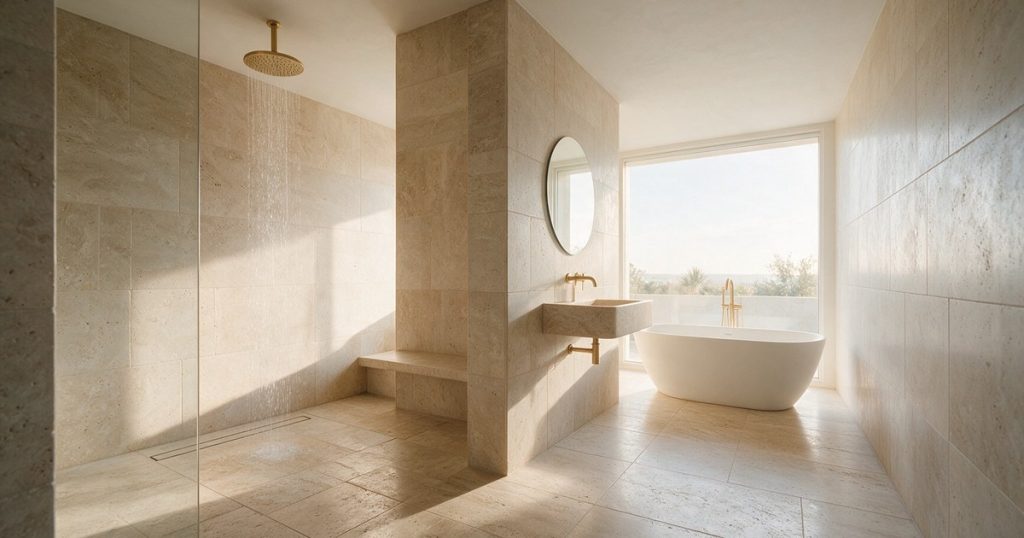
I used to think a wet room was just a fancy way of saying the floor is going to get soaked. I was wrong, and happily so.
Done right, it is the calmest bathroom there is. One open, fully-tiled space with the shower simply living in it. No tray to step over, no plastic enclosure fogging up in the corner.
That is the whole appeal, a room that feels open and seamless, where water just runs to a drain in the floor and everything else stays serene. Below are twenty wet room looks worth stealing, each with the palette, the tile, and the one move I would start with.
1. Small Wet Room Bathroom
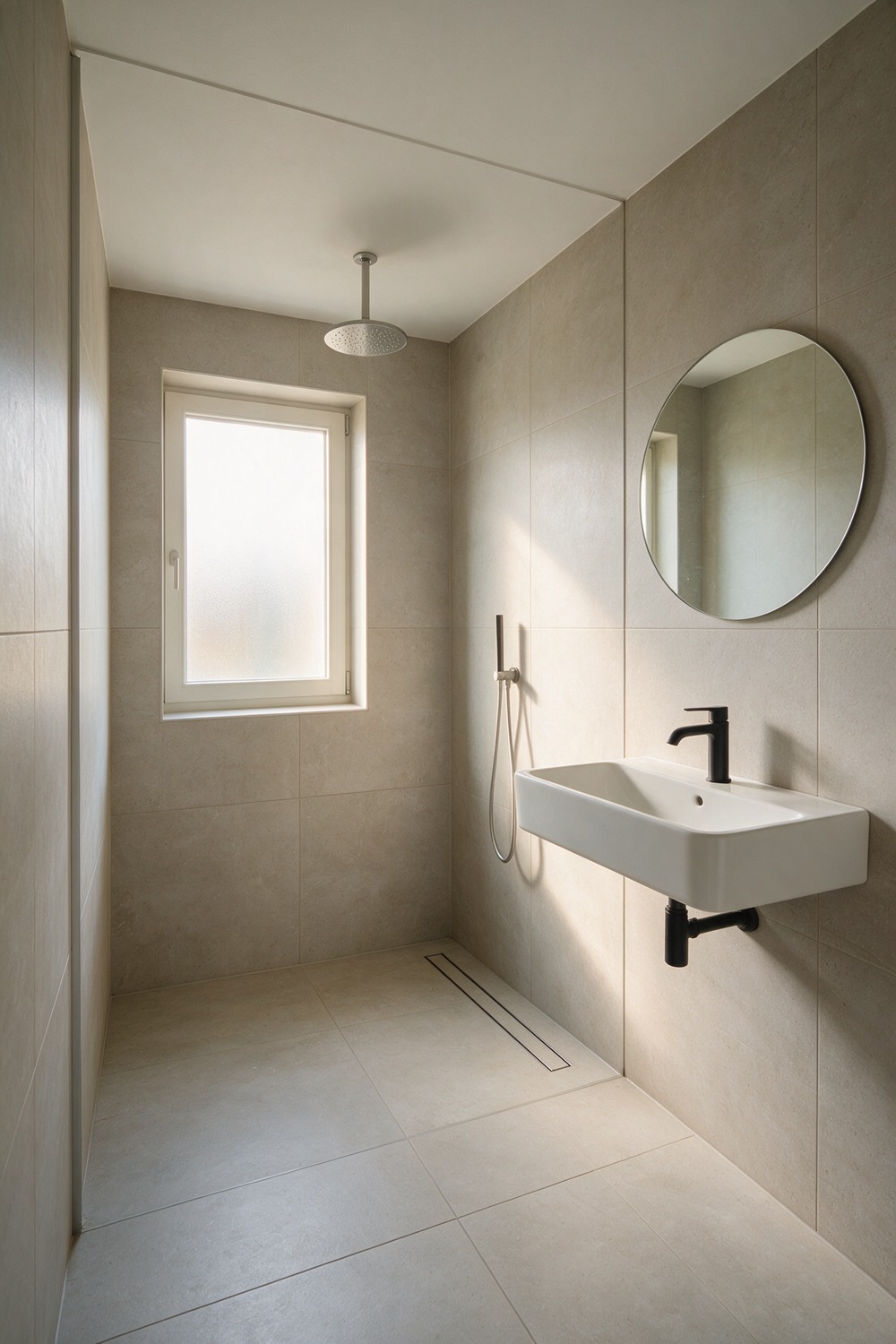
Here is the counterintuitive truth: a wet room is the best thing that can happen to a tiny bathroom. Lose the tray and the glass box, and a cramped space finally breathes.
Keep it pale so the eye travels. Soft greige walls, something like Dulux Chic Shadow, and one continuous large-format porcelain running floor to ceiling so there are barely any grout lines.
Start with the floor tile running straight into the shower, uninterrupted. That single unbroken run is what makes it feel bigger than it is.
2. Modern Wet Room Bathroom
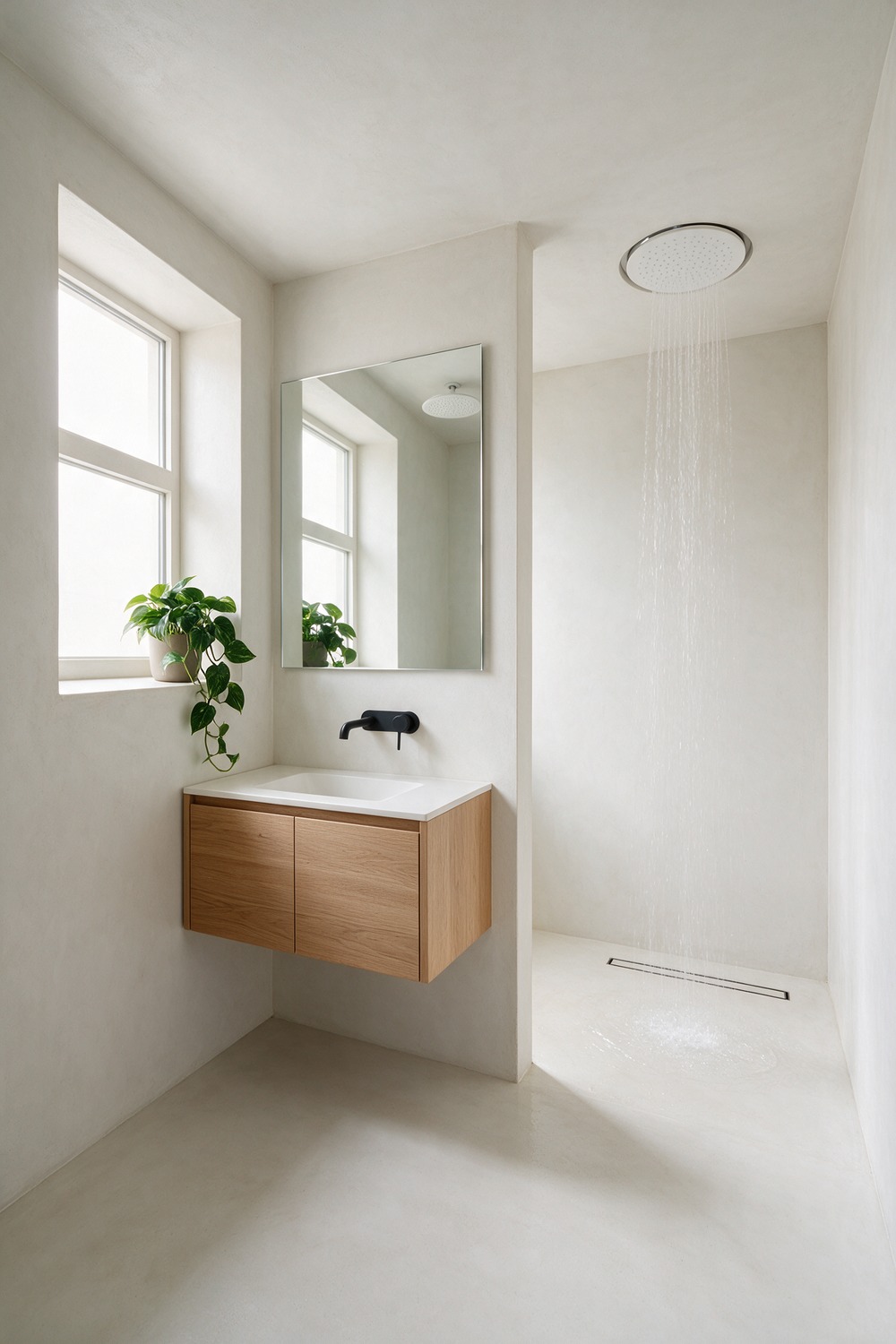
Modern, to me, means nothing is fussy and everything has a reason. A floating vanity, a frameless mirror, a rain head flush in the ceiling.
Keep the palette cool: off-white microcement, a matte-black mixer, one trailing pothos. Paint any wall Benjamin Moore White Dove so the black reads sharp.
3. Minimalist Wet Room Bathroom
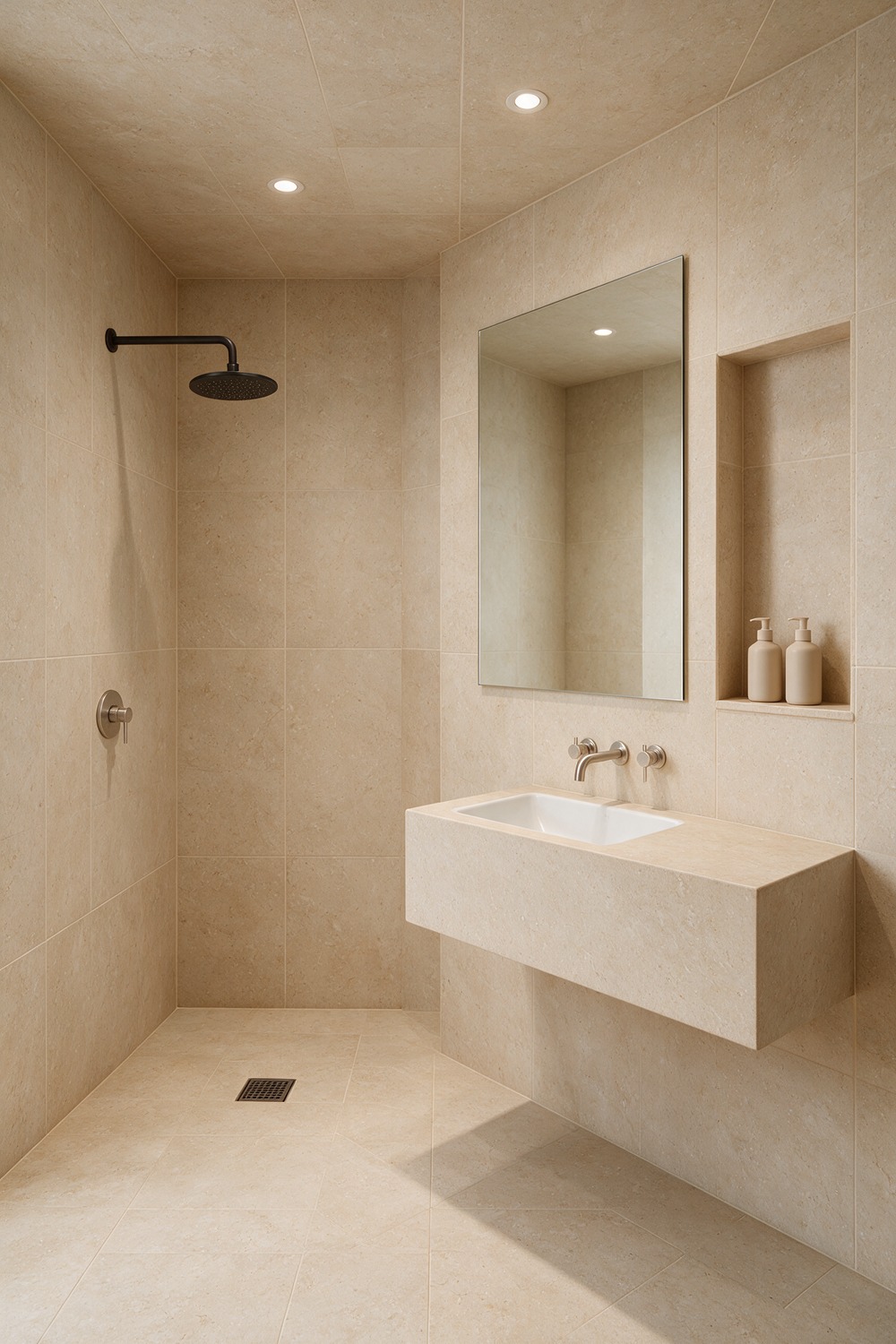
Minimalist does not mean cold. It means edited. Every surface is doing one job, and there is nowhere for clutter to land.
Go tonal: a single oatmeal limestone tone across walls and floor, a slab of honed stone for the vanity, a recessed niche instead of a shelf so the wall stays flat. The tap is wall-mounted to keep the counter clear.
Pro tip: choose a wall-hung toilet with a concealed cistern. A flat, calm wall is the whole dream. For paint near the mirror, a chalky white like Little Greene Shirting.
4. Luxury Wet Room Bathroom
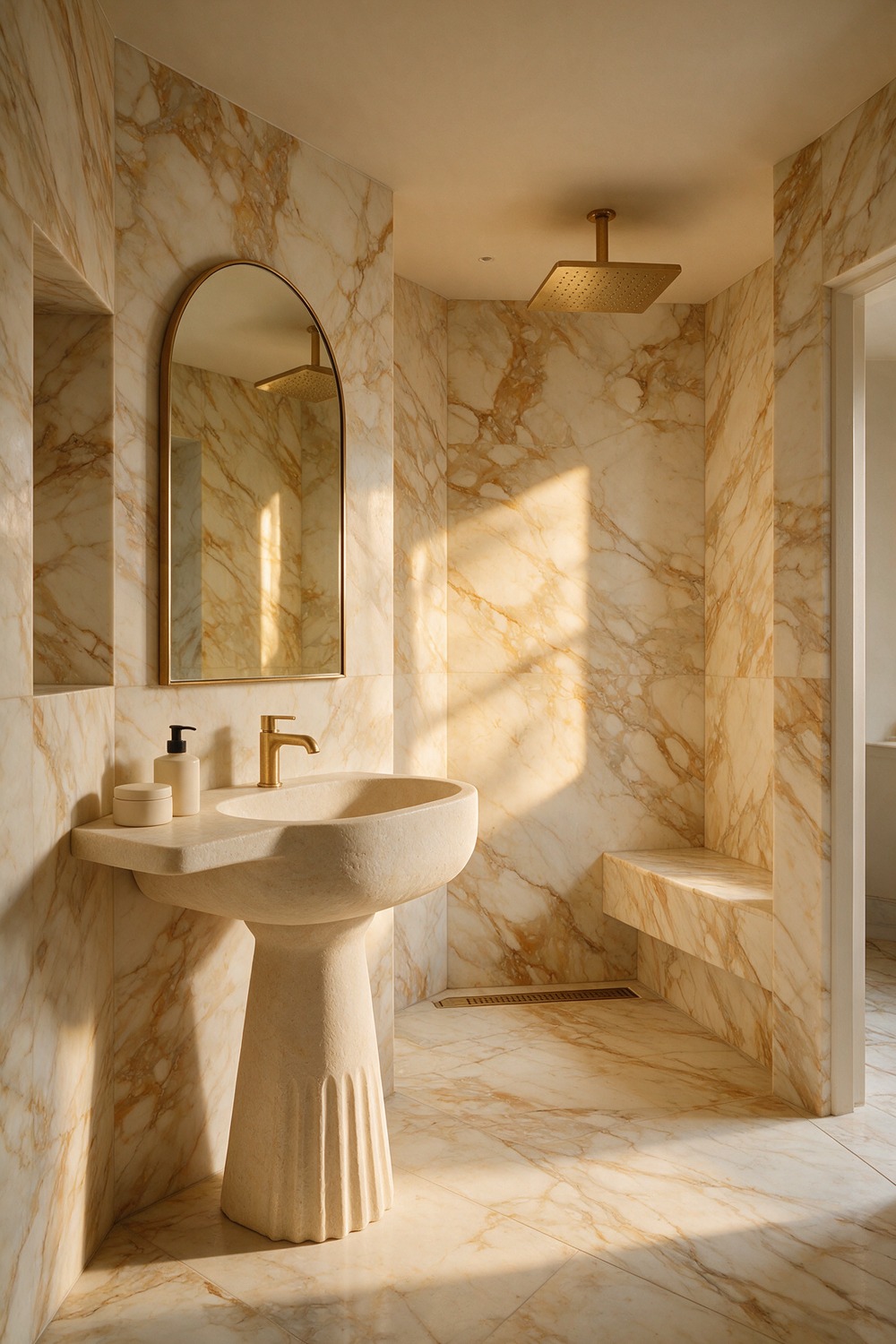
Luxury in a wet room is about material, not gold taps.
The splurge that actually reads is book-matched stone, two slabs mirrored so the veining flows across the wall like a Rorschach you would happily stare at. Warm marble in cream and caramel, a carved stone basin, unlacquered brass left to patina over the years.
Add underfloor heating so the tile is warm underfoot, and a built-in bench to sit under the rain like it is your own spa. Walls that are not stone get a soft putty, think Farrow & Ball Elephant’s Breath.
Begin with the stone and let every finish follow its temperature. Warm stone wants warm brass, never chrome.
5. Wet Room With Freestanding Tub
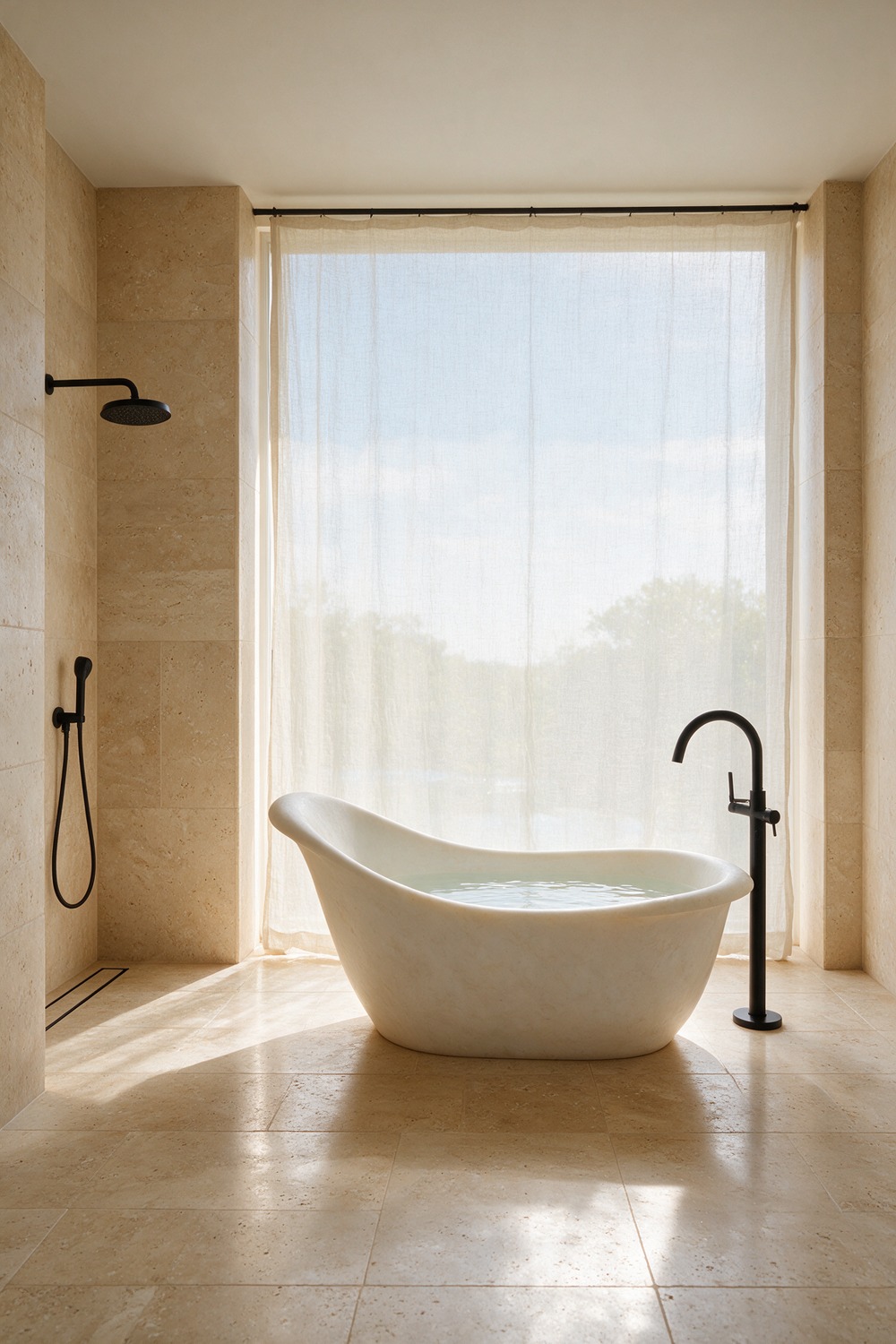
A freestanding tub inside a wet room is my favourite kind of showing off, because it is so practical. The whole floor is tanked, so the tub sits right in the splash zone without a care.
I love a matte-stone slipper tub with a floor-mounted filler rising beside it on one clean riser. Behind it, large travertine tile, a plaster ceiling, a sheer linen blind. Palette in sand and bone with black accents.
Place the tub against the window first. The light pooling over the water does all the romance for you.
6. Wet Room With Glass Panel
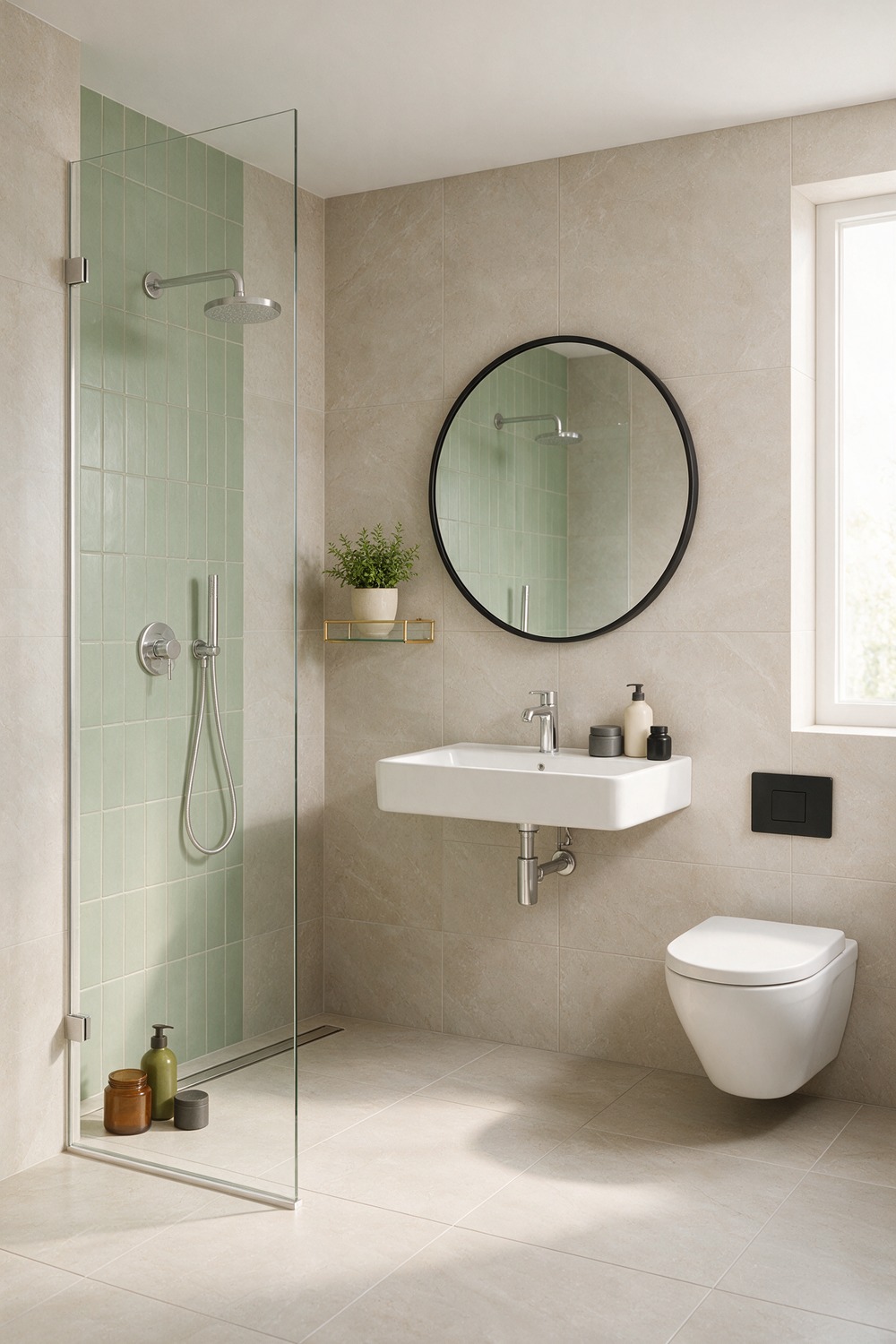
If you want one small boundary, a single fixed glass panel is the elegant way to do it. It keeps spray off the toilet and towels without closing the room in.
Go frameless, floor-mounted, crystal clear, with a vertical stack tile in a soft sage behind it to mark the shower wall, something like Sherwin-Williams Clary Sage. Leave a generous open gap at one side so you walk in, never a door.
7. Wet Room With Large Format Tile
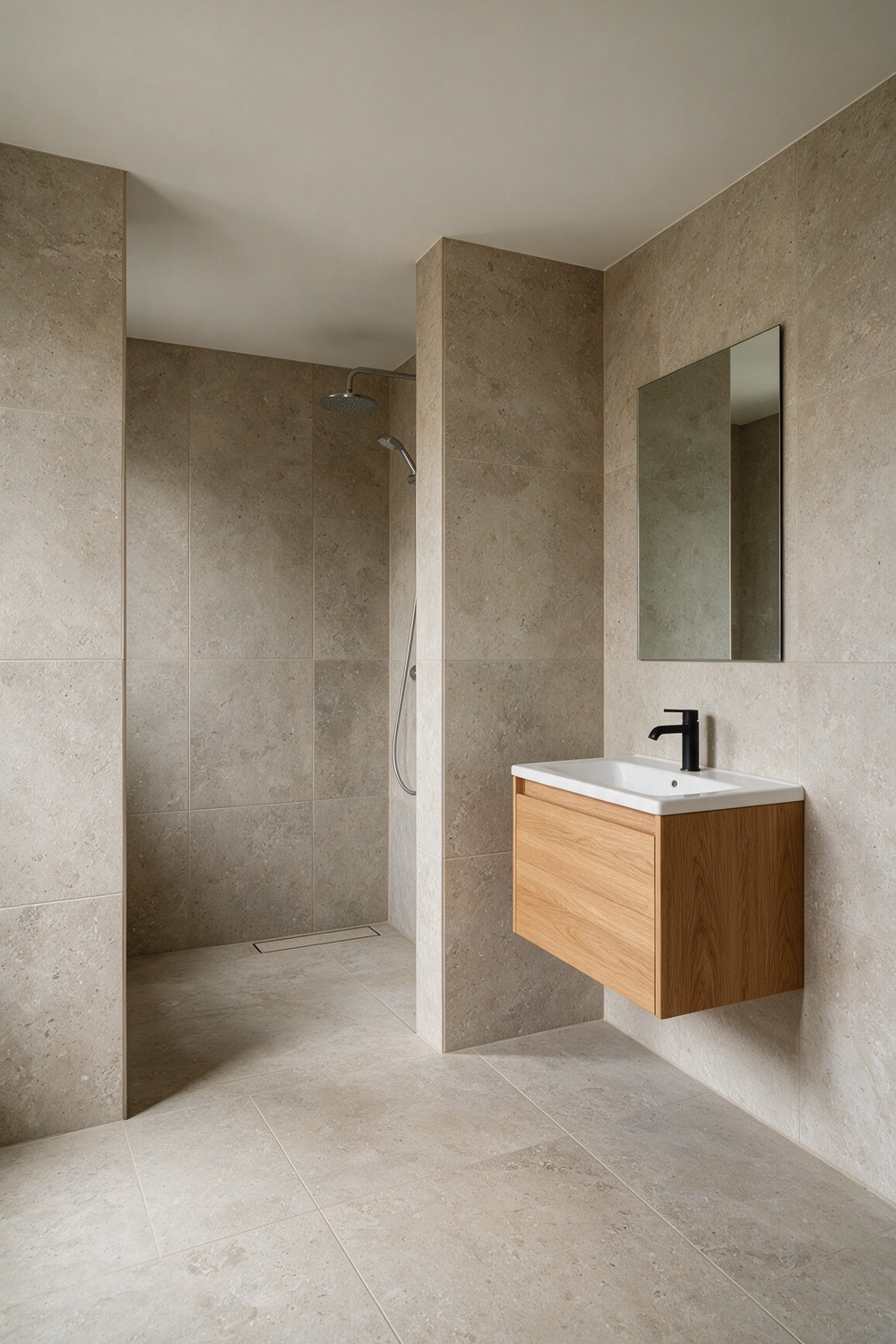
Fewer grout lines, fewer places for the eye to snag, far less scrubbing. Large-format tile is the quiet hero of a calm wet room, and the one I recommend most often.
Run a 60-by-120 porcelain in a honed limestone look across the floor and up the walls. Match the grout to the tile so the surface looks seamless, and lay the floor on a gentle fall toward a tile-insert drain that almost vanishes.
Decide your drain type before anything else. A tile-insert channel is what lets the big tile carry right through the shower.
8. Wet Room With Pebble Floor
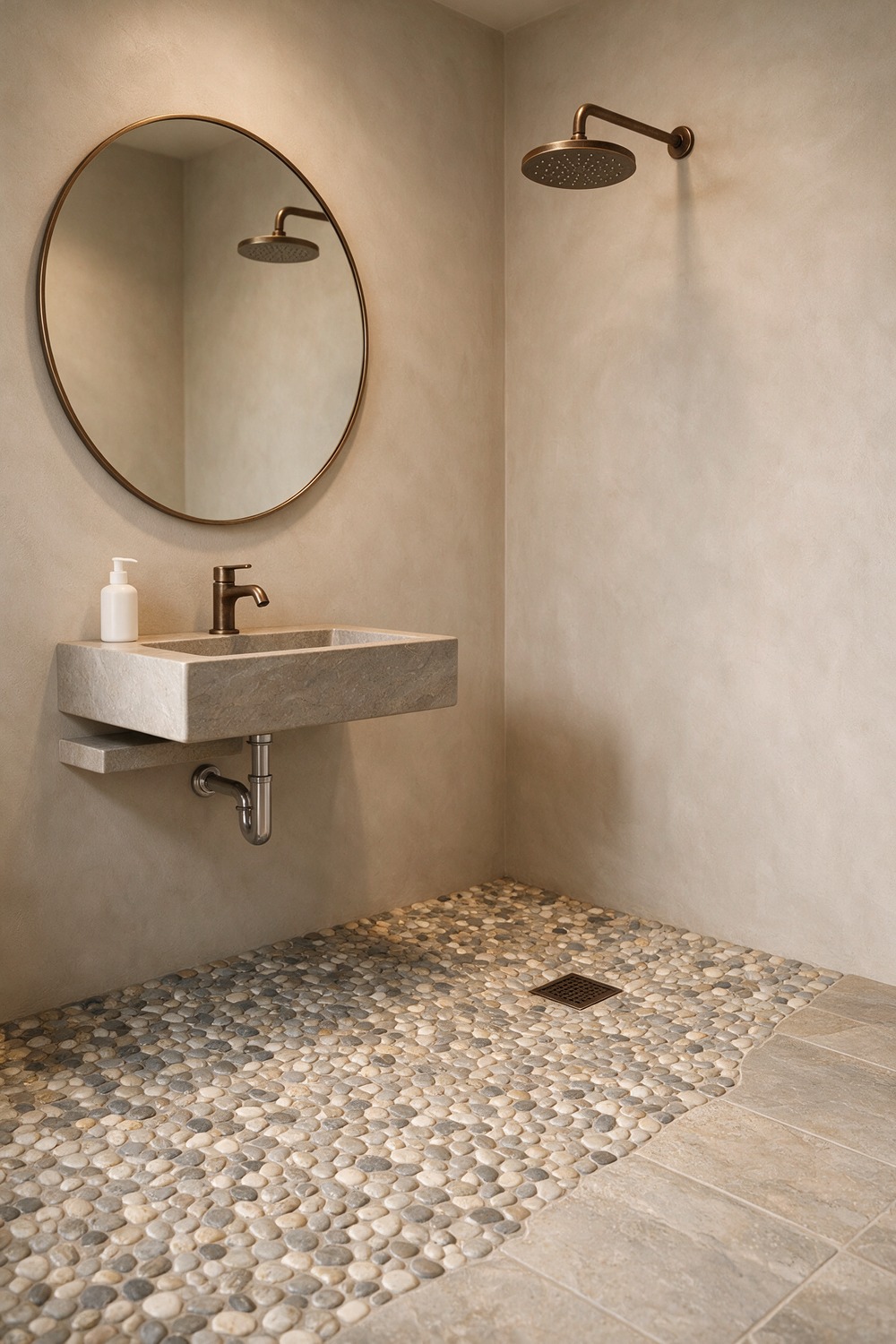
Ever stood on a river-pebble floor barefoot? It is an instant foot massage, and in a wet room all that texture is naturally grippy where things get wet.
Keep the pebbles to the shower zone, a tumbled grey-and-cream mosaic on a tight fall to the drain, then switch to a smooth matching tile elsewhere. Walls in soft mushroom plaster, fixtures in aged bronze. Seal the pebble well and let its warm greys lead.
9. Wet Room With Natural Stone
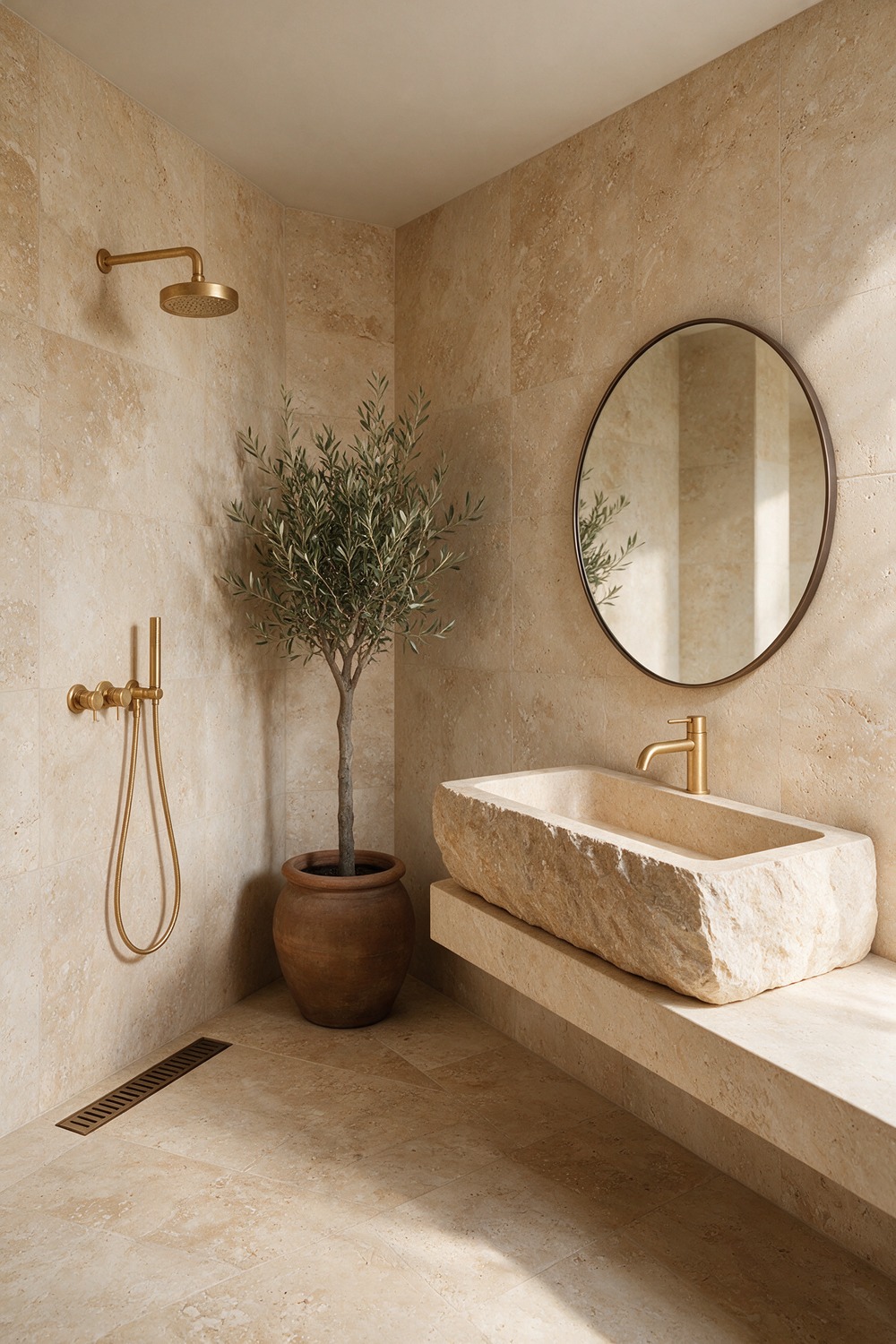
Natural stone is the soul of a wet room. It is what humans have bathed against for a few thousand years, and it still feels right.
Go for honed travertine across the walls, warm and faintly fossilised, with a matching stone floor. A chunky stone trough basin and a slim brass tap keep it earthy. One olive tree in a terracotta pot brings it to life.
Where you need paint, a warm limewash like Bauwerk Raw echoes the stone’s chalkiness. Seal the stone properly, that part is non-negotiable, then let its variation be the only pattern in the room.
10. Wet Room With Tadelakt Walls
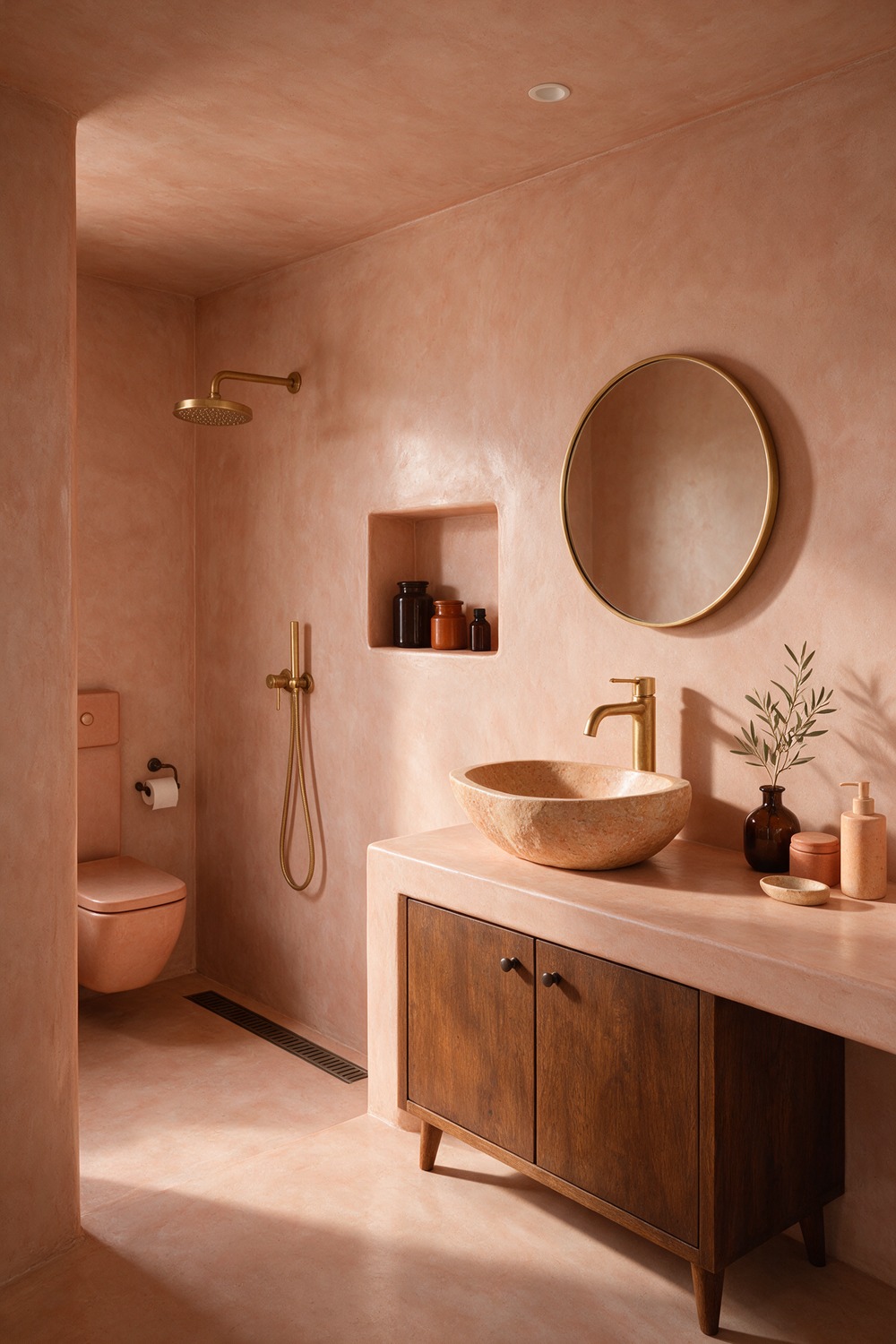
Let me teach you one word that will change how you think about bathroom walls: tadelakt. It is a polished Moroccan lime plaster, naturally waterproof, with a soft seamless sheen that looks poured rather than built.
No tiles, no grout, just one continuous hand-burnished surface that can wrap the walls and the shower in a single unbroken skin.
I would do it in a warm clay-pink or dusty terracotta, with a carved stone basin and brass fittings. The light moves across tadelakt like it moves across skin, catching every subtle hand-trowelled ripple.
Hire a specialist for this one. Then choose your clay tone and let the whole room be that single colour.
11. Wet Room With Microcement
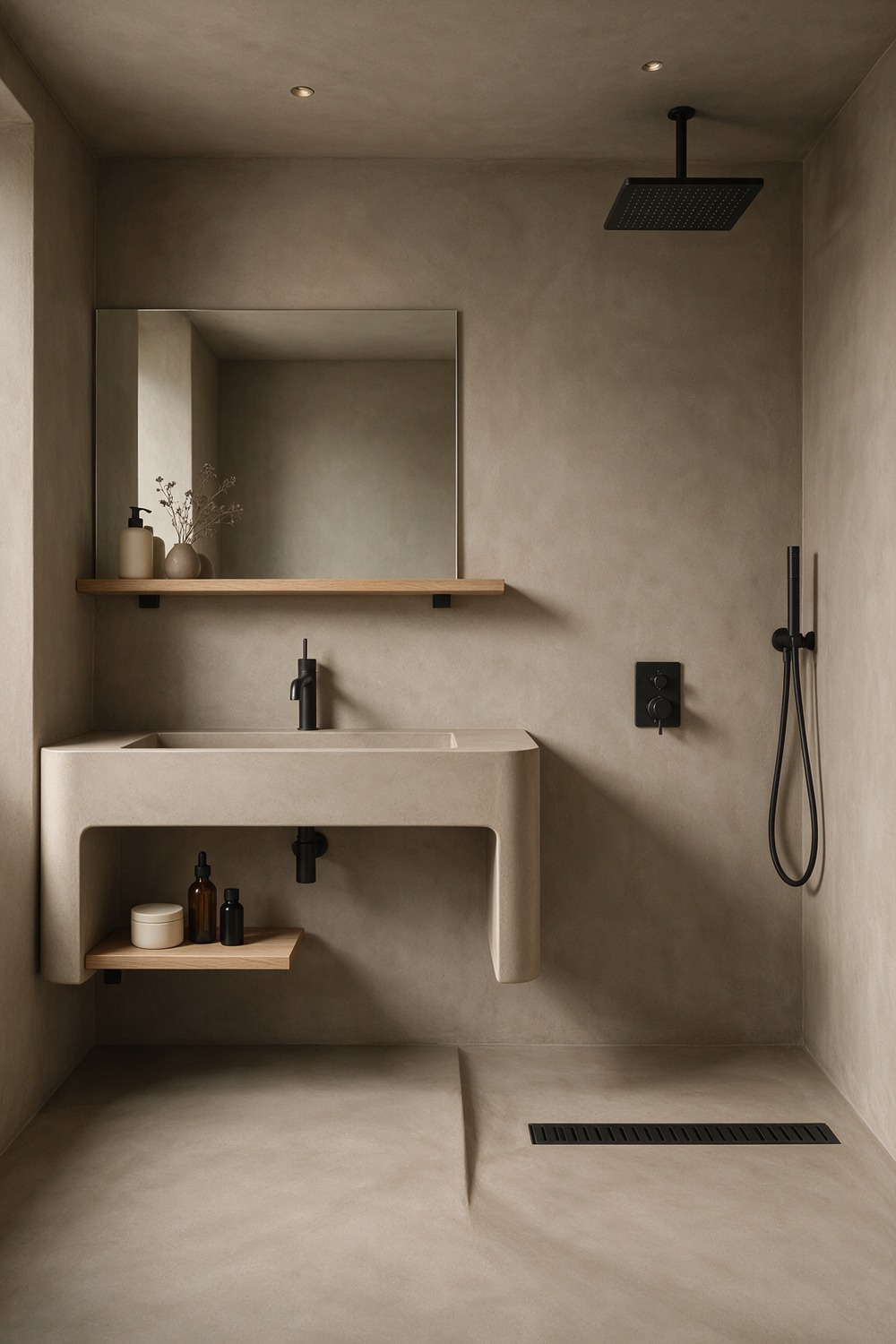
Microcement is tadelakt’s cooler, more modern cousin. A thin cement-based coating troweled over everything, floors, walls, even the vanity, for a seamless finish with zero grout lines.
My palette is moody and monolithic: a single greige-taupe wrapping the whole space so it reads like one sculpted volume. Matte-black brassware, a black linear drain, a slab of oak to warm the concrete.
12. Wet Room With Black Fixtures
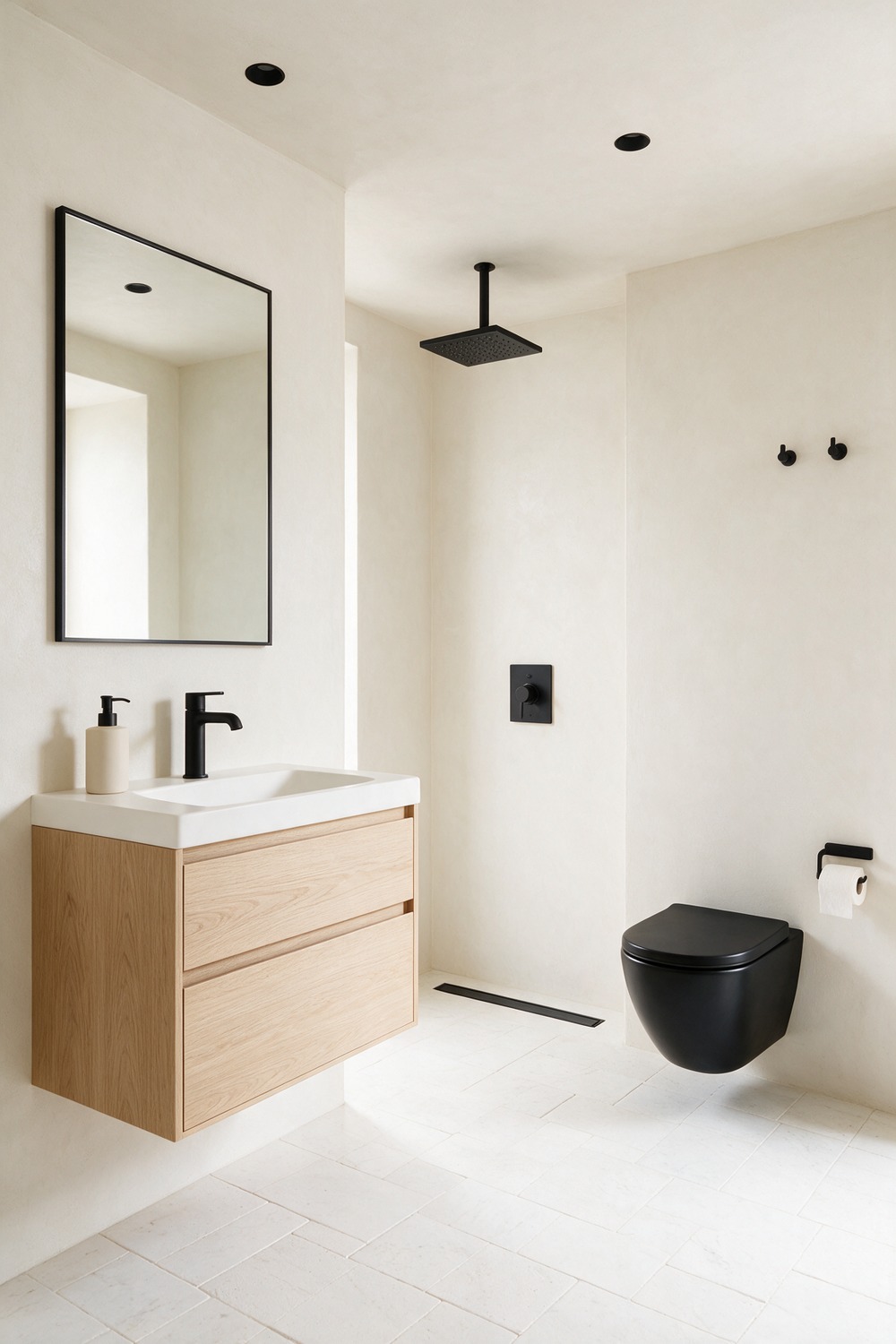
Black fixtures are the easiest way to give a pale wet room a backbone. Against all that stone and plaster, matte-black taps and a black rain head act like eyeliner.
Keep the surfaces light so the black can sing: creamy microcement, a pale oak vanity, a soft white limestone floor, a greige wall like Behr Perfect Taupe. The trick is consistency. One black tone on every piece of hardware, or it looks like you ran out of the first one.
13. Wet Room With Rain Shower
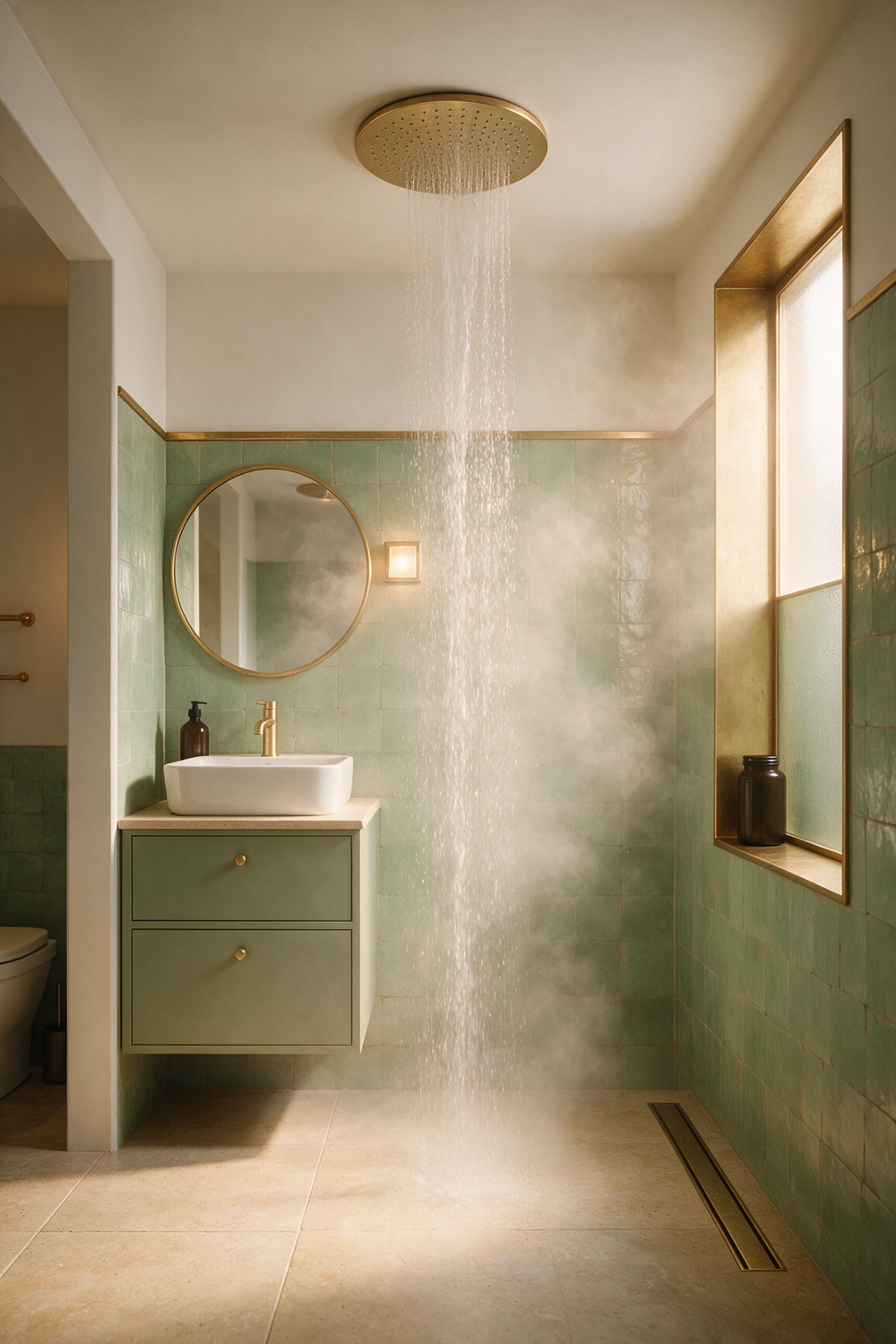
The rain shower is the heart of most wet rooms, and the version worth having is the big overhead one. A wide ceiling-mounted disc that drops water straight down like a warm summer storm.
Mount it flush in the ceiling, fed by a concealed thermostatic valve so there is nothing on the wall but a single control plate. Underneath, a generous open zone and a discreet floor drain.
Wrap the walls in a soft sage zellige for a little handmade shimmer, think Little Greene Aquamarine territory, with brushed-brass trim. Size the overhead head generously. The wider the better.
14. Wet Room With Wood Slat Accents
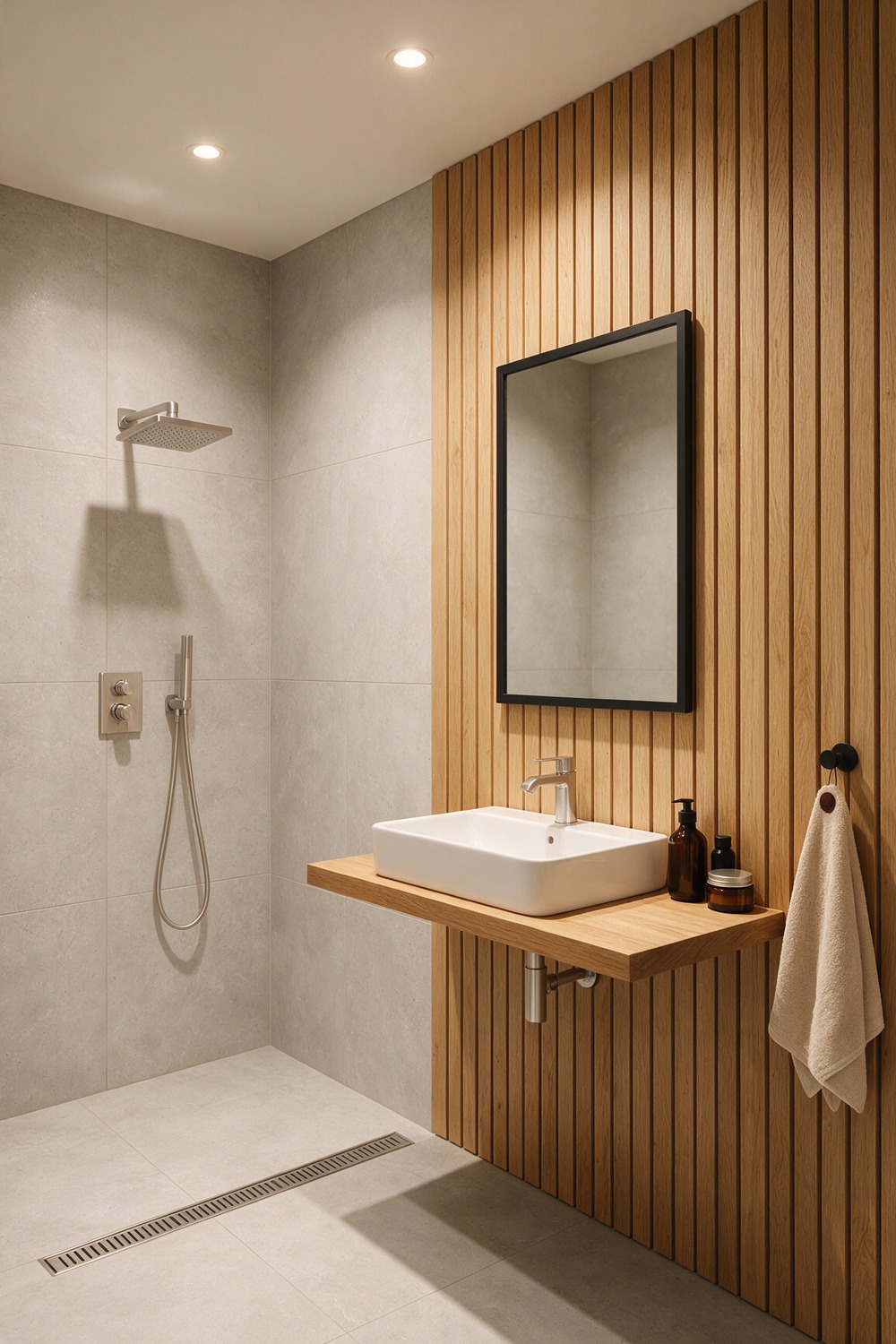
Wood in a wet room sounds reckless until you see it done right. The secret is slats: spaced, thermally-treated timber on a feature wall or as a duckboard underfoot, so water drains through and air moves around every piece.
I love a run of vertical oak-toned slats behind the vanity, warming up an otherwise cool stone room. Keep the rest spa-like, and use a proper marine or thermally-modified timber, never raw pine.
15. Wet Room With Skylight
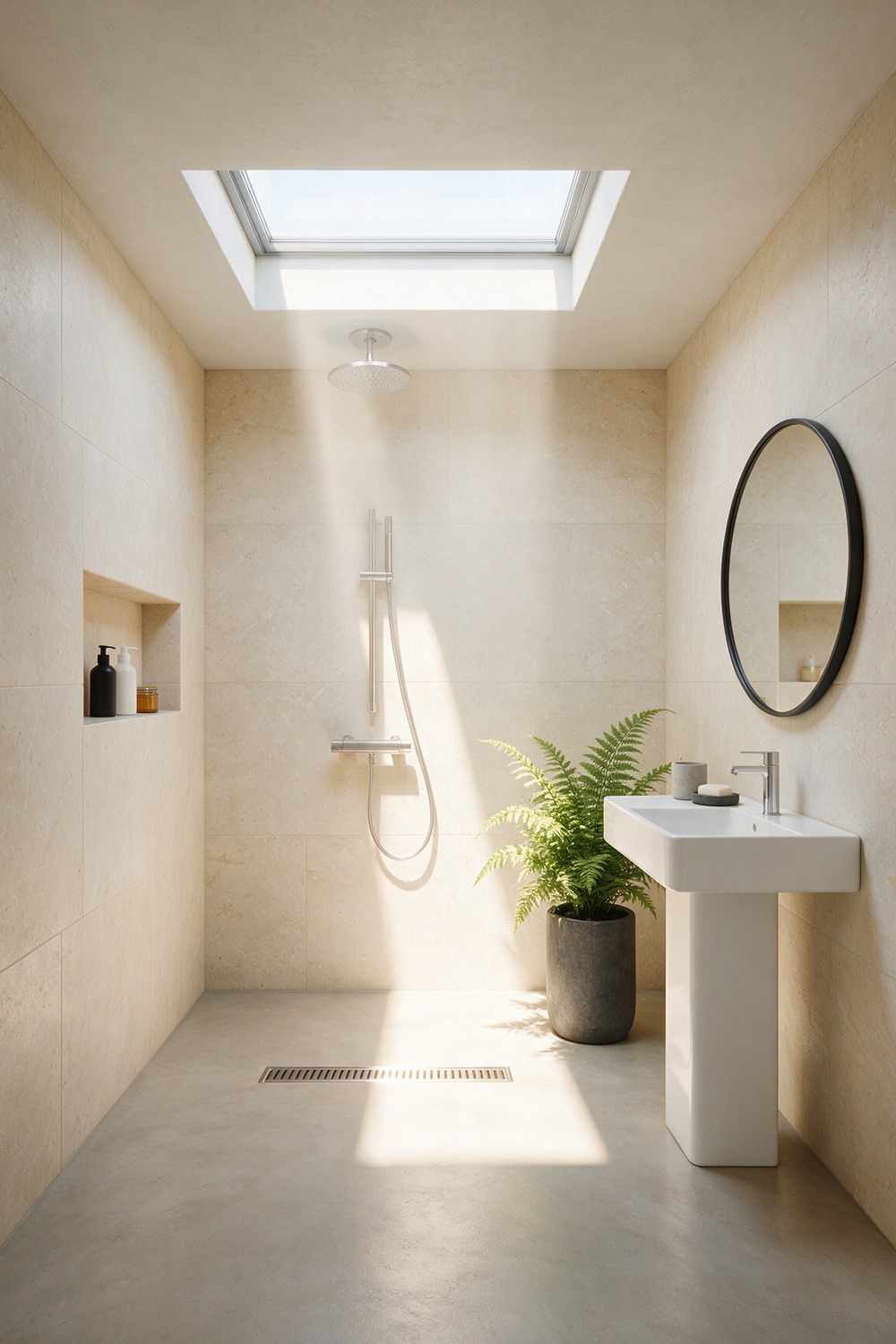
Pour natural light straight down into a wet room and the whole thing turns into a sanctuary. A skylight over the shower means you are rinsing off under the actual sky.
Let the light be the drama and keep everything else hushed: pale limestone walls, a microcement floor, a simple floor-standing basin, a single fern where the beam lands. Paint the surrounds a chalky white like Dunn-Edwards Whisper so daylight bounces.
Position the skylight over the shower, not the door. Showering in a shaft of midday sun is a feeling you never get tired of.
16. Wet Room With Built-In Bench
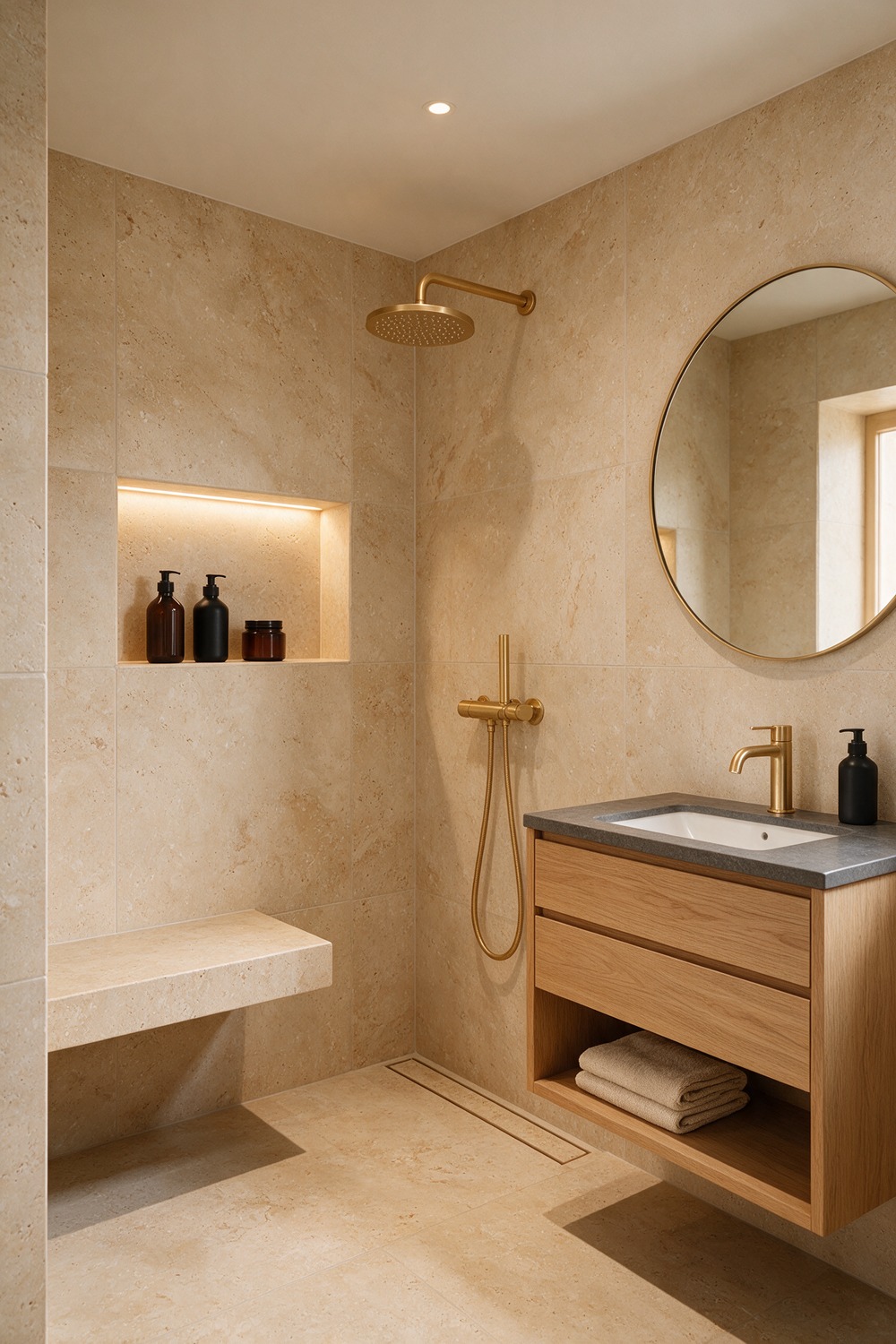
A built-in bench is the detail that quietly turns a wet room into a spa. Somewhere to sit under the rain head, to shave a leg, to rest a stack of warm towels.
Build it from the same stone or microcement as the floor so it reads as architecture, a floating cantilevered slab with no visible legs. Tuck it along the shower wall under a recessed niche, in warm travertine and oak.
Cantilever it off a solid wall so the floor stays clear and the fall to the drain is never broken.
17. Wet Room With Toilet And Sink
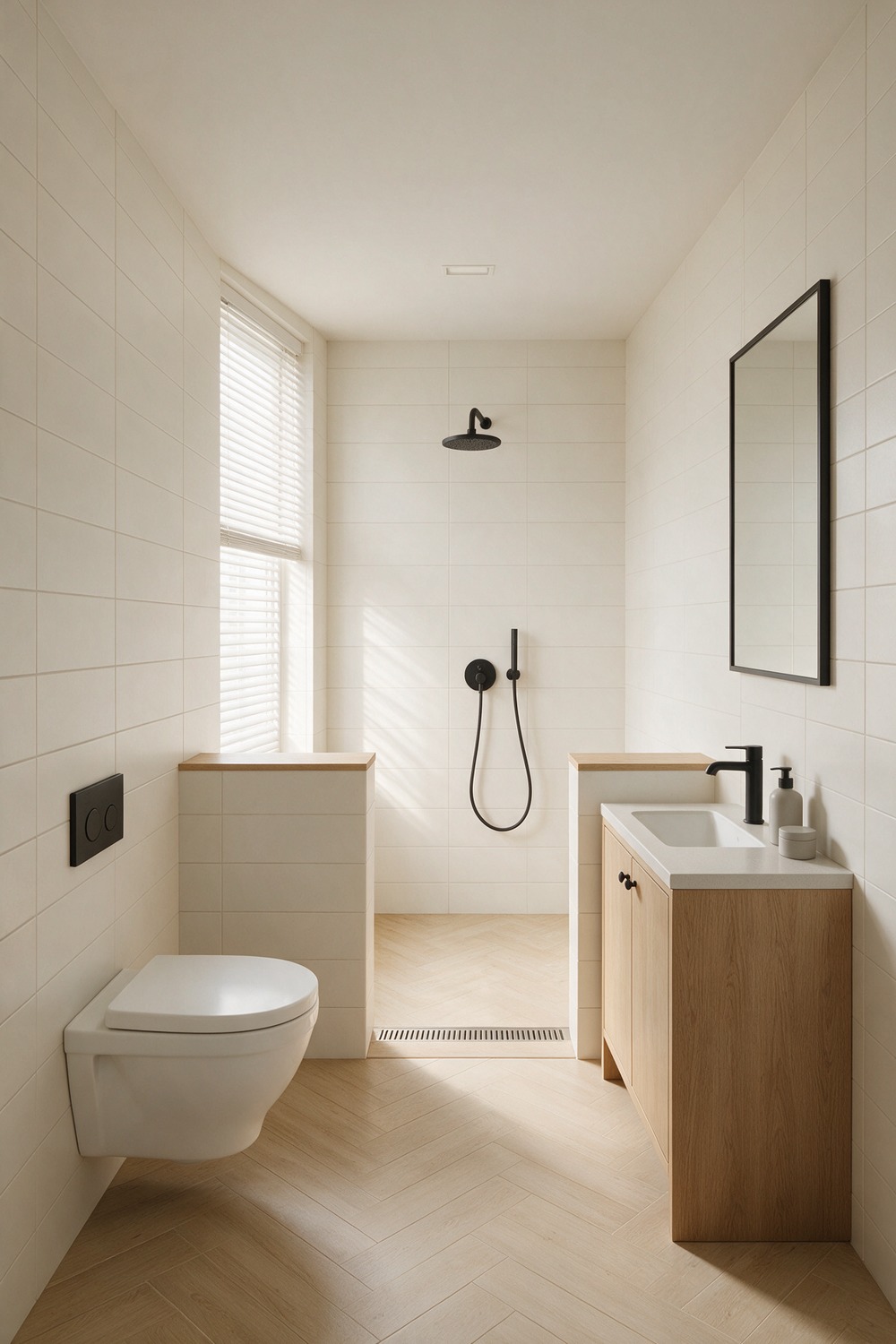
Not every wet room is a grand suite. Plenty are the full practical deal, shower plus toilet plus basin, all sharing one tanked floor. The trick is keeping the loo and vanity out of the spray.
Zone it. Shower at the far end behind a short half-wall or a single glass panel, then a wall-hung toilet and a compact vanity on the dry side nearest the door.
Wall-hung everything keeps the floor clear for cleaning and drainage. A warm wood-veneer vanity softens all the porcelain, and matte-black taps tie it together.
Fall the whole floor gently toward the shower drain so the dry end always stays dry. That gentle slope is the one detail the whole room depends on.
18. Spa Style Wet Room Bathroom
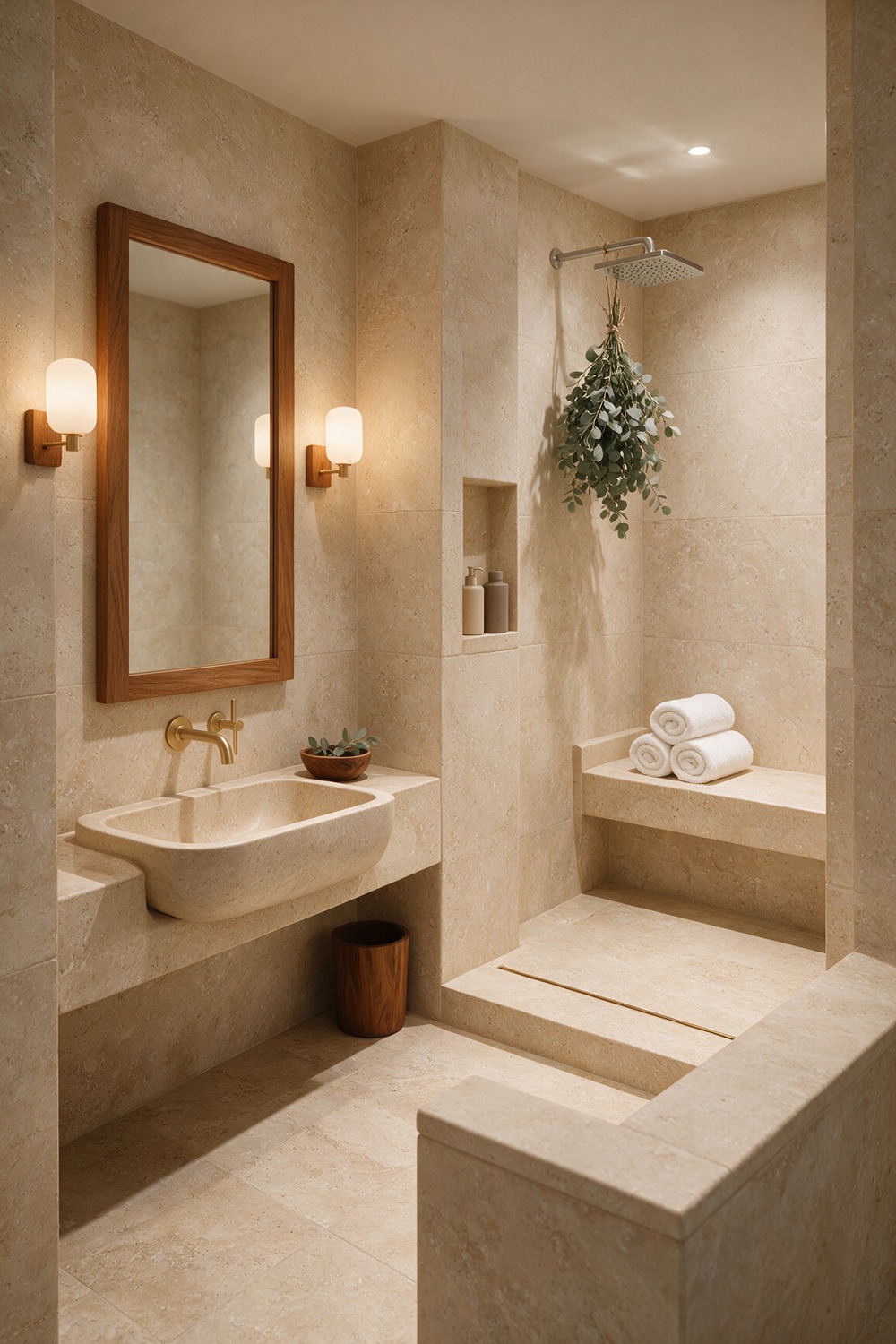
You know the drop in your shoulders when you walk into a good spa? That feeling is almost entirely about warmth, texture, and low light.
Build it from natural materials: honed travertine, teak, a stone trough basin, a built-in bench, a stack of rolled towels. Palette in warm sand and bone.
Hang a eucalyptus bunch from the rain arm so the steam releases its scent, light it low with warm 2700K pools, and set a fig candle on the shelf. Start with a dimmer switch, honestly. It is the cheapest spa upgrade there is.
19. Japanese Style Wet Room Bathroom
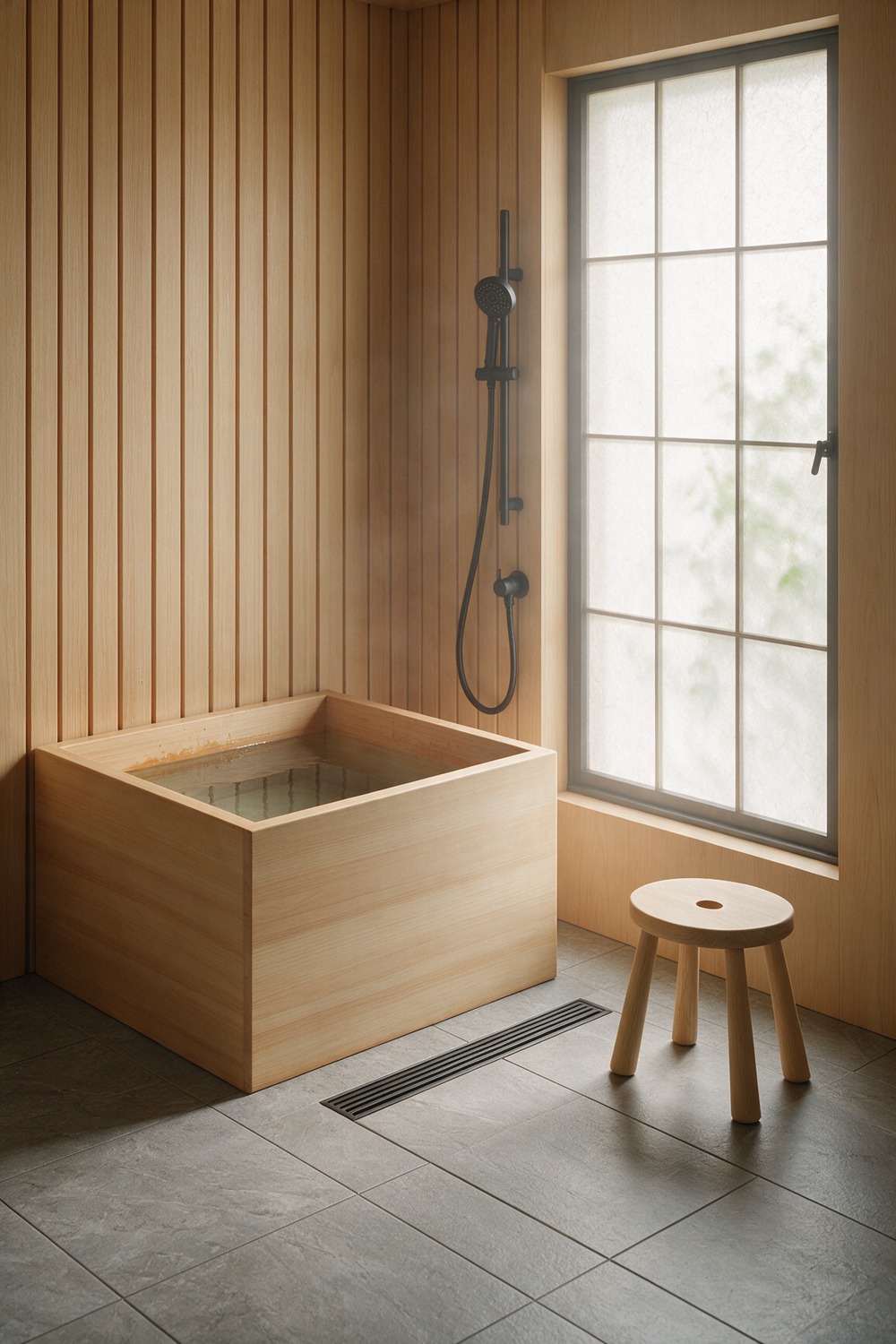
The Japanese got the wet room right centuries ago. The traditional ofuro bathroom is a wet room by design.
You wash first at a low handheld shower, then soak in a deep square tub of hot water. Wash outside the tub, soak inside it. It is the most considered bathing ritual there is.
So I would centre the room on a deep soaking tub, ideally hinoki cypress or a dark square stone, with a low wall-mounted handshower beside it. Pale wood slats, grey stone, a paper-screen softness at the window.
Palette: cedar, charcoal, mist. Keep it spare, almost empty. Choose the deep tub first. Everything in a Japanese wet room orbits the soak.
20. Wet Room With Terrazzo
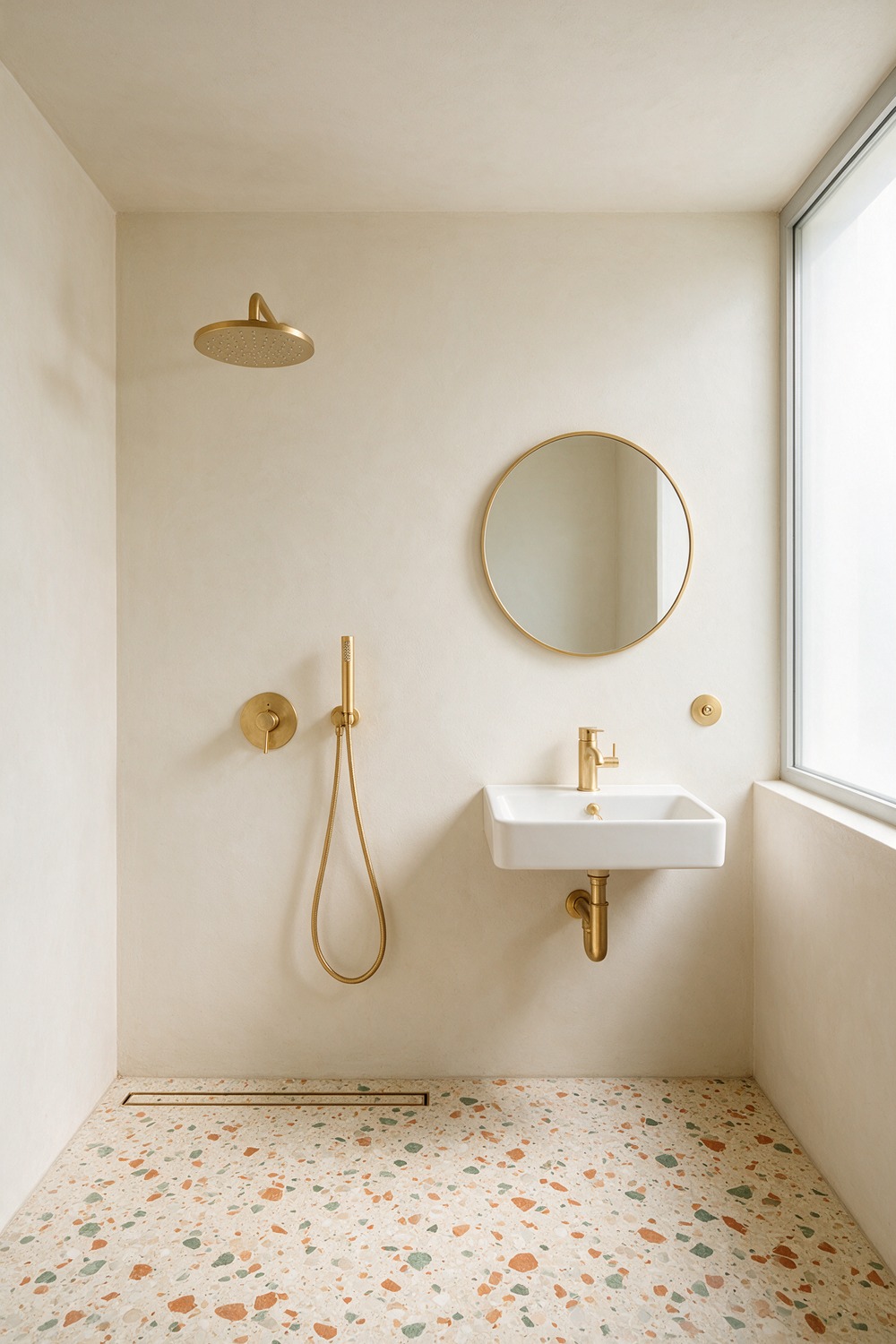
Terrazzo is having a moment, and a wet room is exactly where it belongs. Those chips of marble suspended in cement give you pattern and grip in one happy, waterproof surface.
Run a large-aggregate terrazzo across the floor and into the shower, keeping the base a warm cream with terracotta and sage flecks so it feels earthy rather than clinical. Pair it with plain plaster walls and a simple white basin. Brass taps pick up the warm chips.
Paint the walls a soft off-white like Backdrop Clean Slate. Let the terrazzo lead and keep everything else plain. One patterned surface per room is the rule.
Which Wet Room Style Is Right for You
Start with the room you have. If it is small, the seamless pale looks like large-format tile and microcement buy you the most space and calm. Have the square metres and the budget? The stone, tadelakt, and freestanding-tub schemes turn a wet room into a genuine retreat.
Then follow your temperature. Drawn to warm, enveloping, hand-made surfaces? Tadelakt, travertine, and the spa and Japanese looks are yours. Prefer crisp and contemporary? Microcement, black fixtures, and the modern and minimalist schemes will feel like home.
My honest advice: pick the one surface you fall for, whether it is the terrazzo, the pink plaster, or the pebble underfoot, and build the room around that single decision. A wet room is at its best when it reads as one idea, fully committed.
Wet Room Ideas, Answered
How much does a wet room cost to do? It sits at the higher end of bathroom projects, because the whole floor and lower walls must be fully tanked. A small scheme is mid-range; stone, tadelakt, or underfloor heating pushes it to splurge. Never cut corners on the tanking.
Can I do any of this myself? The styling and finishing, yes. The tanking and the floor fall, no. Getting the waterproofing and the slope to the drain right is a job for a pro. Tile, paint, and dress it yourself once the waterproofing is signed off.
How long does a wet room take? Usually a couple of weeks for a straightforward one, longer with specialist finishes like tadelakt or microcement, which need skilled application and proper curing time between coats.
What is the one thing worth spending on? The waterproofing and drainage, every time. After that, the floor surface, because it is the largest thing you see and touch. A beautiful stone or terrazzo floor carries the whole room.
What should I ask the tiler for? Ask for a fully tanked floor and lower walls, a clear plan for the floor fall toward the drain, and the drain position marked before any tiling starts. A linear channel drain is what lets a large-format tile sit flush.
Whether you are redoing a whole suite or just itching to lose that fiddly shower tray at last, a wet room rewards you every single morning. Pick the one surface you love, get the tanking done properly, and start there.
More stories
Share this story