20 Victorian Bathroom Color Ideas for Timeless Period Charm

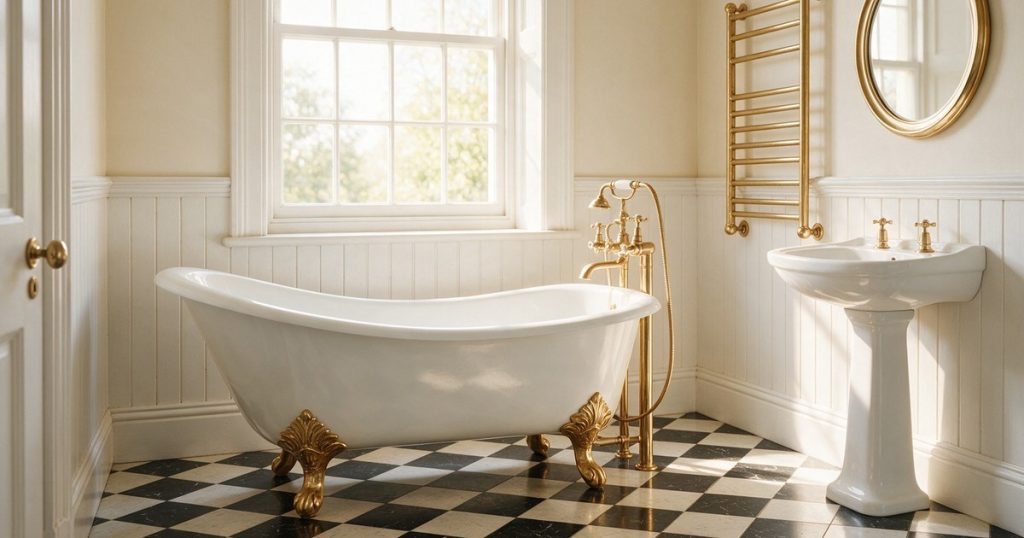
I used to think Victorian bathrooms were all fussy florals and a chill you could feel through your socks. I had them wrong. The good ones feel like a warm handshake from another century.
The whole look turns on one thing, unapologetic colour. A proper Victorian bathroom was never beige. It leaned into inky greens, dried-blood reds, and soft dusty pinks, then let a clawfoot tub and a patterned floor carry the rest.
Below you will find twenty colour-led takes, each with its palette, a paint to match, and the one move that gets you started.
1. Dark Victorian Bathroom
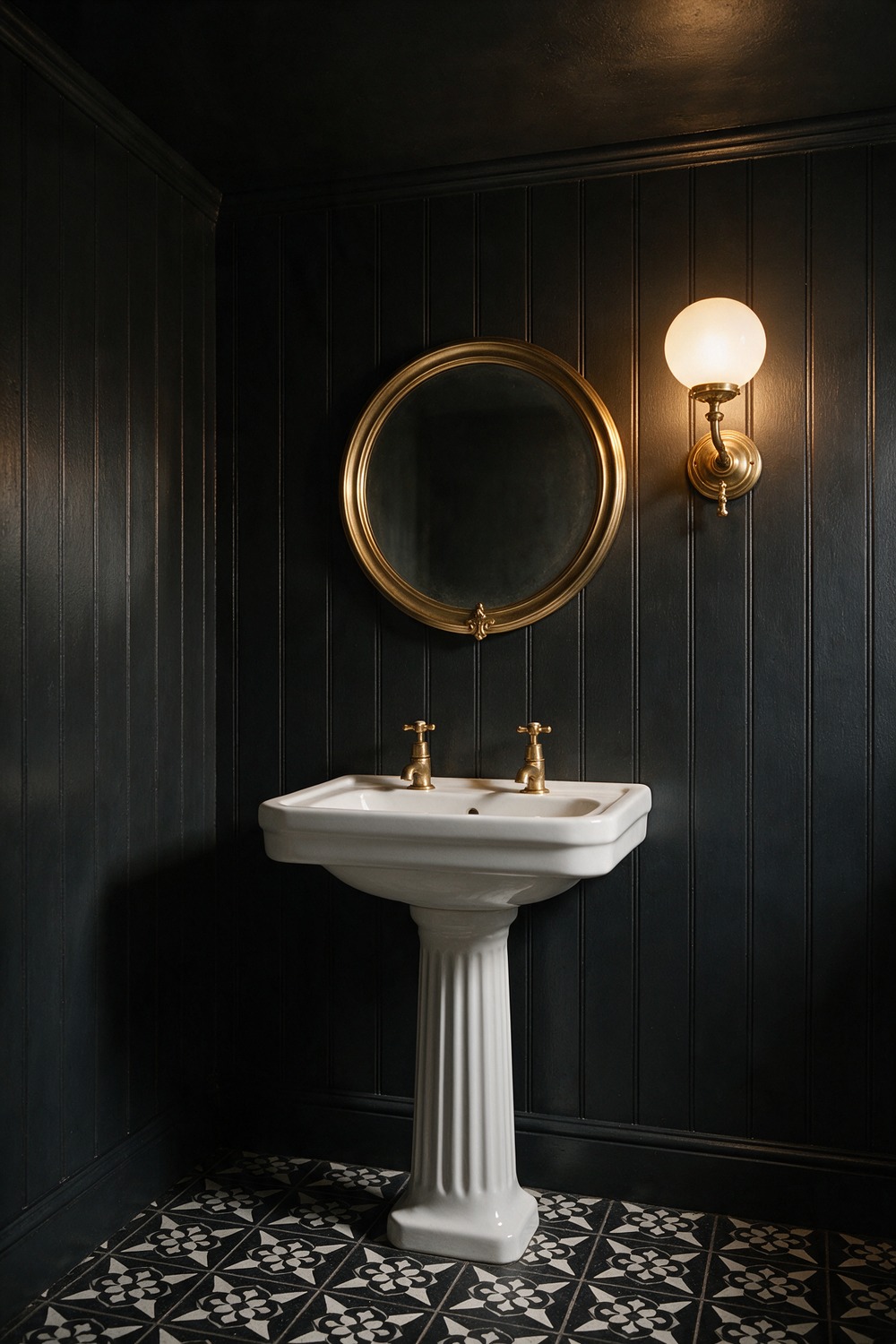
Dark is the Victorian default, not the daring choice. These rooms were lit by candle and gaslight, so a deep wall was simply practical, never a risk.
I would paint the whole envelope, ceiling and all, in a soft near-black like Farrow & Ball Railings, then let a brass pillar tap catch the light. Palette: soot, warm brass, chalk-white porcelain.
Lay a small black-and-white geometric encaustic floor. Encaustic means the pattern runs right through the clay, so it never wears off, even after a century of wet feet.
Keep the roll-top bath crisp white and the brass unlacquered so it ages gracefully. Start by taking the paint over the ceiling too. That wrap-around hush is the whole trick.
2. Dark Green Victorian Bathroom
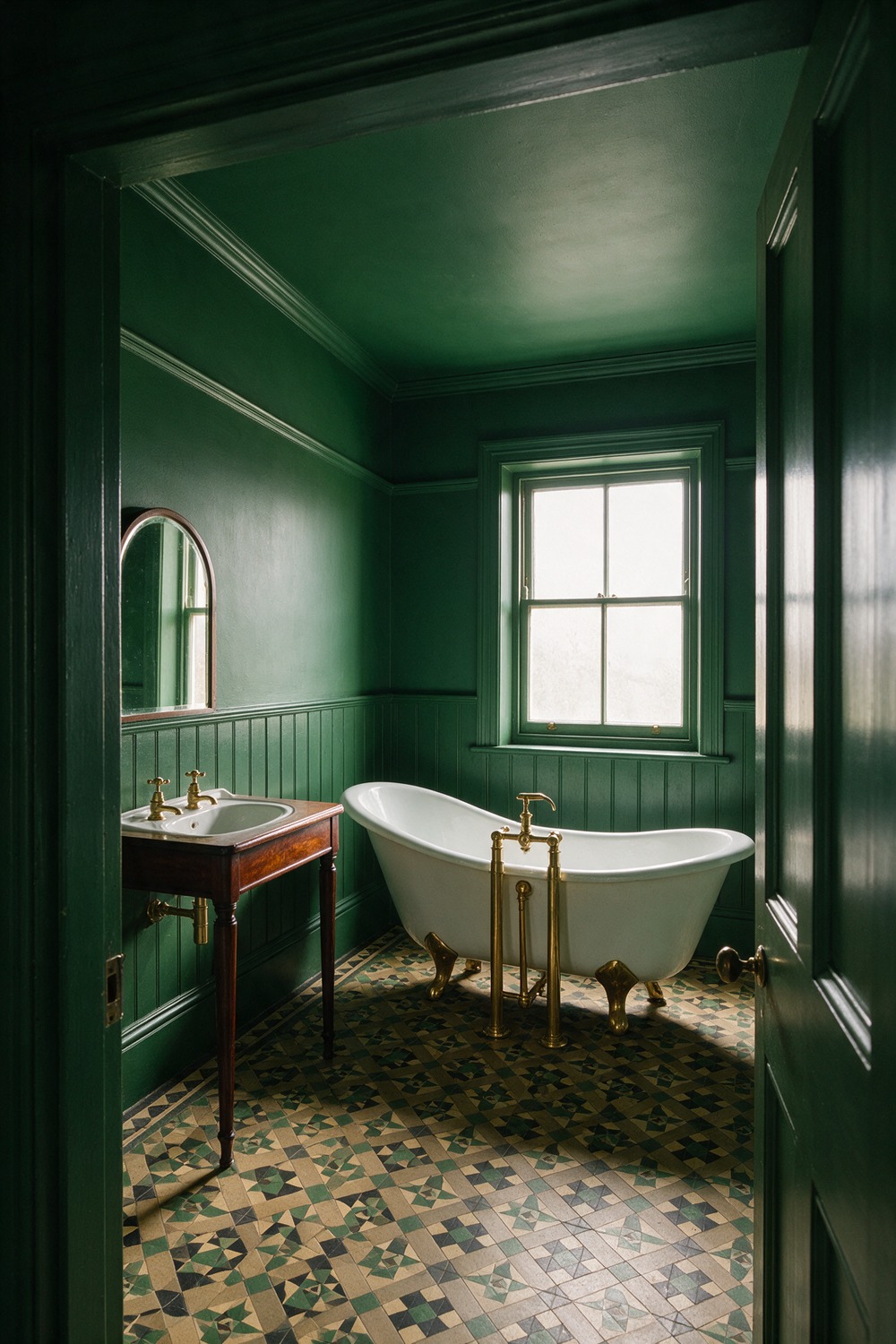
If you let me pick one colour for a Victorian bathroom, it is a forest green every time. Nothing flatters aged brass the way a deep green does.
Think a proper bottle green, close to Mylands Bottle Green, carried floor to ceiling over tongue-and-groove panelling to a high picture rail. Palette: deep green, antique brass, cream.
Underfoot, a buff-and-green geometric tile. Add a mahogany-topped washstand and a white pedestal basin with separate hot and cold pillar taps, a true period fixture. Start with the panelling, and the paint follows.
3. Pink Victorian Bathroom
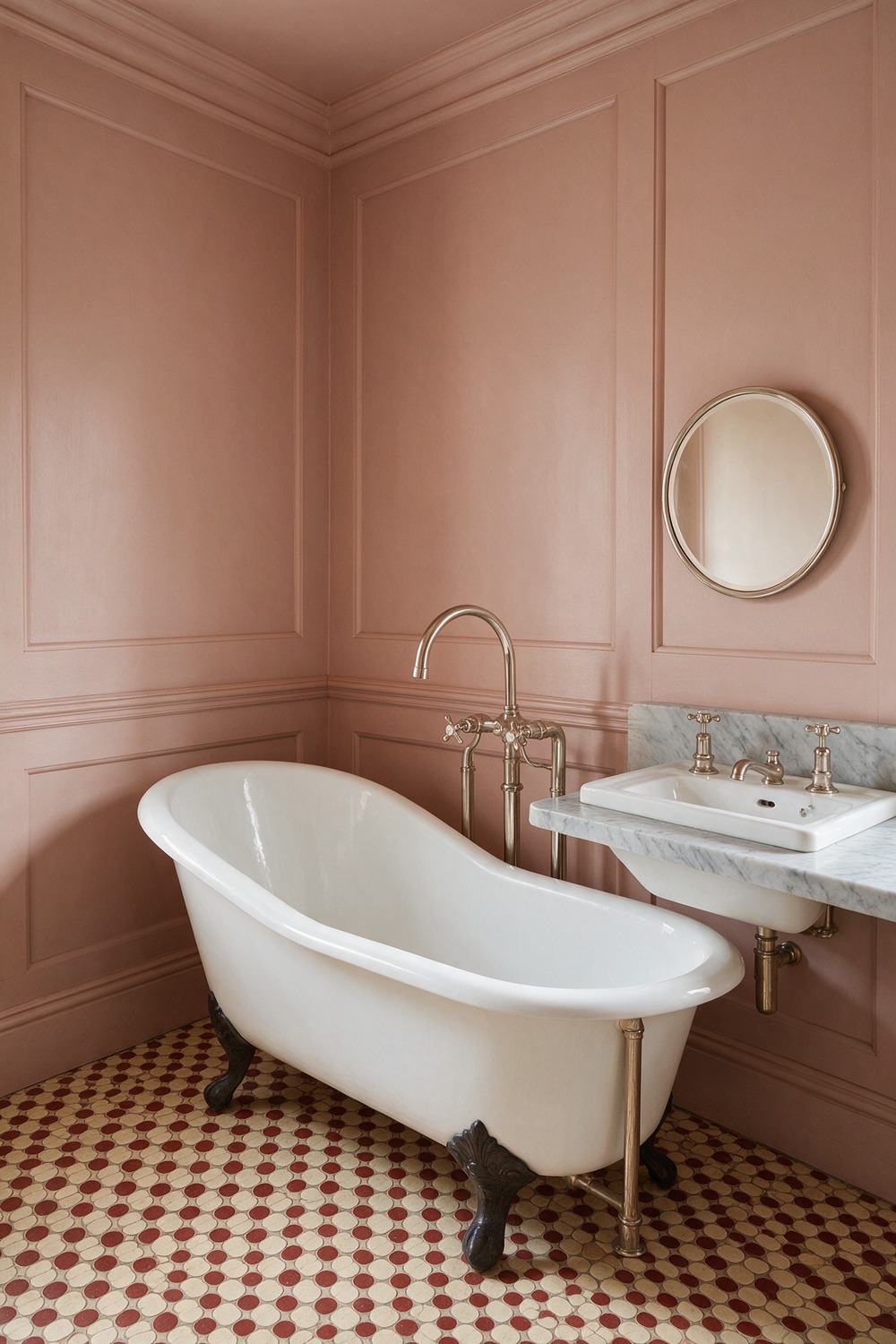
Pink in a Victorian bathroom is not a nursery. It is a boudoir, grown-up the moment you go dusky rather than sweet.
A chalky rose like Little Greene Hollyhock reads soft at dawn and clay-red by lamplight. Palette: dusky rose, warm white, nickel. Set it against a white slipper bath and a cream-and-oxblood mosaic floor, with cooler nickel taps.
4. Blue Victorian Bathroom
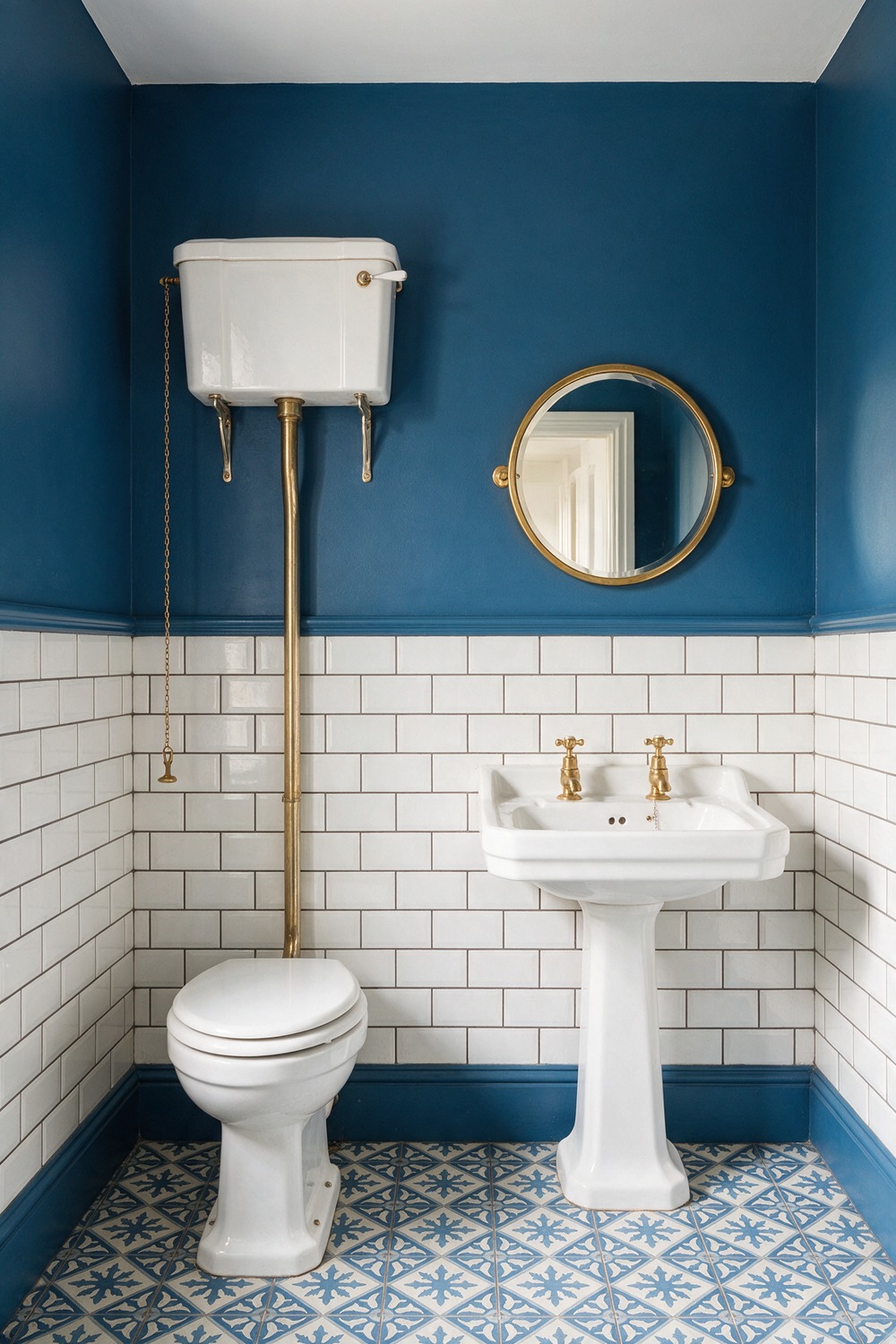
There is a reason blue and white tile never dates. The Victorians borrowed it from Delft and Chinese export china, and it still looks right today.
A mid blue like Benjamin Moore Van Deusen Blue gives you that heritage depth without going navy. Palette: true blue, bright white, brass. I love it with white metro tiles laid to the picture rail, dark grout drawing every line, and a blue painted dado below.
Add a high-level cistern loo with a pull chain for the full effect. Begin with the tile, then match the paint to its deepest blue.
5. White Victorian Bathroom
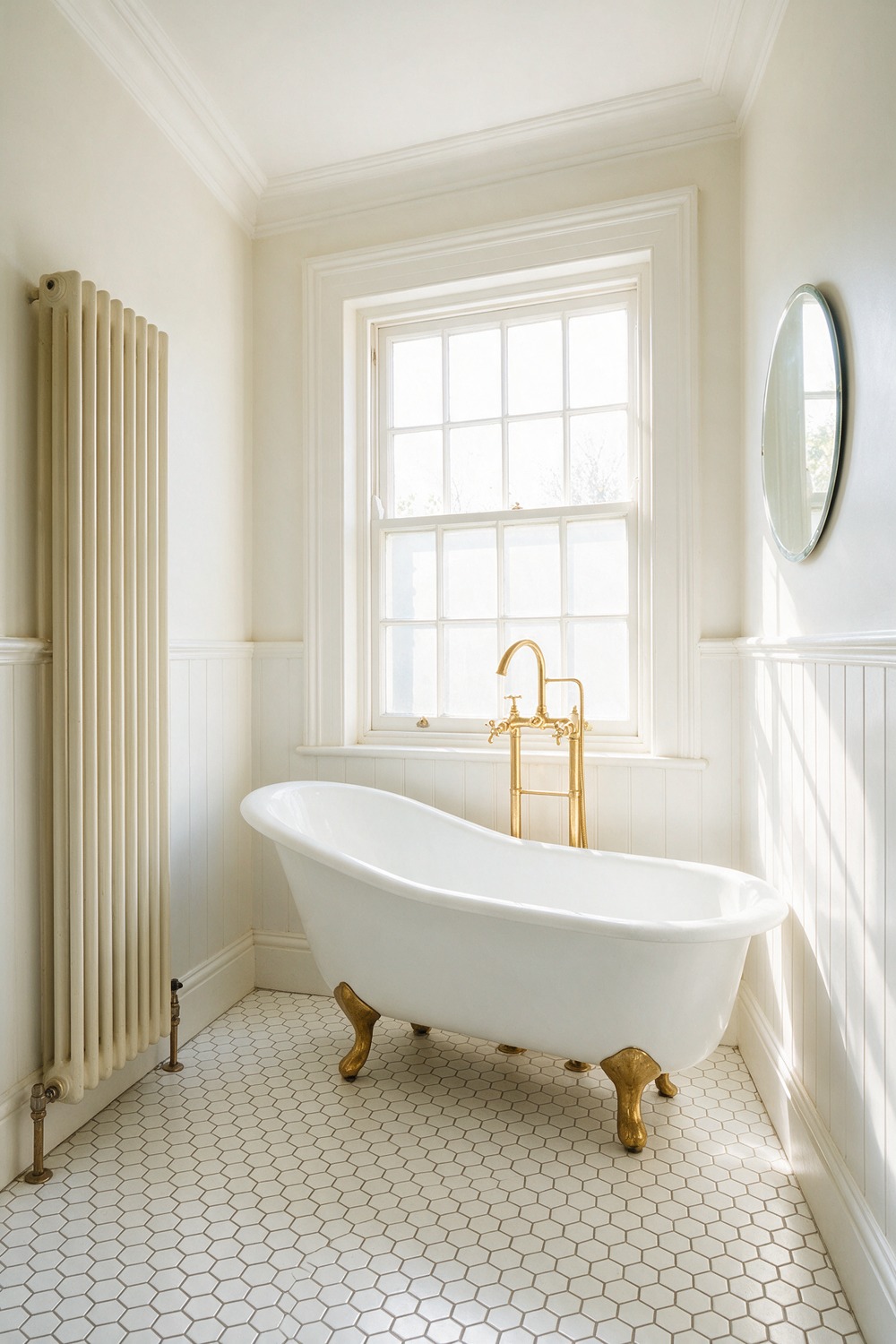
White is the hardest Victorian colour to get right, because flat builder-white falls dead. The fix is texture, not colour, so reach for a warm, chalky white like Dulux White Cotton.
Palette: soft white, pale grey, brass. Panel the lower wall, lay a white hexagon mosaic with pewter grout, and add a cast-iron roll-top on brass feet. Pro tip: keep three whites going, never one, or it goes clinical.
6. Black Victorian Bathroom
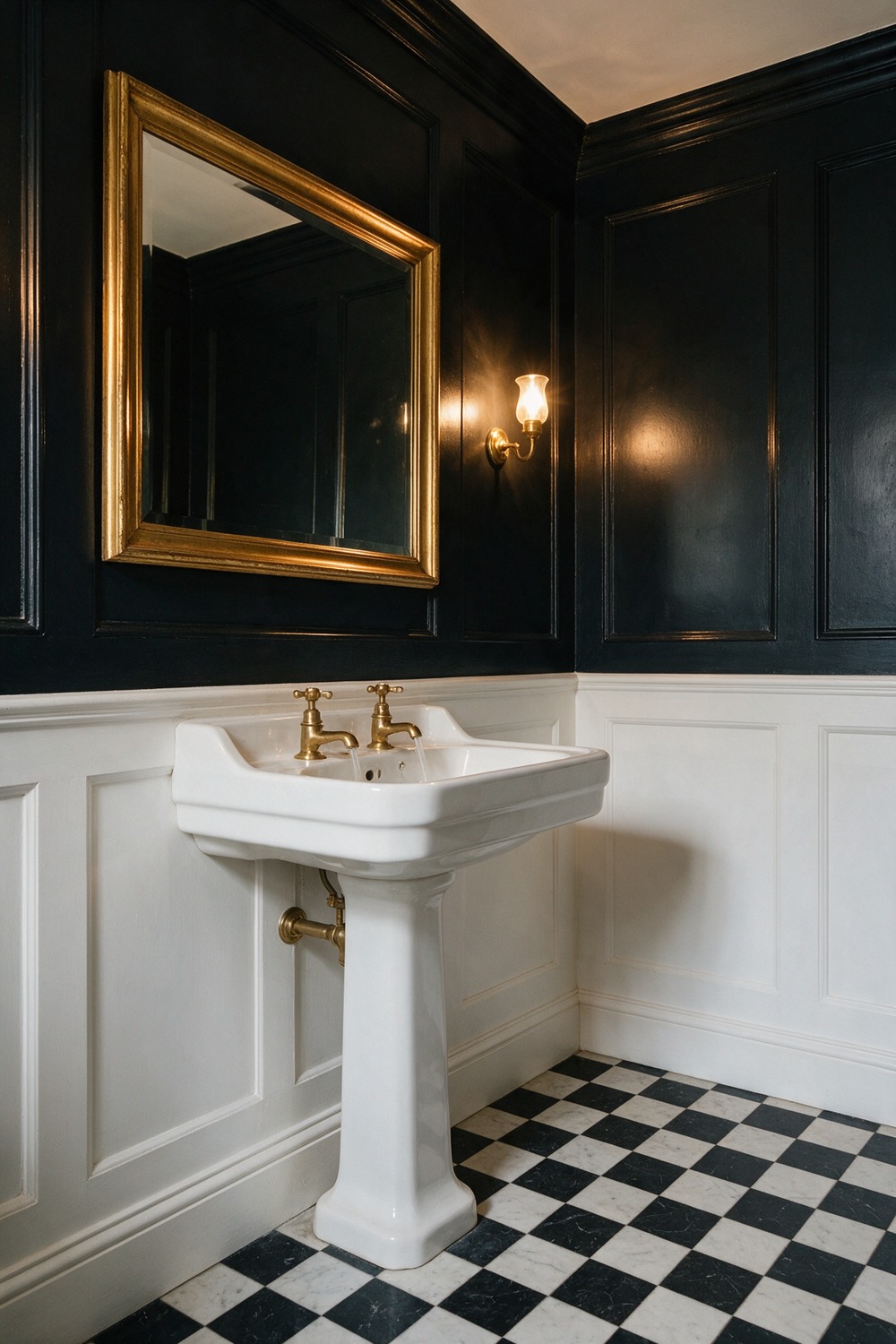
A black Victorian bathroom sounds like a dare and behaves like a tailored suit. It is moody, yes, but it is the most forgiving backdrop for white sanitaryware and gold.
Go full dramatic with Farrow & Ball Pitch Black on walls and panelling, then stop it at a crisp white dado for breathing room. Palette: ink black, white, aged gold. A black-and-white checkerboard marble floor keeps it classic, while a white pedestal basin and a gilt-framed mirror lift the gloom.
Start with the floor. That chequer sets the whole rhythm.
7. Red Victorian Bathroom
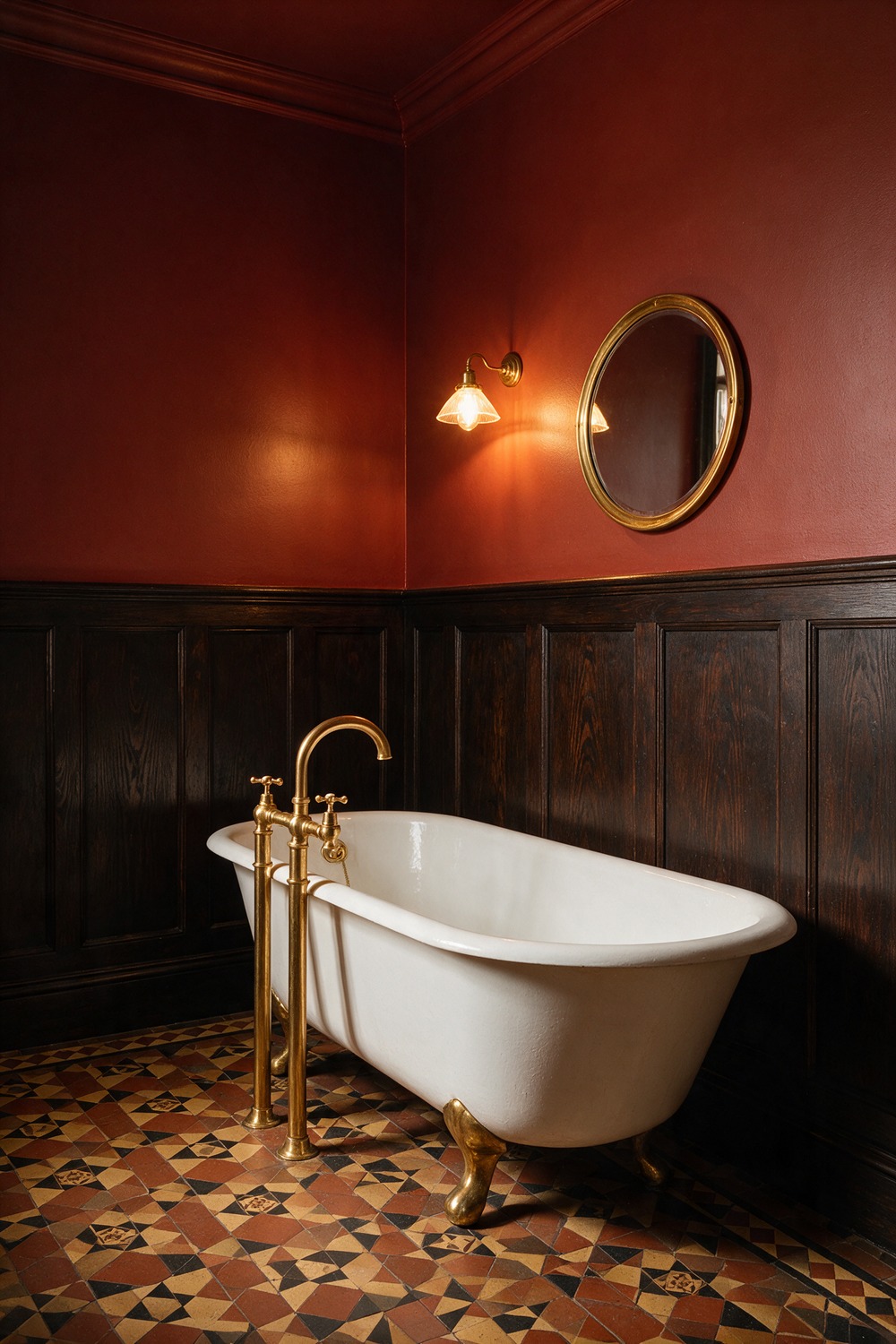
Red scares people off, and it should not. The Victorians adored a deep, dignified red, the colour of a gentleman’s club. Pick an oxblood, not a pillar-box.
A brick-red like Zoffany Venetian Red over dark wood panelling feels instantly historic. Palette: oxblood, mahogany, brass. Ground it with a terracotta, buff and black encaustic floor, keep the basin white, and the red never tips into heavy. One brave colour, done.
8. Black and White Victorian Bathroom
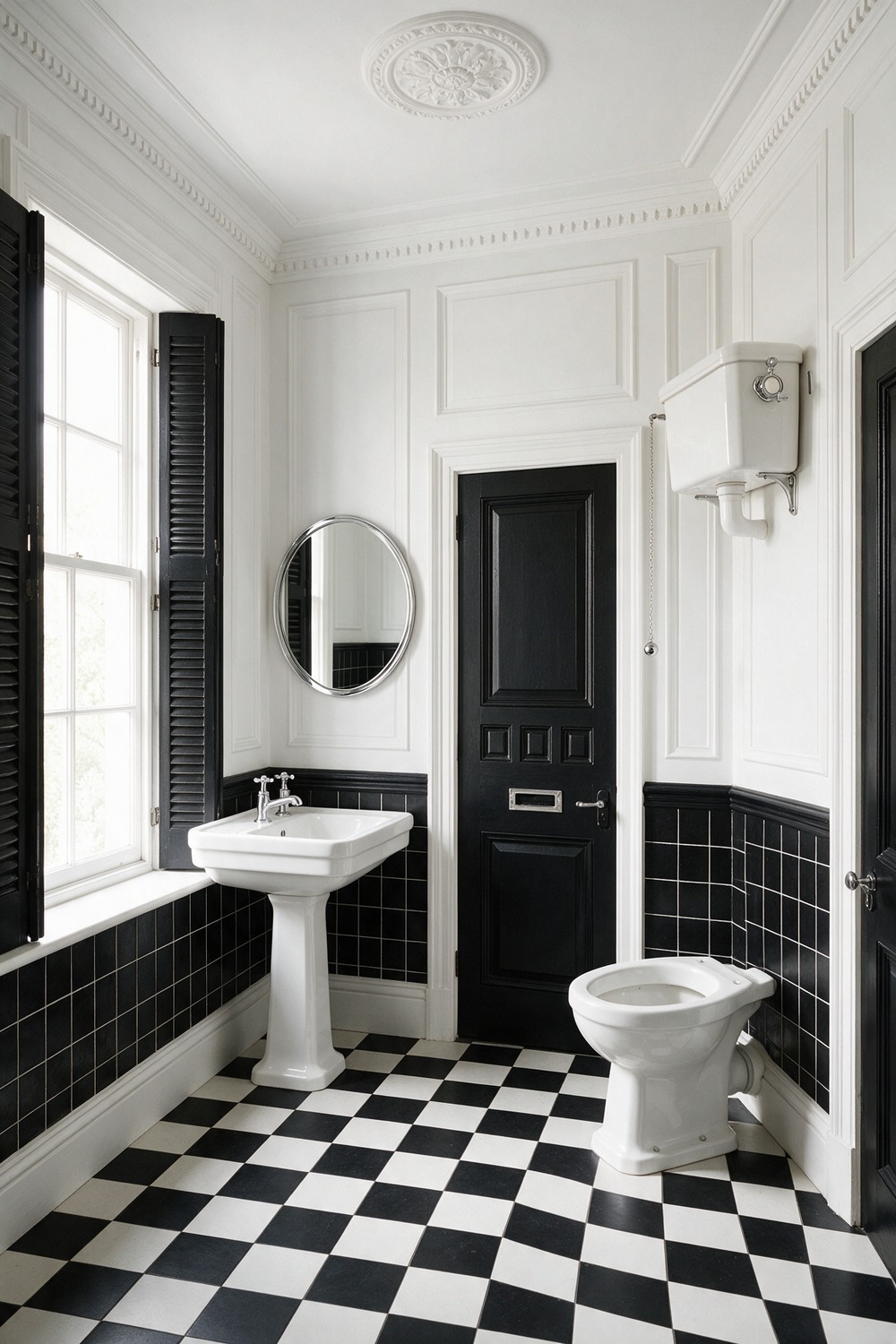
If a single image says “Victorian bathroom” in one glance, it is black and white. Clean, graphic, and honestly impossible to get wrong once you commit to the contrast.
I would split the room roughly in half: white metro or panelled walls above, a deep black like Benjamin Moore Black Beauty on the dado and doors below. Palette: pure black, bright white, chrome.
The floor is non-negotiable here, a black-and-white checkerboard or a dense geometric mosaic. Keep every fixture white porcelain with chrome taps. Start with the floor pattern and let it dictate the walls.
9. Navy Victorian Bathroom
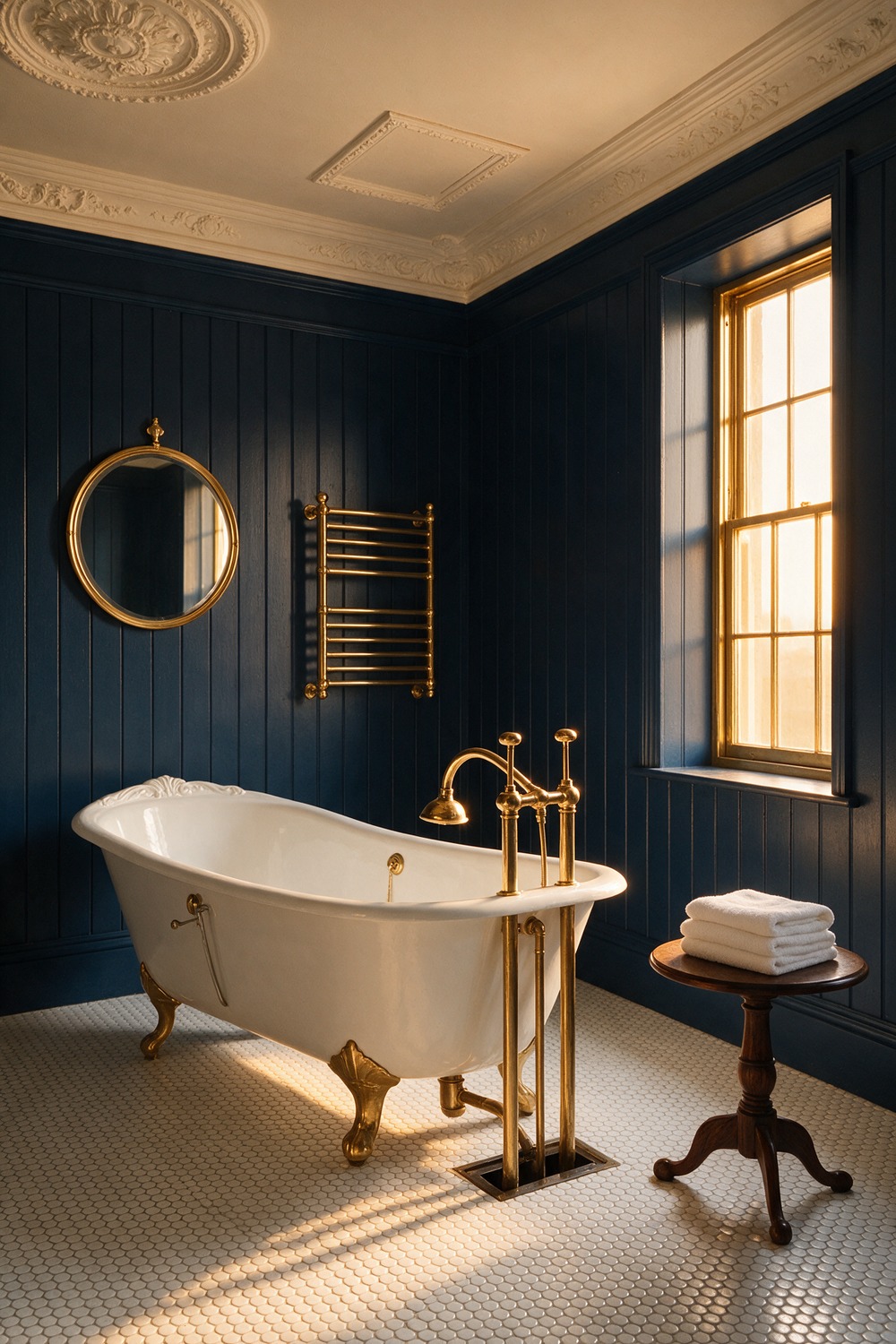
Navy is the sensible cousin of black, and in a north-facing bathroom it is often the smarter call. It reads deep and serious in daylight, then turns almost soft under warm bulbs.
Then, under warm bulbs at night, the same navy turns almost soft and velvety. That shift is why I rate it over black for a room that gets little sun.
A true inky navy like Sherwin-Williams Naval wants surface to sing, so take it over the walls and the panelling both. Palette: navy, white, brass.
Lay a white penny-round mosaic floor, fit a brass towel rail and basin tap, and keep the roll-top bath white. A 2700K warm bulb stops the navy going cold. Paint high, right up over the picture rail.
10. Burgundy Victorian Bathroom
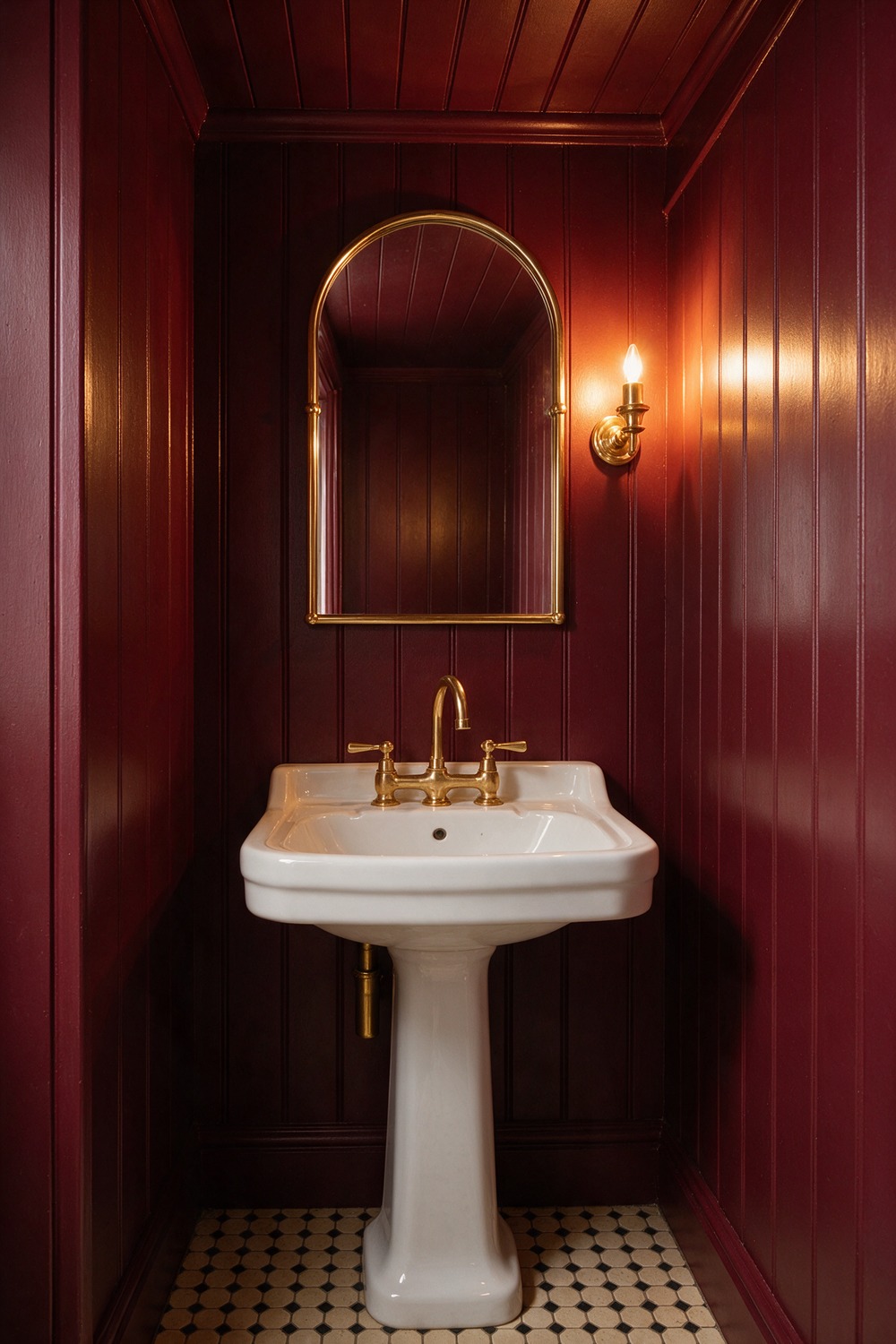
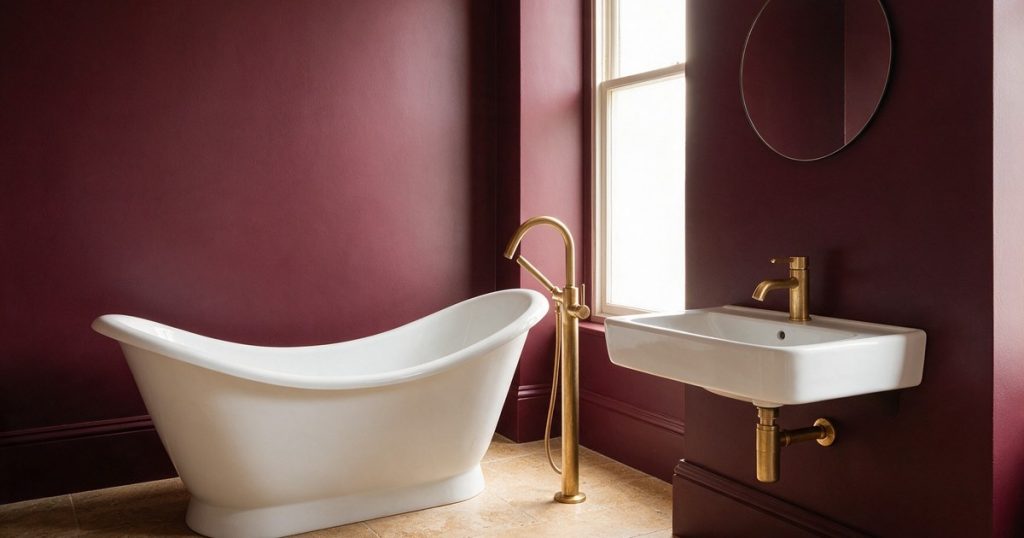
Burgundy is red that grew up and got a mortgage. It is warmer than oxblood and richer than brown, and it makes a small Victorian bathroom feel like a jewel box.
Drench the walls in a wine red close to Little Greene Baked Cherry, panelling included, for that enveloping, candlelit feel. Palette: burgundy, cream, antique gold. Soften it with a white pedestal basin, a warm brass bridge tap, and an arched brass mirror.
The floor stays quiet, a small cream-and-black geometric. My first move here is always to paint the ceiling the same burgundy. Trust me on it.
11. Mustard Victorian Bathroom
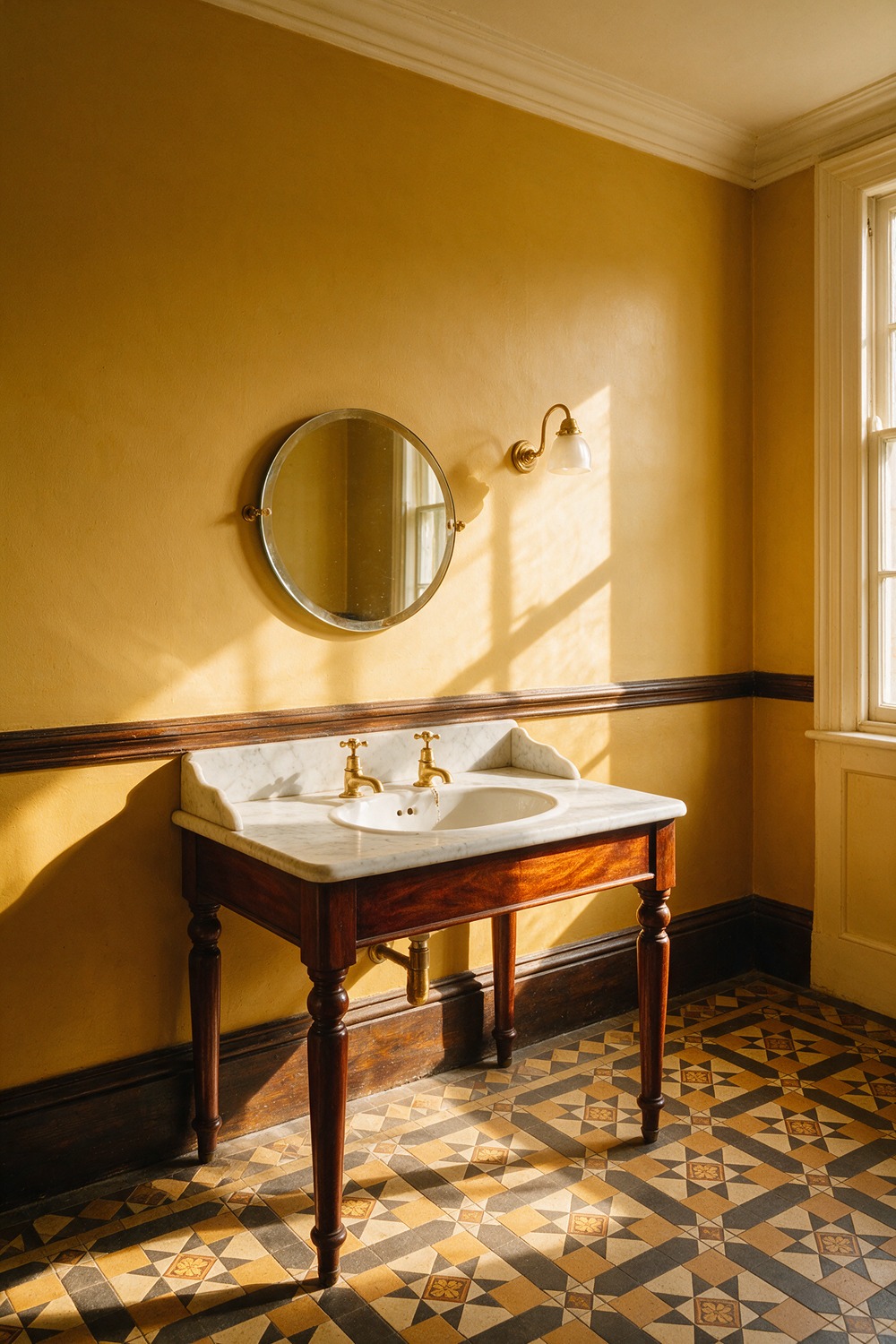
Mustard is the sleeper hit of Victorian colour. It nods to the gas-lit ochres the period loved, and it glows against dark wood.
A golden ochre like Farrow & Ball India Yellow above a dark-stained dado feels historic and sunny. Palette: mustard, chocolate brown, brass. Lay an ochre, cream and charcoal encaustic floor, add a mahogany washstand, and keep the brass aged. Start with the dado rail.
12. Teal Victorian Bathroom
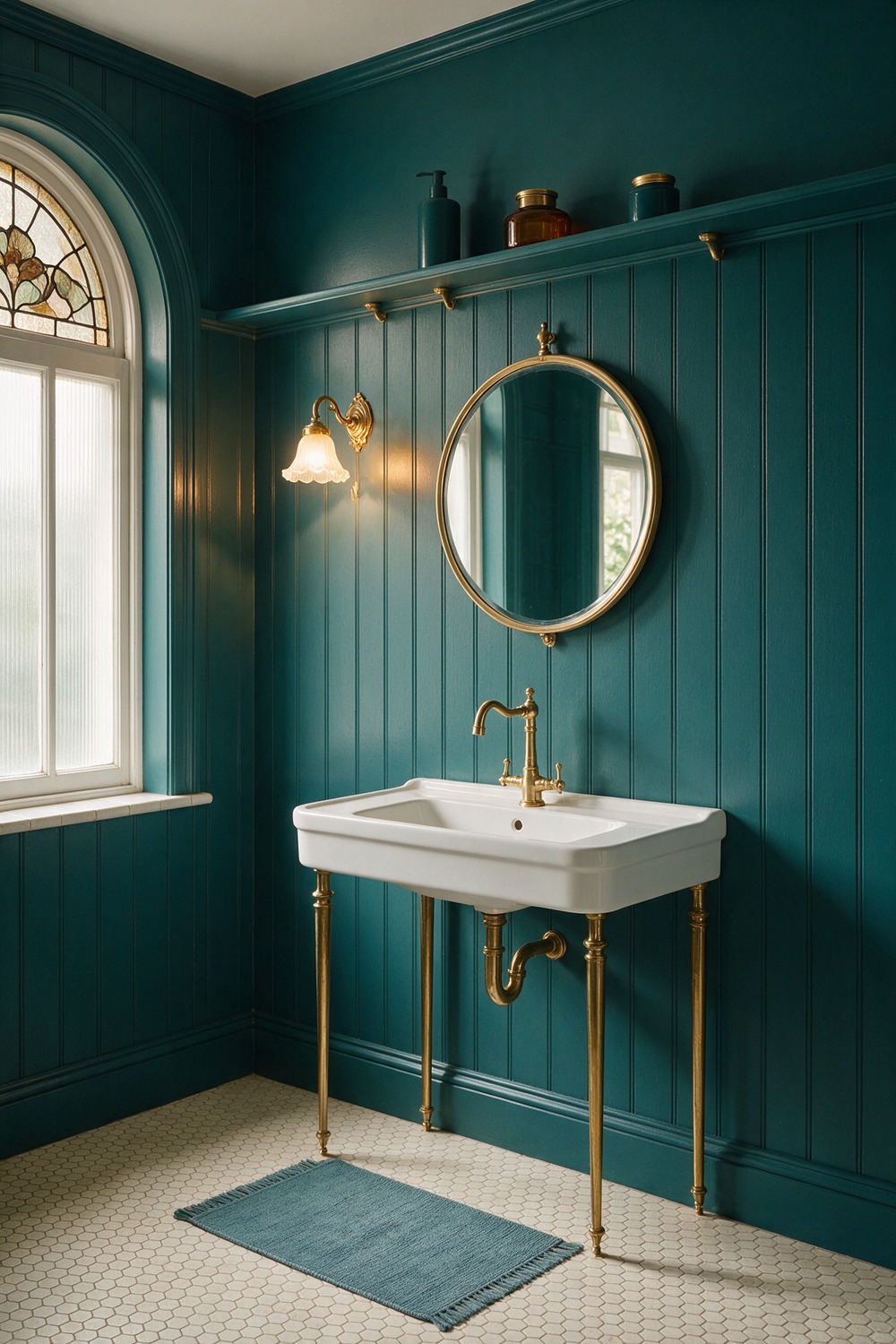
Teal is where green meets blue and both show up at their best. A touch more playful than a forest green, with a real Victorian pedigree in all that peacock-inspired tile.
A deep peacock teal like Little Greene Canton over tongue-and-groove panelling is the move. Palette: teal, warm brass, cream. Carry it up to a high shelf rail, lay a cream hexagon mosaic floor, and let a brass pillar tap and a brass wall light warm the cool.
A white console basin on brass legs keeps it airy. Begin with the panelling, paint second.
13. Lavender Victorian Bathroom
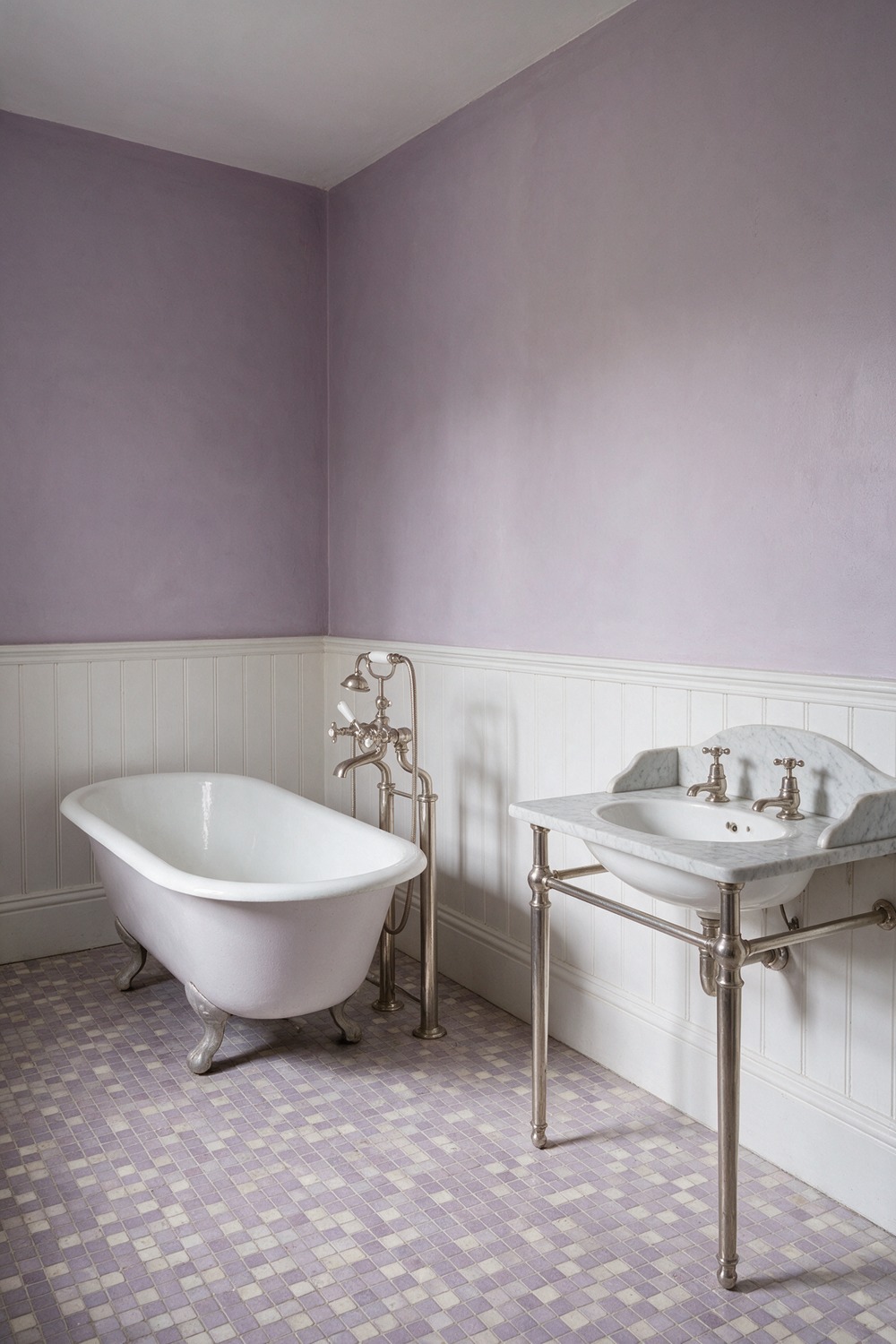
Lavender gets dismissed as twee, which is a shame. A dusty, greyed lavender is pure Victorian drawing room. The trick is the smoky version, never the Easter-egg one.
A greyed lilac like Dulux Lavender Quartz with white panelling below feels calm and period-right. Palette: dusty lavender, soft white, nickel. Add a white slipper bath and a lavender-grey mosaic floor, with cool nickel taps. Panel the lower third first, then wash the lilac above.
14. Charcoal Victorian Bathroom
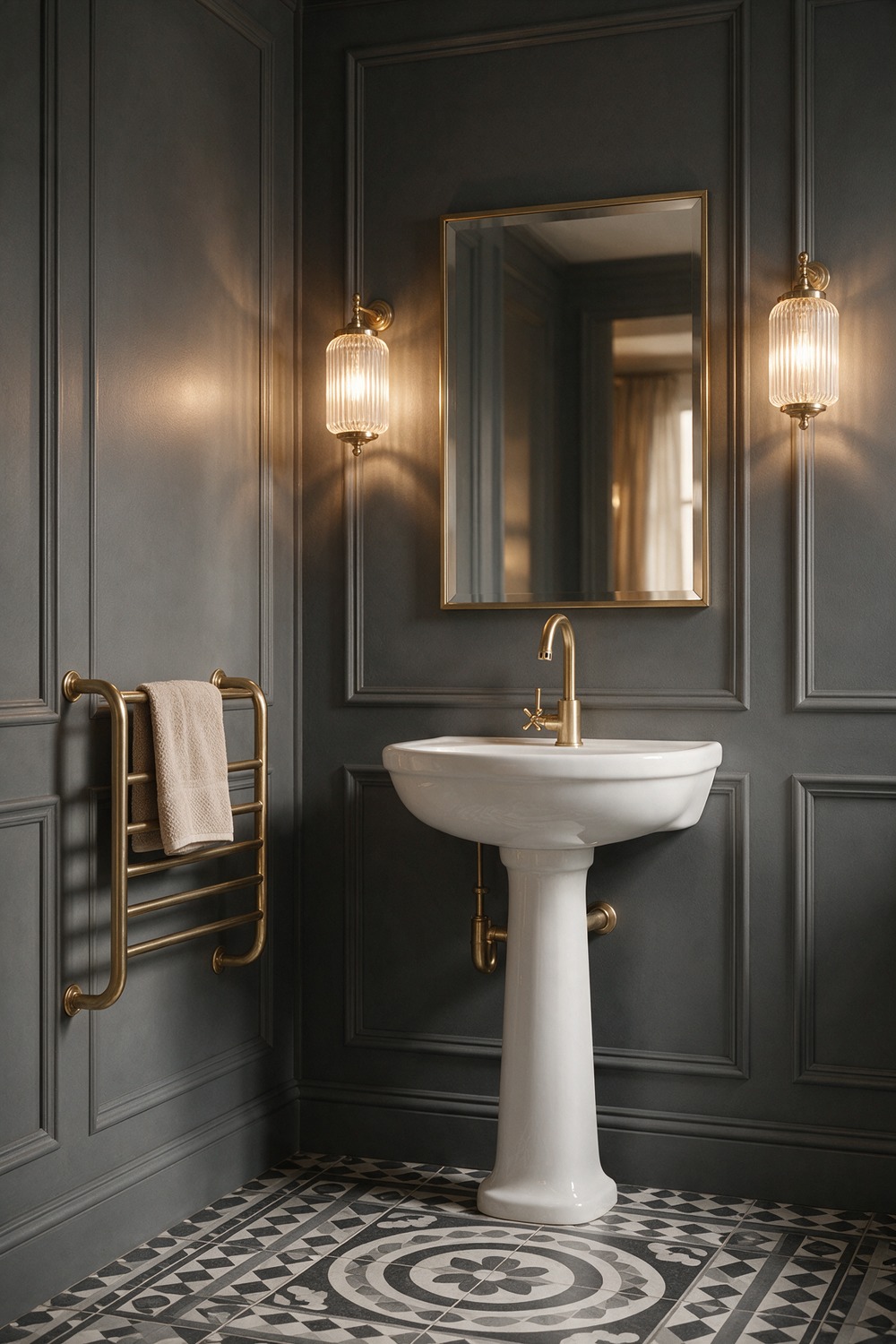
Charcoal is the grown-up alternative to black, and in my book it is often the better one. All the drama, with a softer, velvety edge that feels less like a statement and more like a decision.
It feels less like a statement and more like a quiet decision someone with taste already made. That is exactly why it wears so well over the years.
A deep smoky grey like Benjamin Moore Kendall Charcoal, over walls and panelling, is quietly luxurious. Palette: charcoal, white, brushed brass. Keep the sanitaryware white and lay a monochrome geometric encaustic floor.
Bring in a brushed-brass towel rail and tap, and a fluted glass sconce either side of the mirror. Start with the paint, then shop the brass.
15. Cream Victorian Bathroom
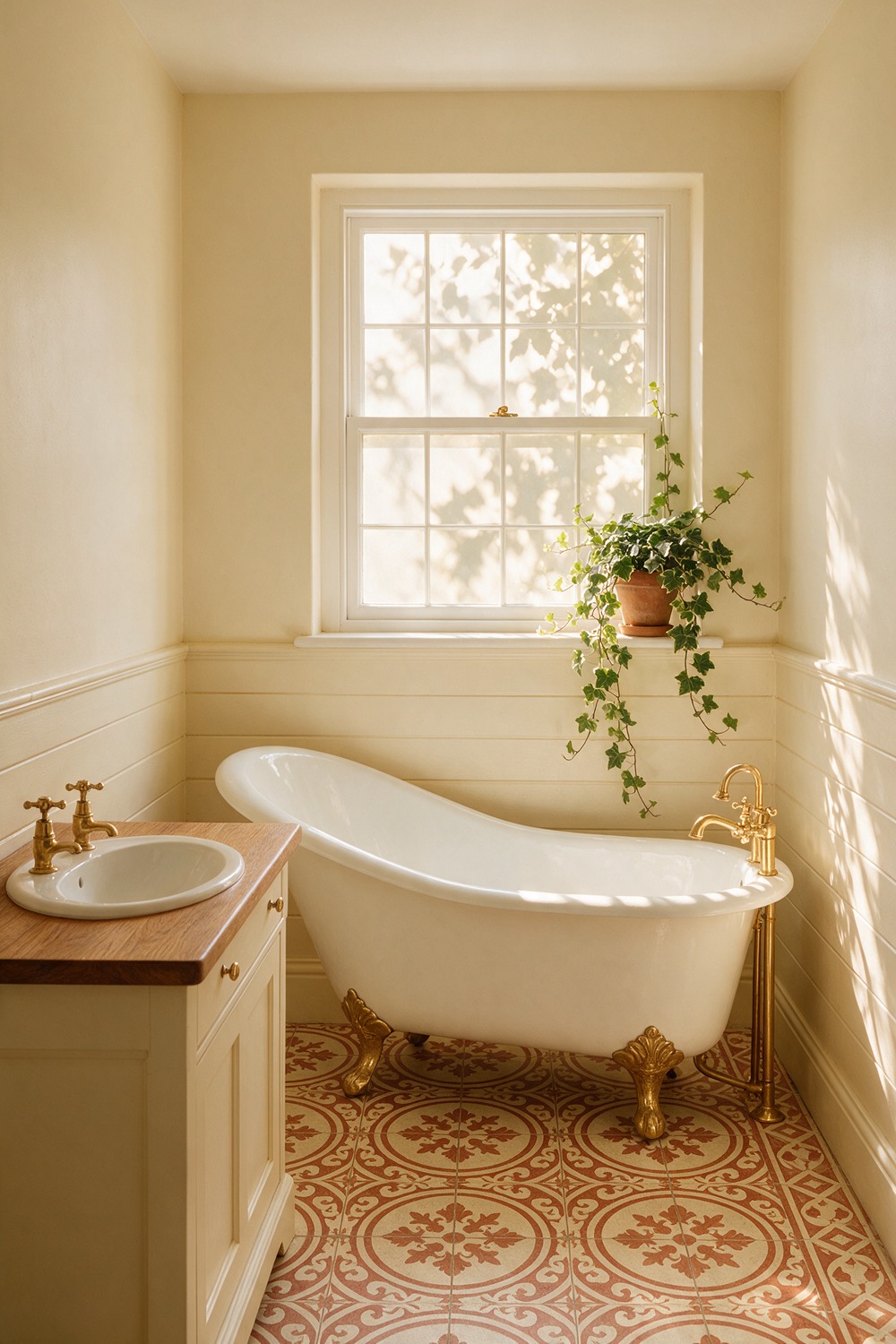
Cream is white with the cold switched off, and it suits the period beautifully. The Victorians loved a warm, buttery neutral, and it is the easiest colour to live with day after day.
A soft vanilla cream like Craig & Rose Vanilla on walls and panelling alike feels gentle and sunlit. Palette: cream, warm oak, brass. Lay a cream-and-terracotta geometric floor, add an oak-topped washstand, and finish with a white roll-top bath and warm brass taps.
A trailing ivy on the windowsill softens the edges. Start with the floor, since its warmth sets the cream’s exact tone.
16. Plum Victorian Bathroom
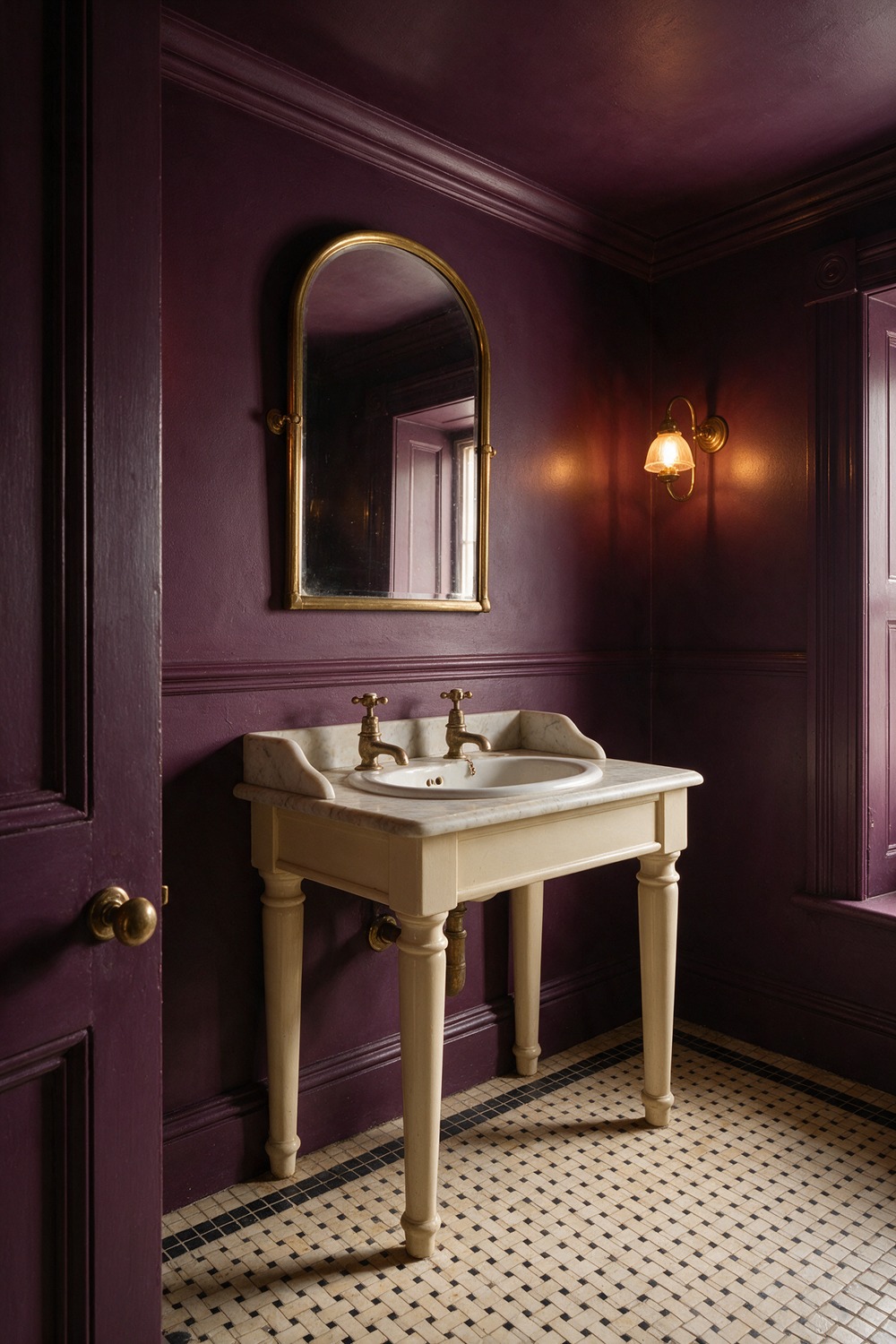
Plum is burgundy with a little more mischief in it. That bruised purple-red was a genuine Victorian favourite, straight out of a Dickens townhouse.
A deep aubergine like Zoffany Damson on walls and ceiling makes a windowless bathroom feel intentional. Palette: plum, cream, antique brass. Pair it with a cream marble washstand and a cream-and-black mosaic floor. Paint the ceiling plum too, so the colour cannot leak out.
17. Emerald Victorian Bathroom
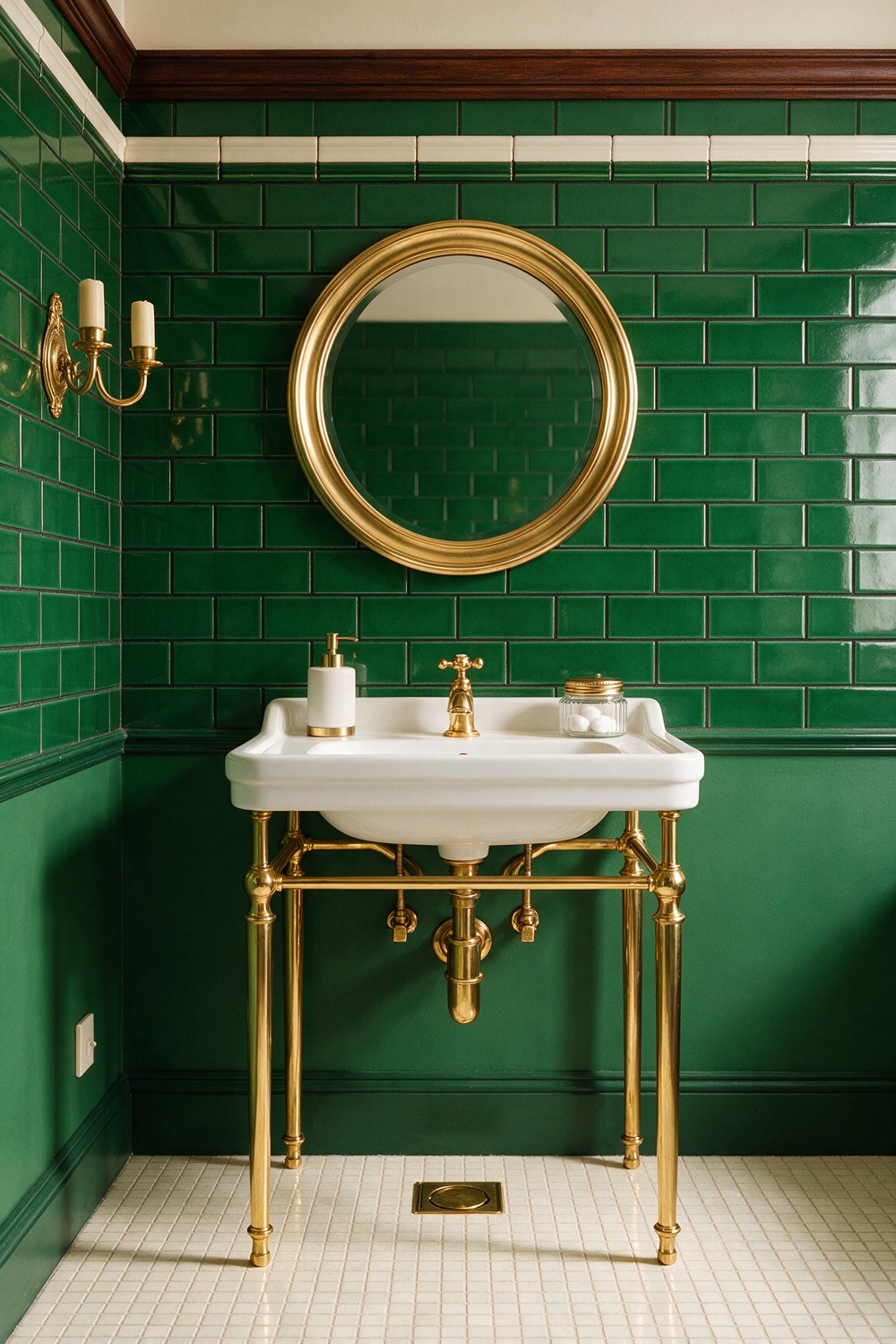
Emerald is green at full volume, jewel-bright and glossy. This is the colour I reach for when a Victorian bathroom needs some real glamour.
It is the green that wants to shine, not whisper, and it rewards a high-gloss surface a flatter sage never could.
A vivid emerald like Sherwin-Williams Evergreens works hardest on tile. Picture glossy emerald metro tiles to the picture rail, dark grout tracing every edge, and an emerald painted dado below. Palette: emerald, brass, white.
Add a white console basin, a brass pillar tap, and a cream mosaic floor to cool it. Start with the tile, then paint the dado to match its darkest reflection.
18. Sage Green Victorian Bathroom
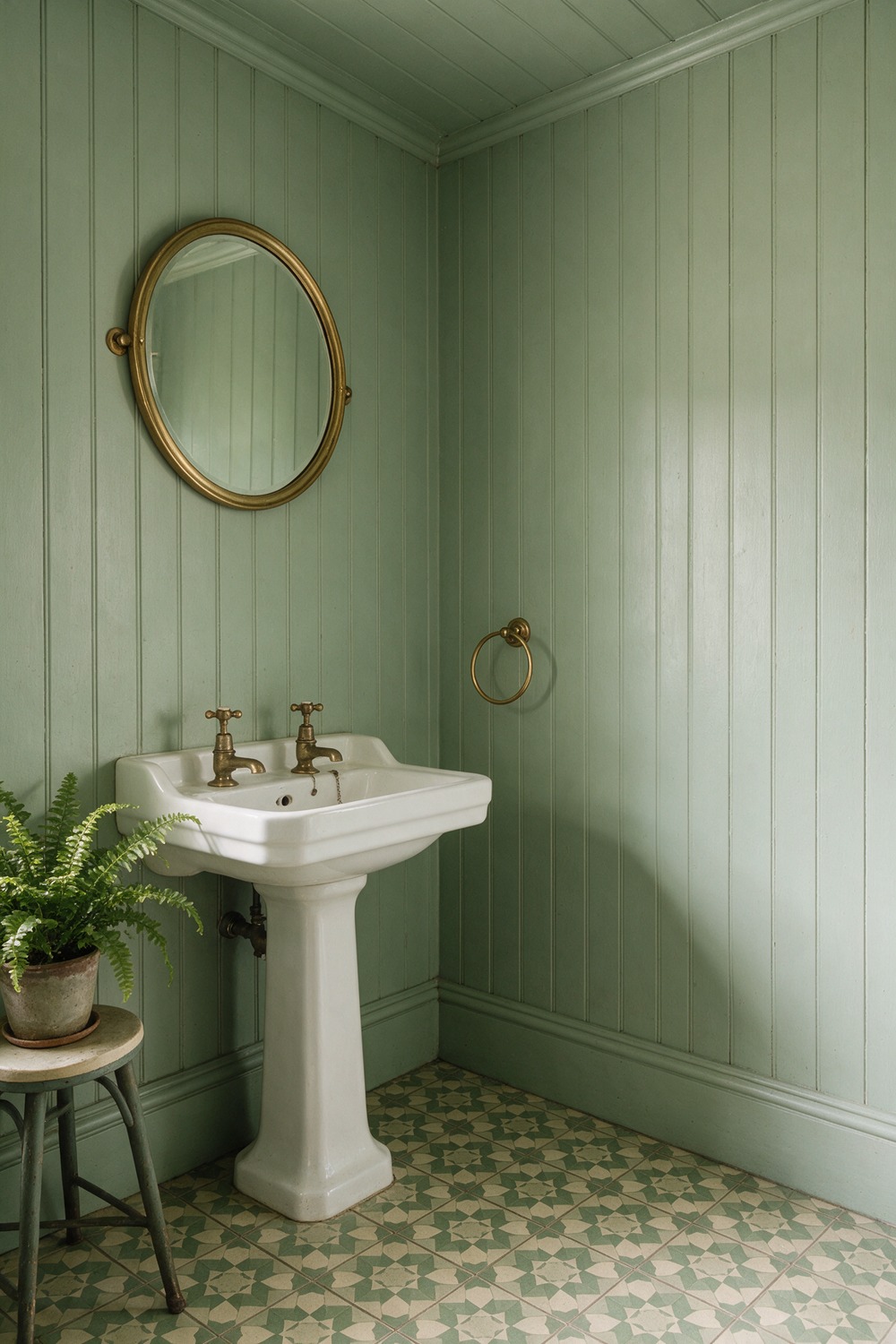
Sage is the gentle end of the Victorian green family, soft and dusty and endlessly calming. If a forest green feels like a lot, this is your way in. The Goldilocks of greens, never too much.
A muted sage like Behr Jojoba over tongue-and-groove panelling feels restful and period-correct. Palette: sage, warm white, aged brass. Lay a sage-and-cream geometric floor, add a white pedestal basin with separate hot and cold pillar taps, and keep the brass soft.
A pot of ferns leans into the greenery. Panel the lower wall first, then paint the sage above and below alike.
19. Dusty Rose Victorian Bathroom
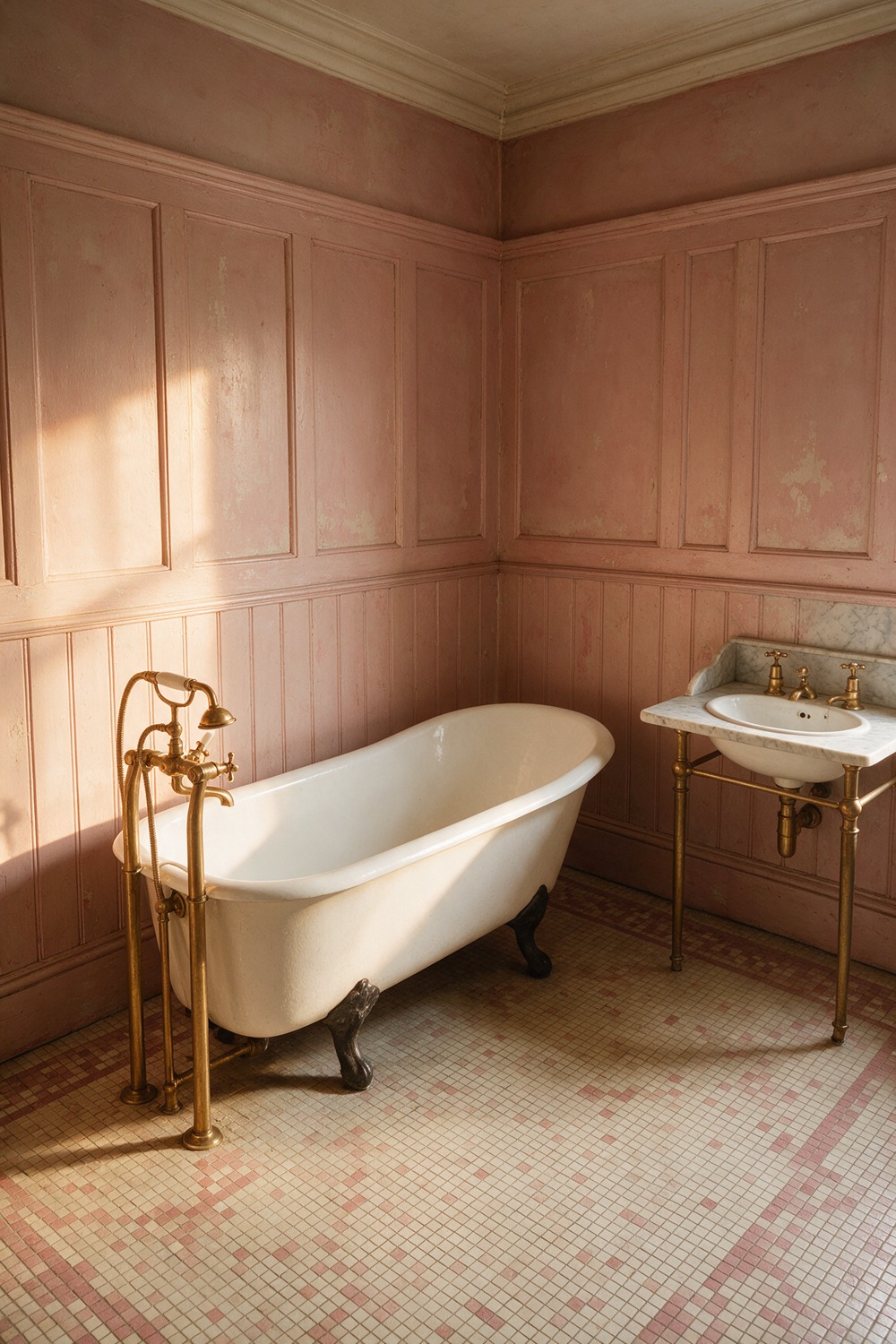
Dusty rose is pink with the sugar shaken out, a muted, slightly brown-edged rose that feels antique the moment it hits the wall. Softer than a true pink, and far more sophisticated.
A faded tea-rose like Mylands Rose Theatre, over walls and panelling, glows warmly in morning light. Palette: dusty rose, cream, brass. Pair it with a white slipper bath, a marble washstand, and a cream-and-rose mosaic floor.
Warm brass taps keep it from going cold or cute. Start with the paint, then choose a floor that echoes its clay-tinged undertone.
20. Moody Victorian Bathroom
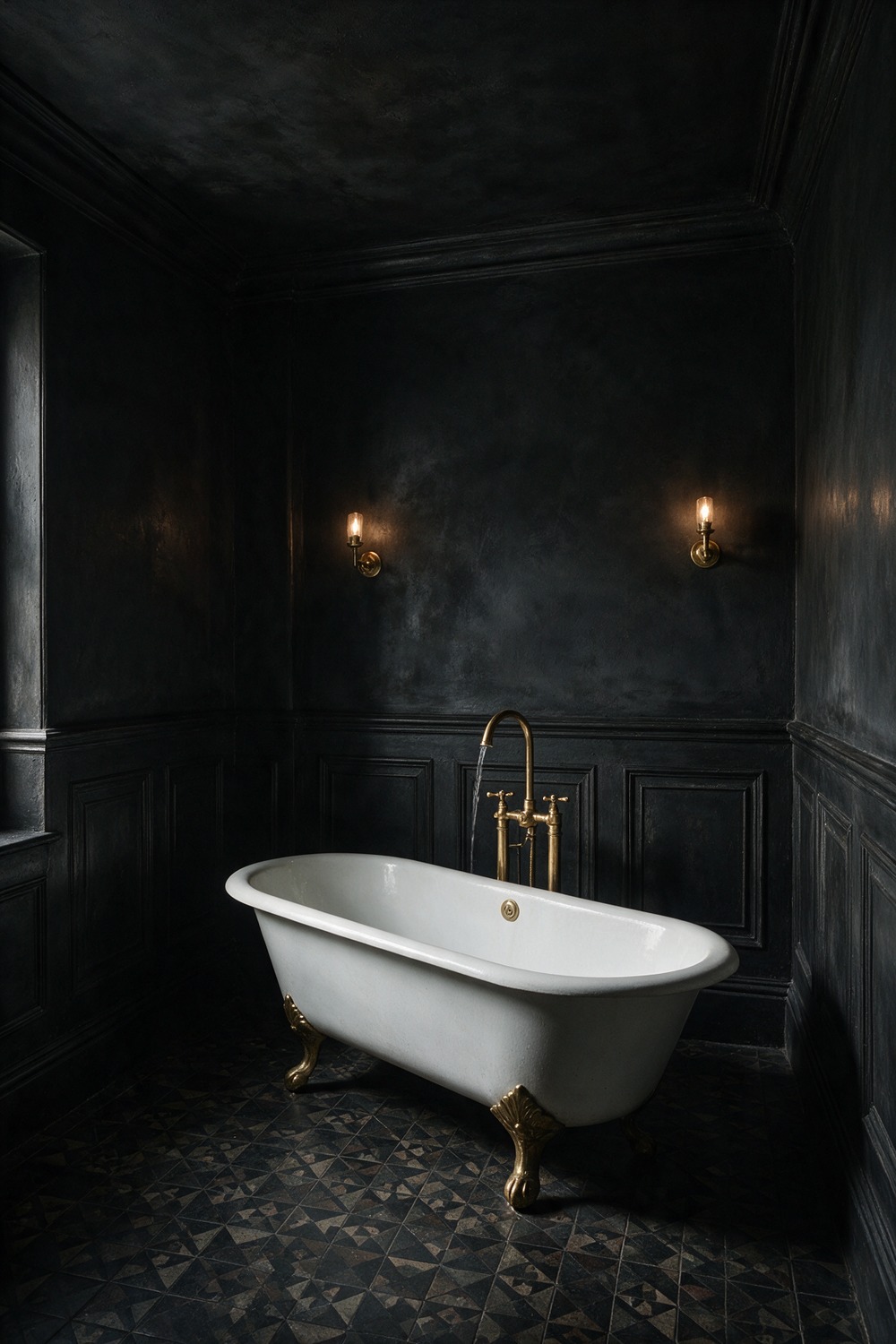
Moody is less a colour than a decision to lean all the way in. Every Victorian instinct, deep tone, low light, rich material, comes together here.
Have you ever walked into a dim, enveloping room and felt your shoulders drop? That is the goal.
Build it from a smoky near-black like Behr Cracked Pepper on walls, ceiling and panelling, so the room reads as one shadow. Palette: blackened charcoal, aged gold, candle-warm white.
Lay a dark geometric encaustic floor, keep a single white roll-top bath as the one bright note, and light it low with brass sconces. Start with the darkest paint you dare, then add warmth back with metal and a flame.
Which Victorian Bathroom Color Is Right for You
Start with your light. A north-facing or windowless bathroom will happily swallow the dark, enveloping colours, so lean into charcoal, navy, plum, or a proper moody near-black. They turn a gloomy room into a deliberate one.
A bright, sunny bathroom gives you room to play with the softer end, cream, sage, dusty rose, and lavender, which can look chilly in poor light but glow when the sun helps.
Then think about how the room should feel. Want drama and a bit of glamour? Emerald, burgundy, or black and white. Want calm you can sink into? Sage, cream, or a dusty pink.
And if you simply cannot choose, dark green is the one I would hand almost anyone. It flatters brass, it suits every house, and it never tires of being looked at.
Victorian Bathroom Remodels, Answered
How much does a Victorian-style bathroom cost to do? There is a wide band. A paint-and-fixtures refresh (deep colour, brass taps, a secondhand roll-top) sits at the low end. Add an encaustic floor and a reproduction high-level loo for mid-range. Marble, custom panelling, and a cast-iron bath is the splurge.
What can I do myself, and what needs a pro? Painting, panelling, and styling are friendly DIY jobs. A confident amateur can even fit tongue-and-groove. Hand the plumbing, the tiling of a patterned floor, and the heavy cast-iron bath to professionals. A wonky encaustic floor shows every misstep.
How long does it take? A cosmetic refresh is a long weekend or two. A floor-up remodel runs three to six weeks once the trades are booked, and the tiling and the bath delivery usually set the pace.
What is the one thing worth spending on? The floor. A real encaustic or marble mosaic floor is what makes the room read as authentically Victorian, and you cannot fake it cheaply. After that, unlacquered brass taps, which only look better with age.
What should I ask the tiler for? Be specific. Name the tile shape, size, material, and the exact pattern layout, and ask for a dark grout to make those Victorian lines show. Ask to see the floor dry-laid first, so the pattern centres on the room.
So pick your colour, pour something warm, and start with one wall or one floor tile you love. That is all a timeless bathroom ever asks of you.
More stories
Share this story