20 Ensuite Bathroom Styles for a Calm, Hotel-Worthy Retreat

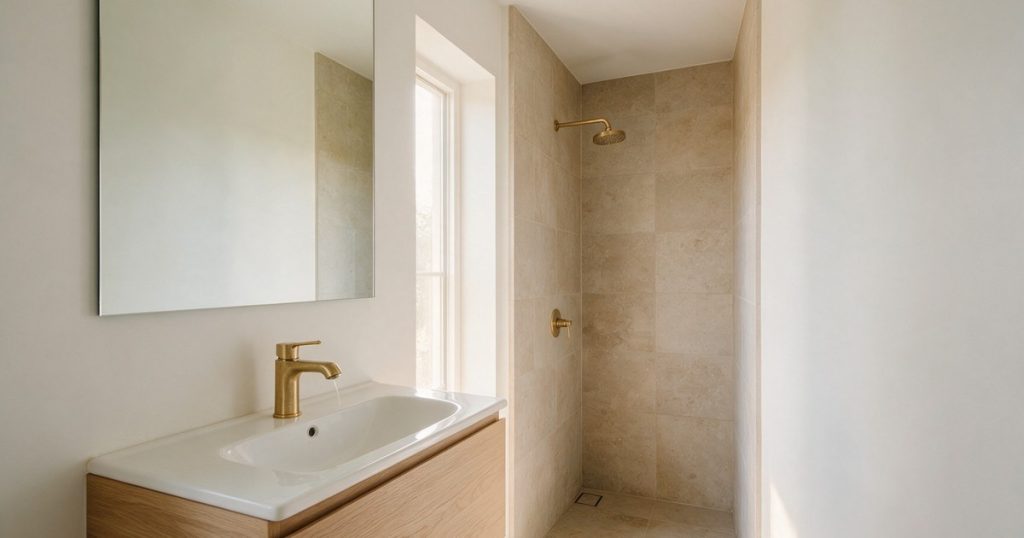
I have a soft spot for the ensuite. It is the one room in the house that answers to nobody. No guest towels to fuss over, no shared sink, just you and the first coffee or the last bath of the day.
So when a floor plan hands me a bedroom with its own bathroom behind a door, I treat it like a tiny private suite. The goal is always the same feeling: calm, hotel-quiet. A room that drops your shoulders the second you walk in.
Below are twenty ensuite looks worth stealing, each with its palette, its paint, its tile, and the one move that gets you there. Pick the one that matches the bedroom it sits beside, and go.
1. Modern Ensuite Bathroom
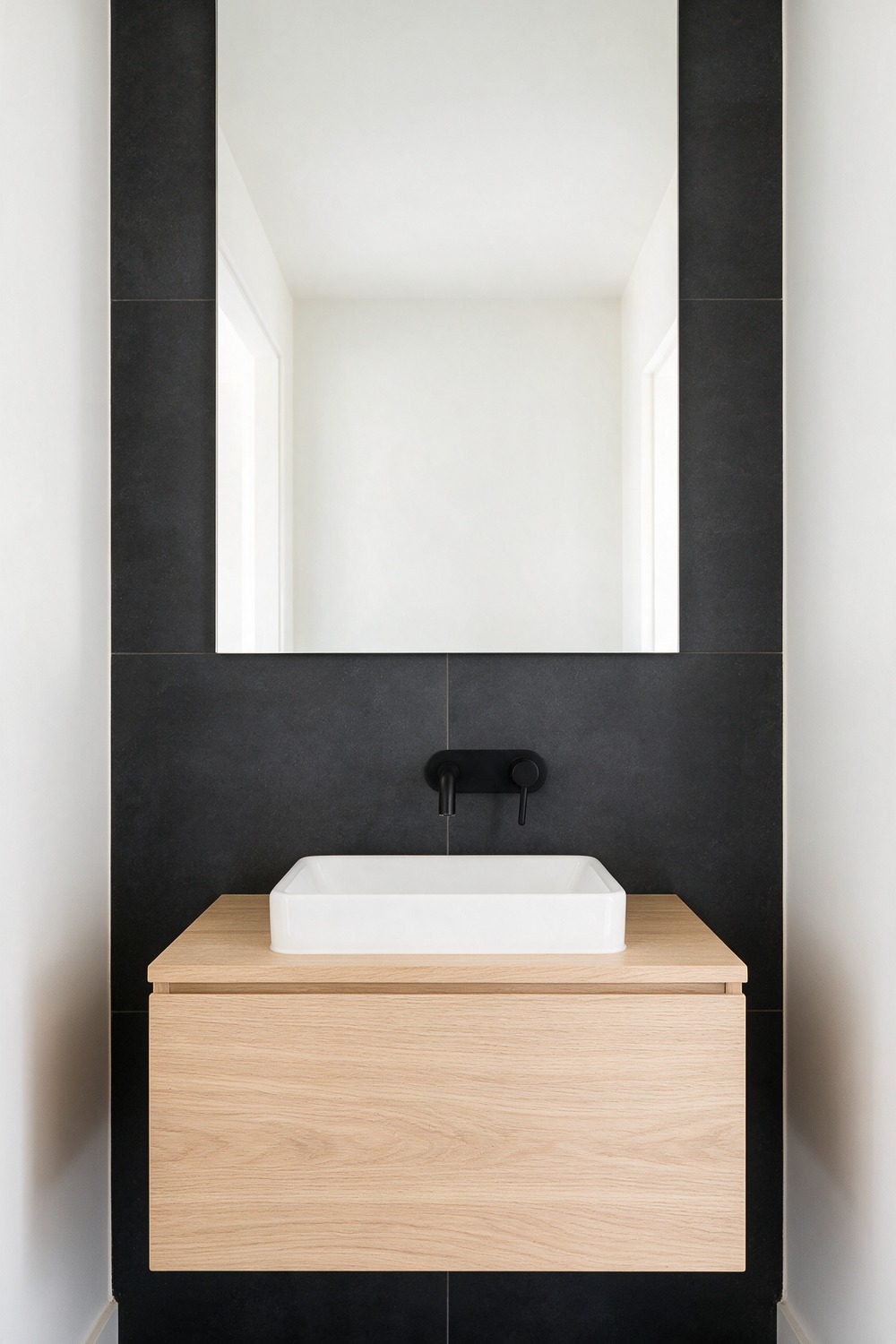
Modern does not mean cold. The trick is one warm material fighting all that hard surface. Here it is a floating oak vanity under a wall of large-format porcelain, the grout lines so few the wall reads as solid stone.
Keep the palette to three: soft white, charcoal slab, pale oak. A matte black mixer tap and a frameless mirror finish it.
For the walls, something like Benjamin Moore Classic Gray holds its nerve under bright light. Begin with the big porcelain panel, and the rest falls in behind it.
2. Farmhouse Ensuite Bathroom
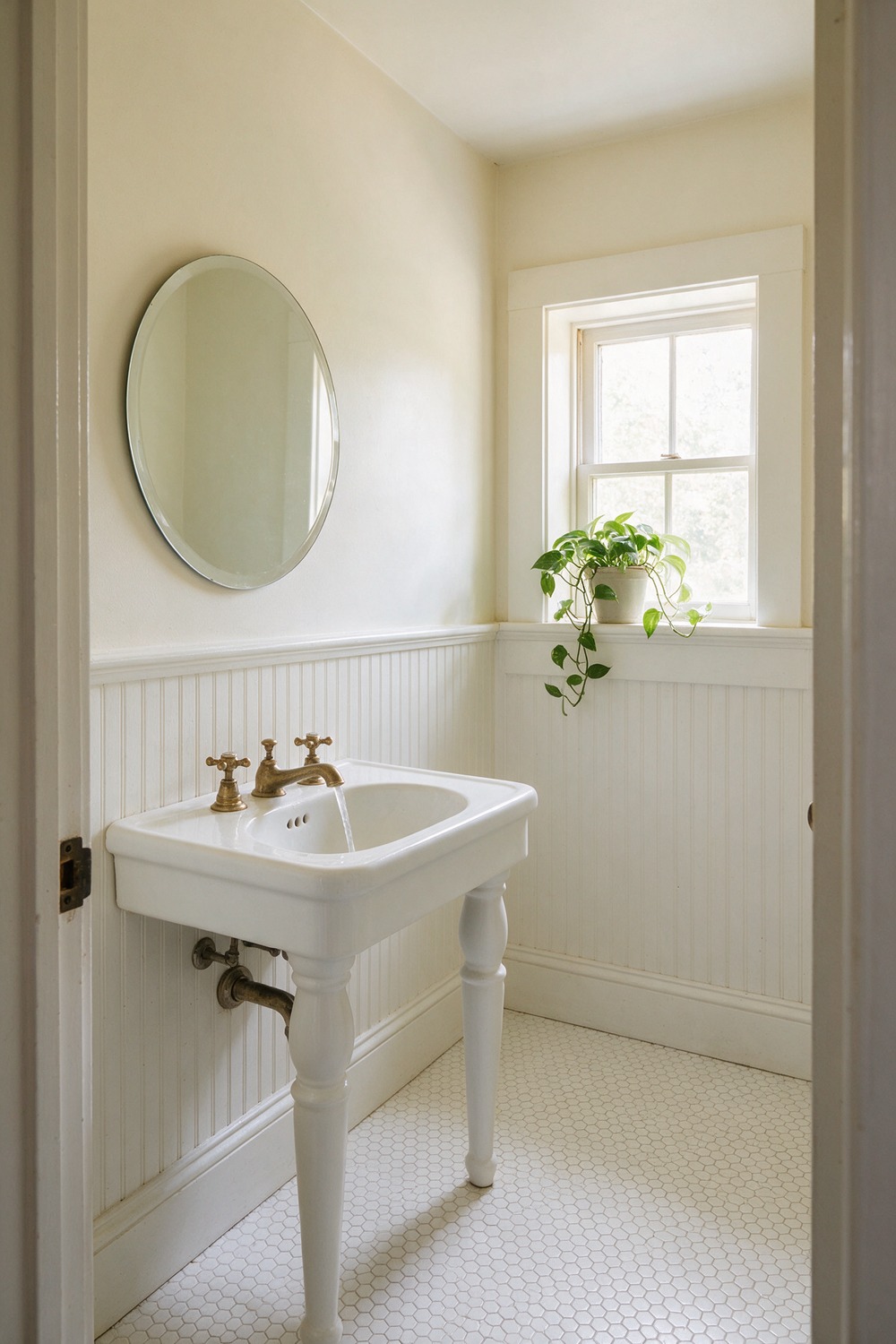
A farmhouse ensuite should feel like it has always been there. I would fit a console sink on turned legs before a boxy cabinet every time, and let a little daylight do the decorating.
Think warm white beadboard to chair height, small white hex tile on the floor, aged brass taps gone soft at the edges. Sherwin-Williams Alabaster on the upper walls keeps it creamy, never stark.
A trailing pothos on the windowsill earns its keep. Begin with the wainscoting, because that line of beadboard is the whole farmhouse accent in one weekend of work.
3. Modern Farmhouse Ensuite Bathroom
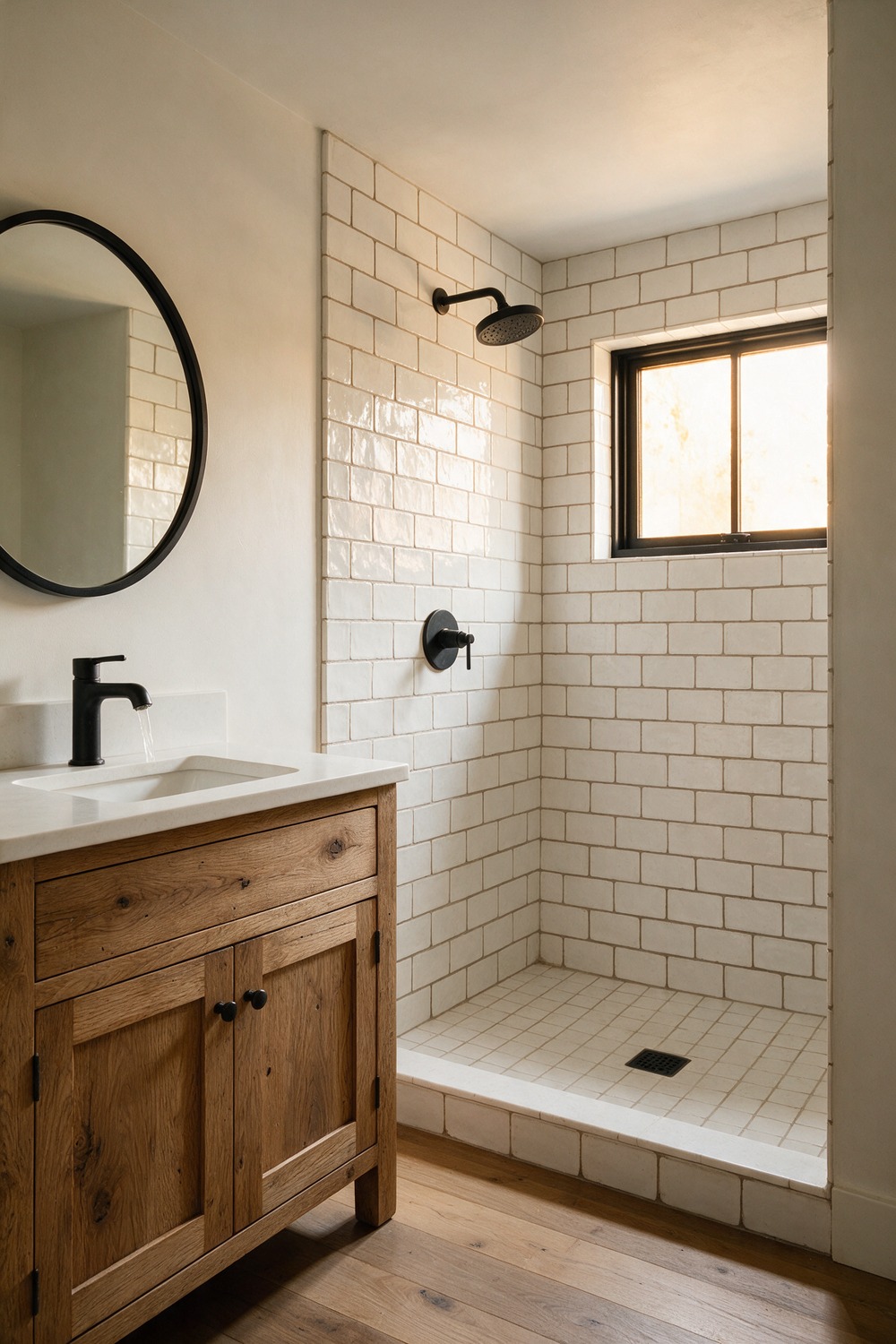
This is the Joanna Gaines of bathrooms, and honestly, there is a reason it never gets old. You take the warmth of farmhouse and iron out the fuss until only the good bones show.
An open walk-in shower lined in handmade white subway tile with a warm grey grout, a black-framed window, a reclaimed-oak vanity with a white stone top. Hardware in flat black. Walls in Dulux Natural White so the wood reads honey, not orange.
My one rule here: let the grout do the talking. A soft greige line against white tile is what lifts this above a builder-grade box. Keep the wood tones warm and the metal cool, and the two halves of the name finally agree with each other.
4. Rustic Ensuite Bathroom
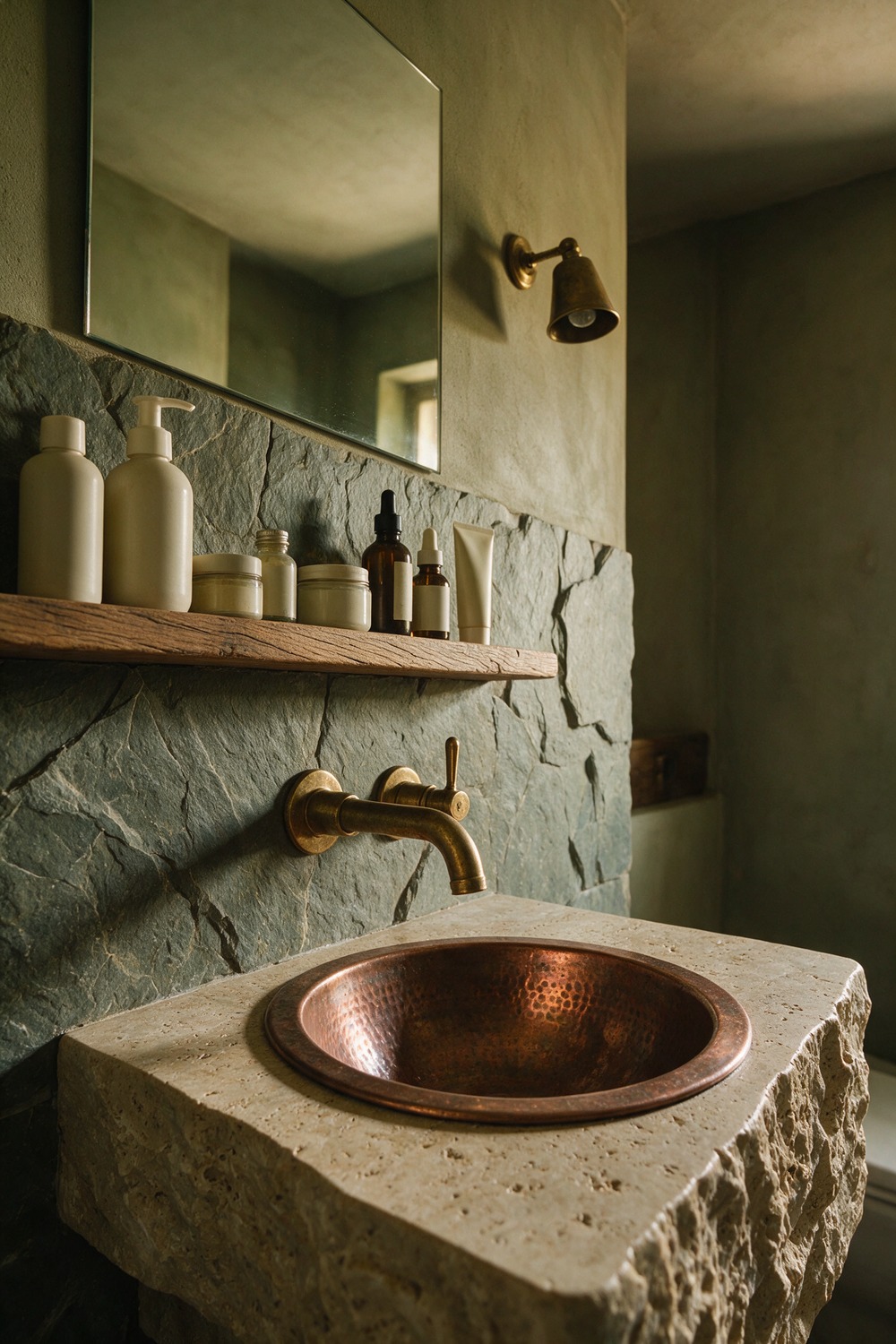
Rustic is texture you can feel with your eyes closed. The nub of a stone basin, the saw marks left in a reclaimed-oak shelf, cool slate underfoot in the morning.
Lean into natural stone: a chiselled travertine vanity top, a hammered-copper basin set into the stone, split-face slate on one wall. Earthy greens and browns, warmed by a single aged-brass wall light. Farrow & Ball Treron gives that stony green-grey if you want paint in the mix.
Pro tip: let the materials stay a little raw. A honed, not polished, stone top is the difference between a mountain cabin and a hotel lobby.
5. Coastal Ensuite Bathroom
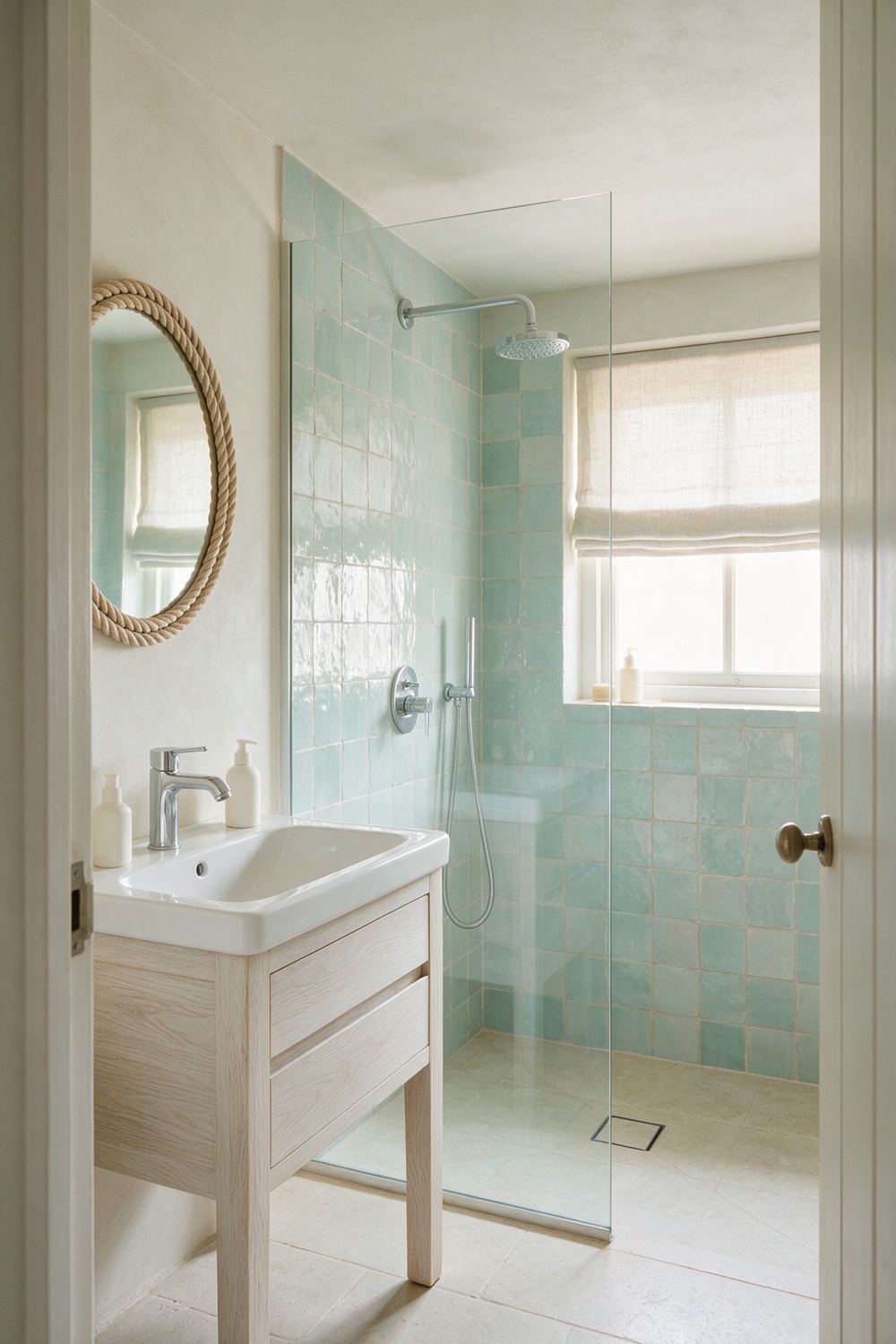
Coastal done well is about light, not seashells. I keep the literal beach props at zero and let a pale, sandy palette carry the mood: whitewashed oak, soft seafoam zellige, a rope-wrapped mirror.
Benjamin Moore Palladian Blue on the walls reads like sea glass at 9am. Where to begin? The zellige, every time. Those uneven, glazed tiles catch light like water.
6. Japandi Ensuite Bathroom
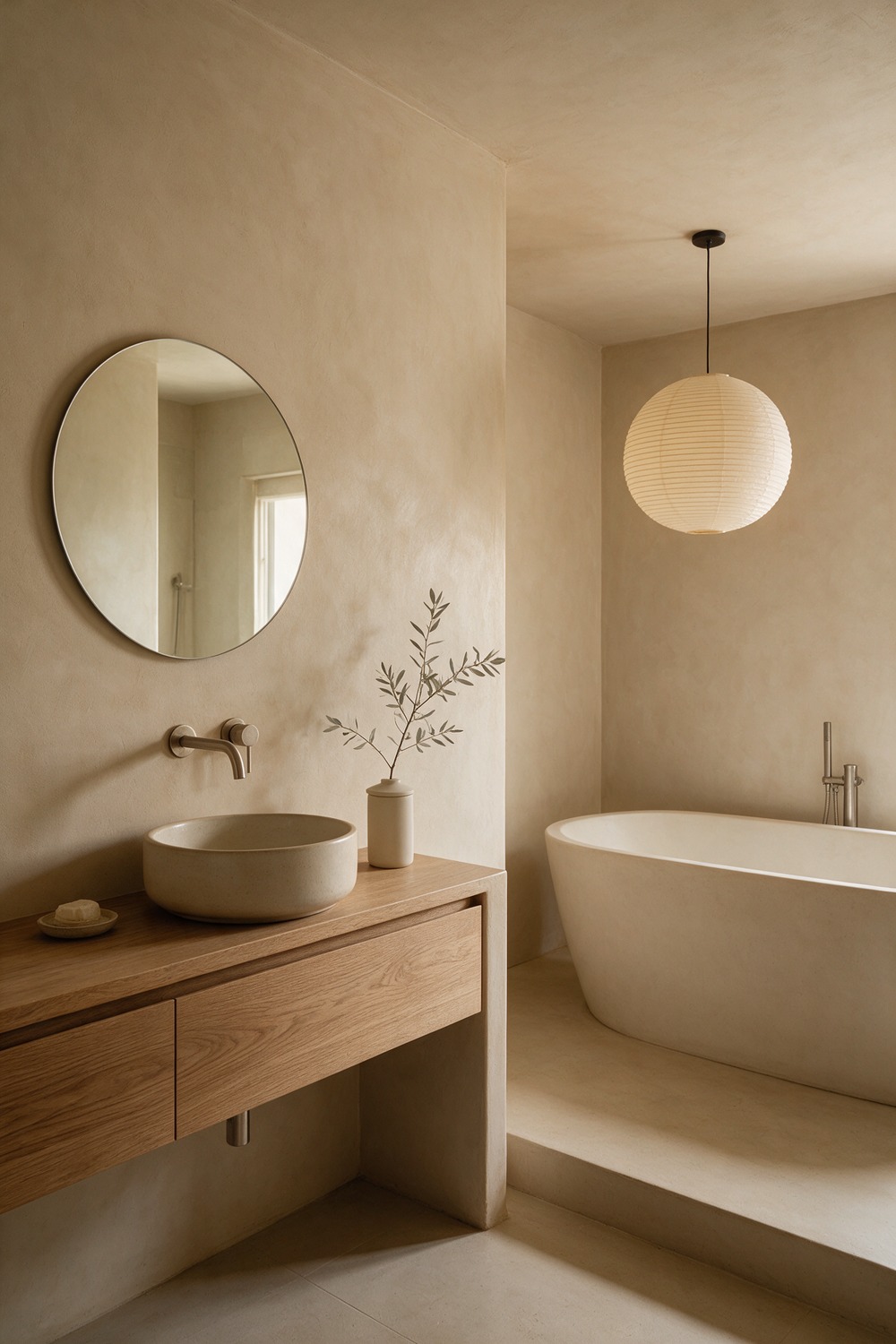
Japandi, in case the word is new to you, is Japanese calm meeting Scandinavian warmth. In a bathroom it is the most restful look there is, all low horizontals and soft shadow.
A low oak vanity, warm microcement walls in oatmeal, a deep soaking tub, a paper-shade light that glows rather than glares. No clutter, one ceramic vessel, one grey-green branch. Bauwerk limewash in a chalky stone tone keeps the walls matte and quiet.
The one splurge worth it is the deep tub. Japandi is built around the ritual of a long soak, so that is where the budget goes first, before the tiling, before the taps. Everything else can wait a year.
7. Traditional Ensuite Bathroom
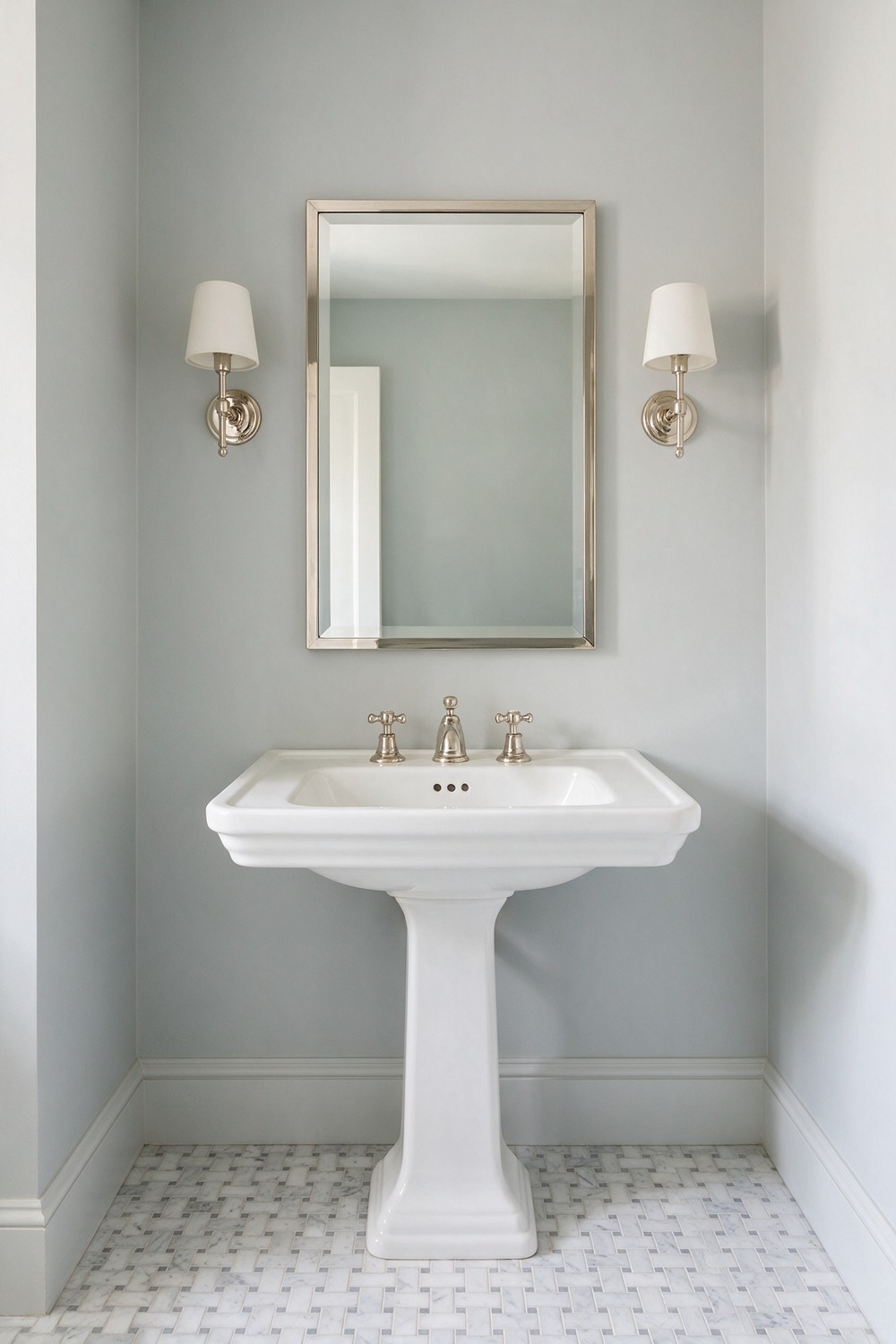
Classic never has to argue for itself. A traditional ensuite leans on marble and symmetry, the kind of room that would have looked right a hundred years ago and will look right in a hundred more.
Carrara marble on the floor in a basketweave mosaic, a pedestal basin, polished nickel taps with cross handles, a pair of sconces flanking a framed mirror. Walls in Little Greene French Grey hold it together softly.
Match your sconces, centre the mirror, and the room feels considered before a single tile goes down.
8. Vintage Ensuite Bathroom
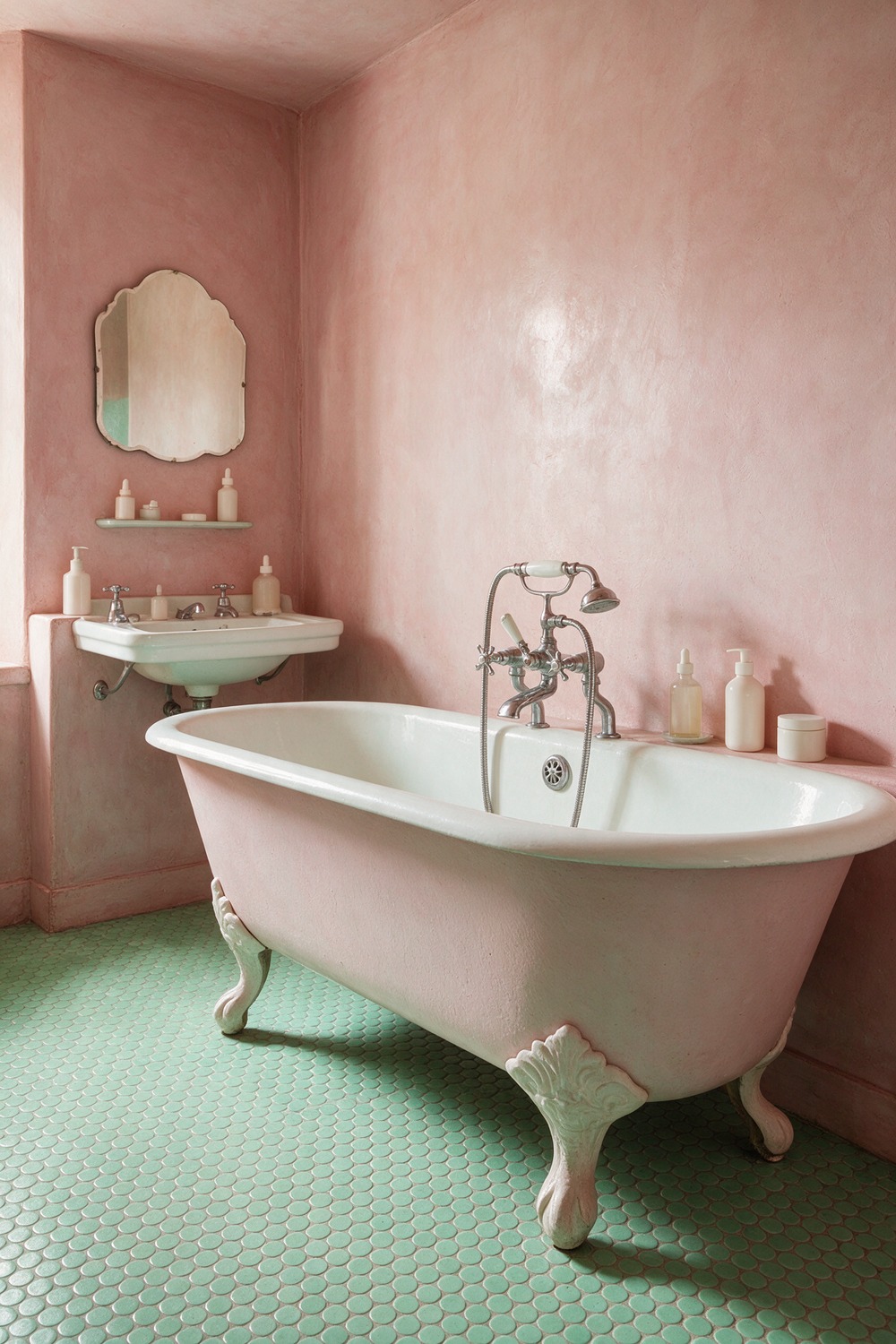
Nothing charms me faster than a bathroom that remembers the 1930s. A vintage ensuite is unapologetically sweet, and that confidence is exactly why it works.
Picture a slipper clawfoot tub, mint-green penny-round floor tile, a little chrome telephone mixer, a scalloped mirror. Pink and mint together sound bold until you see them soften each other. Try Farrow & Ball Setting Plaster on the walls for that aged-rose glow.
If you only do one thing, find a real reclaimed tub. A cast-iron clawfoot sets the whole decade in motion, and reproductions never match the weight.
9. Cottage Ensuite Bathroom
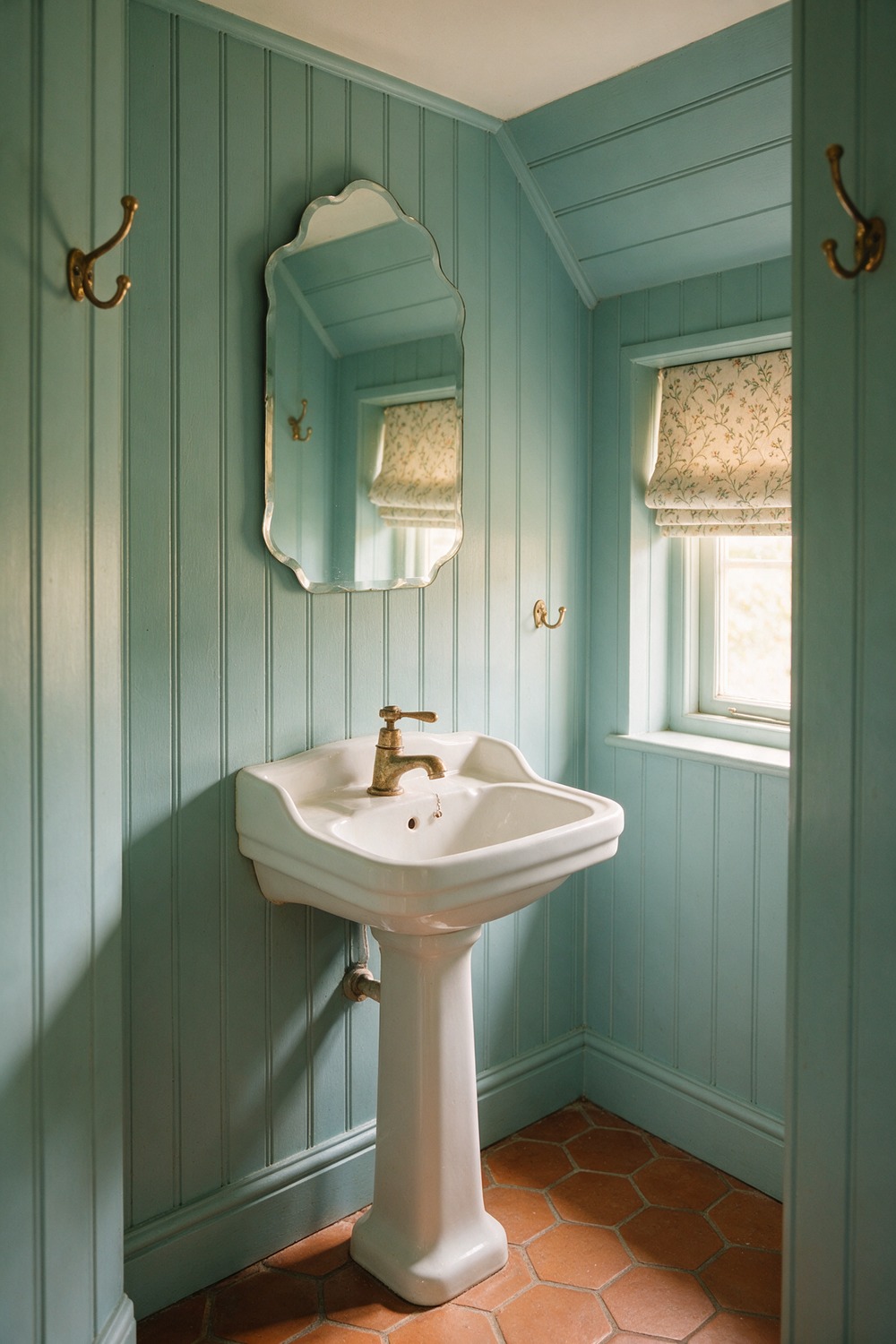
Small, soft, and a little bit floral. A cottage ensuite is the room equivalent of a warm scone, and I mean that as the highest compliment.
Beadboard panelling painted in Little Greene Hortense, a tiny pedestal sink, a sprigged blind, worn brass hooks. Keep the floor honest with terracotta hex tiles. The whole thing should feel collected over years, not bought in one go.
Start with the colour on the walls. In a cottage, paint is the cheapest way to give a plain box a heartbeat.
10. Luxury Ensuite Bathroom
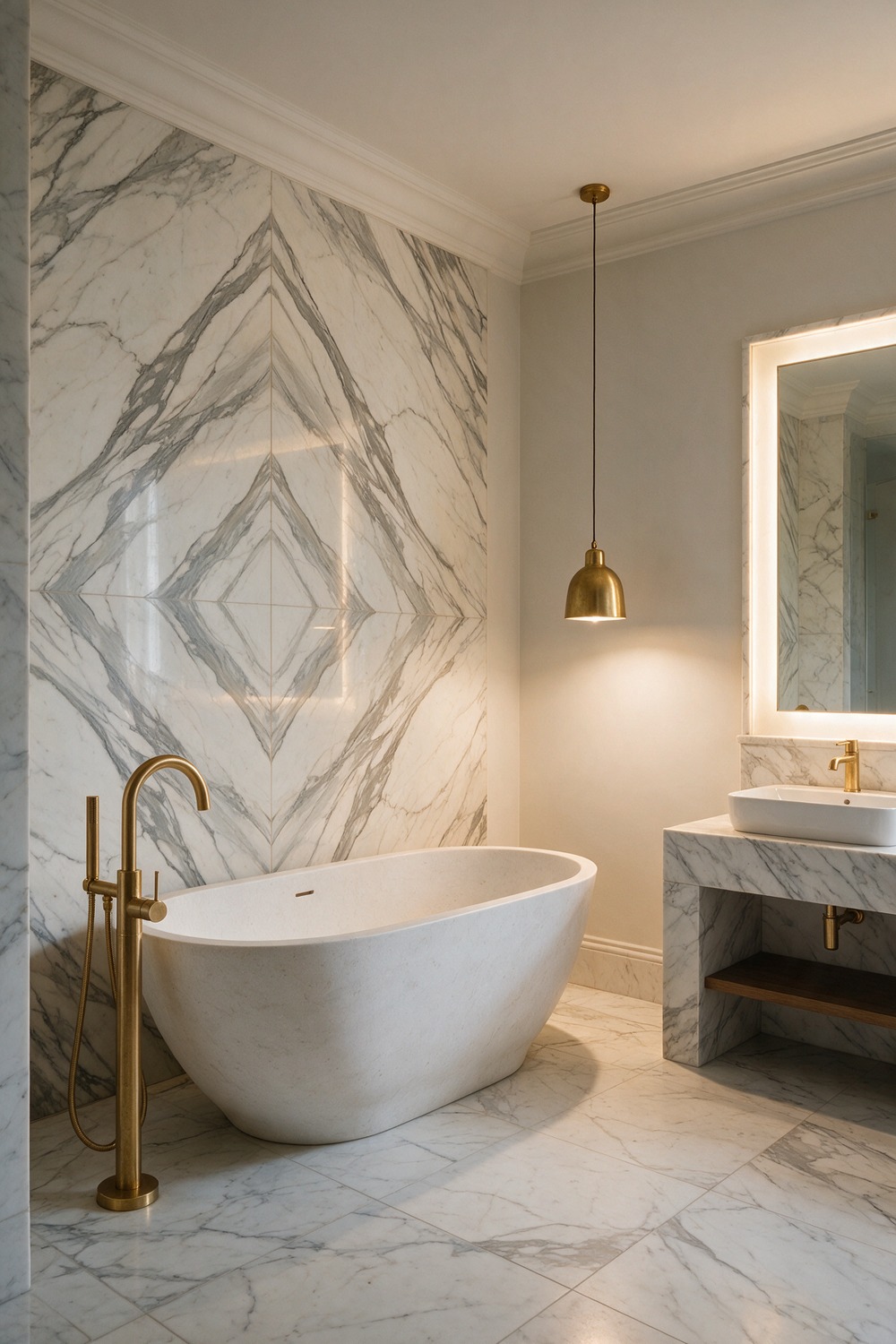
Luxury is restraint with excellent taste, not a pile of gold taps. The most expensive-looking bathrooms I know lean on one show-stopping material and then go very quiet around it.
Book-matched Calacatta marble behind a freestanding stone tub, brushed-brass fittings, a backlit mirror, underfloor heating you feel before you see. A single brass pendant over open floor, never over the water. Walls kept to a whisper in Farrow & Ball Strong White.
The move that reads as money is the book-matched marble. Mirroring the veins across two slabs is the detail five-star hotels pay for, and it is worth the stone bill on its own. Spend there, save on the towel rail.
11. Simple Ensuite Bathroom
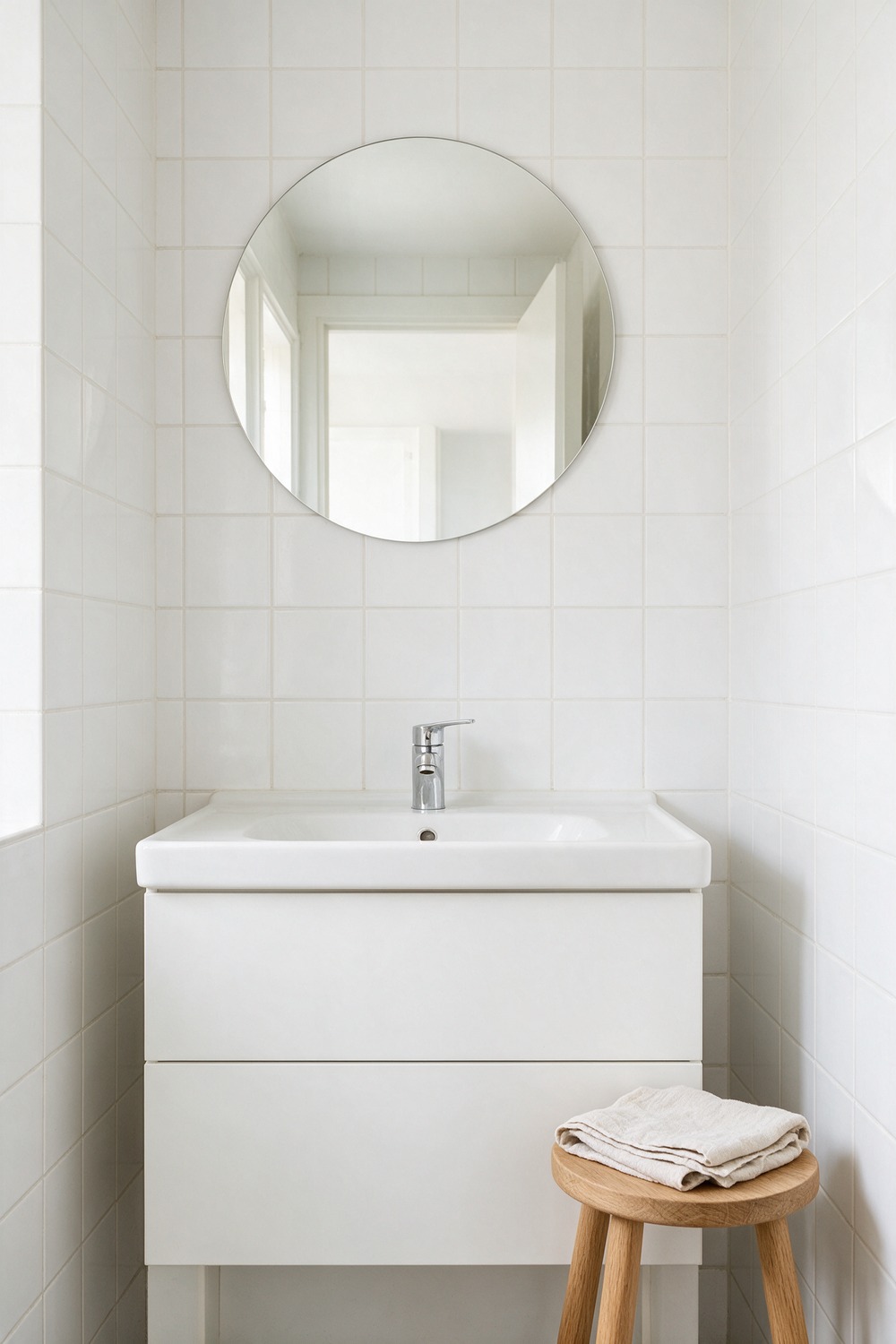
Sometimes the whole brief is: get out of my way in the morning. A simple ensuite is pared back on purpose, and there is real relief in a room with nothing to dust.
Square white tile, a clean-lined white vanity, a round mirror, one timber stool for warmth. Clare Fresh Kicks keeps the walls honest, and a stack of linen towels is all the softness it needs.
12. Moody Ensuite Bathroom
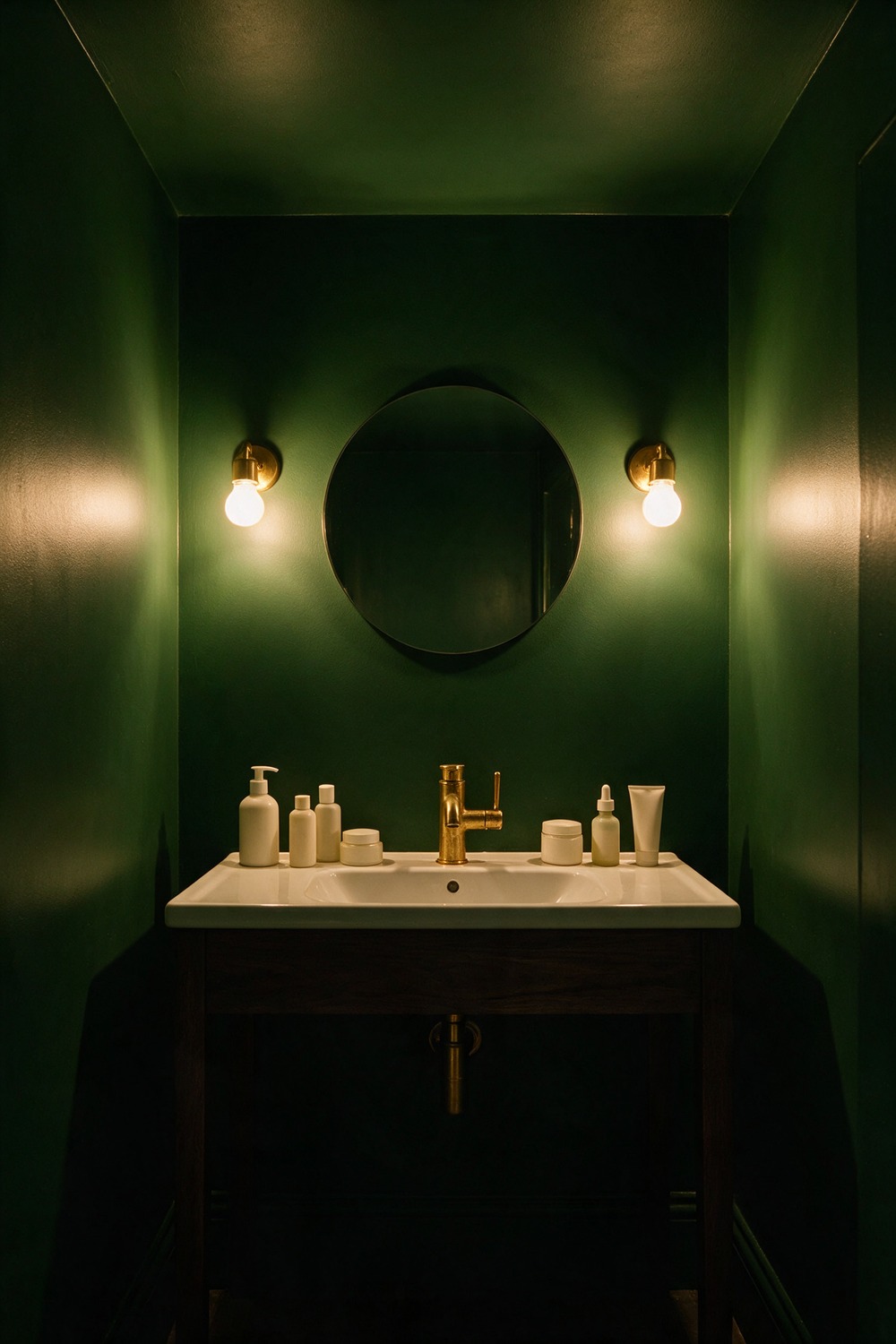
Moody is my favourite trick for a small windowless ensuite. Instead of fighting the dark, you lean all the way in and let the room feel like a jewel box.
Deep green walls and ceiling in Farrow & Ball Studio Green, a brass tap, a timber vanity, warm 2700K lighting pooling low. Dark on dark, with metal for the spark.
Paint the ceiling the same green as the walls. Losing that white line overhead is what turns a dark room from gloomy into properly enveloping.
13. Dark Ensuite Bathroom
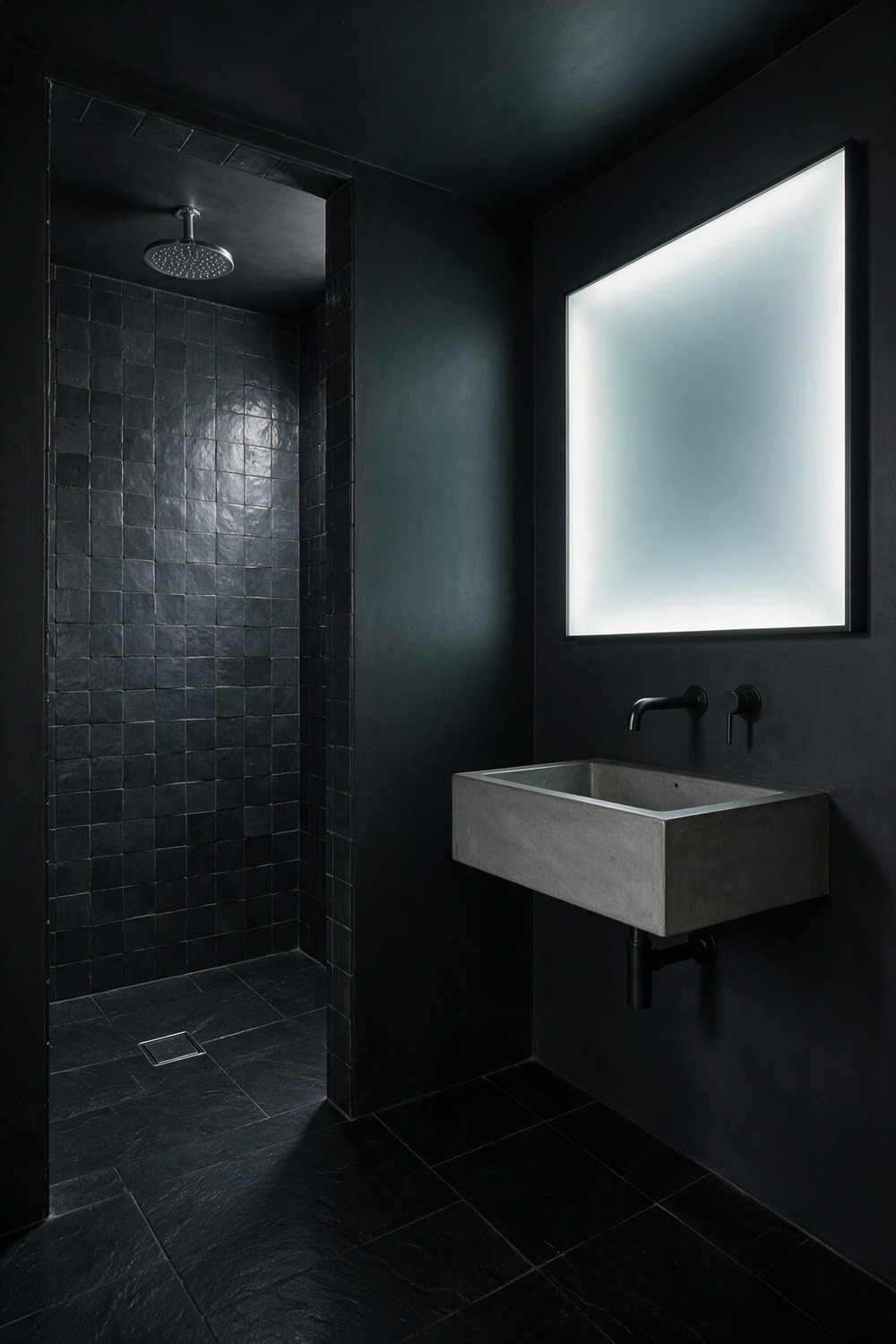
Where moody is warm, a dark ensuite can run sharp and graphic. This is the look for someone who wants drama with a straight edge, not candlelight.
Charcoal zellige across the shower, black slate underfoot, a concrete basin, matte-black everything. Behr Broadway on the walls lands near-black without going flat. One line of warm LED under the mirror keeps faces kind.
Honestly, the risk with all-dark is losing yourself in the mirror, so light the face, not the room. A backlit mirror does both jobs at once.
14. Minimalist Ensuite Bathroom
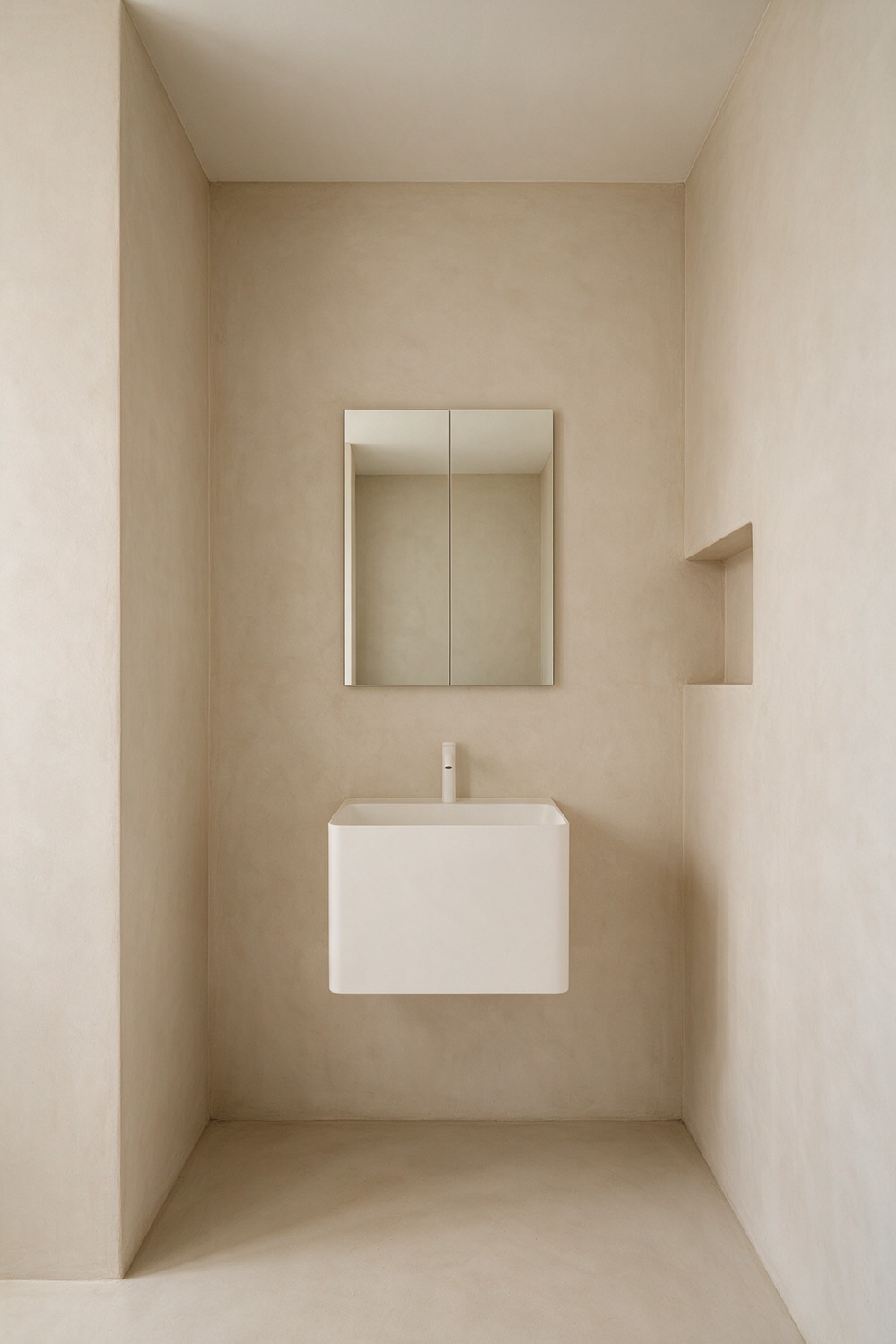
Minimalist is not empty, it is edited. Every edge earns its place, and the storage hides so well the room looks like it owns nothing at all.
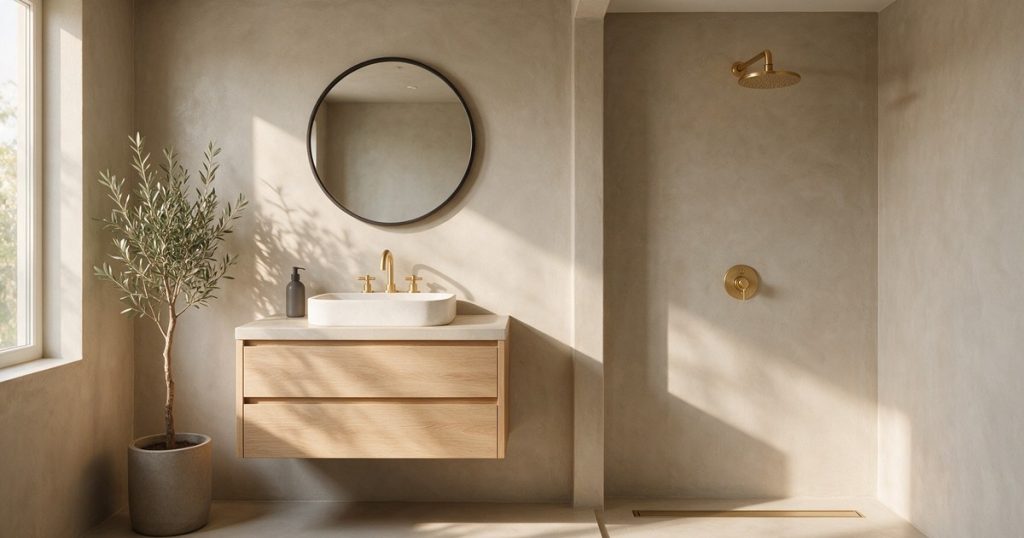
Warm microcement over walls and floor in one seamless oatmeal tone, a wall-hung basin with a concealed tap, push-latch cabinets, a single niche. No visible hardware, which is the whole luxury of it.
The trick is the hidden storage: carve one recessed niche and a mirror cabinet, and clutter has nowhere to land.
15. Industrial Ensuite Bathroom
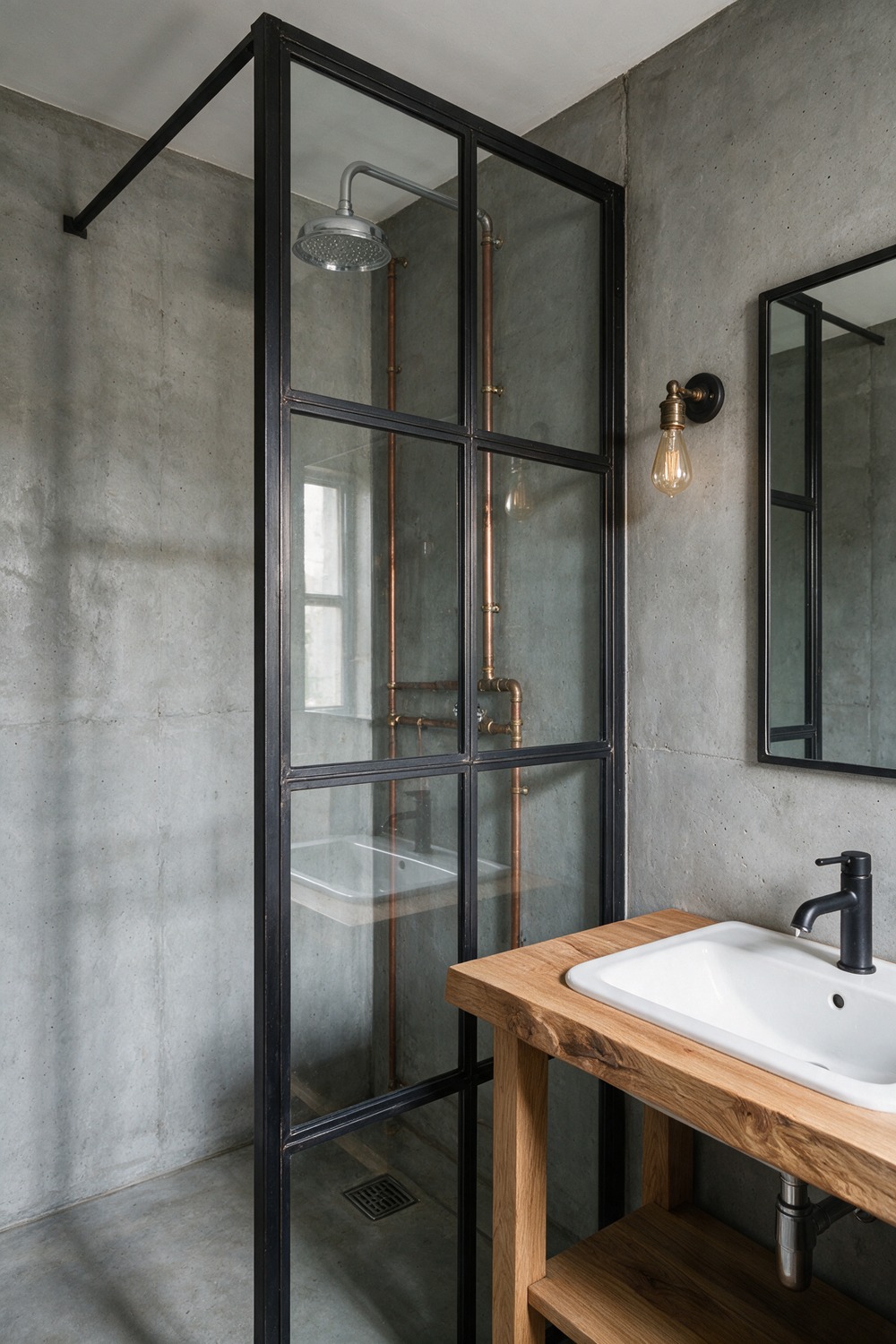
Industrial borrows from old workshops and warehouses, all honest materials left on show. It sounds hard, but warm wood and good light keep it from feeling like a loading dock.
Polished concrete walls, a black Crittall-style shower screen in clear glass, brass pipework on show, an oak slab vanity, an Edison-style wall light. The palette is concrete grey, black steel, and one hit of warm timber.
My advice: pick one raw material to be the hero. Let the concrete lead and keep the black metal as trim, or the room tips from loft to bunker.
16. Art Deco Ensuite Bathroom
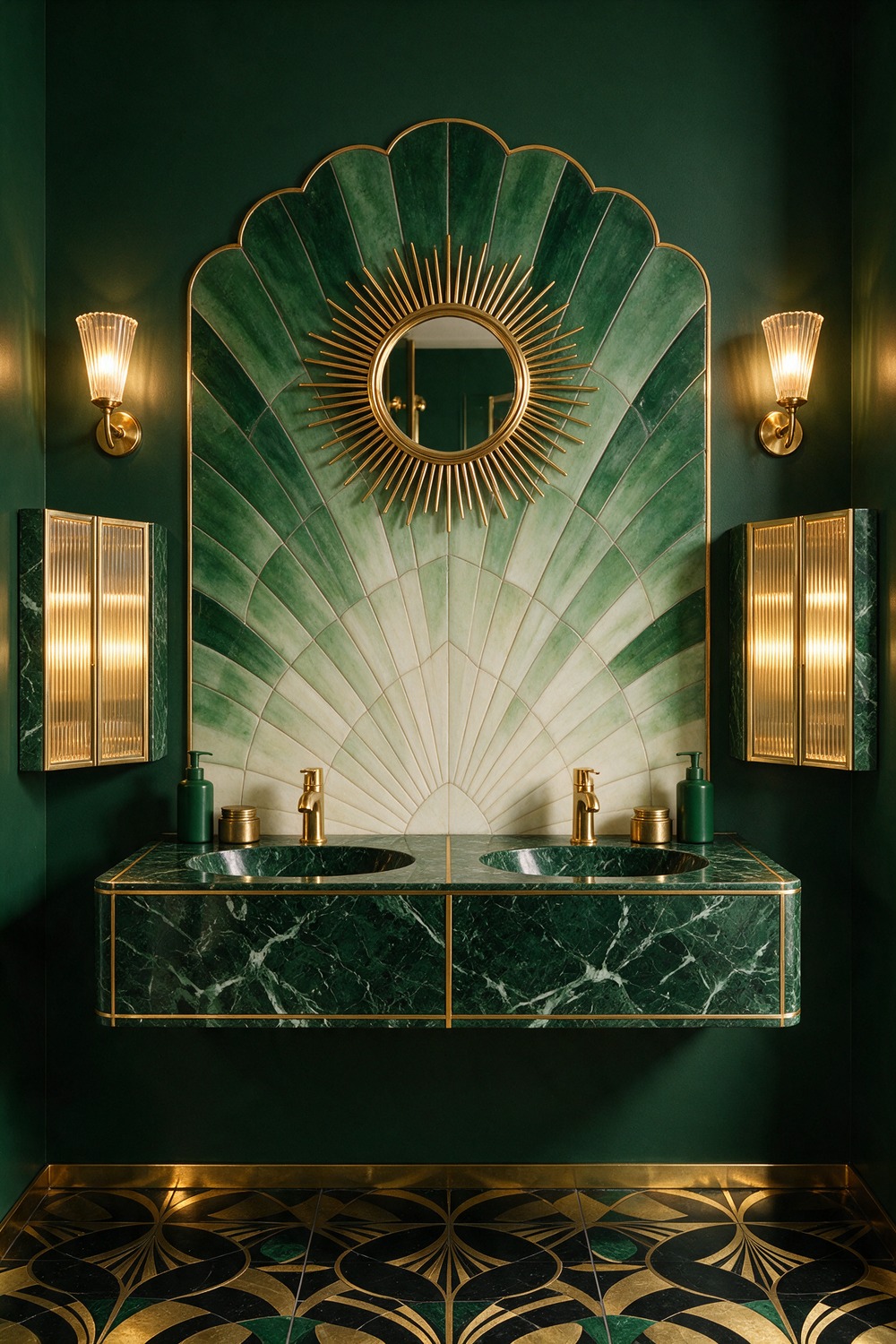
Deco is where a bathroom gets to show off. Think Gatsby’s guest suite: geometry, gloss, and a confident dose of brass. It is maximalism with a ruler.
Green marble with brass inlay, a scalloped fan-shaped tile behind the basin, fluted glass, a sunburst mirror, black-and-gold geometry on the floor. Walls in Farrow & Ball Green Smoke anchor all that shine.
Symmetry and repetition carry the whole era, so double up: paired sconces, a mirrored pair of cabinets, a motif that repeats. Where to start is the floor pattern, because a bold green or black geometric floor is the single most Deco move you can make in a weekend.
17. Mid Century Ensuite Bathroom
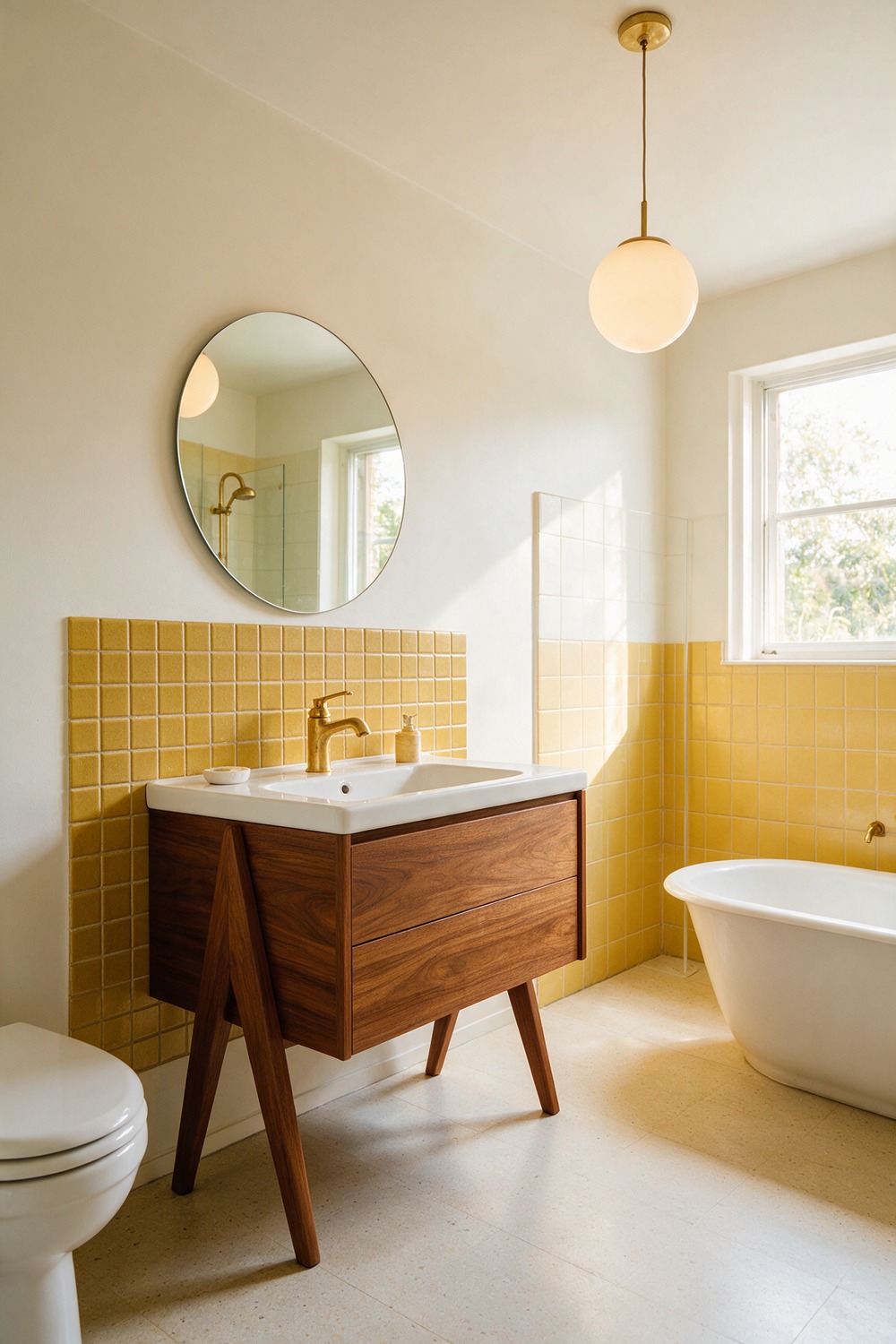
Mid-century warmth suits an ensuite beautifully, because the whole style is about ease. Clean walnut lines, a cheerful colour, none of the heaviness of older looks.
A floating walnut vanity on splayed legs, a globe pendant, mustard square mosaic on the vanity wall. Sherwin-Williams Rookwood Sash Green nods to the 1960s. Swap chrome for aged brass, and the walnut sings.
18. Scandinavian Ensuite Bathroom
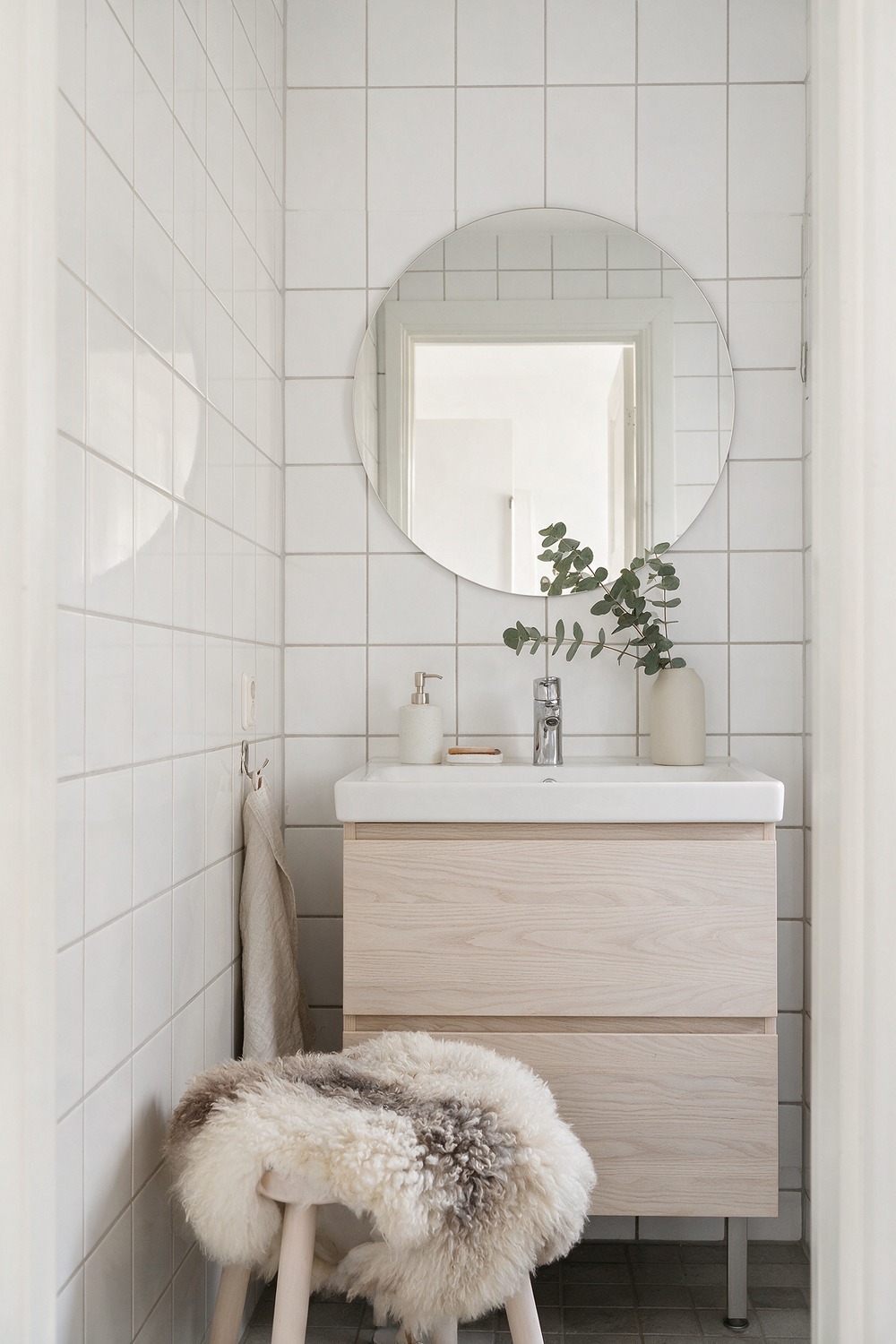
Scandi is hygge you can stand up in. The look is pale, bright, and endlessly calm, built for long winters and short days where every scrap of light counts.
White walls, pale ash wood, soft grey grout, white square tile, a sheepskin over a stool, a sprig of eucalyptus. Jotun Lady Pure White keeps the room luminous.
The warmth here comes from wood and wool, never from colour, so lean on a pale ash vanity to stop the white from going cold.
19. Boho Ensuite Bathroom
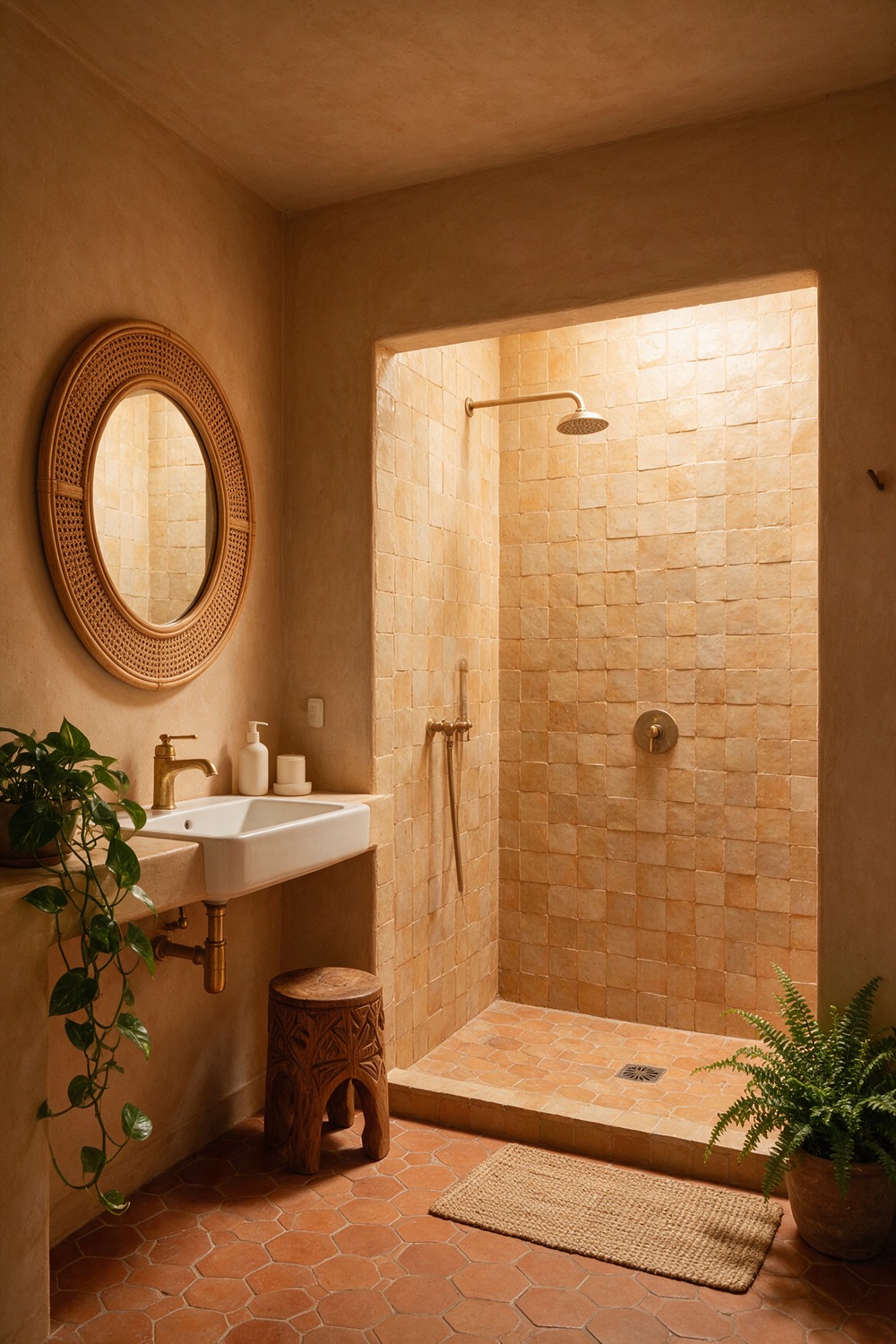
Boho is the one look that rewards a magpie. Layer texture on texture, trust your eye over any rulebook, and let the plants take over. This is my permission slip to overdo it.
Terracotta floor tiles, a rattan mirror, a carved teak stool, jute underfoot, warm sandy zellige in the shower. A trailing pothos and a potted fern soften every hard line. Backdrop Mo Money, a warm clay tone, grounds the walls.
Texture does the heavy lifting here. Mix at least three natural materials, say rattan, terracotta, and jute, and the room reads collected rather than beige.
20. Transitional Ensuite Bathroom
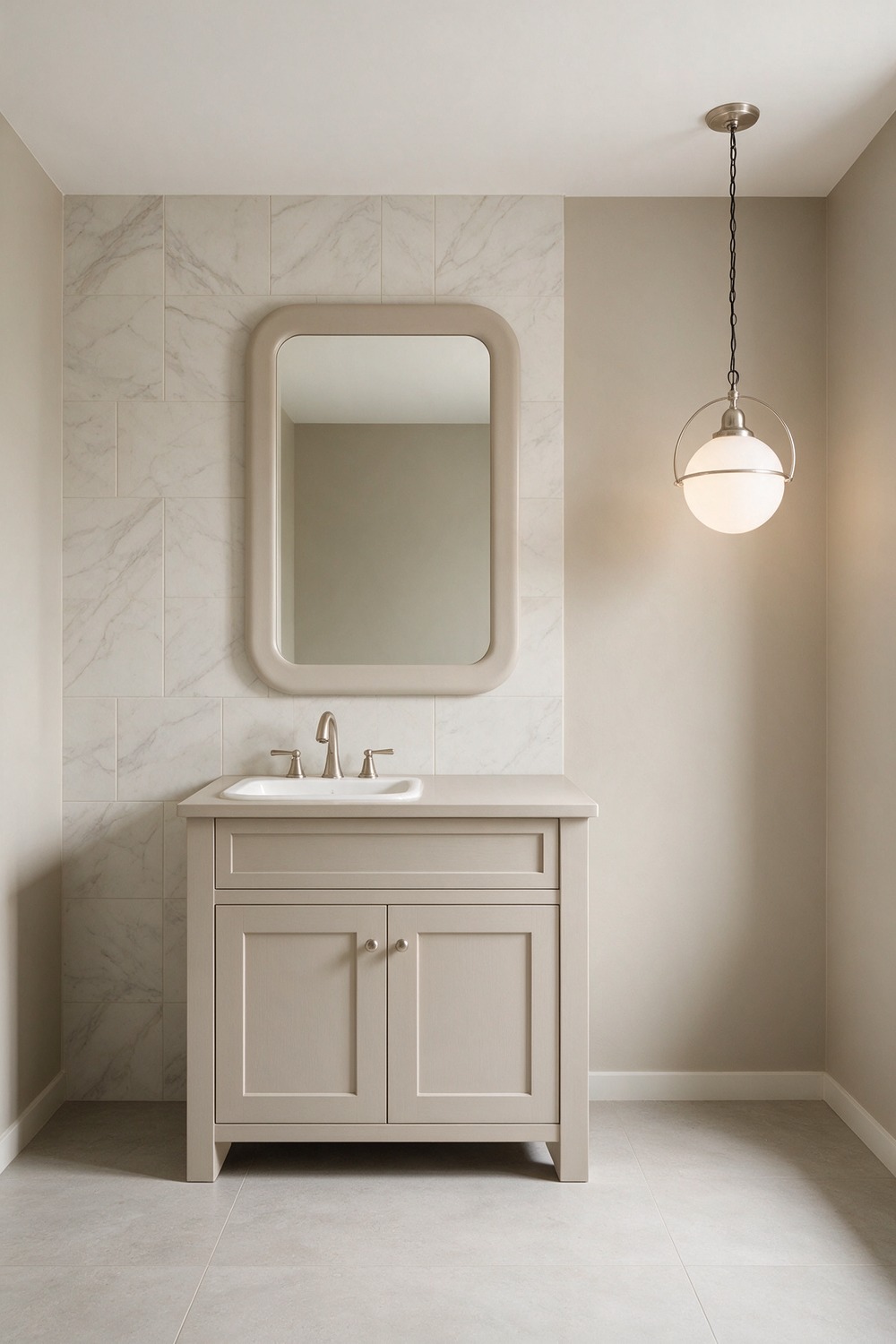
Transitional, for the uninitiated, is the handshake between traditional and modern. You get the comfort of the classic with the clean lines of the new.
A shaker-front vanity in greige, marble-look porcelain, a framed mirror, brushed-nickel taps. Benjamin Moore Revere Pewter is the Goldilocks greige that makes it cohere. A shaker door with a flat modern pull is transitional in one cabinet.
Which Ensuite Style Is Right for You
Match the bathroom to the bedroom it hides behind. A calm, pale bedroom wants Scandi, Japandi, or minimalist next door, so the two rooms breathe together.
Love a bit of drama? A moody, dark, or Art Deco ensuite turns the morning routine into something cinematic. I lean this way in a windowless room, where there is no daylight to fight for anyway.
Craving warmth and story, choose farmhouse, rustic, cottage, or boho. Want timeless, resale-proof value, go traditional or transitional. And if you just want out the door by 8am, simple wins, every time.
There is no wrong answer here. The best ensuite is the one that feels like a held breath the moment you close the door.
Ensuite Bathroom Remodels, Answered
How much does an ensuite remodel cost? In broad bands: a cosmetic refresh of paint, taps, mirror and lighting sits at the low end. A new vanity, fresh tiling and fittings is a solid mid-range job.
Moving plumbing, building a wet room, or specifying stone slabs is the splurge tier. The plumbing moves, not the pretty finishes, are what really drive the number up.
What can I do myself versus hire out? Paint, a mirror swap, shelving, accessories and a vanity you can self-fit are all friendly to a confident DIYer.
Tiling a wet area, moving pipes, and any electrics near water belong to a pro. Water and wiring are the two places to hand over the drill, no question.
How long does it take? A cosmetic refresh is a weekend. A full gut and refit of a small ensuite usually runs two to three weeks once materials land, longer if you are moving the layout around.
What is the one thing worth spending on? The tile and the tap you touch daily. A good handmade zellige or honed marble, plus a solid-brass mixer, carry a whole room. They are what your hand and eye meet every morning.
What do I ask the tiler for? Bring the exact tile name, size and finish, your grout colour, and the layout you want: straight stack, herringbone, or basketweave. Ask for the grout joint width too. Those few specifics are what separate a crisp wall from a wobbly one.
So pick your look, start with the one material that excites you most, and let the rest follow. Your quietest room is waiting, go make it yours.
More stories
Share this story