19 Bathroom Counter Ideas, From Marble to Butcher Block

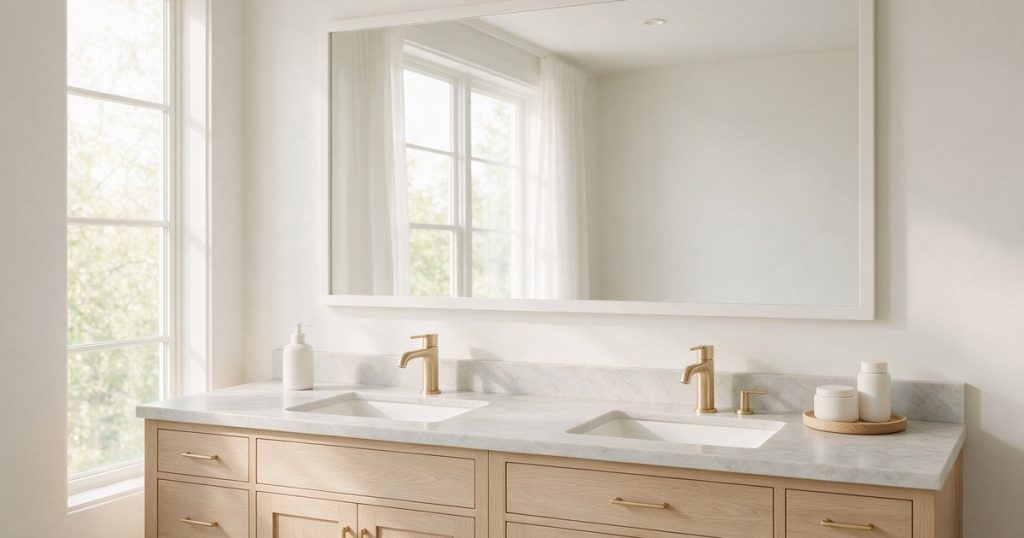
I judge a bathroom by its counter first. Not the tub, not the fancy tap, the counter. It is the one surface your hand lands on every morning, and it sets the mood before you have found the light switch.
Which is why I get a little obsessed with what it is made of. A slab of honed marble says one thing. A chunk of oak butcher block says something else, and both can be quietly gorgeous.
Below are nineteen bathroom counter looks, from barely-there white to a copper top that keeps getting better with age. Each comes with its palette, its material, and the one move that makes it work.
1. Black Bathroom Counter
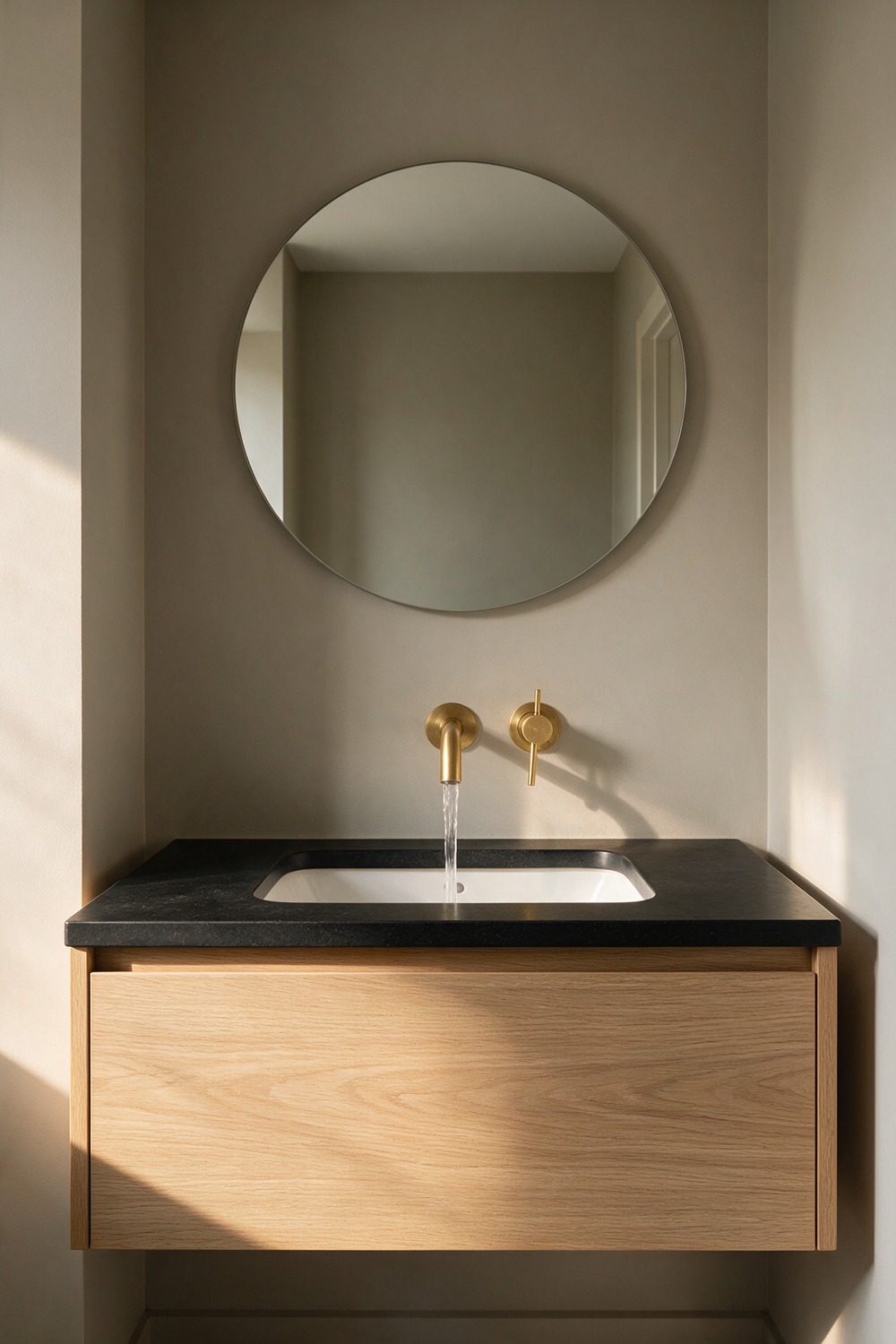
A black counter is the little black dress of the bathroom. It flatters everything you set on it and never looks cheap. The one rule: keep it matte, not glossy. Gloss shows every water spot; a honed, dead-flat black reads expensive and hides the splashes.
2. White Bathroom Counter
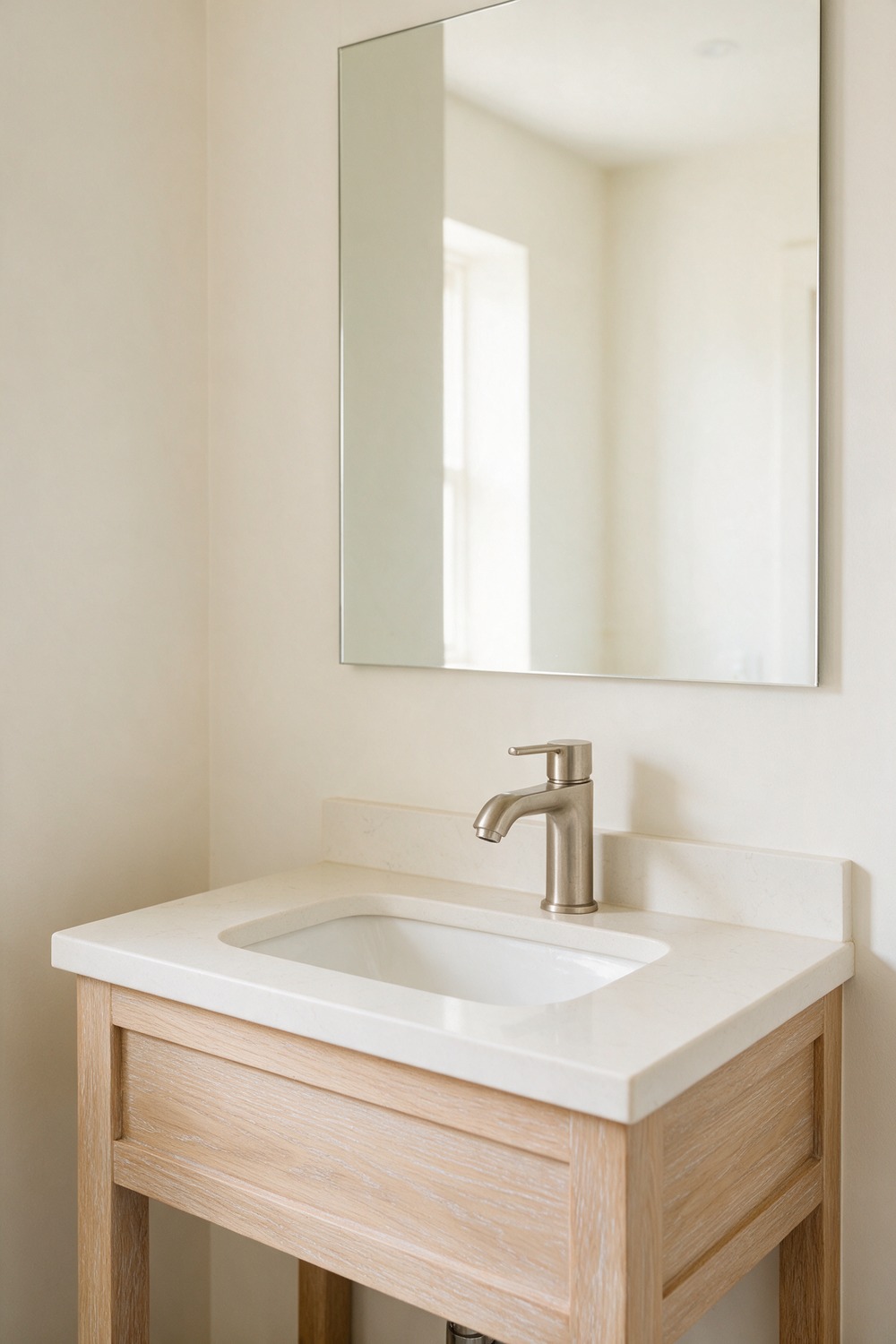
Everyone reaches for white and then wonders why it feels flat. The answer is texture. A pure-white counter needs a little veining or grain nearby, or it goes clinical fast.
My pick is a warm white quartz with the faintest grey vein, paired with a chalky wall like Farrow & Ball Pointing. Add a bleached oak frame under the basin and the whole thing warms up. Palette: cream-white, pale oak, a whisper of grey.
3. Dark Bathroom Counter
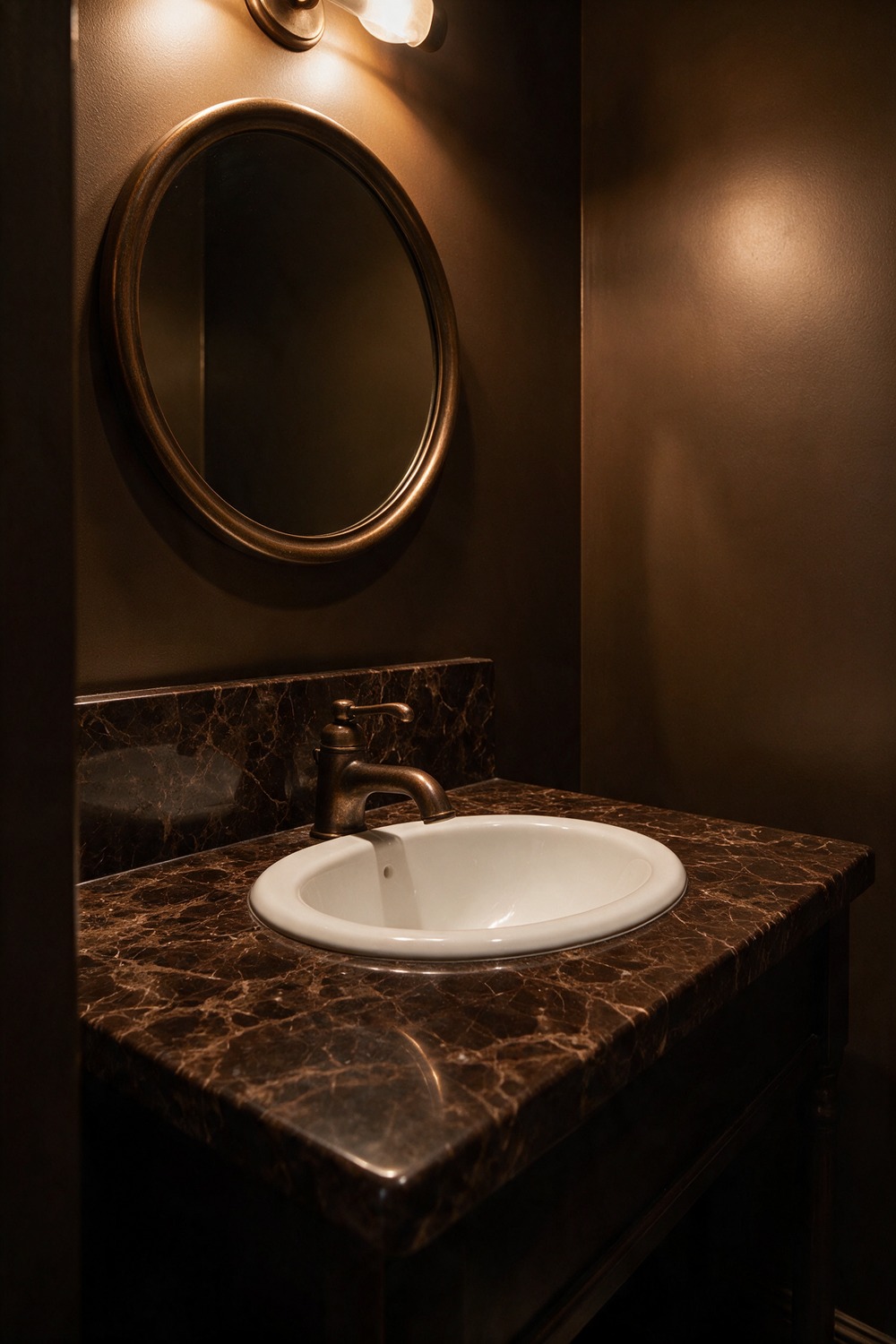
Dark is not the same as black. Dark is espresso, deep bronze, near-black green, the colours that read moody in low light and rich in the sun.
This is the counter for a small windowless powder room you want to feel like a jewel box. Go for a dark emperador marble, wrap the walls in Sherwin-Williams Urbane Bronze, and keep the lighting warm, around 2700K, so the surface glows instead of greying out.
4. Marble Bathroom Counter
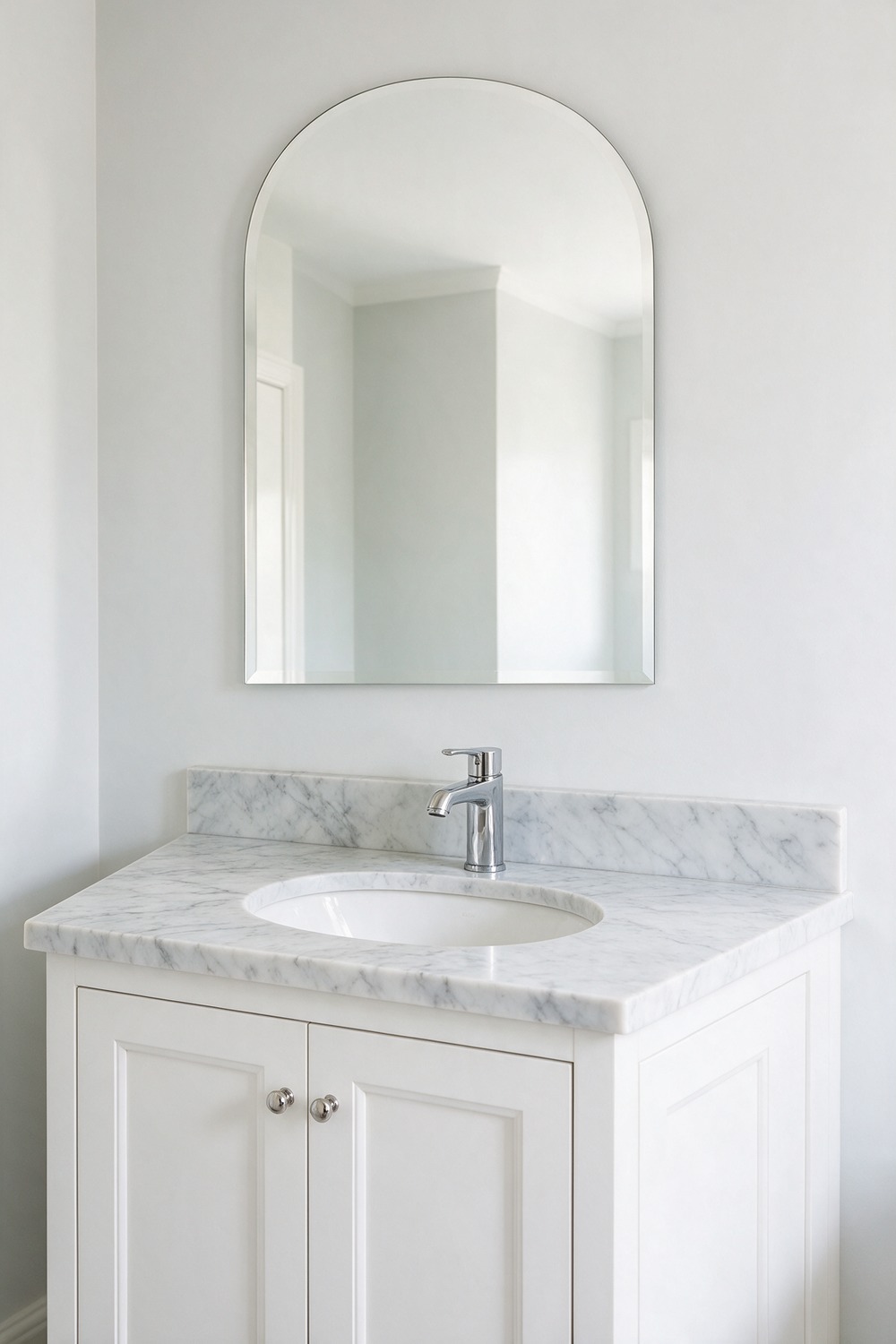
Here is my unpopular opinion: real marble in a bathroom is worth the worry. Yes it etches. Yes a drop of lemon leaves a mark.
That faint patina is exactly what makes it look like it has been loved for a hundred years. Carrara is the classic, soft white with grey feathering, and the kindest on the wallet.
For the recreate kit: a honed, not polished, Carrara slab, a simple white shaker vanity, a thin waterfall edge if you want it modern. Pro tip: seal it twice a year and stop apologising for the marks.
5. Butcher Block Bathroom Counter
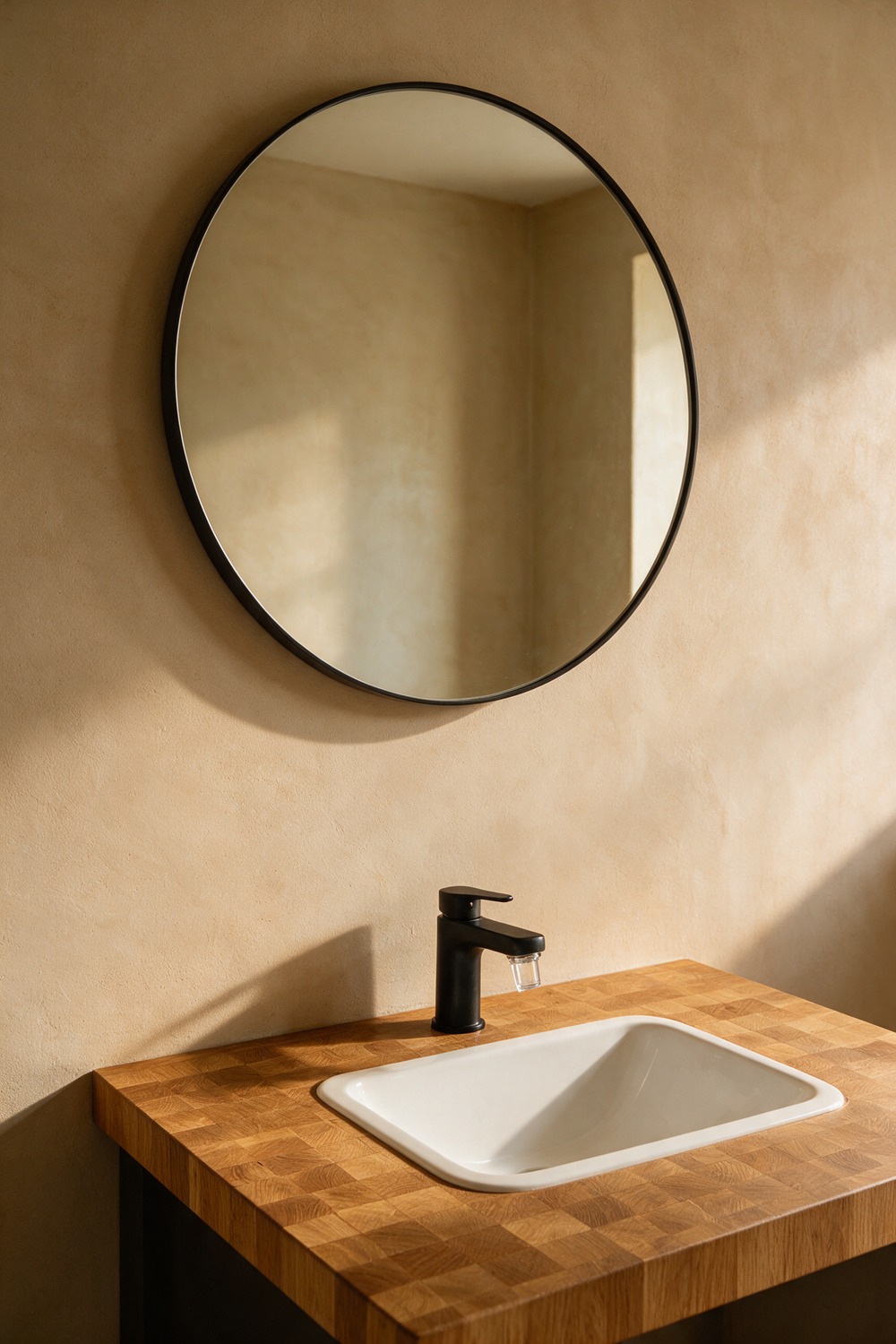
Wood in a bathroom makes people nervous. It should not. Sealed properly, a butcher block counter is warm, cheap, and completely charming.
It is the one with the little end-grain squares, a chopping-board look turned into a vanity top. Use a mid-tone oak or walnut block, finish it with a marine-grade matte sealer, set a white undermount basin into it, and keep the walls a soft clay like Bauwerk limewash.
6. Live Edge Wood Bathroom Counter
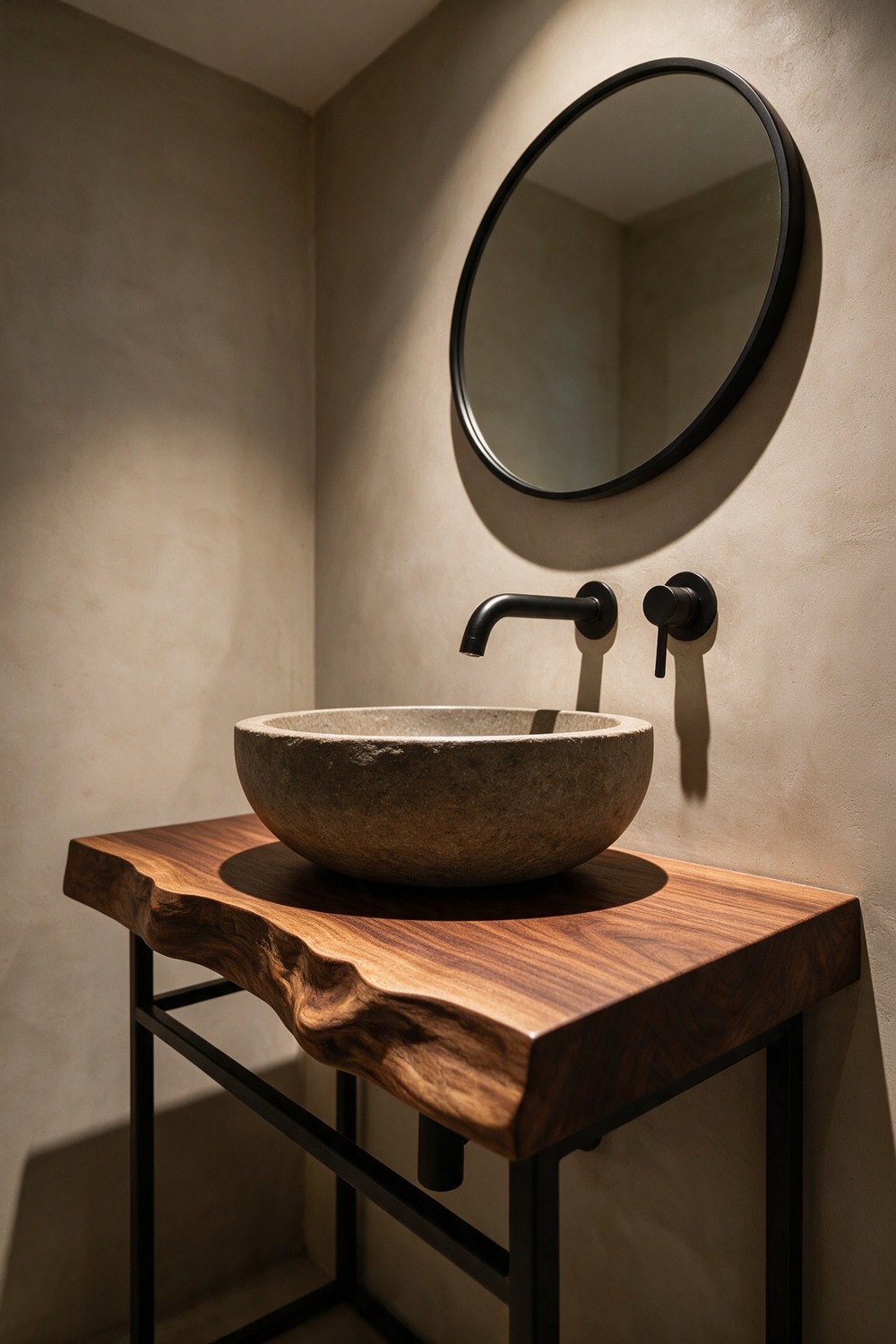
If butcher block is the tidy cousin, live edge is the free spirit. One raw, wavy natural edge of the plank is left exactly as the tree grew it, so no two tops are the same.
This wants a vessel sink sitting proud on top, to show off the slab. Pick a thick walnut or oak plank with a visible live edge, a matte oil finish, and a round stone bowl. Let it be the one loud thing in a calm room.
7. Wood Bathroom Counter
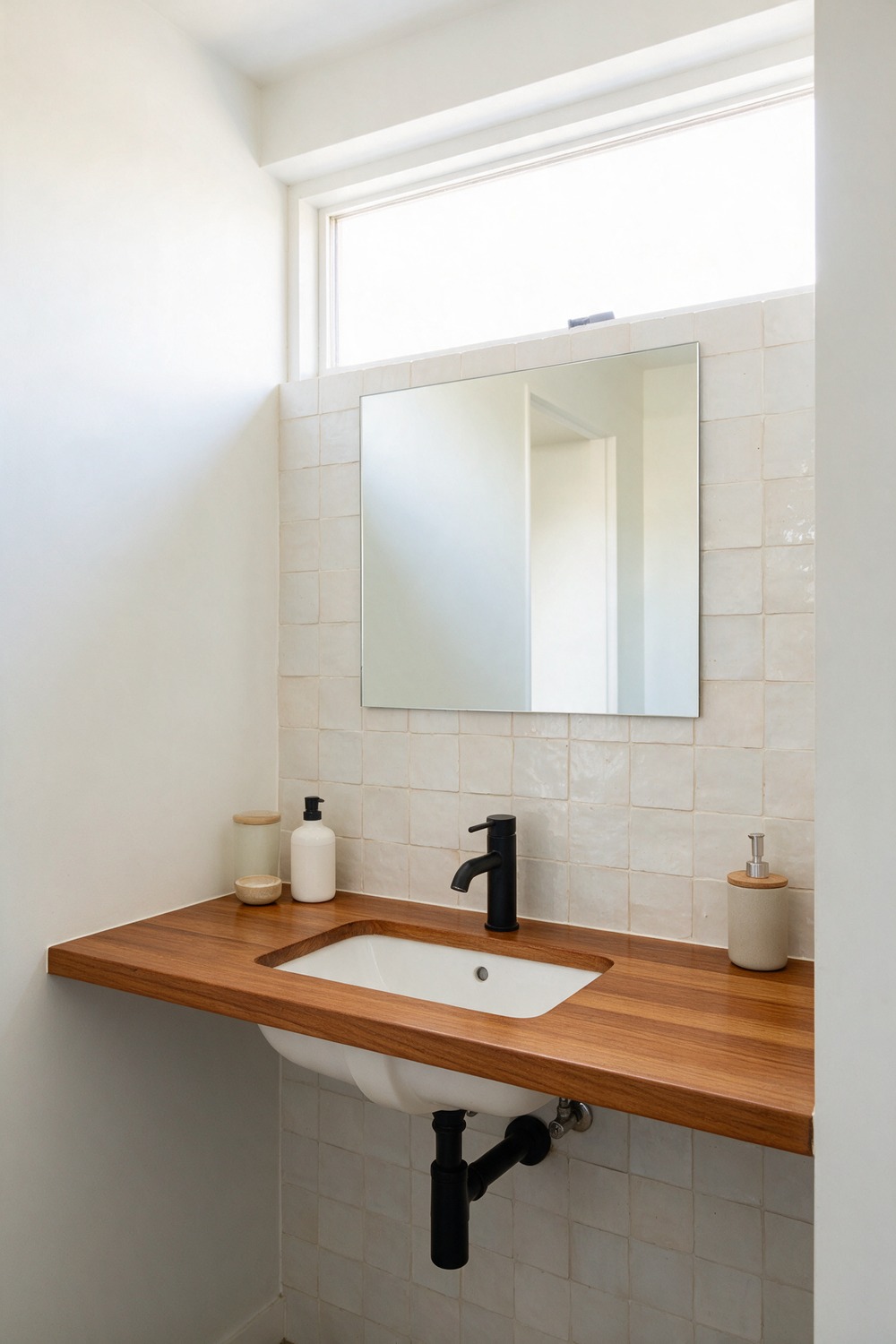
Not every wood counter needs a story. Sometimes you just want a clean, solid timber top that feels warm underhand and goes with everything. Teak is my move for a splashy family bathroom because it naturally shrugs off water. Pair it with off-white zellige tile and a matte-black tap.
8. Granite Bathroom Counter
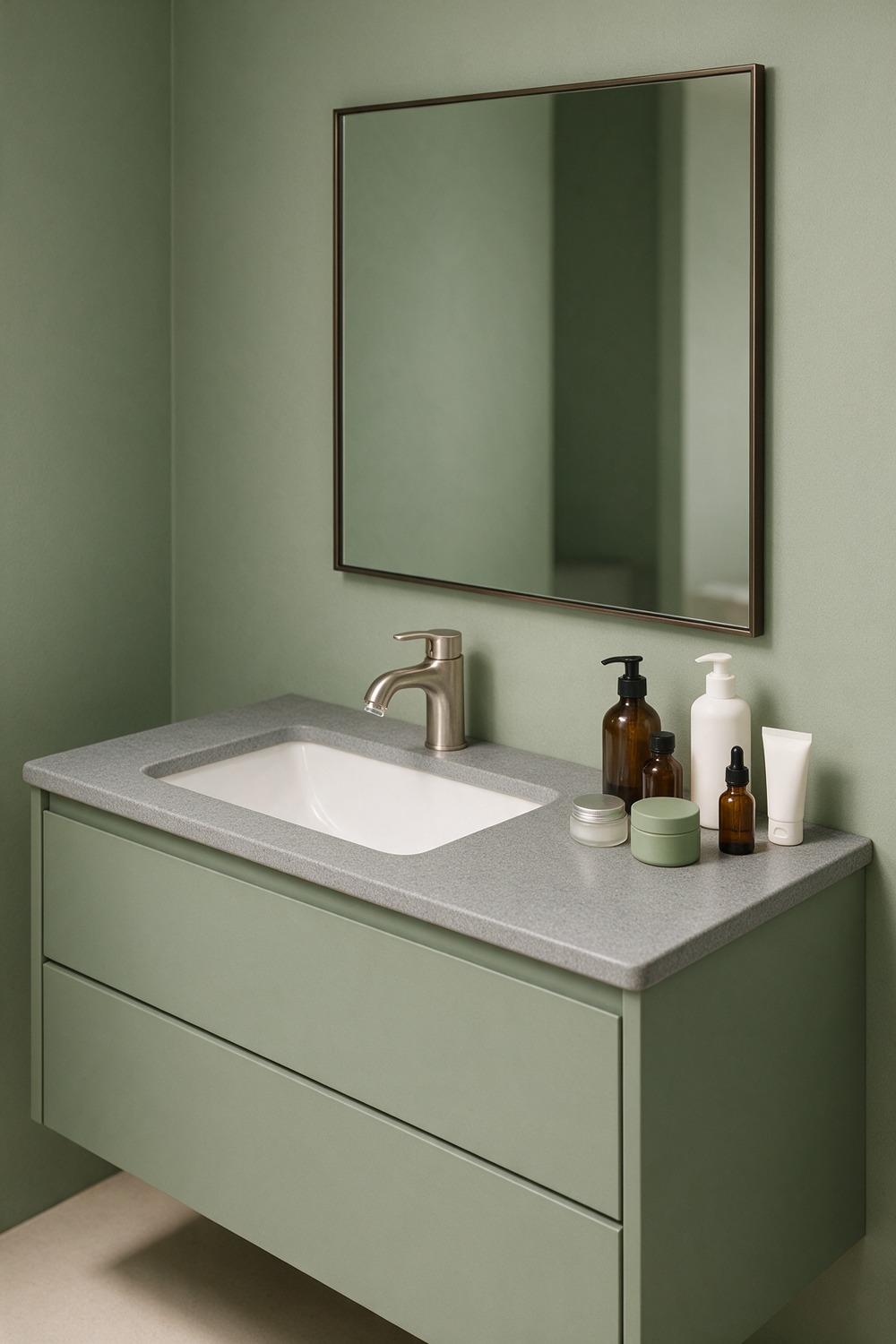
Granite got a bad rap from the speckled brown kitchens of the early 2000s. Forget those. Today’s granite comes in low-movement options that look more like soft stone than confetti.
Look for a honed grey or black granite with a subtle, even grain. It is nearly indestructible and shrugs off heat from a hair tool. Set it on a flat-front vanity in a muted sage like Little Greene Normandy Grey, and finish with brushed nickel.
9. Quartz Bathroom Counter
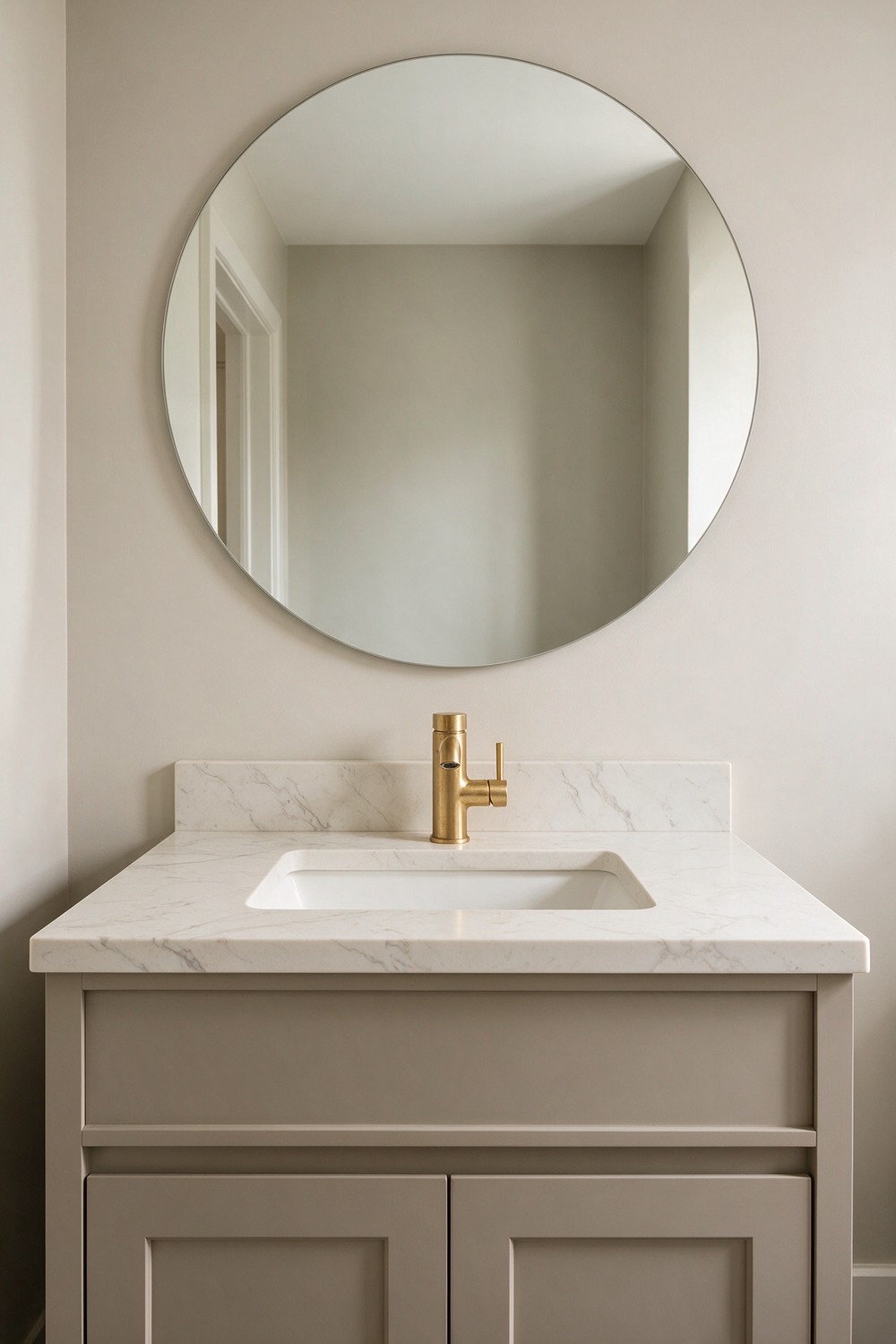
Quartz is where I send anyone who wants the marble look without the marble maintenance. It is engineered stone, so it is non-porous. No sealing, and nothing can stain it.
For a busy bathroom that is a real relief. The best ones mimic a soft honed marble with a faint vein.
Choose a warm-white quartz with grey movement, pair it with a greige wall like Dulux Natural Hessian, and add a wide undermount basin. The one move: pick a matte finish, not the shiny one, so it reads like stone and not plastic.
10. Concrete Bathroom Counter
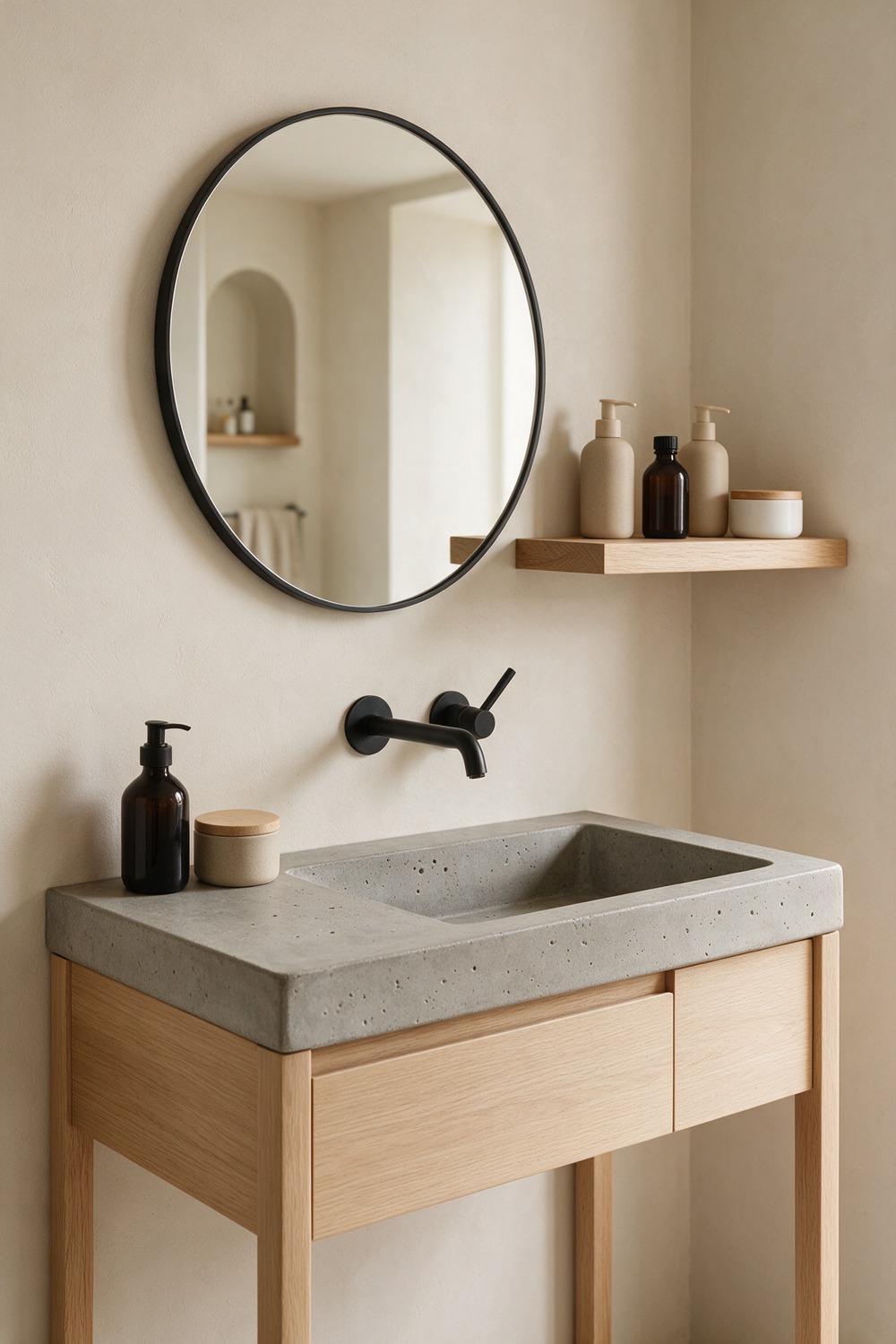
Concrete is for people who like a little rawness in their calm. It has a soft, cloudy grey surface with tiny natural pits, and it feels cool and substantial under your hands.
Cast it with an integrated sink, one continuous pour with no seam. That is the detail that makes it look designed rather than industrial. Keep the palette tonal: grey concrete, pale plaster in Backdrop Mantel, blonde wood shelving. Seal it well; raw concrete drinks water.
11. Terrazzo Bathroom Counter
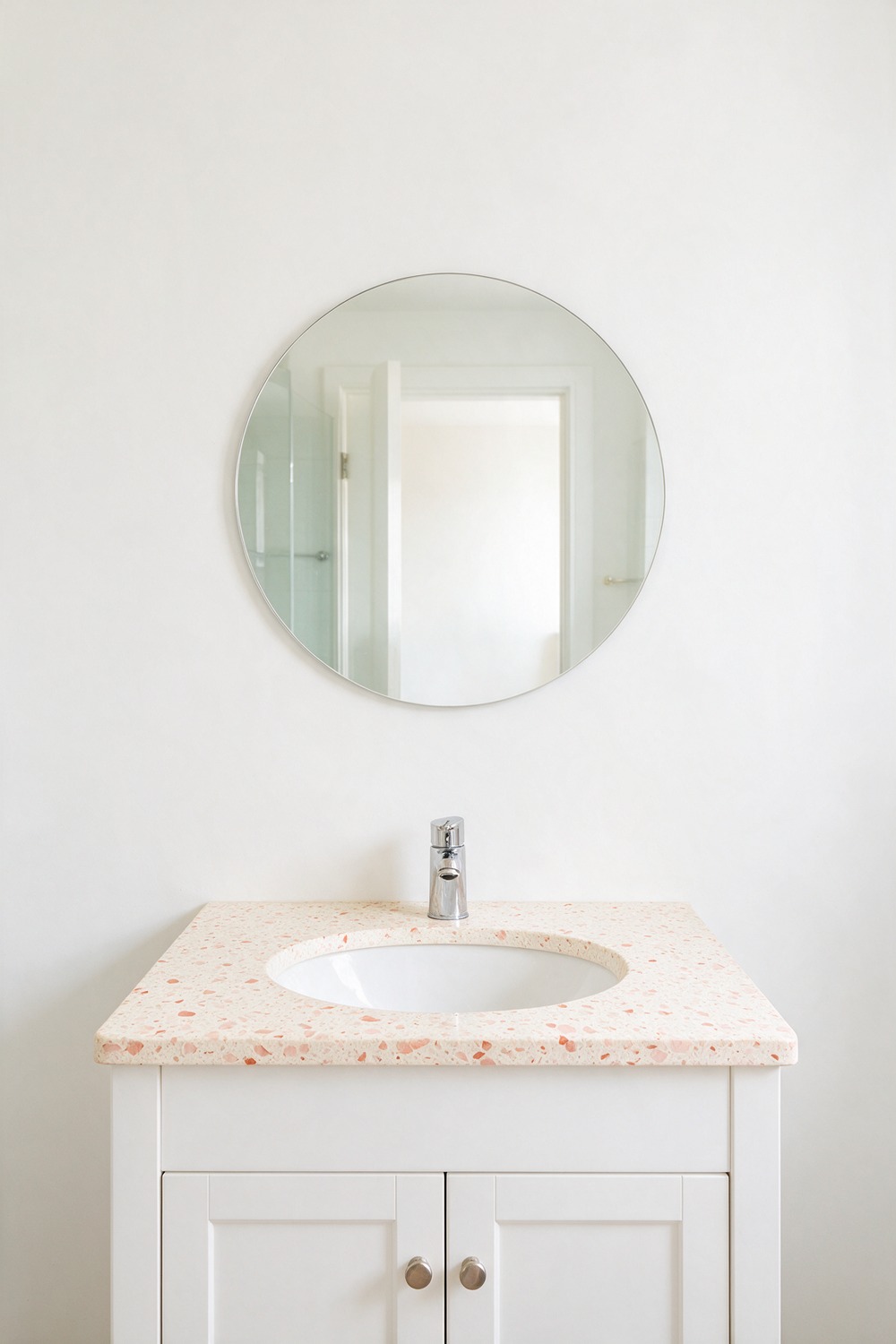
Terrazzo is having a moment and I am fully on board. It is that speckled surface of stone and glass chips set into a base, and it brings instant, cheerful personality to a plain room.
The size of the chips changes everything. Big bold chips feel playful and retro; fine confetti flecks feel soft and contemporary. For a modern take, choose a creamy base with pale pink and terracotta chips, set it against a white wall, and let the counter be the party.
12. Travertine Bathroom Counter
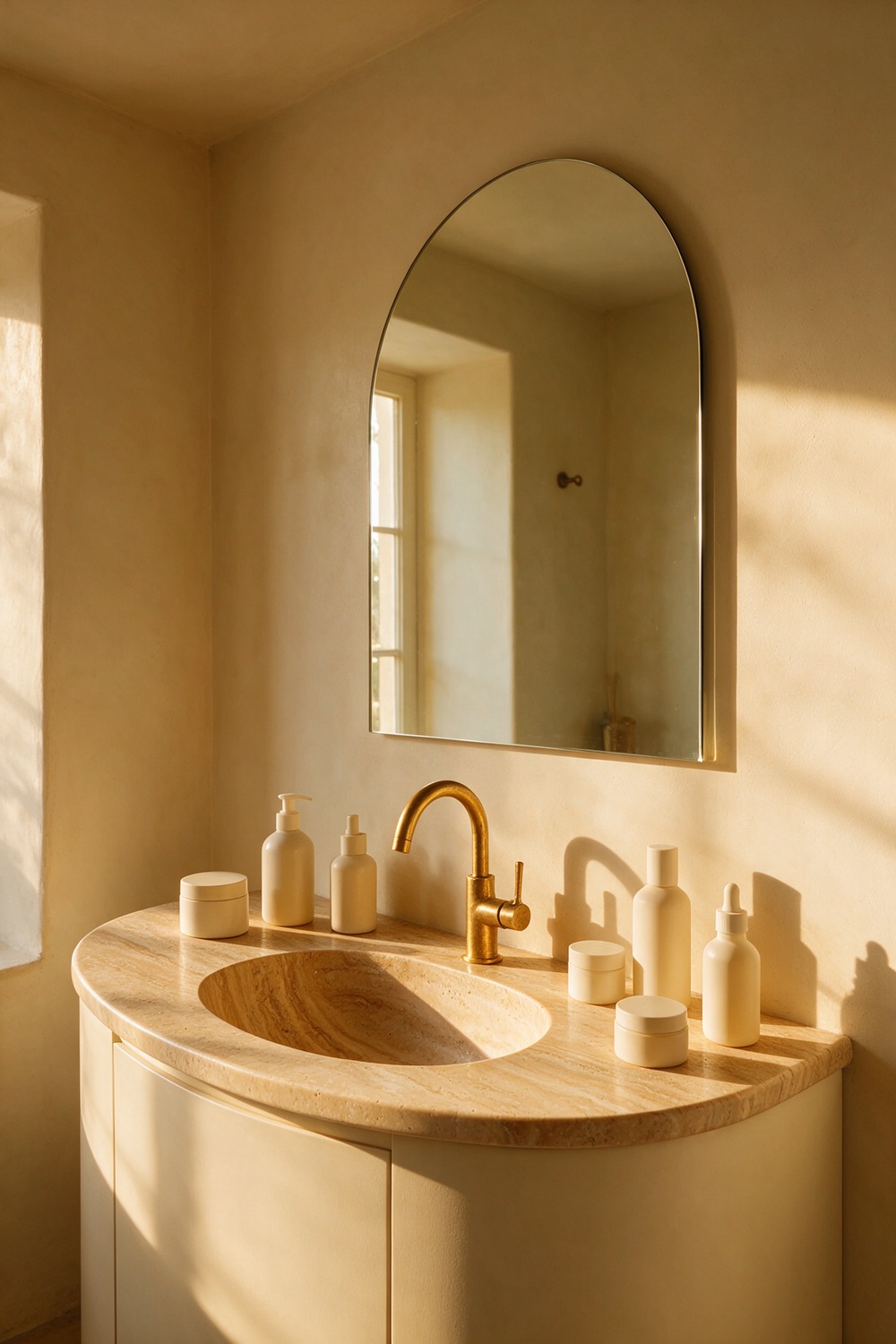
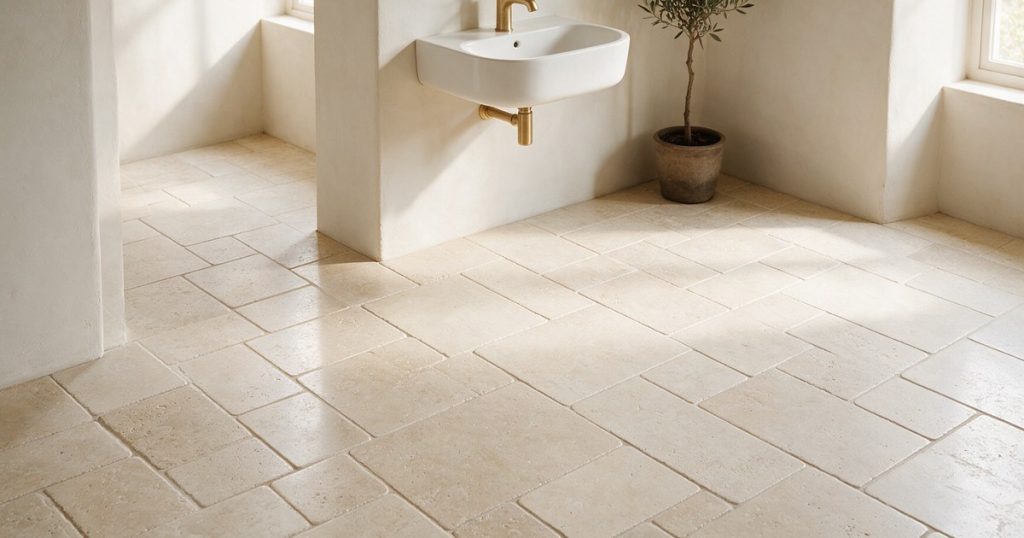
Travertine makes a bathroom feel like a sun-warmed villa. It is a creamy, sandy-beige stone full of soft natural holes and bands. Honed and filled is the finish you want, smooth to the touch but keeping all that movement. Round everything off with a curved vanity and an arched mirror.
13. Soapstone Bathroom Counter
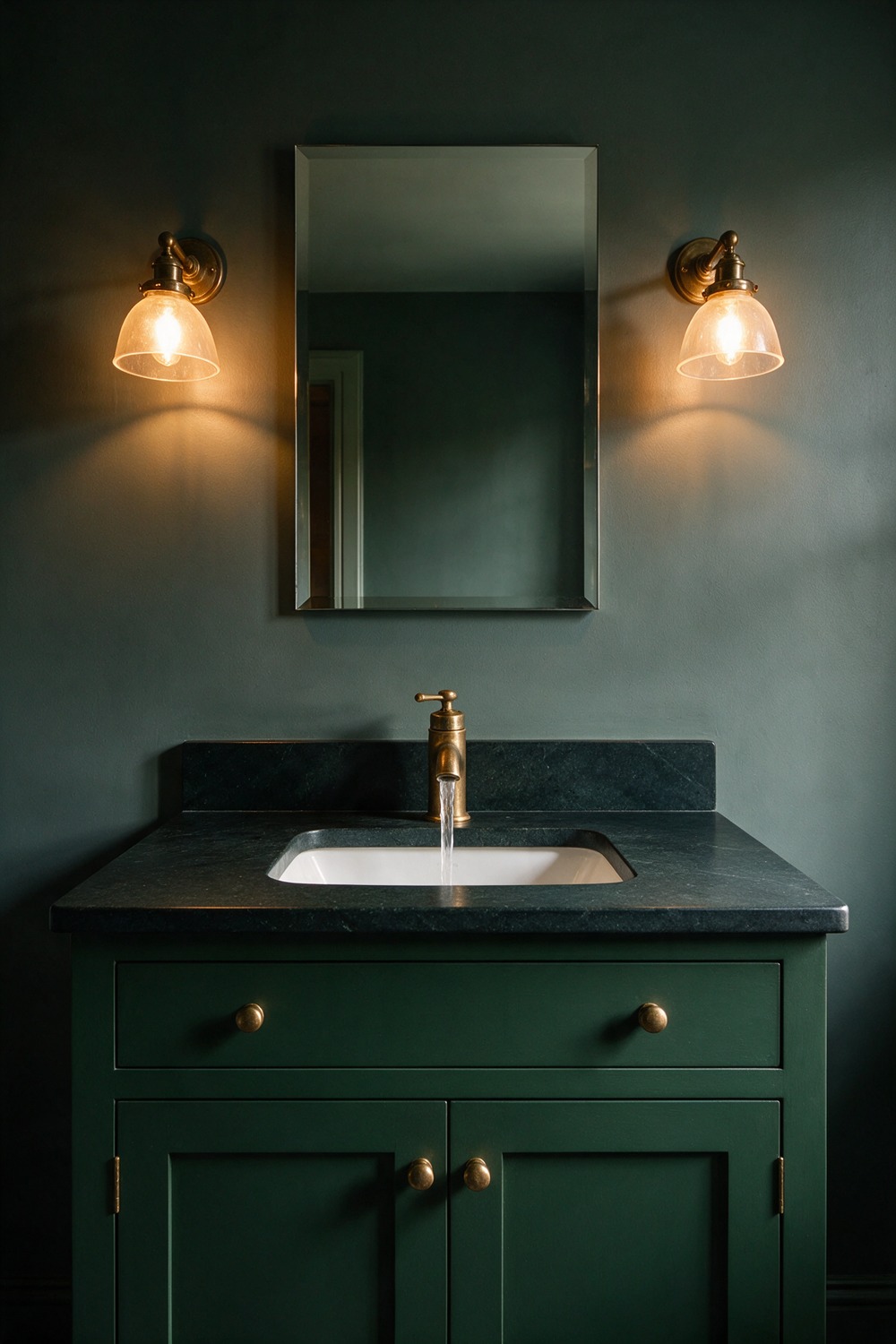
Soapstone is my dark horse pick. It is a deep, soft charcoal-green stone, smooth and almost silky, and unlike marble it will not etch when something acidic touches it. Low drama, high reward.
It deepens beautifully over time, especially oiled, darkening toward near-black with a soft sheen. Set a honed soapstone top on a deep green vanity like Farrow & Ball Green Smoke, add aged brass, and you have a room that belongs in an old apothecary.
14. Onyx Bathroom Counter
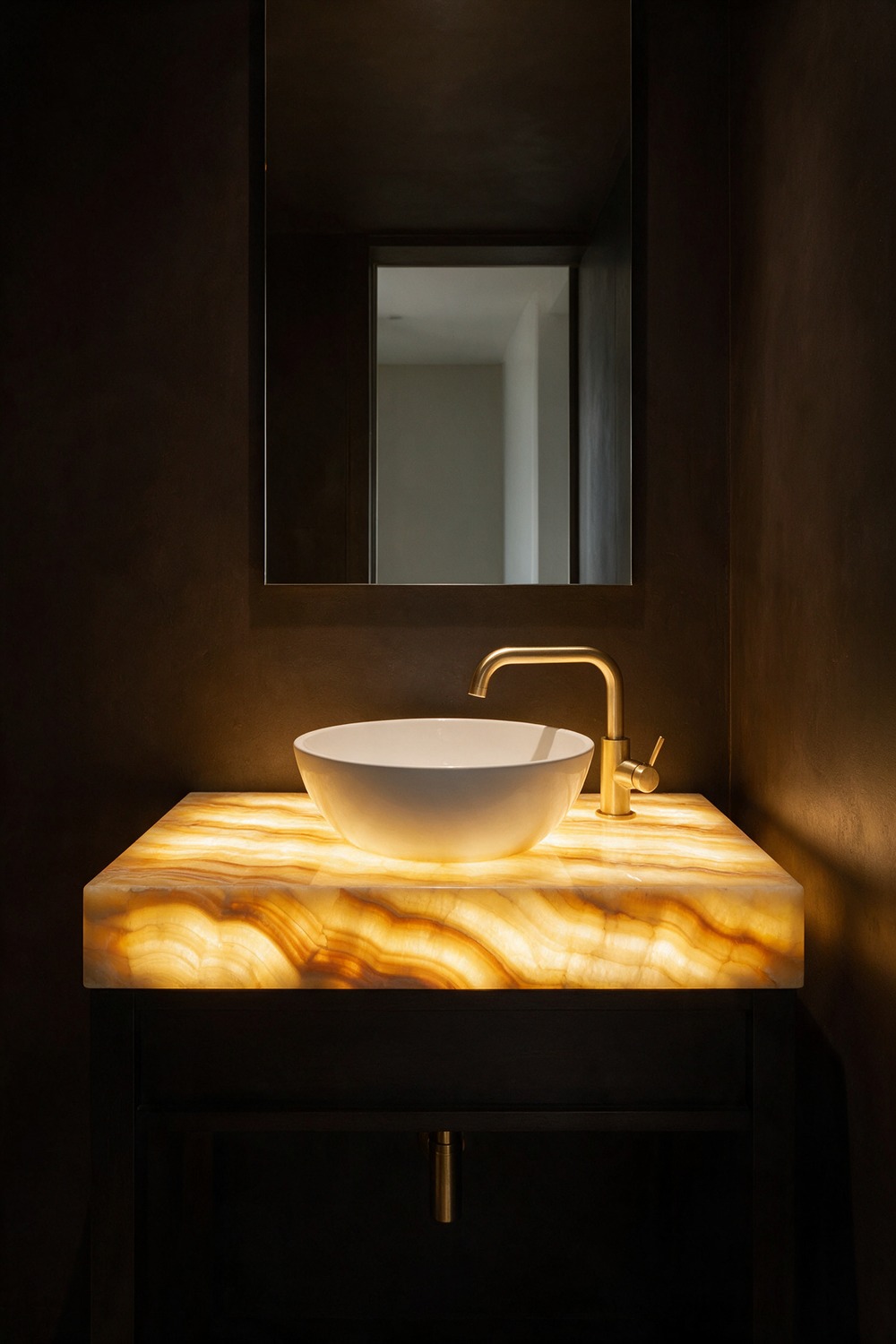
If you want pure drama, onyx is the one. It is a translucent stone with wild, swirling bands of amber, honey, and green.
Here is the party trick: you can backlight it so the whole slab glows from within. This is a splurge and a statement, so let it be the only loud thing in the room.
Use a honey-and-amber onyx counter, light it from behind with a warm LED panel, and keep everything else matte and dark so the glow has somewhere to land. Walls in deep espresso, fixtures in soft gold.
15. Stainless Steel Bathroom Counter
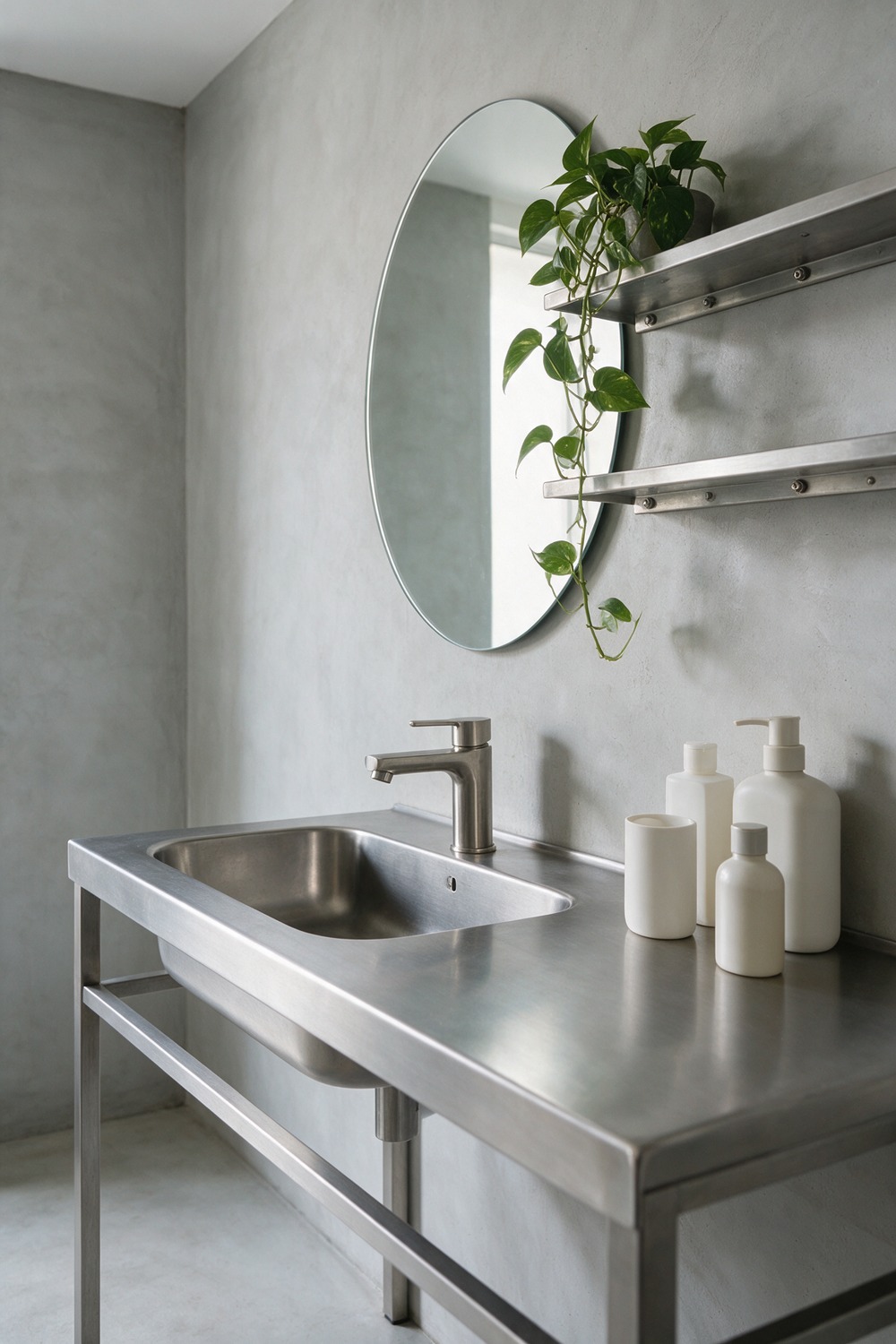
Stainless steel sounds like a restaurant kitchen until you see it done right, and then it is all cool, easy confidence. The secret is a brushed, not mirror, finish, so it reads soft and modern. Pair it with a microcement wall, exposed-bolt steel shelves, and one big trailing pothos.
16. Copper Bathroom Counter
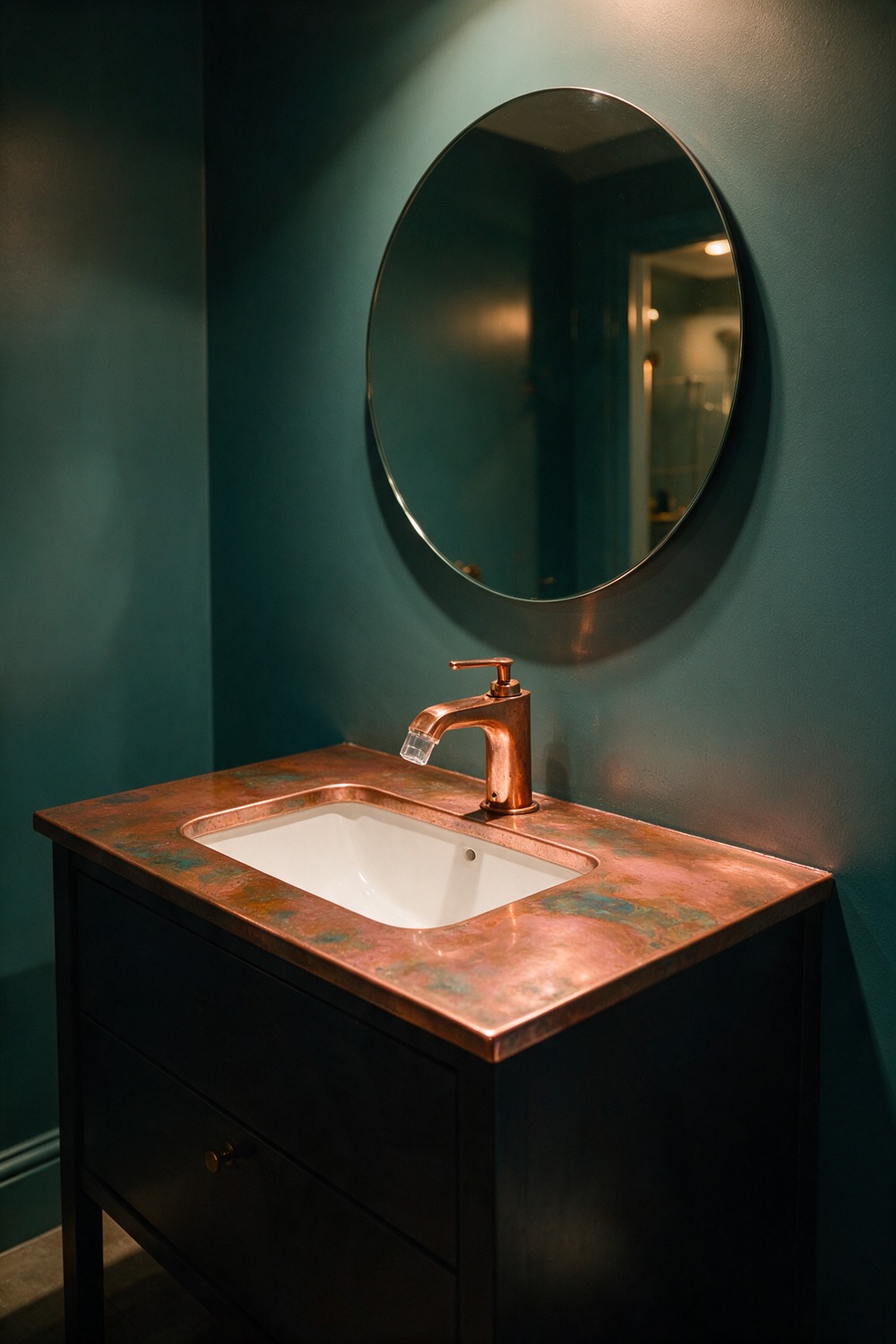
A copper counter ages like a good leather jacket, and I mean that as the highest compliment. It starts bright and rosy and slowly develops a living patina, soft browns and blue-greens, as it reacts to the room.
Want that lived-in warmth? Leave it unlacquered and let it breathe. Want it rose-gold forever? Ask for a lacquered seal. Either way, set it against a moody teal like Benjamin Moore Blue Danube and keep the metals matched in warm copper. A counter with a story beats a perfect one.
17. Green Bathroom Counter
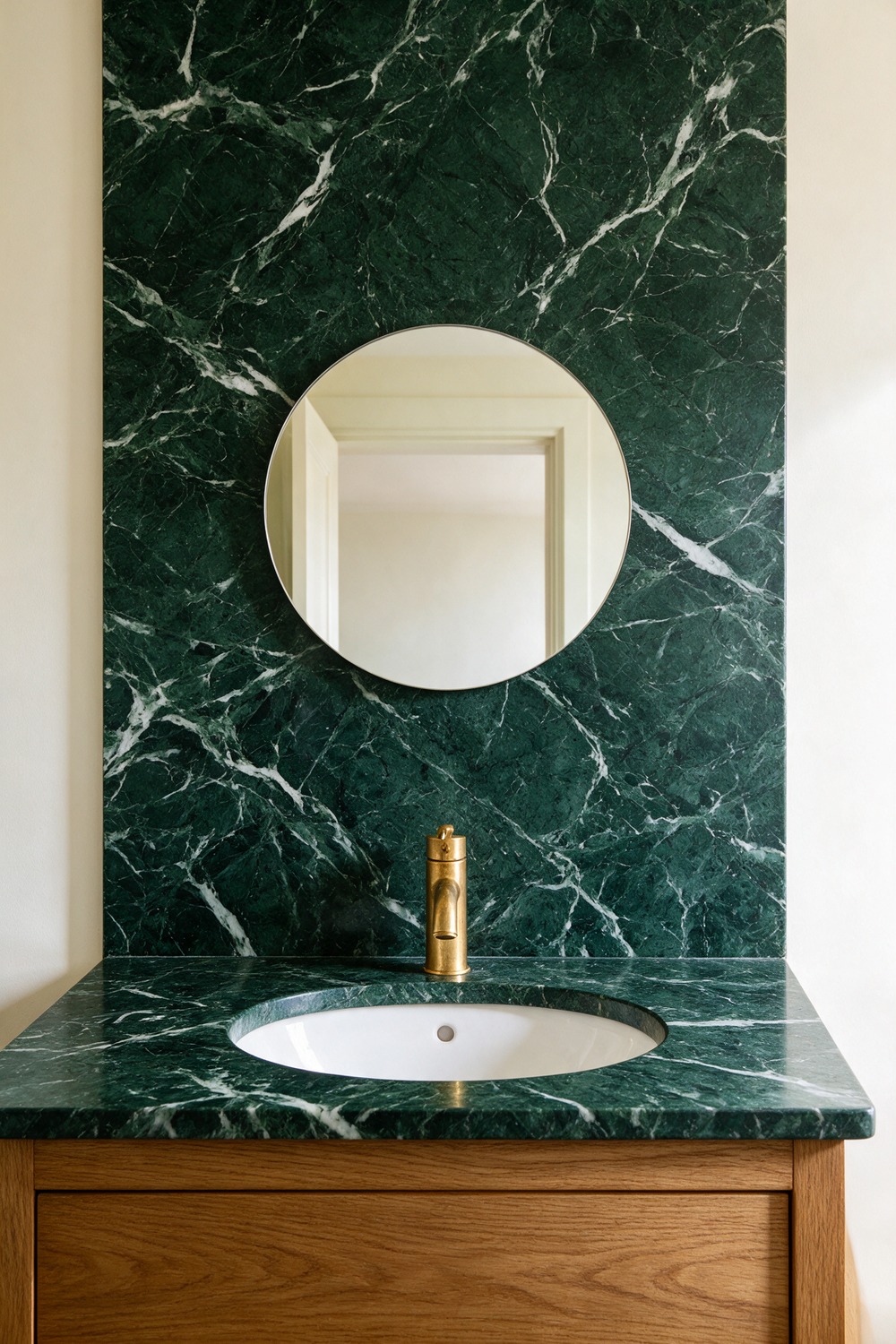
Green stone is my favourite way to bring the outside in without a single plant. A green marble or quartzite counter carries all the calm of a garden and reads rich, not loud.
Verde alpi is the deep forest-green marble with white veins; a softer option is a sage quartz. Here is the call: let the green dominate. Carry it onto the backsplash too, so a scroller instantly reads green room. Pair with warm oak, unlacquered brass, and a creamy wall.
18. Blue Bathroom Counter
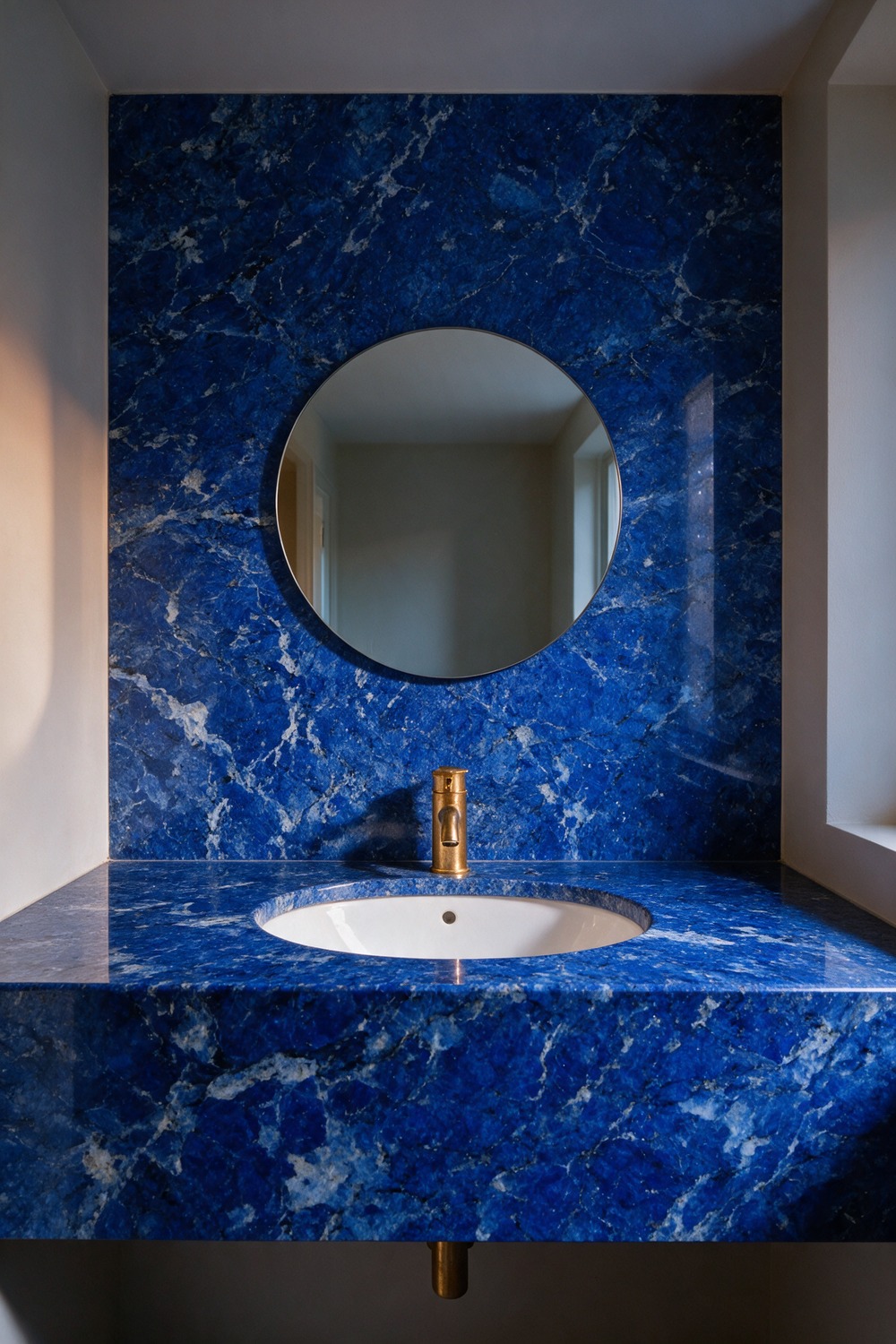
Blue is the counter colour nobody expects and everybody loves once it is in. A deep blue stone feels like a coastal evening, calm and glamorous, a gift in a room with no view. Azul bahia is the real stunner, a cobalt-blue granite; a blue-grey soapstone is the gentler route.
19. Grey Bathroom Counter
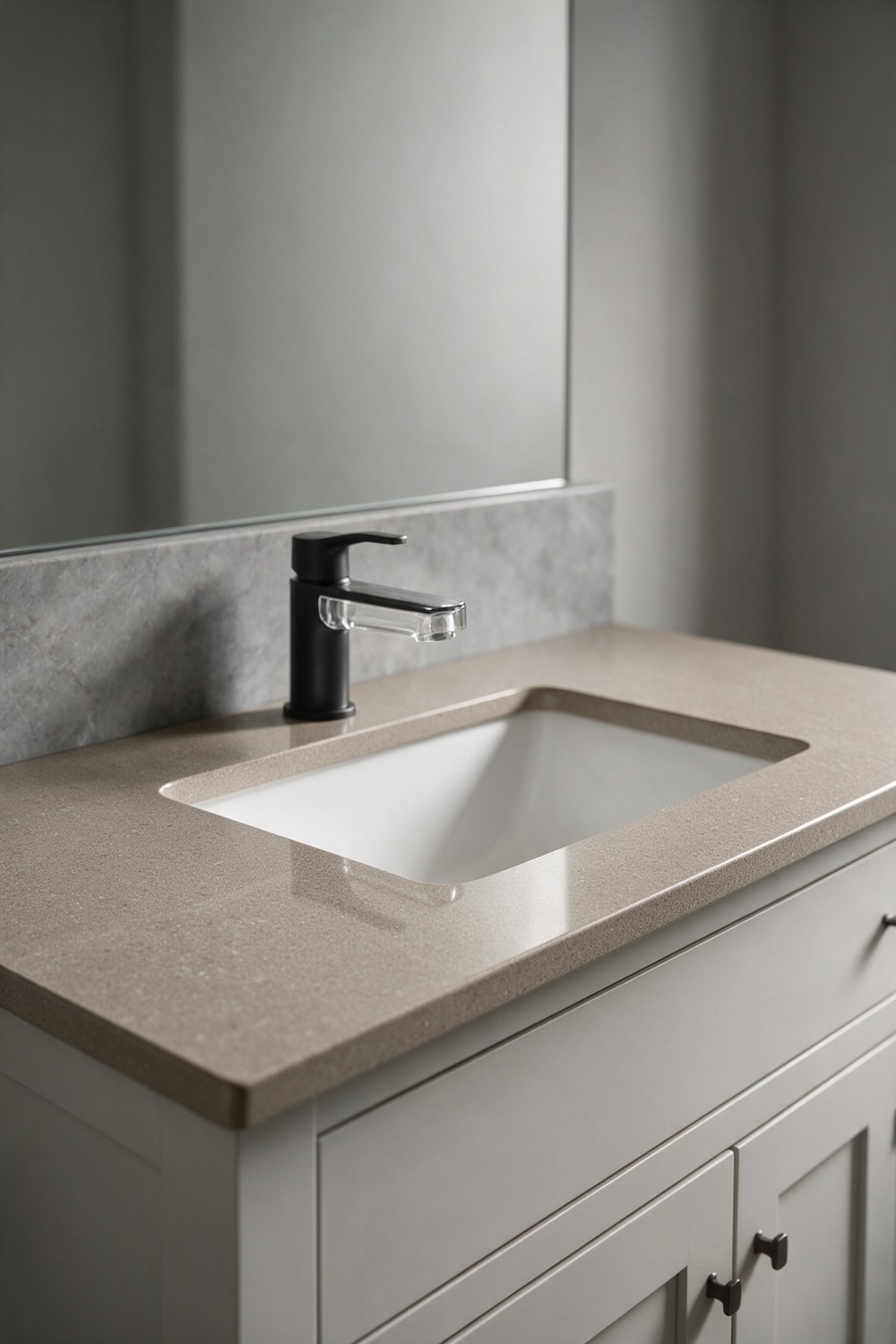
Grey is where I send anyone scared of commitment, and I mean that kindly. A good grey counter is the Goldilocks of surfaces, never too warm, never too cold, friendly with every tile and tap you will ever buy.
The key is choosing your grey on purpose. A warm greige quartz keeps a room cosy; a cool slate-grey soapstone keeps it crisp. Set it on a pale grey vanity in Little Greene French Grey, add a honed grey marble backsplash, and finish with matte black.
Which Bathroom Counter Is Right for You
Start with how much babying you are willing to do. If you want zero maintenance and a splash you can ignore, quartz is your friend, full stop. If you love patina and a surface that tells its age, marble, copper, or soapstone will reward you for years.
Then let the room decide the mood. A small, dark bathroom wakes up with a pale white or soft grey top. A sun-filled room begs for travertine or a warm wood.
And if you have one spot to be bold, a backlit onyx or a deep blue stone turns a plain vanity into the thing guests talk about. My own heart belongs to honed marble, flaws and all.
Bathroom Counter Ideas, Answered
What is the cheapest way to get a high-end counter look? Butcher block and a quartz remnant are your budget heroes. A wood counter you seal yourself is the lowest spend; a quartz offcut from a fabricator’s remnant pile gets the stone look for a fraction of a slab.
Which counters can I install myself, and which need a pro? Wood and butcher block are DIY-friendly for a confident weekend. Stone and anything with an integrated sink should go to a pro, because the cutting, the weight, and the sealing are easy to get wrong and costly to redo.
How long does a vanity top swap take? If you are only changing the counter and keeping the cabinet, it is often a one-day job. A full custom stone top adds a week or two for templating and fabrication, so order early and plan around the wait.
What should I ask the stone yard for? Ask to see the actual slab, not just a sample chip, because veining varies wildly across one block. Ask for a honed finish if you want matte, confirm it is sealed, and check the overhang the edge profile gives you.
Which surface is worth the splurge? If you are spending anywhere, spend it on the counter and keep the vanity cabinet simple. The counter is the thing you touch and see most, so a beautiful slab on a plain cabinet always wins.
Whatever you choose, start with the counter and let the rest of the room follow. Pick the one surface that makes you happy to touch it in the morning, and build out from there. Your hands will thank you every single day.
More stories
Share this story