18 Japandi Bathroom Ideas for Calm in Any Size Space

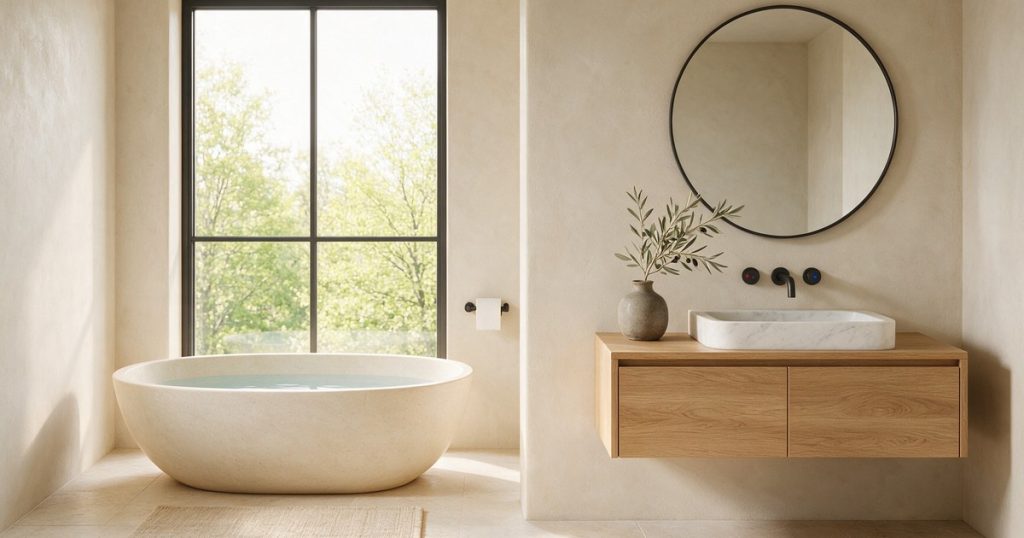
I used to think a calm bathroom was a luxury you bought with square footage. Then I fell hard for japandi, and it quietly proved me wrong.
Japandi (Japanese calm meets Scandinavian warmth) is the look that makes a room feel quiet and grounded. It works whether you have a sprawling primary suite or a closet-sized loo under the stairs.
Below, I have gathered 18 japandi bathrooms sorted by the space you actually have. Each comes with the palette, the paint, the tile and the one move that gets you there.
1. Small Japandi Bathroom
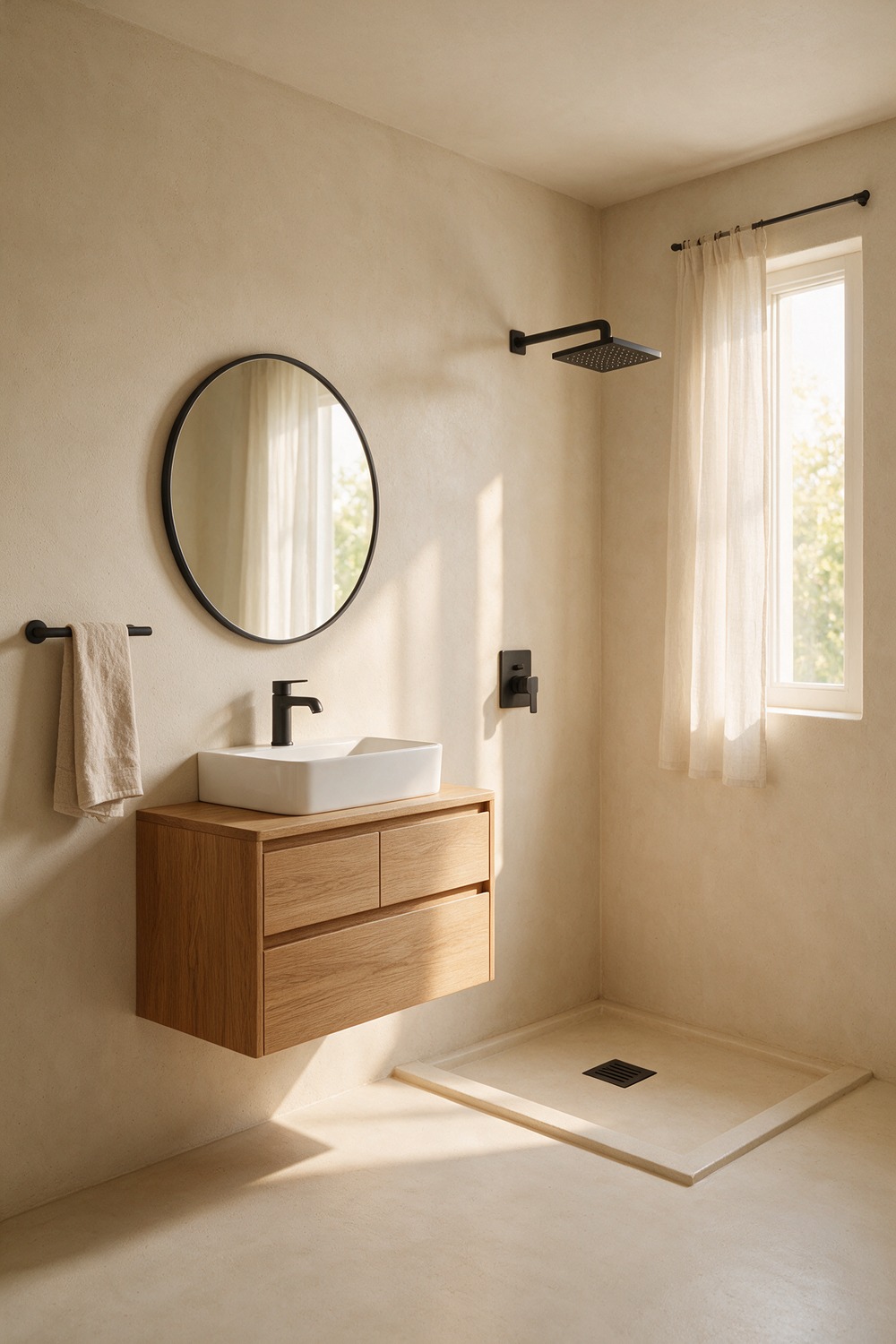
Small is where japandi shines, because restraint stops reading as a rule and starts reading as taste. A little room does not need a busy mosaic. One warm plaster wall does far more.
Picture microcement in a soft oatmeal, a wall-hung oak vanity, matte black tapware. Sherwin-Williams Shoji White on the walls keeps it bright without going clinical.
Start with the microcement, then let the oak and the black follow. That is the whole trick.
2. Tiny Japandi Bathroom
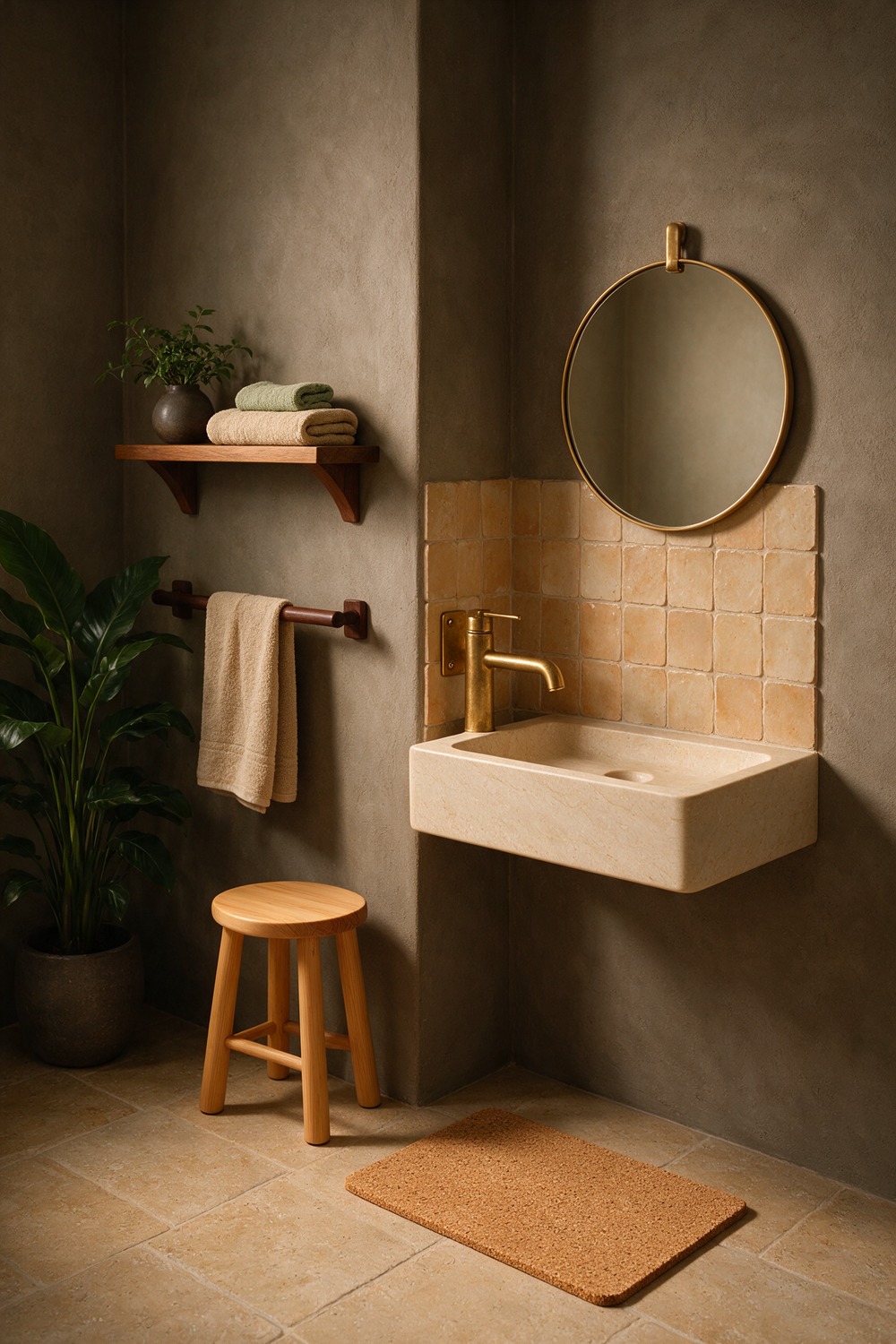
My contrarian take on tiny bathrooms: go darker, not lighter. A pale tiny room just looks pale and tiny, while a warm enveloping one feels intentional. Bauwerk lime paint in a soft clay greige, warm-sand zellige across the shower, a single hinoki stool, unlacquered brass.
3. Japandi Bathroom Small Apartment
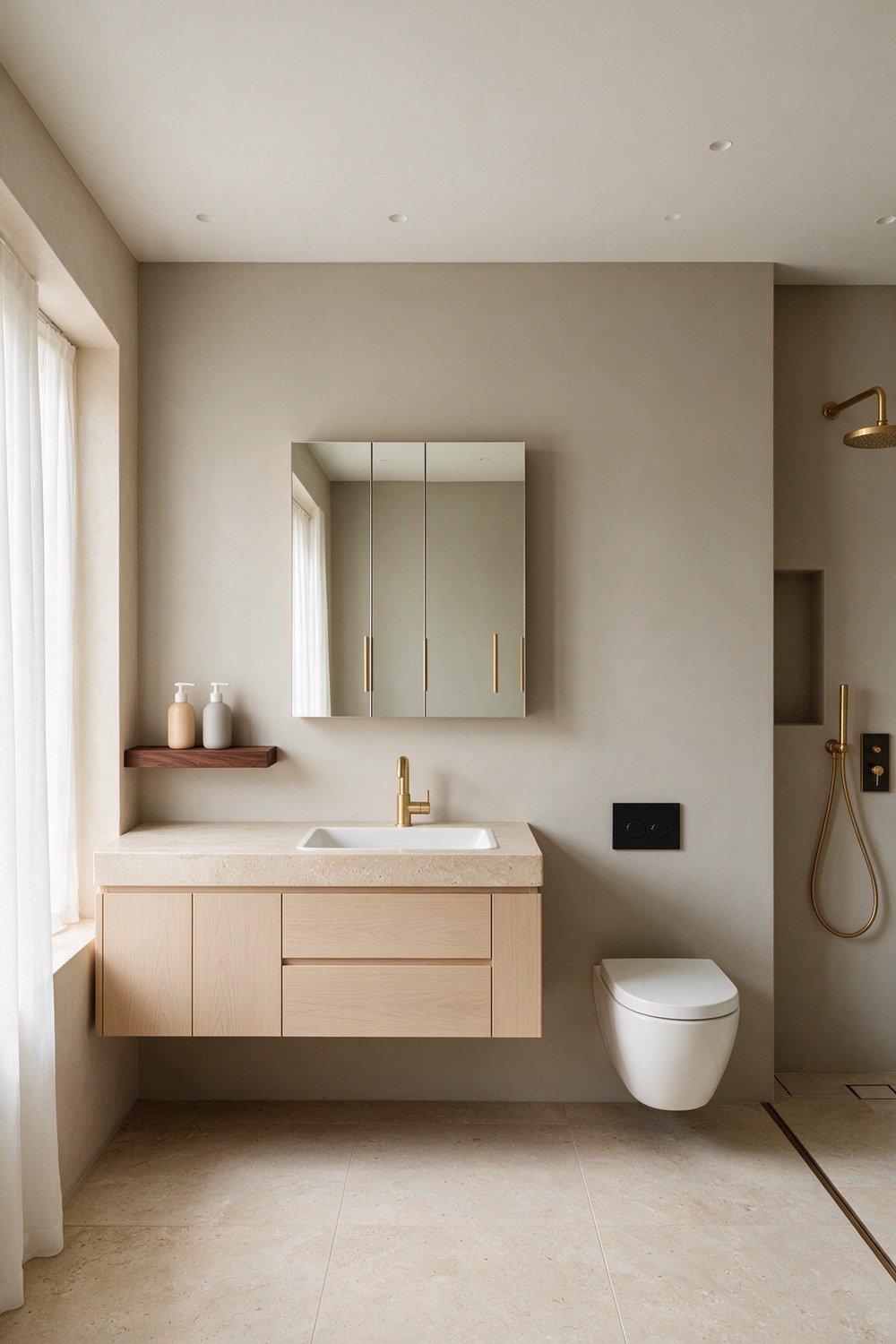
Rentable square footage is precious, so the japandi answer is to buy back visual space with a floating everything. A wall-hung basin, a mirror cabinet recessed flush, nothing touching the floor.
Keep the palette to two woods and one stone: pale ash, a little walnut, honed travertine on the counter. Dulux Natural Hessian on the upper walls warms it. The floating vanity is the starting move, because a clear floor lets the room breathe.
4. Japandi Apartment Bathroom
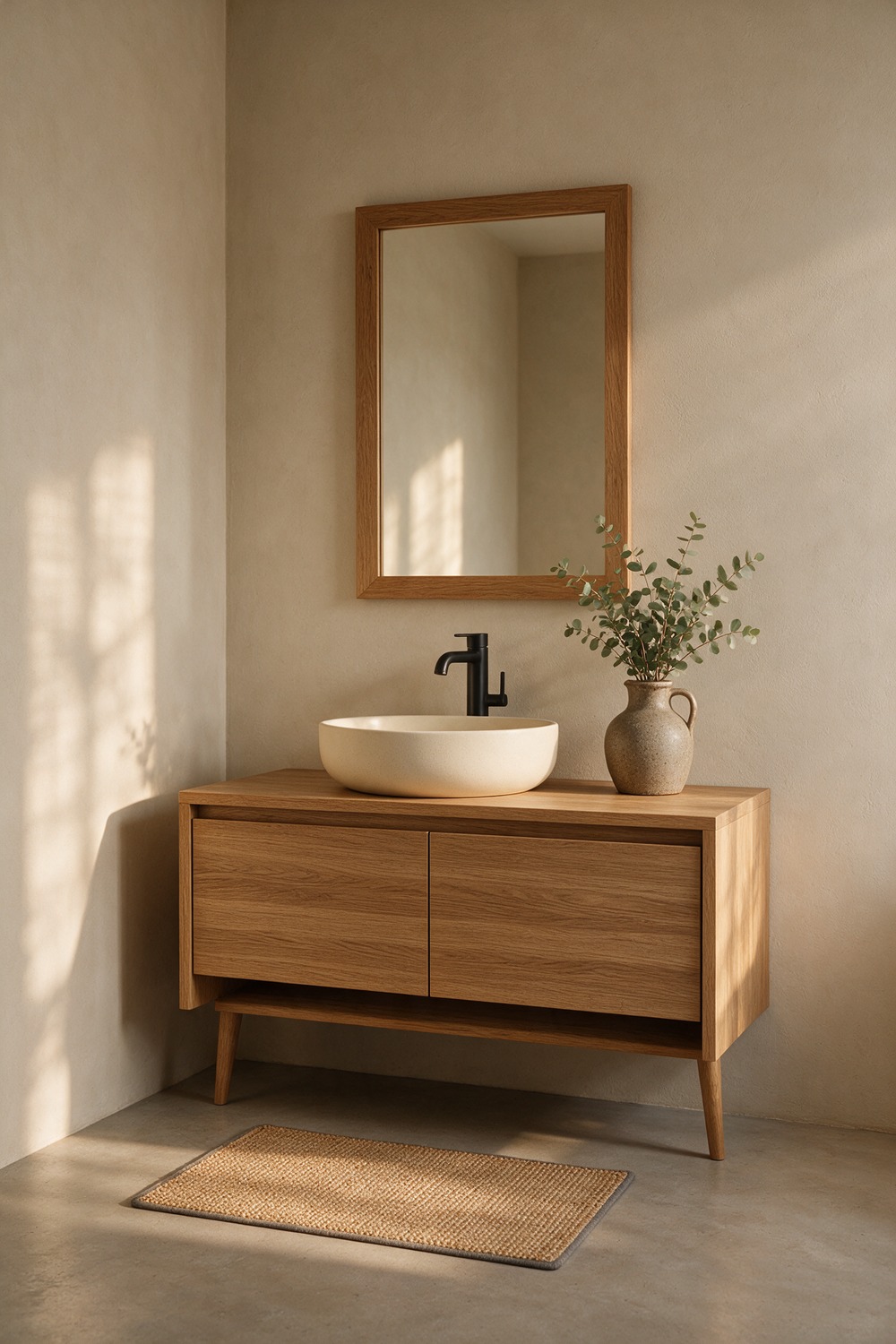
Most apartment bathrooms fight you with builder-grade everything, and japandi wins by covering, not gutting.
You do not need permission to paint, or to lean a ladder of linen towels in the corner. I love a greige like Benjamin Moore Pale Oak over tired tile, a woven jute mat underfoot, a single ceramic vessel bowl on the existing counter.
An oak-framed mirror, a warm 2700K bulb, one brave calm colour on the walls. Swap the builder chrome tap for matte black, hang a single eucalyptus bunch, and the whole rented box starts to feel considered.
5. Japandi Guest Bathroom
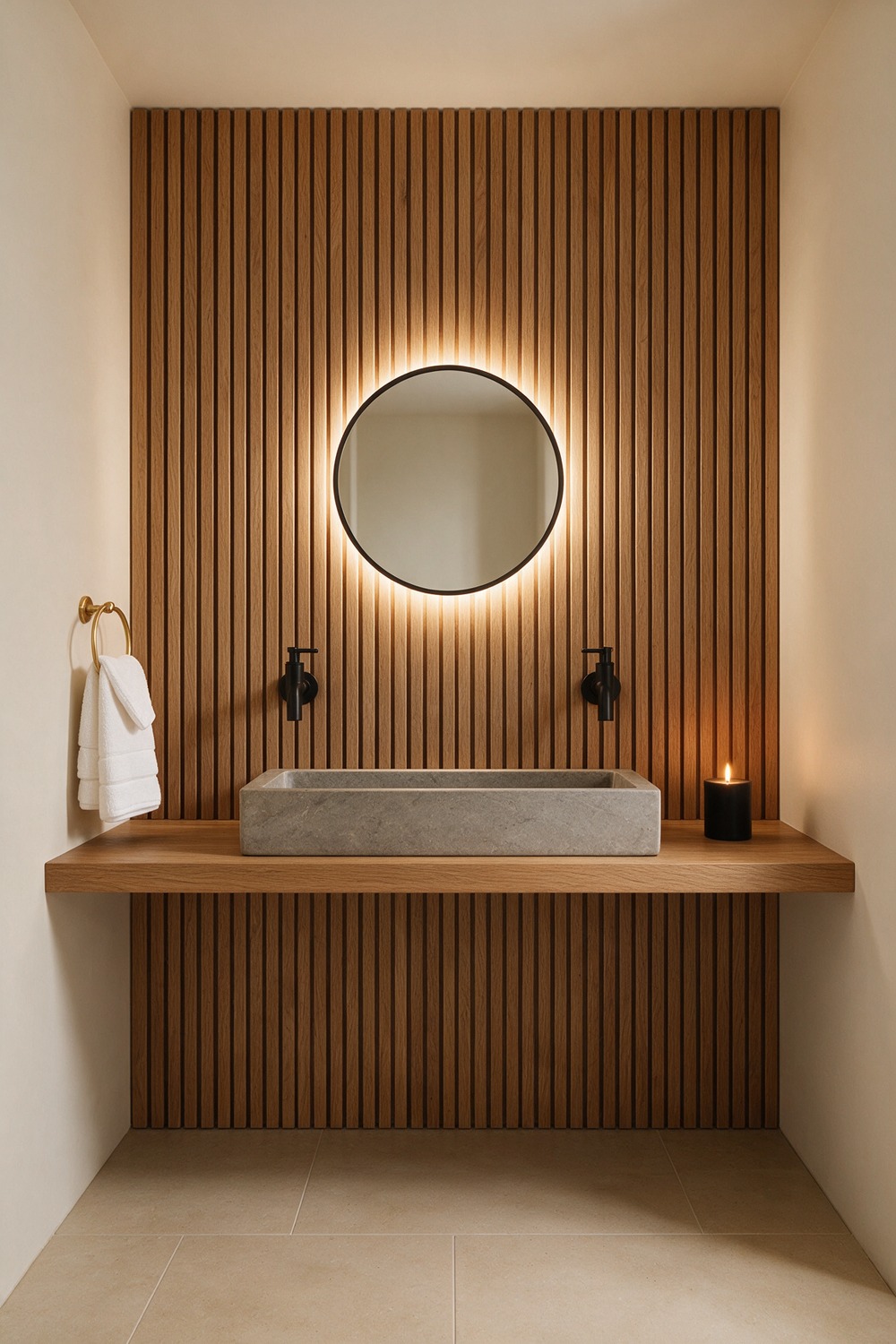
A guest bathroom is a tiny stage, so make it the room that makes people exhale. This is where I spend my restraint budget on one gorgeous material instead of five fussy accessories.
A full wall of vertical oak slats behind the vanity, a round backlit mirror, a stone trough basin. Farrow and Ball Shaded White on the rest. Fold the hand towels, light a hinoki candle, and stop there.
6. Japandi Ensuite Bathroom
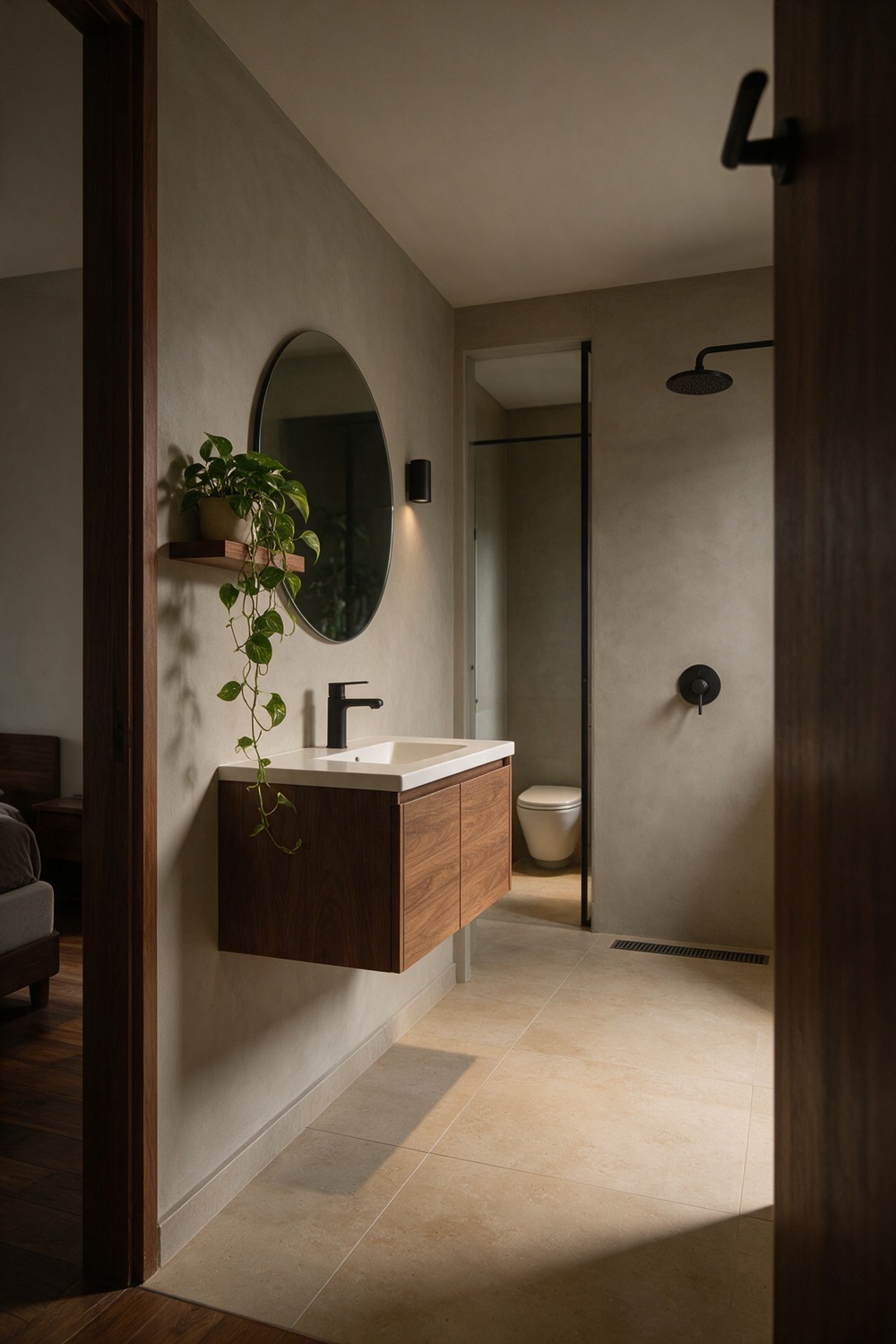
An ensuite should feel like an extension of a serene bedroom, not a jarring switch to cold tile. Continuity is the real luxury, so I carry the bedroom’s wood tone straight through the door.
A warm walnut vanity, a microcement shower in greige, a long linear drain so the floor reads as one calm plane. Little Greene Rolling Fog on the walls ties it back to the bedroom. Begin by matching the vanity wood to your bed frame.
7. Japandi Half Bathroom
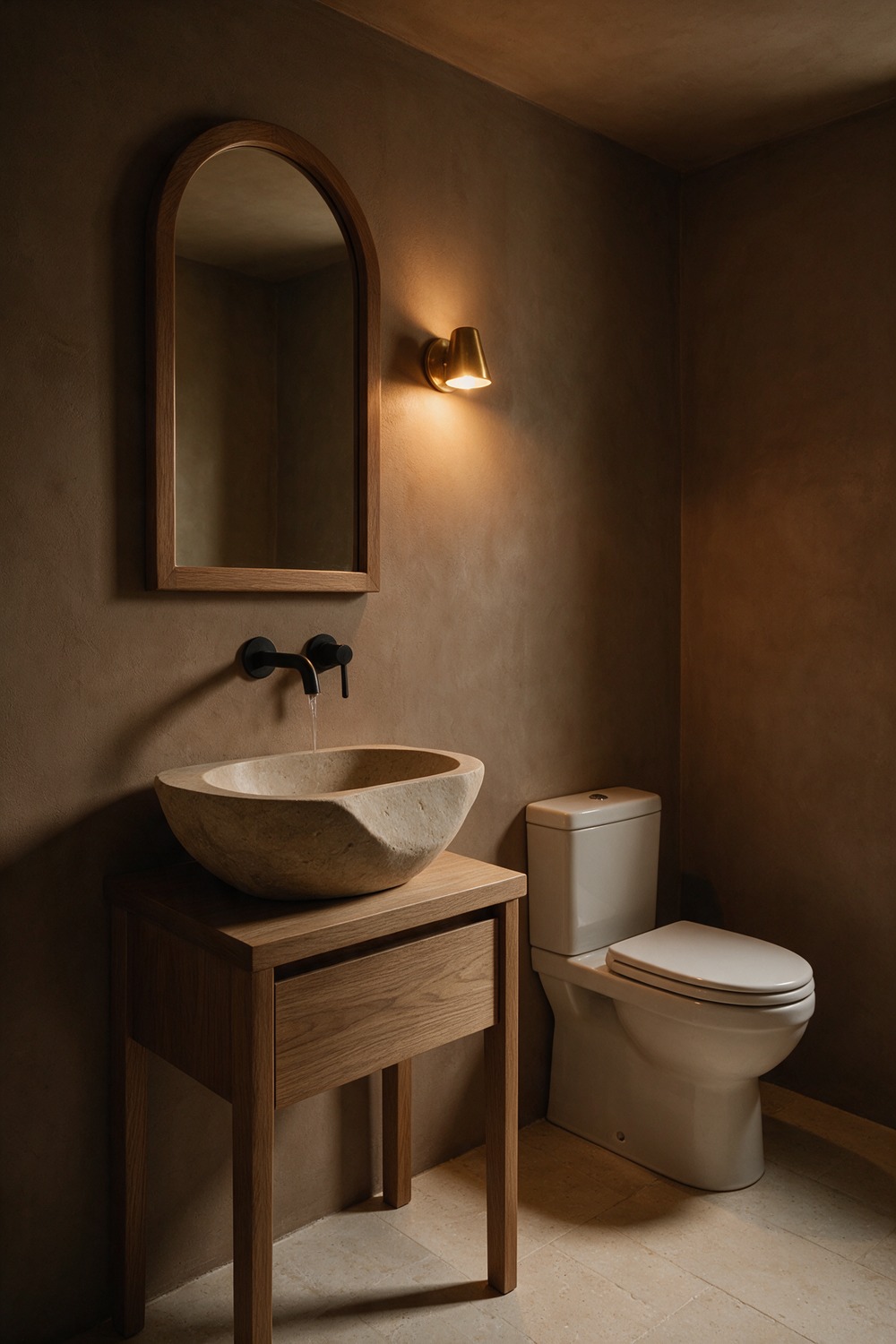
A half bath is just a basin, a toilet and a mirror, which makes it the cheapest room to turn into a jewel box. No shower to design around means every surface counts.
I would go moody: a deep clay wall in Backdrop The Lonely Hunter, a countertop stone basin, an arched wood-framed mirror. Keep the floor a pale honed limestone so it does not close in. Pro tip: one warm brass sconce beats a harsh overhead every time.
8. Japandi Primary Bathroom
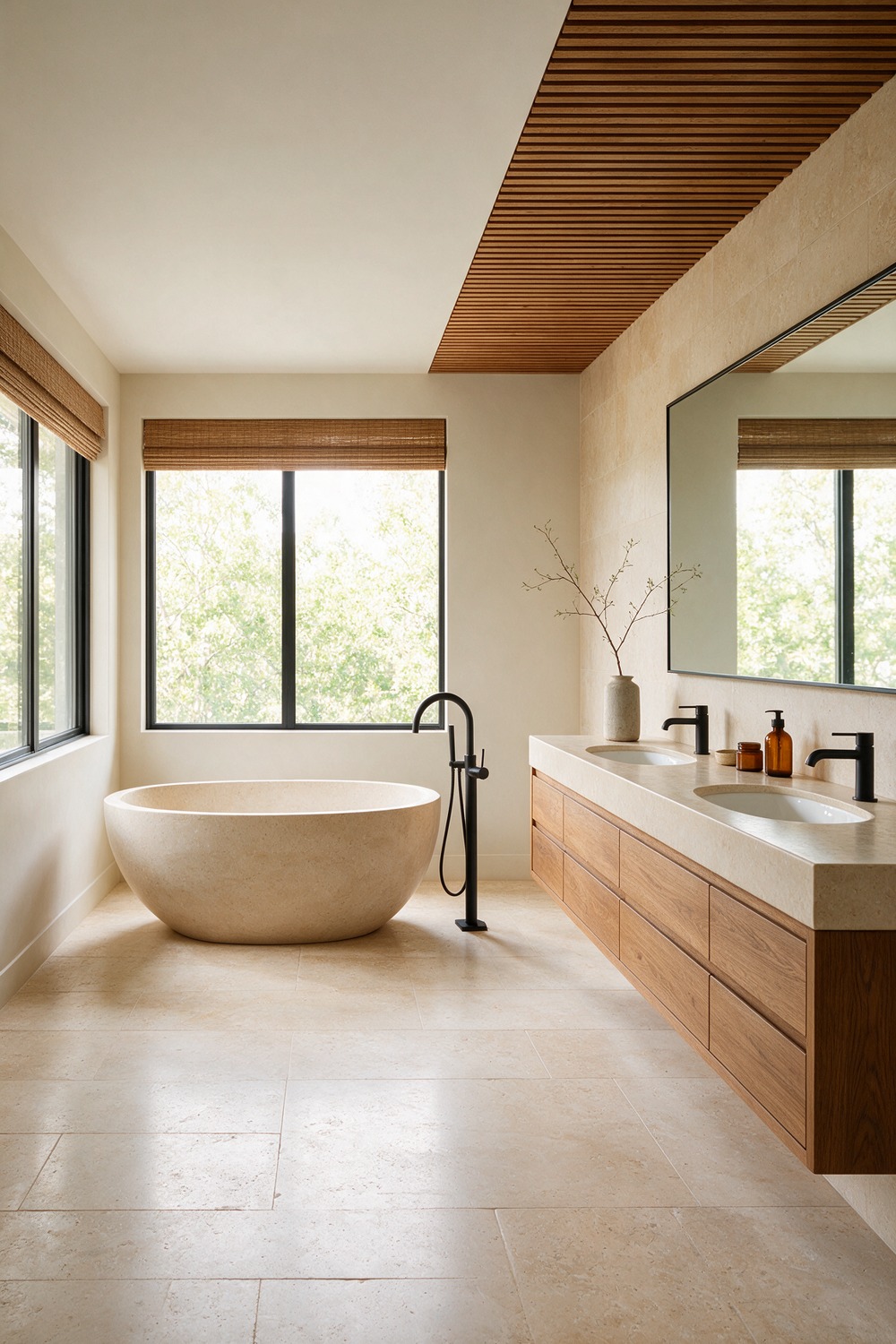
With room to spread out, the temptation is to fill it. A primary japandi bathroom earns its calm from generous negative space instead, so the hardest discipline here is leaving gaps on purpose.
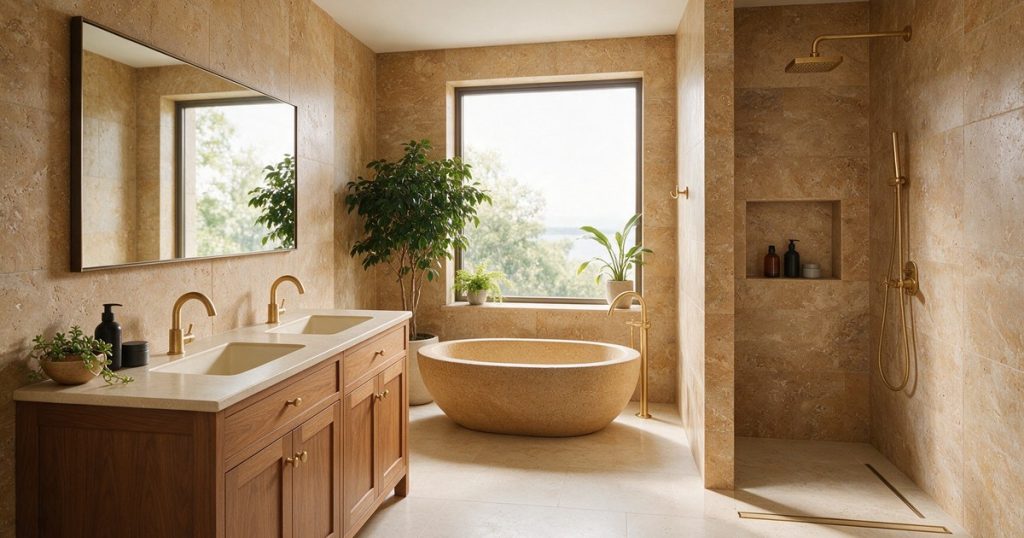
Let a freestanding stone soaking tub sit alone under a window. Teak slat ceiling detail, a large-format honed travertine floor, a double floating oak vanity, and walls in Sherwin-Williams Accessible Beige to hold it together.
The one piece worth the splurge is that tub, solid stone that warms to the touch and anchors the room. Everything else can stay humble, a plain linen stool, a single branch in a vase, and it still sings. Start with the tub and build outward slowly.
9. Japandi Family Bathroom
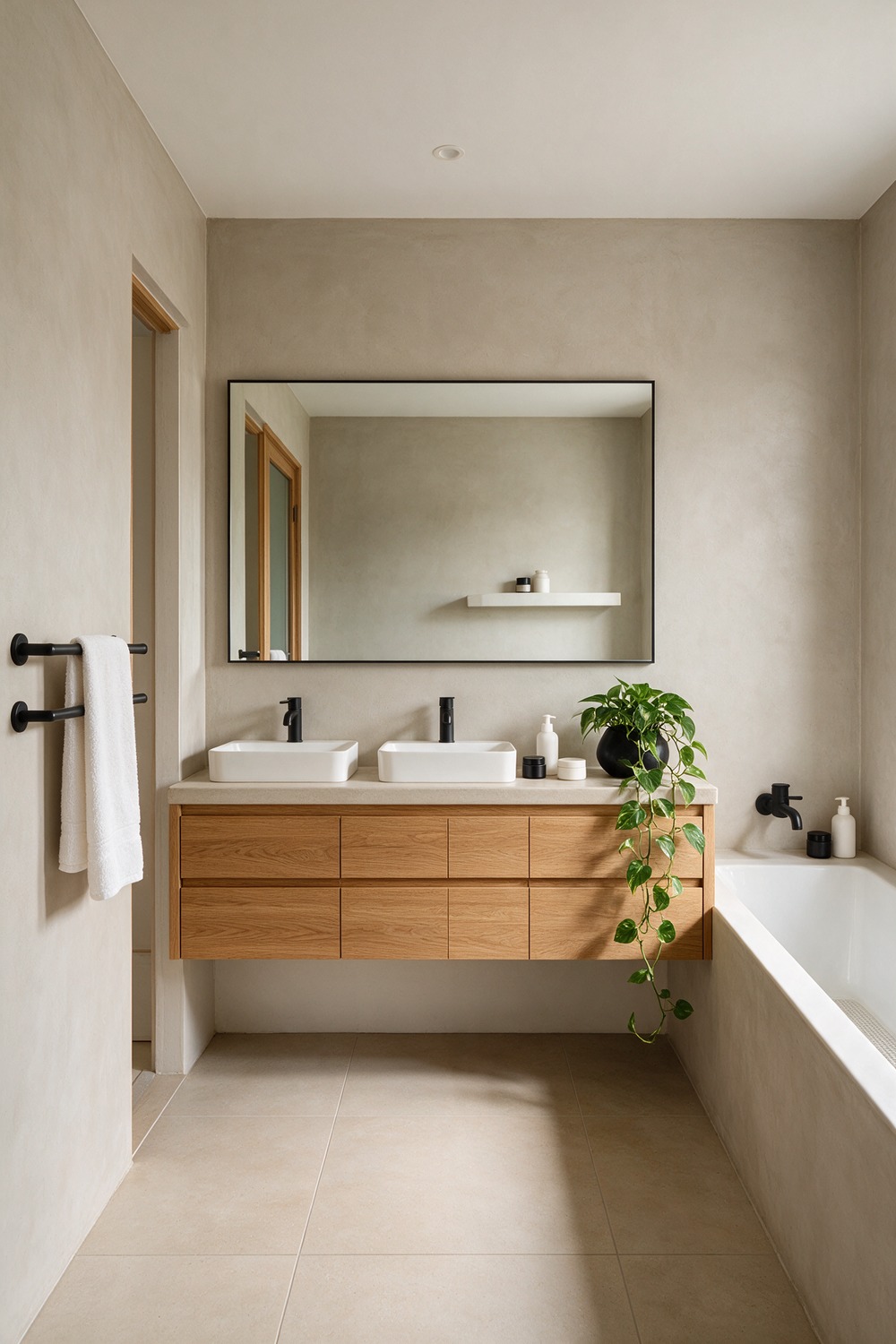
Can a family bathroom survive wet towels and bath toys and still feel like japandi?
Yes, if you design for wipeable calm rather than fragile styling. Microcement walls shrug off splashes. A long oak vanity with two basins, deep drawers, a matte black rail for towels.
I would paint in Benjamin Moore Edgecomb Gray and lay a warm sand porcelain that mimics stone but mops clean. Start with the durable surfaces, then soften with linen and a trailing pothos.
10. Japandi Loft Bathroom
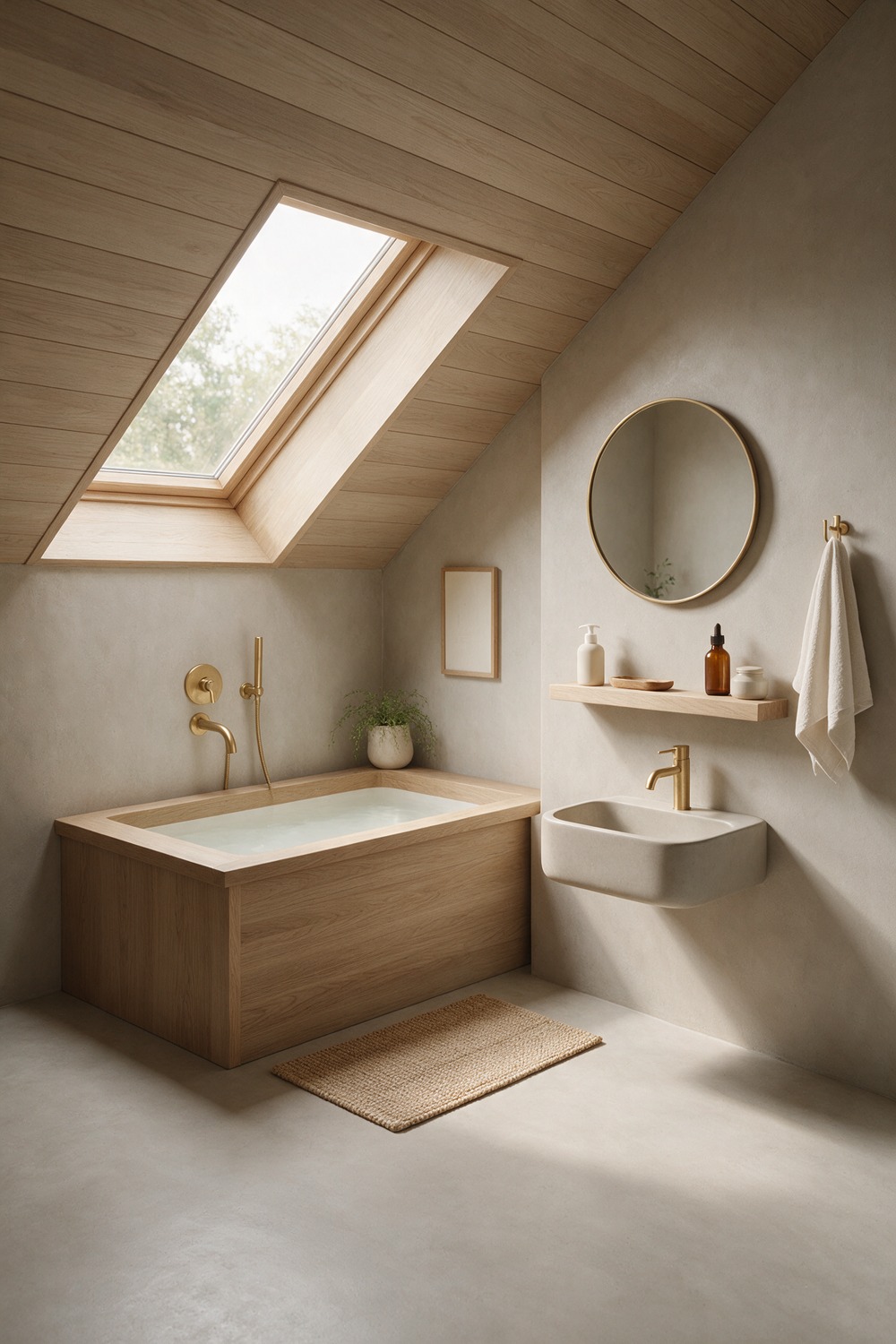
Loft bathrooms get beautiful awkward angles, and japandi treats them as a gift, letting the sloped ceiling carry the drama so the fittings stay quiet. Clad the slope in pale oak boards, tuck a low wooden tub under the roof window, and let Little Greene China Clay do the rest.
11. Japandi Attic Bathroom
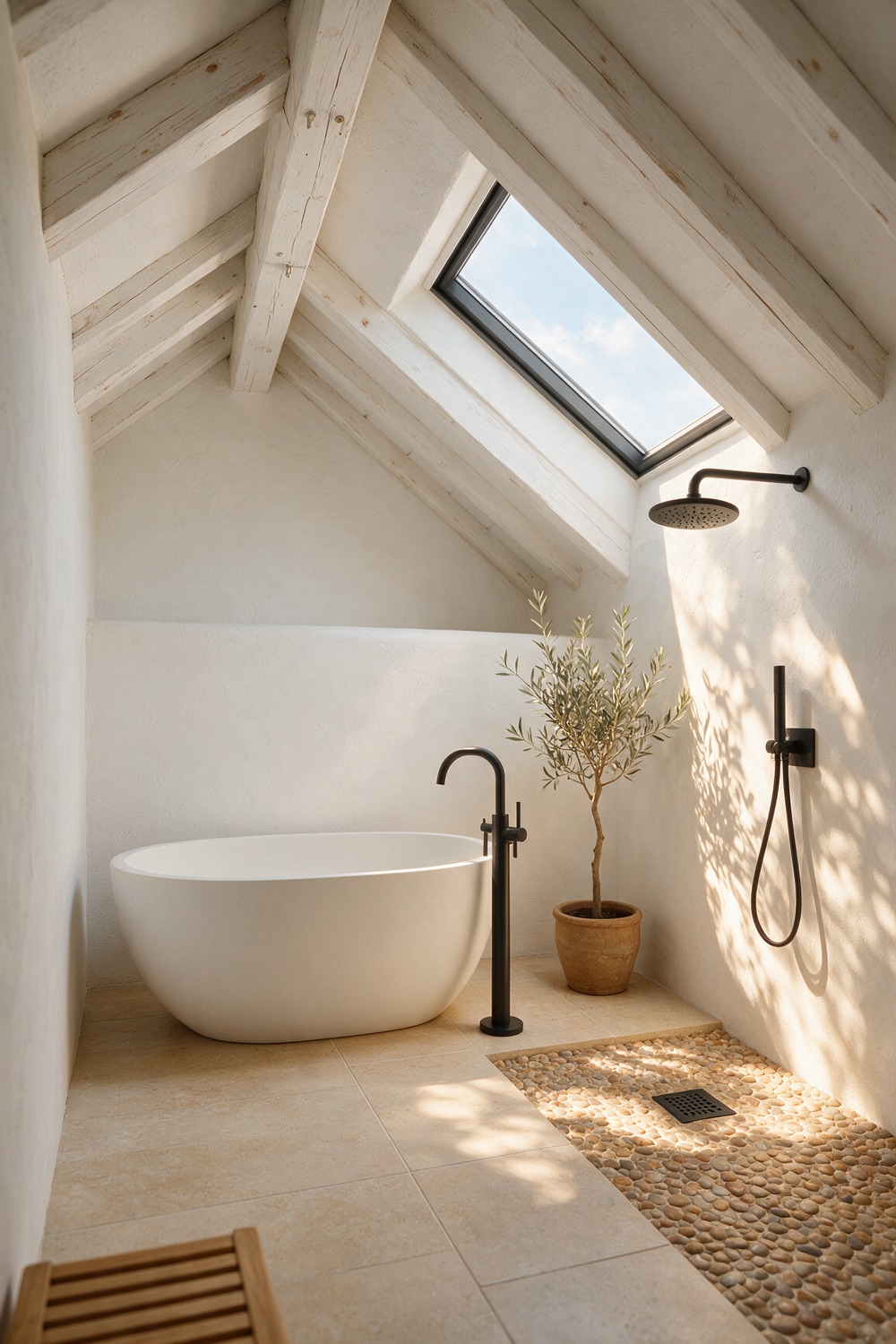
An attic bath lives or dies on light, so I chase every scrap of it. A skylight over the tub turns the whole room golden at the right hour.
Whitewashed timber under the eaves, a compact freestanding tub, a pebble-tile shower floor for a reflexology moment underfoot. Dulux Egyptian Cotton to bounce the skylight, a single olive tree in a raw clay pot. Clear the window and let the sky do the decorating.
12. Narrow Japandi Bathroom
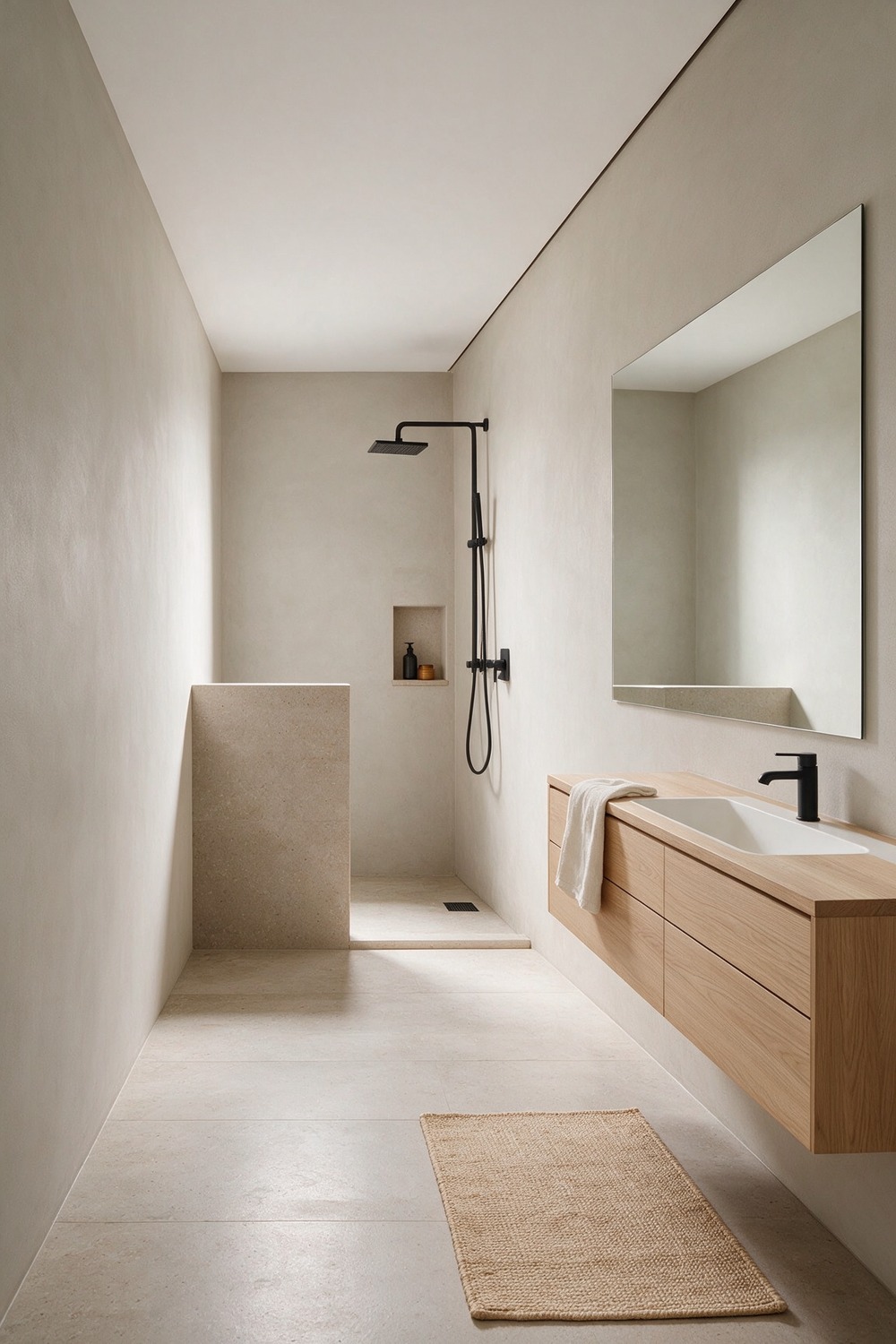
The mistake in a narrow bathroom is lining both walls and squeezing the walkway.
Japandi fixes it by keeping one wall almost empty, because your eye needs somewhere to rest. Run everything down one side: a slim floating ash vanity, a walk-in shower at the far end behind a half-height stone wall, no glass.
Honed sandstone on the wet wall, Benjamin Moore Thunder as a soft greige everywhere else. One long mirror stretches the room out.
13. Japandi Wet Room Bathroom
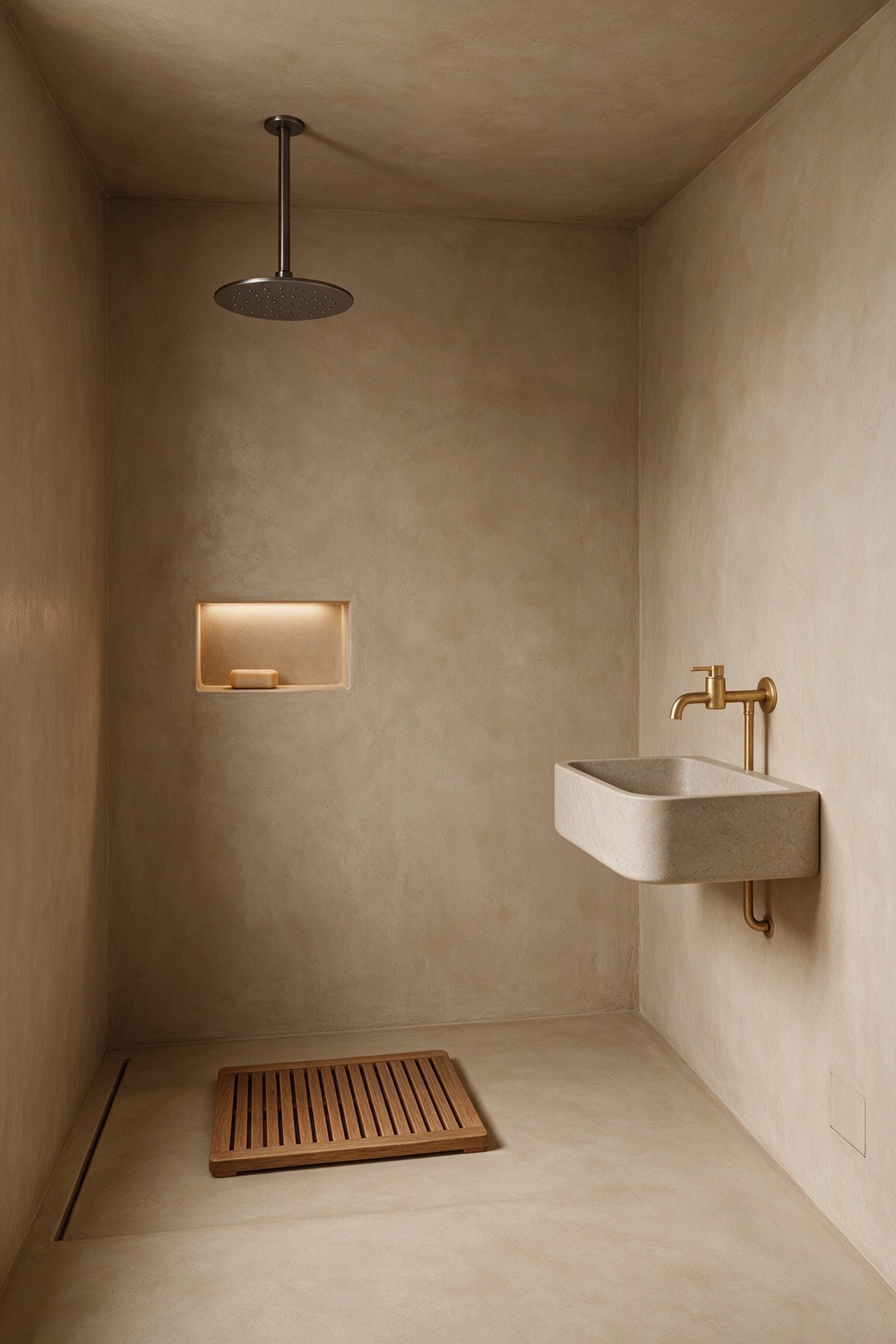
A wet room is the most japandi layout there is, because it dissolves the boundaries and leaves one honest waterproof space.
The floor simply slopes to a hidden channel drain, no step, no screen. I would tadelakt the whole room (tadelakt, the polished waterproof plaster from Morocco) in a warm taupe, so the walls and ceiling read as one soft continuous shell.
A teak duckboard underfoot, a ceiling rain head, a shallow wall niche for a single bar of soap. Nothing else competes. Start with the tadelakt and commit, because it is the surface that makes the room feel carved from one piece.
14. Japandi Powder Bathroom
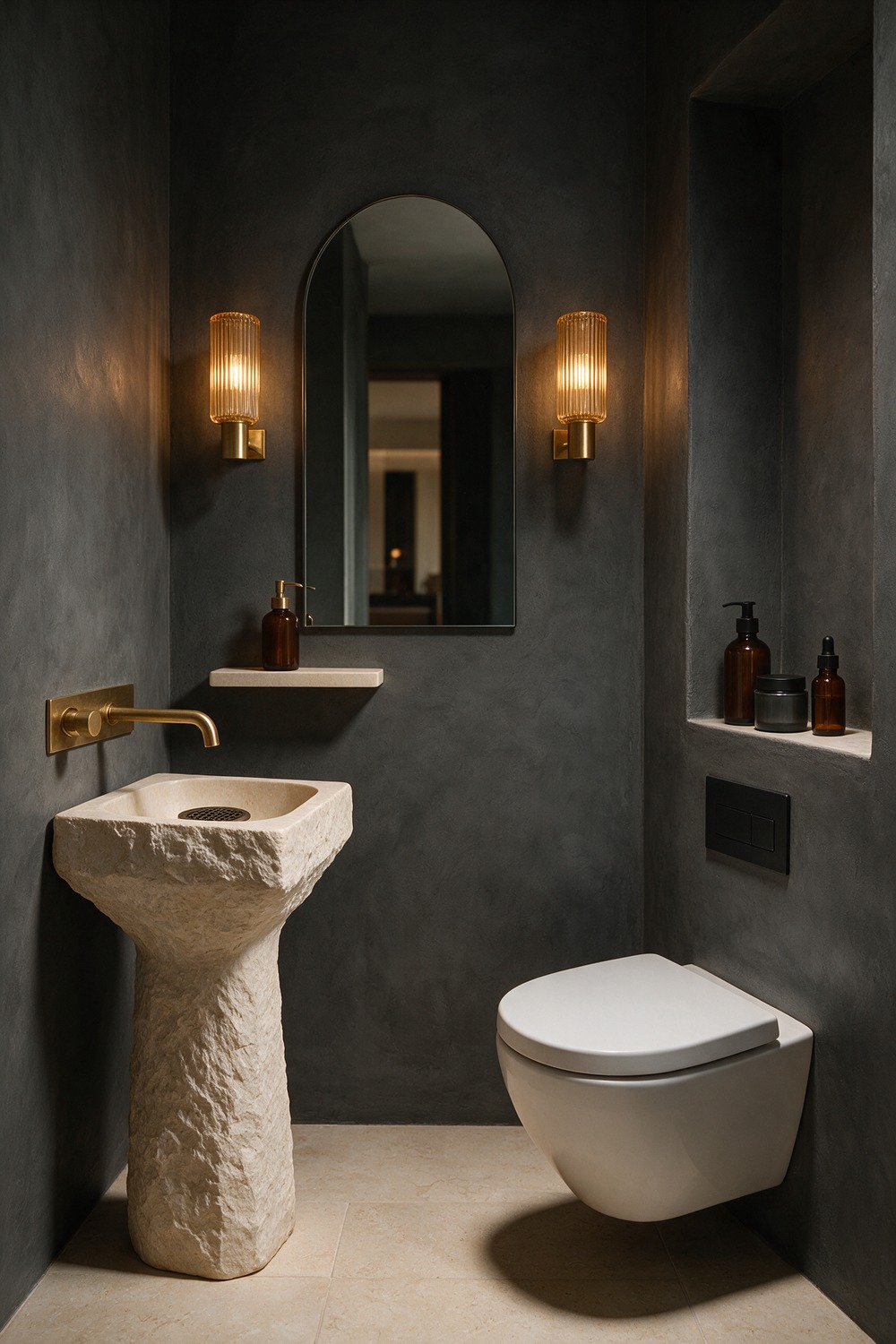
A powder room is theatre for guests, so I treat it as the one place japandi can whisper something a little bolder. Still calm, just with more confidence.
A charcoal limewash, Farrow and Ball Down Pipe in spirit, behind a sculptural stone pedestal basin. The toilet sits beside the vanity, no tub, no shower. Warm brass sconces flank a frameless arched mirror. Pick a basin that looks carved, not plumbed.
15. Large Japandi Bathroom
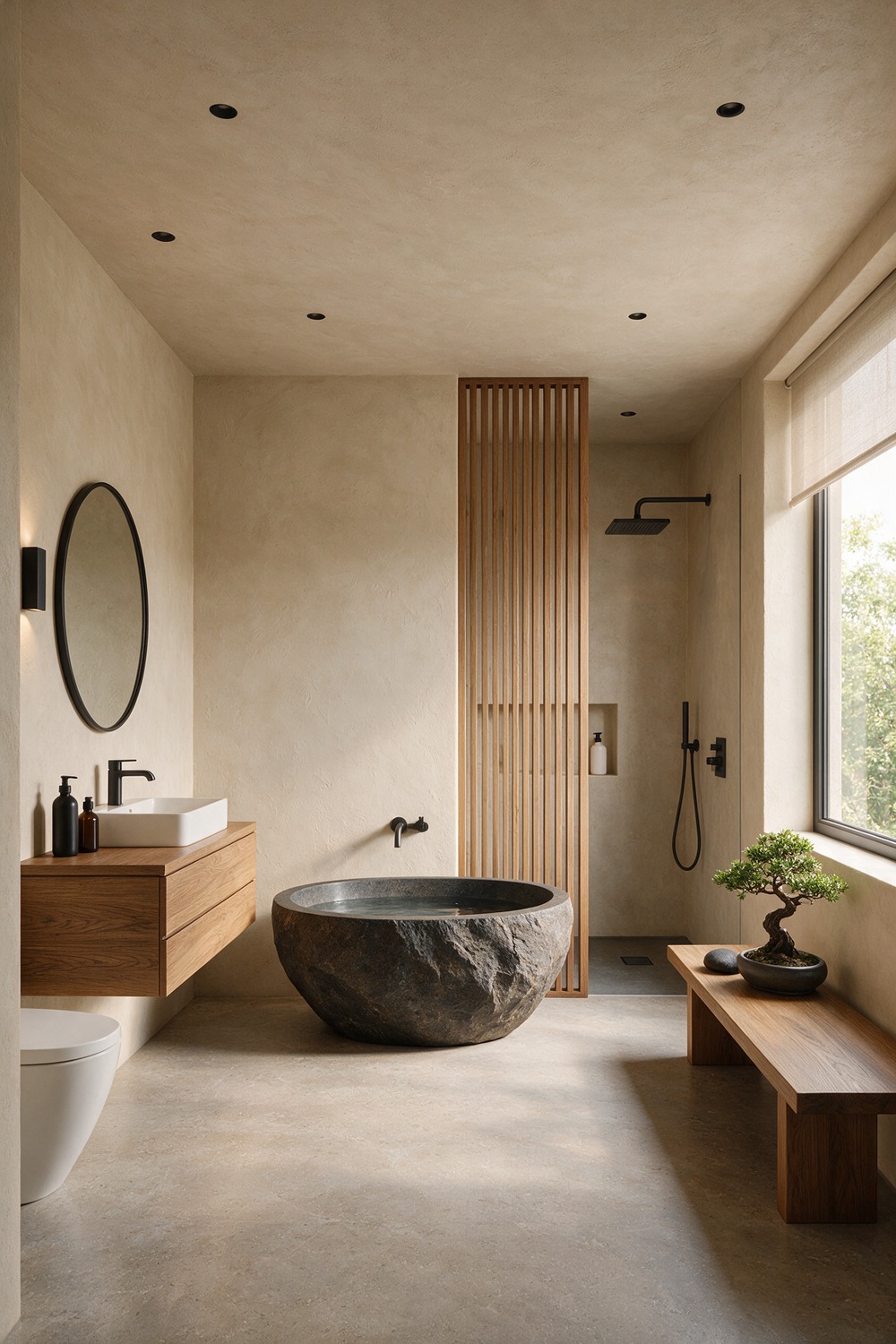
Big rooms are where japandi is hardest, because empty space can tip from serene into echoey hotel lobby.
Zones are the cure, so I break the floor into quiet chapters. A central freestanding tub, a wood-slat partition screening the shower, a long bench of warm oak running one wall.
Large-format grey-beige limestone underfoot, Portola Roman Clay on the walls for that hand-troweled depth, a low bonsai on the bench for a single living note. Let the slat screen divide the room, and the calm holds even across all that square footage.
16. Japandi Rental Bathroom
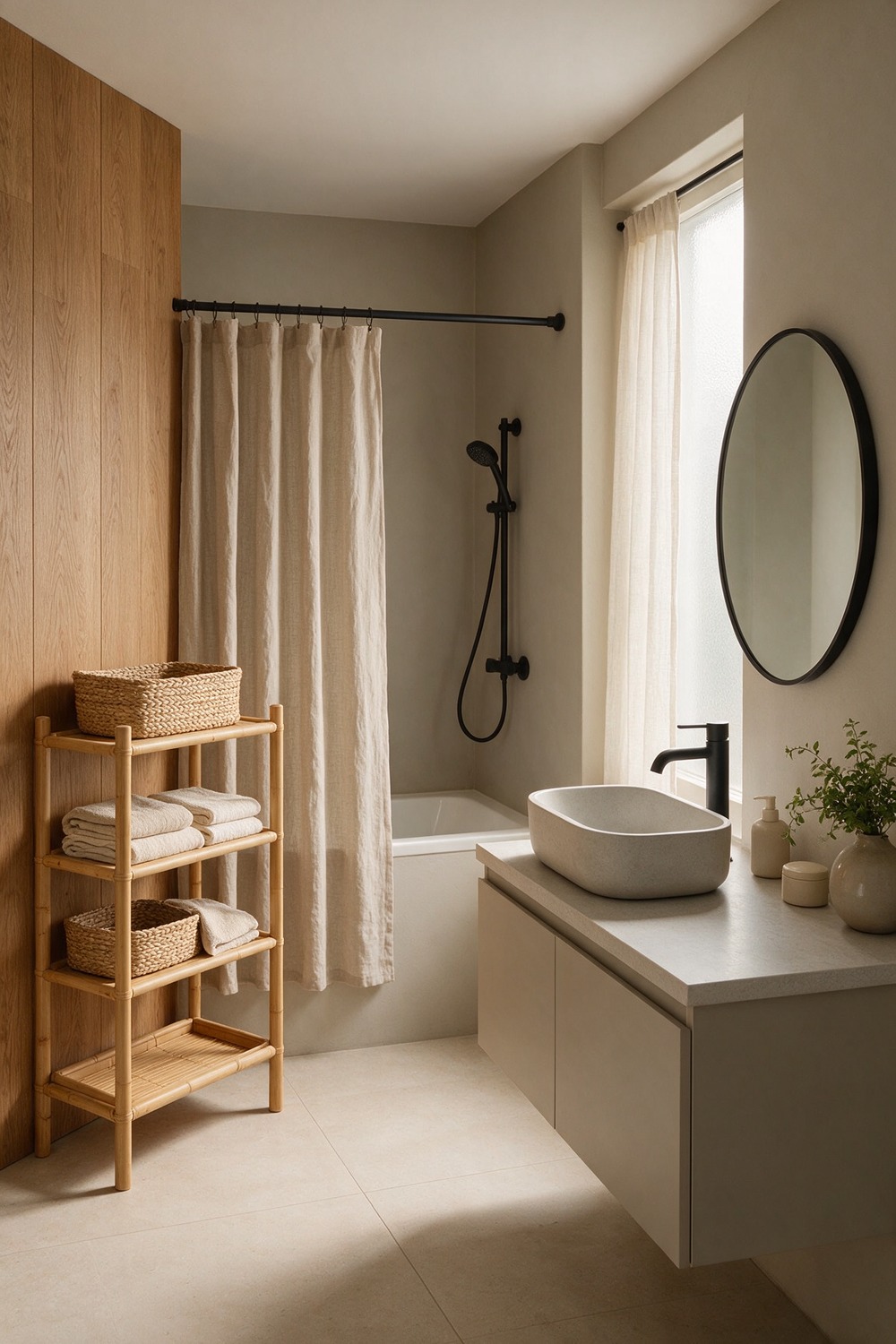
Everything here has to come back out, which is exactly the constraint japandi loves. Peel-and-stick warm oak panels on one wall, a freestanding bamboo shelf, a stone-resin basin on the existing counter, a linen shower curtain in oatmeal. Clare Current Mood is a renter-friendly greige if your lease allows paint.
17. Japandi Cabin Bathroom
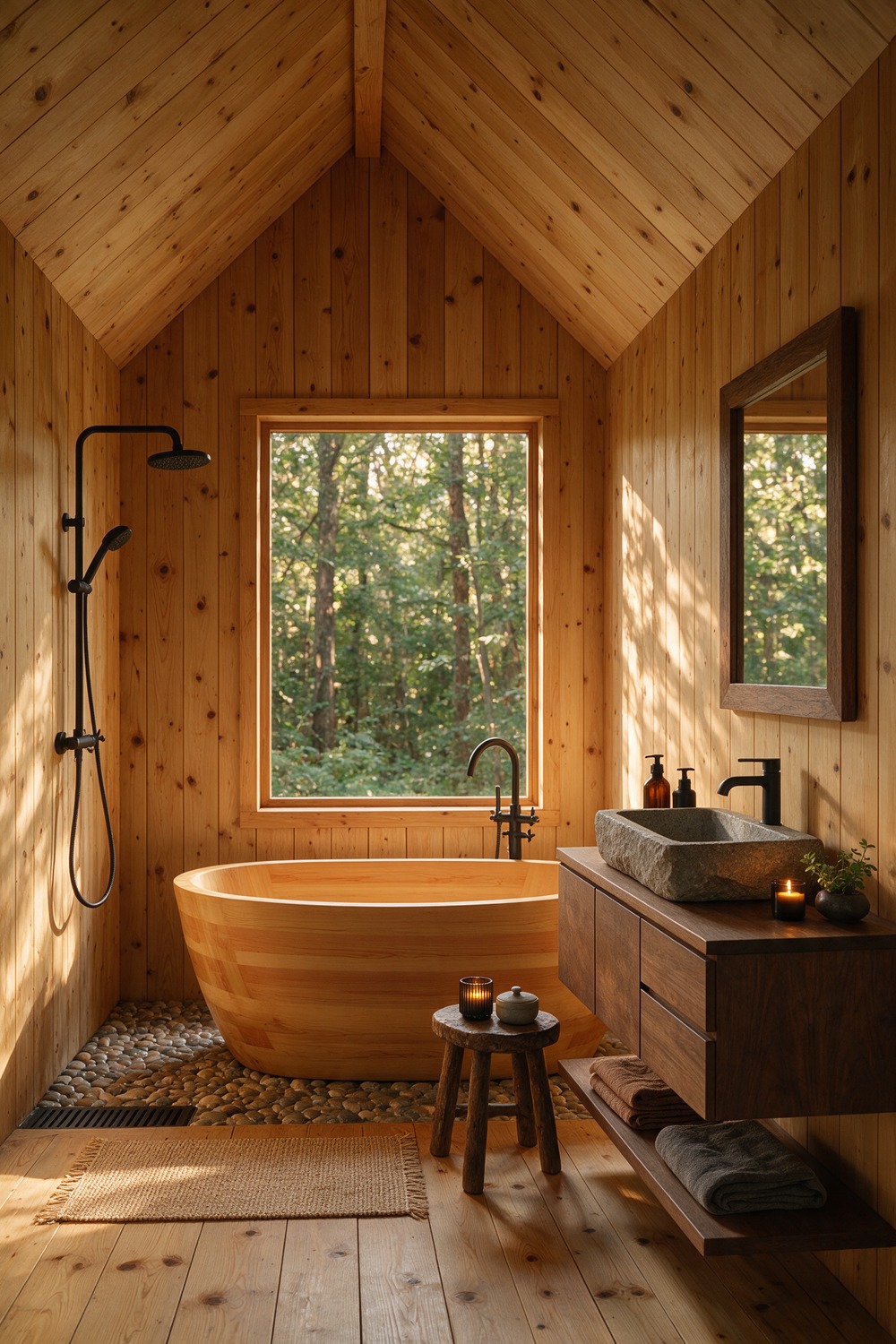
A cabin bathroom should smell of cedar and feel like a forest bath, so I lean all the way into raw tactile wood. This is japandi at its most Scandinavian.
Knotty pine walls, a hinoki soaking tub, a black cast-iron tap, a river-stone shower floor. Behr Wheat Bread warms the trim where the wood stops.
A window left bare to the trees. The starting move is the wood tub, the warm heart every cabin bathroom should have.
18. Japandi City Bathroom
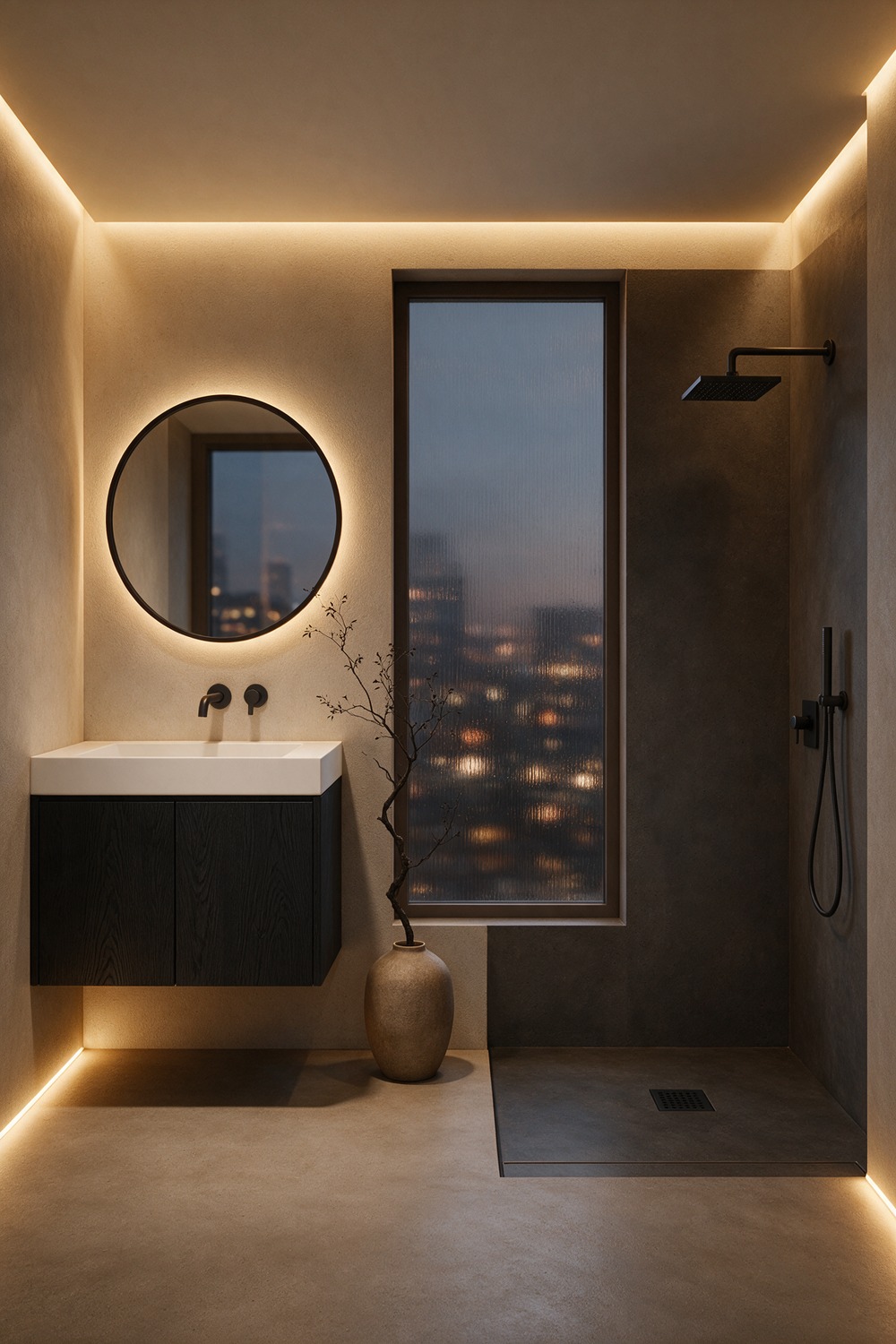
A city bathroom often has no view worth keeping, so japandi turns the gaze inward and builds the serenity itself. Frosted privacy glass, a sleek microcement shower, a floating black-stained oak vanity, a single sculptural branch in a tall vase.
Sherwin-Williams Urbane Bronze deepens the scheme to a soft near-charcoal, with warm concealed lighting and no clutter. Frost the window and let the room look only at itself.
Which Japandi Bathroom Style Is Right for You
Start with the room you actually have, not the one on the mood board. Tight on space? Lean warm and dark and let one plaster wall carry it. A tiny half bath or powder room wants richness, since there is no shower to balance.
Blessed with a primary suite or a loft? Your luxury is emptiness, so spend on one stone tub and leave the rest quiet. Renting? Think in removable layers, peel-and-stick wood and freestanding timber, nothing that needs a drill.
If you only remember one thing: japandi is wood plus warm plaster plus a single matte black line. Get those three right and almost any space falls into calm.
Japandi Bathroom Ideas, Answered
Is a japandi bathroom expensive to create? It can be as low or high as you like. The cheap end is paint, a peel-and-stick wood wall and a stone-resin basin. The splurge is tadelakt or microcement laid by a pro and a solid stone tub.
Most people land in the middle by spending on one surface and keeping the rest humble.
What can I do myself and what needs a pro? Painting, swapping tapware, adding wood panelling and styling are all weekend DIY. Tadelakt, microcement and wet-room floor drainage genuinely need a skilled hand. A botched waterproof plaster is a leak you will regret, so hire that one out.
How long does a japandi bathroom refresh take? A cosmetic refresh of paint, a new vanity, tapware and textiles is a long weekend. A full retile or a plastered wet room runs one to three weeks with a tradesperson. Order materials first, since stone and plaster have long lead times.
What is the one material worth spending on? The wood. A real oak or walnut vanity and a genuine timber or stone tub are what make japandi read as warm rather than cold minimalism. Fake woodgrain laminate is the one shortcut that shows.
What should I ask the tiler or plasterer for? Ask for large-format honed stone or porcelain with the thinnest possible grout line, in a matched warm-grey grout rather than stark white. For plaster, ask for tadelakt or polished microcement in a warm neutral, sealed for wet areas.
You do not need to gut a thing to begin. Pick the smallest wall in your bathroom, give it a warm plaster or a run of oak, and watch the rest of the room start asking to match. Start there, and let the calm spread.
More stories
Share this story