18 Japandi Bathroom Ideas for a Calm, Spa-Like Escape

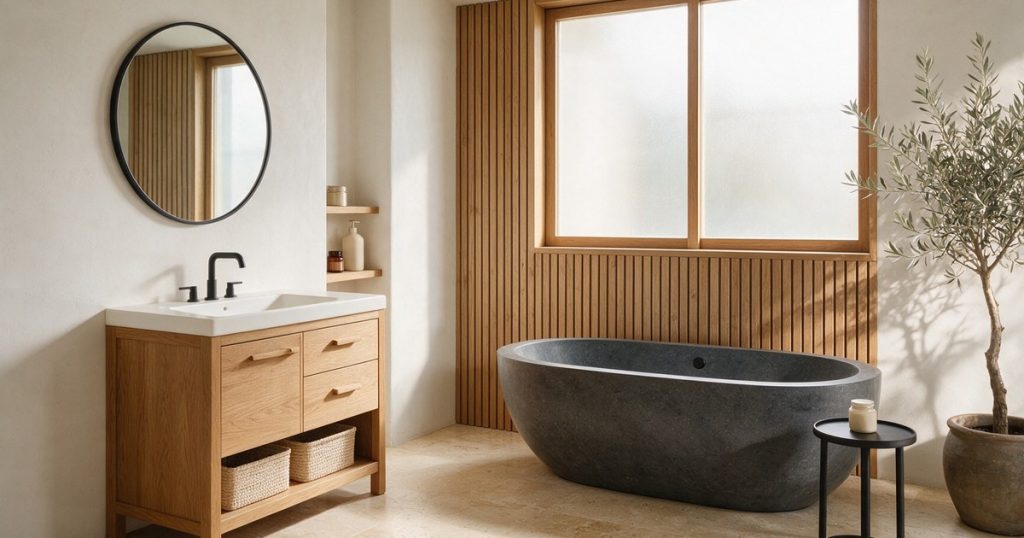
Most spa bathrooms try too hard. Candles on every ledge, a wooden sign that says Relax, a dozen textures fighting for attention. A japandi bathroom does the opposite, and that restraint is exactly why I keep coming back to it.
Japandi is Japanese calm meeting Scandinavian warmth, and it suits a bathroom better than almost any other look. Think warm and unhurried: pale wood, soft plaster, one good stone, and a lot of empty space. Below are 18 ways to build that quiet.
Each idea is a full look, with the palette, the paint, the material, and the one move I would start with. Find the feature your room is built around and go from there.
1. Japandi Bathroom With Bathtub
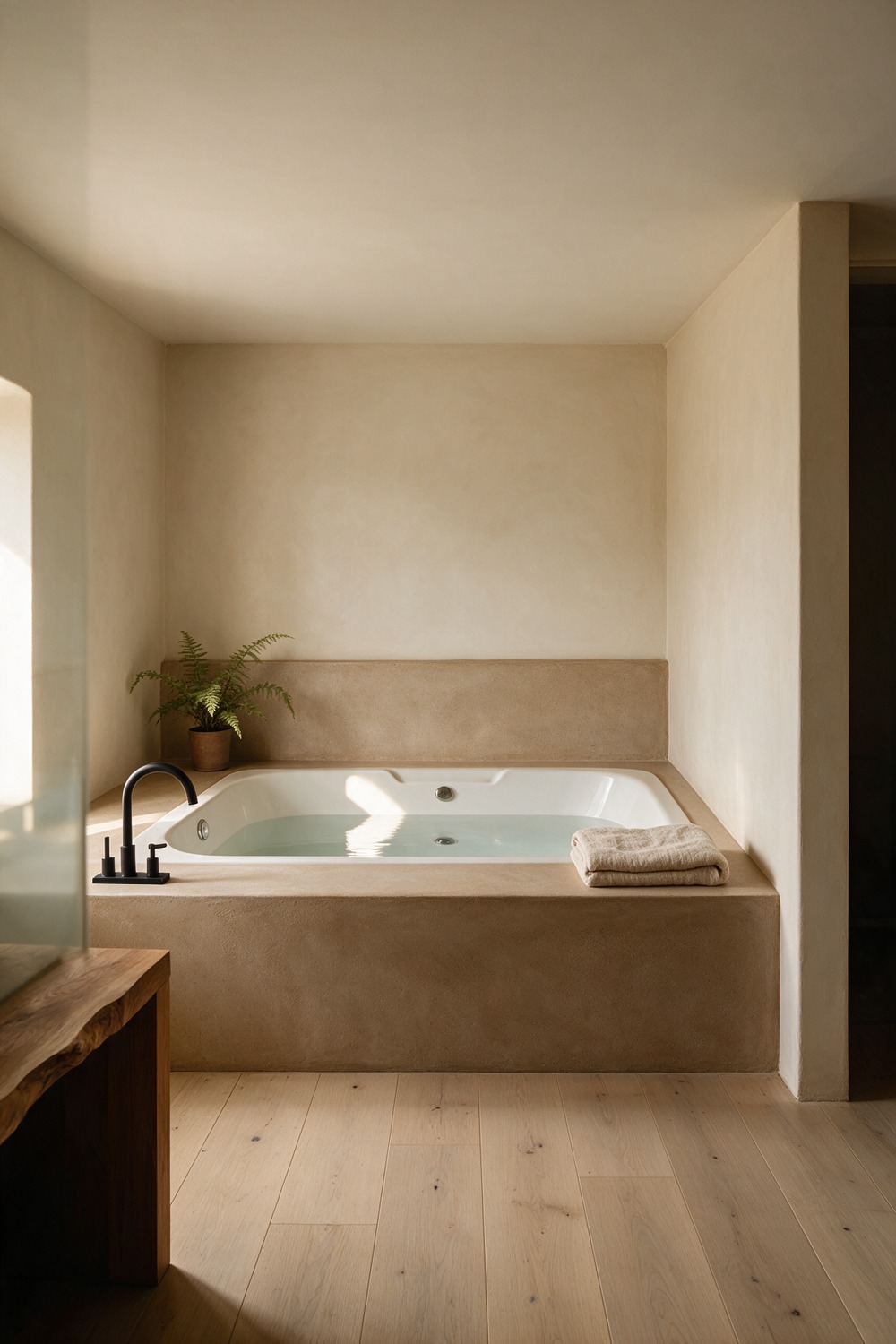
The built-in tub gets no respect, and that is a shame. Set into an alcove and wrapped in the right surround, it becomes the quietest luxury there is. No fuss, no plumbing on show, just a warm ledge for your tea.
Keep it oatmeal and pale oak. I would clad the surround in warm microcement the colour of wet sand, then paint the rest in Benjamin Moore Pale Oak so nothing jars. One matte-black mixer, a folded linen towel. Start with the surround, and the tap follows its tone.
2. Japandi Bathroom With Freestanding Tub
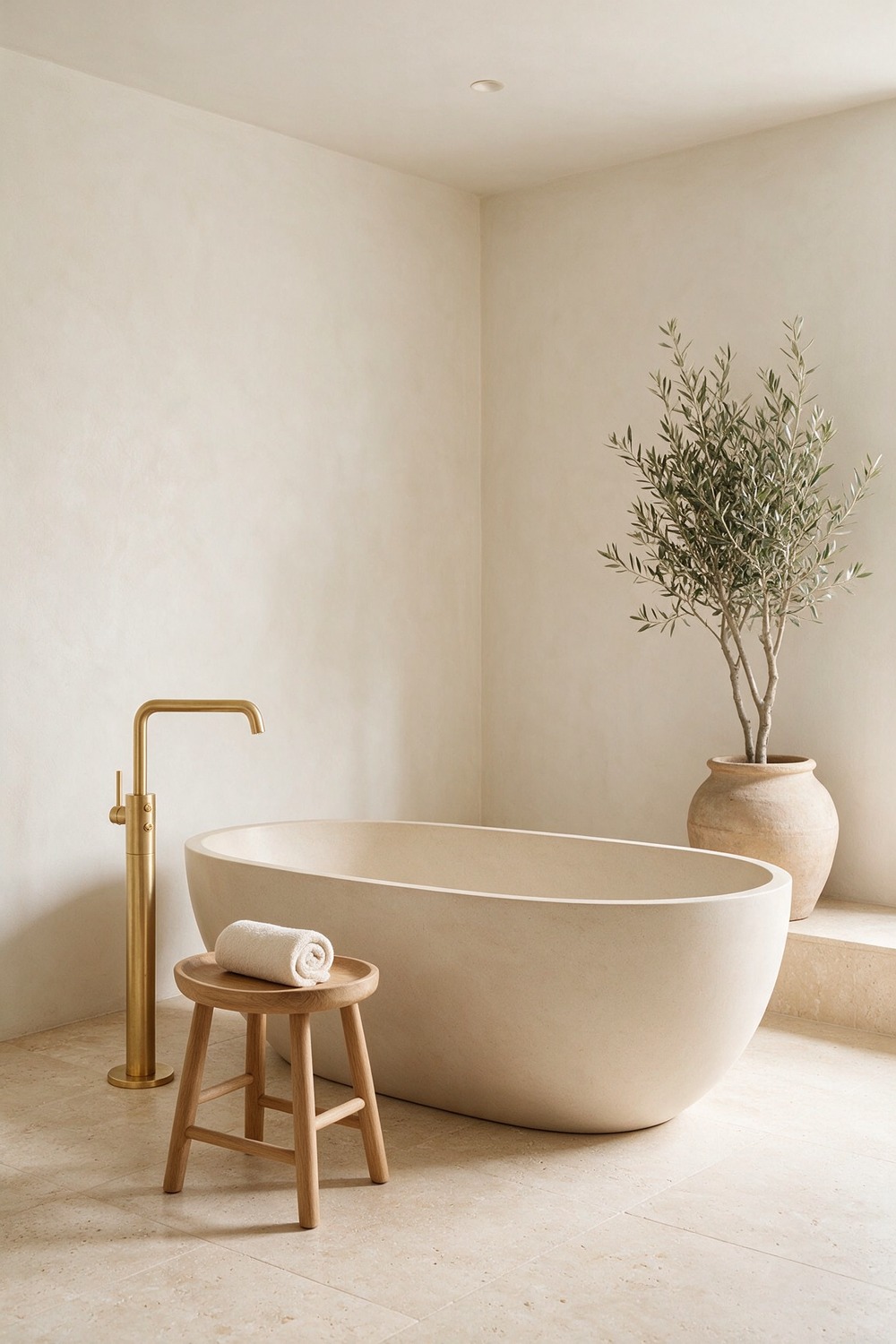
If you have the floor to spare, the freestanding tub is the piece worth the money. A smooth stone-resin oval, low and soft-shouldered, reads far calmer here than a clawfoot. Clawfoot is lovely, but it leans Victorian.
Set it against a warm white, say Farrow & Ball Pointing, with a low oak stool beside it for a rolled towel. A floor-standing brass riser tap in a brushed, unlacquered finish keeps it honest. One olive tree in a raw clay pot finishes it.
3. Japandi Bathroom With Soaking Tub
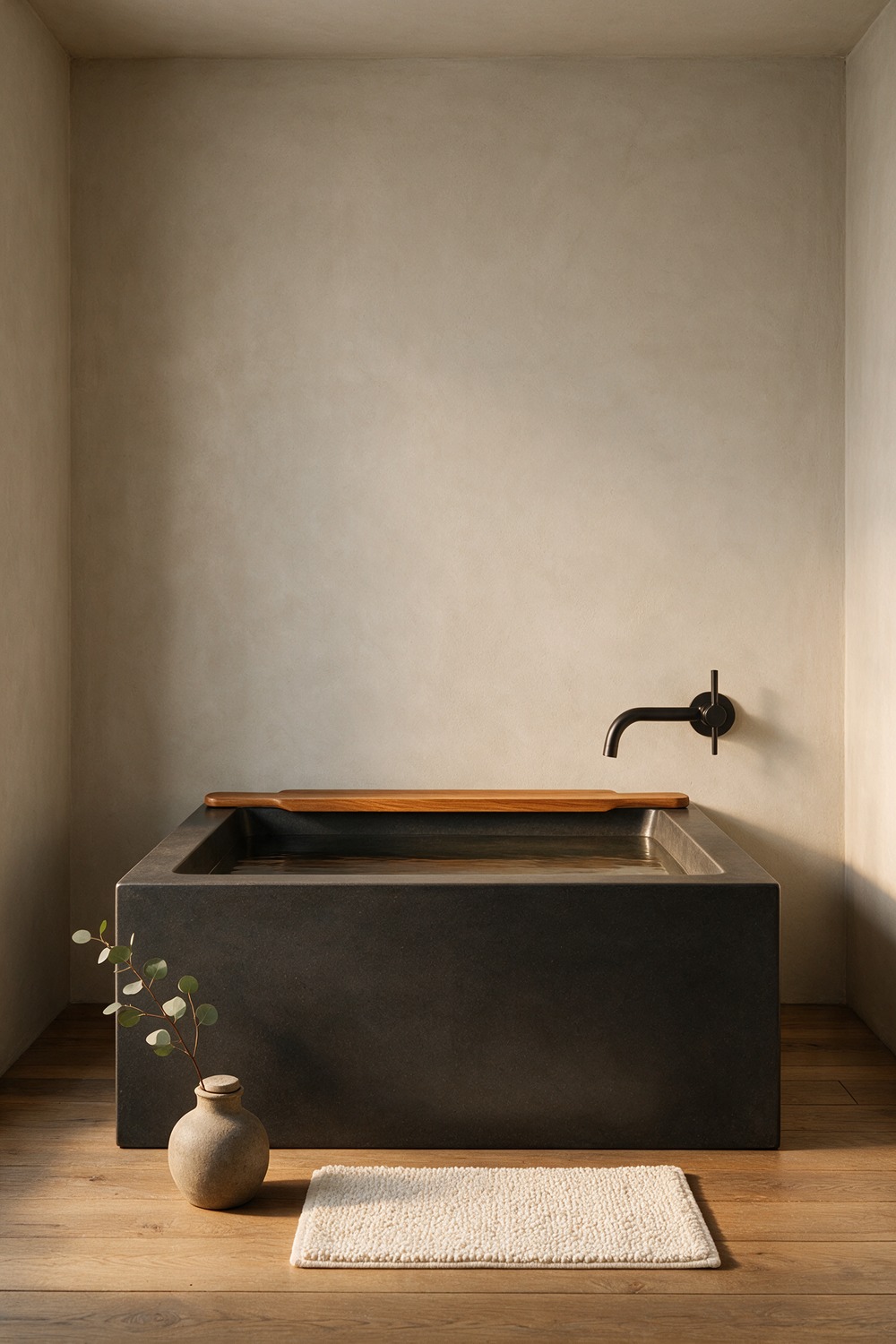
Here is where japandi shows its Japanese side. The ofuro, the traditional deep soaking tub, sits you upright with the water up to your shoulders. A modern version in hinoki wood or matte stone is pure wabi-sabi.
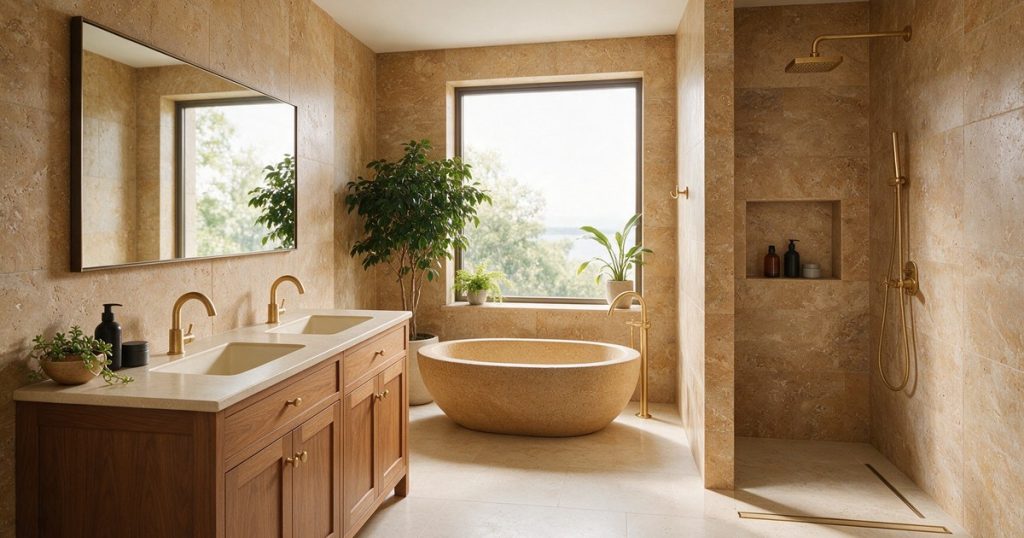
Go deep and square rather than long and low. I love a charcoal soaking tub against limewashed walls in a soft greige, something like Bauwerk or Little Greene Rolling Fog, with a slim timber caddy laid across the top.
Keep the floor warm underfoot with wide oak boards and a single cotton mat. Start with the tub depth, because the whole ritual depends on it. Everything else is just calm arranged around the water.
4. Japandi Bathroom With Walk In Shower
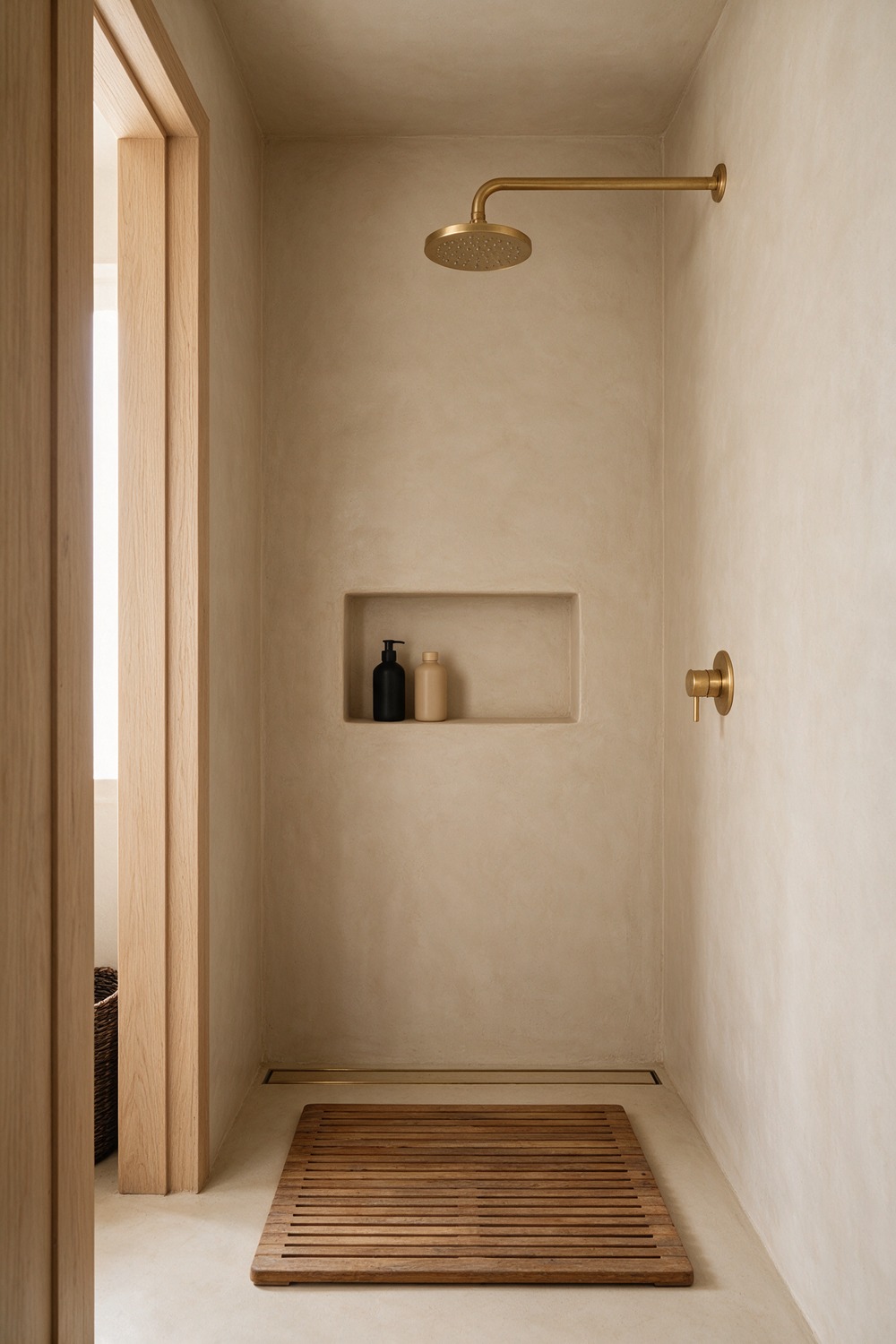
The trick with a japandi walk-in is to let it vanish. No framed glass box, no chrome rails climbing the wall. Just an open plastered recess in warm putty tadelakt, a hidden linear drain, and a teak slat mat underfoot. Begin with the plaster, because seamless is the whole point.
5. Japandi Bathroom With Rain Shower
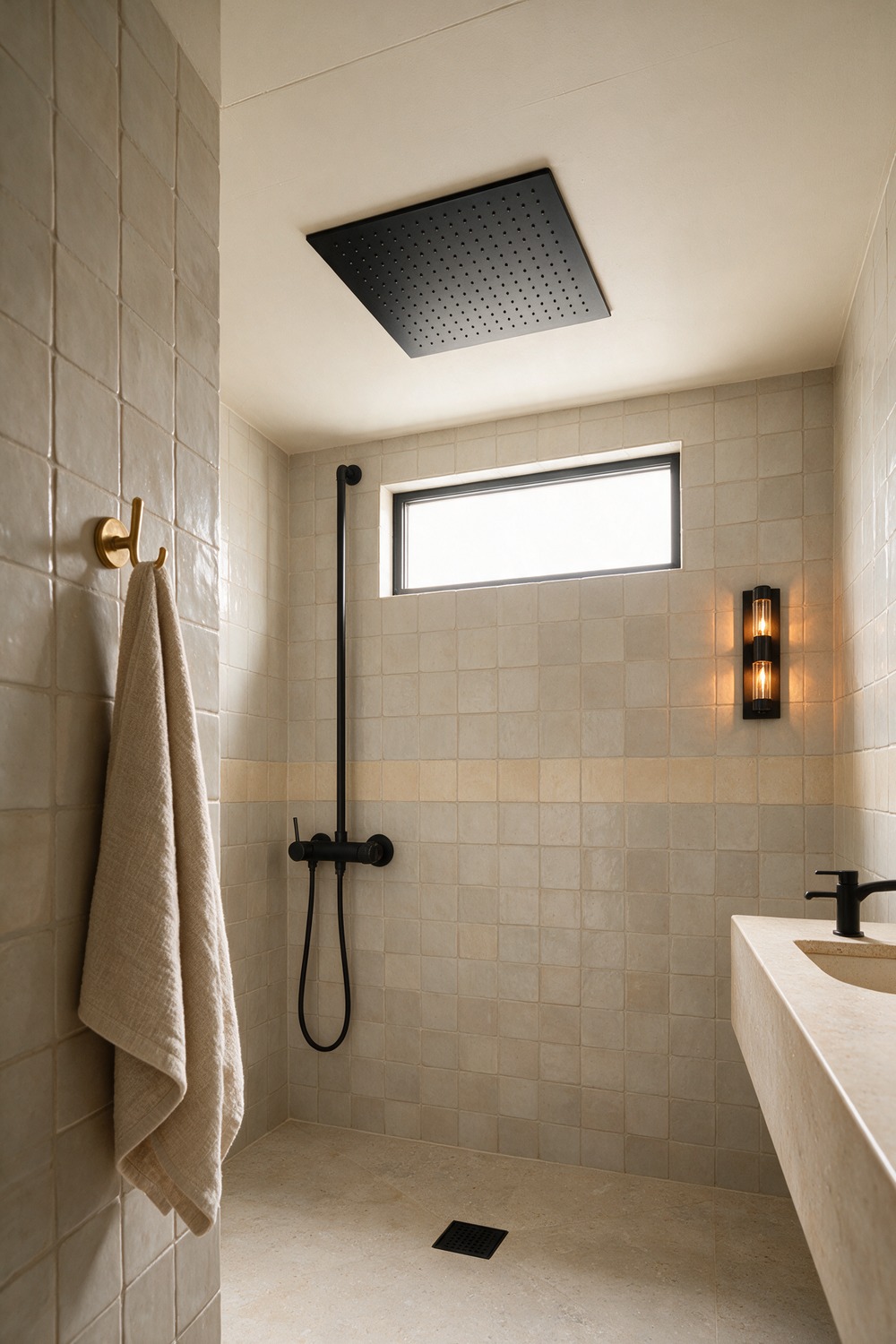
Stand under a proper rain head on a slow morning and you understand the appeal in about four seconds. A wide ceiling-mounted disc, flush and simple, turns the shower into something close to weather.
For japandi, choose a rain head in matte black or warm brass, never polished chrome, and keep its arm short. I would line the wall in stacked clay zellige, handmade and faintly wavy so it catches the light, over a honed limestone floor. Start with the ceiling run.
6. Japandi Bathroom With Double Sink
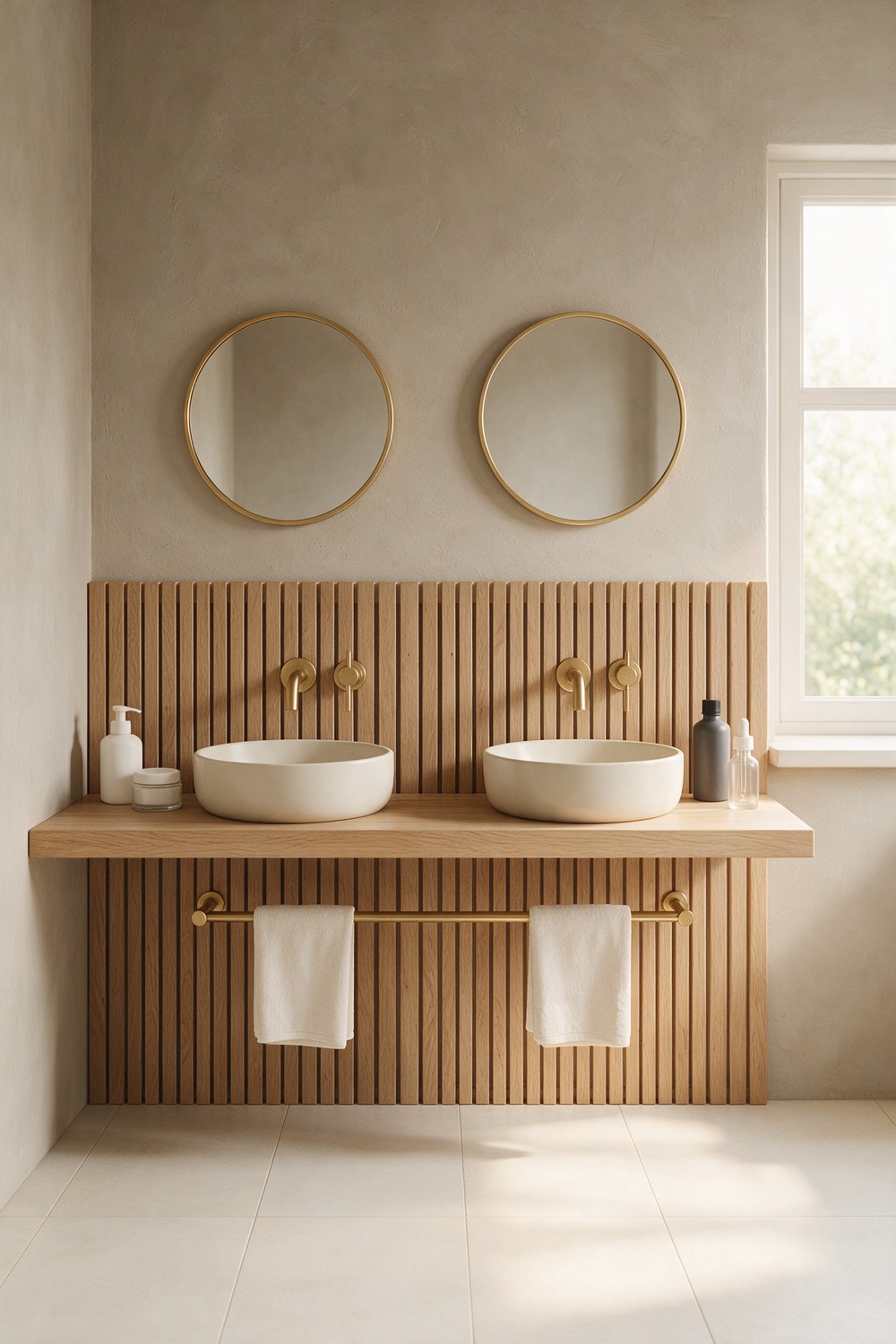
You do not need a six-foot vanity to get two sinks. Two slim wall-hung basins with a gap between them often feels more japandi than one big slab, because it leaves the floor open and the wall breathing.
I would hang two round off-white basins, each with its own wall-mounted brass tap, over a pale porcelain floor. Behind them, one run of oak slatting ties the pair together, a round mirror above each. Wood, white, brass. Start by setting the basins low and even.
7. Japandi Bathroom With Double Vanity
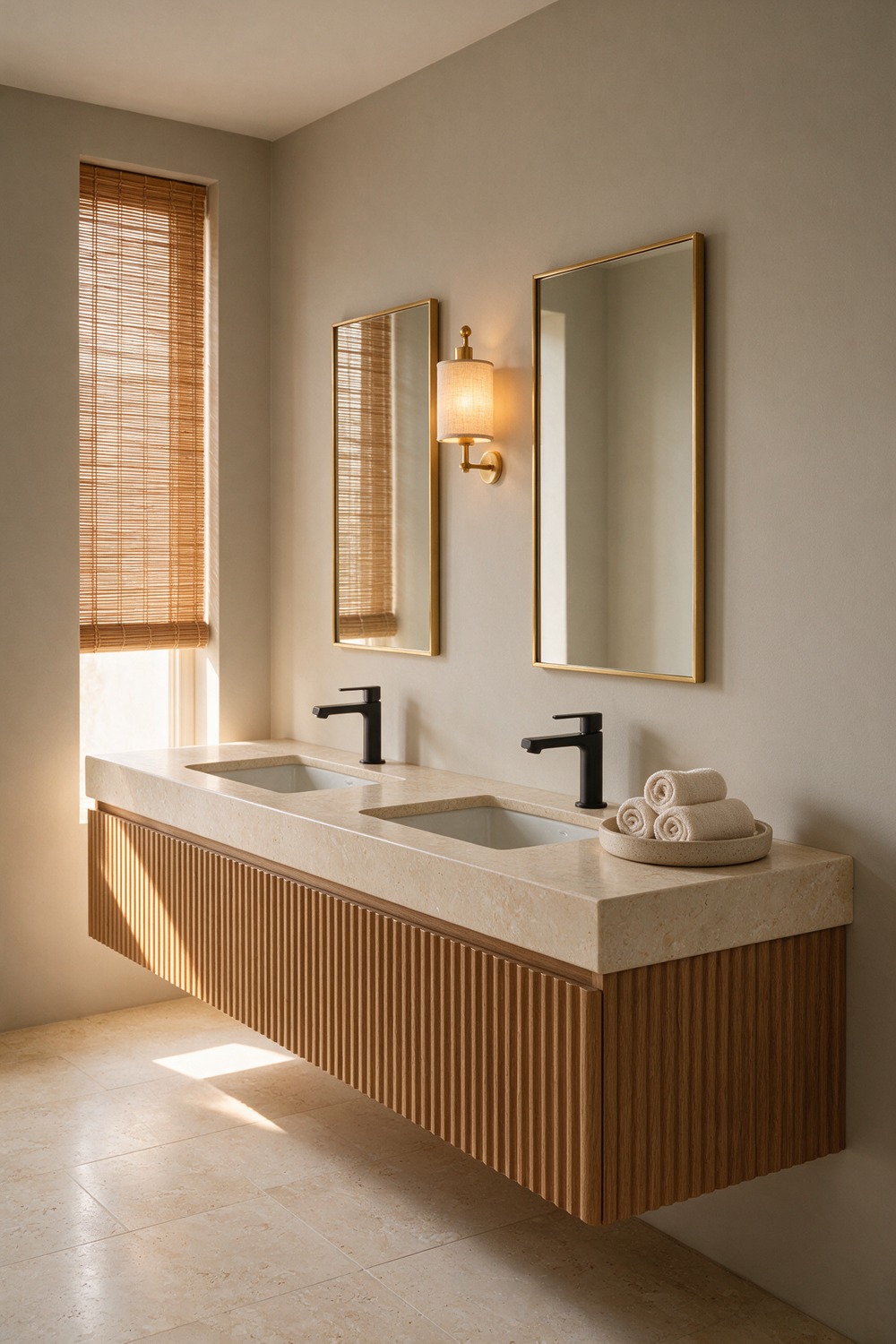
For a double vanity, pass on the furniture-store monolith with a dozen drawers. A japandi vanity is a low, simple box in solid oak or ash, wall-hung so the floor runs on beneath it, with two undermount basins and one honed-stone top.
Fluted oak fronts add quiet texture without shouting. I would top it in pale honed travertine, fit two slim matte-black mixers, and paint the walls a warm greige like Sherwin-Williams Accessible Beige. Start with the carcass wood, because its grain sets the room’s warmth.
8. Japandi Bathroom With Floating Vanity
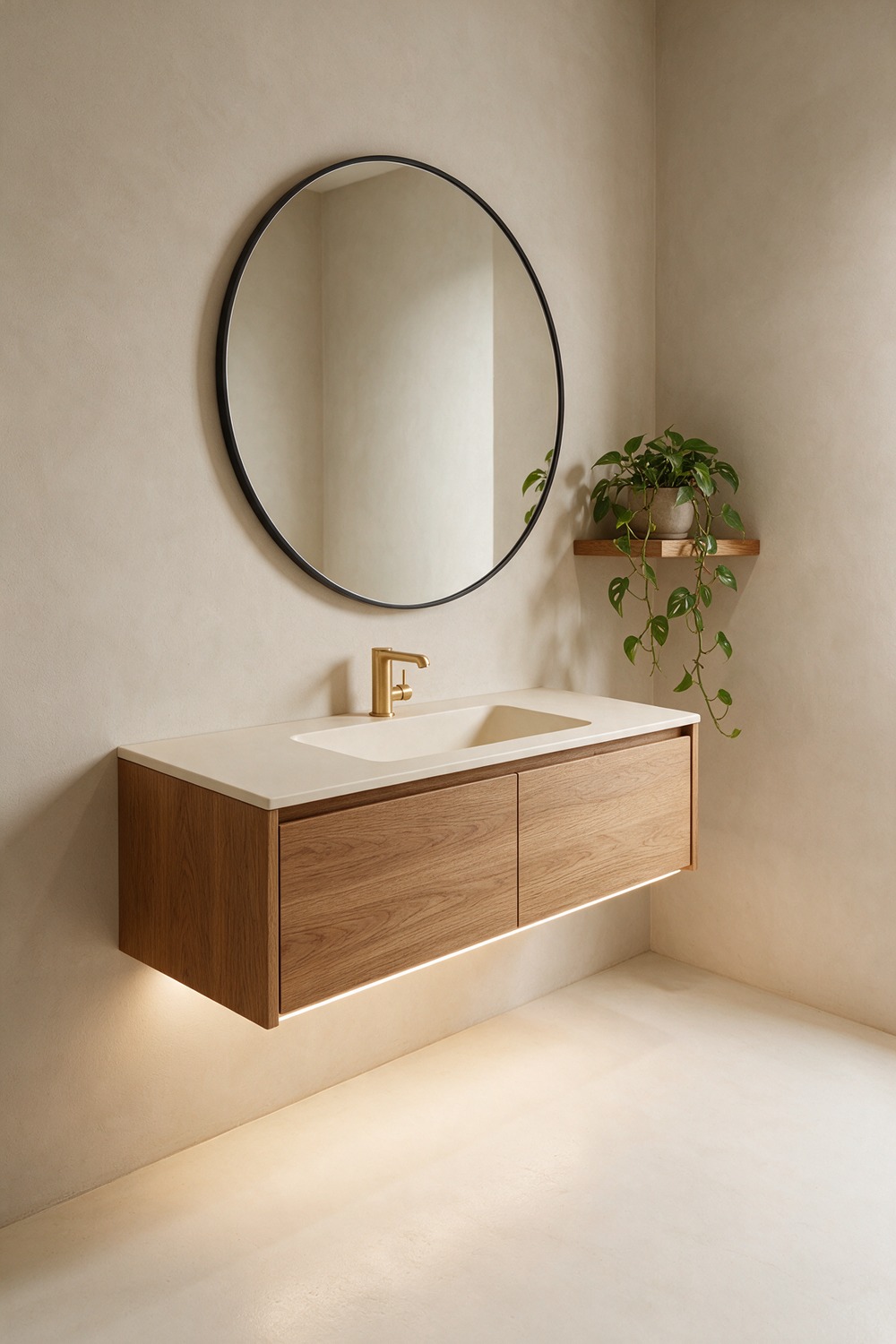
Float the vanity and a small bathroom grows. Lifting the cabinet off the floor by even eight inches lets light slide underneath, and that sliver of visible floor tricks the eye into reading more room. It is my favourite little sleight of hand.
Keep it a plain slab-front box in warm oak with a recessed finger-pull instead of handles. Add a thin porcelain basin top in bone white, a single brass tap, and a warm LED strip hidden beneath. Walls in Dulux Natural Hessian. Get the wall mounts solid and level.
9. Japandi Bathroom With Vessel Sink
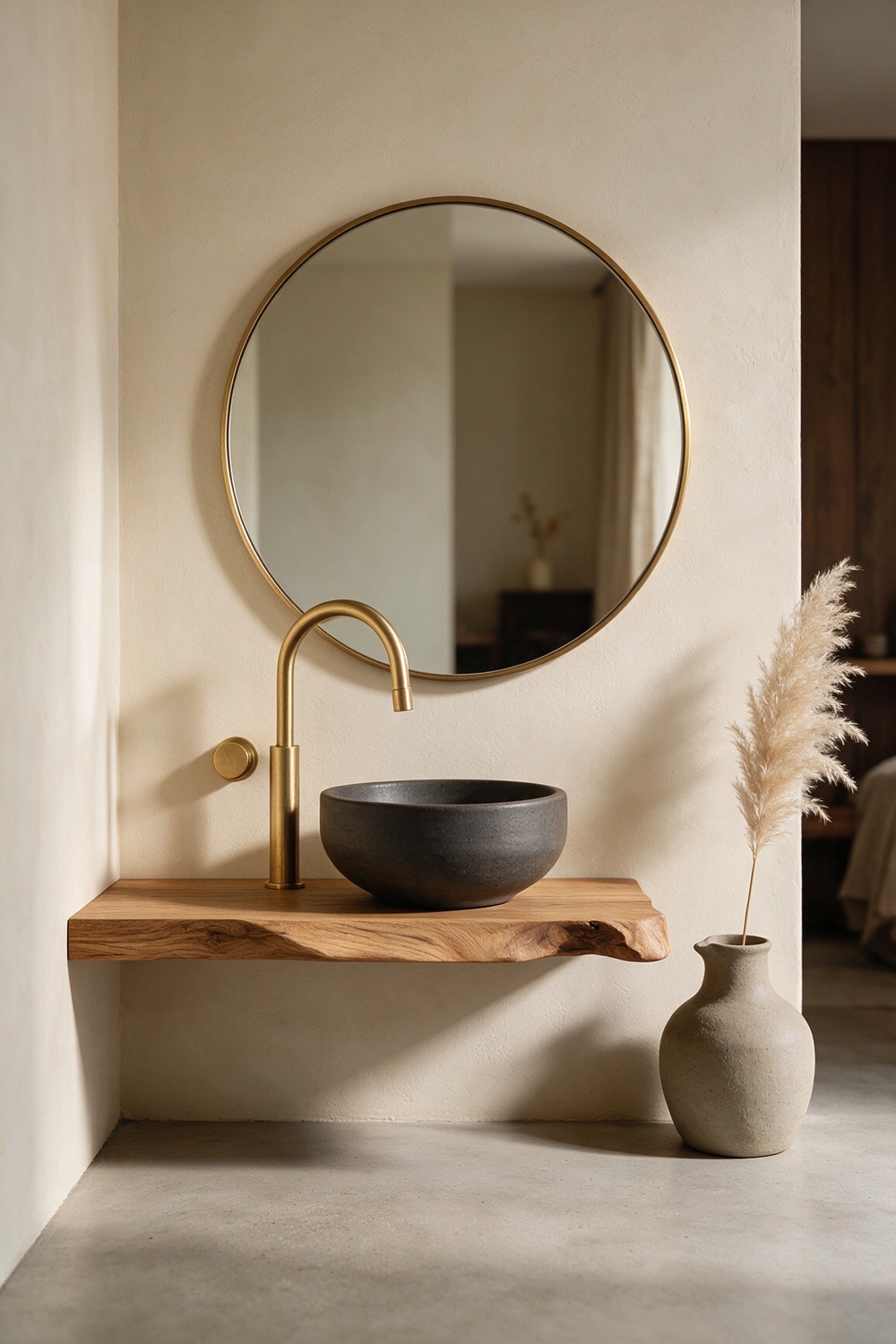
I used to think vessel sinks were fussy. Then I saw one hand-thrown stoneware bowl resting on a raw oak shelf, and I understood. In japandi, the vessel sink is where you let a single handmade object be the whole event.
Choose a matte ceramic or hammered stone bowl in oatmeal or charcoal, and mount a tall wall spout above it so the water arcs in cleanly. Set it on a floating slab of live-edge oak, the bark still soft on the front.
Paint the walls a chalky Little Greene Slaked Lime and leave everything else plain, so the bowl can speak. Start by choosing the bowl, because its height decides where the tap goes. One object, done well.
10. Japandi Bathroom With Wood Slat Wall
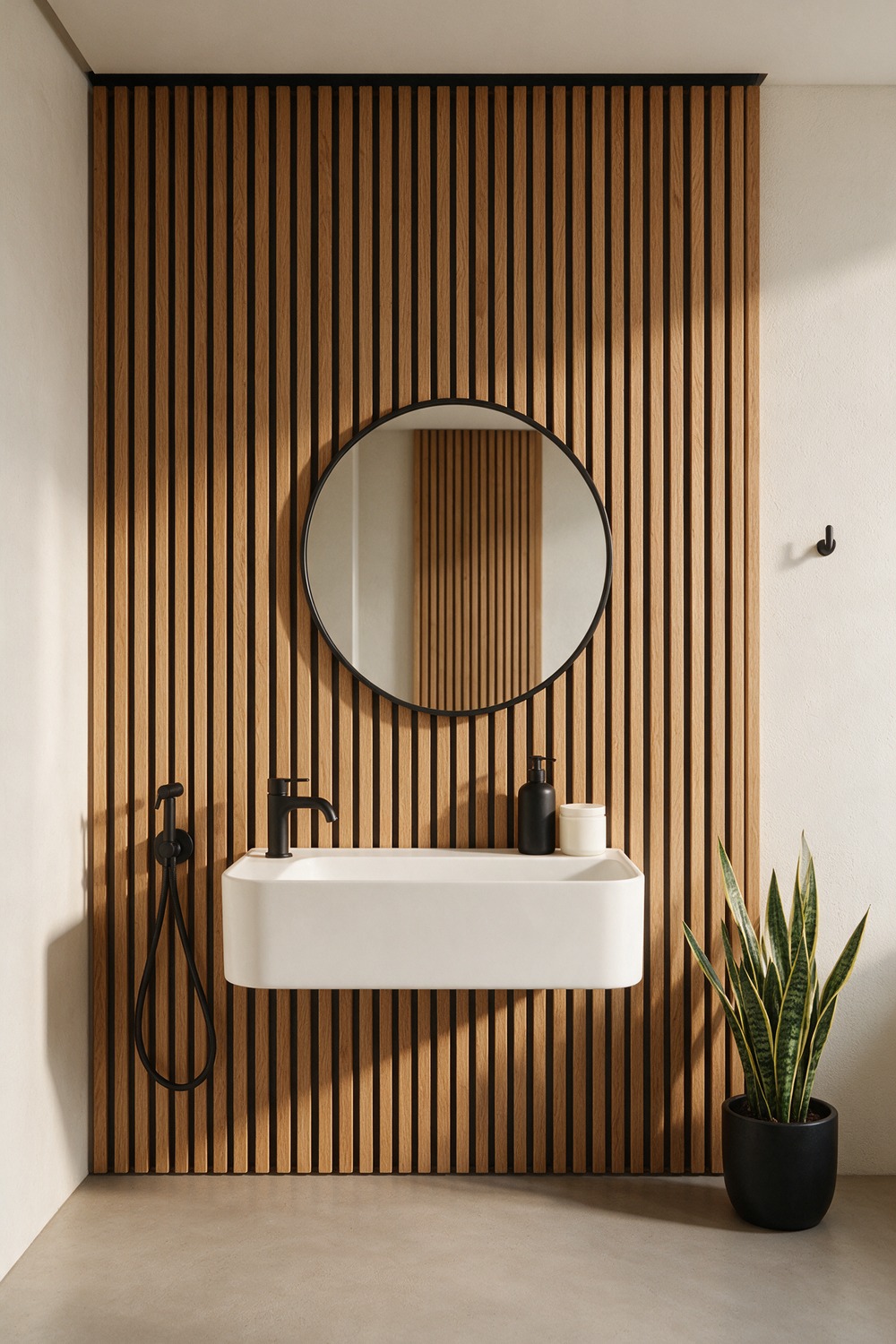
If you do one thing on this list, do the slat wall. Vertical timber battens over a dark recessed back bring a rhythm and warmth no paint can match. Use sealed oak or thermally treated ash, floor to ceiling, even gaps, a tone that stays honey rather than orange.
11. Japandi Bathroom With Tiled Walls
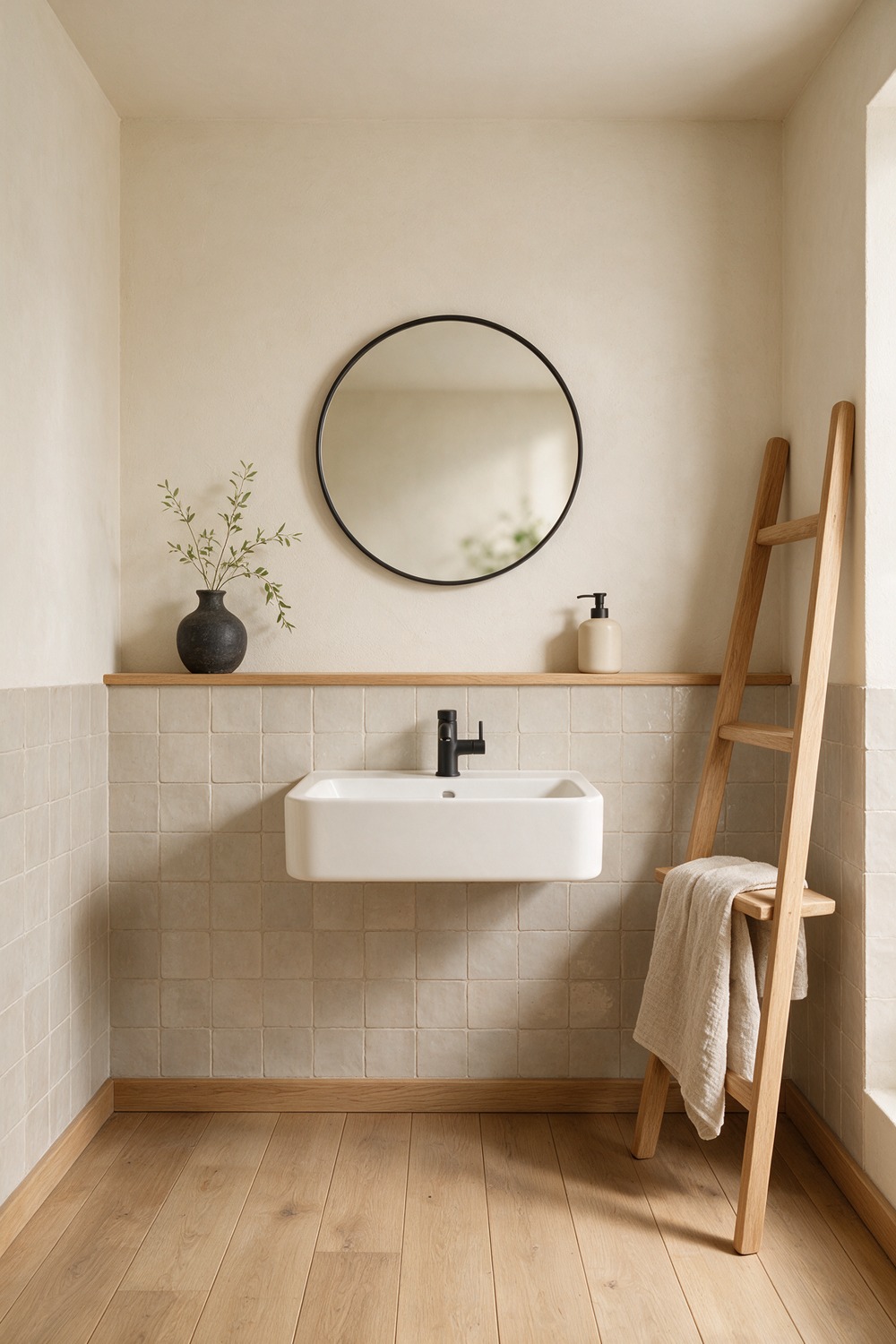
Not every japandi bathroom is plaster. Tiled walls bring a crisper, more Scandinavian edge, and the right tile keeps it warm rather than clinical. The secret is matte, handmade-looking tile in an earthy tone, never high-gloss white.
I would run a 4×4 zellige in soft greige halfway up the wall, cap it with a simple oak rail, and paint above in Benjamin Moore Swiss Coffee. The faint shift across handmade tiles keeps it from feeling flat. Stop the tile on one clean line, and start there.
12. Japandi Bathroom With Stone Floor
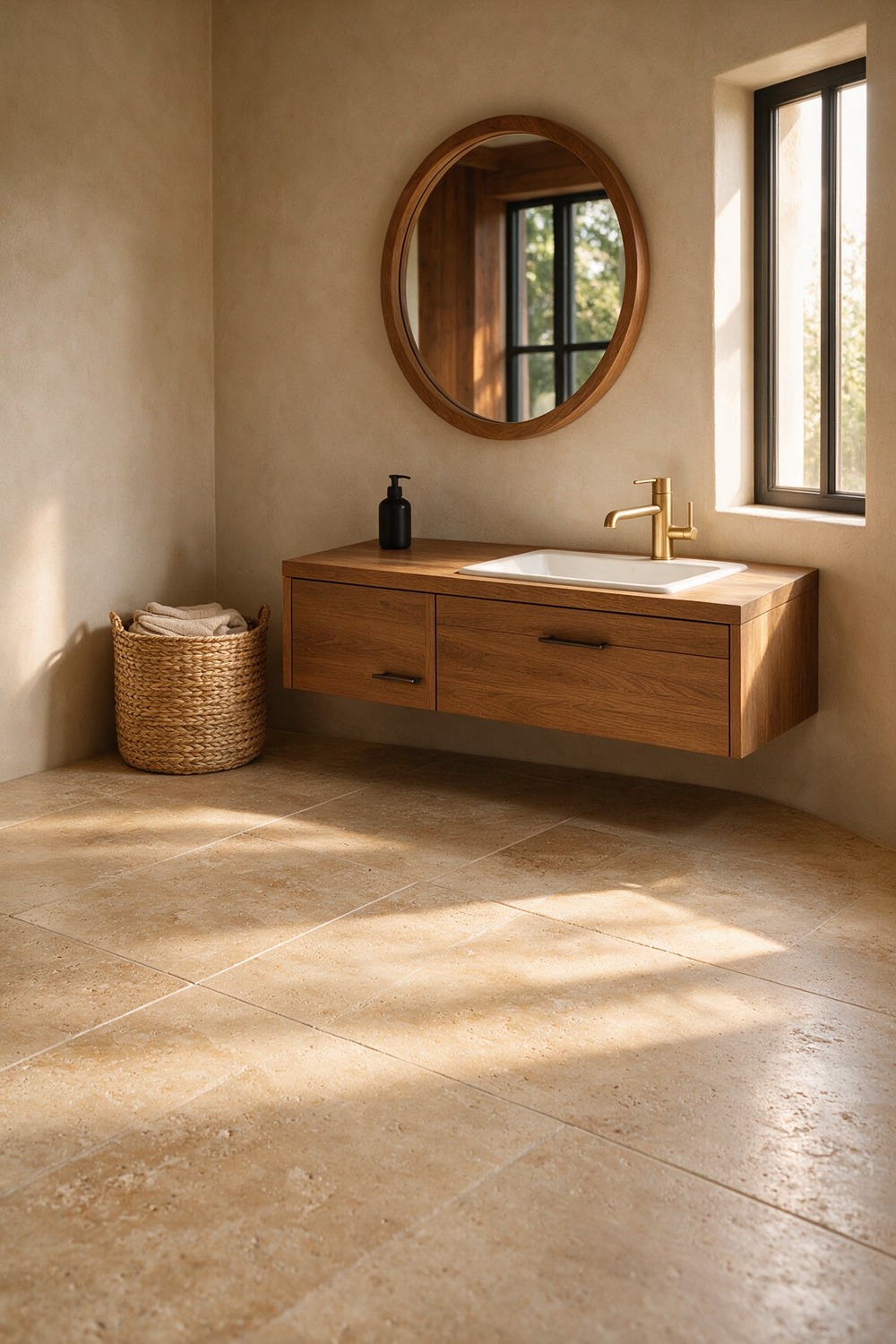
There is something grounding about stone underfoot first thing, cool and solid and real. A natural stone floor anchors a japandi bathroom the way nothing else can, giving all that pale wood something earthy to stand on.
Large-format honed limestone or warm travertine, in big slabs with slim grout lines, is the look. Keep the colour sandy and add underfloor heating so it stays kind to bare feet. Walls in a muted clay like Backdrop Kilim. Bigger slabs, fewer lines, calmer room.
13. Japandi Bathroom With Pebble Shower Floor
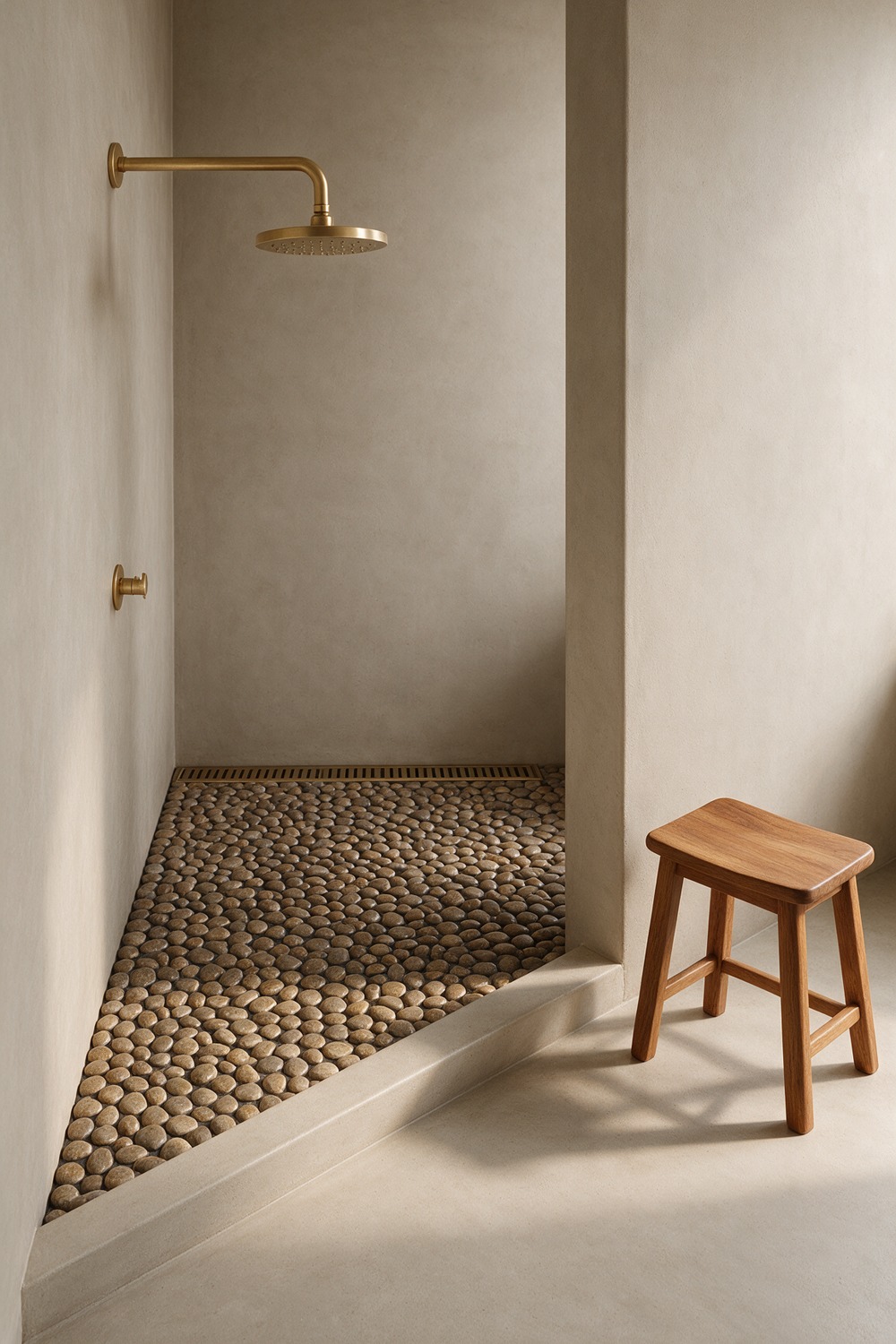
Pebble underfoot in the shower is a small barefoot luxury, and it nods straight to the Japanese bathhouse. Use tumbled river pebbles in warm grey-brown, set tight with dark grout so they read as a field. Keep the walls plain greige microcement so the floor stays the texture.
14. Japandi Bathroom With Open Shelving
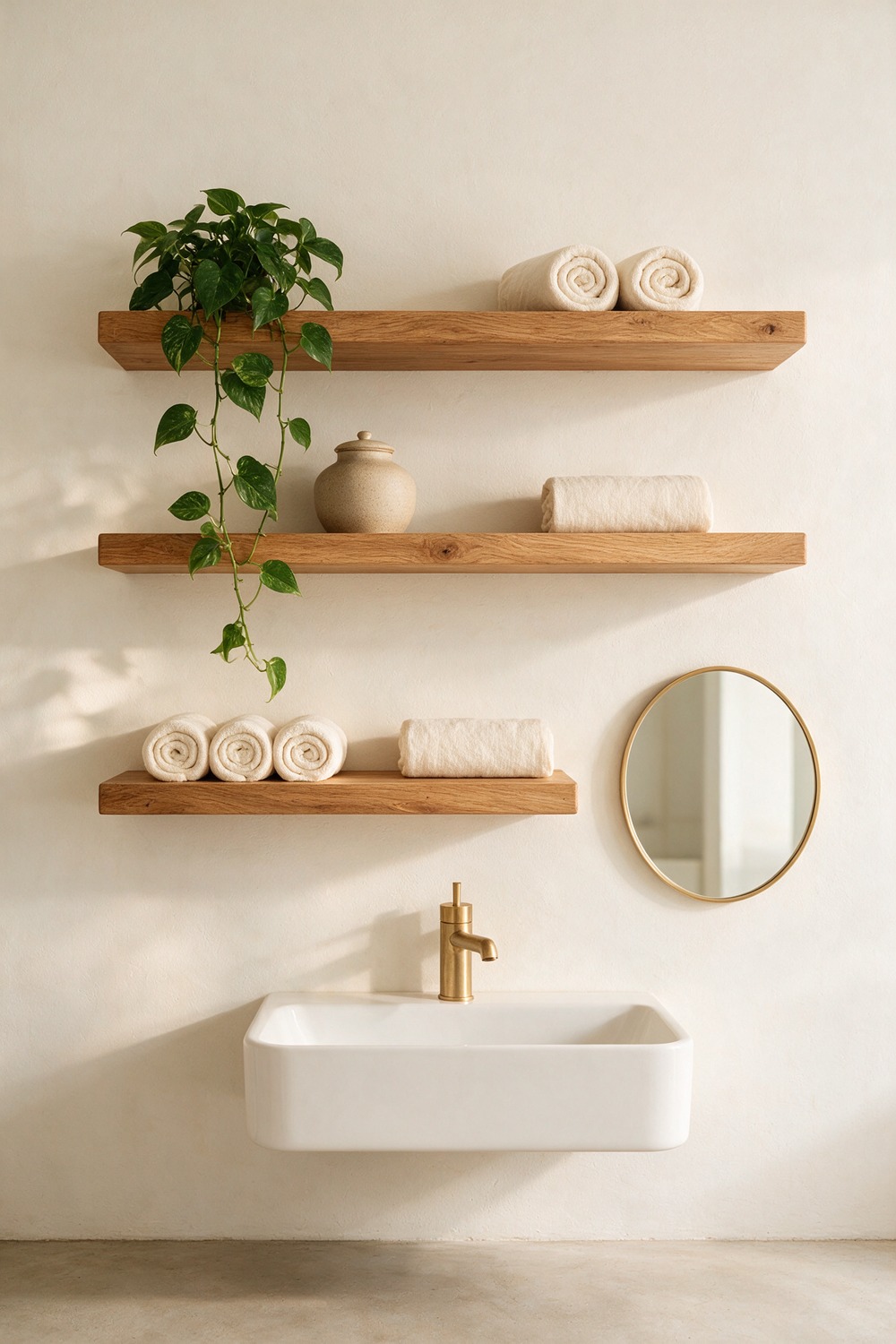
Closed cabinets hide everything; japandi would rather you owned less and showed it well. Two or three open oak shelves, styled with restraint, turn your folded towels and a single plant into the decoration.
Think thick floating oak shelves, bracket-free, on a wall painted Farrow & Ball Shaded White. Style with rolled cream linen towels, a stoneware jar, and one trailing pothos, then stop, because the empty space is the point. Start with one shelf and resist filling it.
15. Japandi Bathroom With Shower Curtain
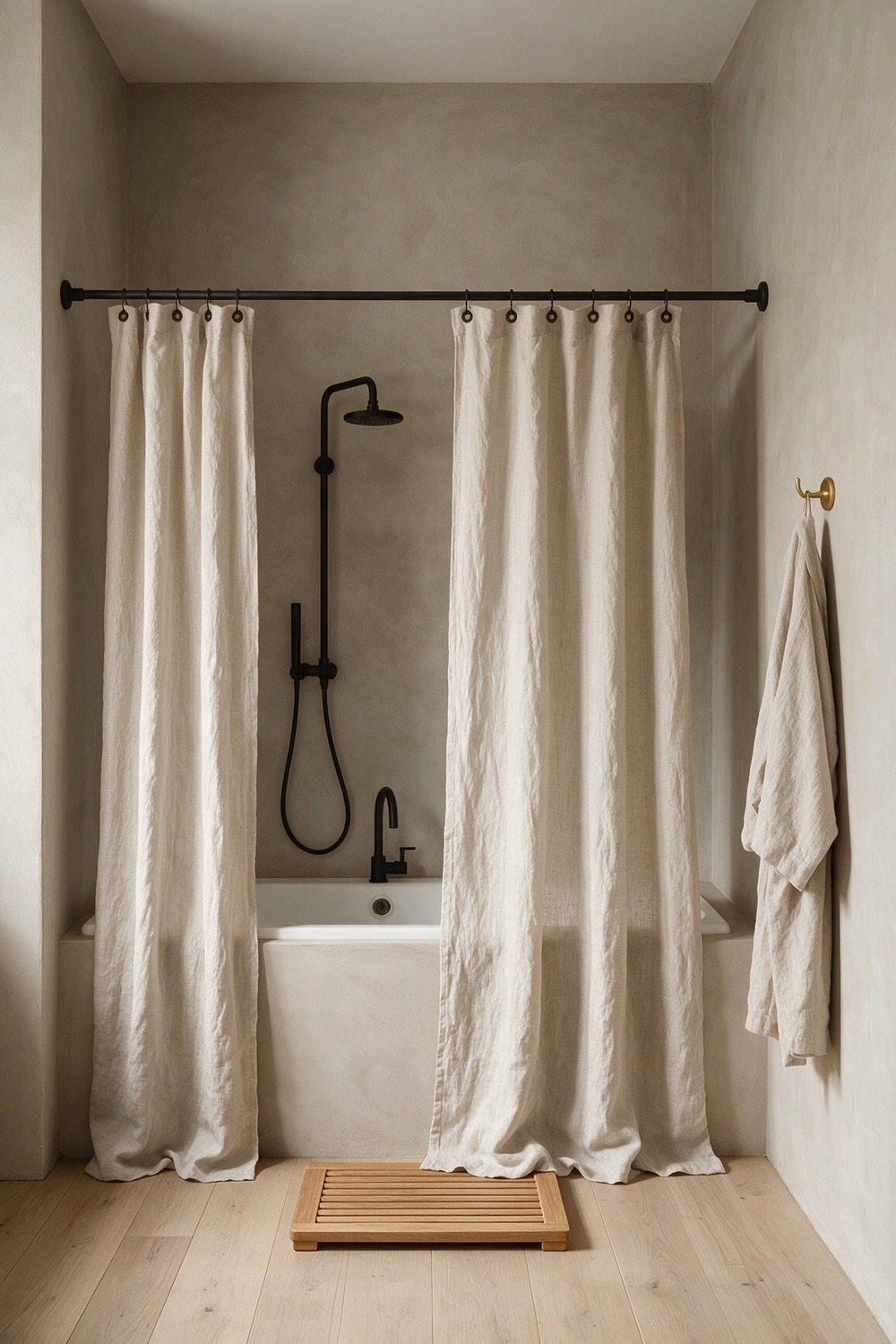
A shower curtain can look genuinely high-end, whatever the renovation crowd tells you. In a japandi room it softens all the hard surfaces, and a heavy natural-fibre panel hangs with a weight that plastic never manages.
Go for unbleached linen or hemp in oatmeal, floor-length, on a slim matte-black rail. The slightly irregular drape is the charm. Keep the tray plain white and the walls a warm greige like Little Greene French Grey Pale, with a wood mat below. Start with the fabric weight.
16. Japandi Bathroom With Wall Niche Storage
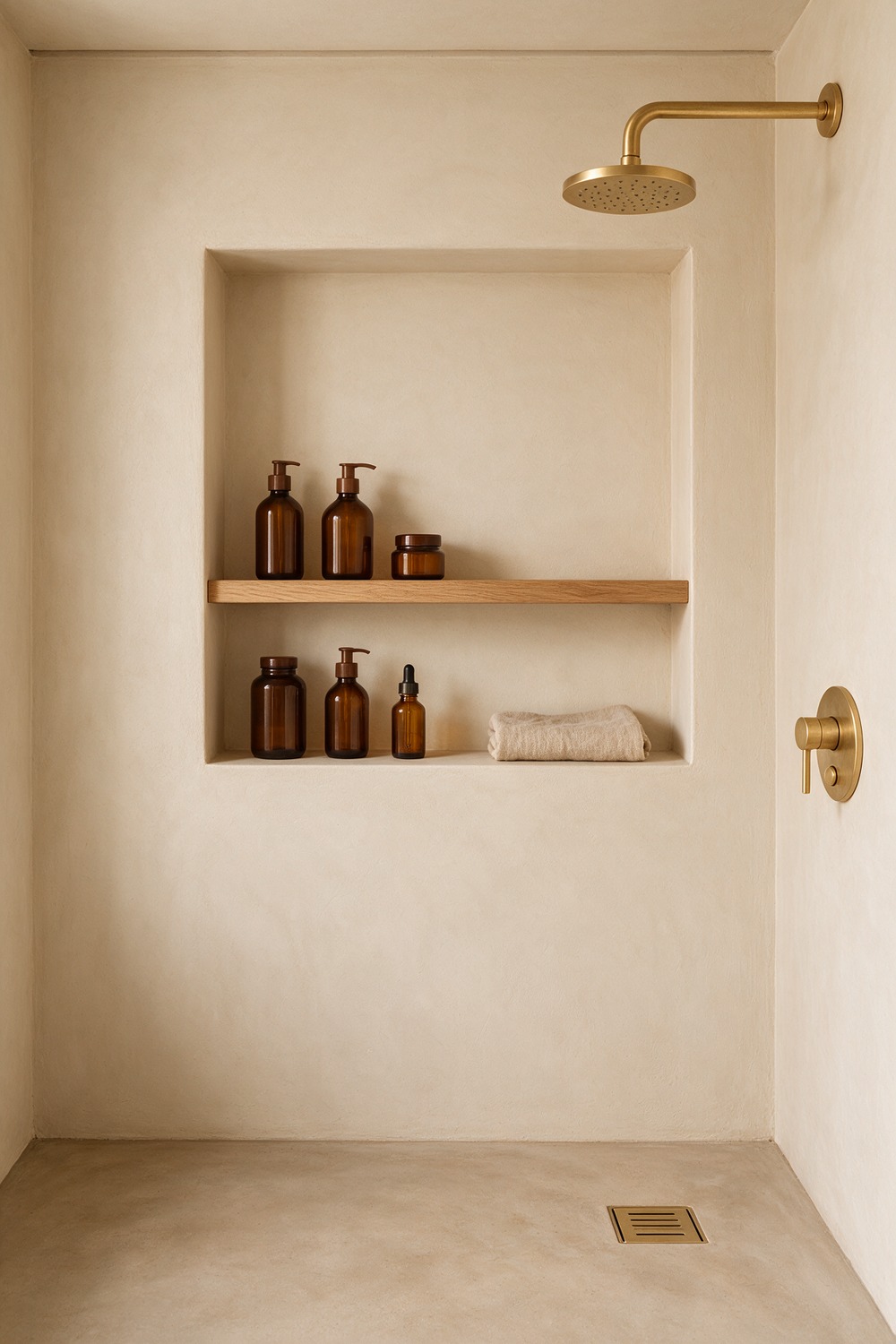
Build the storage into the wall and the clutter disappears without a single cabinet. A recessed niche, cut into the shower wall or beside the tub, is clean, architectural, and deeply japandi, because the best storage is the storage you never see.
Line the niche in the same plaster or stone as the wall, so it reads as architecture, not a box stuck on. One oak shelf across the middle gives you two tidy rows. Decant bottles into plain amber glass. Set it at eye level, where you actually reach.
17. Japandi Bathroom With Towel Ladder
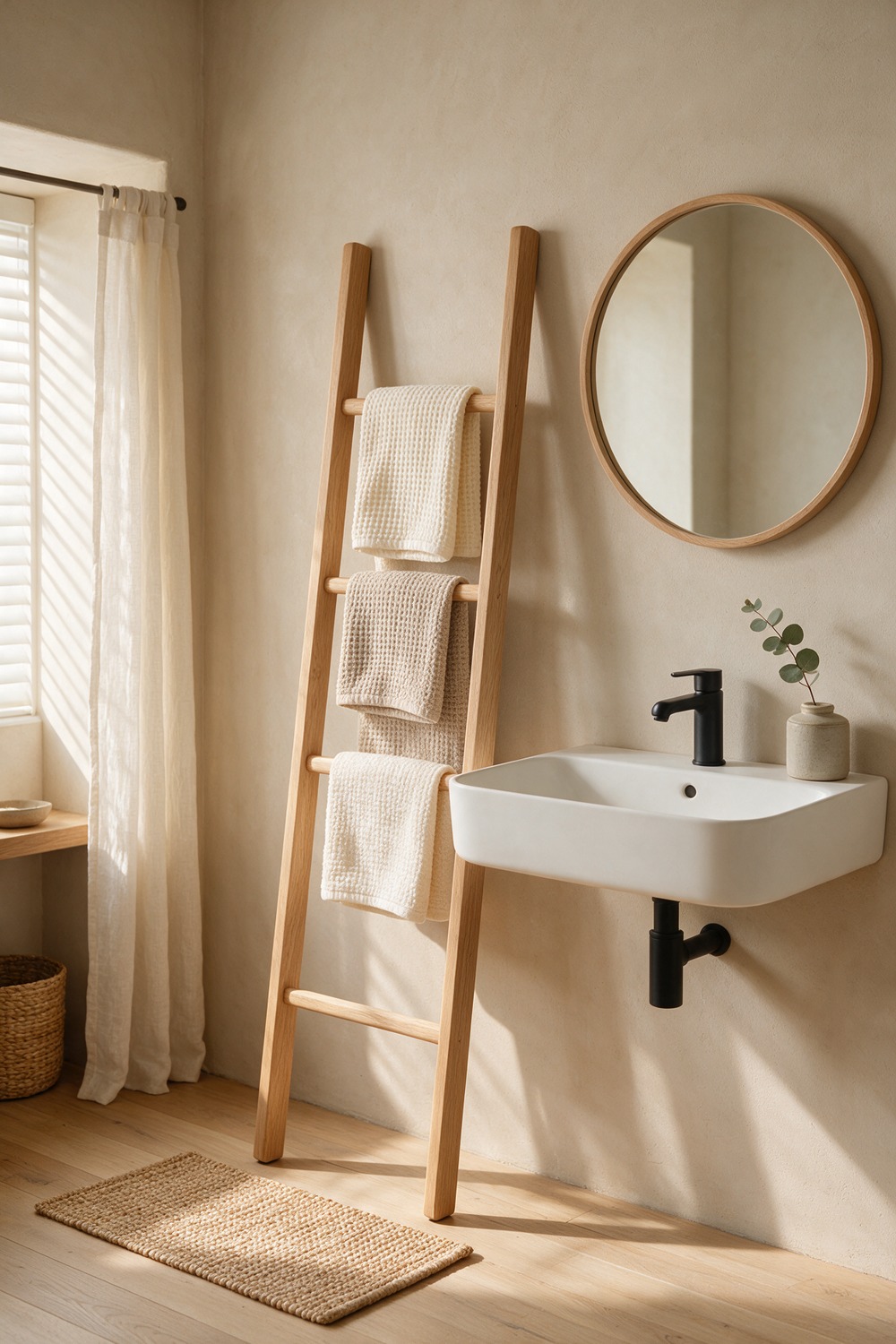
A leaning towel ladder is the easiest japandi upgrade you can buy, and the first I recommend to anyone renting. It adds warm vertical wood, holds three towels, and marks no wall. Choose solid oak or weathered teak, slim-runged, draped with nubby waffle-weave towels in cream and stone.
18. Japandi Bathroom With Window
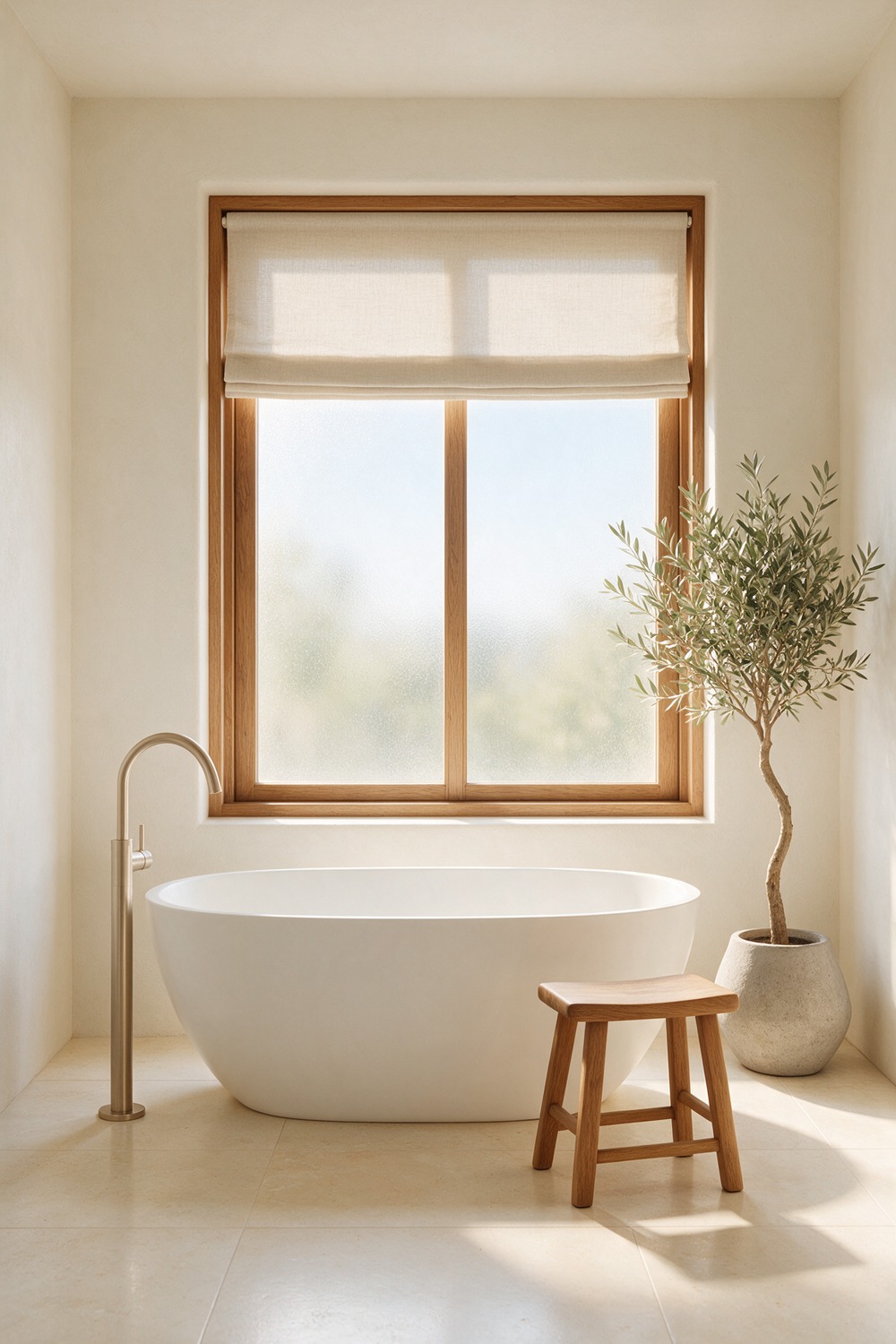
Japandi lives on natural light, so when a bathroom has a real window, you build the whole room around it. Morning light raking across pale plaster and warm wood is the feeling you are chasing, and no bulb fakes it.
Dress it simply: a timber-framed frosted pane, or a plain oatmeal linen roller blind for privacy, never heavy drapes. Set a low oak stool or a freestanding tub beneath to catch the light. Walls in warm white, floor in pale stone. Strip the window back and let daylight decorate.
Which Japandi Bathroom Style Is Right for You
Crave true calm and have the space? Start with the tub. A freestanding or deep soaking tub turns the whole room into a retreat, and I would build everything else around it, from the floor up.
Short on square footage? Go architectural instead. A floating vanity, a recessed niche, and a slat wall give you all the japandi feeling in a small footprint, and they make a tight room feel deliberate rather than cramped.
Renting, or not ready to renovate? A towel ladder, a linen curtain, an open shelf, and a warm white paint carry the look on their own. You can get most of the way there in a weekend, no tiler required.
And if you remember one rule, make it this: choose less, but choose warm. Japandi is restraint with a heartbeat.
Japandi Bathroom Ideas, Answered
How much does a japandi bathroom cost? It stretches to fit. A refresh of paint, a towel ladder, linen, and open shelving is a low-budget weekend. A mid-range redo adds a floating vanity, new tile, and good fittings. The splurge is tadelakt plaster, big stone slabs, and a stone-resin tub.
What can I do myself? Painting, styling shelves, hanging a ladder, and swapping a blind are all yours. Leave plaster, stone floors, drain work, and any new plumbing to a pro. Tadelakt especially is a specialist job, not a weekend tutorial.
How long does it take? A cosmetic refresh is a day or two. A full remodel, with tiling, plastering, and fitting, usually runs three to five weeks once the trades are booked, and longer if you move the plumbing.
What is worth spending on? The wood. A solid oak or ash vanity and a real timber slat wall are what make japandi read warm and expensive. Spare yourself the veneer here, because the grain is the entire point.
What do I ask the tiler or plasterer for? Ask for large-format, honed rather than polished stone with minimal grout, or seamless tadelakt in a warm putty tone. Request matte finishes throughout, and one clean horizontal line wherever tile meets plaster.
Pick the one feature your room already has, a window, a tub, or just a bare wall begging for a slat, and start there. Warm, quiet, and unhurried is only a few considered choices away.
More stories
Share this story