18 Bathroom Cabinet Ideas That Blend Storage and Style

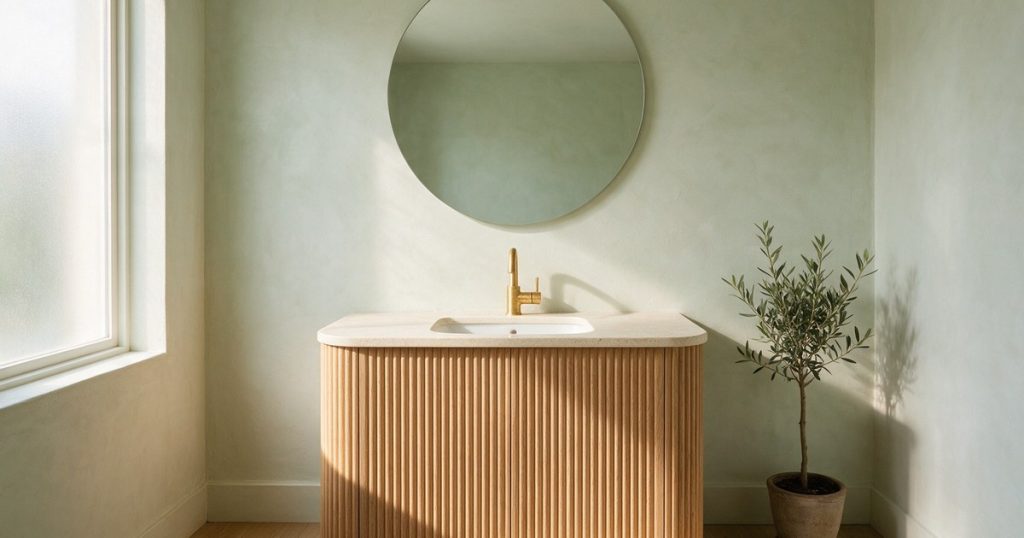
I have a confession: I judge a bathroom by its cabinets before I notice anything else. Not the tile, not the tap. The cabinet is the one piece doing real work, hiding the chaos and setting the whole mood of the room.
Get it right and everything else falls into line. Get it wrong and no amount of pretty tile saves you. That is the quiet backbone of a good bathroom, and it is where I always start.
Below, you will find 18 cabinet looks worth stealing, from wall-hung floaters to a battered antique dresser given a second life. Each one has a palette, a finish, and a first move you can actually use. Pick the one that matches the room you have.
1. Wall Mounted Bathroom Cabinets
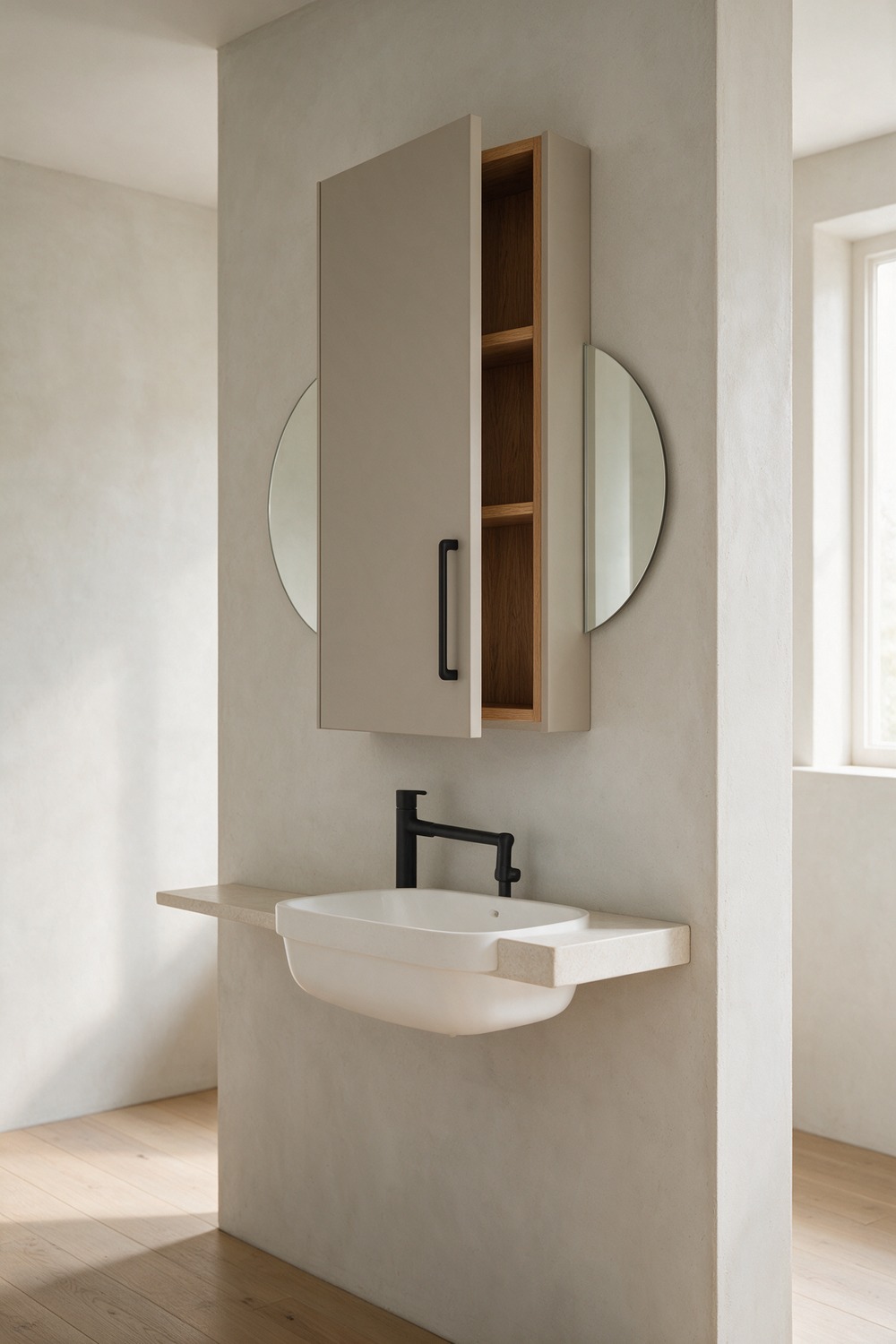
A cabinet bolted to the wall is the oldest trick for a cramped bathroom, and still the best. Lift it off the floor and the room breathes.
I love a slim wall-mounted cabinet in soft greige, something like Benjamin Moore Revere Pewter, with a long matte-black handle running the full width of the door. Warm oak inside, so the open door shows a flash of grain.
Keep the carcass shallow, around 8 inches deep, so it never crowds the basin.
Start with the wall color, then pick a cabinet one shade deeper. That tiny step down reads as intentional, not accidental.
2. Floating Bathroom Cabinets
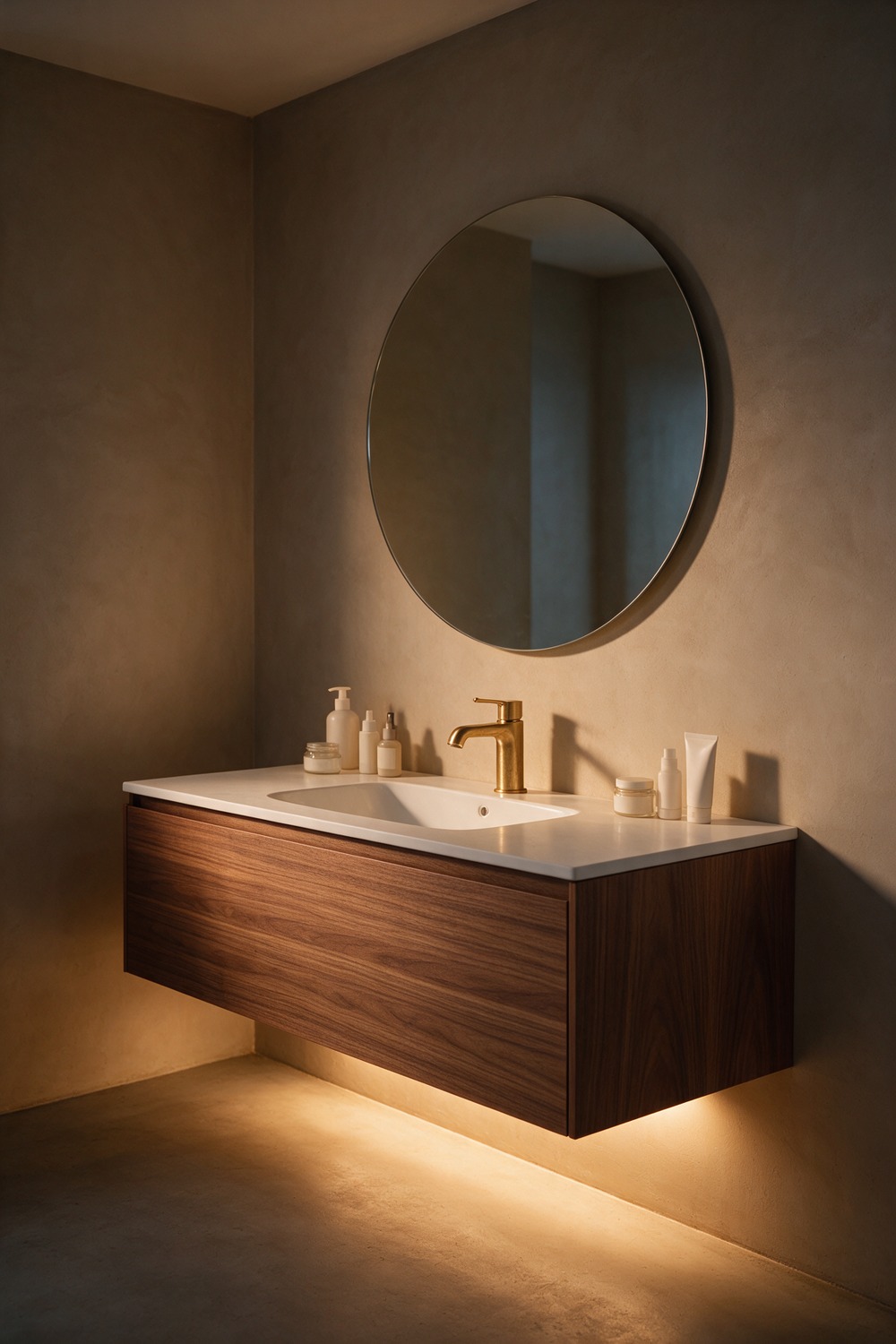
A floating vanity is the single move that makes a small bathroom look designed. The gap of floor beneath it does all the heavy lifting, tricking your eye into seeing more room than there really is.
My pick is a walnut-veneer floating vanity, warm and a little mid-century, paired with a white stone top. The grain is the whole story here, so let it run horizontally across both doors.
Underneath, tuck a strip of warm 2700K LED so the whole thing seems to hover at dusk. In a windowless bathroom that low glow is the difference between a box and a retreat.
Pro tip: mount it so the top sits at 34 inches. A hair higher than the old standard feels modern and saves your back every time you lean in to brush your teeth.
3. Over Toilet Bathroom Cabinets
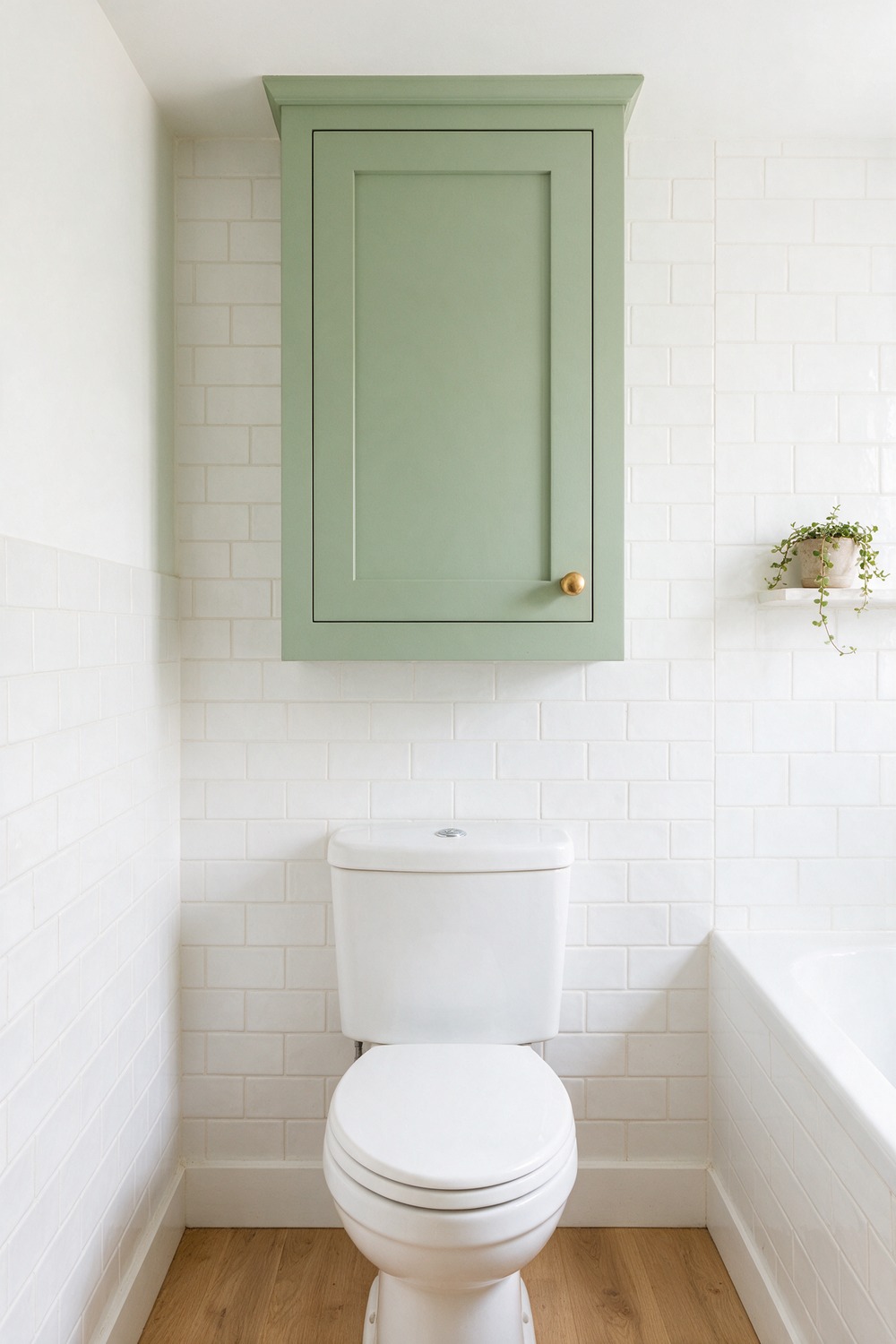
The wall above the toilet is the most wasted real estate in any home. An over-the-toilet cabinet claims it back without stealing a single inch of floor.
The move here is a proper enclosed cabinet, not an open etagere, in a soft sage like Little Greene Pea Green, with a simple shaker door and an unlacquered brass knob that will age beautifully. Inside, two adjustable shelves for the backup rolls.
The trick is to hang it high, with at least a foot of clear wall between the tank and the cabinet base, so it reads as storage and not as a hat on the toilet.
4. Small Bathroom Cabinets
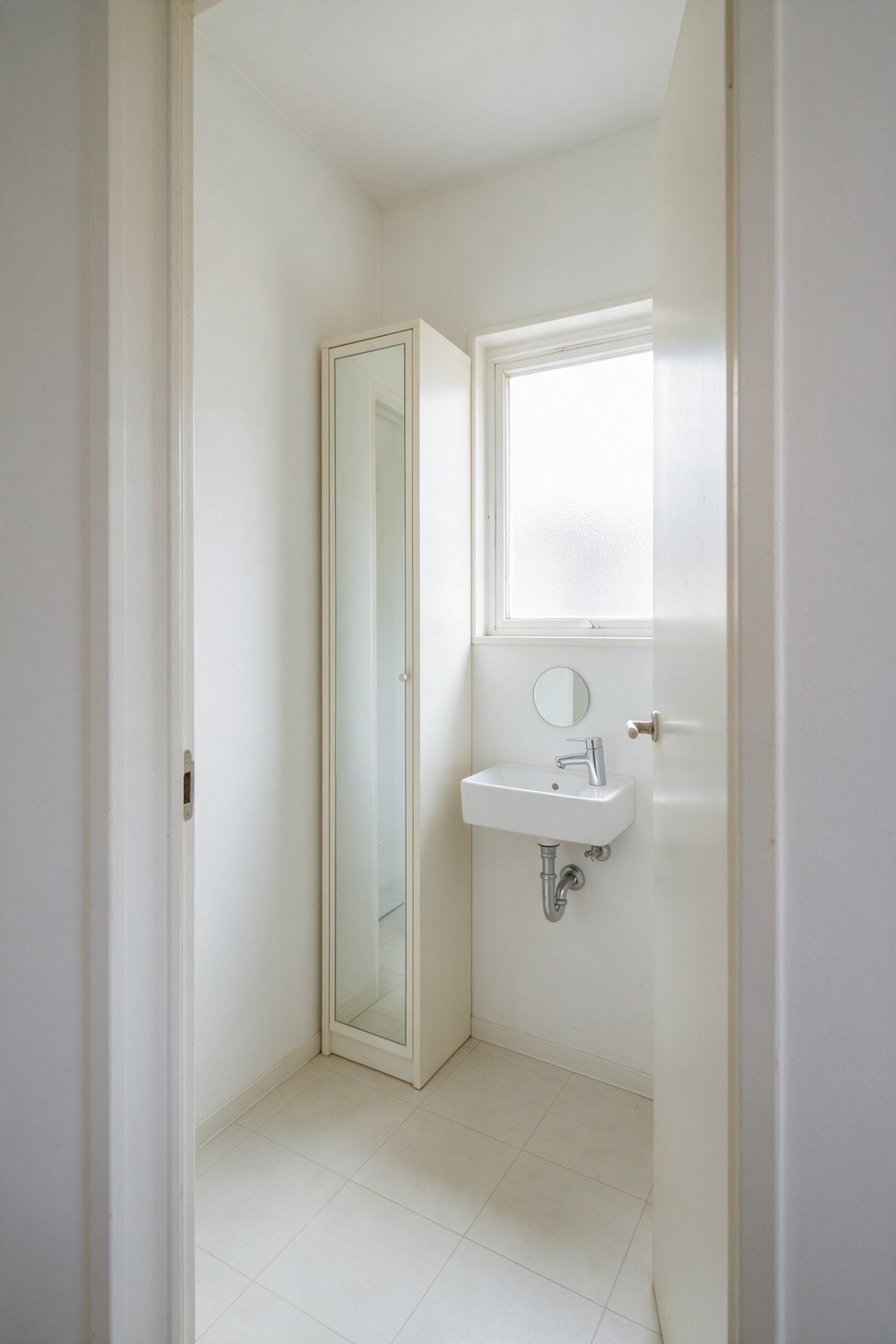
Tiny bathrooms do not need less cabinet. They need smarter cabinet. A narrow floor-to-near-ceiling unit in a crisp off-white, think Dulux White Cotton in a wipeable eggshell, steals the least useful corner and runs tall so the eye travels up.
Here is the brave move: mirror the door. Your storage doubles as the trick that makes the whole room feel twice its size.
5. Corner Bathroom Cabinets
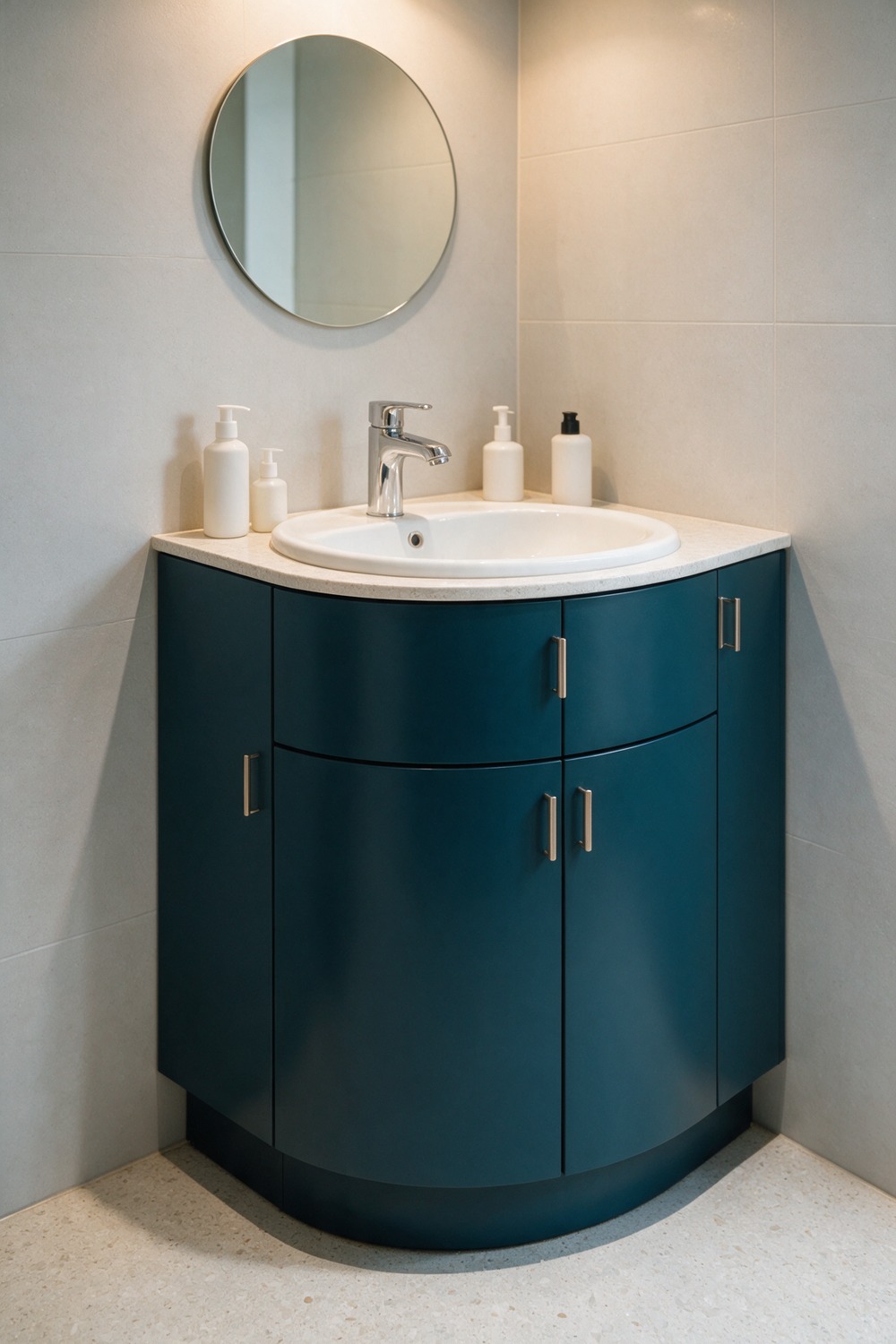
Corners are where storage goes to be forgotten. A cabinet built to fit one is pure found space.
I am partial to a curved-front corner cabinet in a moody petrol blue, something near Farrow and Ball Hague Blue, with a rounded profile so there is no sharp edge to catch a hip. Brushed-nickel hardware keeps it from feeling too heavy.
The curve is what sells it; a flat-fronted corner cabinet always looks like a compromise.
Start with the depth. A 12-inch corner unit holds more than you would think and still leaves the floor open.
6. Floor Standing Bathroom Cabinets
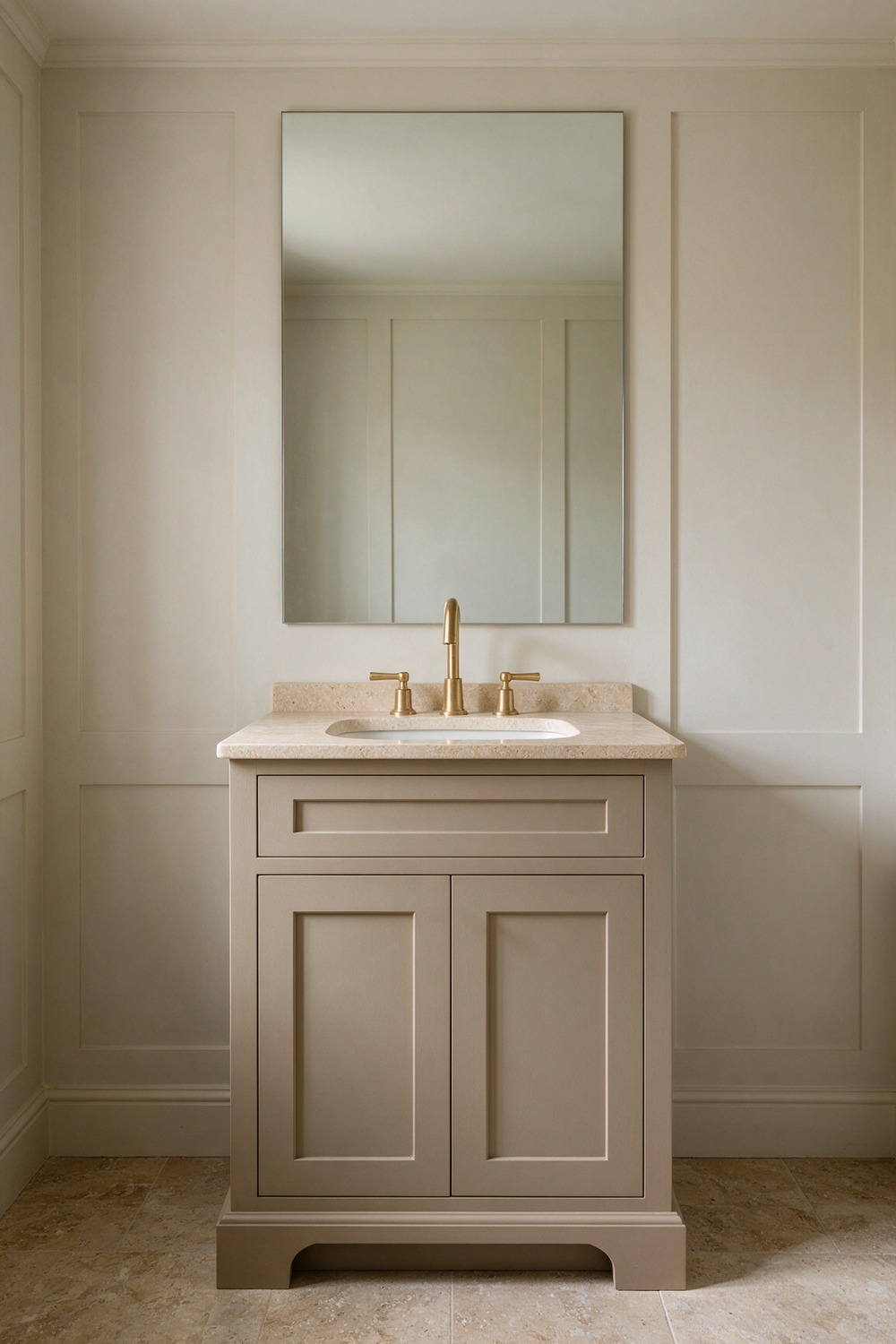
Sometimes you want weight. A floor-standing vanity that sits solidly on a plinth gives a bathroom the grounded, built-in look of a proper room, not a utility closet.
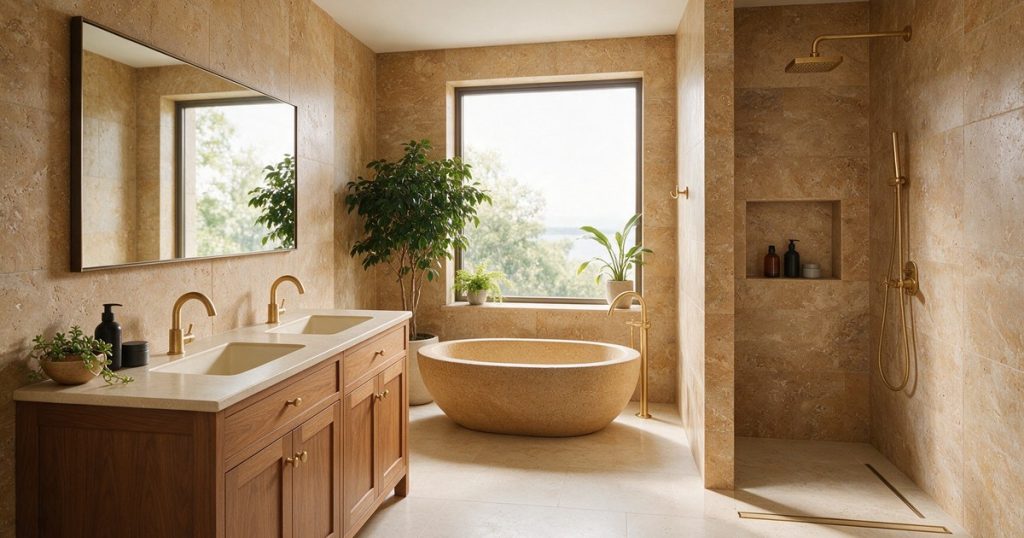
My favorite version is a paneled cabinet in warm taupe, close to Sherwin-Williams Accessible Beige, topped with honed travertine that feels chalky and centuries old underfoot. If you have the floor to spare, this is where I would spend. It becomes the anchor the whole room leans on.
7. Freestanding Bathroom Cabinets
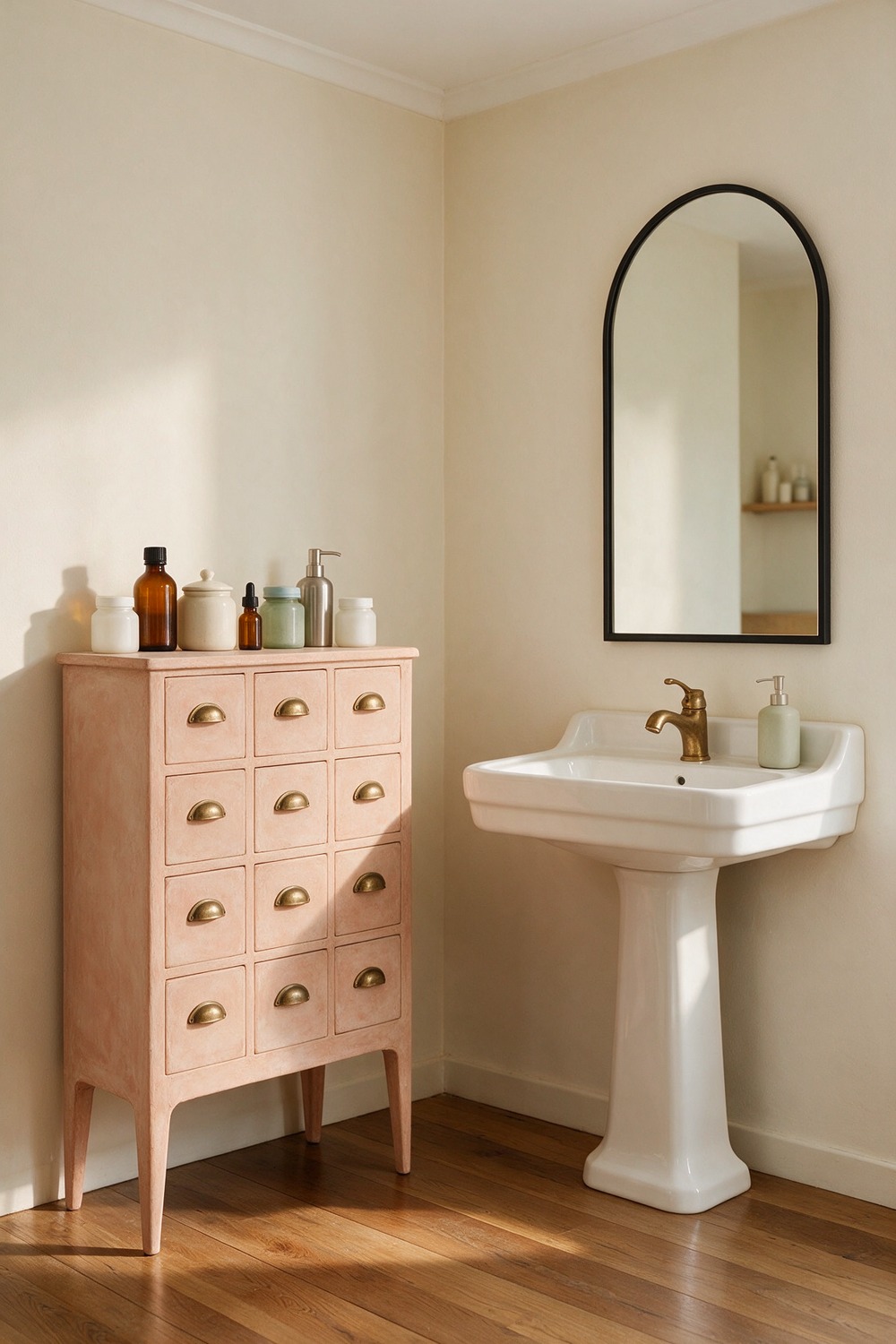
Here is my favorite rule-breaker: put a piece of furniture in the bathroom. A freestanding cabinet, not plumbed in, not built in, just standing there like it wandered in from the bedroom.
Think a slim apothecary-style cabinet with lots of little drawers, painted a soft clay like Bauwerk Pink Clay limewash for that cloudy, hand-finished depth. Cup pulls in aged brass. It reads as collected, not bought, and that is the whole charm.
The trick is to choose a piece with real legs, so you see light and floor beneath it. A freestanding cabinet that squats flat on the tile loses all its magic.
8. Sink Basin Bathroom Cabinets
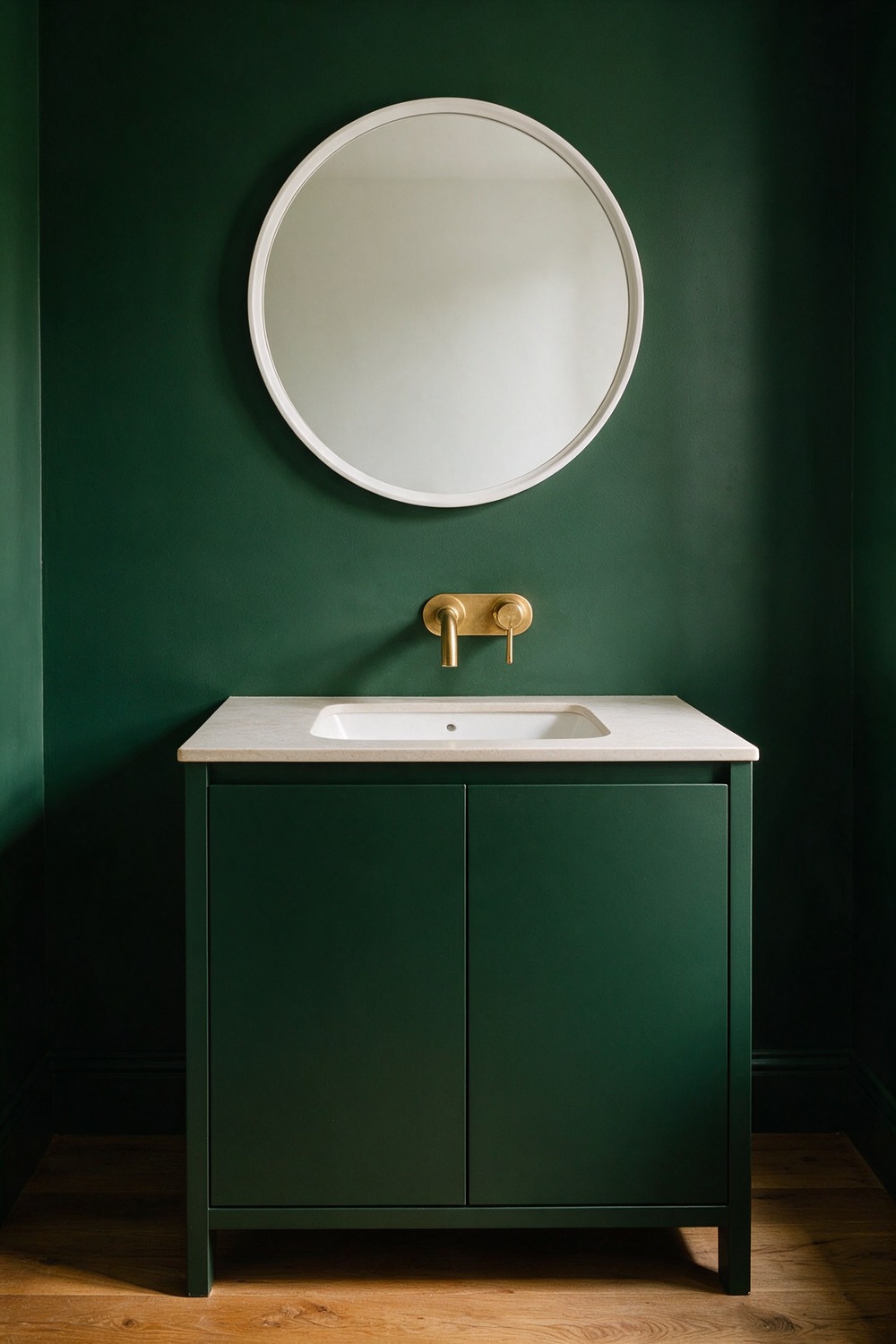
The cabinet under the basin is the one everybody has and nobody thinks about. That is a missed chance, because it is front and center.
I would make it the star. Picture a sink-basin vanity in deep forest green, near Backdrop Nightshift, with a white undermount basin and a wall-mounted brass tap so the counter stays clear. Soft-close doors, always. The undermount sink leaves an unbroken run of counter for every morning.
9. Custom Bathroom Cabinets
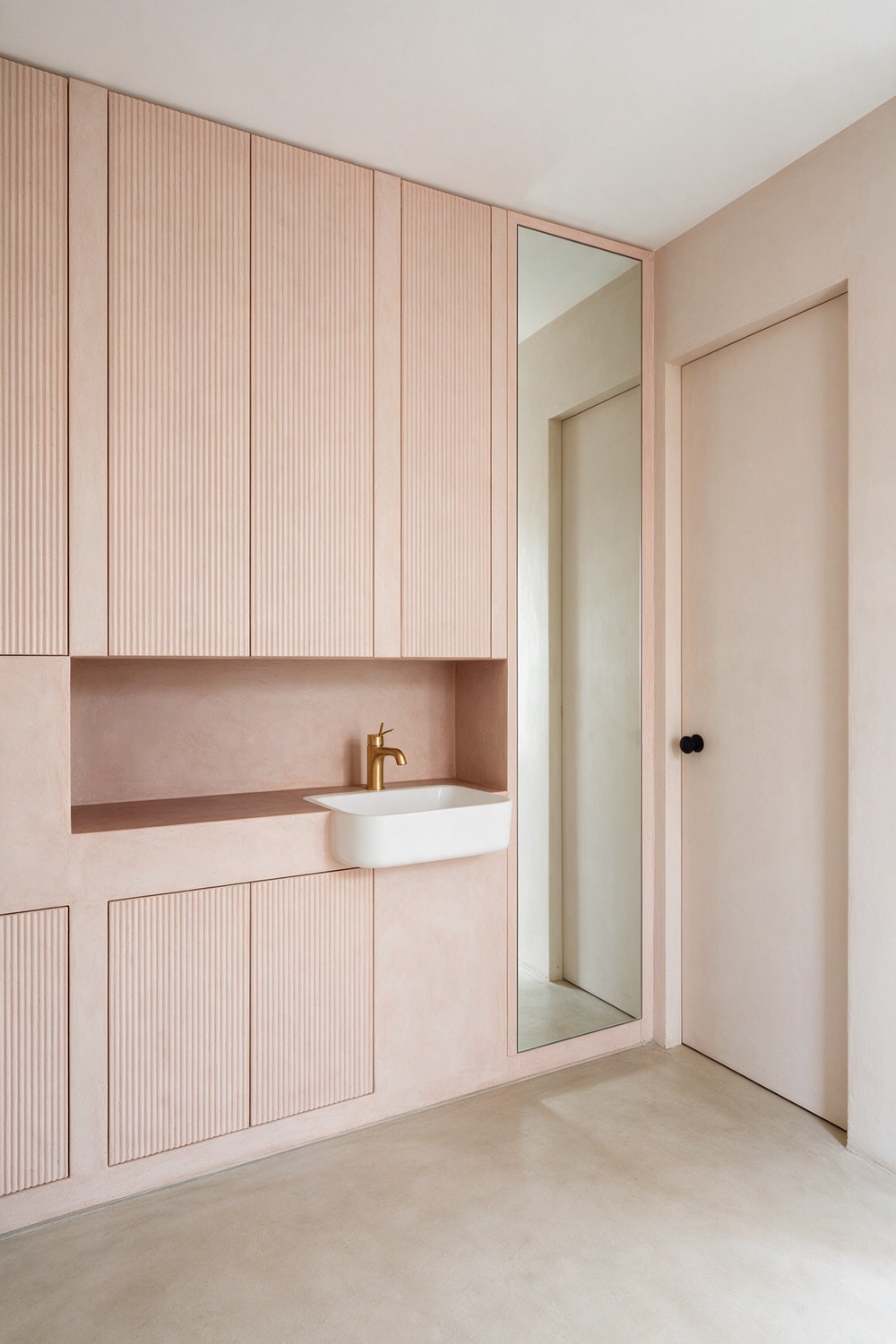
Custom sounds like a splurge, and sometimes it is. But a bathroom is small, so a bespoke cabinet costs far less here than it would in a kitchen, and it fits like a glove.
My dream version wraps an awkward wall from end to end: floor-to-ceiling joinery in a chalky plaster pink, maybe Little Greene Dorchester Pink, with slim reeded doors and no visible handles, just a push-latch. Hidden laundry on one side, a mirror cabinet on the other.
Tell your joiner the one thing that matters most, whether that is a hamper or a tall broom cupboard, and build everything else around it.
10. Modern Bathroom Cabinets
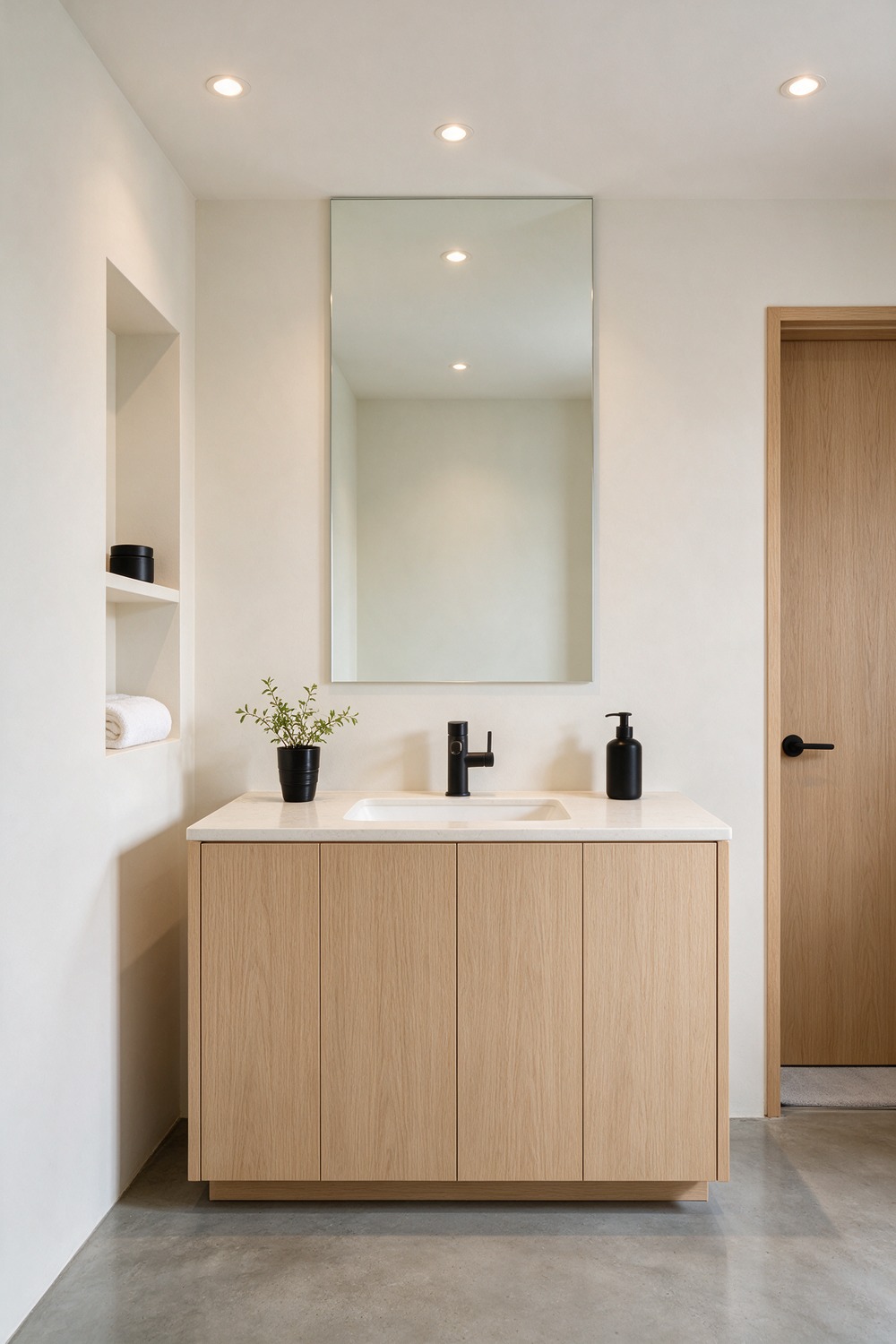
Modern does not mean cold. The best modern cabinet is warm minimalism: clean lines, zero clutter, but a material you want to touch.
Picture a handleless flat-slab vanity in pale warm oak, the doors opening on a simple push, paired with a slab of pale quartz and a single matte-black tap. Nothing shiny, nothing fussy. The whole look lives on the grain of the wood and the crispness of the edges.
One brave colour, done. Or in this case, one brave material. Let the oak be the only decoration and resist the urge to add anything else.
11. Shaker Bathroom Cabinets
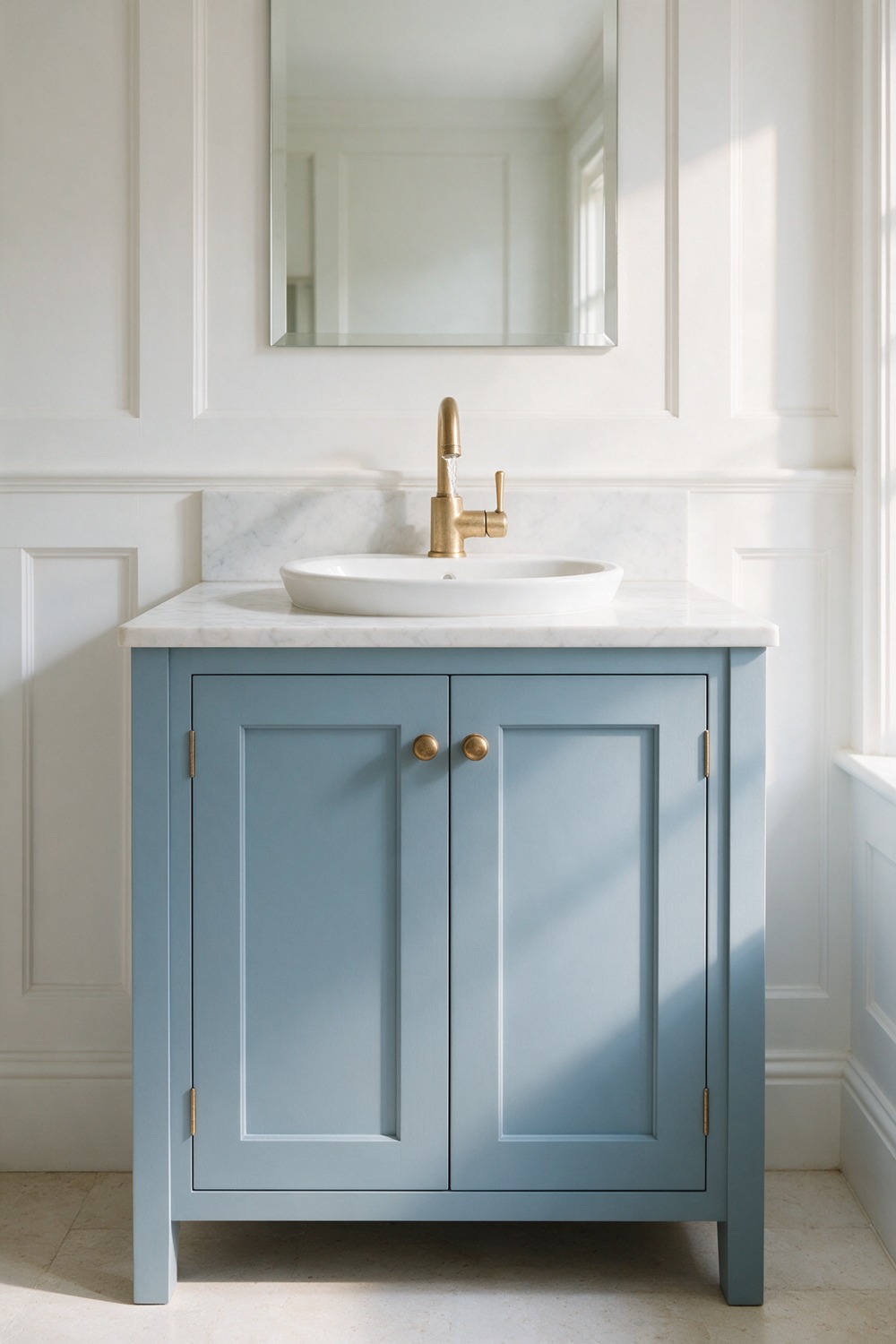
Shaker is the little black dress of cabinetry. That recessed-panel door has been quietly right for 200 years, and it will still look right in another 20.
I love a shaker vanity in a soft, dusty blue, think Benjamin Moore Van Deusen Blue, with simple round knobs in aged brass. A marble-look top and a scalloped edge if you are feeling it.
The beauty of shaker is restraint; the frame does the work, so the color can be gentle.
Shaker (that plain, honest, frame-and-panel style the religious community perfected) rewards good paint. Spend on the finish, because the shape is already doing its job for free.
12. Flat Panel Bathroom Cabinets
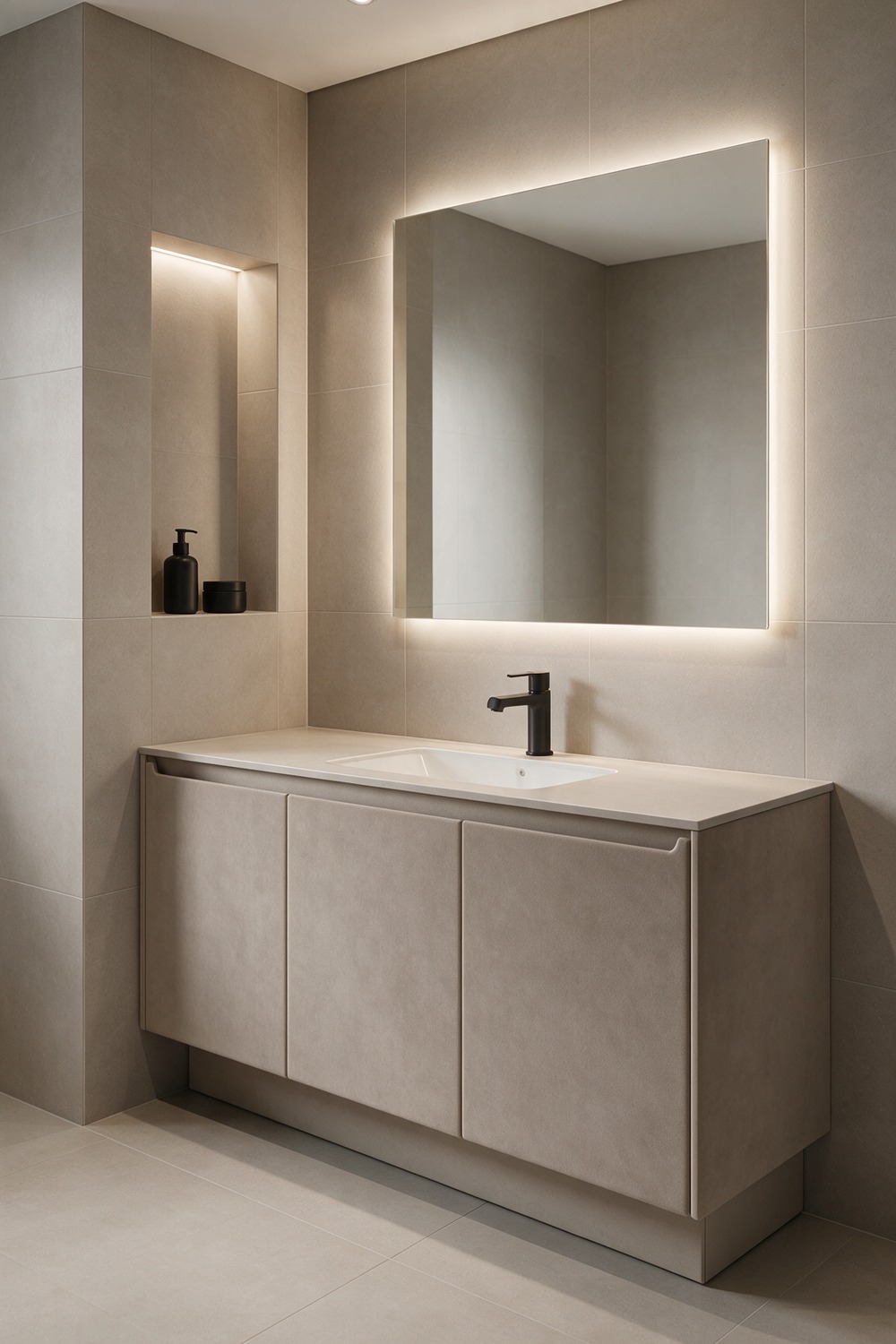
If shaker feels too traditional for you, flat panel is its cooler, quieter sibling. One smooth, unbroken door face, no frame, no fuss.
My go-to is a greige that leans warm, something like Behr Perfect Taupe, with the slimmest edge-pull routed into the top of the door. A matte, almost suede finish beats a glossy one every time. It feels expensive and hides every fingerprint.
13. Fluted Bathroom Cabinets
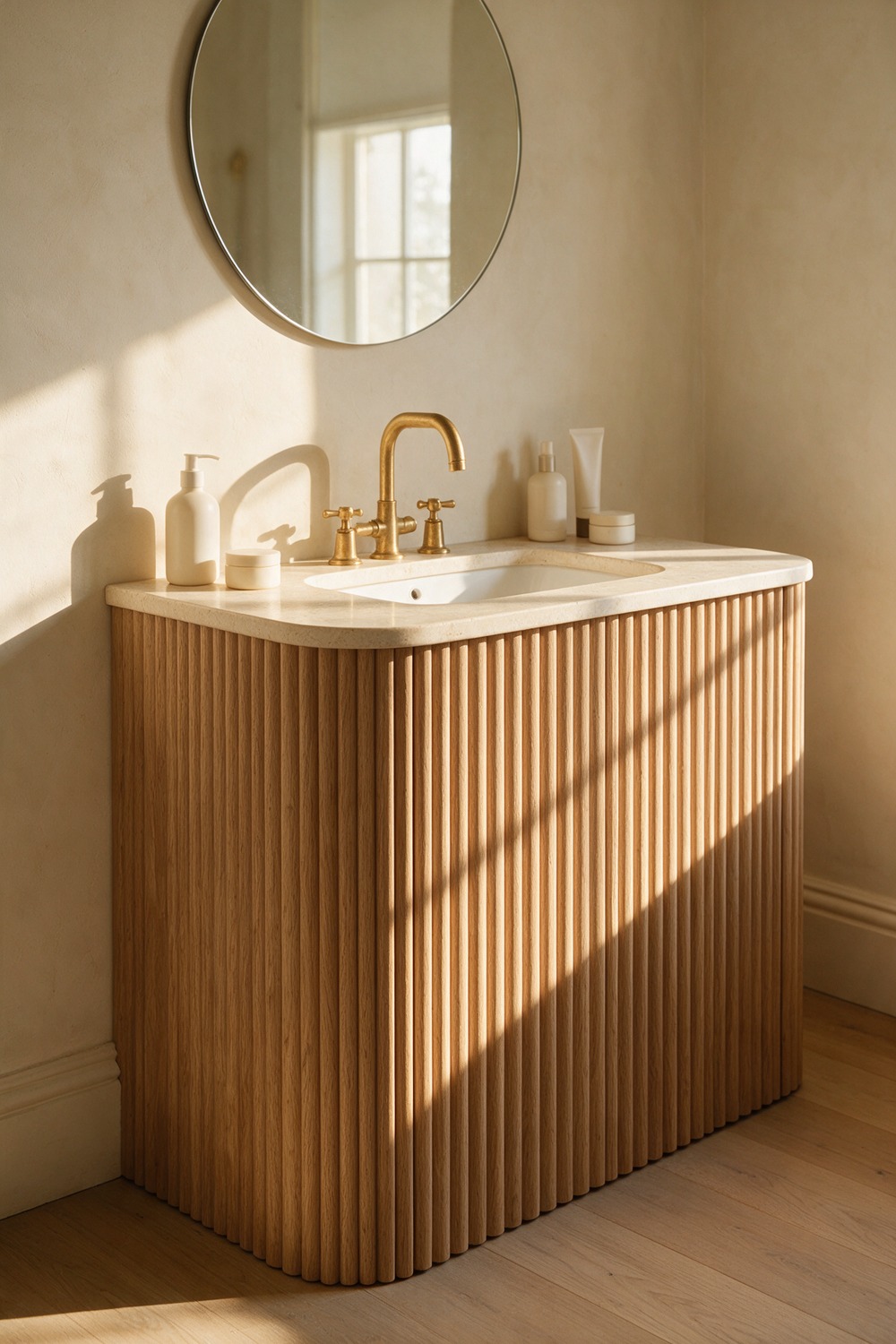
Fluting is the detail I fell hard for and still have not tired of. Those vertical ridges catch the light and throw a soft shadow, giving a plain cabinet real texture and movement.
Picture a fluted-front vanity in warm white oak, the reeds running floor to counter, with a creamy limestone top and unlacquered brass pulls. In morning light the ribs practically glow.
It is quiet drama, the kind you notice slowly rather than all at once. Run your hand across those ribs and the room suddenly feels made rather than bought.
Start with the wood tone. Fluting reads best on a warm timber or a mid-tone paint like a soft putty; on stark white it can look a little clinical, so warm it up.
14. Glass Front Bathroom Cabinets
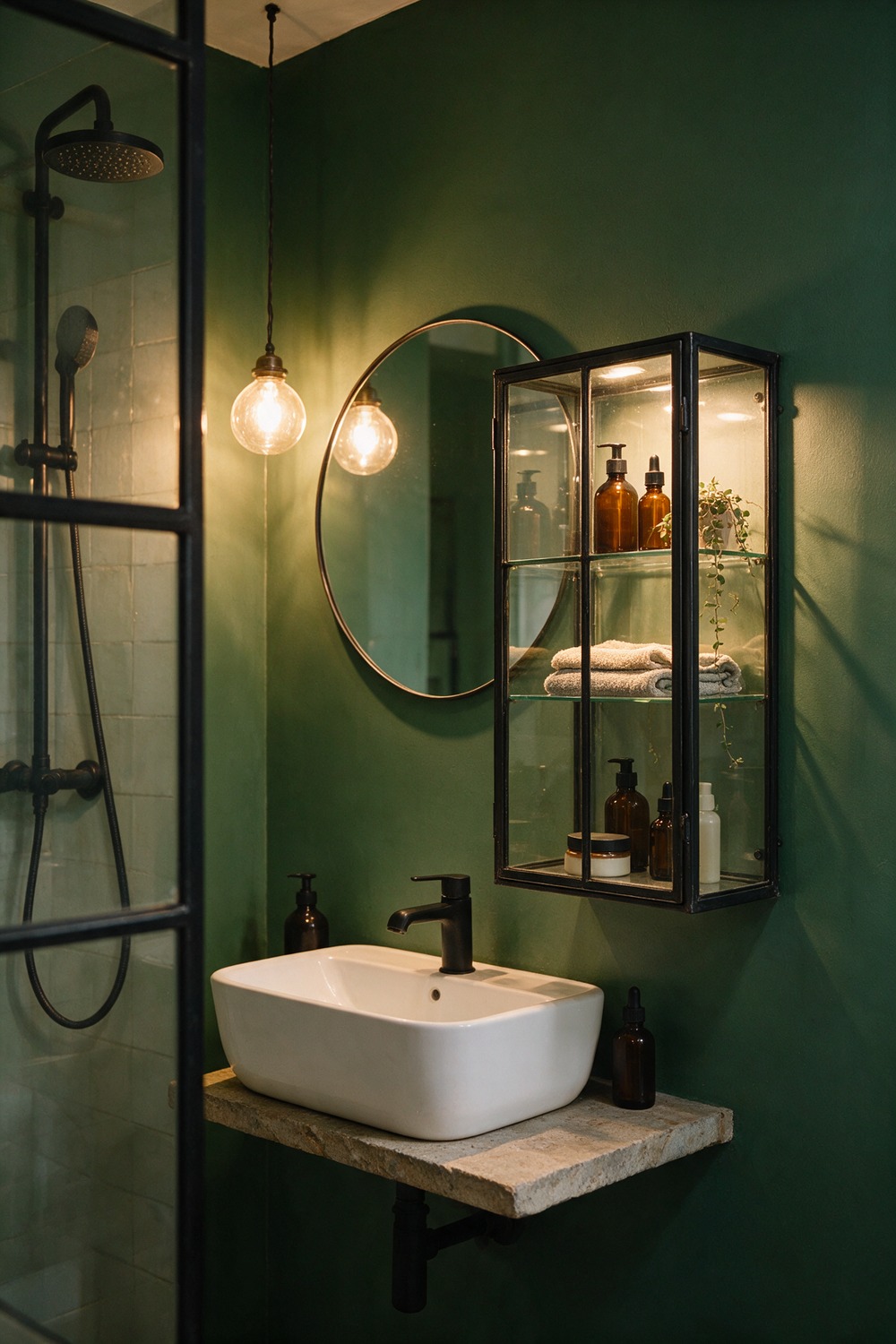
A glass-front cabinet asks something of you: it means your shelves are on show. But styled well, it is the prettiest storage in the house.
I adore a slim glass-front wall cabinet with a black steel frame, Crittall-style, mounted beside the mirror. Behind the glass, stacked towels, a few amber apothecary bottles, a trailing pothos. The frame is the jewelry; keep it thin and dark so the contents read as a little display.
Pro tip: light it from within with a warm 2700K strip. Backlit glass at night turns ordinary towels into something that belongs in a boutique hotel.
15. Cane Bathroom Cabinets
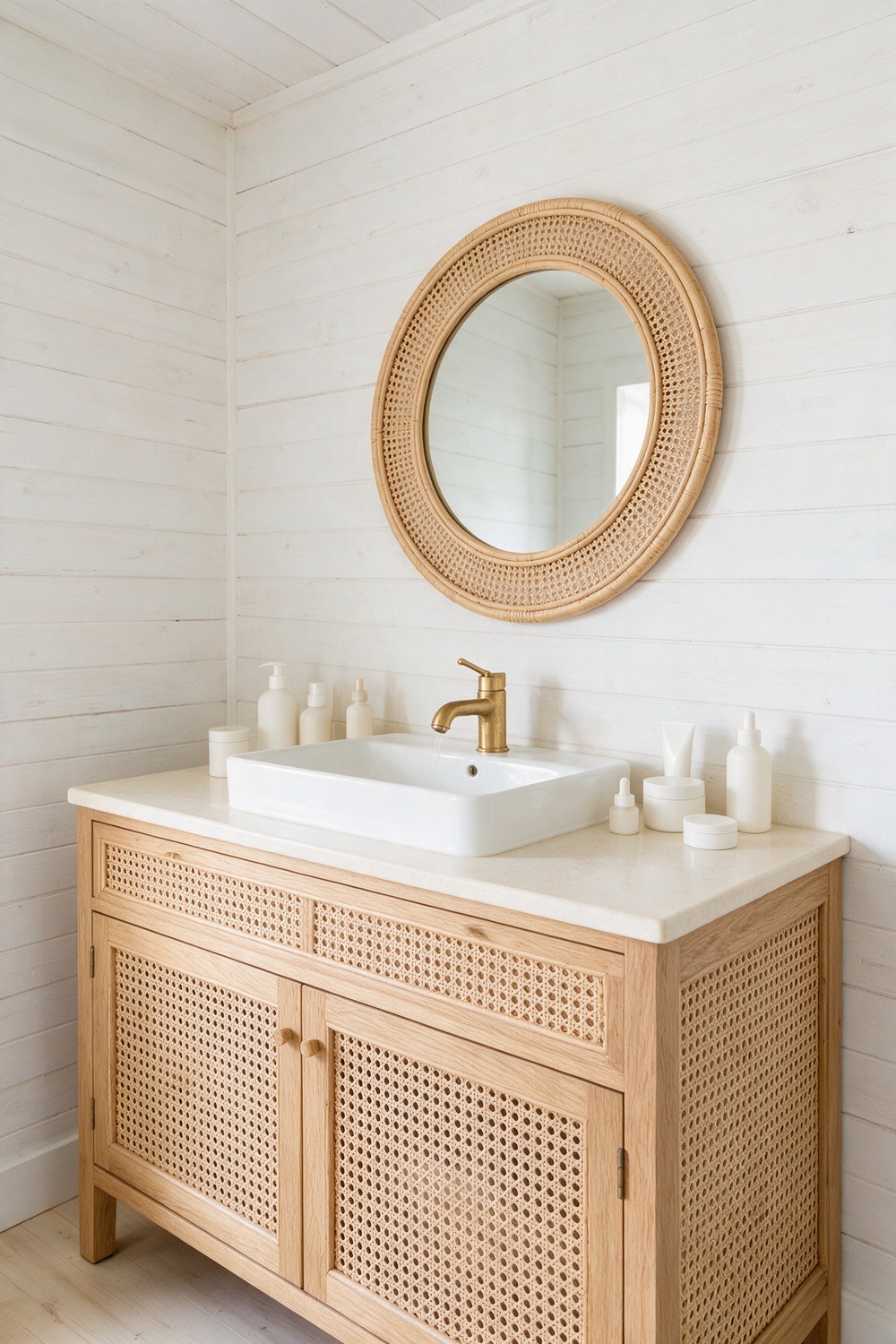
Cane in a bathroom sounds risky, and I understand the hesitation. But sealed properly, a caned cabinet door brings a warmth and a breezy, woven texture that no painted panel can touch.
My pick is a vanity with natural rattan cane door inserts set in a pale oak frame, over a cream stone top. The woven pattern softens all the hard surfaces around it, the tile and the glass and the mirror. It is instant coastal, instant calm.
Cane (that open, woven webbing you see on old bentwood chairs) needs a dry spot. Keep the caned doors away from the shower splash zone and seal them well, and they will last for years.
16. Two Tone Bathroom Cabinets
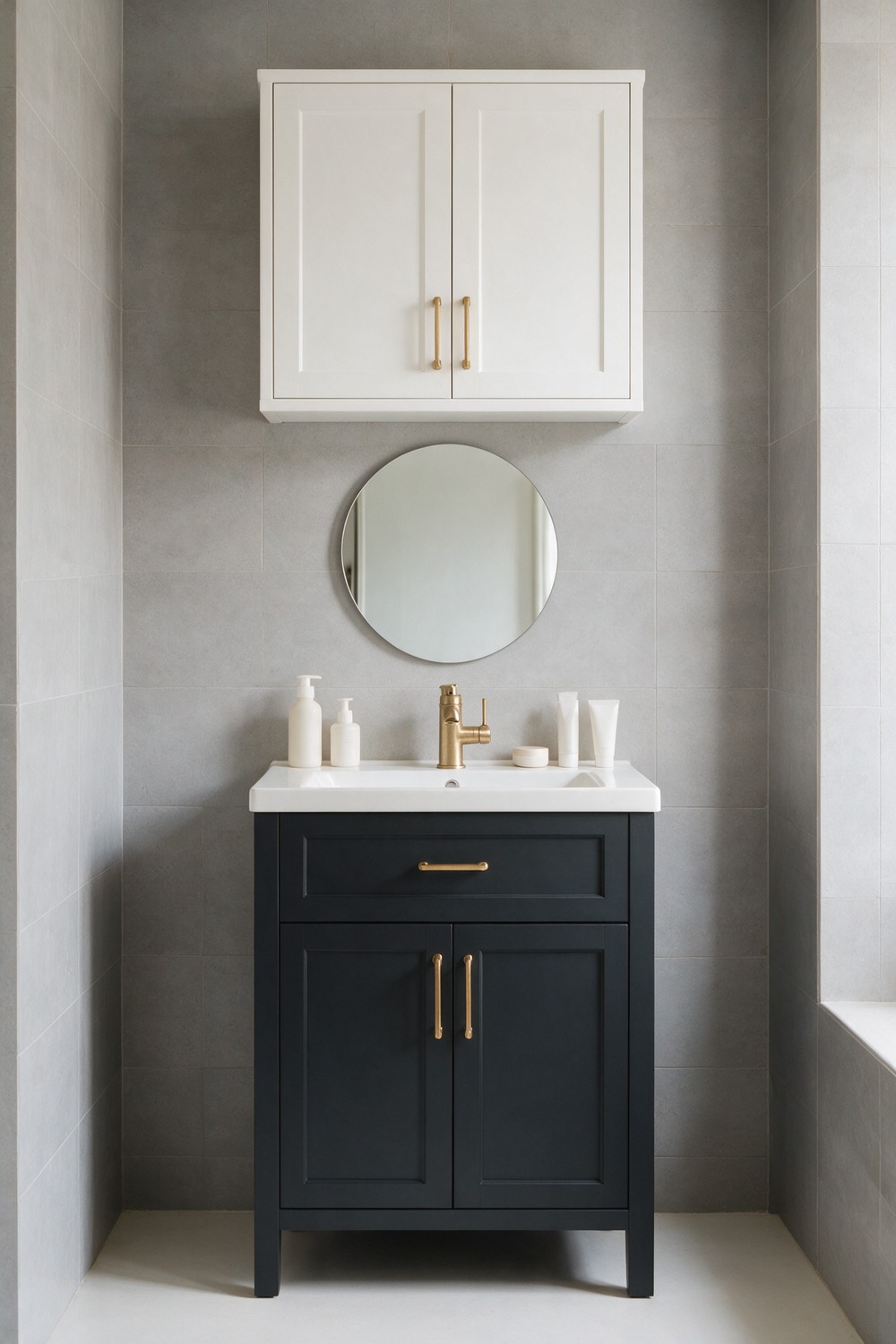
Can’t commit to one color? Then do not. A two-tone cabinet, dark below and light above, is the most forgiving way to use color and the easiest on the eye.
The combination I keep coming back to: a deep charcoal base, close to Valspar Dark Granite, with a crisp warm-white wall cabinet floating above, tied together by brushed-brass hardware. Let the heavier color sit low, always. Flip it and the room feels top-heavy and strange.
17. High Gloss Bathroom Cabinets
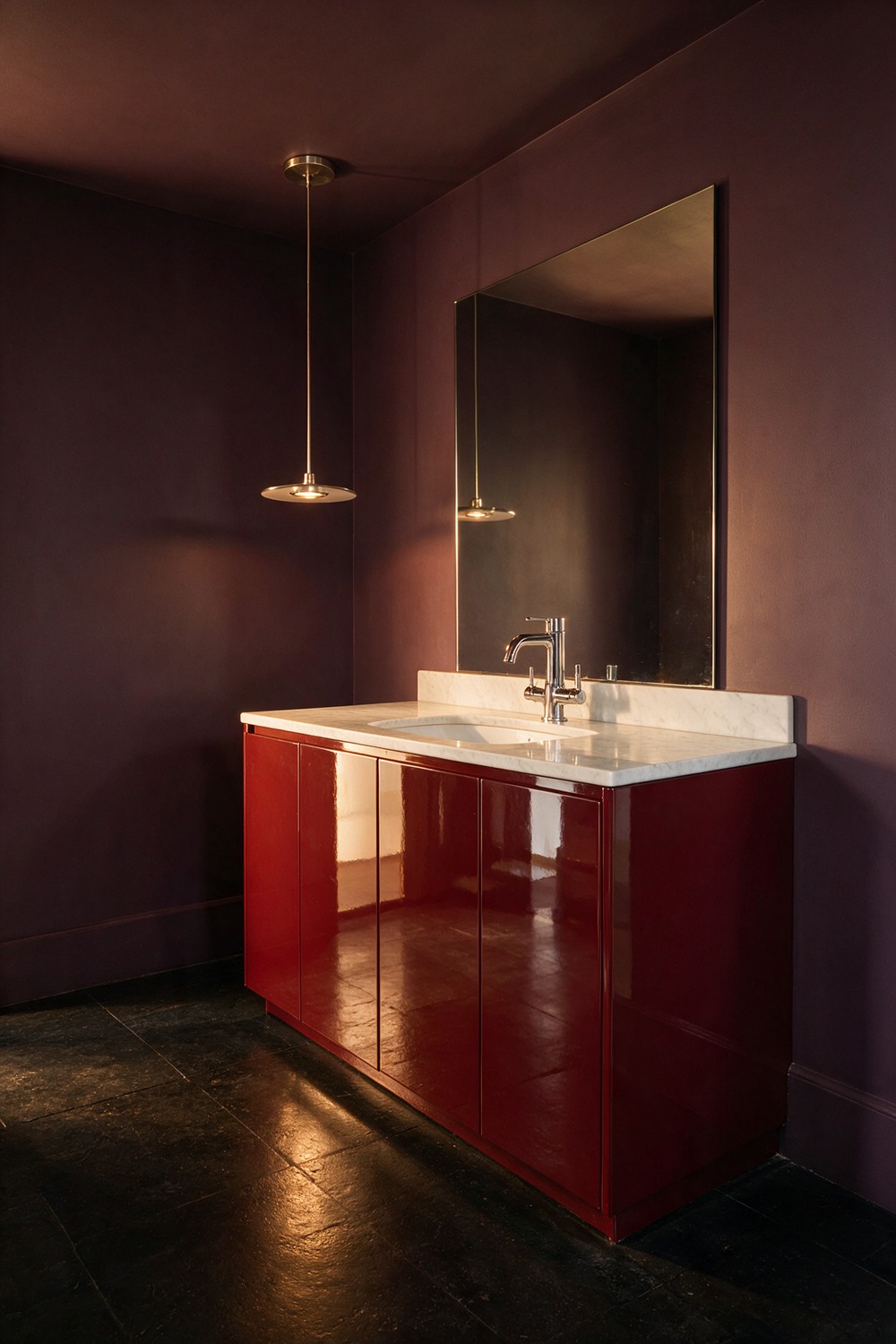
High gloss is bold, and I am here for it. A lacquered cabinet bounces every bit of light around a small room and feels unapologetically glamorous.
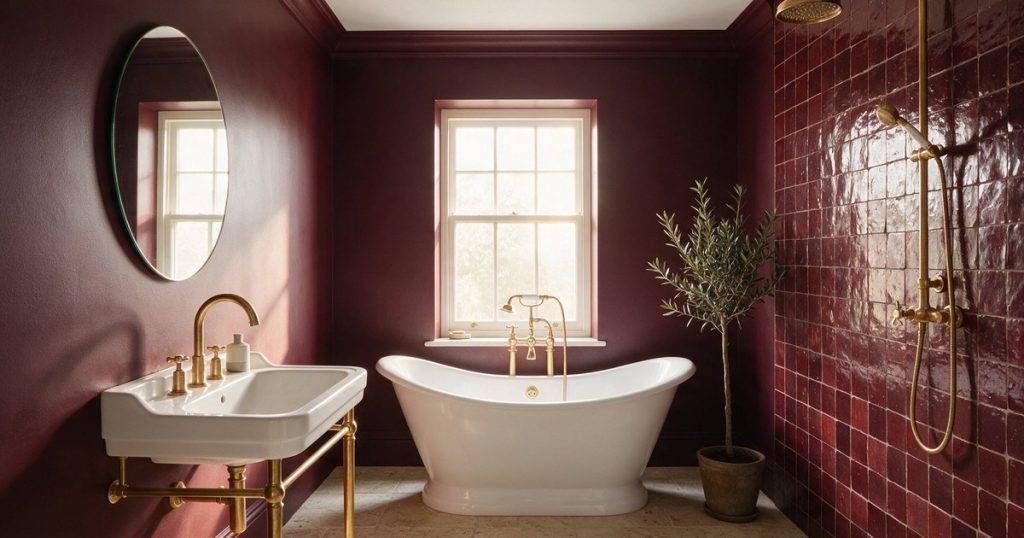
I would do a high-gloss vanity in a rich oxblood, somewhere near Farrow and Ball Preference Red, with a polished-chrome tap and a white marble top to cool the heat of the color.
The shine is the point, so the surface has to be flawless; this is the one finish worth paying a pro to spray.
Just look at how the light pools on a glossy door. Pair it with matte walls, though, so the gloss stays the one shiny thing in the room and does not tip into disco.
18. Distressed Bathroom Cabinets
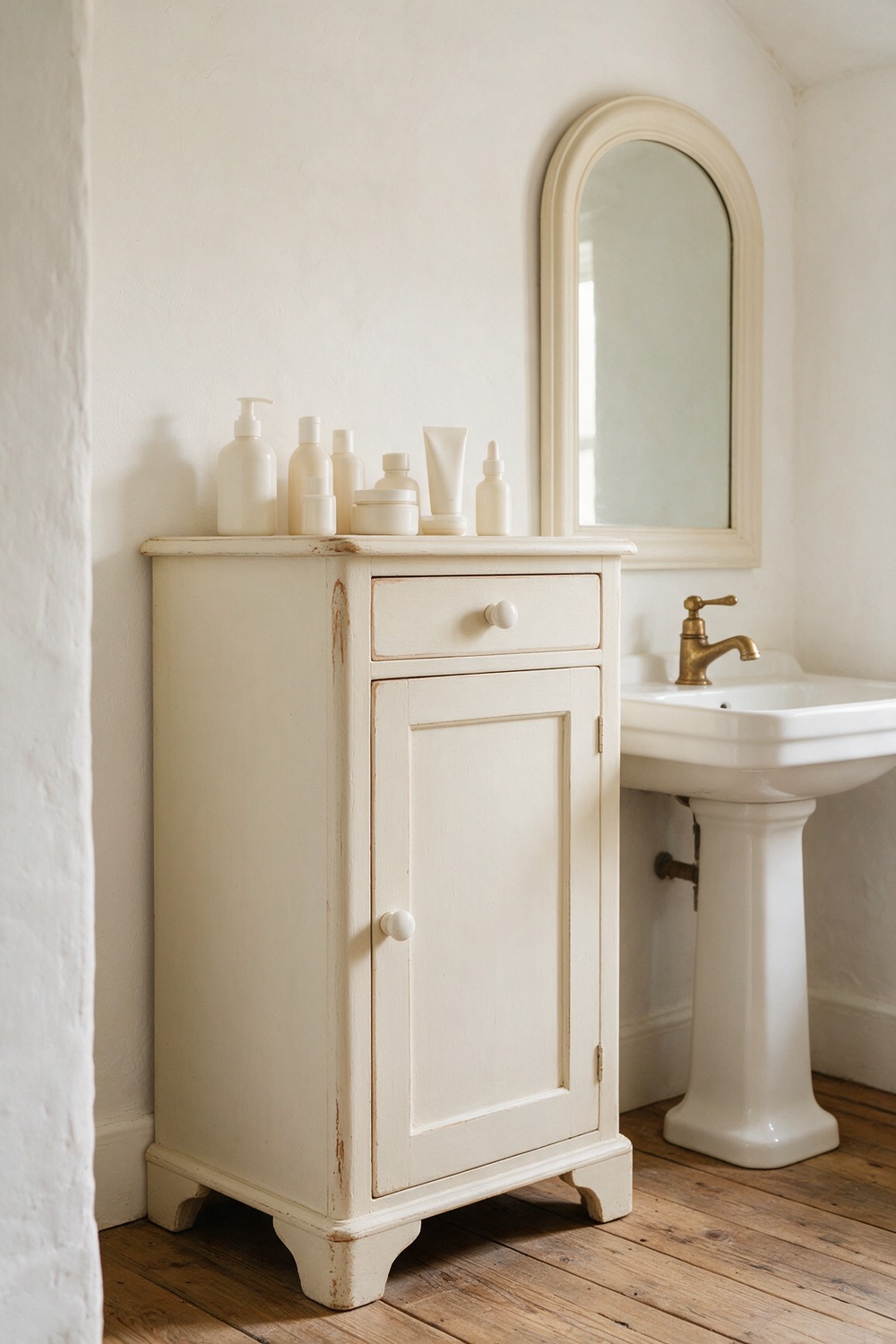
I will end on the one with the most soul. A distressed cabinet, with its worn edges and soft patina, brings instant age and story to a brand-new bathroom.
My favorite is an antique-style freestanding cabinet in a chalky off-white, hand-painted and then gently sanded back at the corners where a hundred years of hands would have worn it. Think a faded Bauwerk limewash over old pine, with original porcelain knobs. It looks like it has always been there.
The secret is a light hand. Distress only the places that would really wear, the corners and the handle edges, not the whole door. Overdo it and it reads as a craft project, not an heirloom.
Which Bathroom Cabinet Style Is Right for You
Start with the room you actually have. If it is tiny, go up and off the floor: wall-mounted, floating, or a tall narrow unit that steals the corner. Lifting storage off the ground is the single biggest favor you can do a small bathroom.
If you have the space and want warmth, I would point you to shaker, fluted, or cane. These are the looks that feel collected and lived-in, the ones that make a bathroom feel like a room rather than a wet cell.
Craving drama? High gloss or a deep two-tone will give it to you without a full remodel. And if you want character on day one, nothing beats a distressed or freestanding piece that looks like it has a past.
Trust the feeling you get in the room, not the trend you saw online.
Bathroom Cabinet Ideas, Answered
How much does a new bathroom cabinet cost? It runs a wide band. A flat-pack wall cabinet is weekend money. A freestanding vanity sits mid-range. Custom joinery is the splurge, though in a small bathroom it costs far less than the same work in a kitchen.
What can I do myself and what needs a pro? Painting a cabinet, swapping hardware, and hanging a wall unit are honest DIY jobs for a confident weekend. Anything plumbed, or a high-gloss sprayed finish, is worth handing to a pro. Gloss shows every flaw.
How long does it take? A paint-and-hardware refresh is a weekend. Installing a new vanity with plumbing is a day or two for a fitter. Full custom joinery, once it is designed and built, usually goes in across two to three days.
What material holds up best in a damp room? Solid wood and marine-grade plywood both last if sealed well. Choose moisture-resistant board for the carcass and a wipeable eggshell or satin on the doors. Spend on the worktop; honed stone or porcelain shrugs off water for decades.
What do I ask the joiner for? Lead with your one non-negotiable, whether that is a laundry hamper or soft-close on every door. Ask for a moisture-resistant carcass, adjustable shelves, and a toe-kick so you can stand close to the basin. Then let them solve the rest.
You do not have to redo the whole room to feel the difference. Pick the one cabinet that fits your space and your nerve, start there, and watch how the rest of the bathroom falls in behind it.
More stories
Share this story