15 Bathroom Tile Ideas for Every Surface, From Niche to Ceiling

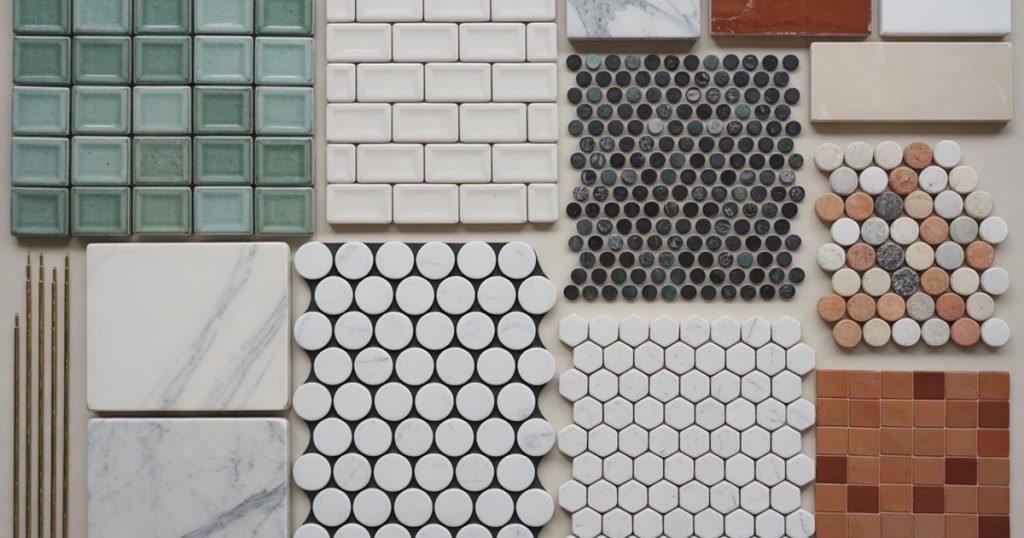
Here is my slightly controversial opinion on bathroom tile: most people pour all their energy into choosing the tile and almost none into deciding where it goes. The pattern matters, sure.
But the surface you choose to cover is what turns a nice bathroom into one that looks like a designer actually touched it.
Tile is not just for the shower and the floor. It can climb a half wall, wrap a vanity top, ribbon across a border, or line the little niche where your shampoo lives.
Once you start seeing the room as a set of surfaces instead of two big zones, the whole thing opens up.
What you get below is a tour of fifteen surfaces worth tiling, from the obvious to the ones people forget. Each one comes with the look I would reach for, the exact tile to ask a shop for, and the first move to make.
1. Half Wall Bathroom Tile
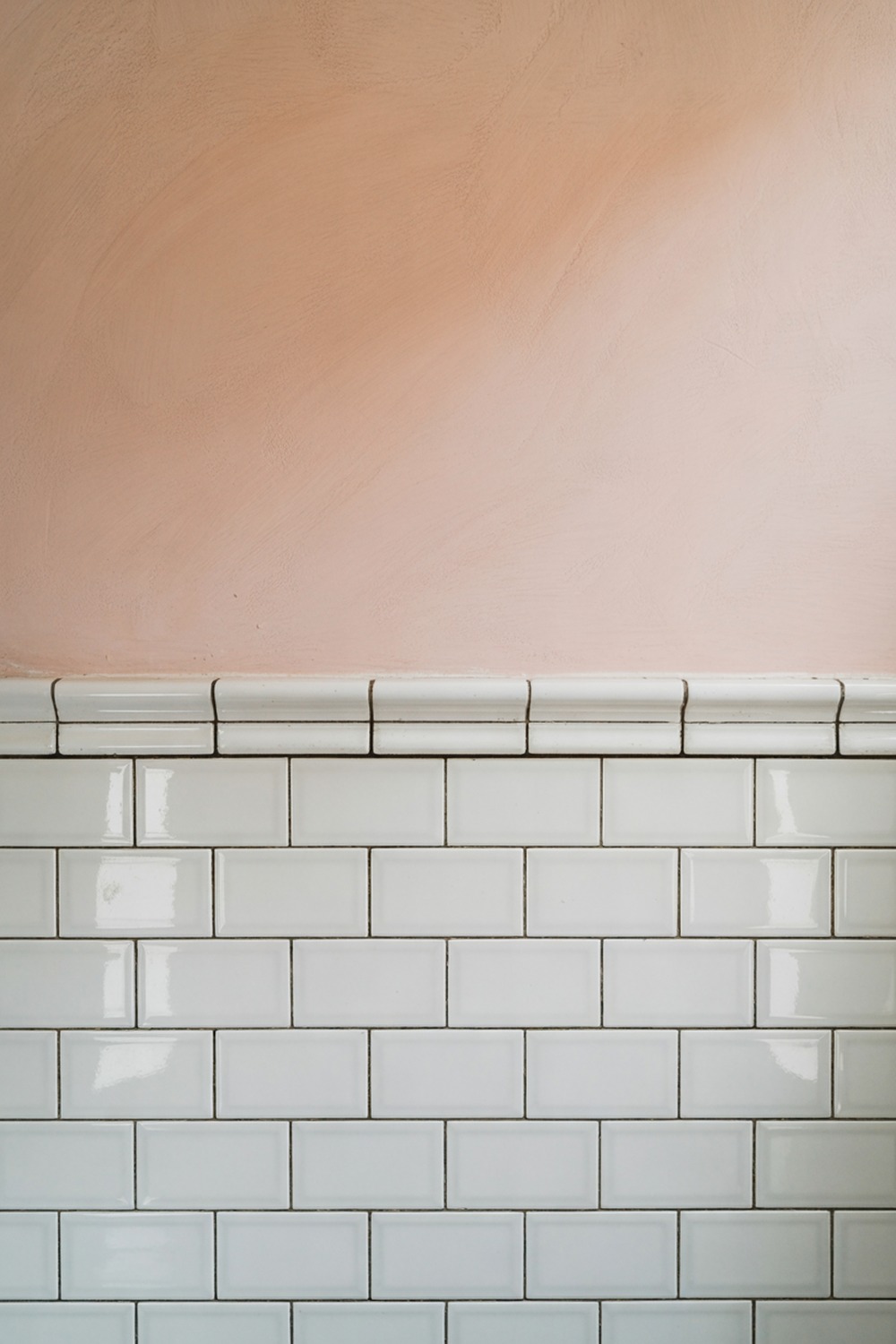
If you only do one thing on this whole list, make it this one. Tiling the lower half of the wall and painting the top is the single move that makes a plain bathroom read custom, and it costs a fraction of a full floor-to-ceiling job.
The trick is where you stop. Run glossy white 3×6 subway tile in a running bond up to chair-rail height, roughly 48 inches, then cap it with a slim pencil-liner trim so the top edge looks deliberate rather than accidental.
Paint above in a warm, chalky shade like Farrow and Ball Pink Ground. Palette: bright white below, soft plaster over it. Start with a dead-level line, because a crooked cap is the one thing the eye catches every single time it enters the room.
2. Wainscoting Bathroom Tile
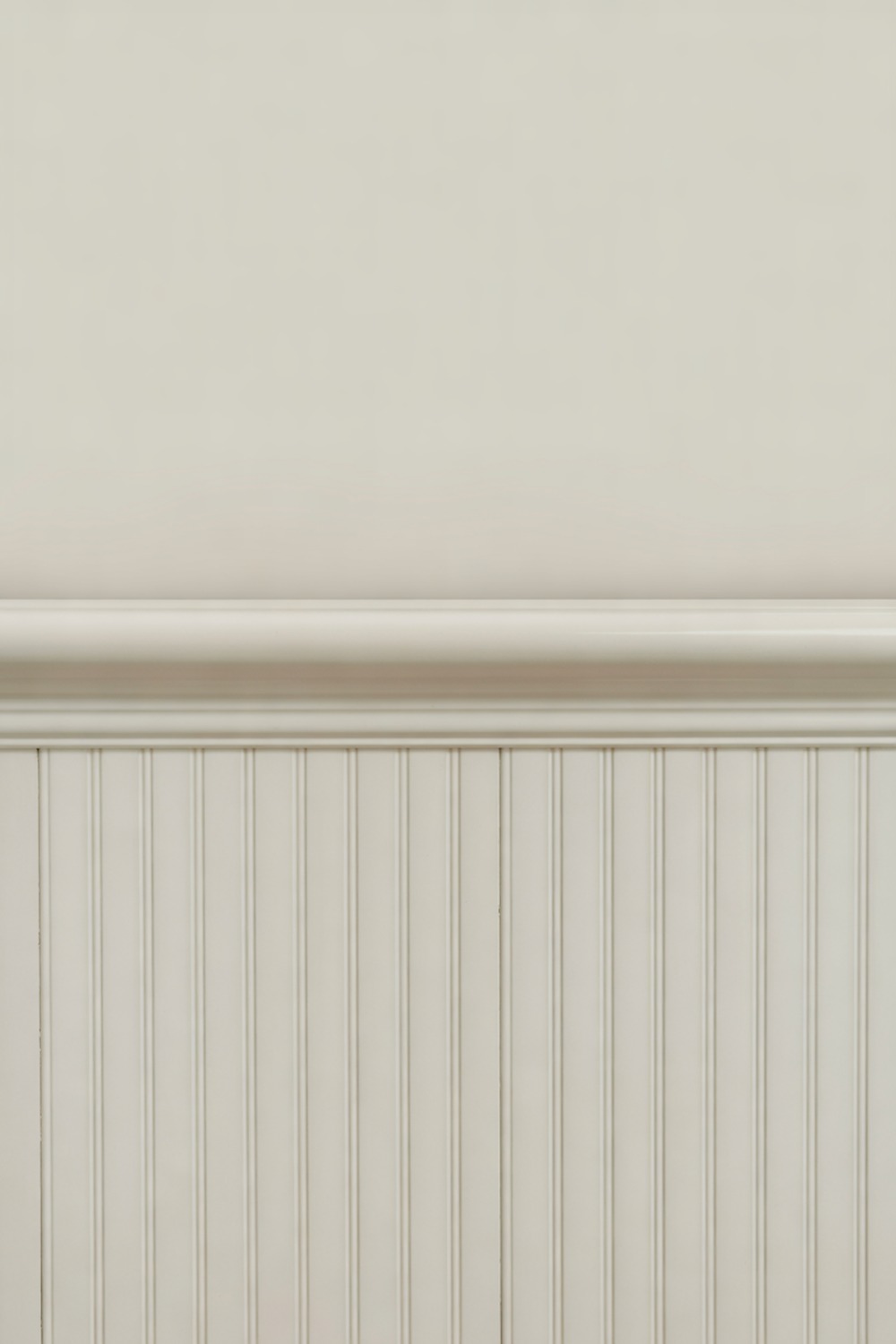
Wainscoting (that paneled lower-wall treatment old houses do so well) usually arrives in painted wood. I love it more in tile, because the bathroom is the one room where real wood panels swell and sulk.
Look for white matte beadboard-effect porcelain with soft vertical grooves molded in, topped with a chair-rail cap. It gives you Shaker-cottage calm with none of the upkeep. My one rule: a 2700K warm bulb overhead, or the matte white goes cold after dark.
3. Vanity Backsplash Bathroom Tile
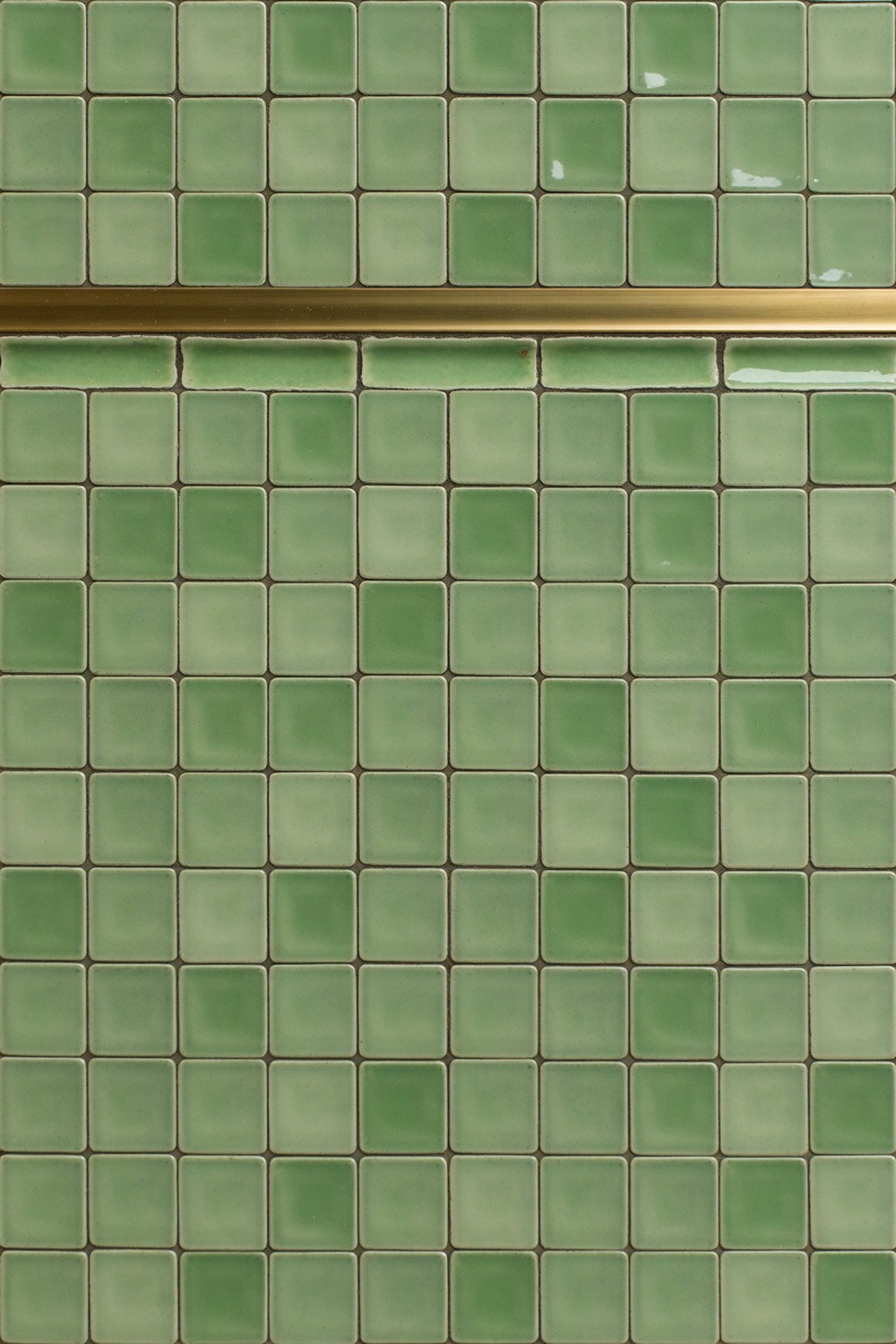
A tiled band behind the vanity is a small job with a big payoff. It guards the wall from splashes and gives the sink a proper backdrop instead of a bare painted rectangle that nobody ever quite finishes.
Here is where I would spend a little extra. Handmade 4×4 zellige in a soft sage, set in a tight running bond, is the one. The glazed, uneven surface catches light in a way flat machine-made ceramic never will.
So the backsplash seems to shimmer and shift slightly as you move past it, which is the whole charm of real zellige. Palette: sage green against warm brass taps. Take it only as high as the mirror base, so it frames the sink rather than fighting it.
4. Behind-The-Mirror Bathroom Tile
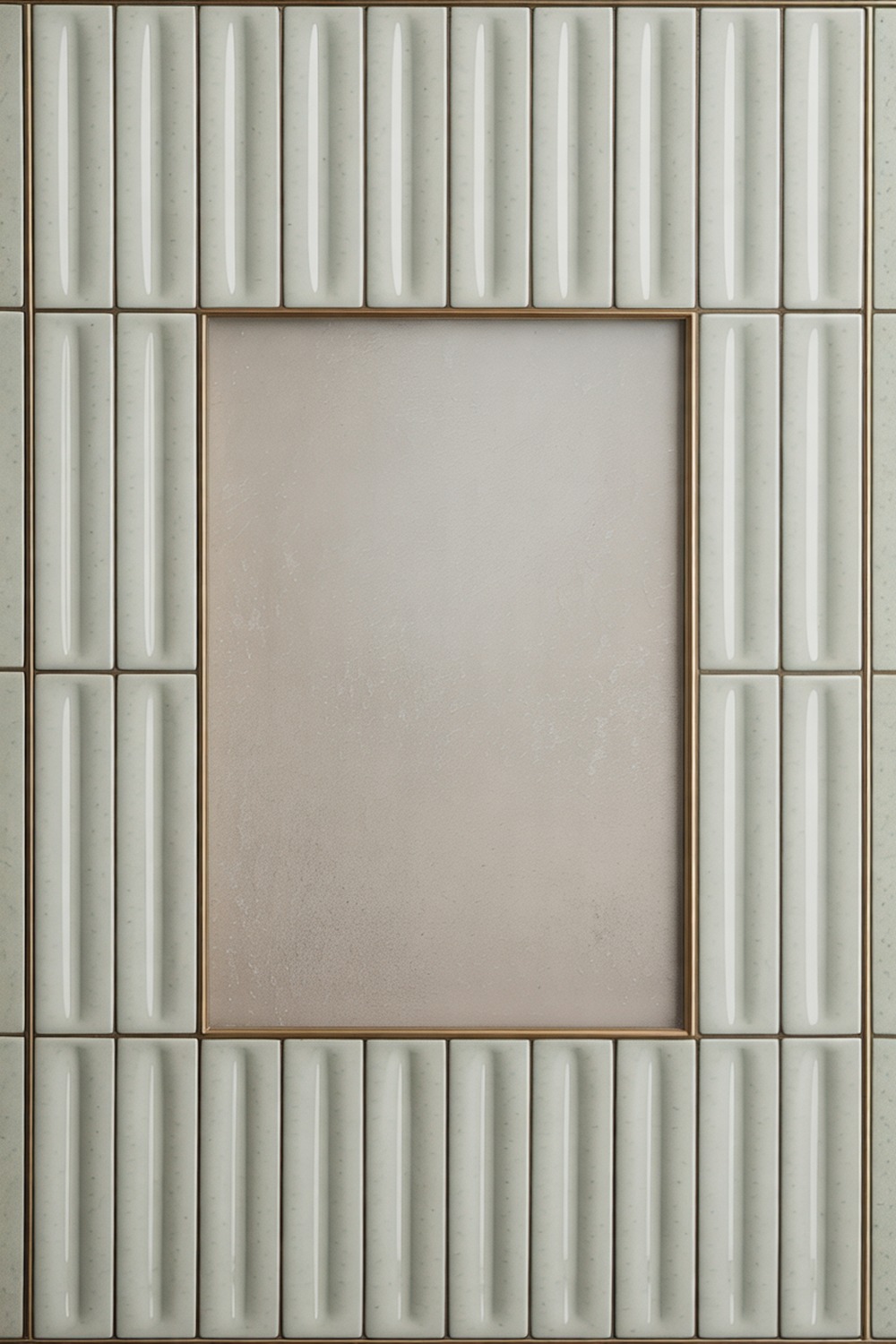
Have you ever noticed how a mirror floating on a flat painted wall looks a touch unfinished? Tiling the patch behind it fixes that instantly, and it is my favorite sneaky little upgrade.
Run a panel of vertical fluted white tile where the mirror sits, framed by a thin unlacquered brass liner, so the glass reads like it was placed on purpose. The fluting throws gentle shadow lines, which is why it beats flat subway here.
One tip: size the tiled panel a few inches wider than the mirror on each side, so it frames the glass rather than hides behind it.
5. Tile Countertop Bathroom Tile
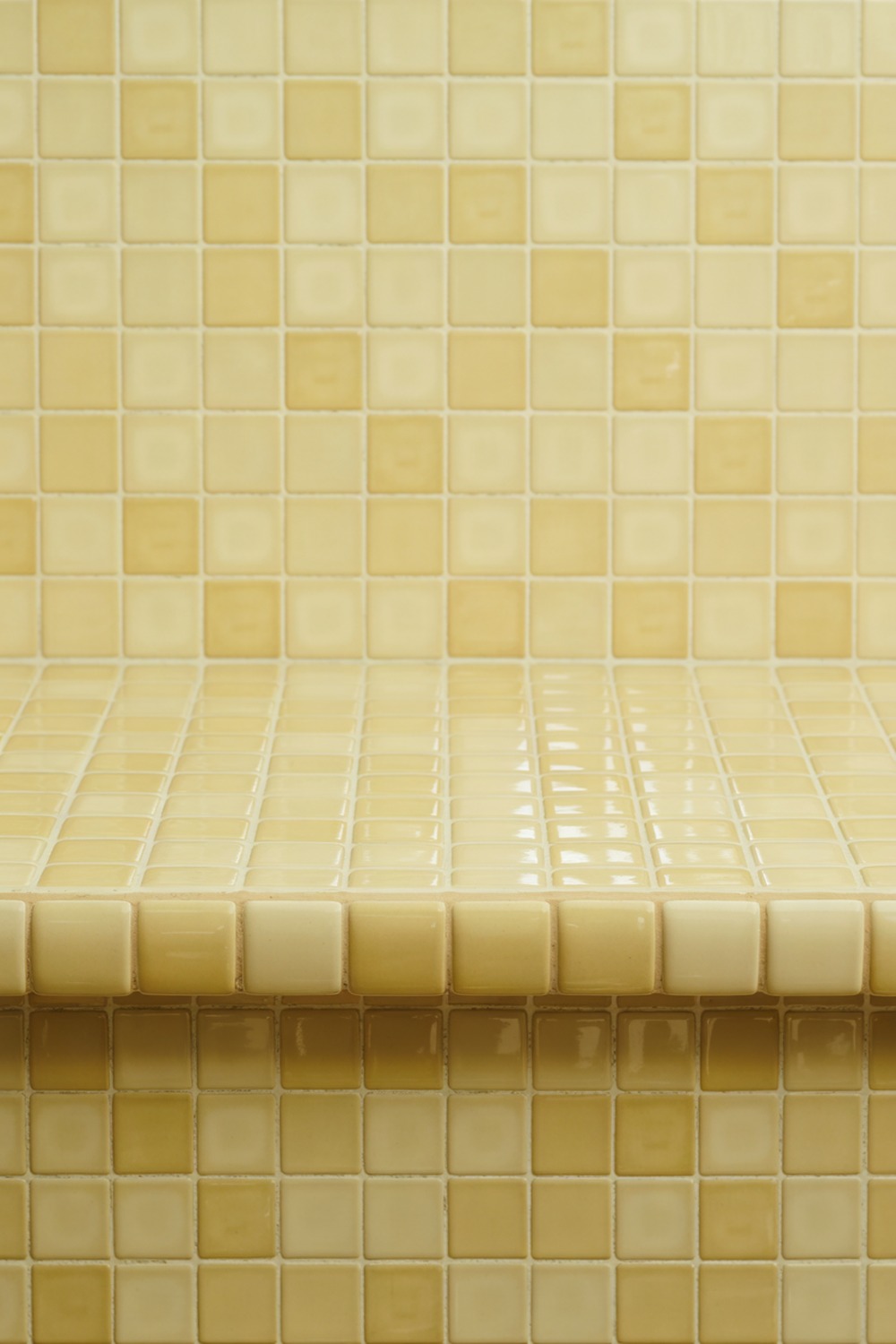
Tiled countertops went out of style, then came roaring back with the whole mid-century revival, and honestly I am glad. A tiled vanity top has a hand-made, slightly retro charm a cold slab of quartz cannot touch.
Think small square glossy ceramic in buttery cream or pale celadon, set in a clean grid with thin grout and a bullnose front edge so there are no sharp corners. Palette: soft yellow tile, white grout, chrome tap.
The one thing worth the money here is a good epoxy grout, which keeps the seams crisp and waterproof for years.
6. Baseboard Bathroom Tile
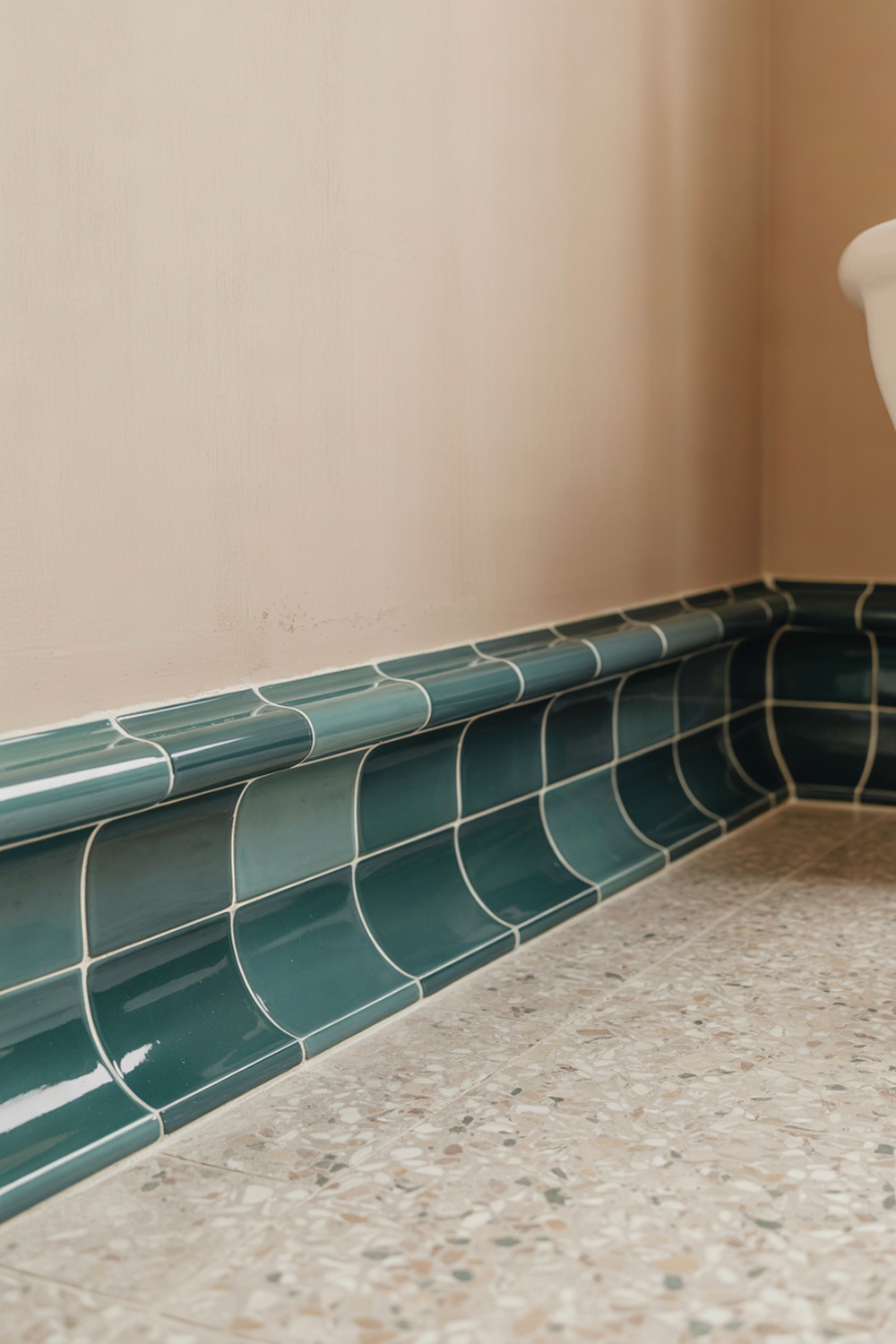
Skirting boards in a bathroom are a quiet disaster waiting to happen. Water wicks up, paint peels, and the wood goes spongy. A tiled baseboard solves all of it and looks sharper too.
Run a four-inch course of bullnose-topped base tile where the wall meets the floor, echoing your floor tile. A cove base, which curves gently from floor to wall, makes mopping effortless and gives an almost continuous look.
I would match it to a terrazzo or honed stone floor for that hotel-lobby finish. Run it under the vanity too, not politely around it.
7. Border Strip Bathroom Tile
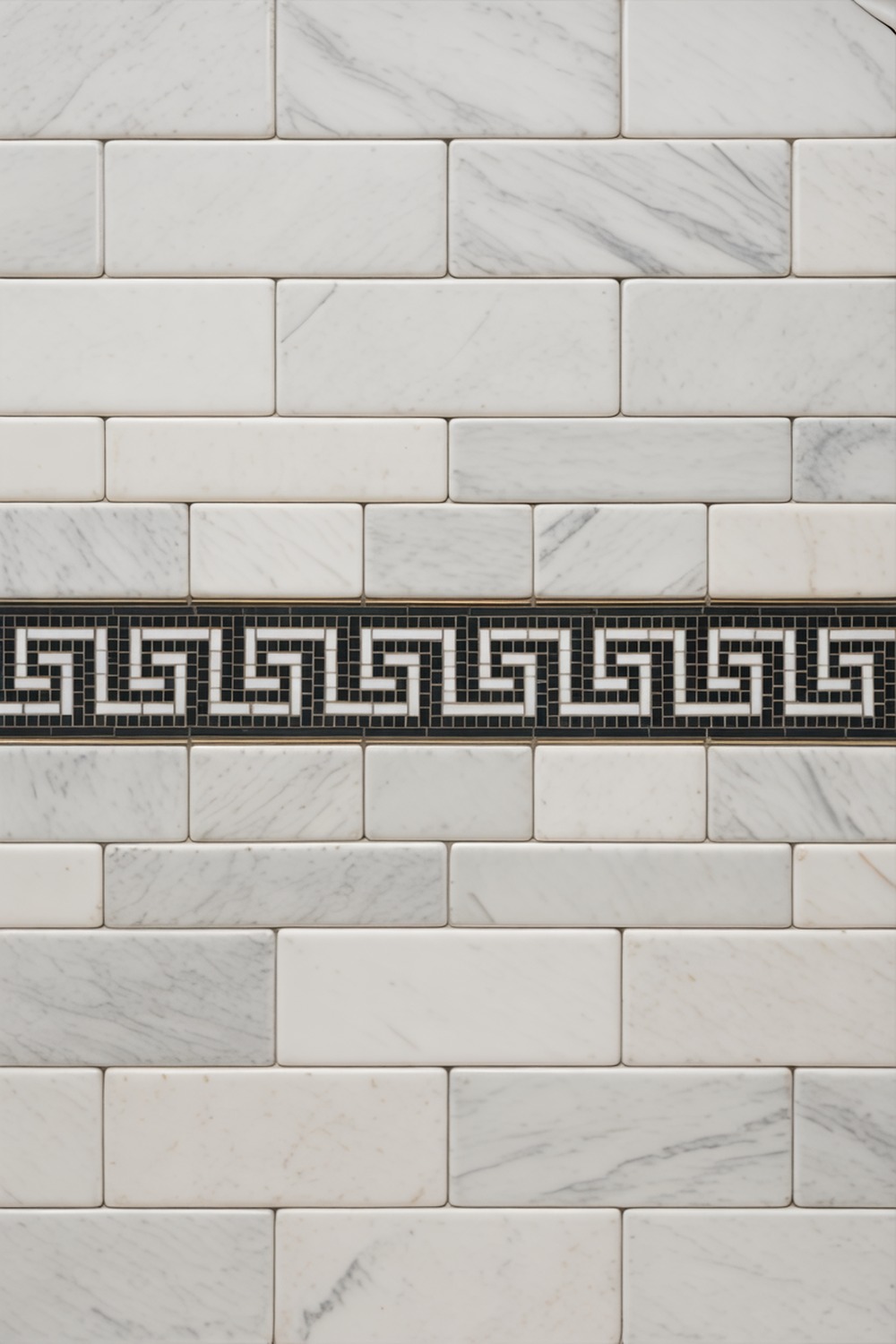
A border strip is the jewelry of a tiled wall. One ribbon of contrast at the right height, and a flat field of tile suddenly has rhythm and a bit of swagger.
My pick is a slim black-and-white geometric listello, a Greek-key or chevron run, threaded through plain white marble at eye level. It nods to Art Deco without going full Gatsby. Set it around 60 inches so it leads the gaze.
8. Shower Niche Bathroom Tile
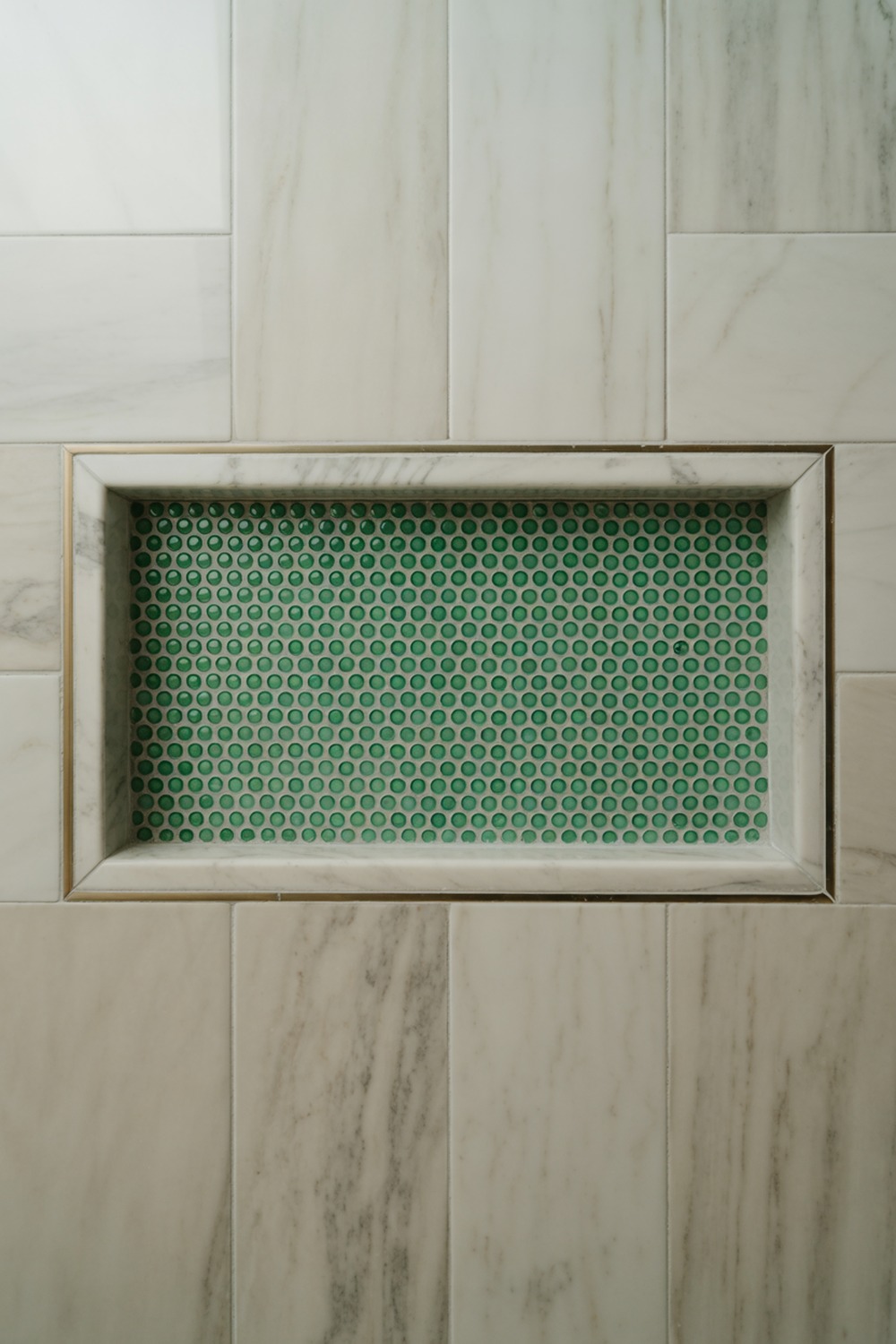
The recessed shower niche is the best tiny canvas in the whole bathroom. It is already carved into the wall as a feature, so you may as well make it genuinely sing.
Line the inside with something that has real punch against the field tile, like glossy emerald penny-round mosaic framed by large-format pale marble and a thin brass surround. The contrast makes a humble shelf for shampoo look intentional and jewel-like.
Palette: pale marble wall, deep green niche. Center the niche on a full tile and keep it at chest height, so the grout lines line up and your bottles stay within easy reach of a soapy hand.
9. Shower Floor Bathroom Tile
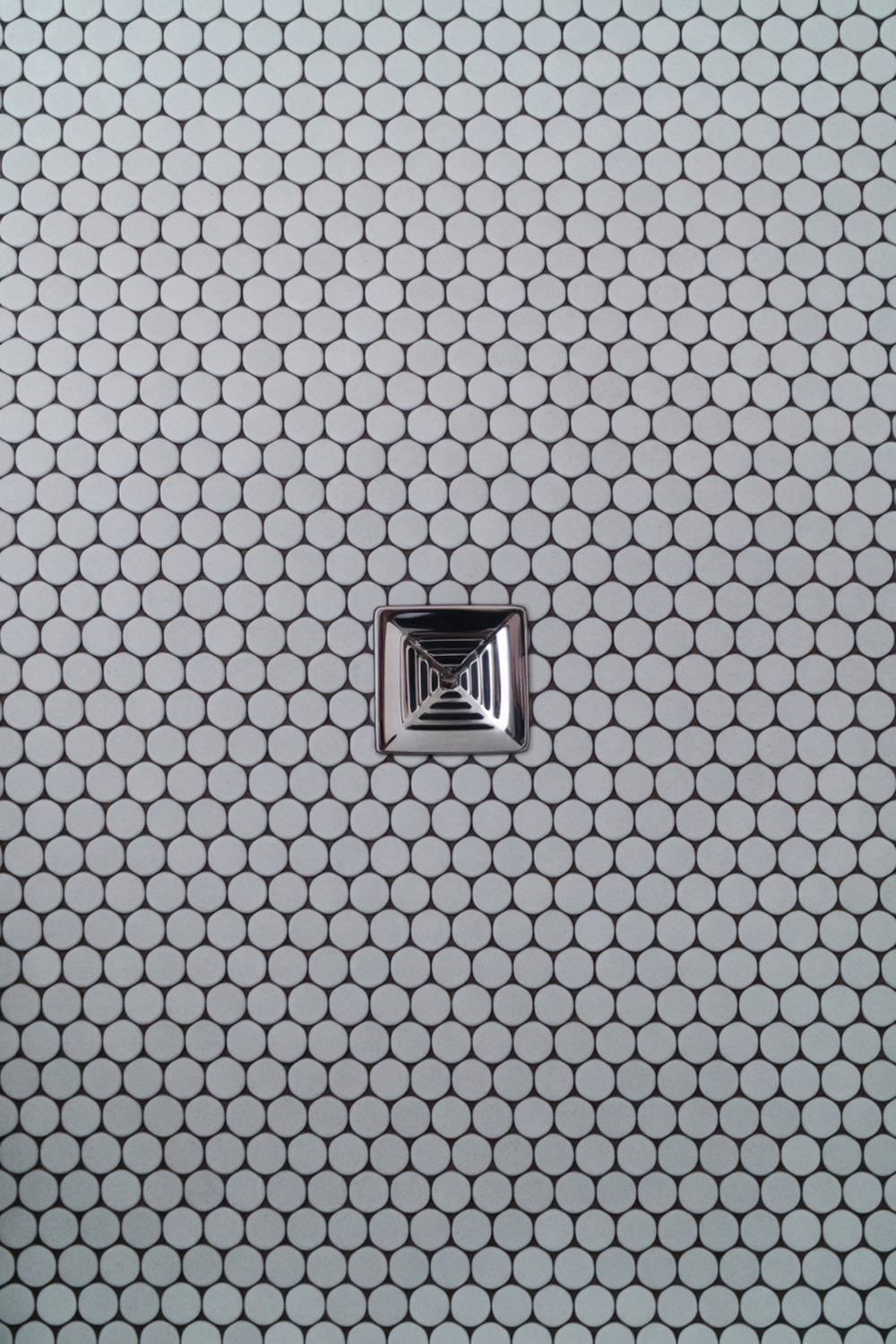
Shower floors have one non-negotiable job: do not be slippery. That is why they get their own tile logic, separate from the walls above them.
Small mosaic is the answer, because all that extra grout gives your feet grip and lets the floor slope gently to the drain. I would use white penny-round mosaic with a soft grey grout, classic and endlessly bright.
Pro tip: pick a grout one shade darker than you think you want, because a bright-white shower floor never stays bright for very long.
10. Tub Deck Bathroom Tile
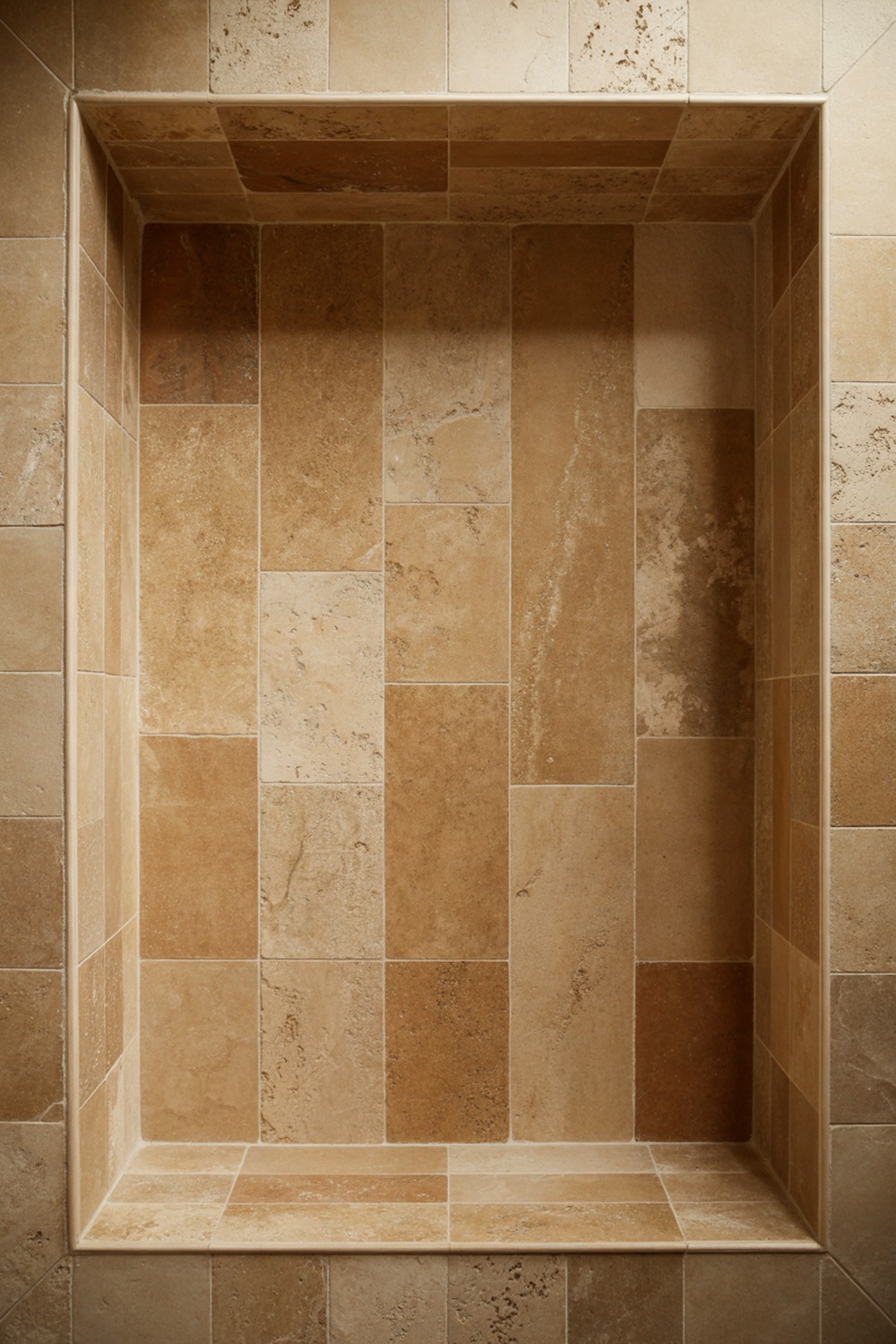
If you have a drop-in tub, the deck around it is prime real estate that people almost always waste. Tile it properly and the tub stops looking builder-grade and starts looking like a spa.
Honed travertine is my weakness here. Big tiles with tight grout, warm and sandy and soft underfoot, wrapping the tub in natural stone. It leaves you a generous ledge for a candle and a cold drink.
Palette: warm beige stone, matte black filler. Seal the travertine before anyone so much as runs a bath, because raw stone and bathwater are not friends on day one.
11. Trim Bathroom Tile
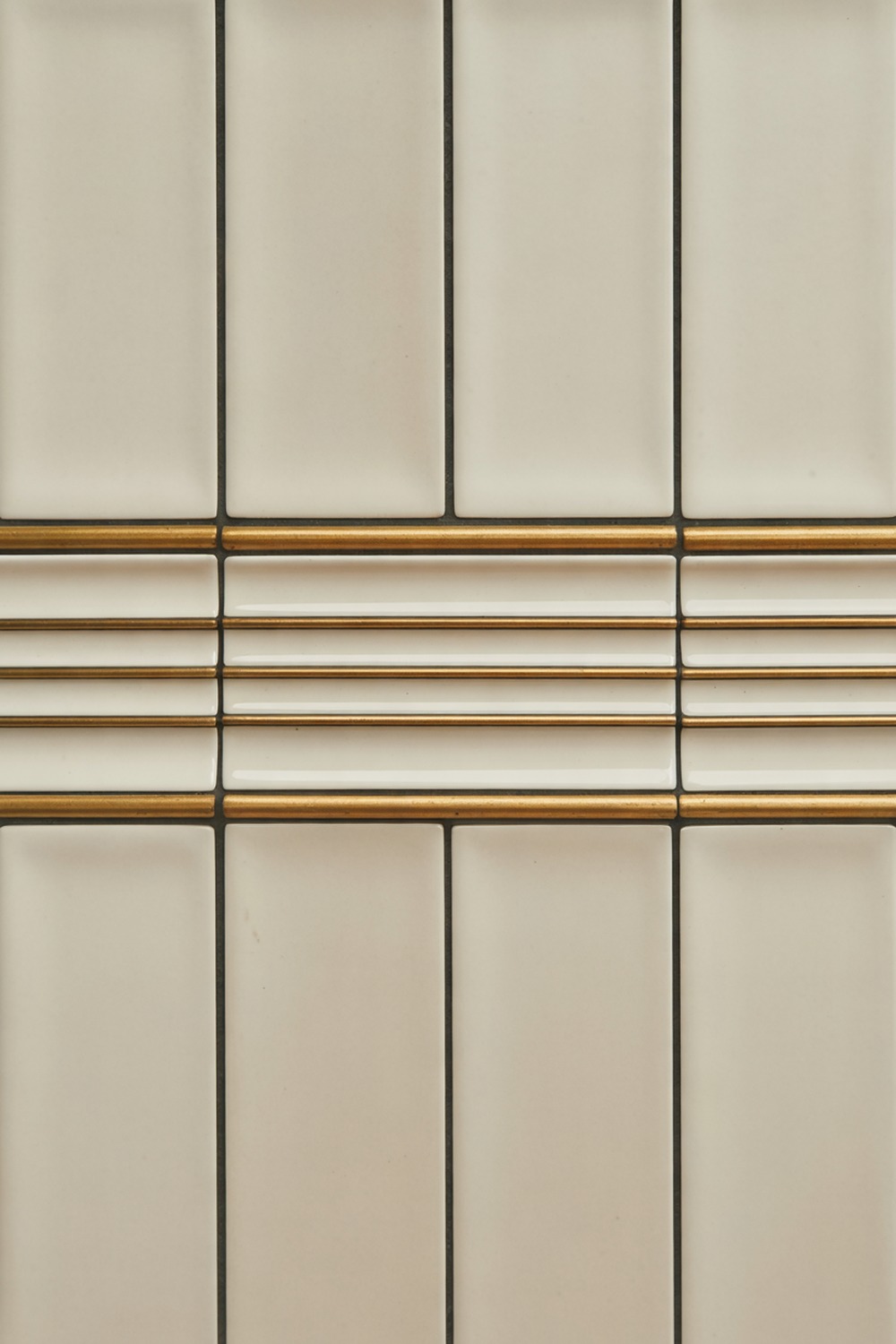
Trim tile is the detail nobody notices until it is missing, and then the whole wall looks unfinished. These are the slim pencils and liners that cap edges and bridge transitions.
A run of unlacquered brass pencil-liner against cream field tile is the small flourish I will always argue for. It picks up a soft patina over the years. Order ten percent extra, because these narrow pieces snap during cutting.
12. Bullnose Edge Bathroom Tile
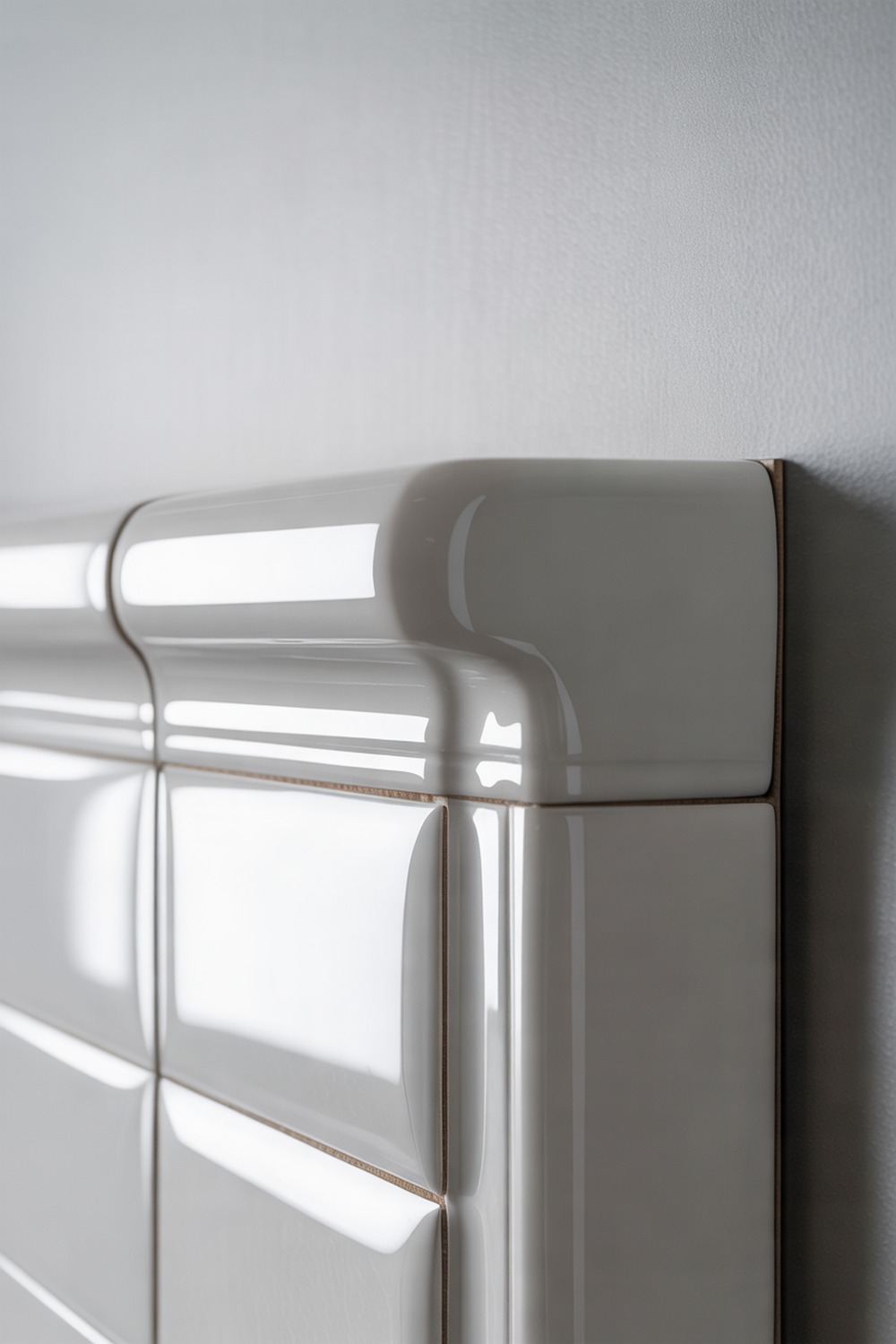
Here is a thing worth knowing: the edge of a tiled area needs a plan, or it ends with a raw, unfinished tile side on show. Bullnose is the oldest and softest answer to that problem.
A bullnose tile has one rounded, glazed edge, so it finishes a wall or a half-tiled section with a smooth, pillowy return instead of a sharp lip. In glossy white it practically disappears, which is exactly the point.
Palette: match the field tile exactly. If your tile has no matching bullnose, a thin brass or matte-black metal edge trim does the same job and looks a touch more modern.
13. Tile Ceiling Bathroom Tile
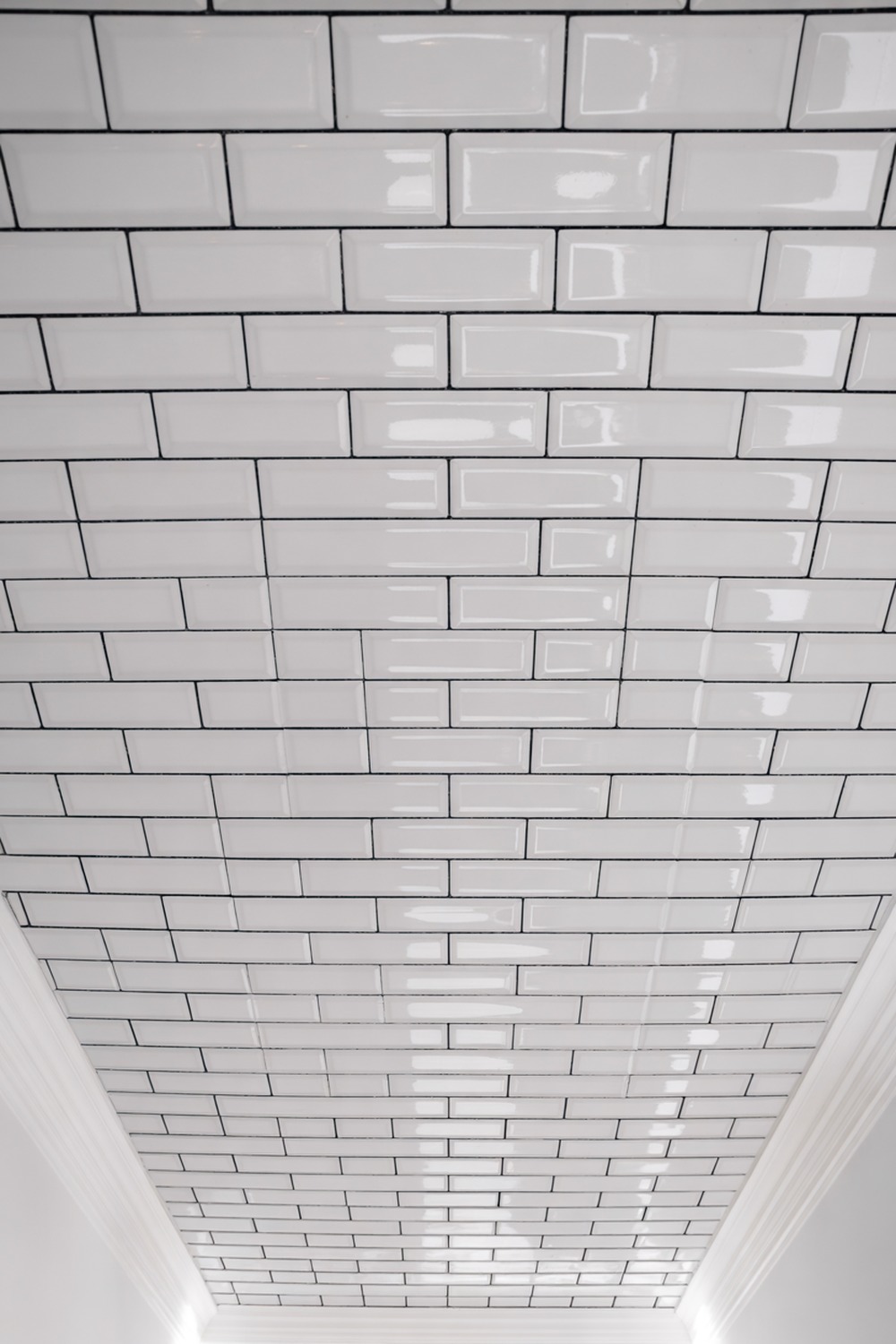
Tiling the ceiling sounds a little mad until you stand in a steam shower that has one, and then it clicks. Up there it is pure function dressed up as drama.
Carry glossy white tile across the ceiling in a crisp brick bond so steam wipes away instead of soaking into paint. The sheen bounces light back down and makes a small shower feel taller.
14. Shower Bench Bathroom Tile
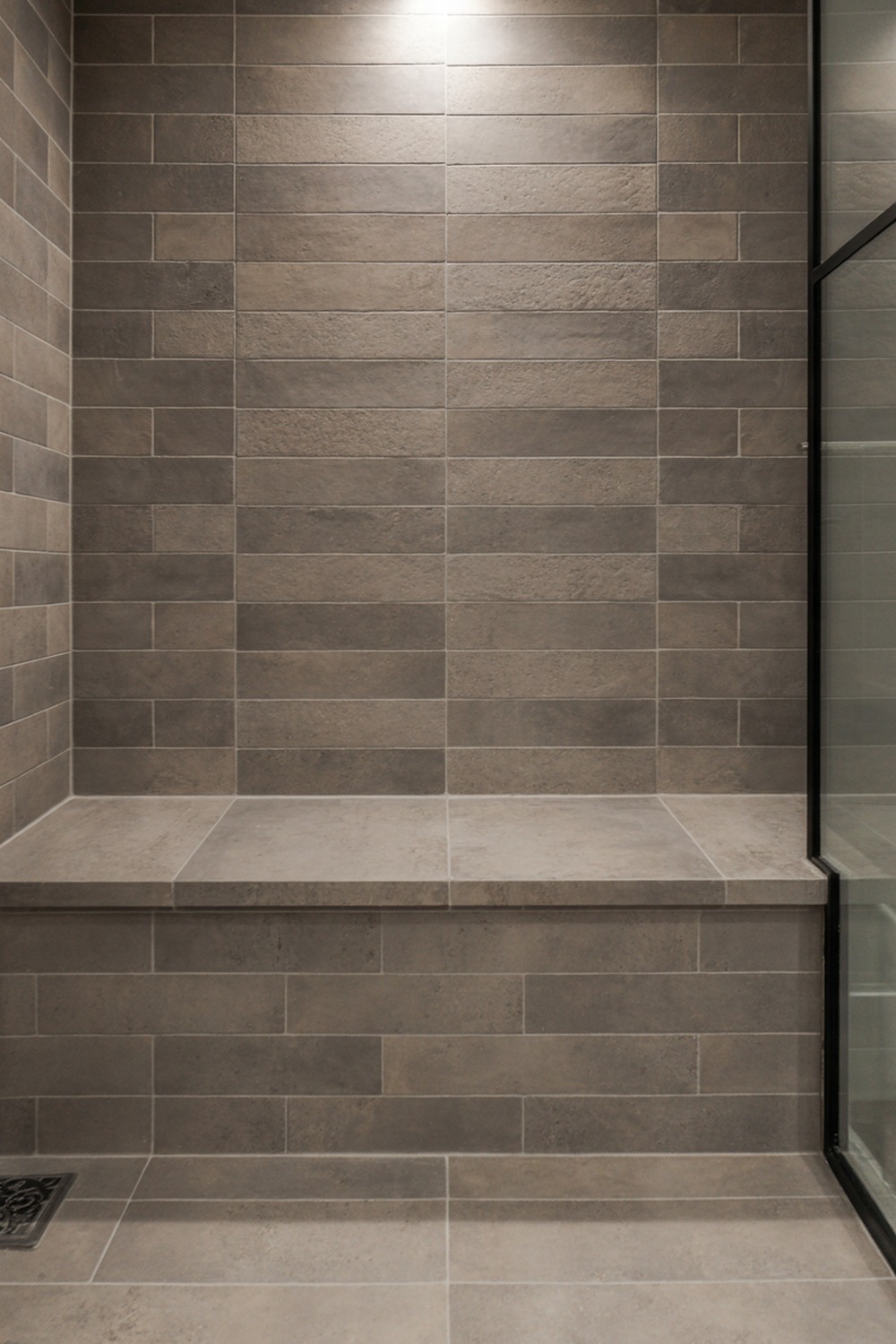
A built-in shower bench is a genuine luxury, the kind of thing you miss forever once you have had it. Clad it right and it becomes part of the architecture, not a bolted-on afterthought.
Wrap the bench in the same warm grey large-format porcelain as the walls, honed top and all, so it reads as one continuous, sculpted form. Palette: soft grey throughout. Slope the top a hair toward the drain so water never pools where you sit.
15. Doorway Threshold Bathroom Tile
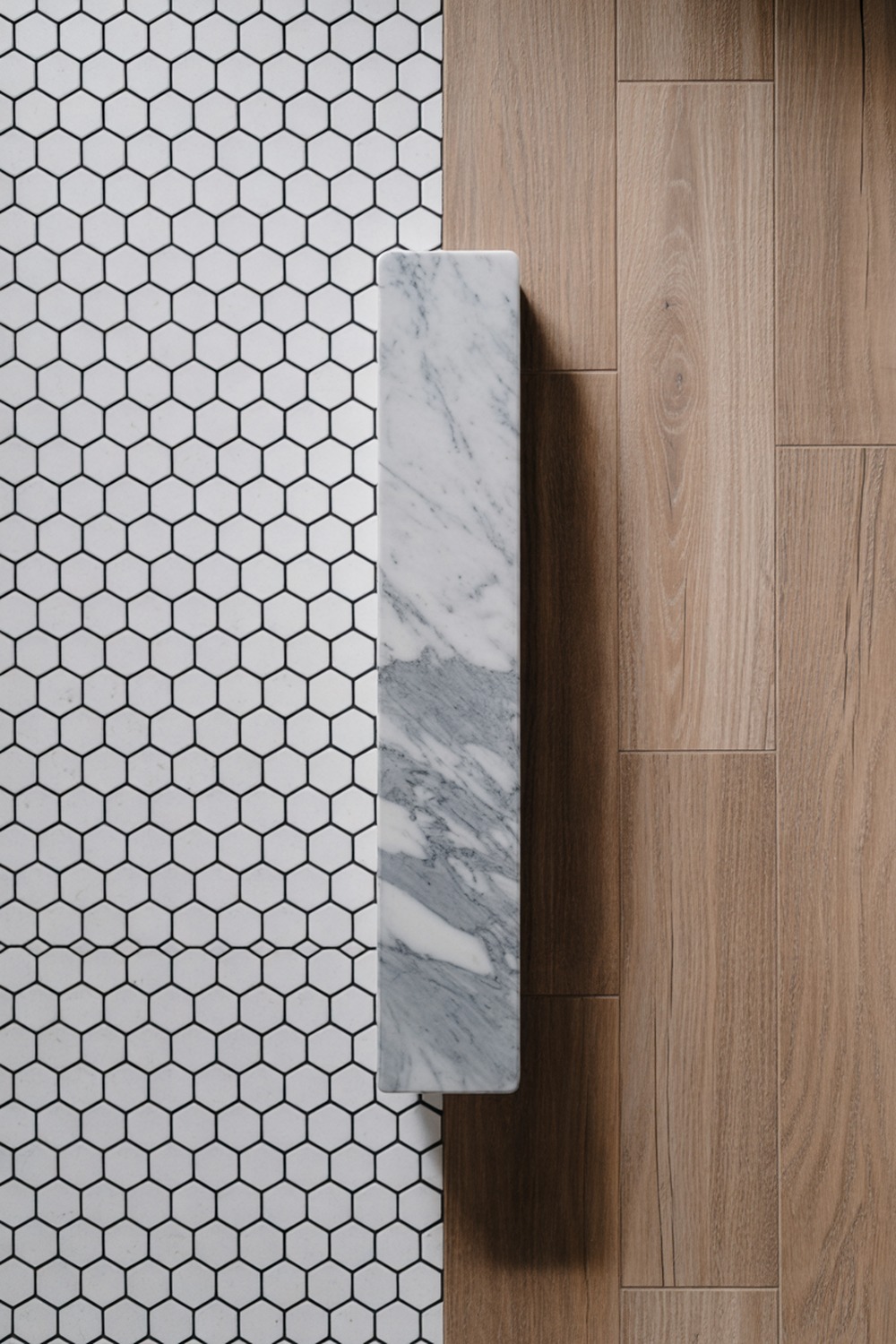
The threshold is the full stop at the end of a sentence. It is where your bathroom floor meets the hallway, and a scrappy transition quietly undoes all the good work you did inside.
A single honed marble saddle, a slim bar of white-and-grey stone laid across the doorway, makes the handover between hexagon bathroom tile and oak hallway flooring look intentional and crisp.
Palette: white marble saddle against warm wood. Get the height right above all else: a marble threshold should sit flush or gently ramped, never a trip hazard you clip with a bare toe at midnight.
Which Bathroom Surface Should You Tile First
If you are picking just one project, start with the half wall. It gives the most visible change for the least money and difficulty, and it makes everything above it (the paint, the mirror, the lighting) suddenly look considered.
Working with a tight budget and a plain shower? The niche and a border strip are the cheap thrills, small amounts of a special tile in spots that punch above their size.
Chasing a true spa feel instead? Put your money into the tub deck and a tiled bench in natural stone, where surface and texture do the heavy lifting.
And if your bathroom already feels close to right, go hunting for the unfinished edges: a raw tile side begging for bullnose, a floating mirror that wants a tiled backdrop, a doorway with a sad transition. Those small fixes are what separate a good bathroom from a finished one.
Bathroom Tile Placement, Answered
How much does it cost to tile an extra surface like a niche or half wall? A niche or a border strip is a low-cost add, often just a box of accent tile and an hour of a tiler’s time, since the waterproofing is already there.
A half wall sits in the middle. A full tiled countertop or tub deck is the splurge, mostly in labor and the stone itself.
Can I tile these spots myself? A backsplash, a half wall, and a border strip are all genuinely DIY-friendly if you are patient and own a spirit level.
I would hand the shower floor, the niche, and anything inside the wet zone to a pro, because the waterproofing behind those is what keeps the ceiling below you dry.
How long does a smaller tile project take? A half wall or a vanity backsplash is usually a weekend: a day to set the tile, a day to grout and seal. Natural stone adds time, because it wants sealing before and after grouting.
What is the one material worth spending on? Grout and sealer, oddly, not the tile itself. A good epoxy grout and a proper stone sealer are what keep every surface here looking crisp years later. Cheap grout is the thing that ages a bathroom fastest.
What should I ask the tiler for? Ask for the trim and edge pieces to be ordered alongside the main tile (bullnose, pencil liners, a threshold saddle), confirm the grout color in daylight, and have them dry-lay the niche and border so the pattern centers before anything is stuck down.
Start with one surface you walk past every day, tile it well, and let it raise the bar for the rest of the room. That is how the best bathrooms get built, one considered surface at a time. Your tiler, and your future self, will thank you for it.
More stories
Share this story