You’ll Feel Like a Superhero in This Tiny Illinois Town

As we stepped into the museum gift shop, a woman with a toddler on her hip pointed and said, “Look, so-and-so, it’s Superman!” The little girl clinging to her skirts ran over and hugged my husband’s knees, beaming up at him as if he were Clark Kent himself.
We were in Metropolis, Illinois, a pilgrimage for fans of the Man of Steel, where a man with dark hair and broad shoulders could inadvertently become a theme park character. This map dot of 6,000 residents may not be the big city that shares its name, but its passion for all things Superman is sure to delight.
I’ve visited Metropolis many times—as a kid and later, taking friends and family. But one visit stands out more than any other. Come with me as we pay a visit to the Man of Tomorrow, and the man who made it all happen.
Meeting the Master of Metropolis
As any comic book fan will tell you, Superman’s Metropolis is a big city modeled after New York City, home to super heroes and villains alike. Its name is Greek for “mother city.” It was given to the real-life town nearly 200 years ago due to the founder’s ambitions for the future.
But the small Illinois town of Metropolis is anything but. We got off the interstate and drove past modest residences into the small downtown, with its aptly named Superman Square.
Our first stop was the Welcome Center at the Metropolis Chamber of Commerce. There, you’ll find souvenirs, cold drinks, Dippin’ Dots ice cream, public restrooms, and information about the town and its hero-themed offerings.
The staff was eager to tell us about the upcoming Superman Celebration, an annual summer celebration of all things Superman. Each year, the multi-day festival features DC comics celebrity appearances with photo ops and autographs, carnival rides, a 5K run, games, costume contests, and more.
I asked at the Welcome Center if Jim Hambrick, the Super Museum’s founder, was ever present at the museum. “Yes!” they answered. “Almost every day. He usually stops in here, too. I haven’t seen him yet today, though.”
Feeling a bit like Lois Lane, I had tucked a notebook and pencil into my back pocket, and I had a handful of interview questions ready for Mr. Hambrick.
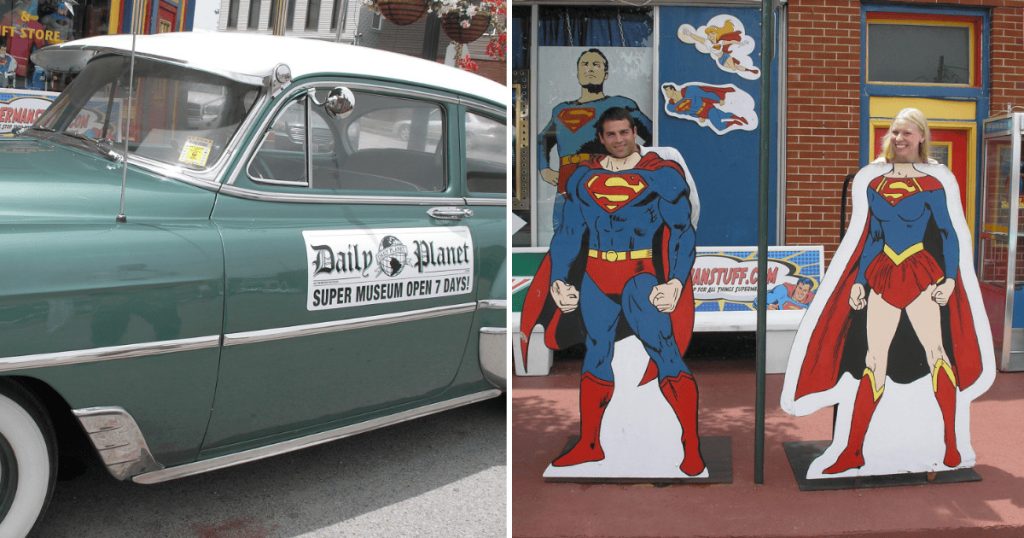
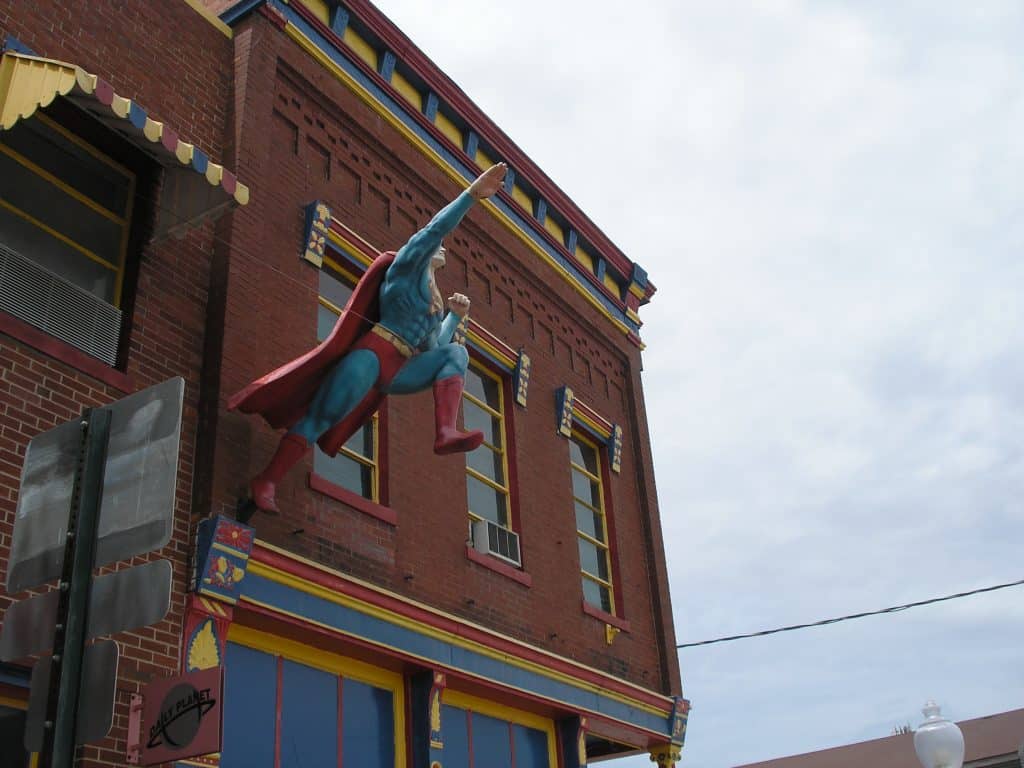
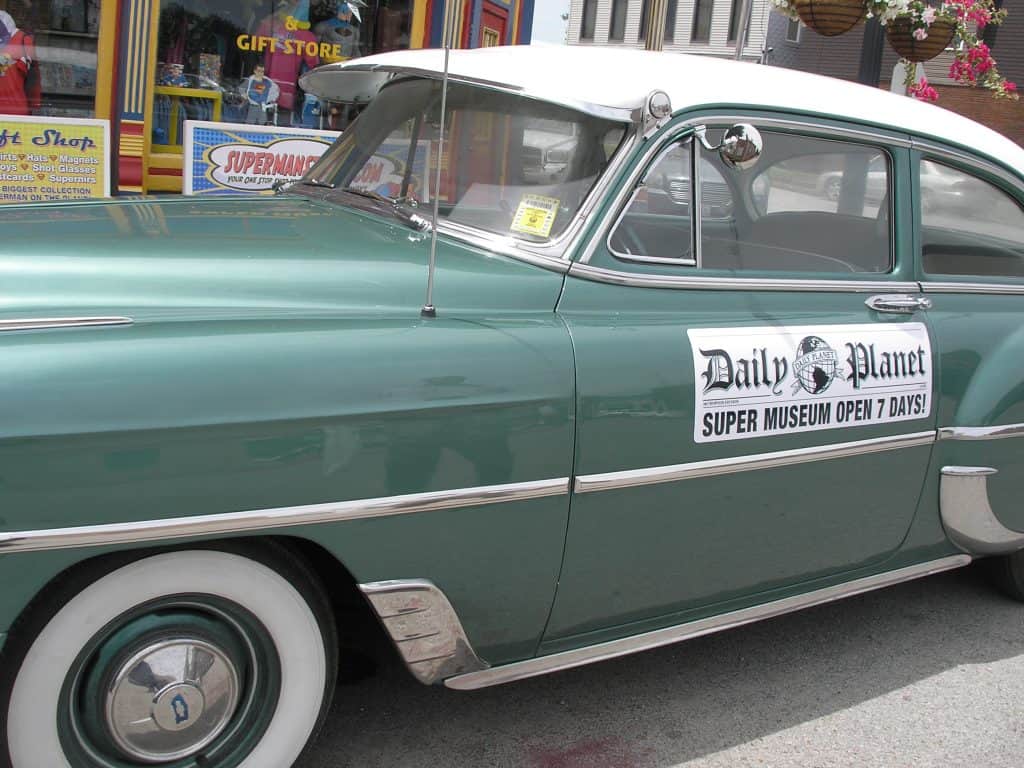
We walked down the street and around the corner to the colorful front of the Super Museum, its trim and awnings bright with Superman red, yellow, and blue. A 1959 Oldsmobile Super 88 with a Daily Planet advertisement on the side was parked outside.
After the interchange with the woman in the gift shop, I noticed an elderly gentleman sitting behind the front counter. He had a silver mustache and beard and wore an old-fashioned driving cap. I thought I recognized him, but I couldn’t be sure.
“Are you Mr. Hambrick?” I asked. He looked at me curiously and confirmed that he was. I explained who I was—barely containing the urge to identify myself as an intrepid girl reporter—and who I was writing for at the time.
He smiled and leaned forward, and his background in Hollywood began to shine through. He had worked as a talent manager and was no stranger to interviews.
He answered each of my questions, but it’s what he said unprompted that really stuck with me:
“The things that Superman stands for—truth, justice, and the American way—used to be a joke when I did interviews. It changed around 9/11 and people began to take it seriously. It’s amazing to me that those things have caught on. It’s about hope, really.”
Later he added, “People come from all over to celebrate this character.”
I asked him what he thought about how Superman had changed over the years. “Times change,” he said. “The character has to change with our society. For example, he doesn’t change in a phone booth, because there are none.”
He added, “We collectors stick with the old stuff because it reminds us of times that were.”
Hambrick opened the Super Museum in Metropolis in 1993, but he’d been curating Superman exhibits since he was a kid, charging a nickel for his classmates to tour his room and view his burgeoning collection. He was also asked by the film producers to host a New York exhibit to promote the 1970s and 1980s Superman films.
“In this little town—I came here twenty-five years ago from Hollywood; I’m not from here—I felt like I was bringing them the best kept secret.”
Then I asked, “Is your lunchbox still on display?”
“You have done your research!” he exclaimed, waving the $8.00 admission fee and ushering us into his museum. He wanted me to see for myself.
In the Museum
The Super Museum is relatively small, but it is packed with memorabilia and ephemera—over 20,000 items in total. The walls—painted Superman blue—are lined with framed artwork, toys in their original packages, and advertisements spanning nearly 100 years.
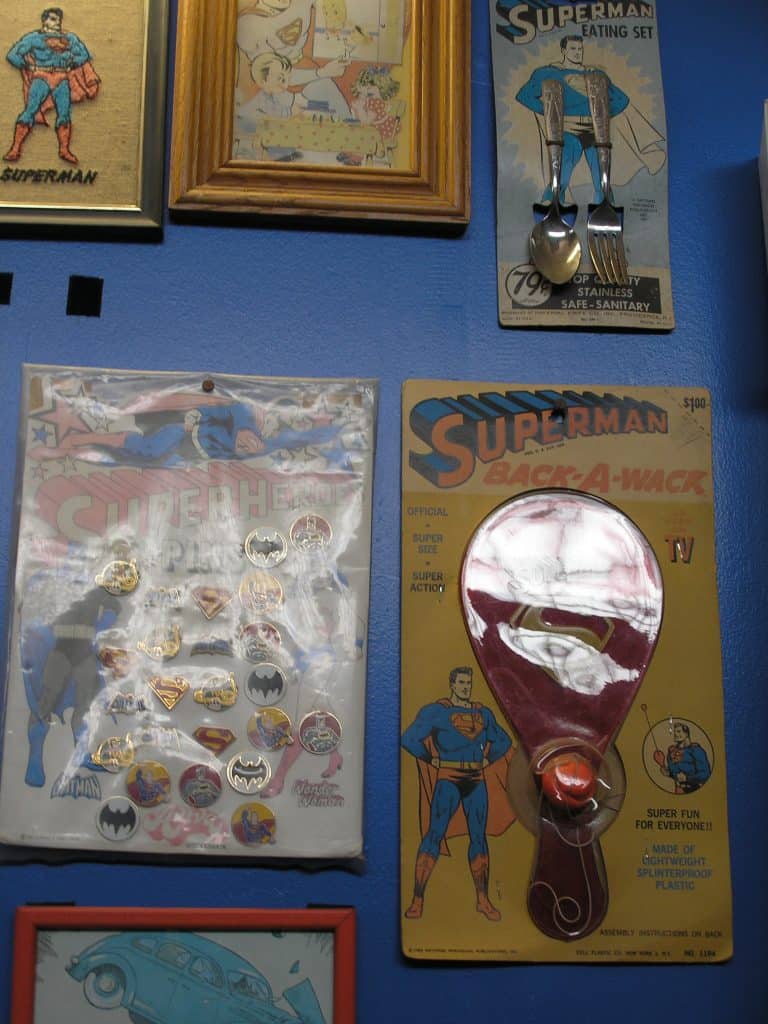
The display cases are also full. The exhibits are loosely arranged in chronological order, beginning with the Golden Age comics, moving into the Silver Age, the Christopher Reeve movies, and more modern iterations.
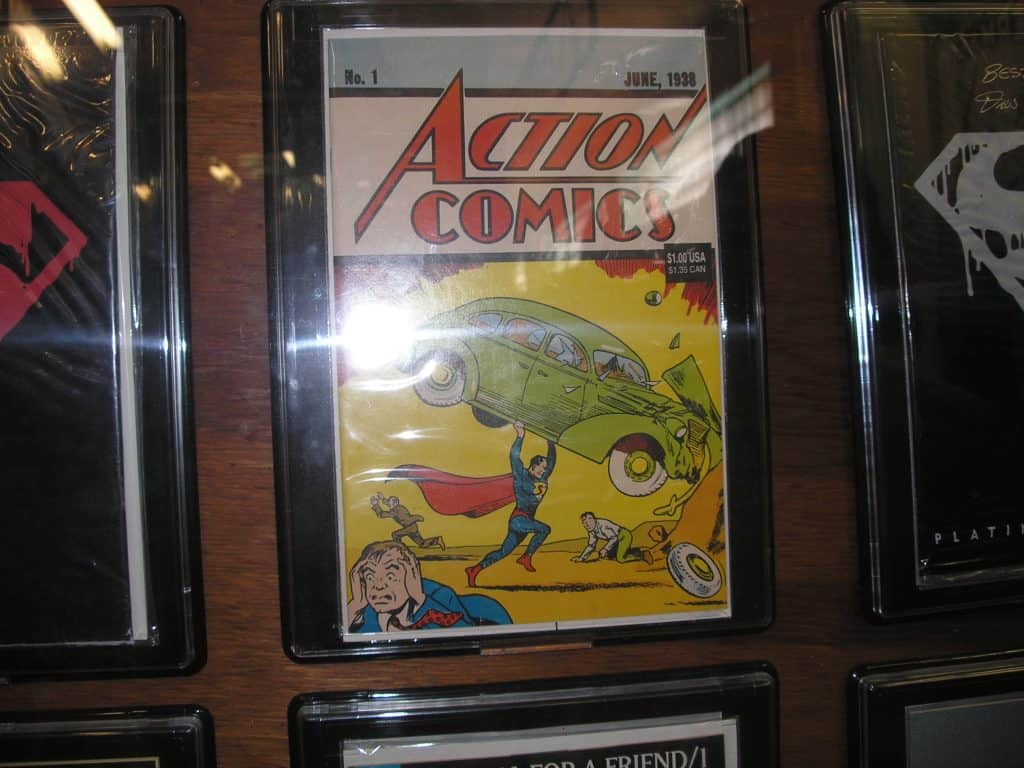
There are multiple film costumes, including a brown and grey one used for black and white filming in the 1960s. If you look hard enough, you’ll spot one of three copies of the coveted Action Comics No. 1, the first appearance of Superman. And of course, there’s that metal lunchbox that started the whole collection.
Your visit wouldn’t be complete without a spin around the gift shop. I look for a different fabric patch on each visit, but you’ll find everything from socks and button pins to candy and action figures.
Hambrick passed away in 2024, but his daughter Morgan Siebert is carrying on the legacy. In addition to operating the museum, she and her husband Adam have contributed to much of the public art that will be discussed in the next section.
Spending a Day in Metropolis
Your day in Superman’s hometown (officially adopted as such in 1972) doesn’t have to end after a few hours at the museum. The entire town embraces its comic book roots, so there’s plenty to explore.
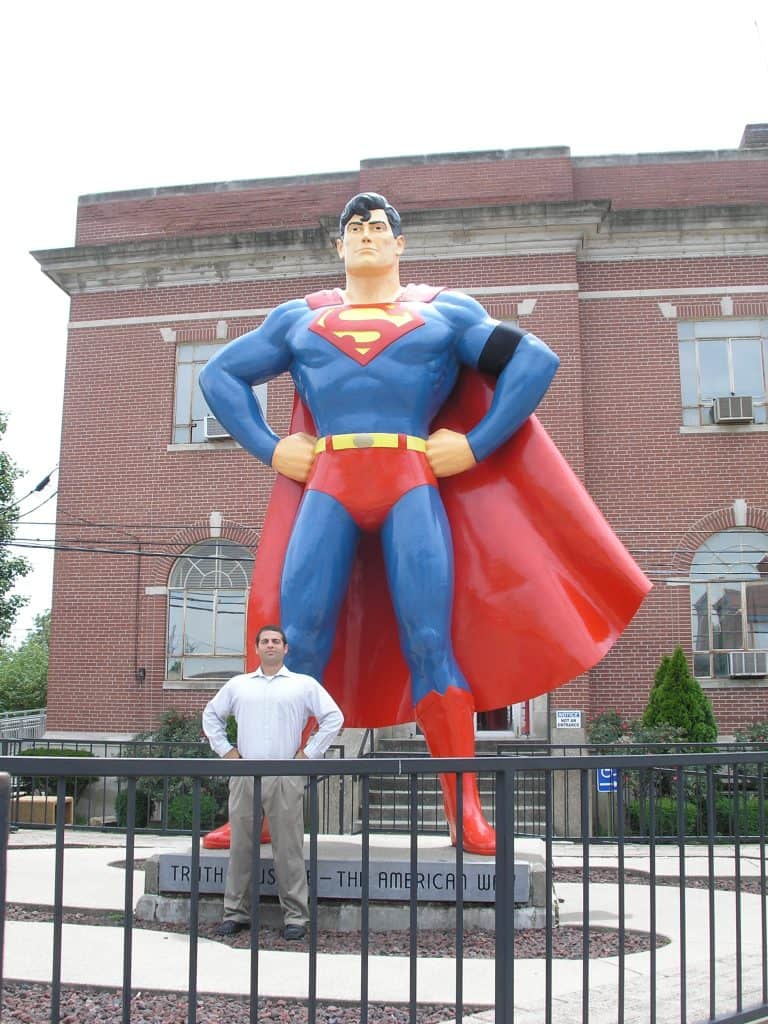
You’ll find interactive public art all around town. The most famous piece is the 15-foot-tall Superman statue in Superman Square, just around the corner from the museum. Beside it is the “Super City Metropolis” logo statue.
Across the street, on the back of the museum, you’ll find an enormous Action Comics No. 1 mural. If you position yourself just right, you can take a photo of yourself in the scene.
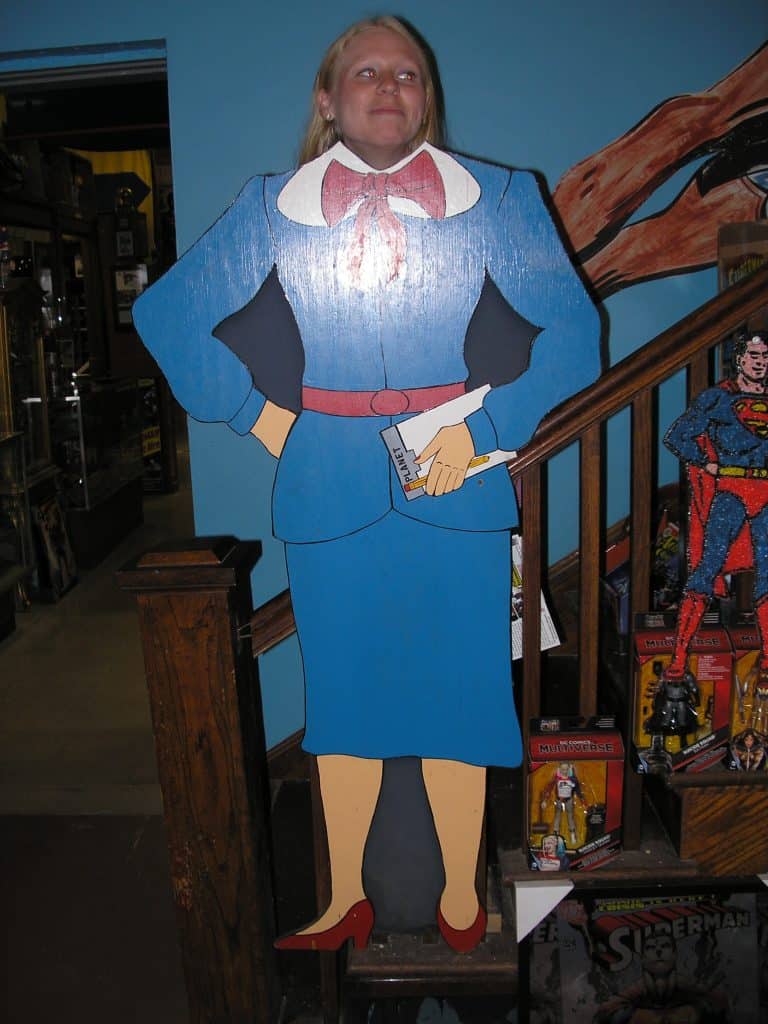
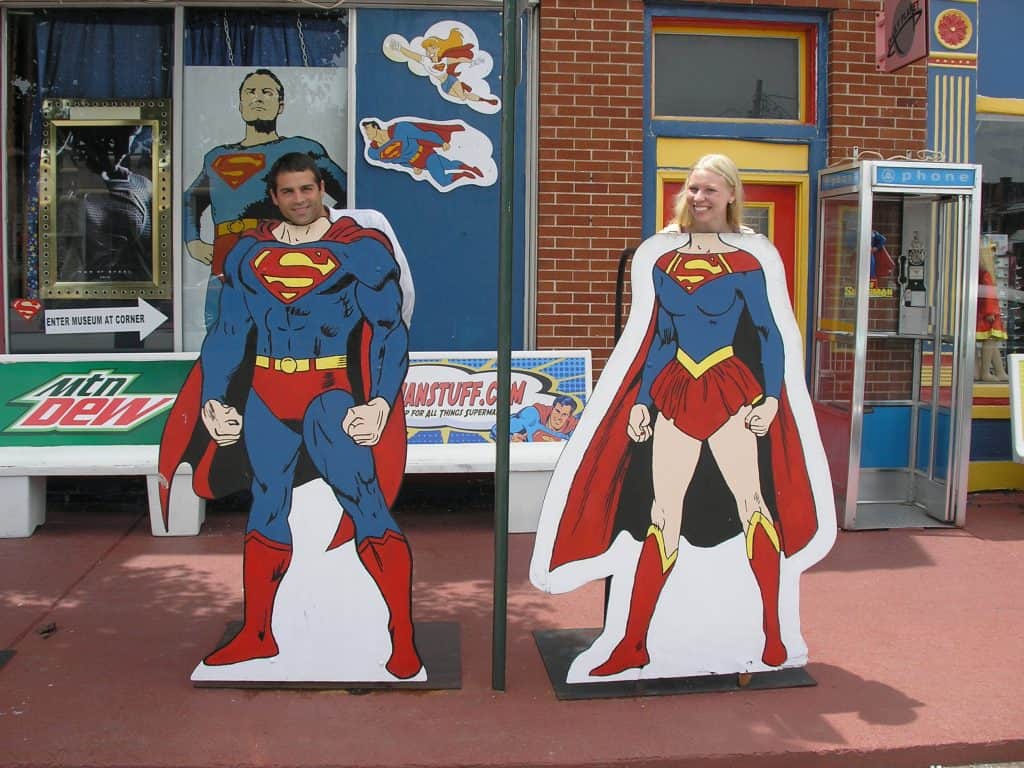
You can add your face to plywood cutouts of Superman and Supergirl. They’re usually near the museum entrance, but their position has changed a bit over the years. Don’t forget to pose in the iconic phone booth.
Another must-see is the Lois Lane statue at the corner of W 8th and Market Street. It’s a larger-than-life bronze of Noel Neill, who portrayed Lane in the 1950s.
If you dare, you can visit a large painted kryptonite rock at the corner of E 3rd and Ferry Street. This was once the location of the Americana Hollywood Museum, also curated by Hambrick.
You can make your photos extra special by dressing the part, from a simple Superman t-shirt to full-on cosplay. My go-to is a Superman logo tee partially concealed by a button-down shirt. If you don’t have one already, there is no shortage of Superman shirts for sale in Metropolis.
Speaking of souvenirs—if the Welcome Center and museum gift shops weren’t enough for you, check out Hidden Gems Novelty & Collectibles on Market Street. You can’t miss the Superman-themed Big Boy statue out front.
A bit further down Market Street is Super City Antiques & Collectibles. The building also features an Instagram-worthy Metropolis mural with Superman’s silhouette in the sky.
Unlike Superman, you’ll need more than the light from a yellow star to recharge. There are plenty of Superman-themed eats and drinks.
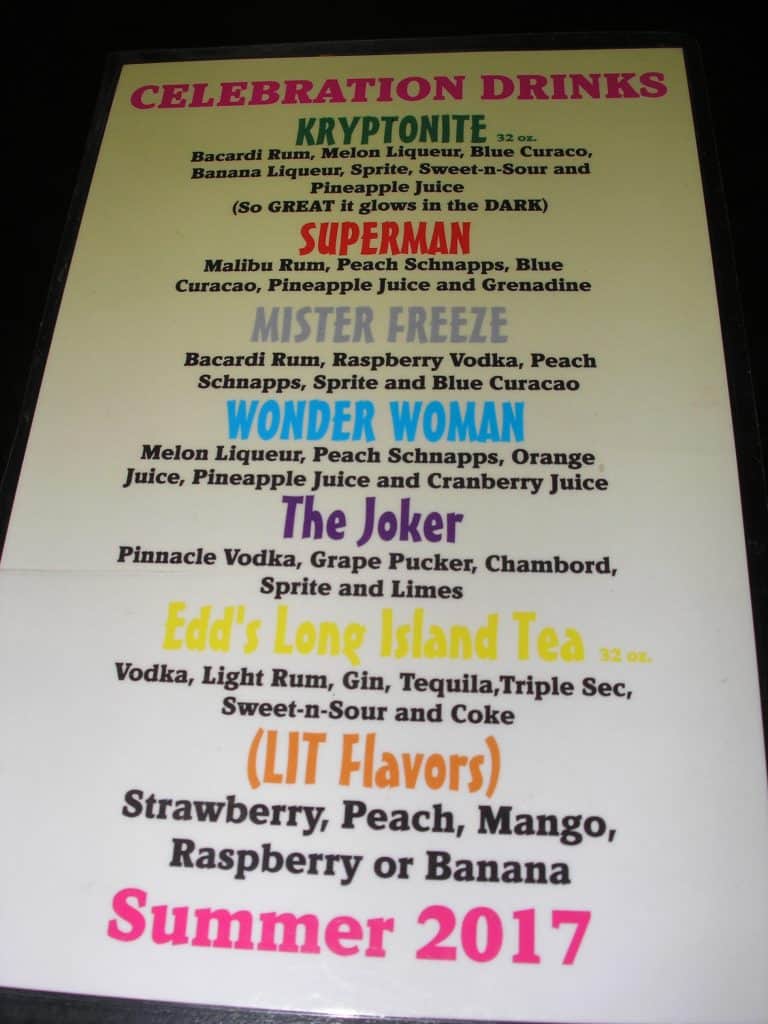
On my last visit, we ate at Fat Edd’s Roadhouse on Ferry Street. Along with their famous shrimp or ½ pound burger, you can enjoy a superhero-themed adult beverage such as the Kryptonite, Superman, Mister Freeze, Wonder Woman, or The Joker.
Another option is the Super Cafe and Ms. Lane Sandwich Shop, a takeout restaurant famous for its Fish Fry Fridays.
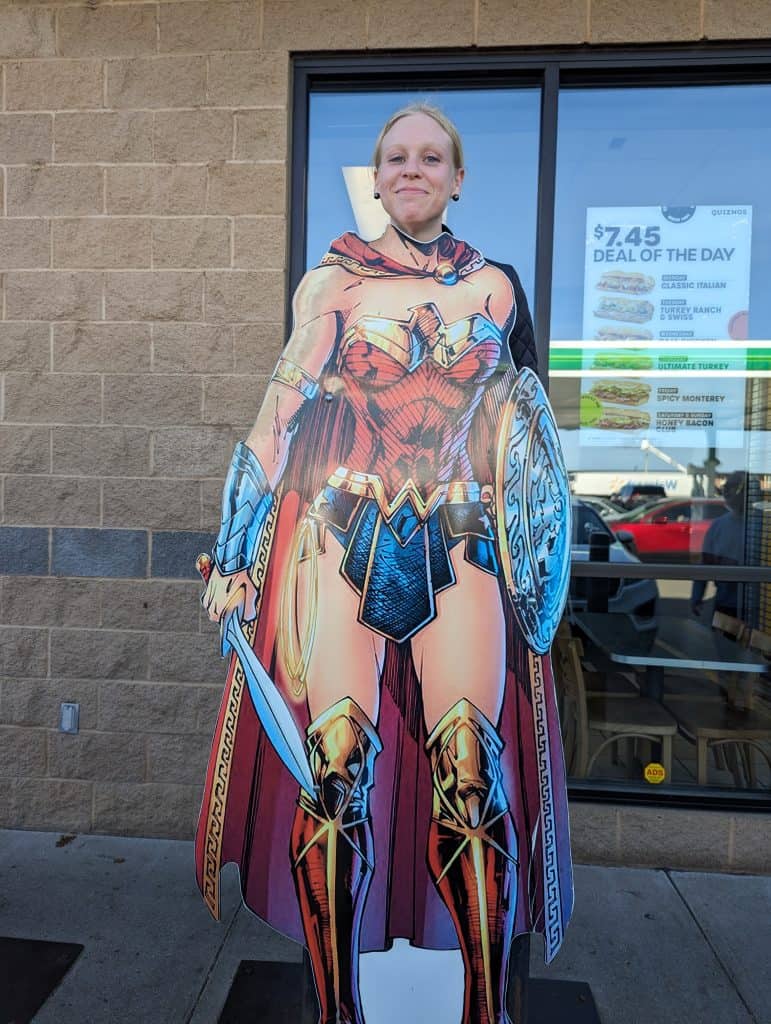
On your way out of town, stop at the BP fueling station nearest the interstate to take a photo as Wonder Woman, with the help of another cutout.
How to Get There
The Super Museum is open daily from 8 am to 6 pm. You can use the map below to navigate there:
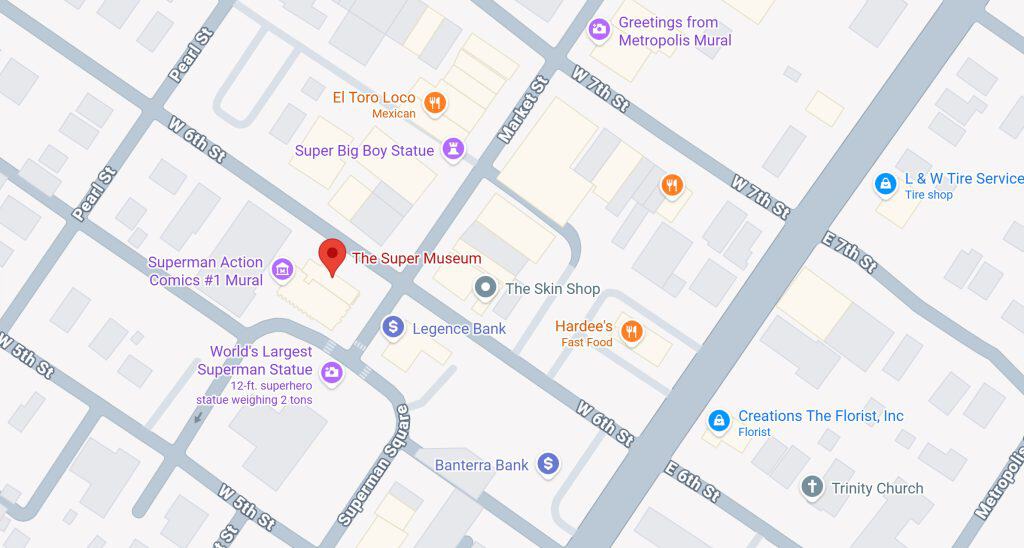
Where: Super Museum, 517 Market St, Metropolis, IL 62960
Jim Hambrick started collecting toys long before toy collecting was cool. The result is a multi-generational time capsule that you can visit in a town where reality and imagination collide.
More stories


Share this story