This Tiny Memphis Museum Is Like a Time Machine to the Birth of Rock and Roll

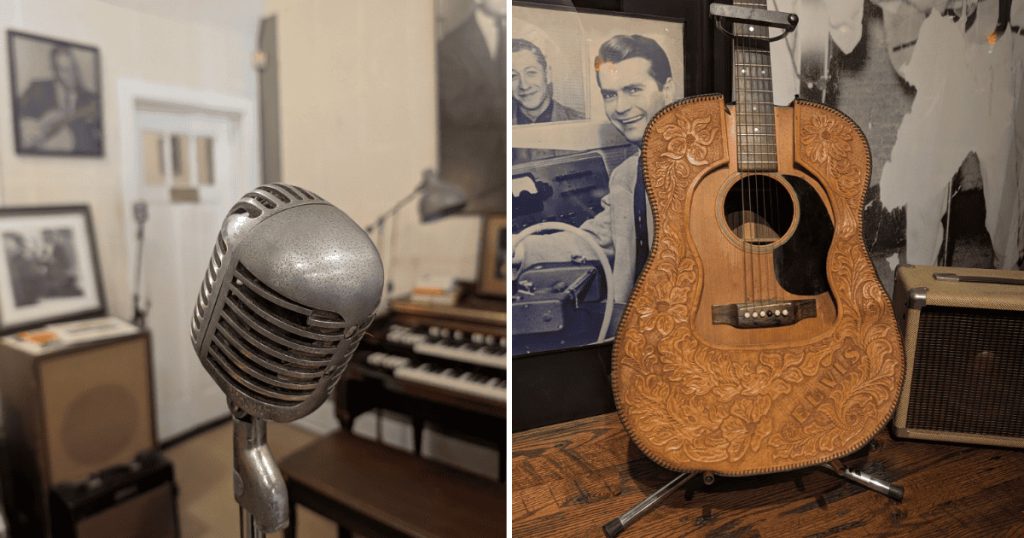
We stood in the small room, gathered between pianos, guitars, and a single bass violin. It was as hot as a Memphis summer day, and the acoustic tiles — more than 75 years old — gave off a musky, dusty smell. When the recording of The King and his companions began, a chill went up my spine, and I couldn’t help feeling that I was more than there—I was then.
Sun Studio in Memphis, Tennessee, is by far the smallest museum I’ve ever visited, but it’s also the most immersive. Come with me to this amazingly-preserved time capsule from the birth of rock ‘n roll.
Even if you’re not an oldies music fan—a genre encompassing the blues, country, and rock ‘n roll—you’ll recognize the legendary stars that Sun Studio discovered. If you’re an Elvis fan like me or a Johnny Cash or B.B. King fan like my husband, you’re in for a real experience.
Entering The Cradle of Rock and Roll
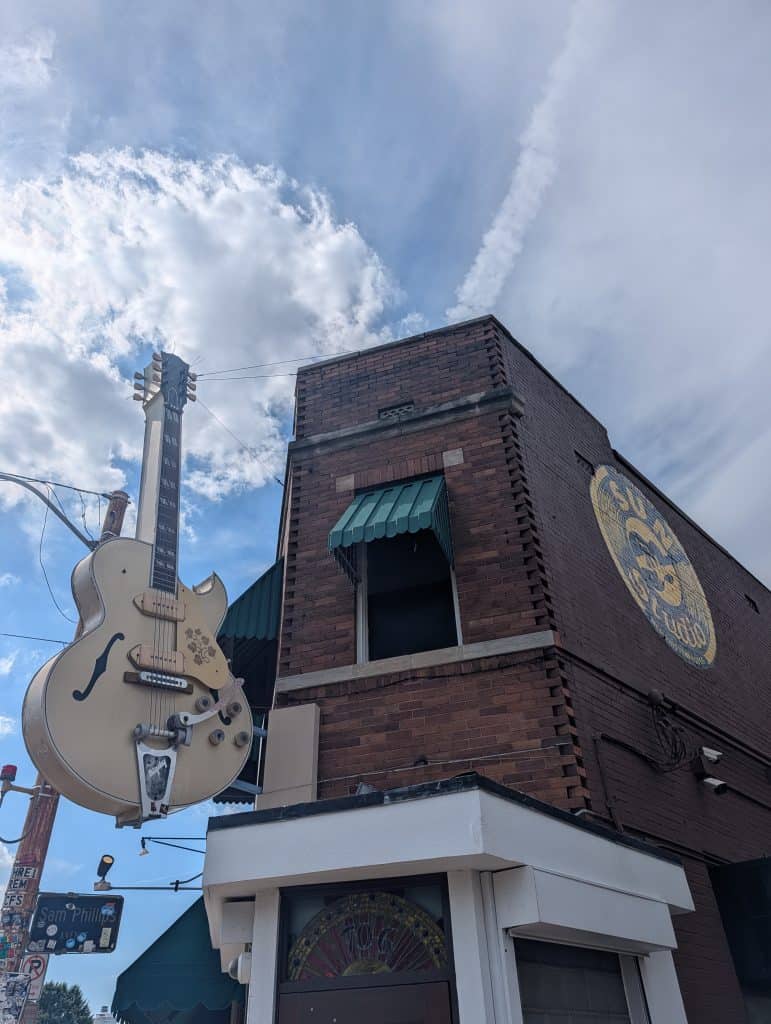
Positioned at the corner of two streets, the historic brick building is impossible to miss—a huge guitar extends from its narrow front. The shady alley along its right side is adorned with murals of the studio’s early and contemporary logos. Portraits of its greatest stars fill the frames of windows and doors.
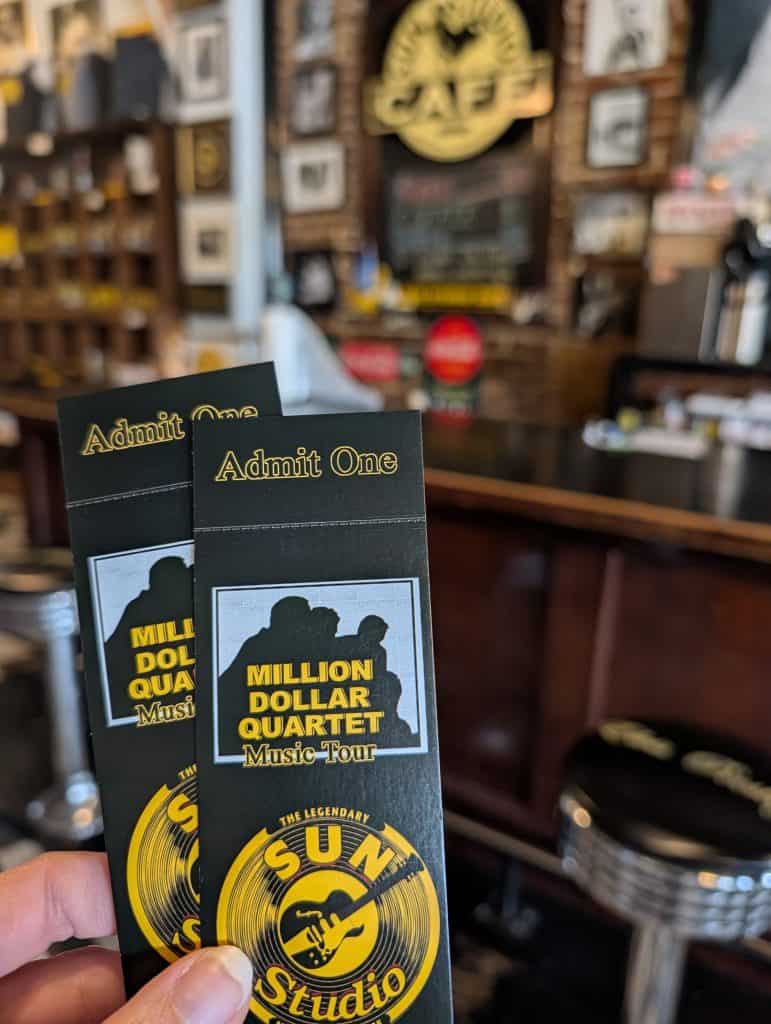
The front entrance takes you into the museum’s gift shop and cafe, which doubles as a waiting area for your tour. Until 1977, this adjoining space was Taylor’s Restaurant, where studio owner Sam Phillips held business meetings with his artists.
You can grab a hot coffee or cold soda and enjoy it perched on a barstool embroidered with the name of a Sun Studio star. Or you can browse t-shirts, patches, stickers, guitar picks, and other memorabilia.
The museum recommends arriving 15 to 20 minutes before your desired tour time. Unfortunately, my group walked in the door with only a few minutes to spare.
Only two spaces were left in the tour that was about to depart, and we were a group of eight. But, epitomizing Southern hospitality, the cashier said, “Let me check…” He returned a few moments later, smiled, and added us to the tour.
The Stories One Building Can Tell
I’ve been to a lot of museums, but this was the first in which all tours were guided. Uniquely, each tour guide is also a musician.
Our guide was a member of the Memphis-based indie rock band Blvck Hippie. Hearing music history from a contemporary musician adds another layer of authenticity to the experience.
He tore our tickets and ushered us upstairs. The room was small and a bit cramped, lined with glass display cases on every side.
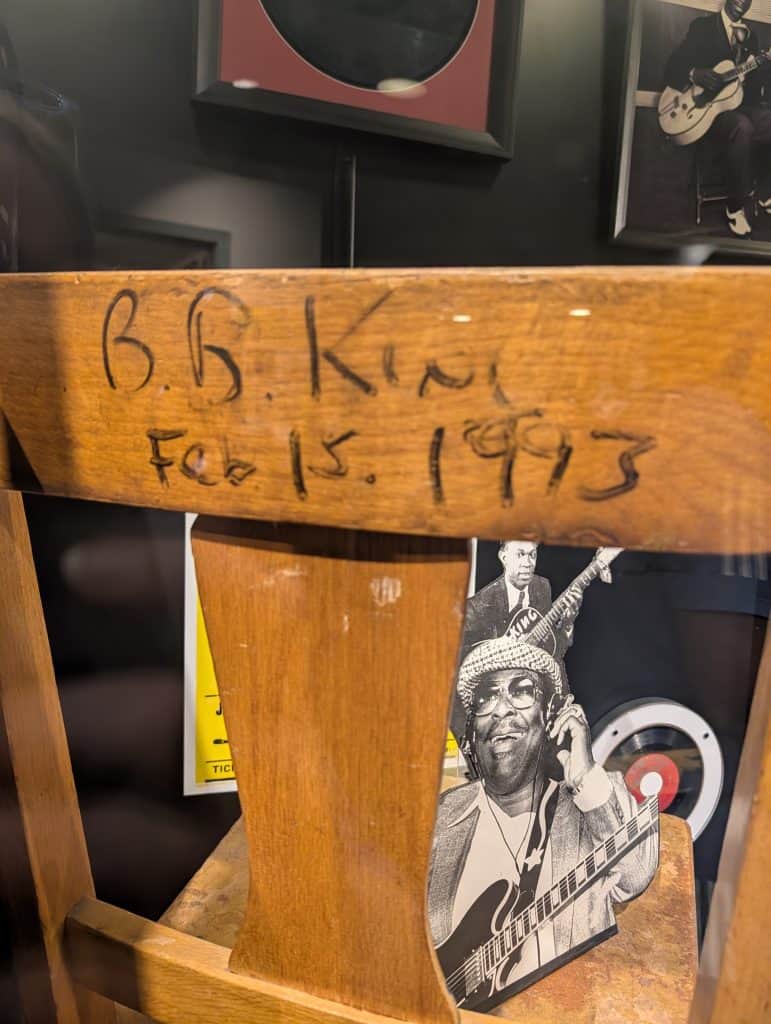
Then, our guide wove a story of serendipity and discovery. In the 1940s, Sam Phillips worked as a radio DJ and sound engineer, but he wasn’t in love with the popular music he played. His interest was in the “gritty” sounds rife in the Memphis night life, sounds that went unrecorded.
He acquired some portable recording equipment and started the Memphis Recording Service, making records of music, funerals, and anything else anyone was willing to pay for. You can see the equipment and a record from a local beauty pageant in the first display.
In 1952, Phillips founded Sun Records. He discovered new artists who would make rock and roll mainstream—and you’ll hear original recordings of some of the first rock and roll stars during the tour.
In the center of the room is a recreation of the on-air booth of Dewey Phillips, a pioneering disc jockey who changed radio forever. According to our guide, Dewey felt he could do a better job than the local DJ at the station, so he set fire to a trash can outside the man’s office. When the DJ ran out to check on it, Dewey slipped inside and locked the door behind him.
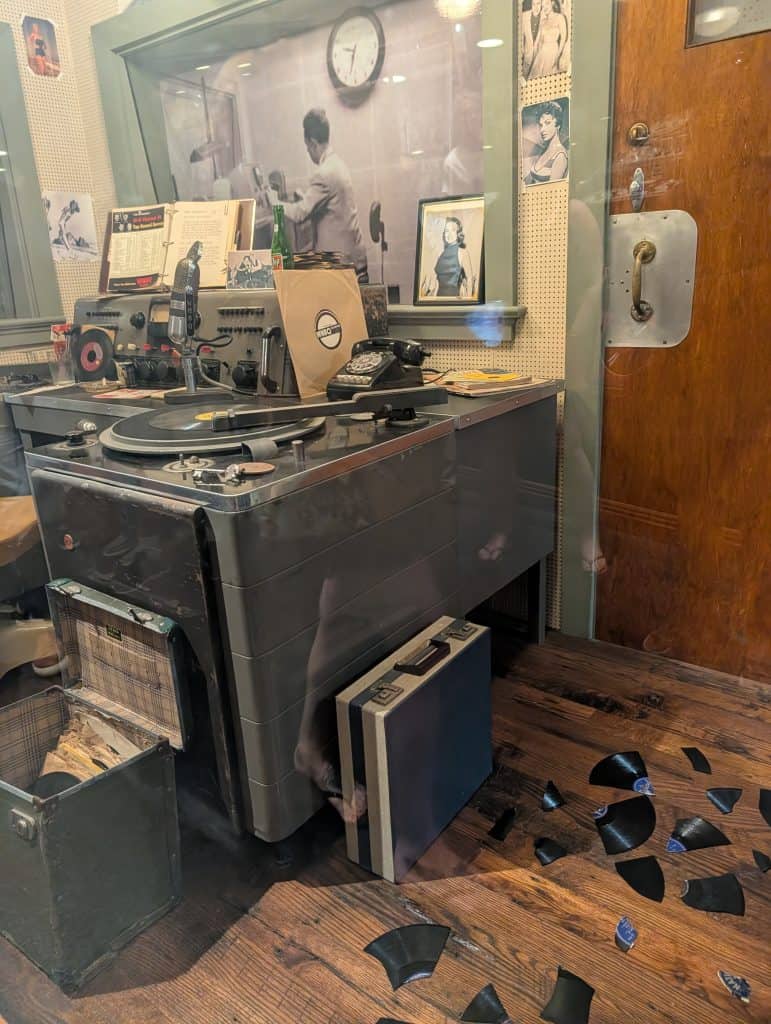
Fans enjoyed his broadcast style, and he ultimately took the other guy’s job.
The display has a broken record on the floor. When Dewey played something he didn’t like, he smashed it over his microphone on-air, coining the term “smash hit.”
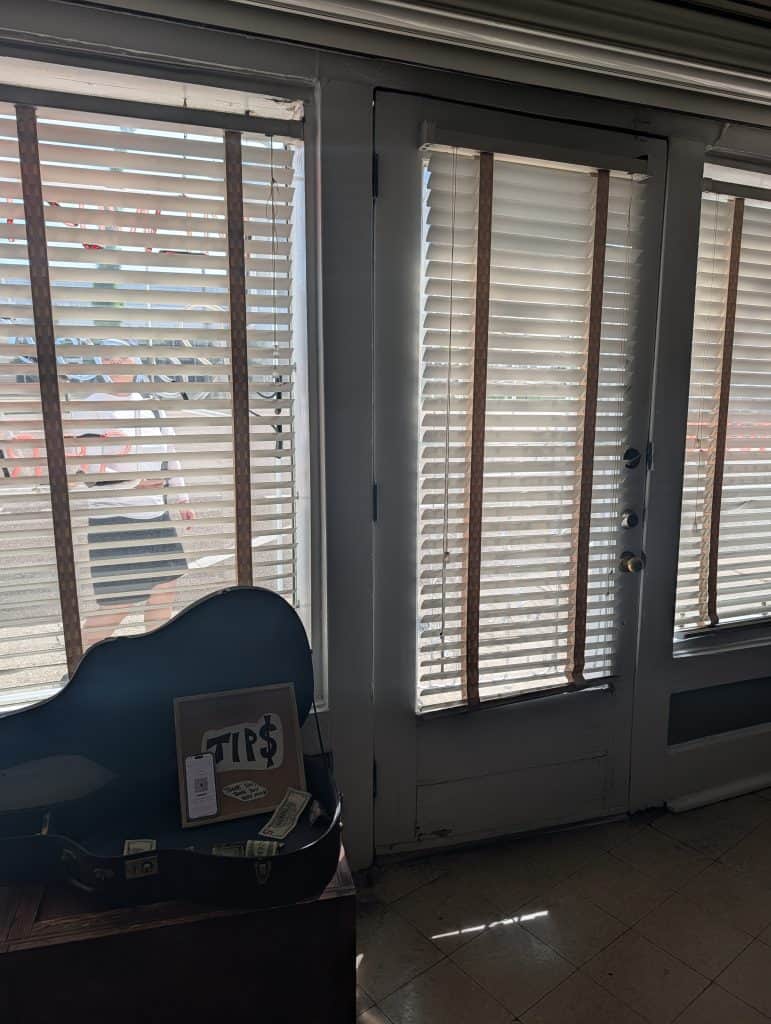
We were given a few minutes to take a closer look at the displays before moving downstairs for the second half of the tour. Turning a corner, we entered a brightly lit office, afternoon sun filtering through the blinds. It was warmer than comfortable, evoking a time before air conditioning was widespread.
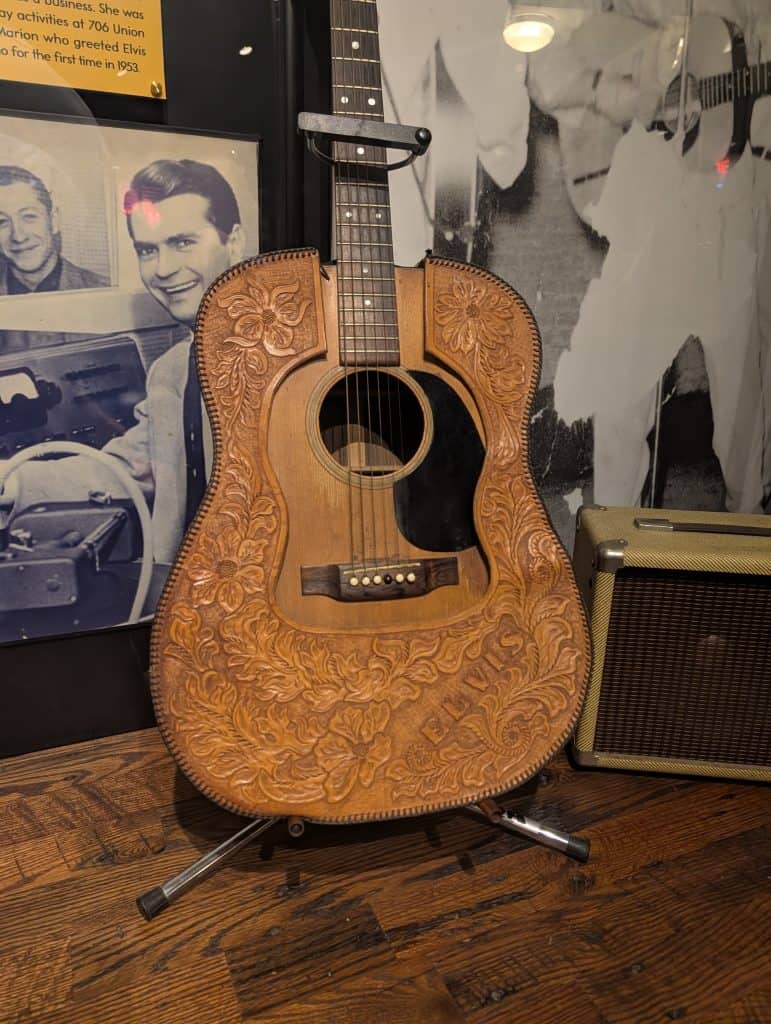
The desk had a nameplate for Marion Keisker, Sam Phillips’ assistant. Our guide motioned to the door and said, “Elvis Presley walked through that door.” He then told us how Phillips was not there the day young Presley came to record a ballad, but Keisker was impressed.
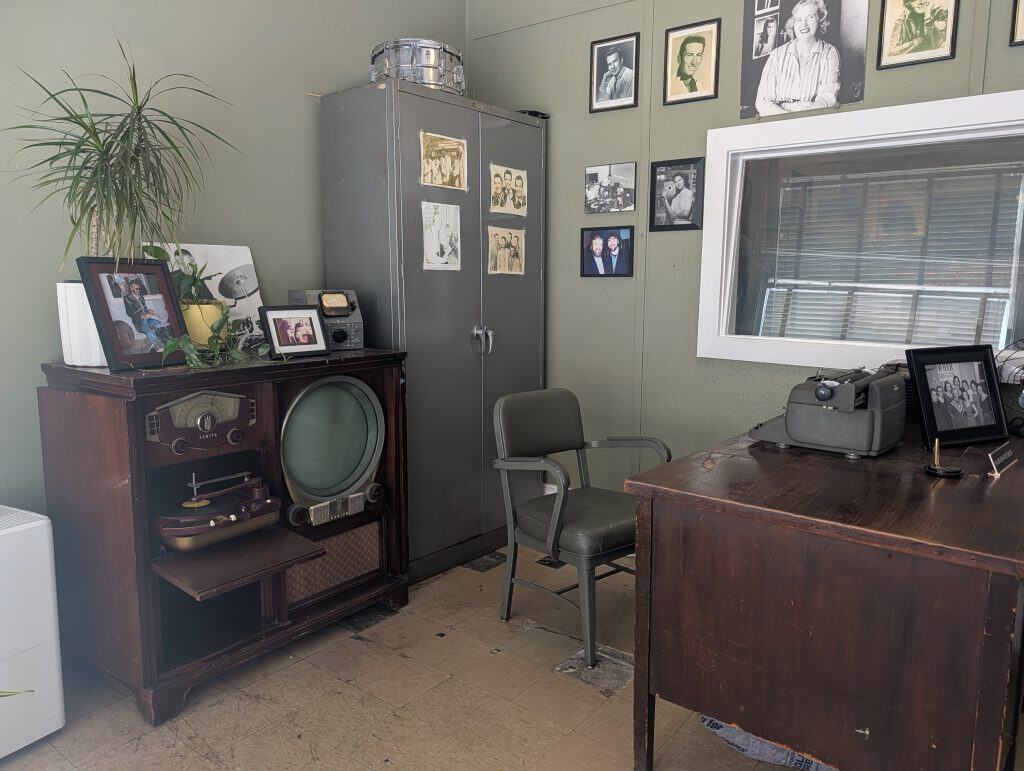
Usually, she’d make just one copy of the recording, which the client would take with them. This time, she made a second copy for Phillips to listen to, on which she wrote “Elvis Presley—Good Ballad Singer.” If she hadn’t, Elvis’ story might have turned out differently.
Then, we entered the studio itself. The original acoustic tiles still adorn the walls and ceiling, inadvertently preserved by a layer of drywall during the years that the studio was used as a laundromat.
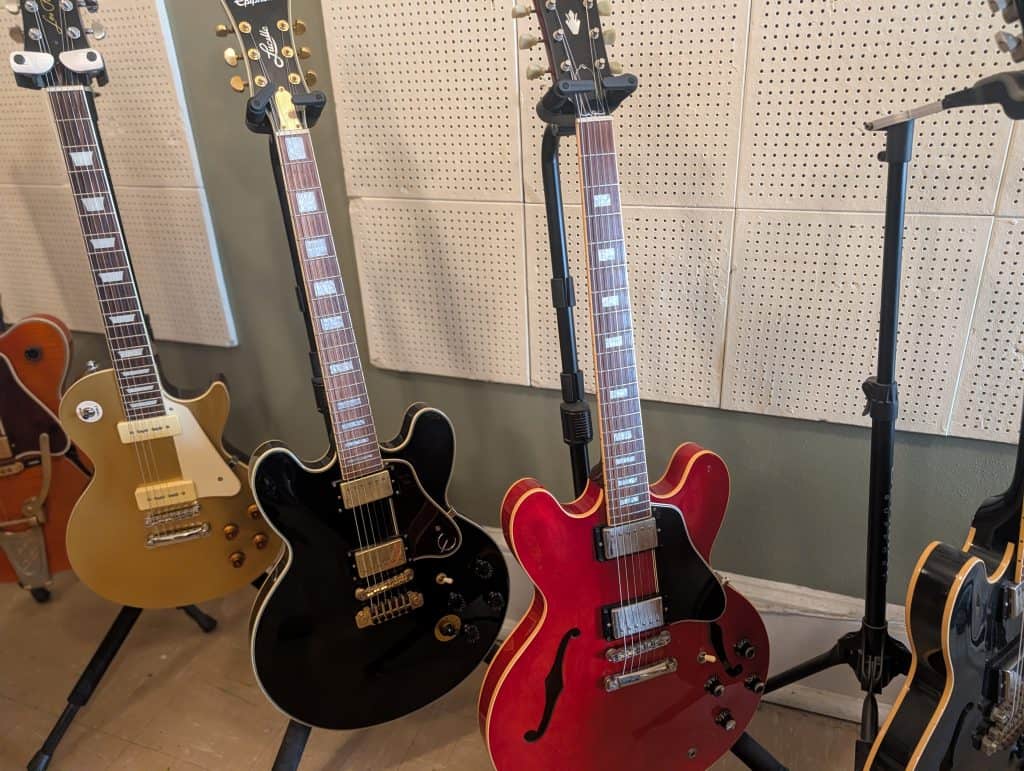
Instruments lined every wall. A vintage fan circulated warm air. We could see into the sound booth, where employees were preparing for a recording session later that night.
Our attention was drawn to three painted X’s on the tile floor. “Sam Phillips drew those X’s himself,” our guide explained, to mark the spots where Elvis and his bandmates stood on the day he had them audition.
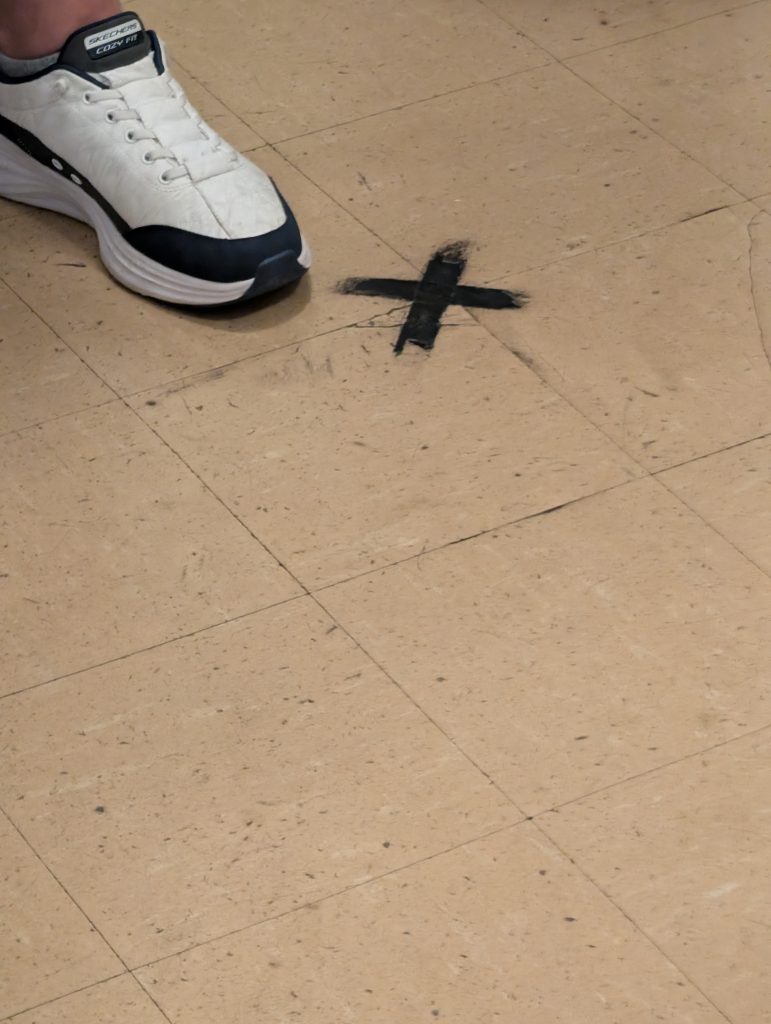
Interestingly, Phillips didn’t like the song Elvis played that day. Then Elvis switched to a blues song — one Phillips was surprised he knew. The rest was history.
Our guide demonstrated how Johnny Cash had used guitar strings to make the “train” sound in his songs, since it’s the Grand Ole Opry. Then, he grabbed a heavy antique microphone from a corner.
“Sam Phillips donated this to the museum before he died,” he said, “But he stipulated that it wouldn’t be put behind glass. He wanted people to be able to touch it and interact with music history.”
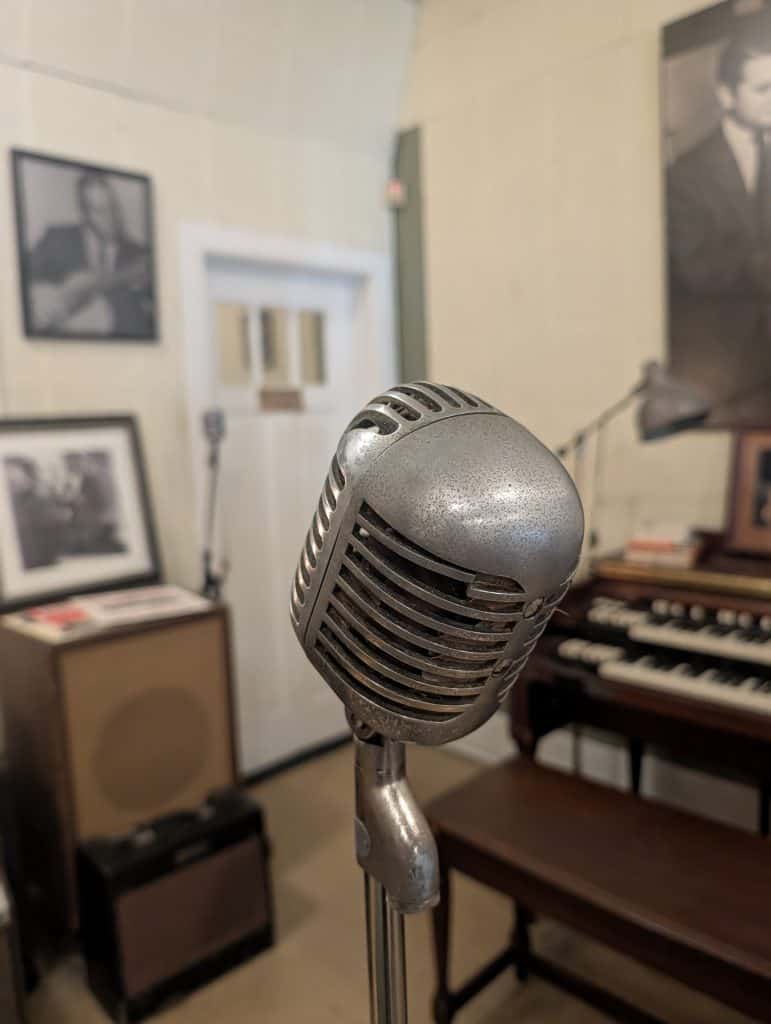
He then told us that this was the microphone that Elvis had used, that Johnny Cash used, that so many others had used when they recorded in this very studio. It was the frontman mic.
Then he drew our attention to a print of the famous Million Dollar Quartet photo on the wall. In the photo, you could see the same acoustic tile that surrounded us.
He explained that Elvis had been with RCA for two years when he walked through the door (that same door) to visit his friends at Sun Studio. Johnny Cash, Jerry Lee Lewis, and Carl Perkins were there.
“What do musicians do when they get together?” our guide asked. “They jam.”
Since Elvis was signed to another label, he couldn’t legally record with Sun. But the equipment was still in place from an earlier session, and Phillips discreetly started recording.
Since he couldn’t use the recordings, he kept them hidden away. They were discovered decades later, and the estates and studios of the artists eventually agreed to release 75 minutes.
The guide hit play, and suddenly Elvis was in the room with us. He was just laughing and talking with his buddies, unaware he was being recorded. Cash and the others replied, and they began playing the piano and singing together.
When the recording stopped, the room was quiet for a moment. It was like we had all awoken from a dream. One visitor was moved to tell the group that his father had been Elvis’ milkman, opening the back door at Graceland to place bottles in a refrigerator inside.
Our guide left us then to revel in this portal to the past. We stood on the X marking the spot Elvis stood and posed to take pictures, leaning with the heavy microphone. Half of our group sat at the piano and recreated the iconic Million Dollar Quartet photo, then the other half did the same.
Become a Part of the Story
After the museum closes each day, Sun Studio revisits its roots, becoming an active recording studio. Sessions start at $200.00 per hour, with a minimum of three hours, allowing you to become part of nearly a century of music history and walk home with a newly minted master recording.
More to Do Near Sun Studio
Tripadvisor ranks Sun Studio as the number one attraction in Memphis, but there are plenty of other worthy stops to complete your day. Sun Studio is located just one mile from the river and Beale Street—a 5-minute drive or a 20-minute walk—so there’s no shortage of things to do nearby.
After our tour, we walked down the street, passing a souvenir shop with a statue of Elvis outside, to the Edge Motor Museum.
We were told to ask for Studebaker Bob, but it was Thunderbird Paul providing museum tours that day. His powder blue Thunderbird was parked outside, a pair of blue suede shoes on the front floorboard. “They’re my cupholders,” he explained.
Like Sun Studio, Edge provides guided hour-long tours for just $10.00. It’s the only car museum in Memphis, and it contains rare finds like Elvis’ racecar. If the nearby parking lot isn’t crowded, you can take a photo of your own car in front of a mural that makes it look like a packaged Hot Wheels model.
How to Get There
Sun Studio is located at 706 Union Avenue, at the corner of Union and Marshall Avenues. It’s a narrow brick building with a huge guitar-shaped sign spanning the front of the second story. You can navigate to Sun Studio using the map, below:
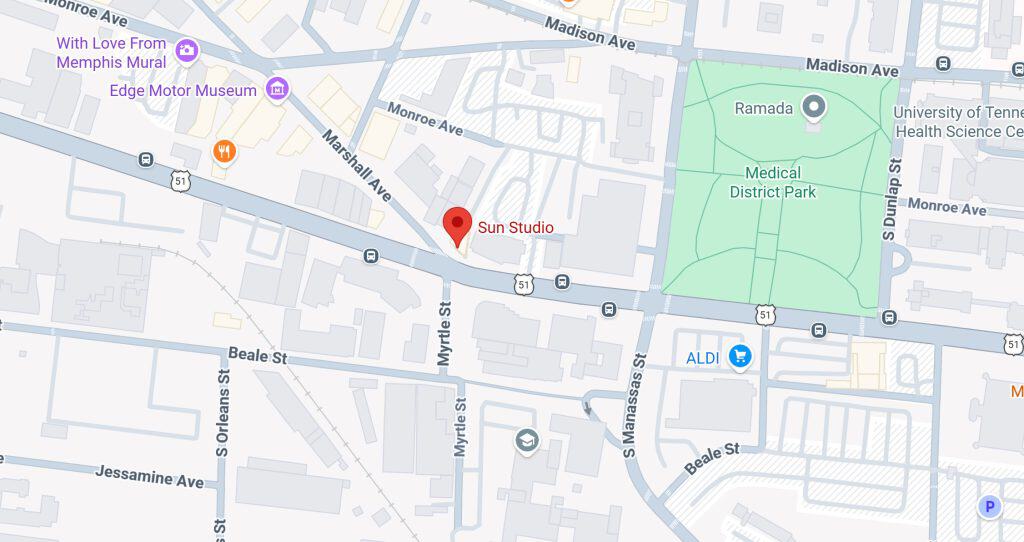
Where: Sun Studio, 706 Union Ave, Memphis, TN 38103
Free parking is available behind the building. To park, you’ll need to drive around the block and enter from Monroe Avenue.
The museum is open daily from 10 am to 5:15 pm. Tours start on the half hour: 10:30 am, 11:30 am, 12:30 pm, 1:30 pm, 2:30 pm, 3:30 pm, and 4:30 pm. The museum is closed on Thanksgiving Day and Christmas Day, and it opens at noon on New Year’s Day
You can also reserve private group tours for groups of 20 or more. These tours are hosted on the hour rather than the half hour.
Tickets are $20.00 for adults and $15.00 for children age 11 and under. They are sold upon arrival only on a first-come, first-served basis, but you can purchase in-person tickets for a later tour the same day, or online vouchers that cover payment but do not reserve a specific time. Tours last approximately 40 minutes.
Because the building is designated as a National Historic Landmark, major renovations cannot be made—including making the museum wheelchair accessible. The gift shop and studio portion of the tour are wheelchair accessible, but stairs make the first half of the tour inaccessible.
The music and personalities that passed through Sun Studio put Memphis on the map. You can step back in time when you visit Sun Studio.
More stories

Share this story