These 12 Swimming Holes Across America Are Worth Building a Summer Around

Every summer of my childhood seemed to circle back to the same exact question: which creek, quarry, or spring-fed pond were we driving to next? A community pool never quite scratched the same itch as water that came with a story attached to it.
Turns out that instinct holds up nationwide. Scattered across the country are swimming holes that didn’t get built so much as discovered, carved by glaciers, springs, waterfalls, and the occasional stubborn human determined to dam a creek by hand.
Here are twelve of them, spanning twelve different states, each one proving that the best place to cool off rarely comes with a turnstile or a snack bar.
A few of these are wide open and easy to reach without much planning. Others demand a permit, a long drive, or a healthy respect for cold water and slippery rock. Every single one earned its reputation the old-fashioned way, through decades of pure word of mouth.
1. Blue Hole Regional Park, Texas
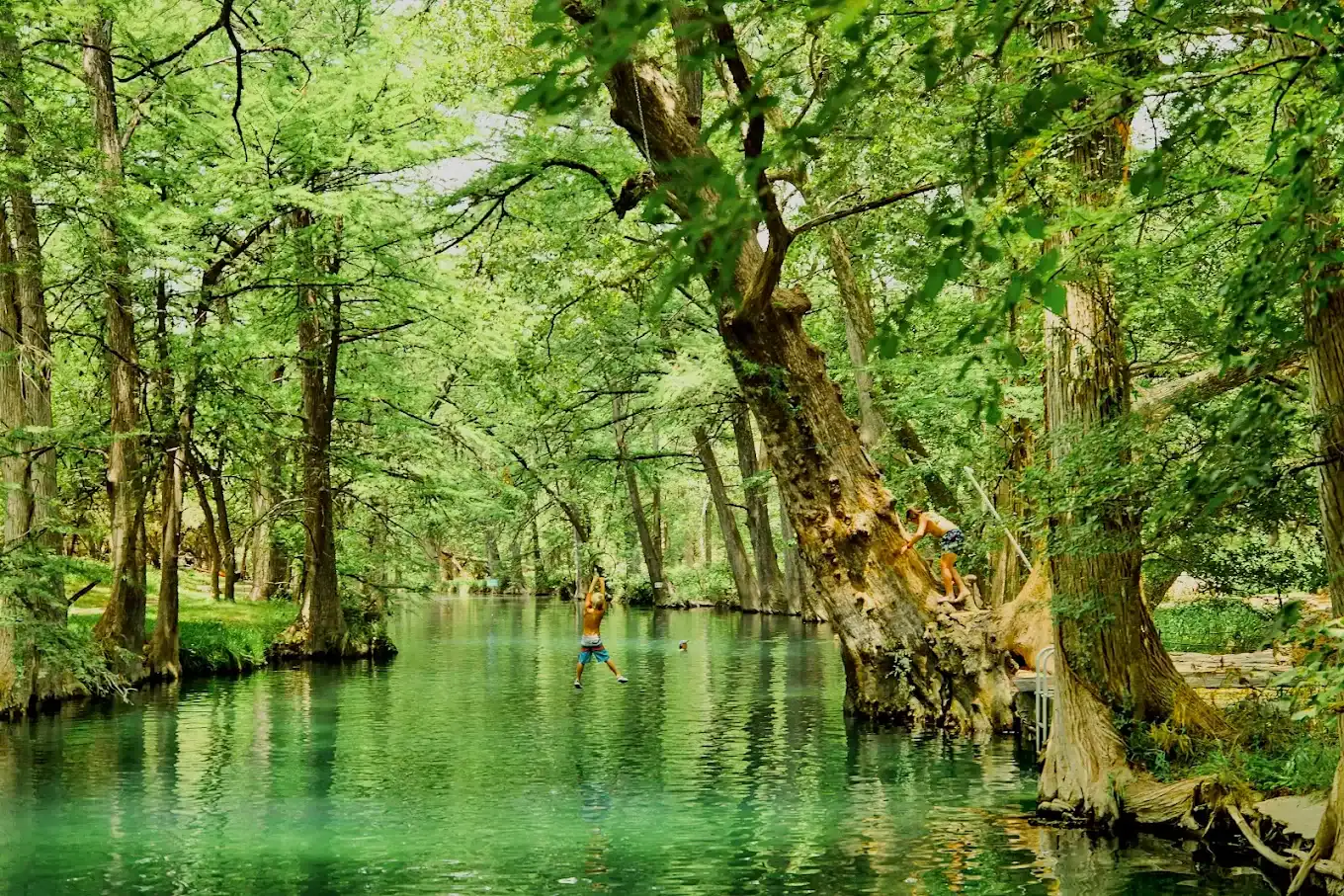
Cypress Creek feeds this spring-fed swimming hole in the Texas Hill Country, where towering bald cypress trees lean over water that’s earned national recognition more than once. Travel + Leisure named it one of the top 12 swimming holes in the country back in 2010.
USA Today followed in 2018, naming Blue Hole one of the top 10 swimming holes in the nation, while the American Society of Landscape Architects gave the park’s design an Honor Award in 2011 for how thoughtfully it balanced recreation with conservation.
Swim season runs from May 1 through Labor Day, plus weekends in September, with the cypress canopy keeping the whole scene shaded even on Texas’s most punishing afternoons. Generations of local kids have learned to swim in exactly this water.
The park’s design earned additional recognition over the years too, including a 2018 Austin Green Award and a national project award from the Society of Outdoor Recreation Professionals, proof that protecting a swimming hole properly can be its own kind of craftsmanship.
Where: 333 Blue Hole Lane, Wimberley, TX 78676
2. Queen’s Bath, Hawaii
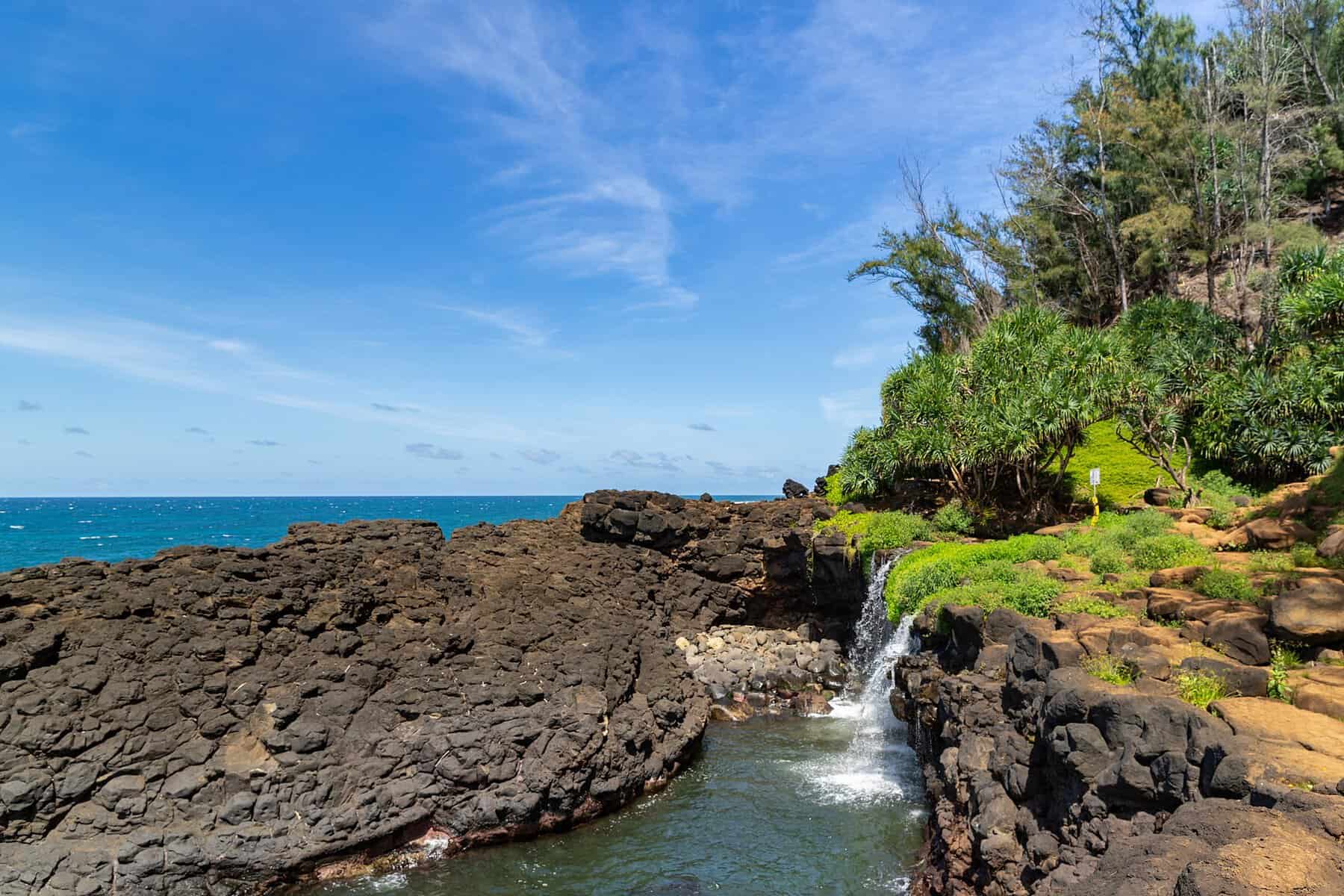
Carved into a lava shelf on Kauai’s north shore, Queen’s Bath takes its name from a different site entirely, the original Queen’s Bath on the Big Island, a spring-fed lava pool once reserved for Hawaiian royalty until lava destroyed it in 1987.
After that loss, the name simply migrated to this Princeville tide pool, where green sea turtles now drift past swimmers on calm days. The hike down is short, but steep and often muddy, descending through red dirt and exposed tree roots.
This is one swimming hole where caution genuinely matters. Surf conditions shift fast, and the pool closes seasonally during winter’s roughest swells. Check the surf report before heading down, and never turn your back on the ocean side of the rocks.
Locals generally recommend visiting only when surf forecasts read calm, and even then, staying well back from the lava ledges that separate the pool from open ocean. Beauty and danger sit unusually close together at this particular spot.
Where: Punahele Rd, Princeville, HI 96722
3. Toketee Falls, Oregon
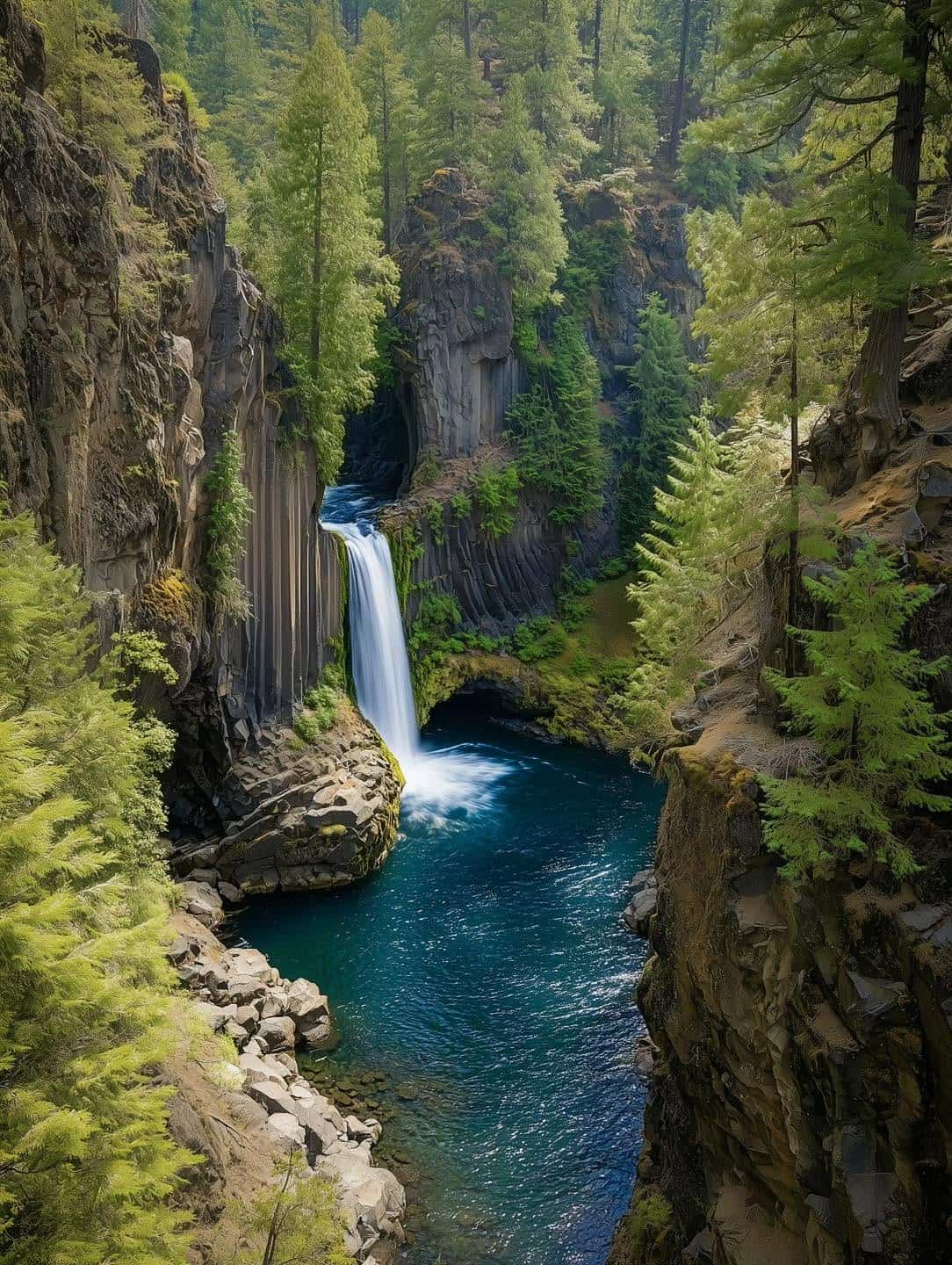
Toketee means “graceful” in Chinook Jargon, and the name fits this two-tiered, 113-foot waterfall pouring through ancient columnar basalt in the Umpqua National Forest. Lava flows roughly 750,000 years ago shaped the hexagonal rock walls framing the falls.
A short, easy trail leads to a viewing platform overlooking the falls, passing an enormous wooden pipeline that diverts much of the North Umpqua River to a nearby hydroelectric plant, a 1949 engineering project that keeps the falls flowing steadily year-round.
The deep pool below has long drawn swimmers and photographers alike, though the basalt stays slick and the currents below the falls can be deceptively strong. Nearby Umpqua Hot Springs makes a perfect follow-up stop after cooling off here.
The surrounding old-growth forest of Douglas fir, western red cedar, and big leaf maple gives the entire gorge an almost prehistoric feel, dense and green enough that several visitors compare the setting to a tropical rainforest rather than the Pacific Northwest.
Where: 18782 North Umpqua Highway, Glide, OR 97443
4. Sliding Rock, North Carolina
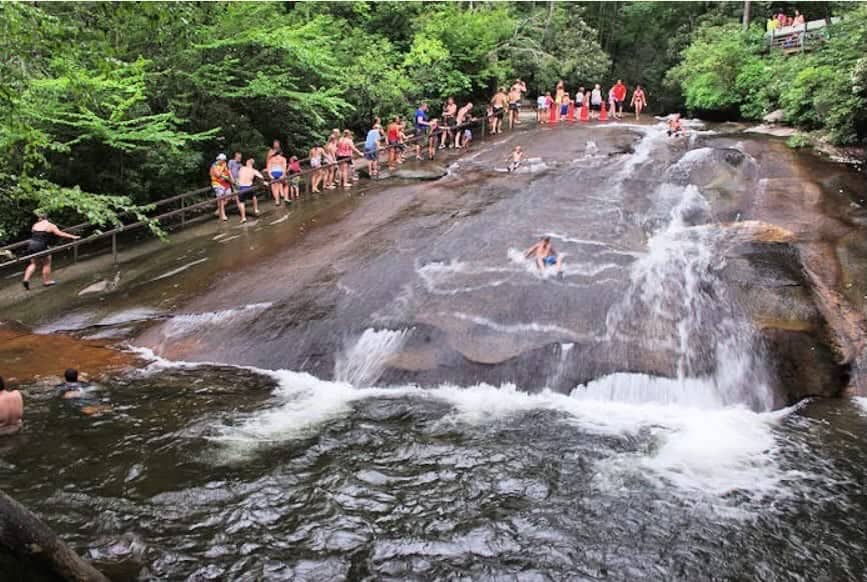
This 60-foot natural water slide on Looking Glass Creek sits on land once owned by railroad tycoon George Vanderbilt, whose widow sold roughly 86,700 acres to the federal government in 1914, creating the first national forest carved from private land.
Eleven thousand gallons of water rush down the sloped boulder every single minute, depositing sliders into an 8-to-10-foot pool that stays a brisk 50 to 60 degrees regardless of the season. Lifeguards staff the area daily from Memorial Day through Labor Day.
Patience helps here, since lines form fast on hot weekends. Nearby Looking Glass Falls and the historic Cradle of Forestry make easy add-ons if you want to turn a quick dip into a full day exploring Pisgah National Forest.
Generations of local families have ridden the same boulder, with at least one longtime visitor recalling sliding it as an eight-year-old decades before lifeguards, observation decks, or proper restrooms ever existed at the site.
Where: 1600 Pisgah Highway, Pisgah Forest, NC 28768
5. Devil’s Punchbowl, Colorado
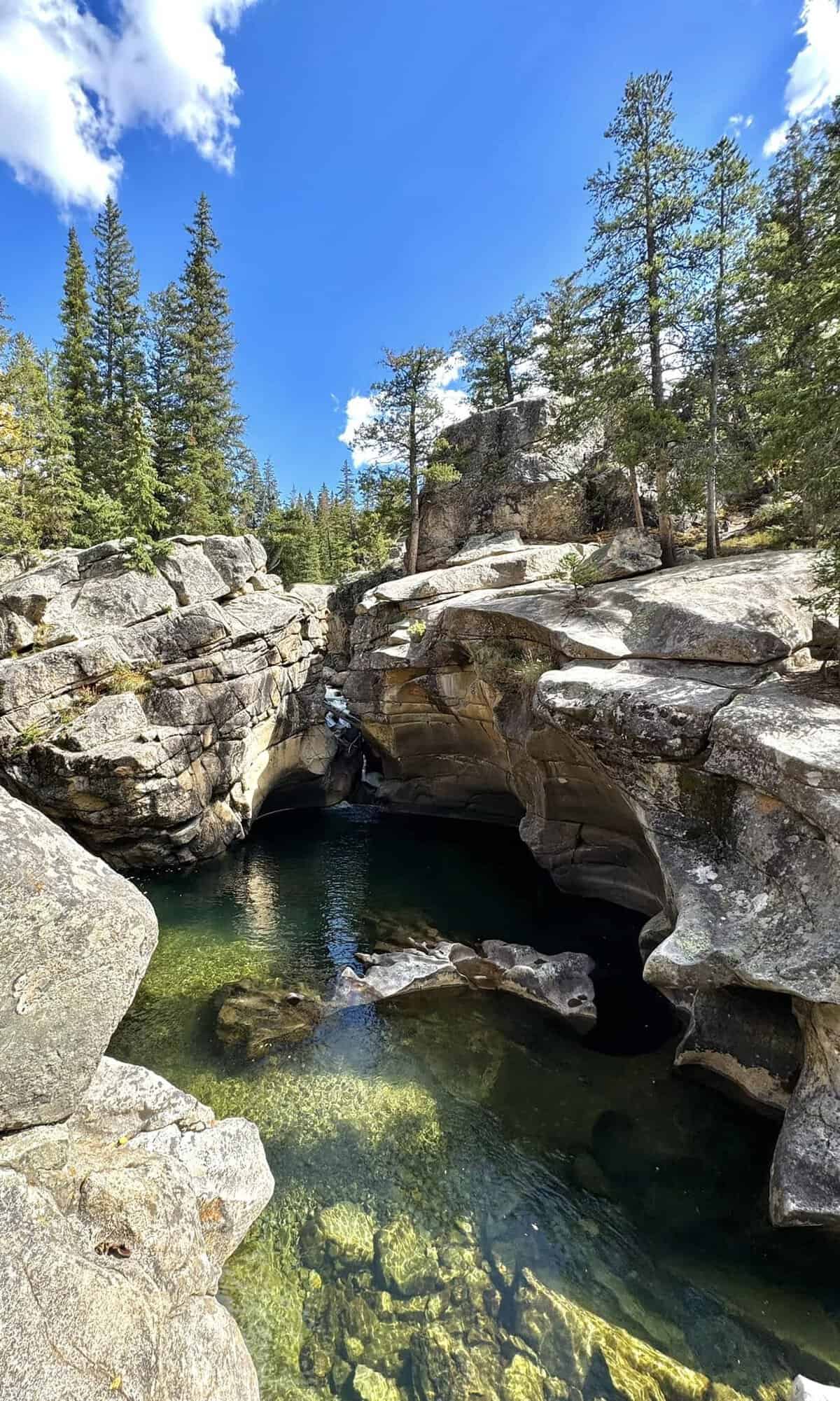
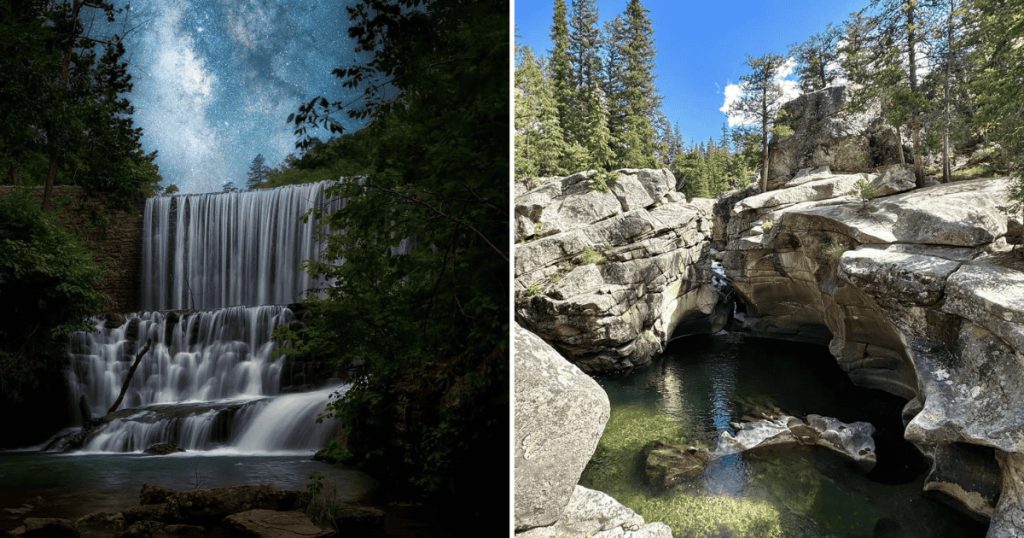
The Roaring Fork River carved this deep granite bowl into the canyon bedrock along Independence Pass, just seven miles east of Aspen. Cliffs rising 10 to 25 feet above the emerald water make it a favorite among adventurous cliff jumpers.
There’s no official trailhead sign here, just an unmarked pull-off near mile marker 50 on Highway 82, followed by a short scramble down the rocks. Independence Pass closes each winter entirely, so this swimming hole is strictly a warm-season destination.
No lifeguards, restrooms, or facilities exist at the Punchbowl, and the water stays genuinely cold even in August. Survey jump depths carefully before leaping, since water levels shift with snowmelt throughout the season.
The pull-off itself sits within White River National Forest, and the short, rocky scramble down to the water means sturdy shoes matter far more here than at most swimming holes on this list.
Where: Independence Pass Road (Hwy 82), Aspen, CO 81611
6. DeSoto Falls, Alabama
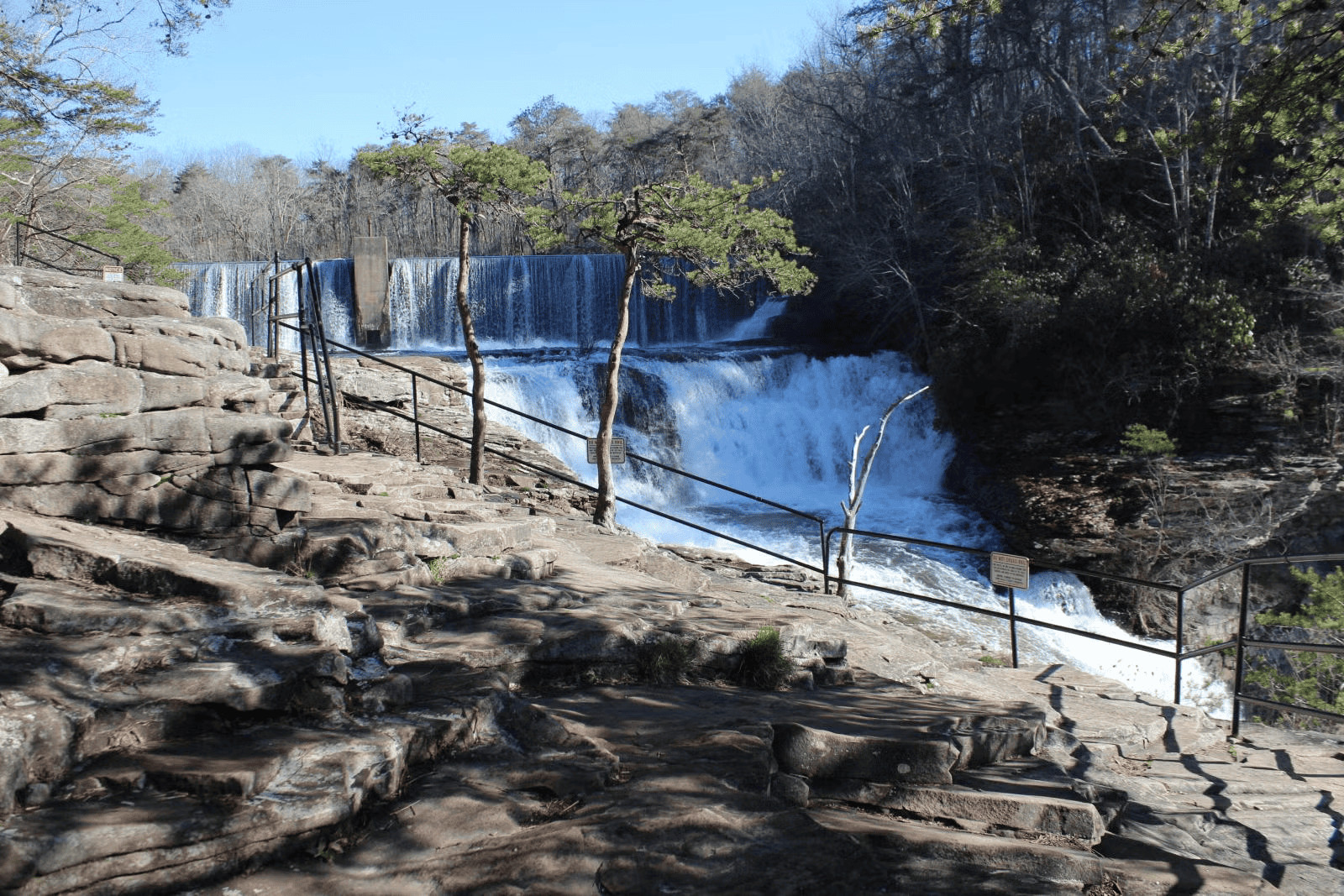
Despite its name, Spanish explorer Hernando de Soto never actually visited this 104-foot waterfall on Lookout Mountain. Federal troops recorded it as Indian Falls back in 1863, long before the De Soto name eventually stuck to the site.
A 1920s concrete dam above the falls once powered Alabama’s first hydroelectric plant, supplying electricity to five surrounding towns before the Great Depression ended the project. Remnants of the old powerhouse still sit at the base of the falls today.
Trails of varying difficulty lead to overlook, river-level, and bluff views of the falls, with a swimming hole at the base offering relief on hot Alabama afternoons. DeSoto State Park surrounds the falls with 35 additional miles of hiking.
The land itself once lay within the Cherokee homeland, which they were forced from in the 1830s, decades before the park’s eventual establishment and long before any waterfall here bore a Spanish explorer’s name.
Where: County Road 613, Mentone, AL 35984
7. Juniper Springs, Florida
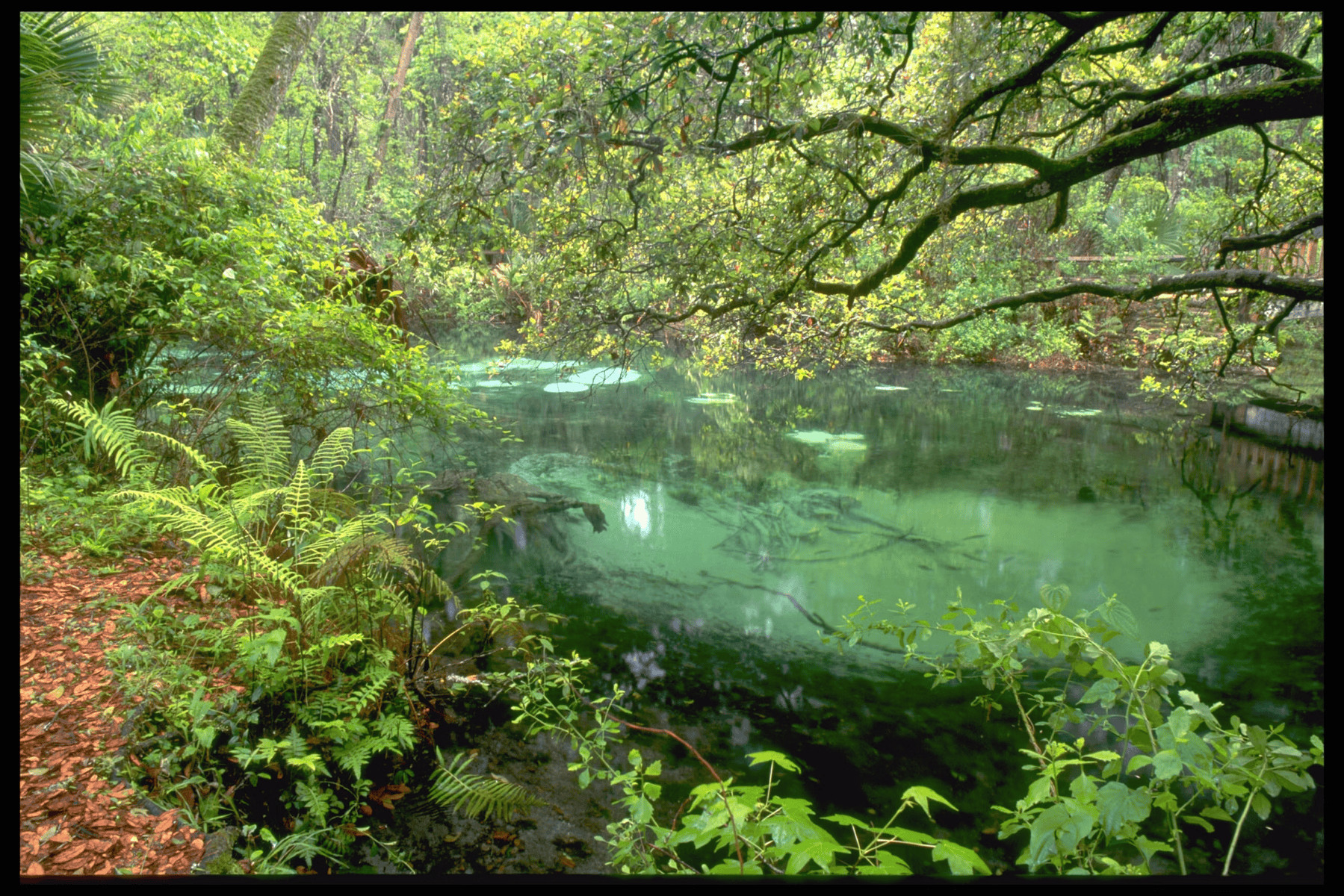
Civilian Conservation Corps workers built this recreation area in 1935, solving an unusual problem along the way: the springs sat too far from any power line to electrify the new campground affordably during the depths of the Great Depression.
Their solution still stands. A stone-and-log millhouse uses the spring’s own outflow to turn a waterwheel, an early green-energy experiment that once generated all the electricity the recreation area needed, without burning a single drop of fuel.
The circular spring pool stays a constant 72 degrees year-round, ringed by stone steps and shaded by palms and oaks. Paddlers can continue downstream along Juniper Run, a narrow, winding seven-mile canoe trail through dense Florida forest.
Combined with neighboring Fern Hammock Springs, the two spring groups push out roughly 13 million gallons of crystal-clear water daily, supporting eel grass and cypress in a setting that feels closer to the tropics than central Florida.
Where: 26701 E Highway 40, Silver Springs, FL 34488
8. Travertine Creek, Oklahoma
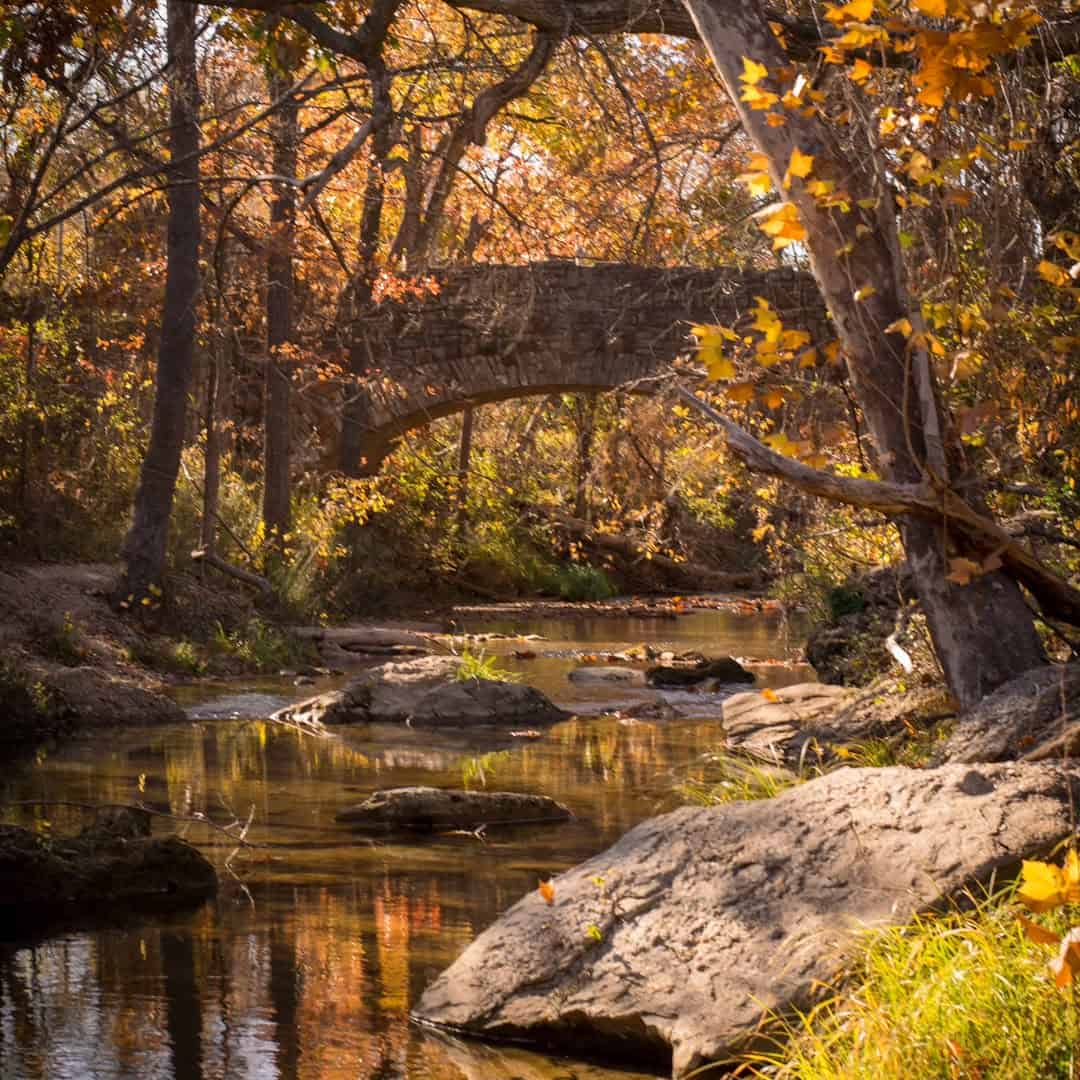
This spring-fed creek runs through what was once Platt National Park, the seventh national park ever created in the United States and, to this day, the only one Oklahoma has ever had, established back in 1902.
The Chickasaw Nation sold the original 640 acres to the federal government specifically to prevent private developers from turning the mineral springs into an exclusive resort, the same fate that had already befallen Hot Springs, Arkansas, decades earlier.
Today, Little Niagara Falls remains the creek’s most popular swimming hole, with water staying a consistent 62 to 64 degrees regardless of season. Thanks to that original tribal agreement, the entire park still charges no entrance fee at all.
In its earliest years, the park reportedly drew more annual visitors than Yellowstone or Yosemite, an astonishing claim for a small Oklahoma reserve that today remains far less crowded than either of those two famous Western parks.
Where: 9 Visitor Center Road, Sulphur, OK 73086
9. Holland Lake, Montana
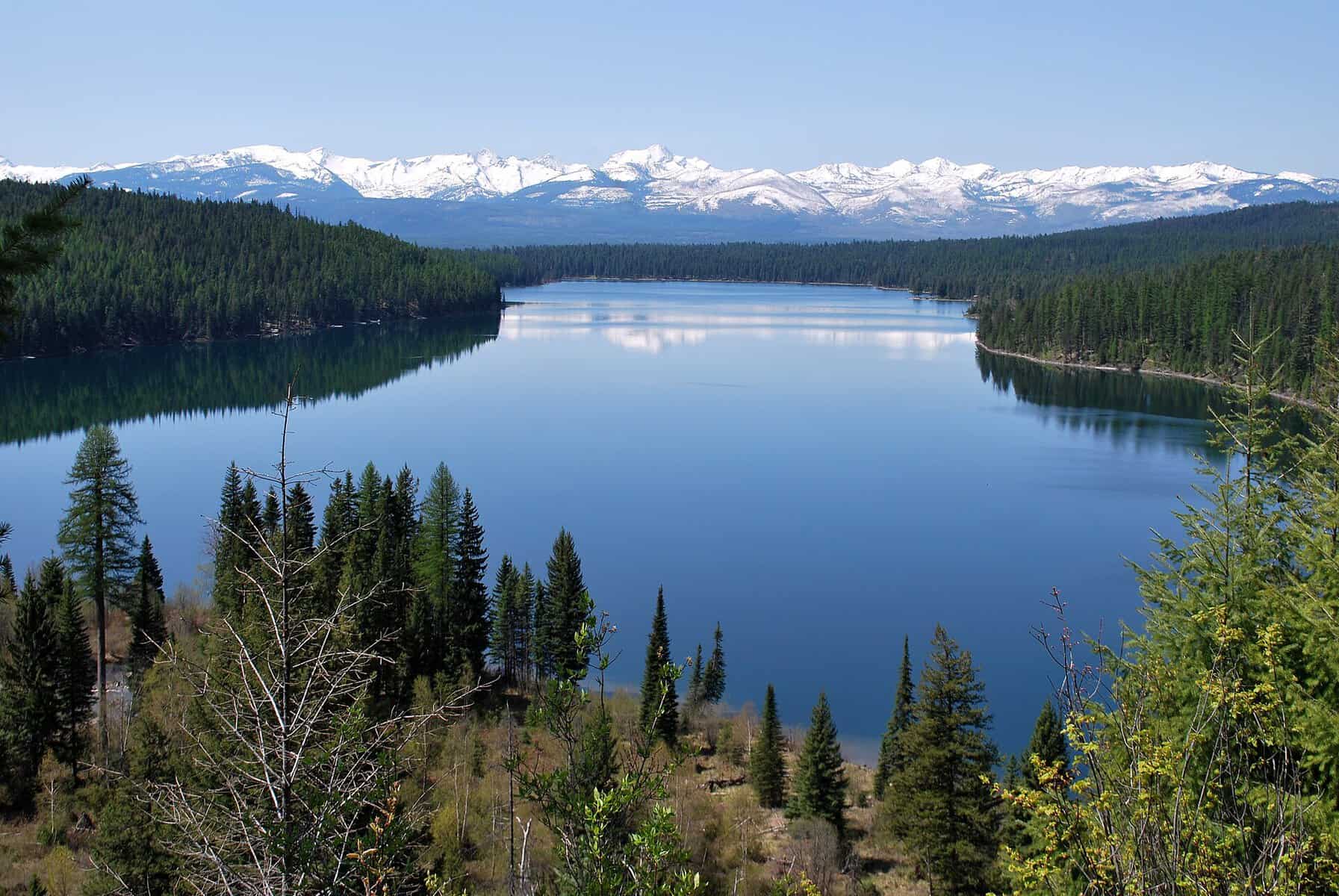
Named for Ben Holland, a prospector who explored these mountains chasing gold in the 1890s without ever striking it rich, this 416-acre lake sits at the edge of the Bob Marshall Wilderness in Montana’s quiet Swan Valley.
A historic lodge first opened its doors here on July 4, 1925, hosting wealthy East Coast vacationers known as the Keewaydins for six-week summer stays of fishing, riding, and guided pack trips deep into the surrounding backcountry.
A short, family-friendly trail leads to 50-foot Holland Falls, while the lake itself offers a sandy public swimming beach with water that stays cold, typically 55 to 65 degrees, even during the height of a Montana summer.
The lake sits at roughly 4,100 feet, surrounded by views of the Mission Mountains, and serves as one of the primary western gateways into the vast Bob Marshall Wilderness Complex stretching out beyond it.
Where: Holland Lake Road, Condon, MT 59826
10. Mirror Lake at Blanchard Springs, Arkansas
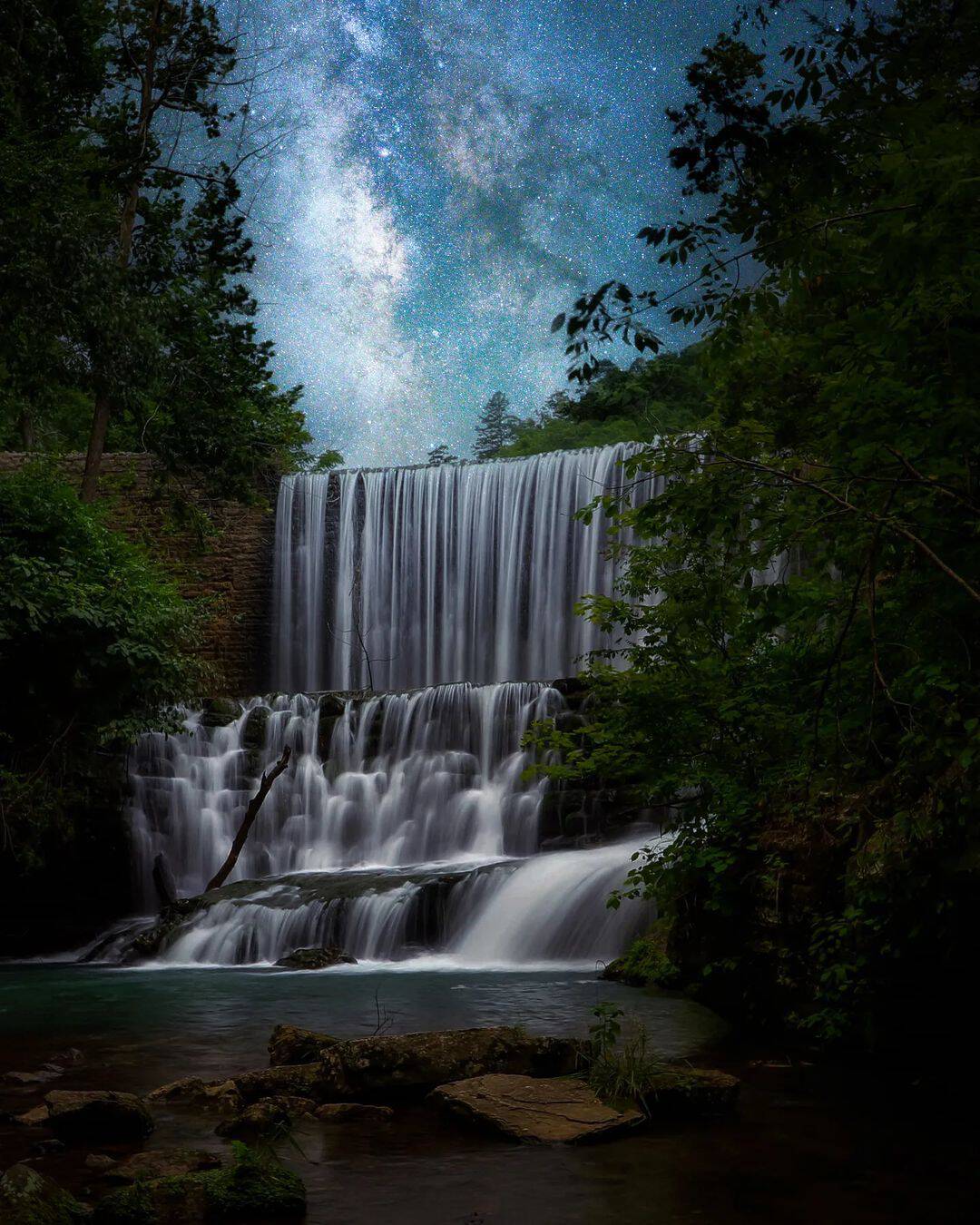
Confederate veteran John H. Blanchard homesteaded this land after the Civil War and built a gristmill powered by the spring that now bears his name, grinding corn and ginning cotton here for decades before selling the property in 1928.
The Civilian Conservation Corps dammed that same spring in 1940, creating Mirror Lake, a three-acre trout pond fed by water that flows out of nearby Blanchard Springs Caverns at a constant 58 degrees, regardless of the season outside.
Ruins of Blanchard’s old gristmill still stand near the dam, while swimming and wading are welcome downstream in clear North Sylamore Creek. The caverns themselves were briefly considered, then rejected, as a Cold War fallout shelter.
The cave system stays a steady 58 degrees year-round as well, making the whole recreation area a reliable escape from Ozark summer heat both above ground and below it.
Where: 704 Blanchard Springs Road, Fifty-Six, AR 72533
11. Havasu Falls, Arizona
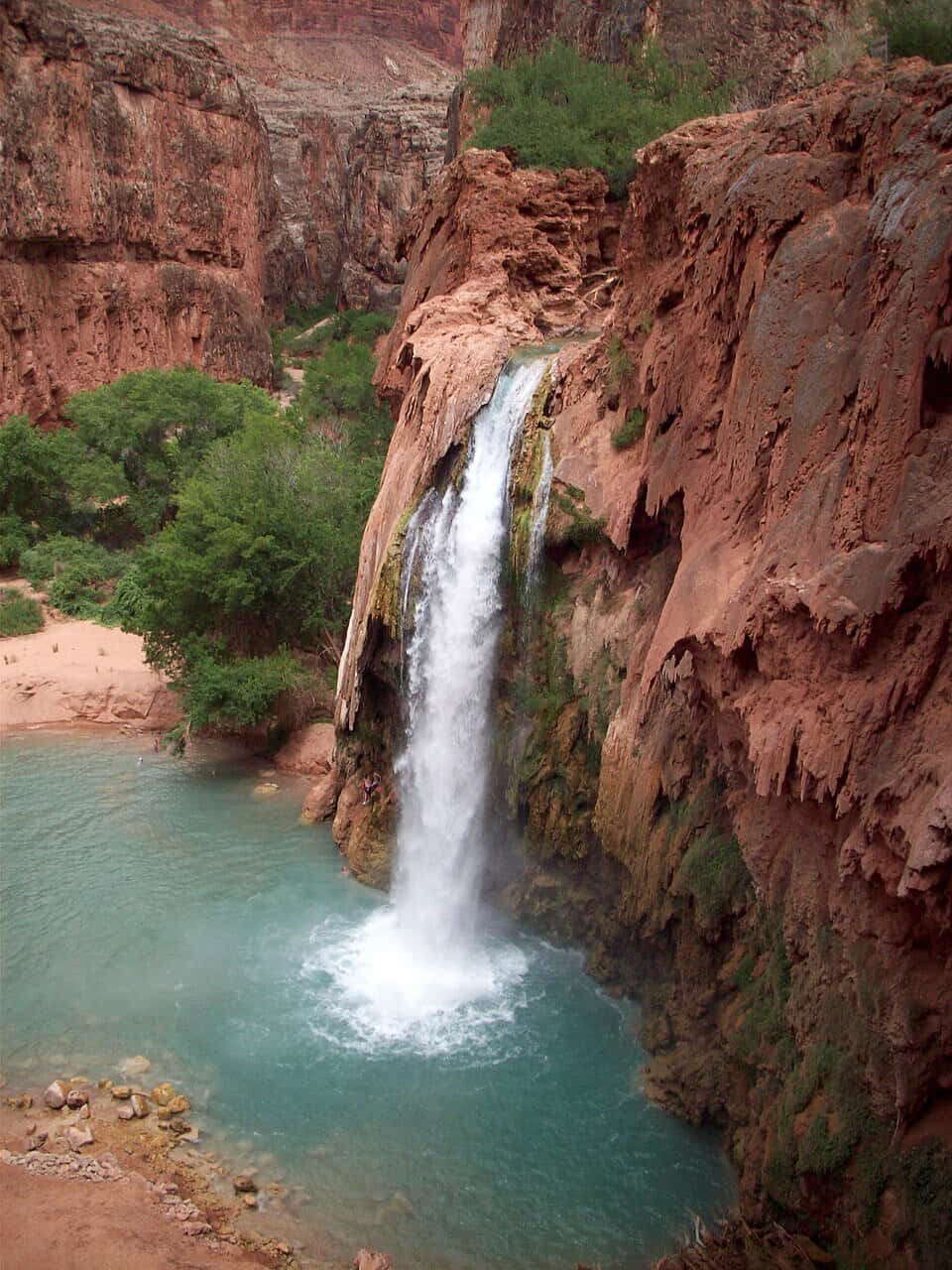
Havasupai translates to “people of the blue-green water,” a fitting name for the tribe whose reservation holds this turquoise, 100-foot waterfall deep within a side canyon of the Grand Canyon, miles from the nearest paved road.
Reaching it requires an 8-mile hike from Hualapai Hilltop down to Supai Village, the most remote community in the country, where the U.S. Postal Service still delivers mail entirely by mule train several days each week.
Day hikes aren’t permitted here; every visitor needs an overnight permit through the Havasupai Tribe, and those permits routinely sell out within minutes each February. The water itself stays a swimmable 70 degrees throughout the entire year, even in winter.
Where: Hualapai Hilltop Trailhead, Supai, AZ 86435
12. Enfield Falls, New York
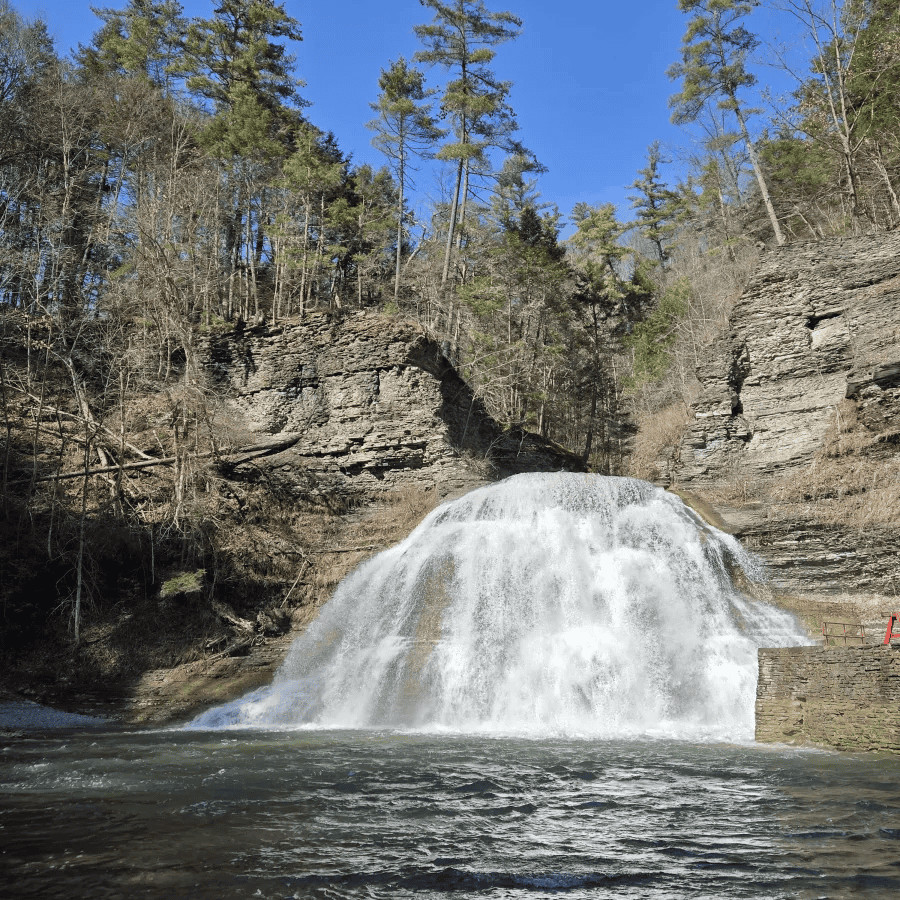
Tucked inside Robert H. Treman State Park in the Finger Lakes, Enfield Falls cascades into a large natural pool framed by towering gorge walls, one of several waterfalls scattered throughout this dramatically carved stretch of the park.
While the park holds multiple scenic falls, the base of Enfield Falls, also called Lower Falls, is the only spot where swimming is officially permitted, complete with seasonal lifeguards keeping watch over the gorge-bound water below.
The surrounding cliffs and forest give the whole pool a hidden, almost secret feeling, despite sitting just minutes from downtown Ithaca. It remains one of the most photographed and beloved natural swimming spots anywhere in the Finger Lakes region.
The wider park also includes a stunning network of additional waterfalls and gorge trails, making it easy to spend a full day exploring before or after cooling off at the falls.
Where: 105 Enfield Falls Rd, Ithaca, NY 14850
None of These Were Ever Really About the Water
If you trace each of these twelve places back far enough, you eventually hit a person, not a postcard. A homesteader building a mill. A tribe refusing to sell their springs to developers. A widow donated thousands of acres so a mountain could stay public.
That’s the part a simple “best swimming holes” list tends to skip past. Cold water is cold water everywhere. What actually separates a forgettable dip from a place worth driving hours for is whatever decision, decades ago, kept the water this clear in the first place.
Some of these spots survived because nobody could ever be bothered to develop them. Others survived because somebody actively fought hard to keep them undeveloped, which is a very different and much rarer kind of luck.
Either way, the next time a real heat wave hits, consider skipping the chlorine altogether. Somewhere in one of these twelve states, water that’s been flowing the exact same way for generations is still waiting, free of charge, for anyone willing to find it.
More stories


Share this story