Step Back in Time in this Mountain Hot Spring Haven

As we walked down the business-lined street, I felt like I’d stepped into one of my dad’s stories about Gatlinburg when he was a kid—but I wasn’t in Gatlinburg. The historic buildings held familiar wineries, candy stores, and souvenir shops, beckoning me to step inside.
It wasn’t until I set foot in the Fordyce Bathhouse Visitor Center and Museum that I was truly transported one hundred years in the past, and it made me appreciate my later experience of bathing in the hotsprings. Come with me to Hot Springs, Arkansas, where you’ll find healing waters and peace of mind.
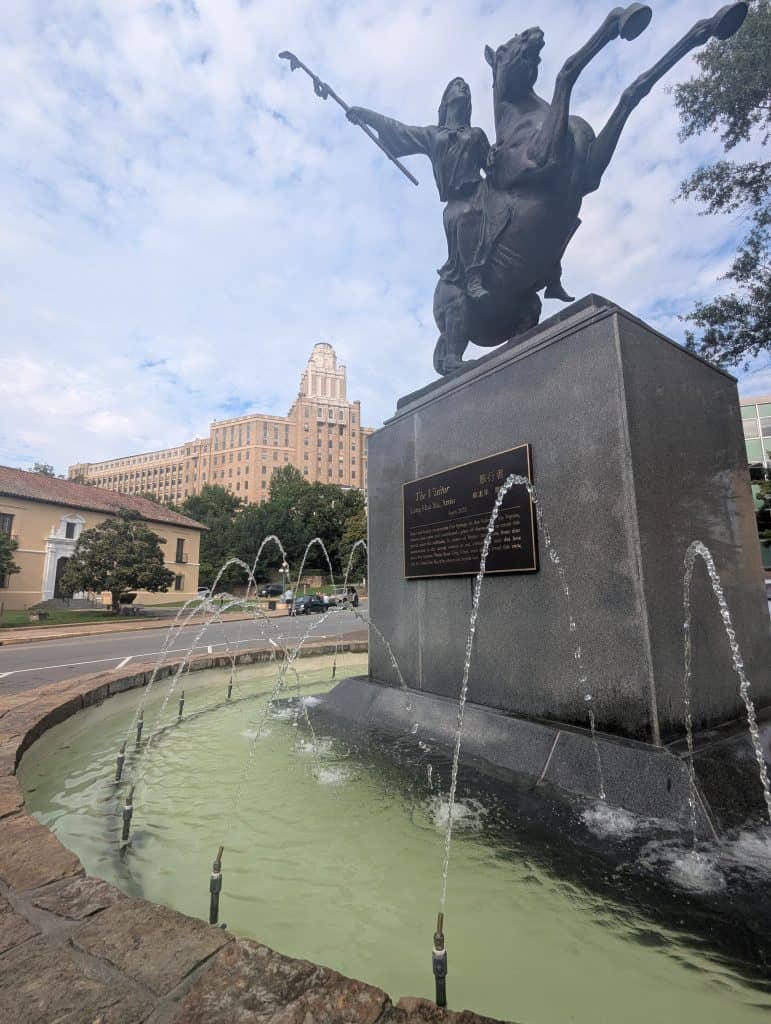
Quaff the Elixir
For centuries, perhaps millennia, people have traveled to Hot Springs, Arkansas. There’s evidence that indigenous peoples visited the springs, and everyone from wounded Civil War soldiers to First Lady Eleanor Roosevelt took the waters during the town’s heyday.
Even if you’re just passing through, filling a bottle with spring-fresh mineral water is a must-do. There are several hot-spring filling stations, and one cold-spring filling station, around the town.
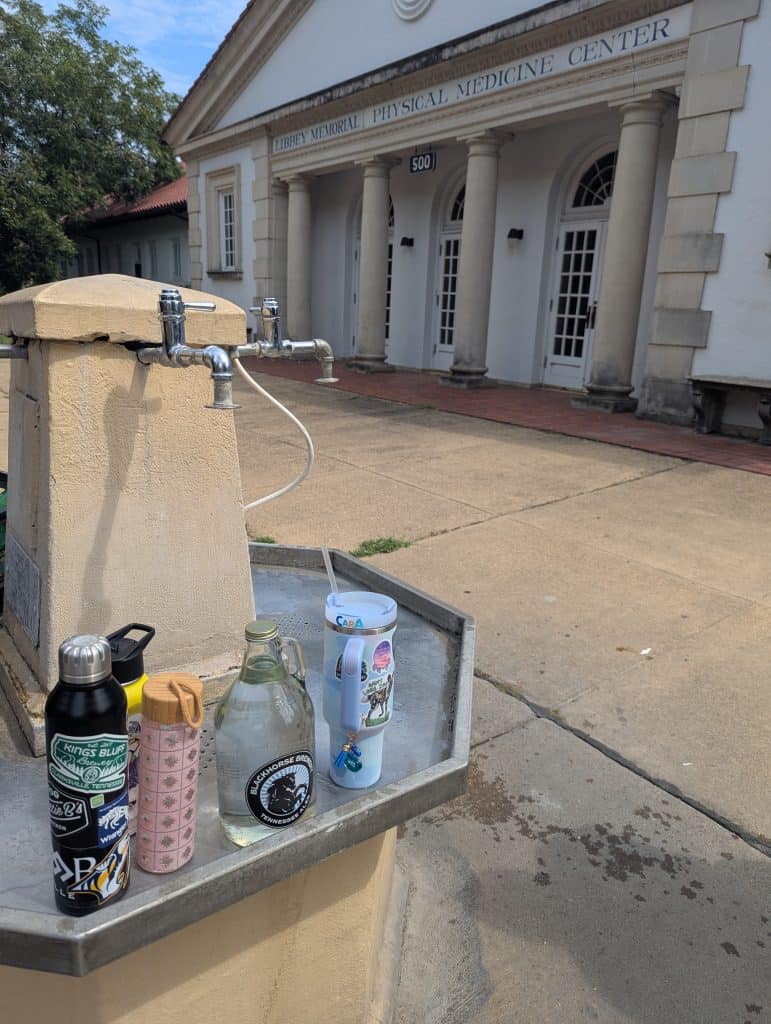
On our way into town, we stopped at the fountain near the Libbey Memorial Physical Medicine Center on Reserve Street. The fountain has four taps similar to residential outdoor garden hose hookups. The water is surprisingly warm, though it has cooled to 100 to 135 degrees Fahrenheit when it reaches the station.
As I filled my collection of bottles, residents and visitors alike arrived, some with cases of empty glass bottles, others with 5-gallon carboys. The water is free with unlimited access. If you can’t find a parking space, drive around the block—people don’t spend long at the fountains and a space will likely become free.
There are also filling stations at the National Park Service building on Reserve Street, Hill Wheatley Plaza on Central Avenue near the Visitor Center, and within the lobby of the Arlington Hotel.
Happy Hollow and Whittington Spring are cold-fed springs, purportedly from an aquifer of 4,000-year-old rainwater. Unlike the hot springs, the Arkansas Department of Health mandates that these undergo ozone filtration before dispensing.
If you arrive in hot springs without a suitable bottle, don’t worry. Several downtown shops sell souvenir glass growlers with an image of a historic fountain.
What does the water taste like? After it cools, you can enjoy the flavorlessness of fresh, clean mineral water. It lacks the chemical aftertaste of some tap and bottled waters. Some people feel like the minerals make it taste better.
As we strolled the streets at the center of town, we found another means of “quaffing the elixir,” as the townsfolk used to say of the water. One of the historic bathhouses, the Superior Bathhouse, named for its superior customer service, has been converted into a brewery.
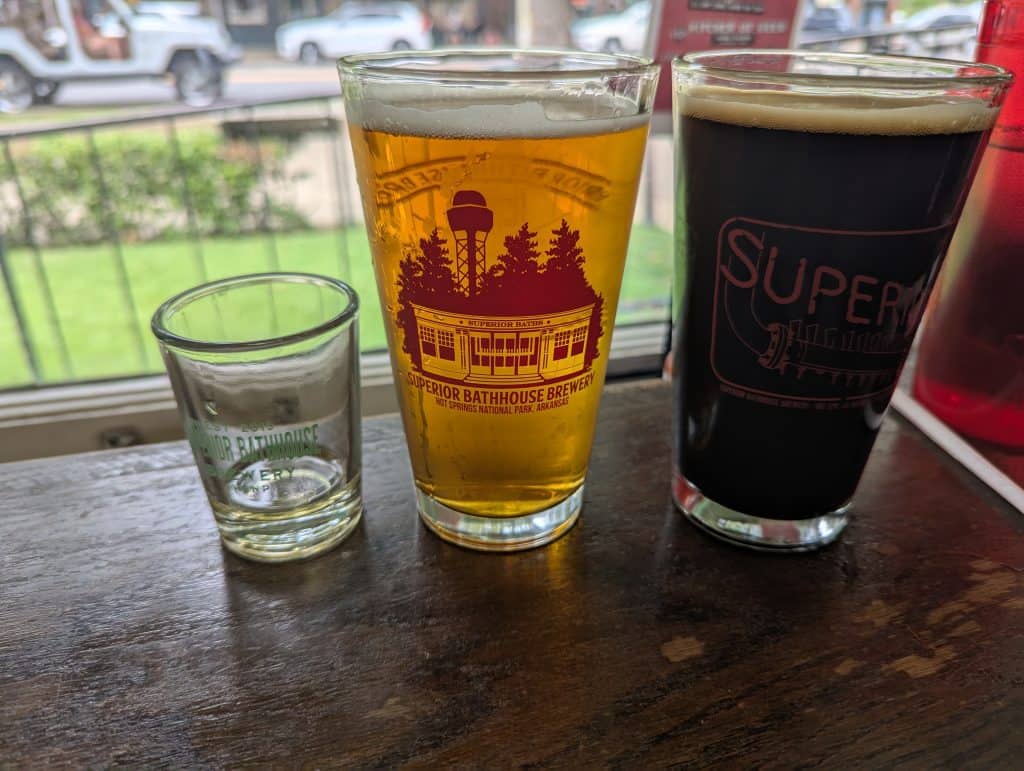
Not only is the building one of eight original bathhouses, but its claim to fame is that it uses water from the springs to make craft beer. It’s also the first brewery located within the boundaries of a national park.
We enjoyed a sampling of their brews as well as a steak sandwich and fries as we watched tourists stroll by on a quiet afternoon. But what we did next truly helped me appreciate what Hot Springs was all about.
Exploring the Bathhouse
There are famous hot springs in Japan and elsewhere that people enjoy directly, slipping into spring-fed pools. This is not the case in Hot Springs, AR, because the water is too hot. On average, the water emerges from the ground at 143 degrees F—nearly warm enough to steep a bag of tea.
When you consider that your skin can burn after five minutes in 120 degree water, it’s easy to see that this is too hot for bathing. That’s one reason why bath houses sprang up in Hot Springs. Water from the springs could be directed into pools and allowed to cool to a safe, therapeutic temperature of around 100 degrees before use.
Historically, there were eight bathhouses in Hot Springs, built between 1892 and 1923. As mentioned above, one is now a brewery. Others have been converted into administrative offices, park archives, retail spaces, a gallery, and a boutique hotel.
The ornately decorated Fordyce Bathhouse has been preserved as the Hot Springs National Park Visitor Center and Museum. I planned on a soak later in the day, but I’m grateful that I visited the museum first, as it made the experience much more meaningful.
Behind the museum is a beautiful photo-op known as the Grand Promenade. To the left of the Promenade is the Display Spring, where we first interacted with the waters “in the wild.” It is “unaltered” and one of the few areas with open-air access to the spring.
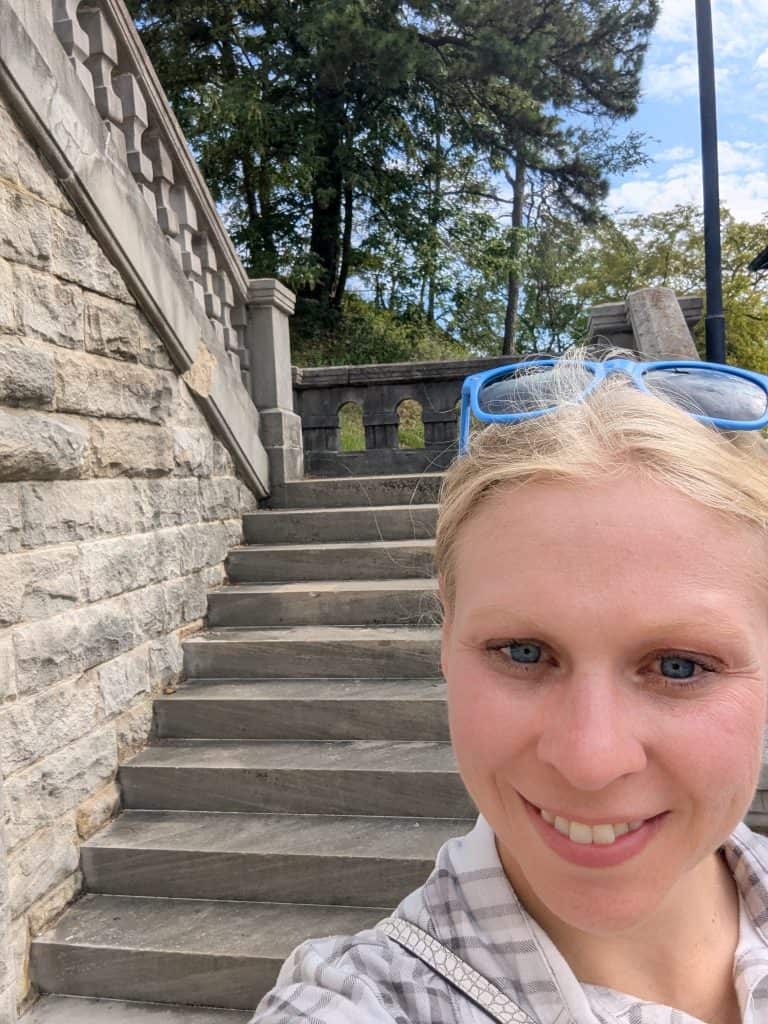
You can touch the waters of the Display Spring, but do so with caution. The waters bubble forth at an average of 143 degrees, and extended exposure can cause burns.
After briefly dipping our fingers in, we entered the museum. On the ground floor, we learned about the science behind the hot springs. We also learned about why the springs seemed to have healing properties.
Not only are the waters mineral-rich, but in an age before electricity, most people weren’t able to soak in a hot bath to relieve their aches and pains. Many, especially those recovering from injuries or polio, found that daily soaks and exercise improved their mobility and eased pain.
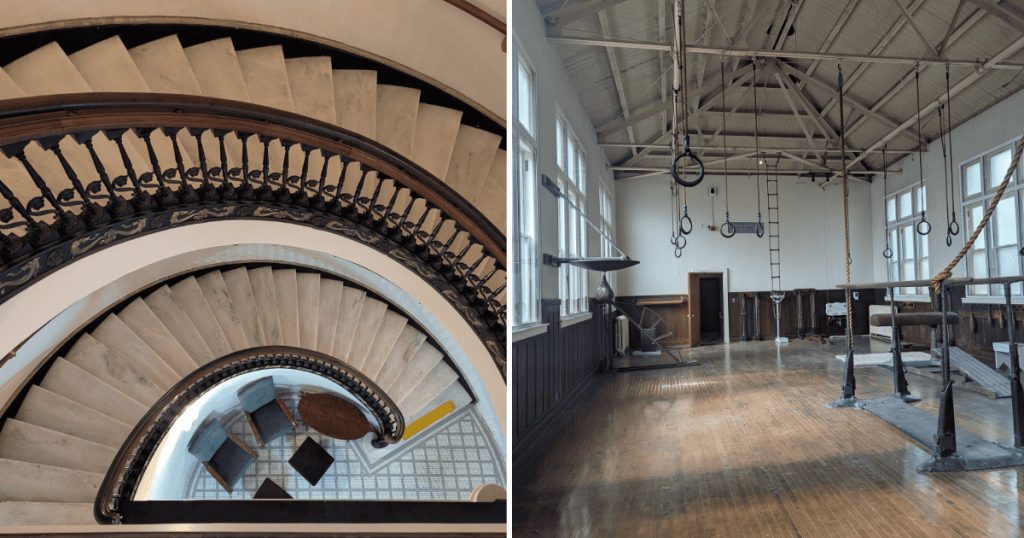
The upper floors of the bathhouse have been largely restored to represent the inner workings of the bathhouse. There were ornately tiled tubs for soaking, colorful stained-glass skylights, and even a lounge with a grand piano.
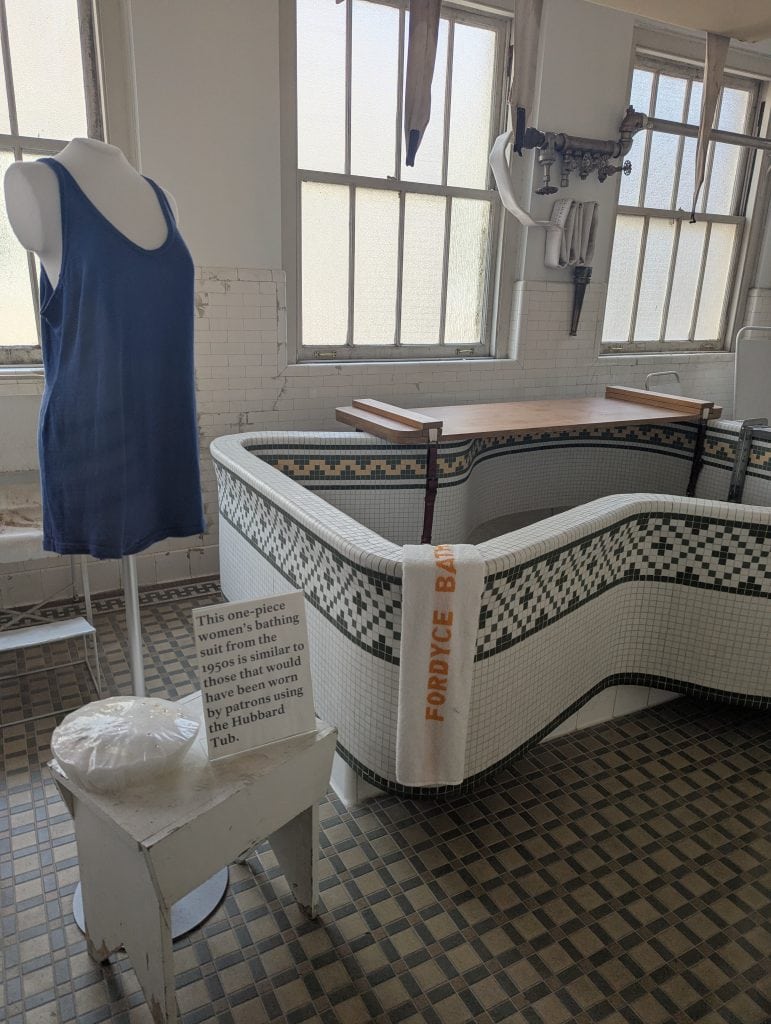
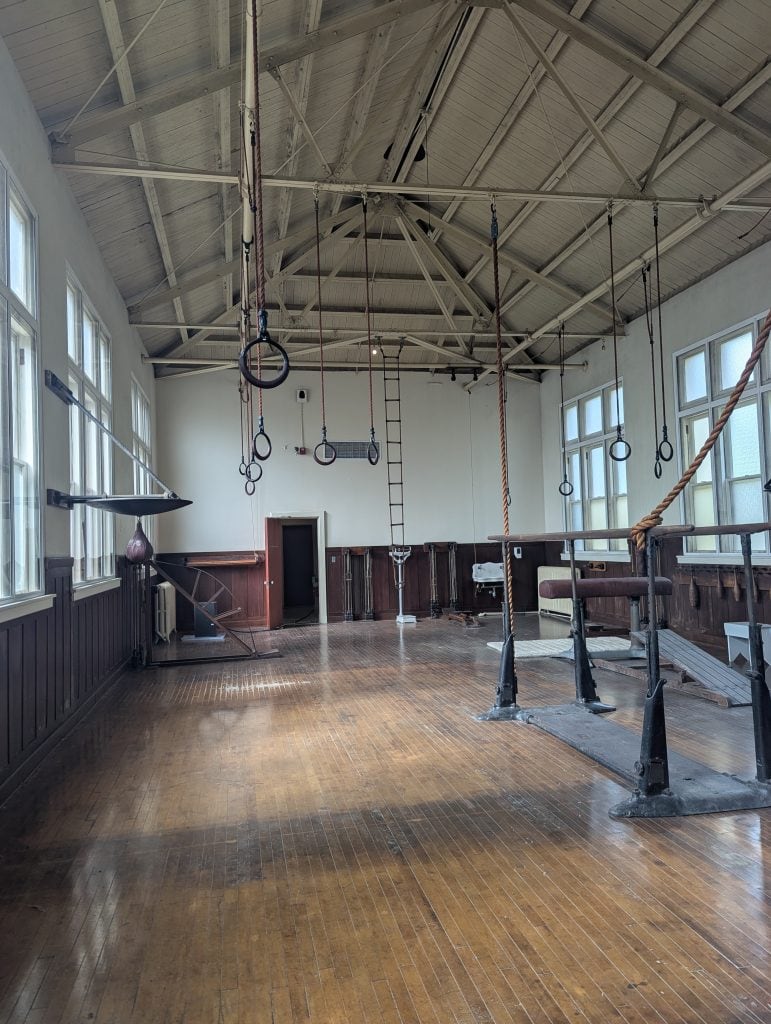
There were also spaces for exercise and early forms of physical therapy. An upstairs gymnasium with rich wood floors and paneling held gymnastics equipment and leather punching bags. Separate men’s and women’s locker rooms felt surprisingly modern, except that the lockers and stalls were made from dark wood.
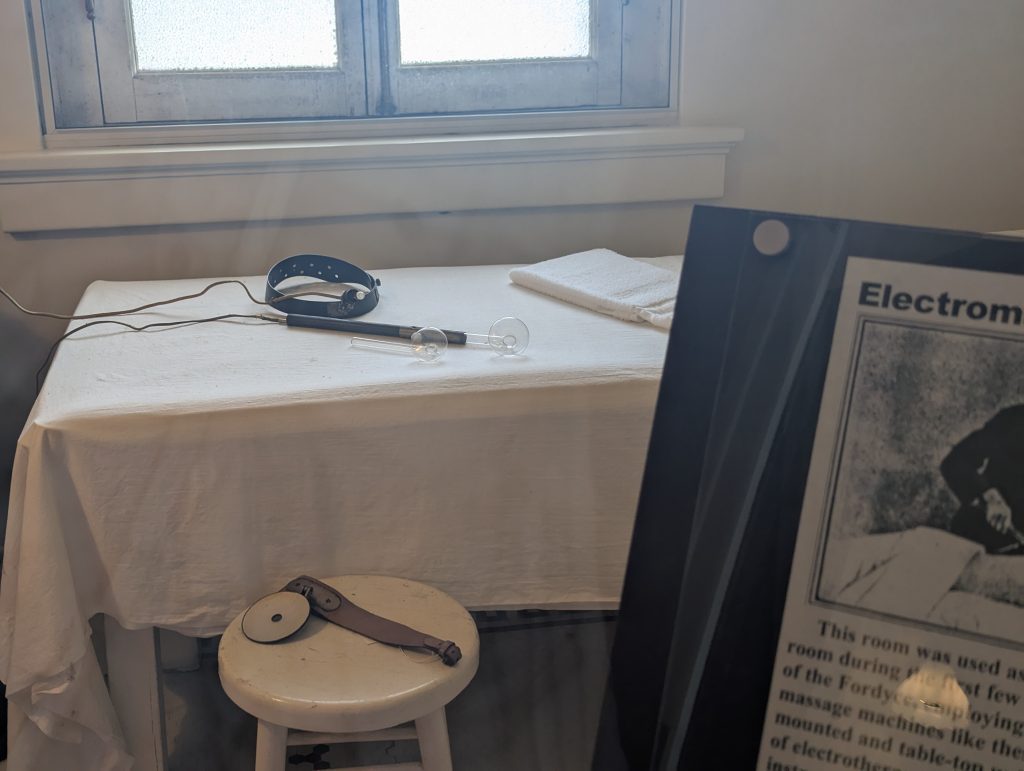
These environs stood in stark contrast to other aspects of the bathhouse. The walls were whitewashed, giving the rooms an antiseptic, clinical feel, like a sanitarium from a black and white film. Some display rooms held strange medical equipment, like wired glass tubes used for electrotherapy.
Experiencing the Hot Springs
Only two of the original bathhouses, Buckstaff Bathhouse and Quapaw Bathhouse, are still in operation. Buckstaff has been in continuous operation for over 100 years and provides a traditional experience. Quapaw has made itself over as a modern spa with communal bathing.
Prices vary, but you can often reserve a 20-minute soak in the spring water for around $40.00.
I opted for a private hot springs experience at the Arlington Hotel. Though not officially a bathhouse, it offers a Mineral Water room upgrade where the bathtub’s hot water spigot pipes in spring water, cooled to a safe bathing temperature.
At the museum, I learned that therapeutic baths were usually 20 minutes in length and might be done up to three times a day. Also, bathers often drank chilled spring water in order to regulate their body temperature and benefit from the mineral water inside and out.
So I did just that. What was it like? The hot spring water had a slightly slippery feel compared to normal tap water. I also noticed that I felt hotter and began to perspire more readily than during a hot soak at home.
After the soak, my skin felt soft and I felt a bit sleepy—a common enough reaction that the bathhouses provided lounges for napping. Did it help with any aches and pains? I can’t say for sure, but my old knee injury didn’t bother me the next day.
Living History at the Arlington
The availability of hot springs water wasn’t the only thing that made the Arlington Hotel special. When it opened in 1875, it was the largest hotel in the state. It was rebuilt in the 1920s in Mediterranean style, and its gilded opulence can transport you to a bygone era, from its brightly-lit lobby to its spiral staircases.
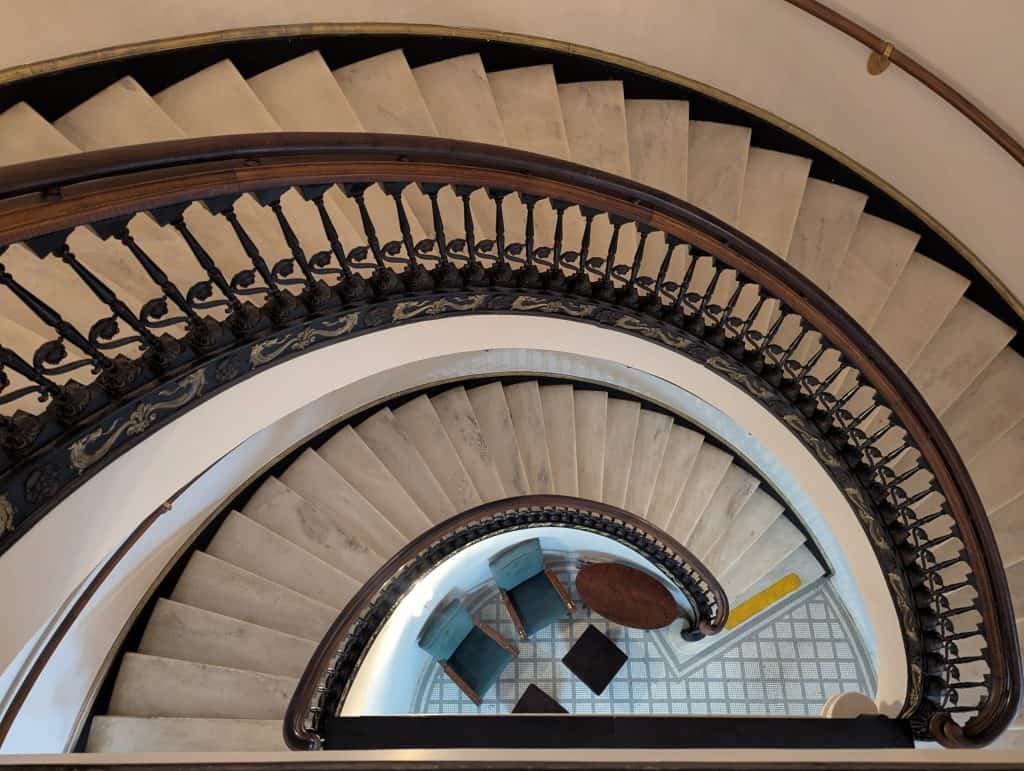
We enjoyed a small museum adjacent to the lobby and filled our water bottles from the hot springs fountain, which has both hot and cold taps. What really blew me away was when they handed me my room key, plucked from a row of hooks on the wall behind the reception desk—for the first time in my life, I was using a traditional metal key at a hotel rather than an electronic key card.
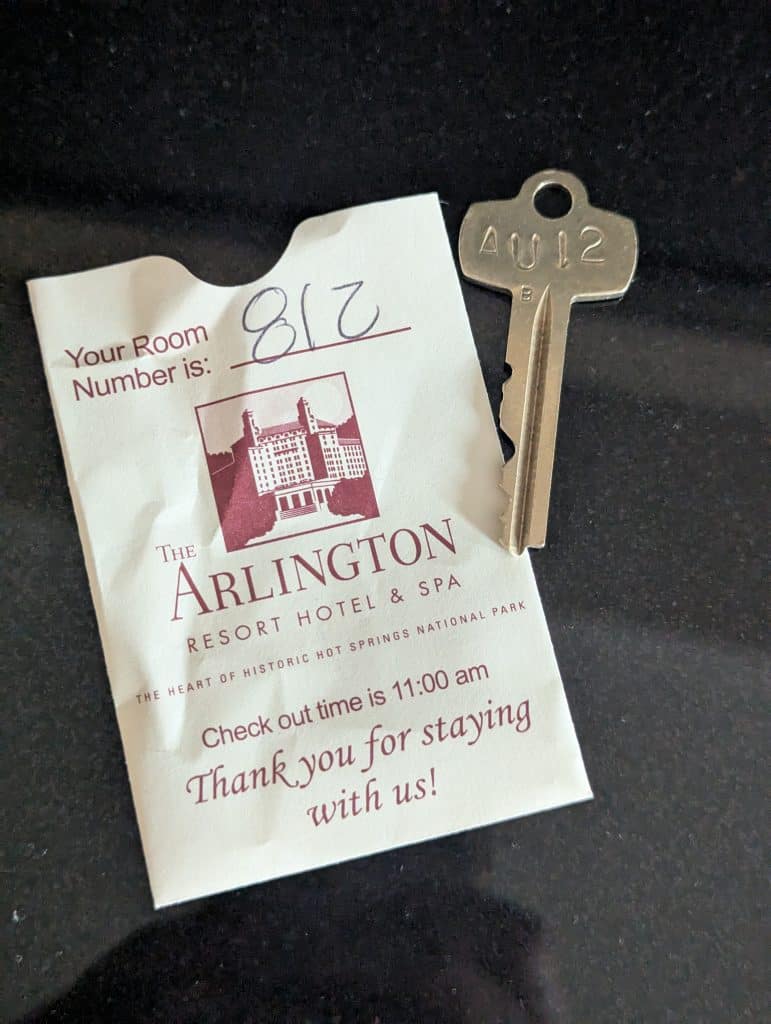
When I got to my eighth-floor room, the door was heavy, made of solid wood. The furnishings were clean but dated; one half of the hotel was undergoing renovations at the time of my visit, with the other half to follow.
I couldn’t help but think of the place’s storied history. Al Capone, Allan Pinkerton (whose detective agency laid the groundwork for the FBI), presidents, and celebrities had all walked these halls.
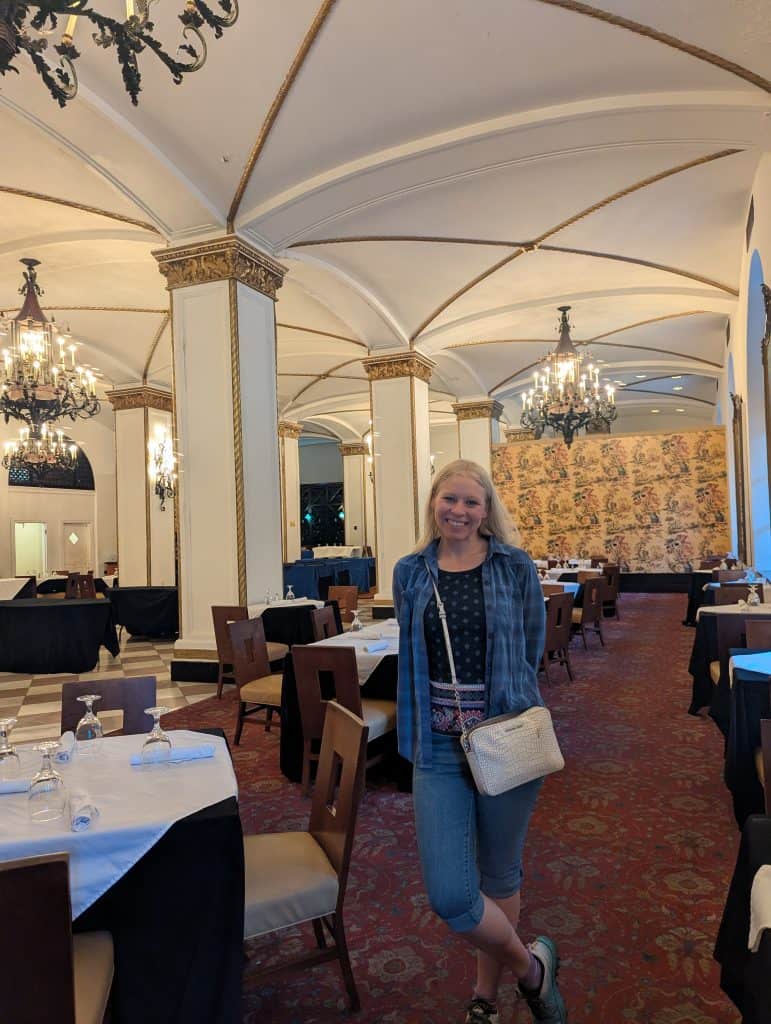
I was also delighted to find that the Venetian Dining Room would be open during my stay. Its gilded columns, chandeliers, and intricate wallpaper make it feel like a Victorian ballroom. Our breakfast of seasonal fruit, smoked salmon, and a crab and wild mushroom omelet by the veranda fit well in this elevated atmosphere.
How to Get There
Hot Springs National Park is located in central Arkansas. You can use the following map to find your way there:
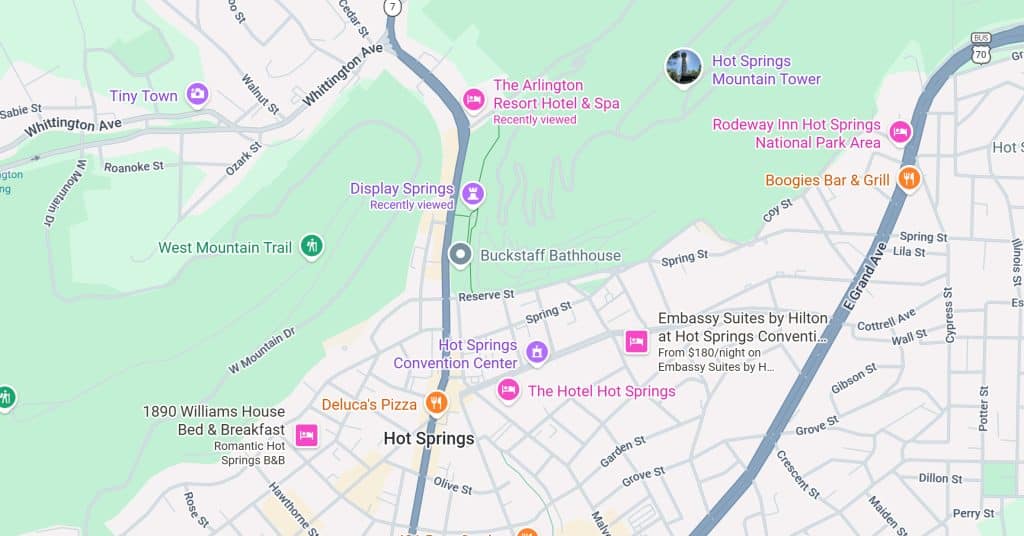
Where: Central Avenue, Hot Springs, AR 71901
Hot Springs is a town that has preserved well over 100 years of history, blending it with modern tourism in a way that is truly charming and unique.
More stories
Share this story