Five Bites that Tell the Story of the People who Brought Them to New Jersey

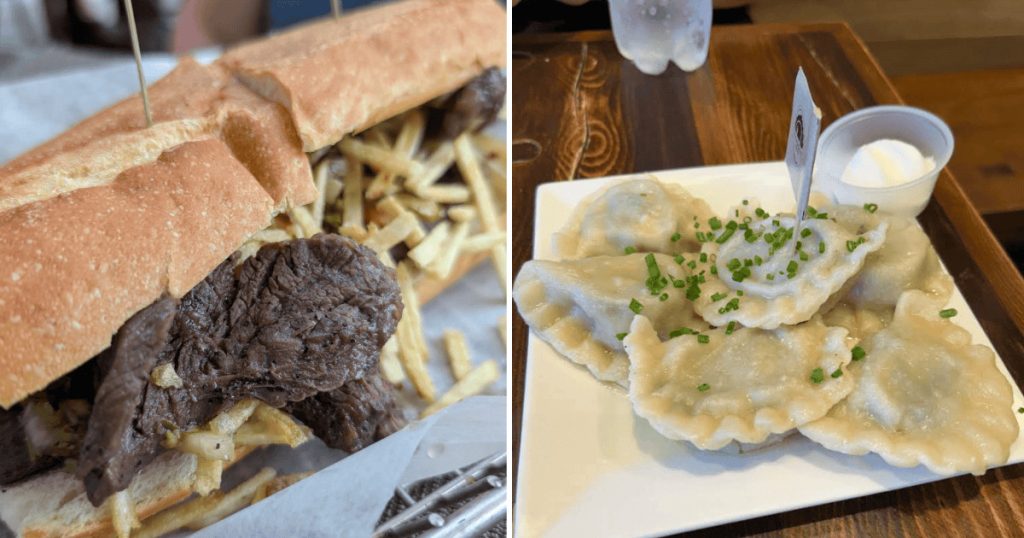
New Jersey’s diversity is well documented in census reports and demographics. But a more interesting measure might be what’s on the plate.
For generations, immigrants have arrived in the Garden State carrying recipes, traditions, and food memories from places thousands of miles away.
Some opened bakeries. Others built restaurants. Nearly all of them passed family recipes from one generation to the next.
Today, those traditions remain alive in neighborhoods across New Jersey, often hiding in plain sight.
ALFAJOR
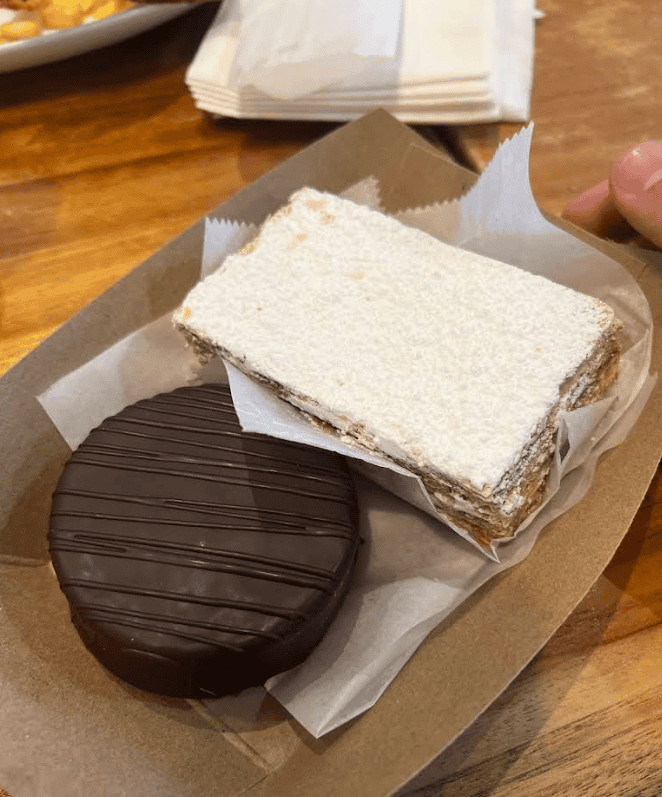
The alfajor may be — no, it is — one of the most perfect cookies ever invented.
That sounds like an exaggeration until you take a bite.
Unlike American or European-style cookies, which rely on crunch, chewiness, or sweetness, an alfajor practically dissolves on your tongue. Two incredibly tender shortbread-like cookies sandwich a generous layer of dulce de leche, the result of an hours-long process that transforms condensed milk into rich caramel goodness.
Some people like to gild the lily and roll the exterior in a bit of shredded coconut.
The alfajor transcends cookie-dom, but isn’t quite a pastry either.
It is simply an alfajor.
For Argentinians, alfajores are deeply nostalgic. Nearly everyone has a favorite brand or bakery.
That’s exactly what makes Dulce de Leche Bakery in West New York, New Jersey, special.
The bakery was founded by the Urgilles family nearly 20 years ago. Like other ex-pat Argentinians, they missed the flavors and traditions they grew up with. Not just the recipes, but the experience itself. The neighborhood bakery. The smell of fresh pastries and familiar faces.
Walk into Dulce de Leche today and you’ll find pastries, empanadas, and cookies that connect customers to a little piece of Buenos Aires.
The bakery even gained international attention when it was selected to create a birthday cake for soccer superstar Lionel Messi during his time with Inter Miami.
The cakes and pastries are amazing.
But stay focused — you’re here for the alfajores.
PIEROGI
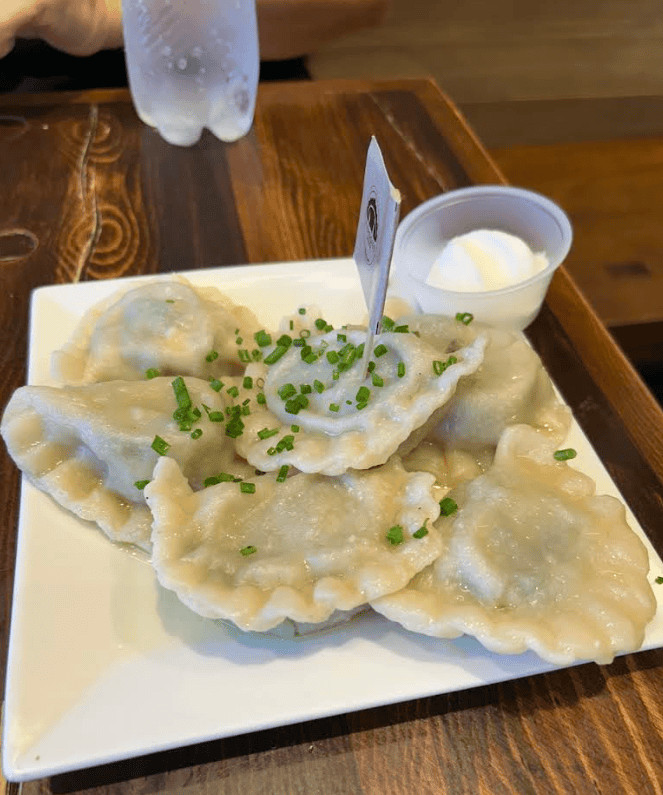
Some of New Jersey’s most authentic Polish food isn’t served in a restaurant.
It’s made in church kitchens by loving hands.
Wallington has long been one of New Jersey’s most Polish communities, and nowhere is that heritage more visible than at Most Sacred Heart of Jesus Parish.
The church hosts an annual parish picnic every September featuring handmade pierogi, kielbasa, music, and traditional foods. But locals know that pierogi also appear throughout the year during holiday sales, Lenten events, and special parish celebrations. They are just a phone call away.
These are not supermarket pierogi.
The key word is handmade.
Many are prepared from recipes passed through generations of Polish families, preserving flavors that arrived in New Jersey alongside immigrants decades ago.
Most Americans associate pierogi with potato, cheese, or sauerkraut fillings, and they’re delicious, especially fresh. Traditionally, they’re boiled, then pan-fried until golden, and served with caramelized onions, sour cream, and bacon bits. They are surprisingly light.
But if available, seek out the prune pierogi.
Prune pierogi offer something completely different: slightly sweet, deeply traditional, and surprisingly addictive. They’re pan-fried in butter and dusted with powdered sugar.
Ethereal may not be too strong a word.
The volunteers making them aren’t chasing culinary trends. They’re preserving family traditions and building bonds for the future.
And that’s exactly why they’re worth finding.
FATTAL’S SYRIAN BAKERY
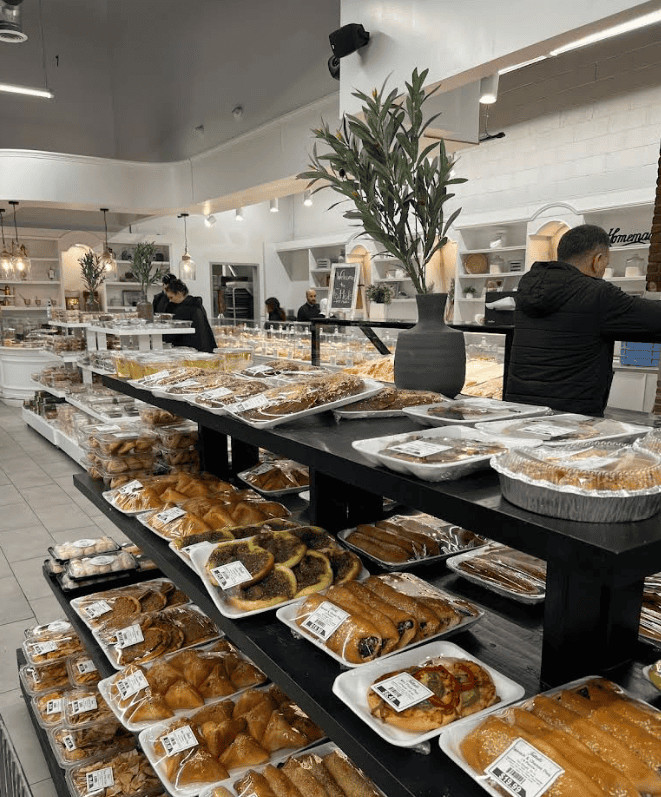
The first thing you notice at Fattal’s isn’t the bread.
It’s the smell.
Warm dough, toasted flour, and the unmistakable aroma of bread emerging from the oven. Customers line up waiting for stacks of fresh pita that are often still warm enough to steam when torn open.
Most of us know pita from grocery store shelves, tucked inside plastic bags and treated as little more than a sandwich bread. And you can definitely buy bagged pita here. But it’s made onsite and is likely the freshest pita you’ve ever had.
But pita right out of the oven is a revelation.
Soft, tender, and slightly chewy, it has a depth of flavor that surprises people tasting it for the first time.
It is irresistible.
Shoppers can watch fresh pita come out of the oven before being handed a warm piece to sample. It is one of those food experiences that instantly change how you think about a familiar ingredient.
The bakery traces its roots to the Fattals, a Syrian immigrant family that helped build one of America’s oldest Arab communities.
Paterson’s Arab population dates back more than a century, when immigrants arrived to work in the city’s booming silk industry. They brought language, traditions, faith, and food.
Pita sits at the center of that food culture.
Across the Mediterranean and Middle East, pita has long served as both food and utensil. It wraps meats, scoops dips, accompanies family meals, and travels easily. There is pita on the table for the most special days of the year and the most ordinary.
It might not be too much of an exaggeration to say Paterson is powered by pita.
At Fattal’s, shopping for the humble pita could be the highlight of your day.
AL BASHA
One of the joys of exploring New Jersey’s immigrant food communities is discovering foods you may have tasted, but never fully experienced.
Take falafel.
You may have encountered some version of it over the years. Maybe it was tucked into a pita at a fast-casual lunch spot or sampled from a Mediterranean appetizer platter.
But like so many foods that travel far from home, what gets packaged for a broad mainstream audience loses something in translation.
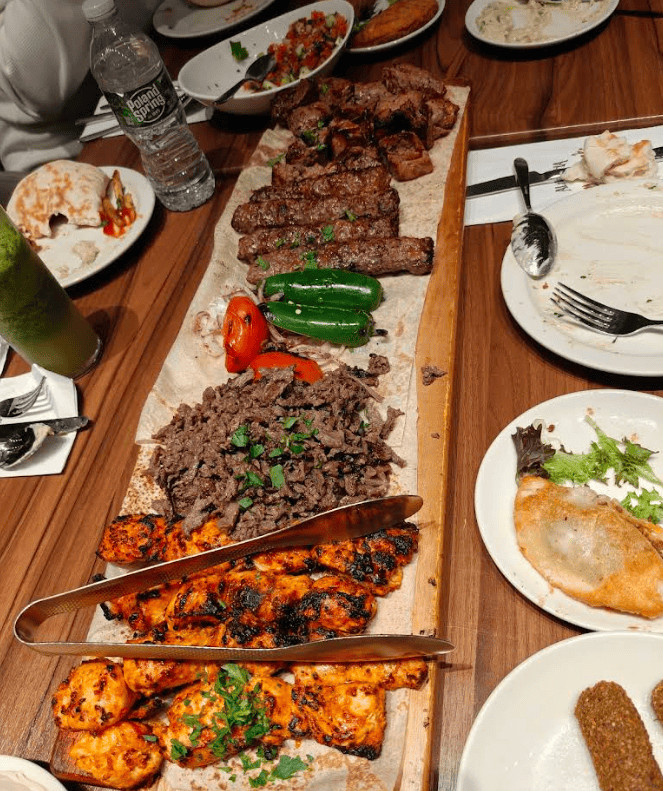
For the full falafel story, head to Al Basha in Paterson.
At first glance, the Falafel Mahshi looks familiar. Golden brown and crispy on the outside, it begins with the same chickpea-and-herb mixture found in traditional falafel. But one bite reveals something unexpected.
Hidden inside is a savory filling of onions and tangy sumac, adding layers of flavor and texture that transform a familiar food into something altogether different.
Umami, tangy, earthy, and utterly addictive.
It’s the kind of dish that makes you pause and think, “So this is what it’s supposed to taste like.”
The restaurant describes itself as bringing “a taste of Ramallah” to New Jersey.
Paterson is home to one of the largest Palestinian communities in the United States, and for decades restaurants like Al Basha have helped preserve traditions, recipes, and connections to home.
And if you are hungry, just sit down and order the Falafel Mahshi sandwich. Take a bite. Enjoy.
You may come away with a new favorite lunch.
You’ll definitely come away understanding why people have been lining up for it for years.
LA ISLA
Long before Cuban food had a moment, there was La Isla.
For decades, this modest-sized Hoboken restaurant has quietly served Cuban families, neighborhood regulars, and anyone lucky enough to discover it.
The menu offers countless temptations, but one dish achieved near-legendary status.
Omar’s Stuffed French Toast.
The dish begins with thick-cut Pullman bread stuffed with strawberry-guava cream cheese. It is dipped in cinnamon egg batter, coated with almonds and crushed cornflakes, then finished with guava glaze.
The result is gloriously over-the-top in a tropical fusion kind of way.
The dish also reflects a broader truth about Cuban food in America. Traditional recipes evolve. Ingredients blend. New ideas emerge while old traditions remain intact.
If you’re with a friend or are somehow superhero-hungry, order the traditional plátanos maduros, sweet fried ripe plantains that appear on countless Cuban tables.
Stop by later in the afternoon and feel like a local.
Grab a coveted spot at the microscopic counter. You’ll sit on an old-fashioned leatherette stool that has seen years of customers.
The staff knows many customers by name, and the dining room reflects Hoboken itself: police officers grabbing breakfast, commuters heading into Manhattan, longtime residents catching up with friends, and visitors discovering the place for the first time.
Make sure to order a café Cubano with steamed milk. It is strong, hot, and undeniably delicious. Any memory of chain-produced coffee will disappear after one sip.
Everyone seems to fit in, united by good coffee, Cuban food, and the simple pleasure of a welcoming neighborhood restaurant.
Go. Thank me later.
More stories

These 10 Oklahoma Eateries Are So Unique They Belong On Every Must-Visit List
These 7 Oklahoma Airport Restaurants Are Worth Showing Up Early For
This Oklahoma City Grocery Store Feels Like a European Passport Stamp You Didn’t Plan For
These 8 Oklahoma Pecan Pie Spots Taste Like Home, Wherever Home Might Be
Share this story