21 Brown Bathroom Ideas That Feel Warm, Not Dated

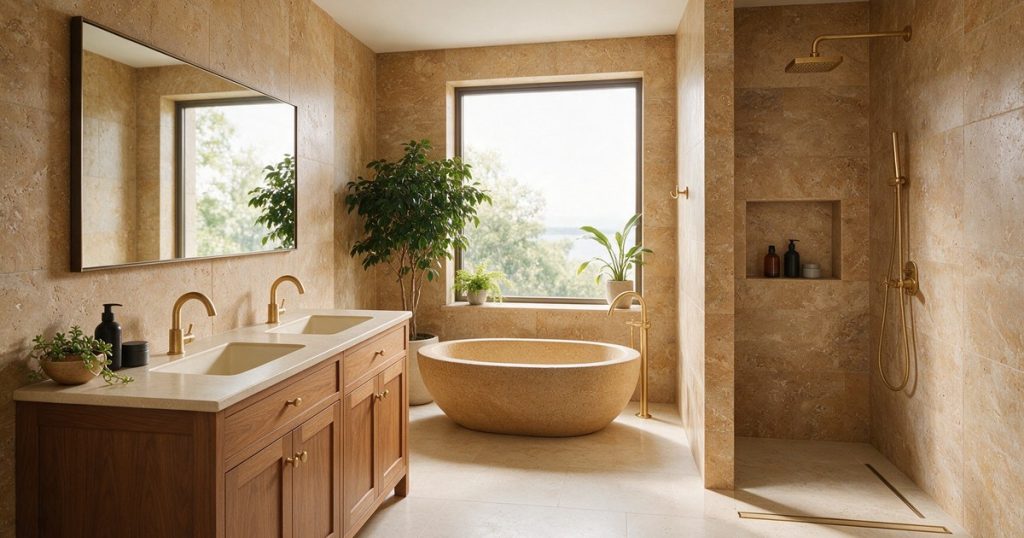
Brown gets a bad rap in bathrooms. Say the word and half the room pictures an avocado-and-chocolate suite from 1974, the kind people rip out the week they get the keys. I think that is a mistake.
Done right, brown is the warmest, most grounded and calm colour you can put on a wall. It is the colour of coffee, of oak, of good leather and wet river stone.
Below, you will find 21 ways to wear it, from candle-lit and moody to breezy and coastal, each with the palette, the paint, and the one move that makes it work.
1. Moody Brown Bathroom
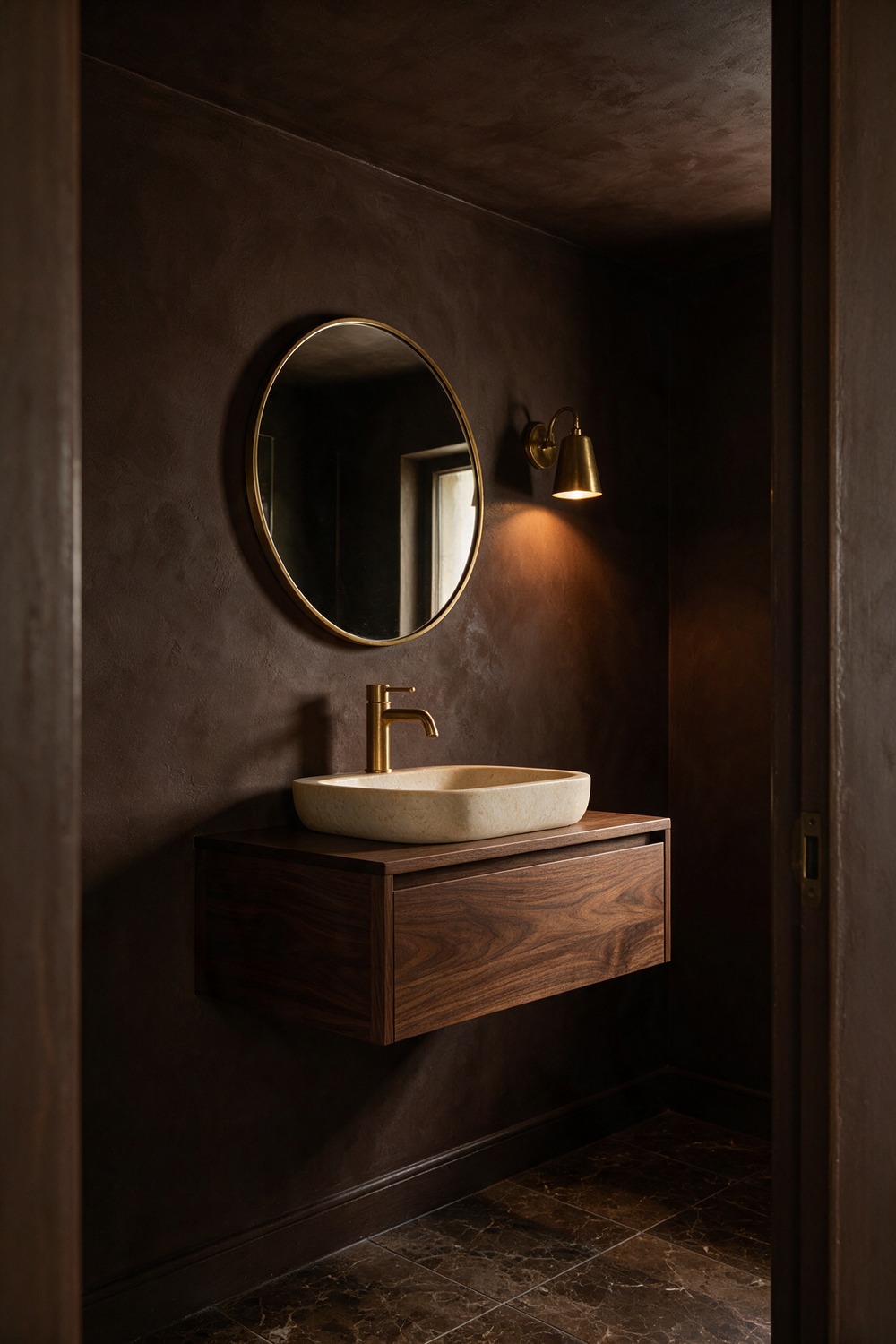
This is brown at its most dramatic, and my personal favourite. Think a deep chocolate that swallows the light rather than bouncing it back. Walls, ceiling, the lot, in one enveloping shade so the room feels like the inside of a jewellery box.
The palette is near-black brown, warm brass, and a single pool of lamplight. Reach for a limewash in something like Bauwerk’s Chocolate, which gives that chalky, cloudy depth flat paint never will.
Keep the metals unlacquered brass so they glow instead of glare, and light it low. A 2200K bulb, nothing brighter. Start with the darkest wall and let the fixtures step forward from the shadow.
2. Retro 70s Brown Bathroom
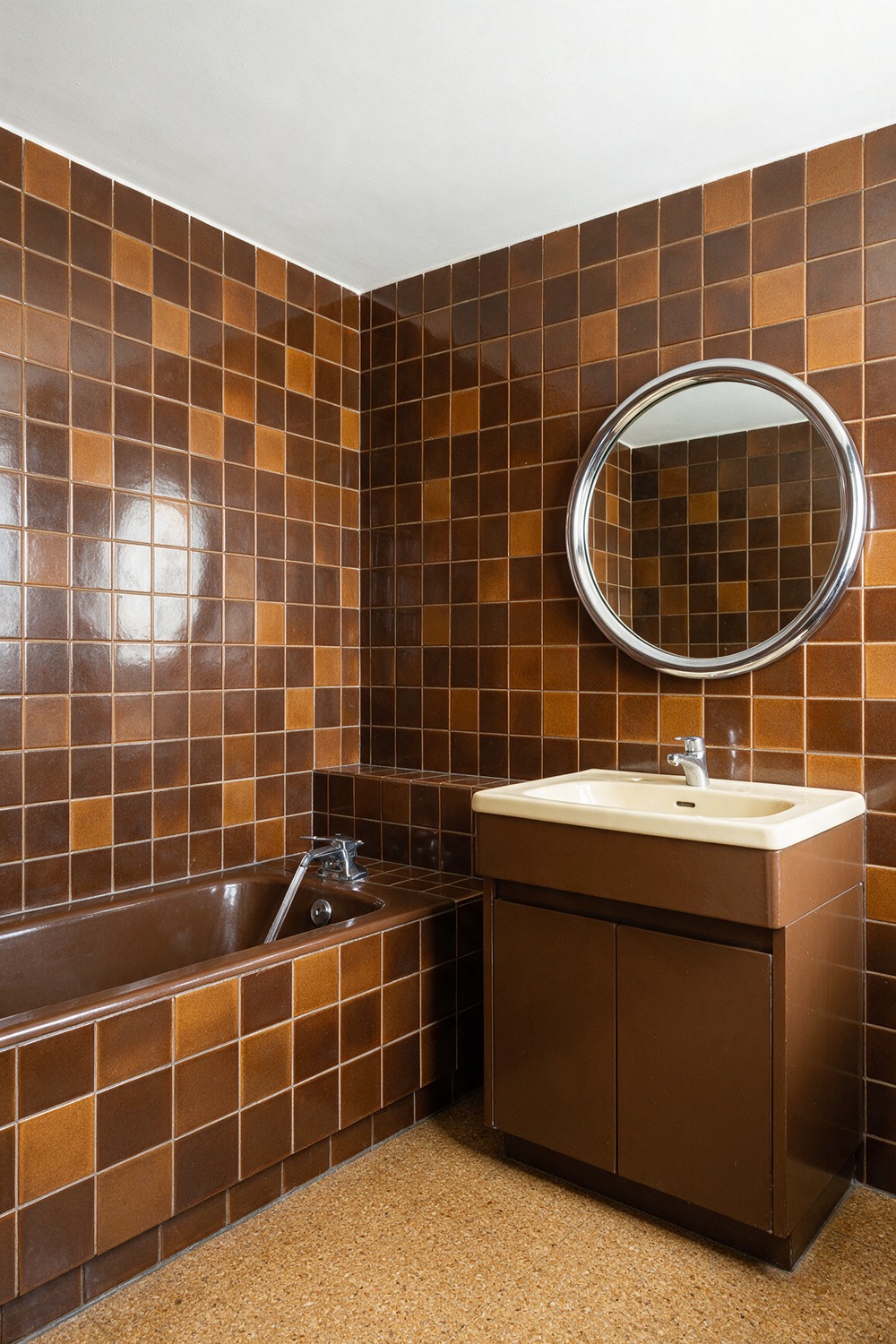
Here is where I make peace with the decade everyone loves to mock. A proper 70s brown bathroom leans into chocolate, caramel and mushroom all at once, usually in glossy square tile that marches floor to ceiling.
Pro tip: do not try to make it tasteful. The whole point is the sunken warmth of tan tile with chrome trim and a round mirror. For paint behind the tile, a mushroom-taupe like Behr’s Mushroom Bisque keeps it period-correct. One brave colour, committed all the way.
3. Vintage Brown Bathroom
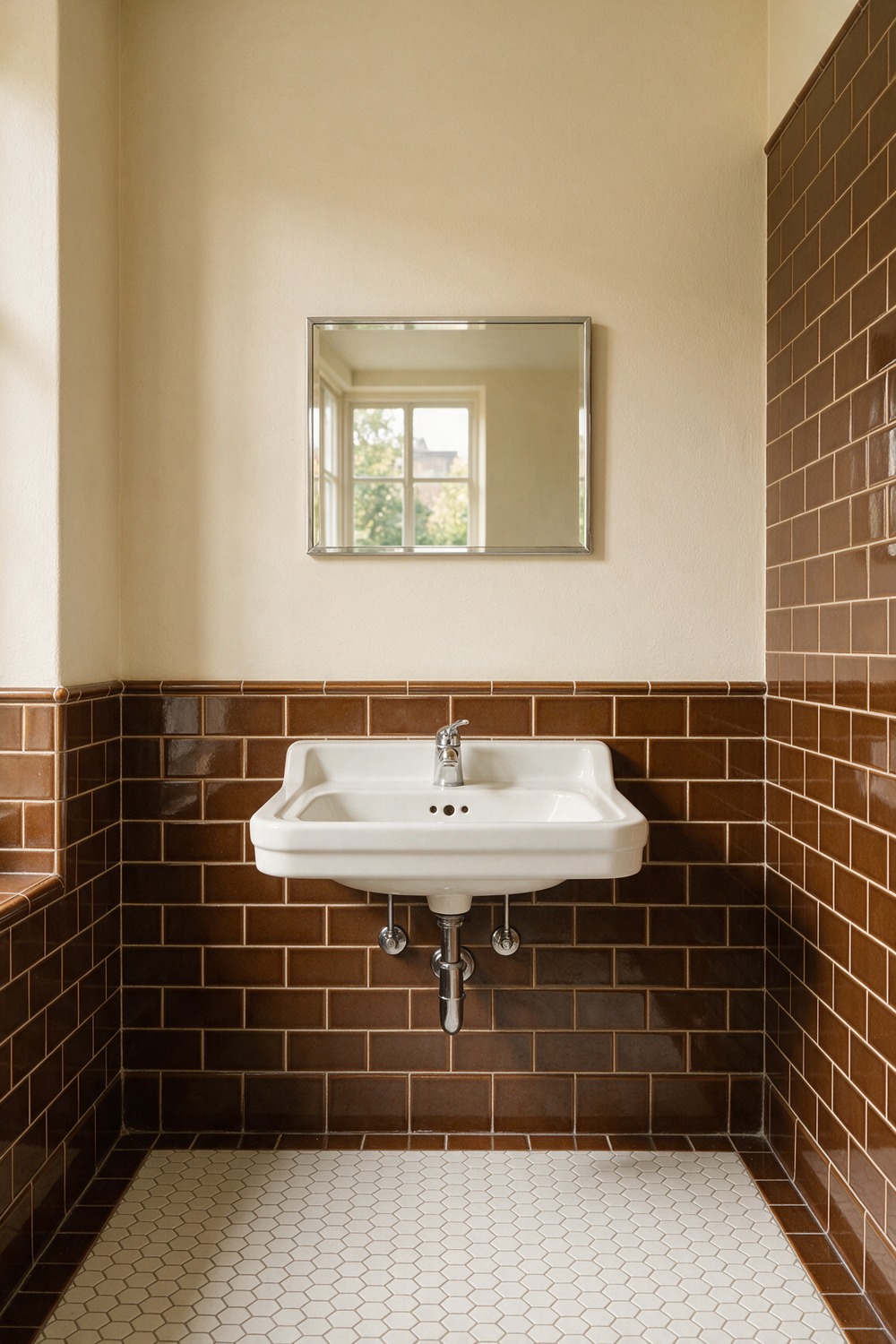
Vintage brown is softer and more mannered than its 70s cousin. It is the brown of a 1920s guest bath: cream walls, a chair-rail of coffee-coloured tile, a pedestal basin, and little hexagon floor tiles with a brown border running the edge.
The trick is the two-tone split. Warm cream up top, a band of glazed brown field tile below, divided by a slim pencil trim.
A honeyed taupe like Little Greene’s Mushroom reads perfectly for the upper wall. Keep the fittings chrome and simple, and the whole thing feels like it has always been there.
4. Modern Brown Bathroom
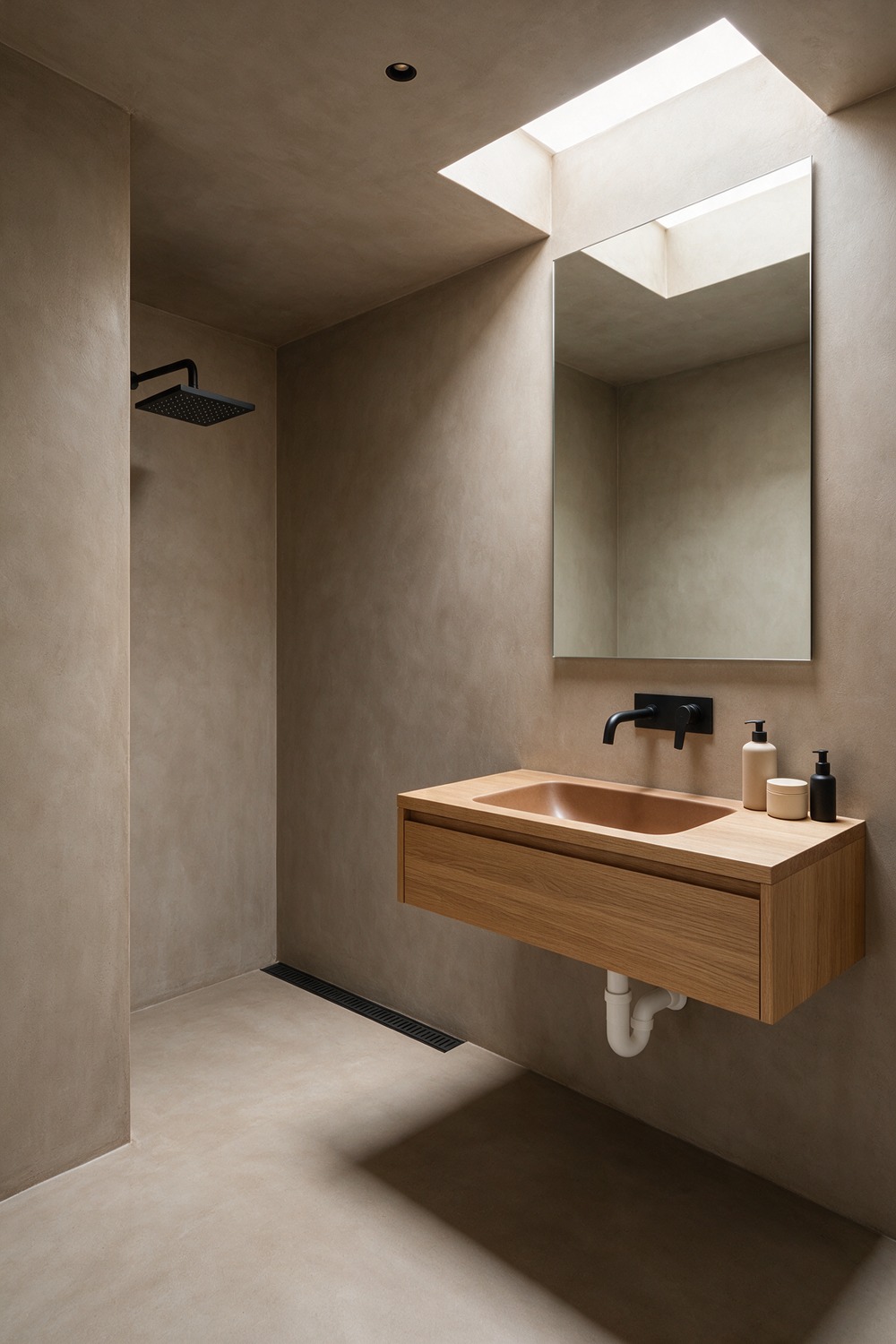
Modern brown throws out the tile grid entirely. One seamless poured surface, usually microcement, wrapping the walls in a flat mushroom-brown with no lines to interrupt it. Calm, architectural, quietly expensive.
The palette is single-note: warm greige-brown everywhere, a floating oak vanity, a matte-black tap. A smooth mineral shade like Backdrop’s Little Dipper captures it. Commit to microcement on at least the shower walls, because it is the seamlessness, not the colour, that reads as modern.
5. Rustic Brown Bathroom
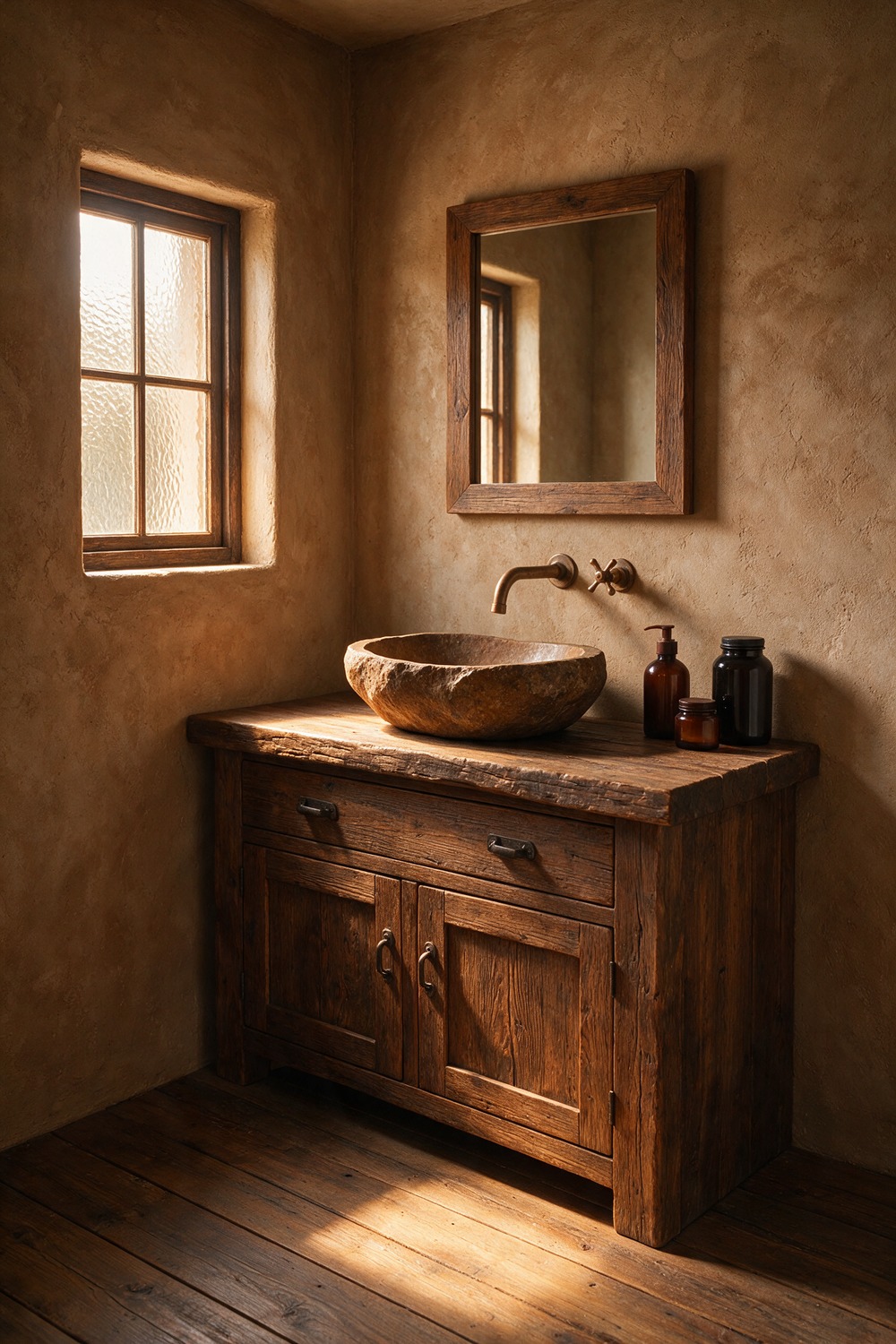
Rustic brown is texture you can feel before you touch it: rough-sawn timber, a chunky reclaimed-wood vanity, a rough stone vessel sink, and hand-troweled plaster in a warm clay-brown. Reach for a chalky limewash like Bauwerk’s Raw Sienna, cloudy and uneven on purpose. Texture does the heavy lifting.
6. Farmhouse Brown Bathroom
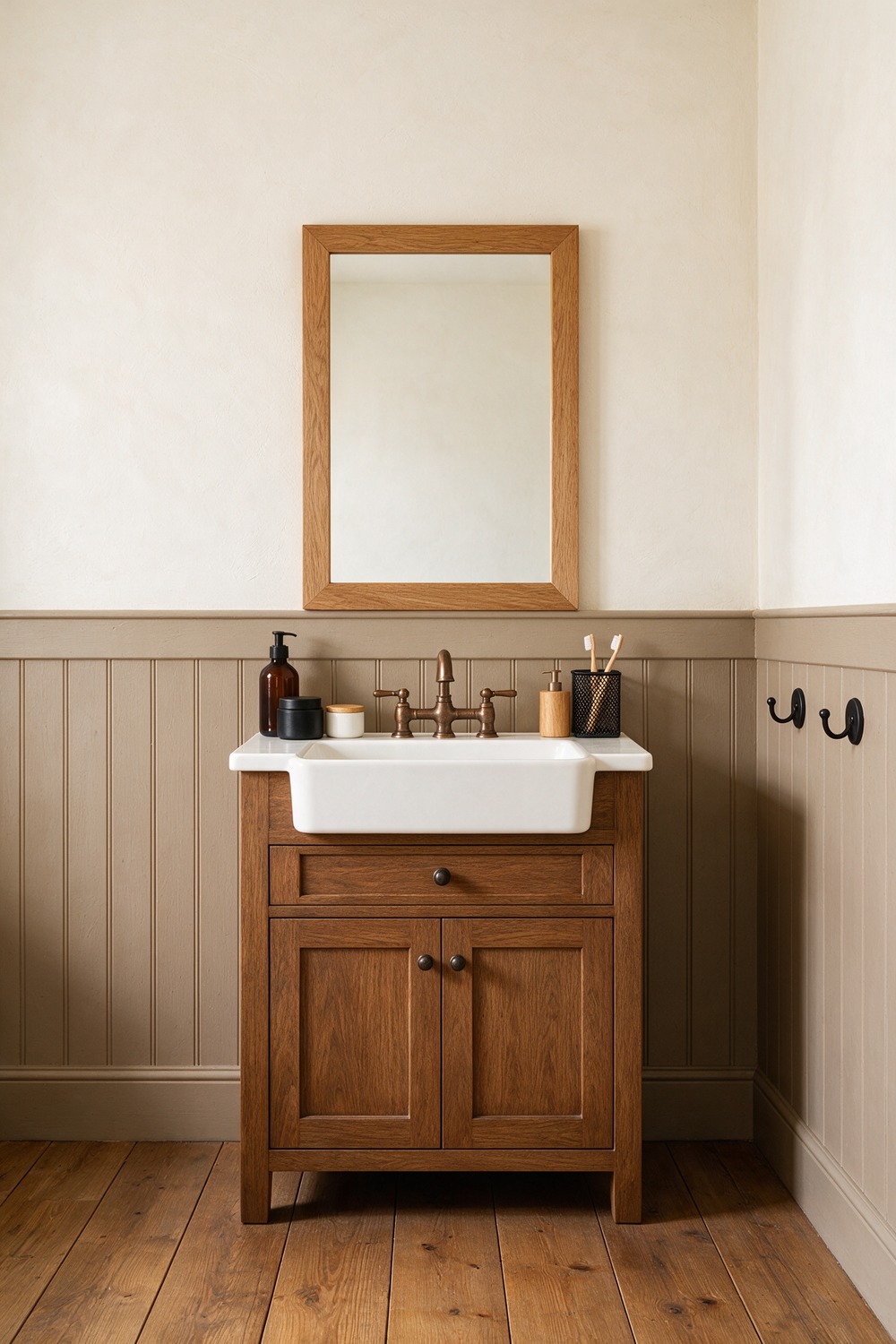
Farmhouse brown is the cosy middle ground: warm, practical, friendly to a family. Picture tongue-and-groove panelling painted a soft fawn, a brown shaker vanity, and a big apron-front basin you could bathe a spaniel in.
Half-height beadboard is the backbone. Paint it a gentle mushroom-brown, Benjamin Moore’s Alexandria Beige is a lovely one, and top it with warm white above.
Add an oak-framed mirror and black iron hooks. The look lives in the panelling, so start there and let the vanity follow.
7. Spa Brown Bathroom
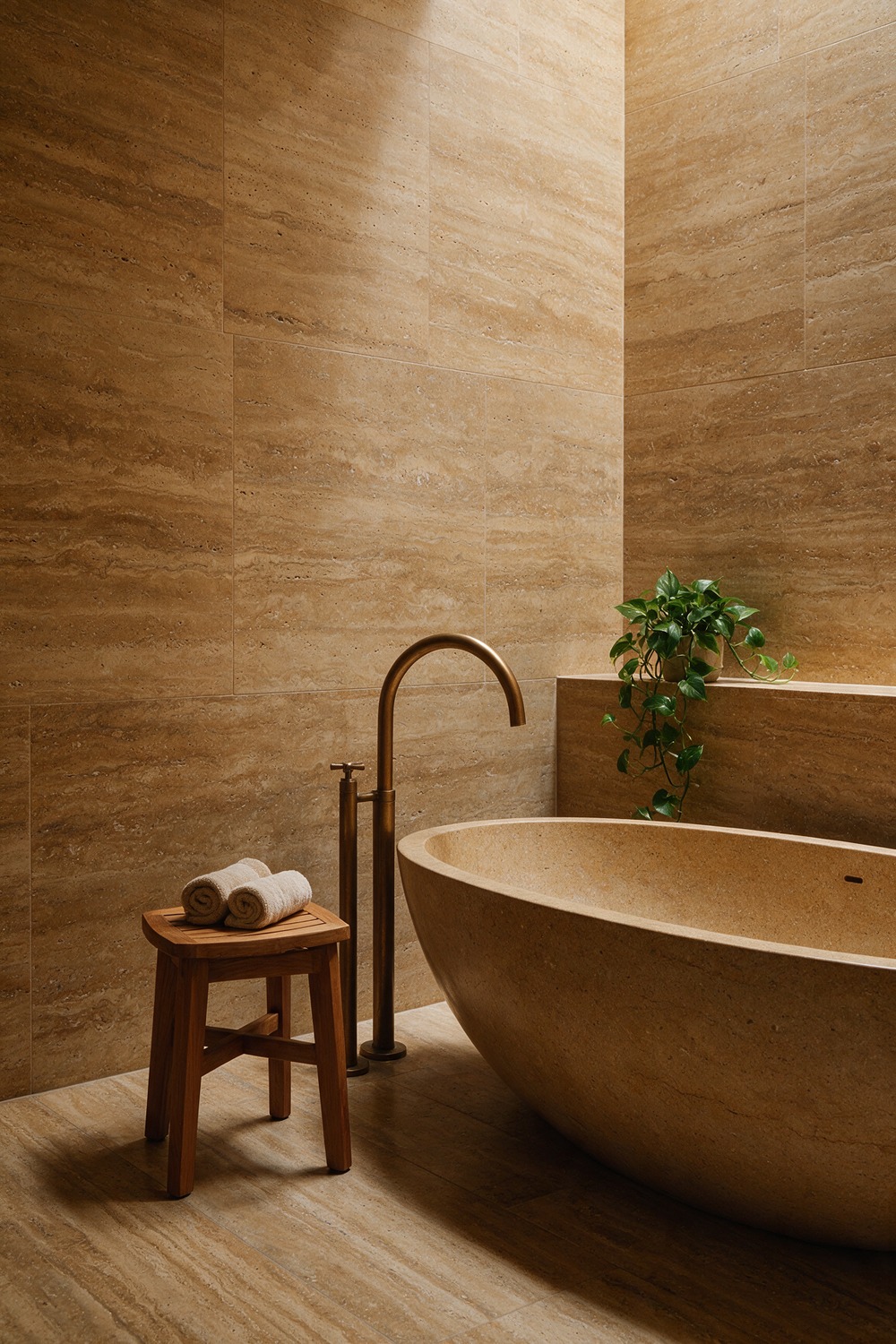
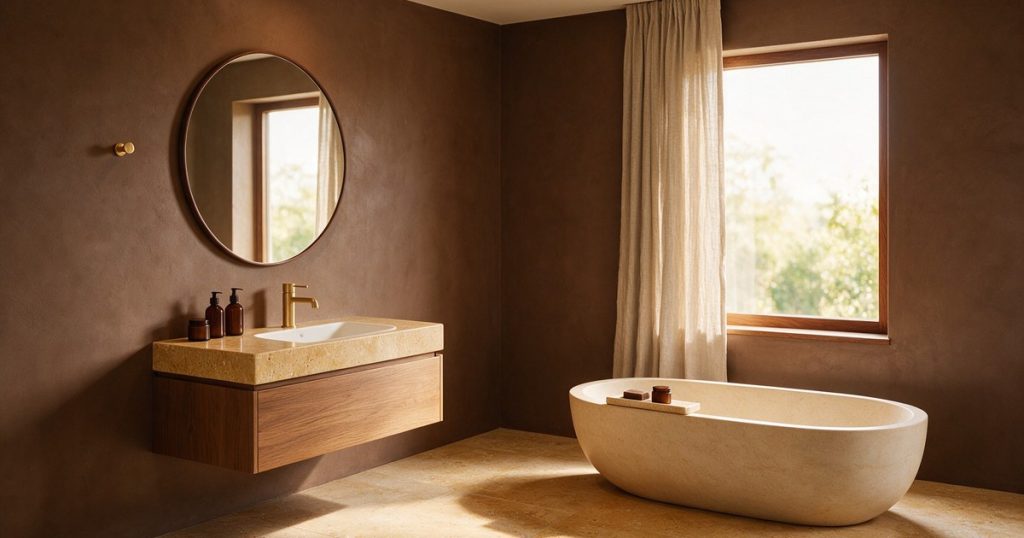
You know the drop in your shoulders when you walk into a good hotel spa? That is the feeling to chase. Spa brown is warm stone and wood: honey travertine on the walls, a teak bath mat, soft diffuse light, not a single sharp edge.
Large-format honed travertine is the hero, the colour of wet sand, laid in big slabs so the grout nearly disappears. Carry a taupe like Dulux Egyptian Cotton onto the painted walls.
Keep everything matte, add a trailing pothos, and dim the lights to a low 2700K glow. The brown here is a backdrop for calm.
8. Cabin Brown Bathroom
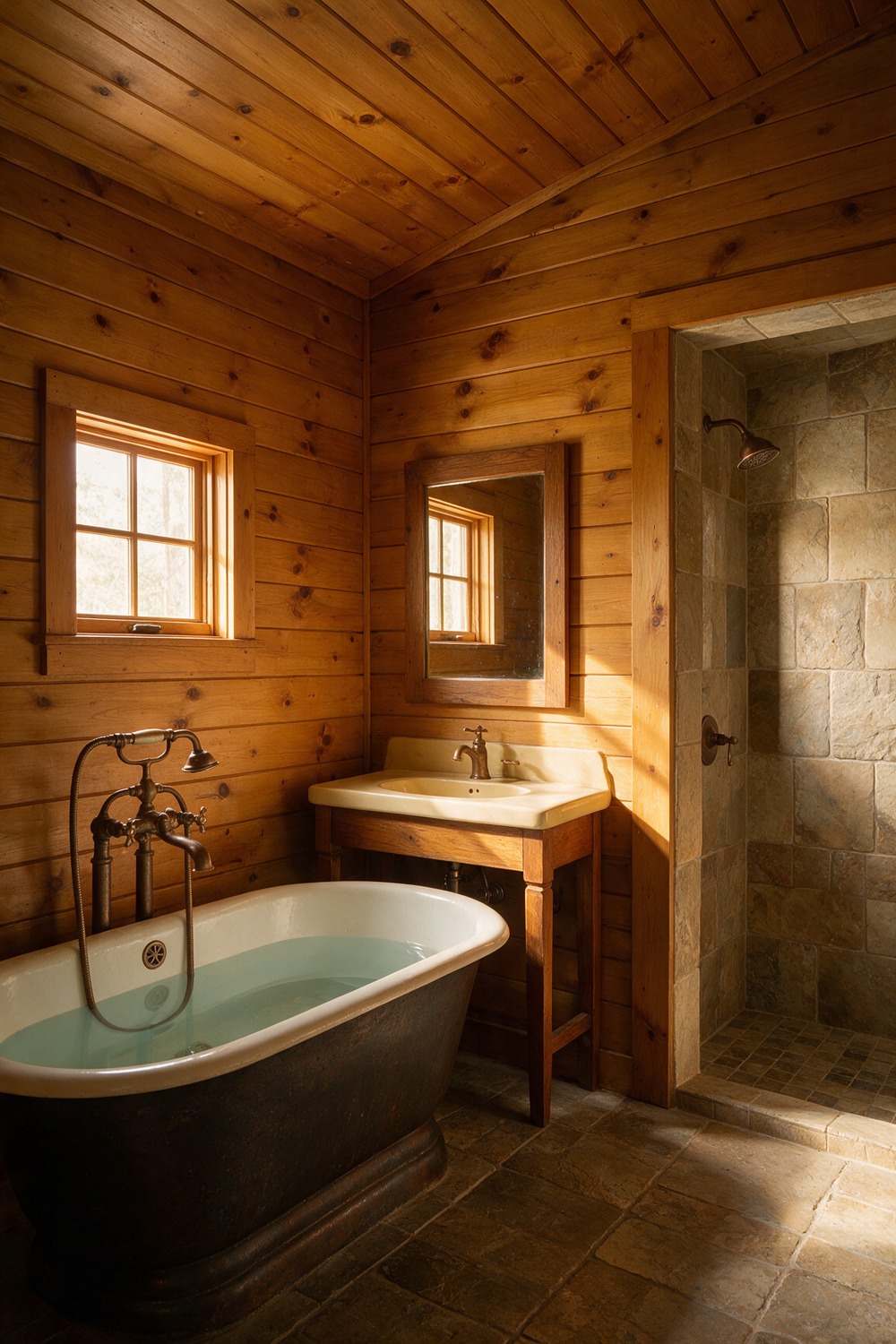
A cabin brown bathroom should smell of pine and woodsmoke. Knotty pine or cedar planks run the walls, warm amber in tone, with a stone-tiled shower and a deep cast-iron tub under a small window.
The whole room is wood, so you barely need paint. Where you do, a warm brown like Sherwin-Williams Turkish Coffee on the vanity grounds all that honey timber. Aged bronze tap, nothing shiny.
9. Mid-Century Brown Bathroom
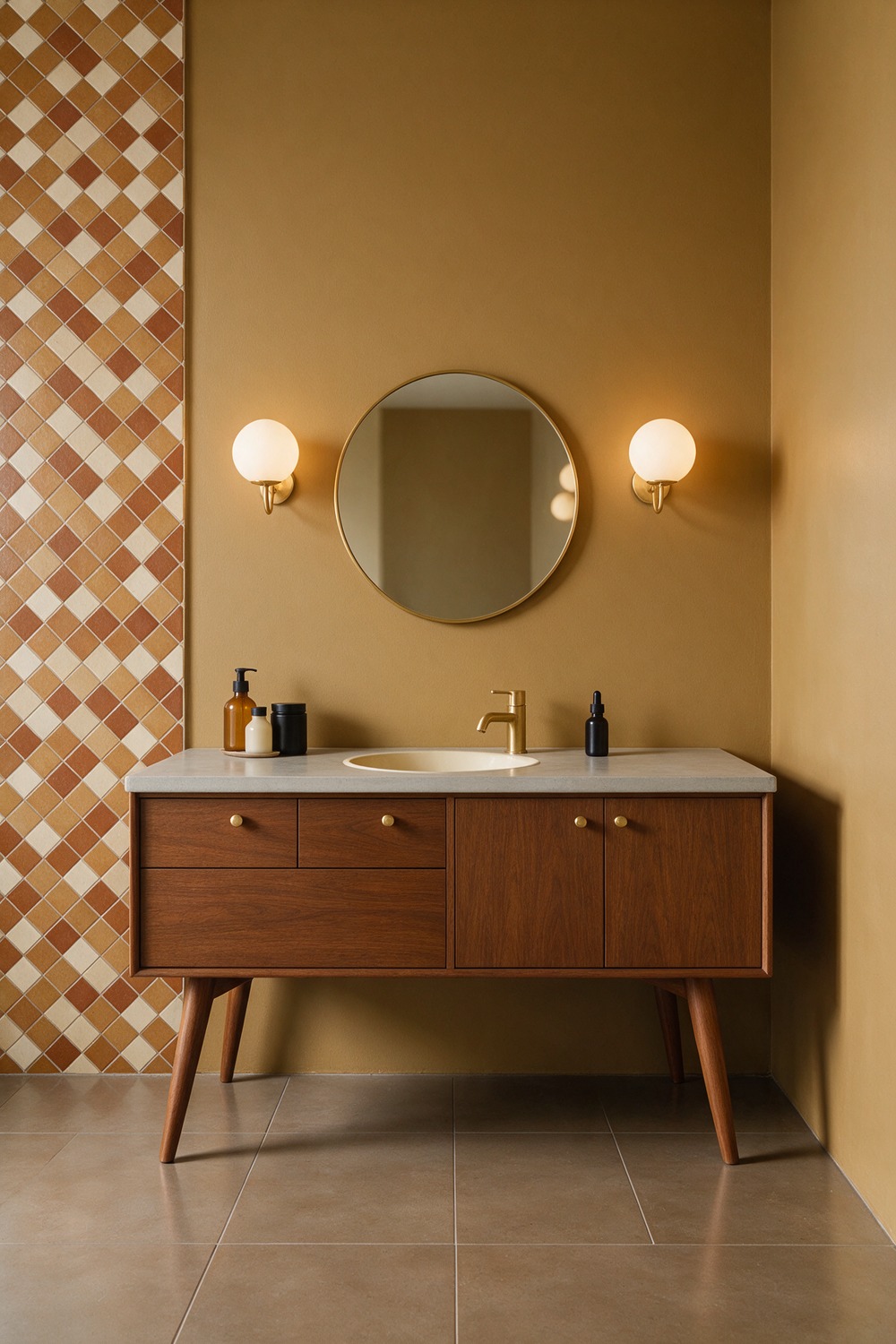
Mid-century brown is walnut and warmth with clean, confident lines. A low walnut vanity on splayed legs, a round mirror, and tile in a geometric run of caramel, rust and cream. Retro, but tailored, never kitsch.
The signature is the walnut. Go for a flat-fronted vanity with that rich red-brown grain, then echo it with a mustard-brown on one wall, something like Farrow & Ball India Yellow dialled warm. Brushed-brass tap, globe sconces either side of the mirror.
10. Boho Brown Bathroom
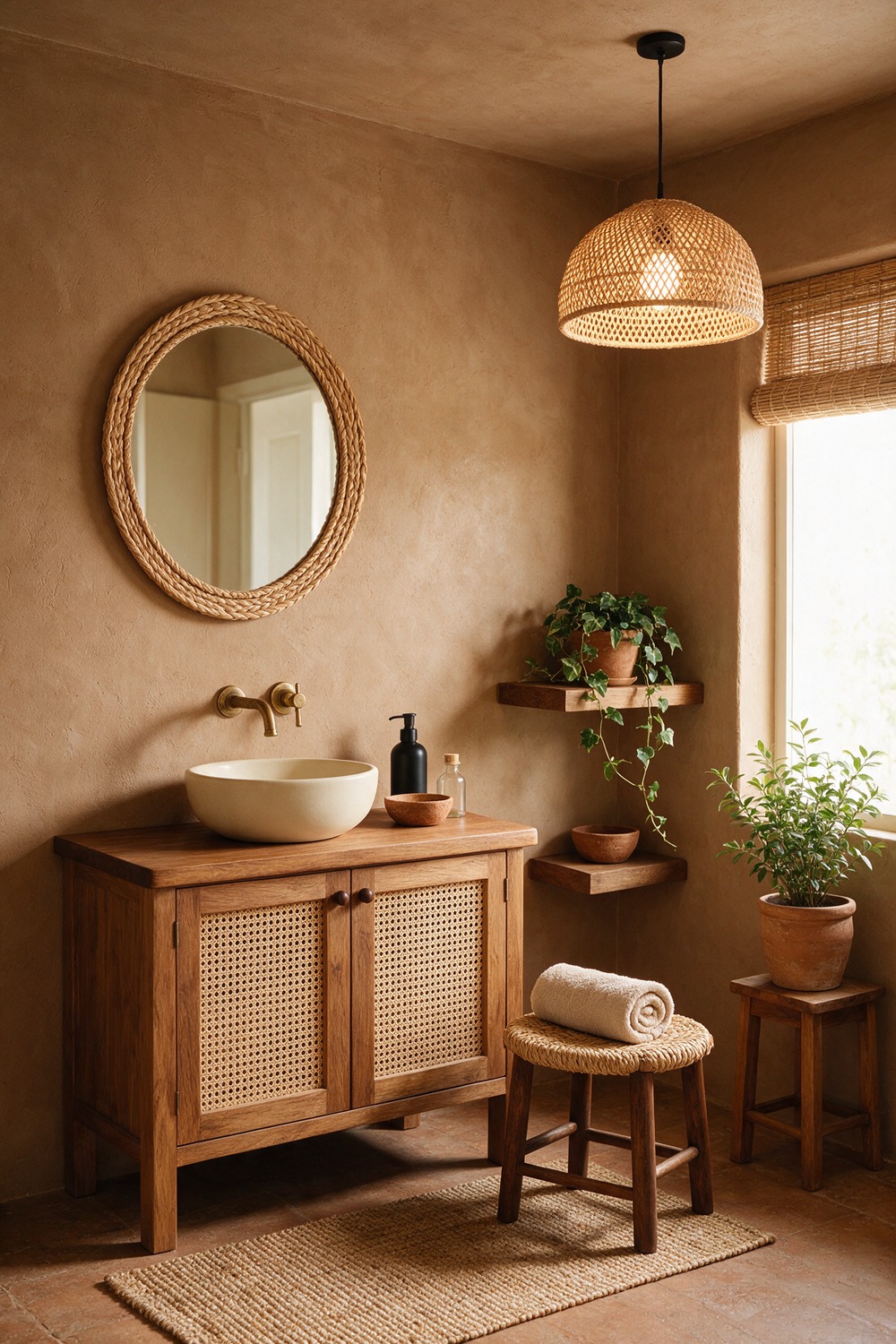
Boho brown is the most relaxed room on this list, a happy jumble of terracotta, rattan and cane. Warm earth-brown walls, a woven mirror, hanging plants, and a rush-seat stool holding a rolled towel.
Layer, do not match. A terracotta-brown plaster wall, think Clare’s Terracotta warmed down, sets the base.
Then pile on texture: a jute rug, a rattan pendant well clear of any water, a macrame plant hanger, unglazed clay pots. The rule is that nothing should look bought as a set.
11. Traditional Brown Bathroom
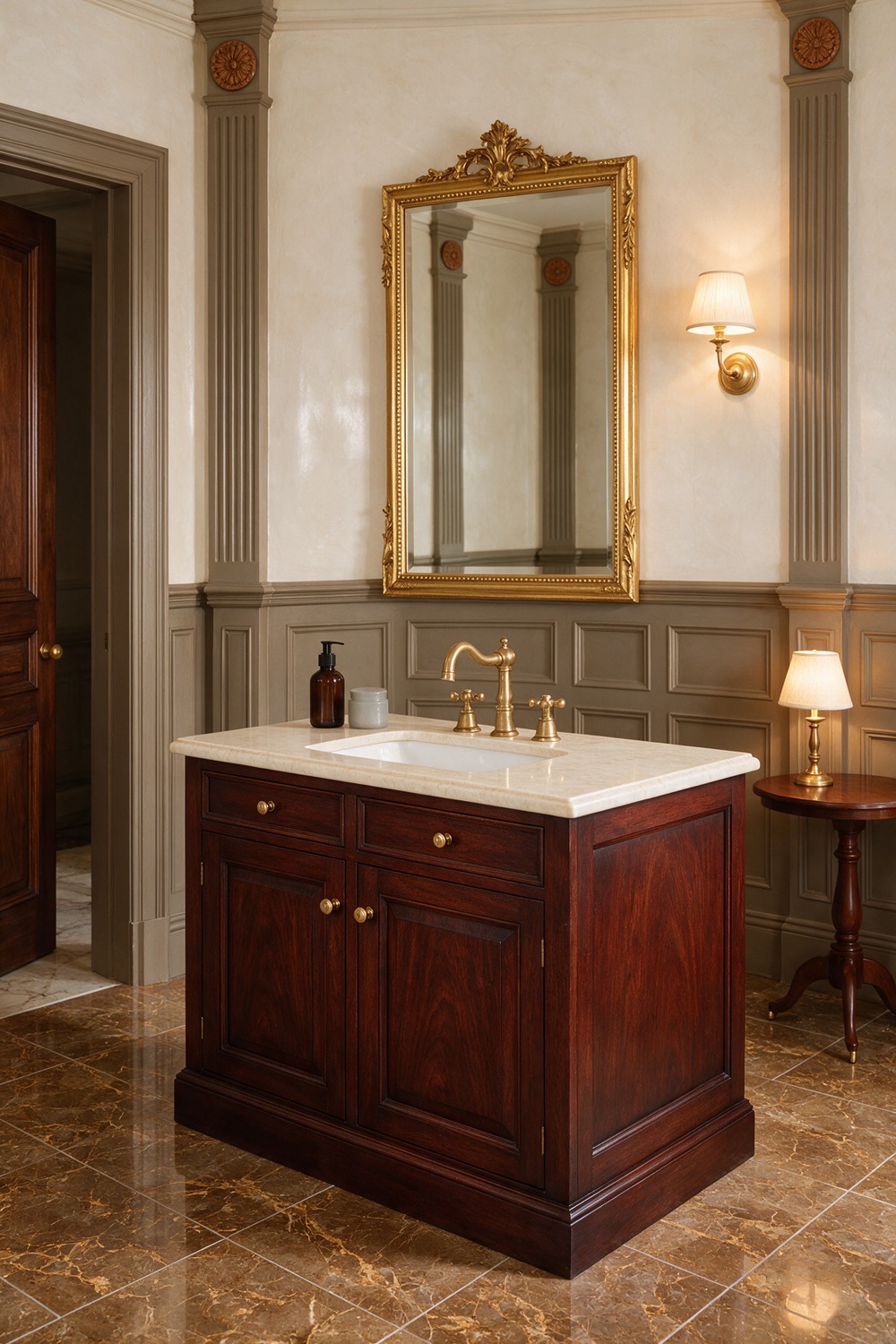
Traditional brown is the grown-up in the room: mahogany, polished brass, a sense of quiet money. Panel moulding is non-negotiable, painted a rich greige-brown like Farrow & Ball London Clay, with a mahogany vanity, a honed marble top, and unlacquered brass taps that will patina over the years.
12. Luxury Brown Bathroom
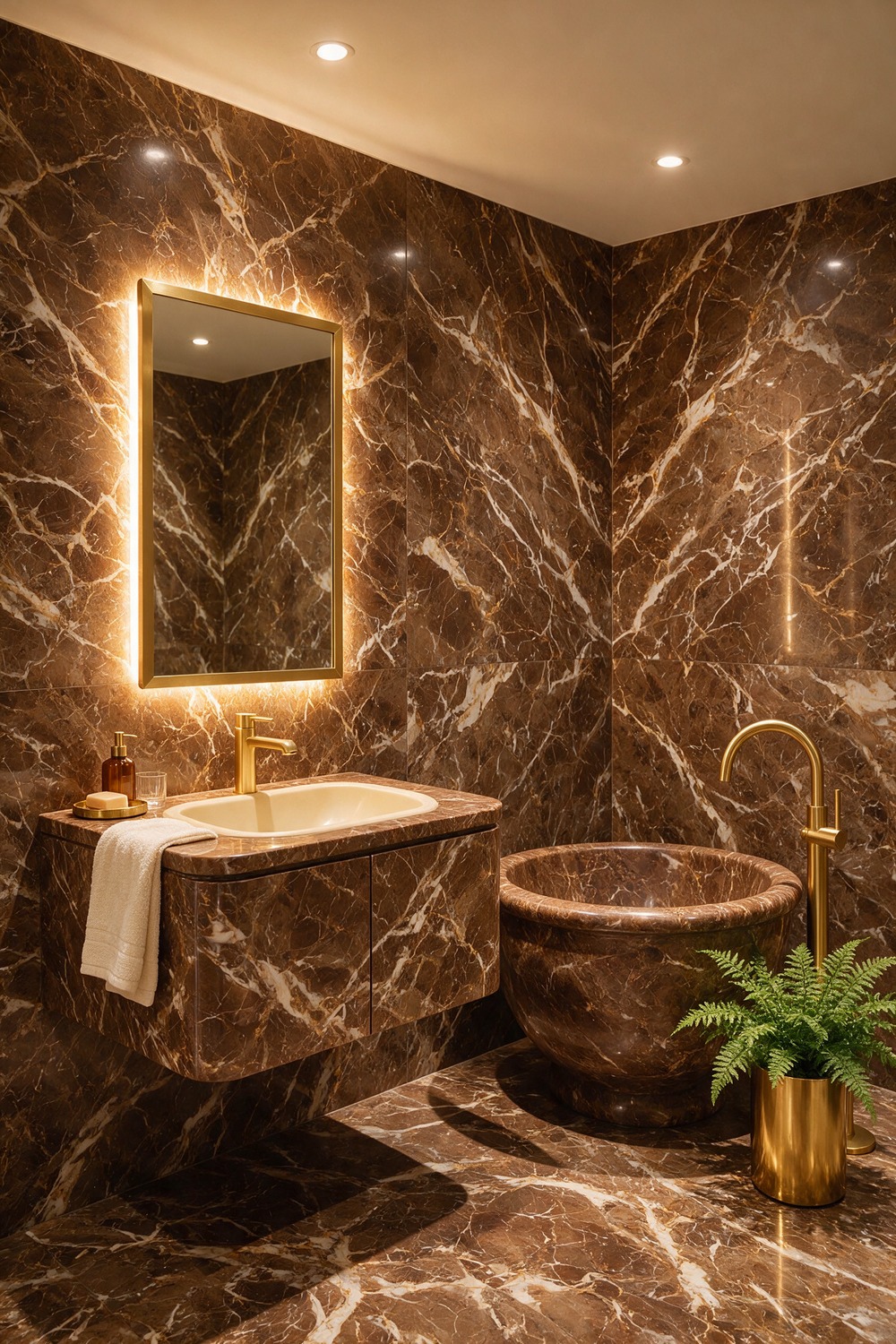
When brown goes luxe, it goes marble. Deep brown Emperador marble, that chocolate stone shot through with white and gold veining, wrapping the walls and a freestanding tub. Opulent, and it knows it.
Run book-matched Emperador up a feature wall so the veins mirror each other, then keep paint minimal: a warm stone like Benjamin Moore Bleeker Beige on any plain wall.
Brushed-gold fittings, a backlit mirror. The stone is the splurge, so let it lead and keep everything else calm.
13. Japandi Brown Bathroom
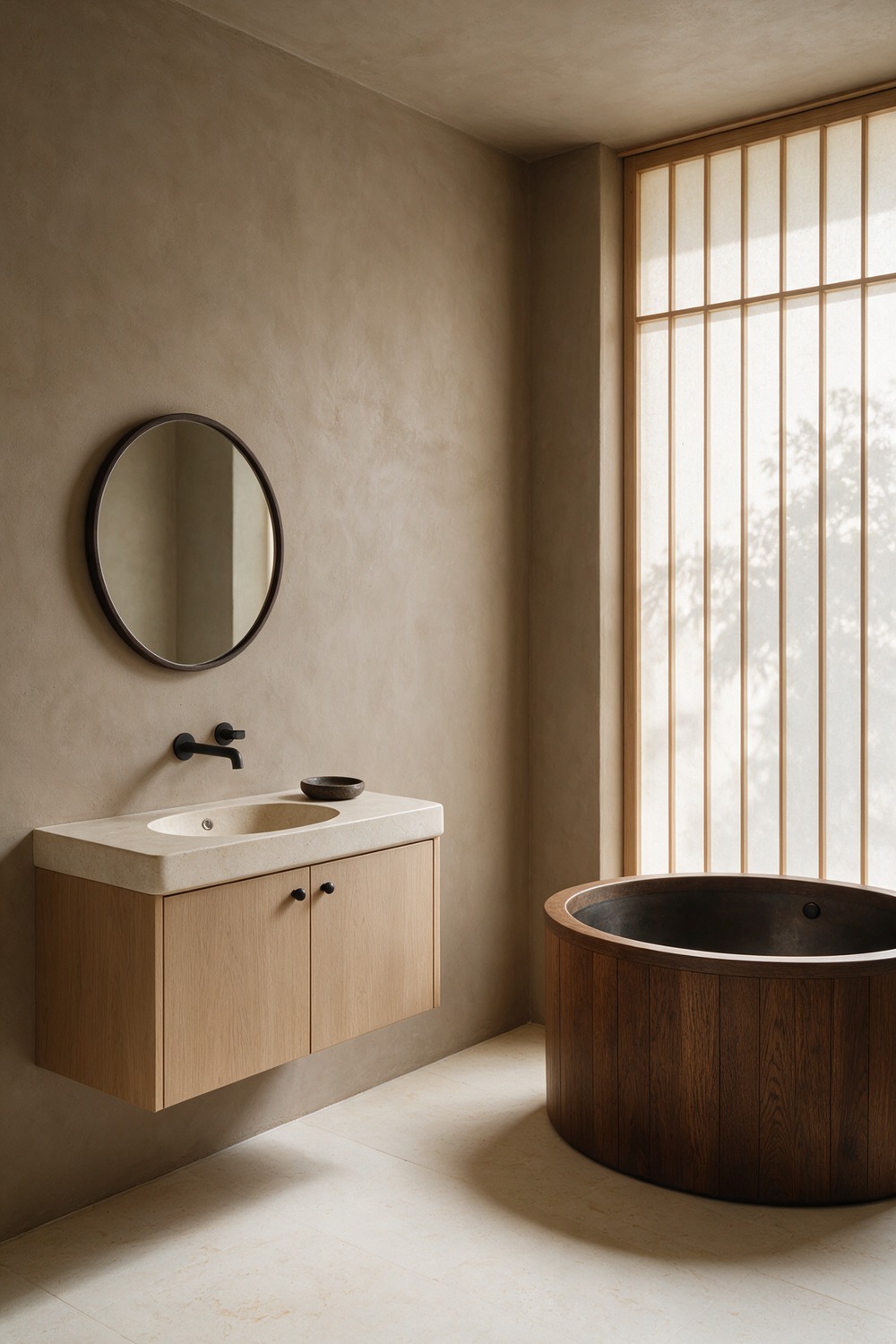
Japandi, for the uninitiated, is Japanese calm meeting Scandinavian warmth. In brown that means pale oak, a deep soaking tub, and walls in taupe-brown tadelakt that feels like suede. A low vanity, a matte-black tap, one stone dish. Warm minimalism, done with restraint.
14. Art Deco Brown Bathroom
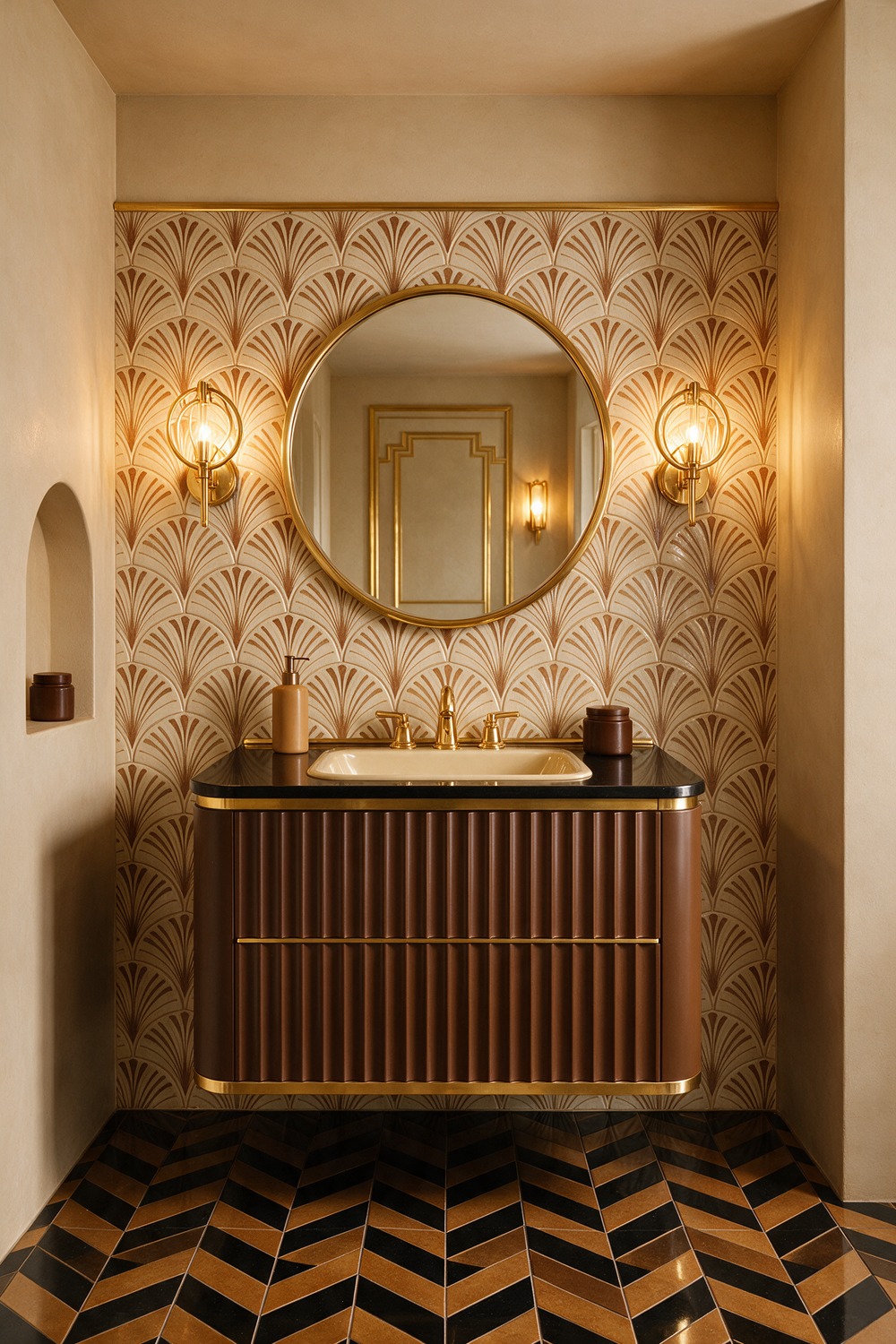
Art deco brown is glamour with geometry. Chocolate and gold in bold fan and sunburst patterns, fluted glass, and a black-and-caramel tiled floor laid in a sharp repeating motif. Jazz-age confidence in a small room.
The move is pattern plus metal. A geometric brown-and-cream tile, a fluted brown vanity, gold trim everywhere the eye lands.
For walls, a deep bronze-brown like Little Greene’s Bronze Red keeps it rich. Symmetry is your friend: pair the sconces, centre the mirror, let the geometry sing.
15. Industrial Brown Bathroom
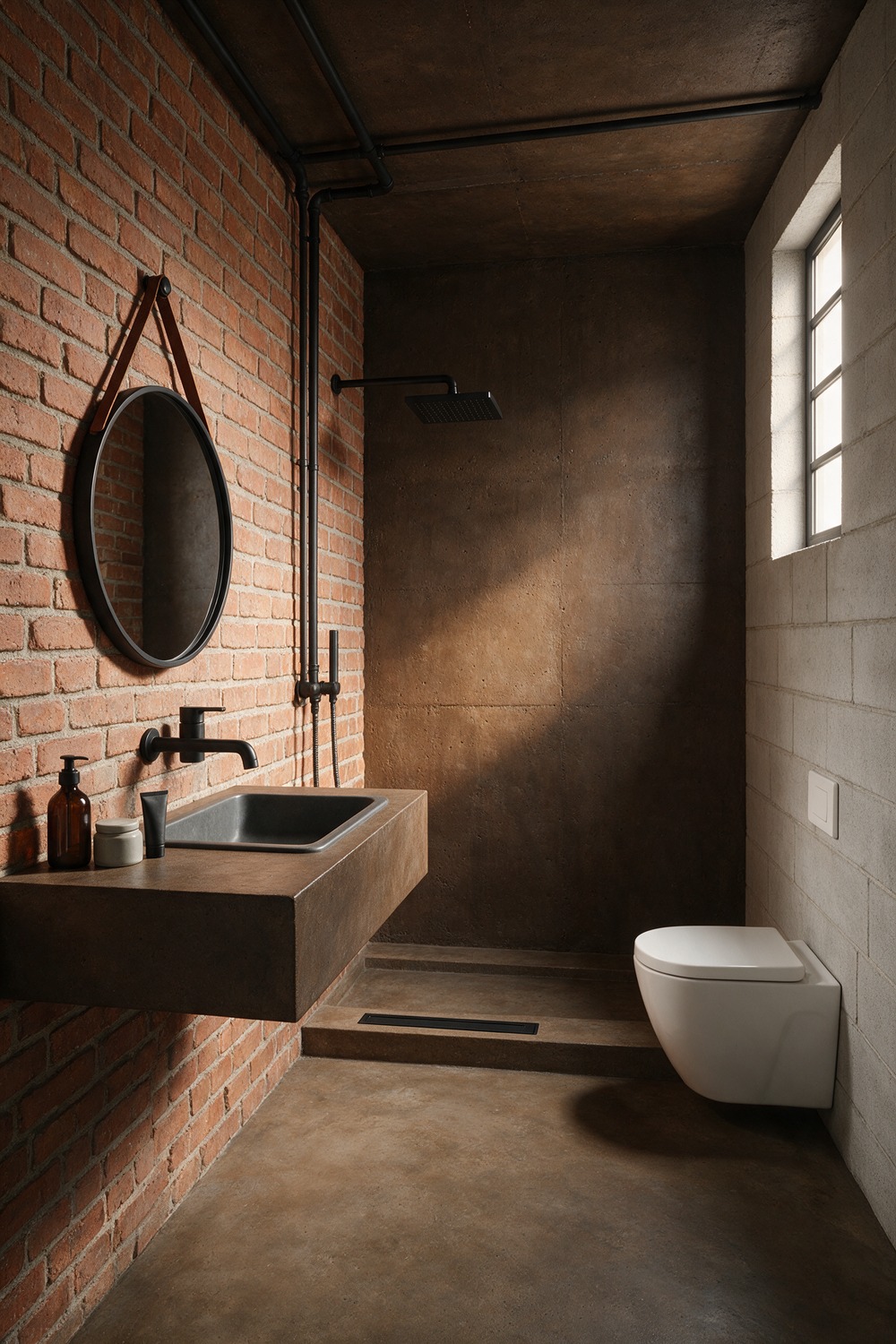
Industrial brown trades softness for grit: a bare wall of reclaimed russet brick (or convincing brick-slip tile), a concrete basin, an open walk-in shower with a black rain head on exposed pipework, and a hint of leather.
Where you paint, go a deep clay-brown like Dulux Spiced Honey gone dark. Masculine, handsome, and happiest looking a little used.
16. Coastal Brown Bathroom
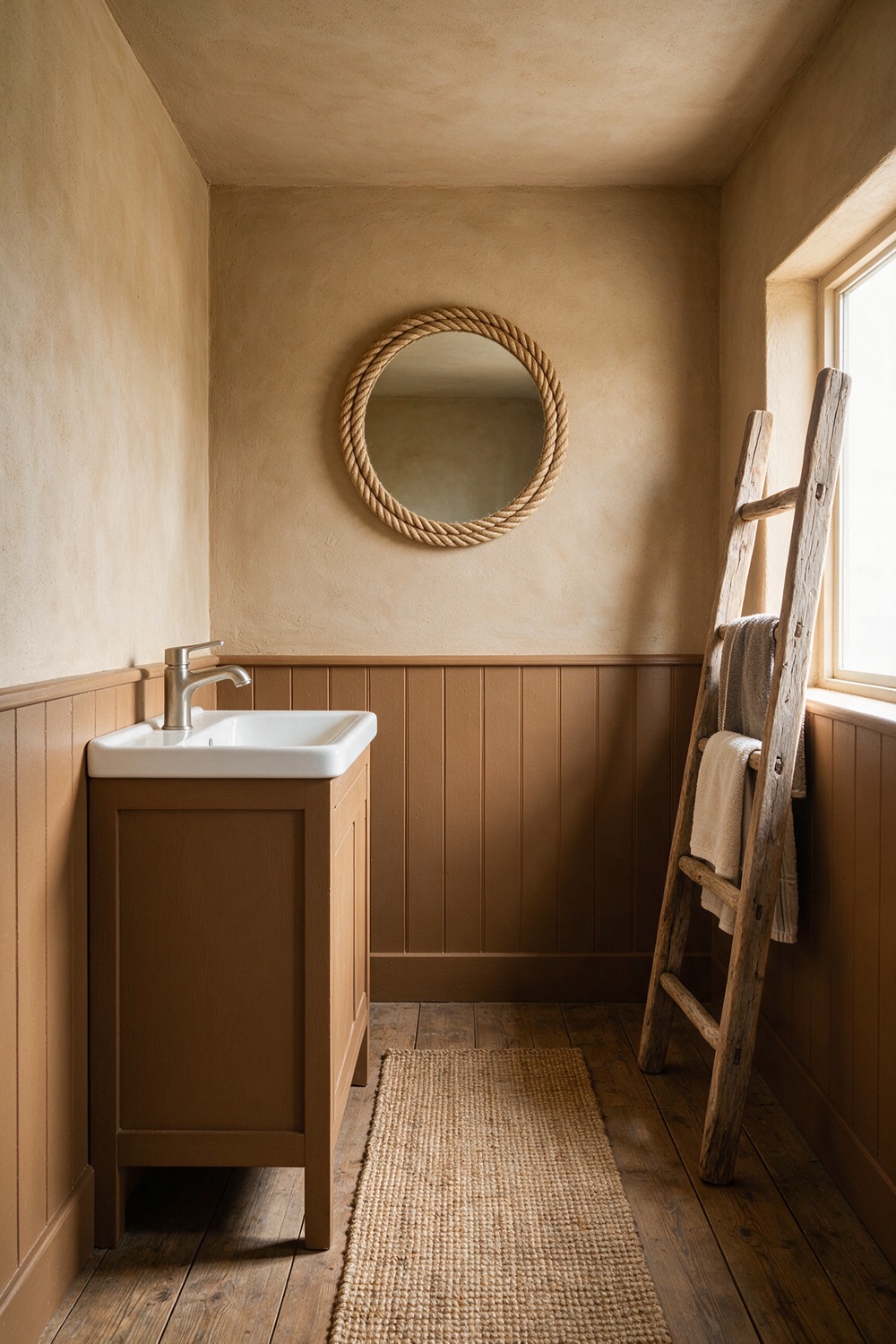
Not every coast is blue and white. A coastal brown bathroom borrows the driftwood end of the beach: warm tobacco panelling, sandy plaster, rope, and jute. Breezy, but with its feet in the dunes.
Wrap the lower wall in tongue-and-groove painted a soft driftwood brown, think Sherwin-Williams Rookwood Brown, with sandy plaster above and a weathered brown plank floor underfoot.
Then add the beach: a thick rope-framed round mirror, a jute runner, a bleached driftwood ladder for the towels. Warm and woody, but the sea air still gets in.
17. Mediterranean Brown Bathroom
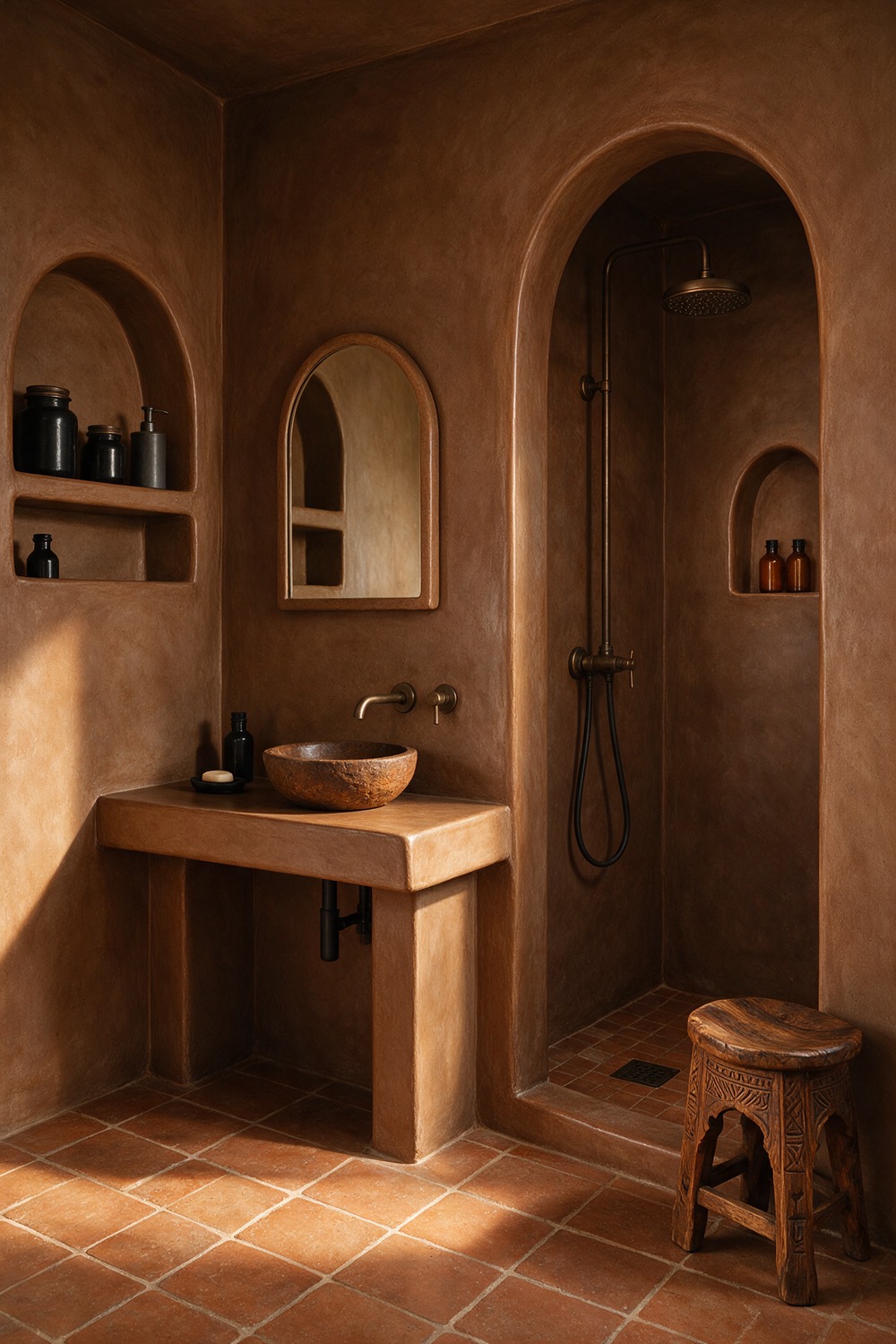
Mediterranean brown is sun-baked and hand-made: warm terracotta and tobacco, a little Andalusian, a little Moroccan.
The arch is the signature, carved into a plaster wall as a shower recess or a mirror surround. Finish the walls in tobacco-brown tadelakt, and lay a terracotta floor in warm, uneven clay. Aged bronze taps, a carved wood stool.
18. Cottage Brown Bathroom
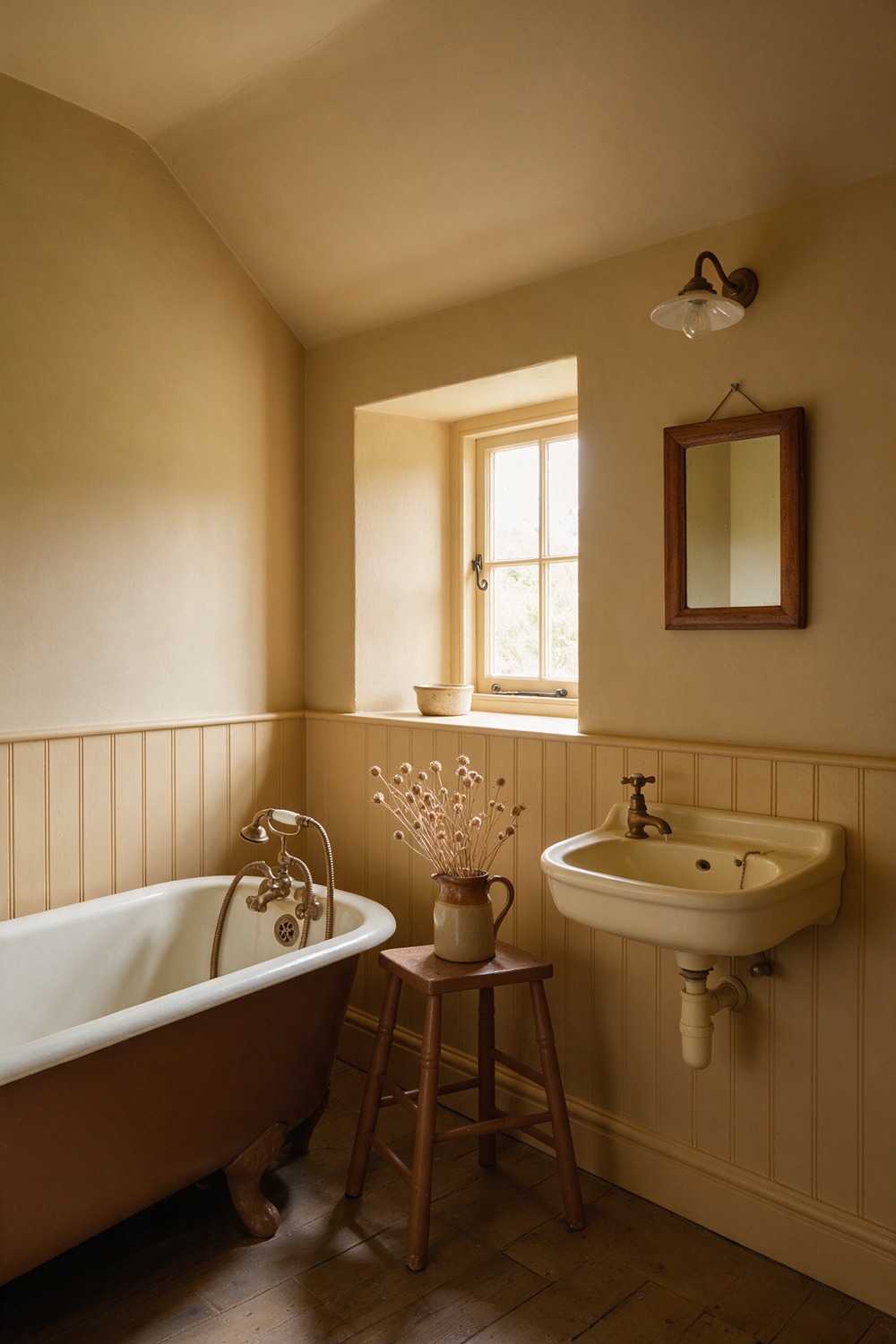
Cottage brown is sweet and snug, the bathroom in a thatched house where the ceiling slopes and the window is deep-set. Warm fawn walls, beadboard, a roll-top tub, and a few small floral touches that never tip into twee.
Beadboard again, but painted a gentle caramel-cream like Farrow & Ball Oxford Stone, warm white above. A little roll-top bath, a brown-painted stool, a jug of dried seedheads. The scale is the secret: small fittings, low light, everything a touch cosy.
19. Victorian Brown Bathroom
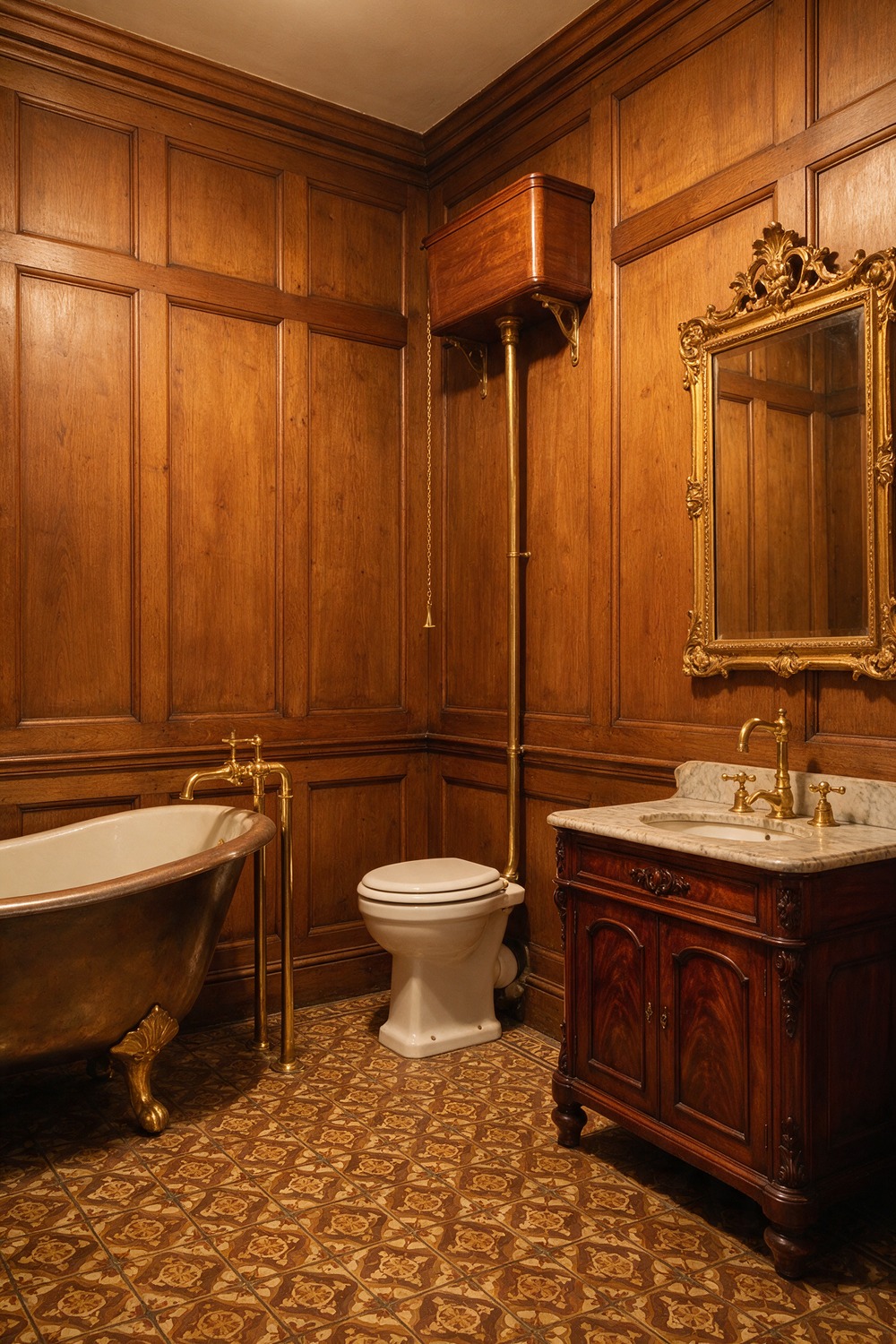
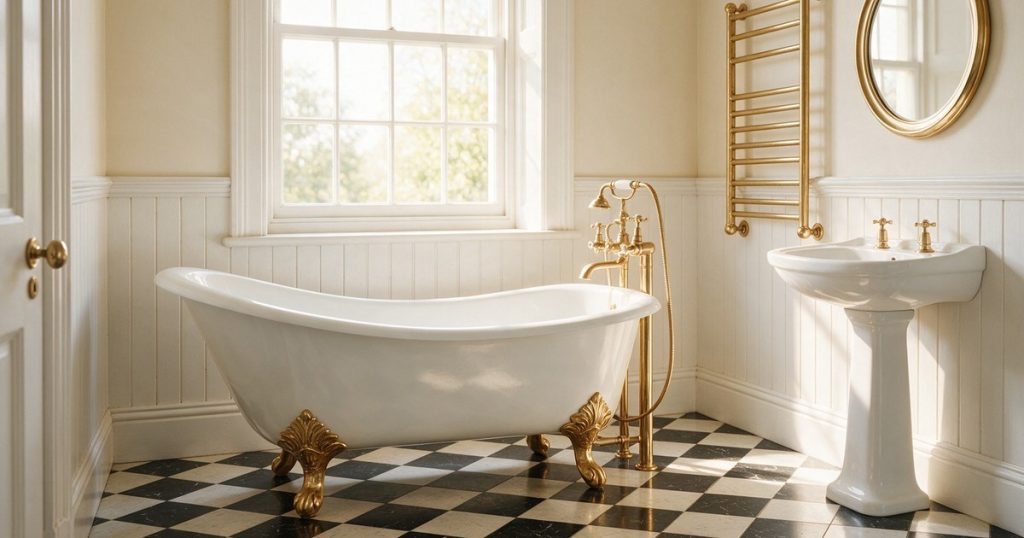
Victorian brown is proper and ornate: deep mahogany, encaustic floor tiles in brown, ochre and cream, a high-level cistern with a pull chain, a roll-top bath on claw feet. History you can wash your hands in.
The floor carries the room. Lay a patterned encaustic tile heavy on browns and golds, then panel the walls in rich warm-brown stained oak, waxed to a soft sheen.
A mahogany washstand, a cast-iron bath, brass everywhere. Grand, and surprisingly cosy with it.
20. Organic Brown Bathroom
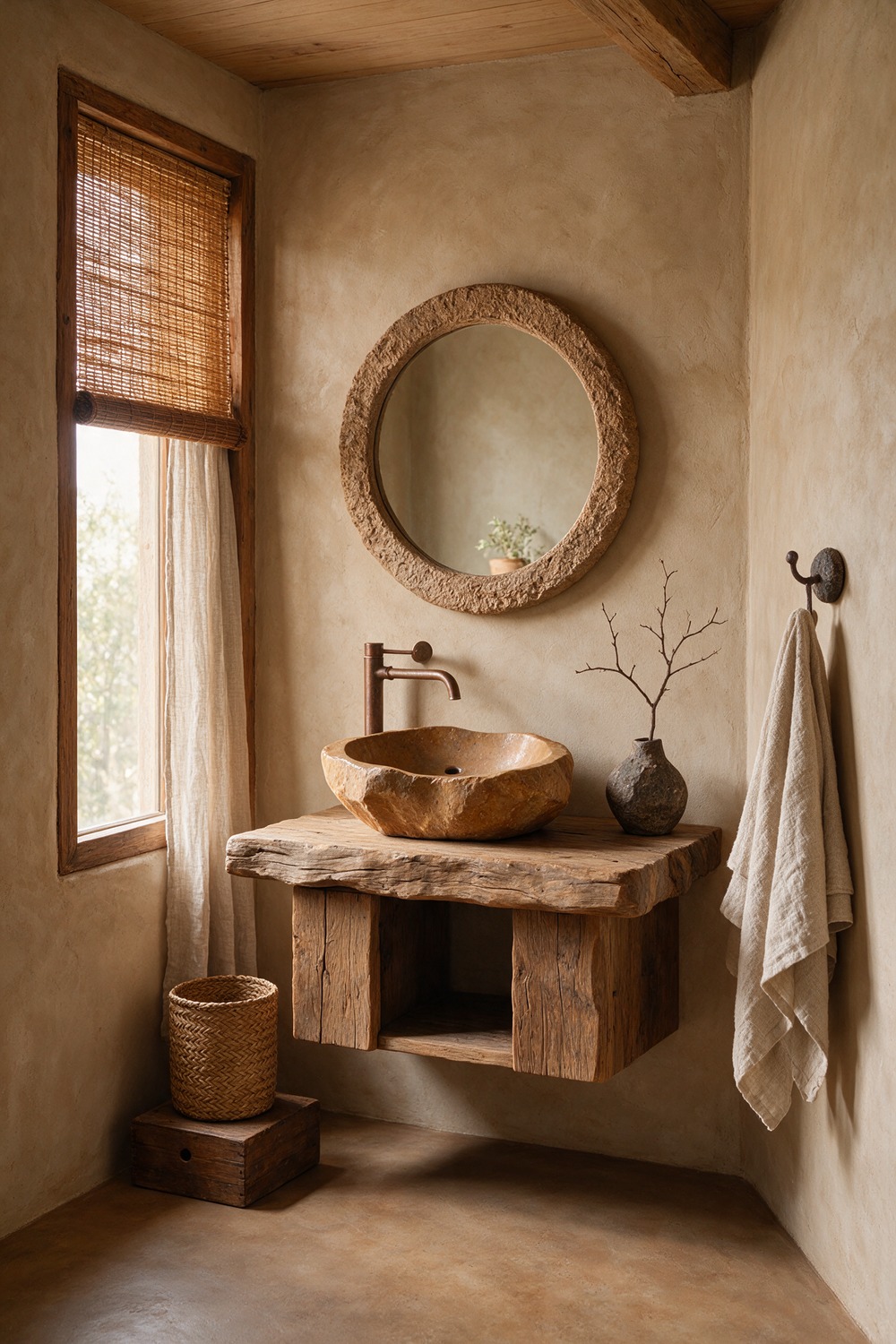
Organic brown is wabi-sabi in the bathroom, that Japanese love of the imperfect and the natural. Raw clay-plaster walls with soft tonal shifts, a hand-carved stone basin, undyed linen, a palette drawn straight from the earth.
Nothing should look machine-made. Use an unsealed clay plaster in a warm fawn, left deliberately cloudy, Bauwerk’s Clay is a good base. A rough stone vessel sink, a raw timber shelf, a single branch in a vase. Let the imperfections show.
21. Earthy Brown Bathroom
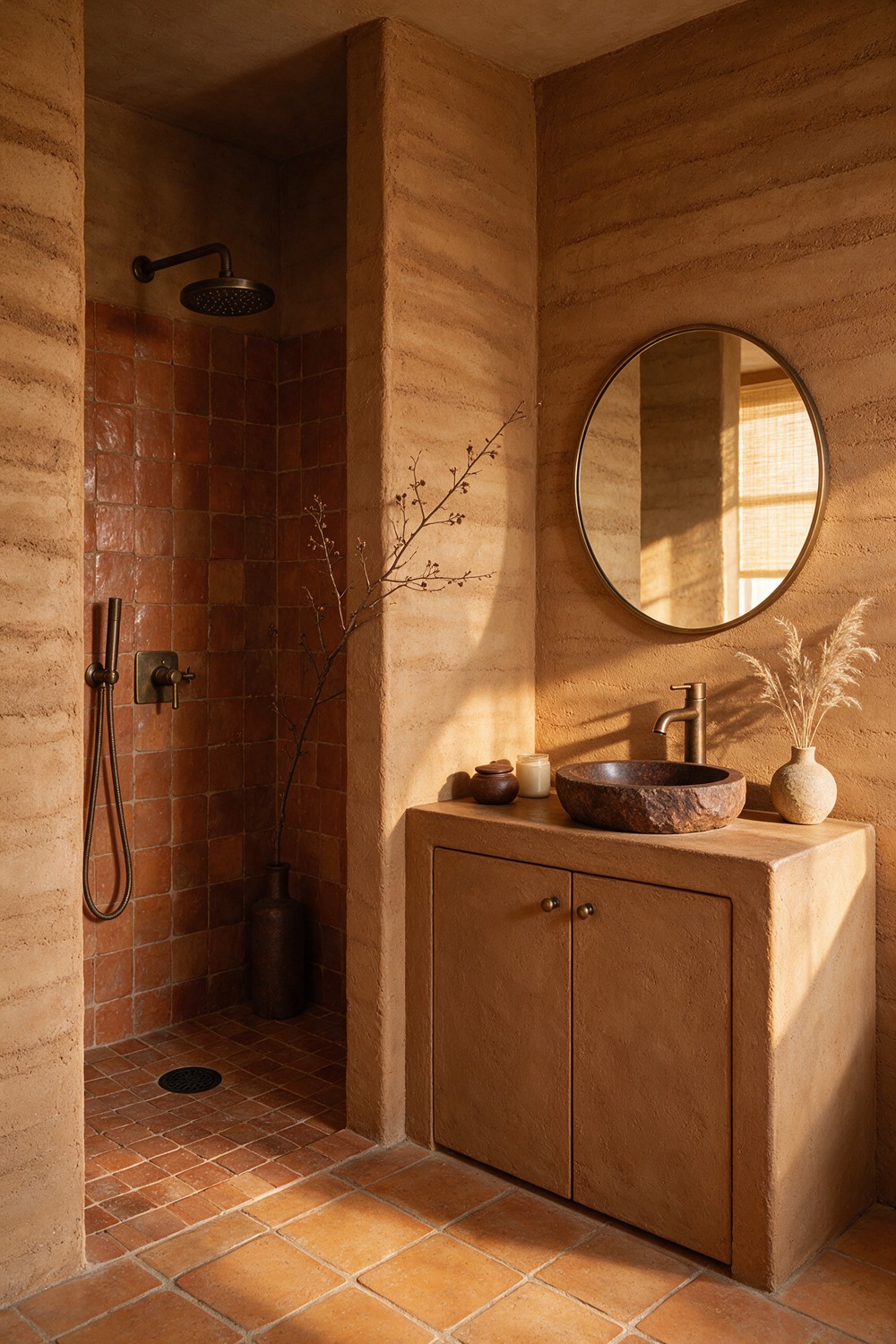
Earthy brown is the whole warm-mineral family at once: ochre, rust, clay and umber, layered until the room feels like a canyon wall at golden hour. Of all the browns here, this one feels the most alive.
Build it in tones. An ochre-brown clay wall, a rust-coloured zellige shower, a terracotta floor, each a different warm note of the same family.
A mineral paint like Behr’s Chic Taupe ties the plain walls in. Keep the fittings aged bronze and the light warm, and the whole room glows like late afternoon.
Which Brown Bathroom Style Is Right for You
Start with the feeling you want. If you want to walk in and exhale, go spa, japandi or organic: warm stone, wood, and almost nothing on show. If you want drama, moody and luxury brown both deliver, one with shadow, one with marble.
Then look at the room you actually have. A small bathroom loves the seamless modern or the pale coastal brown, because fewer lines make a space feel bigger. A grand old house with good proportions can carry traditional, Victorian or art deco without feeling like a costume.
And if you are nervous? Start with earthy or farmhouse brown. They are the most forgiving, and the easiest to warm up with towels and plants rather than a full remodel. My own vote goes to moody every time, but I will happily lose that argument to a travertine spa.
Brown Bathroom Remodels, Answered
Is a brown bathroom expensive to pull off? It need not be. At the low end, paint and warm-brown towels shift the whole mood for a weekend. Mid-range means a new vanity, tile and fittings. The splurge is natural stone, where the cost really climbs.
What can I do myself, and what needs a pro? Painting, panelling, beadboard, swapping a mirror and hanging shelves are all weekend DIY. Anything with water behind it, moving plumbing or tiling a wet wall, is a job for a pro.
How long does a full brown bathroom remodel take? A cosmetic refresh is a weekend. A full gut and re-tile usually runs two to four weeks once the trades are booked, longer if you are chasing specialist stone or a plasterer for tadelakt.
What is the one material worth spending on? The surface that covers the most area. If brown stone or tile wraps your walls, pay for the good stuff there and save on the fittings. A cheap tap on a beautiful travertine wall still looks rich; the reverse never does.
What should I ask the tiler for? Name the specifics: the tile shape and size, the layout, and the grout colour. A matching brown grout reads seamless; a pale grout turns your wall into a grid. Ask them to dry-lay a section first.
Whatever shade of brown pulls at you, do not let the word scare you off. Pick one wall, one warm paint, one honest material, and start there. The cosiest room in your house might be a few coats away.
More stories
Share this story