16 Wood Bathroom Cabinet Ideas for a Warm, Natural Vanity

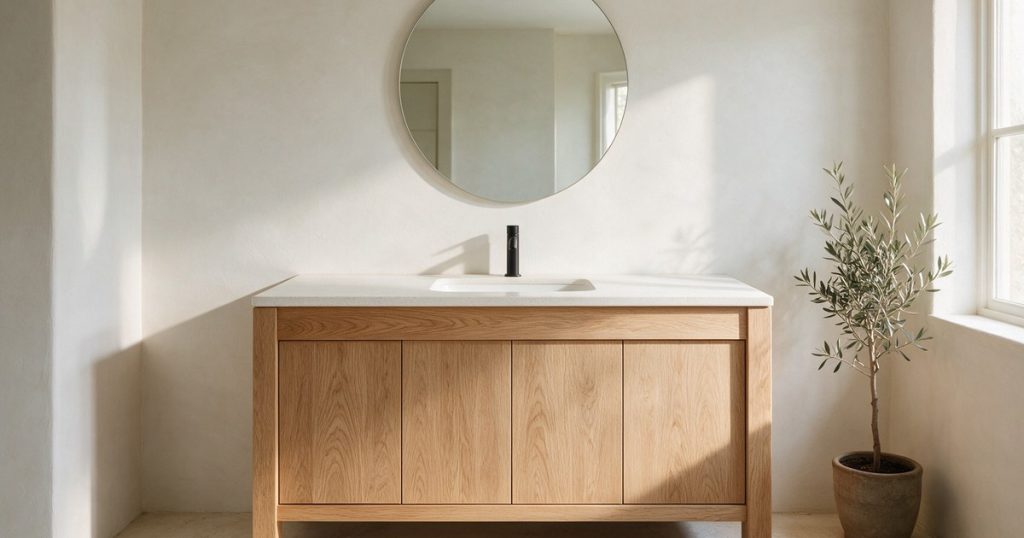
I used to think a bathroom vanity was just a box to hide the plumbing. Then I started noticing the ones that stopped me scrolling, and almost every single one was wood.
Real wood grain does something a painted cabinet never quite manages. It makes a hard, tiled, water-splashed room feel like a place you would linger. That is the whole case for a timber vanity, a warm, grounding move in any bathroom.
Below, sixteen wood bathroom cabinet looks, one for every species and tone worth knowing. For each you get the palette, a paint to pair it with, the finish that flatters it, and where I would start.
1. White Oak Bathroom Cabinets
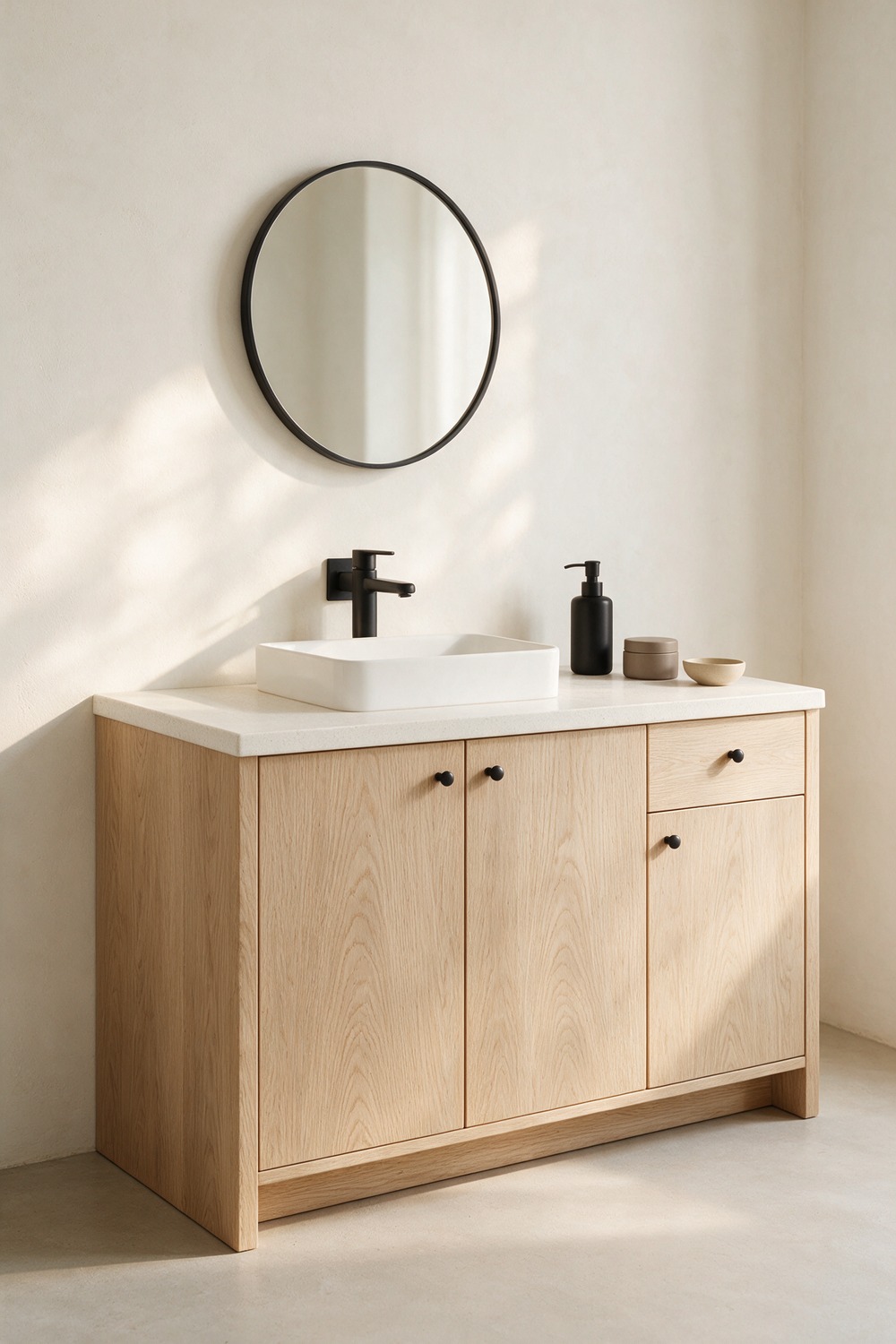
If I could only recommend one wood for a bathroom, it would be white oak. It is the Goldilocks grain: pale and modern, but with enough figure to feel alive.
Go for European white oak in a matte, almost raw finish, a honed white quartz top, and matte black tapware. Walls in Bauwerk’s bone-white limewash keep the wood the star.
2. Walnut Bathroom Cabinets
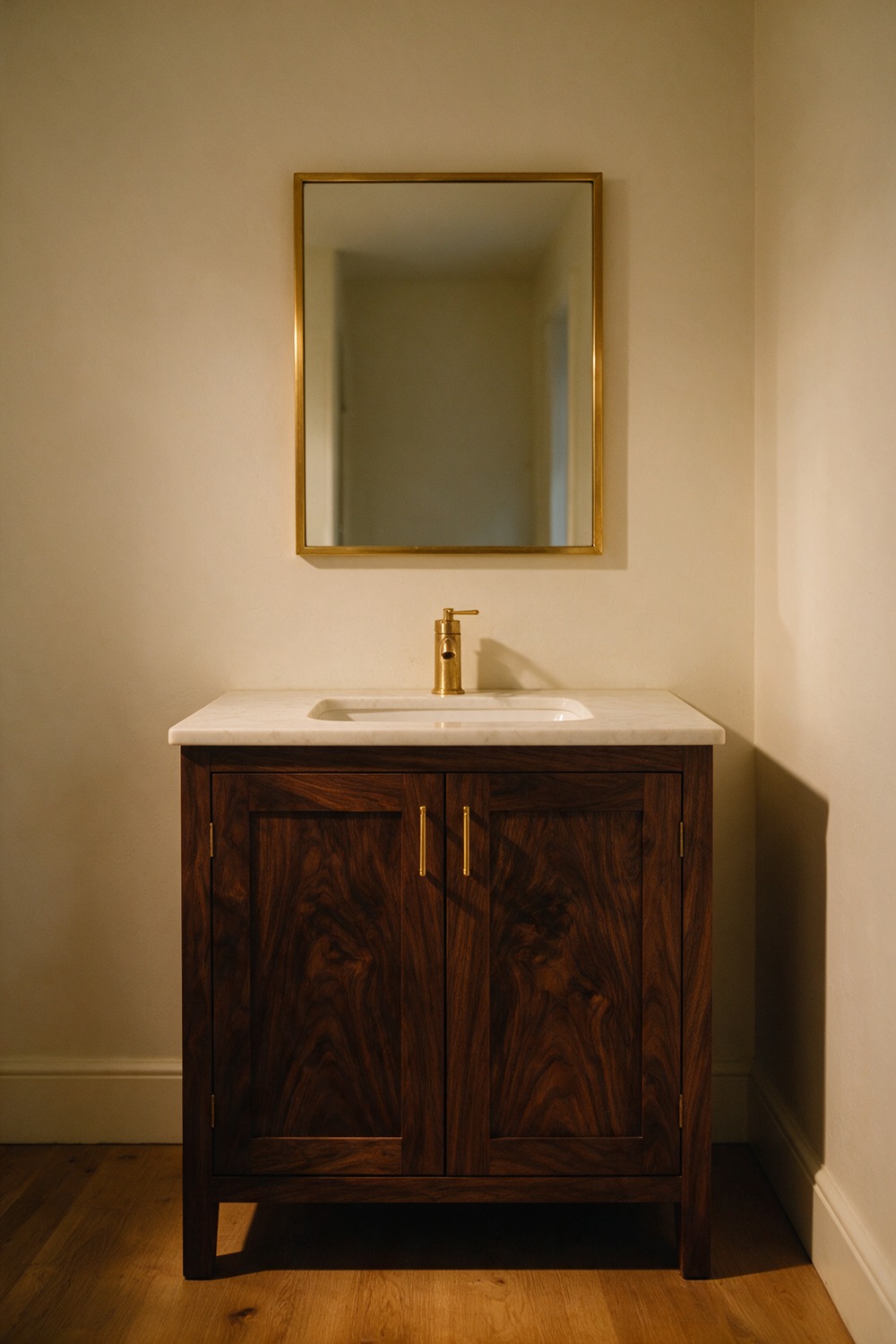
Walnut is the one I would splurge on. It has a chocolate depth and a swirling grain that no stain can fake on a cheaper wood, and it instantly makes a bathroom feel like a boutique hotel.
Here is the trick: let walnut be the only dark thing in the room. A creamy marble counter, warm brass handles, and pale plaster walls in a shade like Benjamin Moore White Dove give it air to breathe.
One rich, grainy vanity against all that softness is the whole look. Start with the vanity, then keep every other surface pale and quiet so the grain gets to sing.
3. Natural Wood Bathroom Cabinets
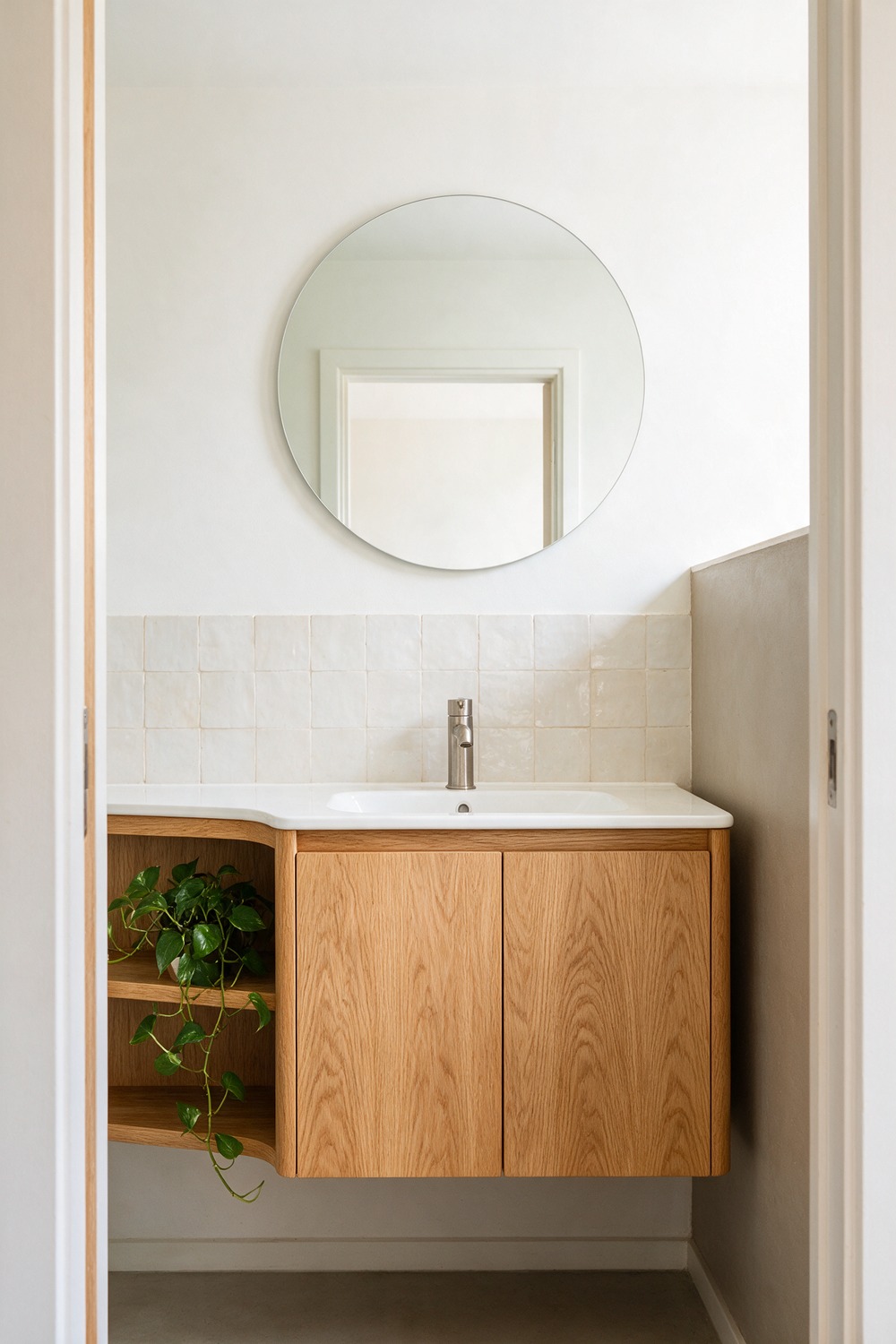
Natural wood just means you let the timber be itself, with a clear seal instead of a heavy stain. I love this honesty in a bathroom.
Think a clear-sealed oak or ash, grain fully visible, soft rounded edges, a wall-hung shape that floats off the floor. Off-white zellige tile, a round mirror, one trailing pothos. Walls in Dulux Natural Hessian, a barely-there greige, let the wood warm the whole space.
4. Oak Bathroom Cabinets
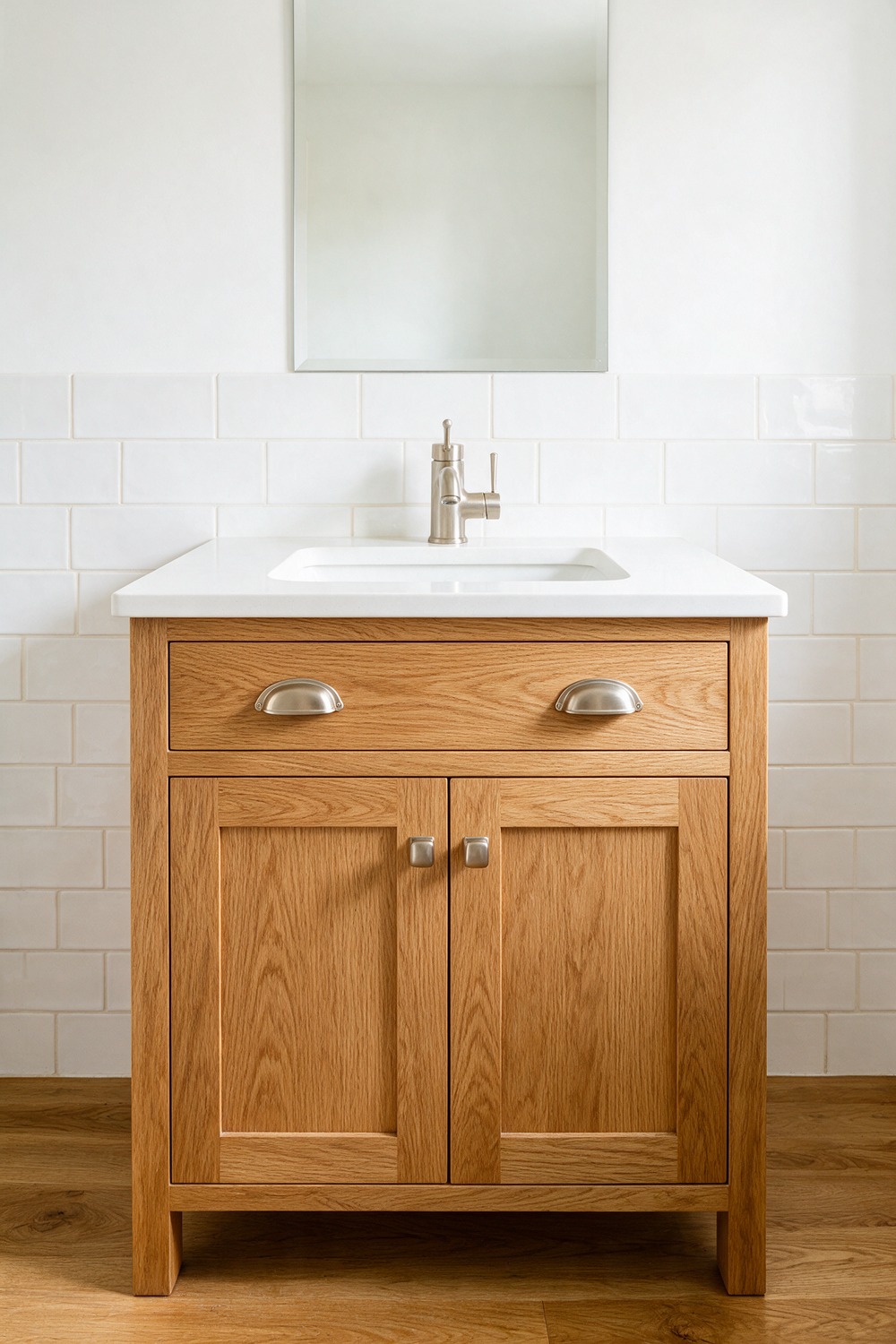
Classic oak is the workhorse, and there is nothing boring about it when you choose the right profile. Oak carries a shaker door beautifully, that simple recessed panel that stays classic decade after decade.
My advice: reach past the orange-tinted oak of the nineties for a mid-tone, naturally finished oak.
Four-inch brushed-nickel cup pulls, a thick white counter, and a subway-tiled wall keep it fresh and friendly. A wall in Farrow & Ball Shaded White sits right against oak’s warmth. Begin with the door style, then the hardware.
5. Light Wood Bathroom Cabinets
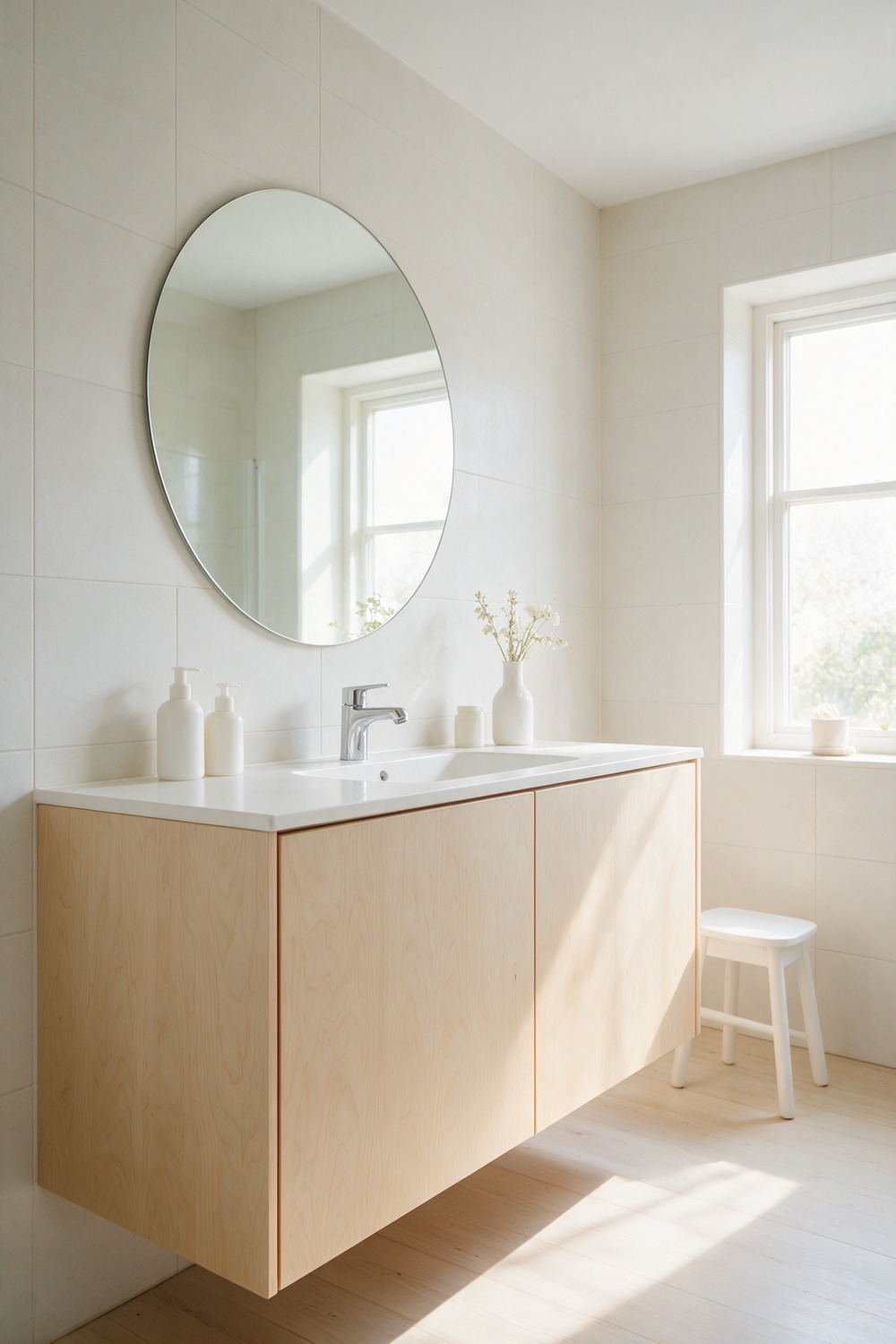
Want a small bathroom to feel bigger? Light wood is your friend, bouncing what little light you have. Reach for blonde oak or pale birch sealed matte, large-format off-white porcelain tile, and walls in Little Greene’s Shirting.
6. Dark Wood Bathroom Cabinets
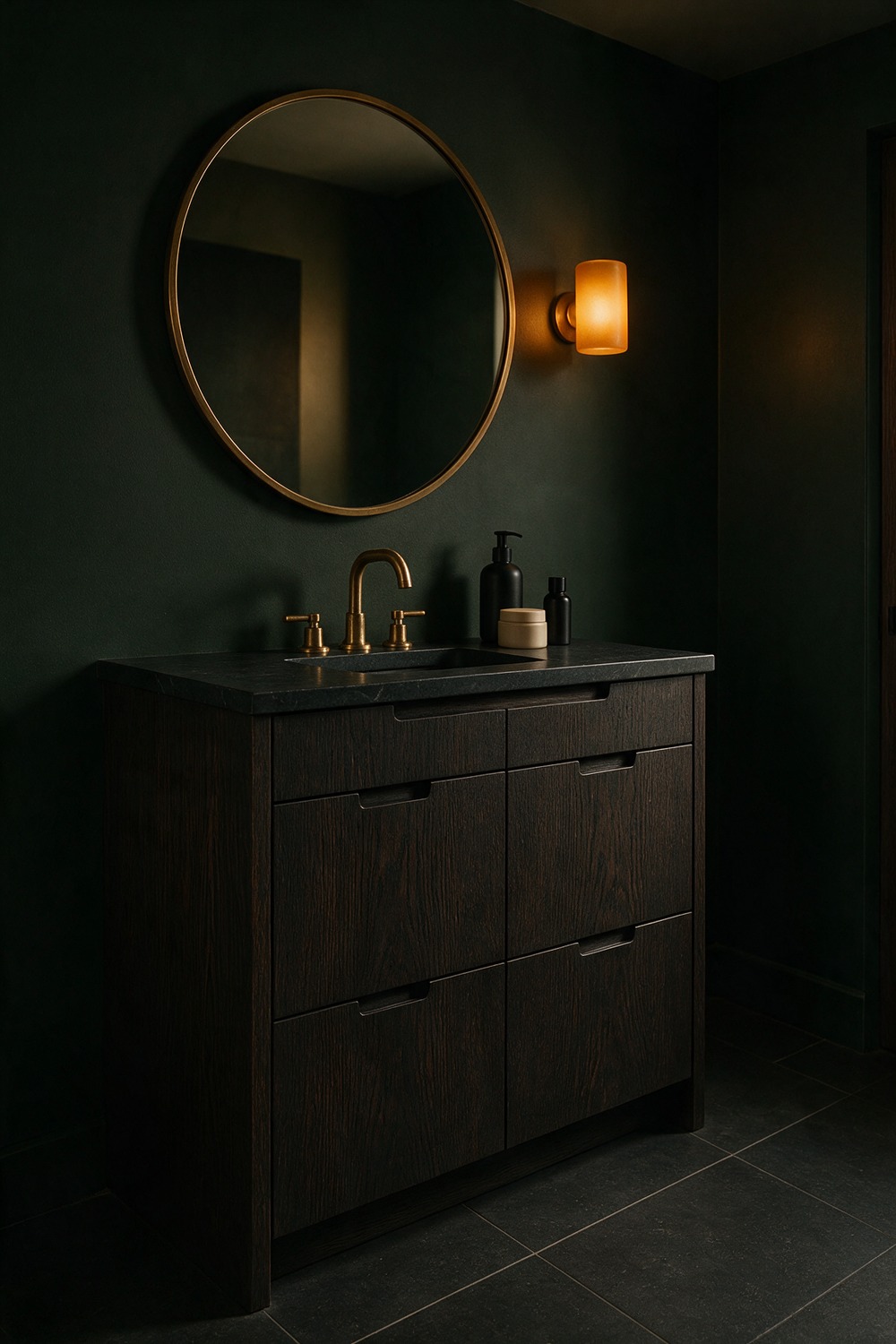
Dark wood is drama, and a bathroom is the perfect low-stakes room to be brave in. You are not living in here all day, so go moody.
A deep espresso-stained oak or wenge vanity, matte and grainy, against inky walls is pure cocoon. I would wrap the lower half of the room in a near-black green like Farrow & Ball Studio Green and let unlacquered brass fittings glow against it.
Warm the light with 2700K bulbs. The rule: keep the wood and the wall in the same dark family, so the room feels enveloping rather than choppy.
7. Honey Oak Bathroom Cabinets
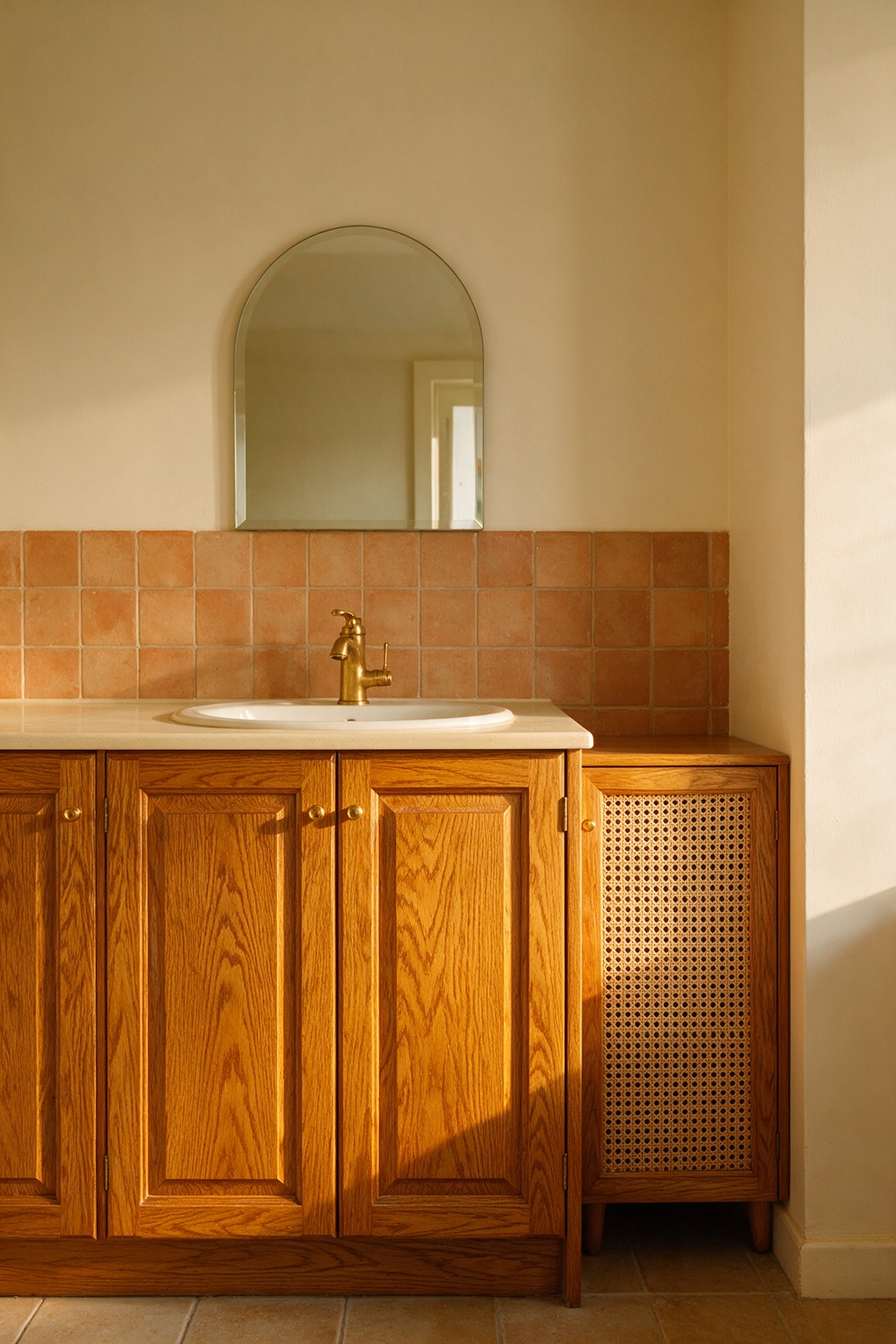
Honey oak gets a bad rap as old news, and I think that is a shame. Lean into the golden, amber warmth: keep the oak glossy, add terracotta-toned tile, a rounded arch mirror, cream walls in Behr Almond Wisp. Pair it with cane and it sings.
8. Cherry Bathroom Cabinets
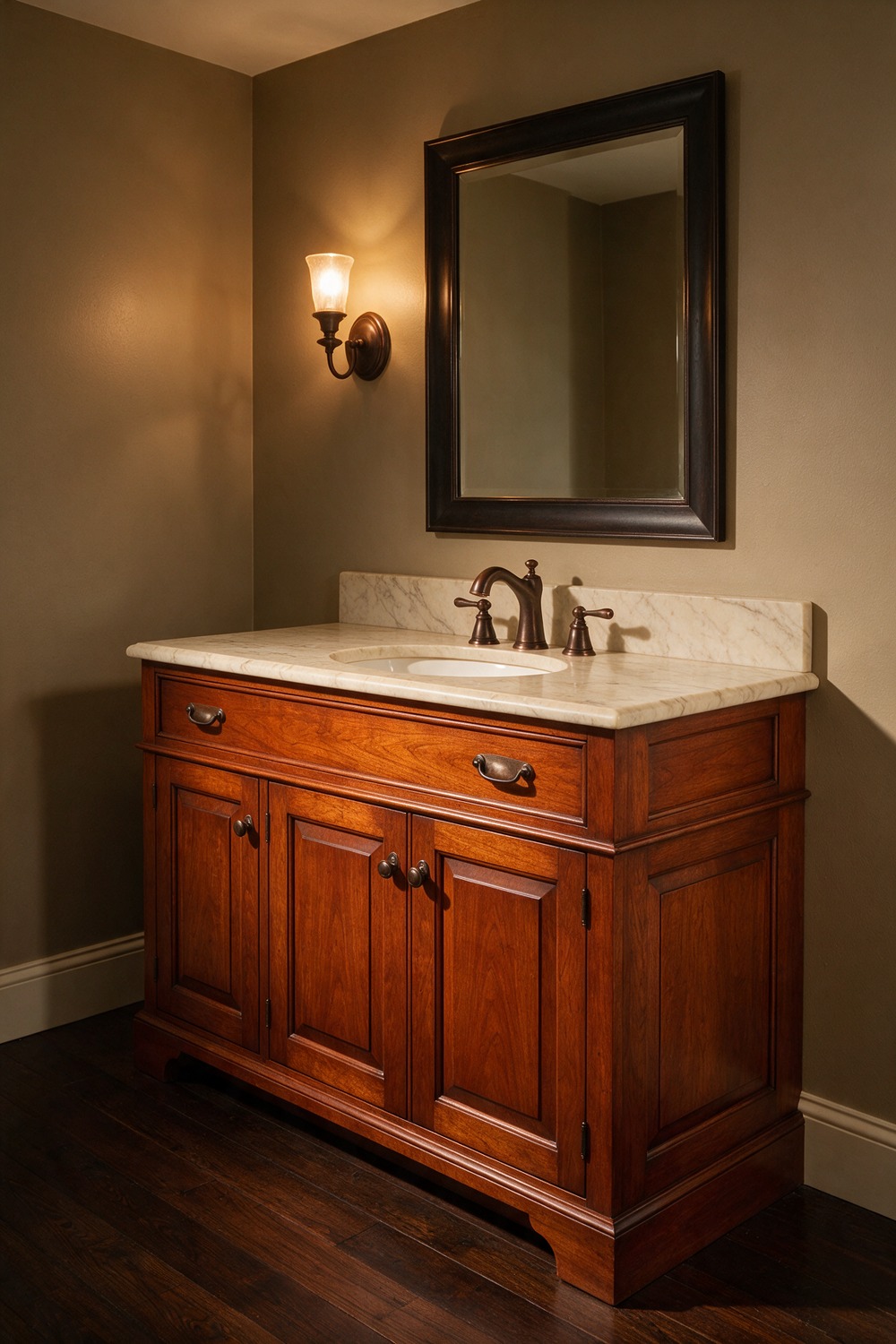
Cherry has a reddish warmth that deepens as it ages, like a good leather chair. It is traditional, yes, but there is a reason it never fully goes away.
I would keep cherry formal and let it be rich. A raised-panel door, a cream marble counter with soft grey veining, and oil-rubbed bronze hardware give it an old-library elegance.
Walls in a warm taupe like Sherwin-Williams Accessible Beige keep the red tones looking intentional. Start with the counter, choose one with a touch of warmth so the cherry glows.
9. Mahogany Bathroom Cabinets
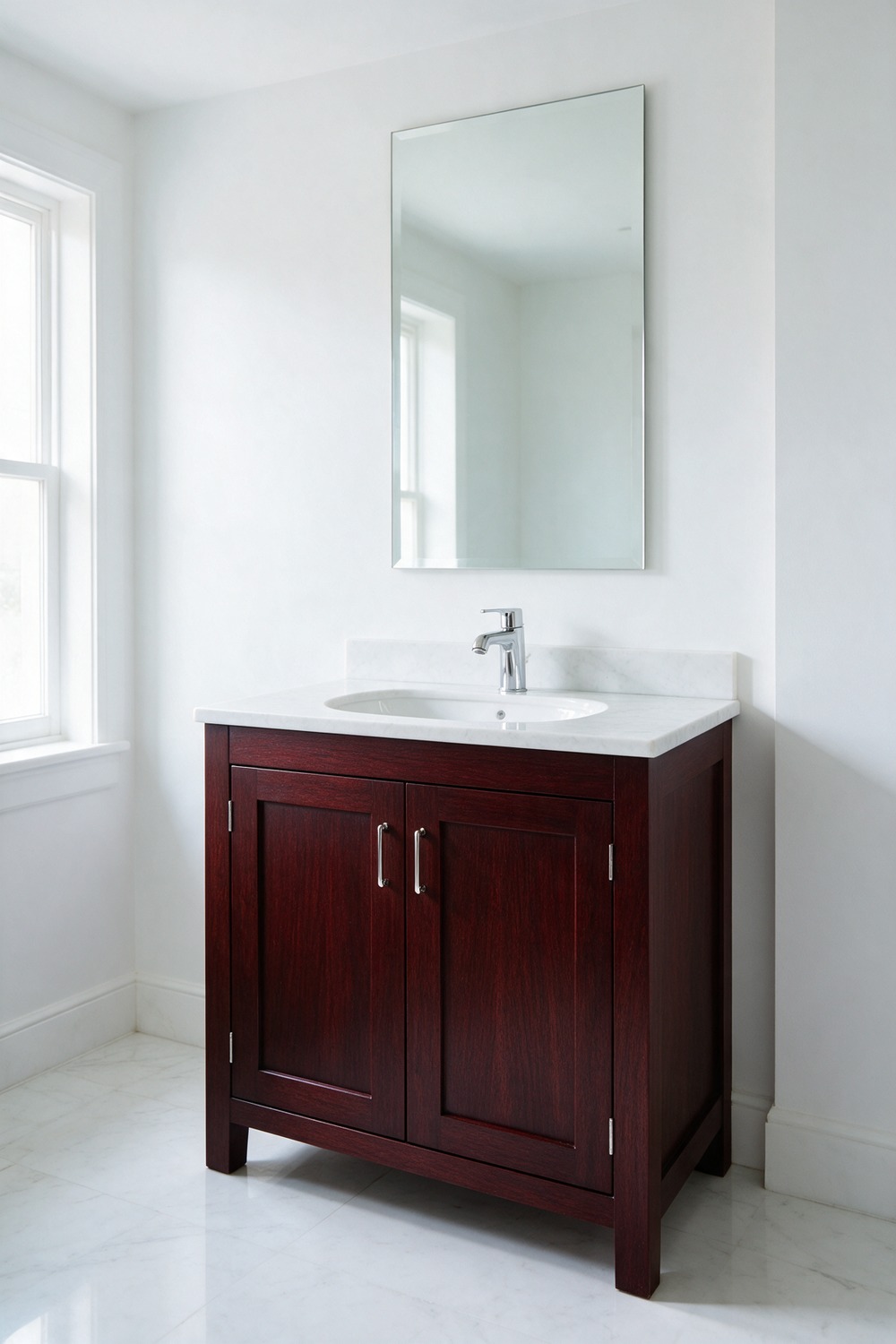
Mahogany is the grown-up in the room. That deep red-brown has a richness that feels expensive and enduring, the wood of panelled studies and old ships.
In a bathroom, I love it against something cool and crisp. White marble, polished chrome tapware, bright white walls in Benjamin Moore Chantilly Lace. One brave move: a single mahogany vanity in an otherwise all-white room is quietly unforgettable.
10. Teak Bathroom Cabinets
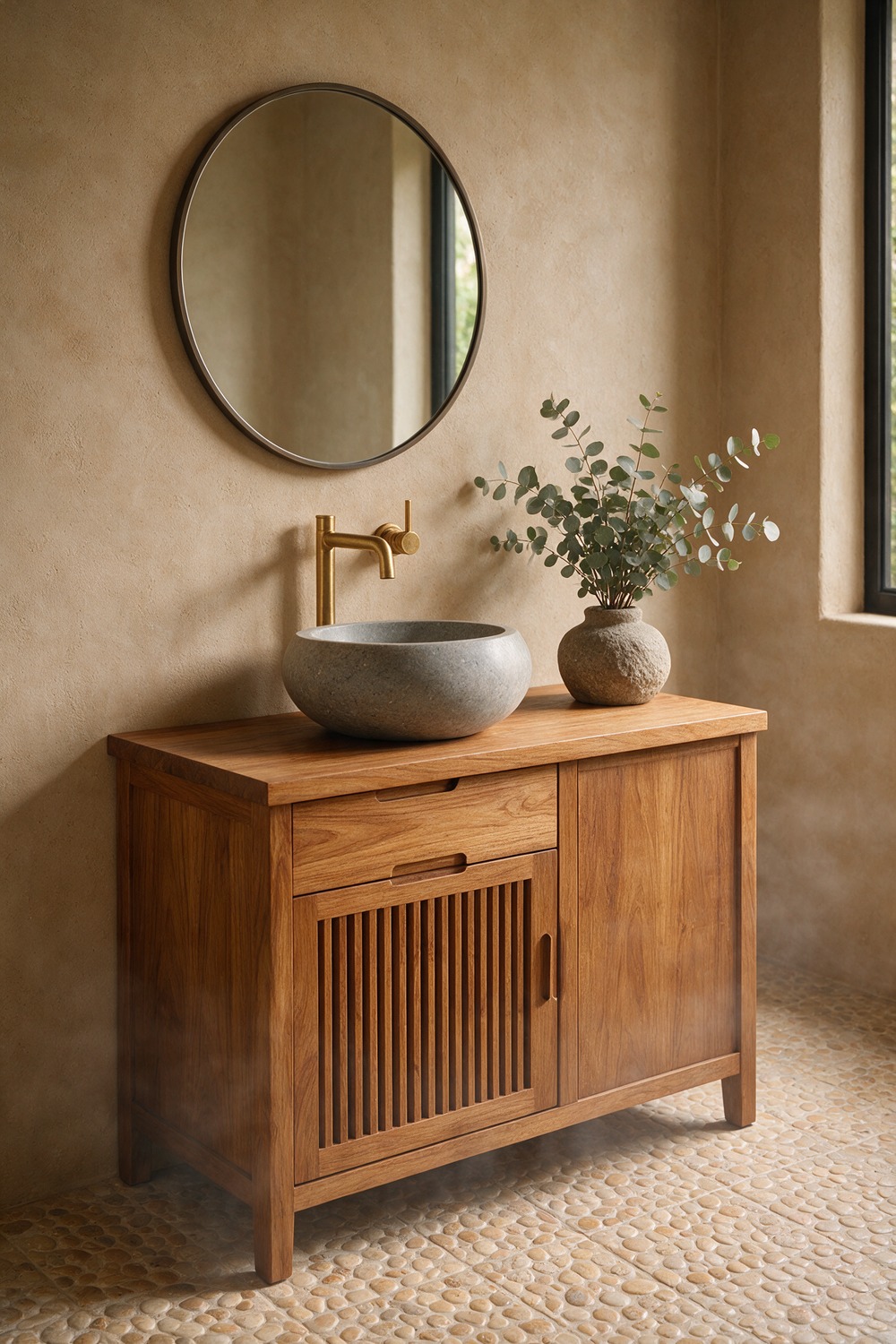
Teak was made for wet rooms. Its natural oils shrug off humidity, which is exactly why it has lived on boat decks and in spas forever. In a bathroom it feels like a reward.
Go full spa with it. A honey-brown teak vanity, slatted lower doors for that resort feel, a stone vessel basin, and pebbled or travertine tile underfoot.
Keep walls warm and earthy, a sandy clay like Backdrop’s Mudders Milk. Add a eucalyptus bunch and the steam does the rest. Start with the slatted door detail, it is the whole vibe.
11. Bamboo Bathroom Cabinets
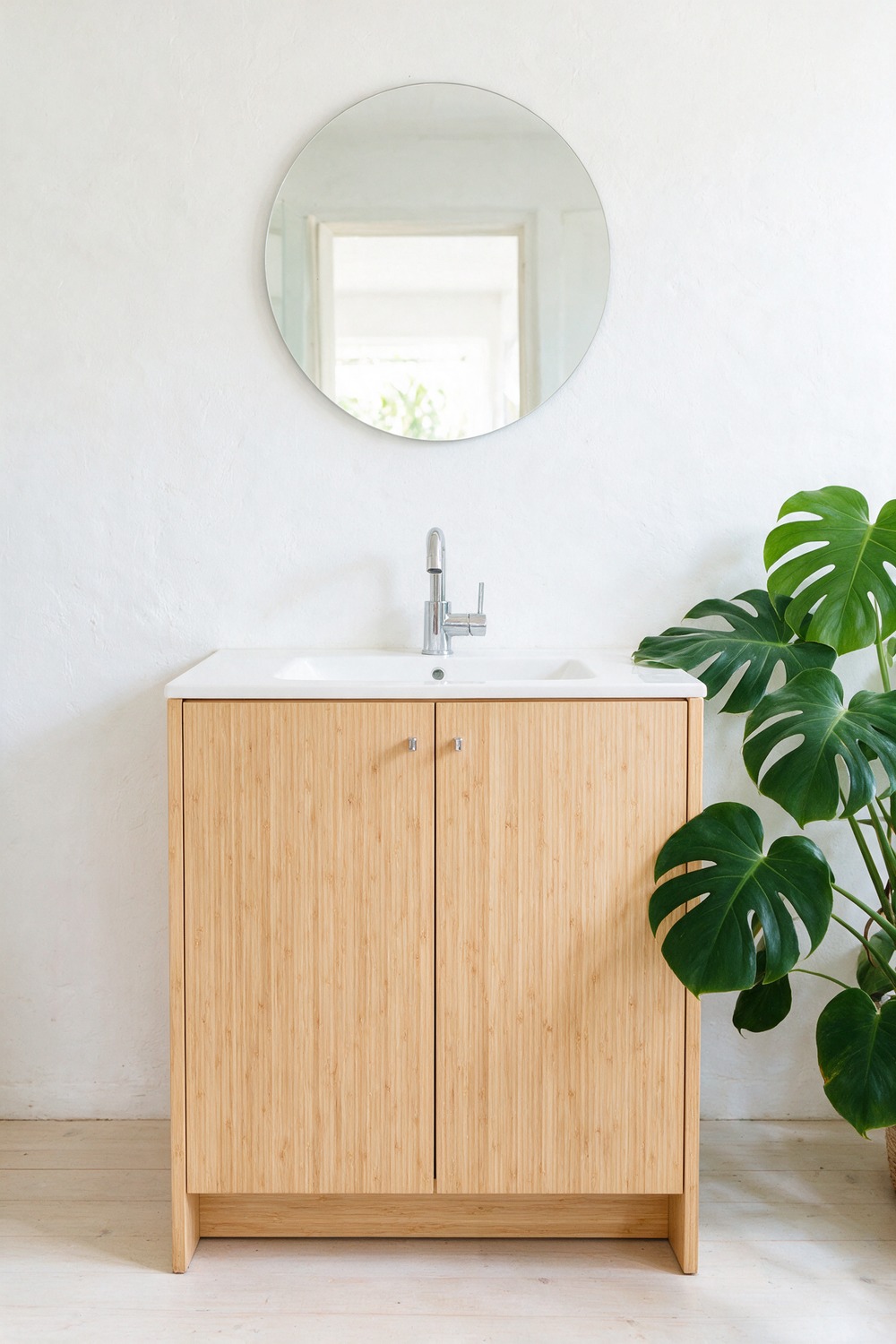
Bamboo is the quiet eco-hero here, technically a grass that grows back fast, with a fine linear grain and a pale golden tone. Style it light and airy: slab doors, white-washed walls, a big leafy plant, chrome fittings, a wall in Little Greene’s Slaked Lime. Let greenery do the decorating.
12. Reclaimed Wood Bathroom Cabinets
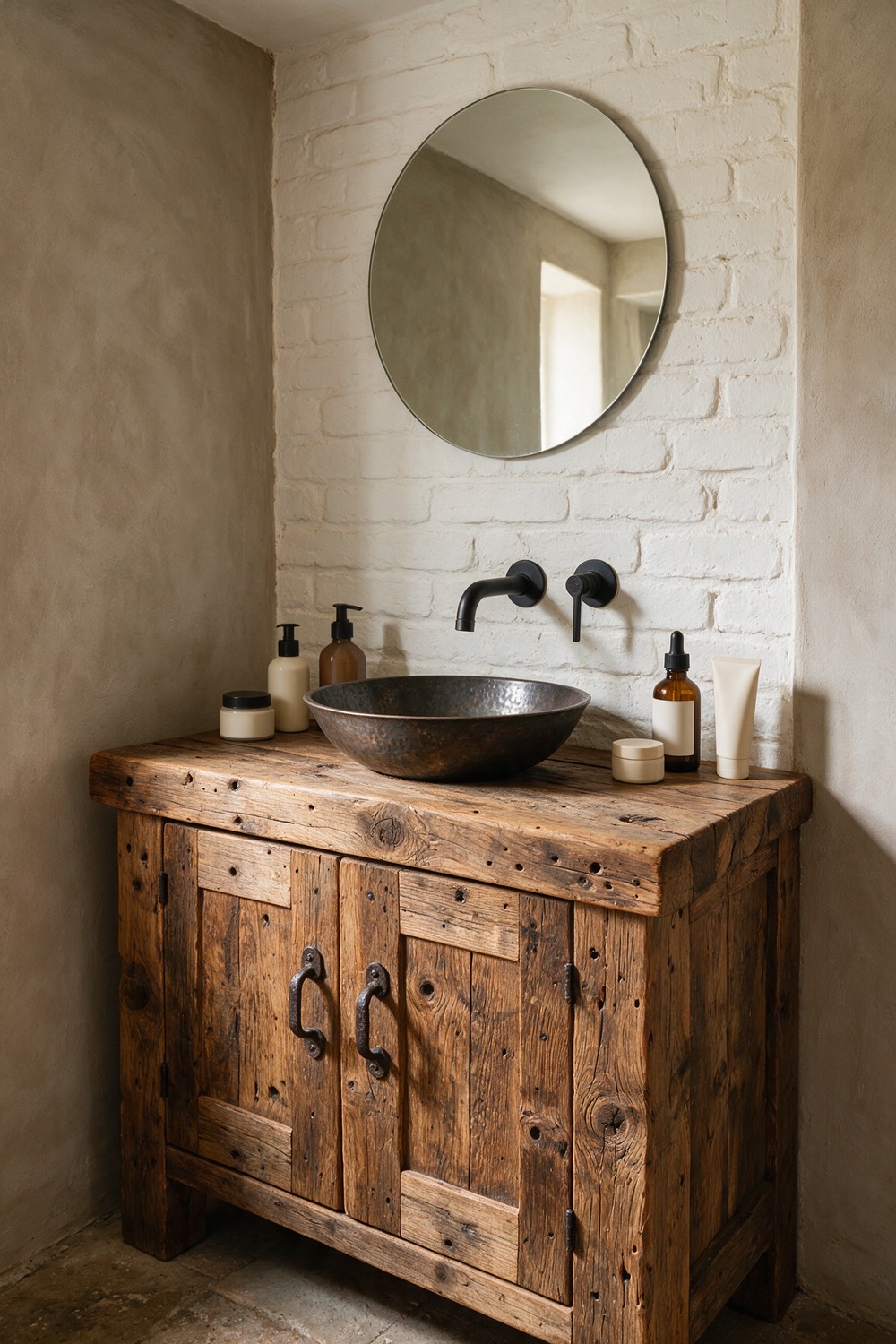
Nothing beats reclaimed wood for character. Every knot, nail hole, and saw mark is a tiny piece of history, and you cannot buy that patina new no matter how hard a factory tries.
Build the whole room around that story. A chunky reclaimed-oak or barnwood vanity, a hammered metal or stone basin, wrought-iron handles, and whitewashed brick or plaster walls.
Keep the palette earthy and undone, something like Bauwerk’s limewash in a warm grey. My tip: the rougher the wood, the simpler everything else should be.
13. Driftwood Bathroom Cabinets
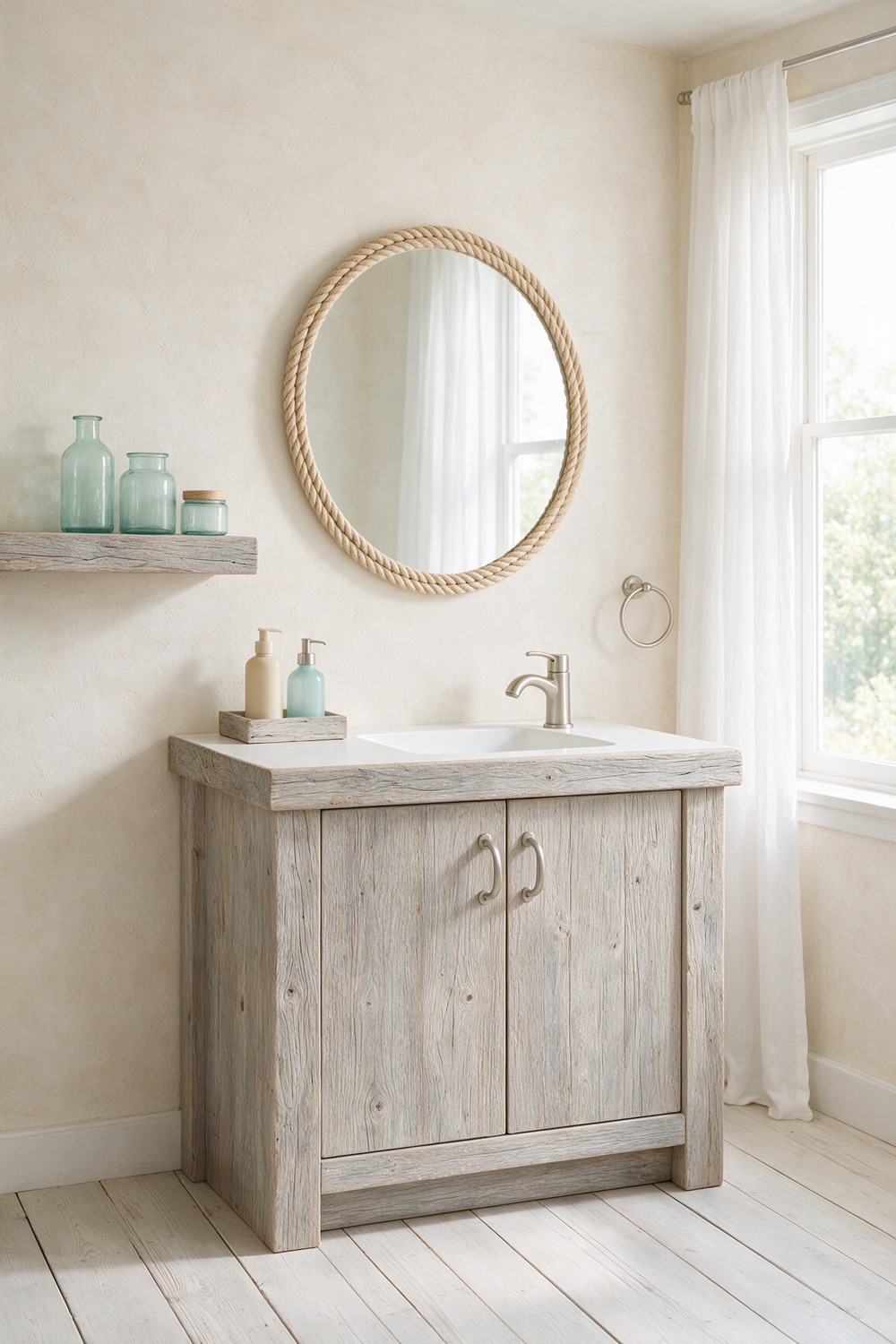
Driftwood is reclaimed wood that went to the beach. That silvery, sun-bleached grey is pure coastal calm, and it makes a bathroom feel like a seaside cottage you never want to leave.
Lean all the way into coastal: a grey-weathered driftwood-finish vanity, pale sandy walls, a rope-framed mirror, soft blue-green accents, a wall in Dulux Coastal Grey. A limed or cerused grey treatment on oak gives you the beachcomber look without needing actual driftwood.
14. Pine Bathroom Cabinets
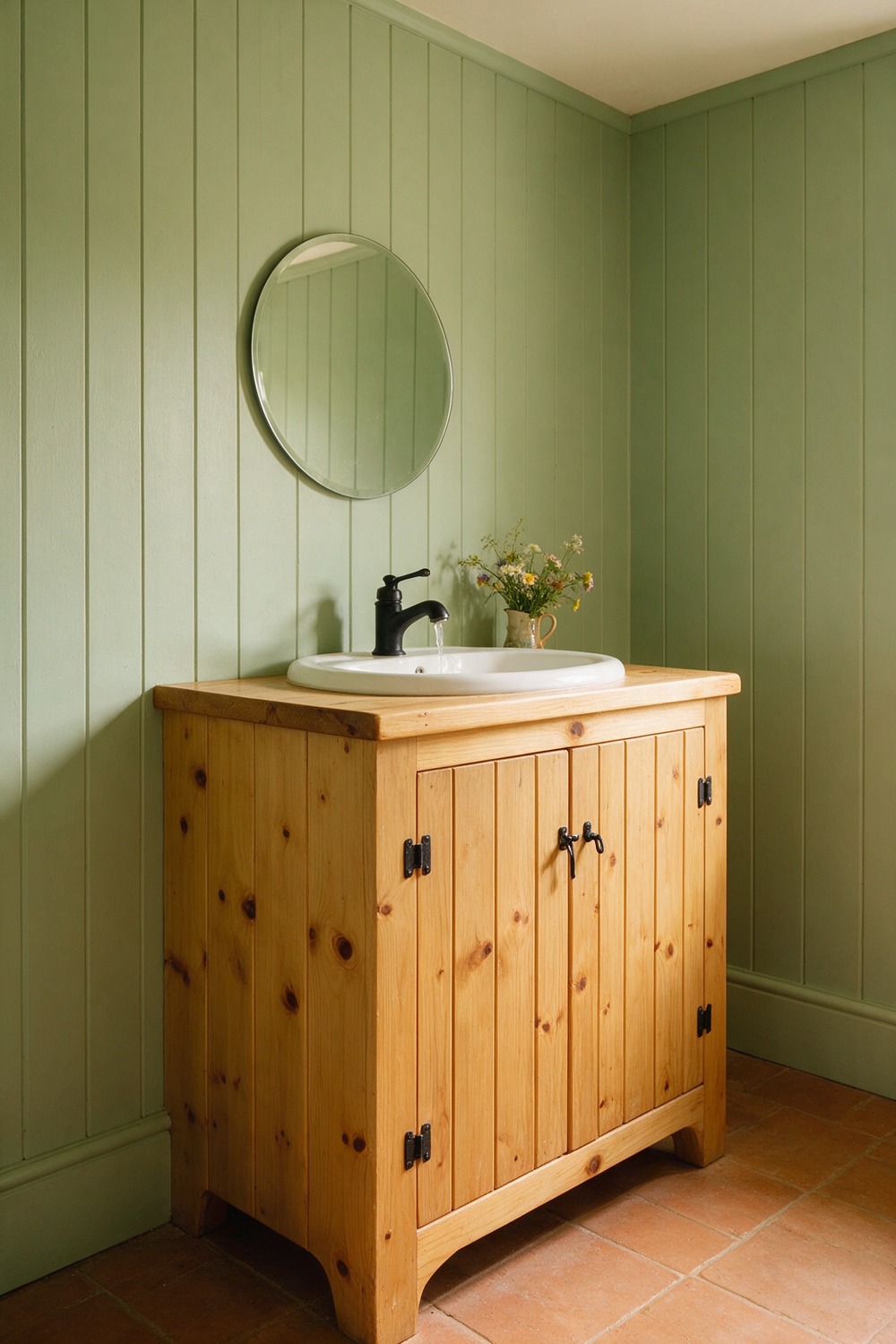
Pine is the budget-friendly, cabin-cosy option, and I have a real soft spot for it. That pale golden wood with its honest little knots feels unpretentious and warm.
Play up the country-cottage charm. A knotty pine vanity with a beadboard back panel, a ceramic basin, black iron latches, and walls in a soft sage like Farrow & Ball Cromarty. Begin with a tongue-and-groove wall, pine loves company.
15. Maple Bathroom Cabinets
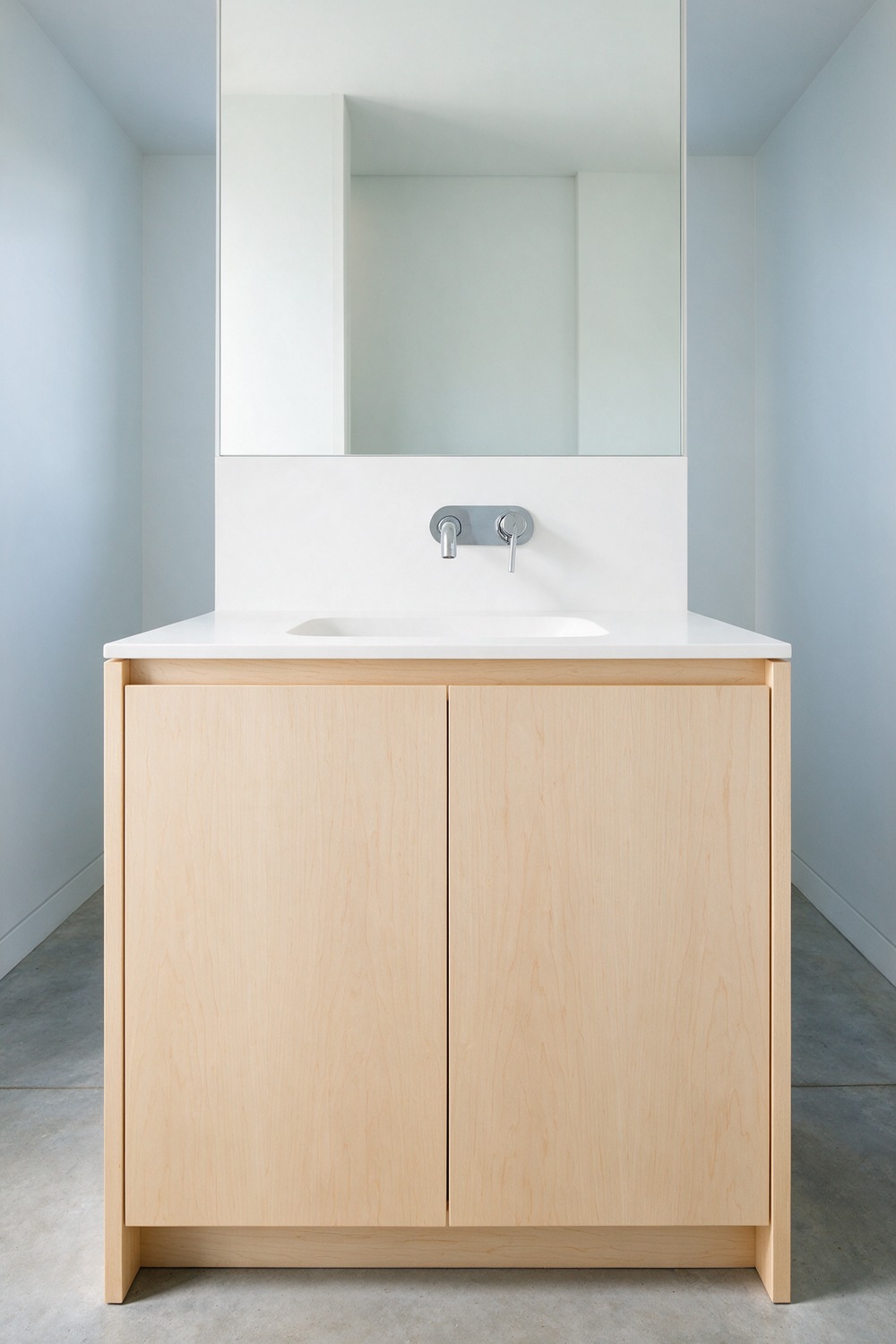
Maple is the smooth operator: a fine, almost poreless grain and a creamy pale tone that takes a clean, contemporary look better than almost any wood. If you want modern warmth, this is it.
Keep maple sleek. Flat slab doors, integrated or push-to-open so there is no hardware at all, a crisp white solid-surface counter, and plenty of light.
The near-white grain pairs beautifully with cool greys, a wall in Sherwin-Williams Repose Gray looks architectural. One starting move: choose handleless doors and let the smooth grain be the only texture.
16. Ash Bathroom Cabinets
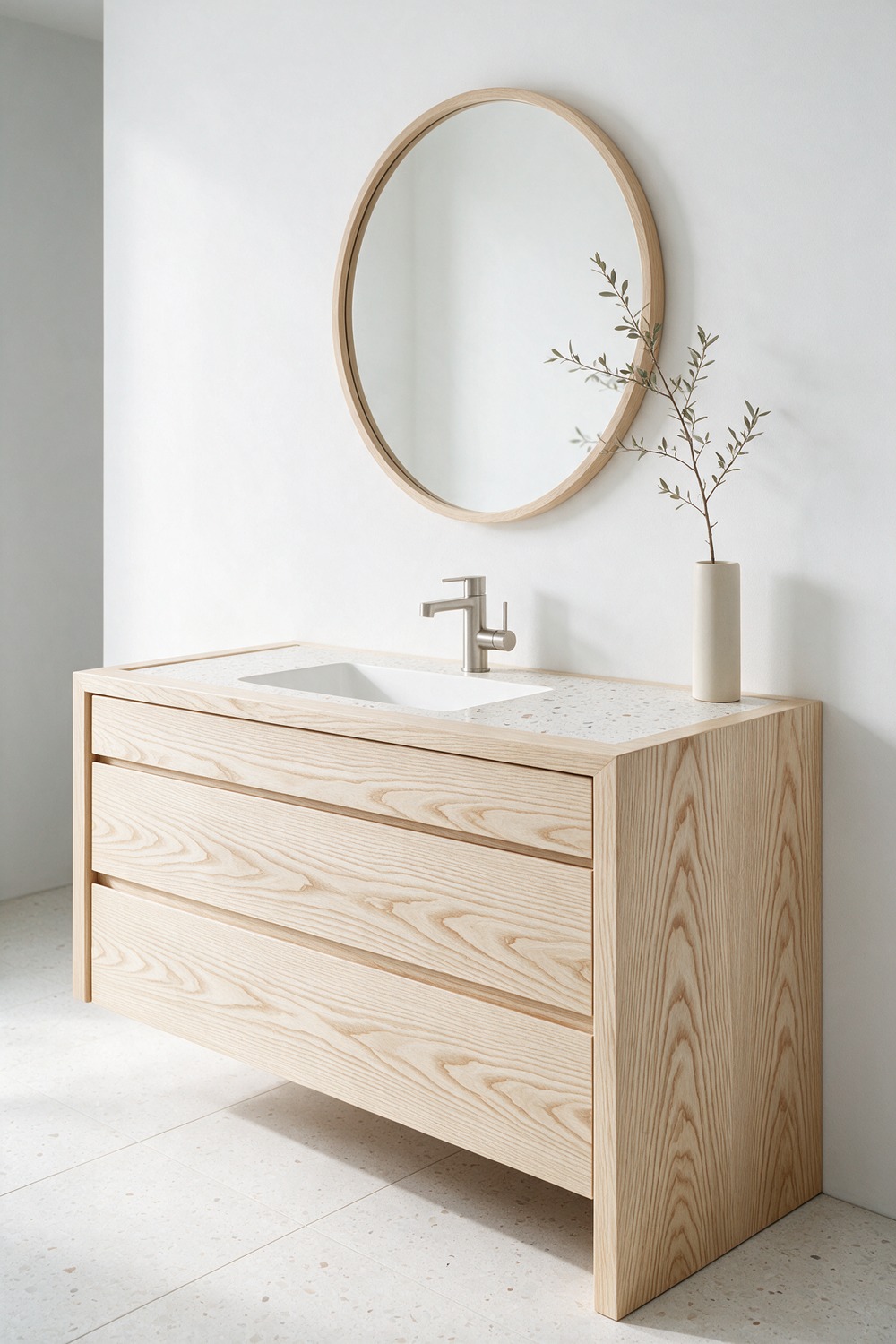
Ash is white oak’s cooler cousin, and it deserves more love. It has a bold, open grain that is strong and graphic, but a paler, slightly cooler tone that leans Scandinavian.
Show off that dramatic grain: a pale ash vanity with waterfall-edge sides or a strong horizontal run, white terrazzo, brushed-steel fittings, walls in Benjamin Moore Paper White. Choose a cut with long, flowing lines and let it do the talking.
Which Wood Bathroom Cabinet Is Right for You
If your bathroom is small or short on light, go pale: white oak, light wood, maple, bamboo, or ash will all open the room up. With space and natural light to spare, go deep with walnut, mahogany, or a dark-stained oak and let it feel like a jewel box.
Chasing a mood? Coastal calm lives in driftwood and bamboo. Spa warmth is teak and honey oak. Cottage cosy is pine and reclaimed wood. Timeless is classic oak or natural wood.
And if you just want the one that always looks expensive, my vote never wavers: white oak for modern, walnut for rich. The lovely thing is you are really choosing a feeling, not just a cabinet. Trust the grain you keep coming back to.
Wood Bathroom Cabinets, Answered
Does real wood actually survive in a humid bathroom? Yes, with the right sealing. A good marine-grade or polyurethane finish, decent ventilation, and wiping up standing water is all most woods need. Teak and bamboo handle moisture best of all, which is why spas love them.
What does a wood vanity cost compared to a painted one? In words: a flat-pack veneer vanity sits at the low end, a solid-oak shaker lands mid-range, and a bespoke walnut or reclaimed piece is the splurge. Veneer over plywood gives you most of the look for far less.
Can I do this myself? Swapping a freestanding wood vanity is a very doable weekend job if you are comfortable shutting off water and connecting a trap. Custom built-ins and anything involving moving plumbing is where I would call a pro.
How long does a wood vanity take to fit? A straight like-for-like swap is an afternoon. A new build-in with retiling and a fresh counter is more like a few days, most of it waiting on the counter template and the tiler.
Where is it worth spending? Put the money in the wood and the counter, the two things you touch and see most. You can save on the mirror, the tapware, and the accessories and no one will ever know.
What do I ask the cabinetmaker for? Ask for solid wood or veneer on a moisture-resistant plywood core, a water-rated finish, and soft-close hinges. Tell them it is a bathroom so they seal the cut edges properly, that is the detail cheap jobs miss.
Whatever grain you fall for, start small. Save the photo of the one vanity that made your shoulders drop, take it to a showroom, and run your hand over the real thing. Your warmest room is one beautiful cabinet away.
More stories
Share this story