20 Mid-Century Bathroom Ideas for a Warm, Retro Refresh

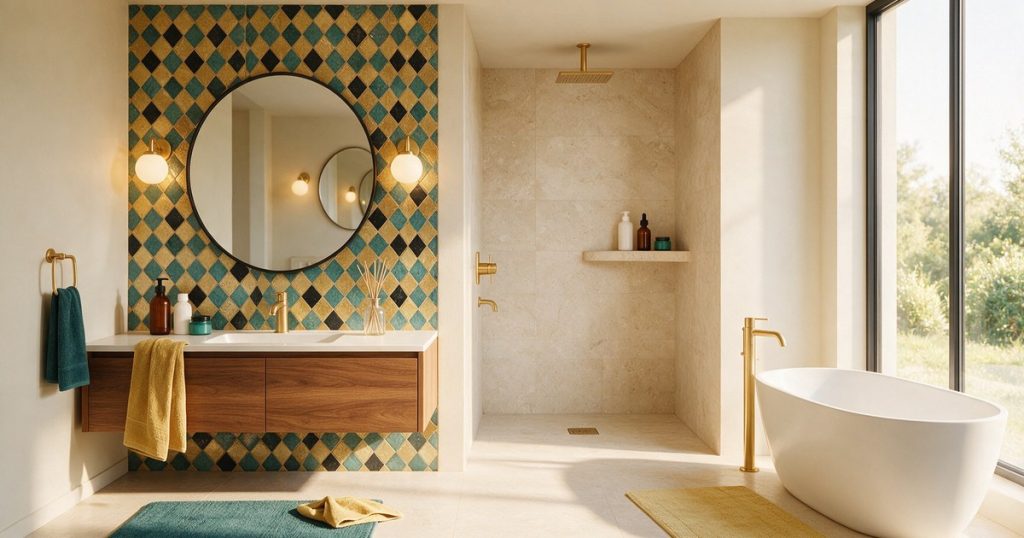
Most people hear mid-century bathroom and picture a dusty avocado suite from 1962. I get it. But done right, this is the warmest, most graphic look you can give a wet room.
The real thing is warm and graphic: walnut, globe lights, a hit of mustard or teal, and tile laid in a pattern you actually notice. Below are 20 ways to wear it, from a tiny powder room to a double-vanity ensuite.
Whether you rent a shoebox or own the whole floor, there is a version here that fits. Each one comes with the palette, a paint to match, and the one move I would start with.
1. Small Mid Century Bathroom
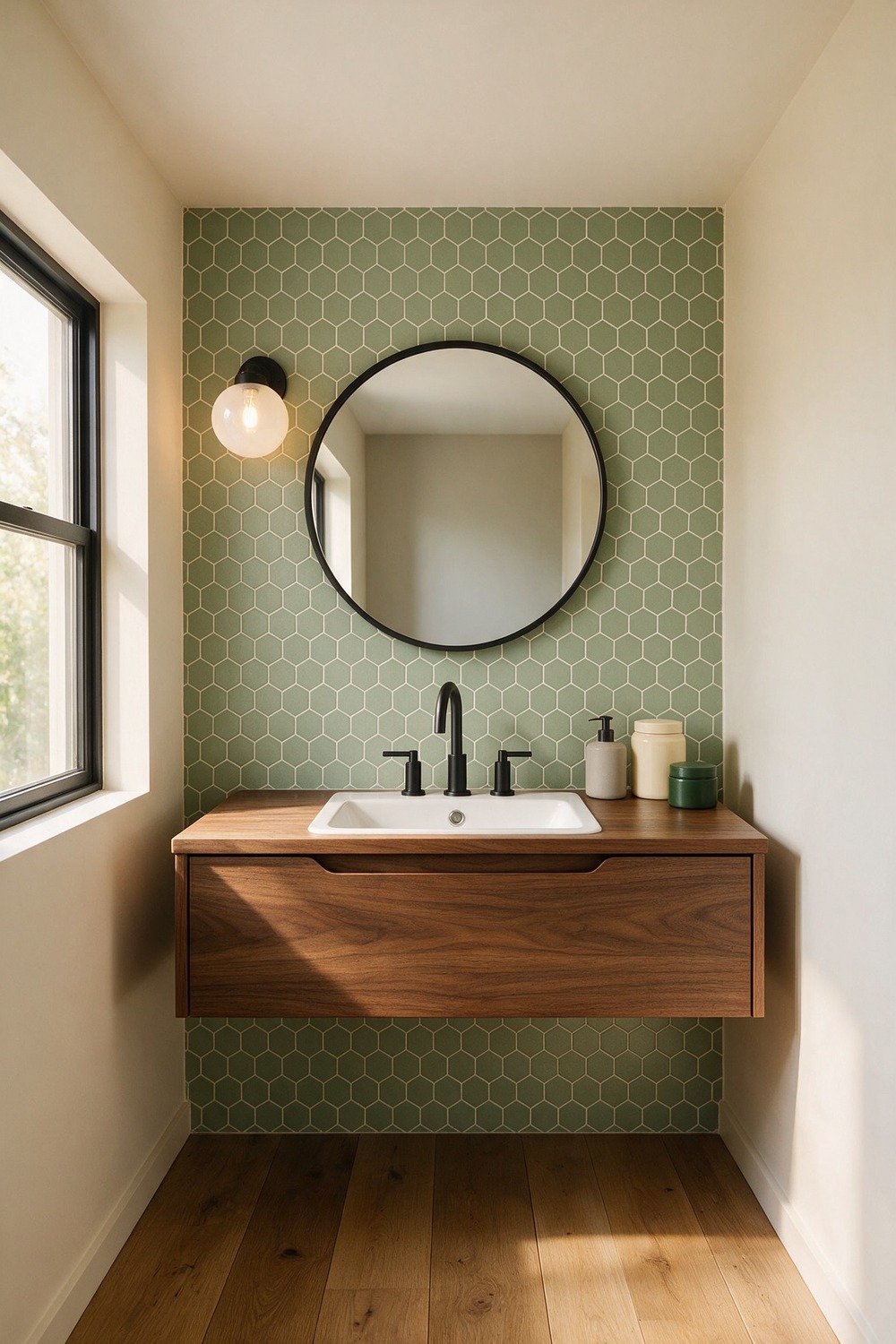
Small is where this style actually shines. A tight footprint loves a bold graphic move more than a big room does, because every surface counts.
Lay a warm walnut floating vanity against a wall of two-inch sage hexagon, think Little Greene Aquamarine softened with grey. Matte-black tap, a round mirror, one globe sconce. Start with the tile color and let the vanity follow.
2. Half Mid Century Bathroom
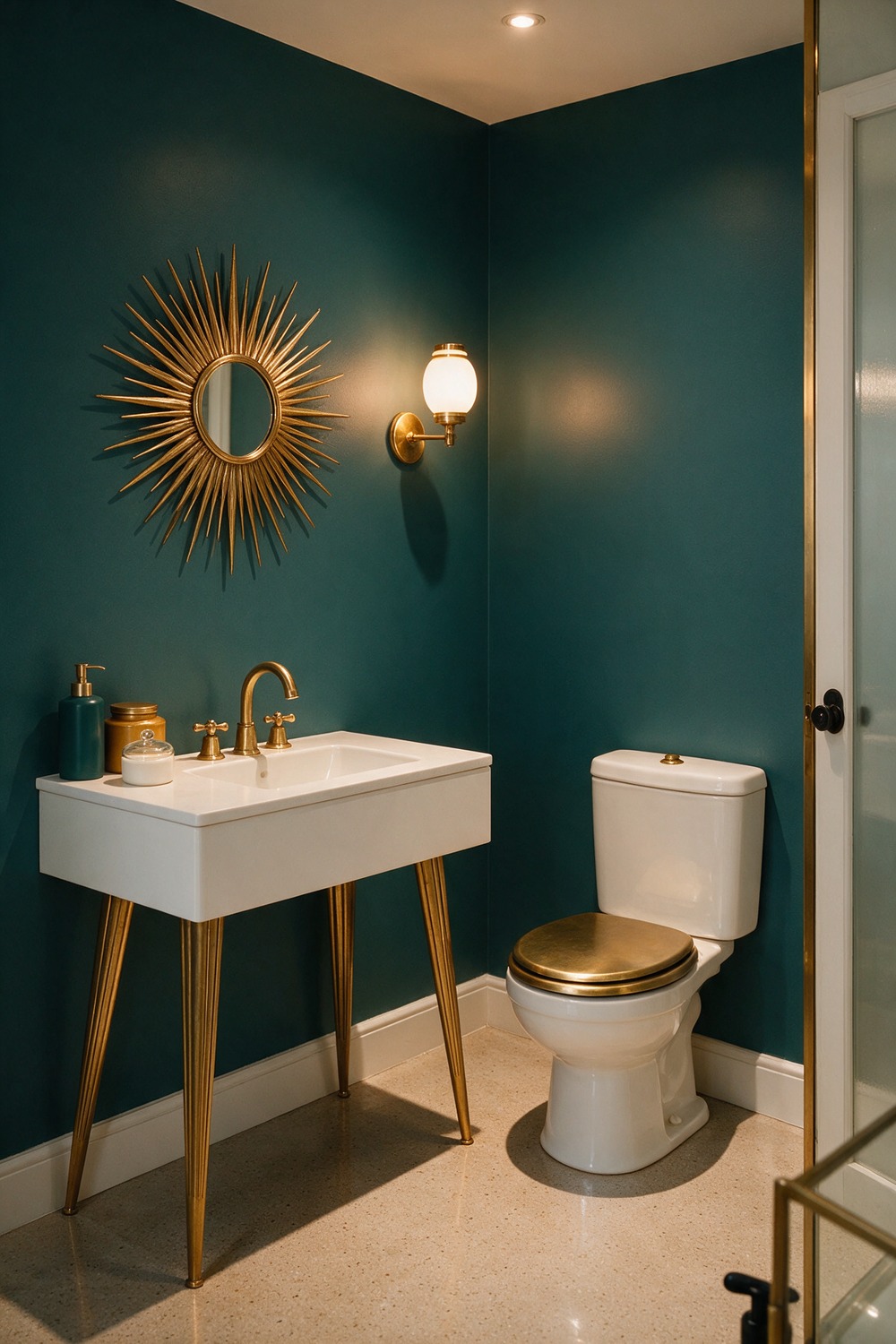
The trick in a half bath is to treat it like a jewel box, not a utility closet. There is no shower or tub to work around, so the walls get to be the show.
A console sink on tapered brass legs, a shallow basin, and a moody teal on every wall, something like Benjamin Moore Newburg Green. One starburst mirror and a single sconce finish it. Honestly, the one piece worth splurging on here is that console.
3. Guest Mid Century Bathroom
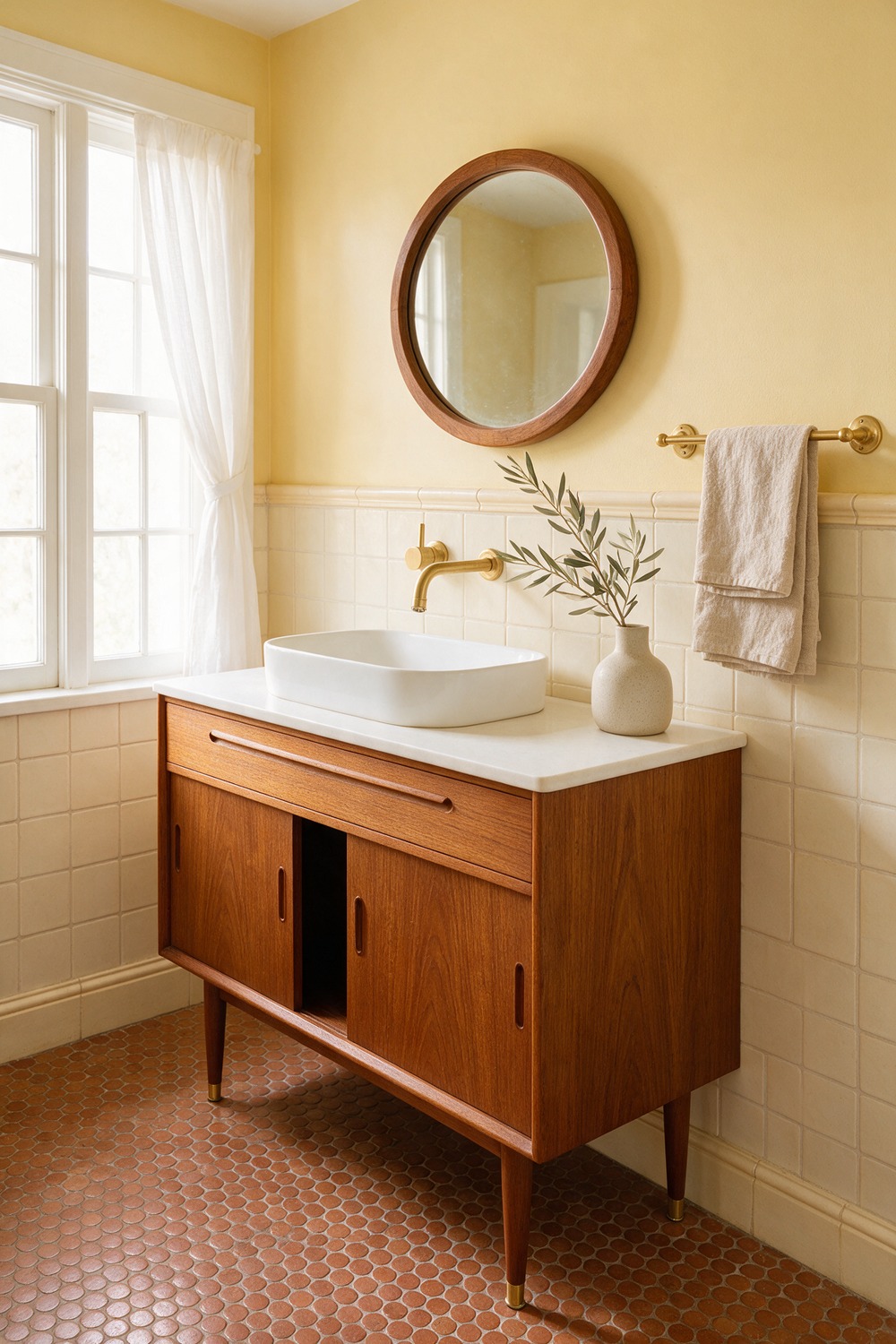
Guests read a bathroom in about four seconds, so give them something that lands. Warm teak, a cream-and-caramel palette, and penny-round floor tile in a soft terracotta.
Paint above the tile line in Farrow & Ball Sudbury Yellow for that butter glow. Fold two linen hand towels, add a small olive branch, and stop there. Restraint reads as expensive.
4. Primary Mid Century Bathroom
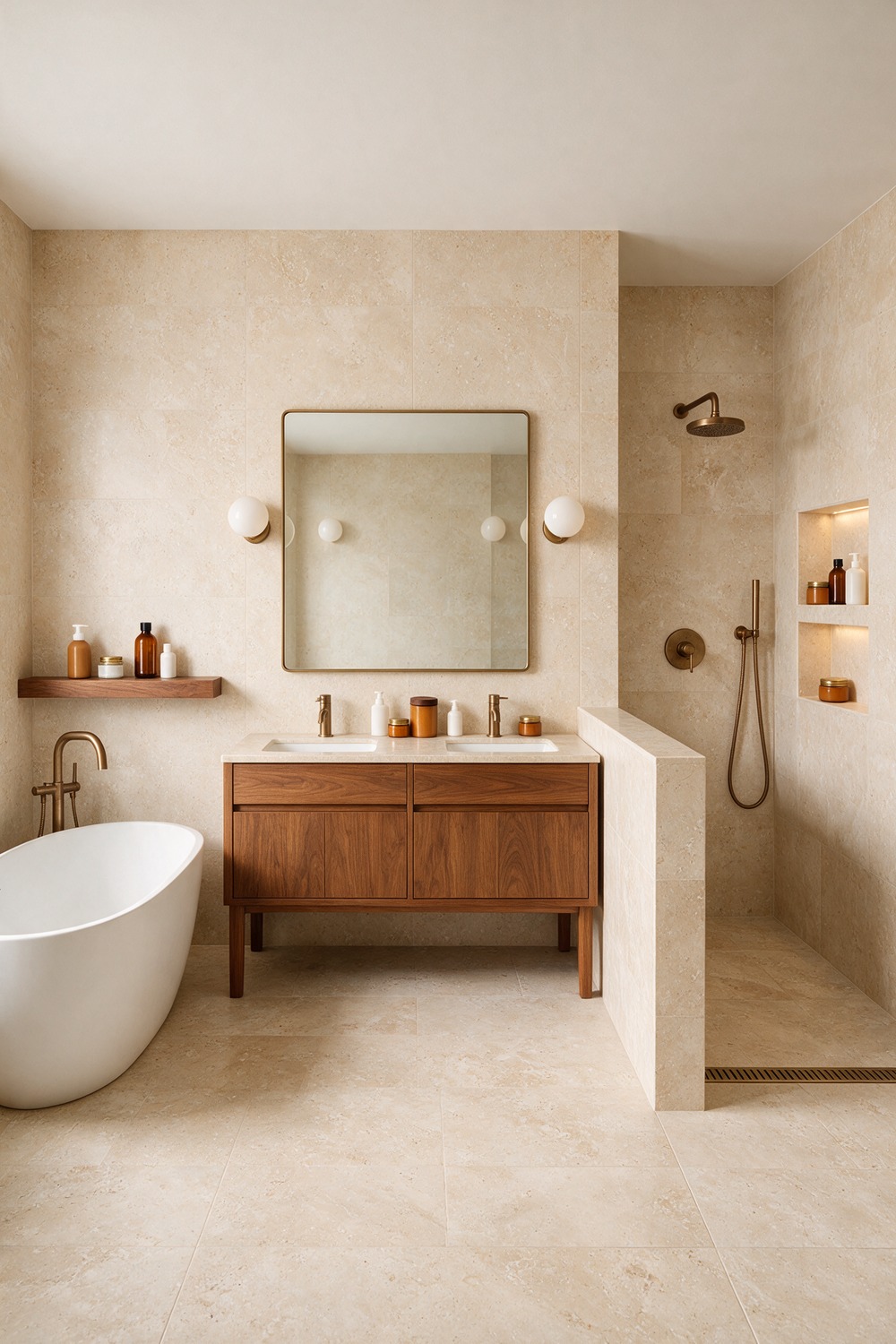
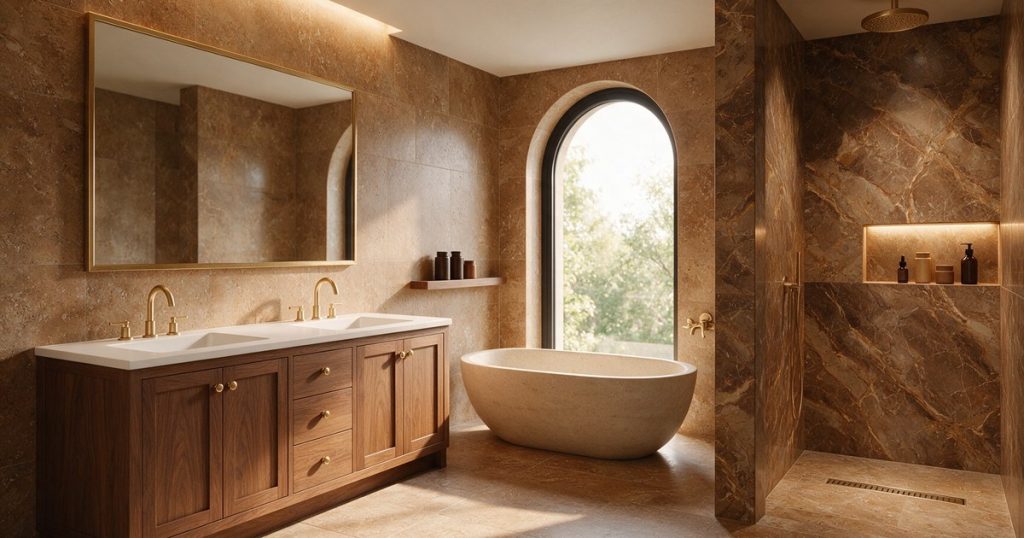
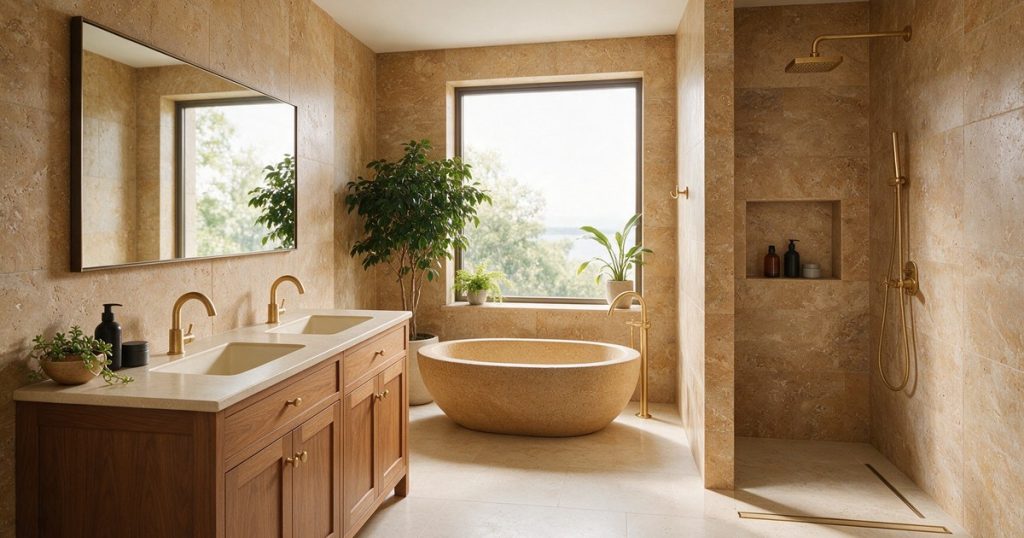
A primary bath is the one room to go all in. Double walnut vanity, large-format honed travertine, a freestanding tub with a floor-mounted filler.
Warm whites, a bronze finish, nothing chrome. I would spend the budget on the stone and keep everything else quiet. Let the travertine set the palette, the color of wet sand, and put nothing cooler than it anywhere in the room.
Give it a proper walk-in shower behind a half wall, a long linear drain, and a built-in teak bench you will actually use. A pair of globe sconces flanks the mirror, level and warm at 2700K. This is the room to let the materials breathe.
5. Apartment Mid Century Bathroom
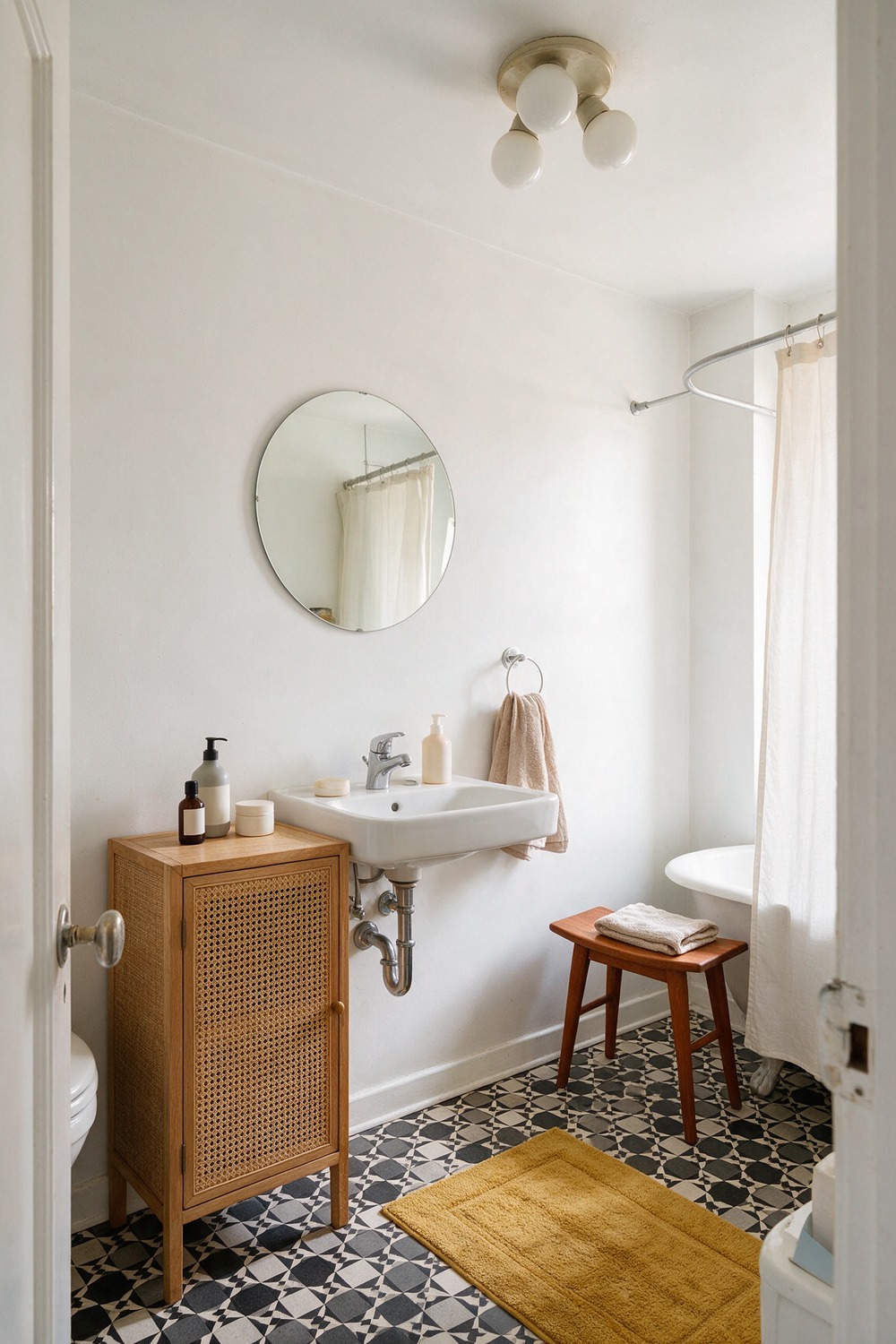
Half my design life has gone into making rentals look deliberate without losing a deposit. A mid-century apartment bath is all about reversible wins.
Peel-and-stick geometric floor, a cane-front storage cabinet, a three-globe light where the old fixture was. Keep the walls landlord-white, then add a mustard bath mat, a teak stool, and a towel ring that unscrews on move-out day.
6. Tiny Mid Century Bathroom
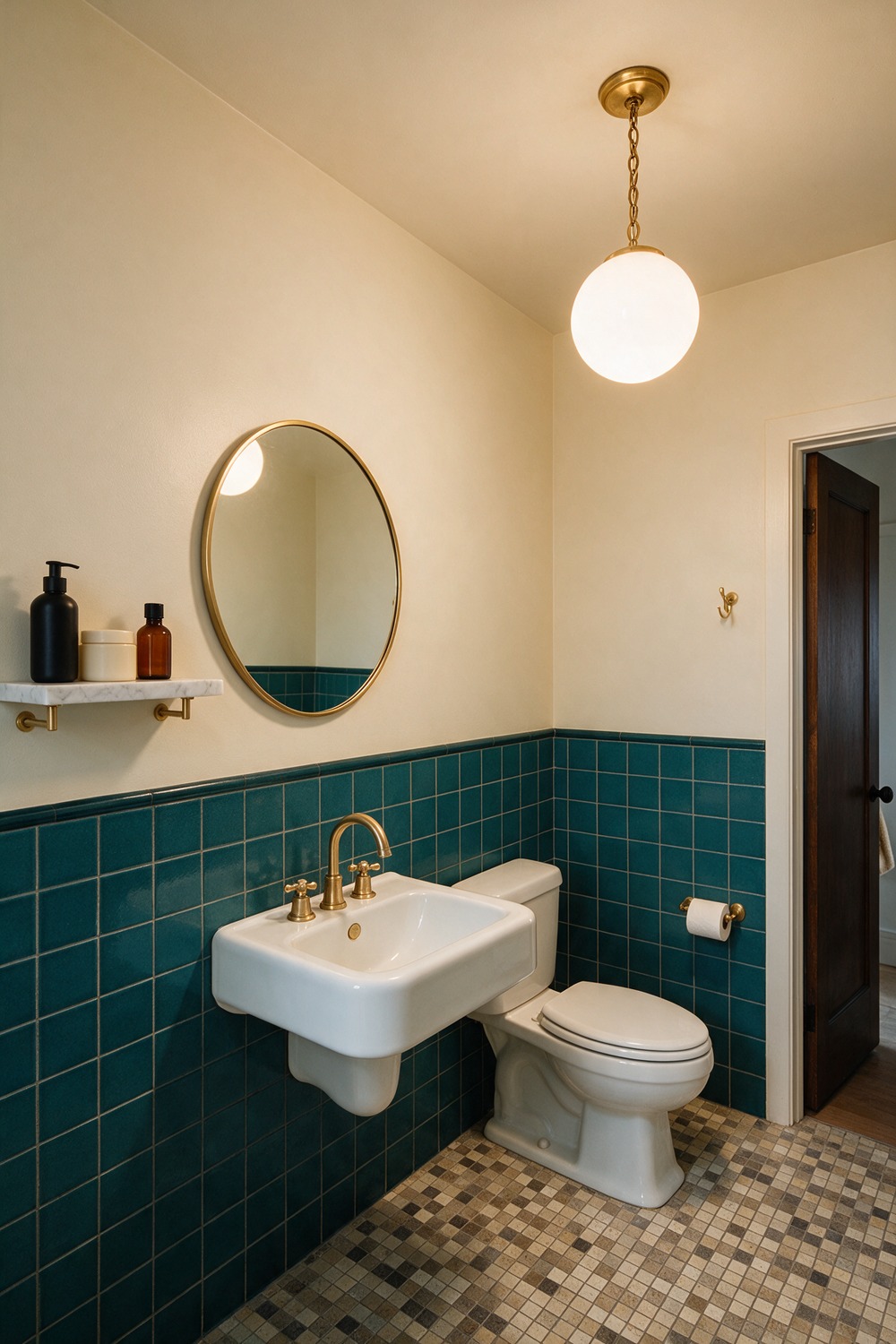
Tiny does not mean beige. Go dark and graphic instead: deep teal tile across the lower wall, a color like Behr Teal Zeal, a single globe pendant, brass fixtures, and a wall-hung basin to buy back floor. In a room this size, color is cheaper than square footage.
7. Powder Mid Century Bathroom
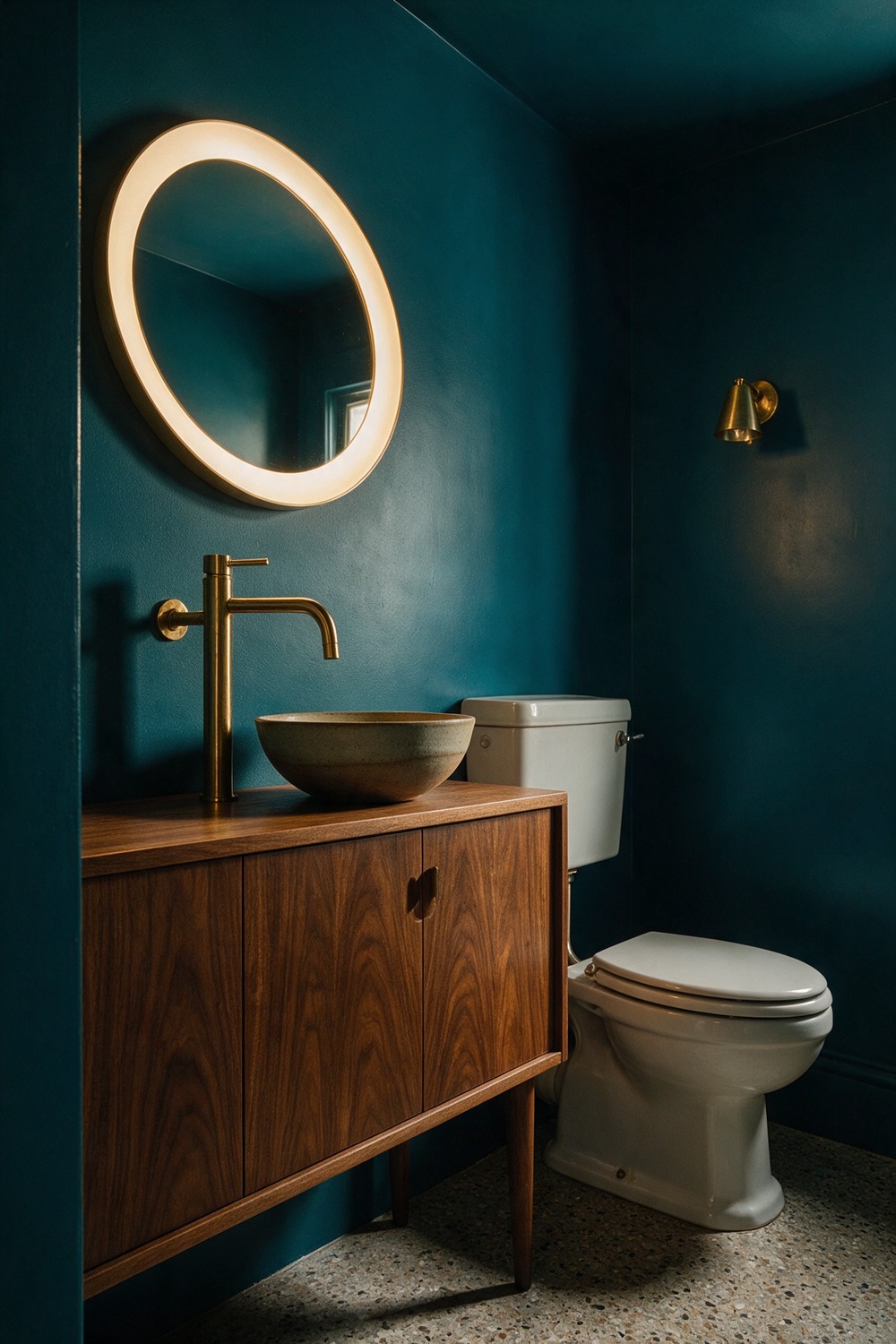
Powder rooms are a dare. With no shower or bathtub to plan for, this is pure styling: a vessel bowl on a walnut credenza, a round backlit mirror, and walls drenched in Dulux Proud Peacock. Drama in four square feet.
8. Kids Mid Century Bathroom
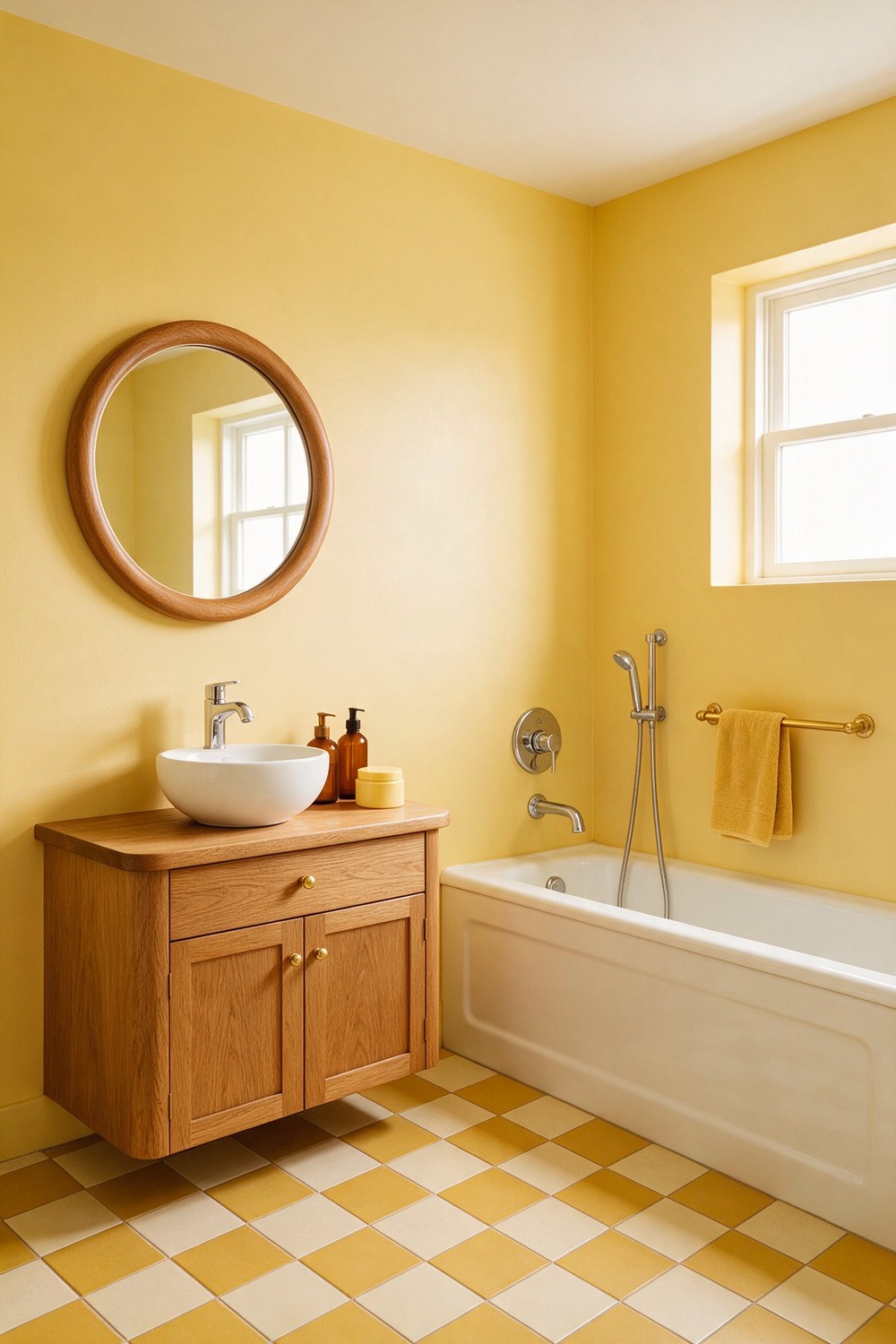
Kids’ bathrooms get babied, all primary plastic and cartoon decals. I would rather give them a real design they grow into.
Checkerboard floor in soft mustard and cream, laid on the diagonal, with durable oak and a low vessel sink they can actually reach. Sherwin-Williams Jovial carries the warm yellow. It reads playful without a single character on the wall.
9. Attic Mid Century Bathroom
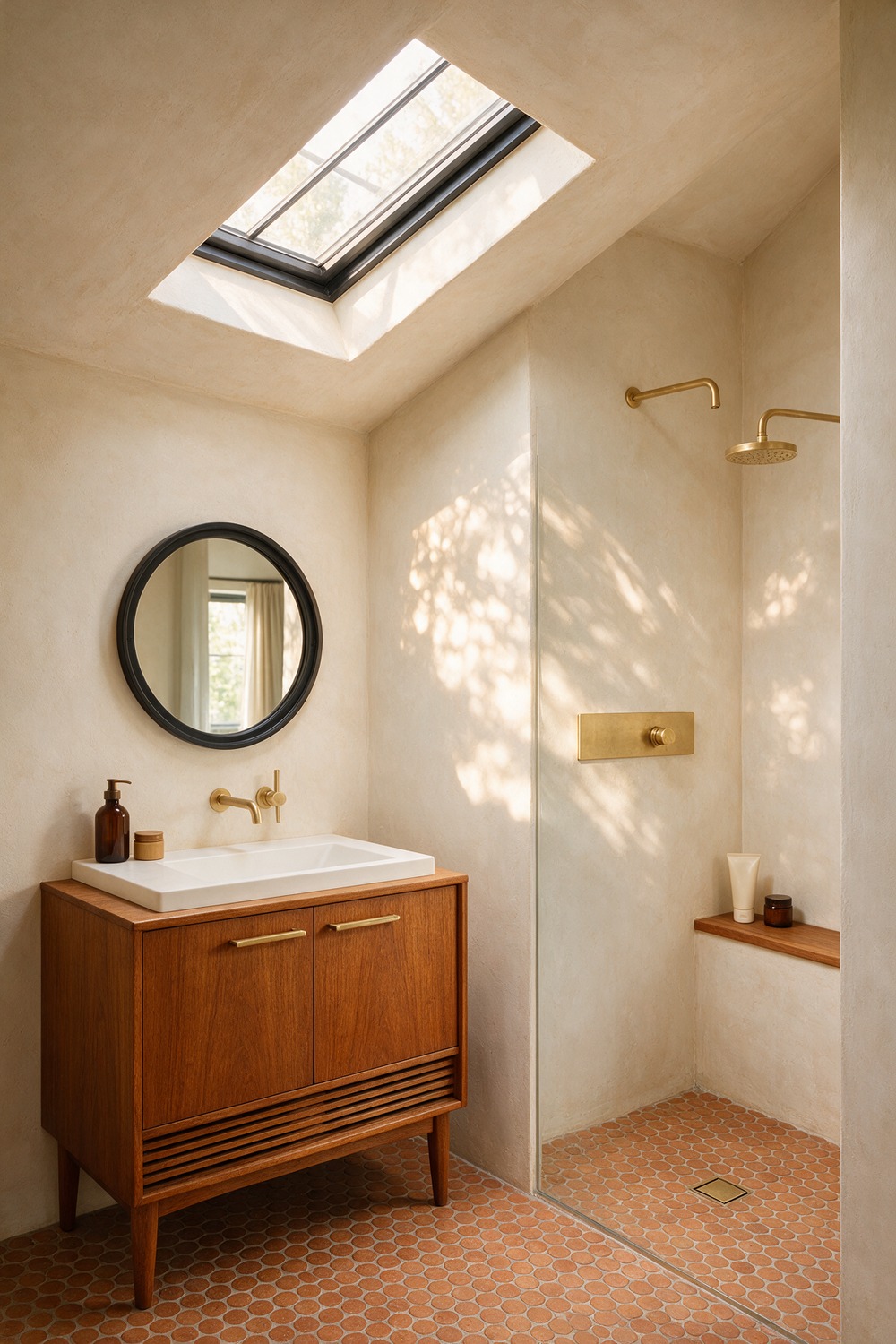
Sloped ceilings scare people off. They should not. That angle is a gift.
Tuck a walk-in shower under the tall wall, a low teak vanity below the slope, and a skylight overhead for free drama. Warm terracotta penny tile on the floor, Bauwerk limewash in a chalky clay tone on the straight walls. The pitch becomes the feature instead of the problem.
Lean into the cabin feeling with a round mirror and warm brass fixtures that catch the overhead light. Morning sun through that skylight does most of the work. Start with the floor tile and let the slope tell you where the shower goes.
10. Ensuite Mid Century Bathroom
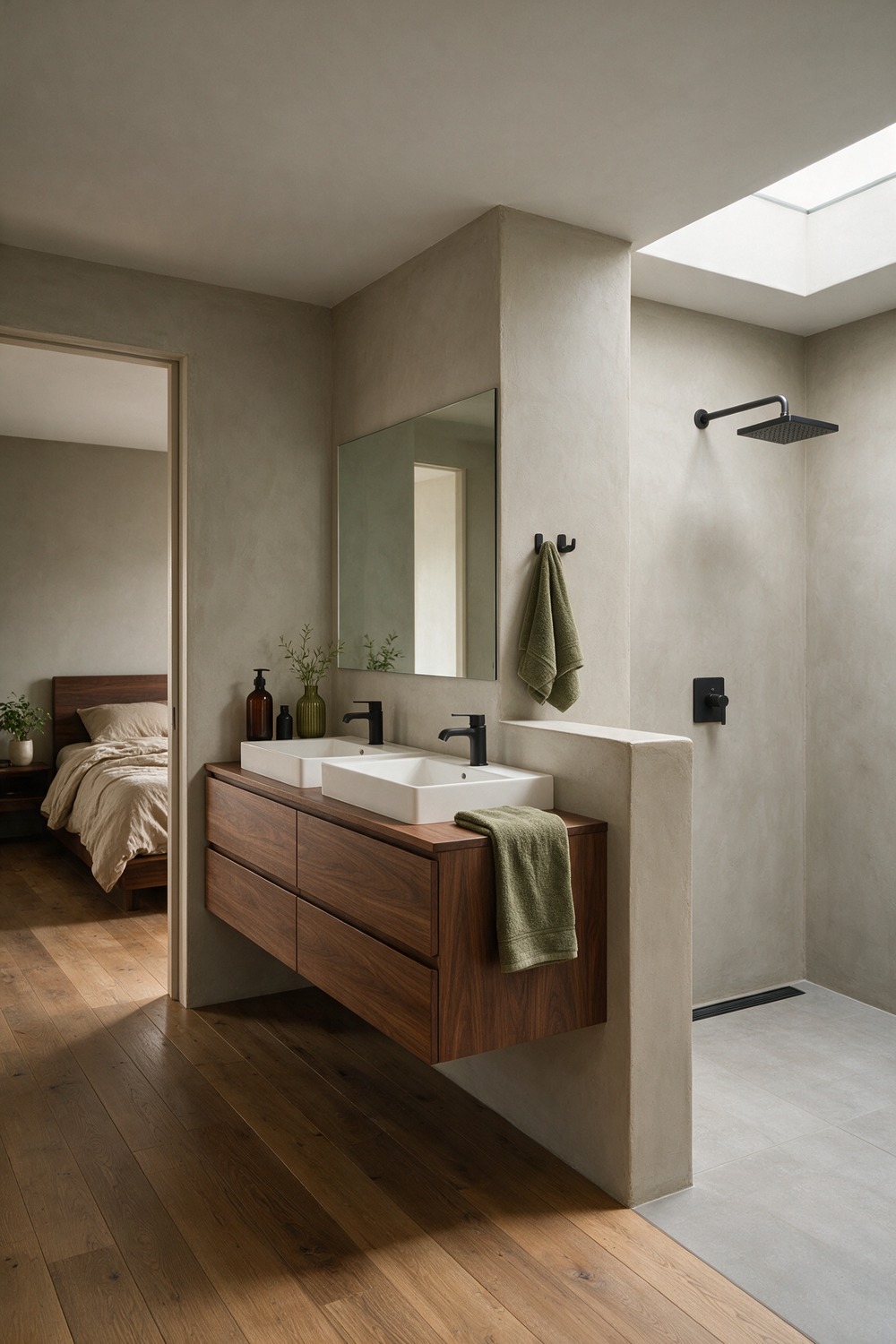
An ensuite should feel like an extension of the bedroom, calm and continuous, not a bright white box bolted on the side.
Carry the bedroom’s warm oak and olive straight through. An open walk-in shower behind a half wall, matte-black rails, and a floating double vanity. Portola Roman Clay in a soft greige on the walls. Keep it hushed and let the wood do the talking.
11. Mid Century Bathroom With Tub
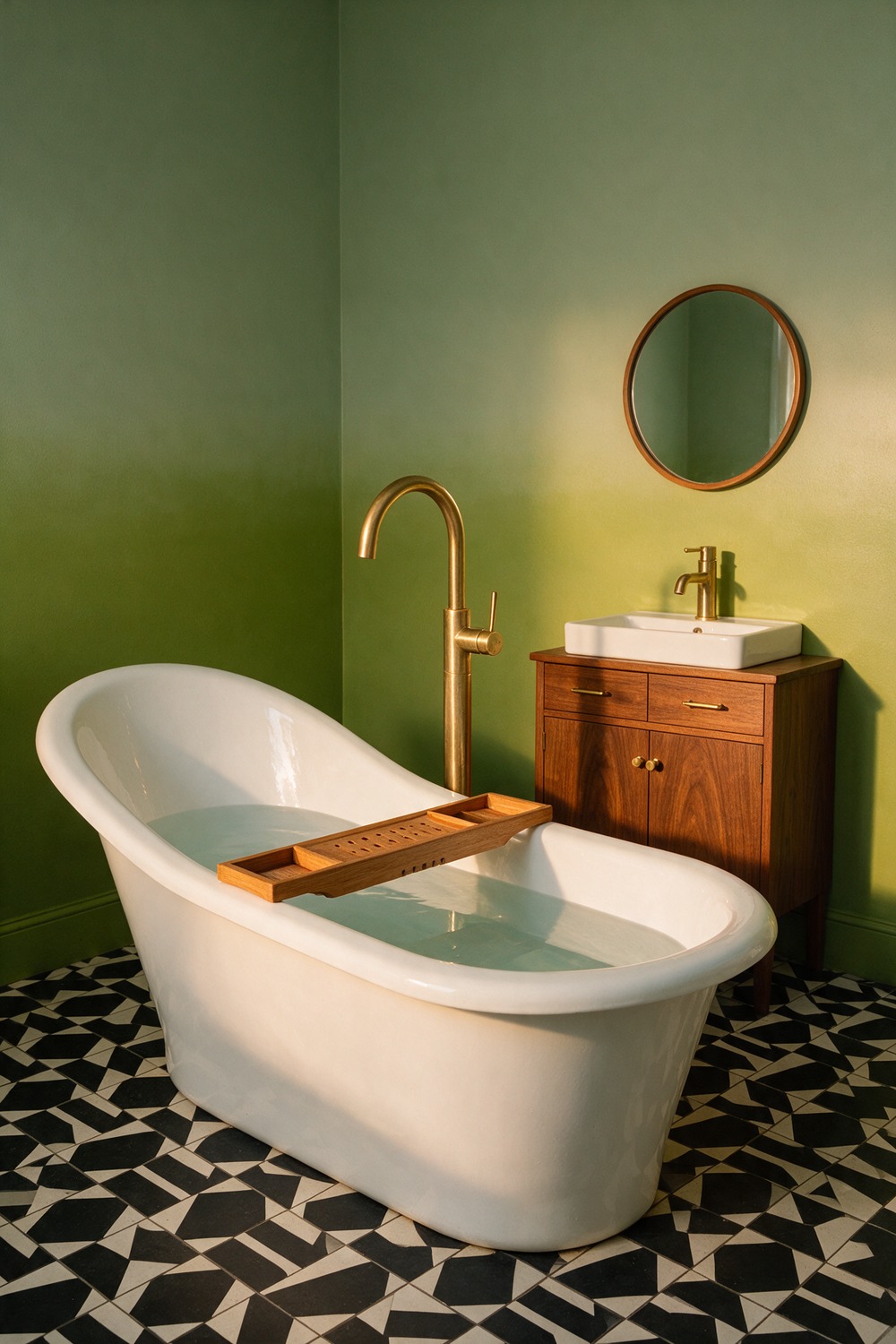
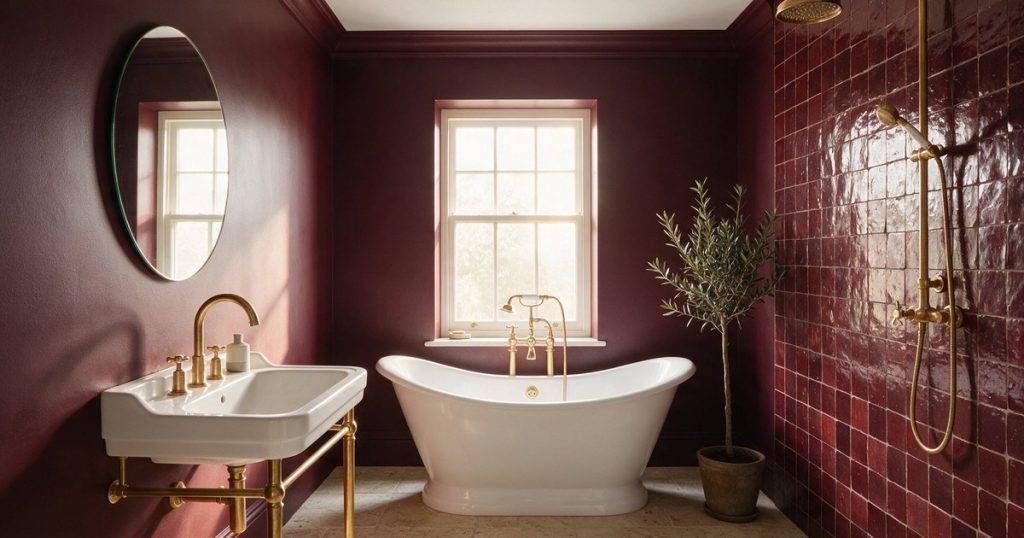
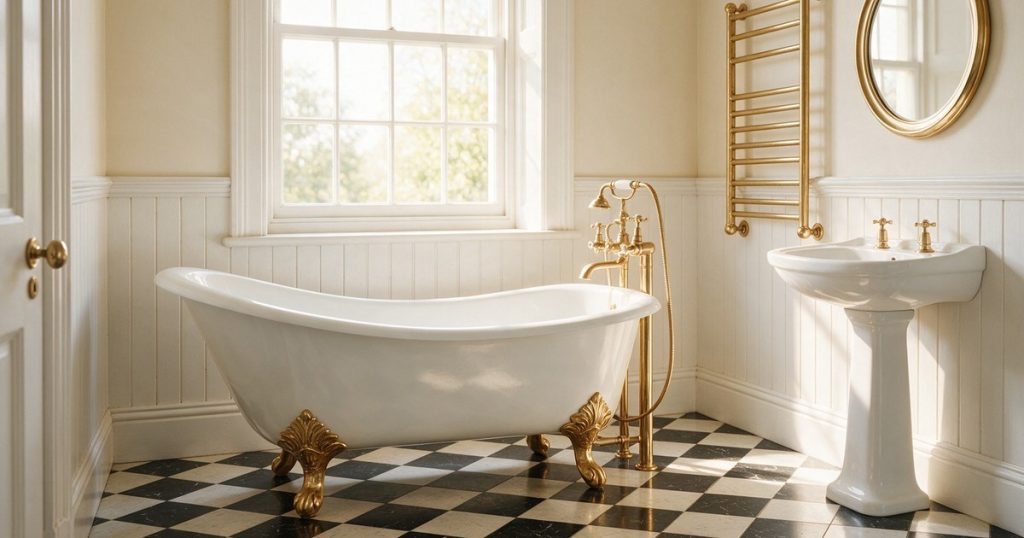
If you have the room for a tub, make it freestanding. A built-in alcove flattens the whole look. Set a clean white slipper tub with a floor-standing brass filler against Little Greene Sage Green, over a geometric floor. The tub is the hero; everything else steps back.
12. Mid Century Bathroom With Walk In Shower
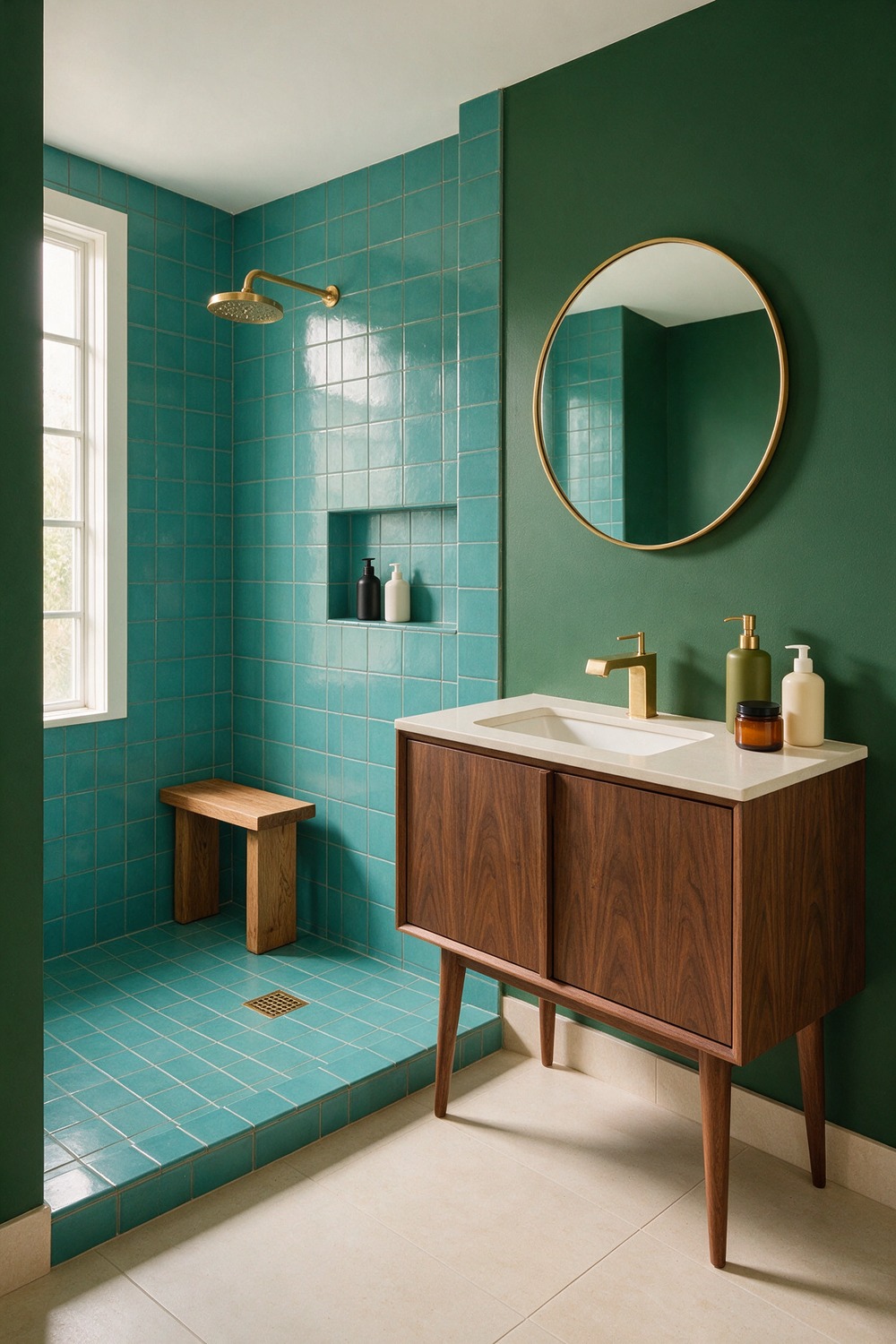
The move with a walk-in shower is to tile it like a feature, not a box you hose down. Keep it open, no glass, so the tile reads the second you walk in.
Line it in glossy teal four-by-four squares, add a rain head on a brass arm and a recessed niche, and sit a small oak bench inside. Benjamin Moore Galapagos Green on the surrounding wall. Start with the shower tile and build out from there.
13. Mid Century Bathroom With Floating Vanity
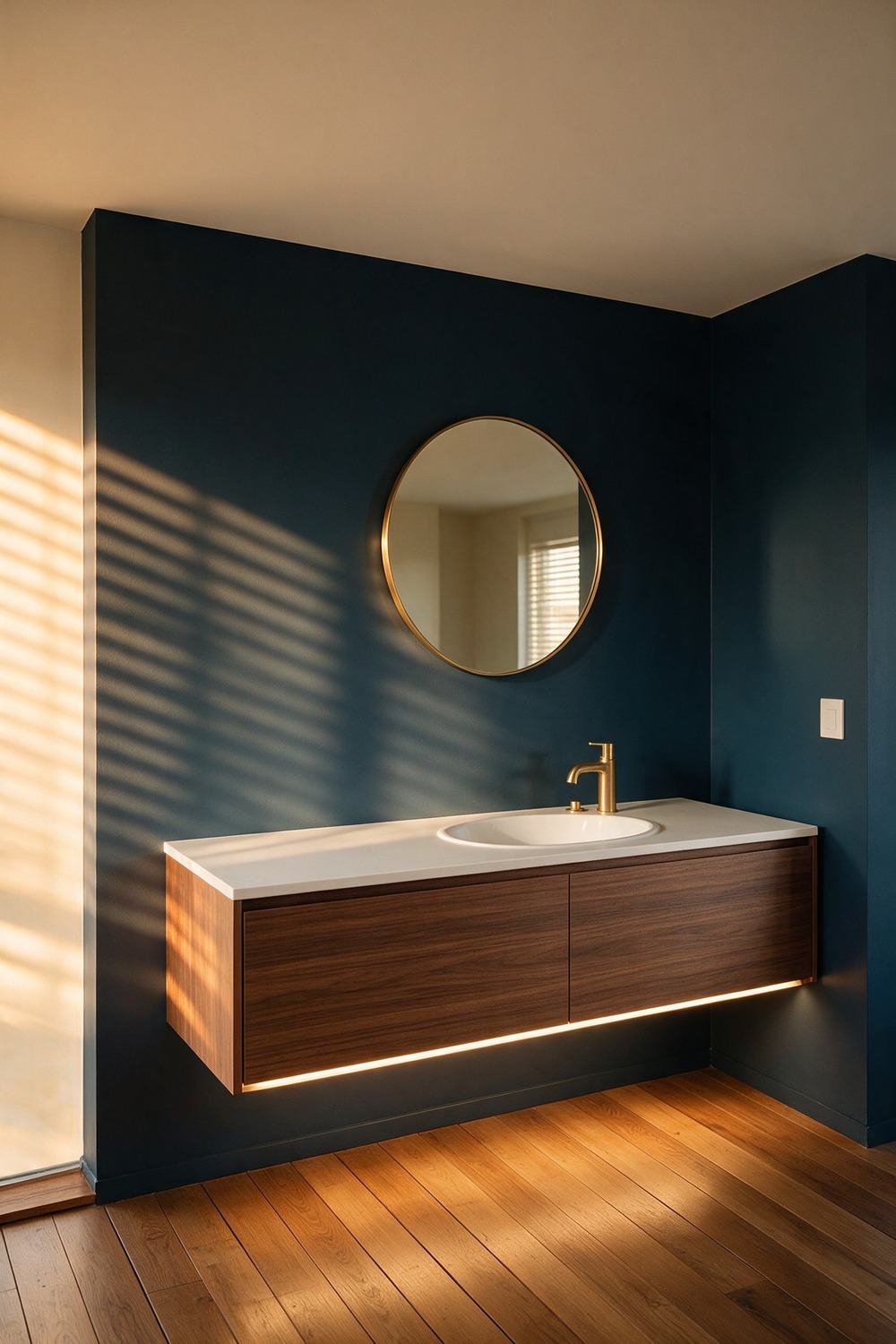
A floating vanity, which is simply one wall-hung with no legs touching the floor, is the single most mid-century move you can make. It is the detail that dates the room to 1960 in the best way.
Walnut with a horizontal grain, a slim white top, an oval basin, and a warm glow underneath for night. Clare Current Mood, a deep inky blue, behind it. The unbroken floating line is the whole point, so keep the plumbing hidden.
14. Mid Century Bathroom With Double Vanity
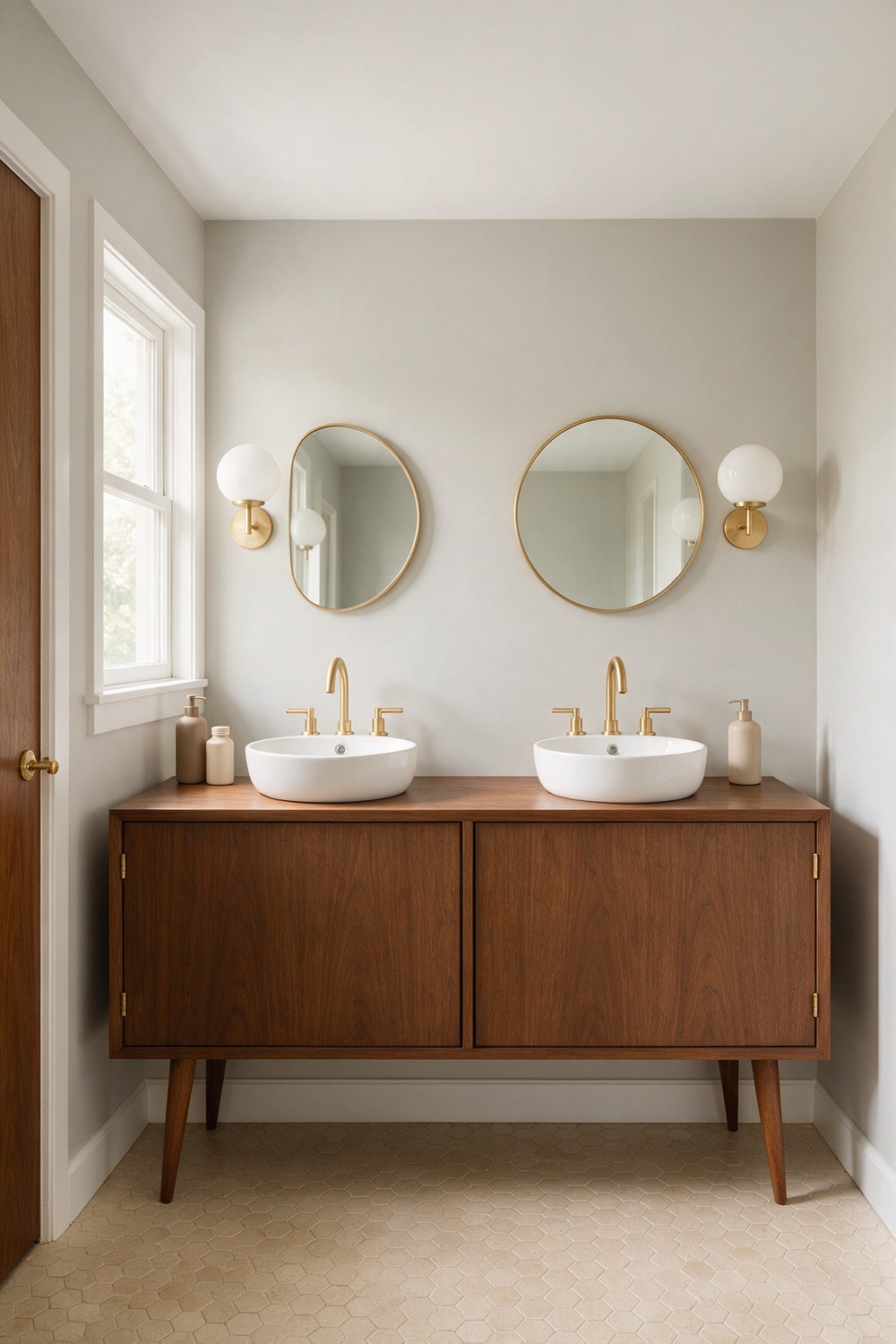
Two sinks, one continuous slab, zero clutter. A double vanity is where mid-century symmetry gets to show off.
A long walnut unit on tapered legs, two vessel bowls, twin round mirrors, twin globe sconces lined up level. Backdrop Mister Mister, a soft grey, on the walls. Buy the widest vanity the wall will take and center everything on it.
15. Mid Century Bathroom With Terrazzo Floor
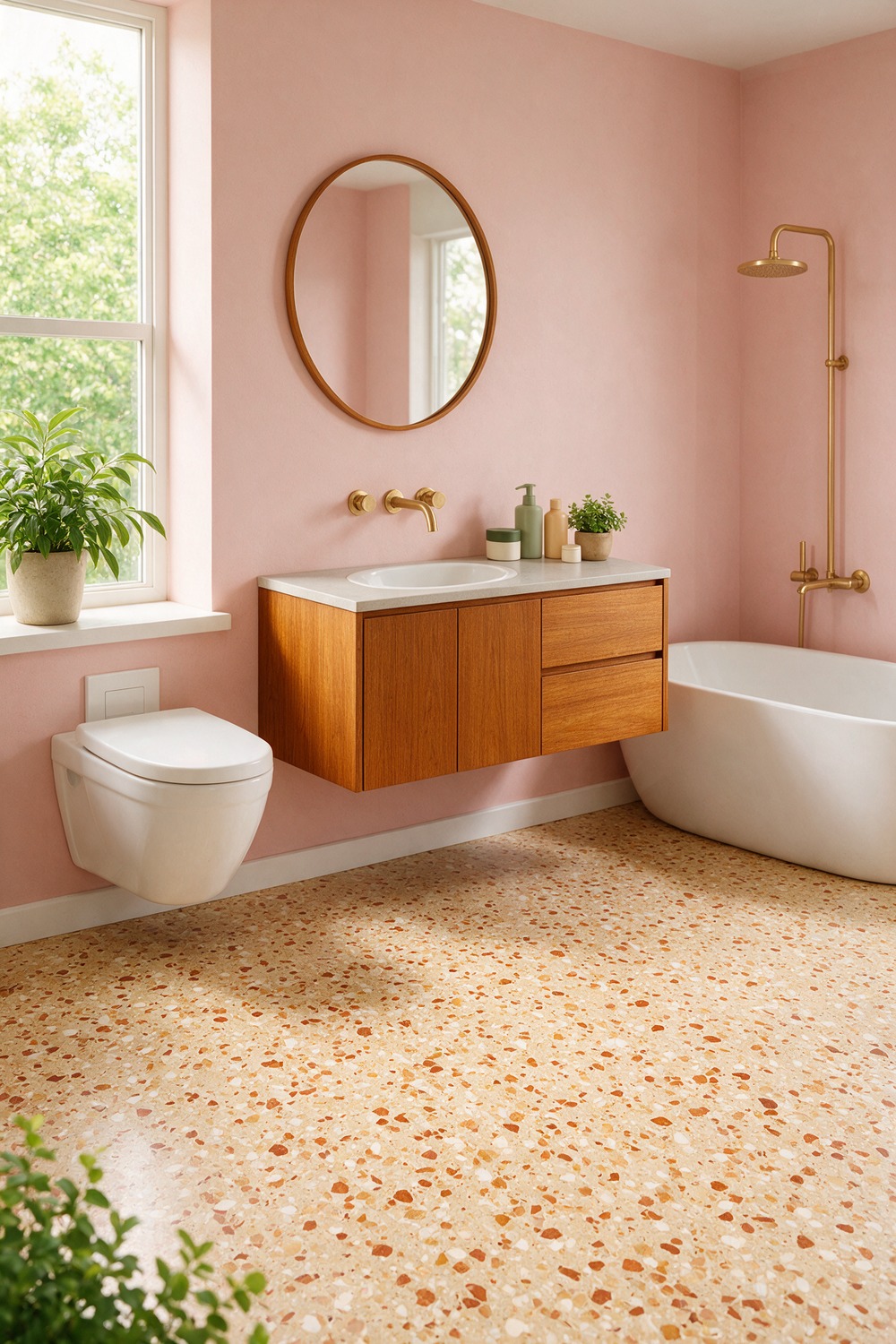
Terrazzo is having a moment, but it was mid-century first. That speckled chip-and-cement floor has been underfoot since the 1950s.
Choose a warm terrazzo flecked with caramel and rust, set a teak vanity on top, and keep the walls soft so the floor sings. Farrow & Ball Setting Plaster, a dusty pink, is my pick for the walls. Let the floor be loud and hush everything above it.
16. Mid Century Bathroom With Checkerboard Floor
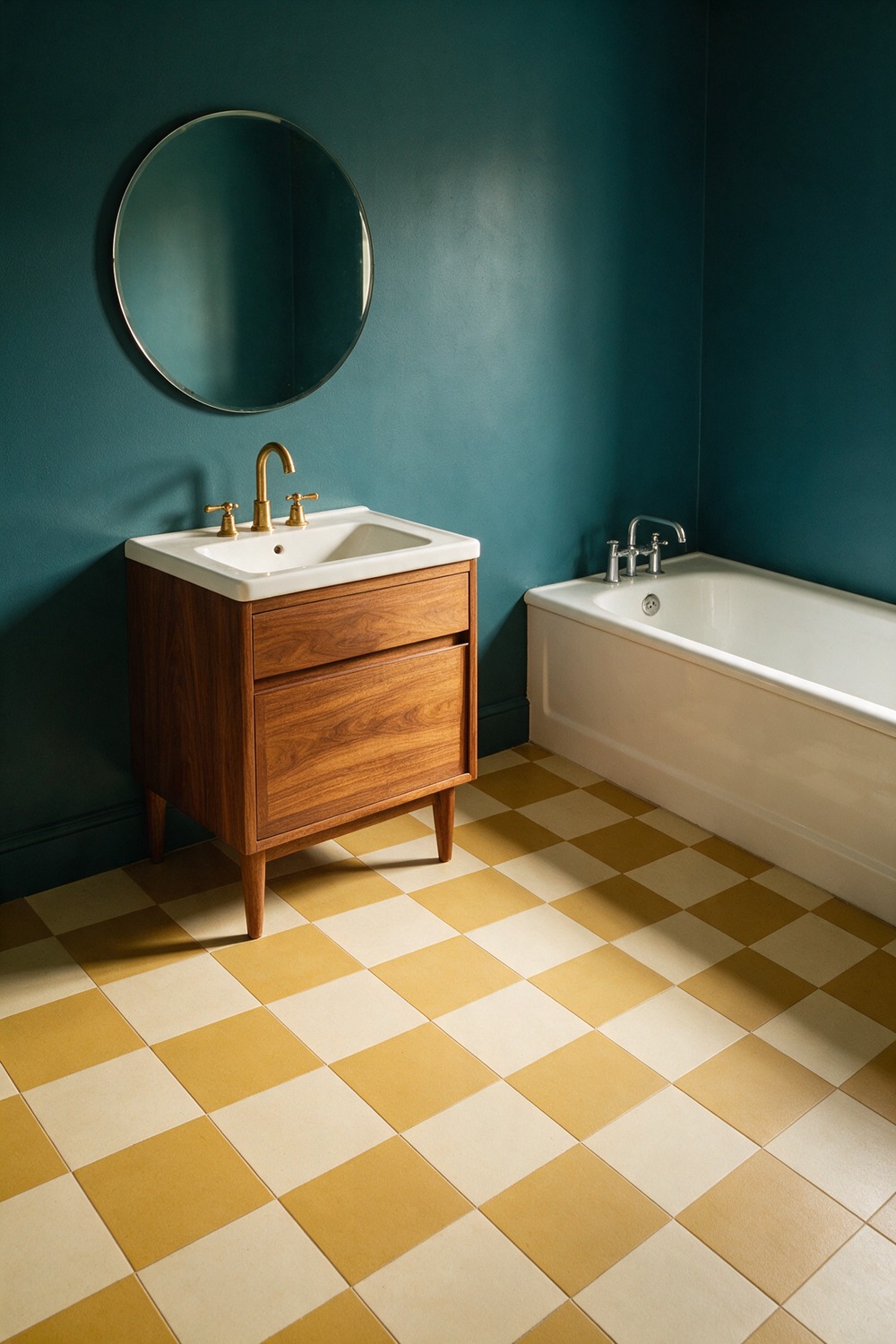
Checkerboard does not have to mean black and white. That is the obvious version, and the boring one.
Try mustard and cream, or sage and off-white, laid on the diagonal in a matte finish rather than a glossy one. Dulux Teal Tension on the walls, a warm walnut vanity below. One graphic floor, plain everything else, and you are done. That is the whole trick.
17. Mid Century Bathroom With Wood Paneled Walls
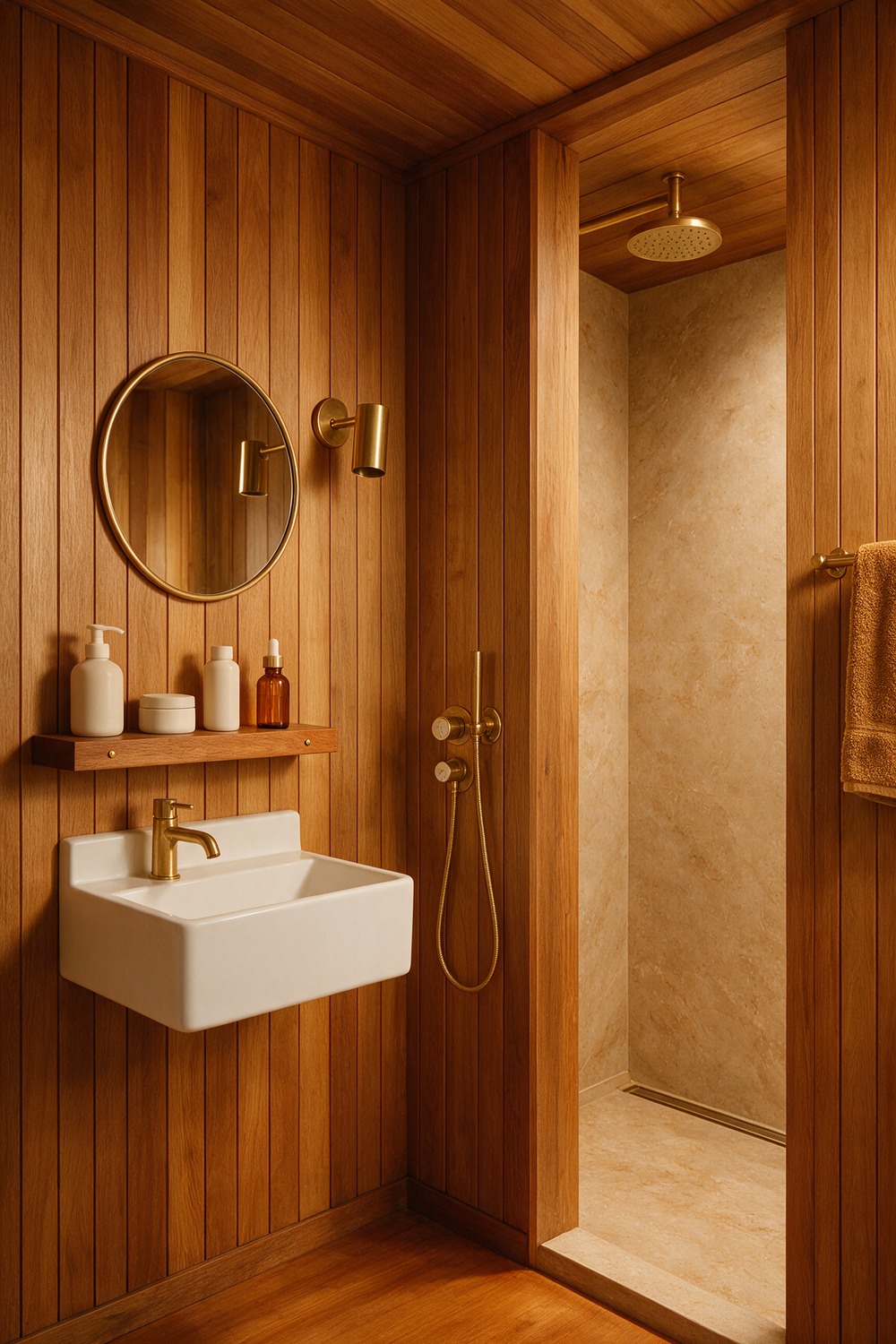
Walk into a wood-paneled bathroom and your shoulders drop. It smells the way a sauna and a ski lodge would if they had a baby, all warm cedar and steam.
Run vertical teak or warm oak boards, properly sealed for damp, from the dado rail to the ceiling. A white basin, a brass tap, a round mirror.
Keep paint out of it entirely. The wood is the design, and a single stripe of color would only fight it.
18. Mid Century Bathroom With Slatted Wood
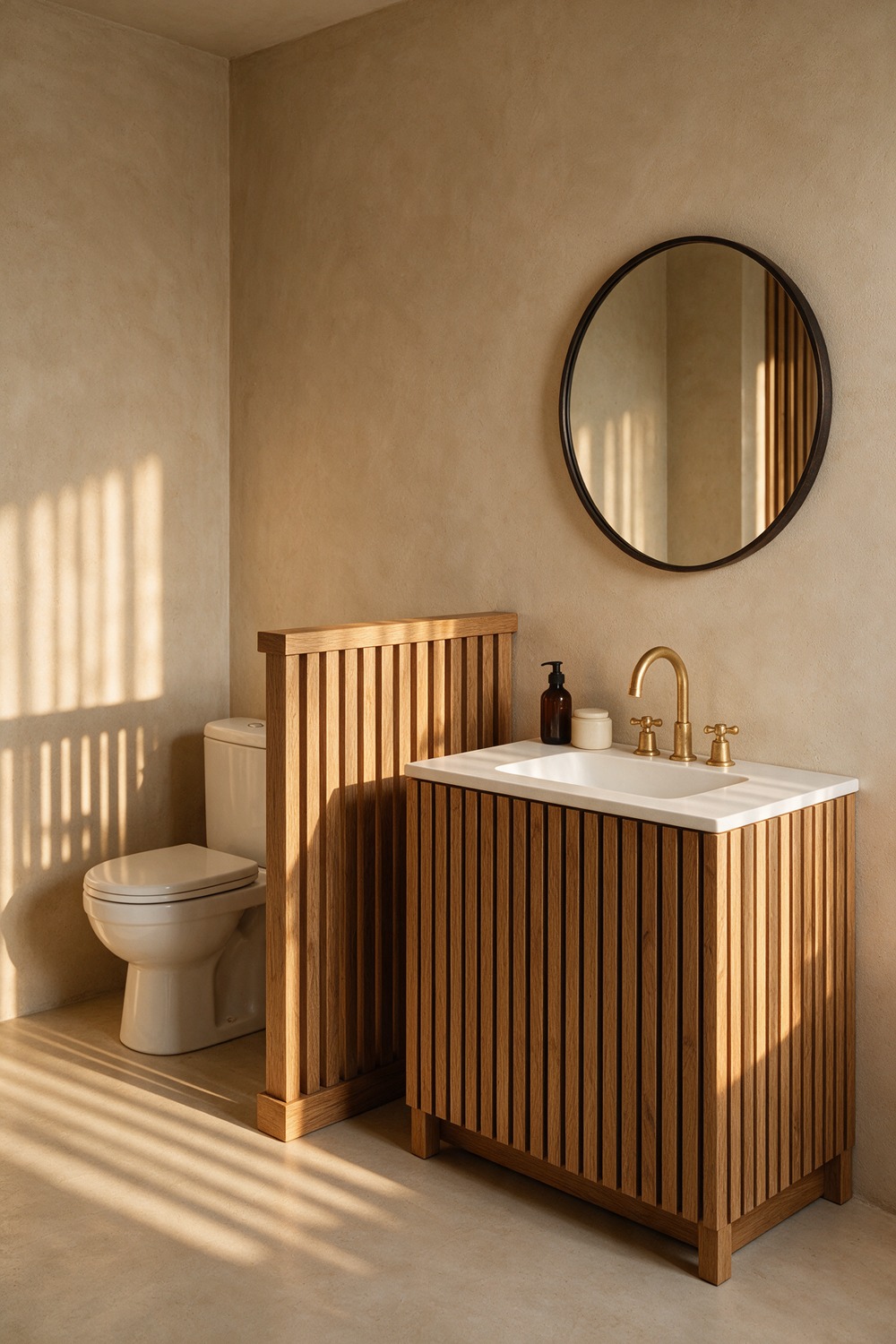
Paneling’s cooler cousin is the open slat screen. Where panels are solid, slats are thin oak battens set with shadow gaps between them, so light slips through.
Use them on a vanity front or a half wall beside the toilet for rhythm and warmth. Pair the wood with microcement in a sandy tone, like Portola Sahara. Let afternoon light rake across the slats and throw stripes on the floor.
19. Mid Century Bathroom With Breeze Block
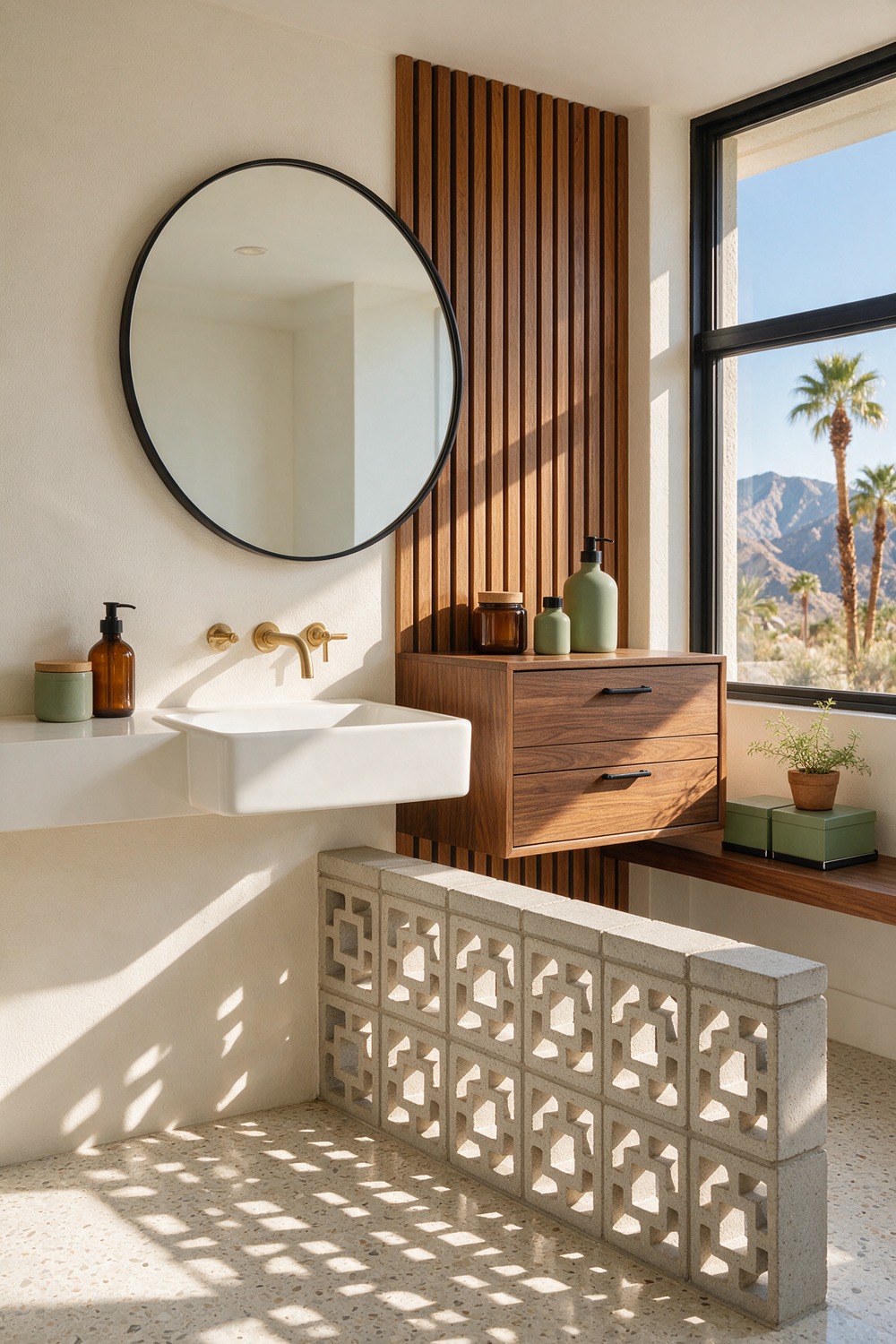
Nothing says Palm Springs like breeze block, those geometric concrete screens from every 1960s motel courtyard.
Bring it indoors as a short interior partition that splits off the toilet or just filters light between zones. Leave it raw concrete, or paint it chalky white in Bauwerk Chalk. Add a terrazzo floor and teak accents and you have pure atomic-age Palm Springs, no pool required.
Keep the fixtures low and horizontal so nothing competes with that lattice of light and shadow. A wall-hung basin, a slim oak mirror, a single globe sconce. The block is the art, which is exactly why the walls around it stay bare.
20. Mid Century Bathroom With Vessel Sink
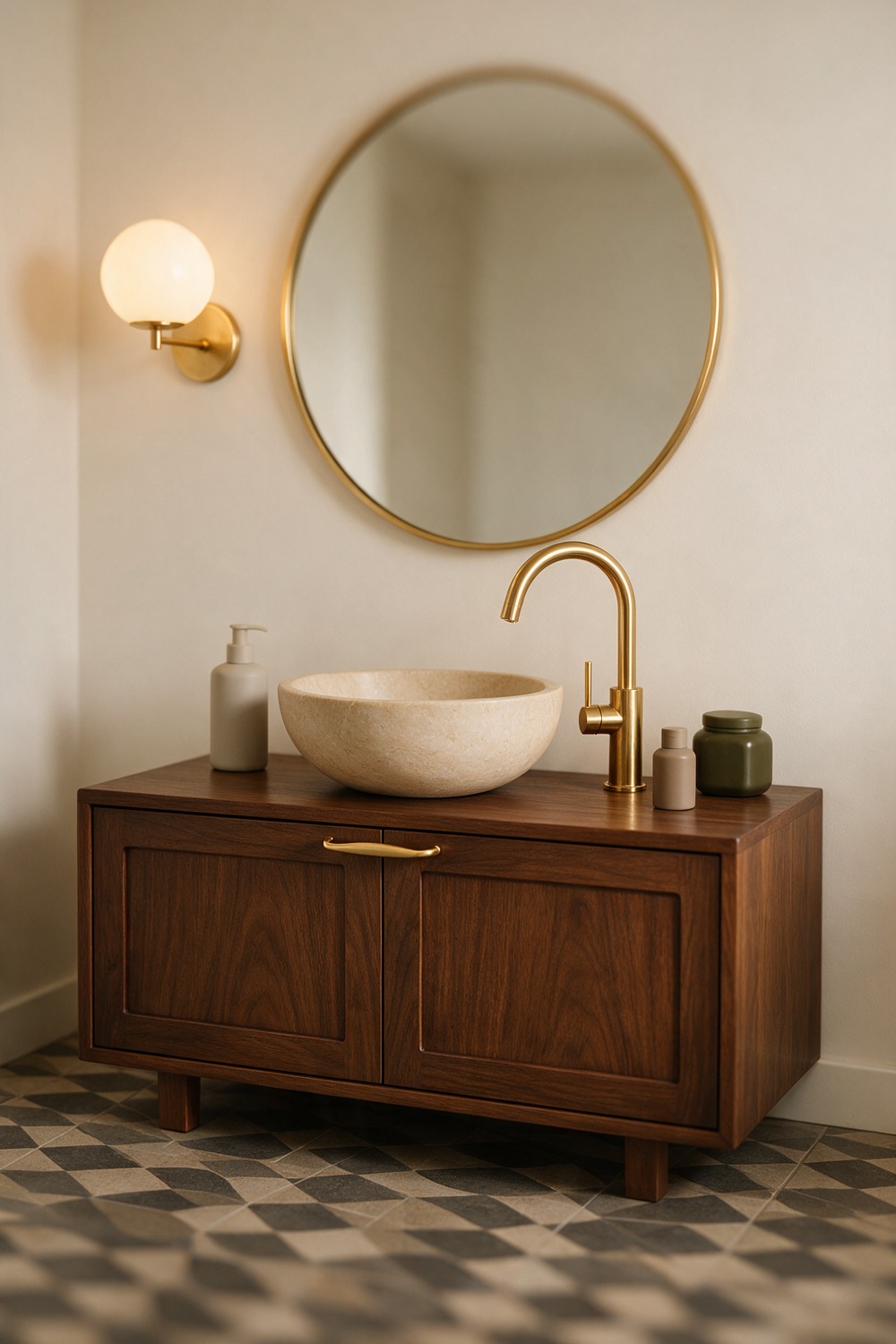
The vessel sink took years of flak for being impractical. On a mid-century vanity, it earns its keep and looks the part.
Set a low ceramic or stone bowl, oval or round and never square, on a walnut credenza, and give it a tall wall-mounted or gooseneck tap so it clears the rim. Warm white walls in Behr Almond Wisp. Pick the bowl first, then size the tap to it.
Which Mid Century Bathroom Style Is Right for You
Working with a shoebox or a rental? Go dark and graphic. A single bold wall color and one patterned floor do more in a small room than any amount of careful neutral layering, and most of it travels with you.
Have a whole primary suite to play with? Lean into the materials instead: walnut, honed travertine, a freestanding tub. And if you only ever change one thing, swap the vanity. A warm, wall-hung wood unit with tapered legs says mid-century faster than anything, without touching the tile.
Mid Century Bathroom Ideas, Answered
How much does a mid-century bathroom cost? At the low end, it is a weekend and a few hundred: paint, a new globe light, a cane cabinet, a peel-and-stick floor. Mid-range means a new wall-hung vanity and tile. A splurge is stone, a freestanding tub, and re-plumbing.
What is the one thing worth spending on? The vanity, every time. A real walnut, wall-hung piece anchors the whole look. You can cheap out on the mirror and the hooks and nobody will notice.
What can I do myself? Paint, light fixtures, hooks, a mirror, and styling are all a confident DIY afternoon. Leave tile, plumbing, and anything wall-hung to a pro, because a floating vanity needs blocking inside the wall to hold it.
How long does a full remodel take? A cosmetic refresh is a weekend. A full gut with new tile and fixtures is usually three to five weeks once the work starts, plus a few more for ordering.
What do I ask the tiler for? Name the pattern and the layout, not just the tile. Say penny-round in a running bond, or a diagonal checkerboard, or hexagon tight to the wall, and ask for a matching grout so the shape leads, not the lines.
Pick the one idea that made you stop scrolling and start there. A single globe light or a mustard checkerboard floor is enough to tip a plain bathroom into something with a point of view. Your room is waiting.
More stories
Share this story