20 Japandi Bathroom Ideas for a Calm, Natural Retreat

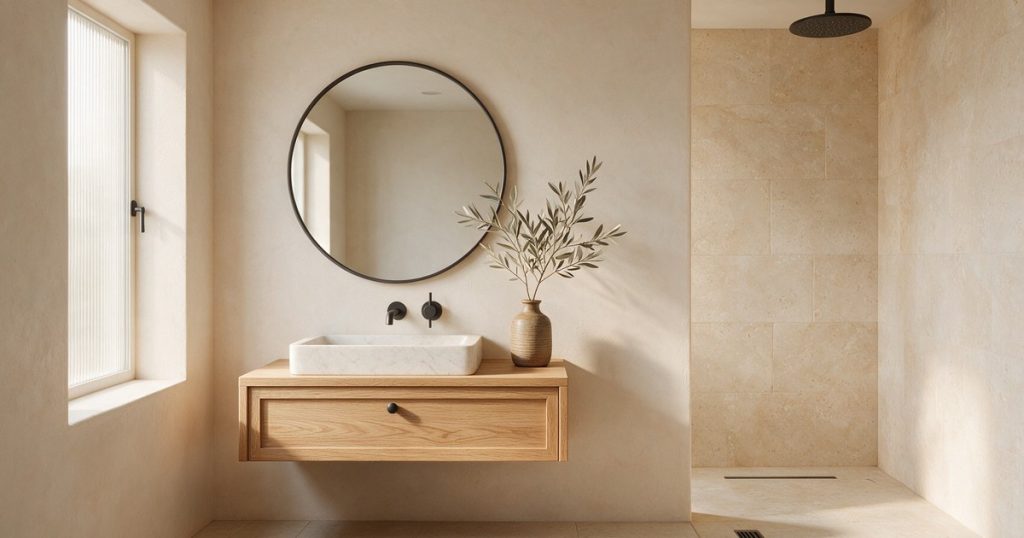
I used to think a calm bathroom meant a white one. Then I started noticing japandi rooms, and the whole idea cracked open. These spaces are quiet without being cold, and they make you exhale the second you walk in.
Japandi, in case the word is new to you, is Japanese calm meeting Scandinavian warmth. Both cultures worship simplicity and natural materials. In a bathroom it reads as soft and grounded: raw wood, hand-finished plaster, stone that still looks like it came from the earth.
Below are 20 japandi bathroom looks, each with a real point of view and everything you need to recreate it, from the palette to the paint to the tile. Pick the one that makes your shoulders drop.
1. Dark Japandi Bathroom
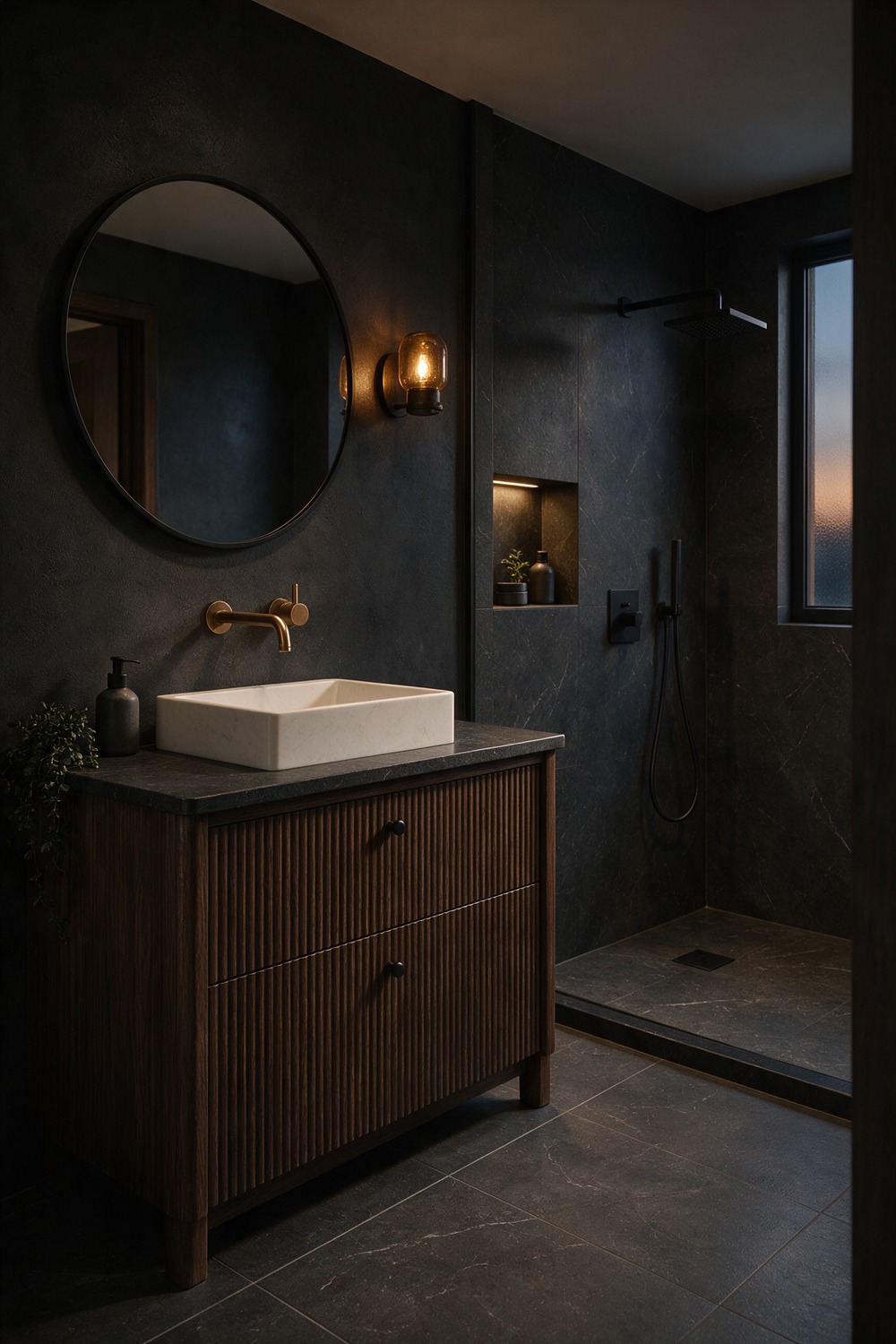
Here is my hot take: a dark bathroom is the most relaxing room you can build, and japandi does it better than anyone. The move is a deep, earthy near-black on the walls, think Farrow & Ball Railings, paired with warm stained oak so the dark never turns gloomy.
To get the look, run a smoky charcoal microcement across the walls and a fluted dark-oak vanity beneath a round mirror. Keep the metals bronze, not chrome. Start with the vanity wood tone, then let everything else go a shade darker around it.
2. Moody Japandi Bathroom
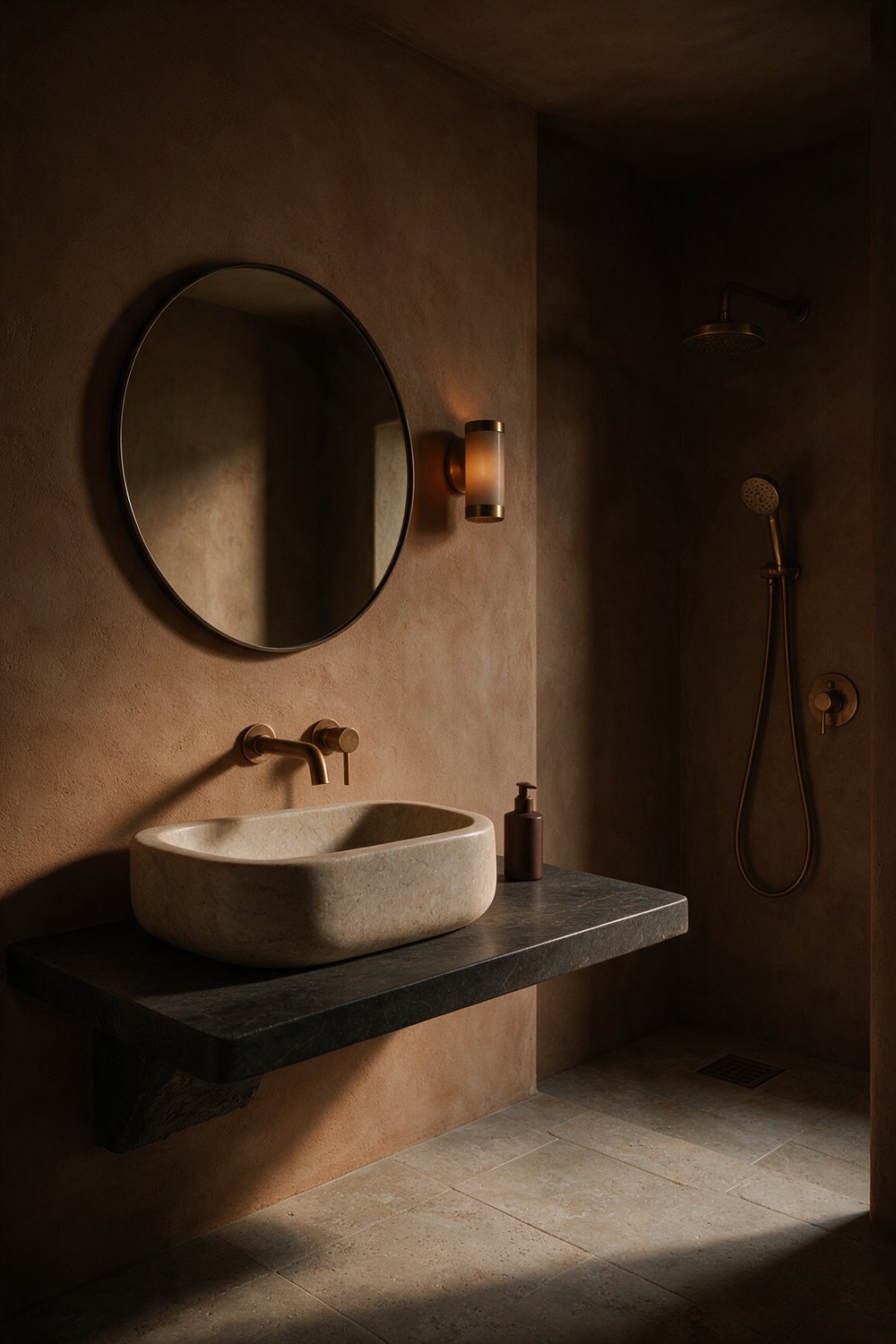
Moody is not the same as dark, and this is the distinction people miss. Dark is about colour. Moody is about light, the low, warm, enveloping kind that makes a space feel like dusk at noon.
The palette here is warm clay-brown and bronze, something like Little Greene Chocolate Colour on limewashed walls so the finish catches shadow. One wall sconce, dimmed, does the heavy lifting.
Pair it with honed travertine underfoot and a chunky stone basin you want to touch. The trick is restraint on the lighting. One warm source beats four bright ones every single time, and the shadows do the rest of the decorating for you.
3. Green Japandi Bathroom
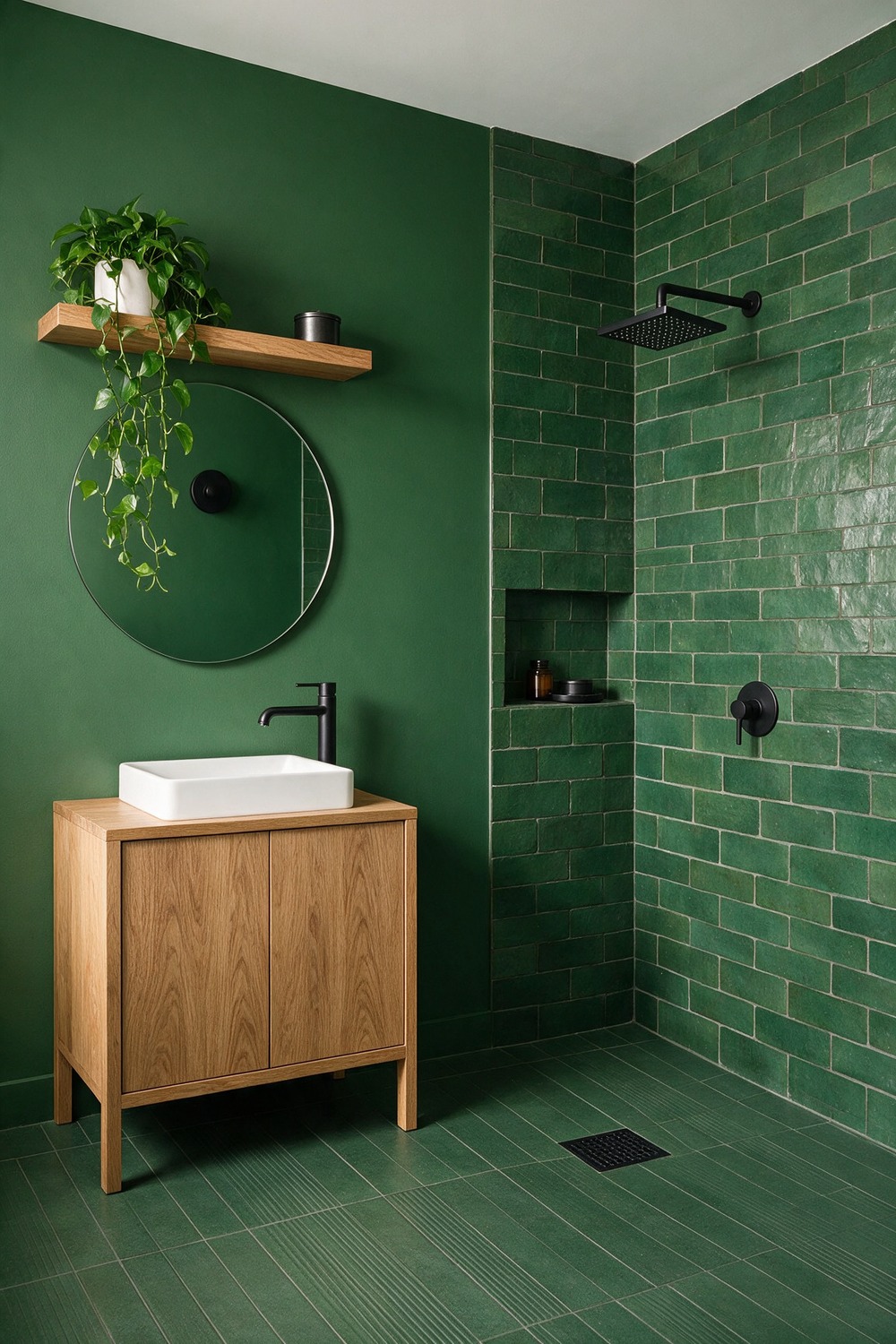
Green is the colour japandi was waiting for. Not mint, not emerald, but a grounded forest green like Benjamin Moore Backwoods. Carry it across the walls and a run of 2×6 green zellige in the shower. Warm oak vanity, matte black tap, one trailing pothos. One brave colour, done.
4. Grey Japandi Bathroom
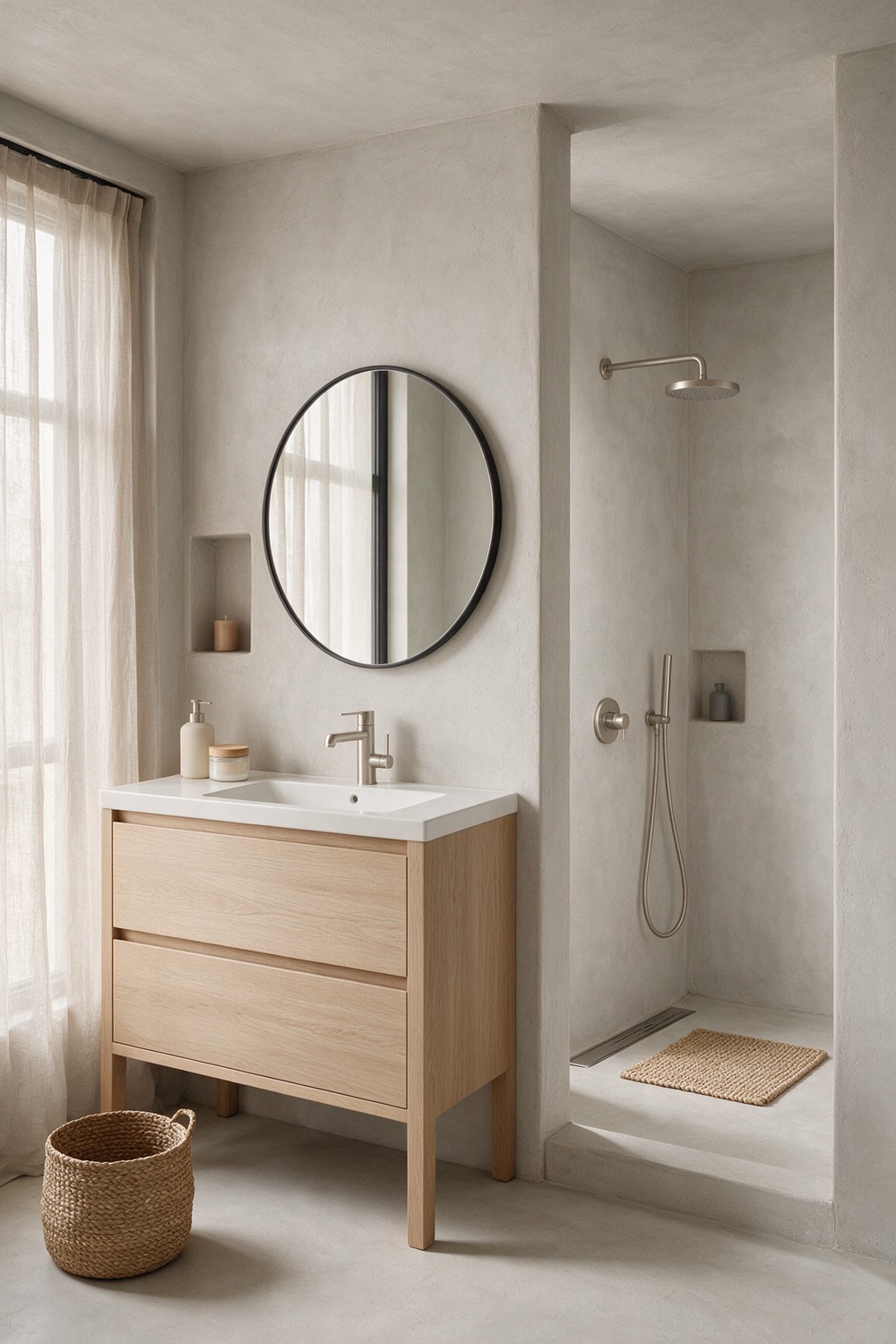
Grey gets called boring, and I understand why, but japandi grey is a different animal. It is soft, warm-leaning, and quietly expensive. Dulux Chic Shadow is a good anchor.
The secret is texture, because grey needs something to catch the light or it goes dead. Wrap the room in pale grey microcement, seamless and slightly uneven, and ground it with a pale oak vanity. Keep hardware brushed nickel, and add one woven basket for warmth.
5. Luxury Japandi Bathroom
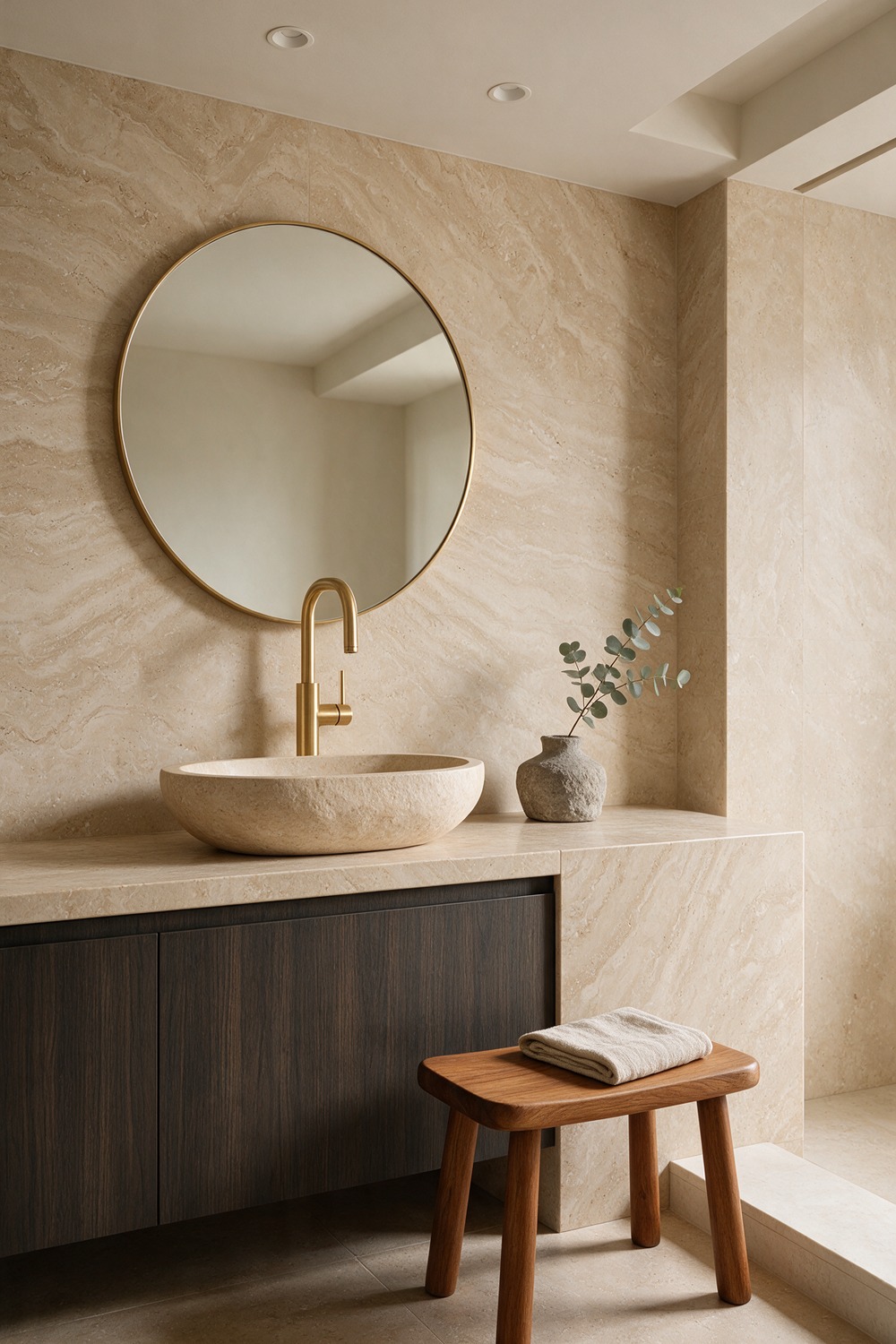
Luxury in japandi is never loud. It whispers through materials, and the splurge is always the stone.
Picture a single slab of honed travertine running up the wall and across the vanity, book-matched so the veining mirrors itself. The palette stays warm and neutral, stone-beige and brushed brass, with a carved stone basin as the hero.
A low teak stool, one eucalyptus stem, nothing else competing. Pro tip: spend the whole budget on one gorgeous stone surface and keep everything around it deliberately plain. That quiet contrast, not a pile of fittings, is what actually reads as money.
Warm the stone with soft overhead light and a thick linen towel within reach. Then the room stops feeling like a bathroom and starts feeling like a very good hotel you never want to check out of.
6. Spa Japandi Bathroom
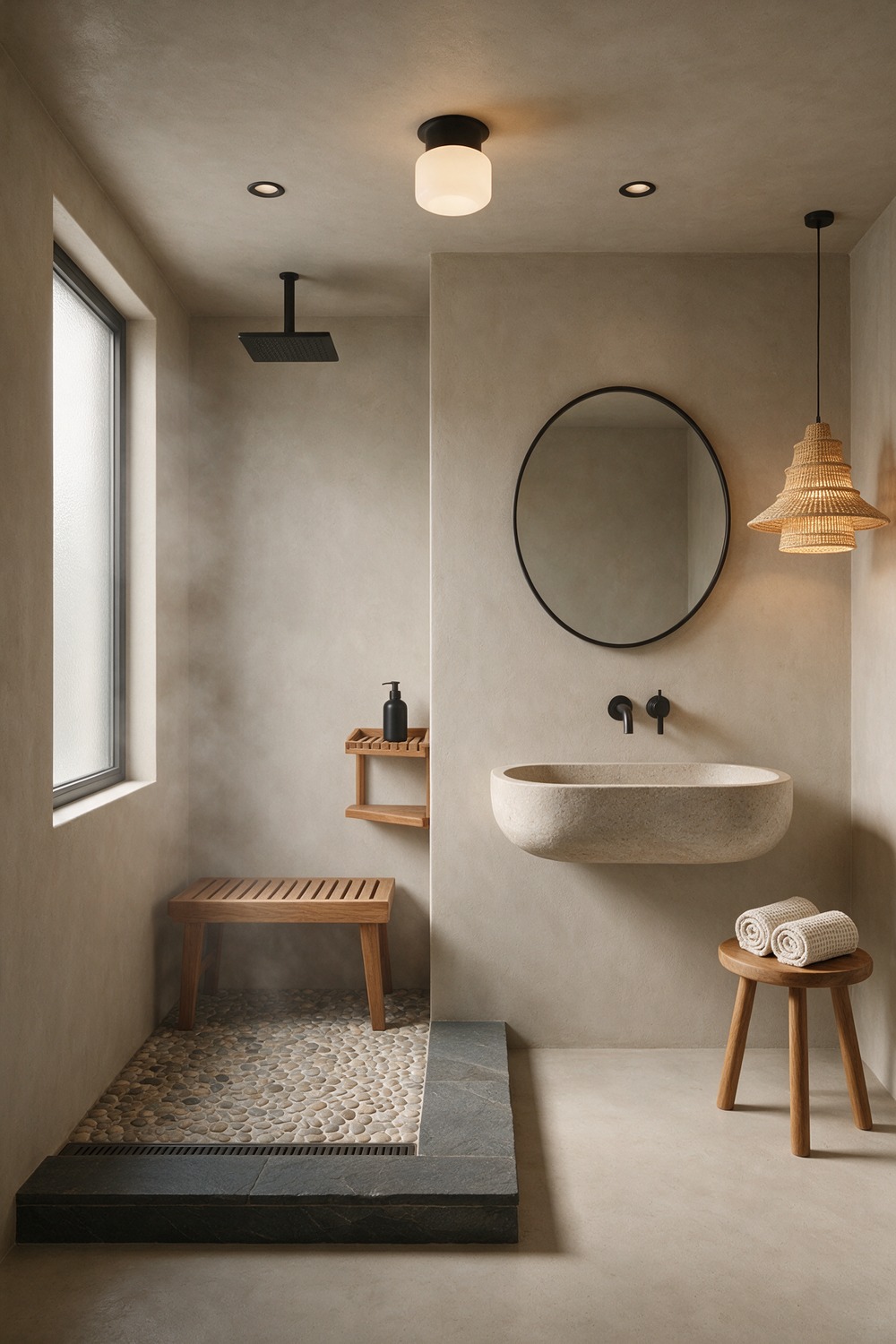
You know the drop in your shoulders when you step into a good spa? That is the entire brief for this one.
The palette is pale and misty, warm greige and natural teak. The anchors are a slatted teak bench, a pebble-mosaic shower floor that massages your feet, and a wide ceiling rain head overhead.
Add a low timber stool and a stack of waffle-weave towels. To get the look, start with the pebble floor, because it does more for the spa feeling than any single fixture.
Keep the air warm and a little humid, let one candle burn, and build the calm neutrals up from the floor. A spa is a mood before it is a material, so chase the feeling first.
7. Modern Japandi Bathroom
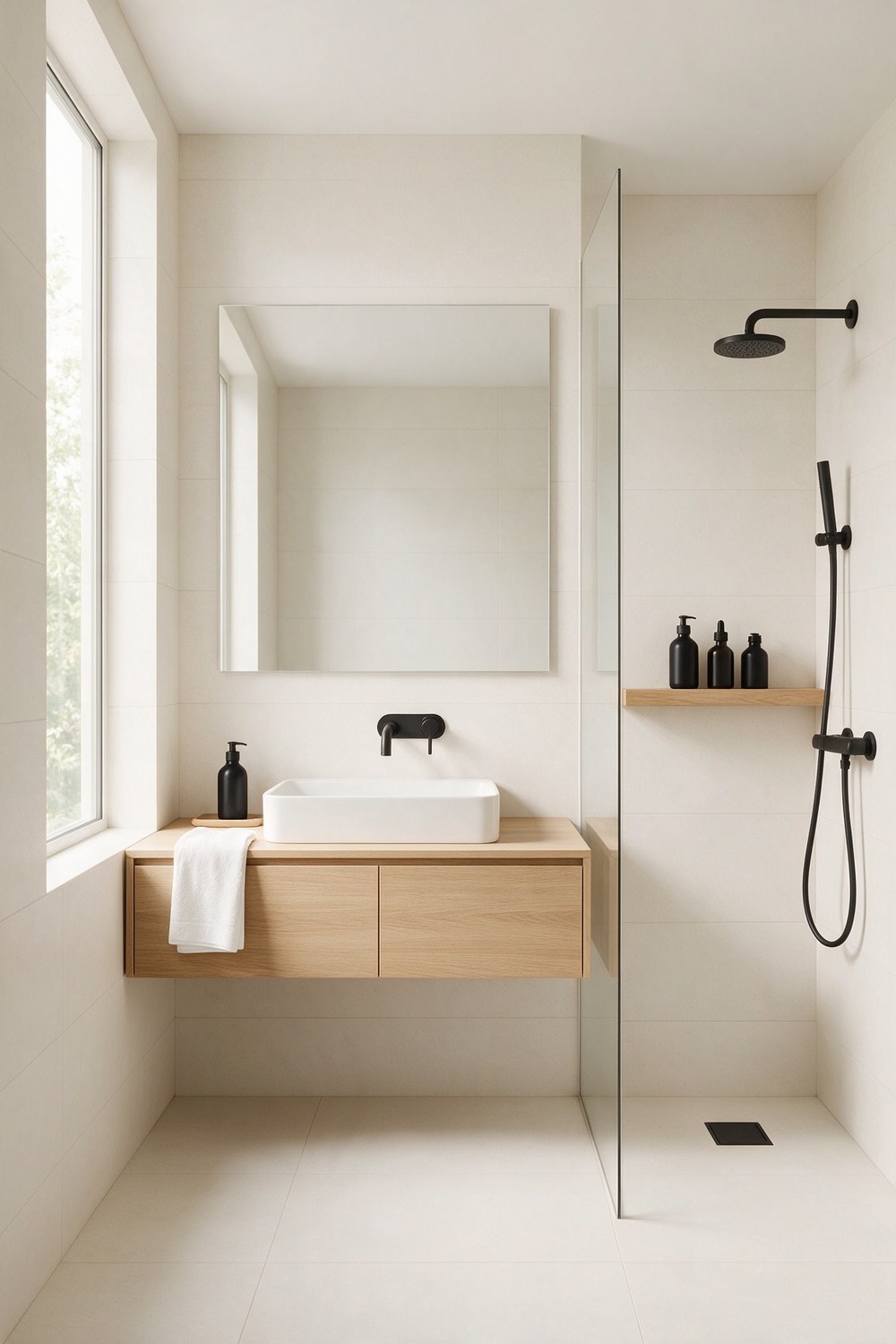
Modern japandi is where the Scandinavian side takes the wheel: crisp lines, nothing fussy, but still warm enough to live in. One clean gesture beats any busy pattern here.
Think large-format warm-white porcelain on the walls, a handleless floating vanity in pale oak, and matte black tapware for the graphic edge. Walls in a soft off-white like Sherwin-Williams Alabaster.
Keep the lines long and horizontal, a wide mirror and a single shelf, and let the oak grain be the only decoration in the room.
8. Scandinavian Japandi Bathroom
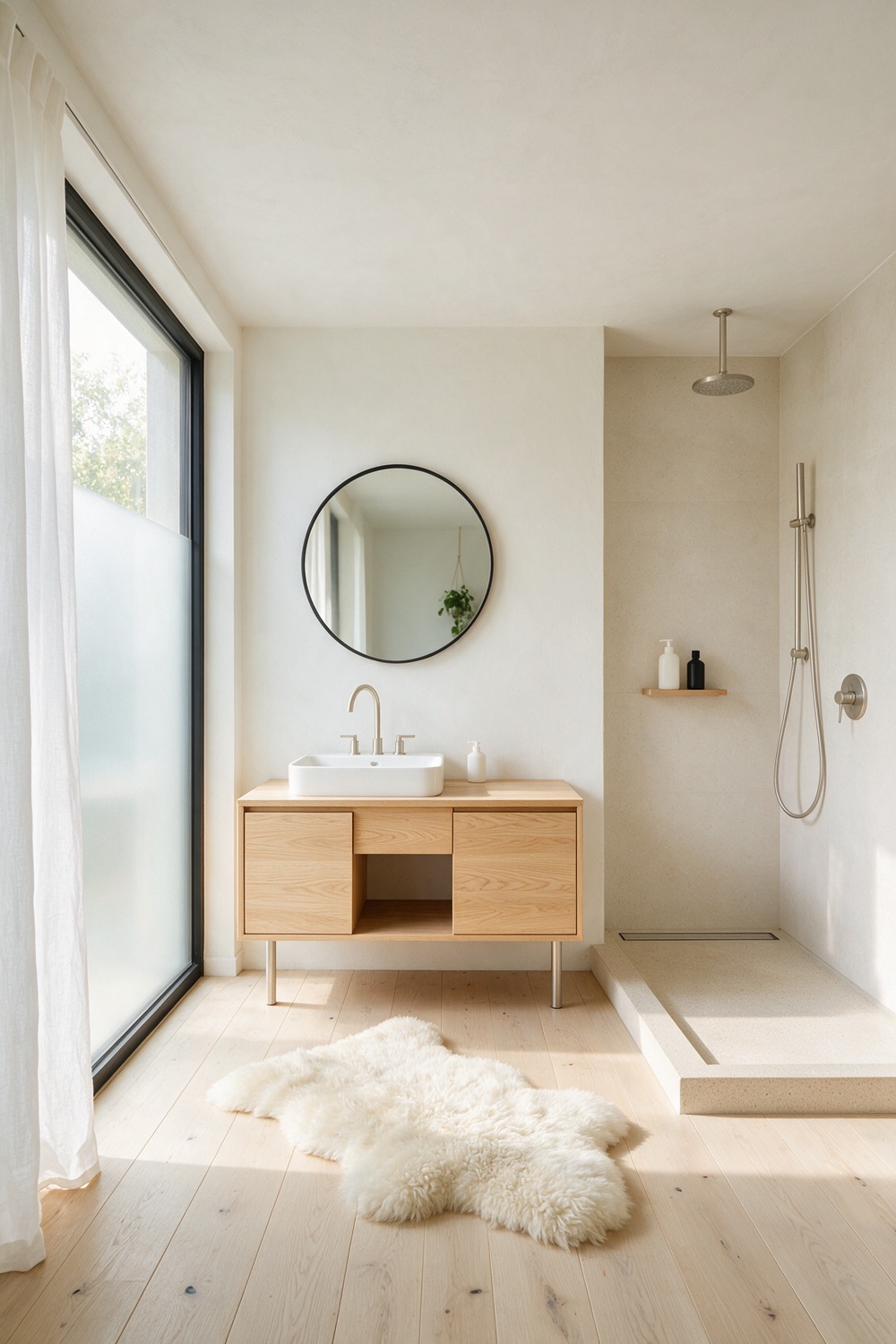
If the dark looks feel like too much, this is your lane. Lean the whole room toward the Scandi half, which means light, air, and the palest woods you can find.
Soft white walls, blonde ash or birch cabinetry, and plenty of daylight from a frosted window. Benjamin Moore White Dove keeps the white warm rather than clinical. Add one black-framed detail for contrast and a sheepskin underfoot, calm and never cold.
9. Wabi Sabi Japandi Bathroom
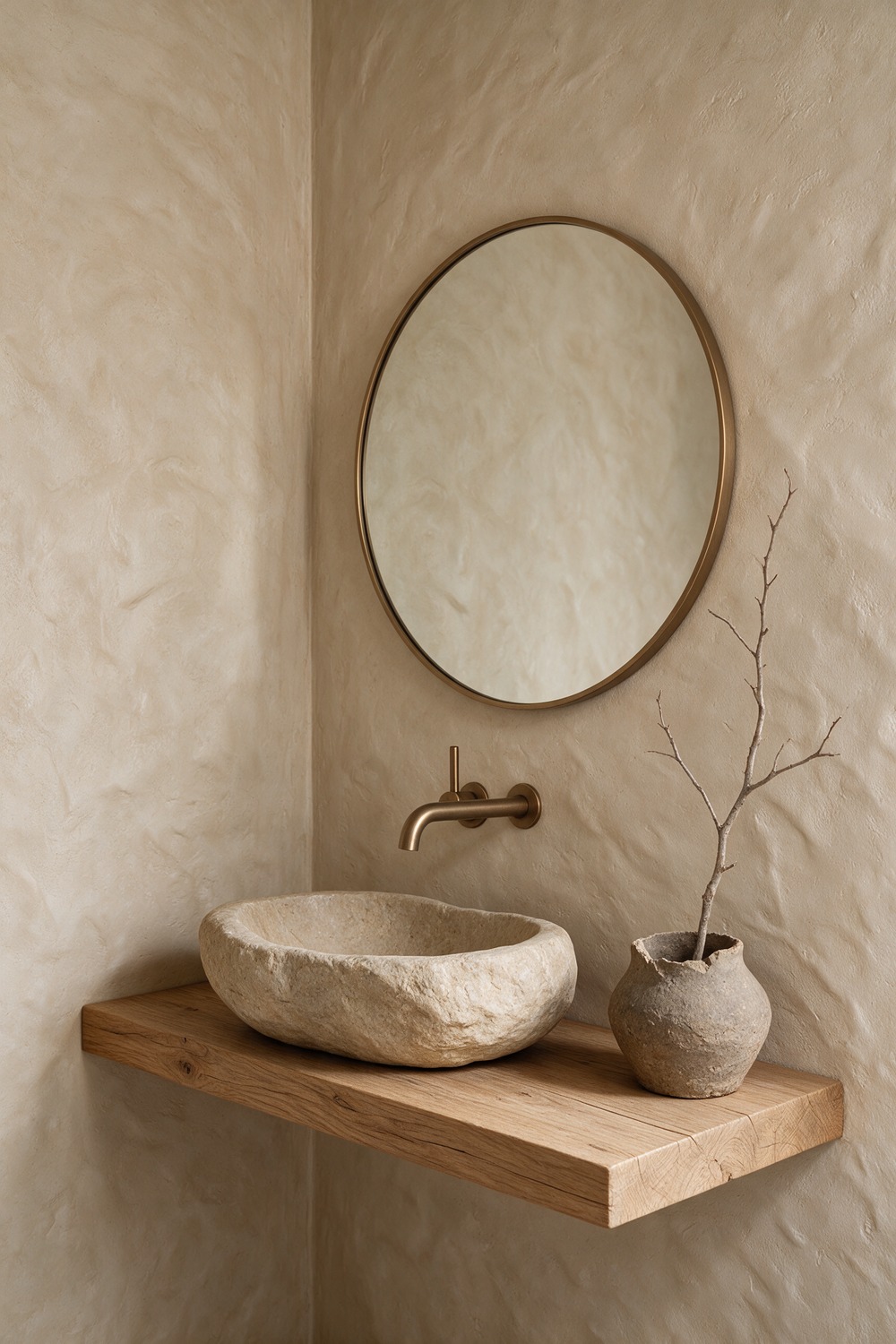
Wabi-sabi is the Japanese love of the imperfect, the handmade, the beautifully worn. It is the soul of this whole style, the room that forgives a little unevenness and is better for it.
Finish the walls in tadelakt, the waterproof Moroccan lime plaster that ripples like silk and ages gracefully. Keep the palette earthy oatmeal and raw clay, nothing sharp or glossy anywhere.
A rough-hewn wood shelf, a chipped stoneware vessel holding a single branch, a stone basin with soft worn edges. Each piece looks like it has a history, even if you bought it last week.
Nothing matches perfectly, and that is the entire point. Start with the plaster and one handmade object you genuinely love, then let the room grow slowly around them.
10. Minimalist Japandi Bathroom
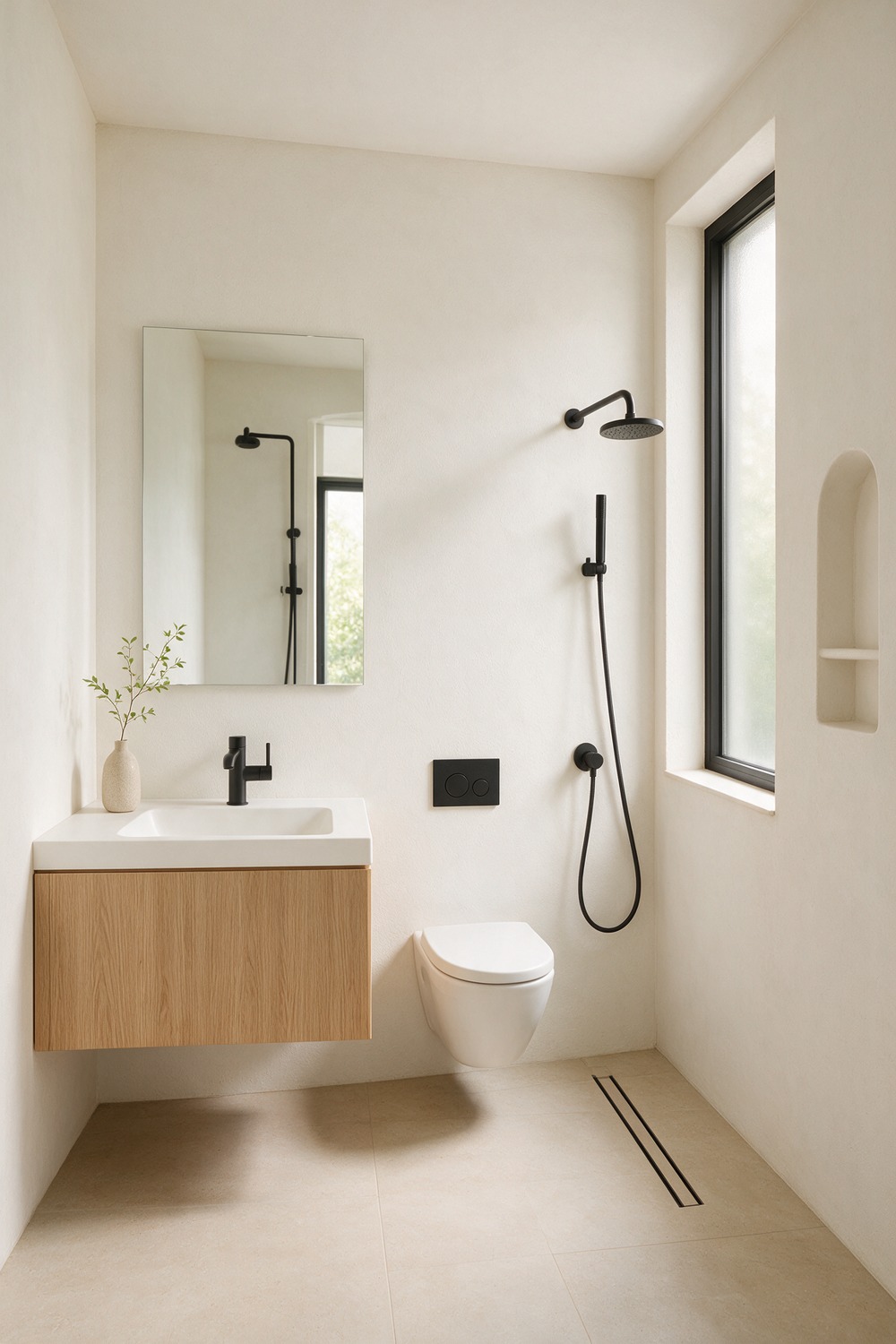
Minimalism done wrong feels empty. Done right it feels calm, and the difference is entirely in the hiding.
Conceal everything. A handleless vanity, a wall-hung toilet with a hidden cistern, storage sunk into a recessed niche. The palette is warm white and one pale wood, nothing more. Walls in Dulux Natural Calico, a frameless mirror, a single stem in a slim vase.
Start by clearing every surface, then add back only what earns its place. That editing is the real design.
11. Beige Japandi Bathroom
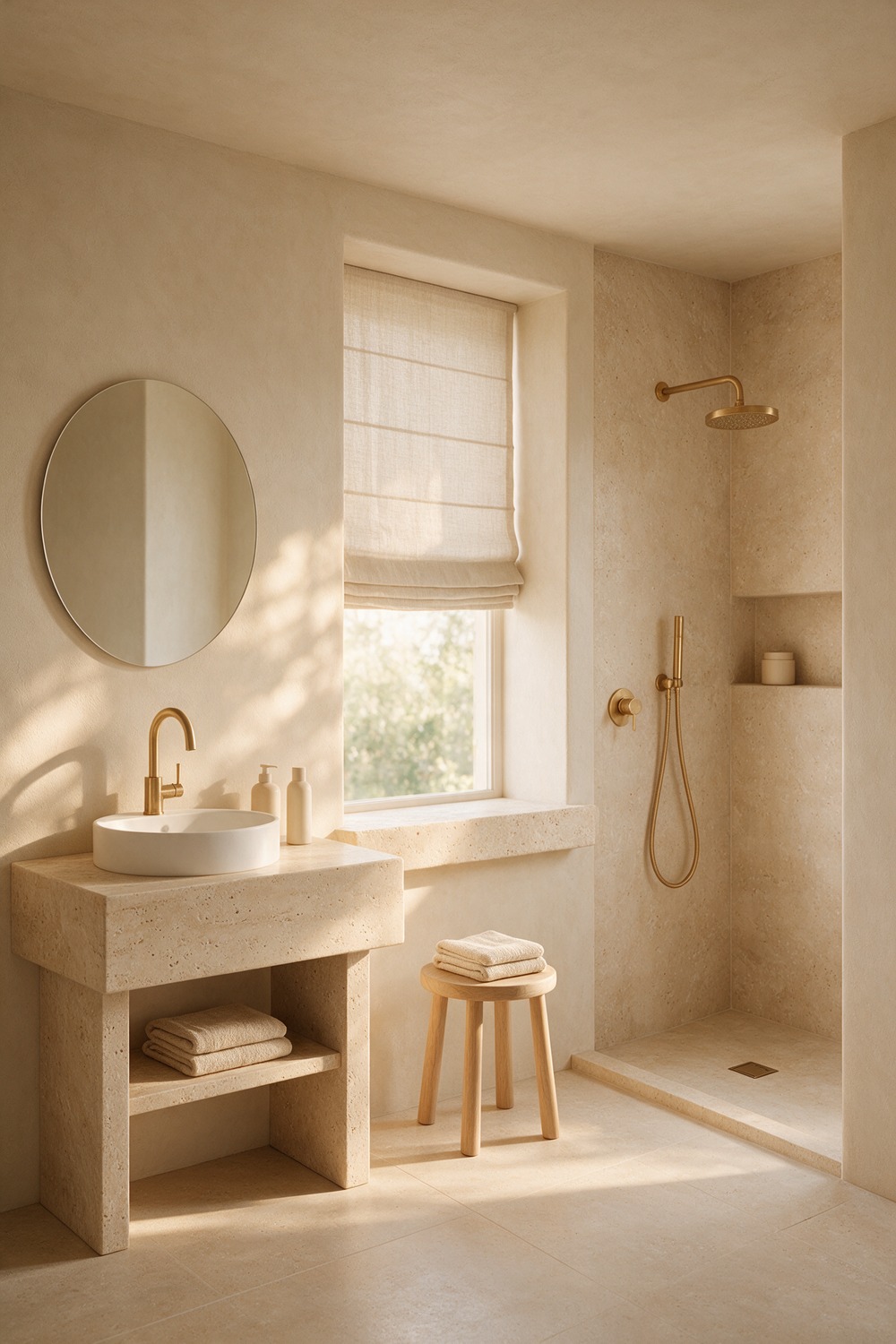
Beige has been quietly having its moment, and japandi is why. Done in the right warm tone it is the Goldilocks of neutrals, never too cold, never too yellow.
Reach for a soft sandy beige like Behr Wheat Bread and layer it with oatmeal limewash and travertine. The whole room stays in one warm family, which is what makes it so restful. A linen roman blind, a pale oak stool, a bar of unwrapped soap that smells of cedar.
12. Warm Wood Japandi Bathroom
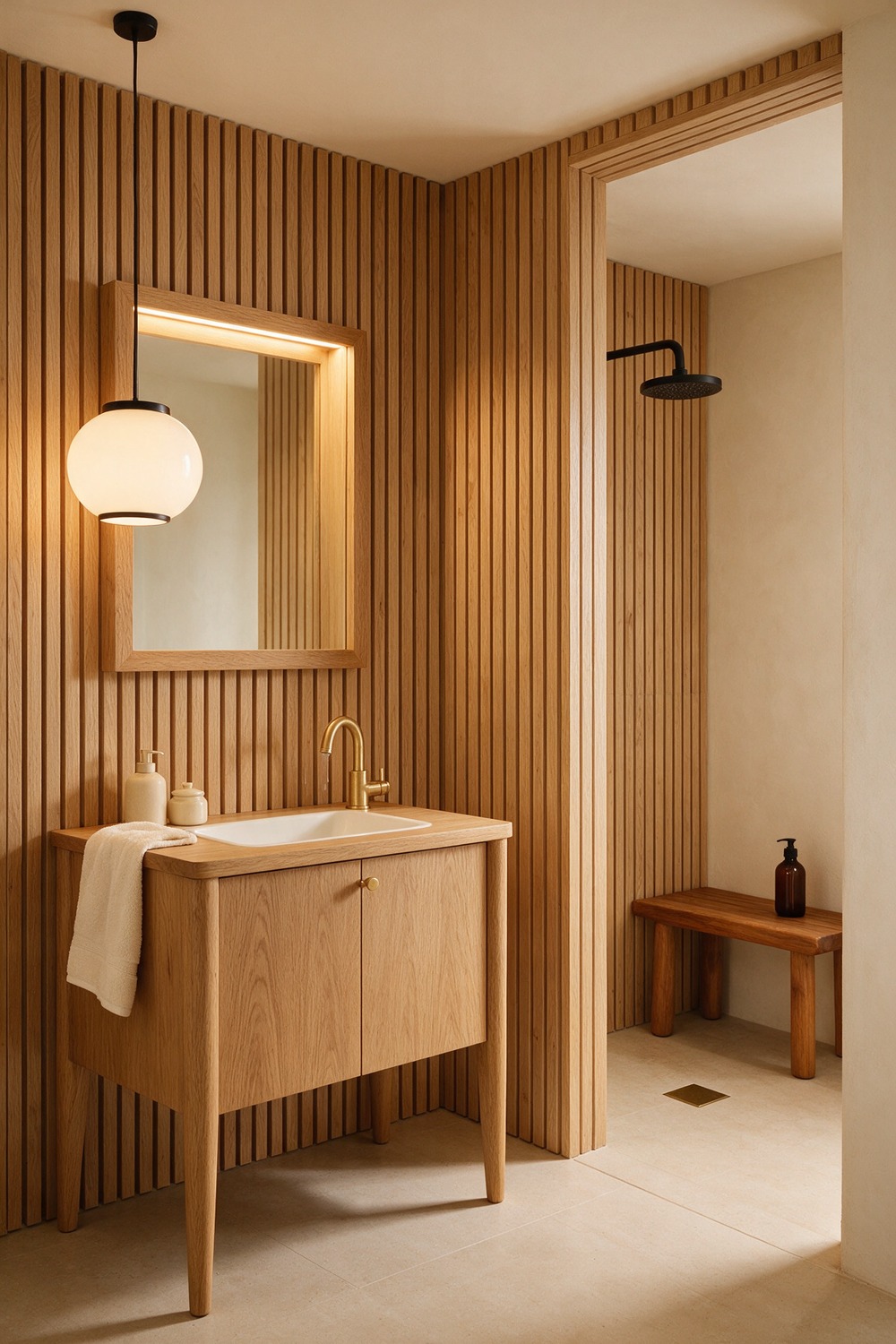
Wood is the beating heart of japandi, so this look leans all the way in. The one piece worth splurging on? A full slatted wood feature wall. It changes the entire room.
Run white oak battens floor to ceiling behind the vanity, with matching oak around the mirror and a teak bench in the shower. Keep the palette honey and cream so the wood glows, and everything smells faintly of warm timber.
Seal the wood properly for a wet room, then let its grain be the loudest thing in the space.
13. White Japandi Bathroom
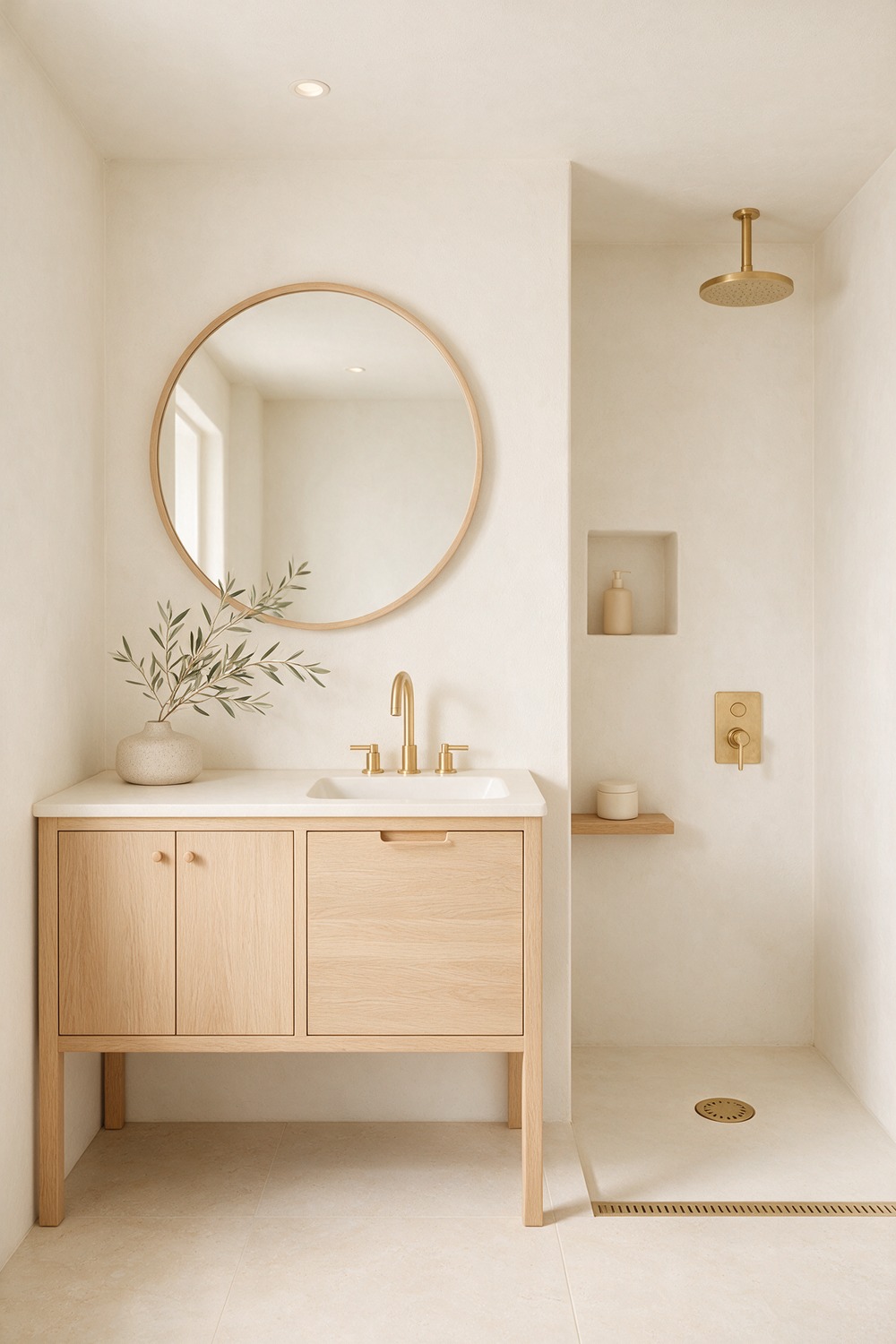
A white japandi bathroom sounds obvious, until you realise most white bathrooms come out cold. The fix is all in the undertone.
Choose a creamy white like Benjamin Moore White Dove, finished in plaster so it glows instead of glares. Add pale oak and brushed brass, never cool chrome, and the room softens.
14. Black Japandi Bathroom
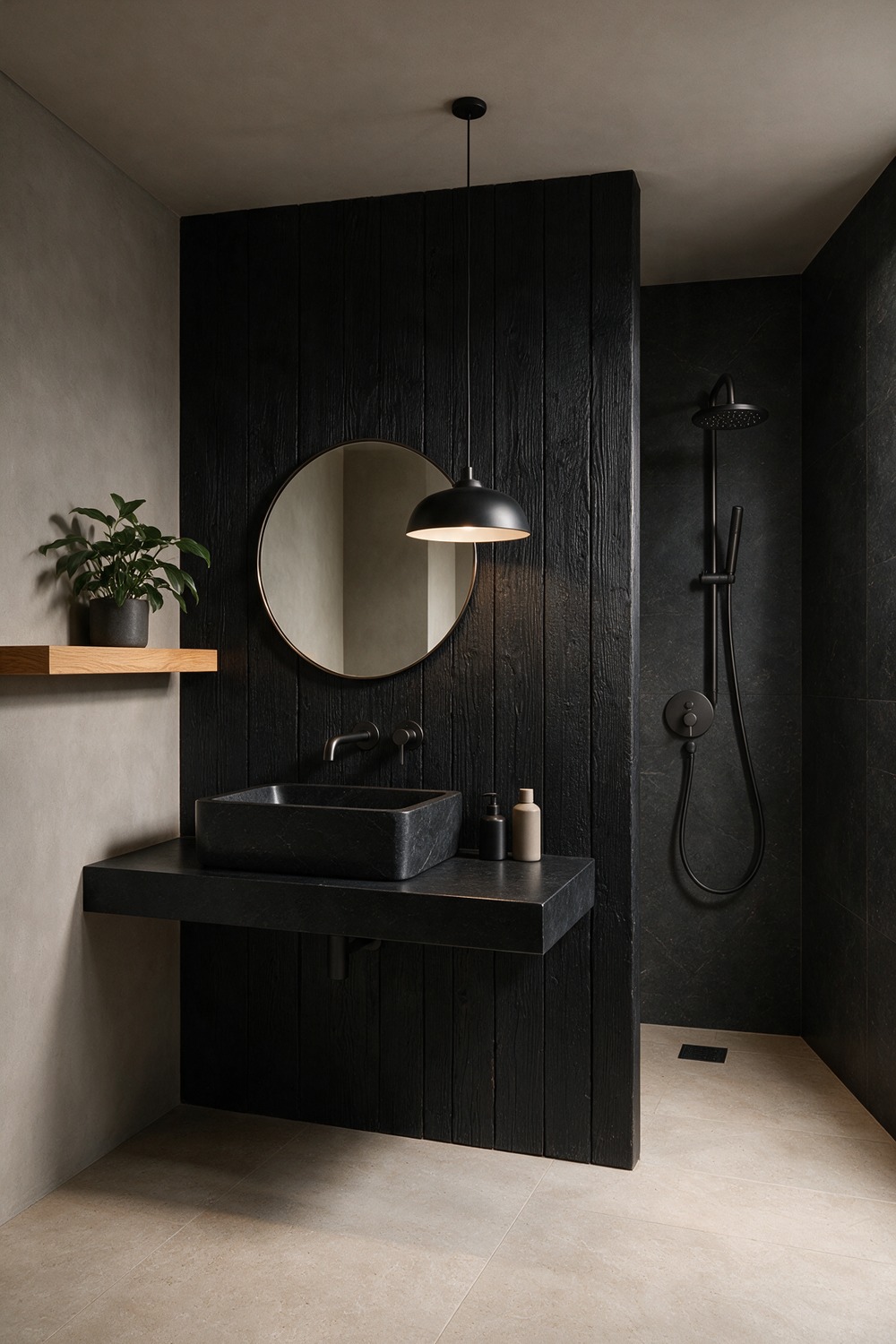
Black japandi is the boldest room on this list, and also, somehow, the most serene. The secret is leaning on charred wood rather than flat black paint.
Shou sugi ban is the Japanese art of charring cedar until it turns deep graphite and silky to the touch. Use it on a feature wall and echo it with matte black tapware and a black stone basin.
Keep the floor pale so the room still breathes, and warm the whole thing with one honey-oak shelf. It reads dramatic, but it genuinely calms you down the longer you stand in it.
15. Sage Green Japandi Bathroom
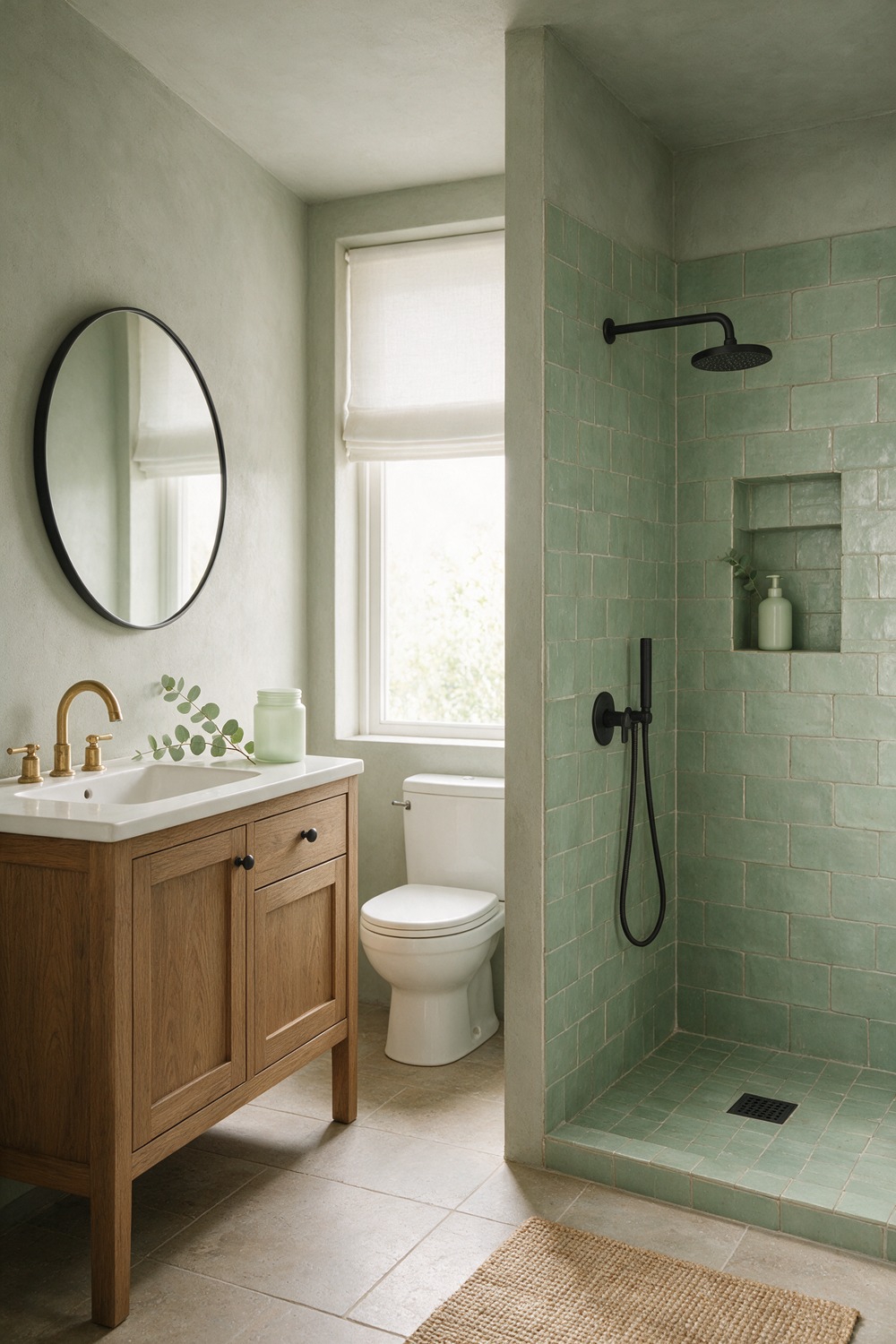
Sage is the softer cousin of that forest green, dustier and more muted, and maybe the most liveable colour here. A gentle grey-green like Sherwin-Williams Evergreen Fog on the walls, with 2×6 sage zellige in the shower for a handmade shimmer. Warm oak, unlacquered brass that patinas, a eucalyptus stem.
16. Terracotta Japandi Bathroom
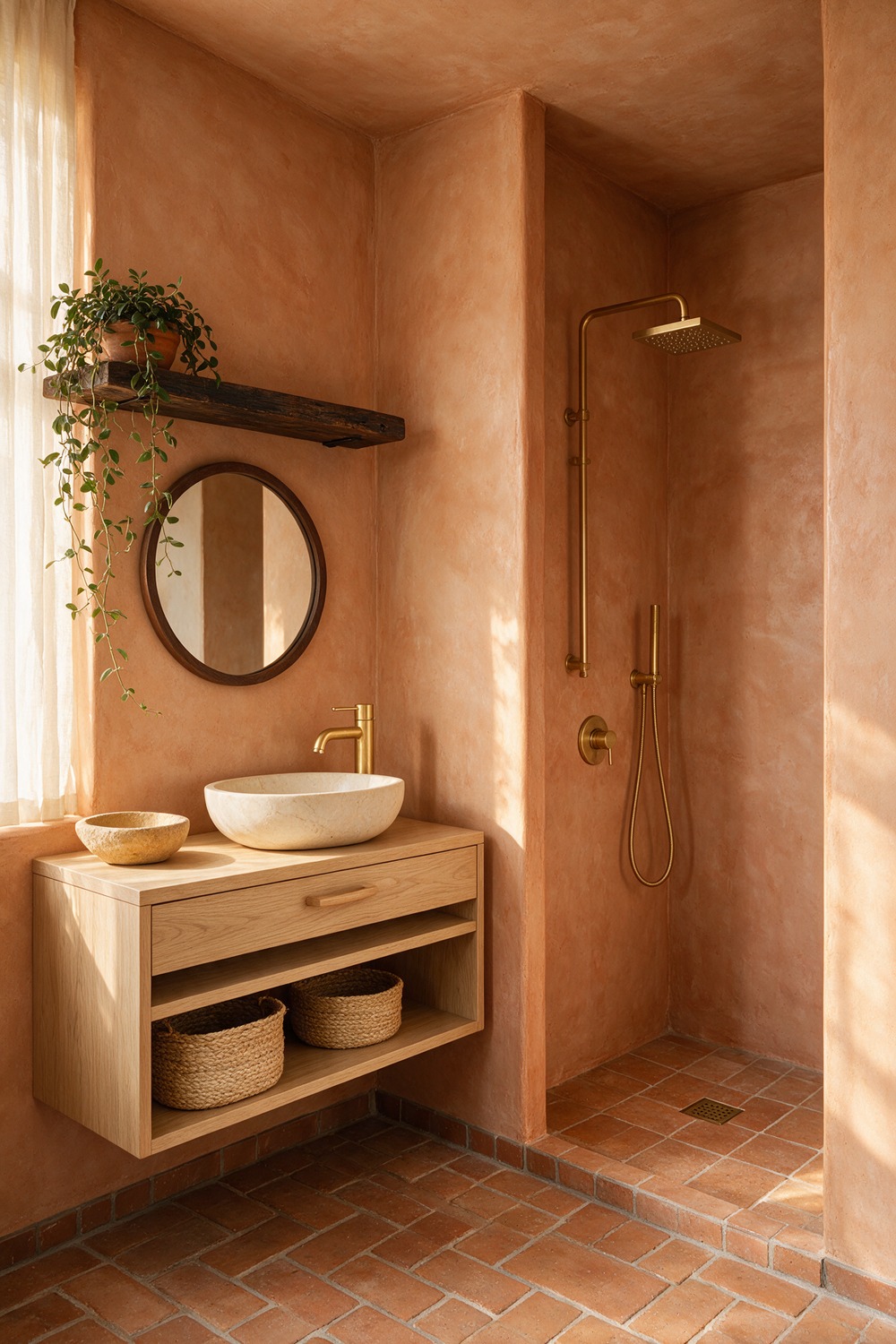
Terracotta brings sunbaked warmth to the japandi calm, and it is wildly underused in bathrooms. Have you ever seen a clay-toned room and instantly felt warmer? That is the whole trick.
Finish the walls in a clay-toned tadelakt or a limewash like Bauwerk in a burnt terracotta, and ground it with unglazed clay floor tile. Pair with pale oak and cream linen so the orange reads earthy, not loud. One trailing plant, one stone bowl. Warm, raw, Tuscan.
17. Charcoal Japandi Bathroom
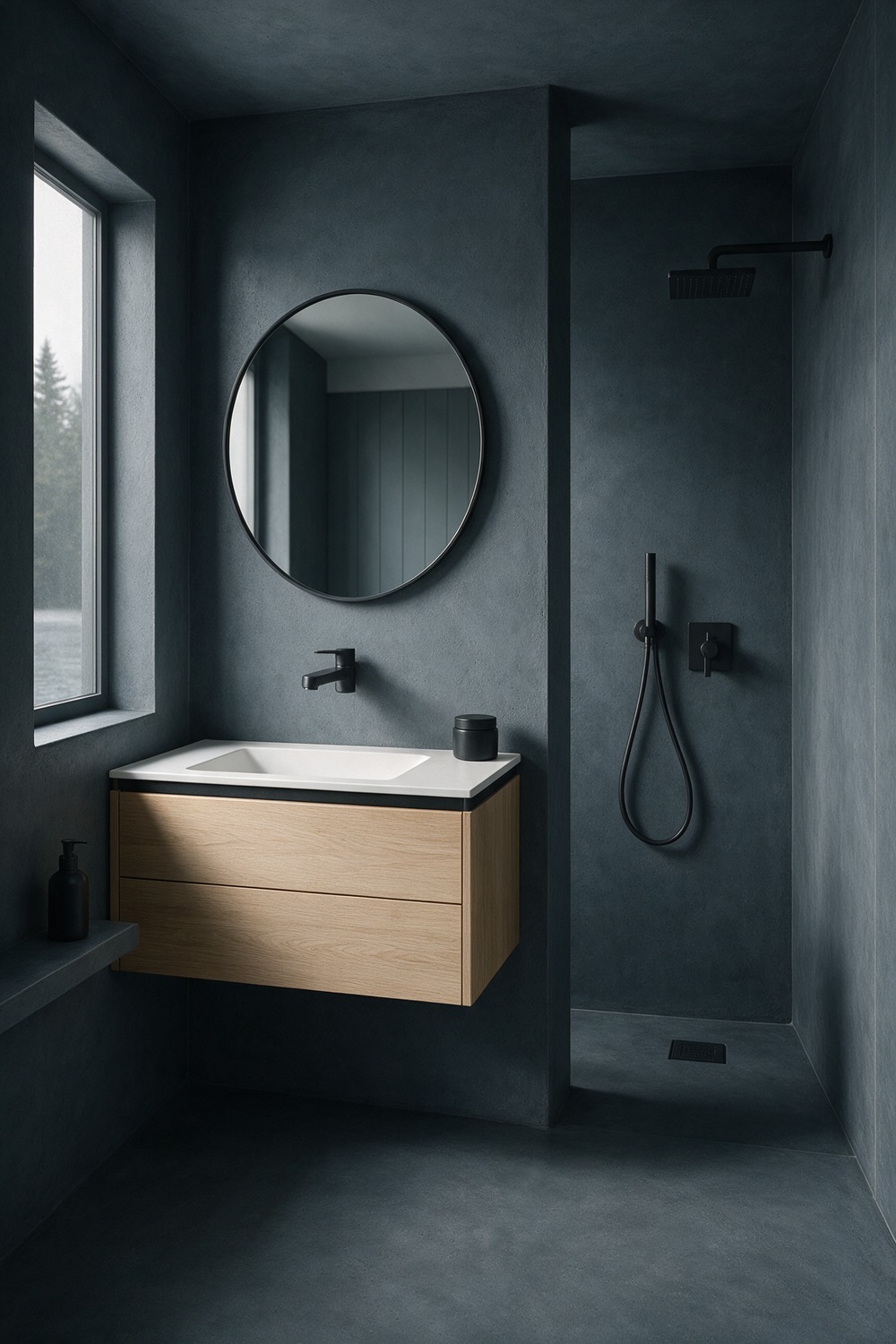
Charcoal is the cooler, more graphic sibling of the warm dark look at number one. Where that room leans brown, this one leans slate, sharper and a touch more architectural.
Wrap the walls in deep slate microcement, close to Little Greene Lamp Black softened with grey, then pair it with pale oak and matte black fittings. One white basin for relief.
18. Earthy Japandi Bathroom
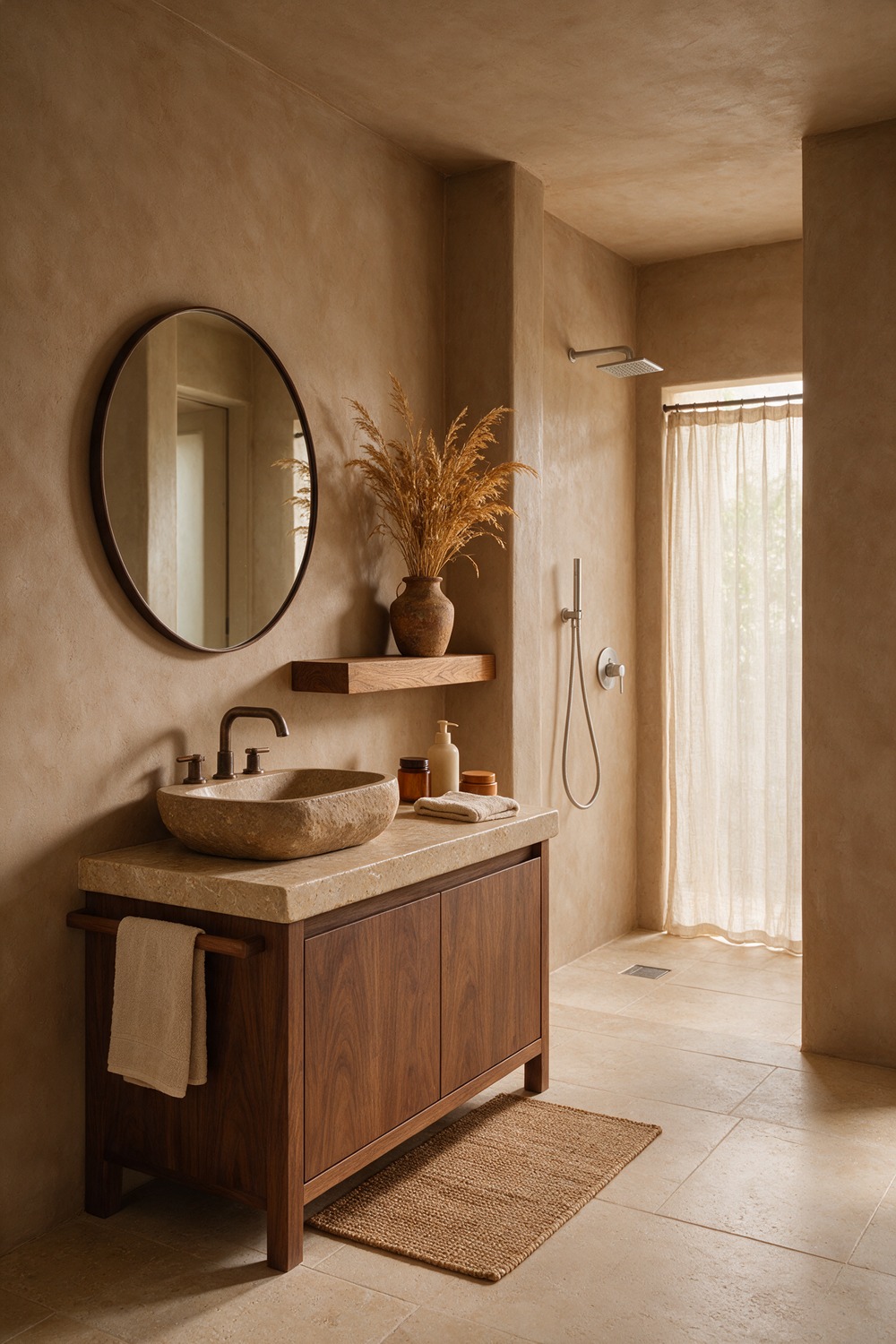
Earthy is less a colour than a feeling, the sense that every material came from the ground. This is the look to reach for when you cannot pick just one neutral.
Layer them. Clay-plaster walls, a warm walnut vanity with a stone top, a jute mat, a carved stone basin. The palette moves through sand, clay, taupe and soft brown, all natural and all tactile. Keep a bundle of dried grasses on the shelf, and let nothing look too new.
19. Natural Stone Japandi Bathroom
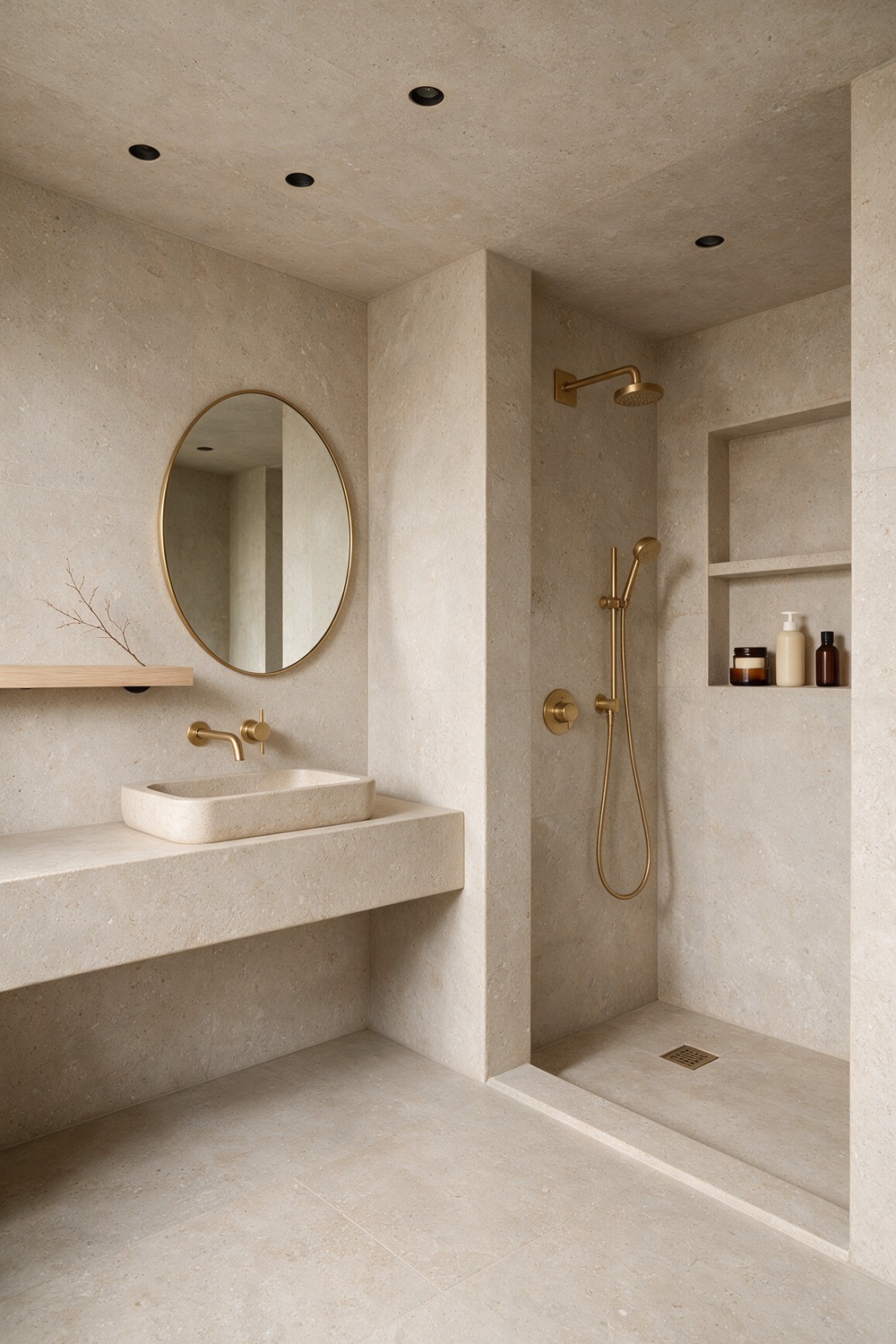
When stone is the hero, you barely need anything else. This is the look that proves a single great material can carry a whole room on its own.
Run honed limestone or travertine across the floor, the walls, and a carved stone basin, so the room feels quarried rather than built. Keep the palette within the stone itself, warm greys and soft beiges.
Add just a sliver of pale oak and one branch, and resist the urge to accessorise further. The stone is the show, and clutter only gets in its way.
Ask for a honed finish, not polished, so the stone stays matte and soft underfoot. That one choice is what keeps the whole room reading as japandi rather than hotel-lobby glossy.
20. Cream Japandi Bathroom
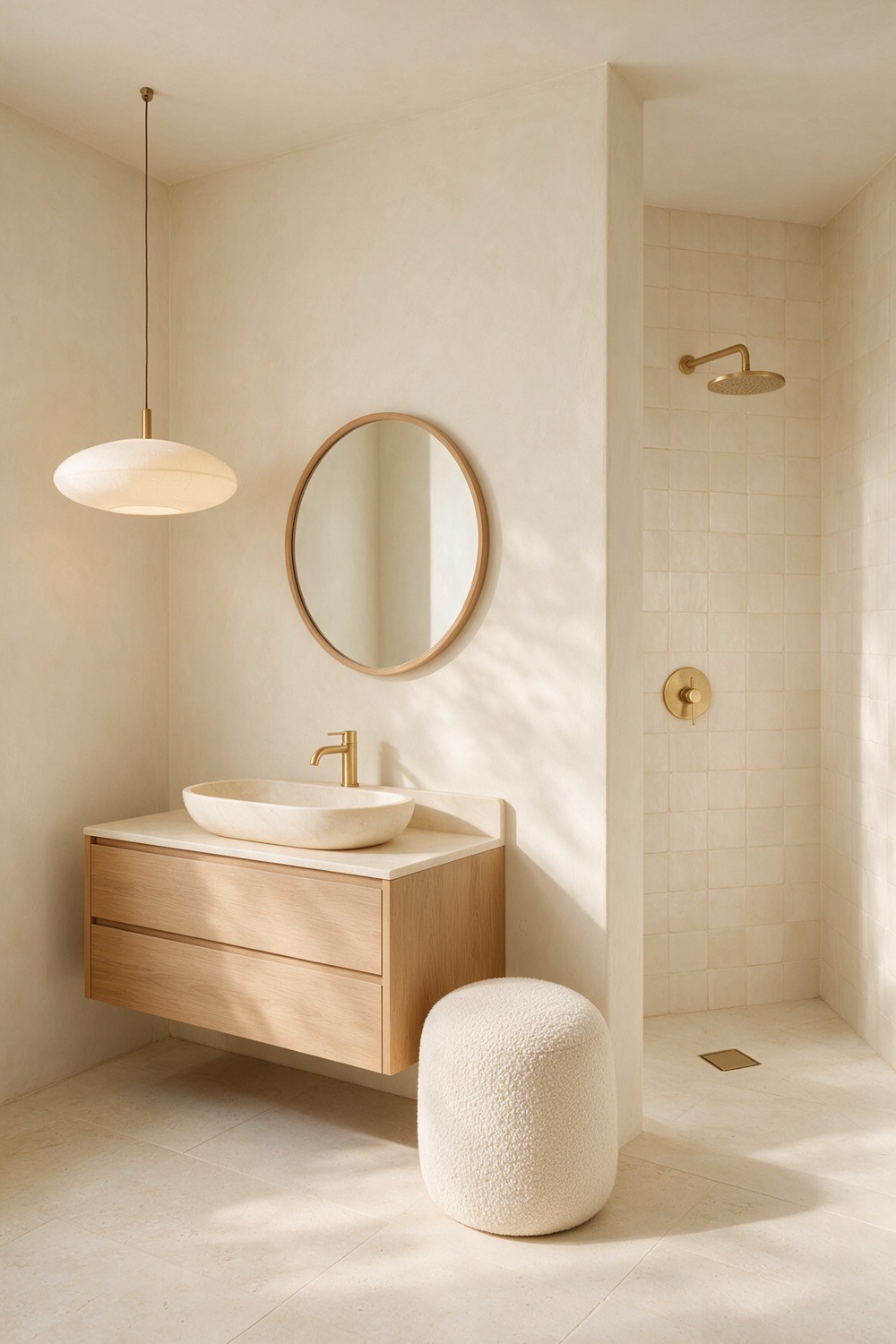
Cream is white that went and got cosy. It is my pick for anyone who loves a pale bathroom but finds true white a little severe.
Think buttery and warm, a shade like Farrow & Ball Pointing, carried onto creamy limewash walls and a run of cream zellige.
Pair it with warm oak and a soft boucle stool, that looped teddy-bear fabric, for texture. The light pools in a room like this, and the whole space feels like a held breath.
Which Japandi Bathroom Style Is Right for You
Start with the light you have. A room with little daylight loves the dark, moody or charcoal looks, which turn a dim space into a cocoon instead of fighting it. A bright room can carry the Scandinavian, white, or cream palettes beautifully.
Then go by feeling. Want a daily reset? The spa and minimalist looks are built for it. Crave warmth and soul? Wabi-sabi, earthy, and terracotta deliver it. Love colour but still want calm? Sage green is the gentlest way in.
If you are frozen by choice, I would start with warm wood. It is the one element every single look here shares, so you genuinely cannot go wrong leading with it.
Japandi Bathroom Questions, Answered
How much does a japandi bathroom actually cost? It flexes to any budget. At the low end, paint and a few accessories transform a room over a weekend. Mid-range means new tile, a wood vanity, and good tapware. The splurge lane is stone slab and tadelakt plaster.
What can I do myself, and what needs a pro? Painting, styling, and swapping a mirror or shelves are all comfortably DIY. Tadelakt, microcement, large-format tiling, and any plumbing changes are jobs for a specialist. The finishes are what make japandi, and they reward skilled hands.
How long does it take? A paint-and-style refresh is a weekend. A full retile and vanity swap runs a couple of weeks. A down-to-studs renovation with plaster and stone is more like four to six weeks, most of it drying and curing time.
Where should I spend the money? On one natural surface everyone touches or sees: the stone basin, the wood wall, or the tadelakt. One beautifully made thing lifts a plain room far more than five average upgrades.
What do I ask the tiler or plasterer for? For tile, ask for handmade zellige in a 2×6 and warn them the colour will vary, because that variation is the look. For walls, ask for tadelakt or microcement with a honed, matte finish, and request a sample panel first.
Whatever look pulls at you, start small. Pick one wall, one wood tone, one warm paint, and let the calm build from there. Your quietest room is waiting.
More stories
Share this story