16 Tiny Bathroom Colors to Make a Small Space Feel Bigger

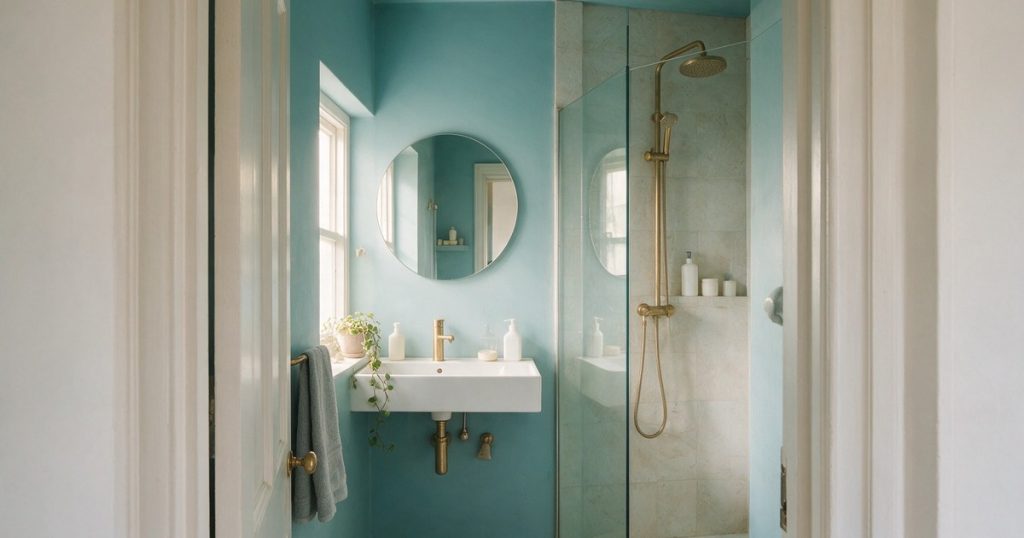
Here is the opinion that gets me in trouble at dinner parties. A tiny bathroom is the best room in the house to be brave with color.
Nobody lives in there for hours. You are not committing your whole personality to it. So the half-tester pot of something ridiculous that would terrify you across a living room is, in a windowless box the size of a phone booth, pure genius.
Small rooms give you permission. That is the quiet freedom of four square meters.
Below are sixteen color directions for a tiny bathroom. Each one comes with the paint, the tile and the one finish that makes it sing, plus where to start so you do not freeze at the paint counter.
1. Tiny White Bathroom
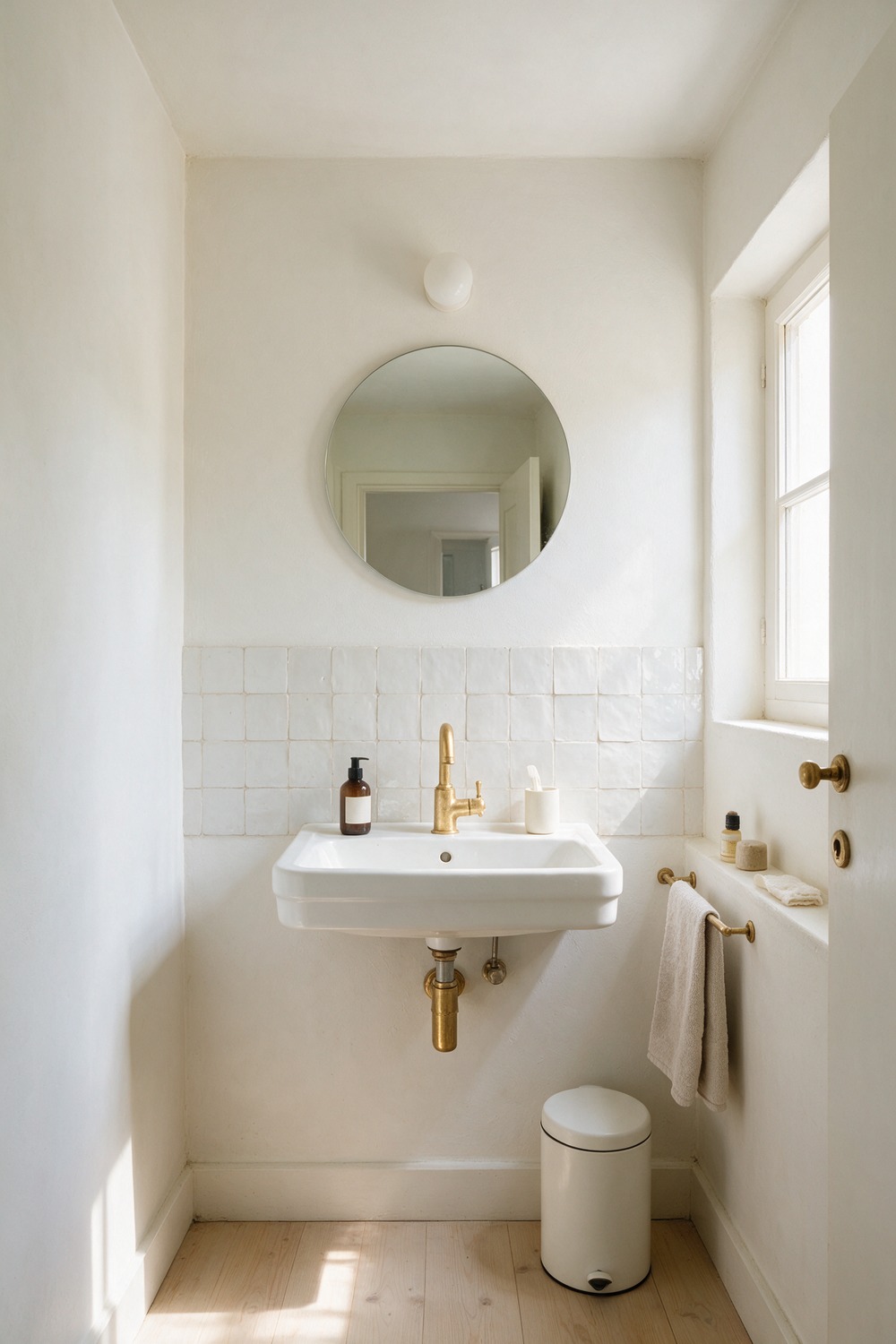
White gets called the safe choice, and I think that is lazy. A good white bathroom is not safe, it is disciplined. The trick in a tiny one is to pick a warm white and then never fight it with a cool one. One temperature, top to bottom.
Go with a soft chalky white on the walls, something like Farrow & Ball Wimborne White. Run small square zellige tiles behind the basin so the handmade wobble catches the light.
A wall-hung white basin, an unlacquered brass tap that will age to honey, a round mirror above it. Start with the tile. The paint just follows it.
2. Tiny Green Bathroom
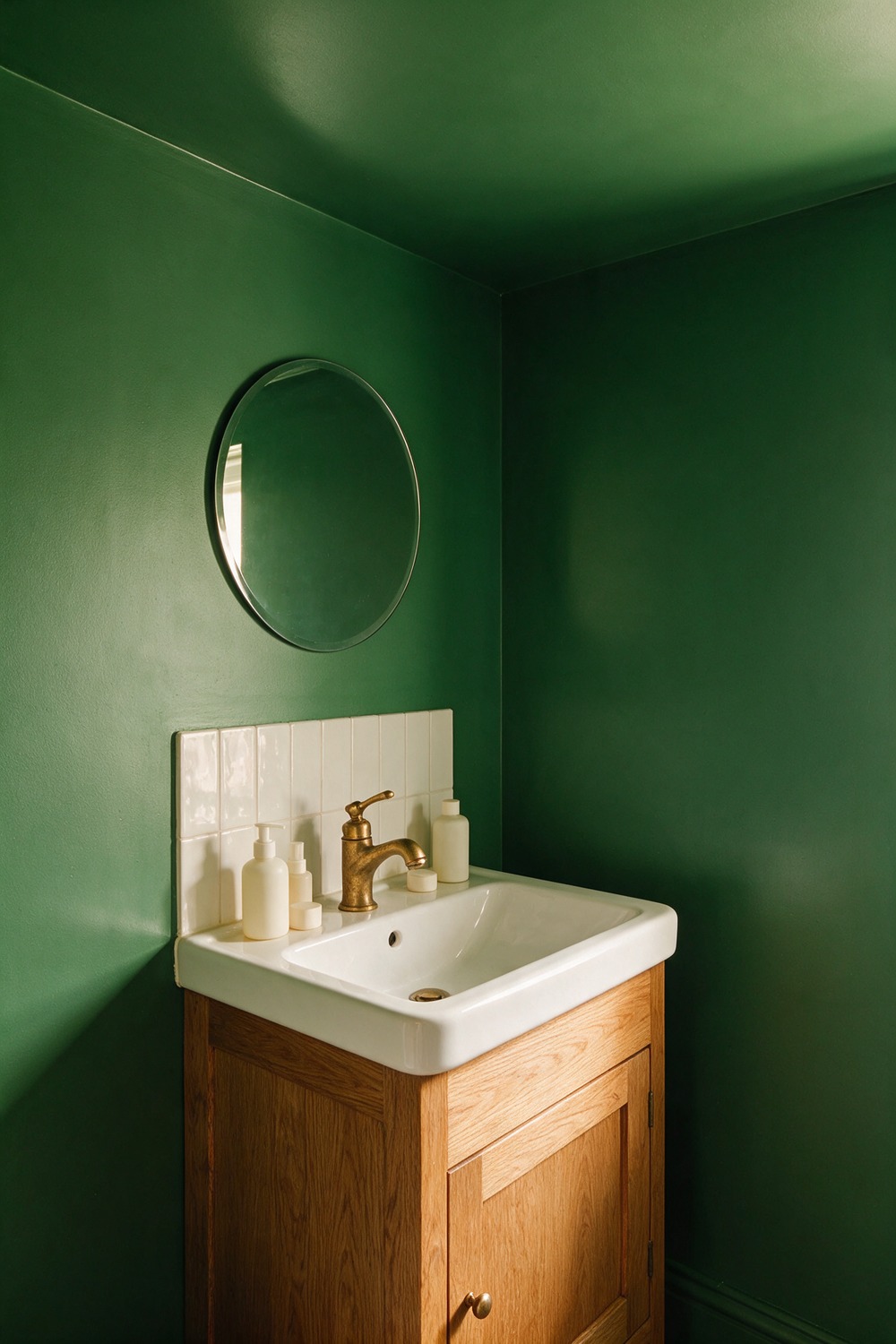
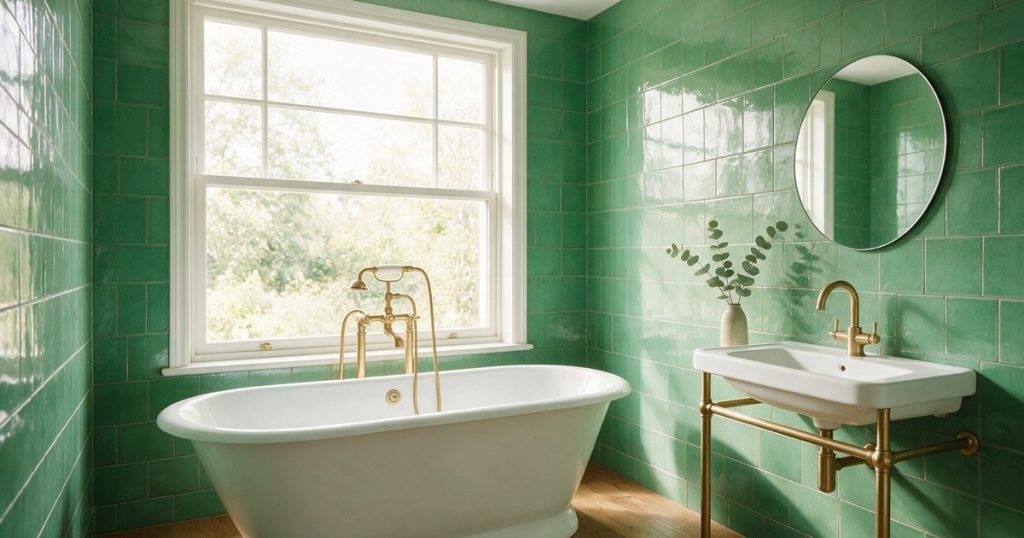
Green is having a moment, and most of that moment is too minty. I would push yours deeper, into a proper English mid-green that reads like a library, not a hospital corridor. Think Farrow & Ball Breakfast Room Green, matte, over walls and ceiling.
Pair it with warm oak and aged brass, never chrome. A white basin, a pharmacy mirror, and the brass is the splurge worth it here.
3. Tiny Dark Bathroom
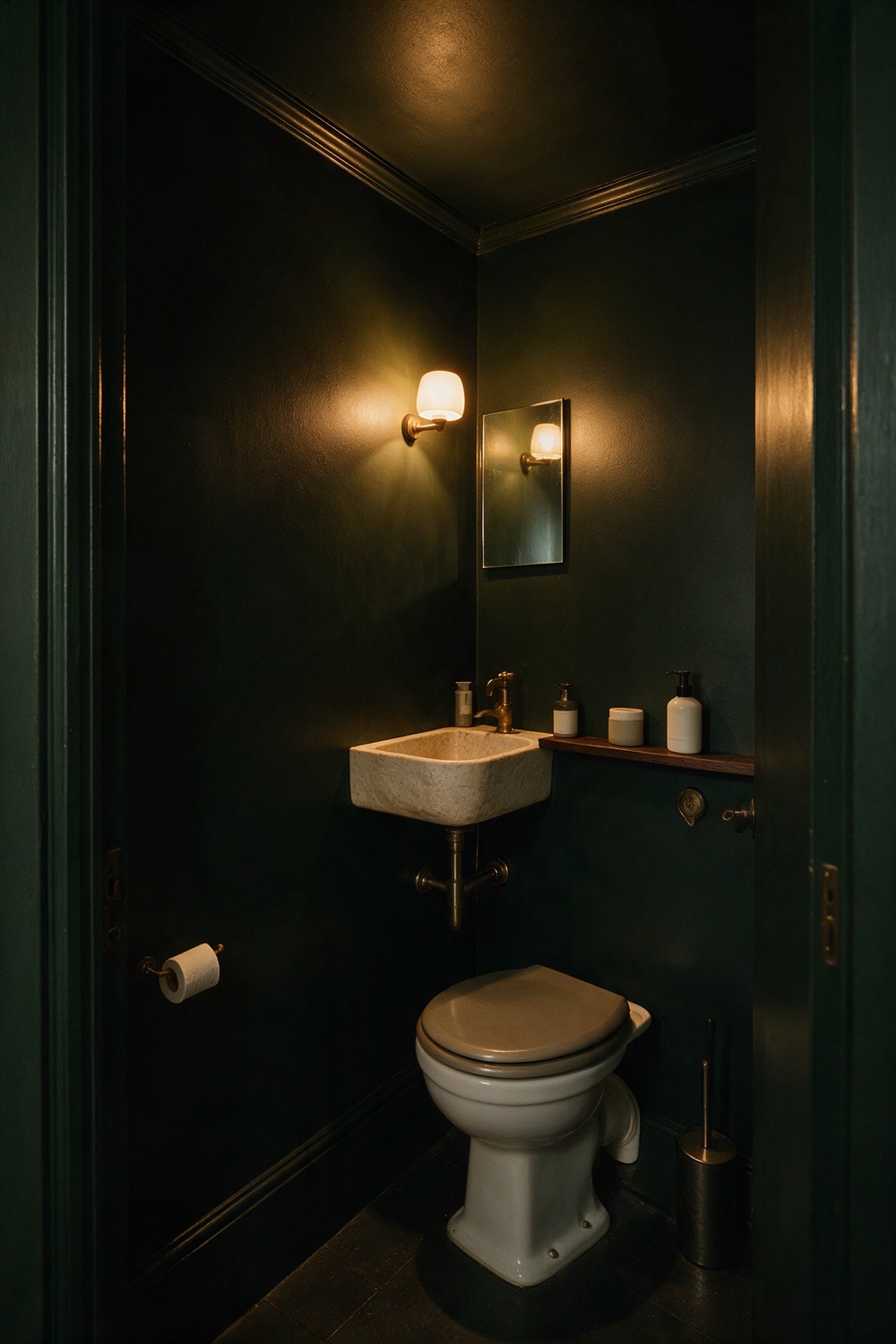
People whisper that dark walls shrink a room. In a tiny bathroom they do the opposite. When you cannot tell where the wall ends, the edges dissolve and the box feels mysterious instead of cramped. Lean in.
I love a near-black with a green undertone, think Farrow & Ball Studio Green, over every surface including the trim.
Low, warm light does the heavy lifting here. A 2700K bulb, a single sconce, no bright overhead flooding the whole thing flat. Keep the basin and a slim mirror pale so your face is actually lit when you lean in to it.
A small brass tap and a dark wood shelf add the one bit of warmth the scheme needs. Dark everywhere, bright only at the mirror. That is the whole recipe, and it photographs like a tiny hotel bar.
4. Tiny Black and White Bathroom
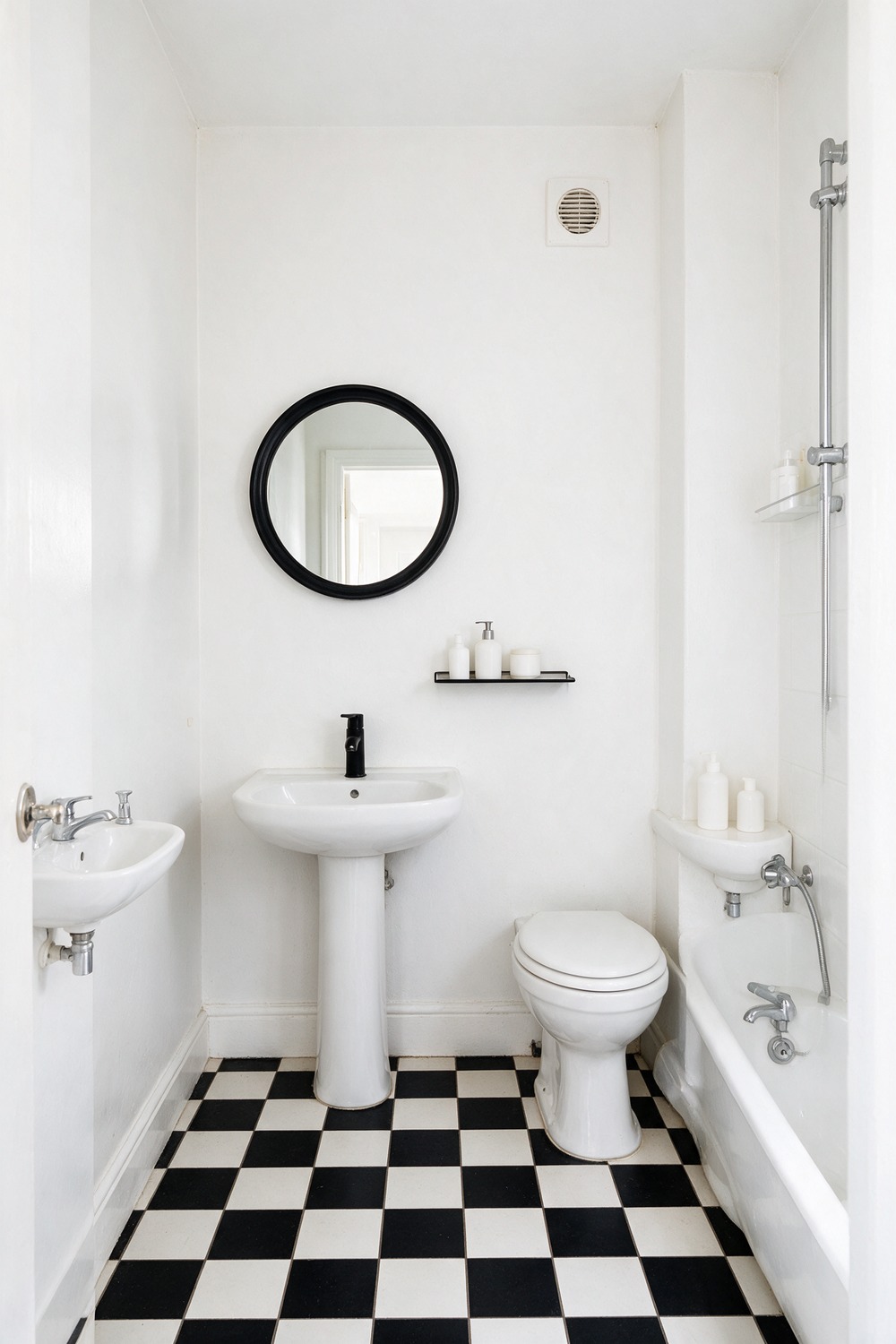
This is the one that never goes out of style, and I will die on that hill. Black and white is a hundred years old and still looks sharper than whatever is trending this spring.
My preference is a classic checkerboard or small hexagon floor, white walls above, and black used only as a knife-edge: the tap, the mirror frame, a slim shelf.
Benjamin Moore Black Beauty for any painted joinery. Keep the field white and let the black draw the lines. Start with the floor. Everything upstairs stays calm so the pattern can shout.
5. Tiny Blue Bathroom
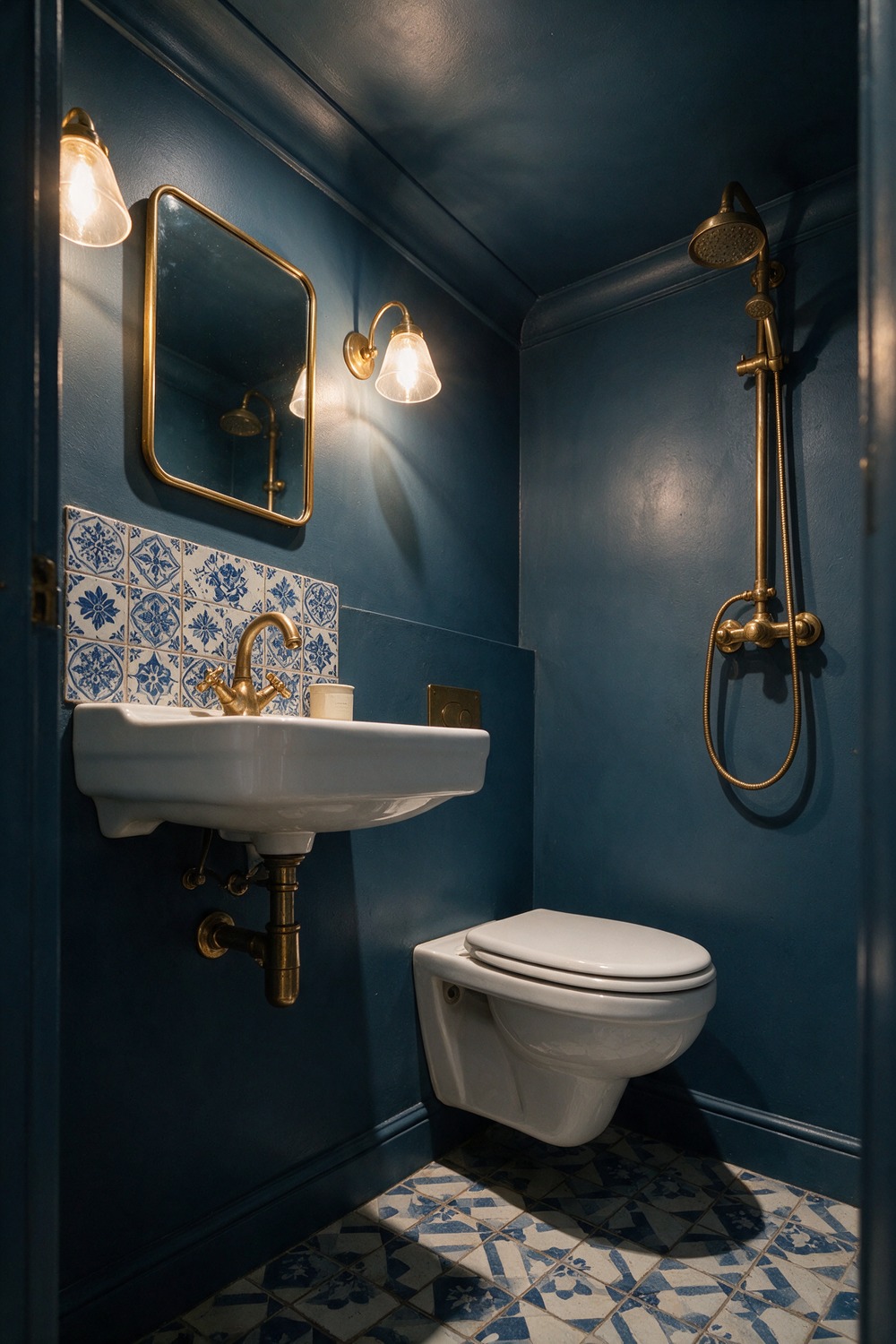
A confession: blue bathrooms can feel chilly and corporate if you choose wrong. The fix is to go rich and a little inky rather than pale and powdery.
Farrow & Ball Stiffkey Blue is my pick, a deep slate blue that turns almost navy at night, painted walls and ceiling together.
Ground it with warm brass and white tile so it does not tip cold. A white basin, a brass mixer tap, a mirror with a thin brass surround. If you want pattern, a blue-and-white Delft-style tile behind the sink is the move.
Pro tip: a warm bulb keeps inky blue from reading grey.
6. Tiny Sage Green Bathroom
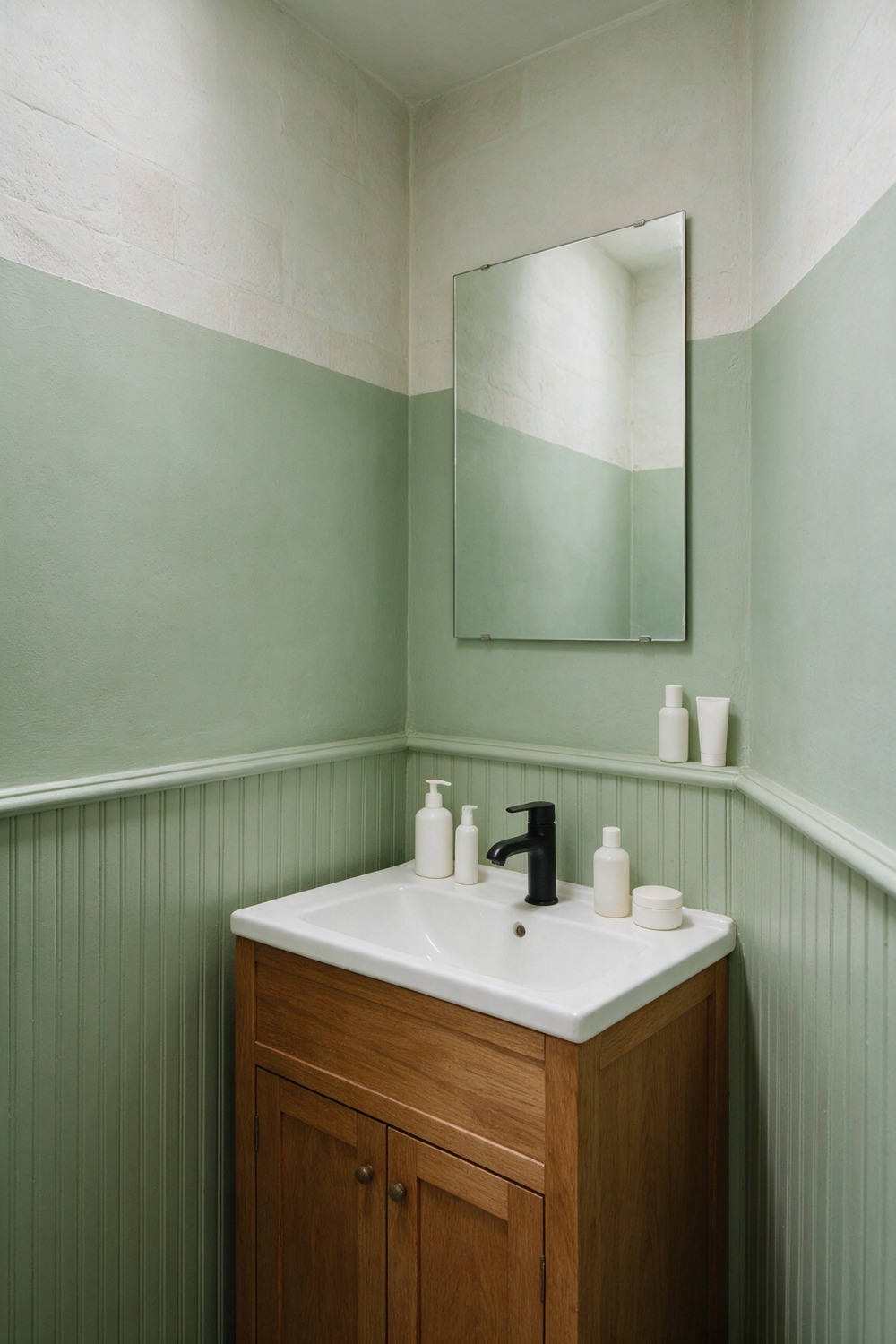
Sage is the greige of greens, the one that gets along with everything, and in a tiny bathroom it is almost impossible to get wrong. Which is exactly why it is worth doing with care so it does not land generic.
A soft, dusty sage like Farrow & Ball Card Room Green on the lower two-thirds, a rail, then a paler stone white above lifts the ceiling.
Fluted or beadboard paneling painted in the sage adds the texture that keeps it from going flat. Warm wood vanity, a white basin, matte-black or aged-brass tap. Start low, paint the dado sage, and let the top half breathe.
7. Tiny Navy Bathroom
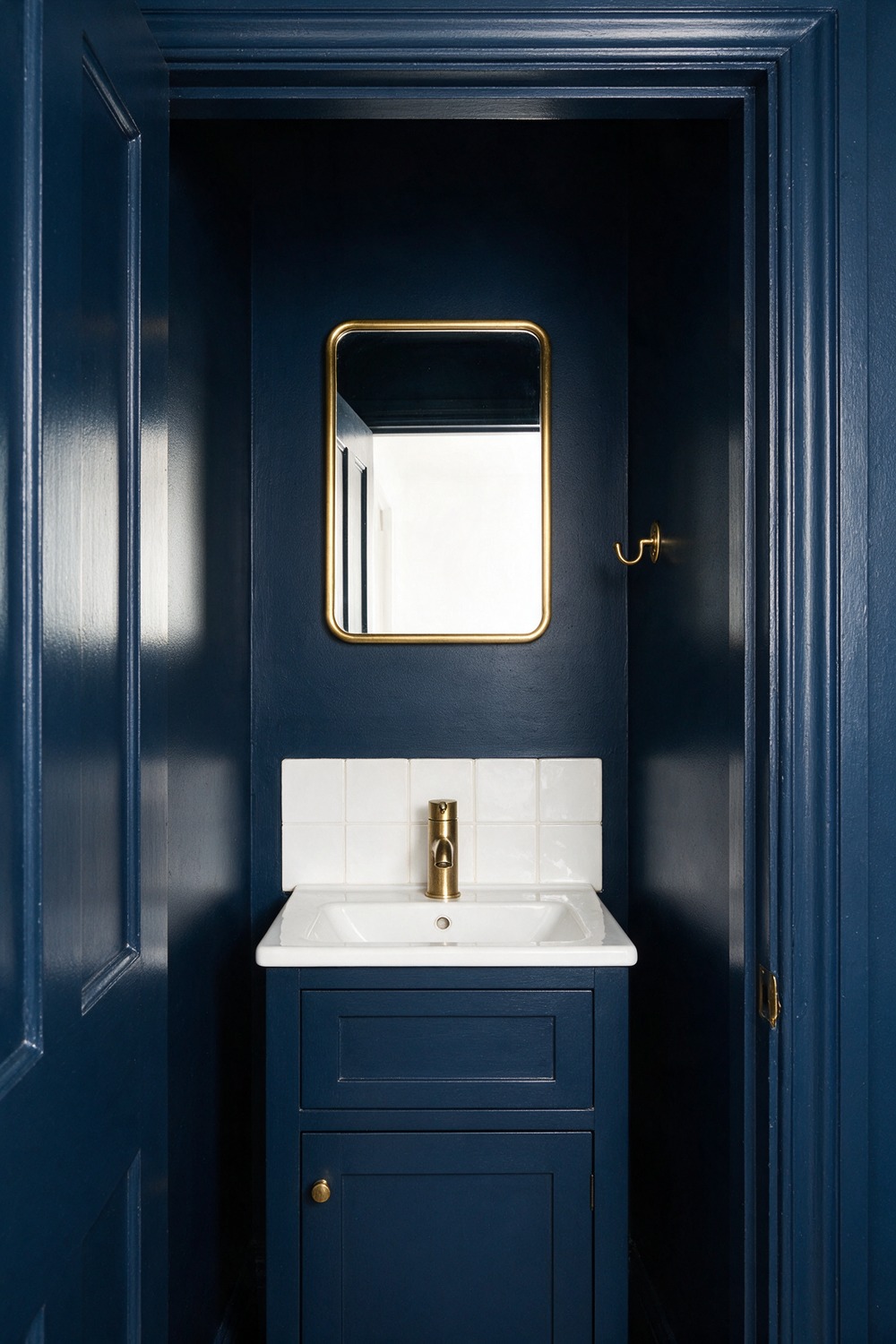
Navy is the dinner jacket of paint colors. It makes everything next to it look more expensive, and in a tiny bathroom that return on a single tester pot is absurd.
Reach for Farrow & Ball Hague Blue, a deep inky navy, walls and joinery the same shade so the room reads as one cocooning whole.
The pairing that sells it is crisp white and warm metal. A white basin, white square or metro tile at the splash, and a brushed-brass tap and mirror over the top.
Navy below, white tile at the splash, brass to warm it. Chrome would flatten the whole effect, so the brass is the one piece I would actually spend on. A little brass towel hook finishes the thought.
8. Tiny Grey Bathroom
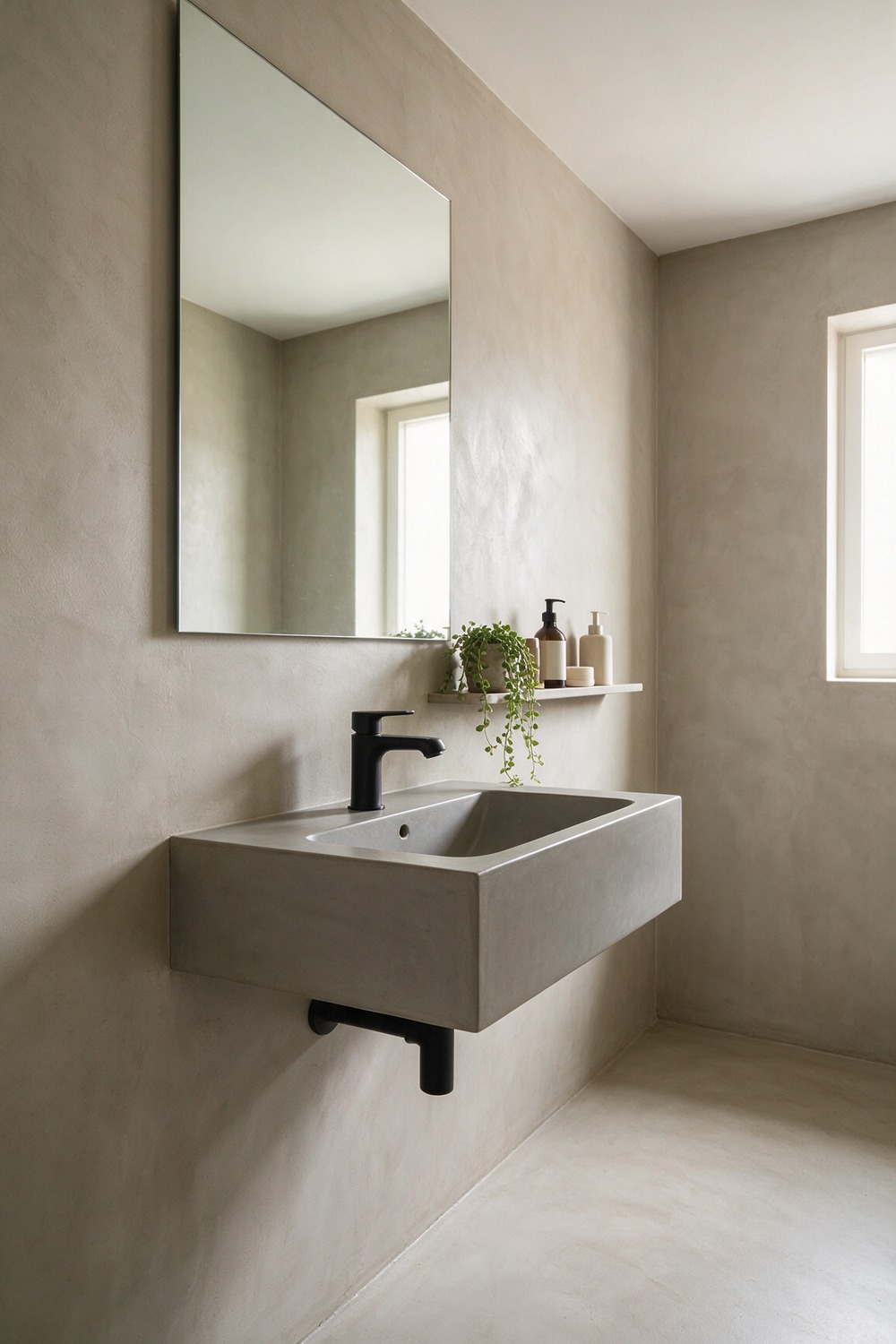
Grey earned a bad reputation as beige’s boring cousin for a decade. Done right it is architectural and quiet, like concrete in a good gallery. Warmth is the difference.
Choose a putty-leaning grey such as Farrow & Ball Purbeck Stone, not a blue-grey. Microcement or honed tiles, a floating vanity, a matte-black tap, and one trailing plant to stop it feeling like a parking garage.
9. Tiny Pink Bathroom
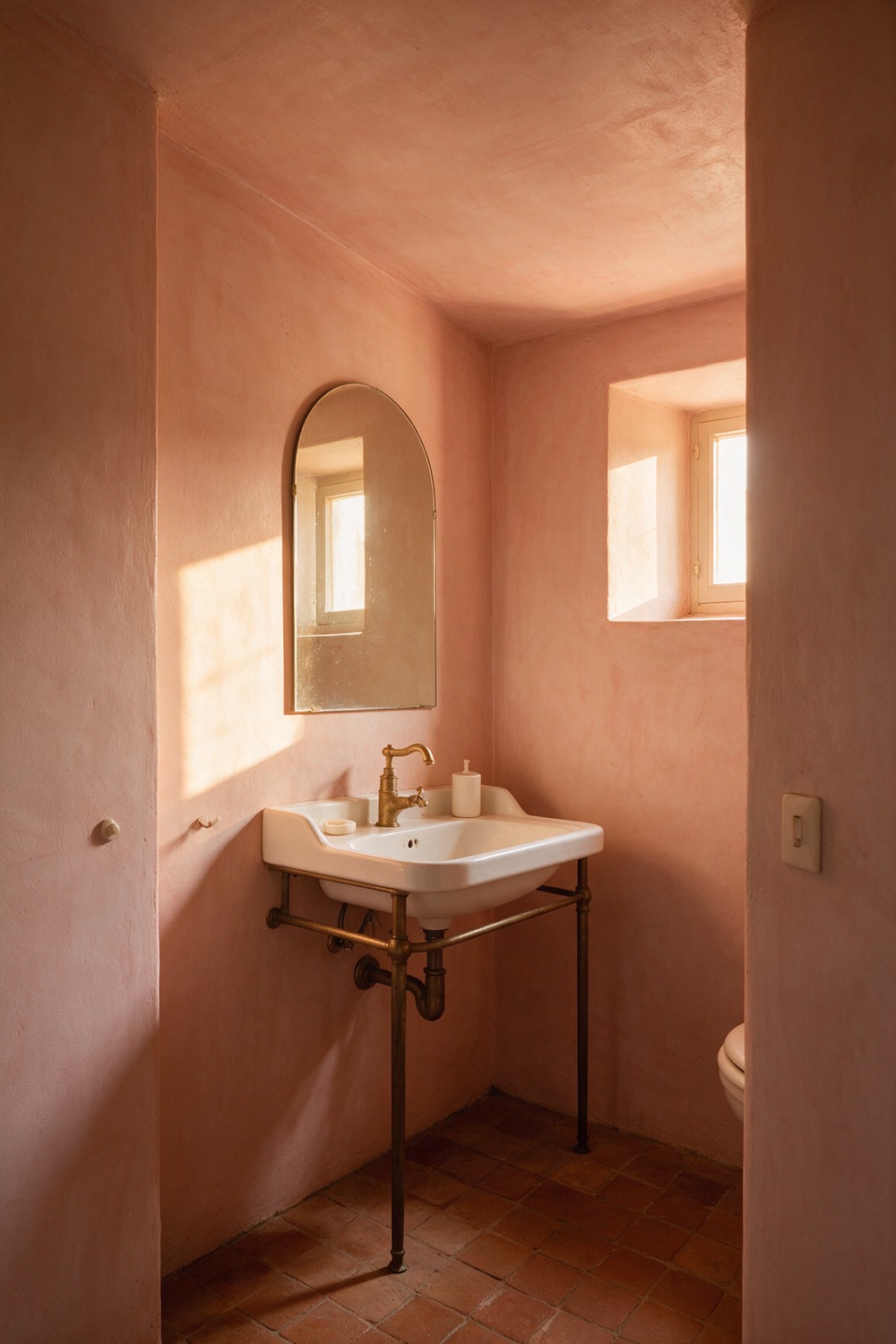
Not bubblegum. Please, not bubblegum. The pink that works in a grown-up tiny bathroom is barely pink at all, the color of a shell or old plaster.
Farrow & Ball Setting Plaster is the one I reach for, a warm clay-pink that reads neutral in low light. Terracotta floor tile under it, a white basin, aged brass, a simple arched mirror. Warm skin, not a cupcake.
10. Tiny Beige Bathroom
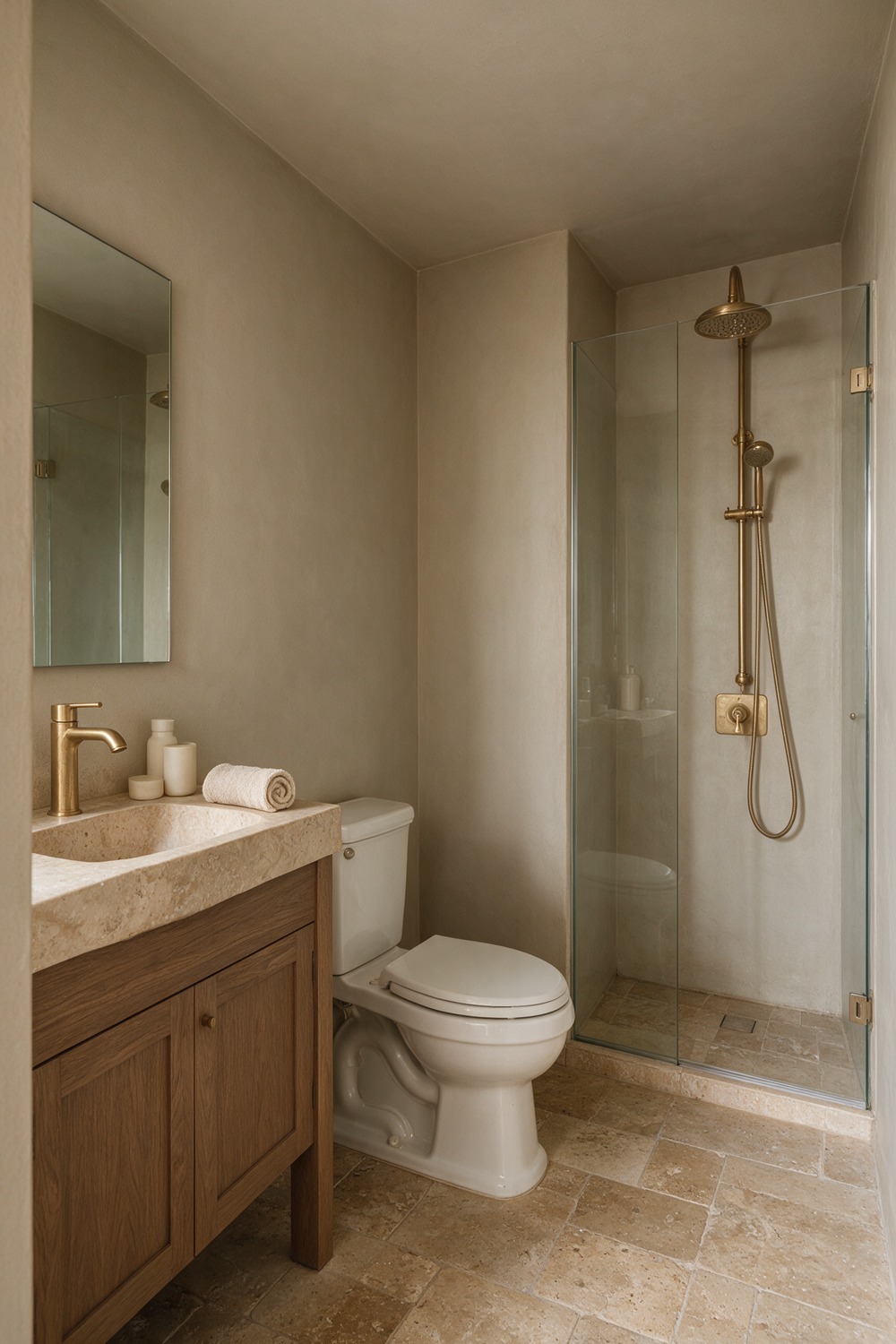
Beige is back and I am not mad about it, as long as it is the layered, textural kind and not flat builder-beige. The goal is a spa you never want to leave, Nancy Meyers in a shoebox.
Build it in tones of the same warm sand, a greige like Farrow & Ball Oxford Stone on the walls, travertine or tumbled stone tile, a wood vanity a shade darker.
Keep the metals warm and the lines simple. A stone or ceramic basin, a brushed-brass tap, a frameless mirror. Layer three beiges, never one, and texture carries it.
11. Tiny Terracotta Bathroom
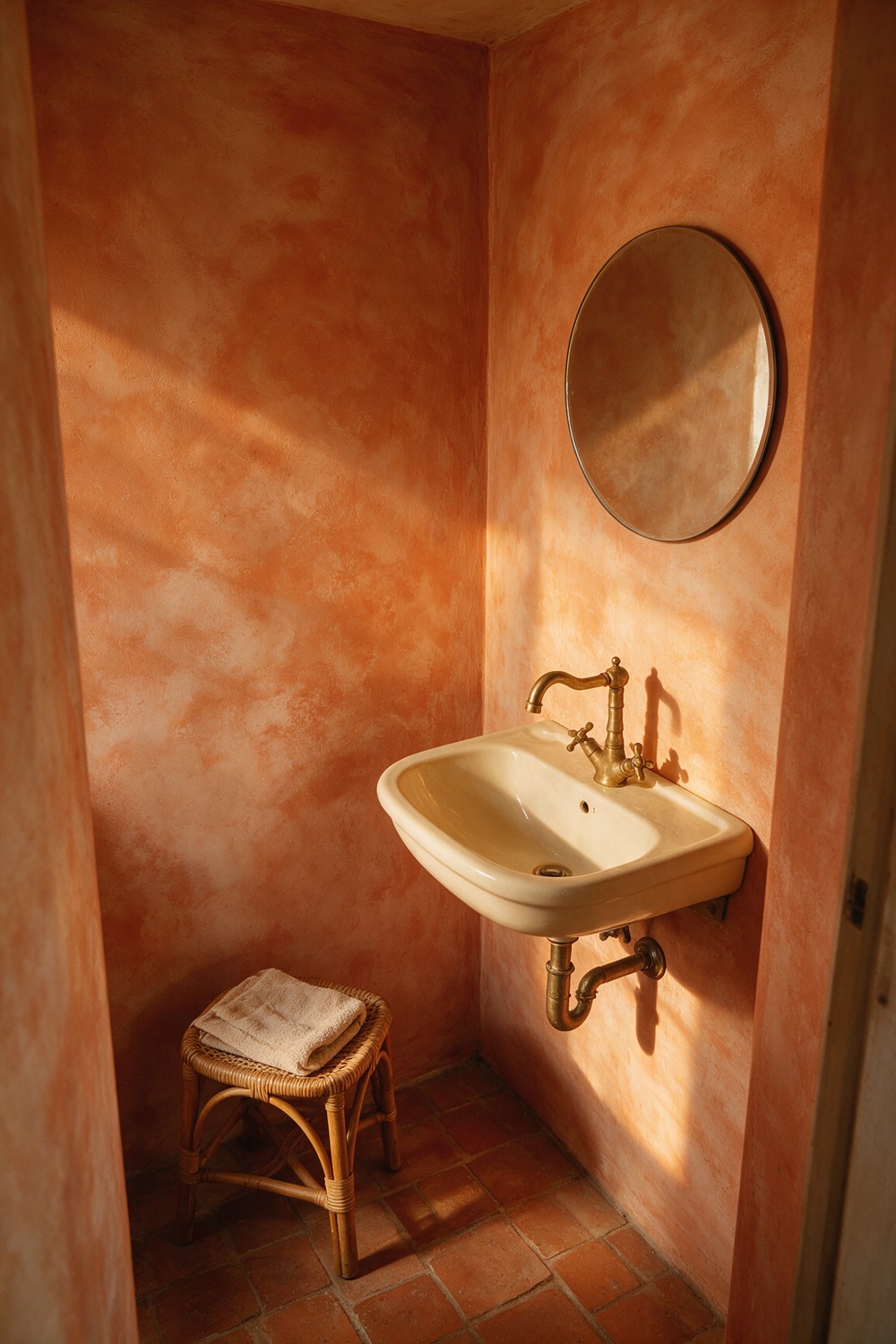
Terracotta is the color that makes a cold north-facing bathroom feel like it gets afternoon sun even when it does not. It is a mood as much as a color.
I would limewash the walls in a warm burnt orange, think Bauwerk or a shade near Farrow & Ball Red Earth, so you get that cloudy, sun-baked depth flat paint cannot touch.
Real terracotta floor tiles underfoot, warm and slightly uneven, seal the whole sun-baked feeling. A white or cream basin cools the scheme just enough, with aged brass and a rattan stool for texture.
The limewash is the hero. Start there, get the walls glowing, and keep everything else earthy and plain so nothing competes with that one warm wash of color.
12. Tiny Yellow Bathroom
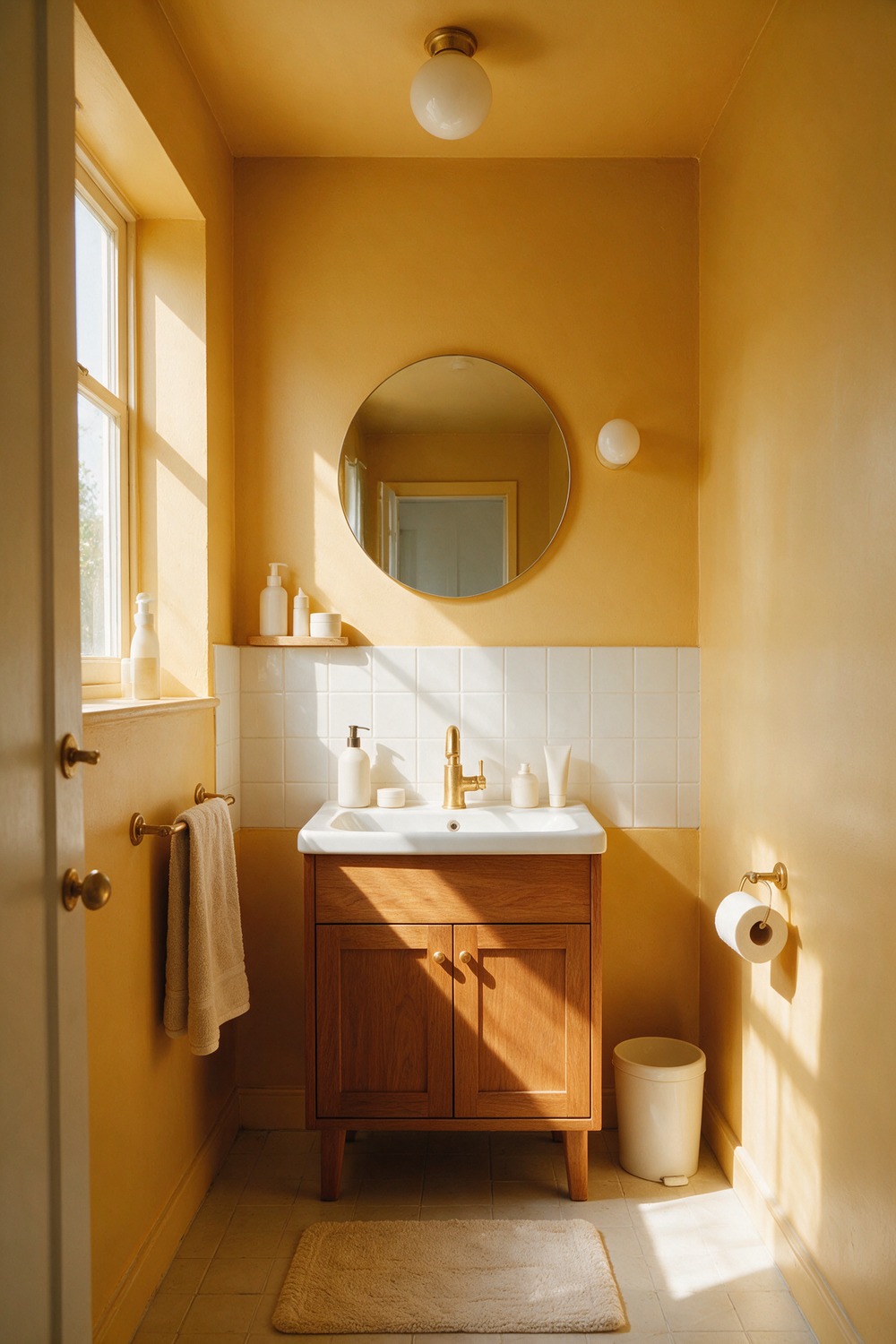
Yellow takes nerve, and a tiny bathroom is the perfect place to spend it. This is the room that should make you grin at seven in the morning. Mope-proof by design.
Leave the acid and the primary-school yellow on the shelf. I want a warm ochre or soft golden tone, something like Farrow & Ball India Yellow, walls carried over the ceiling.
Pair it with white tile and warm wood so it stays sophisticated rather than cartoonish. A white basin, a simple mirror, brass fittings. One brave color, done, and the rest kept quiet.
13. Tiny Teal Bathroom
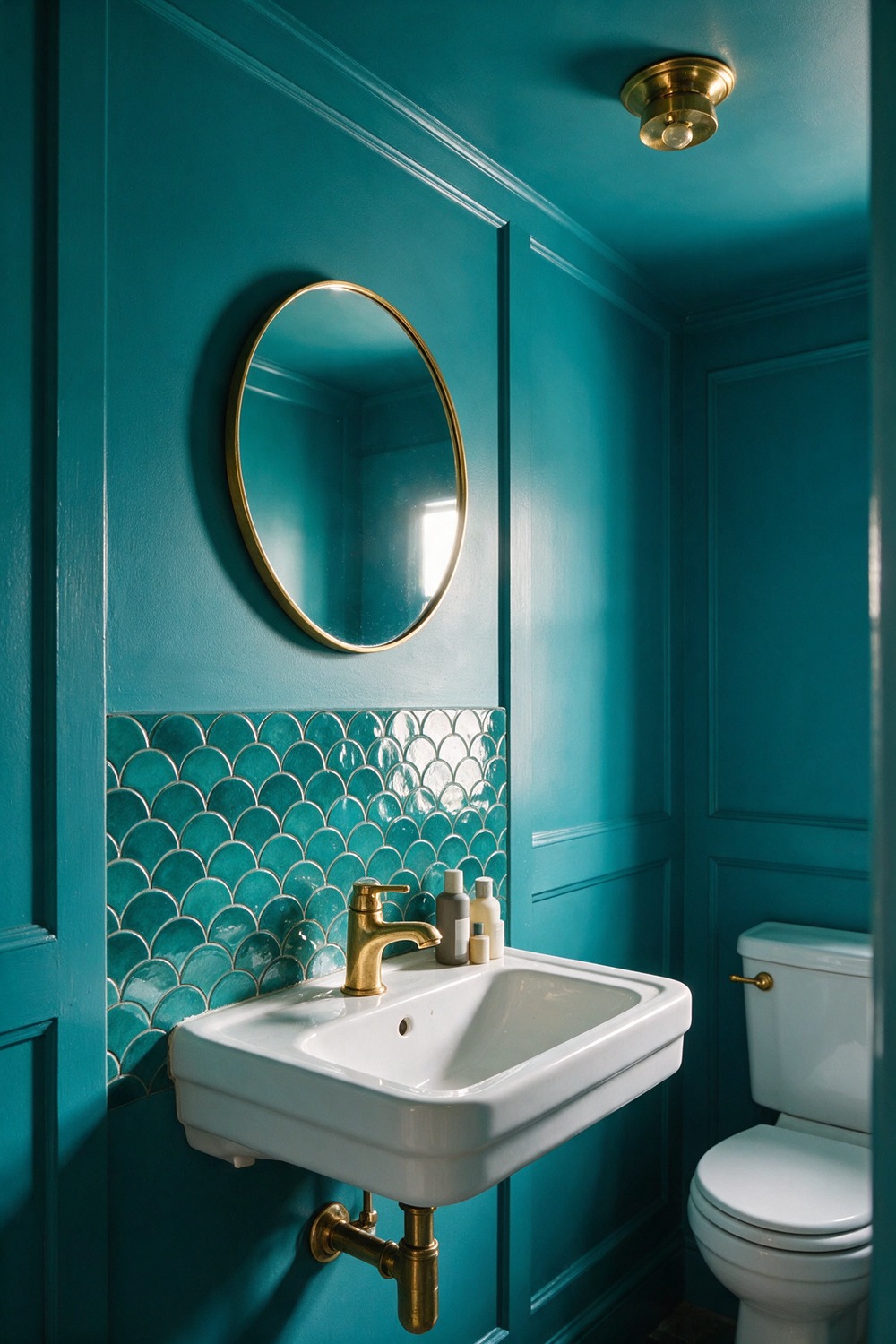
Teal is the color people reach for when they want blue but braver and green but moodier. It is a show-off, and a tiny bathroom can take a show-off because the dose is small.
Go saturated: Farrow & Ball Vardo, a rich blue-green, on walls and paneling.
Glossy square or fish-scale tile in a near teal behind the basin doubles down and bounces what little light you have. White or brass fixtures keep it from turning swampy.
A white basin, a brass tap, a round mirror, and that is really all it needs. Gloss is your friend in here. It throws the light straight back at you, which is exactly what a windowless box is begging for.
14. Tiny Cream Bathroom
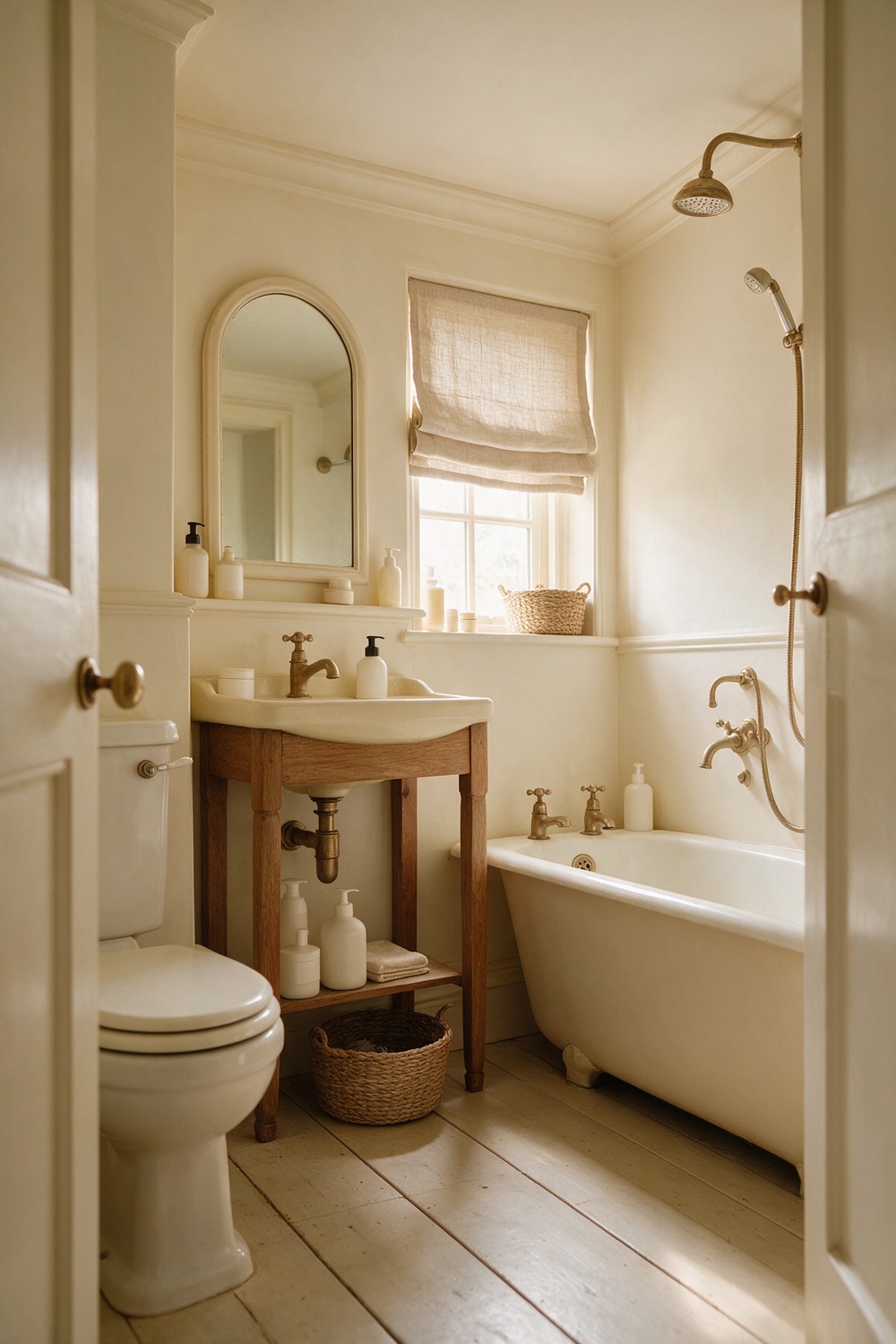
Cream is white that went to finishing school. It is softer and far more forgiving in a windowless room, where a stark white can go grey and sad.
I would use a buttery off-white like Farrow & Ball House White everywhere, walls and trim. Add a wood vanity, a woven basket, a cream basin, aged brass. The Goldilocks of neutrals, never too cold, never too yellow.
15. Tiny Charcoal Bathroom
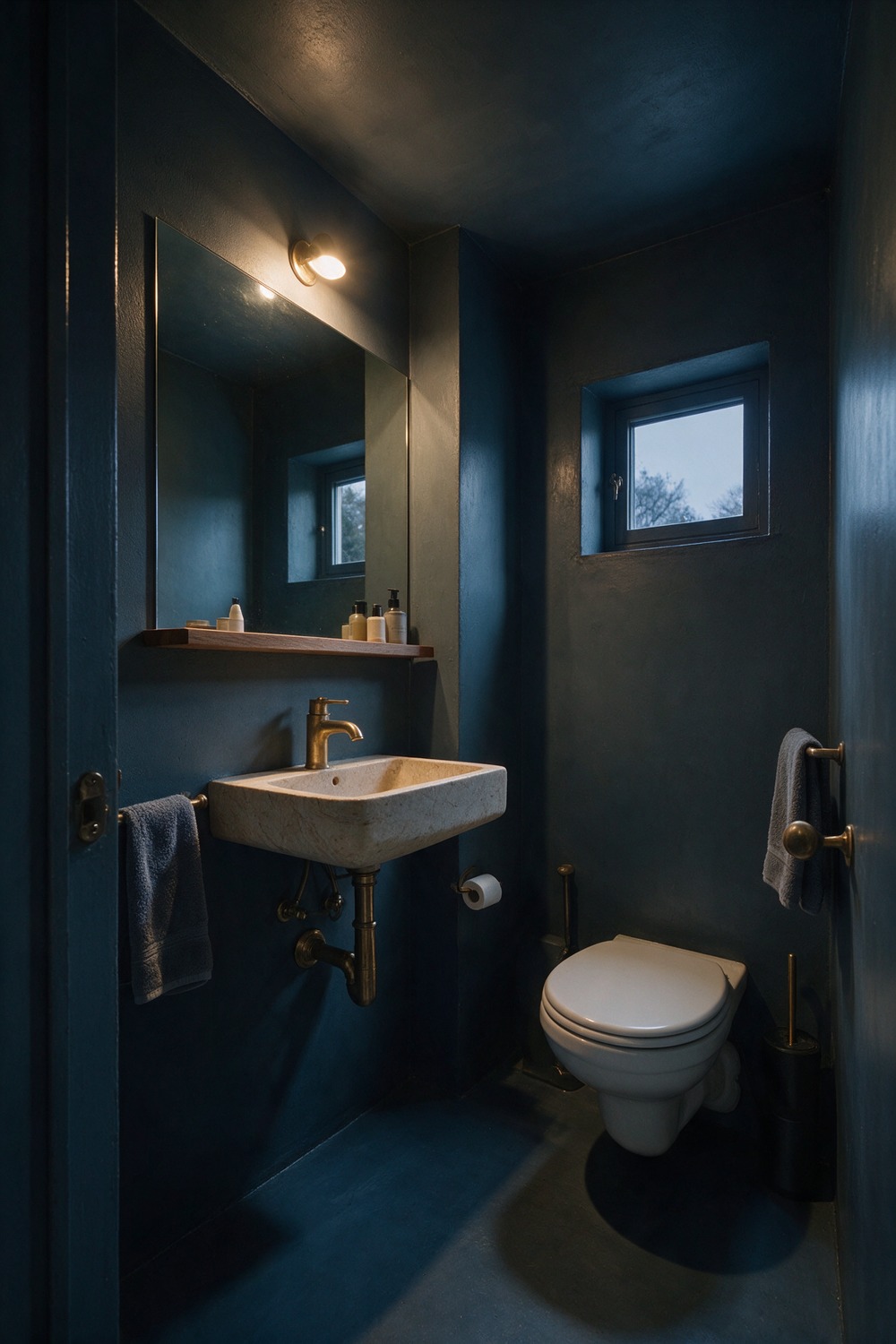
Charcoal is for people who find pure black a bit theatrical but still want drama. It is the soft-focus version of a dark bathroom, moody without the vampire energy.
Farrow & Ball Down Pipe is the gold standard, a dark blue-grey that reads as warm charcoal, over every surface. Keep the sheen low and matte.
White or pale stone at the basin and a big mirror keep it usable, and a brass or wood accent stops it going industrial-cold. Paint it all one shade, floor to ceiling, and let a single warm light do the shaping.
16. Tiny Lavender Bathroom
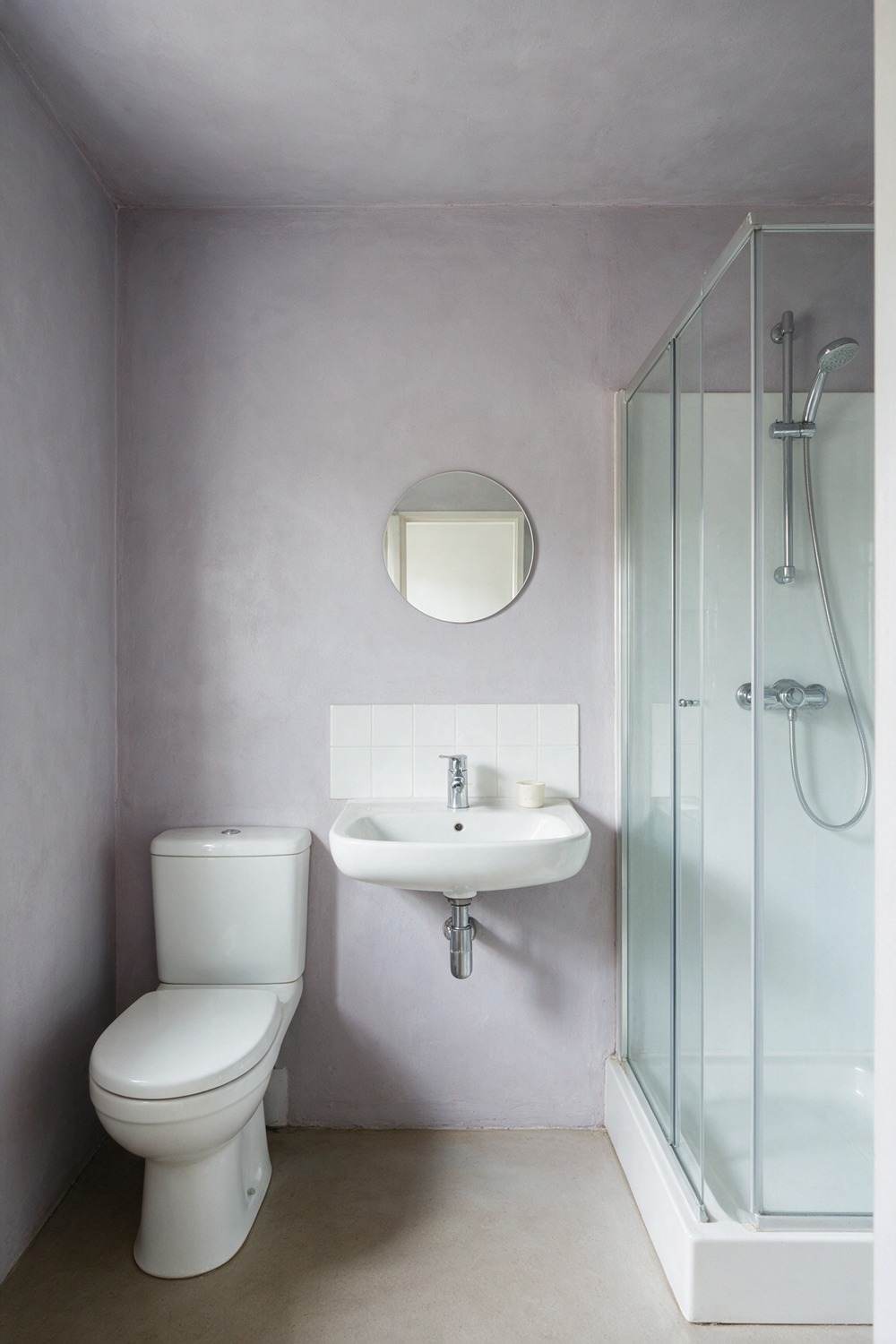
Lavender has a reputation to shake, all 1980s guest soap and potpourri. Forget that. The modern take is a greyed-off, dusty lilac that behaves like a soft neutral: Farrow & Ball Calluna, walls and ceiling.
Keep its company cool. White tile, a white basin, and brushed nickel or chrome, the one place I allow chrome because it keeps lilac fresh instead of sweet. A round mirror finishes it. Nothing fussy.
Which Tiny Bathroom Color Is Right for You
If your bathroom has no window, stop fighting the dark. Go moody on purpose, a Down Pipe charcoal or a Studio Green, and light it warmly. A room with no natural light looks worse painted bright white than it ever does painted deep.
If you get good daylight, that is where I would spend my courage: a yellow, a teal, a terracotta that the sun can play with all afternoon.
Want it to feel bigger and calmer? Stay in one color family, carry it over the ceiling, and keep the floor and basin pale.
Want it to feel like a jewel box? Saturate everything and let the edges disappear. Both work in a tiny room. The only wrong move is timid half-measures, one accent wall and three white ones, which just makes the room look unsure of itself.
Tiny Bathroom Color Questions, Answered
Will a dark color really make my tiny bathroom look bigger? It will make it look deeper and more intentional, which reads as bigger. Pale, bright rooms show you every edge. A dark room hides them. Commit to pale-and-airy or dark-and-enveloping, but do not do a nervous mix.
What does this cost? Paint alone is the cheapest redecoration there is, a weekend and the price of a couple of tins. New tile, a vanity and a tap push it into mid-range. A full refit with stone and joinery is the splurge end. The color itself is nearly free.
Can I do this myself? The paint, yes, and honestly a tiny room is the easiest possible paint job, you will finish in an afternoon. Limewash is DIY-friendly too, it is meant to look uneven. Tiling a wet area and moving plumbing is where I would call a pro.
How long does it take? A repaint is a single weekend. New tile and a vanity swap, a week or so with a tradesperson. A full tiny-bathroom remodel runs two to four weeks depending on how much gets ripped out.
What should I ask the tiler for? Name the real spec, not just the color. Say the shape, size, material and finish, for example “four-inch square sage zellige, handmade, matte,” or “small white hexagon mosaic on the floor.” A tiler can order exactly that. “Green tile” gets you a shrug.
Pick the one color on this list that made you a little nervous. That is almost always the right one for a tiny bathroom. Buy the tester pot, paint a big square on the wall, live with it for a day, and go.
More stories
Share this story