16 Smart Bathroom Tile Ideas for Floors, Showers and Walls

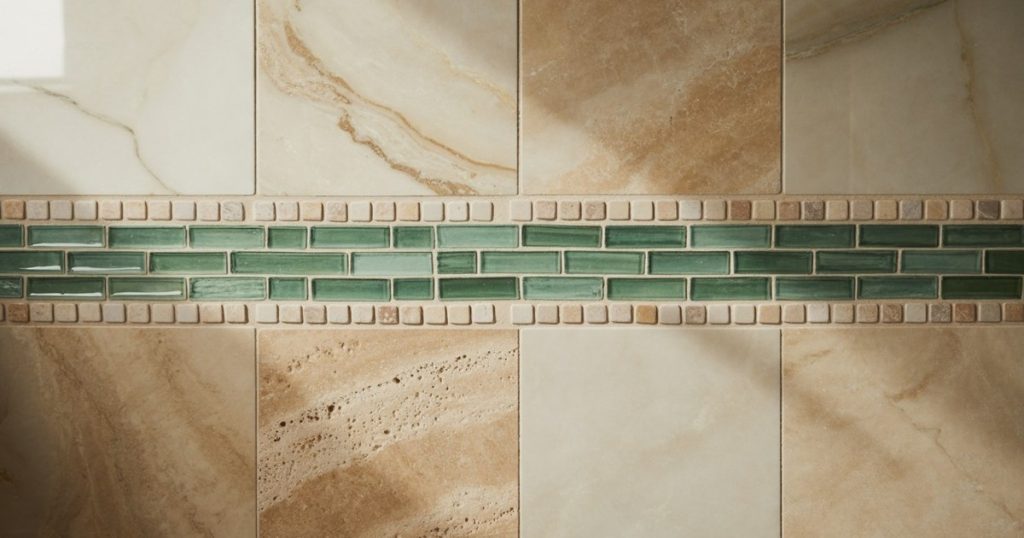
Nobody warns you that the fastest way to waste a beautiful tile is to put it in the wrong place.
I have watched a gorgeous handmade zellige get buried on a floor where nobody ever looks down, and a plain white square sing simply because someone ran it to the ceiling.
Tile is all about placement. The same hand-glazed square can read budget on one wall and boutique-hotel on another, and the difference is almost never the tile itself. It is where it lands, how high it climbs, and what it wraps.
Below are 16 ways to use bathroom tile by where it goes, from the floor under your bare feet to a textured feature wall. Each one names the tile I would actually ask a shop for, the layout that makes it work, and where to begin.
1. Floor Bathroom Tiles
Your floor is the one surface you genuinely cannot fake, so this is where I spend the budget first. It takes water, bare feet, and years of traffic.
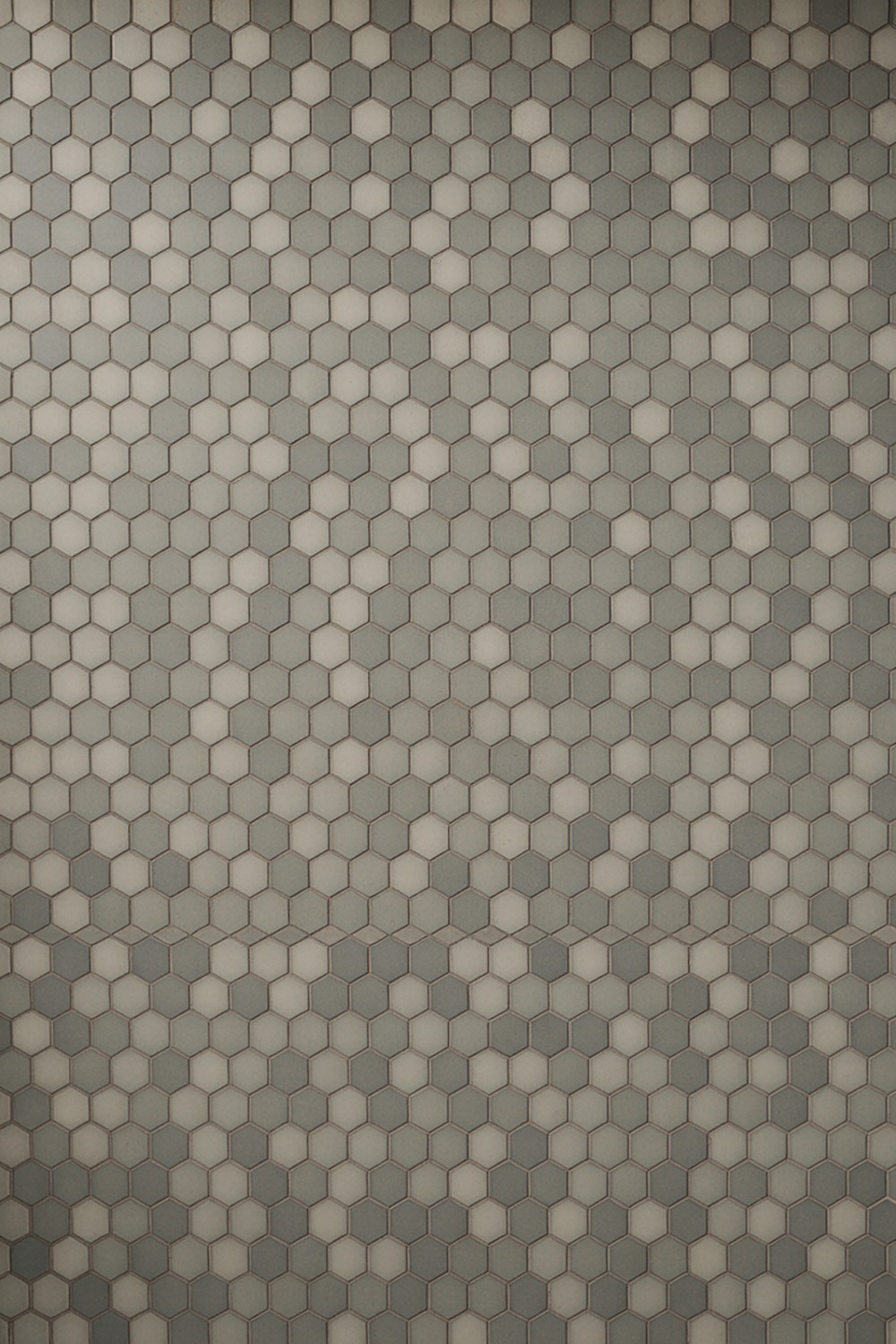
My go-to is a small honed hexagon mosaic in warm grey, around 2 inches across, set in a close-toned greige grout that hides every bit of mess. The little joints give wet feet grip, and the honeycomb forgives an old, uneven floor.
Get the look with 2-inch matte porcelain hex in a soft greige, grouted nearly tone-on-tone so the field reads as one calm surface. Start with the floor; let the walls follow its warmth.
2. Shower Bathroom Tiles
A shower is a small, enclosed, wet box, which is exactly why it is the place to be brave.
Nobody sees it from the hallway, so I treat it as the one spot for a splurge tile I could never afford across a whole room. Here a little money goes a long way.
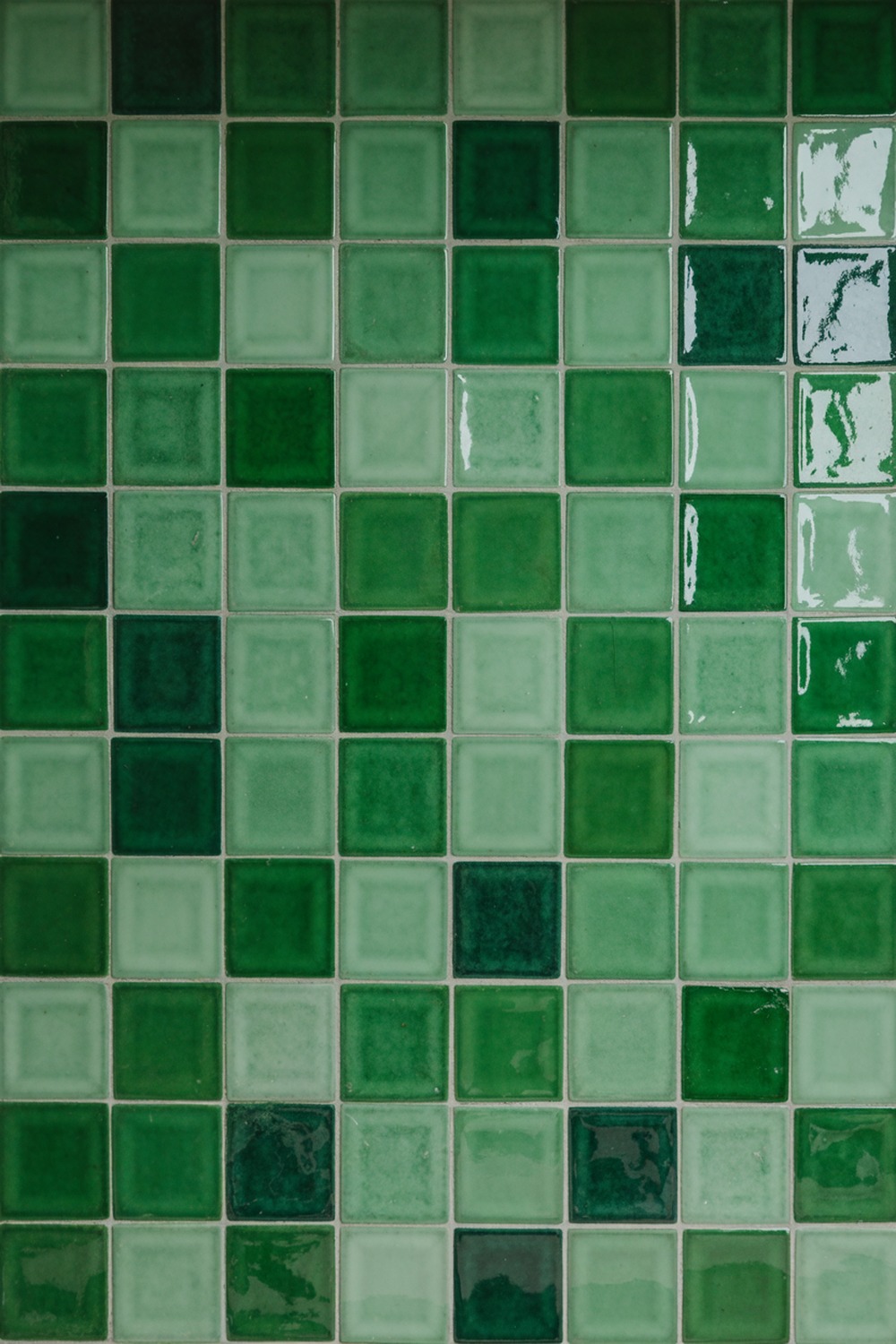
I am thinking a glossy emerald zellige, the handmade Moroccan clay kind, where every 4×4 piece catches the light differently and the whole wall shimmers the moment the water runs. The wavering edges and the way the glaze pools are the entire point.
Ask for 4×4 zellige in a deep green, stacked straight for a crisp modern read or offset for old-world charm, with a matching green grout so the colour stays unbroken.
One tip: buy 15 percent extra, because handmade tile shifts in tone from piece to piece.
3. Wall Bathroom Tiles
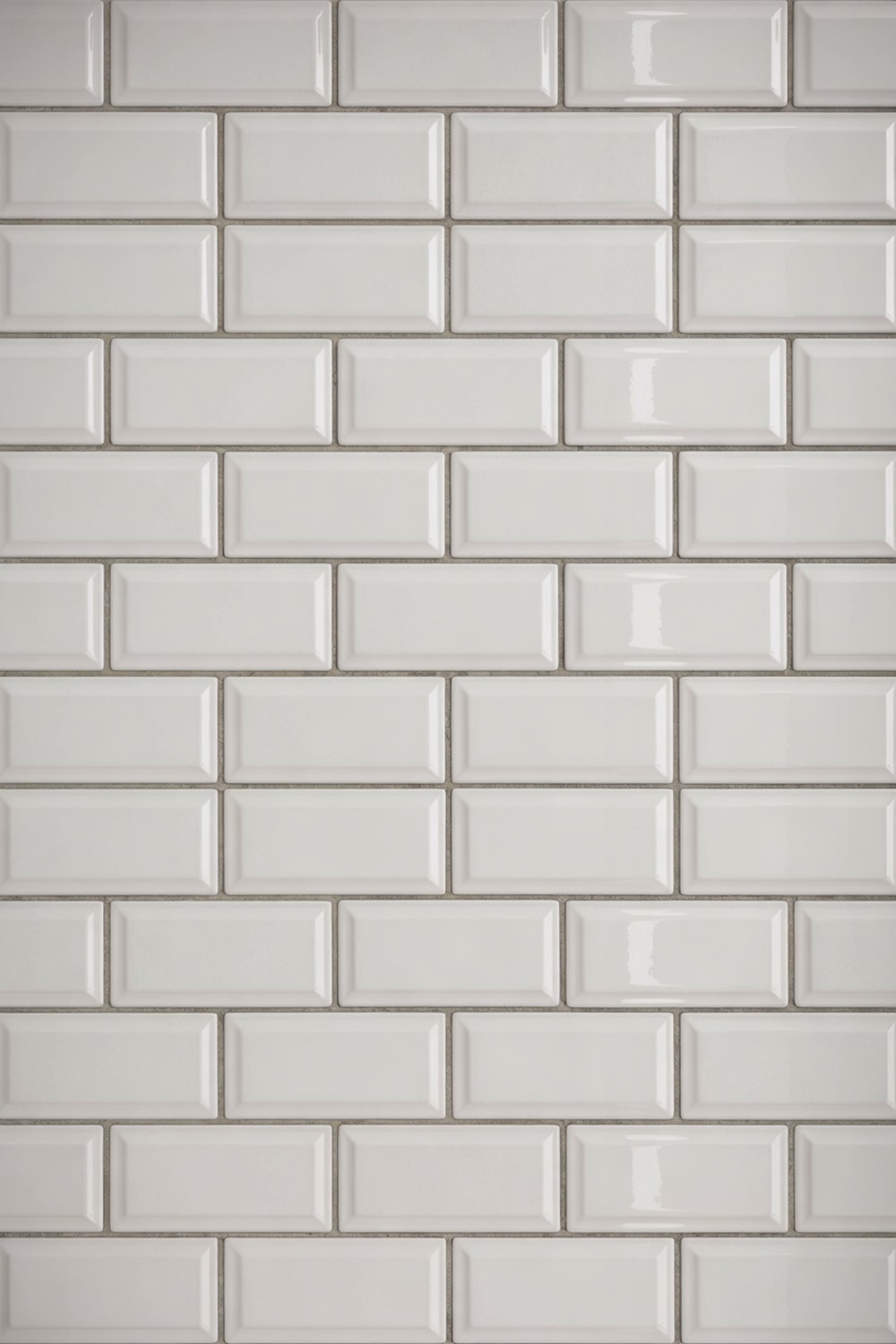
I will happily die on this hill: the classic white subway tile is still the best wall tile money can buy. It is cheap, timeless, and it bounces light like nothing else.
The trick is the detail nobody bothers with: the grout. Keep the classic brick-laid bond, pick a bevelled 3×6 ceramic for a soft shadow line, and swap the stark white grout for a putty grey. Same cheap tile, suddenly it looks considered.
4. Small Bathroom Tiles
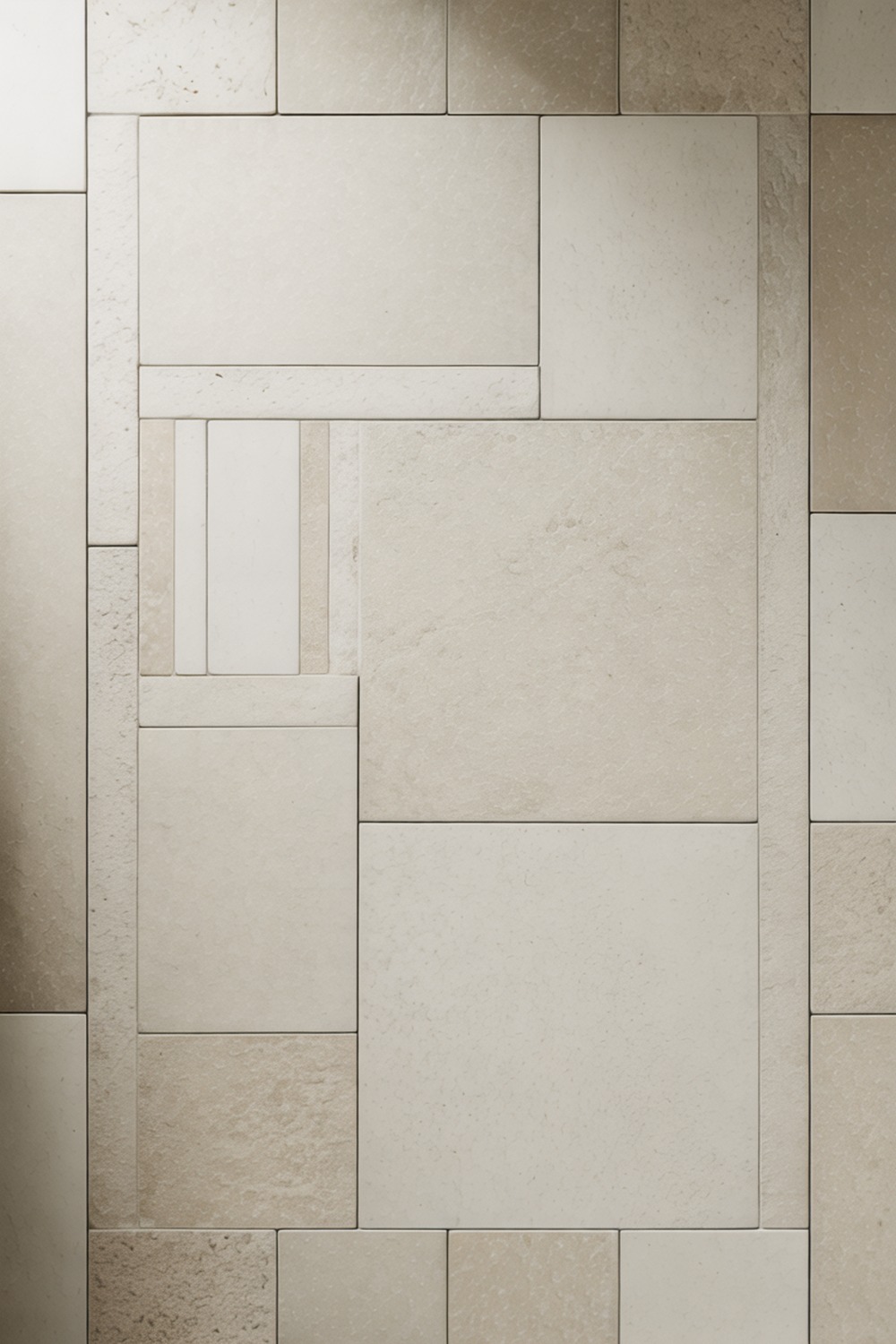
Everyone tells you small bathrooms need tiny tiles. They are wrong, and it is the most common small-room mistake I see.
Little mosaics mean a dense grid of grout lines that chop the space up and make it read cramped. Large-format tile does the opposite.
Reach for 12×24 matte porcelain in a limestone look, floor and walls the same, with grout mixed as close to the tile colour as the shop can manage. The eye reads unbroken surface as bigger. Fewer lines, more room.
5. Tiny Bathroom Tiles
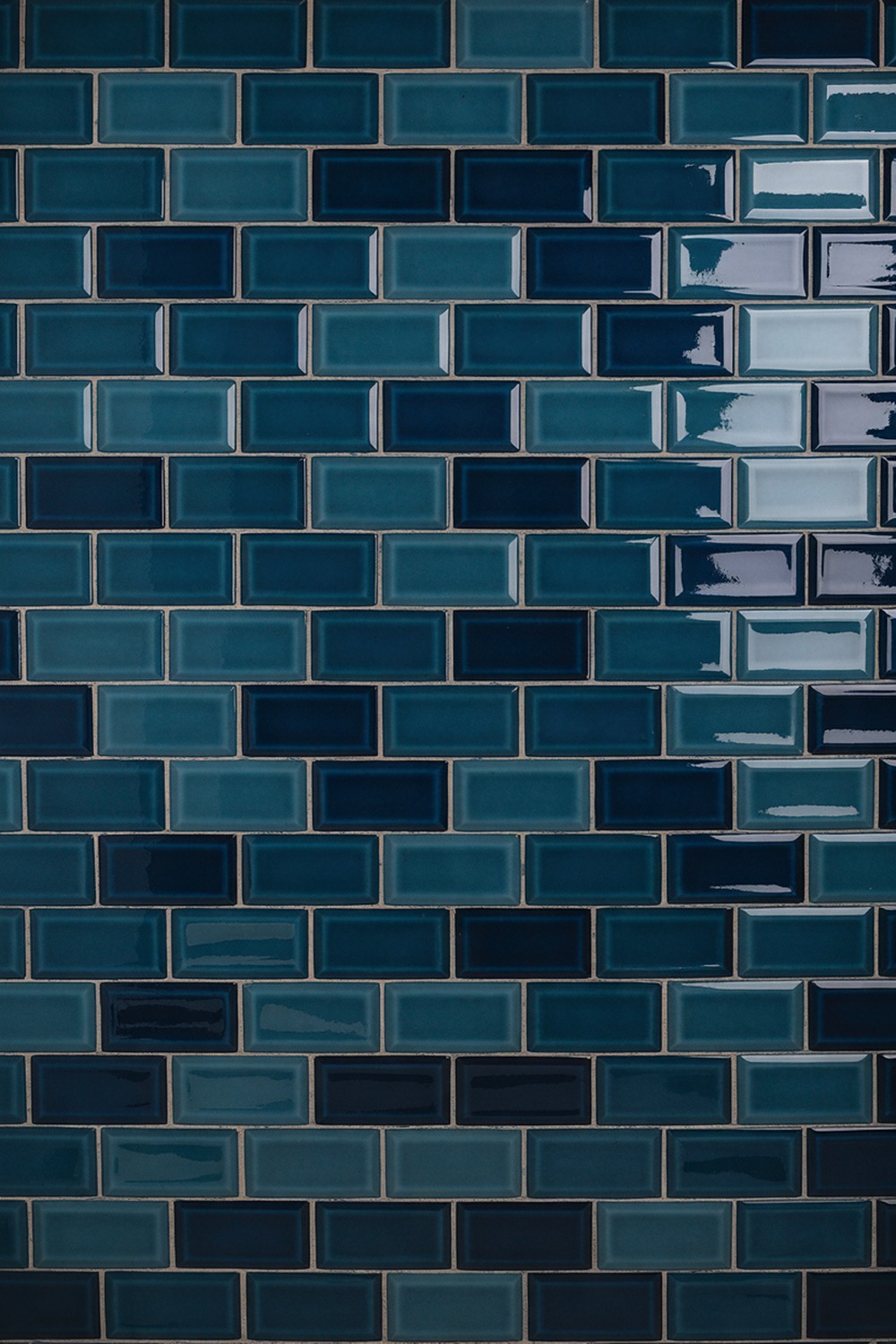
Picture a powder room about the size of a cupboard. That is the brief here, and the answer is the opposite of playing it safe.
In a truly tiny bathroom I stop fighting the size and lean all the way into jewel-box. One glossy tile, floor to ceiling, in a single saturated colour.
A 2×6 glossy glazed brick in inky navy or deep oxblood wraps every wall, with tone-on-tone grout, so the eye never finds a corner to measure. The whole room becomes one confident gesture.
Keep the floor in the same colour family and let a single brass tap and a round mirror be the only jewellery. Small rooms take far more drama than we give them credit for. Go bold, because beige never wins in here.
6. Guest Bathroom Tiles
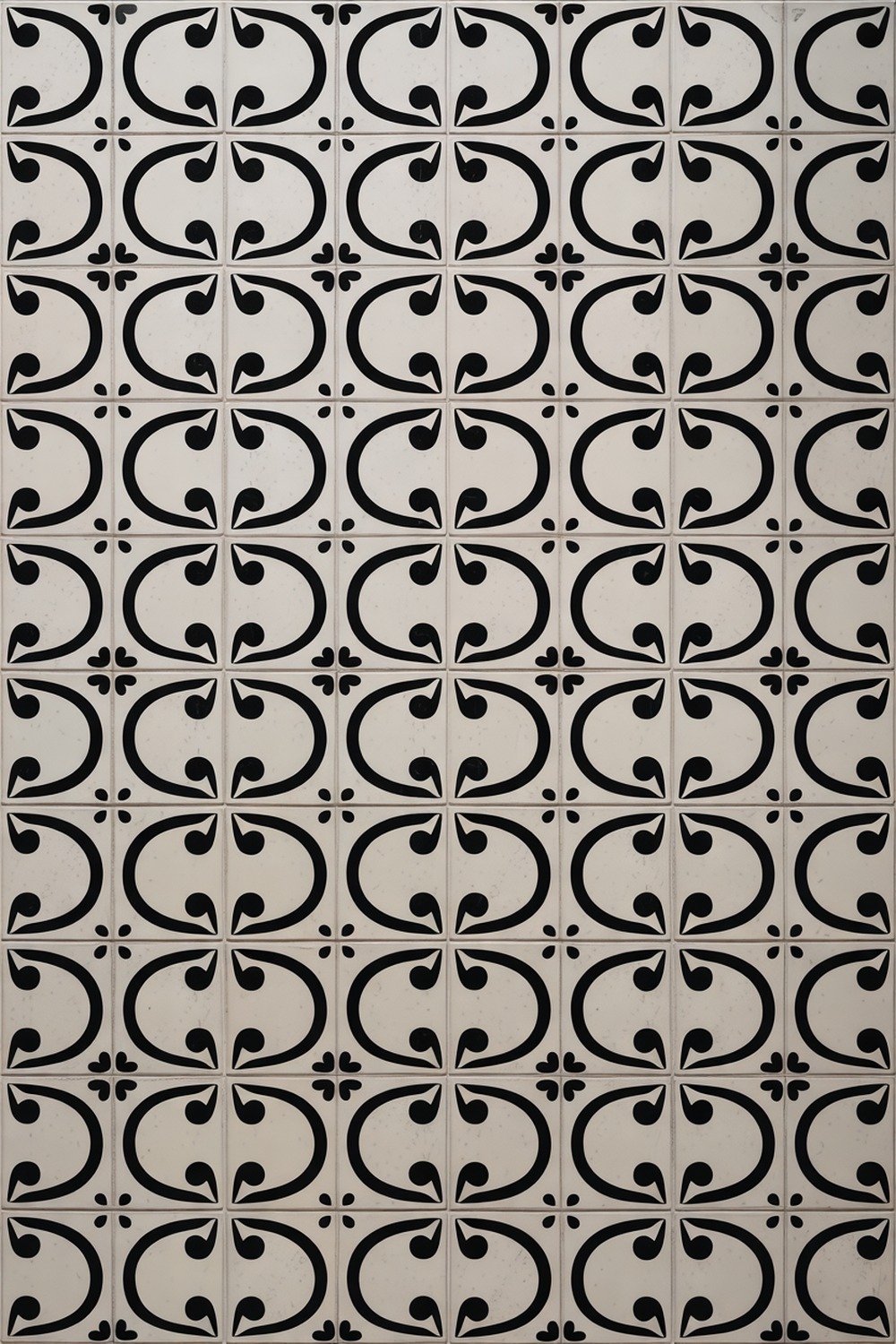
The guest bath is where I let myself have real fun, because guests remember it and I do not have to live with it every morning.
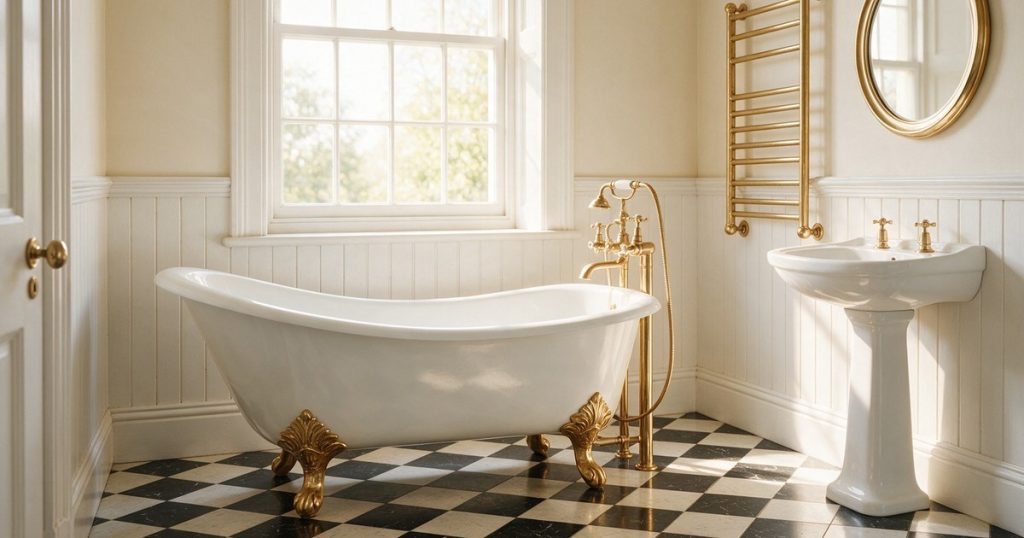
This is the room for the pattern you love but were too nervous to commit to in your own ensuite. A black-and-white encaustic-look floor, the Victorian cement-tile kind with a scrolling motif, turns a plain room into the one people quietly photograph.
Use a patterned 8×8 porcelain in black-and-white or ochre on the floor only, with crisp white walls above. Pull one of its colours into the towels.
7. Kids Bathroom Tiles
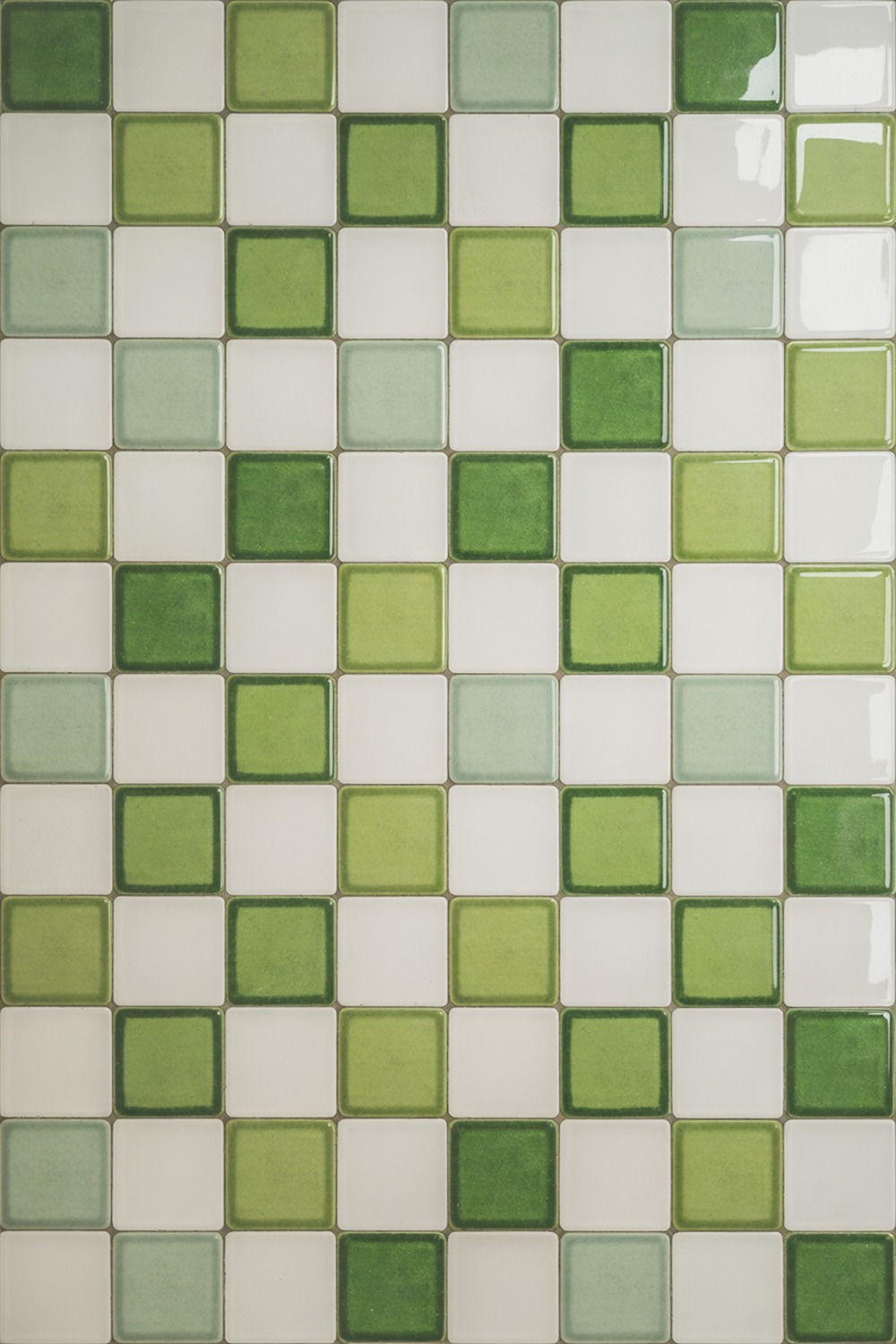
Who says a kids’ bathroom has to be covered in cartoon fish? A seven-year-old’s favourite colour changes faster than you can regrout.
So I keep the fixed tile grown-up and let the cheap, swappable things carry the mood. A simple white 4×4 square in a bright, happy grout, sunny yellow or grassy green, does all the playfulness and wipes clean on a Sunday night.
8. Powder Room Bathroom Tiles
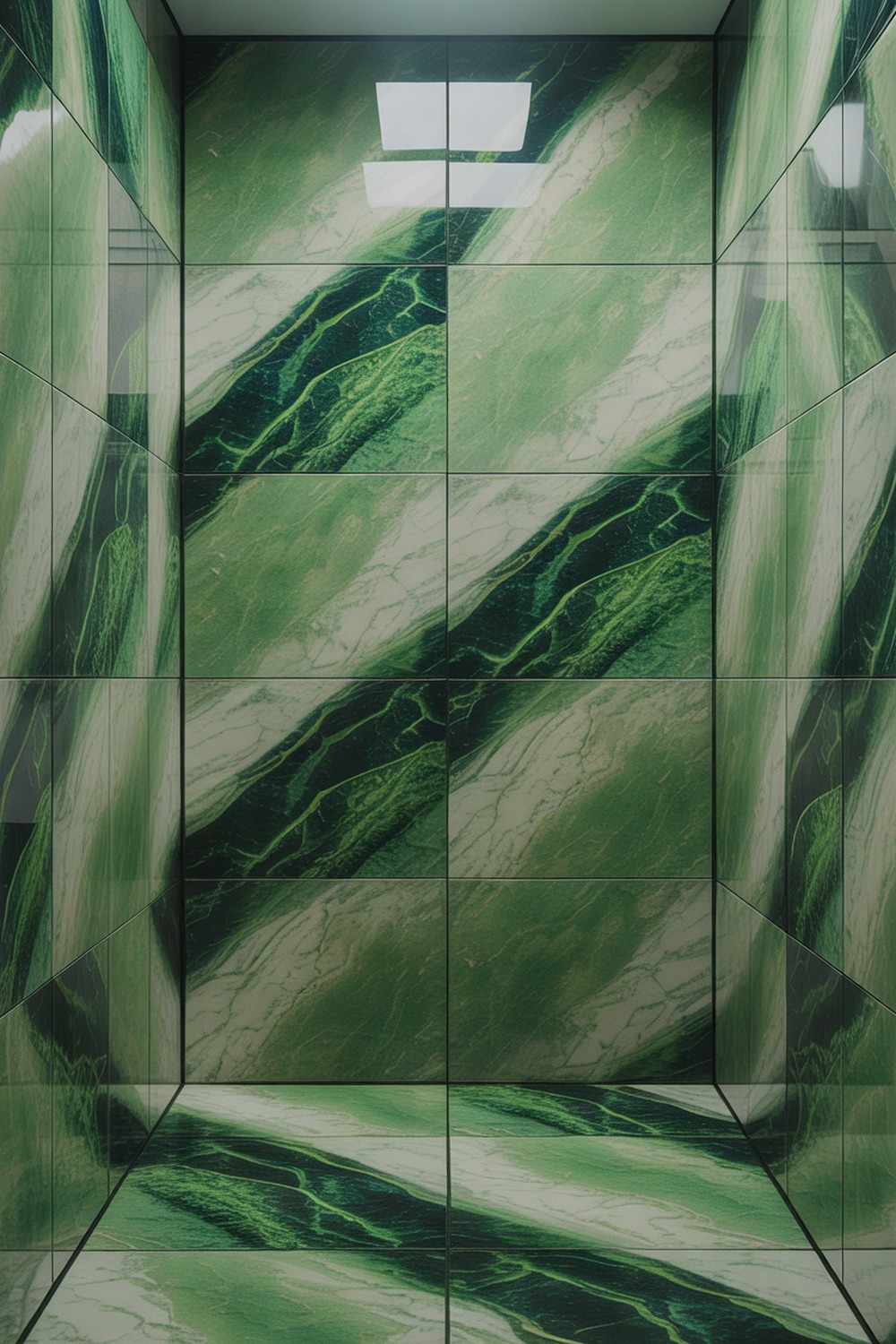
A powder room is the one place I actively beg people to go completely over the top.
No shower, no steam, no daily grind, just a sink, a loo, and a captive audience. So drench it.
Floor to ceiling in a single dramatic tile, a veiny green marble look or a glossy blood-orange, turns a two-minute visit into the best little room in the house.
Because there is no wet zone to survive, you can use a delicate large-format marble-look porcelain that would never last in a shower. The rules loosen the second the water leaves.
This is the room to try the colour your partner vetoed everywhere else, and it is small enough that a bold tile barely dents the budget.
Choose unlacquered brass fittings so they patina with the room, and start with the wall tile. Everything else is a supporting act.
9. Half-Tile Half-Paint Bathroom Tiles
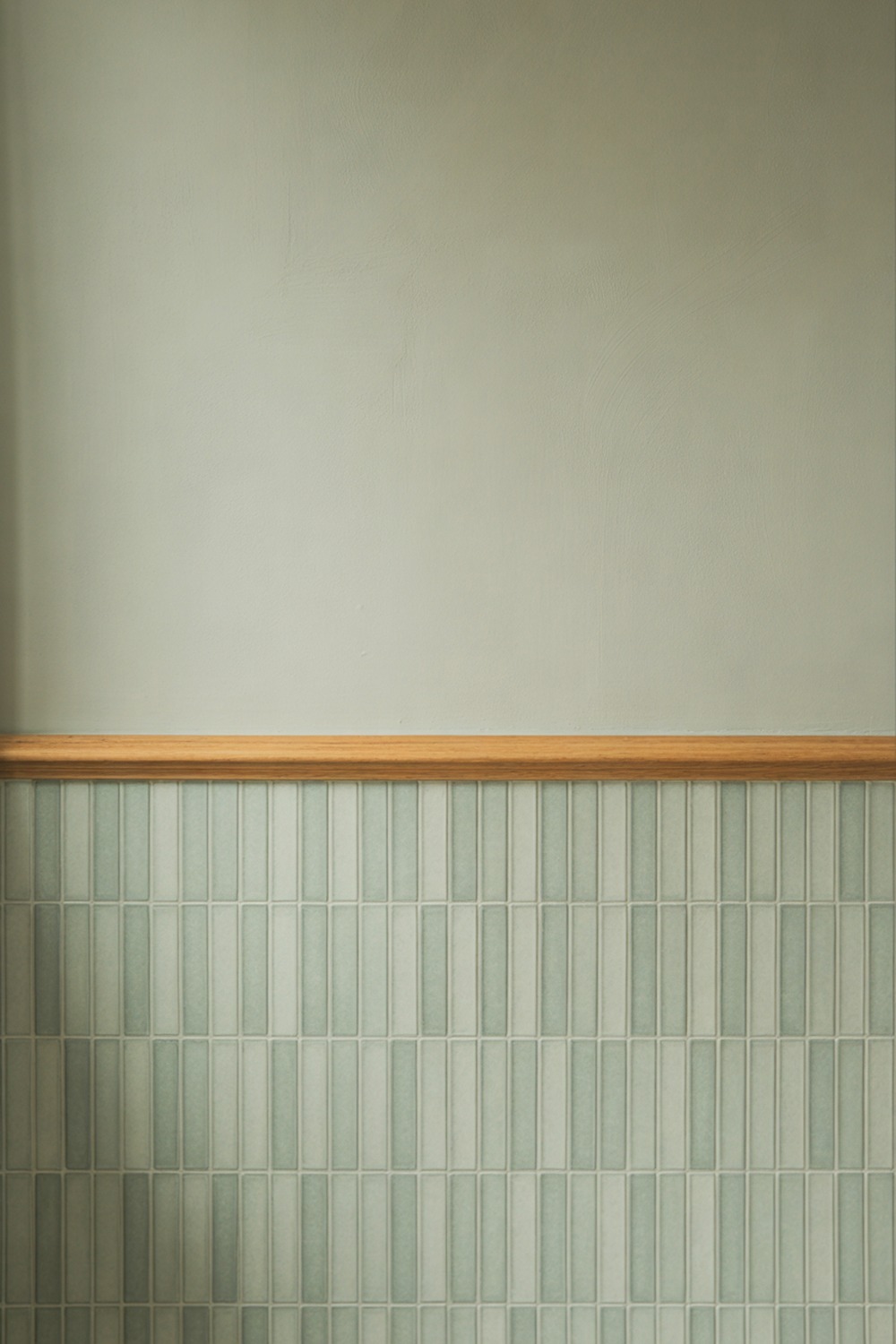
Half-tile, half-paint is exactly what it sounds like: tile the lower wall, paint the top, trim the join cleanly. It is the most budget-smart wall treatment there is.
Tile is expensive and paint is cheap, and the bottom metre is the only part that really takes the splashes anyway.
I love a vertical gloss or picket tile run to about waist height, capped with a slim oak rail, and a chalky eggshell above in a shade that picks up the tile. Think soft sage picket with a paler sage wall.
The one rule: set your rail height off the sink and mirror, not the middle of the wall, or the line will fight the fittings.
10. Floor-To-Ceiling Bathroom Tiles
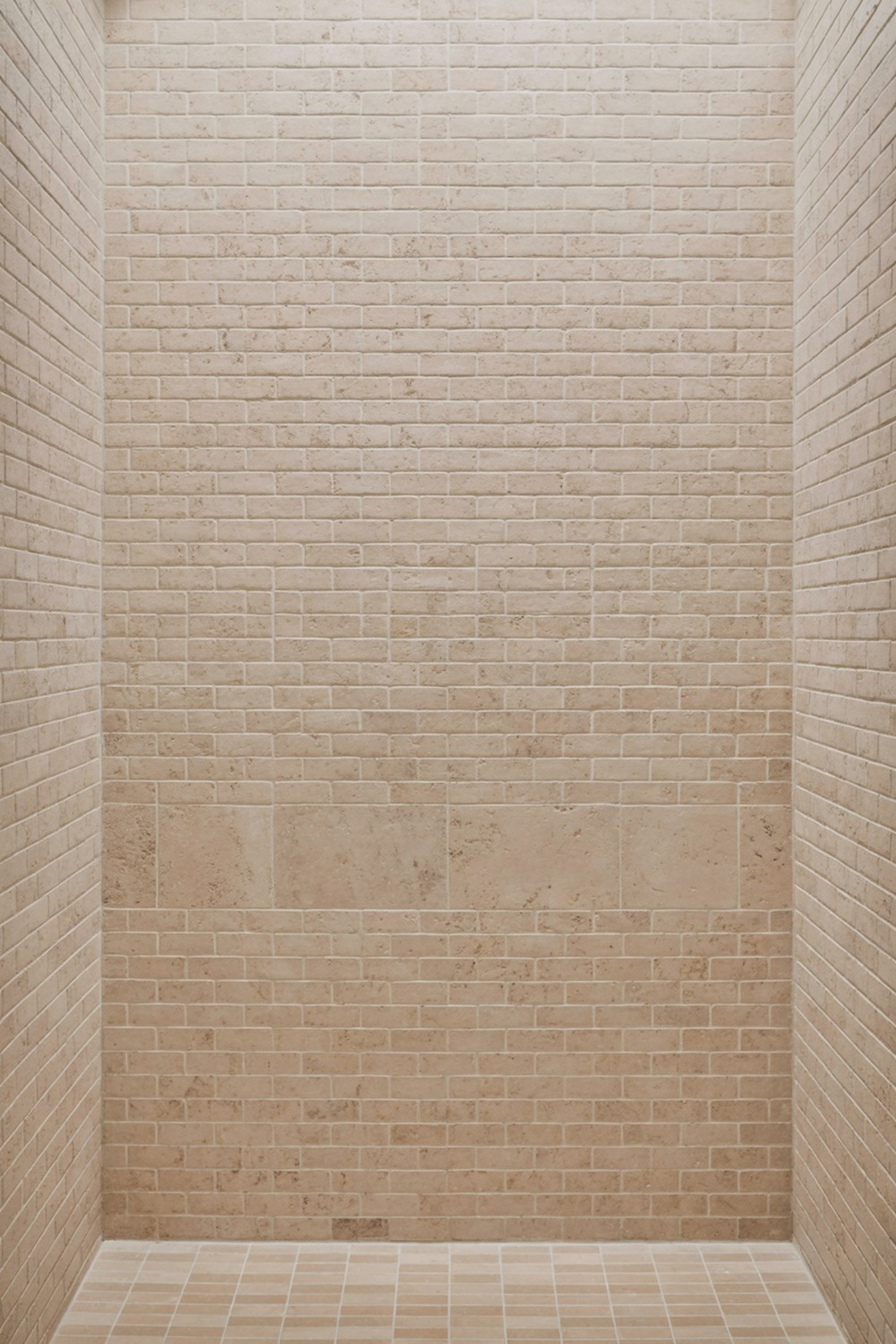
There is tiling a wall, and then there is running it all the way up, and the second one changes a room completely.
Stopping at shoulder height leaves a hard line that chops the room in half. Take the same tile to the ceiling and the walls feel taller, calmer, more spa than school corridor. Carry a 2×6 or large-format tile up at least the wet wall, grouted in a close tone.
11. Tub Surround Bathroom Tiles
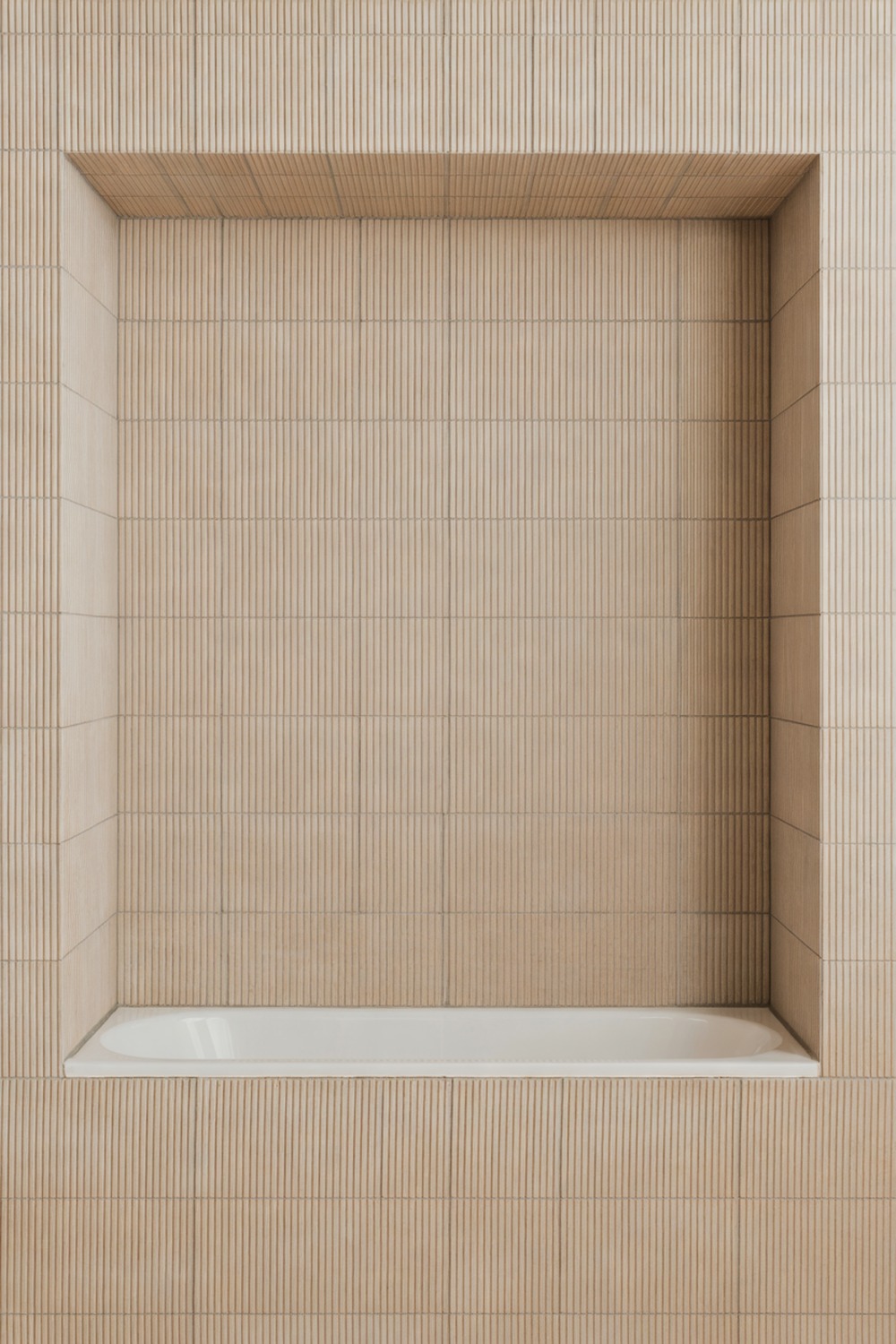
A freestanding tub under a window is the dream, but most of us have the built-in kind against a wall.
That three-sided surround is prime tile real estate, and I treat it like a headboard for the bath. A tile that climbs the back wall behind the taps, something with movement like vertical fluted ceramic or soft zellige, frames the tub and makes a plain built-in look designed.
Tile the back wall floor to ceiling in a textured 2×8 or fluted tile, keep the side walls plain in the same tile, matte grout. Centre the pattern on the tap wall.
12. Accent Wall Bathroom Tiles
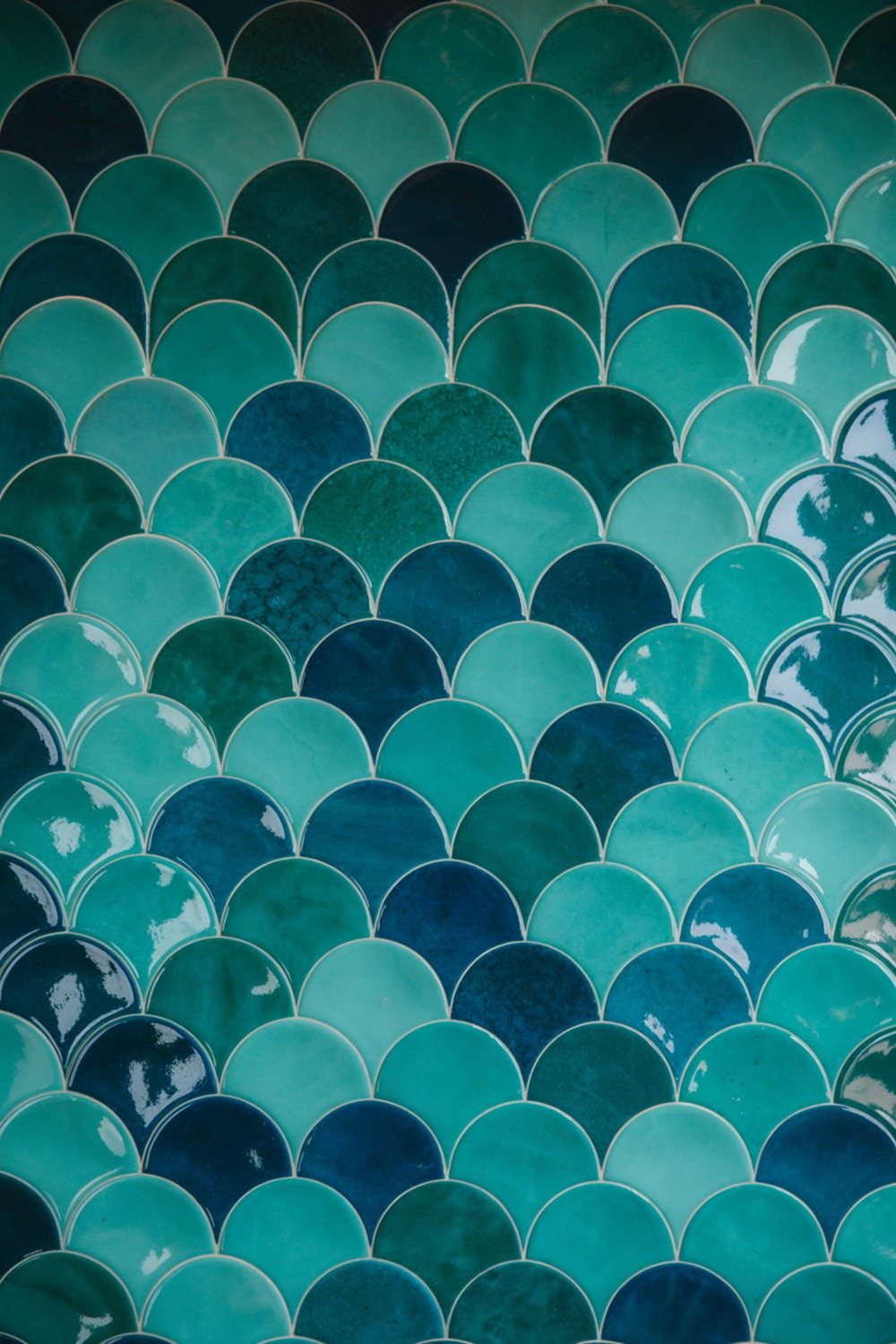
An accent wall only works if you are ruthless about which wall gets to be the loud one.
Pick exactly one, usually the wall you see first from the door or the one behind the vanity, and give it the showstopper. Everywhere else stays quiet.
I love a geometric relief tile or a glossy fish-scale in a single rich colour here, because the pattern reads as art when contained and as chaos when it is everywhere. A fish-scale in teal or burnt terracotta is my pick. Choose the wall before the tile, always.
13. Wet Room Bathroom Tiles
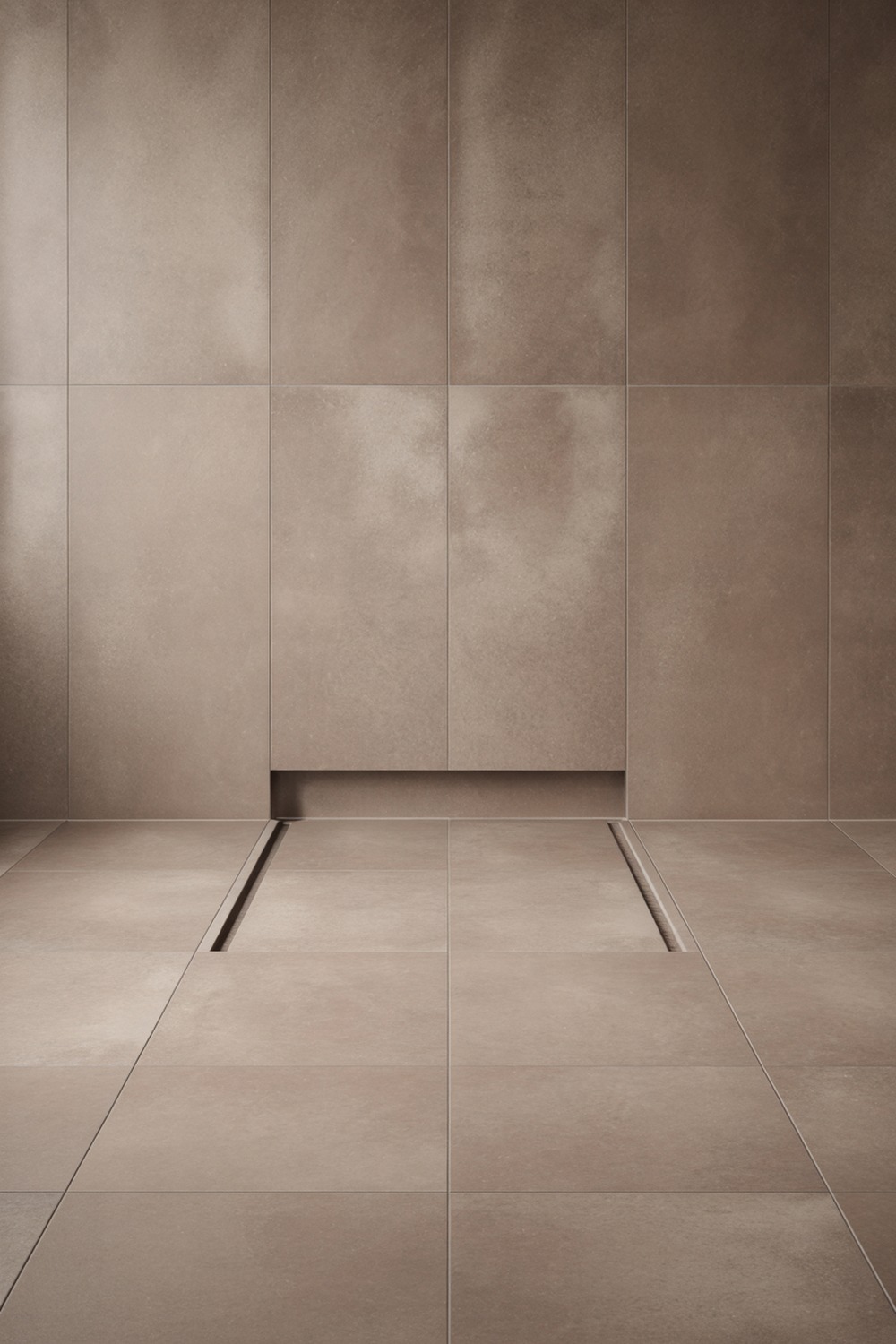
A wet room is a bathroom with no shower tray at all, just a gently sloped, fully tiled floor that drains on its own.
Because the whole floor gets wet, the tile has to be slip-safe and continuous. That constraint is secretly a gift.
Run one tile across the floor and up the walls and the room feels seamless and hotel-smooth, with no step, no frame, and no little tray lip to trip over.
I would use a textured R11-rated matte porcelain underfoot for grip, carried up the walls in a smoother finish of the same stone look for calm. A warm microcement look keeps it modern.
Start by settling the drain position. The tile layout follows the slope, never the other way round, and a tiler who argues that point is one to question.
14. Walk-In Shower Bathroom Tiles
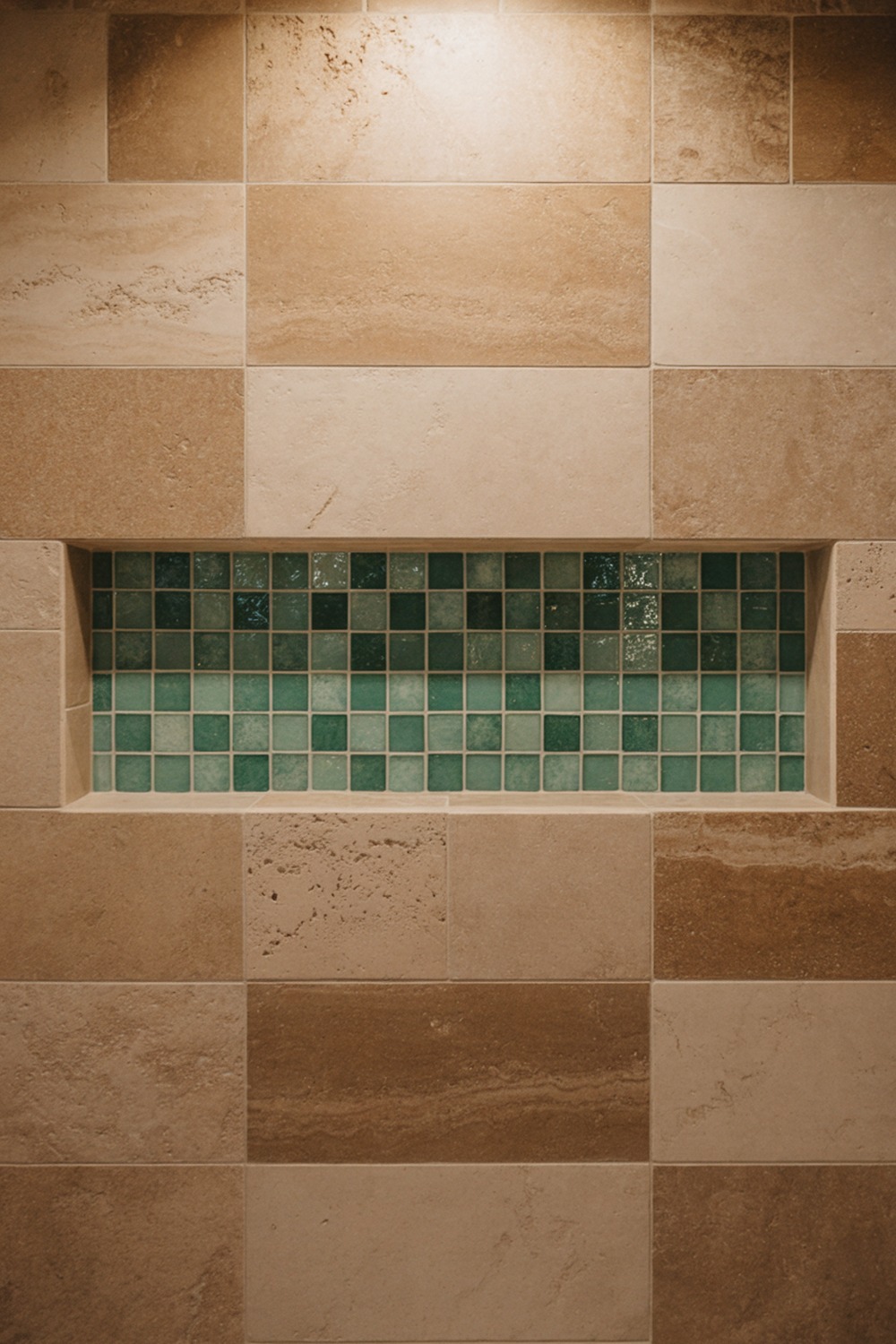
If I could upgrade only one thing in a bathroom, it would be a big, open, walk-in shower, and the tile is what sells the whole idea.
A frameless walk-in shows all of its tile at once, with no curtain or busy screen to hide behind, so the tile truly has to be the star.
A built-in niche is the small detail that makes the whole thing look custom rather than flat-pack. I love large-format travertine-look slabs on the walls with a contrasting mosaic lining the niche, a tiny hit of pattern in a sea of calm stone.
Use 600×1200 porcelain on the walls, a penny-round or pebble mosaic on the sloped floor for grip, and a jewel-toned zellige inside the niche.
Plan that niche before the tiler starts, not after, and set its height around the tallest bottle you own. These are the details nobody mentions until it is too late to move them. Worth every extra hour of planning.
15. Ensuite Bathroom Tiles
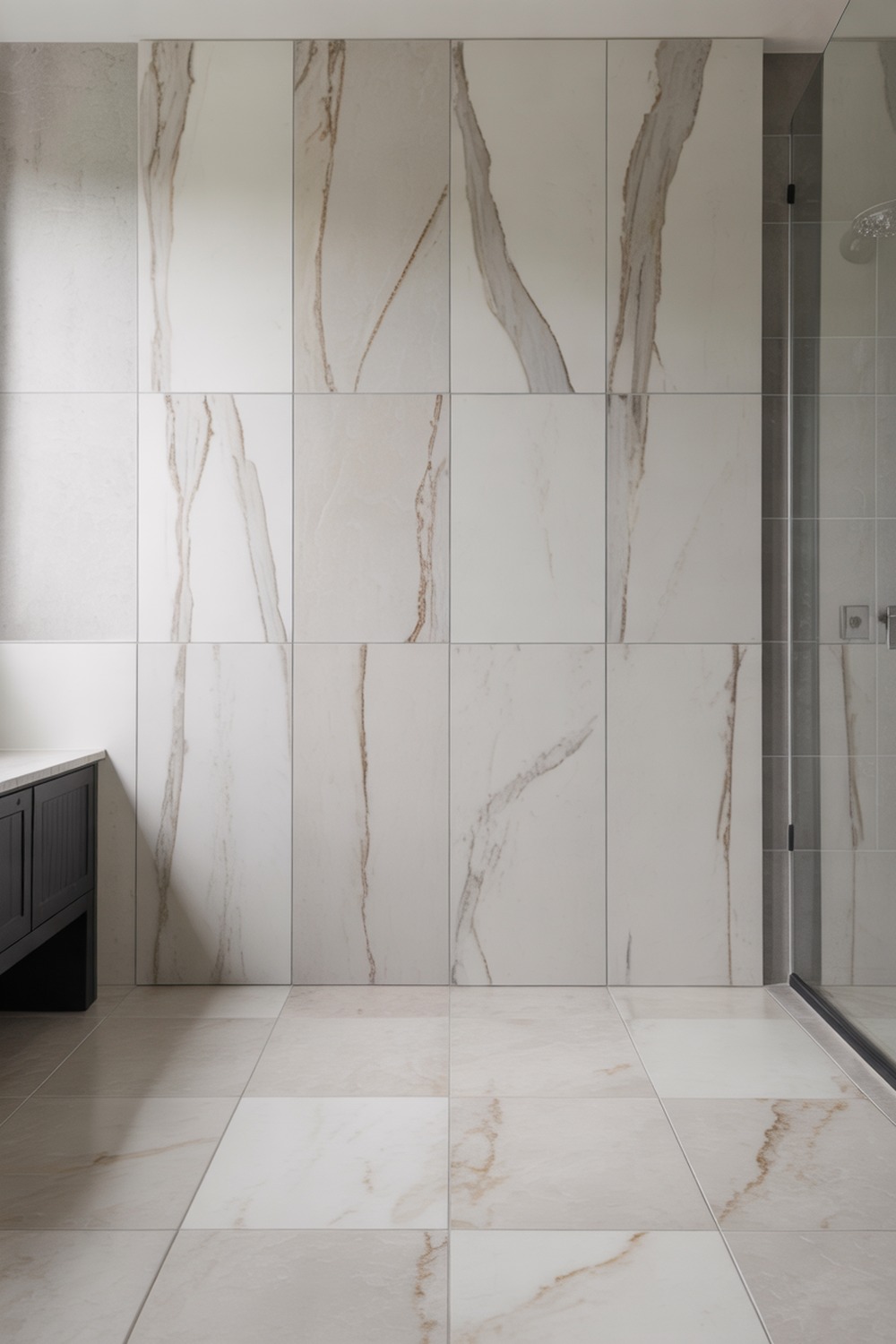
The main bathroom has to work for everyone; the ensuite only has to please you. So I tile it like the private retreat it is.
This is the grown-up, restful room, so I leave the loud pattern for the guest bath and let pure material do the talking. Honed marble-look porcelain, softly veined, laid large with the quietest grout, reads as real luxury without a single busy line.
A warm oak vanity and a brushed-brass tap keep all that stone from feeling cold. Begin with the vanity wall, where you stand every morning.
16. Textured Wall Bathroom Tiles
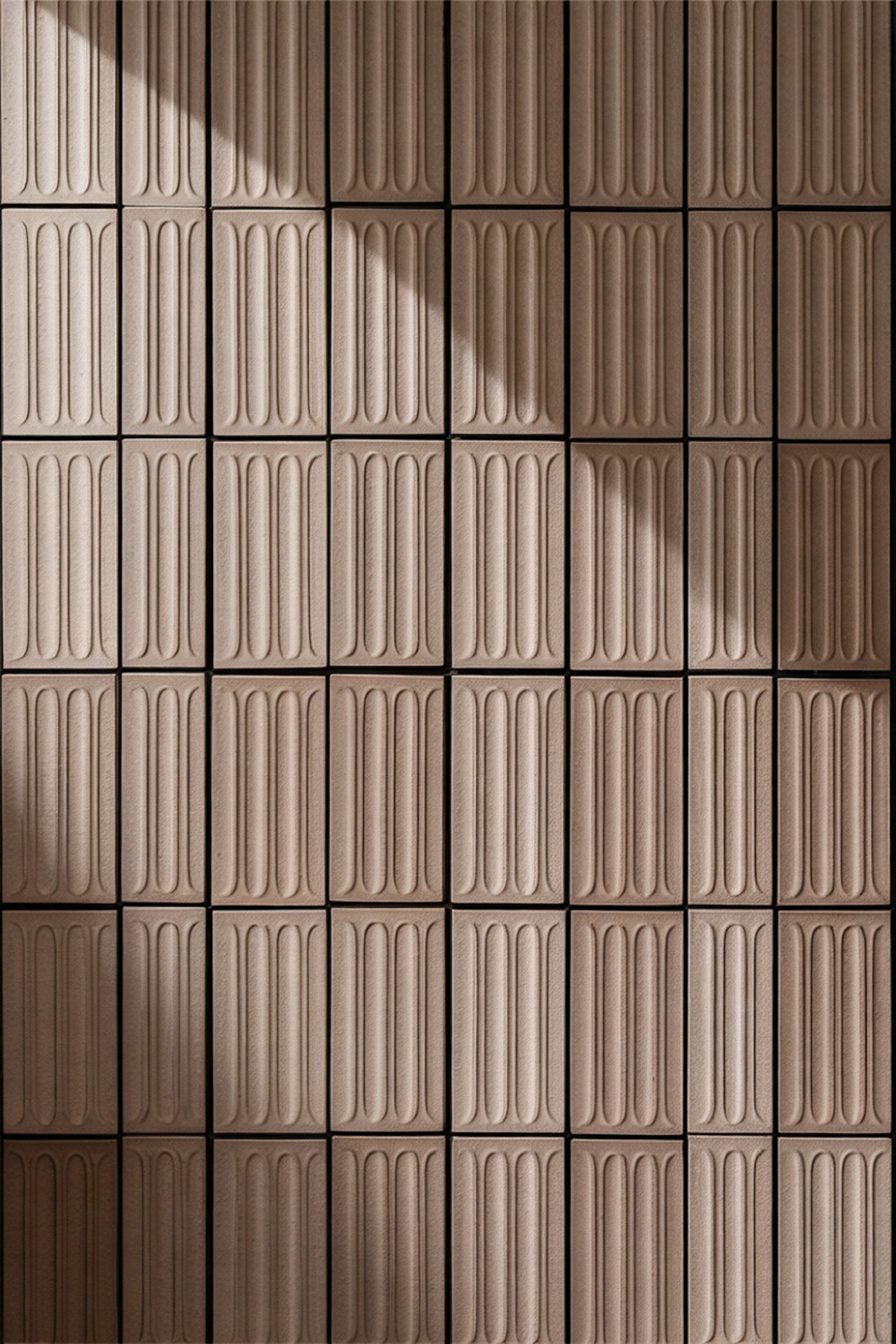
Why settle for a flat wall when tile can have depth you can run your hand across? Textured tile is having a moment, and for once I think the trend earns it.
A dimensional tile, fluted, kit-kat, or a chunky zellige with its handmade waver, throws tiny shadows as the light shifts, so a single plain colour never looks flat. Pick one soft tone like oatmeal or clay, keep it matte, and light it from the side.
Which Tile Placement Is Right for You
Still not sure where to begin? Match the tile to the room you actually have, not the one on the mood board.
A small or tiny bathroom wants large-format tile and tone-on-tone grout to feel bigger, never a busy little mosaic. A powder room or guest bath is your licence to go bold, floor to ceiling, because it never has to survive steam.
A hard-working family shower wants slip-safe porcelain and a splurge tile you can contain to one wall or a single niche. And for the fastest, cheapest win in the room, half-tile-half-paint hands you a finished wall for a fraction of a fully tiled one.
My one rule for everyone: decide the single wall or surface that gets to be the hero first, then keep everything else calm around it. That is the whole game.
Bathroom Tile, Answered
What does it actually cost to tile a bathroom? Think in bands, not price tags. Plain ceramic and basic porcelain sit at the budget end, handmade zellige and natural stone at the splurge end. The real surprise is almost always the labour, not the tile.
Can I tile a bathroom myself? A flat, dry accent wall or a simple half-height run is a realistic weekend job. A shower or wet room is a pro job, because the hidden waterproofing is what fails and you cannot see it once the tile is on.
How long does it take? A small bathroom is usually a few days of tiling once prep is done, plus a day for grout and sealing to cure before anyone showers. Patterned layouts and mosaics take noticeably longer, because every line is set by hand.
Which tile is worth spending on? The floor and the one feature surface you see first. Your feet and your eyes land there constantly, so they earn a better material. The plain back walls are where a budget tile disappears happily.
What do I ask the tiler for? Bring the exact tile size, finish, and grout colour, and ask for the layout to be centred on the main fixture, the tap wall or vanity, not the corner.
Pro tip: order 10 to 15 percent extra tile for cuts and future repairs, especially with handmade or patterned ranges that vary batch to batch.
Whatever room you have, start with one surface and one tile you genuinely love. Get that right, keep everything around it calm, and the whole bathroom pulls together. Now go find your spot.
More stories
Share this story