16 Bathroom Vanity Ideas for a Remodel You’ll Love

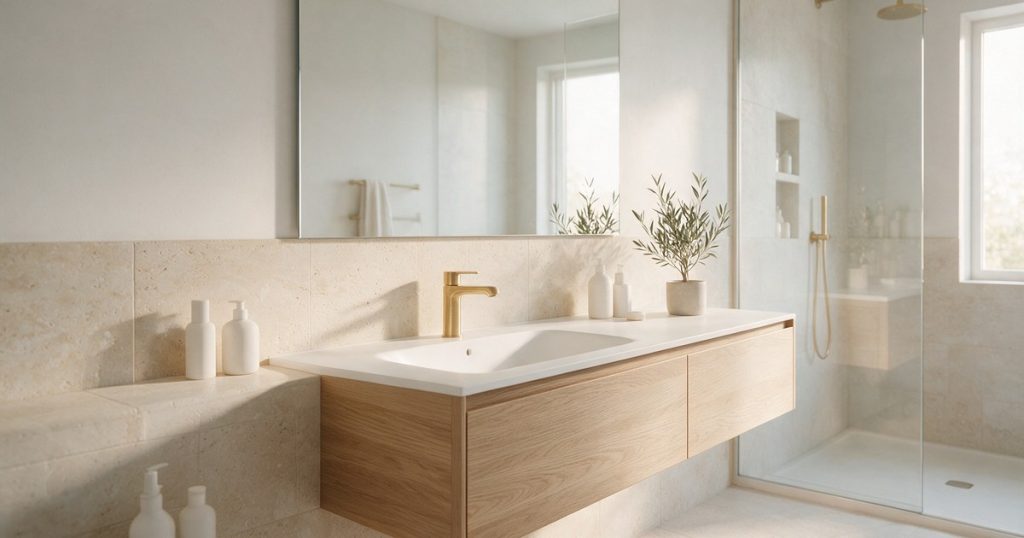
I will say it plainly: the vanity is the one piece in a bathroom remodel worth obsessing over. The tub is a luxury and the tile is backdrop. The vanity is where you stand every single morning with a toothbrush and an opinion about your own face.
Get it right and the whole room feels finished. Get it wrong and no pretty tile saves it. Here are sixteen looks I keep circling back to, from barely-there floating shelves to a brass-legged antique with real history in its drawers.
1. Floating Wall-Hung Vanity
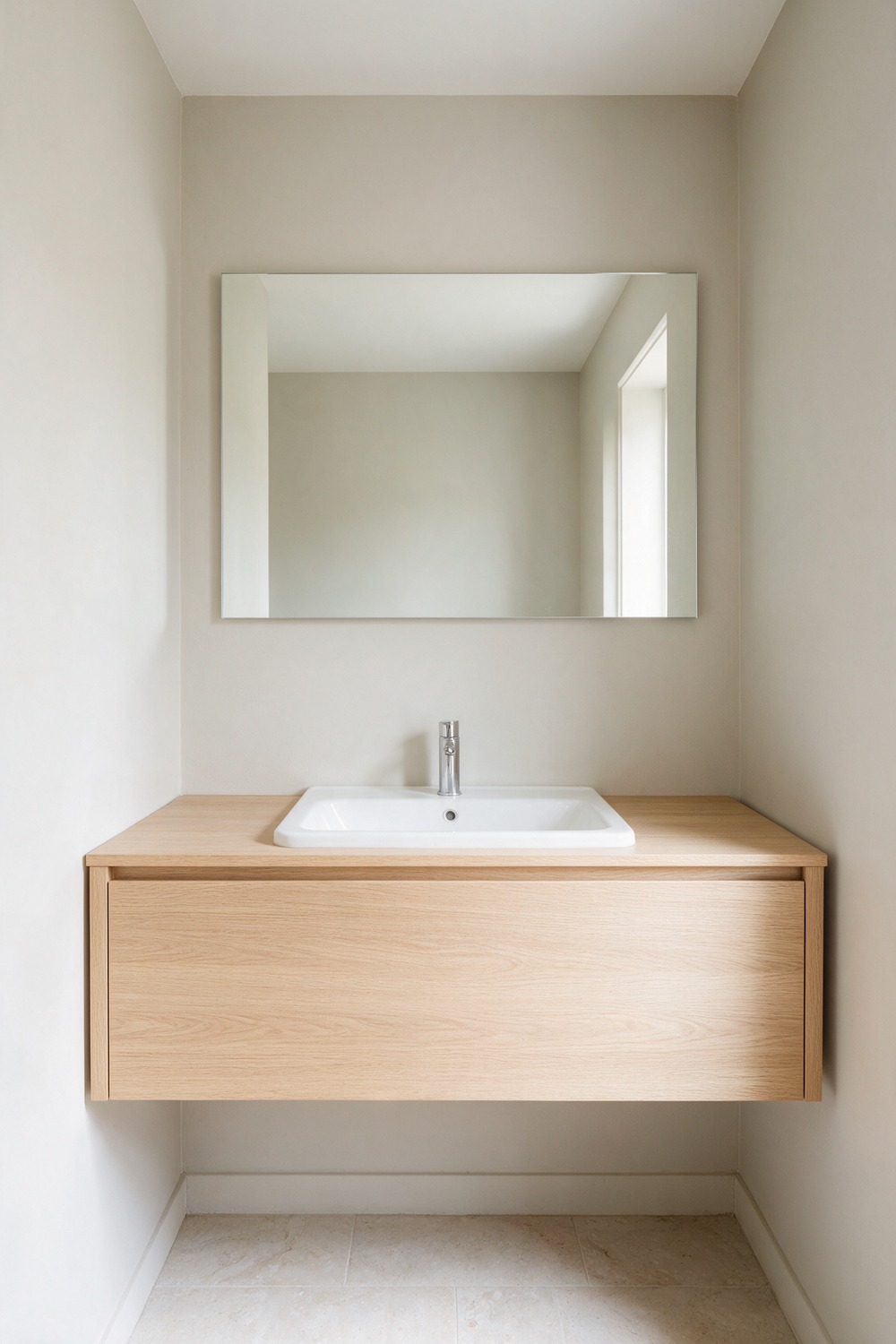
Nothing makes a small bathroom breathe like a vanity that never touches the floor. The tile runs right underneath it, and the room suddenly reads a size bigger than it is.
That is the whole trick. Keep it low and horizontal in pale oak, the basin set flush into the top, a slim chrome tap doing the talking.
To copy it: a 36-inch wall-hung oak cabinet, a wall in soft greige like Benjamin Moore Classic Gray, a long frameless mirror above. Start with the blocking behind the wall, because floating only works when the wall can actually hold it.
2. Double Sink Vanity
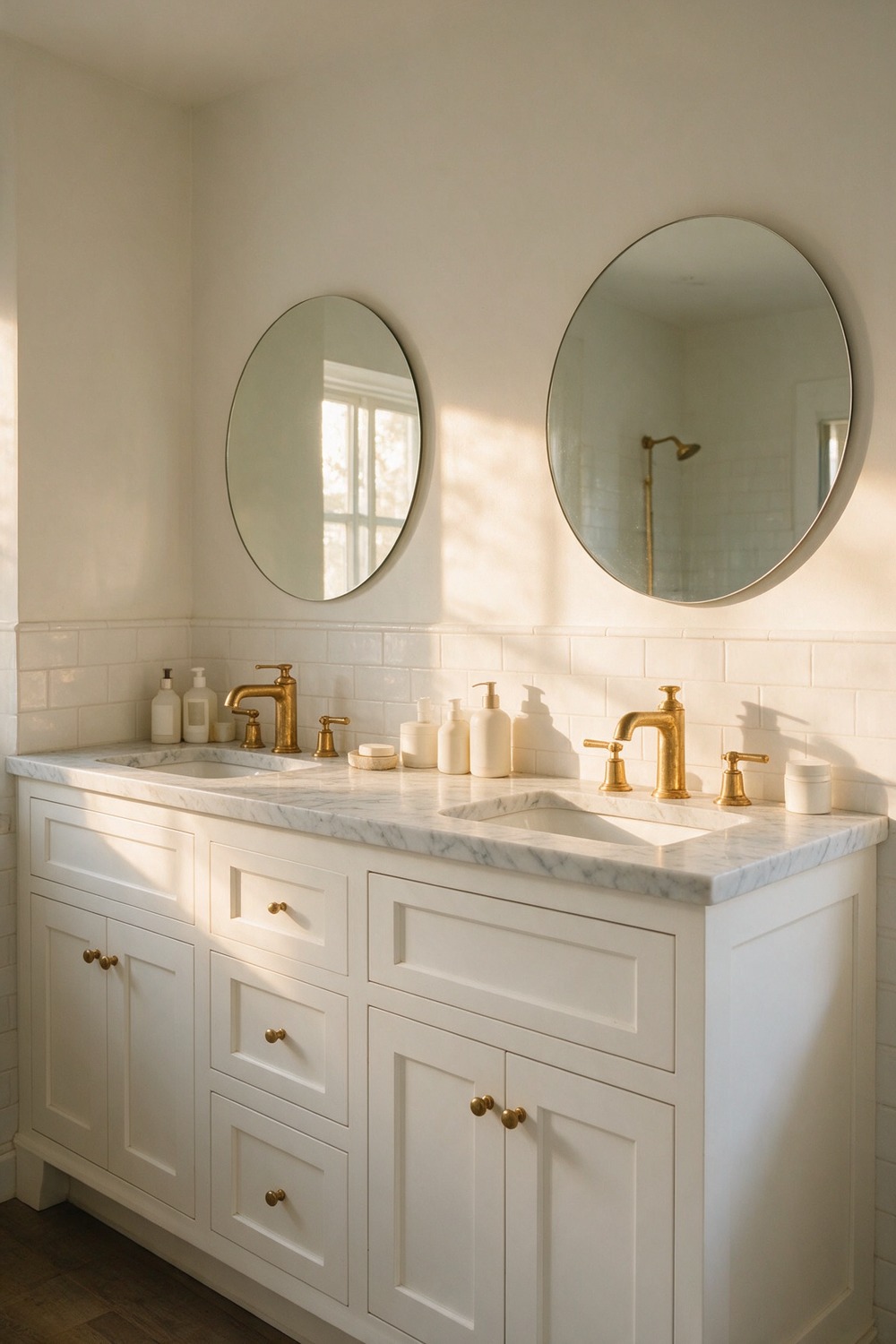
Two basins ends the morning traffic jam, and I will defend it to anyone sharing one sink with a slow flosser. Go wide and symmetrical: white Shaker drawers, a honed Carrara-style marble top, twin basins, unlacquered brass taps. Begin with the slab, the cabinet follows its colour.
3. Single Sink Vanity
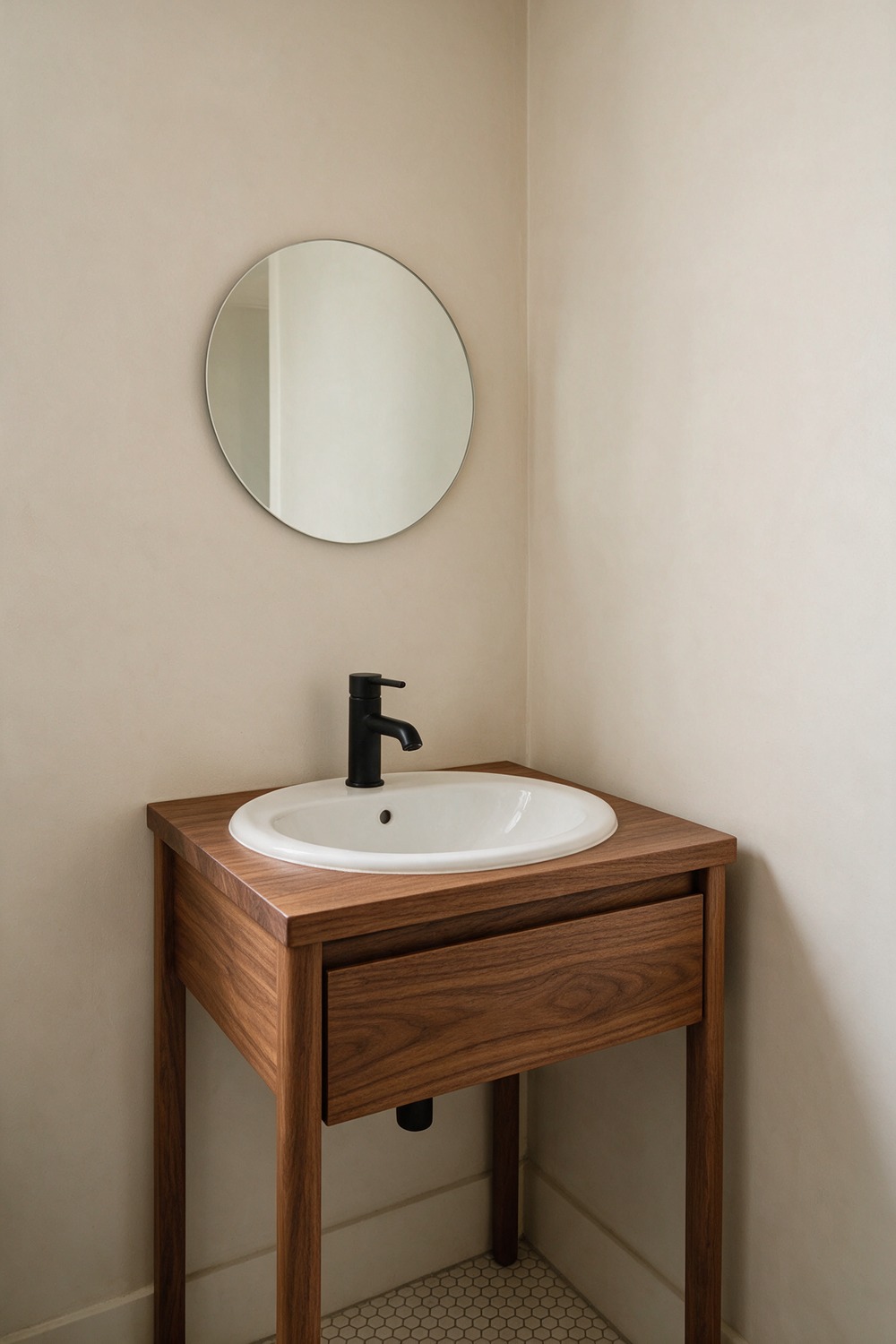
Here is a confession: most people buy too much vanity. A single sink with one deep, well-built drawer holds more than you expect and leaves room to actually move.
In a compact bath it is the grown-up choice. A narrow 24-inch walnut cabinet, a white ceramic basin, a matte black tap. A putty wall near Farrow and Ball Elephant’s Breath keeps it calm. Pro tip: choose drawers over doors, open shelving in a tiny room just shows the mess.
4. Freestanding Furniture-Style Vanity
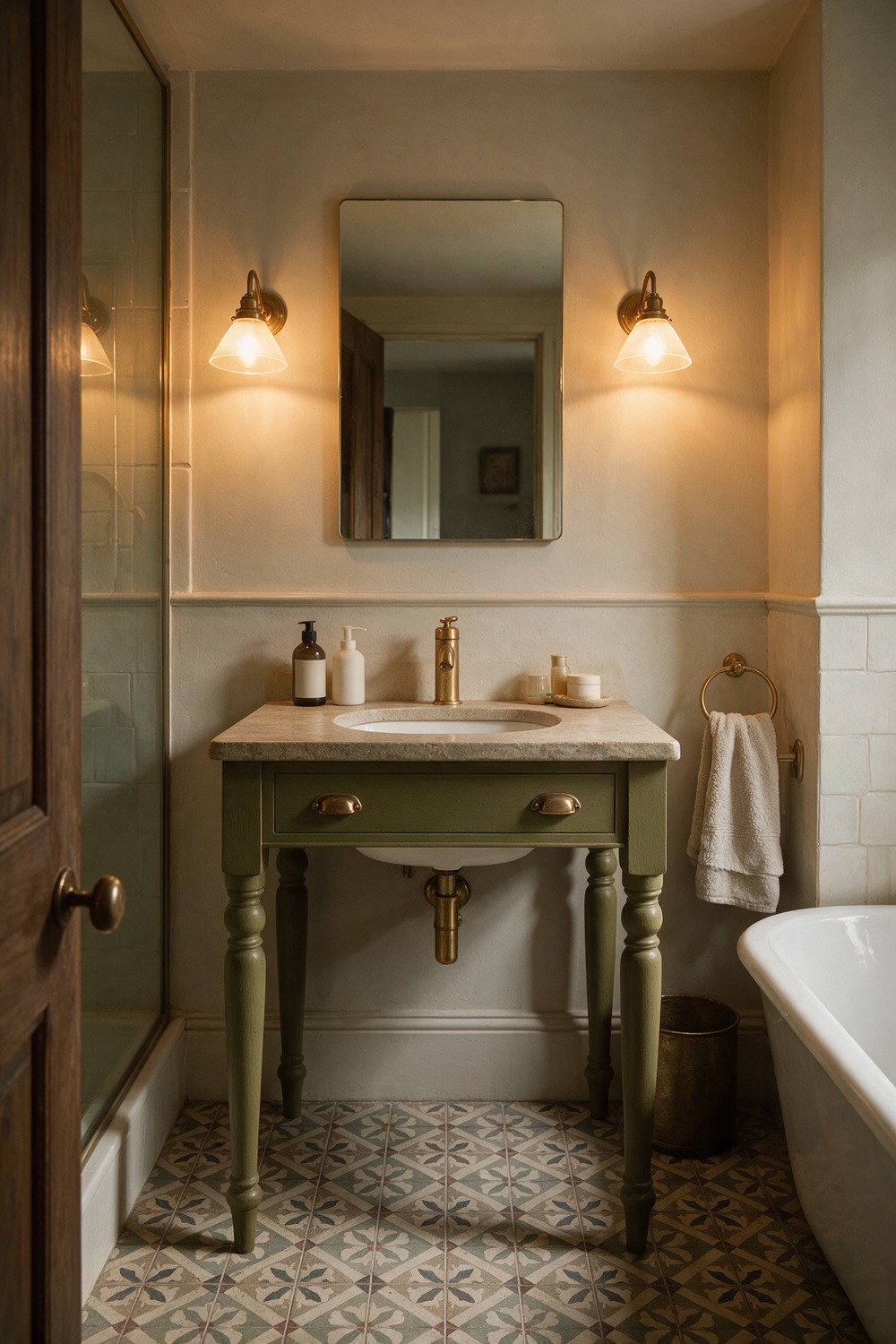
Some vanities want to look like plumbing. This one looks like furniture that grew a sink. Picture turned legs, a casegoods base in muted olive, a thick honed stone top, aged-brass fittings. It nods to Shaker joinery. Lead with the leg profile, it decides traditional or farmhouse.
5. Vessel Sink Vanity
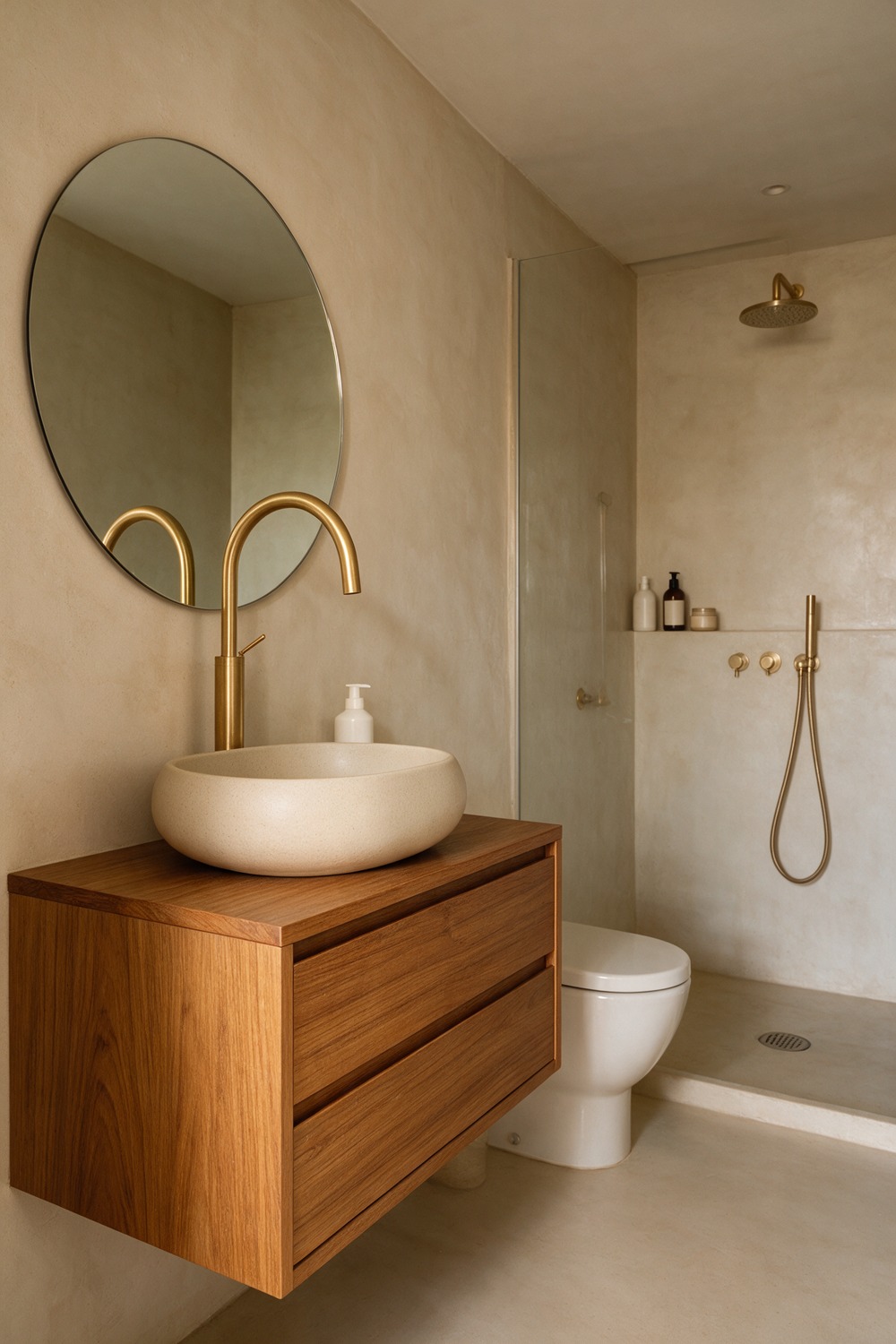
A vessel sink is a bowl sitting proudly on top of the counter instead of sinking into it. You either love the sculpture of it or you find it fussy.
I am firmly in the love camp. The move is to let the bowl be the jewelry.
A warm wood counter, a rounded matte ceramic basin in oatmeal, a tall gooseneck tap arcing over the rim. Keep the cabinet quiet so the bowl wins. Choose the basin first, the tap height depends on how tall the bowl stands.
6. Two-Tone Vanity
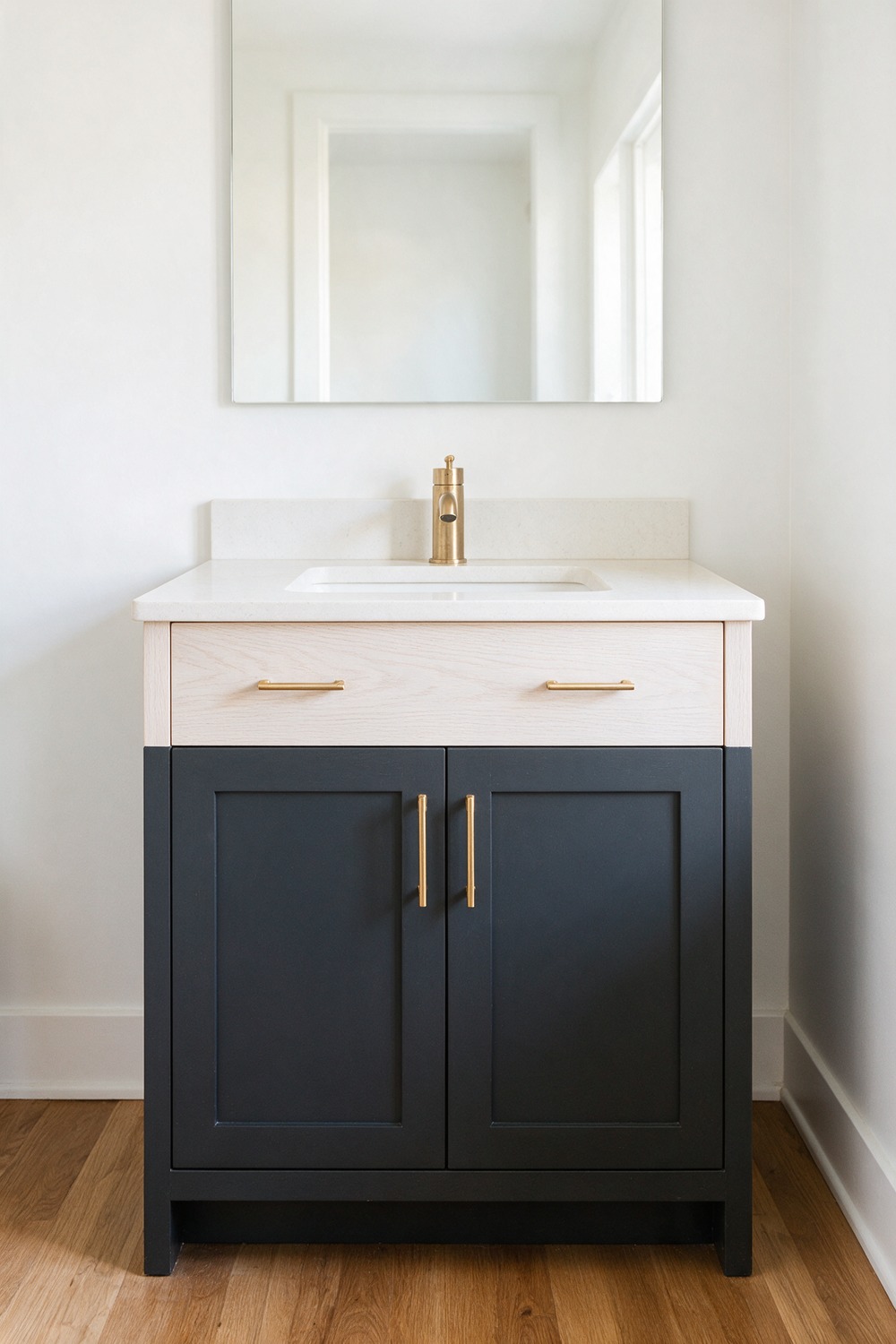
Why pick one colour when two do more work? A two-tone vanity, deep base and pale top, grounds a room the way a good pair of trousers grounds an outfit.
My recipe: an inky navy lower cabinet, a white oak upper, brass pulls bridging the two. It feels considered, like someone actually made a decision. A honed quartz top in warm white ties it together. Start with the dark anchor colour, then match the lighter wood to its undertone.
7. Fluted Front Vanity
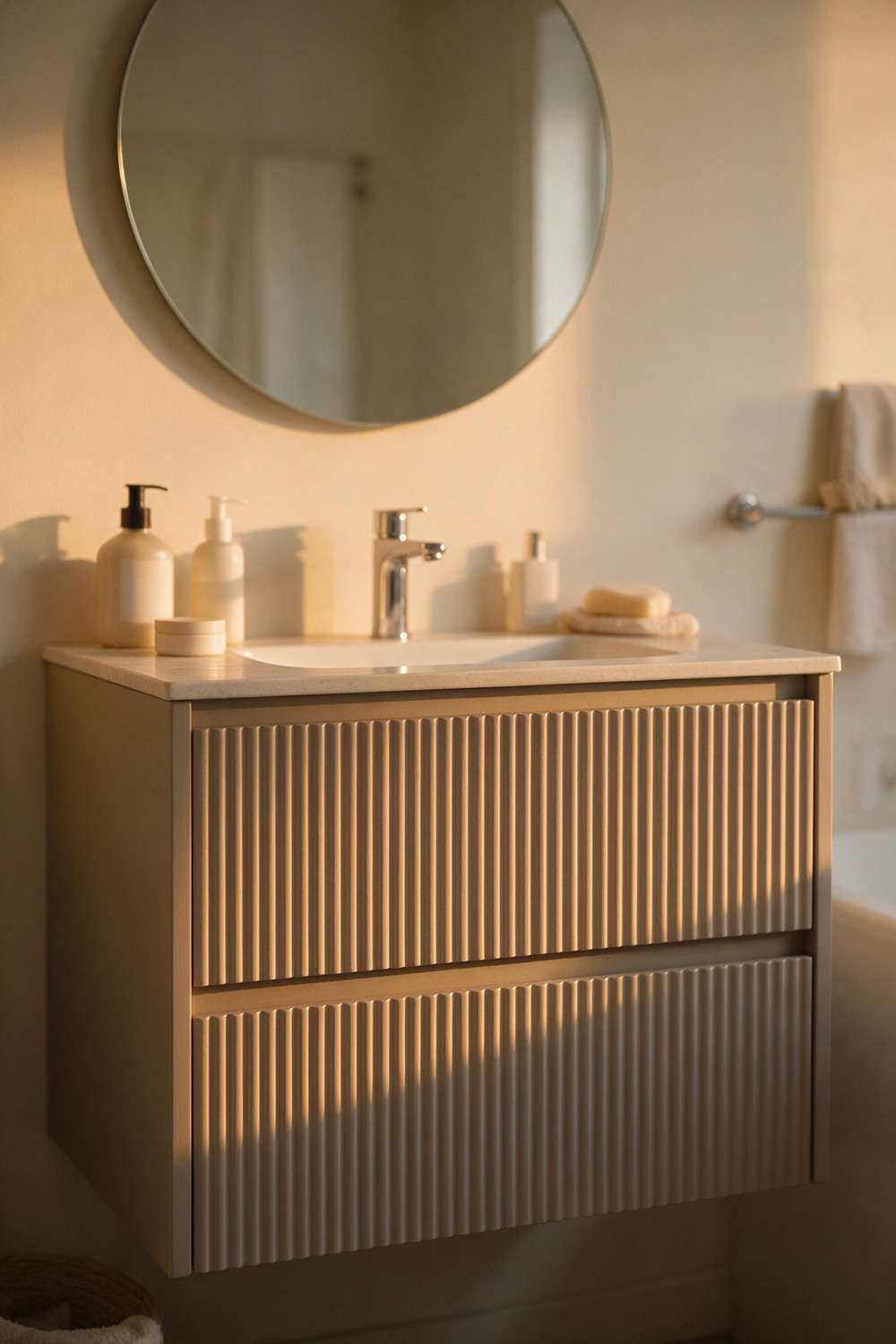
Texture is the quiet luxury nobody photographs well and everybody feels. Fluted fronts are those vertical ridges carved into the drawers. In white oak they read Scandinavian; in paint, almost Art Deco. Pair it with a plain stone top and let a 2700K bulb make the ridges glow at night.
8. White Oak Vanity
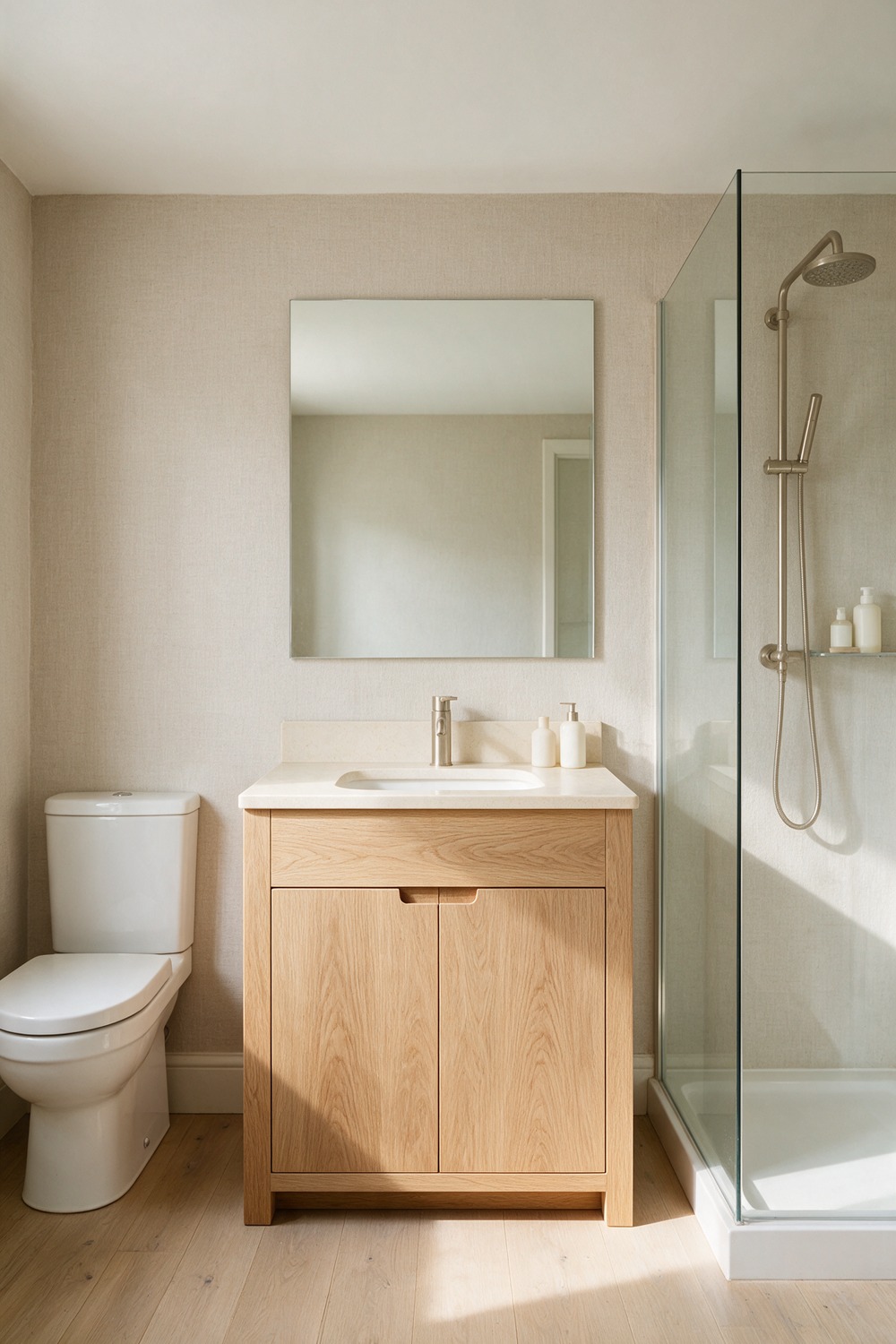
If I had to marry one material, it would be white oak. It is the Goldilocks of wood tones, warm without going orange, pale without going cold.
A flat-fronted white oak vanity with a seamless integrated basin is about as timeless as a remodel gets. Keep the grain visible and the hardware barely there, a recessed finger pull or a thin bar.
Natural linen walls, a soft cream stone top, and you are done. The oak does the warming, you just stay out of its way. Source the oak veneer first, every other colour reacts to it.
9. Concrete Vanity
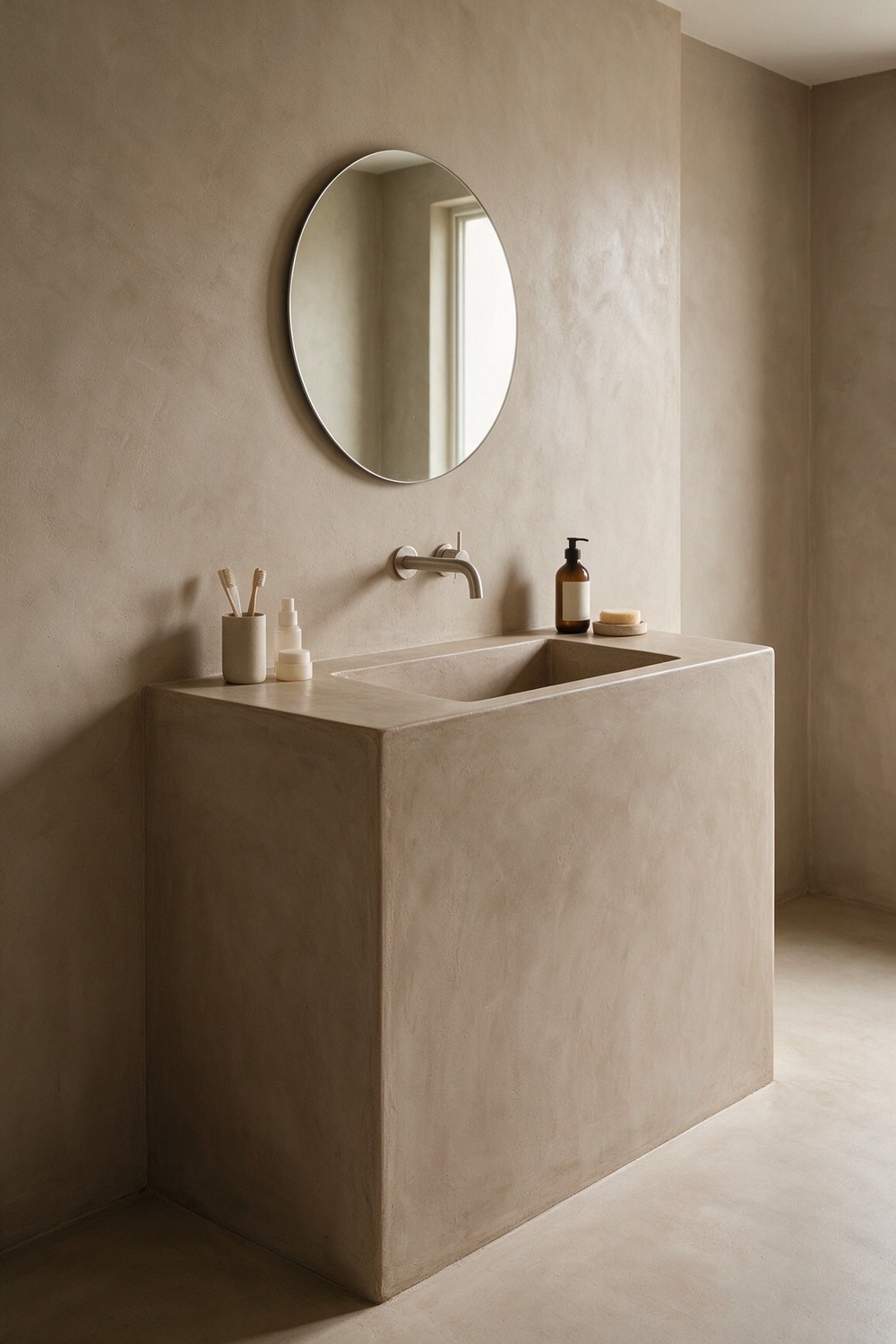
Concrete sounds cold until you actually touch microcement, which is soft and almost suede-like underhand. That surprise is the whole appeal.
Go monolithic: a microcement vanity with an integrated trough basin, no seam between counter and sink, in a warm greige that reads more clay than parking garage. A single wall-mounted tap keeps the top sculptural. Start with the colour, everything lives or dies on getting that undertone warm.
10. Marble-Top Vanity
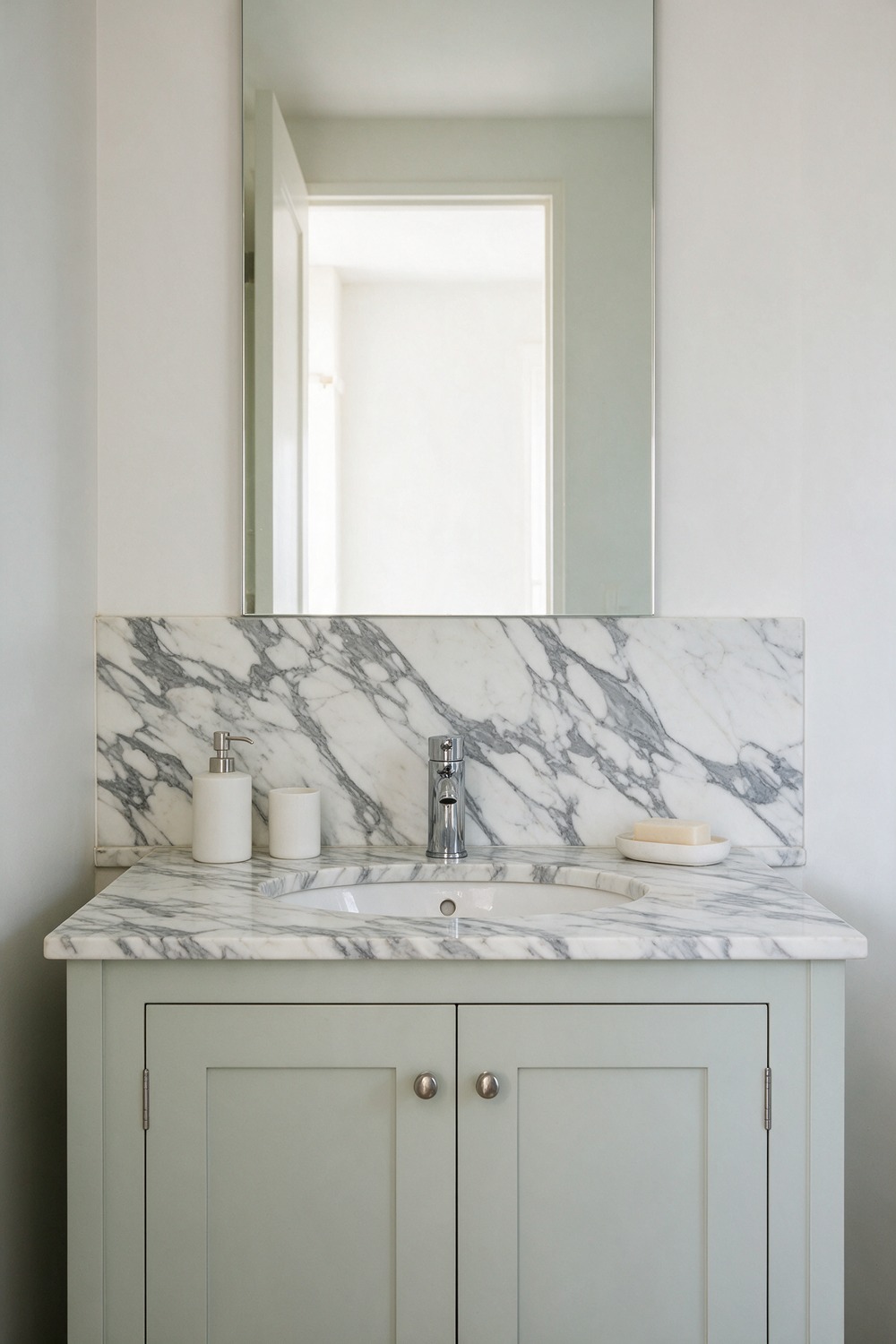
Marble has never gone out of style in two thousand years, and every slab is a one-off. Let the stone lead: a veined Calacatta top over a quiet grey-green cabinet, a simple undermount basin, polished nickel so nothing competes. Pick the slab in person, the veining is the whole design.
11. Open-Shelf Vanity
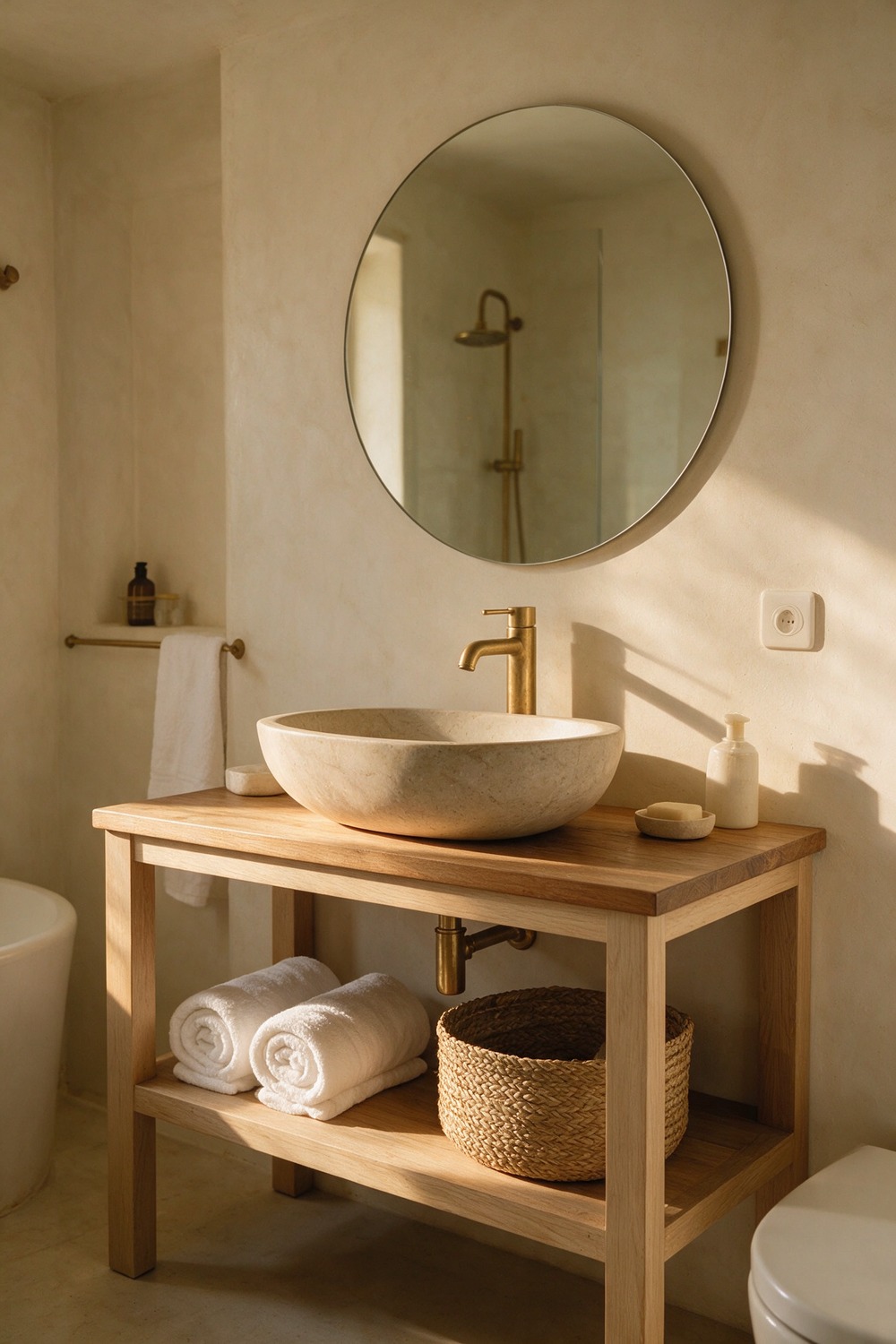
Open shelving under a sink only works if you are honest about laundry. If your towels are pretty and your discipline is real, this is the breeziest look going.
A light timber frame, an open lower shelf stacked with rolled linen towels and a woven basket, a stone vessel on top. It has a coastal, seaside-bathhouse ease. A limewashed wall finishes the mood. Begin with the basket, it hides the one thing you would rather not display.
12. Matte Black Vanity
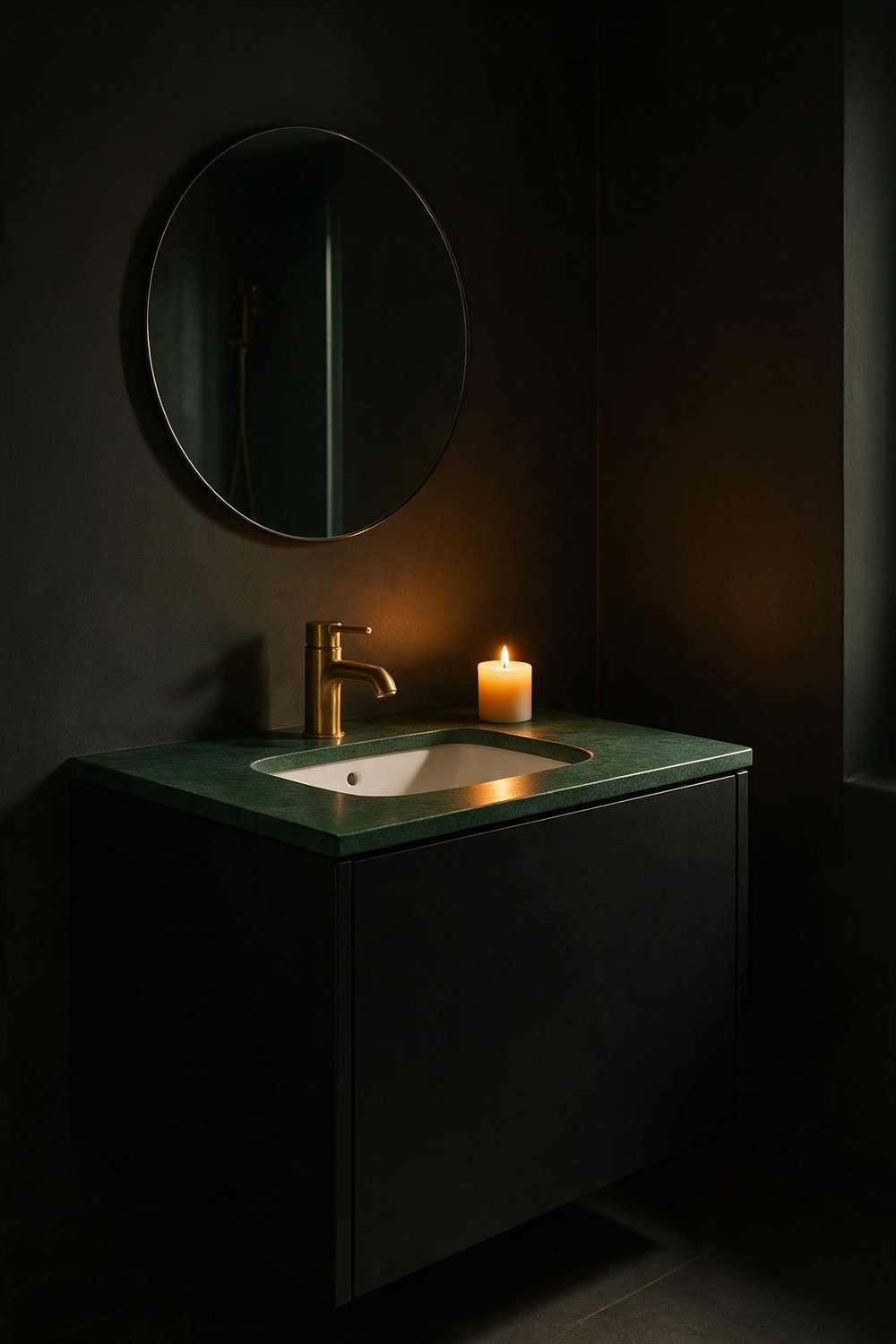
You know the drop in your shoulders when you walk into a room that feels like a proper hotel? A matte black vanity does that.
It is moody, grown-up, and more forgiving of fingerprints than you would think. Anchor a dark bathroom with a flat matte-black cabinet, a honed deep-green stone top, brushed brass hardware for warmth against the depth.
Low, warm lighting is non-negotiable, this look dies under cold white light. Keep the walls dark too, something like Farrow and Ball Railings. Start with the lighting plan, then build the dark around it.
13. Navy Blue Shaker Vanity
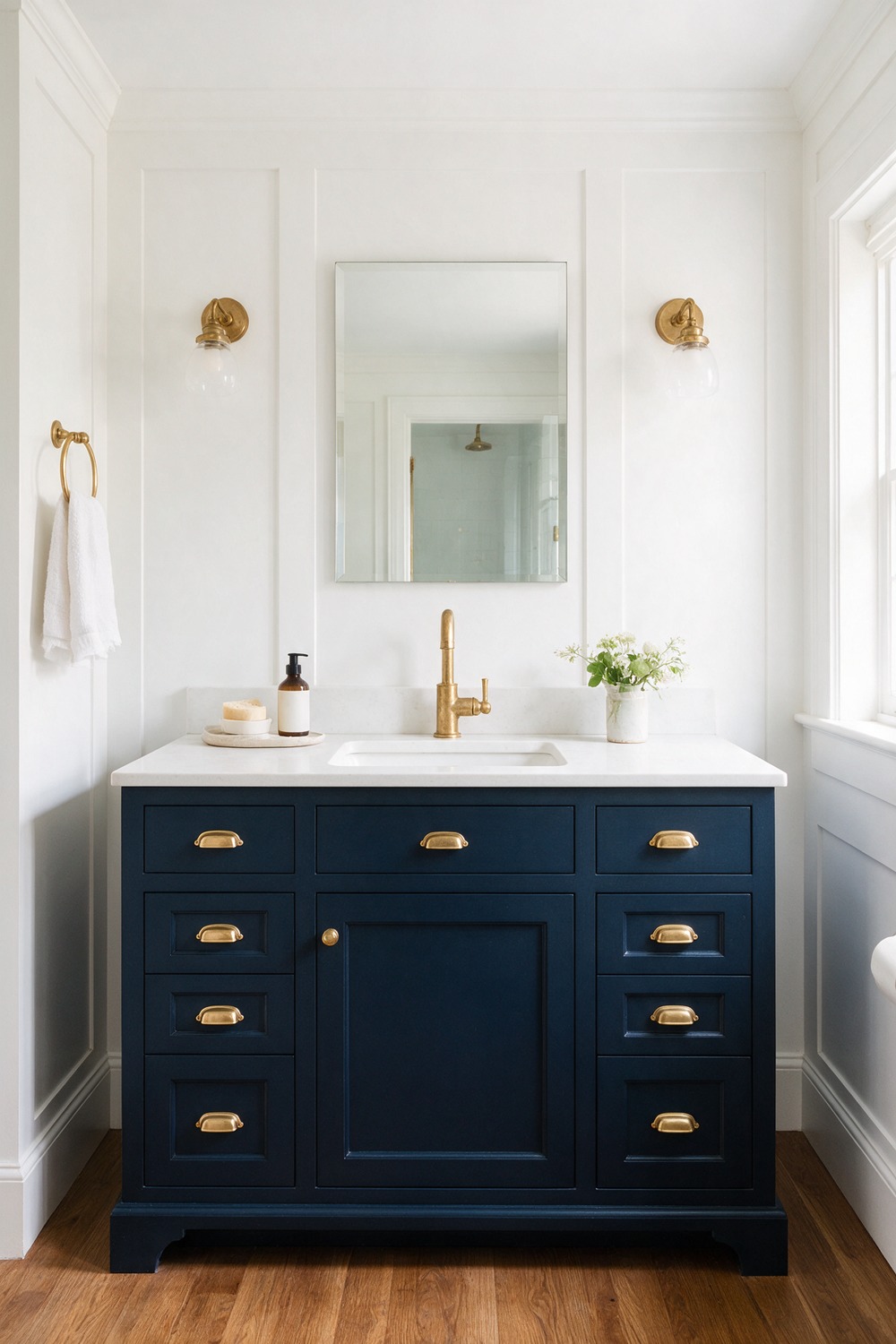
Navy is the dependable blazer of bathroom colours. It works with everything without trying too hard. A deep Hague Blue on a clean Shaker-front cabinet, a white stone top, unlacquered brass pulls to stop navy going flat. Live with the colour a day before committing the hardware.
14. Antique Dresser Vanity
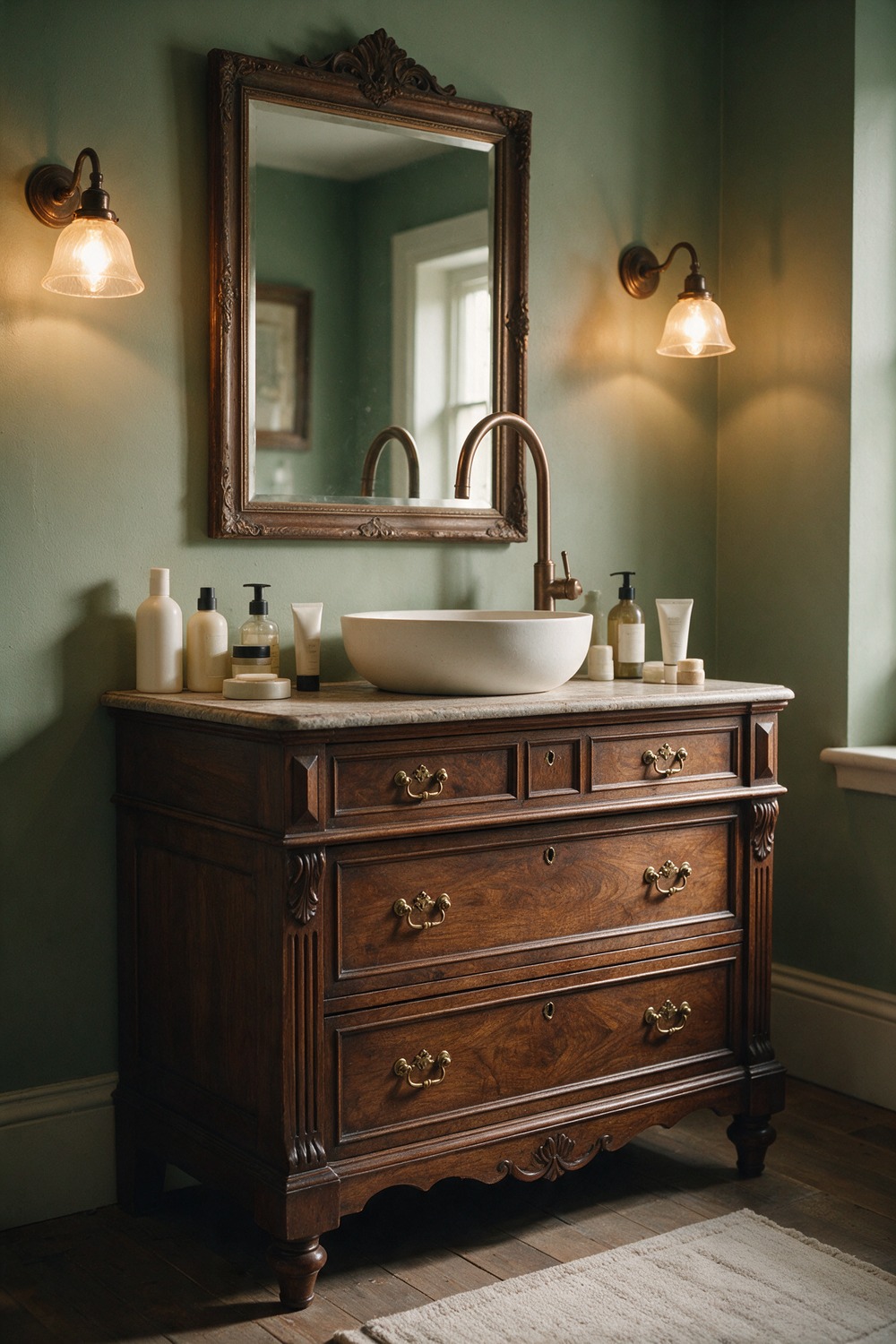
My favourite vanities were never vanities at all. Converting an old dresser into a sink base gives you carved detail and real age no catalogue can fake.
Find a sturdy Victorian or French-country chest in dark walnut, drop a stone top over it, set a vessel basin on top. The original brass drop-pulls and a little patina do the styling. Seal the wood well, then plumb to fit the dresser, not the other way round.
15. Wall-Mounted Faucet Vanity
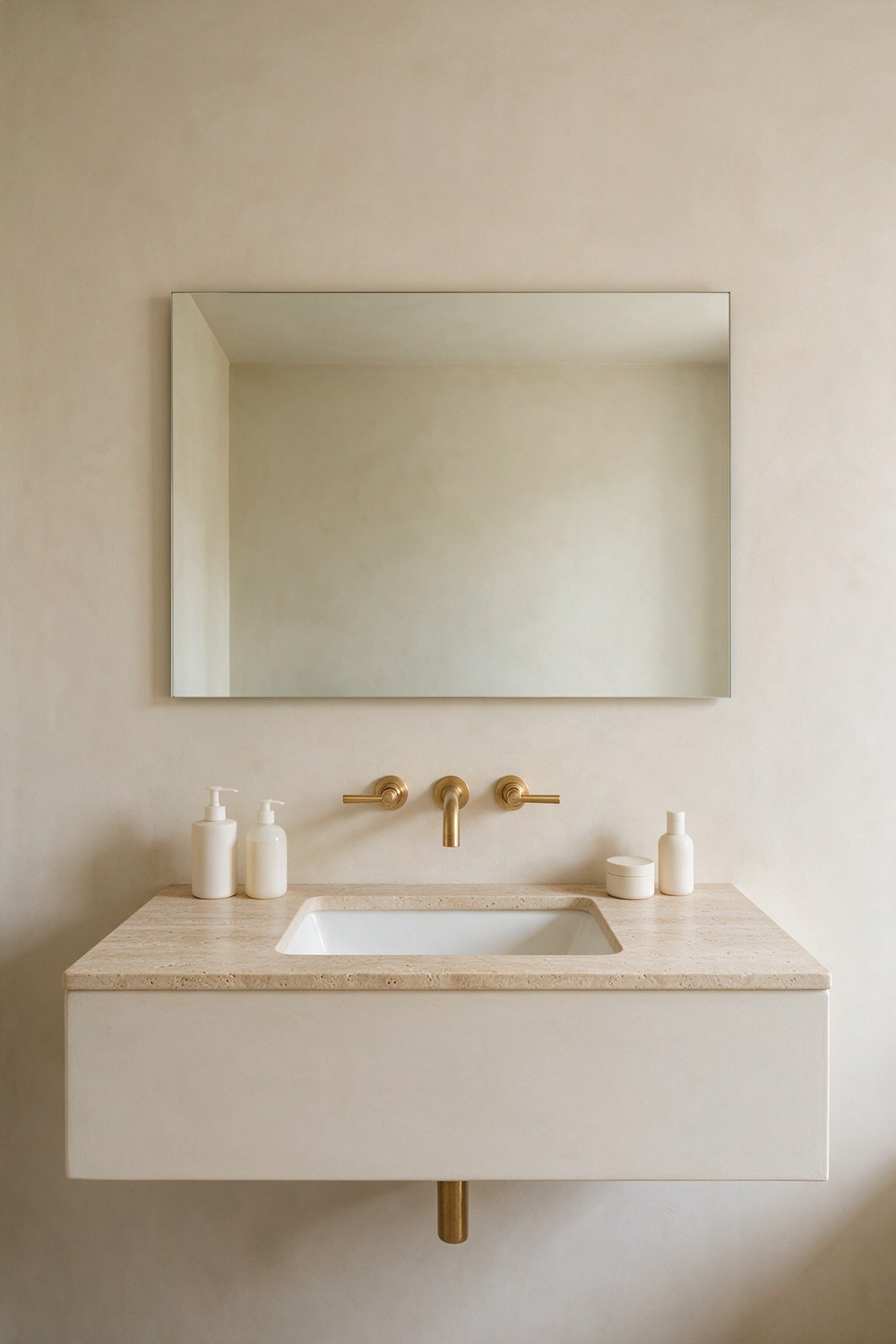
The small move that changes everything: put the tap on the wall instead of the counter. The whole top goes clear, easy to wipe, quietly architectural.
Pair a wall-mounted tap with a slim floating vanity and an integrated basin, so the water seems to appear from nowhere. A honed travertine top reads expensive here.
In brushed brass against a limewashed wall it feels like a spa. Do the plumbing homework first, the valve goes in the wall before the tile does. This is a decision you make early or not at all.
16. Sage Green Vanity
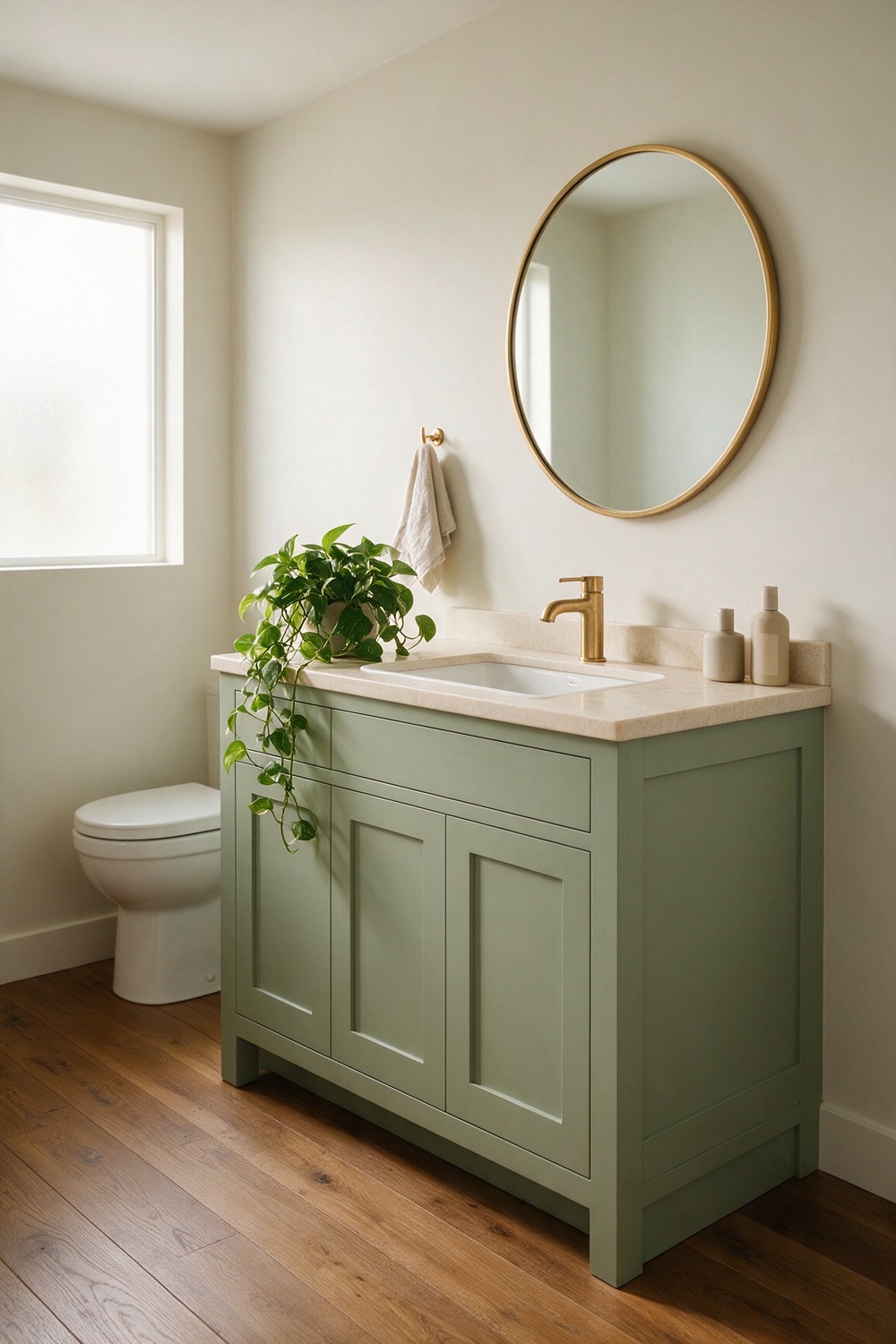
Green is the colour everyone is reaching for, and sage is the gentlest way in. Soft, a little sun-faded, never shouty. It is calm you can paint on.
A muted sage front near Card Room Green, a creamy stone top, brass hardware. A round mirror and a trailing pothos tip it toward the garden. Lovely, isn’t it, how one quiet colour does so much? Start with the green, then choose a warm cream stone.
Which Bathroom Vanity Style Is Right for You
Start with your actual room, not your Pinterest board. Tight on space? A floating wall-hung or single-sink vanity gives you back the floor and the calm. Sharing with someone slow at the sink? Double up.
Chasing a feeling over a footprint is fair too. I reach for white oak or sage when I want serene, matte black or navy when I want that hotel hush, an antique dresser when a new build feels too new.
And if you only change one thing, move the tap to the wall. It is the cheapest way to look like you hired someone.
Bathroom Vanity Remodels, Answered
How much should I budget for a vanity remodel? In rough bands: a ready-made cabinet and a basic swap are the low end, a custom cabinet with a stone top lands mid, a full custom build with slab marble is the splurge. The countertop shows the money most.
What is actually DIY versus a job for a pro? Painting a cabinet, swapping hardware, and styling the shelf are a happy weekend. A wall-mounted tap, a floating vanity, or any new plumbing line is a plumber’s call, the valve and the blocking have to be right inside the wall.
How long does a vanity swap take? A like-for-like replacement is often a single day. Move the plumbing, add a wall tap, or wait on a custom stone top and you are looking at a couple of weeks, mostly spent waiting on the fabricator.
What is the one thing worth spending on? The countertop. A beautiful honed stone top lifts even a modest cabinet, while a cheap top drags down an expensive one. After that, the tap, you touch it every day.
What do I ask the showroom or fabricator for? Bring the cabinet width and the sink type, then ask for the stone in a honed finish, the exact basin cutout, and whether your tap is deck-mounted or wall-mounted. Those three answers prevent most remodel surprises.
Pick the one vanity up there that made you lean in, then take a single step. Tape a paint chip to the wall, go and touch a slab. The rest of the room will follow it, and the corner you stand at every morning gets a little more yours.
More stories
Share this story