17 Bathroom Tile Materials That Make a Space Feel Expensive

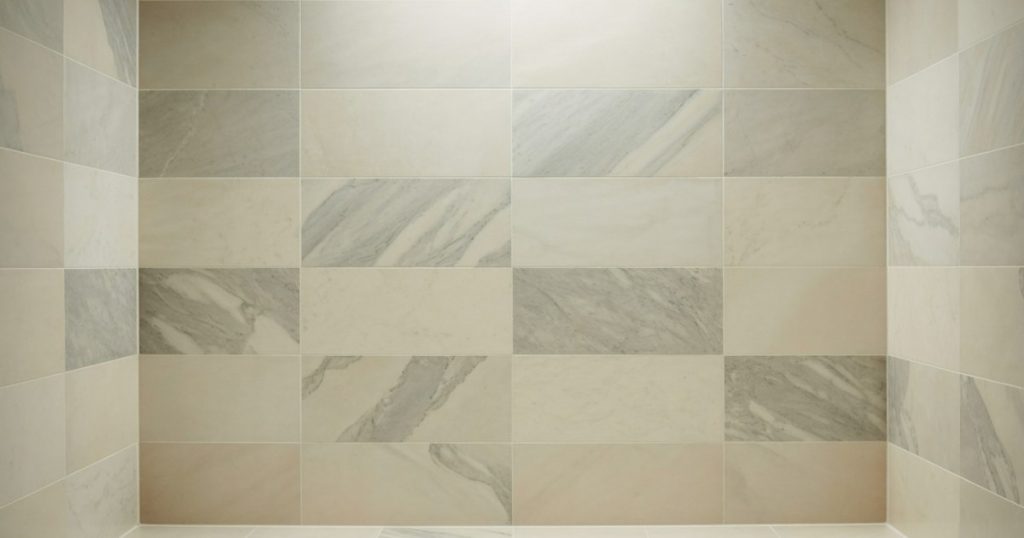
Paint gets all the glory, but tile is where a bathroom actually earns its keep. It is the surface you stand on barefoot, splash every morning, and stare at from the tub. Get the material right and the whole room reads as considered.
Here is what I have come to believe: the colour of a tile matters far less than what it is made of. A material with soul, honed marble, tumbled travertine, speckled terrazzo, does work no paint chip ever could.
It catches light, holds texture, and ages like it means it.
Below are 17 tile materials, from quiet natural stone to tiles that glint, and exactly how I would use each one. Let’s find the surface your bathroom has been missing.
1. Marble Bathroom Tiles
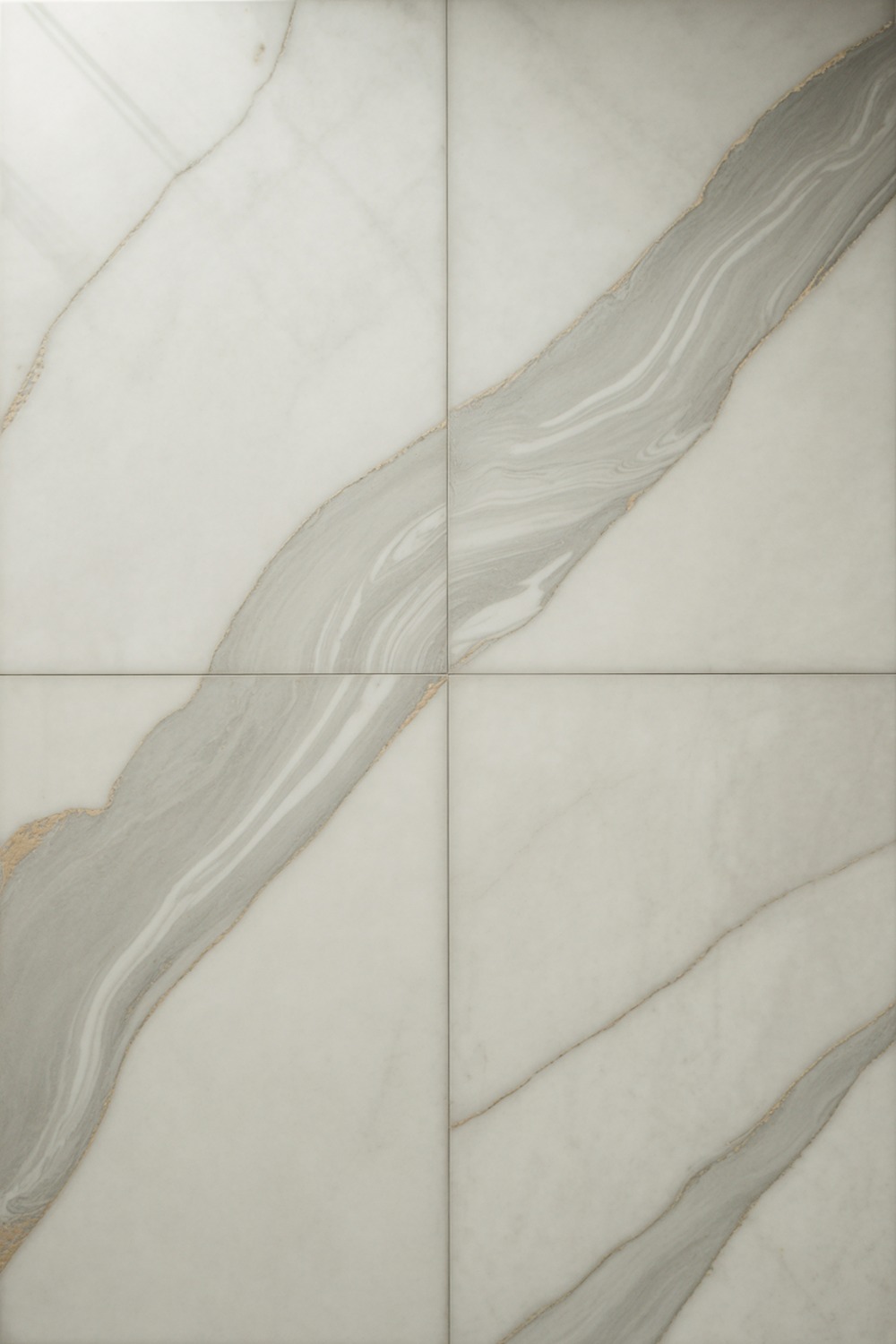
Marble rewards scale. The tiny mosaic version greys at the grout within a year, so go large instead.
Large-format honed marble, soft grey veining on a pale ground, laid in 60cm squares so the pattern runs almost seamless. Think Calacatta with its bold golden veins, or quieter Carrara.
Honed, never high polish, so it reads calm rather than glassy. Match the grout to the palest tone in the stone and the seams all but vanish. Start with one slab-look wall behind the vanity.
2. Terrazzo Bathroom Tiles
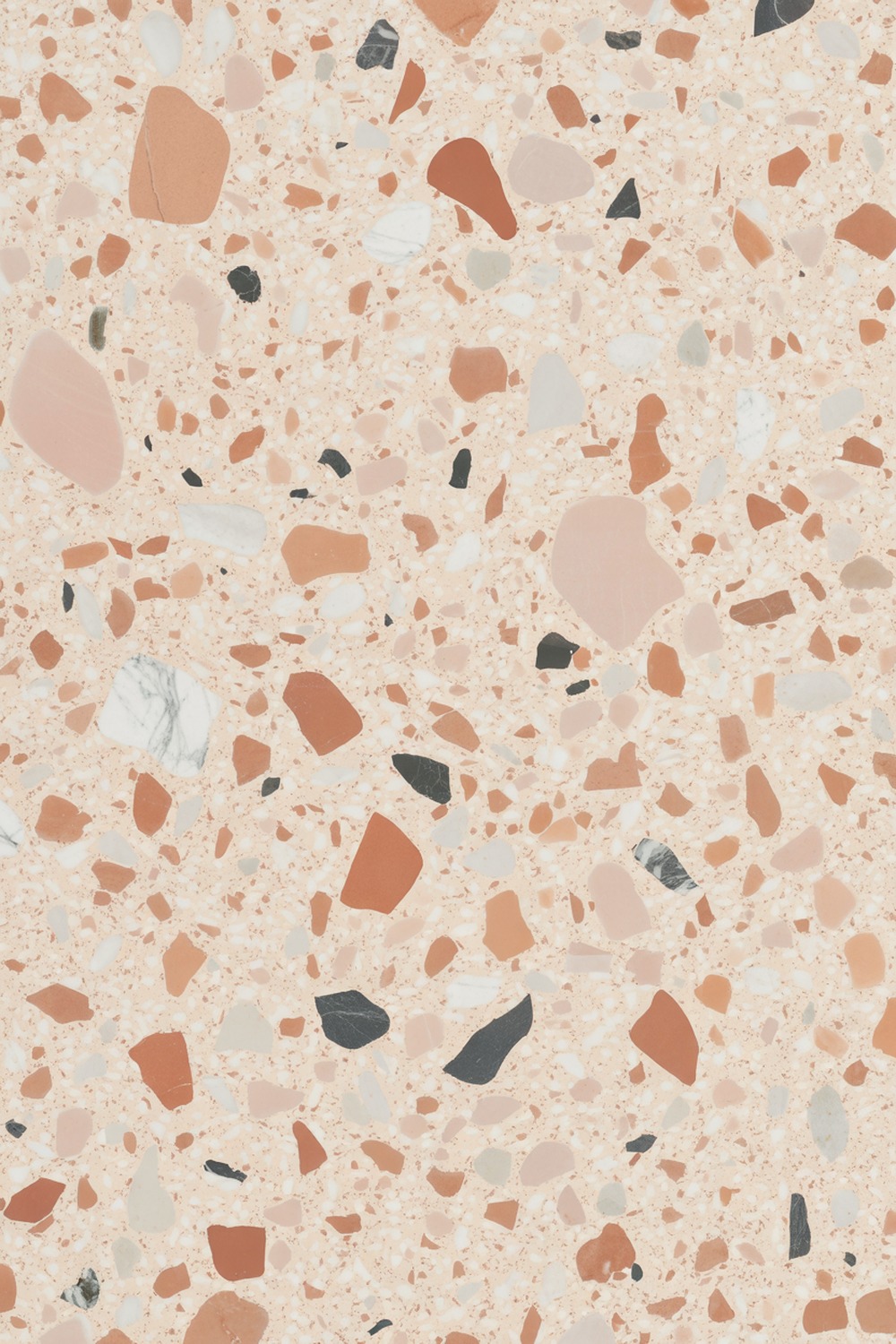
I love terrazzo for one reason: it is joyful without trying. Those scattered chips of marble and glass set into a smooth base feel like confetti that decided to behave.
Go for a large-format terrazzo with a pale base and one warm accent chip, terracotta or soft pink, so it has a point of view instead of visual noise.
Lay it on the floor and keep the walls plain. Pro tip: pull your paint colour straight from one of the chips and the whole room clicks together.
3. Natural Stone Bathroom Tiles
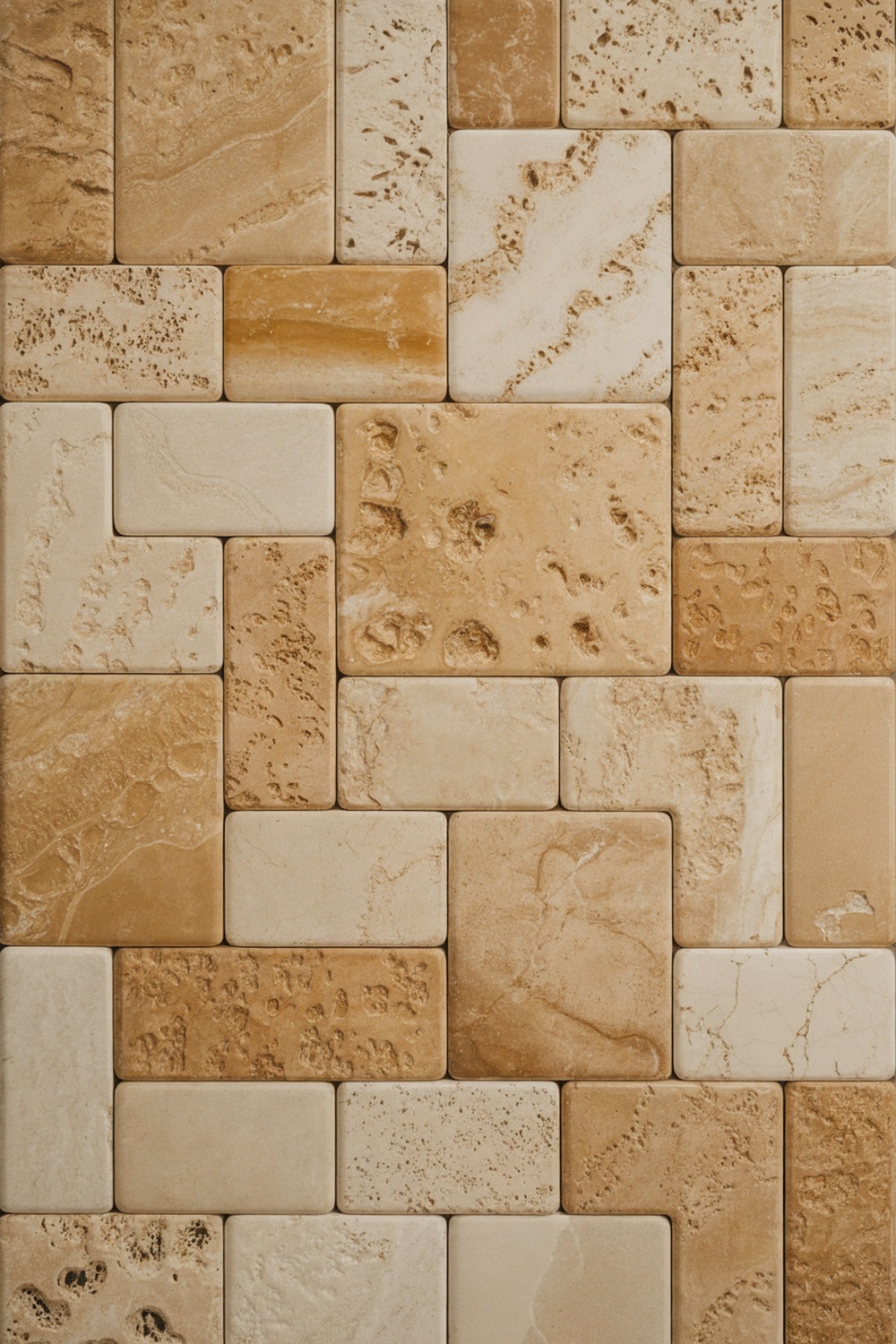
The trick with natural stone is to let it stay a little raw. Tumbled travertine, honey-cream and open-pored, brings a spa hush that polished tile cannot fake.
Keep it matte, grout close to the stone, and start on the shower floor where that soft grip earns its place.
4. Wood Effect Bathroom Tiles
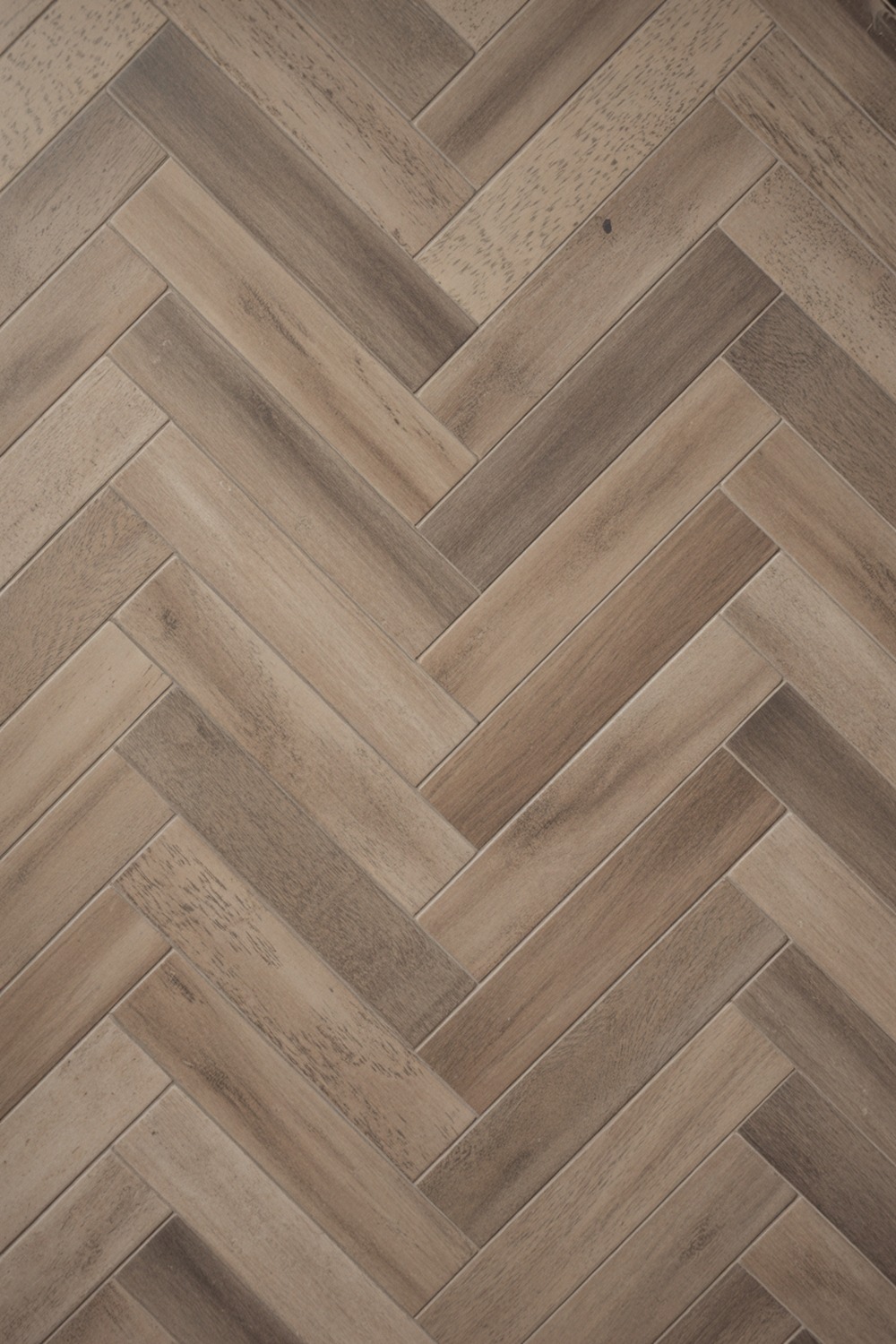
Real wood and daily steam make a bad marriage. Wood-effect porcelain is the clever workaround, all the warmth of oak with none of the warping.
Pick a long plank in warm, greyed oak and lay it in herringbone. Keep it matte, grout matched to the plank, and run it over heated floors.
5. Ceramic Bathroom Tiles
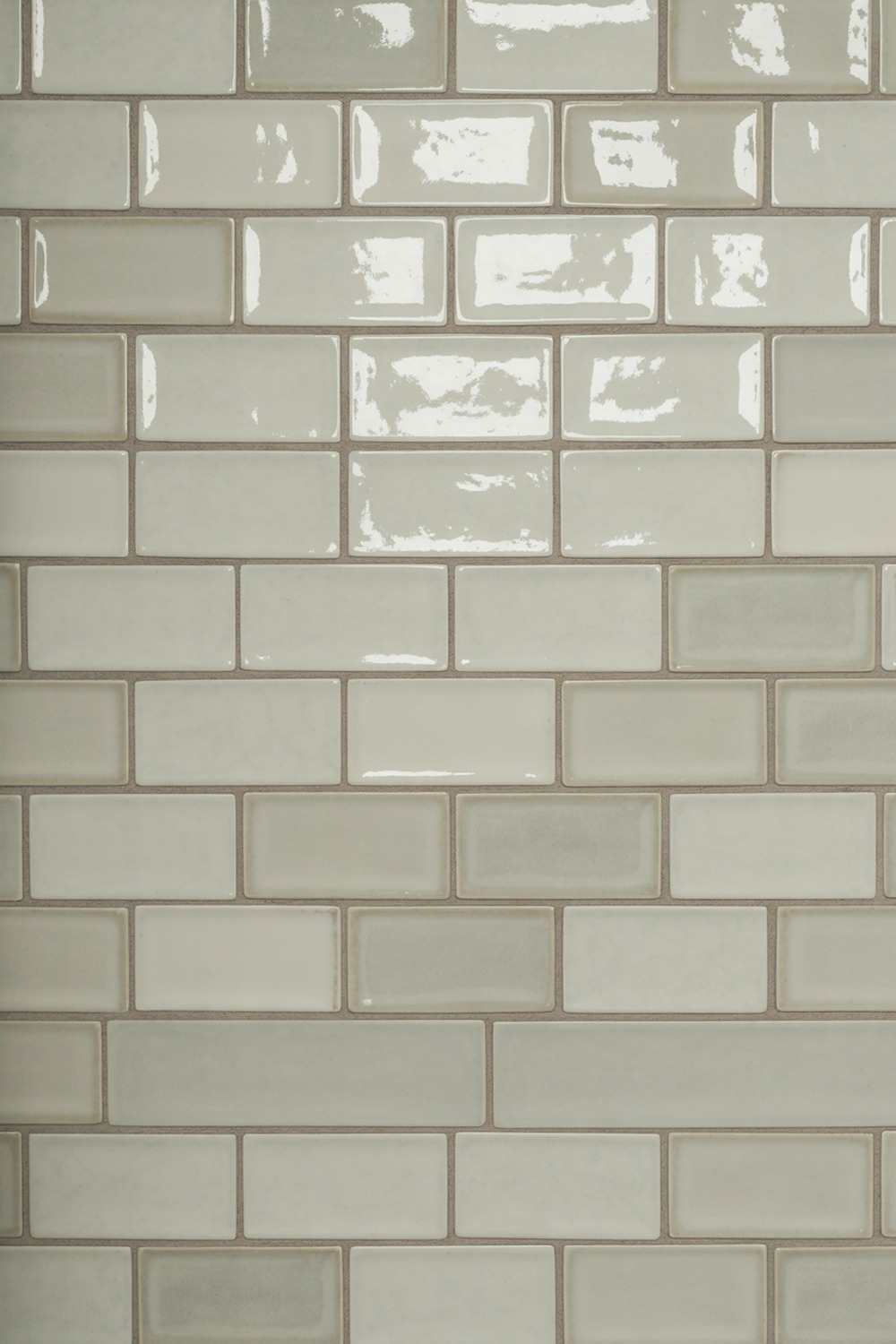
Ceramic is the workhorse everyone underrates.
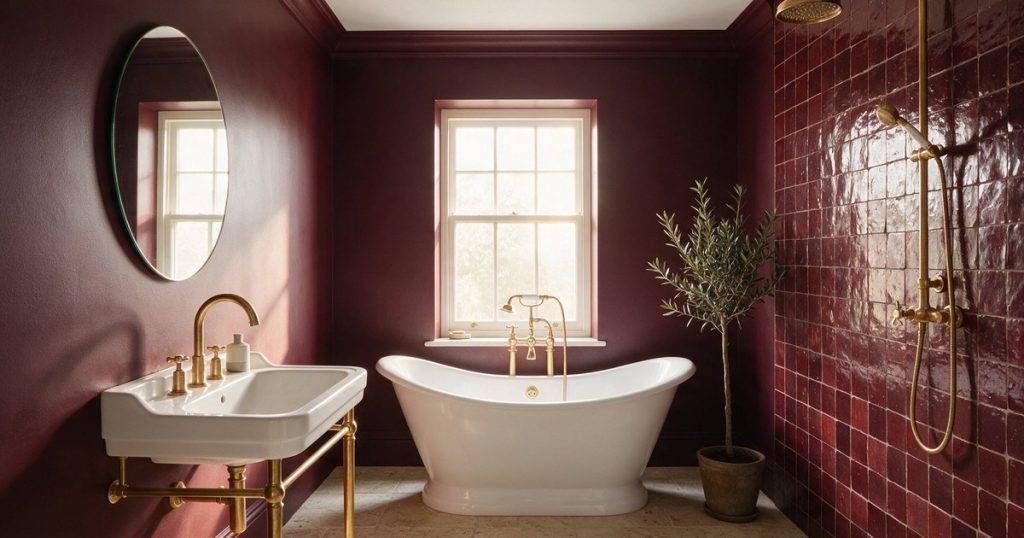
The secret is the handmade kind, where the glaze pools and ripples and no two tiles are quite alike. That is zellige, the hand-cut Moroccan clay tile with a glossy, uneven shimmer that moves as the light shifts.
A classic 3×6 in off-white, stacked or in a running bond, feels humble and expensive at once. A pale grey grout keeps it soft. I would run it floor to ceiling in a small bathroom; the shine bounces light and the room breathes bigger.
For a bolder take, glossy emerald or dusty blush ceramic turns the same humble shape into something that feels custom. The handmade wobble is the whole charm; perfectly uniform tiles look flatter, not cleaner.
6. Glass Bathroom Tiles
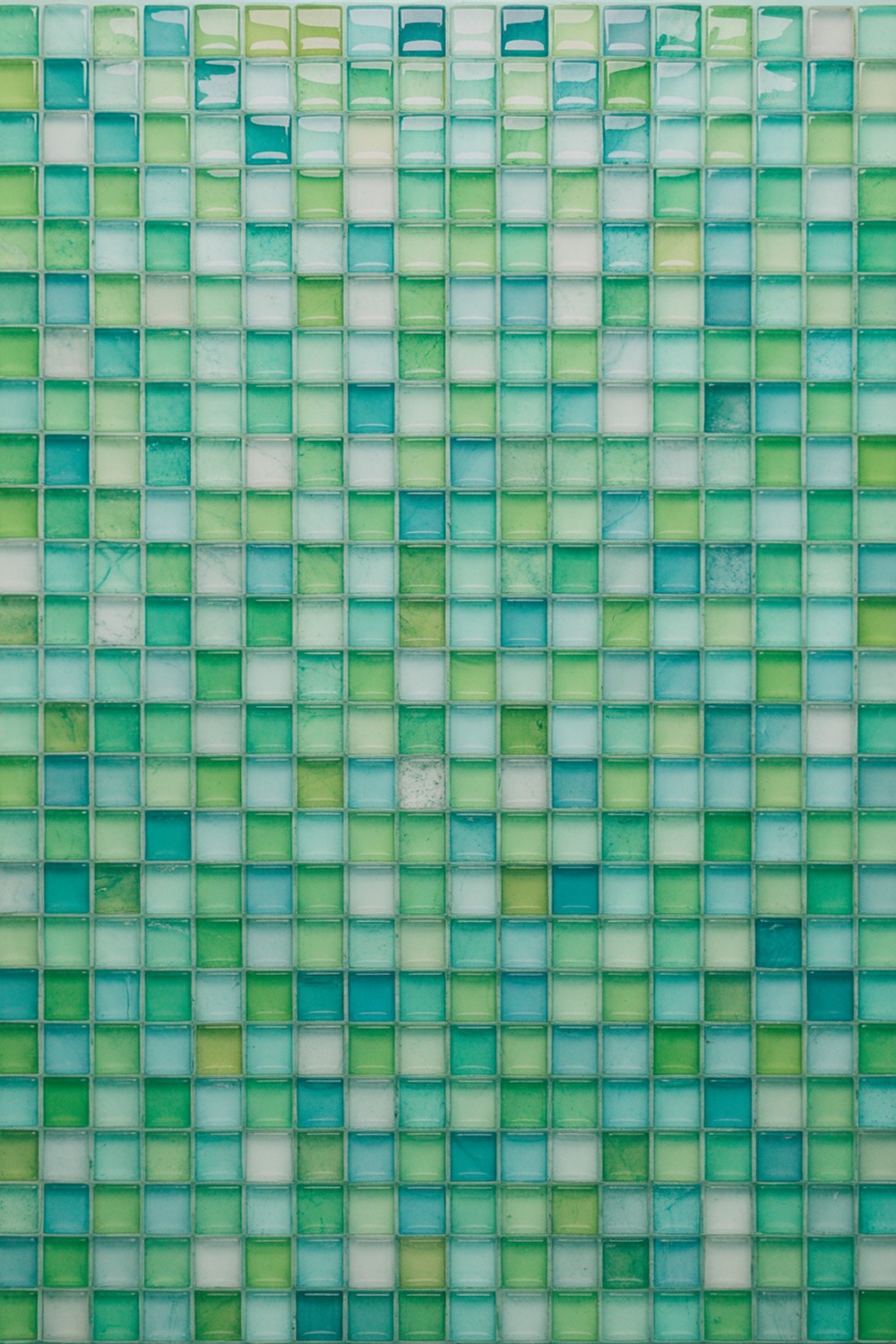
Glass tile is having a quiet comeback, and I am glad. It does something no other material can: it lets light pass through, so a wall seems to glow from inside.
Keep it a jewel, not a flood. A sea-glass green mosaic, think the soft aqua of old Murano glass, set into a shower niche or run as one 5cm stripe, catches the water and sparkles.
Tint the grout to the glass so the colour stays pure. One shimmering pocket beats a whole shimmering wall, which can tip into swimming-pool territory fast.
7. Cement Bathroom Tiles
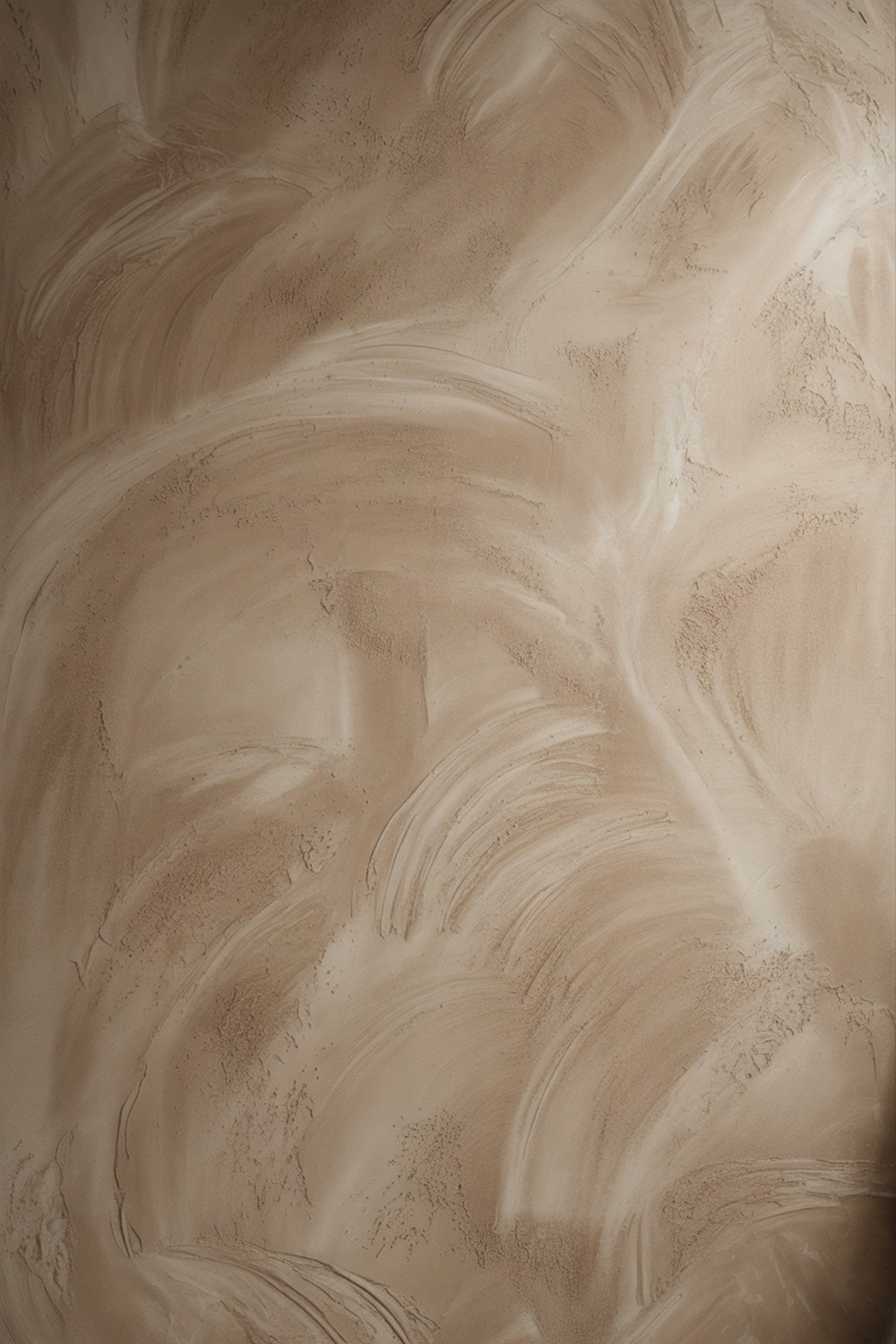
Have you ever wanted a shower with no grout lines at all? Cement is how you get it. Troweled smooth and sealed, it wraps a room in one soft, continuous skin.
The dreamiest version is tadelakt, the polished Moroccan lime plaster that feels like suede and sheds water like a duck. In a warm greige or clay, it turns a shower into a sculpted grotto.
Let a pro apply it to one wall, and feel how calm a room gets when the lines disappear.
8. Copper Bathroom Tiles
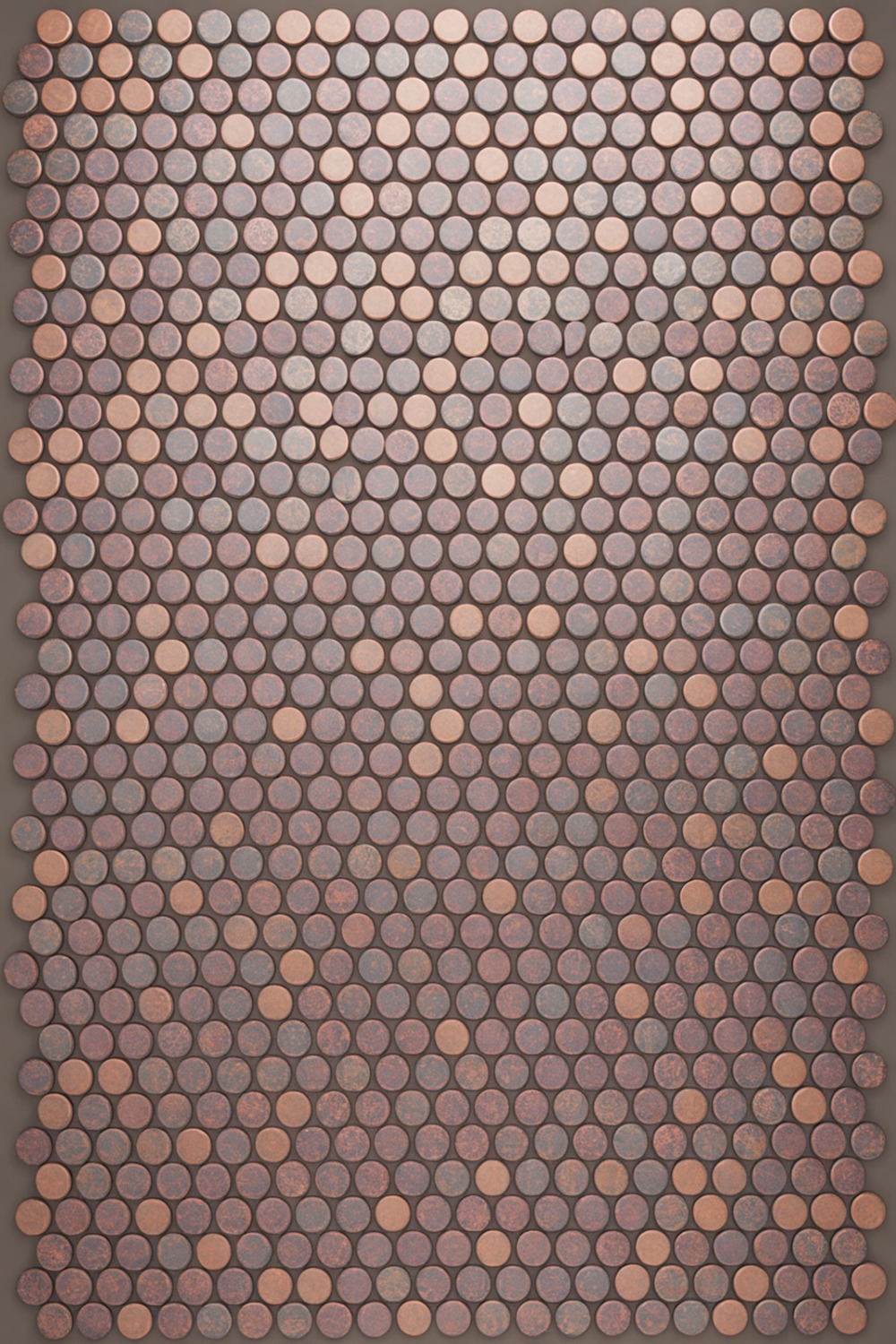
Copper is the warmest metal there is, and in a bathroom it glows like a low fire. I adore it as a surprise, not a statement.
Small 2cm penny-rounds, left to grow their living patina of rose and amber, make a gorgeous feature strip behind a basin. The colour deepens over years, which only makes it better.
Pair them with matte white field tile so the metal reads as jewellery, not the whole outfit, and keep the grout a warm grey. One strip is plenty to start.
9. Gold Bathroom Tiles
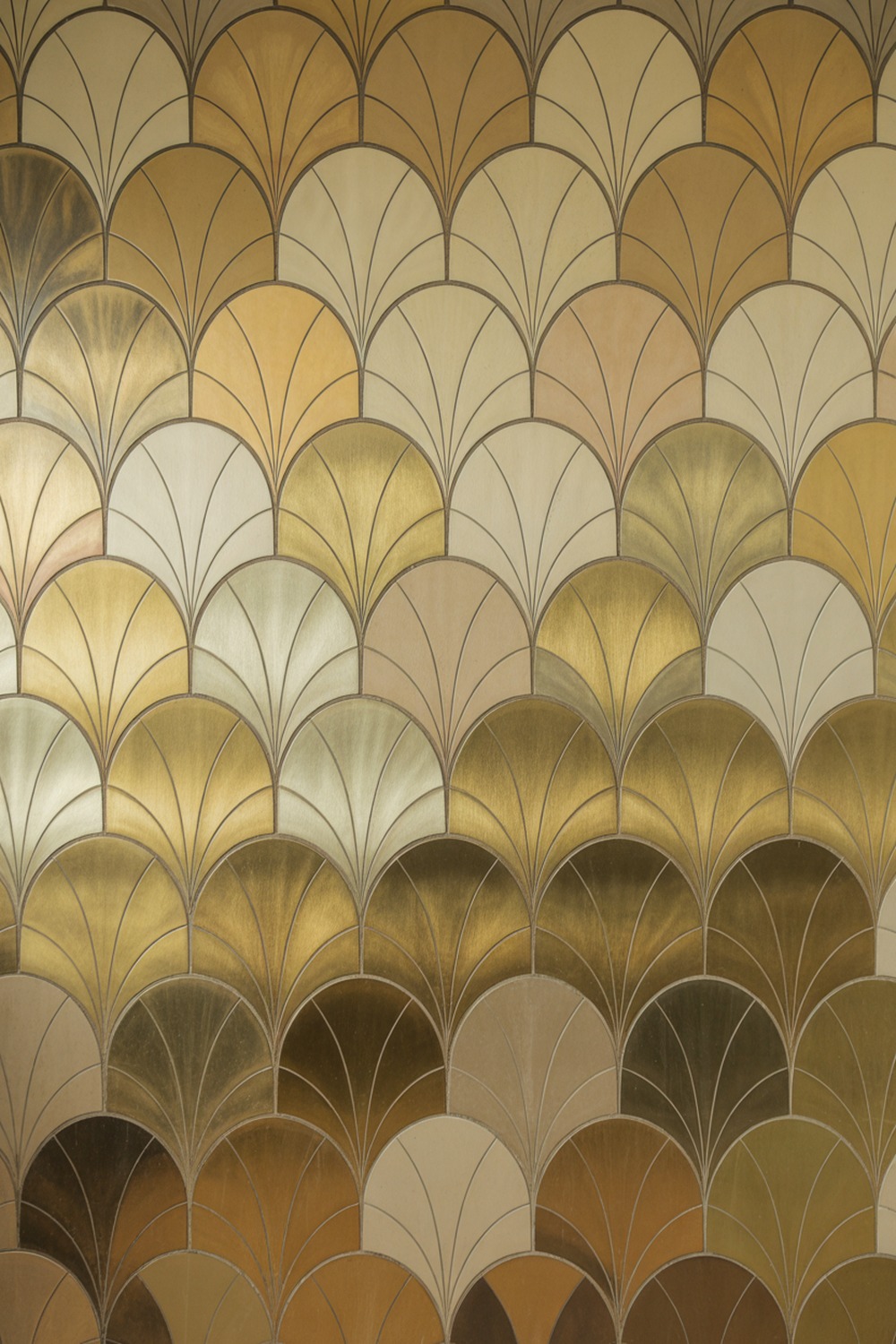
Gold tile sounds like a lot until you see it done with restraint. Then it is pure Art Deco glamour, all the shine with none of the excess.
I would never wrap a room in it. A brushed-gold glazed tile in a fan over the vanity makes one luminous feature. Brushed, not mirror-bright, set against deep green or inky navy, and the gold does the talking.
10. Metallic Bathroom Tiles
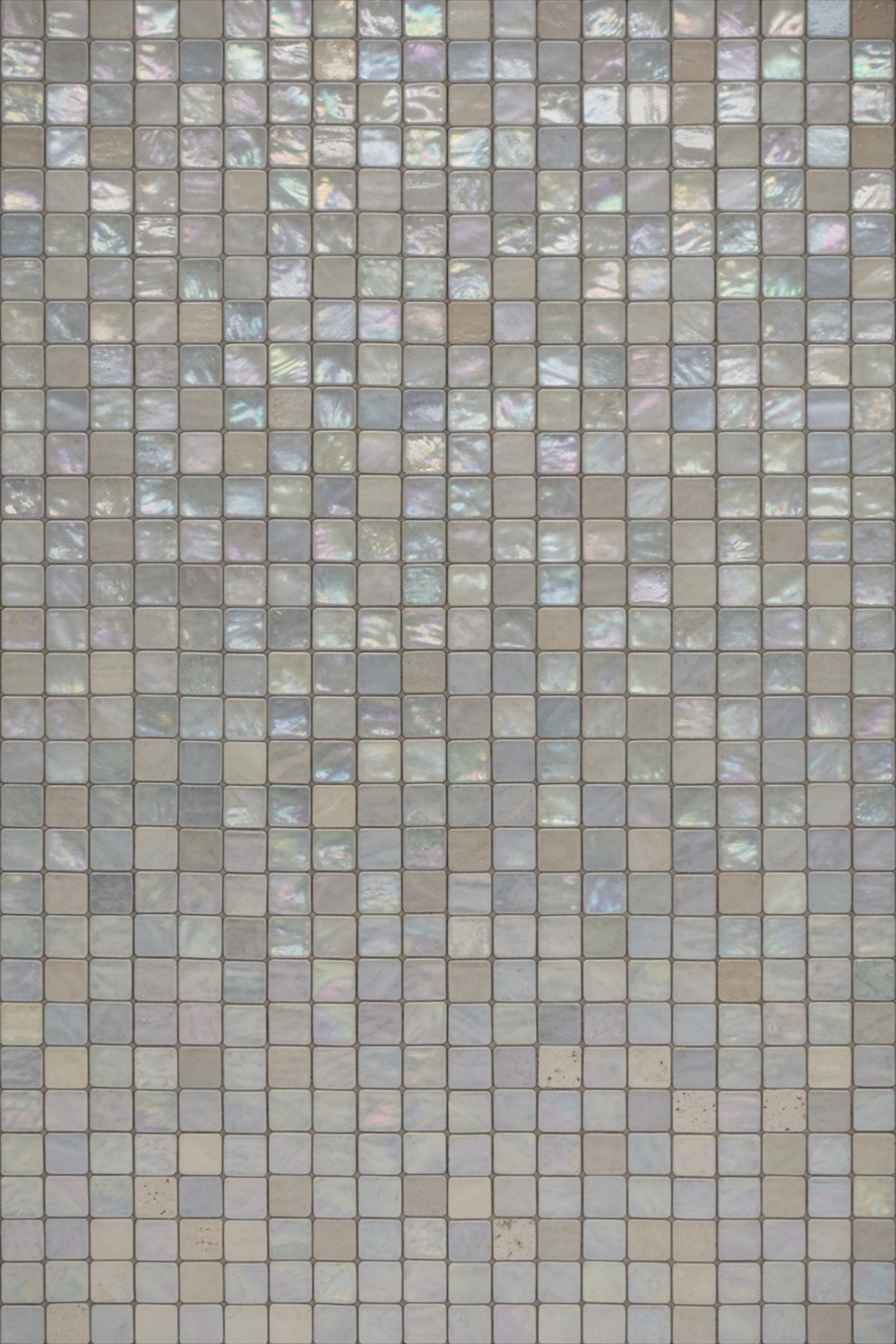
Not all metallics shout.
The ones I keep returning to are iridescent, shifting through silver, pewter and the faint rainbow of a soap bubble. Mother-of-pearl mosaic is the softest way in, a 2cm shimmer that changes with every step and never reads as gaudy.
Use it small: a shower niche, a slim border, the back of an alcove, with a pale grout so the sheen floats. The effect is quietly luxe, like the inside of a shell. Begin with one niche and watch it play with your lighting.
11. Brick Look Bathroom Tiles
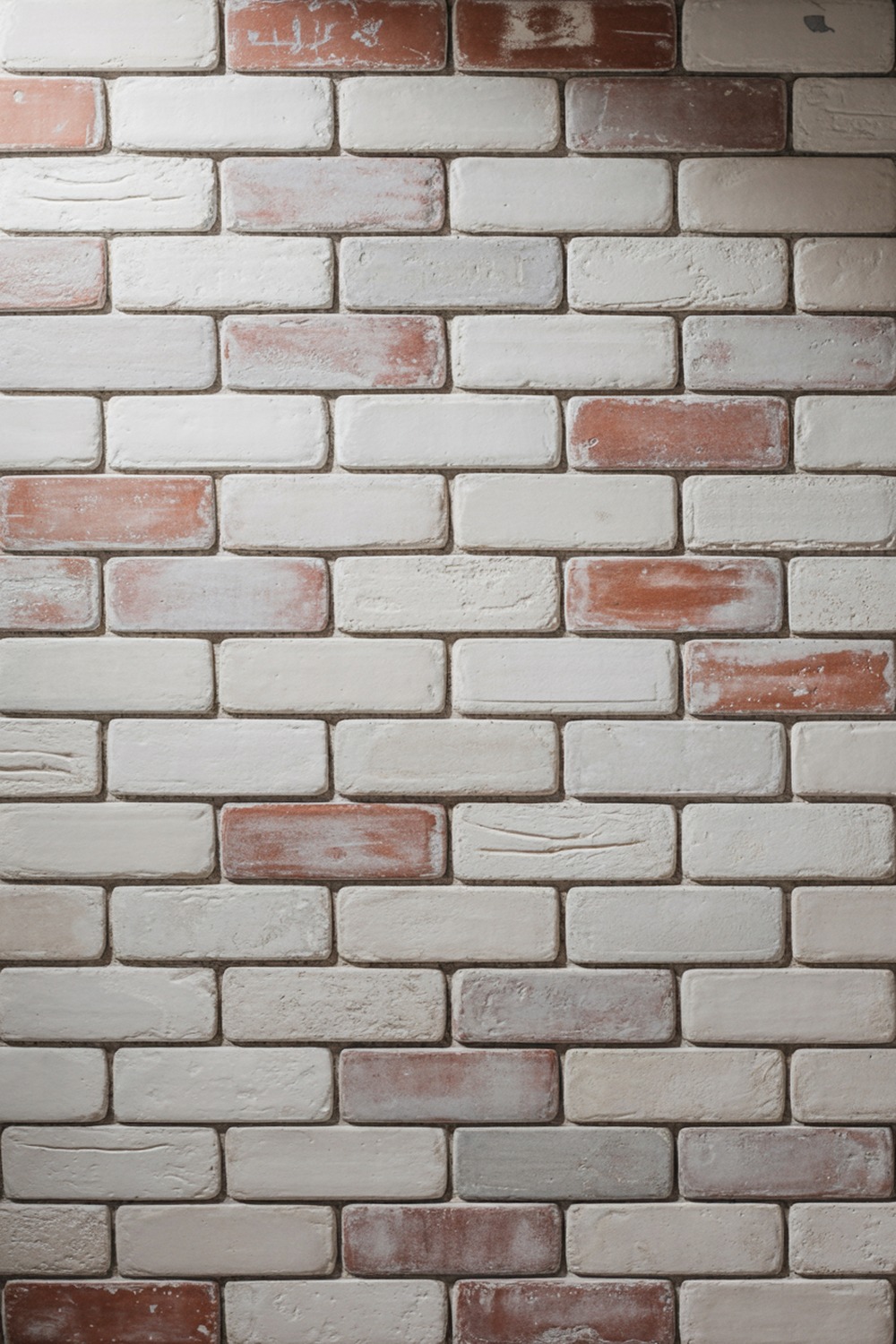
Exposed brick in a bathroom used to mean a renovation headache. Brick-look tile hands you the character with none of the crumbling mortar or damp.
These are thin porcelain slips with real brick texture printed in. A limewashed version, where the red peeks through a chalky white, gives a loft soft industrial warmth.
Lay it in a running bond, grout close to the mortar tone, and run it up one wall behind a freestanding tub. The room gains instant story.
12. Porcelain Bathroom Tiles
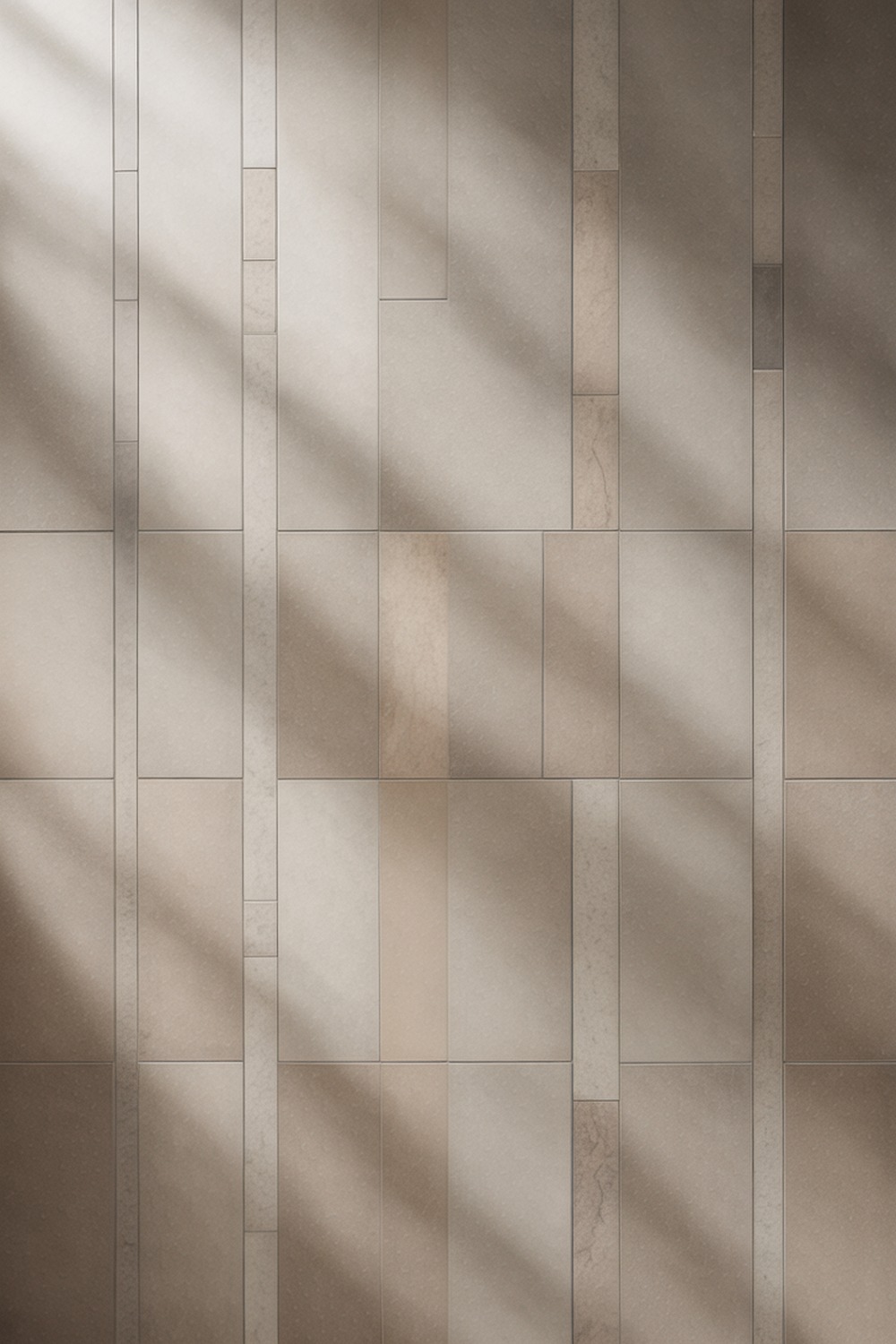
If tile were a dinner guest, porcelain would be the one who quietly fixes everything.
It is tougher than ceramic, barely absorbs water, and will happily impersonate marble, stone or concrete. Here is where I would spend the convenience: large-format porcelain, a rectified 24 by 48, laid with the thinnest grout line possible.
Fewer seams means a calmer, bigger-feeling room and far less to scrub. Choose a honed, matte finish in a soft neutral, run the same tile on floor and walls, and start with the shower, where low maintenance matters most.
And because porcelain copies other materials so well, it is how you get the marble look on a floor that would never survive real stone. One tile, endless disguises, and a surface you can mop without a second thought.
13. Slate Bathroom Tiles
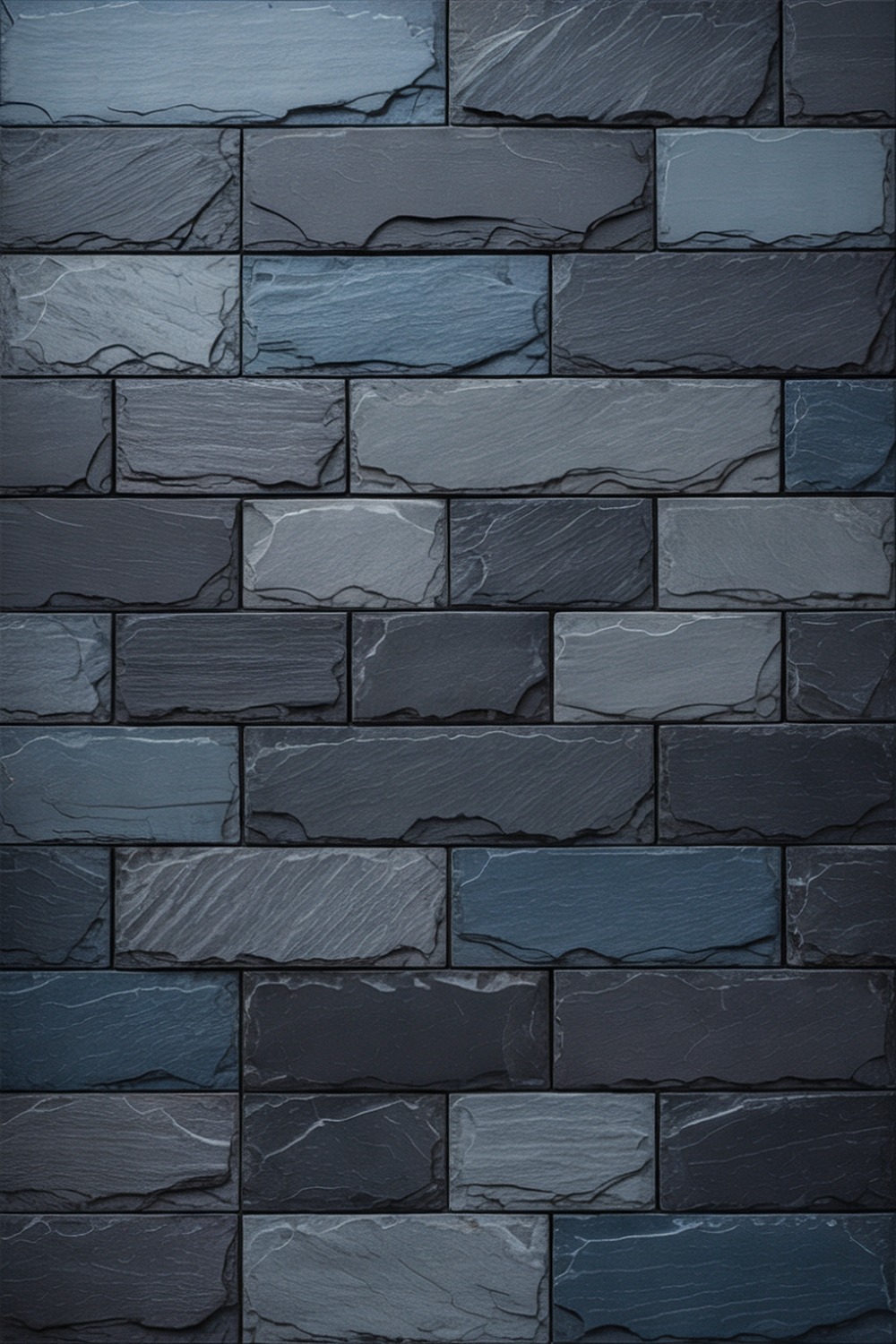
Slate is for the person who wants their bathroom to feel like a mountain cabin after rain. Dark, riven, honest. It is my pick when a room needs weight.
A natural cleft slate in charcoal or blue-grey, with that rippled, hand-split surface, brings depth no flat tile can, and real grip underfoot.
Keep the grout dark so the slate reads as one moody plane. Pair it with pale oak and warm brass to stop it going cave-like, and build the mood up from the floor.
14. Concrete Look Bathroom Tiles
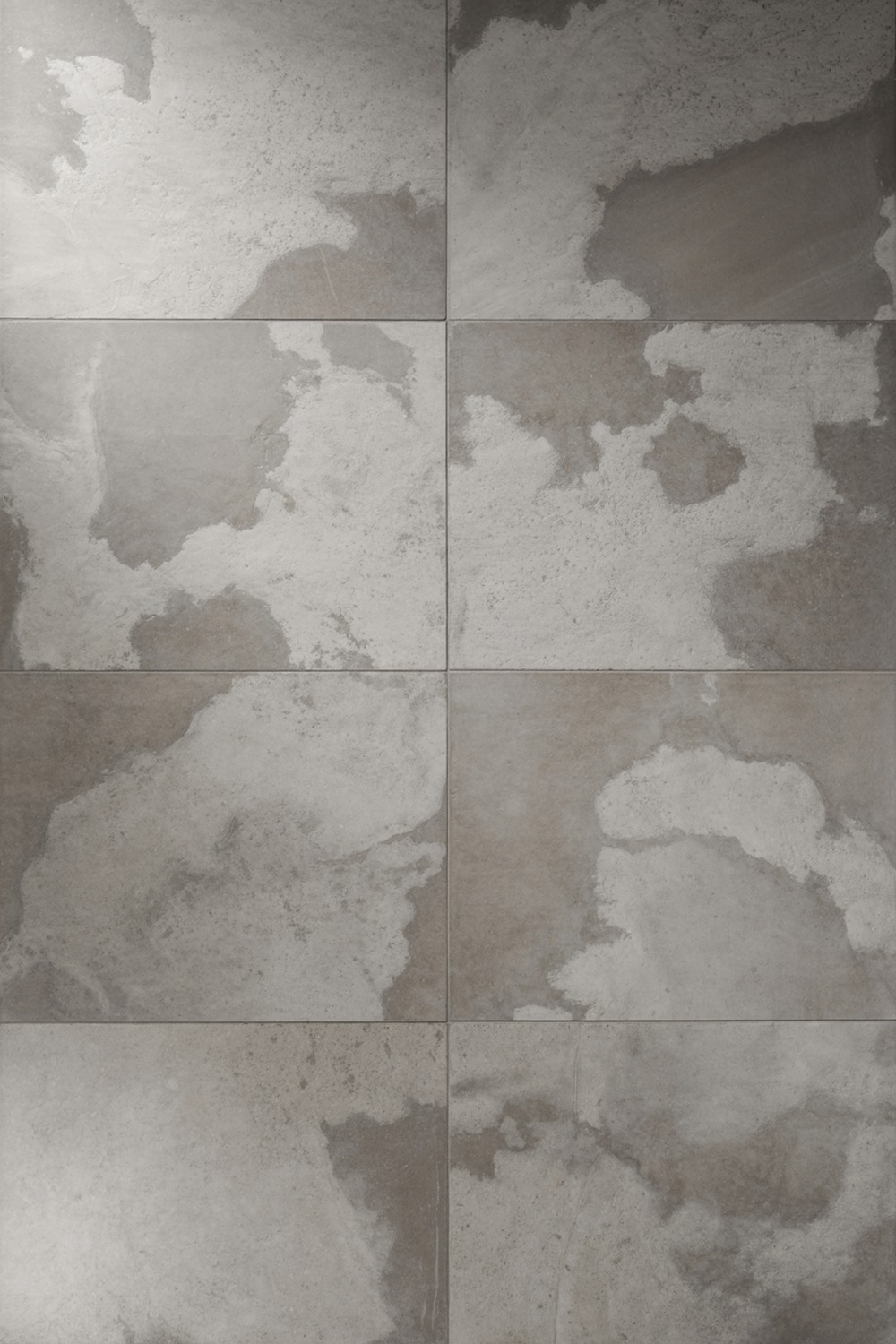
Concrete-look tile is minimalism’s best friend. It gives you that cool, urban, gallery calm without actual poured concrete, its cracks or its cold.
The best versions are large-format porcelain with a soft, cloudy mottling, no two panels identical, in a mid dove grey. Matte finish, always.
Run it floor to ceiling for a loft-like shower with a tight tonal grout, the perfect quiet backdrop for a sculptural brass tap and one trailing plant.
15. Limestone Bathroom Tiles
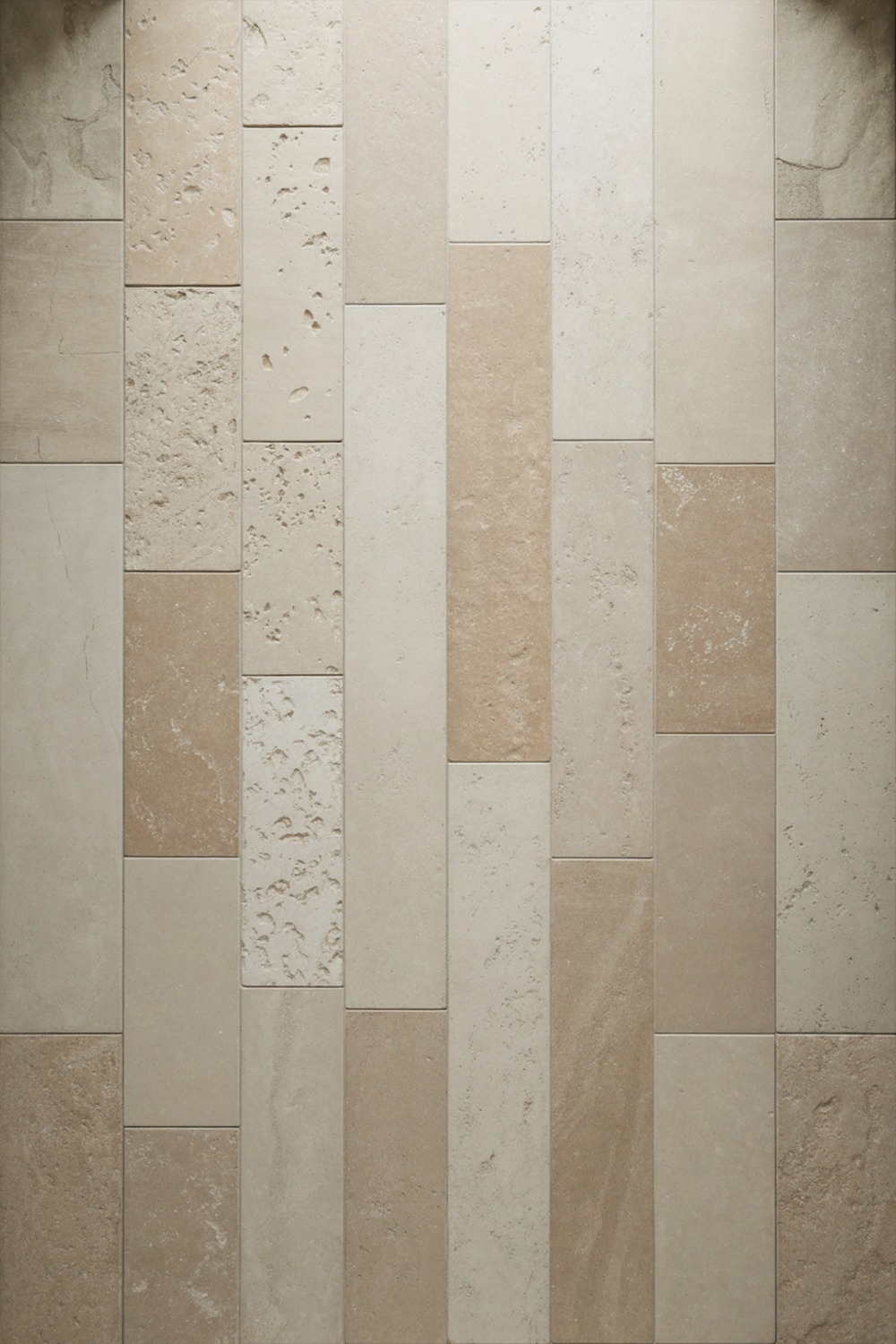
Limestone is the Goldilocks of neutral stone: warmer than marble, softer than travertine, endlessly calm. French bathrooms have known this for centuries.
I reach for honed limestone in pale oatmeal or soft putty, large format, its faint fossil speckle catching the light. It is the kind of stone 18th-century chateaux floored their halls with.
Match the grout to the stone and seal it. Even a limestone floor under plain white walls sets a serene tone, then patinas gently into something lived-in and lovely.
16. Onyx Bathroom Tiles
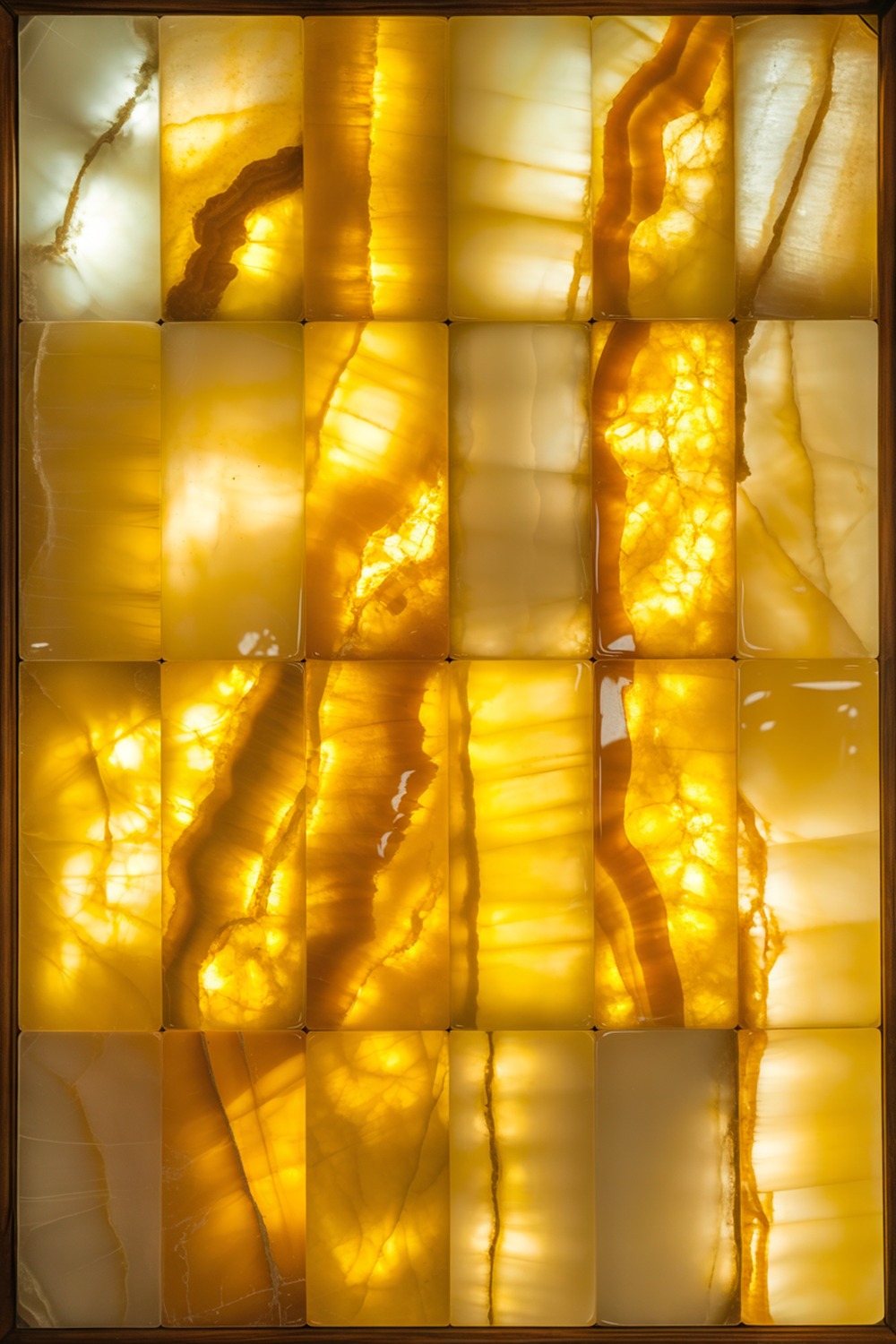
Onyx is the showstopper, and I will not pretend otherwise. Translucent, dramatic, veined like smoke, it turns a bathroom into a jewel box.
The magic is backlighting. A honey or green onyx panel over a warm 3000K LED glows from within, amber or deep emerald pooling through the stone. Use it as one feature: a vanity front, a lit wall, a shower end, with everything around it plain and matte.
This is a splurge and a pro job, so start small. One backlit panel, and let it be the thing people gasp at.
17. Encaustic Bathroom Tiles
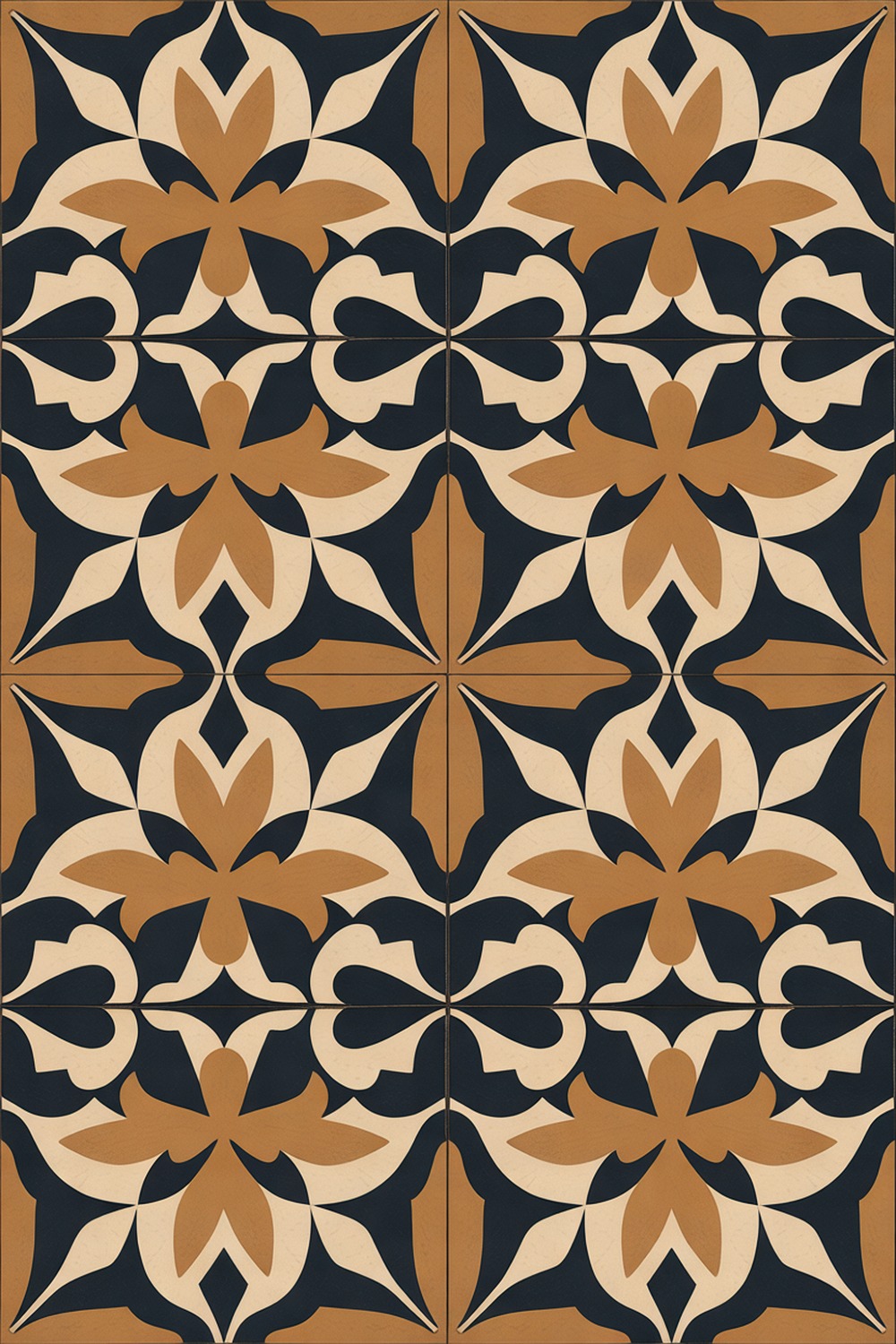
I saved my favourite for last. Encaustic tile, where the pattern runs right through the cement in solid colour rather than glazed on top, is pure character underfoot.
Those Victorian and Moroccan geometrics, four-pointed stars, scrolling florals, bold monochrome graphics, make a floor you want to photograph. Choose one pattern in 2 or 3 colours and keep every wall plain. The tile is the art; let it be.
Match the grout to the base colour to keep the pattern crisp. Lay it across a small powder-room floor and that little space becomes the boldest room in the house.
Which Bathroom Tile Material Is Right for You
Start with the feeling you want, then the room you actually have. Chasing calm? Limestone, honed marble or seamless cement wrap a space in quiet. Craving warmth? Travertine, wood-effect porcelain or whitewashed brick bring it in handfuls.
Want drama without a full renovation? Pick one material to be the star, backlit onyx, a copper strip, an encaustic floor, and let plain porcelain or ceramic do everything around it. That contrast is what makes the hero sing.
If you want one surface that does it all with the least fuss, large-format porcelain is my honest answer. It mimics the lot, resists water, and keeps grout lines minimal.
For a small bathroom, glossy ceramic bounces the most light. Match the material to how the room lives, and you will not tire of it.
Bathroom Tile Materials, Answered
What is the most budget-friendly tile material? Ceramic sits at the low end and still looks lovely, especially the glossy glazed kind. Porcelain is mid-range and earns its keep in durability. Natural stone, onyx and real metallics are the splurge, so save those for a small feature.
Which can I lay myself, and which need a pro? Straight ceramic or porcelain field tile on a flat wall suits a confident DIYer. Large-format slabs, natural stone, tadelakt and backlit onyx need a pro, heavy and costly to redo.
How long does a tiled bathroom take? A small wall or floor is often a weekend. A full floor-to-ceiling bathroom, with waterproofing, setting and sealing, usually runs one to two weeks once demolition is done. Natural stone and seamless cement add curing time, so build in patience.
What is worth spending the most on? The material in the wettest, most-touched spot: your shower and floor. That is where quality shows and failure costs most. Put a hardwearing porcelain or well-sealed stone there, and a cheaper tile on a dry accent wall.
What should I ask the tile shop for? Name the exact finish (honed, matte, polished), the format and size, whether it is rated for floors and wet areas, and the water absorption. Ask for the recommended grout colour and sealant too. The more specific you are, the closer the sample.
Whatever pulls at you, start with one surface and one material you love. Tile is patient, and so is the room waiting for it. Pick the thing that makes you want to run your hand across it, and build the rest around that single, confident choice.
More stories
Share this story