19 Bathroom Tile Shapes and Layouts for a Designer Look

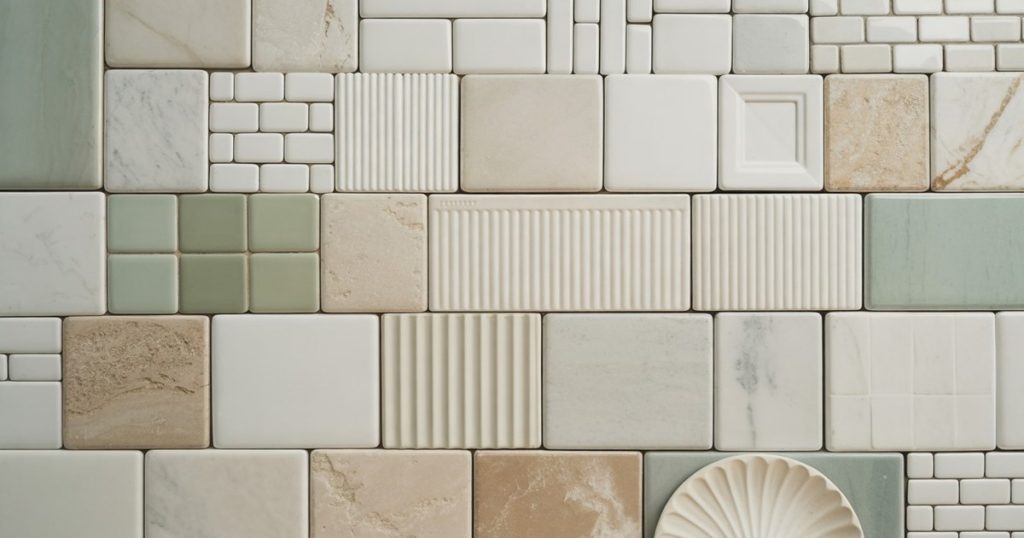
Here is what nobody tells you about a bathroom reno: the tile does most of the work, and its shape matters more than its colour. Swap a plain grid for a herringbone and the same white porcelain suddenly looks expensive. Change the layout, change the whole room.
So let’s talk shapes and layouts, the quiet workhorses that decide whether a bathroom reads builder-basic or genuinely custom. Below are nineteen tile shapes I keep coming back to: what each does best, the grout and finish that flatter it, and where to put it.
1. Subway Bathroom Tiles
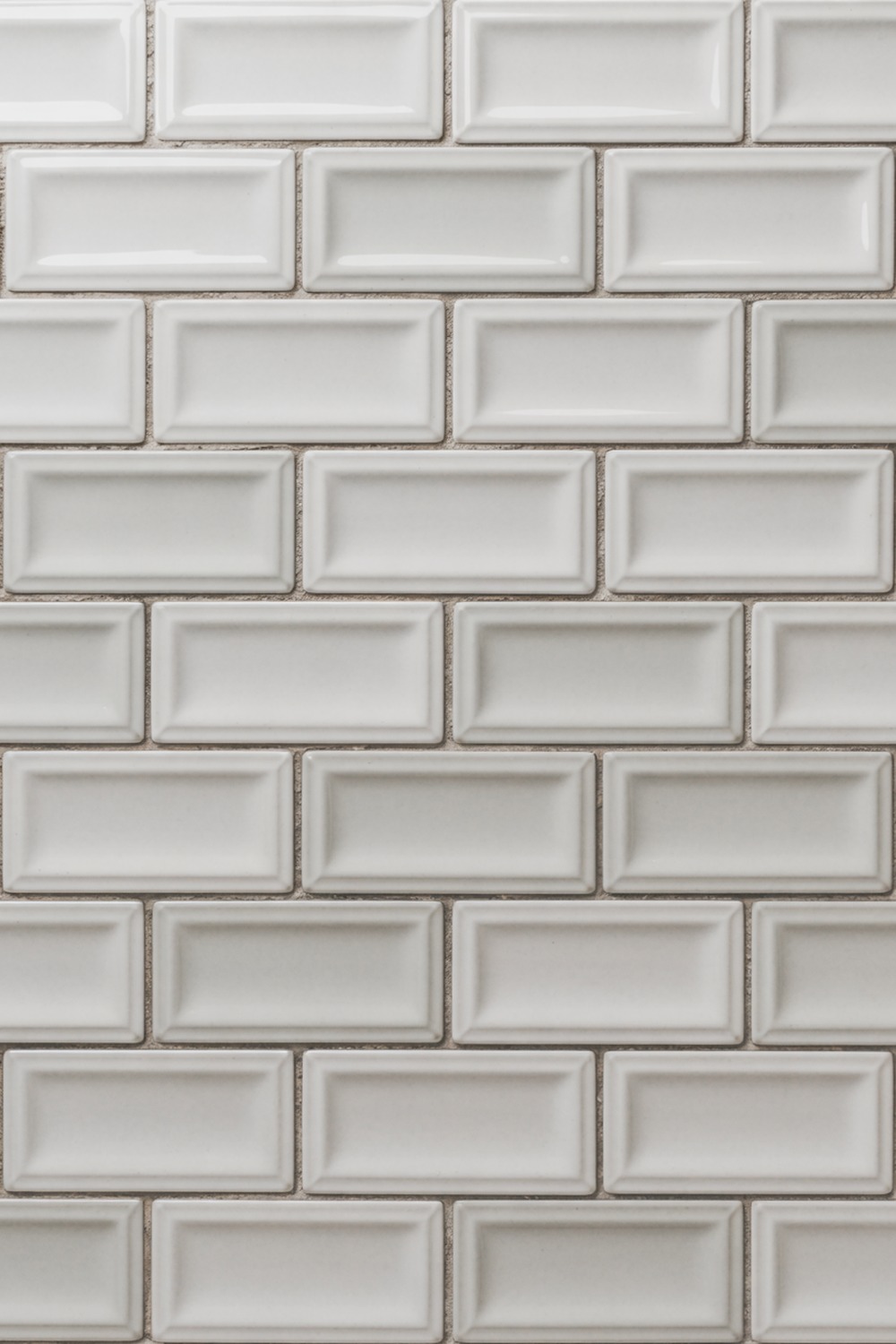
The little black dress of tile. A classic 3×6 ceramic rectangle, laid in a half-brick offset, glossy enough to bounce light around a windowless room.
Here is my unpopular take: the tile is never the real decision, the grout is. White grout disappears. Charcoal grout turns the same wall into a graphic grid. Start there, before you fall for a colour.
Bored of the diner look? Run the same tile vertical, or set it in a herringbone, and it feels current again. A soft clay glaze reads warmer than the usual bright white. Take it floor to ceiling in the shower and pick a bevelled edge for a little shadow.
2. Hexagon Bathroom Tiles
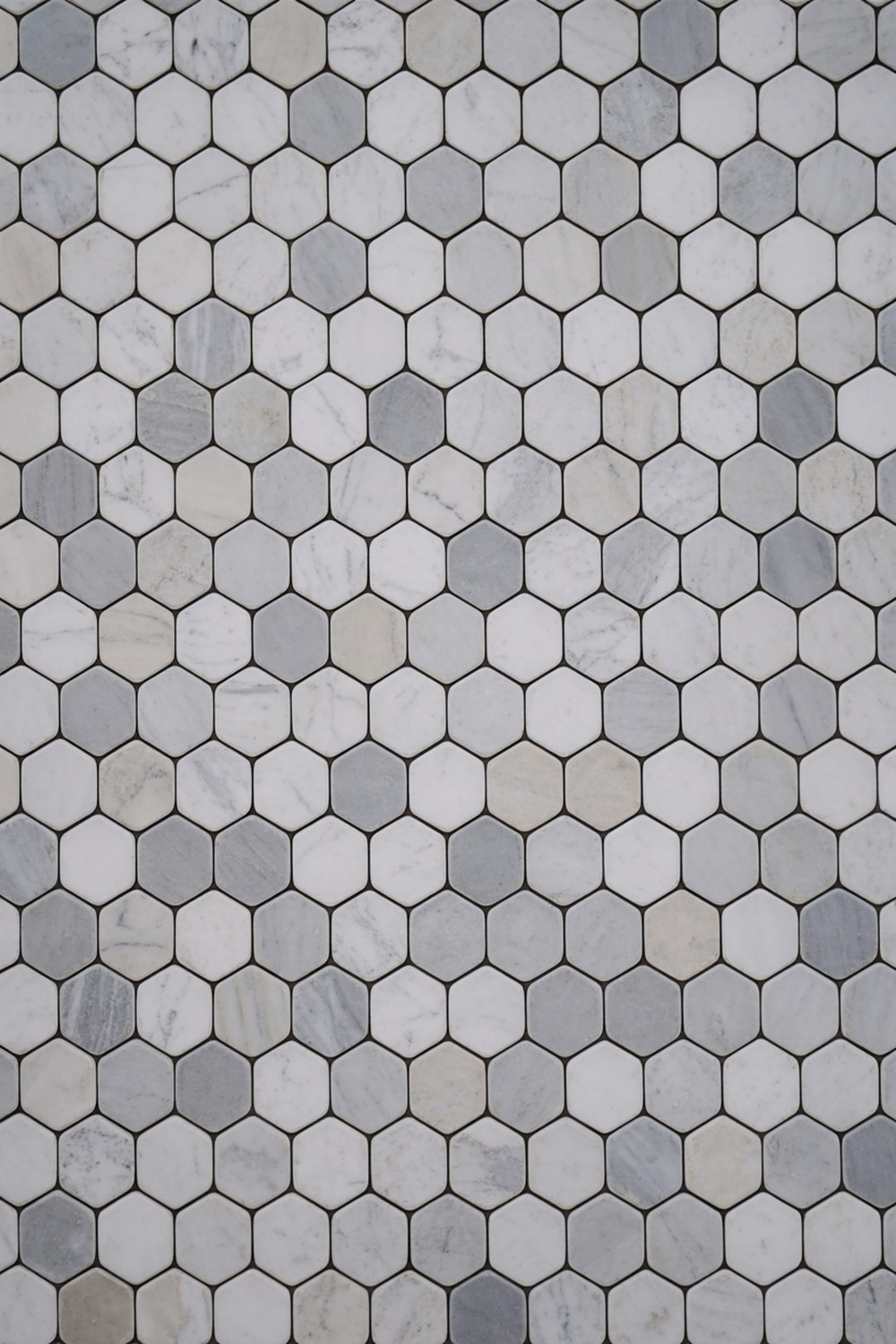
Six sides, endless charm. Small one and two inch hexagons read vintage honeycomb, a chunky large hex feels modern and calm.
Marble hex with a thin warm-grey grout is the timeless move, the kind of floor that looks original to a handsome old building. For me this is a floor tile first, always.
3. Penny Round Bathroom Tiles
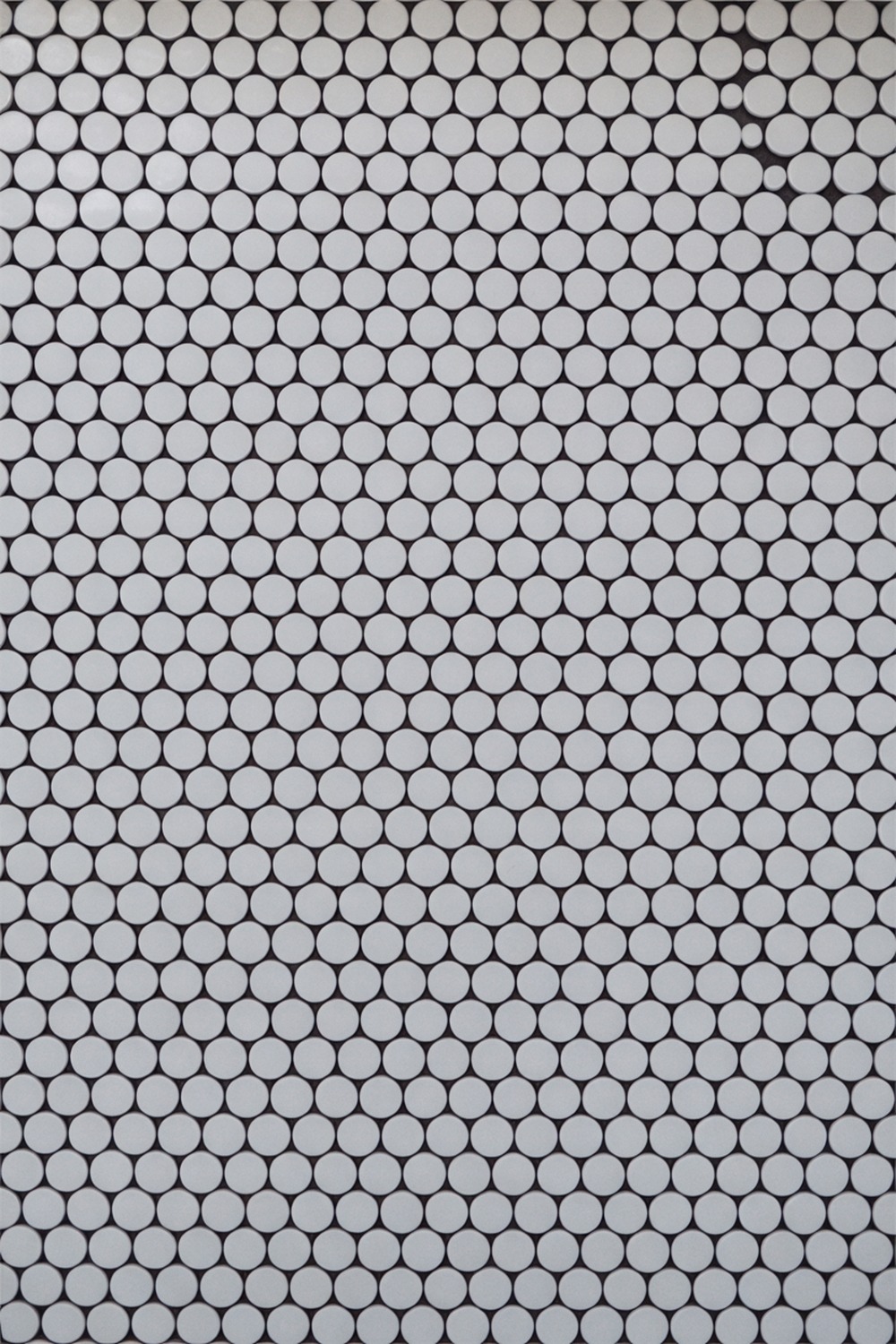
Tiny circles, lots of grout, maximum character. Penny rounds arrive sheet-mounted on mesh, so you get a dense little grid of lines, and that grid is the whole point. The texture is the design.
White penny tile with charcoal grout makes every circle pop, very 1920s apothecary. A soft blush version feels sweeter. Pro tip: it makes a brilliant shower floor, because all those grout lines mean real grip underfoot.
4. Square Bathroom Tiles
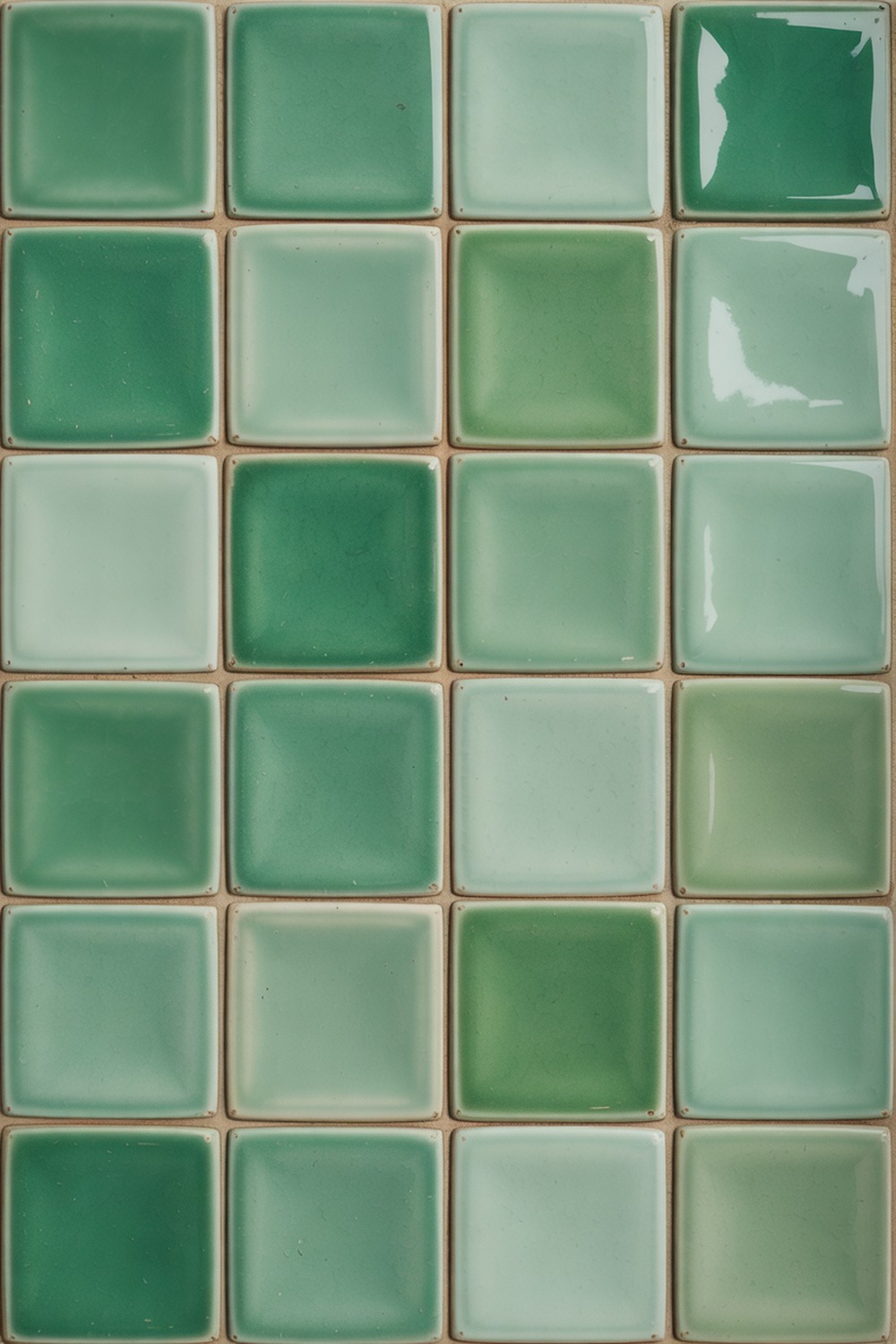
Don’t underestimate a square. Set in a straight stacked grid with no offset, a 4×4 or 2×2 square reads clean and intentional, not boring. The honest glazed wobble of a zellige square is my favourite version.
Match the grout to the tile and the wall goes seamless and serene. The glaze here is a glossy jade, think Farrow and Ball Breakfast Room Green, with a handmade colour shift tile to tile. Run it full height behind the vanity.
5. Large Format Bathroom Tiles
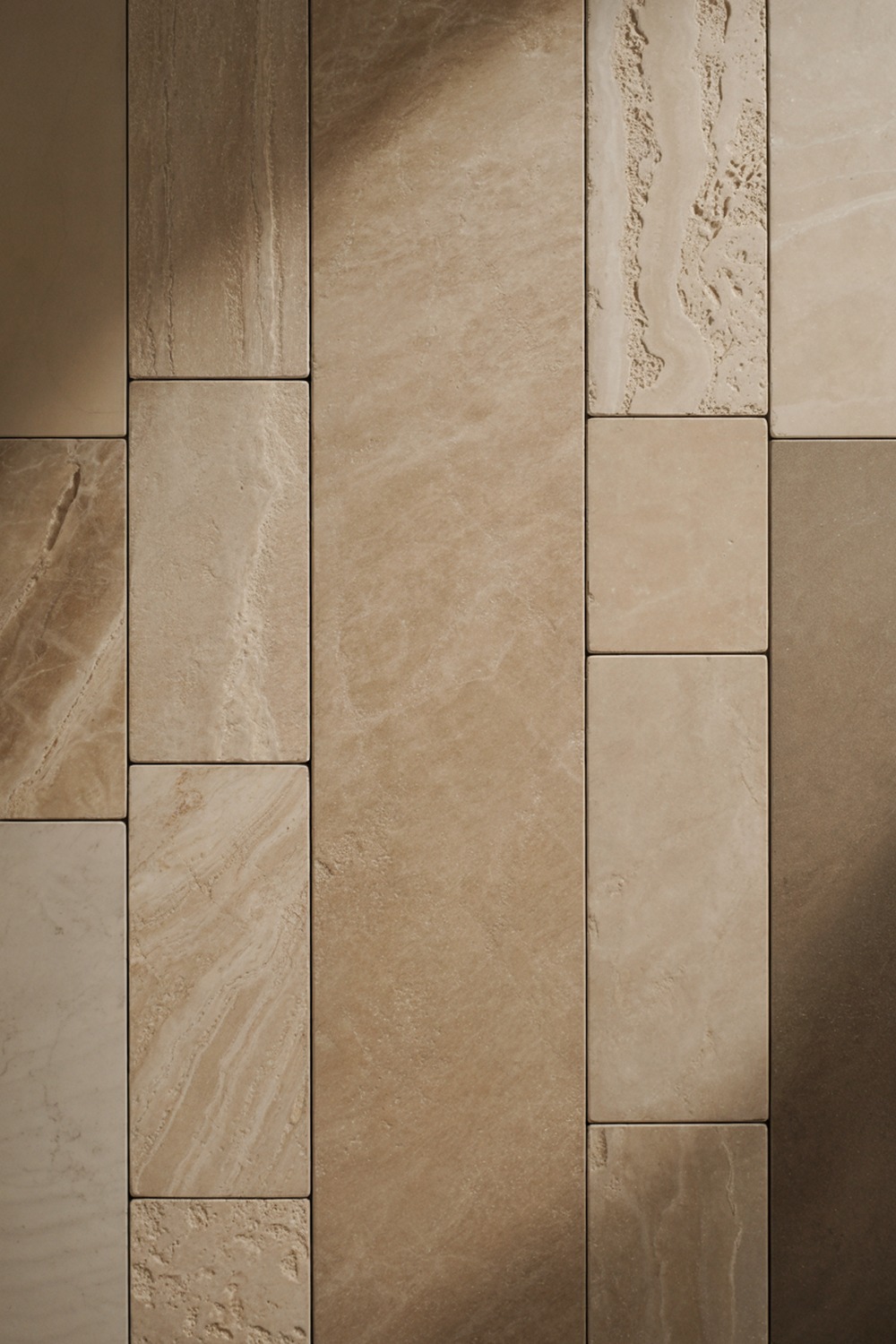
Fewer grout lines, more money. That is the trick large format pulls off. Big porcelain slabs, 24×48 and up, usually faced to mimic honed stone or veiny marble, give you near-seamless walls and far less scrubbing.
The move that makes it look custom: match the grout colour to the slab exactly, so the joints nearly vanish. Run the same porcelain across the shower walls and floor for that continuous, hotel-suite calm.
6. Finger Bathroom Tiles
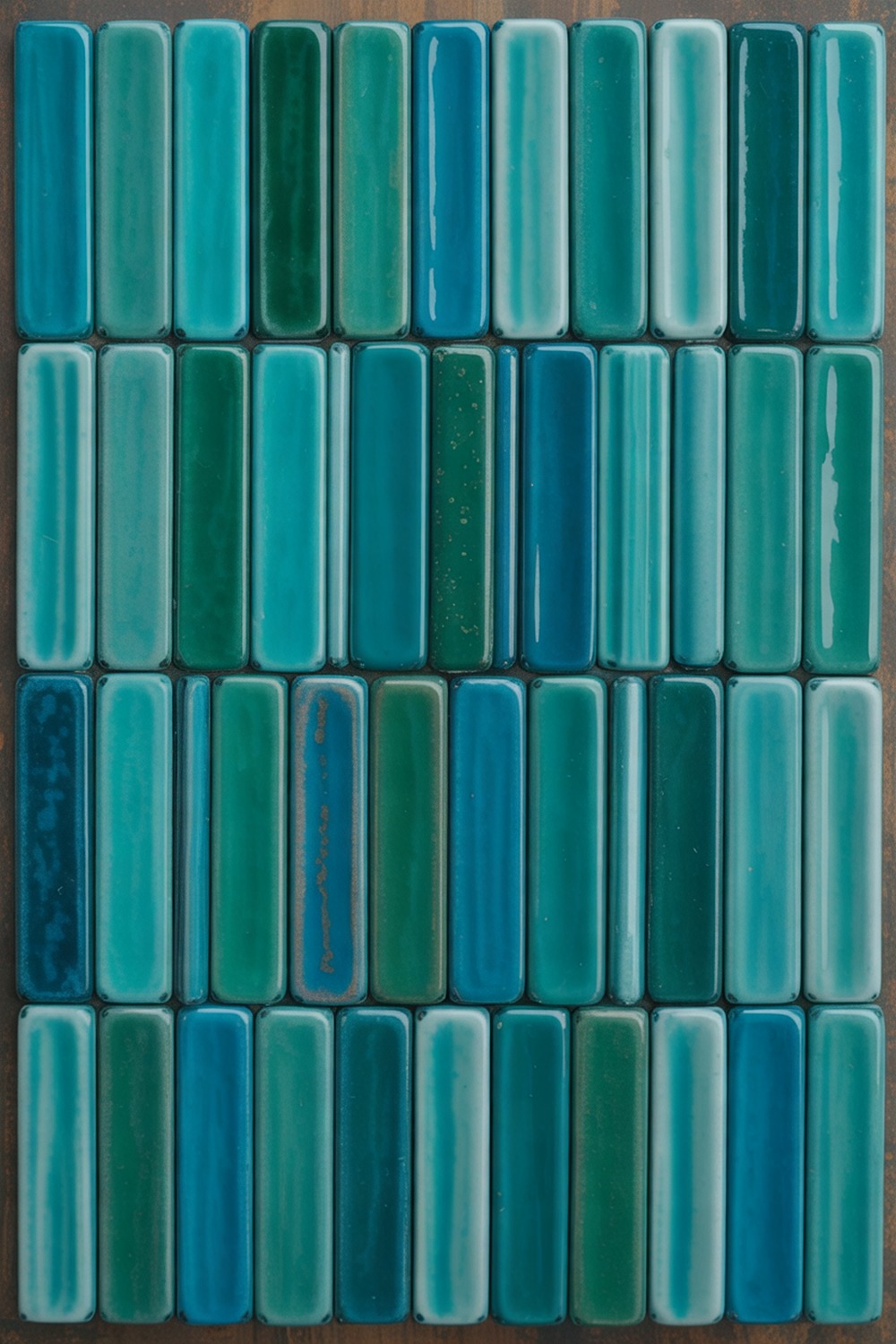
Skinny, glossy, quietly addictive. Finger tiles are the narrow cousin of subway, long thin sticks around 1×6, often called kit-kat, carrying gorgeous colour variation in the glaze.
Stack them vertically and your walls instantly feel taller, a real gift in a small bathroom. A teal or terracotta set on a shower niche is where the colour gets to sing.
7. Fluted Bathroom Tiles
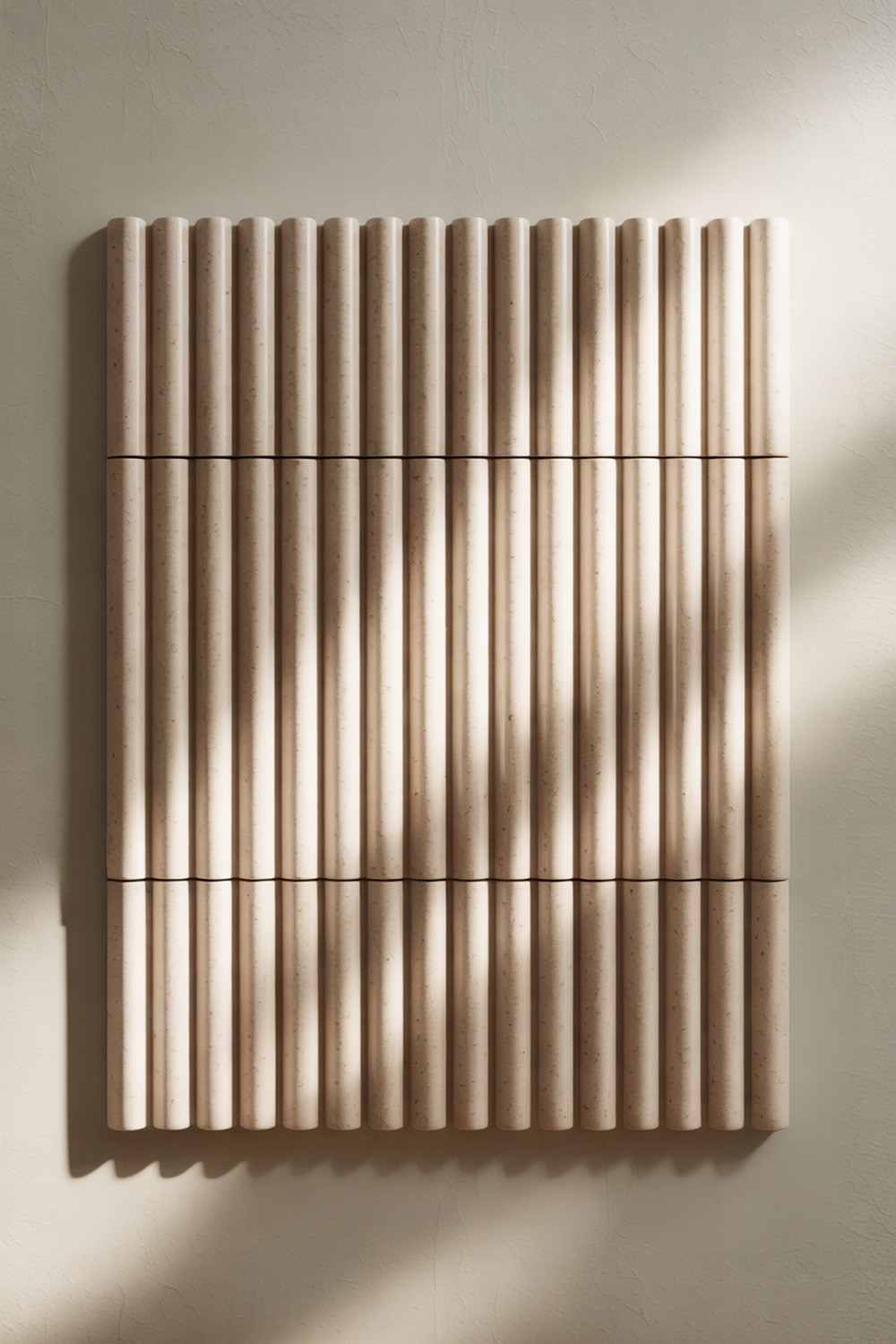
This is the one I am a little obsessed with. Fluted tile has a 3D vertical ribbing, those soft rounded ridges you see on a column or a reeded cabinet.
Raking light turns it into gentle shadow play that shifts all day, which is the whole reason to use it. Keep it tonal, cream or clay or a muted sage, so the texture does the talking instead of the colour.
One feature wall is plenty, and it does its best work behind a floating vanity with a wall light washing down it.
In ceramic or a plaster-look finish, it brings warmth to a room that a flat tile never could. Reeding is having a real moment, and I think it earns it.
8. Star Bathroom Tiles
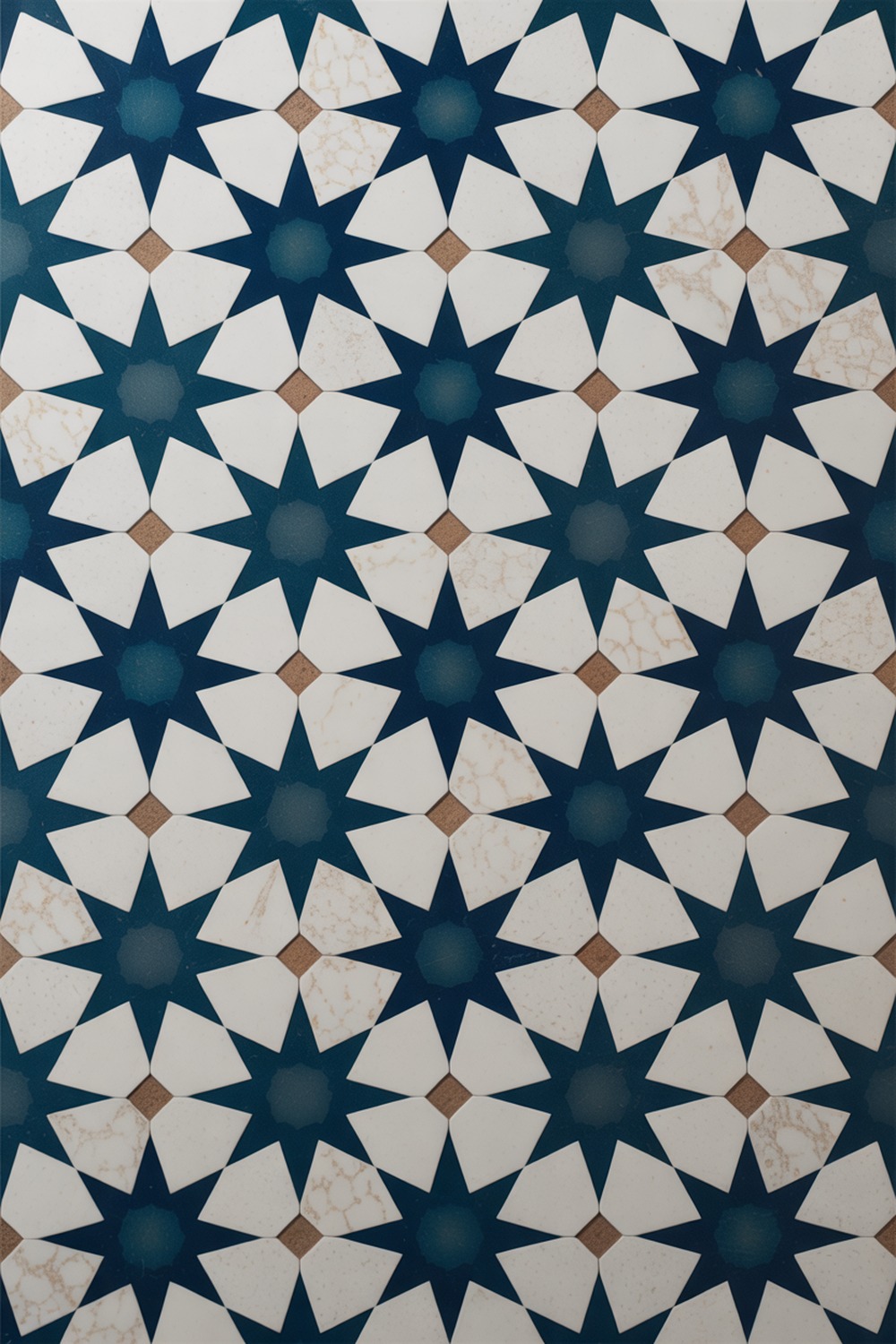
Here is a little history. The interlocking star and cross is a Moorish pattern that has been charming floors since the halls of the Alhambra.
Two shapes lock together, a pointed star and a small cross, into something that feels both ancient and fresh. In cement or zellige, a navy and white star floor is crisp and graphic, the sort of thing that makes a plain white bathroom suddenly interesting.
Prefer something warmer? Terracotta and ochre tones feel sun-baked and Andalusian. Whichever you choose, let it own the floor and keep every wall around it plain. This pattern needs room to breathe, not competition.
9. Geometric Bathroom Tiles
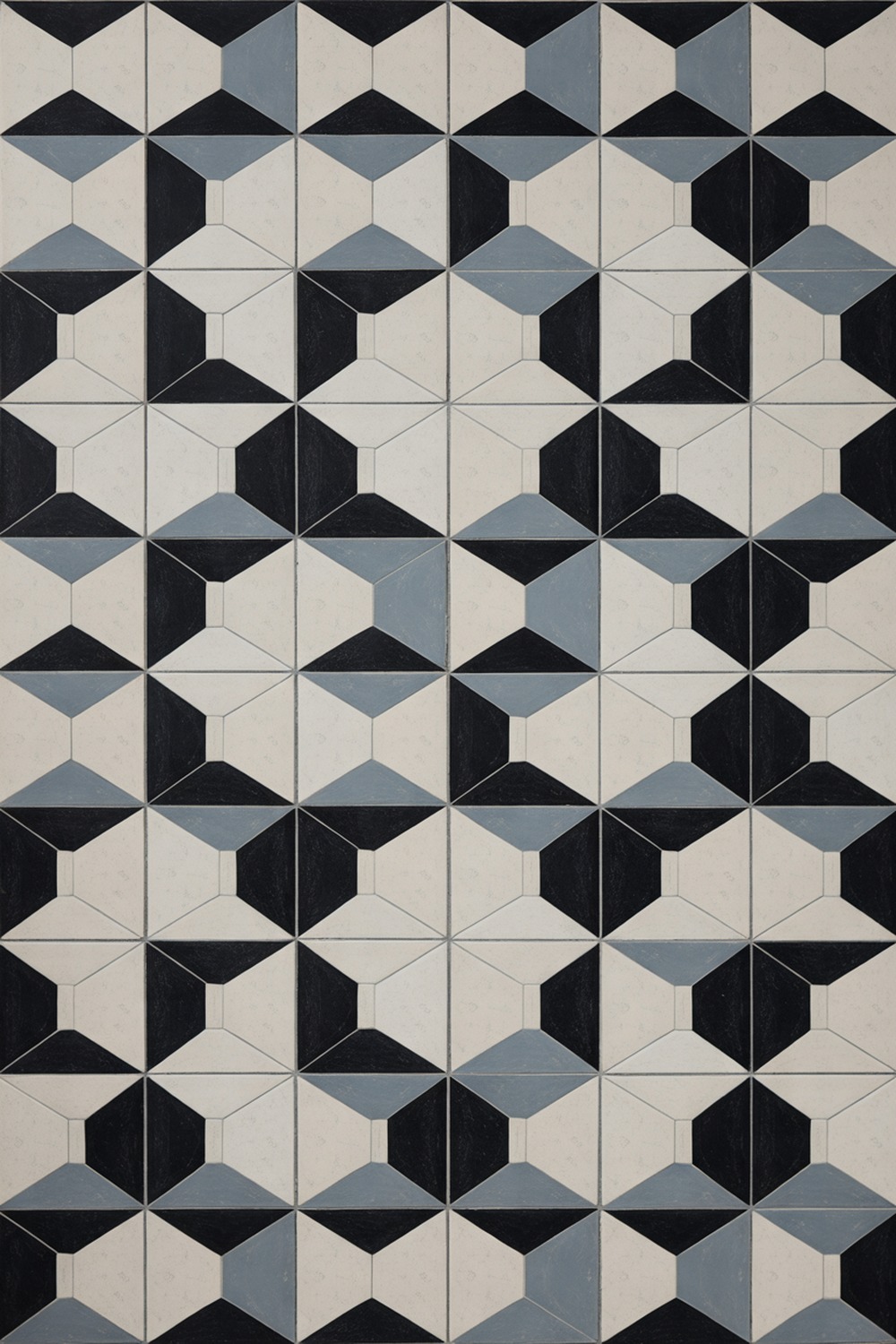
For the brave. Geometric tile means angular repeating shapes, triangles, diamonds, little cubes that trick your eye into seeing 3D, usually in graphic cement or encaustic. One look and the room has a point of view.
Black and white is the fail-safe, jewel tones if you want warmth. The rule that saves you: let the pattern be the only loud thing. Plain walls, plain fixtures, bold geometric floor doing all the lifting.
10. Floral Bathroom Tiles
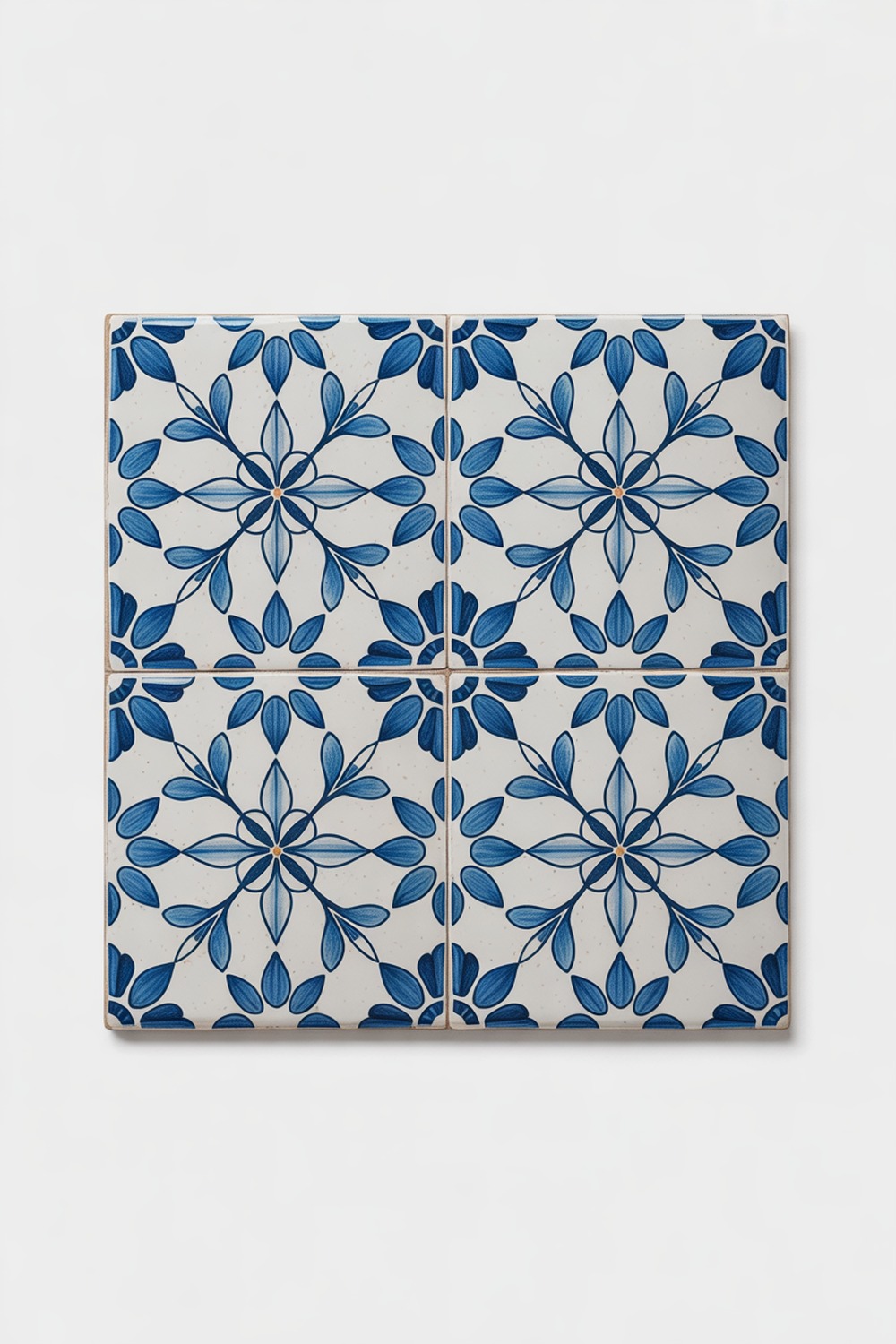
Florals in a bathroom sound risky and land lovely. These are the hand-painted-look tiles, the blue and white azulejos Portugal has made since the 1600s, each one a little painting.
Use a floral as a single feature wall above the bath, or carpet the floor with it. One painterly surface per room is the whole rule.
11. Patterned Bathroom Tiles
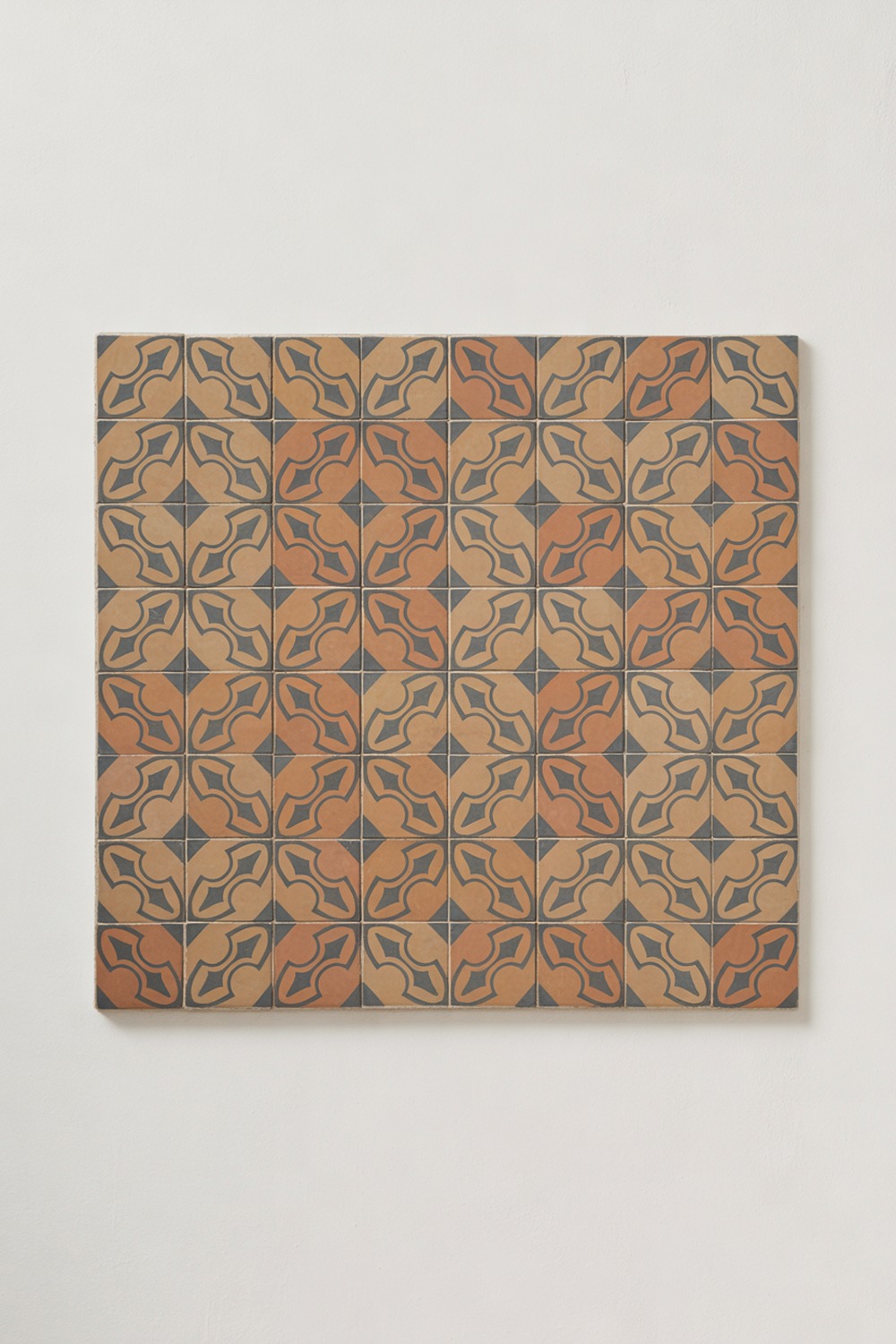
When you want the floor to look like a rug, reach for a patterned cement tile. This is the broad Moroccan-encaustic family, repeating motifs in warm ochre, inky blue and soft terracotta, laid edge to edge.
It does so much that it needs nothing else, so let it be the only pattern in the room.
12. Vertical Stacked Bathroom Tiles
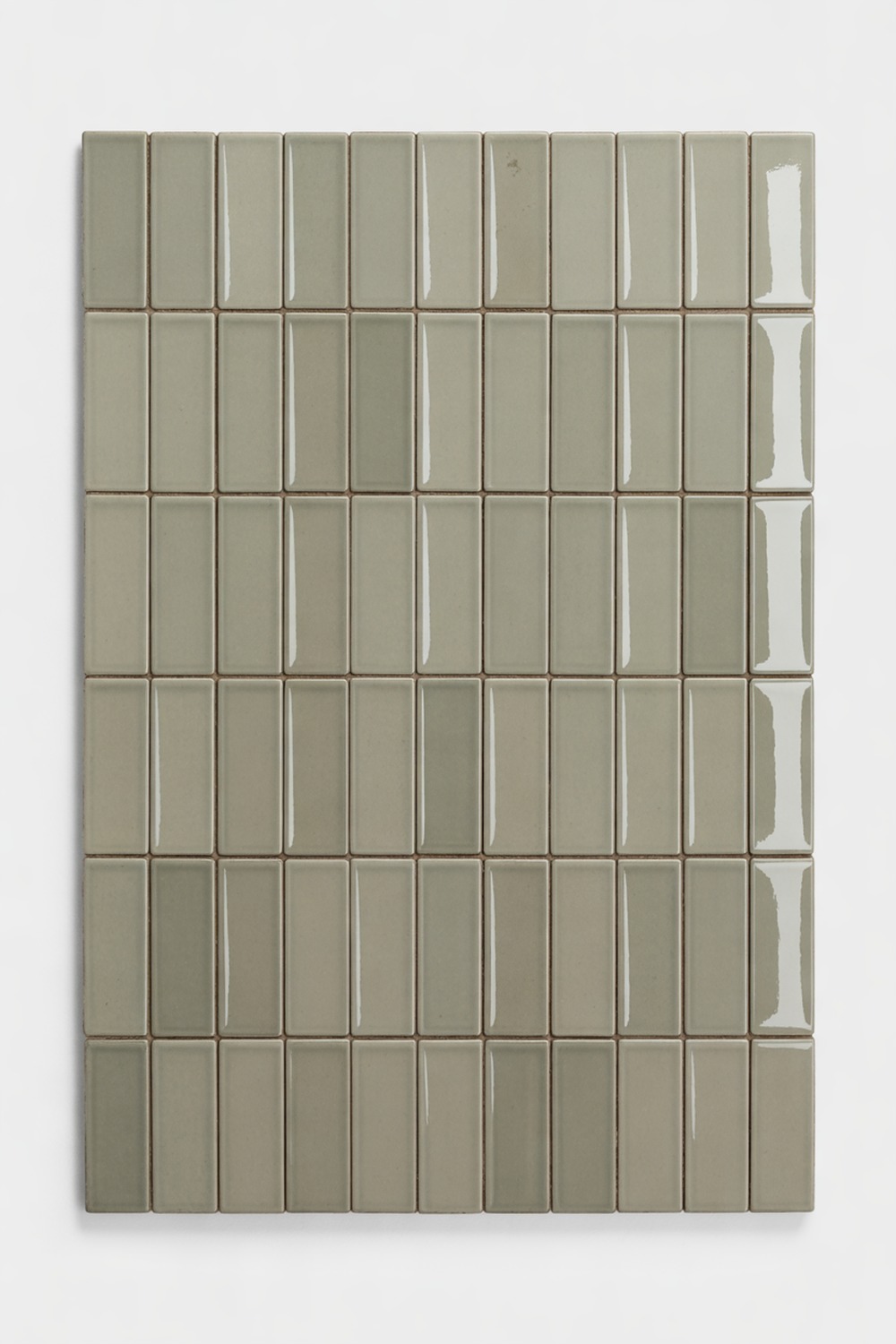
Same rectangle, completely different mood. Take a subway-shaped tile, turn it on its end, and stack it in a dead-straight vertical grid with no offset. A slim 3×12 proportion really pulls the eye up.
The ceiling feels higher and the whole thing reads crisp and modern. A greige or soft-green glossy stack is my pick, with the thinnest grout you can manage so the lines stay clean. Run it full height in the shower.
13. Herringbone Bathroom Tiles
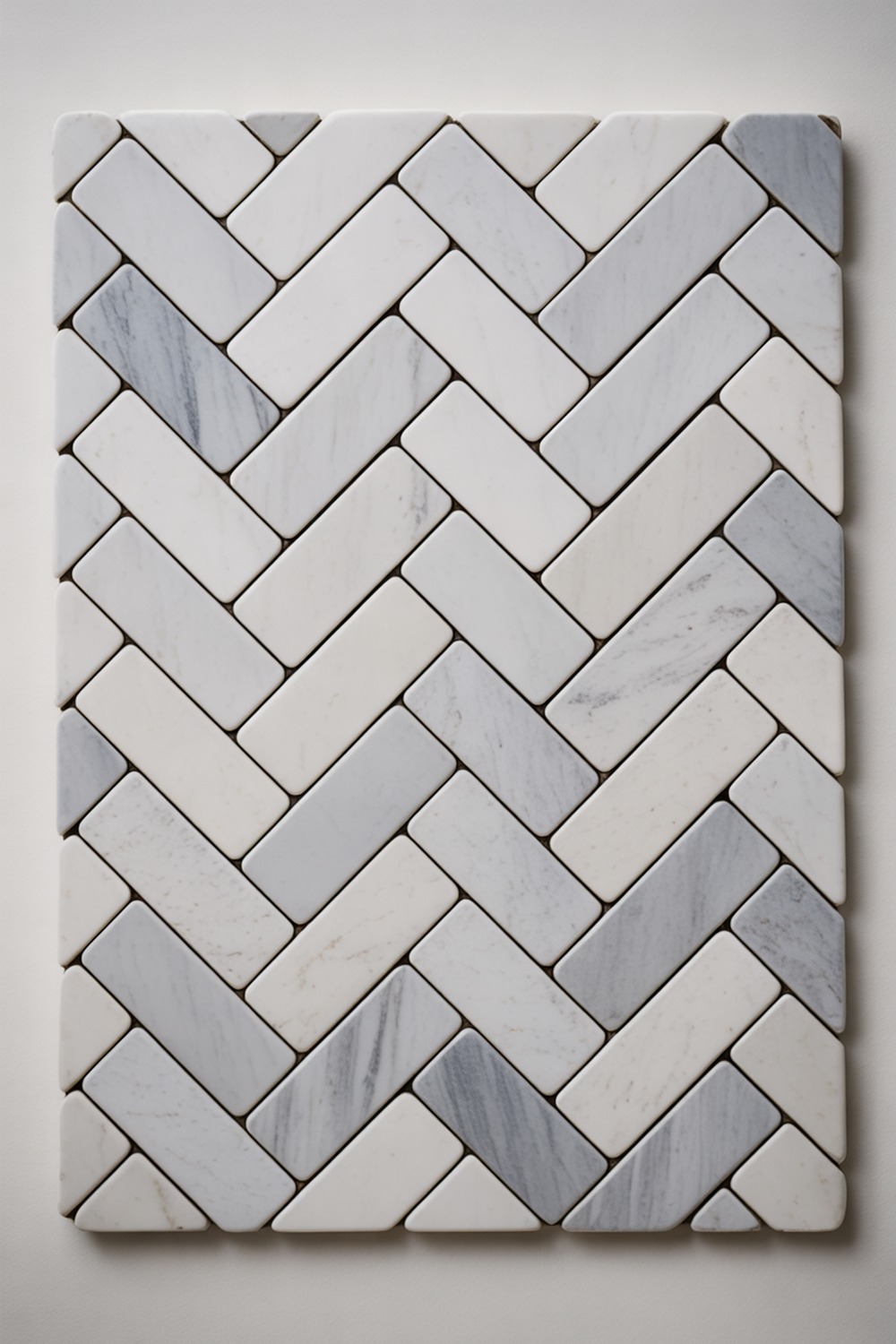
Herringbone is how you make plain rectangles look tailored. Slim 2×8 tiles interlock into that classic woven zigzag, and the diagonal energy makes even a simple white tile feel designed on purpose.
A marble herringbone floor is quietly luxurious, a glossy forest-green herringbone wall is a proper showstopper. My advice: pick one surface, a floor or a single wall, and let it be the star. Everything else stays calm.
14. Chevron Bathroom Tiles
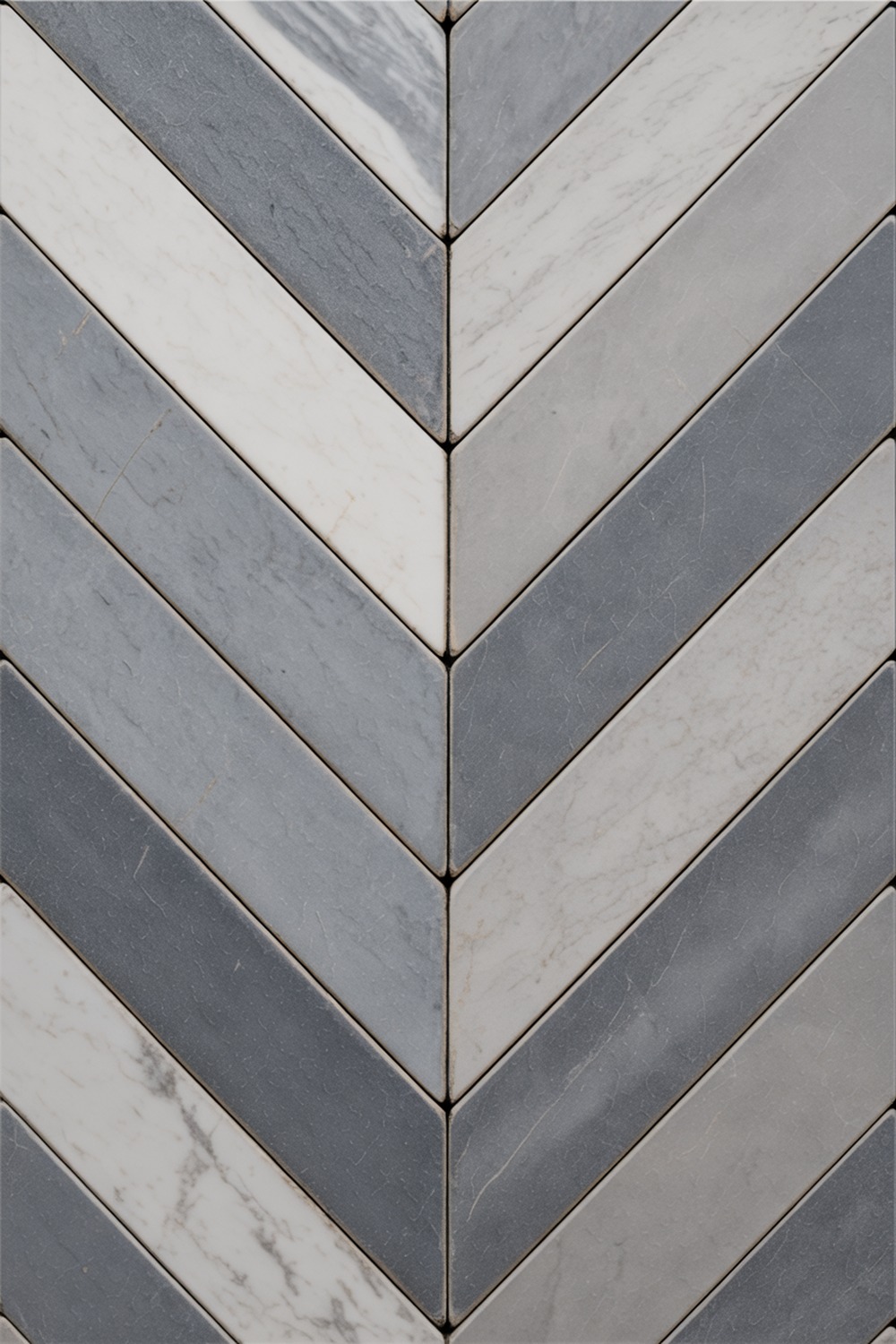
Chevron and herringbone get muddled constantly, so here is the difference that matters.
Chevron tiles are cut as parallelograms at a 45 degree angle, and their ends meet point to point in one continuous crisp V. Herringbone sits at a right angle and zigzags; chevron runs in clean unbroken arrows. The chevron is sharper, more deliberate, more fashion.
In honed marble it is elegant, in a flat matte colour it is graphic and young. It makes a brilliant feature wall behind the vanity, especially run vertically to lift a low ceiling. Start with one wall, because a little chevron goes a long and lovely way.
15. Scallop Bathroom Tiles
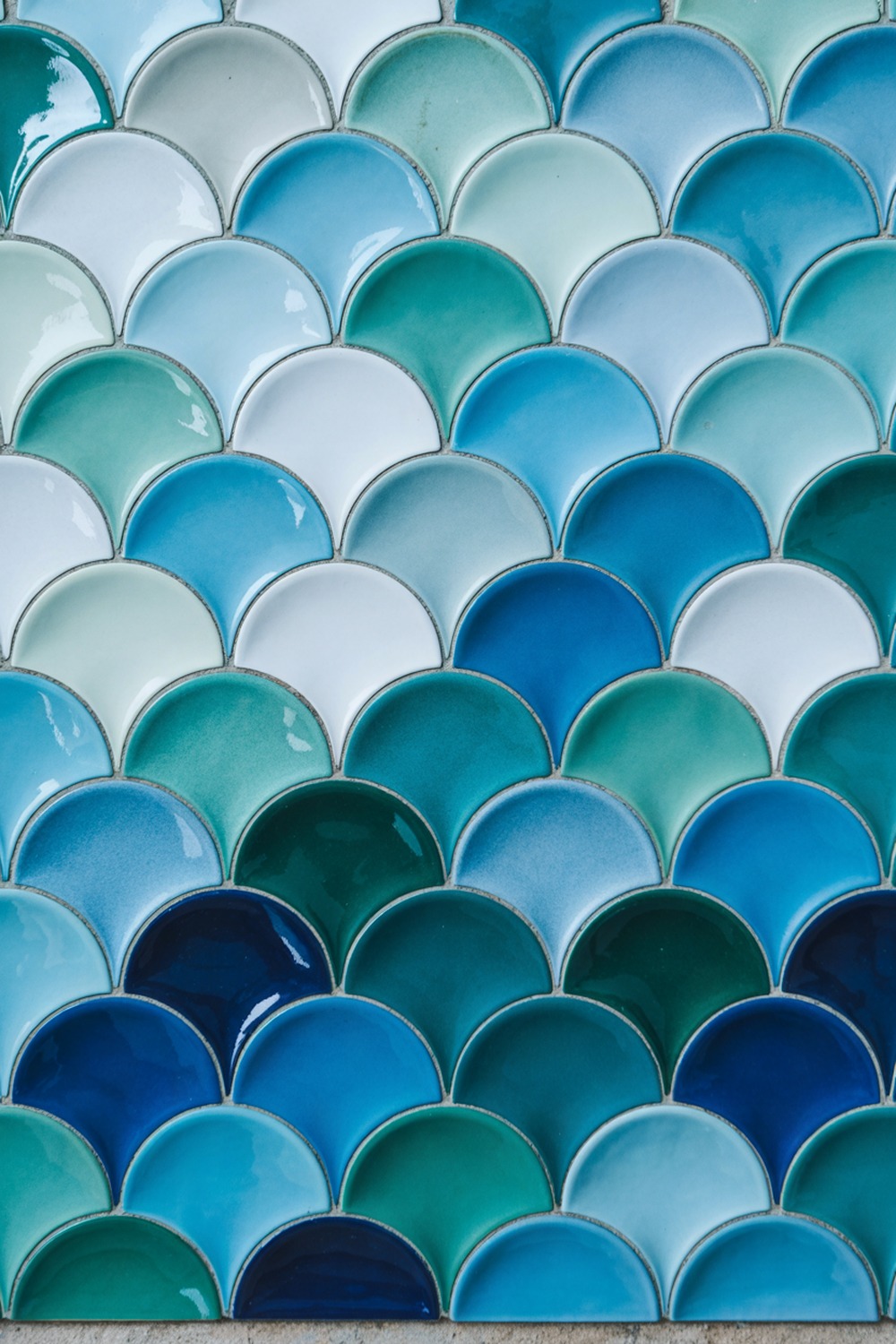
Also called fish scale or mermaid tile, and it is as fun as it sounds. The rounded 5-inch fan overlaps row on row into soft curves, a sweet antidote to the hard right angles a bathroom usually serves.
An ombre blue scallop feels coastal, a sage or blush one feels like a spa. I keep it to an accent wall, where curves stay chic.
16. Checkerboard Bathroom Tiles
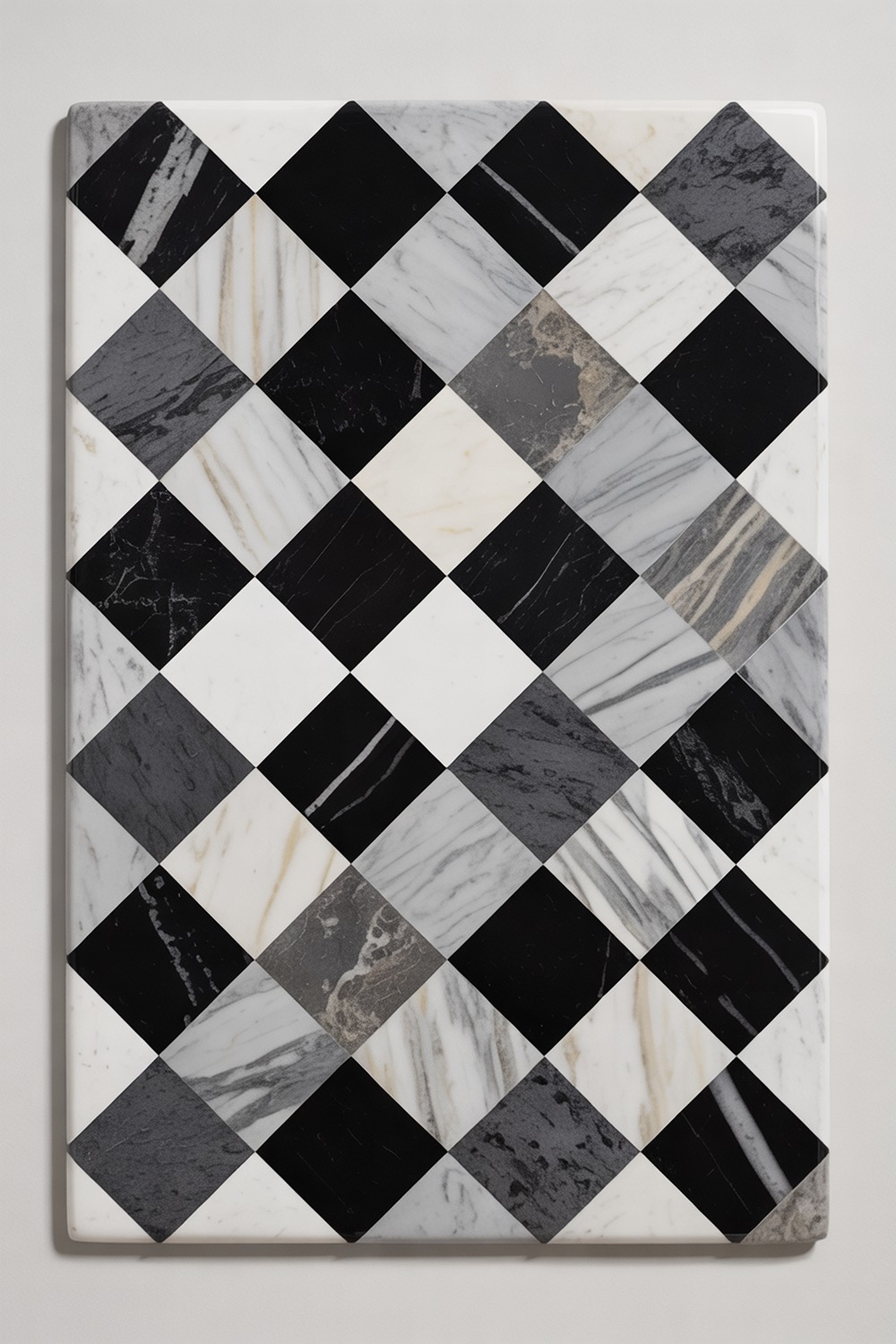
Nothing says confident like a checkerboard floor.
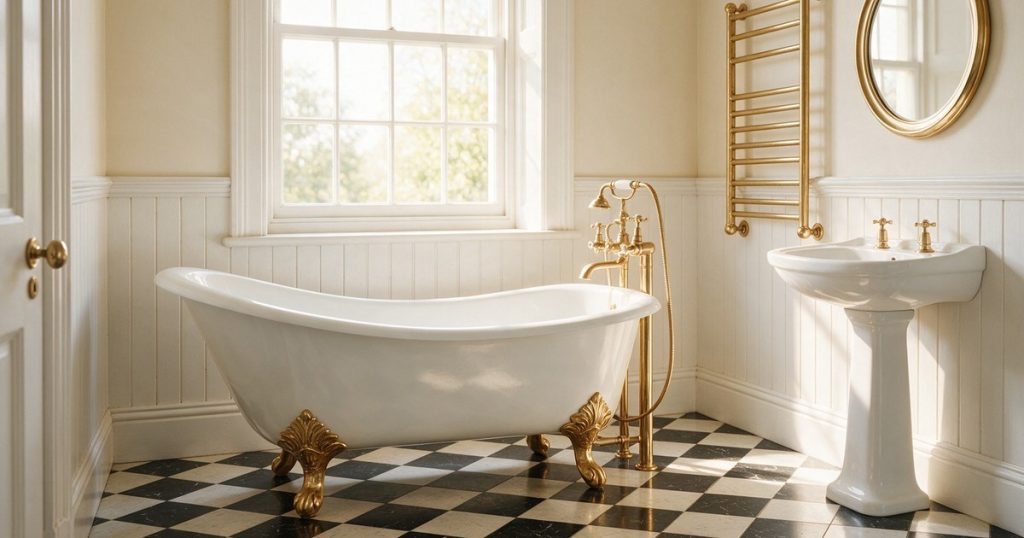
Two colours of square tile alternating, laid straight or on the 45 degree diagonal, and suddenly your bathroom has the bones of a Parisian bistro or an old English scullery. It never goes out of style, which is rare for anything this graphic.
Black and white marble is the icon, but a green and cream check is softer and, honestly, the one I would choose.
Keep it on the floor, keep the walls plain, and let that grid carry the whole room. A little tip: run it on the diagonal and a narrow bathroom instantly looks wider.
17. Basketweave Bathroom Tiles
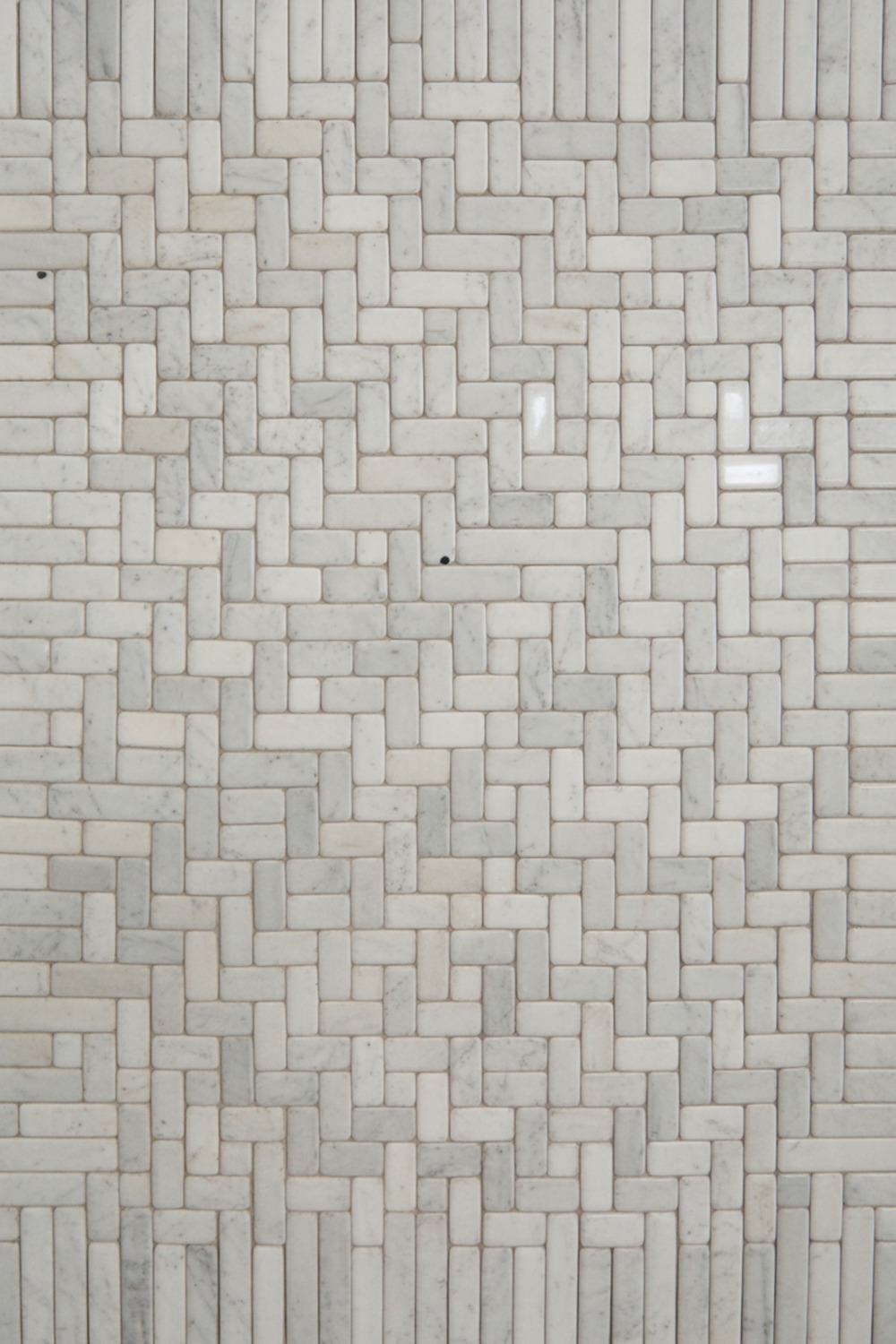
A proper heritage floor. Basketweave sets little marble rectangles so they appear to weave over and under, usually a soft-veined white Carrara with a gentle handmade rhythm to the stone.
It is pure 1920s, the floor of a grand old hotel bath, and it pairs perfectly with simple subway walls for a head-to-toe vintage scheme.
18. Mosaic Bathroom Tiles
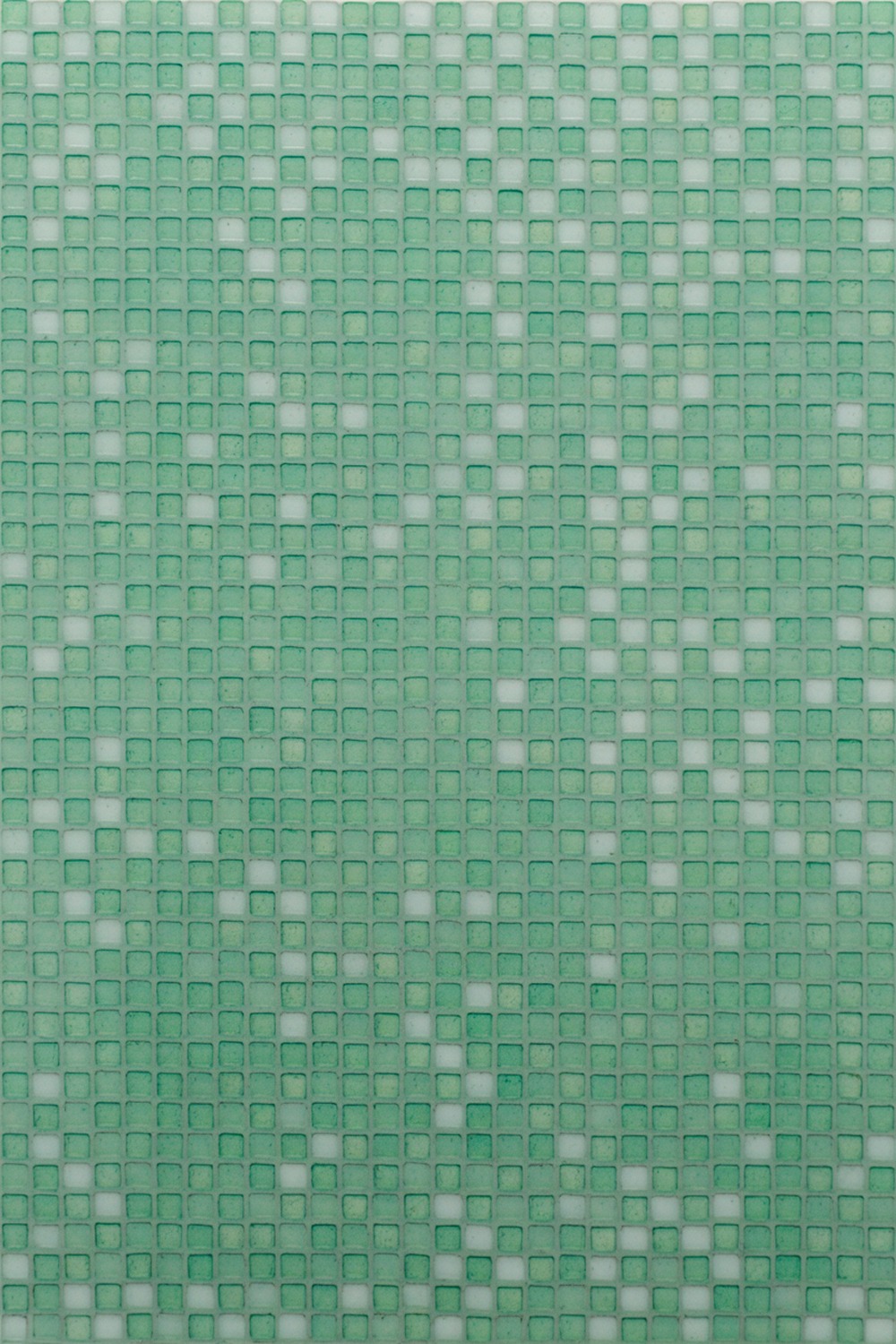
Mosaic is really all of these shapes shrunk down. Tiny tiles on a mesh sheet, often 1-inch or smaller, square or penny or random pebble, blended into a gentle gradient of colour. Small scale, big texture.
A sea-glass green glass mosaic glows in the light, a stone pebble mosaic feels wonderful underfoot. Use it where a big tile cannot bend: a curved shower floor, a niche, a slim accent band. Let it be the jewel, not the whole box.
19. 3D Textured Bathroom Tiles
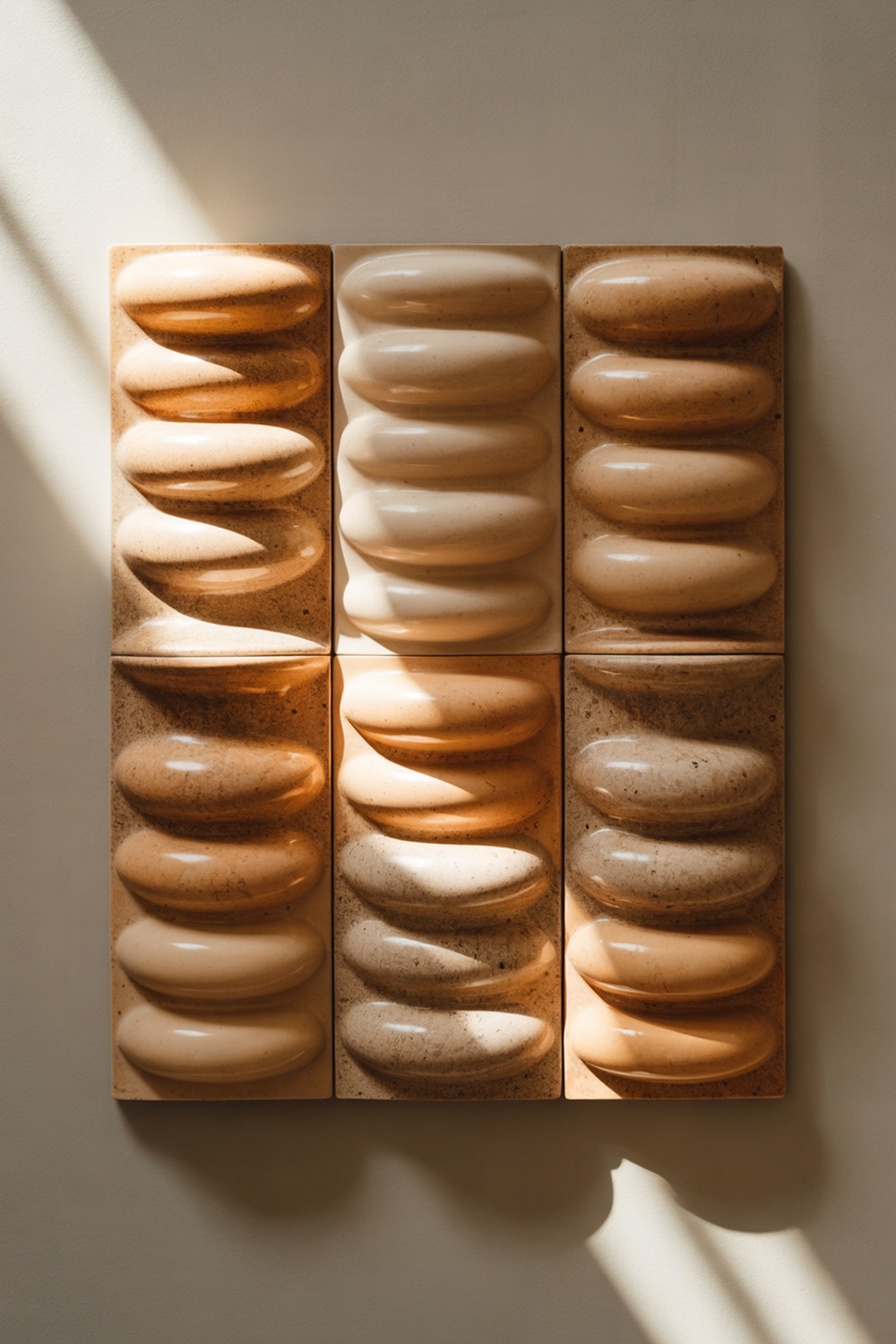
Save the best trick for last. A 3D textured tile has real dimensional relief, pillowed, wavy, or a kit-kat ridge, so the surface catches light and throws soft shadow that shifts as the day moves.
Keep it tonal, a white, a warm sand, a grey-green, and you get genuine depth without a drop of busyness. One feature wall, lit from the side, is all you need.
Which Tile Shape Is Right for You
Start with the room you actually have, not the Pinterest board. A small bathroom loves anything that draws the eye up, so vertical stacked, finger tiles and a glossy subway are your friends. They stretch the walls and bounce the light around.
Craving character on a budget? Penny round, checkerboard and basketweave bring old-world charm for not much money, mostly on the floor where a small tile belongs. Want calm and seamless instead? Large format and a tonal square wall are your people.
And if you only have the nerve for one bold move, make it a geometric, patterned or floral floor and keep everything else plain. One brave surface, done well, beats five timid ones. That is the whole secret.
Bathroom Tile Questions, Answered
What does a tiled bathroom cost? It swings widely. Plain ceramic subway and square tiles sit at the low end, porcelain large format and most patterns land mid-range, and natural marble or hand-made zellige are the splurge. Shape and material drive the price far more than room size.
Which of these can I lay myself? A straight grid, a simple subway offset and a stacked square are genuinely doable for a patient beginner. Herringbone, chevron, penny round and anything in a wet shower are jobs I would hand to a pro.
Where should the bold tile go? On the floor or on one feature wall, nearly always. Busy shapes earn their keep as a single statement surface. Fill a whole room with them and the eye has nowhere to rest.
What is worth spending on? The tile you touch and see up close, so the shower and the floor. Save on a simple wall tile and splurge on a marble herringbone or a real cement pattern underfoot, where the quality genuinely shows.
What do I ask the tile shop for? Name the shape, the size, the material and the finish, so “a 2×8 glossy ceramic in sage, laid vertical,” not just “green tile.” Ask which grout colour suits it and whether it needs sealing. That one sentence gets you what you pictured.
You do not need to re-tile the whole house to feel the difference. Pick one shape that made you pause, start with a single wall or the floor, and let it change the room. Your future self, towel in hand, will thank you.
More stories
Share this story