This Oklahoma Anniversary Gift Grew Into a Beloved Route 66 Icon

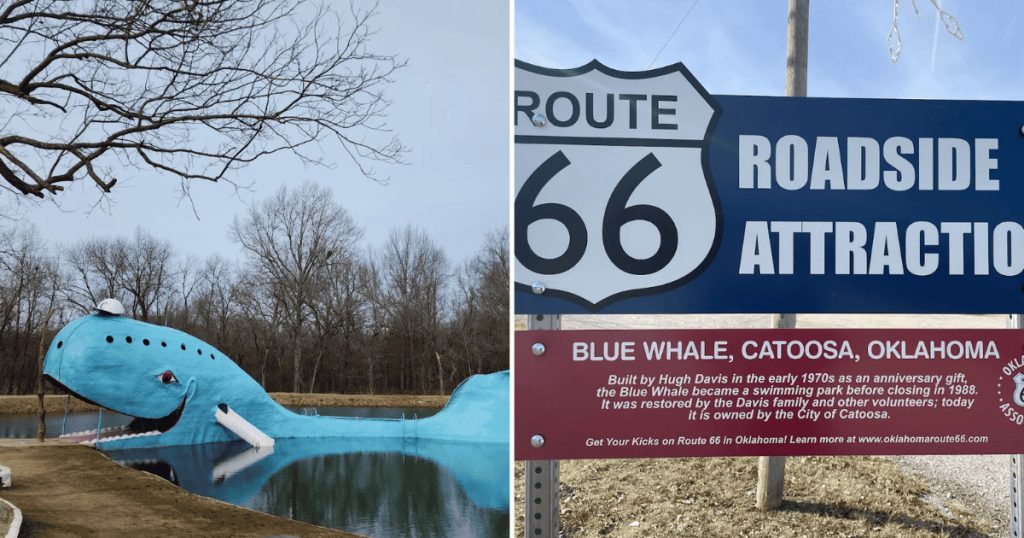
I’ve come to believe the best roadside attractions are never built by committees.
Theme parks get designed by teams chasing market research, but the truly memorable ones — the kind people drive hours out of their way to see — almost always start with one person and one slightly absurd idea they refused to let go of.
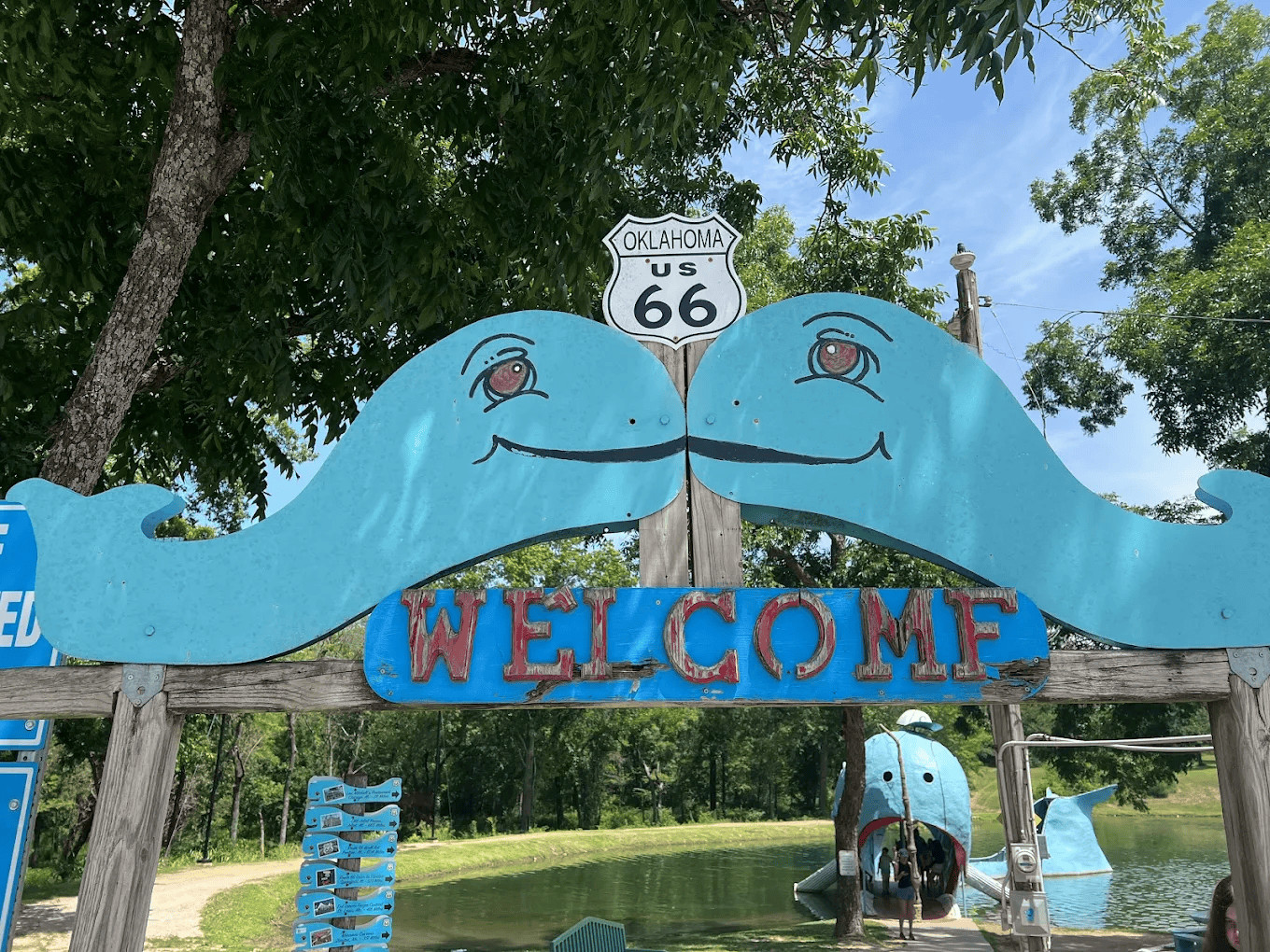
I think about this every time I pass a billboard for some elaborate attraction that somehow feels hollow once you arrive. There’s a difference between something built to extract money from passing tourists and something built because one person simply couldn’t stop themselves.
Somewhere outside Tulsa, along a stretch of Route 66 in Catoosa, Oklahoma, there’s an 80‑foot blue creature grinning out over a pond that proves the point. It started as an anniversary present. It became something much bigger.
The Blue Whale of Catoosa has been welcoming road‑trippers, families, and curious wanderers for more than five decades now. A few of them leave without taking at least a dozen photos.
An Anniversary Gift That Got a Little Out of Hand
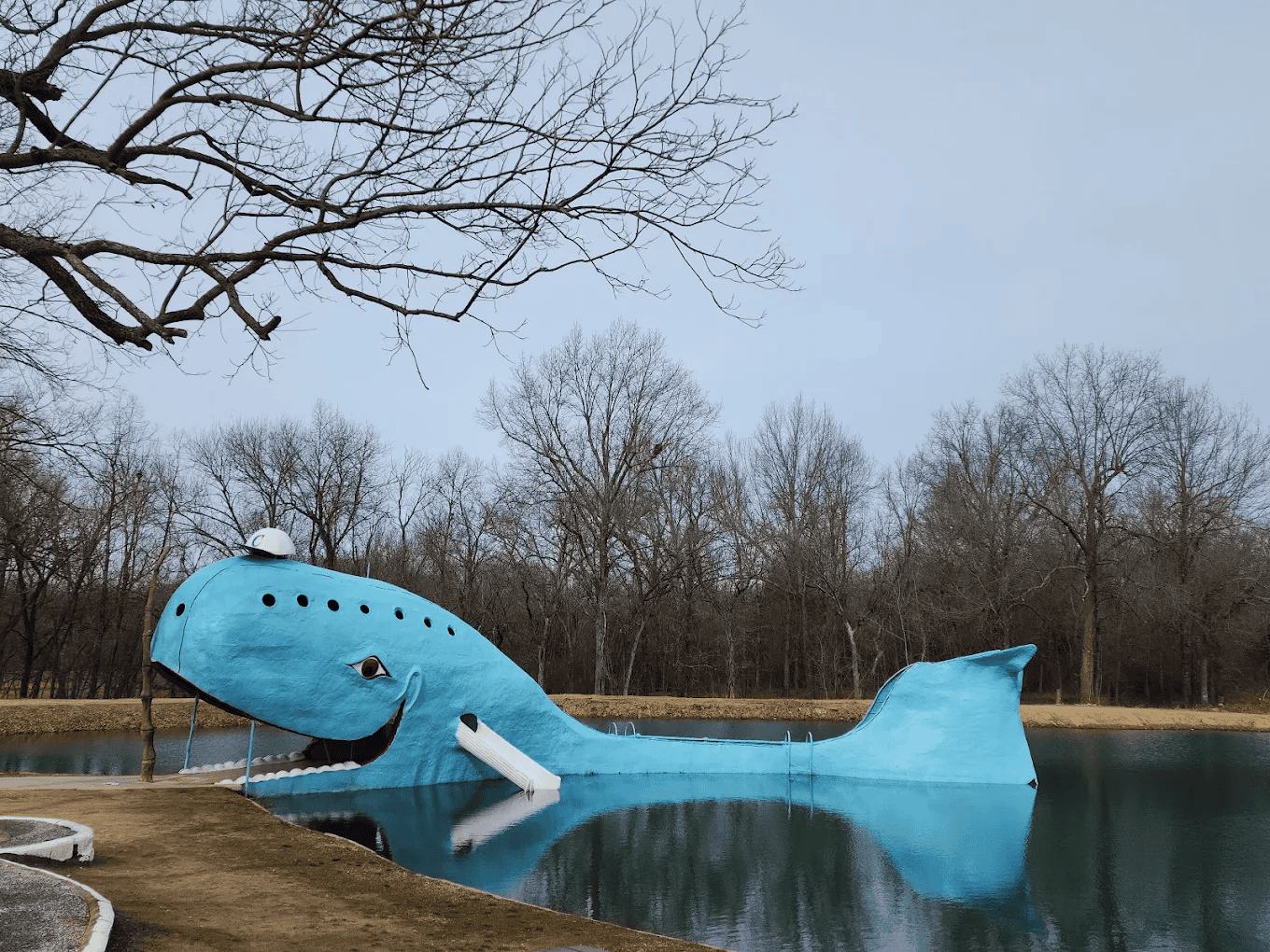
Hugh Davis built this whale between 1970 and 1972 as an anniversary gift for his wife, Zelta, who had a longstanding fondness for whale figurines.
Most anniversary gifts don’t require a steel framework and two years of hands-on labor.
But Davis, working with his own two hands and a vision considerably larger than the typical roadside attraction, constructed an 80-foot creature out of steel and concrete on the edge of a spring-fed pond he’d shaped himself.
Zelta’s reaction reportedly exceeded even his hopes. The couple opened the site to the public almost immediately, and local families started showing up to swim in the clear pond water and slide down the chutes built into the whale’s sides.
What began as a private gesture of affection turned into a community gathering spot almost overnight. Davis, a zoology professor by background, brought a genuine fascination with animal design to the project, and it shows in the whale’s cheerful, almost goofy expression.
He never charged admission. That generous, unpretentious spirit became part of what visitors remember most, even decades later.
“I love the feeling of serenity that seems to go with the large blue whale,” one visitor wrote, describing the simple pleasure of sitting on its tail or having a quiet picnic lunch nearby.
A Brush With Disappearing Entirely
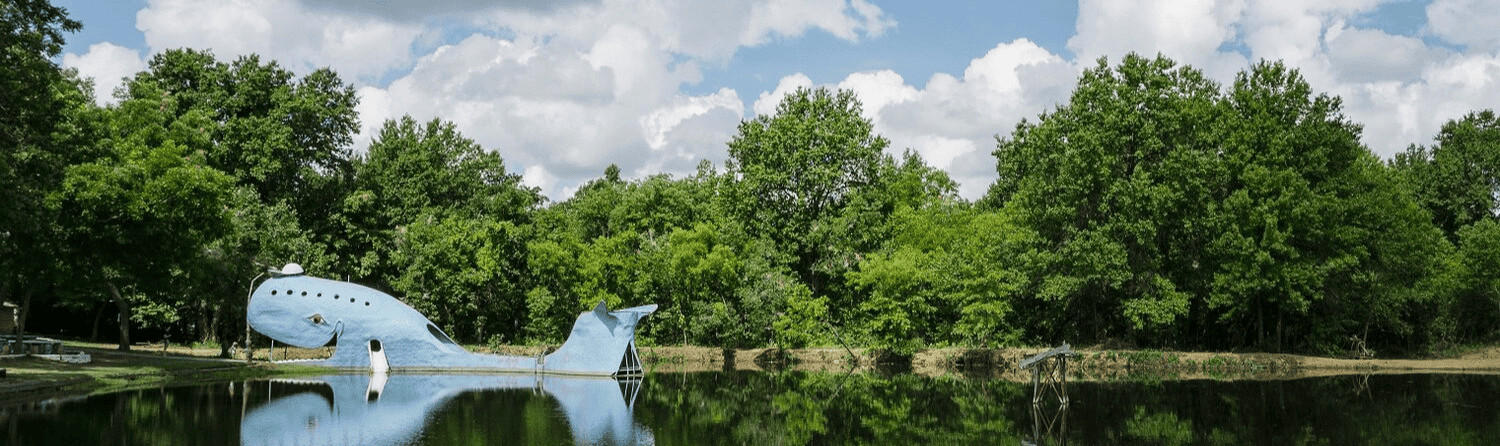
By the late 1990s, the whale wasn’t doing well. Years without consistent maintenance, weather damage, and vandalism had left the structure cracked, faded, and increasingly forgotten.
Hugh Davis had passed away in 1990, and for a stretch of years afterward, it genuinely seemed possible that his creation would simply crumble away, taking a piece of Oklahoma roadside history down with it.
His son and daughter-in-law, Hampton and Linda Davis, weren’t willing to let that happen. They formed a restoration committee and rallied the kind of grassroots community support that doesn’t show up unless people genuinely love something.
Volunteers donated time, materials, and skilled labor to repair the concrete and repaint the whale its signature bright blue. Local businesses pitched in supplies, and Route 66 preservation groups spread the word well beyond Oklahoma’s borders.
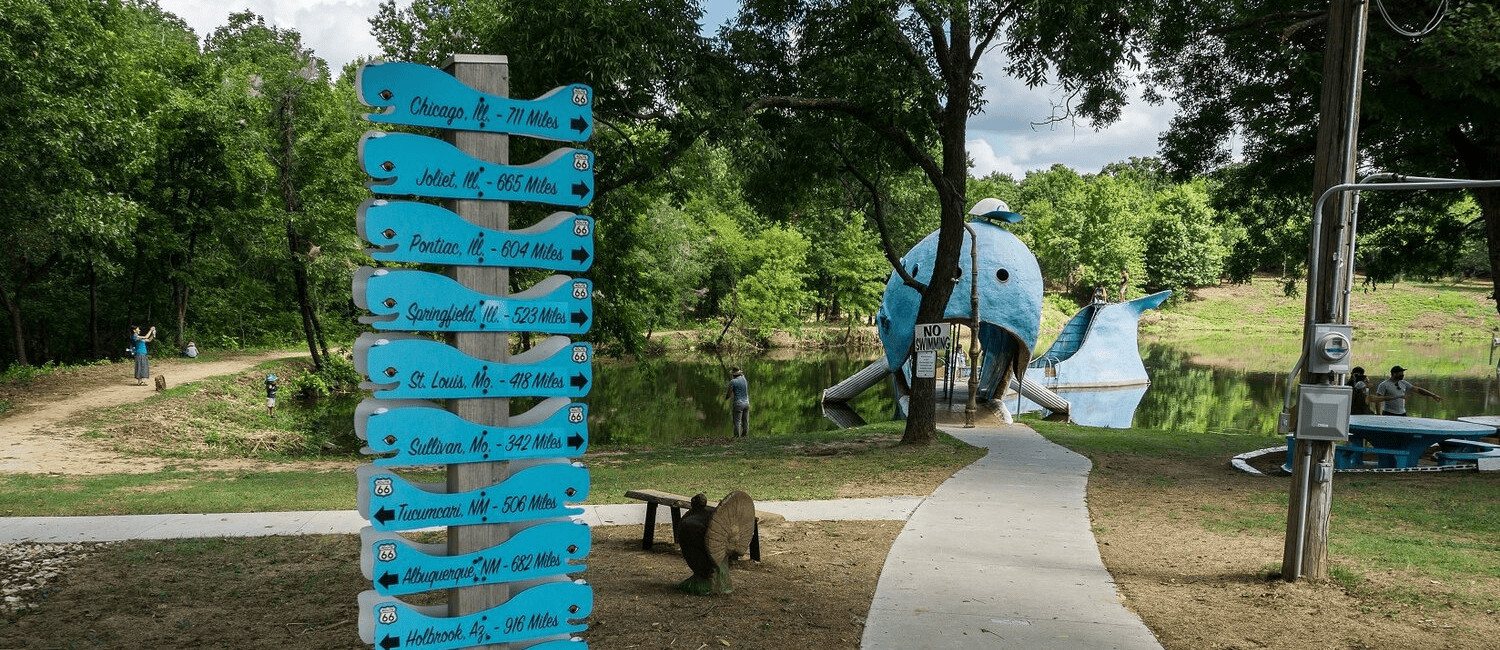
The effort took thousands of volunteer hours spread across the restoration project, a scale of community commitment that’s easy to undersell in a single sentence. News coverage of the restoration drew even more visitors to Catoosa, curious to see the revitalized whale firsthand and eager to support its continued upkeep.
“This place and ones like it hold so many memories and links to the past,” one longtime visitor reflected, “back when America’s small towns and hardworking people built roadside attractions out of nothing but love for their communities.”
The City of Catoosa eventually took over ownership, which gave the site dedicated resources for ongoing upkeep while preserving free public access — exactly the spirit Hugh Davis had built it on in the first place.
That successful restoration didn’t just save one whale. It became something of a model for other endangered Route 66 landmarks across the state, proof that grassroots organizing and volunteer labor could genuinely rescue a piece of roadside history that might otherwise have simply disappeared.
The Whale Itself, Up Close
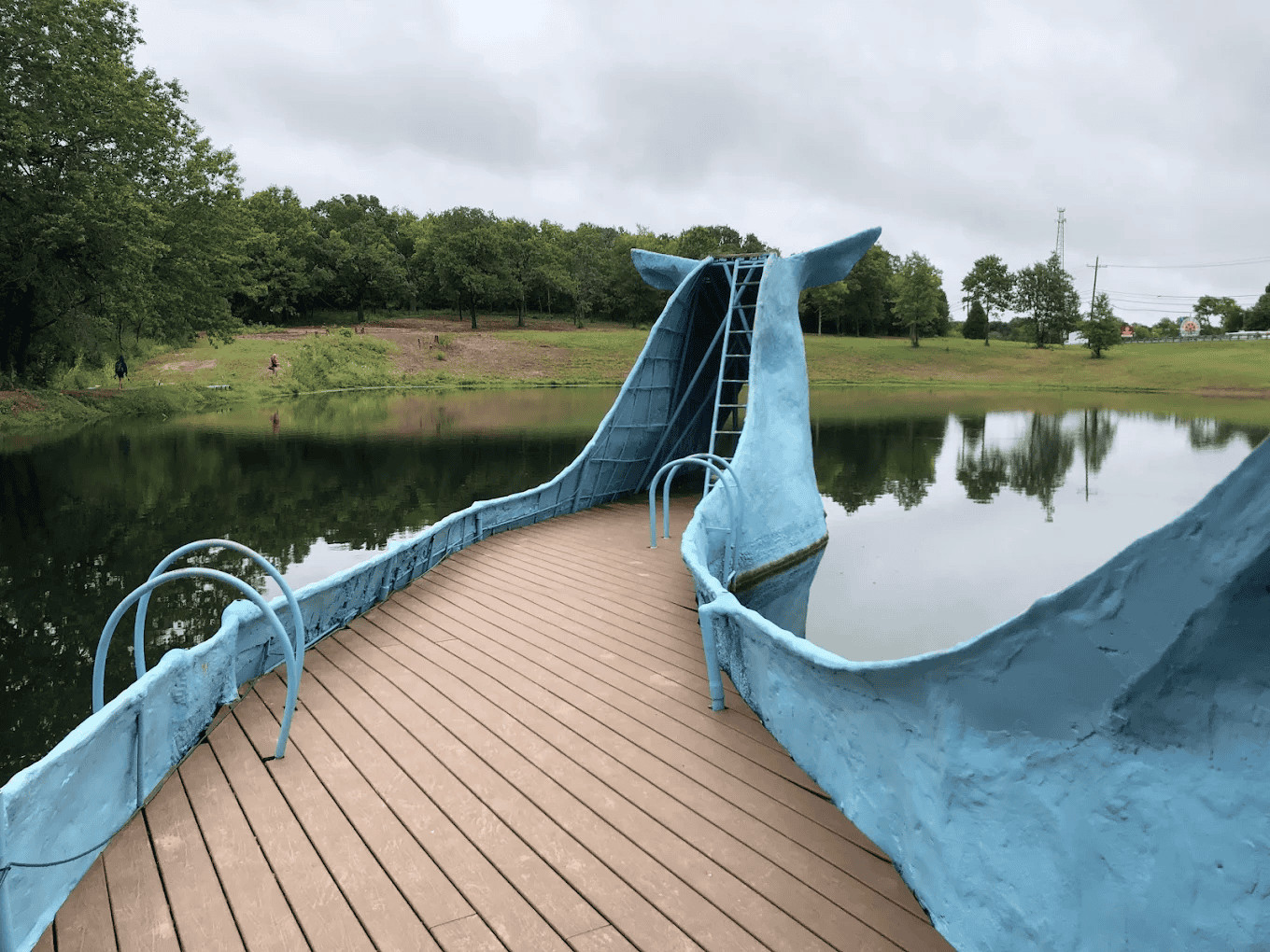
Walking up to the whale for the first time tends to produce the same reaction in nearly everyone: it’s bigger and more charming in person than photos manage to capture.
The open mouth functions as the main entrance, leading into a hollow interior where you can stand and look back out toward the pond through the gap.
Visitors can climb up and walk along its back, with the tail positioned to extend out over the water, creating the illusion that the creature is mid-dive.
“You can walk upstairs, and into the tail,” one reviewer described, noting it’s worth grabbing fish and turtle food at the gift shop before heading down to explore.
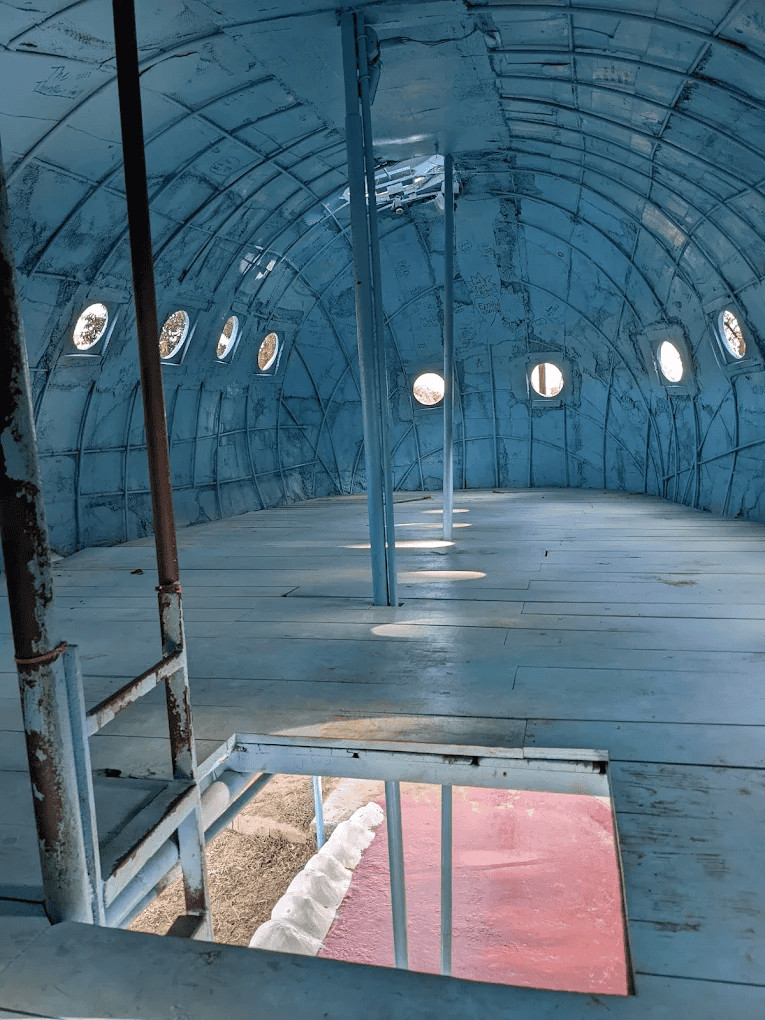
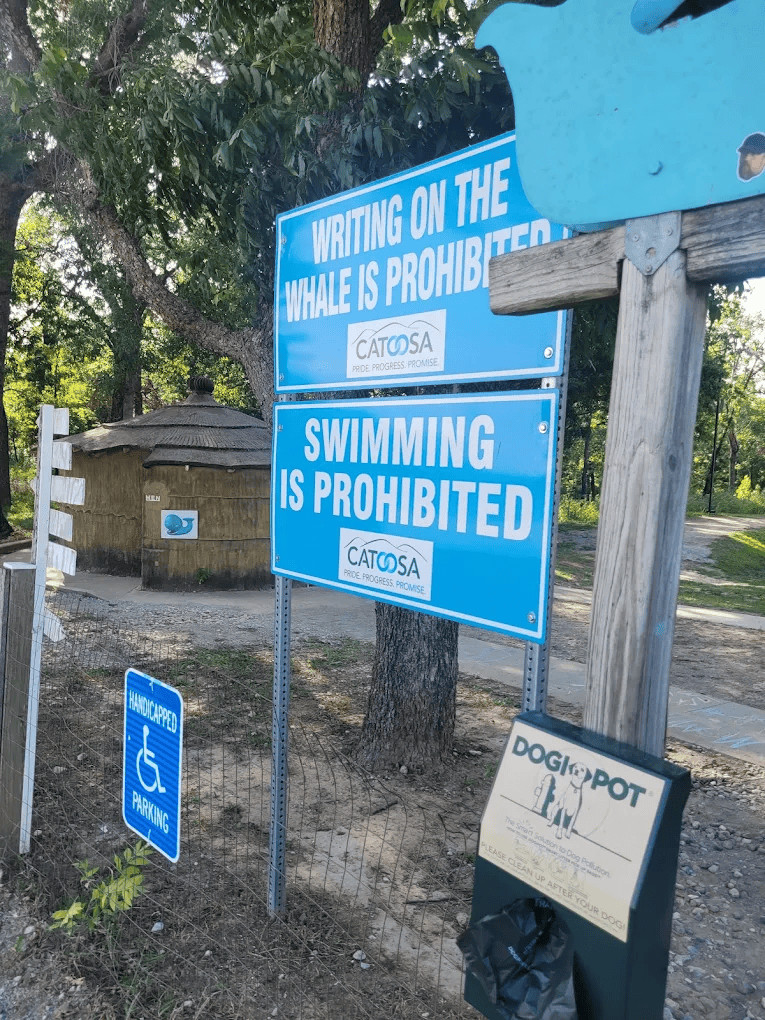
The bright blue paint gets refreshed regularly by maintenance crews, which keeps the whale visible from a good distance along the highway. Reviewers consistently describe the color and the cheerful painted expression as instantly recognizable, even to people seeing it for the first time.
“It is a very unique Route 66 attraction,” one visitor noted, “and it’s nice to see that it has been restored to its former glory so people like myself can visit it.”
The Gift Shop and the People Who Run It
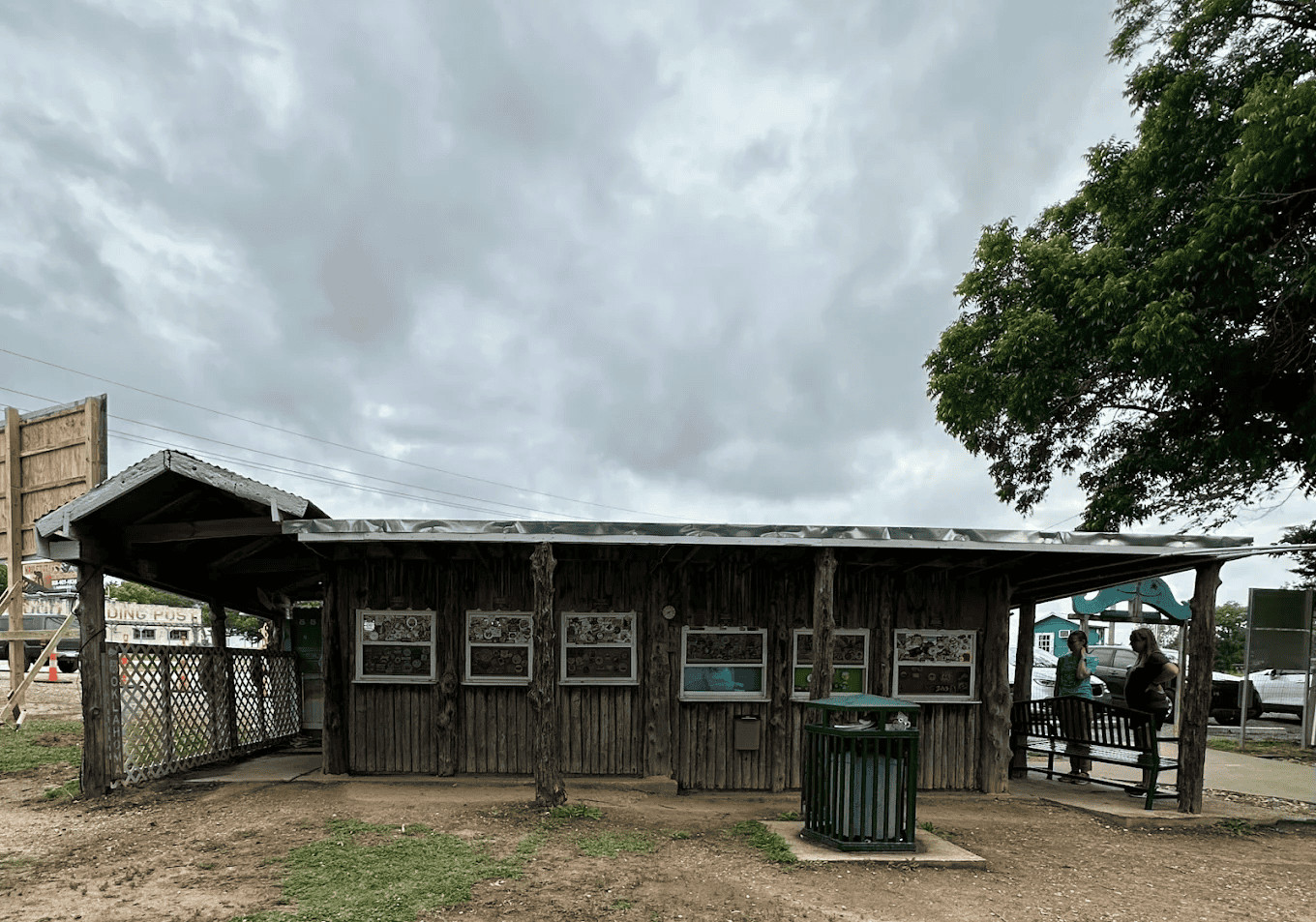
Nearly every review of this place eventually mentions the gift shop, and almost as often, it mentions the specific person working inside it.
The shop itself is modest — a small, air-conditioned space selling whale-themed souvenirs, Route 66-branded drinks, and the fish and turtle food that fuels the pond’s main attraction. But the staff seems to leave a bigger impression than the merchandise itself.
“The lady running it was so sweet and had a lot of cool historical information about this location,” one visitor wrote. “She is definitely an asset, and I think she deserves recognition for that.”
Another reviewer described chatting with the gift shop attendant about the whale’s full backstory, calling the conversation just as memorable as seeing the structure itself.
Several others specifically recall being shown old photo albums documenting the site’s history, including images from when a small private zoo once operated on the same property.
That zoo, sometimes called the Ark, still stands nearby, along with a scattering of mushroom sculptures that add their own quirky character to the grounds. Most visitors describe wandering over to look at both after exploring the whale itself.
A Quick Stop That Tends to Run Long
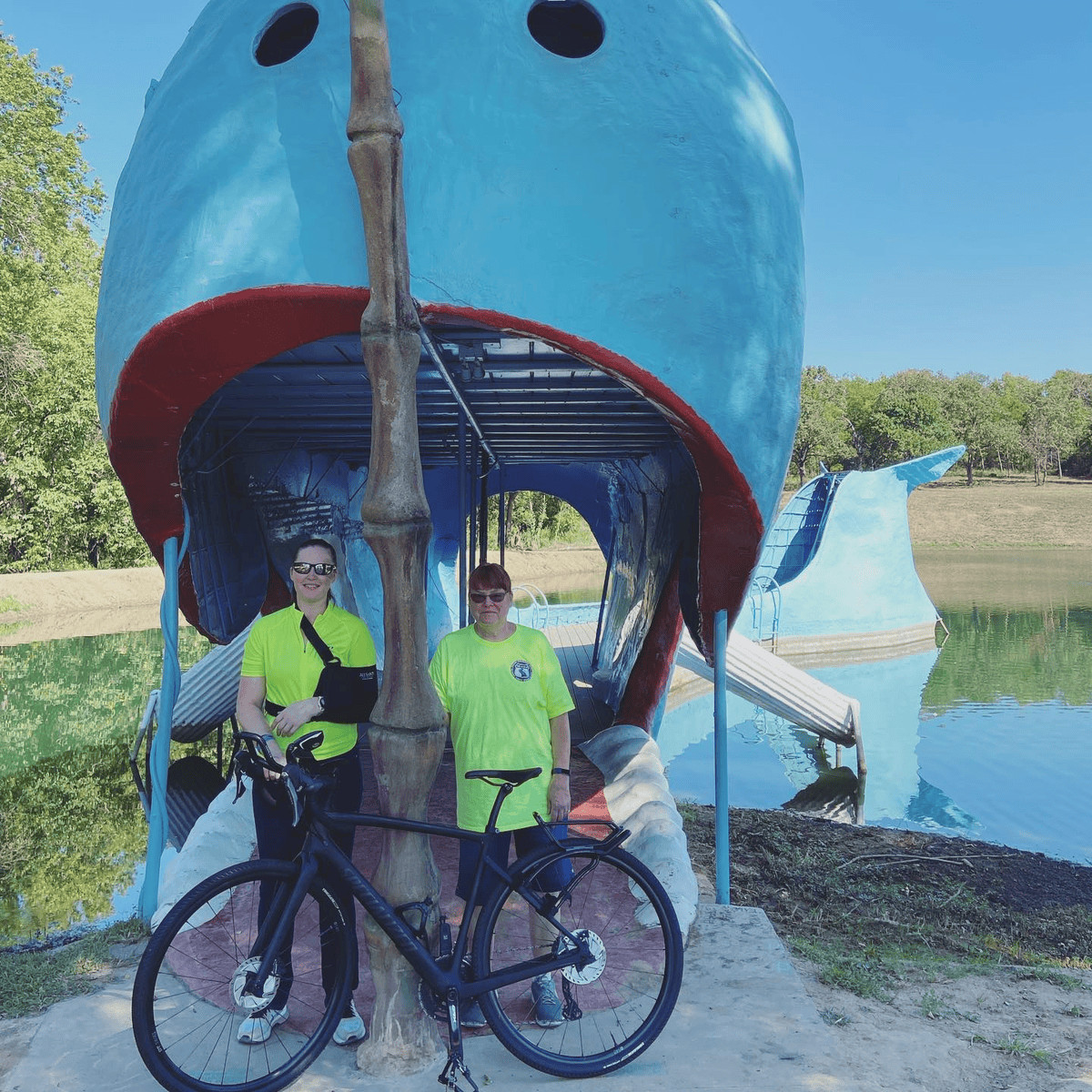
Most reviewers describe this as a fast visit — fifteen minutes, maybe half an hour for anyone who lingers over a picnic. And yet an unusually large number of people admit to staying considerably longer than planned.
Shaded picnic tables scattered around the property make it easy to settle in for a meal rather than just snapping a few photos and leaving. Clean public restrooms and ample parking, including space for RVs, round out the practical side of a visit.
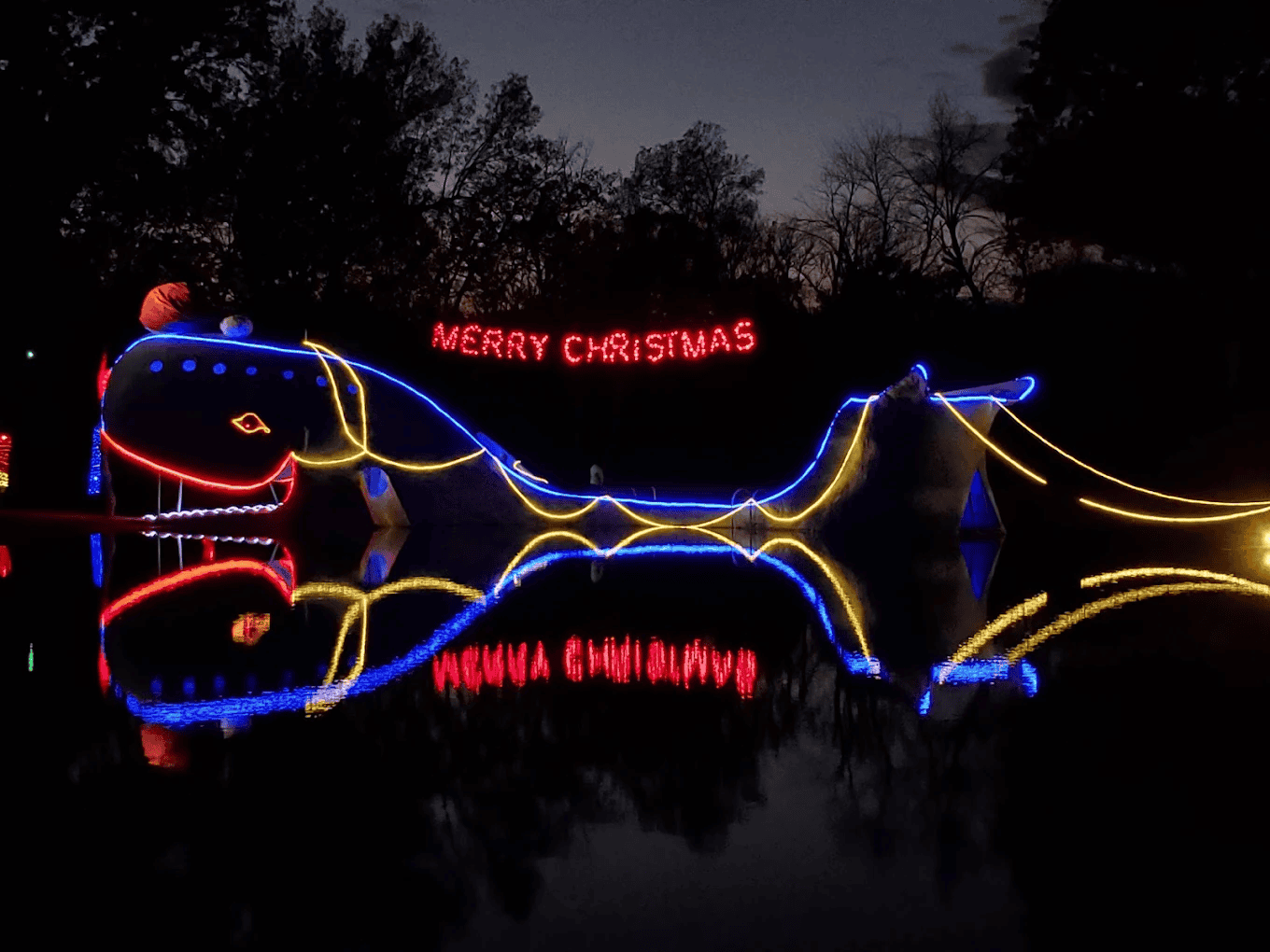
“You could spend five minutes here, or you can spend an hour, especially at sunset,” one visitor noted. Several others specifically recommend an evening visit during the holiday season, when the whale gets decorated with lights and even, on occasion, a Santa hat.
The site has also become a quiet favorite stop for Route 66 passport holders, who can get their books stamped on-site as part of a larger cross-country journey tracing the historic highway from Chicago to Los Angeles.
A Site Still Growing
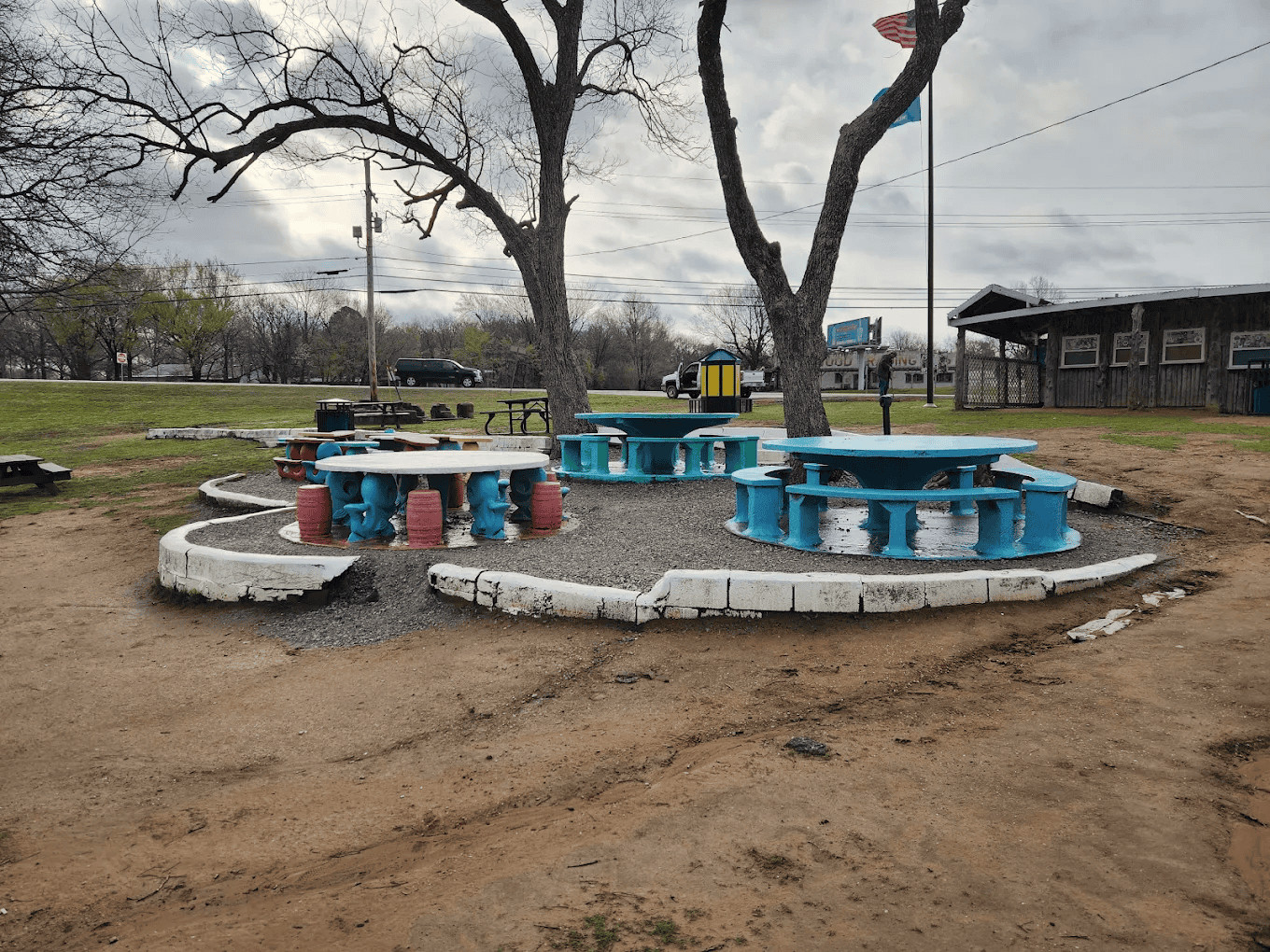
Recent visitor reports describe ongoing construction and improvements at the property, including a recently completed renovation tied to the Route 66 Centennial celebrations.
A new gift shop and additional visitor amenities have opened as part of that effort, alongside continued plans for expanded concessions and gathering space around the pond.
One recent visitor described attending the ribbon-cutting ceremony for the newly renovated site and being impressed by the updated gift shop’s appearance.
These improvements reflect a careful balance — modernizing just enough to meet visitor expectations without losing the simple, unpretentious charm that made the place special in the first place. Long-time fans seem cautiously thrilled by what they’ve seen so far.
Getting There
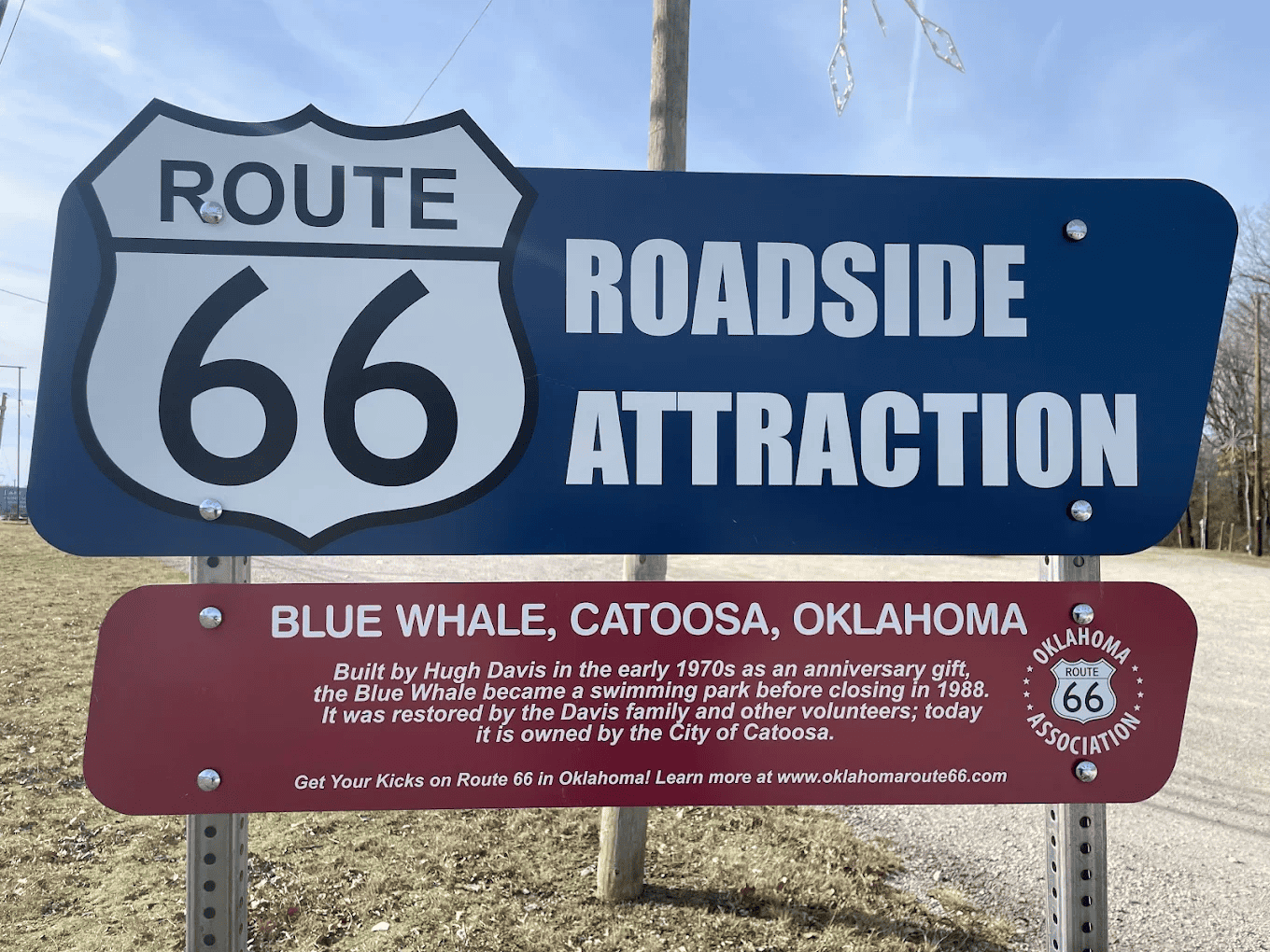
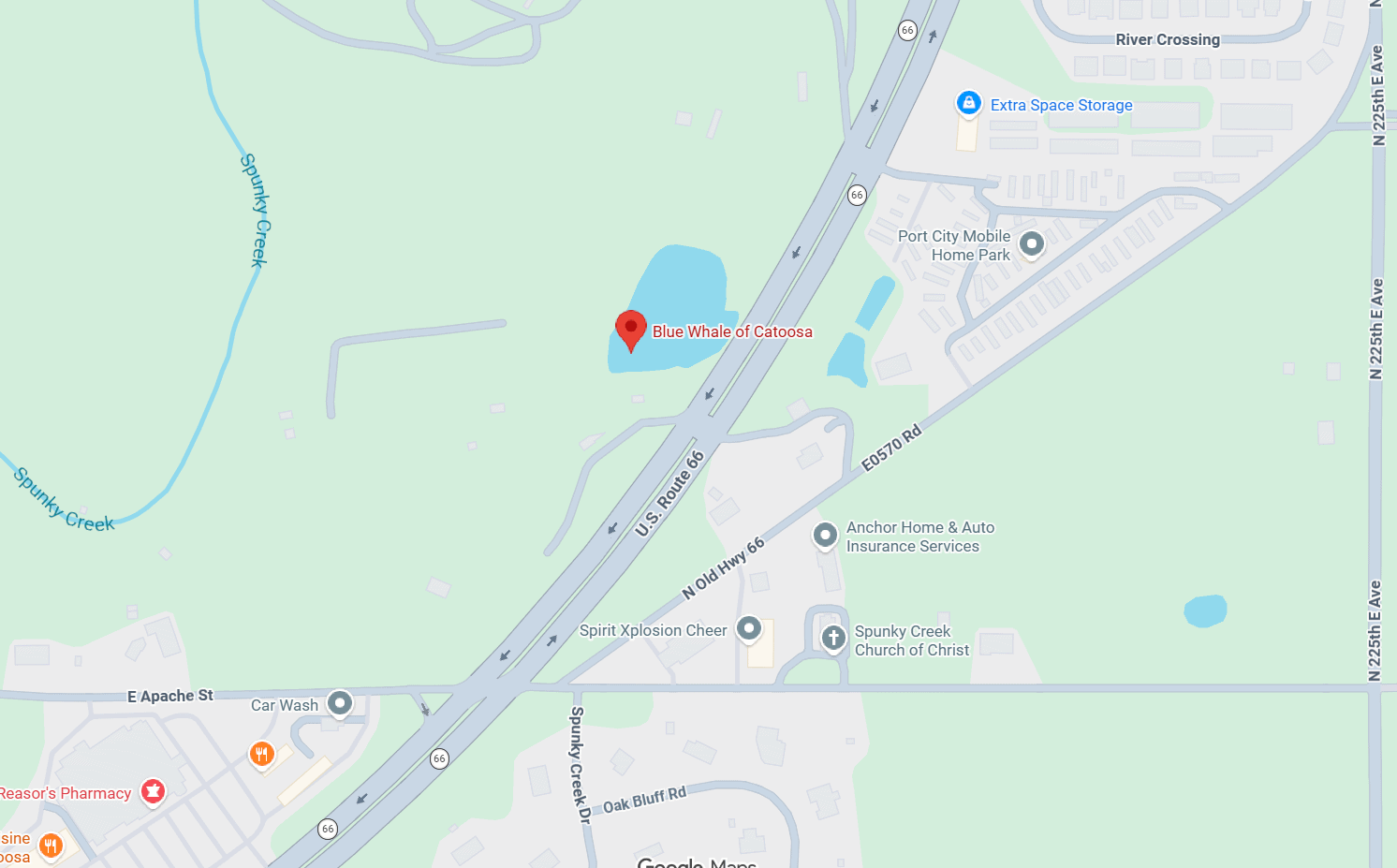
The Blue Whale of Catoosa sits just off Route 66, only a short distance from downtown Tulsa, making it an easy detour for anyone exploring Oklahoma’s stretch of the historic highway.
Admission to view and walk through the whale itself remains completely free, a detail nearly every reviewer mentions with genuine appreciation. The gift shop, food for the turtles, and any snacks or souvenirs are the only things that cost extra.
Hours can vary, particularly during ongoing renovation periods, so checking ahead before a visit is a smart move if the gift shop or full grounds access matters to your plans. The structure itself, however, remains visible from the road at virtually any hour.
Bring a little cash for fish food, bring your camera, and don’t rush. This is the kind of stop that rewards a slower pace, a short walk around the pond, and maybe a few extra minutes spent watching the turtles do exactly what turtles do best.
Decades after one man built a gift for his wife, strangers from across the country are still showing up to fall in love with it too.
That’s the part of this story I keep coming back to. Hugh Davis wasn’t trying to build a state symbol or a tourist destination when he started welding steel frames together back in 1970. He was trying to surprise his wife with something she’d love.
Everything that came after — the swimming pool full of neighborhood kids, the decades of slow decline, the volunteers who refused to let it disappear, the turtles paddling toward strangers with pockets full of food pellets — grew out of that one small, sincere gesture.
Plenty of roadside attractions get built to extract a few dollars from passing tourists, and most of them are forgotten within a generation. This one survived because the people closest to it simply refused to let it go, generation after generation, one repaint and one rebuilt slide at a time.
If you find yourself anywhere near Tulsa with even twenty minutes to spare, take the detour. Some of the very best stories along Route 66 are still hiding in plain sight, grinning out over a quiet pond, waiting for someone new to notice them.
It cost Hugh Davis two years of his time to build something that simple. It costs the rest of us nothing but a short drive off the highway to go see it.
More stories
Share this story