16 Wood and Stone Bathroom Vanity Ideas for a Natural Look

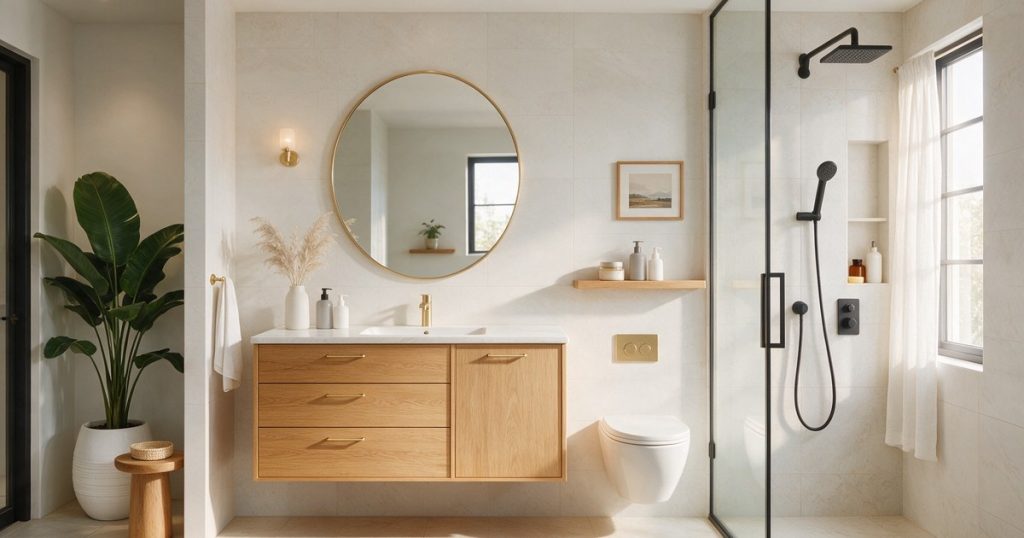
A bathroom only has one real piece of furniture in it. The vanity. Everything else is plumbing. So when the cabinet is a dull builder-grade box, the whole room feels like a utility closet, and no stack of fluffy towels fixes that.
Pick the right material and the opposite happens. A warm slab of wood or a honed stone top gives the room a grounded calm you feel the second you walk in.
Below, you will find sixteen vanity materials and finishes, from pale white oak to raw concrete to an old dresser given a second life, each with the exact look and how to get it.
1. Wood Bathroom Vanity
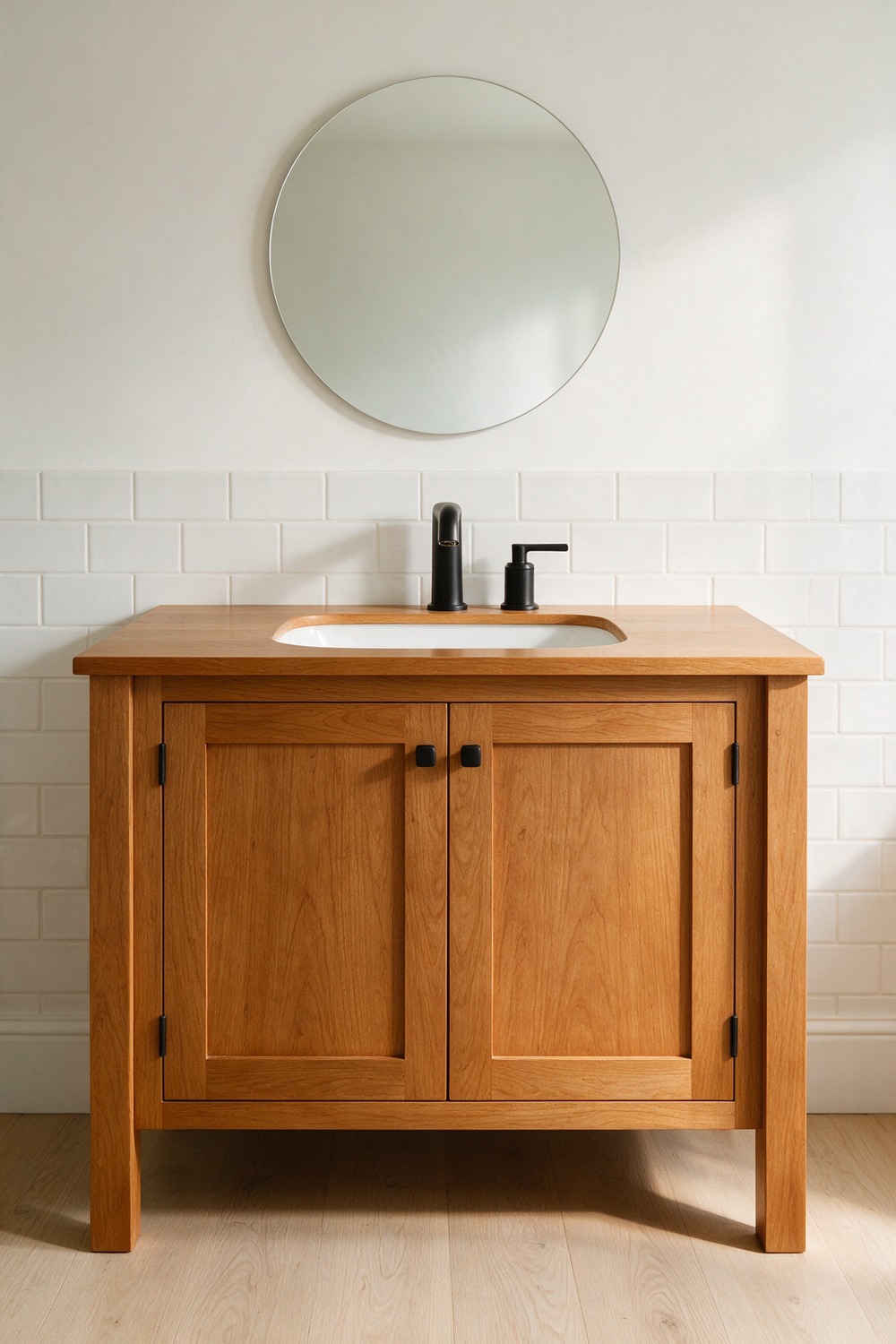
Wood is the safe answer that never feels safe, and I will die on that hill. A solid timber cabinet brings a warmth a painted box cannot.
Go for a mid-tone honey wood, grain on show, over a plain Shaker front. A warm stain close to Minwax Special Walnut, a white basin, a matte-black tap.
2. Oak Bathroom Vanity
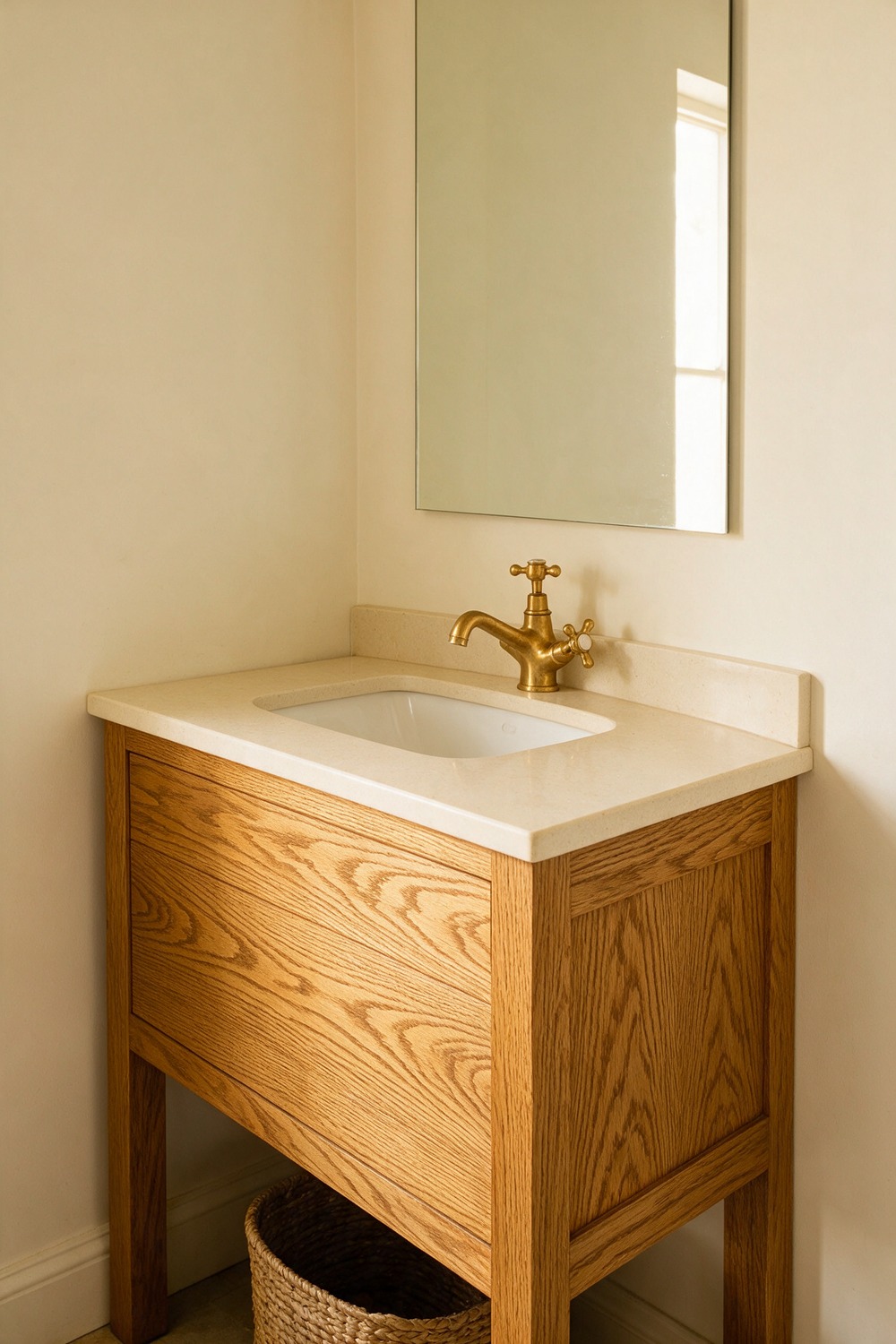
Oak is the Goldilocks of bathroom wood. Not too yellow, not too cold, with that open cathedral grain that reads as quality even from the doorway. It is the one I recommend most often when someone wants wood but cannot decide which.
The classic move is golden oak with the grain on show, a stone or quartz top in warm cream, and unlacquered brass handles that will patina over the years. Keep the finish a satin oil, never a high gloss, so the wood looks fed rather than coated.
One tip: let the grain run horizontally across the drawer fronts for a calmer, more modern line.
3. White Oak Bathroom Vanity
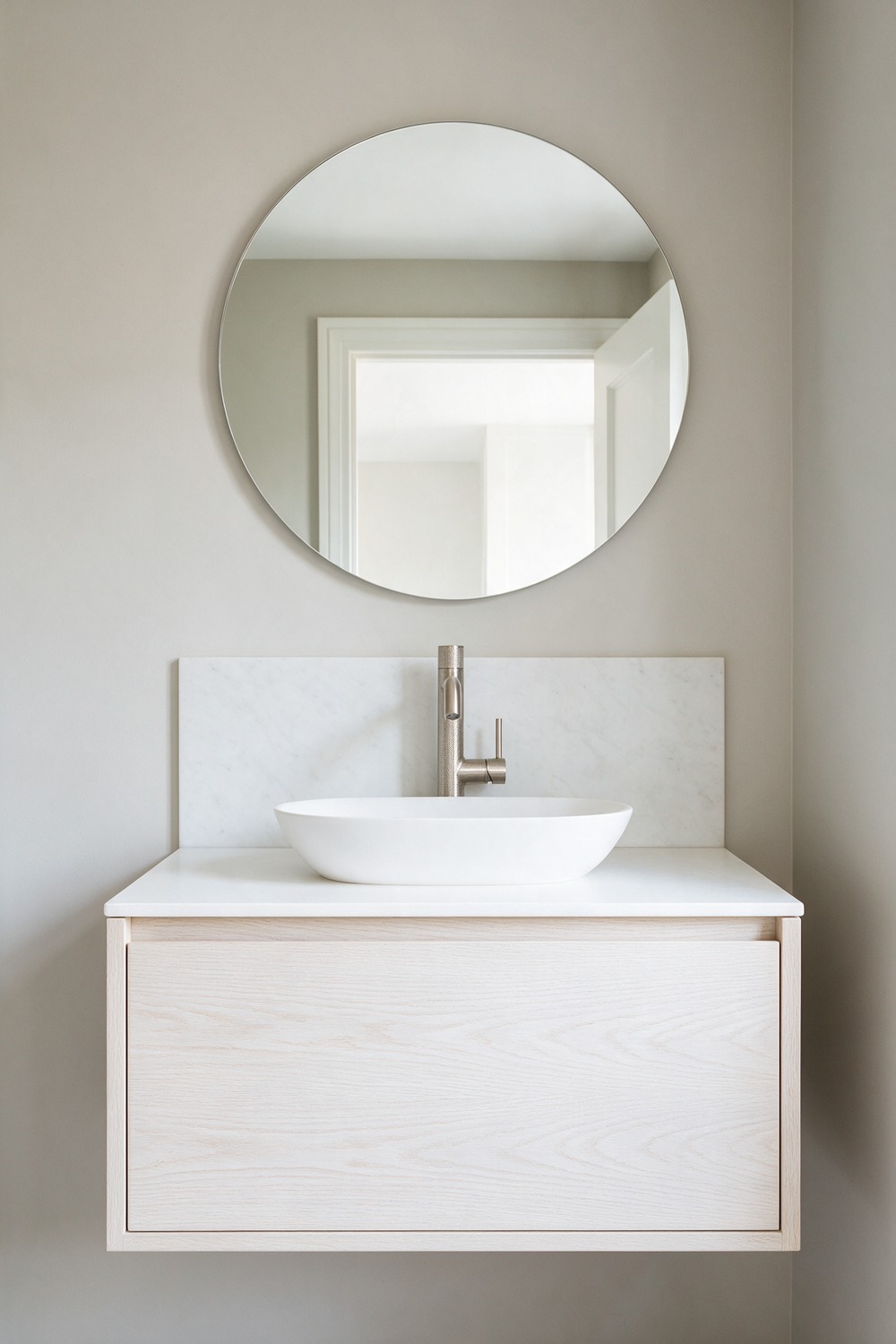
If oak is the crowd-pleaser, white oak is its quieter, more expensive-looking cousin. Finer, straighter grain, a tone almost blond.
Aim for a rift-cut white oak with a clear matte seal that keeps it from going orange, soft greige walls like Benjamin Moore Classic Gray, and a honed white top. It loves cool marble and brushed nickel.
4. Walnut Bathroom Vanity
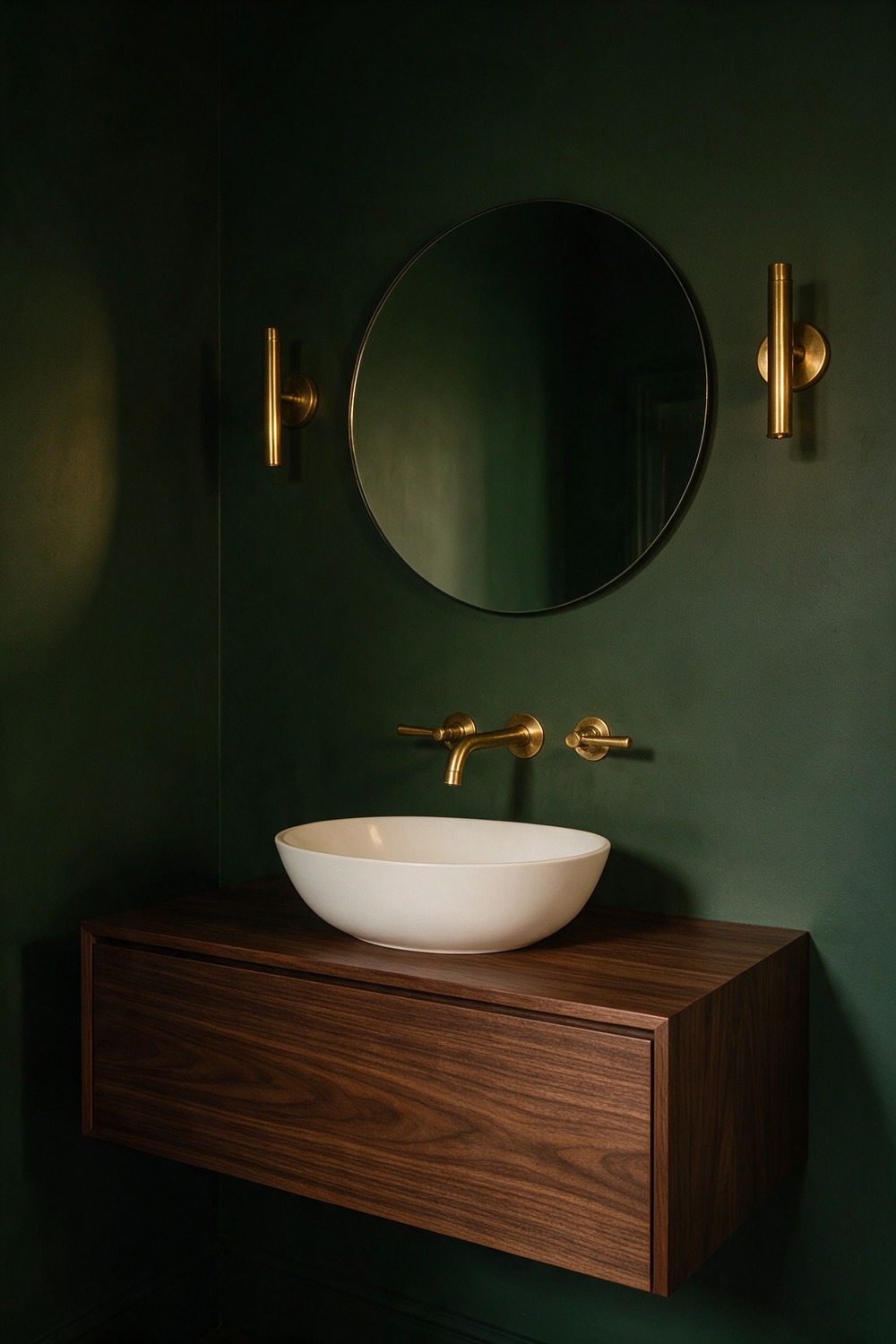
Walnut is where a bathroom gets genuinely luxe. That deep chocolate-brown with its fine, swirling grain is the stuff of mid-century furniture, and it makes a powder room feel like a jewel box.
Lean into the drama here. A floating walnut vanity, a vessel basin, and warm brass fixtures against a moody wall. A rich espresso-brown, close to Rubio Monocoat Chocolate on the raw wood, keeps the grain singing.
Splurge on the walnut and save on the tile, not the reverse.
5. Dark Wood Bathroom Vanity
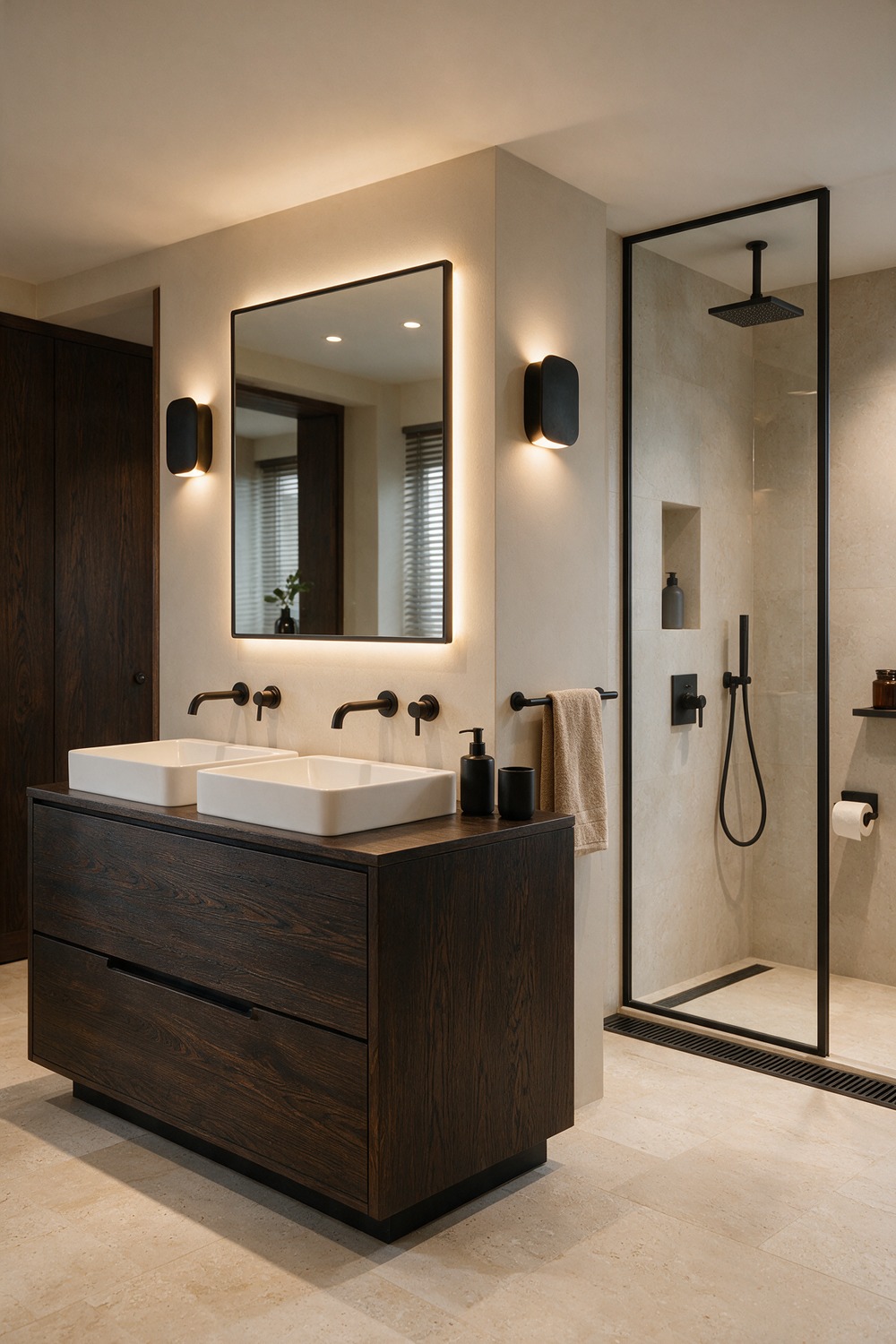
There is a reason hotel bathrooms love dark wood. It hides the toothpaste splatters and wraps the room in a quiet, after-hours mood you do not want to leave.
I would go near-espresso, a dark-stained oak in something like Dulux Espresso tones, grounded by a pale stone floor so the room does not close in. Matte-black tapware and a backlit mirror finish the look. The contrast against light walls is the whole trick.
6. Light Wood Bathroom Vanity
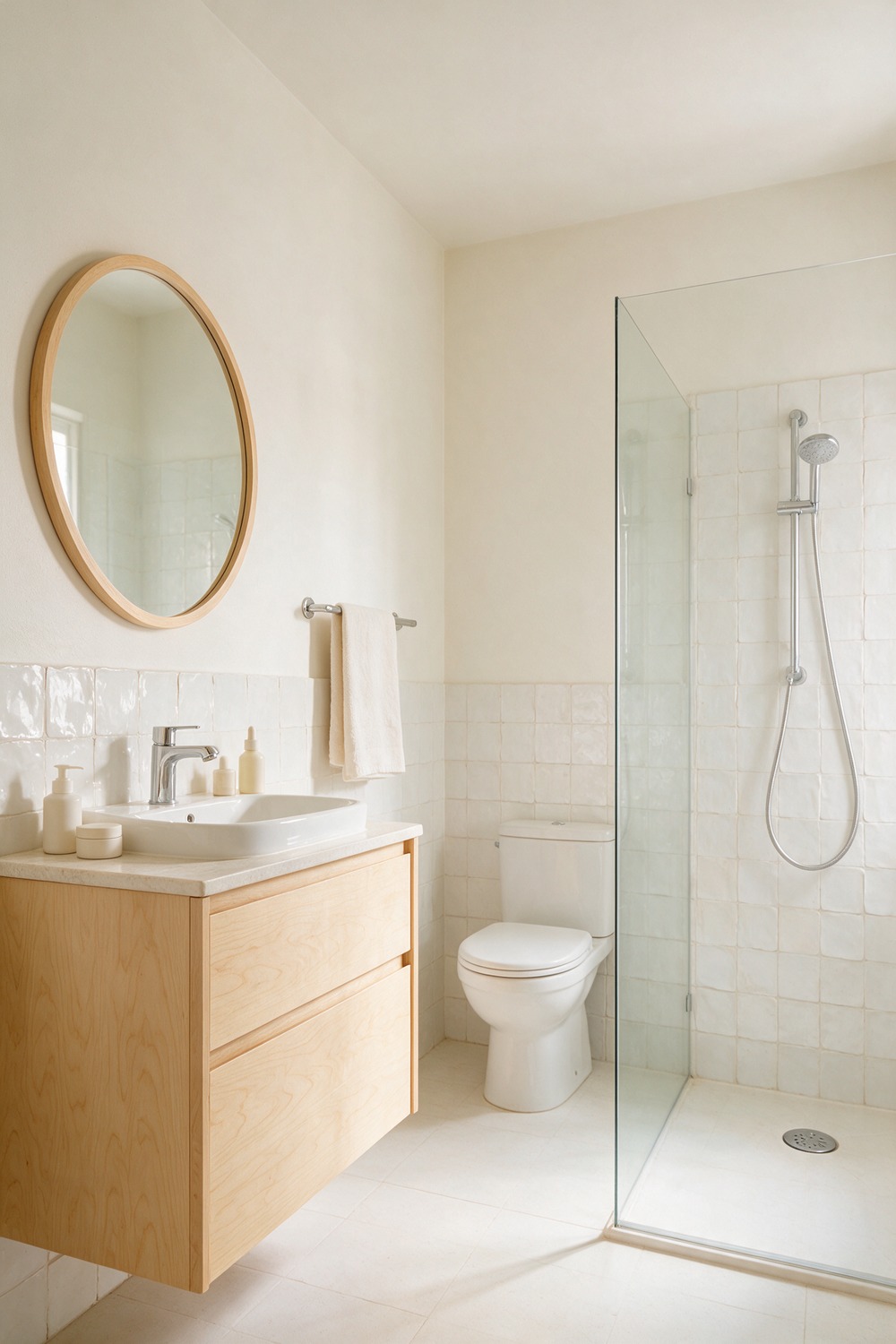
Light wood is what you reach for when you want the room to breathe. Blond ash or birch bounces the morning light around and makes even a small bathroom feel like it has more air in it.
Keep the palette pale and Scandinavian: a blond birch cabinet, white subway or zellige tile, and a 2700K warm bulb so the wood never looks clinical. A whisper of warm white on the walls, think Dulux Natural White, lets the timber be the star.
Start with the lightest wood you can find and resist the urge to add a second one.
7. Natural Wood Bathroom Vanity
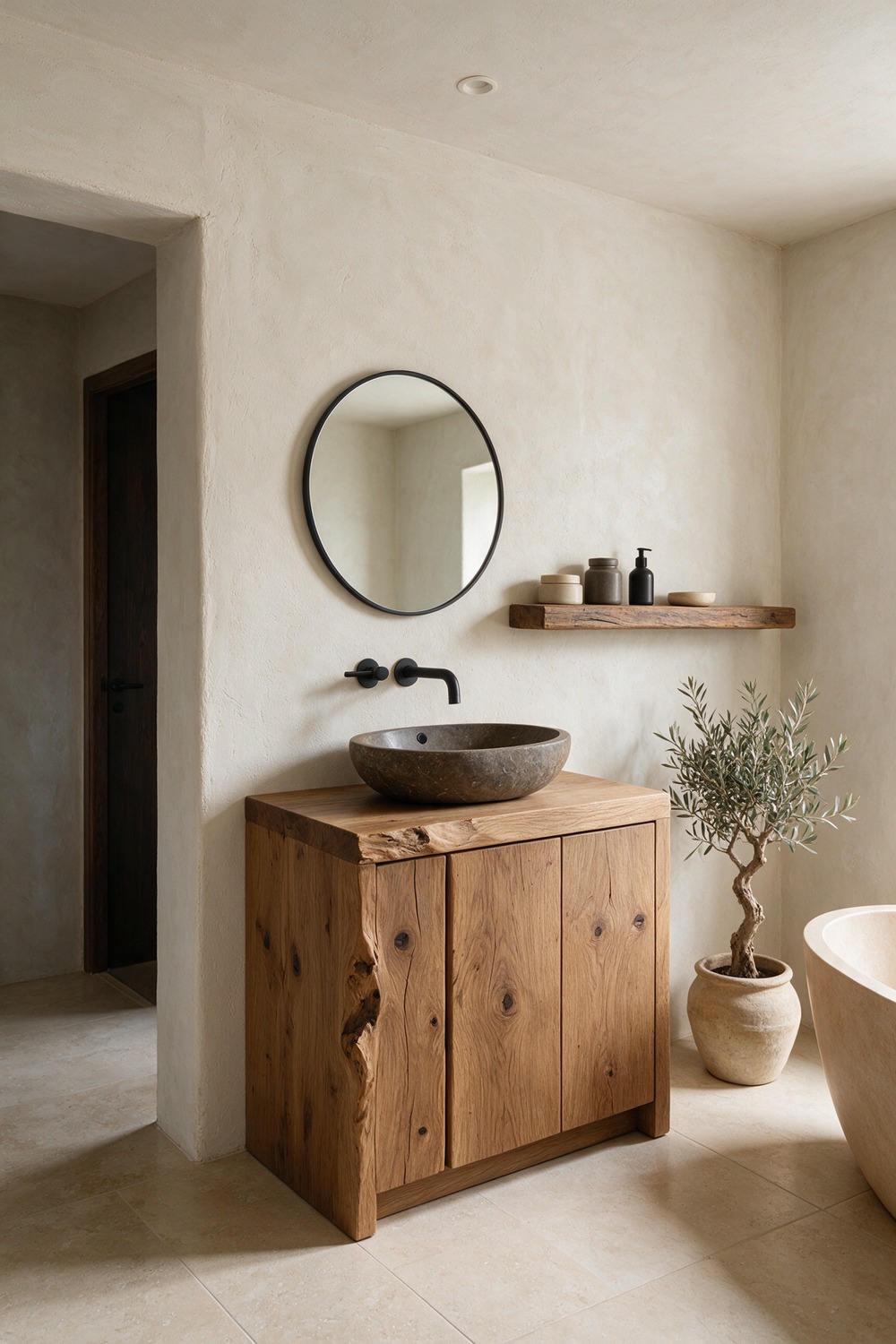
Natural wood is the wabi-sabi choice. Wabi-sabi is the Japanese love of the imperfect and the real, and this is wood pretending to be nothing but wood.
Knots. Live edges. An oiled matte finish that shows every ring and does not apologize for any of it.
Choose a chunky slab-front cabinet in raw oiled oak, knots and all, set over a stone or concrete basin. A simple hardwax oil keeps it matte, no stain, no gloss. Pair it with limewashed walls for that soft, chalky, old-world backdrop.
There is a smell to raw oiled wood too, a faint cedar-and-oil warmth the moment you slide a drawer open, the kind no laminate ever manages.
Let the most characterful plank be the one you make the drawer front. This is the look I would pick for a calm, slightly rustic bath, the sort that feels like a cabin you never want to leave. Keep the tapware plain and let the timber do the talking.
8. Marble Bathroom Vanity
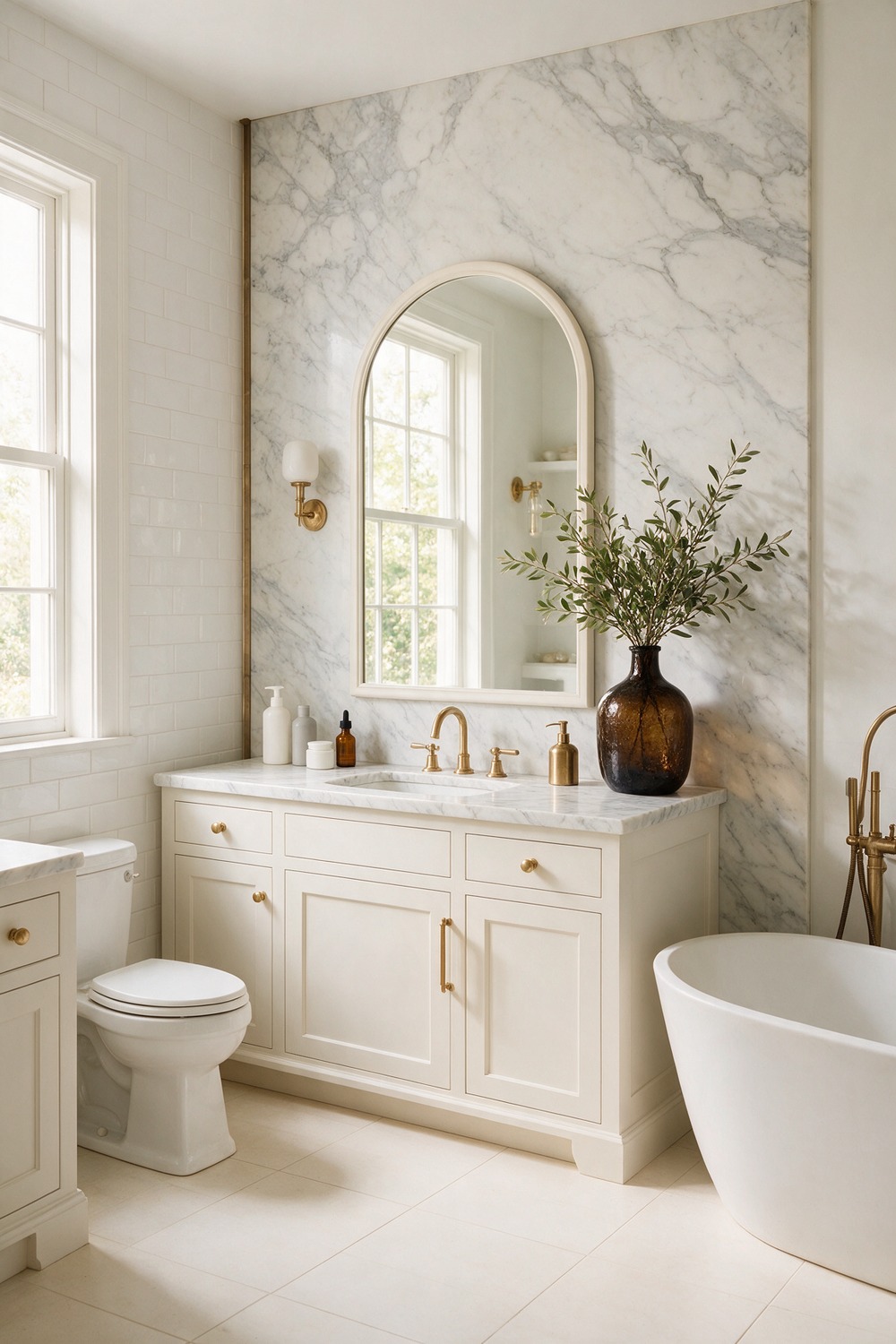
Marble is the forever material, and a marble-topped vanity is the fastest way to make a bathroom feel built to last. All that veining does the decorating for you.
Go for a honed Carrara or Calacatta slab with soft grey veins over a crisp cabinet, the honed finish matte and velvety rather than shiny. Let the stone lead and keep the base calm, a soft white like Farrow & Ball Wimborne White on a Shaker cabinet.
Start with the slab you fall for, then match the paint to its coolest vein.
9. Concrete Bathroom Vanity
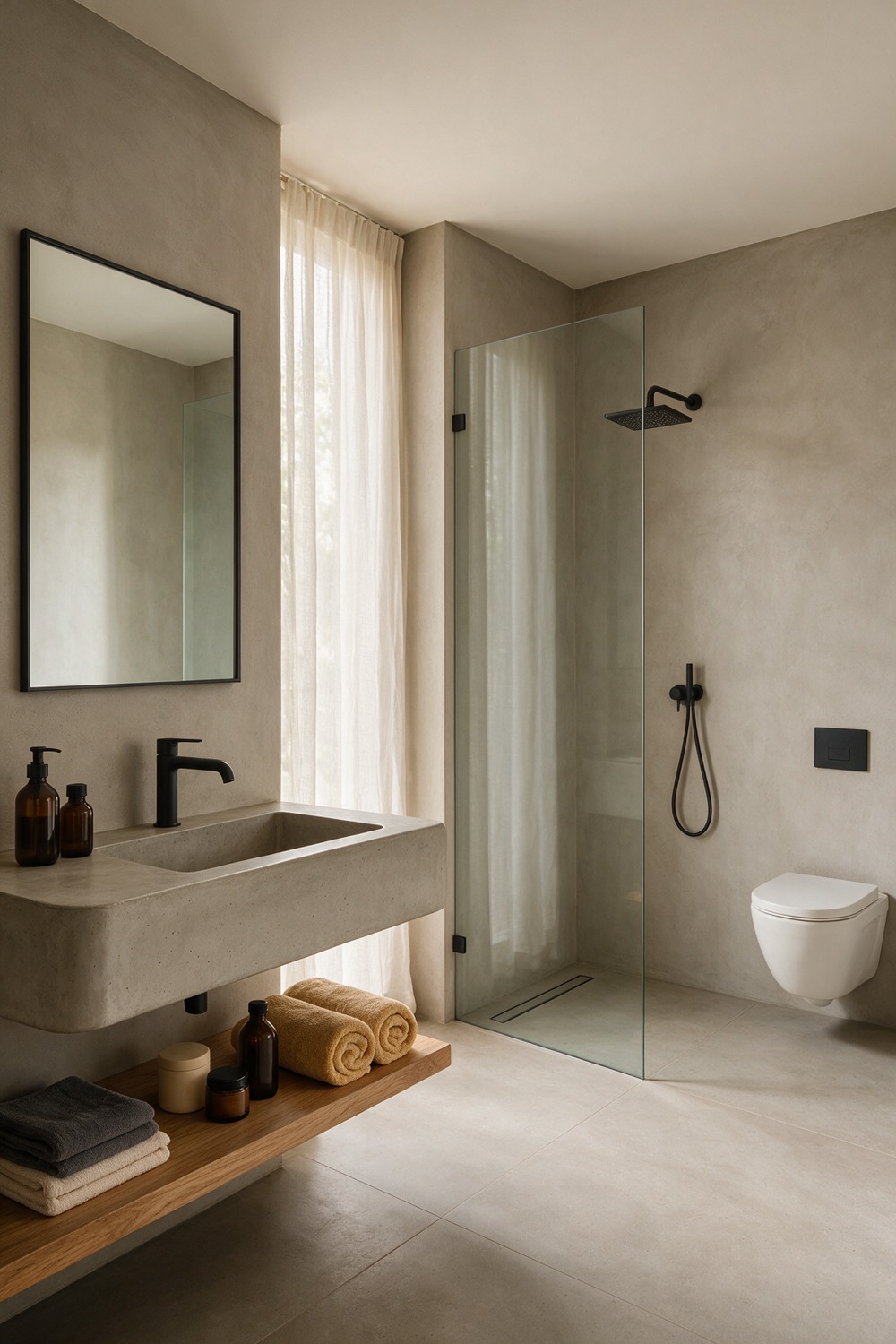
Concrete gets a bad rap as cold, but done right it is sculptural and surprisingly warm in tone. An integrated concrete basin and counter, cast as one seamless piece, is a showstopper in a modern bath.
Think microcement in a soft putty-grey, a wall-hung concrete trough basin with a single wall-mounted tap, and warm oak open shelving to soften it. A greige like Sherwin-Williams Agreeable Gray on the walls keeps it from going bunker.
10. Butcher Block Bathroom Vanity
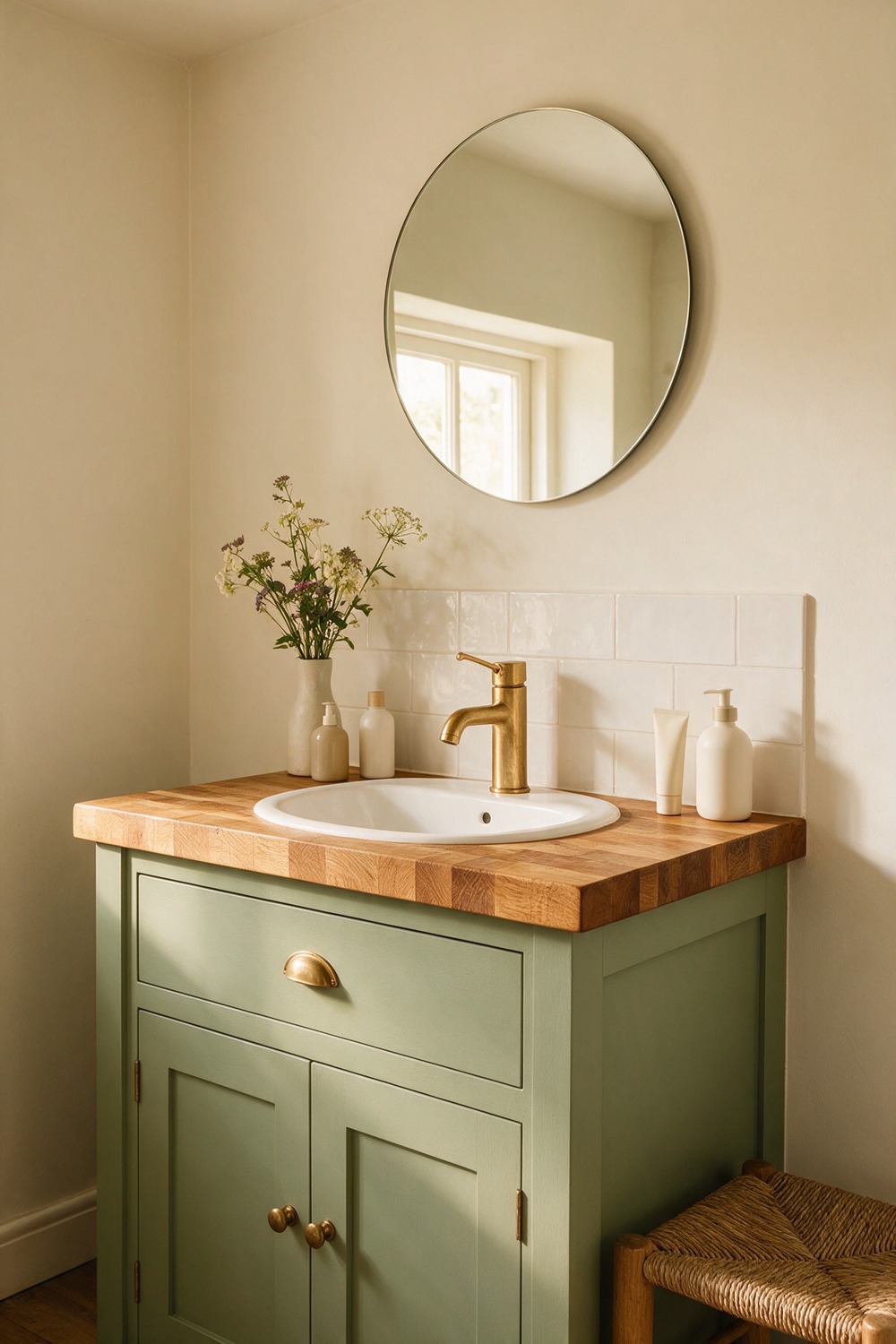
Butcher block is the warm, tactile counter that costs a fraction of stone and ages with real character. Those thick wood staves give a vanity a chunky, farmhouse-kitchen soul.
I love an edge-grain maple or oak block, oiled honey-warm, over a painted base in a soft sage. A durable finish matters here, so an oiled top you refresh yearly beats a thin varnish that peels by the sink.
Pair it with a drop-in white basin and start with the block thickness. Nothing under two inches reads right.
11. Stained Wood Bathroom Vanity
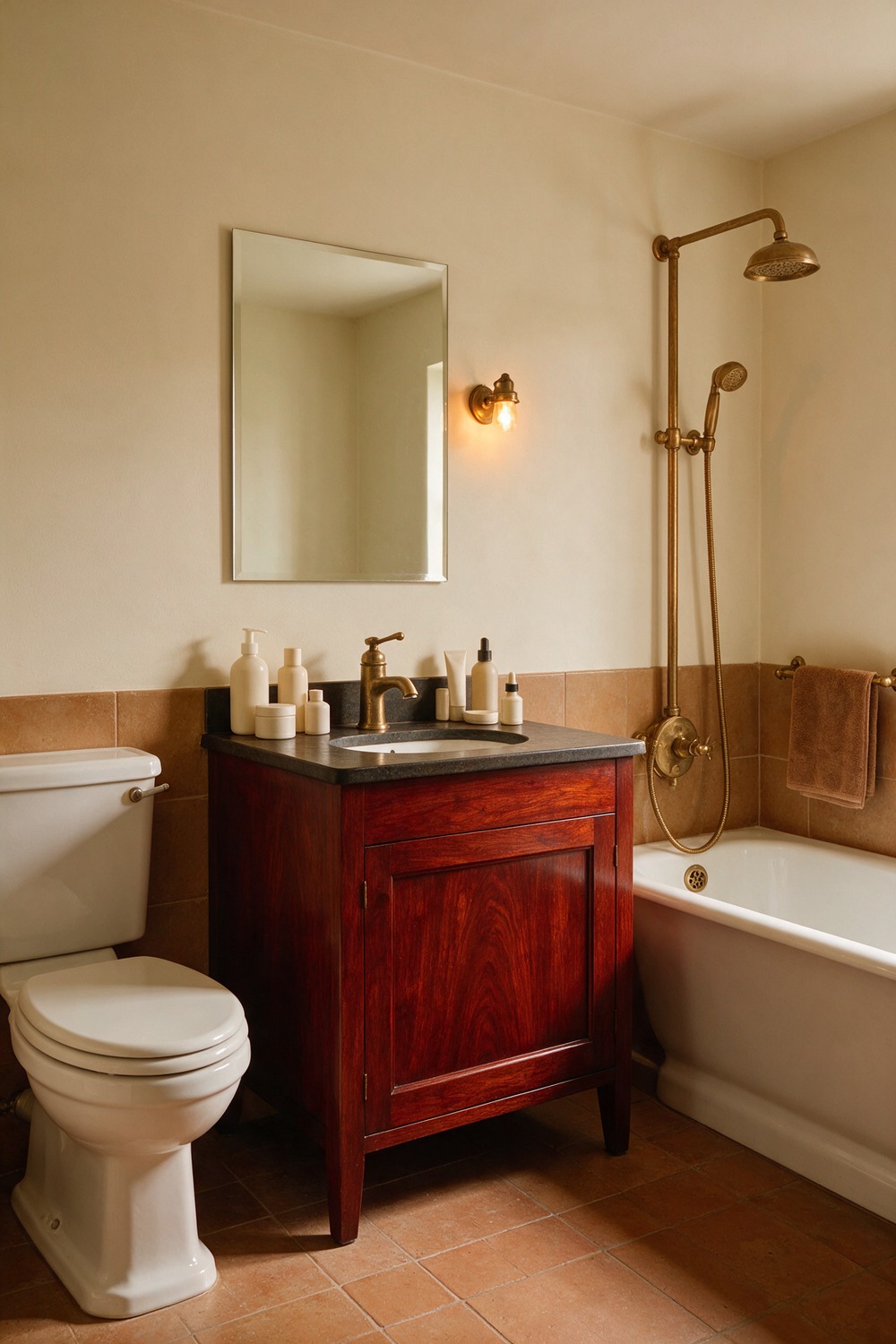
A stain is where you get to have an opinion. Same oak cabinet, wildly different room depending on whether you push it warm, grey, or deep red.
My favorite is a warm cherry-mahogany stain, close to Varathane Early American pushed a shade deeper, kept satin against creamy walls and aged brass. Test it on a scrap first, because bathroom light changes everything.
12. Painted Bathroom Vanity
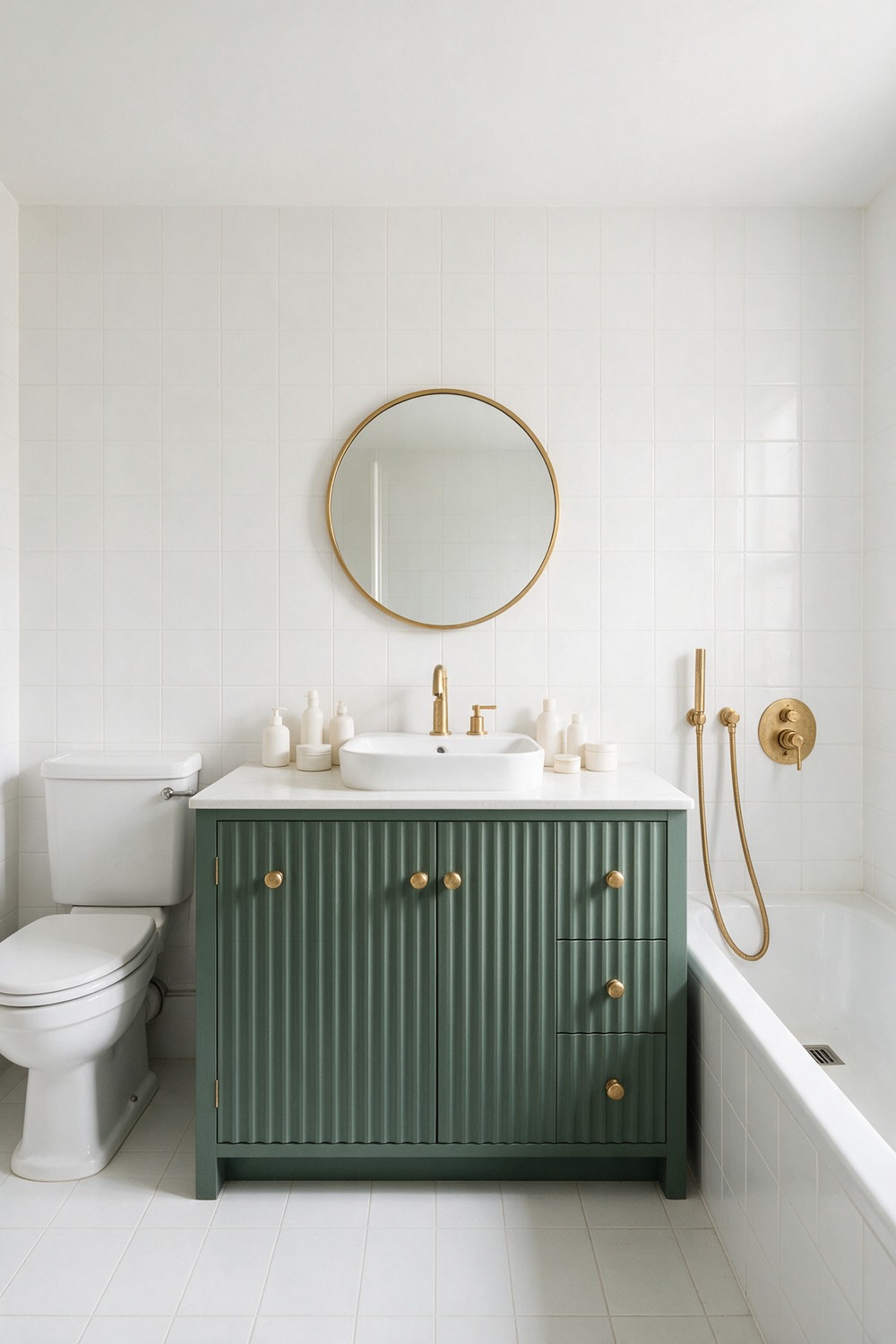
My hot take: a painted vanity beats a safe white one every single time. Paint is the cheapest way to give a bathroom a real personality, and a color on the cabinet is far less risky than a color on all four walls.
A deep, saturated green is my go-to, something like Farrow & Ball Green Smoke on a fluted or Shaker front, with a white stone top and brass knobs. Use a hardwearing eggshell or satin cabinet paint so it wipes clean.
Start with the cabinet color and pull one accent from it for the towels.
13. Dresser Bathroom Vanity
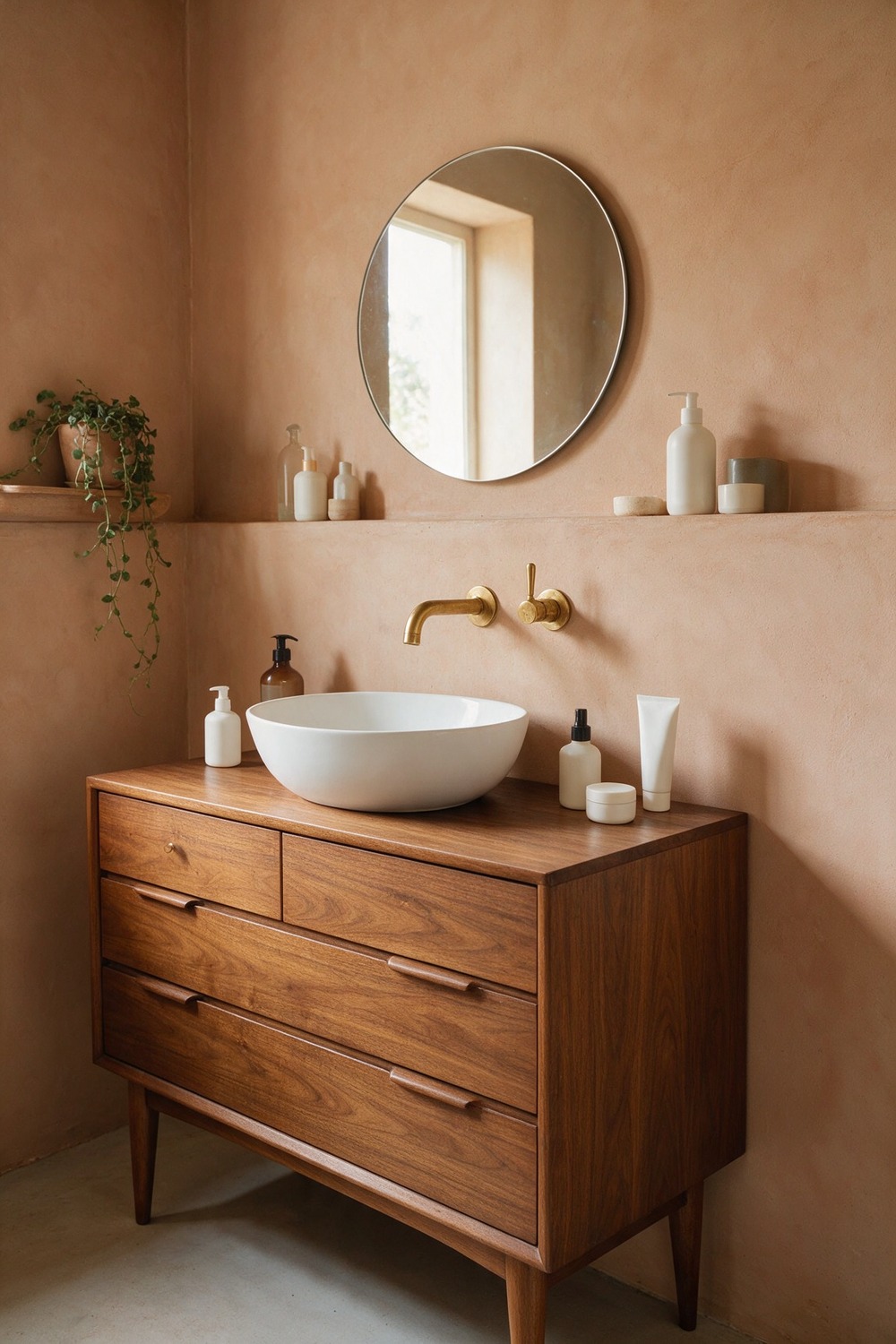
Turning a dresser into a vanity is the single best way to make a bathroom look collected rather than bought. It brings furniture legs, real drawers, and the feeling that the room has a past.
Find a mid-century or French-style dresser in warm walnut tones, then cut the top for a drop-in or vessel basin.
Seal that surface well against splashes. A satin topcoat protects the wood without dulling it, and keep the original hardware if it has any patina worth saving.
Start with a piece whose proportions already feel vanity-height, around 32 inches, and you save yourself a lot of sawing.
One trick that makes the whole conversion painless: pick a dresser with a removable top drawer, then notch the back panel for the plumbing. That single choice saves you hours and a lot of muttering.
14. Antique Dresser Bathroom Vanity
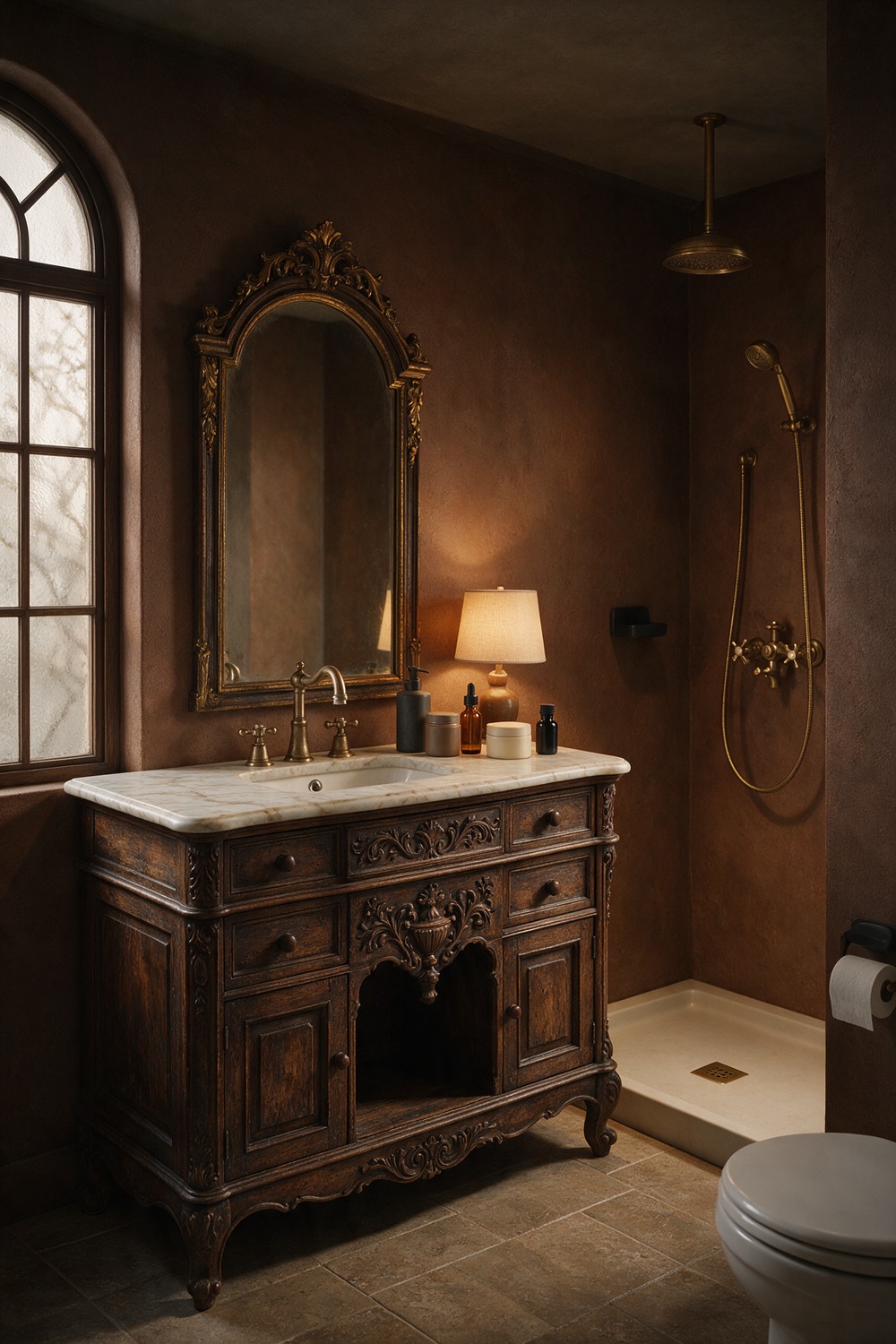
An antique dresser takes that idea and adds decades of patina you could never fake. Carved aprons, bowed fronts, a worn finish that glows. This is the piece guests notice.
Go ornate and let the age show: a dark-wood Victorian or Louis-style chest with carved detail, a marble top added over it, and an undermount basin so the stone stays the hero. Keep the original finish and just wax it, never sand it back.
A little wax, that is the whole restoration. Begin by hunting the piece, because it dictates the whole room.
15. Upcycled Bathroom Vanity
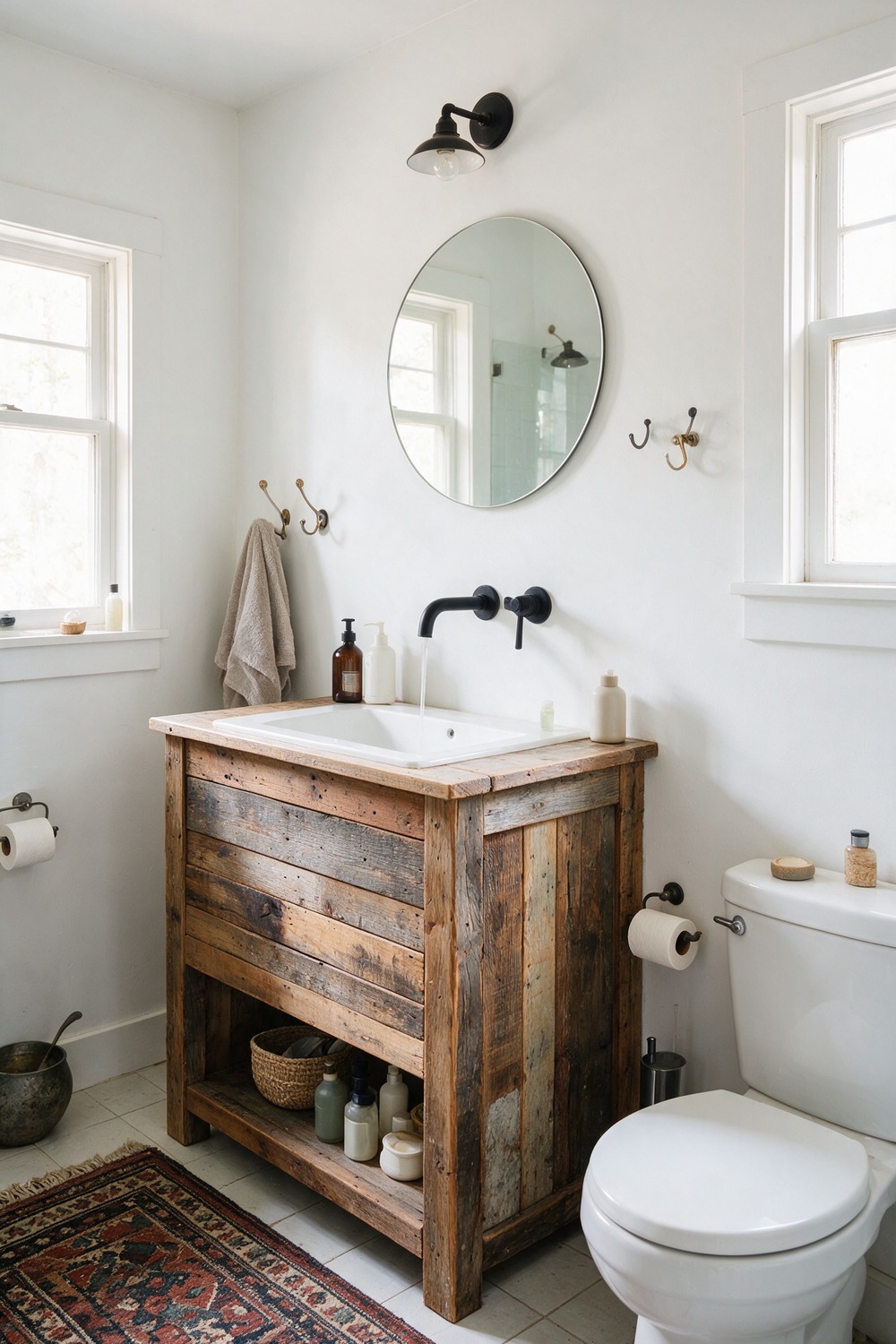
Upcycling gives you the most personal vanity going, because no one else owns your exact piece. An old console, a workbench, a salvaged cabinet, and you are the one deciding it gets a second act.
My pick is a reclaimed-wood console with mixed tones and honest wear, topped with a simple white counter and a wall-mounted tap to keep the old surface clear. A clear matte sealer locks in the character, and you get to mix your metals on purpose.
16. DIY Rustic Bathroom Vanity
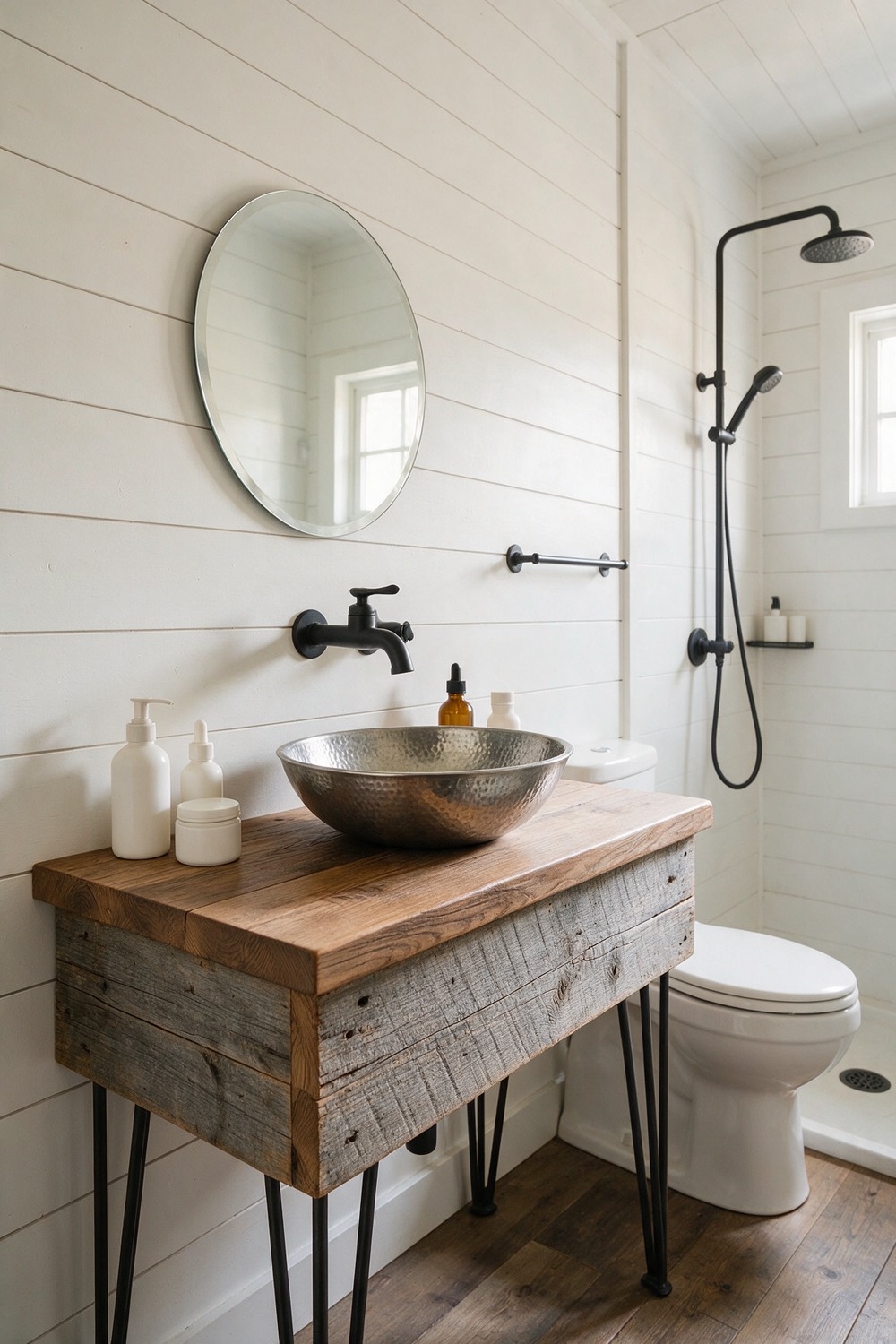
If you own a drill and a free weekend, a rustic vanity is the most satisfying build in the house. Rough-sawn boards, a farmhouse basin, and nothing trying to look perfect.
Build the frame from reclaimed barnwood or rough pine, leave the saw marks, and top it with a thick plank sealed against water. A matte polyurethane or hardwax oil keeps it rustic but splash-proof. Add a hammered-metal or stone vessel basin and black iron legs.
Start with the wood you can actually source, because the knots and grey weathering are the look.
Which Bathroom Vanity Material Is Right for You
Start from the feeling you want, not the showroom. If you crave calm and light, reach for white oak or a blond light wood and let the room breathe. If you want drama and a hotel hush, walnut or a dark-stained wood will get you there fast.
Chasing warmth on a budget? Butcher block and a painted base punch well above their price. Want character money cannot buy? A dresser, an antique, or an upcycled piece brings a soul no flat-pack can. And if your style is clean and modern, marble or cast concrete is your lane.
My honest advice: buy the material that makes your shoulders drop, then build the small stuff around it. The vanity sets the mood for the whole room, so that is the one place I would not compromise.
Bathroom Vanity Materials, Answered
Can wood really handle a wet bathroom? Yes, if it is sealed properly. Solid hardwoods like oak and walnut do beautifully with a good hardwax oil or marine-grade topcoat and normal ventilation. The enemy is standing water, not steam, so seal the top and around the basin cutout well.
Which material gives the most look for the least money? Butcher block and paint. A painted base with an oiled wood top lands in the low band and still reads custom. Marble and walnut sit at the splurge end, while oak and concrete fall comfortably in the middle.
What is actually DIY, and what needs a pro? Painting a cabinet, oiling a wood top, or styling a dresser are all weekend jobs. Cutting a stone slab, casting concrete, or moving plumbing for a floating vanity is where I would happily call in a pro.
How long does a vanity swap take? A straight like-for-like replacement is often a single day. A dresser conversion or a custom wood build runs a weekend to a couple of weeks once you factor in sealing time and drying between coats.
What do I ask the fabricator or carpenter for? Name the wood species and finish (rift-cut white oak, hardwax-oiled), the exact top material and finish (honed Carrara, not polished), the basin type, and whether the top needs a cutout for a drop-in or undermount. Specifics save you a reorder.
Whatever you choose, pick the one material that makes you want to linger, then take the first small step toward it this weekend. Your bathroom will thank you.
More stories
Share this story