11 Breathtaking Waterfall Hikes Across America That Are Worth Every Step

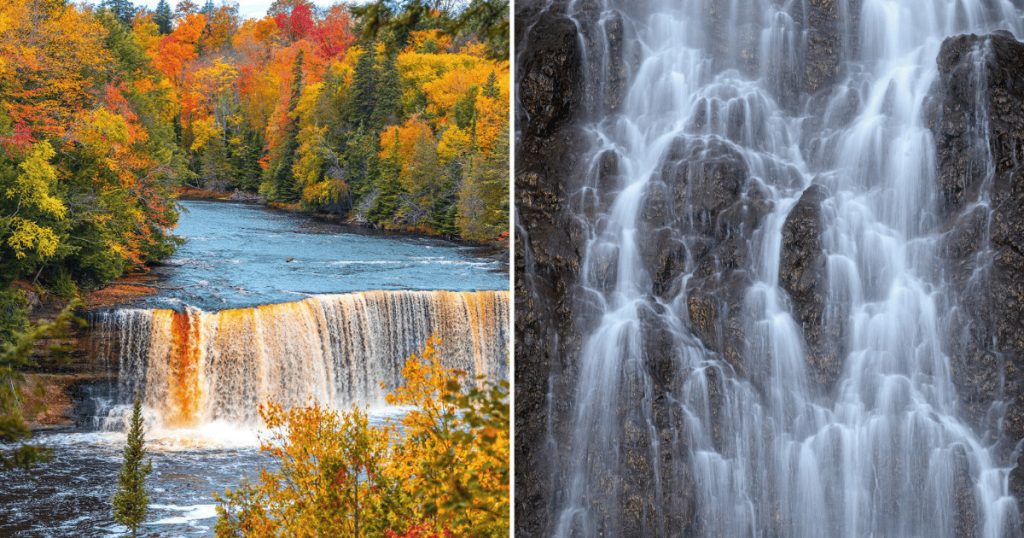
The part of a waterfall hike I carry with me isn’t the view at the end. It’s the moment before — when the trail is still quiet, and the sound begins low, growing louder with every step until mist reaches your face.
The scenery is magnificent, but that sound is what stays afterward.
Waterfall hikes have a structure most trails don’t. There’s a destination, a specific reward, and the certainty you’ll know when you’ve arrived.
The trail asks for effort. The waterfall makes the case that the effort was worth it in a way that’s hard to argue with.
America has extraordinary waterfalls spread across every region and climate, from the rain‑soaked forests of the Pacific Northwest to the mineral‑rich canyons of Arizona. Below are eleven of the finest hikes that lead to them.
1. Multnomah Falls, Oregon
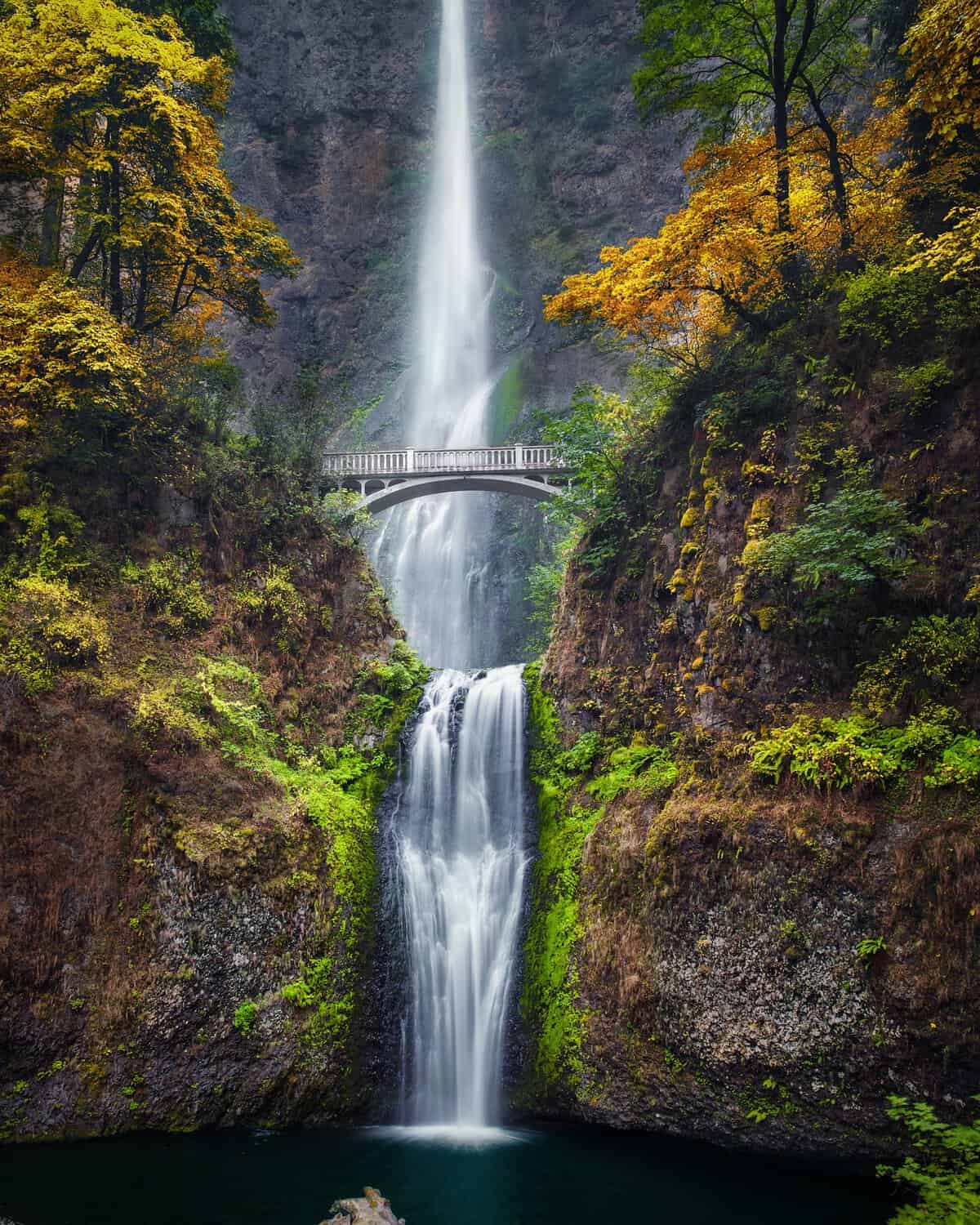
Multnomah Falls in the Columbia River Gorge is the most visited natural recreation site in the Pacific Northwest. The 620-foot cascade drops in two tiers — the upper fall plunges 542 feet before the lower continues 69 feet below — filling the gorge with mist and a constant roar.
The paved trail to the historic Benson Bridge, positioned between the two tiers, is a short and accessible walk. The longer trail to the upper viewpoint climbs 600 feet in switchbacks and rewards with a perspective showing both falls and the Gorge beyond them.
The historic Multnomah Falls Lodge at the base has served visitors since 1925 and provides a warm counterpoint to the cold spray of the waterfall directly above.
The falls run year-round but are at their most powerful during spring snowmelt, when the water volume increases dramatically, and the roar becomes audible from the parking area before the trailhead is even in sight.
2. Yosemite Falls Trail, California
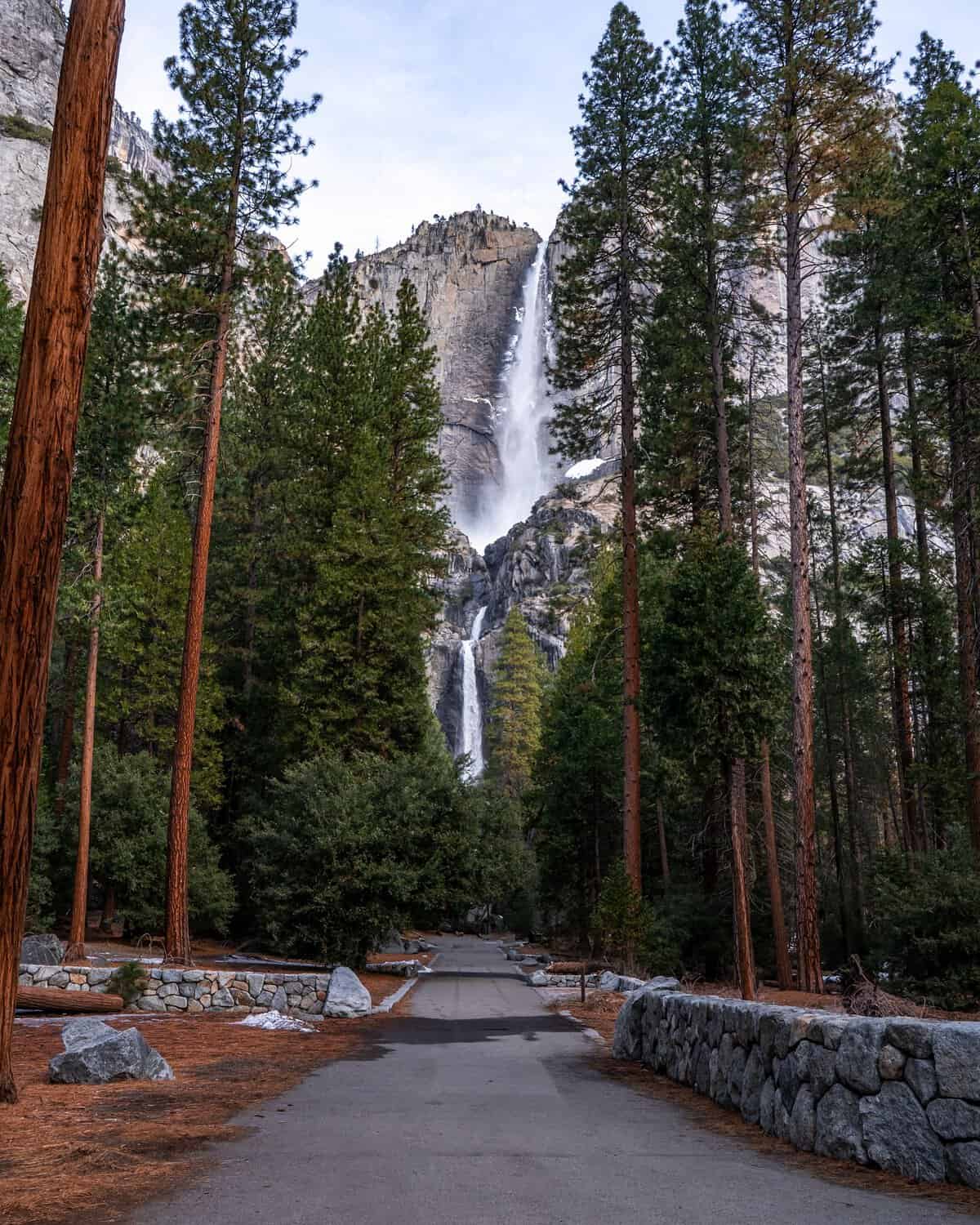
Yosemite Falls drops nearly 2,425 feet in three sections — Upper Falls, Middle Cascades, and Lower Falls — through Yosemite Valley’s granite face in a cascade that ranks among the tallest in North America. The Lower Yosemite Falls loop is a gentle one-mile walk accessible to nearly every visitor.
The full trail to the top of Upper Yosemite Falls is an entirely different proposition: seven miles round trip and 2,700 feet of elevation gain on one of Yosemite’s most demanding half-day hikes.
The view from the top spreads Yosemite Valley below in a panorama that the trail’s difficulty makes feel genuinely earned rather than merely given.
The falls are seasonal, running strongest from spring through early summer when the Sierra snowpack is actively melting. By August in dry years, they can slow to a trickle — another reason spring visits tend to carry more urgency in the planning.
3. Havasu Falls, Arizona
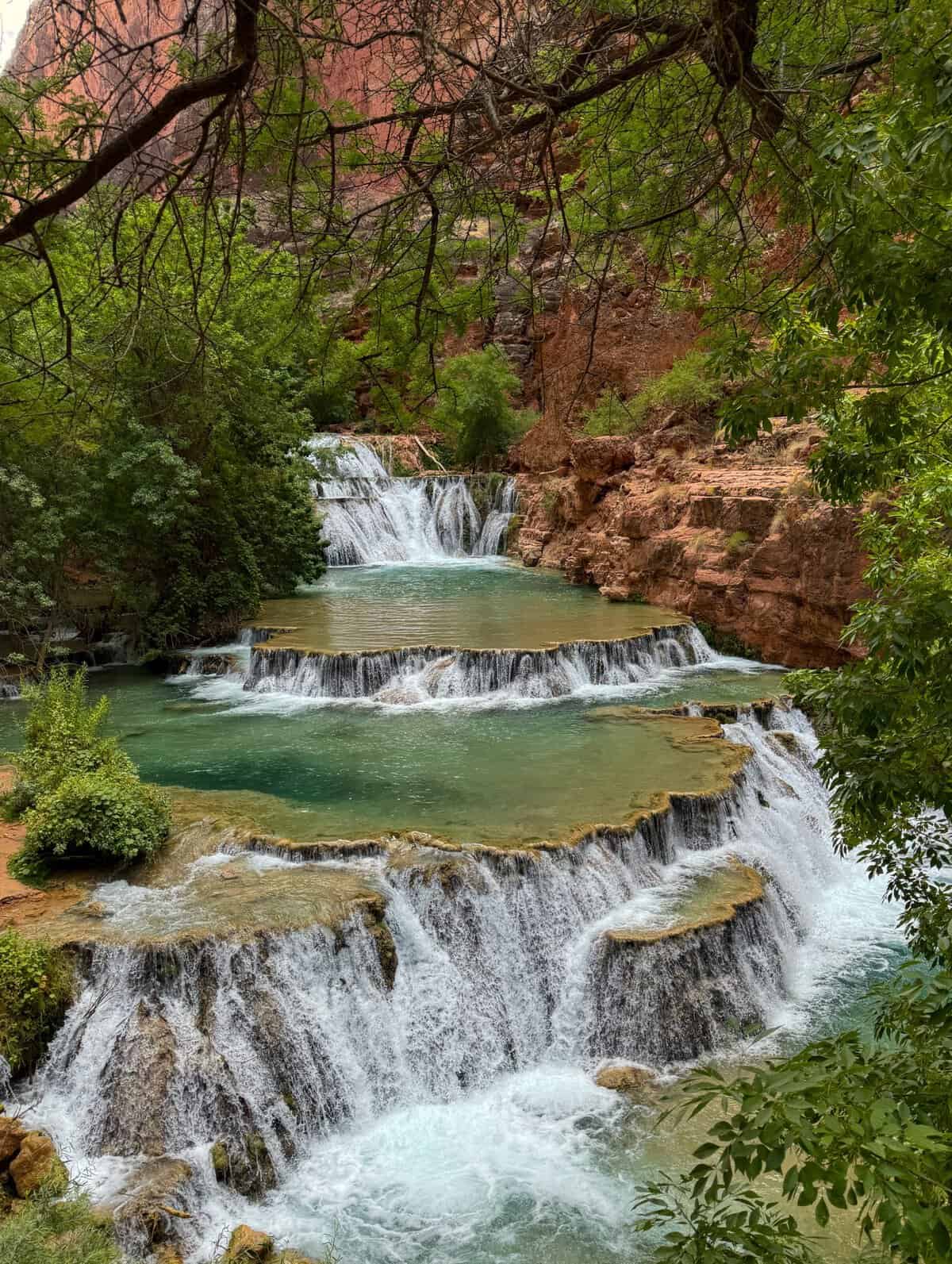
Havasu Falls is the destination people plan months in advance to reach — a turquoise waterfall dropping 100 feet into a pool so vivid that photographs of it are regularly dismissed as artificially enhanced. The color is entirely real and entirely the result of the water’s mineral content.
The falls are located in the Havasupai Tribal Lands within the Grand Canyon, requiring a permit from the Havasupai Tribe that opens for reservations at a specific date each year and typically sells out within hours.
The hike covers roughly ten miles from the Hualapai Hilltop trailhead, descending into the canyon and passing through Supai Village before reaching the campground area near the falls.
The nearby Mooney Falls and Beaver Falls extend the experience well beyond a single waterfall, rewarding hikers who stay at the campground with multiple days of exploration in one of the most unlikely desert landscapes in the country.
4. Amicalola Falls, Georgia
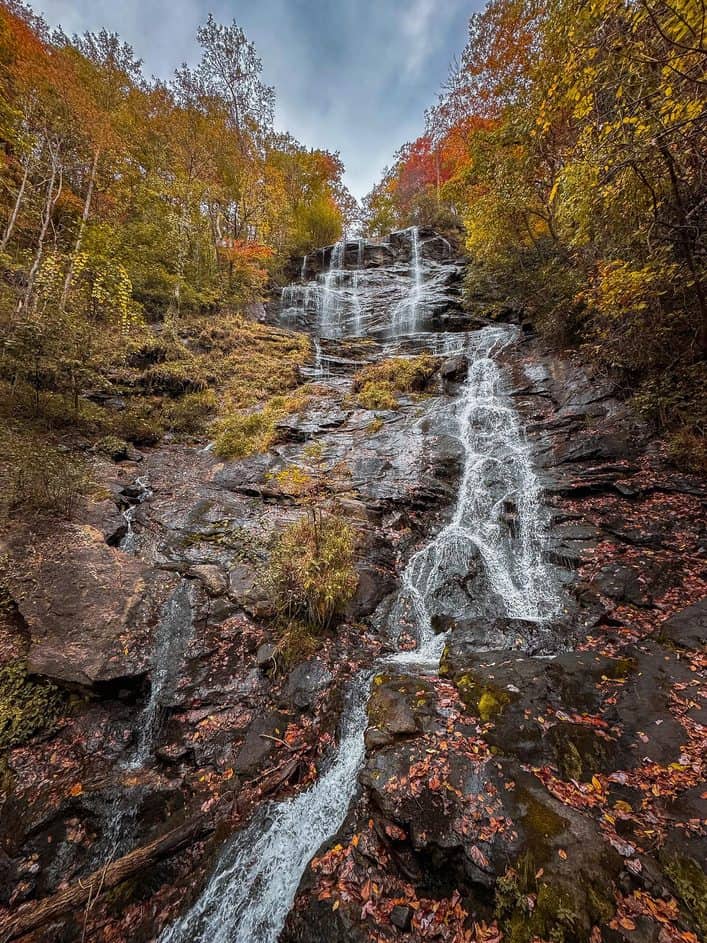
At 729 feet, Amicalola Falls is the tallest cascading waterfall east of the Mississippi River. Its setting in the North Georgia mountains gives it a context photographs rarely communicate — the falls are surrounded by forested ridgelines that form the southern approach to the Appalachian Trail.
Amicalola Falls State Park sits at the beginning of the 8.5-mile Approach Trail leading to Springer Mountain, the Appalachian Trail’s southern terminus.
Thousands of thru-hikers pass the falls each spring on their way to a months-long northward journey, giving the waterfall significance as a send-off landmark.
The falls cascade through seven distinct drops visible from a trail that loops through the park in about two miles, with a staircase climbing alongside the water for close-up views at multiple levels.
Visiting in early spring catches both the waterfall at peak flow and the beginning of thru-hiking season, when the park fills with people embarking on one of the most ambitious long-distance routes in the country.
5. Sol Duc Falls, Washington
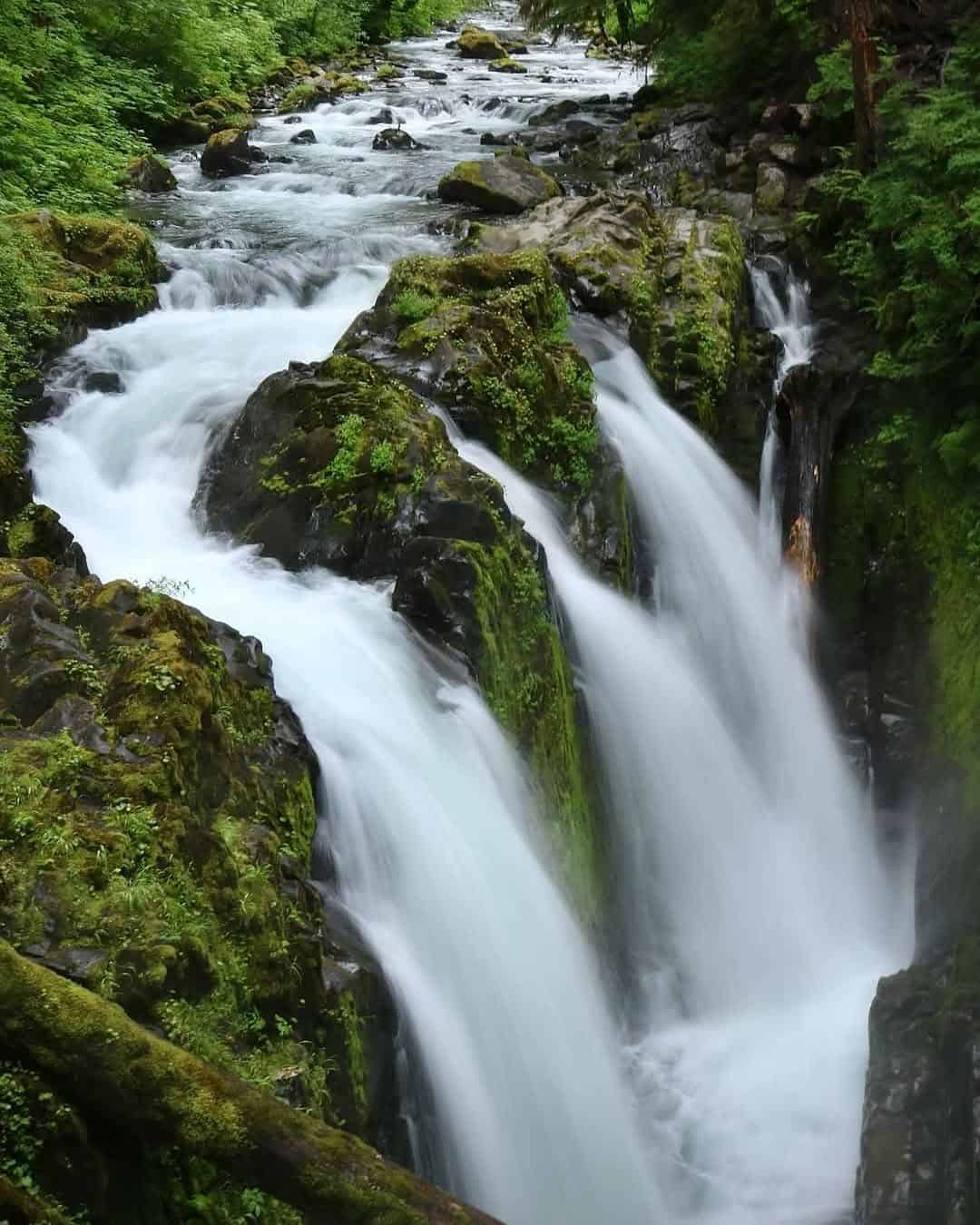
Sol Duc Falls in Olympic National Park is reachable by a trail moving through old-growth rainforest so dense and green it feels closer to an aquarium than a forest. The moss covers every surface. The trees are enormous and ancient. The light filtering through the canopy is dim and green.
At the end of the 1.6-mile round-trip trail, Sol Duc River plunges through a narrow slot canyon into a series of cascades that produce a mist heavy enough to feel in the air well before the falls appear.
The water divides around a forested island at the lip of the falls in a configuration unlike most other Pacific Northwest cascades, giving the scene an unusual depth.
Olympic National Park’s position on the Peninsula — requiring a drive around or ferry across Puget Sound — filters the crowds compared to more accessible national parks, giving the trail a quieter character even during peak season.
6. Rainbow Falls, North Carolina
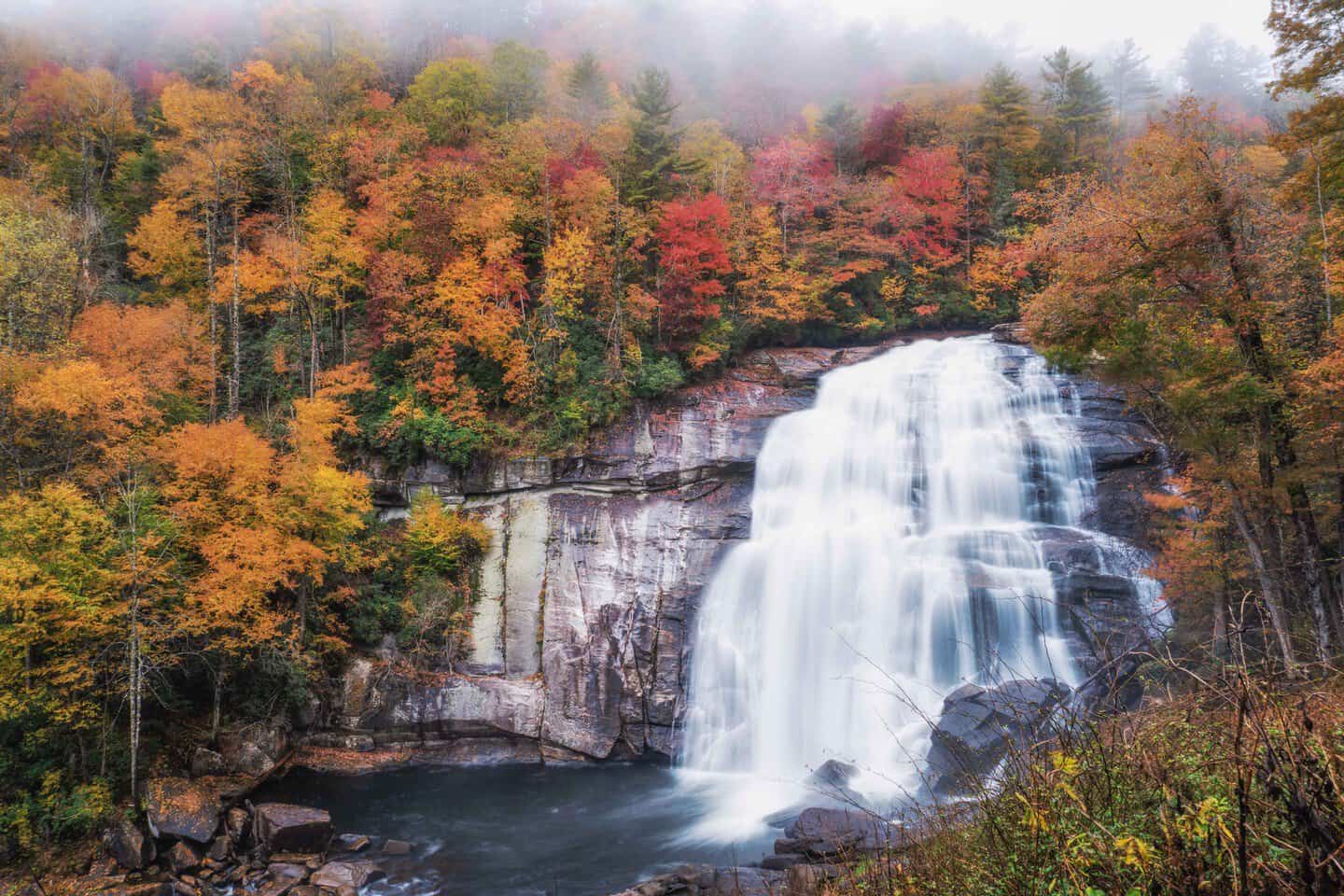
Rainbow Falls in Pisgah National Forest earns its name literally: on clear mornings, sunlight striking the mist from the 125-foot drop creates visible rainbows in the air below.
Timing a visit requires arriving on the trail early, before midday changes the angle of the light and the phenomenon fades.
The hike covers roughly three miles round trip through the forests near Brevard in western North Carolina, gaining about 600 feet over terrain that previews the Appalachian highlands above.
The Transylvania County area around Brevard supports multiple additional waterfalls within a short driving distance — Hooker Falls and High Falls are nearby on the Little River, making a single day capable of holding several waterfall hikes without repeating trailheads.
North Carolina’s western mountains run wet and green, and the falls are accessible across most of the year, with spring offering the highest water volume and fall adding the visual dimension of surrounding foliage to the view.
7. Kaaterskill Falls, New York
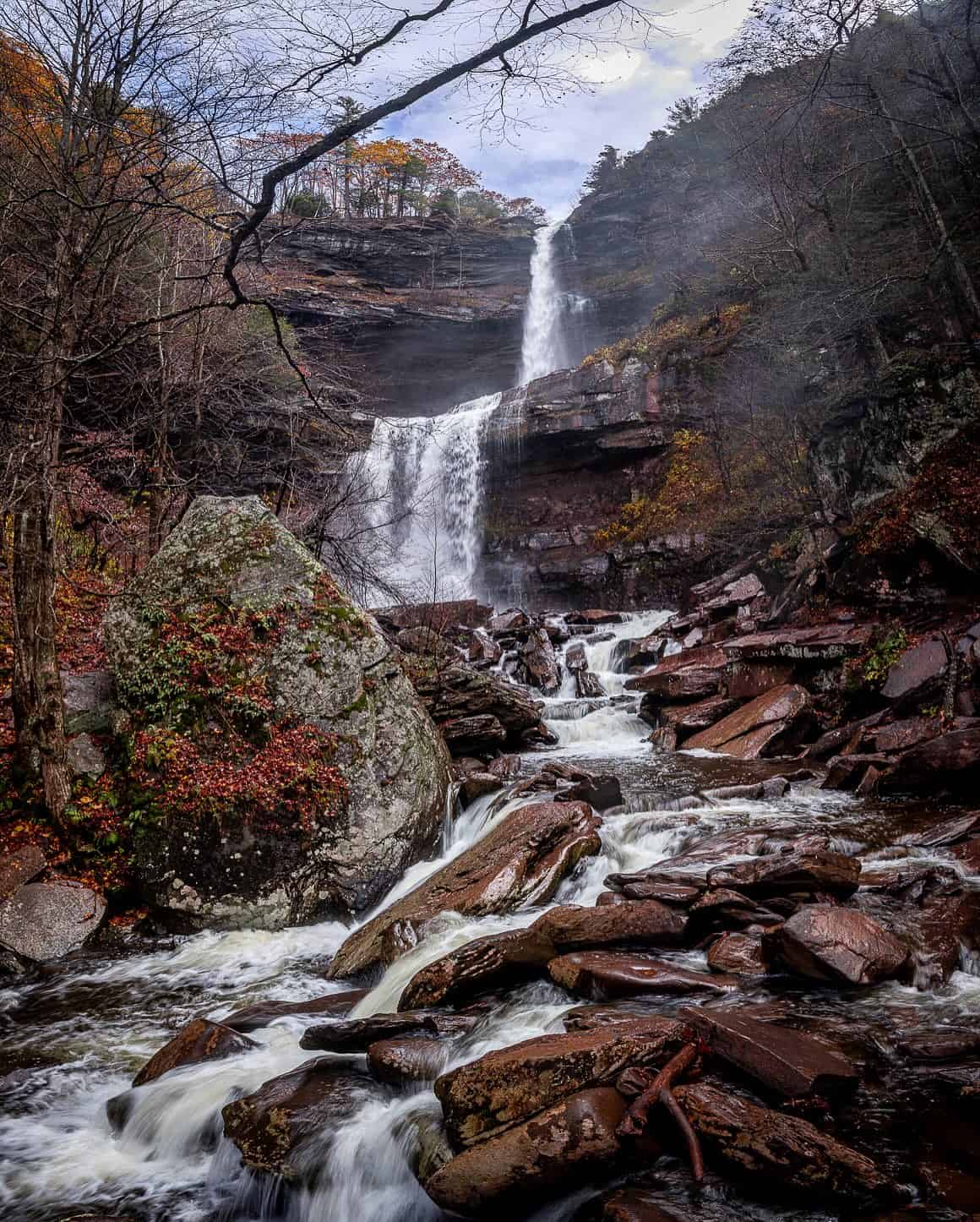
Kaaterskill Falls is the tallest waterfall in New York State, dropping 260 feet in two tiers through the Catskill Mountains in a setting that inspired the Hudson River School painters. Frederic Church and Thomas Cole made it one of the most painted landscapes in early American art.
The round-trip hike covers about 1.8 miles with moderate elevation gain. The trail crosses the base of the falls and climbs alongside them, providing views of both tiers from different angles and elevations.
The historical weight of the location adds a dimension that most waterfall hikes don’t carry. Standing at Kaaterskill Falls means standing where artists were making arguments about nature and national identity in the same century the country was being built.
The Catskills are accessible from New York City within two to three hours, making Kaaterskill a practical day-trip destination for a substantial portion of the East Coast’s population.
8. Fairy Falls, Wyoming
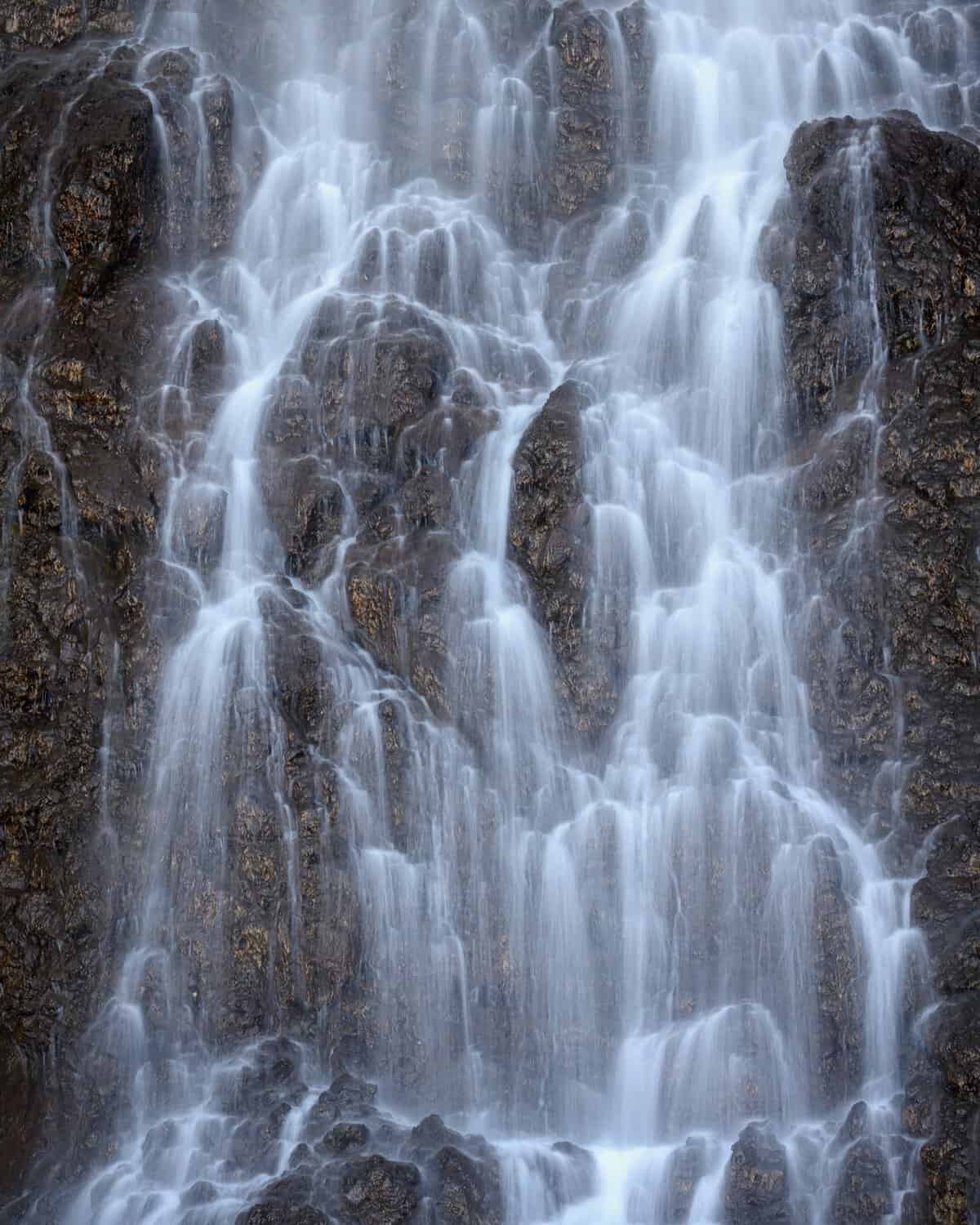
Fairy Falls in Yellowstone National Park drops 197 feet in a narrow, elegant column that looks almost engineered in its straightness — a single thread of white water falling free from its lip to the pool below without interrupting the rock face on either side.
The trail is approximately five miles round trip and passes through the hydrothermal basin surrounding the Grand Prismatic Spring, one of the largest hot springs in the world. An overlook of the spring — with its concentric rings of vivid color — is accessible on a spur trail mid-hike.
The combination of the Grand Prismatic overlook and the falls makes the Fairy Falls trail one of the most rewarding single hikes in Yellowstone for the ratio of extraordinary experiences per mile of effort.
Spring and early summer are the best seasons — wildflowers bloom in the surrounding meadows in June, the falls run at peak volume, and the snowpack still visible on surrounding ridges provides dramatic contrast.
9. Seven Falls, Colorado
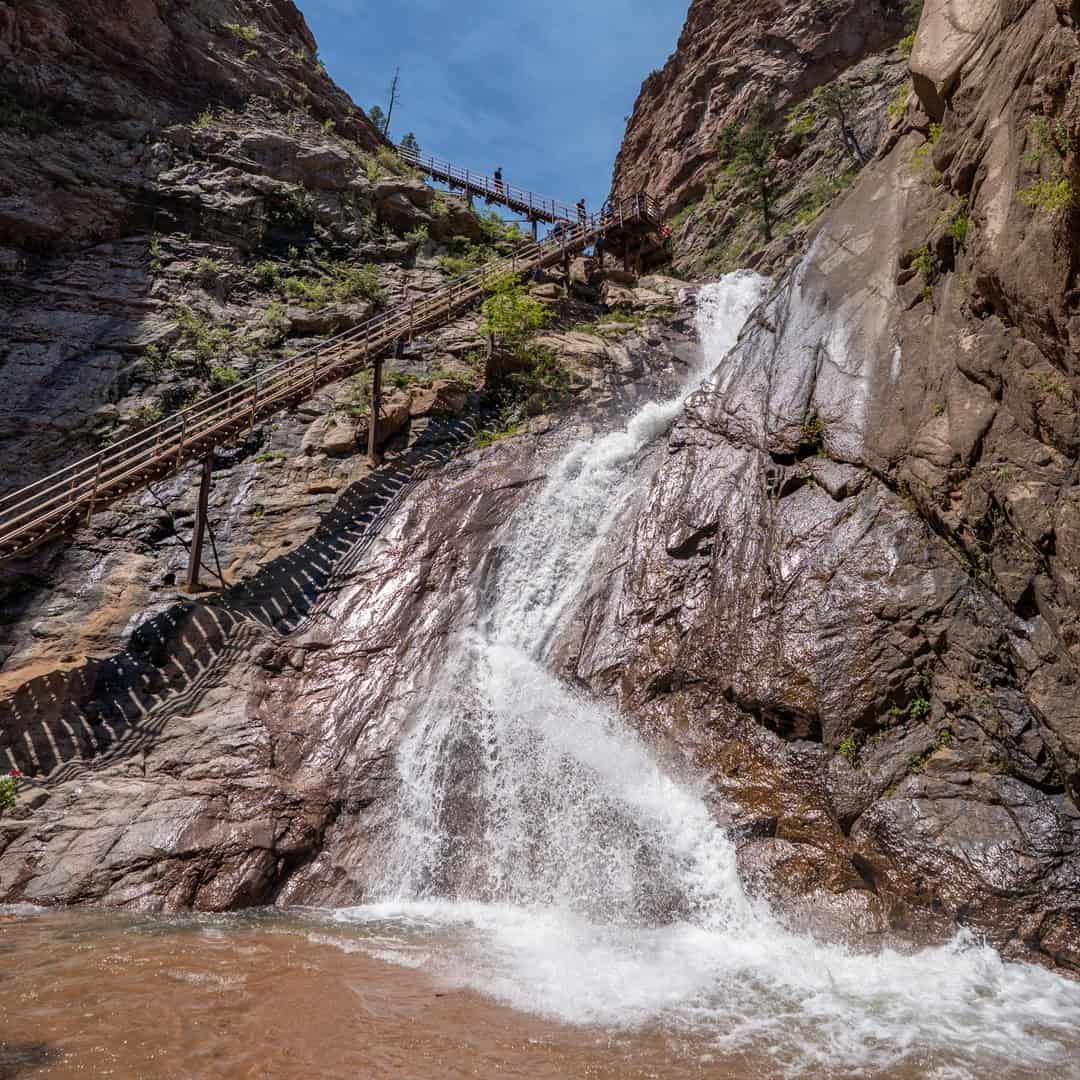
Seven Falls in Colorado Springs is among the most dramatic canyon settings for a waterfall in the American West — a sheer-walled box canyon where seven distinct tiers cascade 181 feet over a granite face in a configuration that requires standing at the entrance to take in fully.
The surrounding cliff walls rise steeply on both sides, creating an enclosed acoustic environment where the sound of the combined cascades is amplified and constant in a way that open falls never achieve.
A staircase climbs alongside the falls for those who want a higher perspective, and Eagle’s Nest viewpoint above provides a view looking down the canyon rather than up from below it.
Colorado Springs sits at 6,035 feet elevation, and the canyon adds vertical drama to a city that already has the backdrop of Pikes Peak rising to the west.
10. Brandywine Falls, Ohio
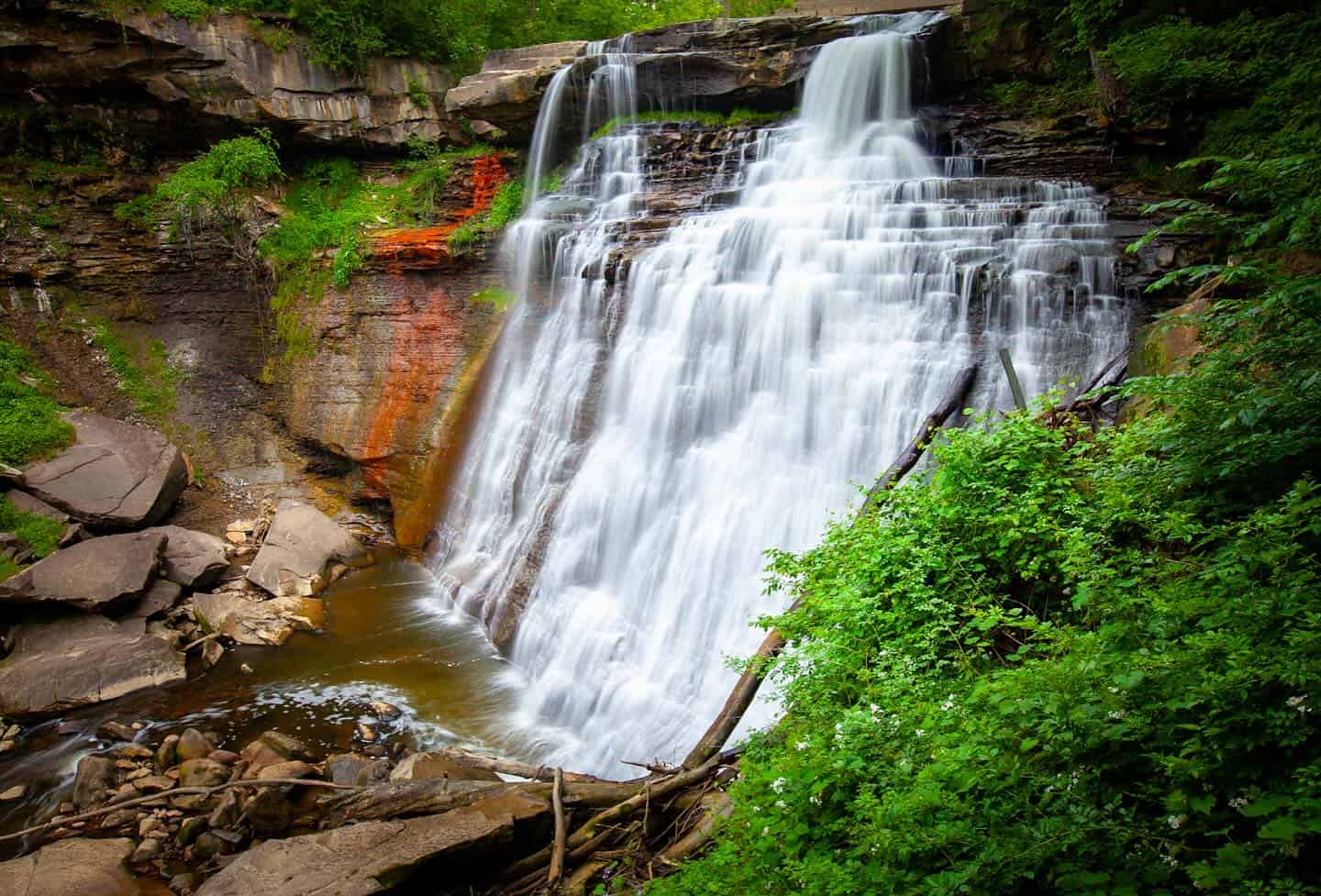
Brandywine Falls in Cuyahoga Valley National Park is a 1.5-mile loop that delivers one of the most consistently photographed natural features in Ohio.
The 65-foot cascade drops through a narrow gorge in the sandstone and shale of the Cuyahoga Valley, with a boardwalk providing multiple viewing angles alongside the water.
The falls run year-round, with winter visits offering ice formations in the gorge during cold snaps and spring delivering the highest water volume of the season.
The surrounding Cuyahoga Valley is one of the few national parks positioned entirely within a major metropolitan corridor — between Cleveland and Akron — giving it an unusual role as protected wilderness within reach of urban populations.
Early morning visits before the parking lot fills provide a substantially quieter experience than midday arrivals, when the trail’s accessibility draws steady traffic from the surrounding metropolitan area.
11. Tahquamenon Falls, Michigan
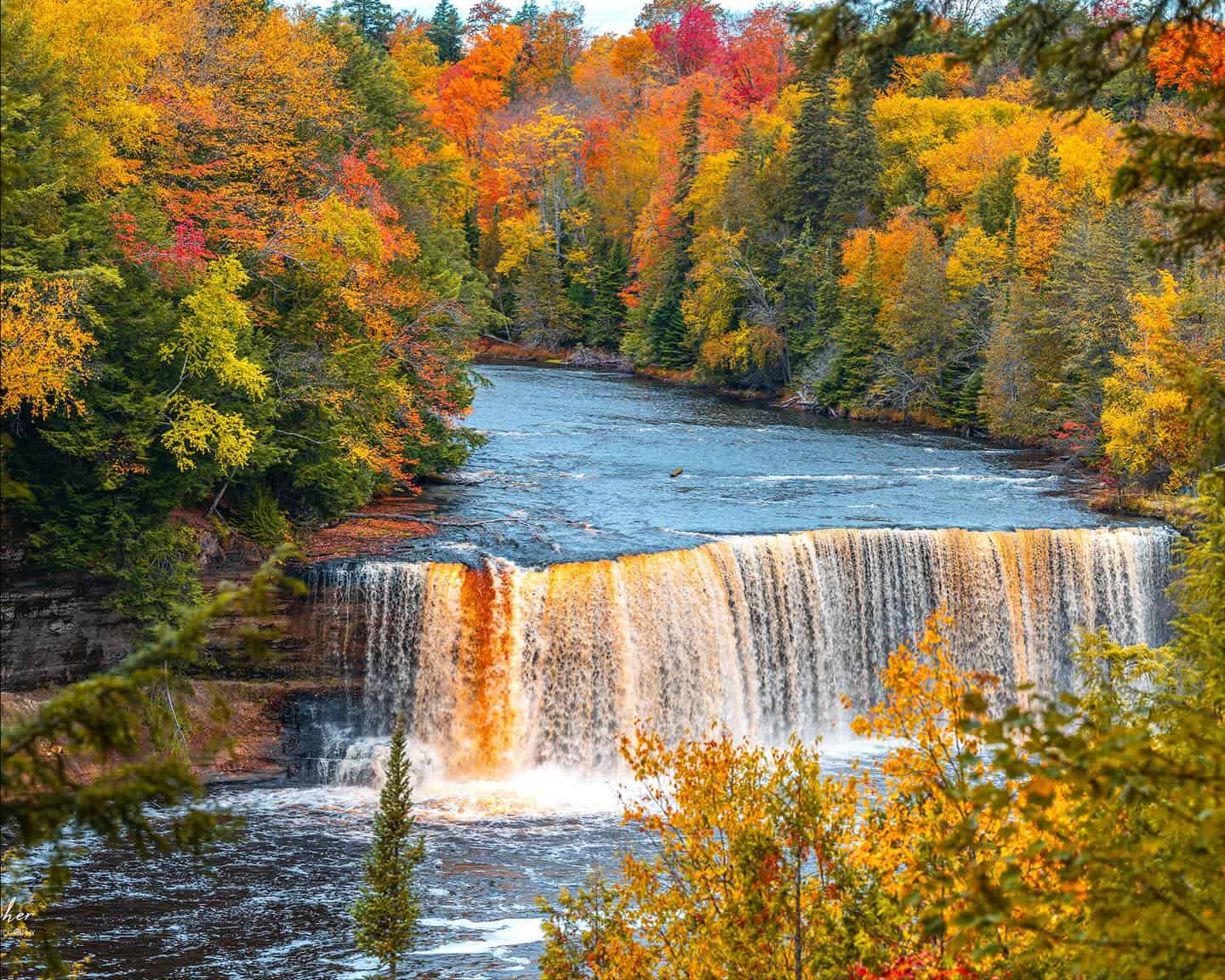
Tahquamenon Falls in the Upper Peninsula of Michigan is the largest waterfall east of the Mississippi River by volume, sending roughly 50,000 gallons per second over a crest nearly 200 feet wide during peak flow. The Upper Falls alone is an overwhelming spectacle.
The amber color of the water comes not from pollution but from tannins released by the cedar, spruce, and hemlock forests upstream — a characteristic so distinctive that Henry Wadsworth Longfellow described similar waters in “The Song of Hiawatha,” set partly in this region.
A rowboat rental system at the Lower Falls allows visitors to paddle to a small island between the twin lower cascades for a close-up view that most waterfalls simply don’t make accessible.
The Upper Peninsula location means Tahquamenon is part of a broader wilderness experience in a corner of Michigan that many Americans have never visited — a region where the falls, the river, and the surrounding boreal forest form a complete landscape rather than a single attraction.
The Sound Stays With You
There is a phenomenon that waterfall hikers know and rarely discuss: the falls stay with you after you’ve left, not as a memory exactly, but as a physical sensation. The sound that was deafening at the base continues somewhere at the edge of hearing on the drive home.
The experience of the waterfall and the experience of hiking to it are different things. The hike gives the falls a scale that a parking lot viewpoint can’t — you’ve covered the distance, climbed the elevation, and arrived at the specific moment the sound tells you you’ve made it.
These eleven waterfalls span eleven states — Yellowstone’s thermal plains, the Upper Michigan wilderness, a Colorado box canyon. What they share is the structure of the experience: a trail, an effort, and then the whole thing revealing itself before you’ve had time to compose yourself.
Set the alarm. Get to the trailhead early. Listen for the water before you see it.
More stories


Share this story