10 Wonderfully Weird Roadside Attractions Worth the Detour

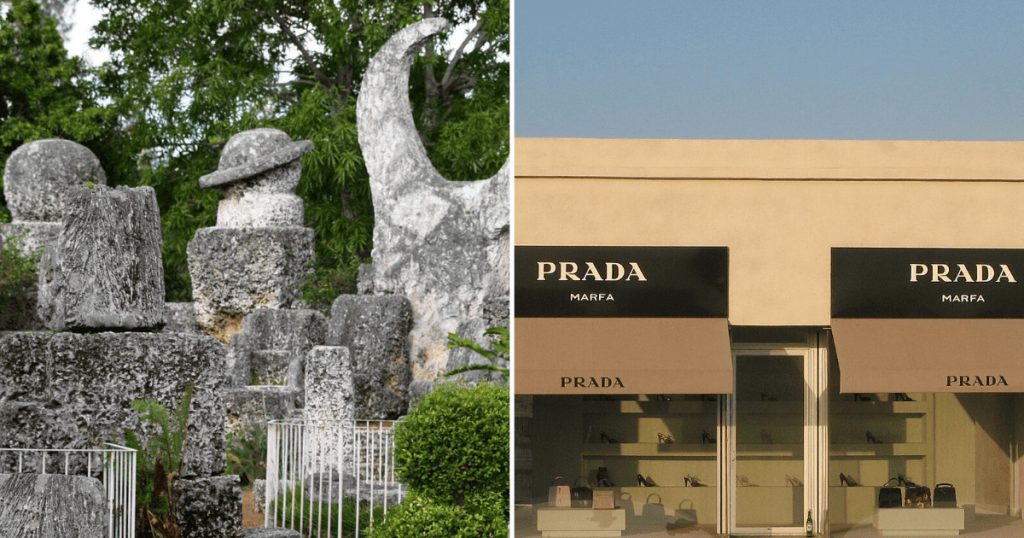
Every family road trip I ever took had the same unofficial rule: if there was a sign advertising something enormous, mysterious, or slightly unhinged, we were legally obligated to stop.
It didn’t matter if we were already running late. A giant ball of something, a house built into a rock, a monument made entirely out of old cars practically demanded a pullover, no debate allowed.
Looking back, I think those detours taught me more about the country than any famous landmark ever did. They’re proof that curiosity and stubbornness can build something worth remembering.
That’s the beauty of American roadside attractions. They exist purely because someone, somewhere, had a strange idea and enough stubbornness to actually build it.
Below, I’ve rounded up ten of the weirdest, most wonderful roadside stops across the country, the kind that turn an ordinary drive into a story worth retelling for years.
Some are pure silliness. Others carry real history, devotion, or mystery behind them. All ten prove that a great road trip is often defined by the stops nobody actually planned for in advance.
1. Carhenge, Nebraska
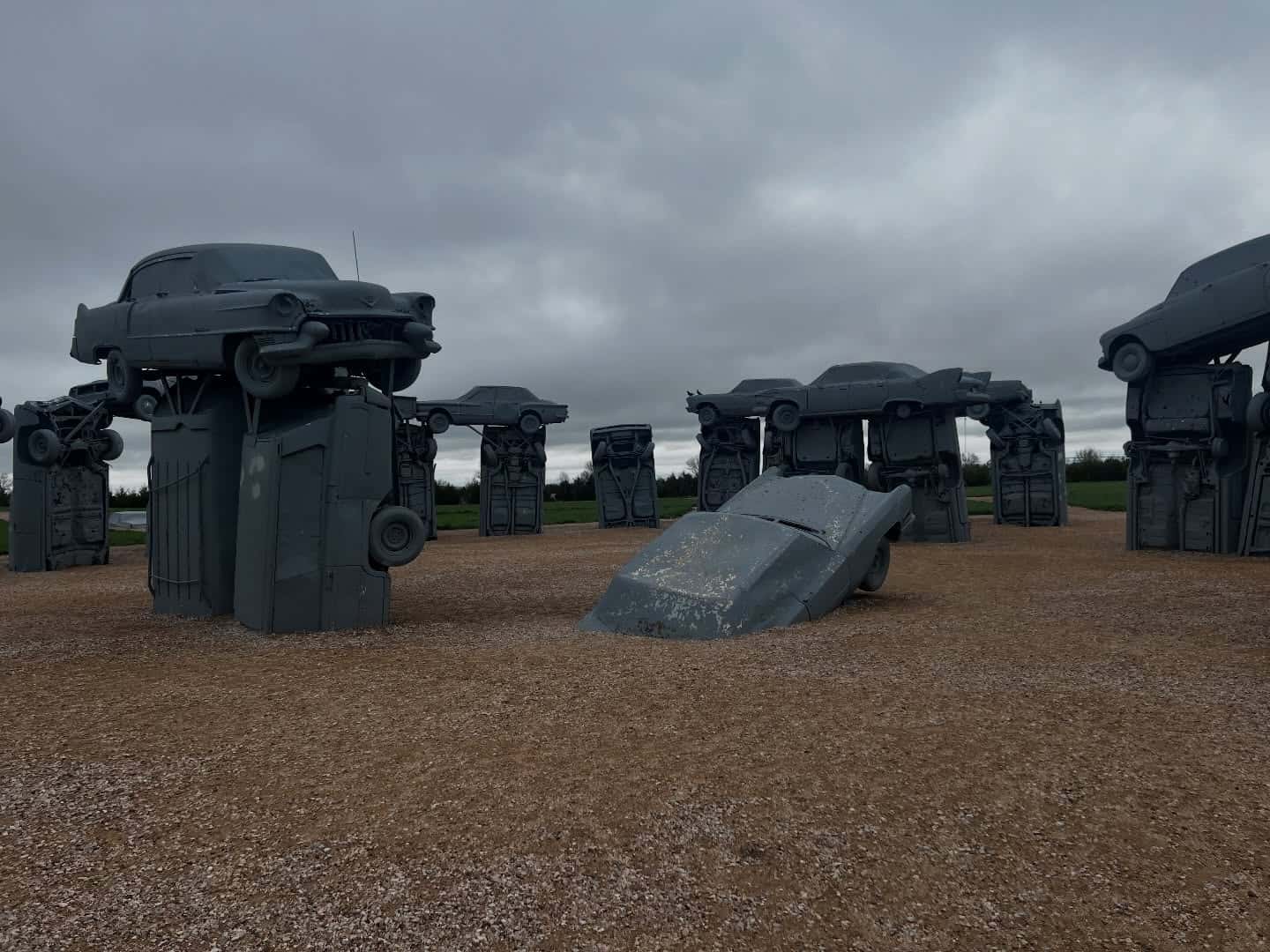
Just outside the small town of Alliance, thirty-nine vintage automobiles stand upright in a field, painted uniform gray and arranged to precisely mirror the proportions of England’s famous Stonehenge.
Jim Reinders built Carhenge in 1987 as a tribute to his father, studying the actual Stonehenge in England before recreating its scale and spacing entirely out of old cars back home in Nebraska.
Additional sculptures made from spare car parts surround the main installation, adding even more offbeat charm to what’s become one of the state’s most photographed roadside landmarks.
There’s no historical mystery here, no ancient ritual significance, just a field of gray Fords standing in for sarsen stones, which somehow makes the whole thing even funnier to visit.
A small visitor center and gift shop operate seasonally nearby, though the field itself stays open year-round, completely free to wander at any hour of the day.
Sunset photographers in particular love this spot when long shadows stretch across the gravel, and the gray silhouettes take on an almost eerie, genuinely monument-like quality after dark.
Where: 2151 Co Rd 59, Alliance, NE 69301
2. World’s Largest Ball of Twine, Kansas
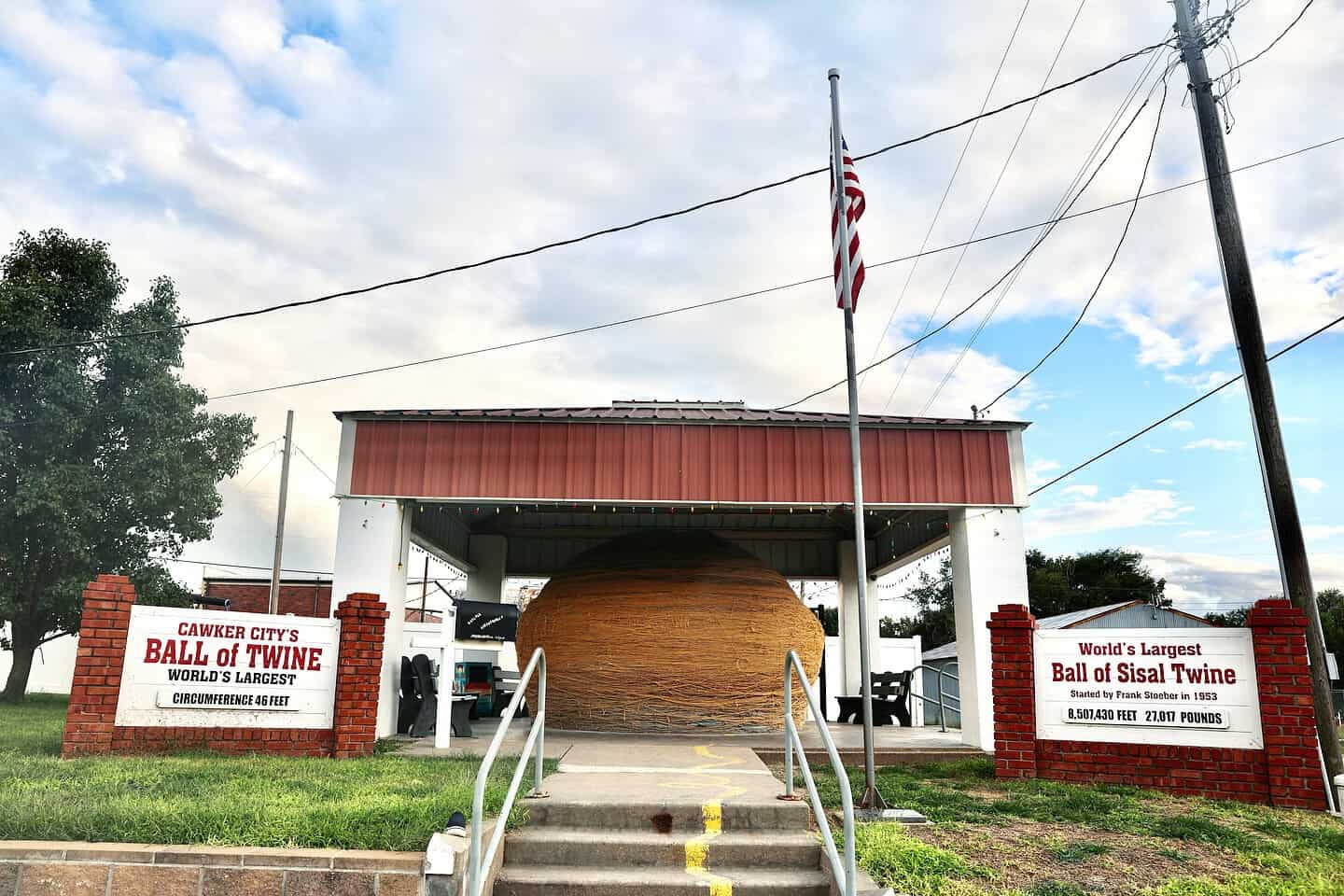
In downtown Cawker City, an enormous ball of sisal twine has been growing steadily since Frank Stoeber started winding it on his farm back in 1953.
What began as one man’s hobby has since become a genuine community project, with residents and visitors alike adding their own twine each August during the town’s beloved Twine-a-thon festival.
Weighing in at more than 19,000 pounds and stretching over 1,500 miles if unwound, the ball has never stopped growing, thanks to devoted local caretakers who track every new addition.
Visiting feels a little like watching a slow-motion monument to small-town pride, one that somehow keeps getting bigger every single year without ever losing its charm.
Locals will happily hand you a length of twine to add yourself, turning a quick photo stop into a small, genuinely satisfying part of the ball’s ongoing story.
Where: 804 Locust St, Cawker City, KS 67430
3. Corn Palace, South Dakota
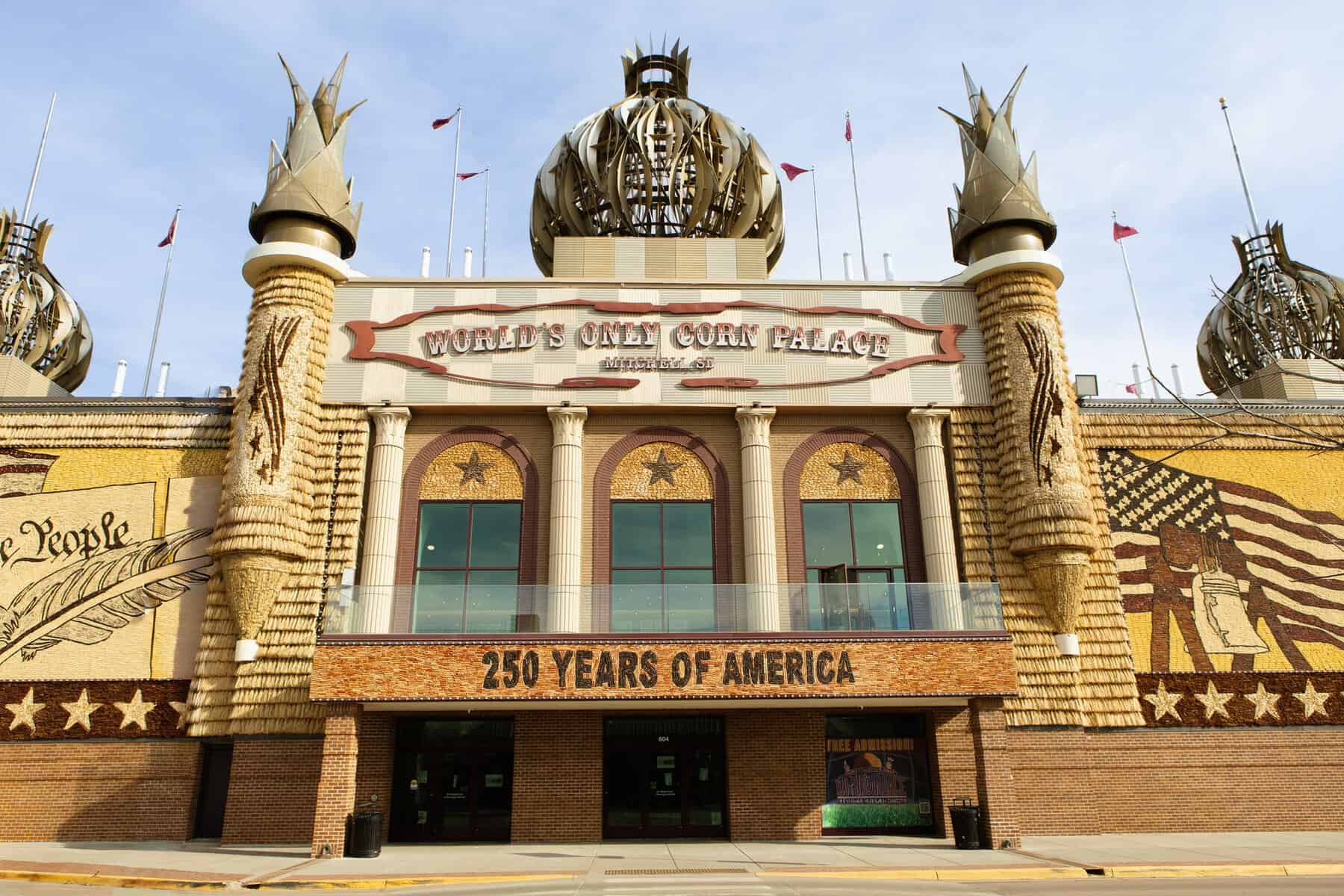
Rising from the middle of downtown Mitchell, the Corn Palace stands as the only structure of its kind left standing anywhere in the country, decorated entirely in murals made of corn.
Each year, local farmers grow twelve distinct shades of corn specifically for the building, which gets stripped down and completely redecorated with an entirely new design.
Roughly 325,000 ears of corn and 1.5 million nails go into each year’s murals, a genuinely staggering amount of agricultural artistry applied to a single building’s exterior.
Beyond its corn-covered walls, the Palace still functions as a working venue, hosting concerts, sporting events, and the annual Corn Palace Festival that first inspired its creation.
Free guided tours run through the summer months, walking visitors through the surprisingly detailed process of turning raw corn cobs into large-scale seasonal artwork.
The building’s onion domes and Moorish-style minarets, added in the 1930s, give it a genuinely unexpected silhouette against the flat South Dakota prairie surrounding it.
Where: 604 N Main St, Mitchell, SD 57301
4. House on the Rock, Wisconsin
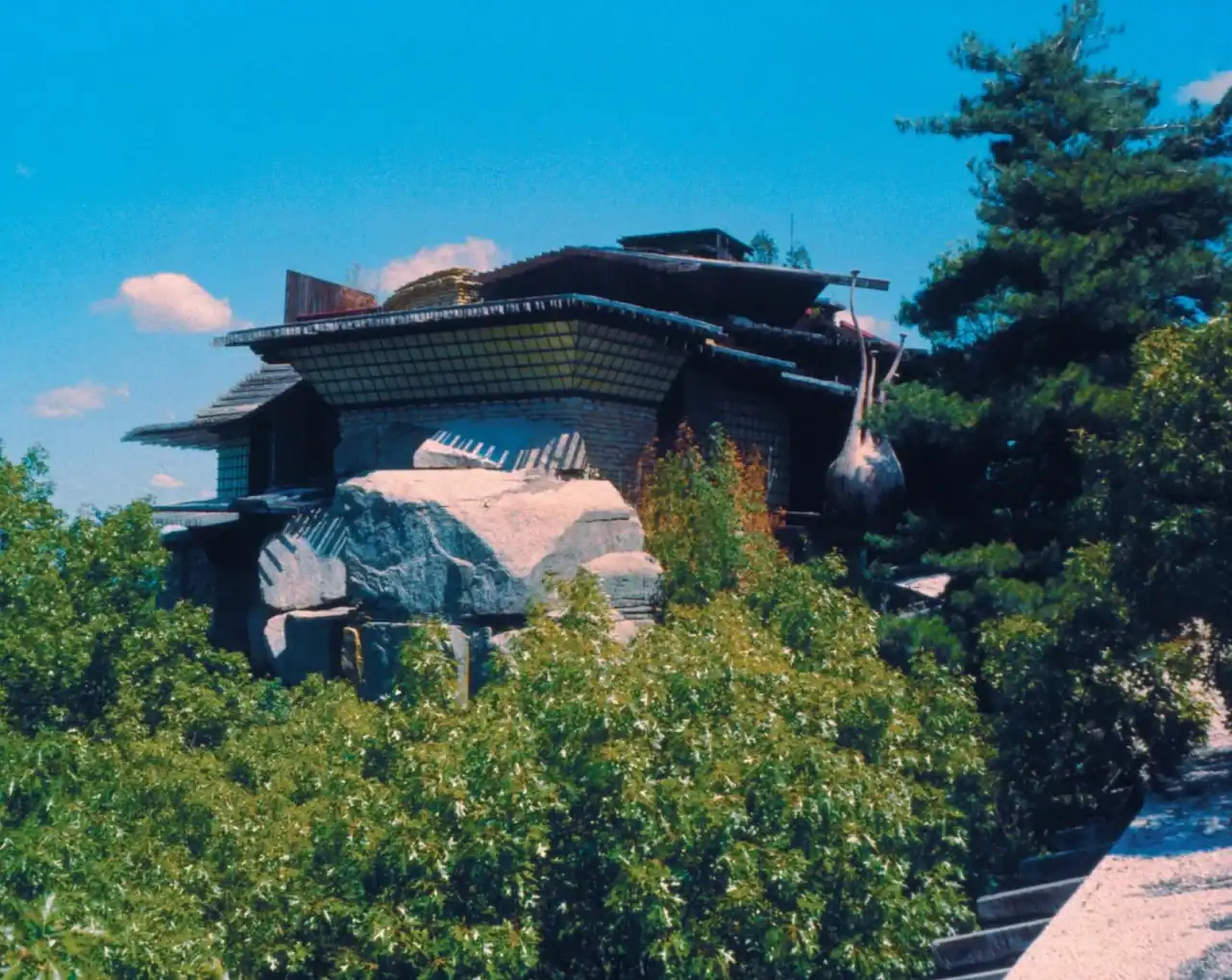
Built atop a sixty-foot chimney of sandstone, House on the Rock began as architect Alex Jordan’s private weekend retreat before curious visitors turned it into one of Wisconsin’s biggest attractions.
What started as a fourteen-room house has since expanded into a sprawling complex of collections, including the world’s largest indoor carousel, complete with 269 animals and thousands of lights.
Rooms blur into rooms here with little logic connecting them, from music machines to a 200-foot sculpture of a sea creature, creating an experience that feels genuinely impossible to fully absorb in one visit.
Visitors regularly describe losing track of time entirely, wandering from one bizarre, wonderful exhibit to the next until hours have passed without anyone quite noticing.
Even seasoned roadside attraction enthusiasts tend to agree this one earns its reputation as one of the most genuinely disorienting, delightful stops in the entire Midwest.
Plan for a full day here, not a quick stop, since the sheer scale of Jordan’s collections makes rushing through nearly impossible without missing something wonderfully strange.
Where: 5754 State Rd 23, Spring Green, WI 53588
5. Salvation Mountain, California
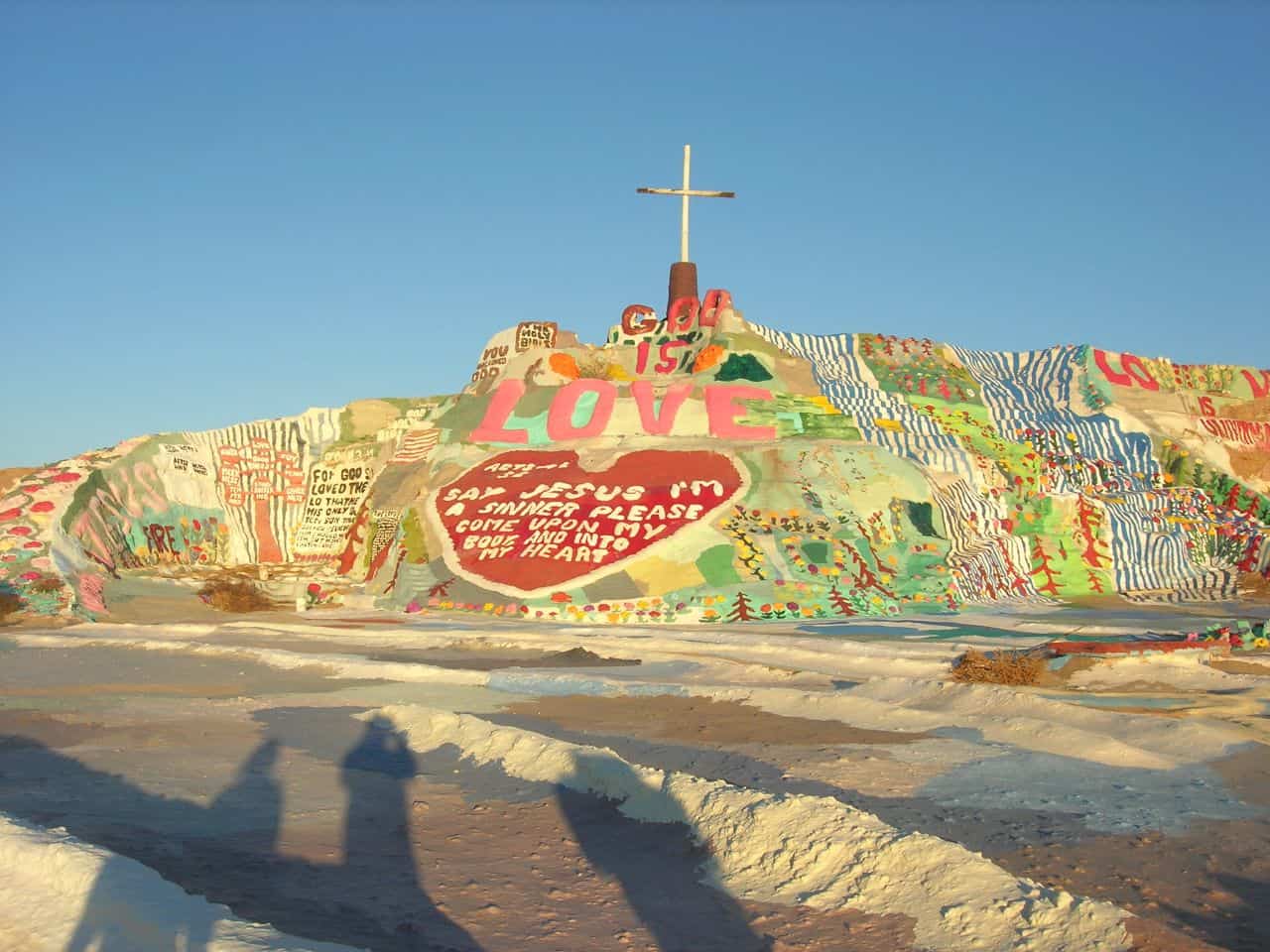
Rising from the desert near the Salton Sea, Salvation Mountain is one man’s decades-long tribute to faith, painted entirely by hand across a hillside of adobe clay and donated paint.
Leonard Knight began building the mountain in 1986, working on it nearly every single day for almost thirty years until his death in 2014, sleeping nearby with no electricity or running water.
Bright murals of flowers, waterfalls, and Bible verses cover every visible surface, spelling out Knight’s simple, central message in giant letters near the very summit: “God Is Love.”
Declared a national treasure by a California senator in 2002, the mountain remains free to visit, maintained today by volunteers determined to preserve Knight’s singular vision.
Its remote desert setting only adds to the impact, a burst of impossible color rising suddenly from otherwise flat, muted desert scenery stretching in every direction for miles.
Where: 603 Beal Road, Niland, CA 92257
6. Prada Marfa, Texas
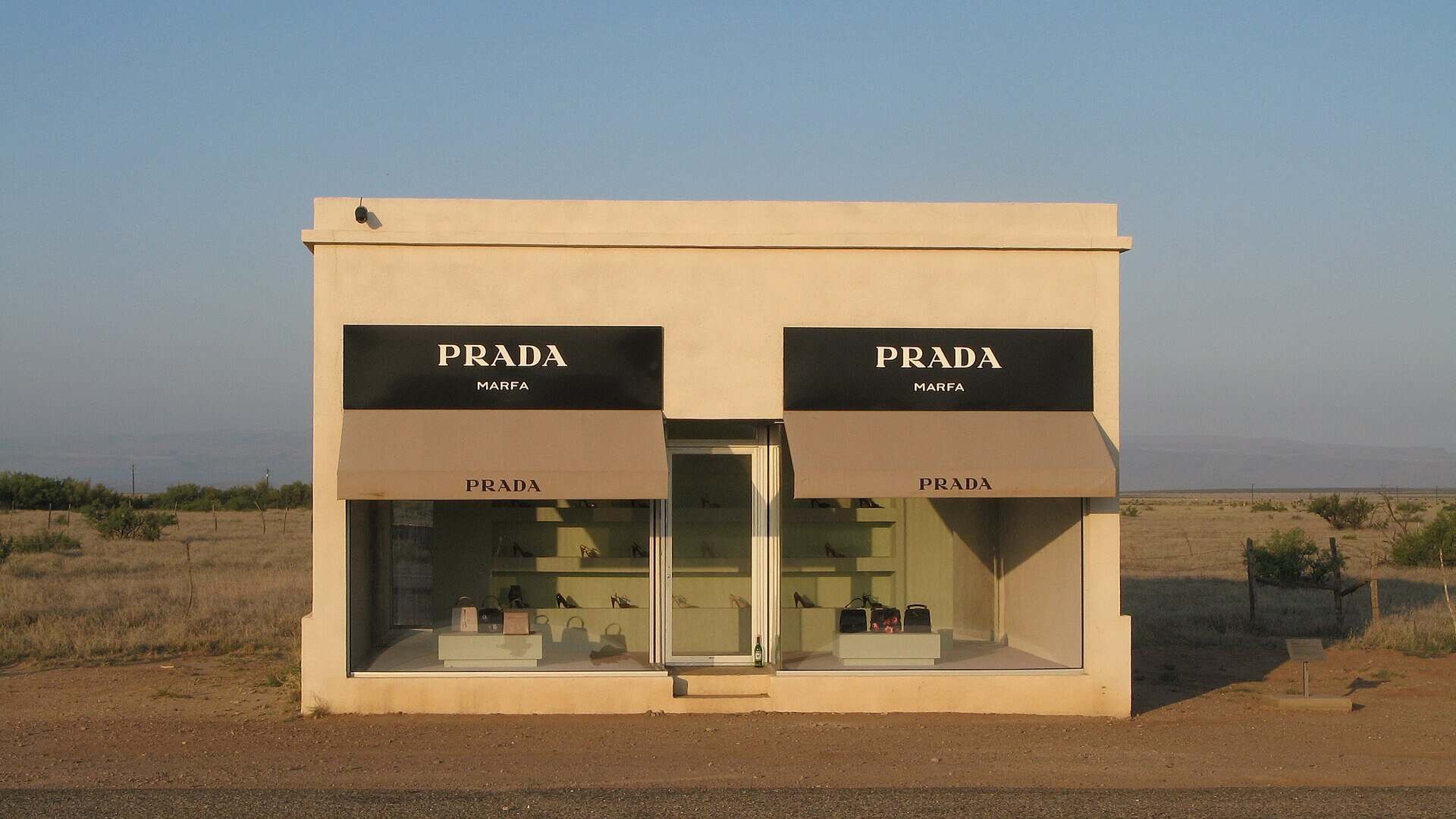
In a stretch of empty West Texas desert, a fully built Prada storefront sits stocked with real shoes and handbags from the brand’s 2005 collection, though the door has never once opened for business.
Artists Elmgreen and Dragset created the installation as a piece of land art, intentionally placing high fashion in the middle of nowhere as commentary on consumer culture and isolation.
The building was designed to slowly weather and degrade into the surrounding landscape, though ongoing maintenance and security cameras have kept it standing far longer than originally planned.
Photographers flock here at sunrise and sunset, when the desert light catches the storefront just right, framing luxury retail against miles of empty Chihuahuan Desert scrub.
The nearest town, Marfa, has since become something of an art destination in its own right, drawing visitors well beyond those simply passing through for a quick photo.
Where: 14880 US-90, Valentine, TX 79854
7. Lucy the Elephant, New Jersey
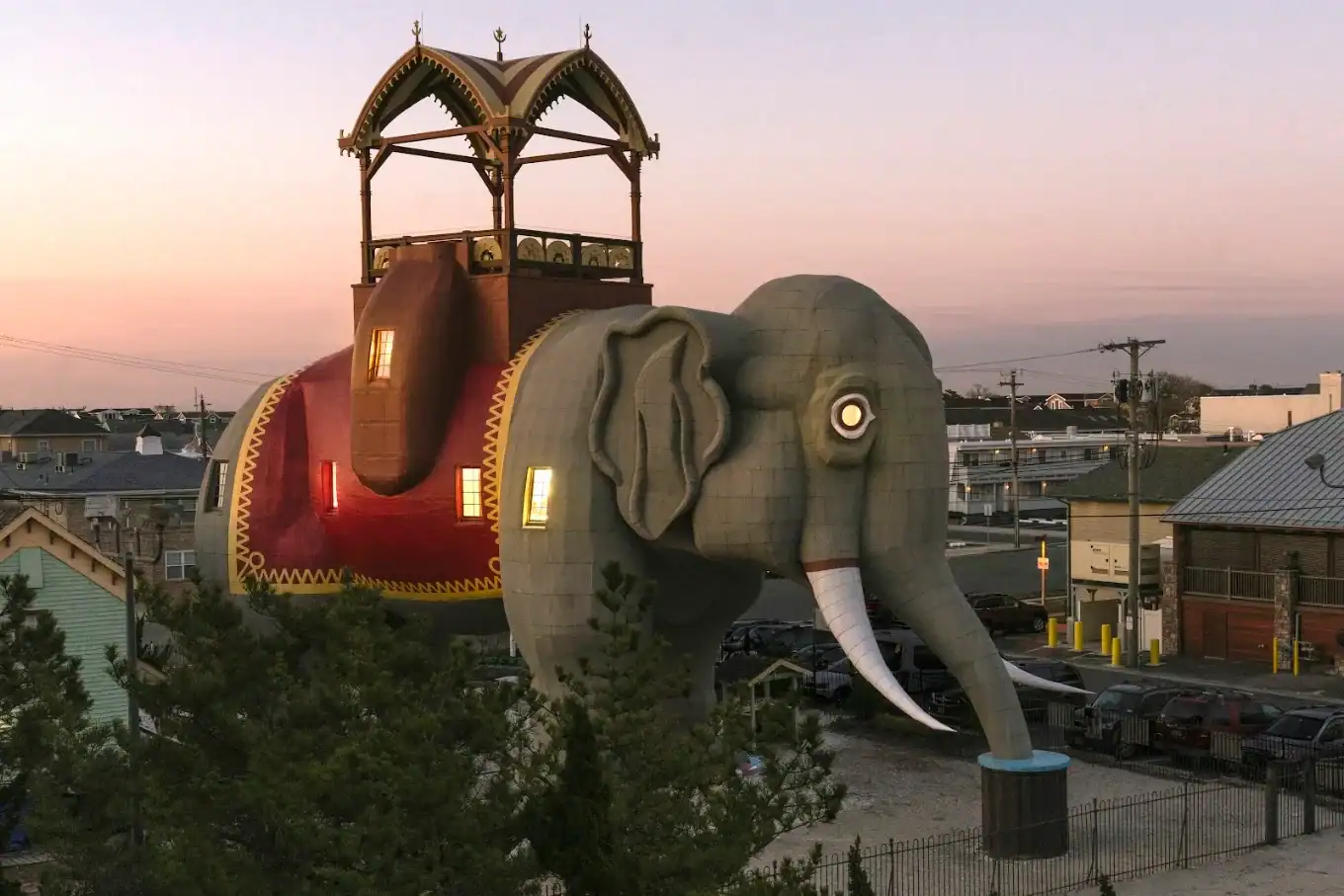
Standing six stories tall along the beach in Margate City, Lucy the Elephant has held the title of America’s oldest surviving roadside attraction since her construction back in 1881.
Built by developer James Lafferty to help sell nearby real estate, the massive tin-clad structure has since served as a tavern, a business office, and even a beachside cottage.
Visitors can climb a spiral staircase inside one of Lucy’s legs, eventually reaching an observation deck on her back that offers sweeping views of the surrounding shoreline.
Saved from demolition in the 1970s by a determined community campaign, Lucy remains a beloved fixture of the Jersey Shore, drawing tens of thousands of curious visitors every year.
Guided tours run regularly throughout the day, sharing Lucy’s unlikely history while making sure her story continues reaching new generations of beachgoers who stumble upon her by accident.
Where: 9200 Atlantic Ave, Margate City, NJ 08402
8. The Thing?, Arizona
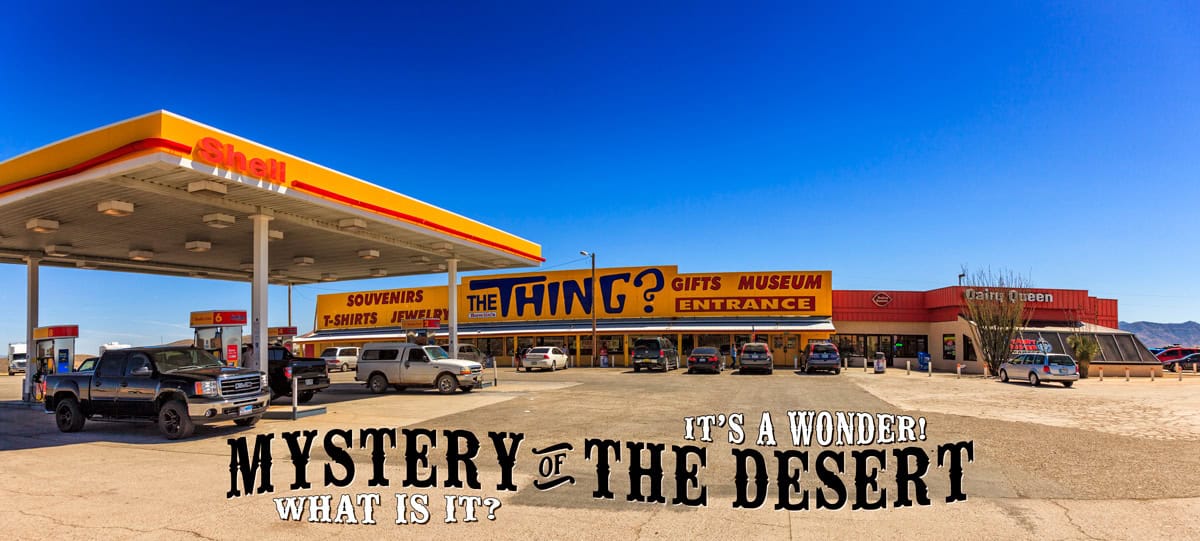
For more than sixty years, hundreds of mysterious billboards along Interstate 10 have teased travelers with a single question: what exactly is “The Thing?”
Attorney Thomas Binkley Prince purchased the mysterious exhibit in the mid-1900s and built an entire roadside museum around it, charging curious visitors just a quarter for a peek.
The attraction has since expanded into a full museum, walking visitors through dinosaurs, alien conspiracy theories, and oddities like a vintage Rolls-Royce, all building toward the reveal of The Thing itself.
Whether or not the mystery lives up to sixty years of hype is genuinely up for debate, but the buildup alone has made this one of the most enduring curiosities along the entire interstate.
More than two hundred billboards still dot the highway leading up to it, a marketing tradition that’s outlasted nearly every other roadside gimmick built during that same mid-century era.
Where: 2631 N Johnson Rd, Dragoon, AZ 85609
9. UFO Watchtower, Colorado
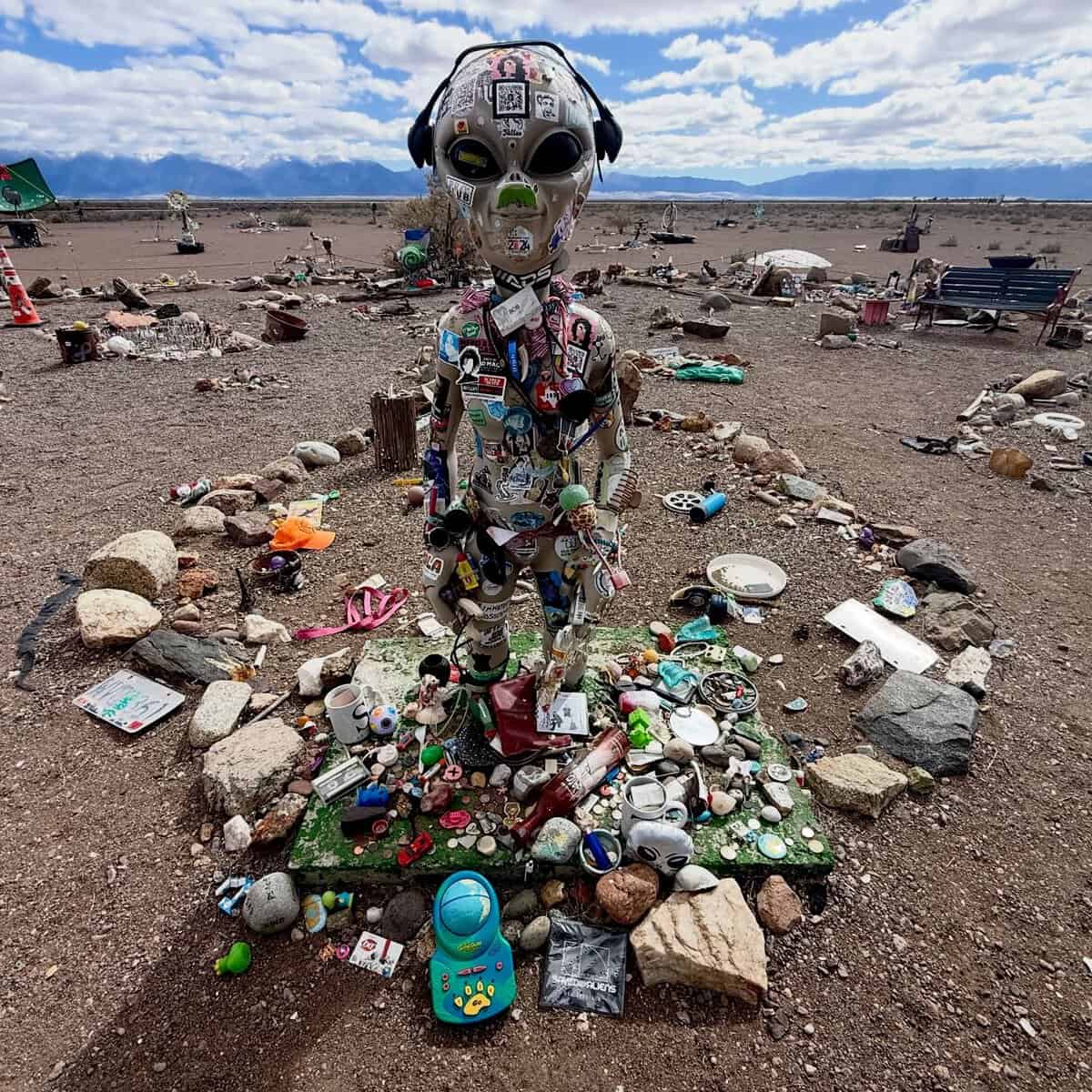
Perched in Colorado’s remote San Luis Valley, the UFO Watchtower offers a raised, 360-degree platform built specifically for scanning the skies above one of the country’s most reported UFO hotspots.
Rancher Judy Messoline built the tower in 2000, after learning her property sat within a region long associated with unexplained sightings and strange lights in the night sky.
A “Healing Garden” surrounds the site, filled with items left behind by visitors and marked by what Judy describes as two vortex openings, according to psychics who’ve since visited the property.
Whether or not you spot anything unusual overhead, the site’s total darkness and remote setting make it one of the more genuinely otherworldly stargazing spots in the country.
Camping is available right on the property, giving dedicated sky-watchers the chance to spend an entire night scanning the valley for whatever might pass overhead in the darkness.
Where: 2502 County Rd 61, Hooper, CO 81136
10. Coral Castle, Florida
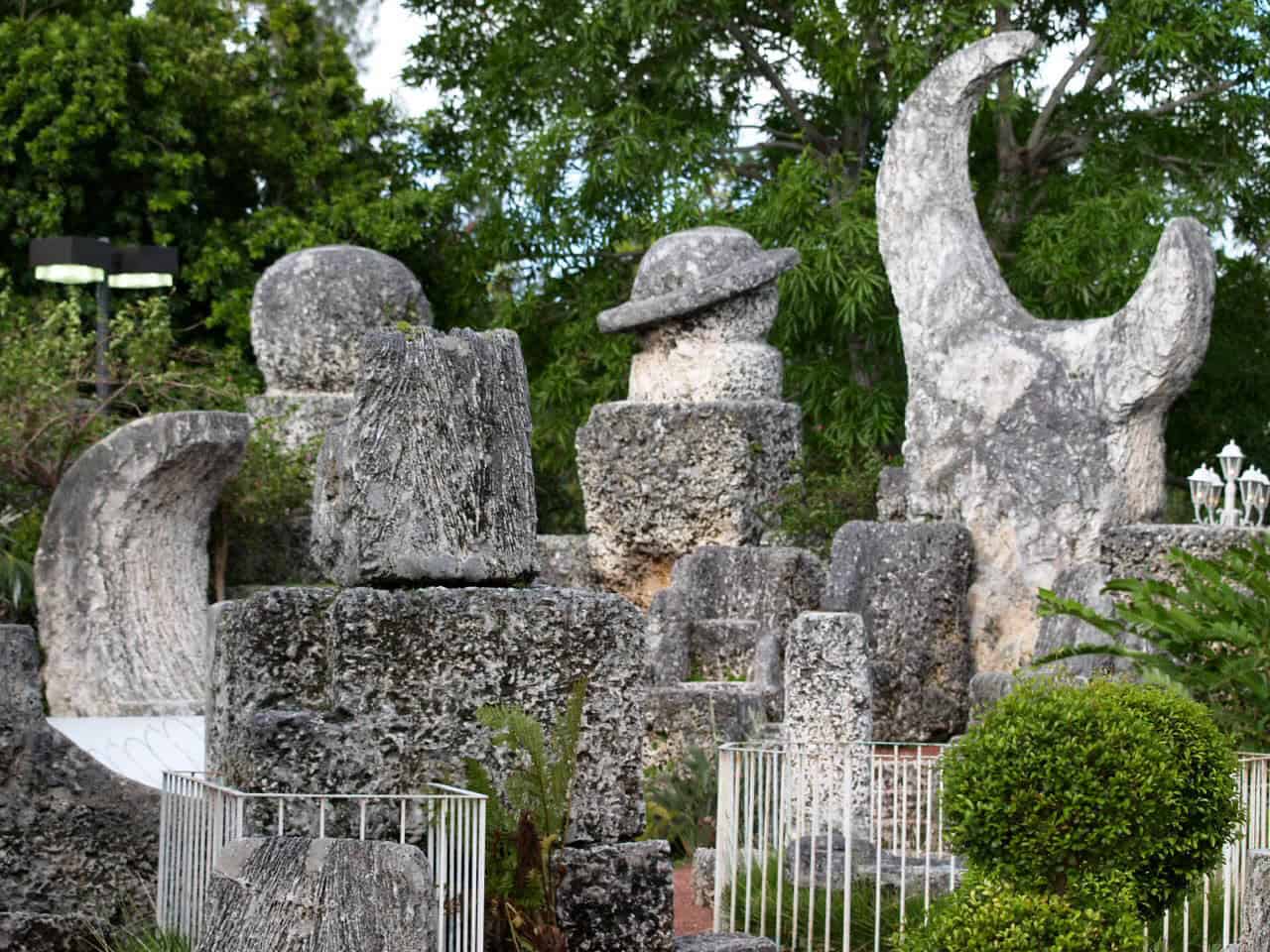
Just outside Homestead, Coral Castle stands as a genuine unsolved mystery, built single-handedly by a five-foot-tall, 100-pound Latvian immigrant named Ed Leedskalnin.
Working almost entirely at night and refusing to let anyone watch, Leedskalnin spent nearly three decades carving and moving over a million pounds of limestone using tools he built from salvaged junkyard scraps.
The site’s centerpiece, a nine-ton rotating gate, was engineered so precisely that a small child could once open it with nothing more than a single finger.
Leedskalnin claimed he built the castle for a lost love he called his “Sweet Sixteen,” a story that remains as unresolved as the engineering methods he took to his grave in 1951.
Engineers and scientists still visit today, hoping to finally puzzle out exactly how one small man moved so much stone entirely on his own, without ever once revealing his methods.
Where: 28655 S Dixie Hwy, Homestead, FL 33033
Some Detours Are the Whole Point
There’s a reason these places stick in people’s memories longer than the destinations they were technically driving toward. A great roadside attraction doesn’t ask to be understood, only noticed.
Some, like Carhenge or the twine ball, exist purely for the joy of the absurd. Others, like Salvation Mountain or Coral Castle, carry real devotion, loneliness, or grief tucked inside their strangeness.
What they all share is a refusal to blend into the landscape. Someone looked at an empty field, a quiet beach, or a stretch of desert highway and decided it needed something completely unexpected.
None of these places needed permission or approval to exist. They just needed one person stubborn enough to keep building, year after year, until strangers started pulling over to see what they’d made.
So the next time a hand-painted sign promises something too strange to skip, take the exit. Some of the best stories from any road trip start with a detour nobody planned for.
More stories

Share this story