10 Stunning State Capitol Buildings Across the U.S. That Are Worth Visiting for the Architecture Alone

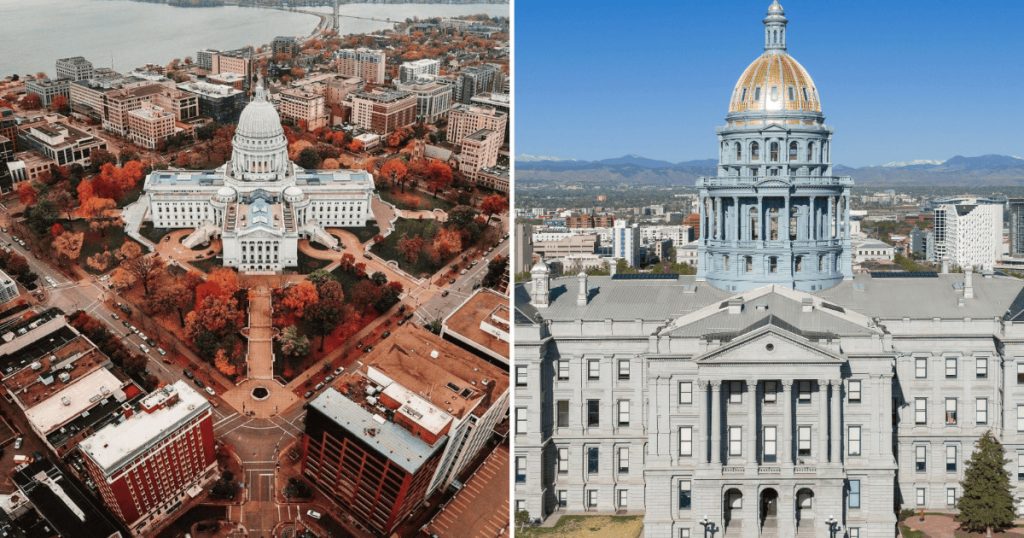
I spent an embarrassing amount of time in school convinced that government buildings were boring by design — as if the people who built them had decided that function and beauty were mutually exclusive.
Then I started actually looking at them.
State capitol buildings are among the most architecturally ambitious structures ever built in America. Domes gilded in real gold. Staircases wide enough to march an army through. Murals painted by artists who took their civic commissions as seriously as any gallery work.
Most of them are free to enter. Most of them are open to the public year-round. And most of them are completely overlooked by travelers who drive past without ever wondering what’s inside.
Below are ten of the most stunning state capitol buildings in the country — each one worth slowing down for.
1. Texas State Capitol, Texas
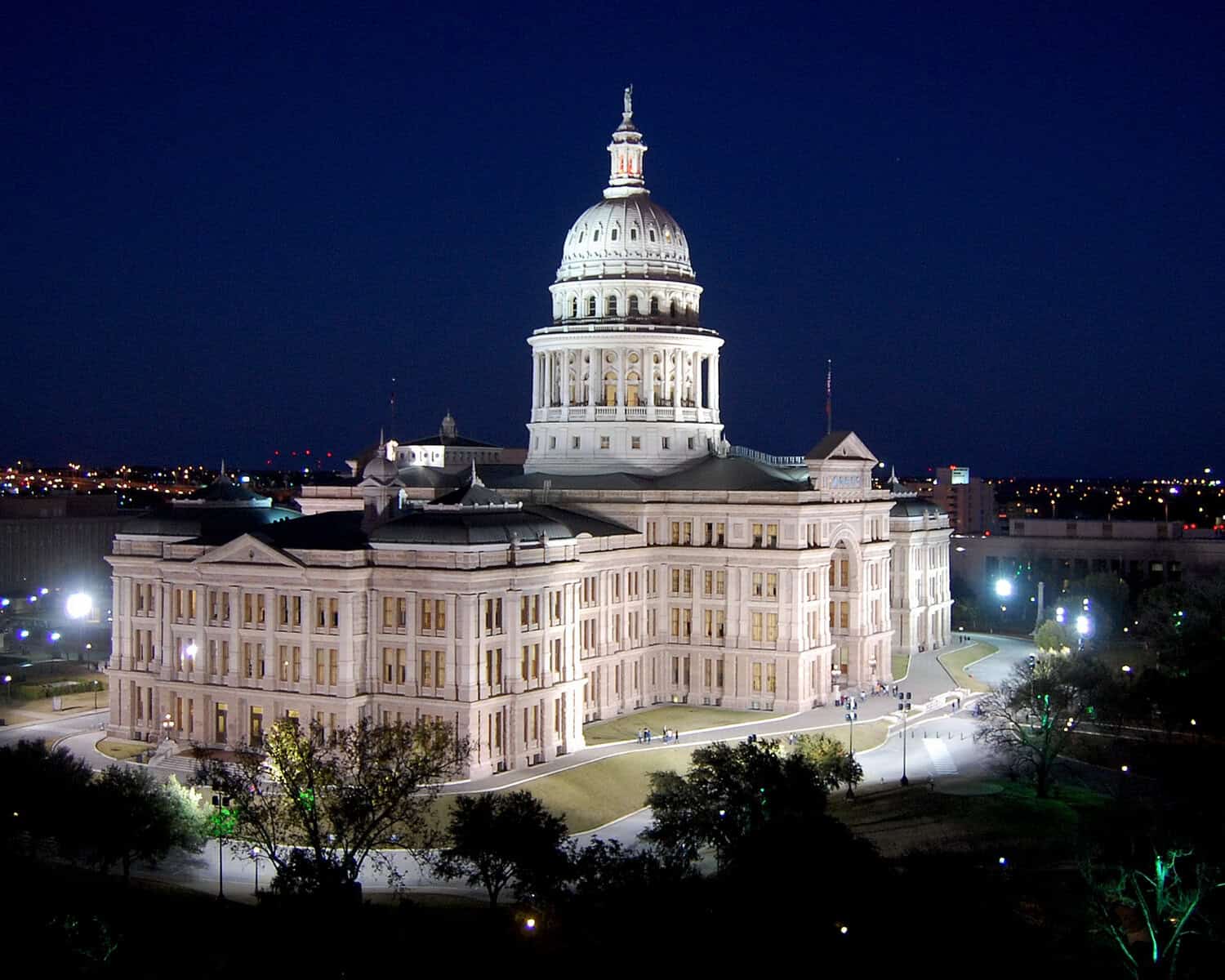
Everything really is bigger in Texas, and the state capitol is proof. The Texas State Capitol in Austin stands 308 feet tall, making it the tallest state capitol building in the United States — fourteen feet taller than the U.S. Capitol in Washington, D.C.
Built from a distinctive pinkish-red granite quarried in Marble Falls, Texas, the building glows warm in the late afternoon sun in a way that few stone buildings manage. The color was an intentional choice, meant to reflect the character of the Texas landscape around it.
The interior rotunda rises 218 feet from floor to the ceiling of the dome, with the seals of six nations that have governed Texas arranged in the terrazzo floor below. Looking straight up into the dome from the center is a quietly dizzying experience.
The surrounding Capitol grounds span 22 acres and include monuments, trees from every county in Texas, and walking paths that make the complex as much a park as a government campus.
Where: Texas State Capitol, 1100 Congress Ave, Austin, TX 78701
2. Rhode Island State House, Rhode Island
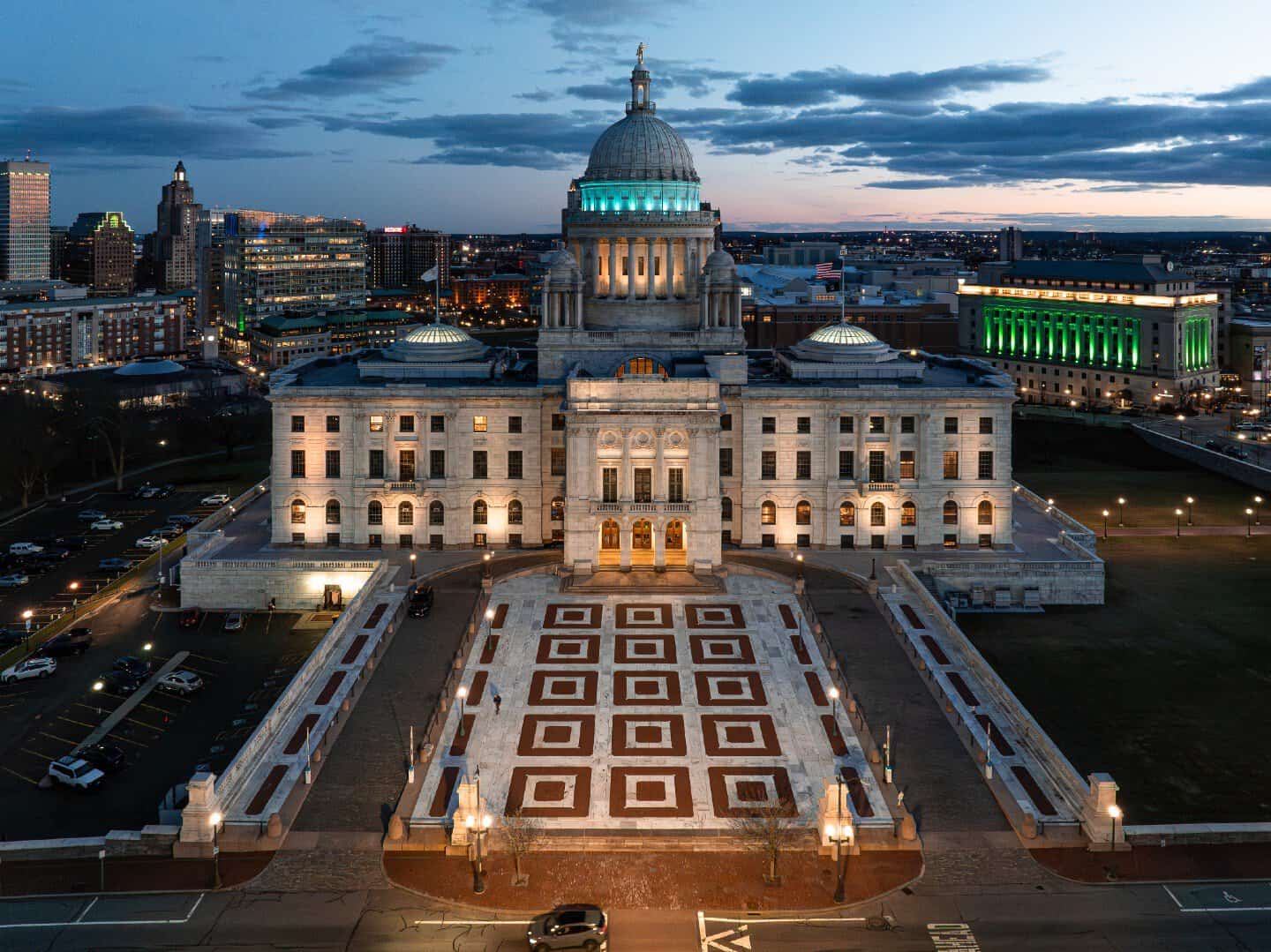
The Rhode Island State House in Providence carries a distinction that turns heads even among architecture enthusiasts: its central dome is one of the largest self-supported marble domes in the world, ranking fourth globally alongside the Pantheon, St. Peter’s Basilica, and the Minnesota State Capitol.
Completed in 1904, the building is faced in white Georgia marble that catches the light differently at every hour of the day. From College Hill across the river, the dome appears to float above the city skyline like something borrowed from Rome and relocated to New England.
The interior is equally impressive. A full-length portrait of George Washington by Gilbert Stuart — a painting Stuart himself considered his finest work — hangs in the State Reception Room and has been in Rhode Island since 1806.
The building sits at the top of a gentle rise, its grounds landscaped to draw the eye upward along the classical facade.
Where: Rhode Island State House, 82 Smith St, Providence, RI 02903
3. Minnesota State Capitol, Minnesota
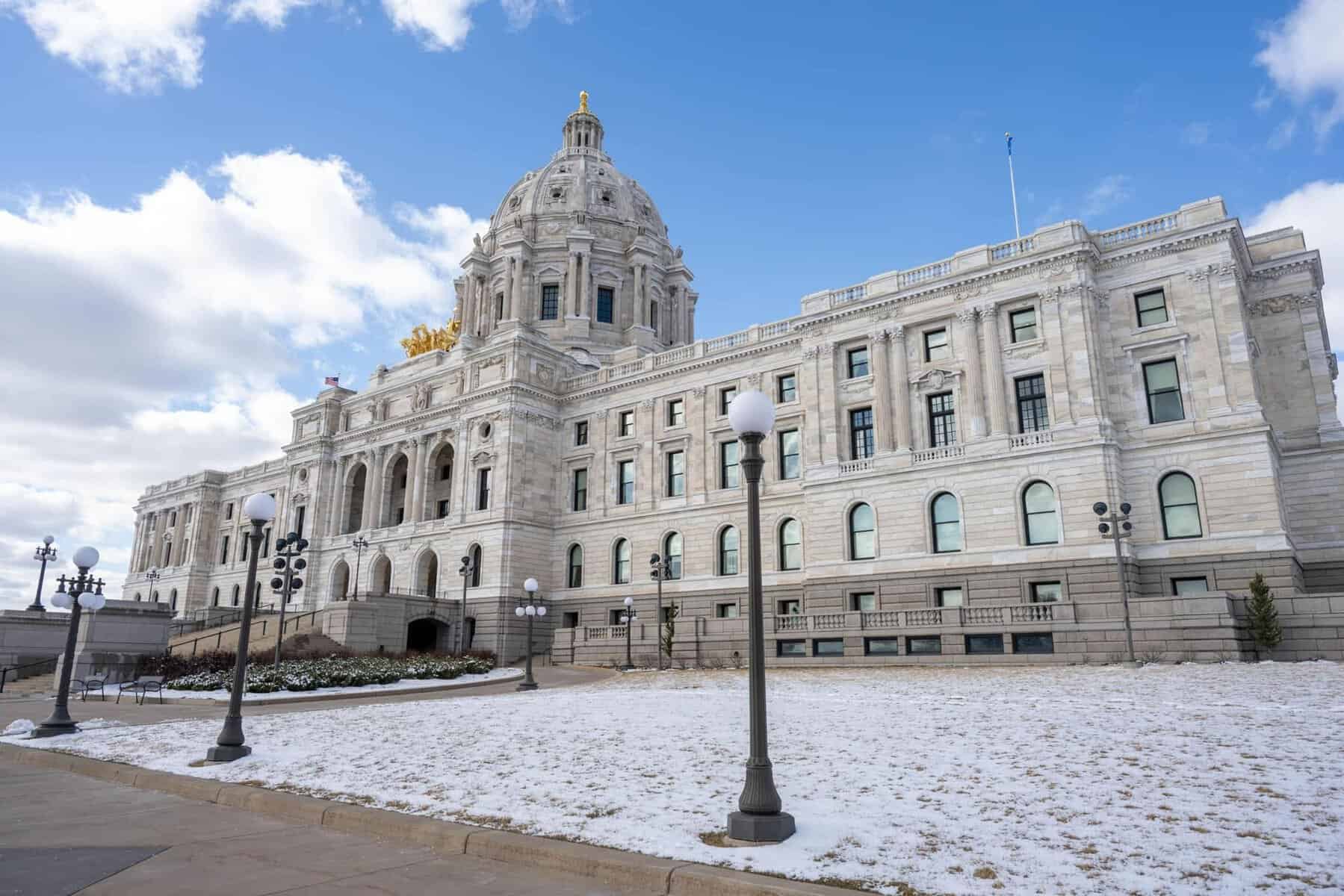
St. Paul’s Minnesota State Capitol held the record for the world’s largest self-supported marble dome at its 1905 completion, until the Rhode Island State House surpassed it. The two buildings were designed by different architects in what became an informal competition to outdo each other.
Cass Gilbert designed the Minnesota building, and it remains one of his most celebrated works. The quadriga sculpture above the main entrance — a gilded chariot pulled by golden horses — was recently restored to its original luster after years of weathering.
Inside, the rotunda walls are decorated with an extensive program of paintings and murals depicting Minnesota history and allegorical subjects.
The governor’s reception room, finished in mahogany and gold leaf, offers a level of craftsmanship rarely seen outside dedicated art museums.
A complete restoration project completed in 2017 returned the entire building to its original 1905 appearance, making this a particularly good moment in history to visit.
Where: Minnesota State Capitol, 75 Rev Dr Martin Luther King Jr Blvd, St. Paul, MN 55155
4. Pennsylvania State Capitol, Pennsylvania
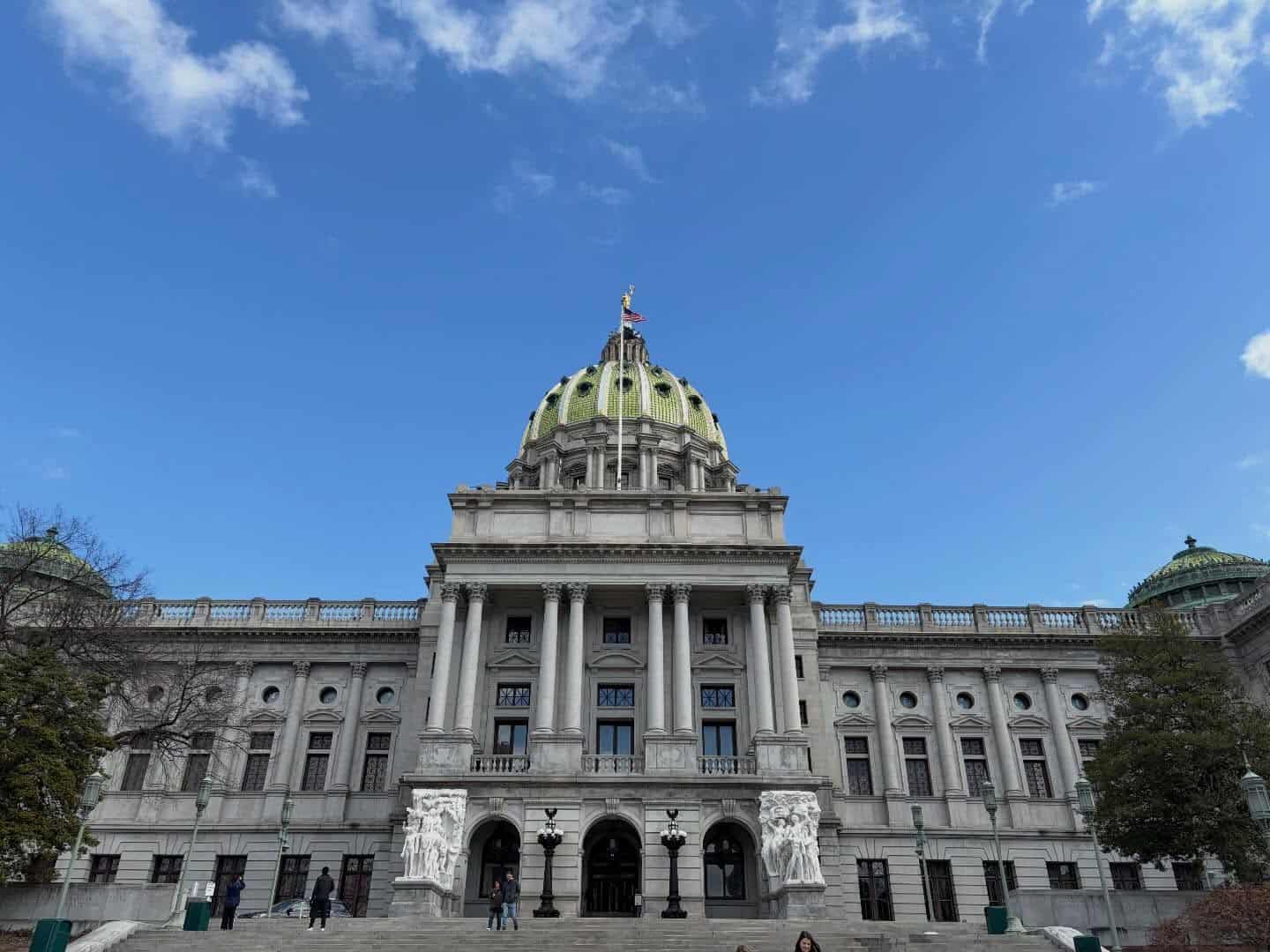
When Pennsylvania’s current State Capitol opened in 1906, President Theodore Roosevelt called it the most beautiful building he had ever seen.
The building’s architect, Joseph Huston, drew on Italian Renaissance forms but pushed each detail further than was strictly necessary — which is exactly what makes the result so extraordinary.
The main dome rises 272 feet and was inspired by St. Peter’s Basilica in Rome, though Houston’s version incorporates Pennsylvania Dutch motifs and American iconography throughout the decoration. The green glazed tile on the exterior rooflines adds a color note rarely seen on buildings of this scale.
The grand staircase inside was modeled after the Paris Opera House, its sweeping marble arms rising to the main legislative chambers in a way that makes arriving feel ceremonial even for a casual visitor.
The decorated interior floors, walls, and ceilings were executed by a team of Pennsylvania craftspeople and artists whose work took years to complete.
Where: Pennsylvania State Capitol, 501 N 3rd St, Harrisburg, PA 17120
5. Iowa State Capitol, Iowa
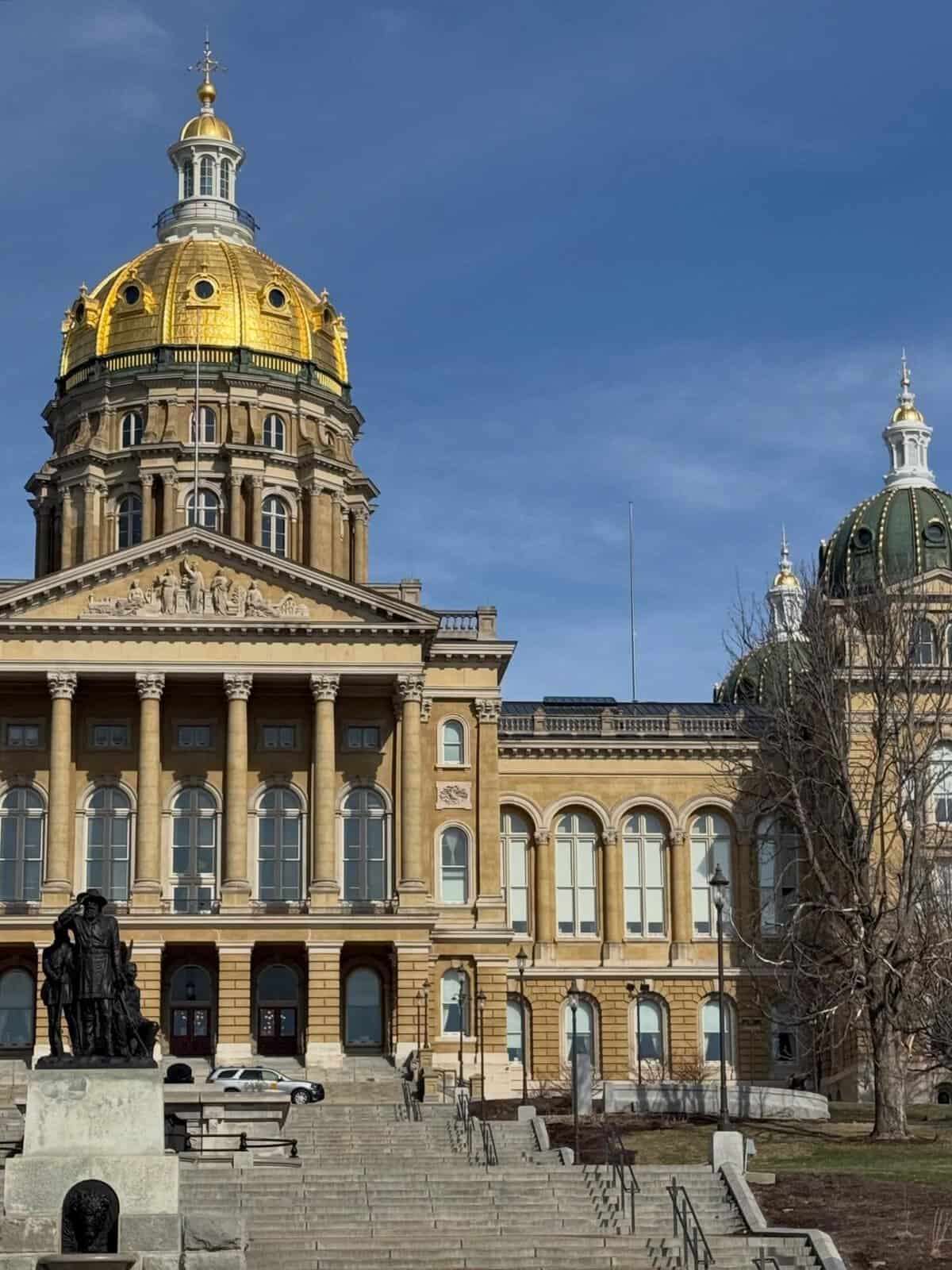
Iowa’s State Capitol is the only state capitol in the country with five domes, and the central dome is covered in genuine gold leaf — a detail that catches the afternoon sun over Des Moines with an almost theatrical gleam.
The building was under construction for twenty years before its 1886 completion, and the extended timeline shows in the quality of its finishes.
Intricate mosaics cover the floors, detailed woodwork lines the chambers, and the law library features a spiral iron staircase beneath a stained-glass ceiling.
Each of the five domes was designed to complement the others while maintaining the central dome’s visual dominance. The result, viewed from the grounds, is more complex and layered than the standard single-dome approach most state capitols follow.
Free guided tours are available throughout the week, and the guides tend to be deeply knowledgeable about both the architectural details and the political history embedded in every room.
Where: Iowa State Capitol, 1007 E Grand Ave, Des Moines, IA 50319
6. Colorado State Capitol, Colorado
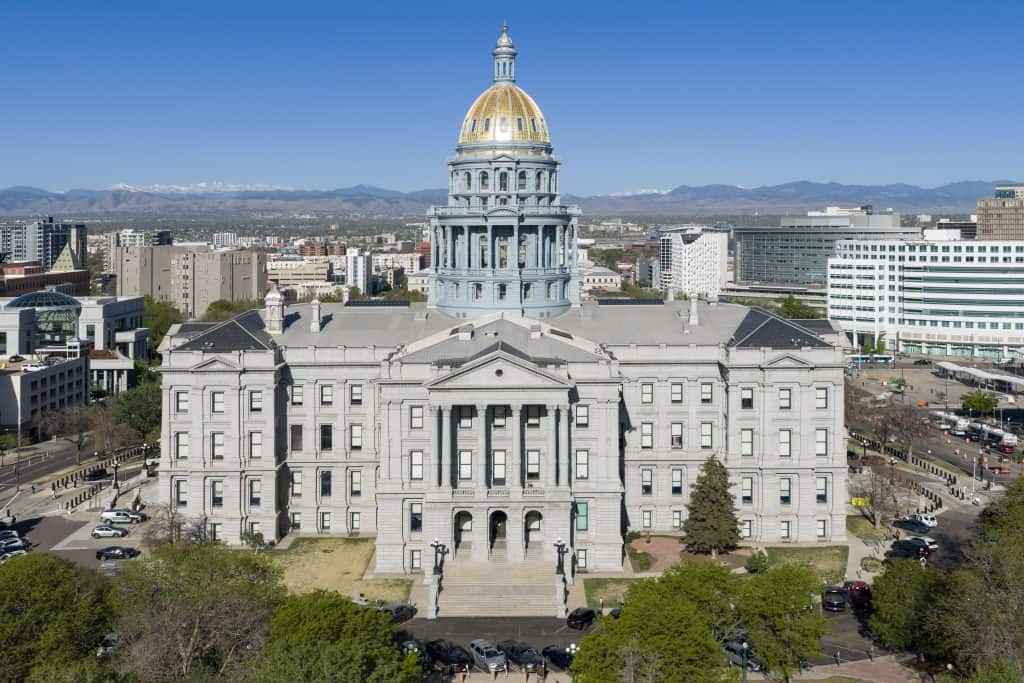
Colorado’s State Capitol has a feature no other capitol can claim: the fifteenth step on the western entrance sits exactly one mile above sea level, marked with a brass plaque.
A second marker was added on the thirteenth step after GPS surveys found a slight discrepancy in the original measurement.
The dome is covered in real gold leaf, a tribute to Colorado’s gold rush history. The gold has been periodically replaced and restored, most recently in 1991 using gold donated by Colorado miners.
Inside, sixteen stained glass windows depicting Colorado pioneers ring the first floor rotunda, each a detailed portrait worth close examination.
The rose onyx wainscoting in the main corridor came from a quarry near Beulah, Colorado — one now completely exhausted, making the stone inside the Capitol irreplaceable.
Where: Colorado State Capitol, 200 E Colfax Ave, Denver, CO 80203
7. Virginia State Capitol, Virginia
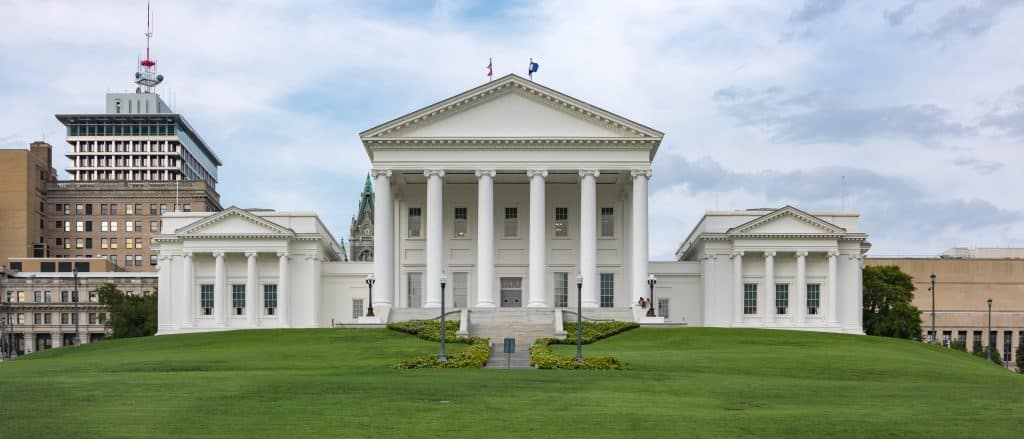
The Virginia State Capitol in Richmond carries a distinction no other state capitol can claim: it was designed by Thomas Jefferson. He modeled it on a Roman temple he encountered in Nîmes, France, in 1787, introducing classical temple architecture to American public buildings for the first time.
The building has been in continuous use as a working legislature since 1788, making it one of the oldest continuously used capitol buildings in the country. George Washington, James Madison, and Patrick Henry all walked its halls when they were new.
The original legislative hall contains the only statue of Washington for which he sat in person. Jean-Antoine Houdon sculpted it directly from life in 1785, and it remains inside the Capitol today — a marble figure of Washington at age 52, considered the most accurate likeness ever made of him.
The surrounding Capitol Square, designed with help from landscape architects, provides a green buffer between the building and the surrounding city.
Where: Virginia State Capitol, 1000 Bank St, Richmond, VA 23219
8. Massachusetts State House, Massachusetts
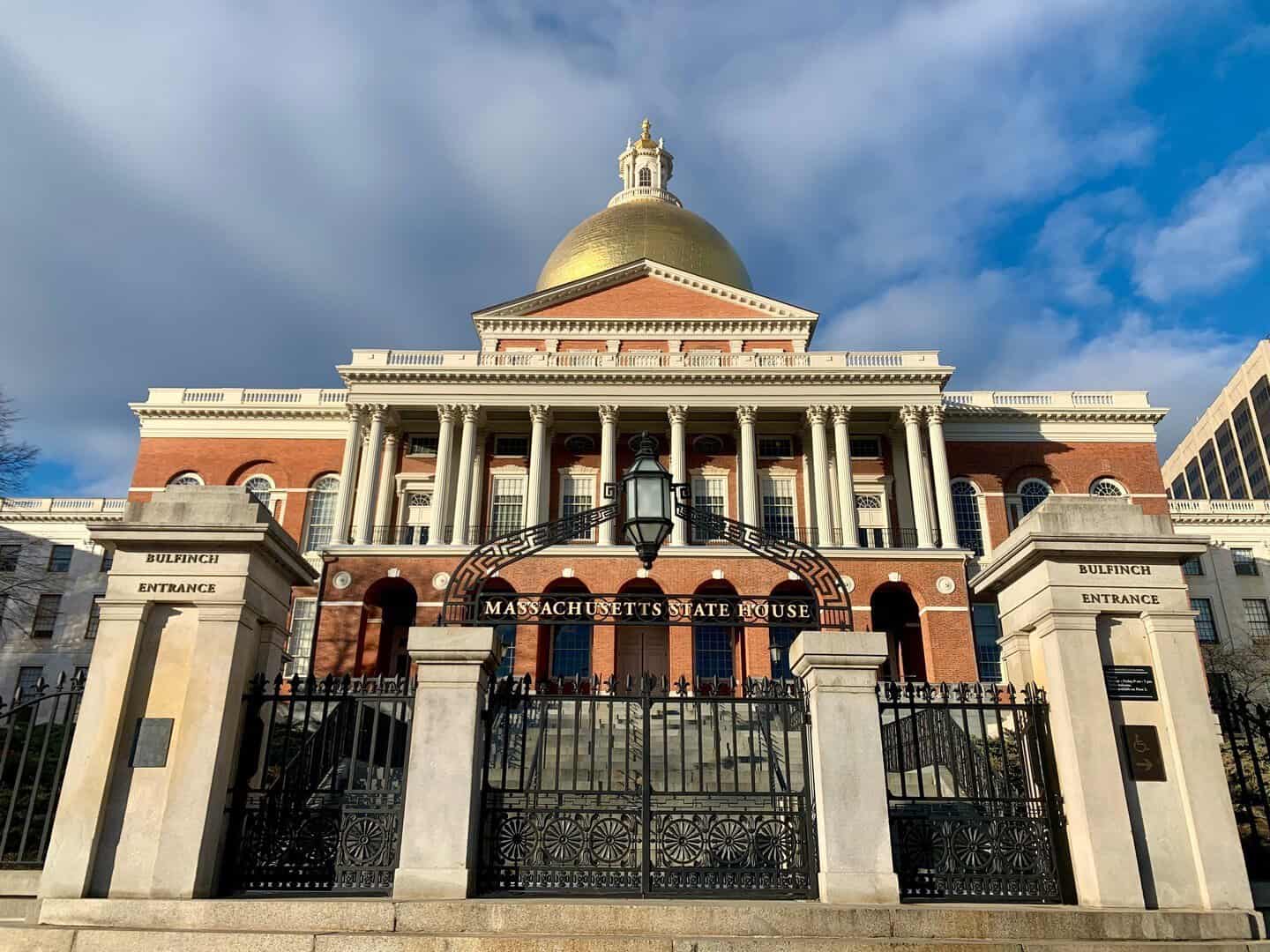
The Massachusetts State House in Boston sits atop Beacon Hill with a gold dome that has anchored the city’s skyline since 1798.
Charles Bulfinch designed it, and it became the template for dozens of subsequent state capitols — meaning many other domes across the country are descendants of this one.
The dome was originally wooden, then copper, then painted gray during World War II to avoid drawing attention from enemy aircraft. The gold was restored after the war, and the dome has been gilded ever since.
The Hall of Flags inside houses an extraordinary collection of Civil War battle flags carried by Massachusetts regiments, their worn fabric preserved behind glass in a gallery that is unexpectedly moving to walk through.
The building overlooks Boston Common, the oldest public park in the United States, making the surrounding area as historically layered as the building itself.
Where: Massachusetts State House, 24 Beacon St, Boston, MA 02133
9. Wisconsin State Capitol, Wisconsin
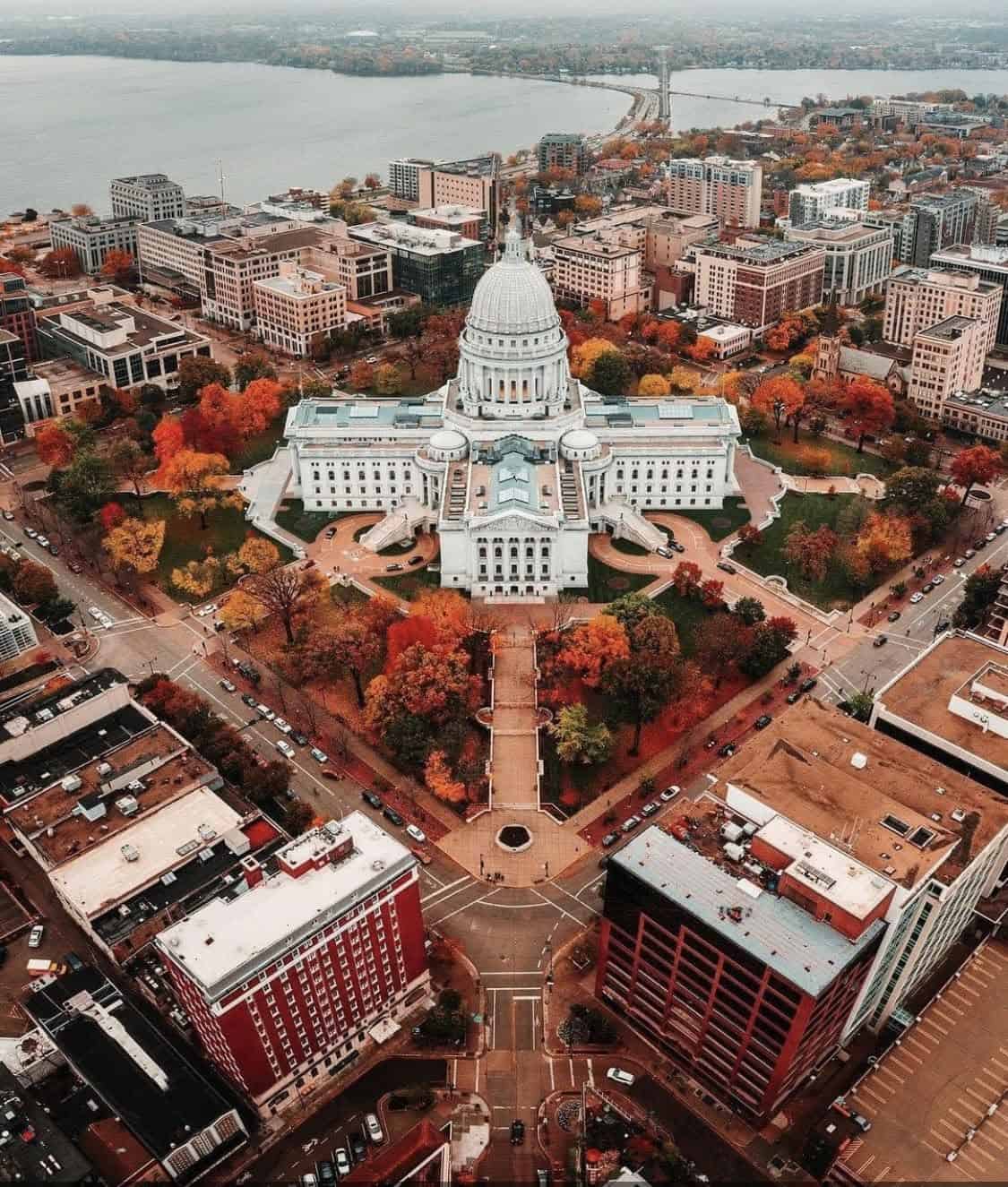
Wisconsin’s State Capitol building occupies an isthmus between two lakes — the only capitol in the country situated on such a site — and the surrounding views of Lake Monona and Lake Mendota make the setting as remarkable as the structure itself.
The dome is the largest by diameter of any state capitol building, and its granite exterior takes on a different appearance depending on the season: pale and stark against winter snow, warm and almost golden in summer afternoon light.
Inside, the building contains more varieties of marble than almost any other structure in the United States, sourced from eight countries across Europe and North America.
The individual legislative chambers were each finished in a different material, giving visitors who walk through all four a study in contrasting architectural personalities.
The surrounding Capitol Square is the center of Madison’s civic life, ringed by the city’s farmers market on Saturday mornings and by local restaurants and shops that make the area a destination beyond the building itself.
Where: Wisconsin State Capitol, 2 E Main St, Madison, WI 53702
10. West Virginia State Capitol, West Virginia
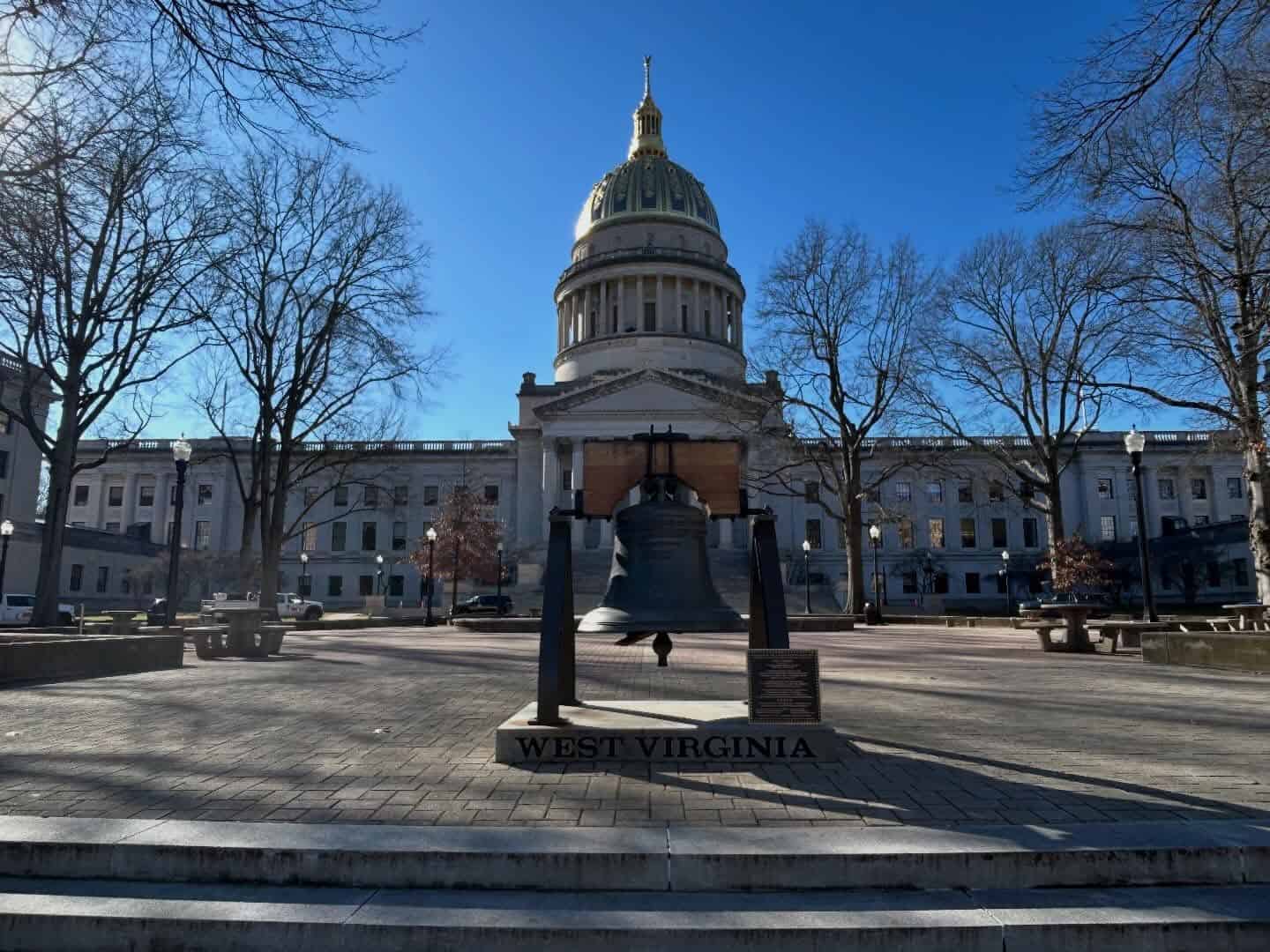
The West Virginia State Capitol in Charleston sits on the southern bank of the Kanawha River, its gold dome reflecting in the water below on still days in a way that makes arriving by the riverside road feel like approaching something from a storybook.
The dome stands 293 feet tall and is finished with genuine gold leaf, visible from miles in every direction across the surrounding river valley.
Architect Cass Gilbert, who also designed the Minnesota State Capitol, was commissioned here and delivered what many consider his most refined Capitol building.
The interior is particularly celebrated for its hand-blown chandelier, which hangs in the main rotunda and weighs nearly eight thousand pounds. It took years to design and fabricate, and it remains one of the most elaborate single decorative objects in any American government building.
The surrounding grounds along the Kanawha River include a formal garden and walking paths that make the complex a pleasant outdoor destination even when the building itself is closed.
Where: West Virginia State Capitol, 1900 Kanawha Blvd E, Charleston, WV 25305
What These Buildings Are Really About
There is something worth sitting with here: every state capitol on this list was built by ordinary citizens who decided that the building where their government conducted its business should be extraordinary.
Not practical. Not efficient. Extraordinary.
They hired the best architects they could find, imported marble from multiple continents, commissioned artists to fill the walls and ceilings, and gilded the domes in real gold. In many cases, it took decades and cost more than anyone initially planned. They kept going anyway.
That impulse — to make a public building genuinely beautiful, not merely functional — feels increasingly rare. Which is exactly why these buildings deserve more attention than they typically get from travelers passing through their cities on the way to somewhere else.
Next time a state capital appears on your itinerary, add an extra hour. Go find the building with the dome. Walk through the rotunda. Look up. These places were built for exactly that moment, and they have been waiting for you ever since.
More stories


Share this story