10 Minimalist Bedroom Moods, From Cozy and Warm to Dark and Elegant

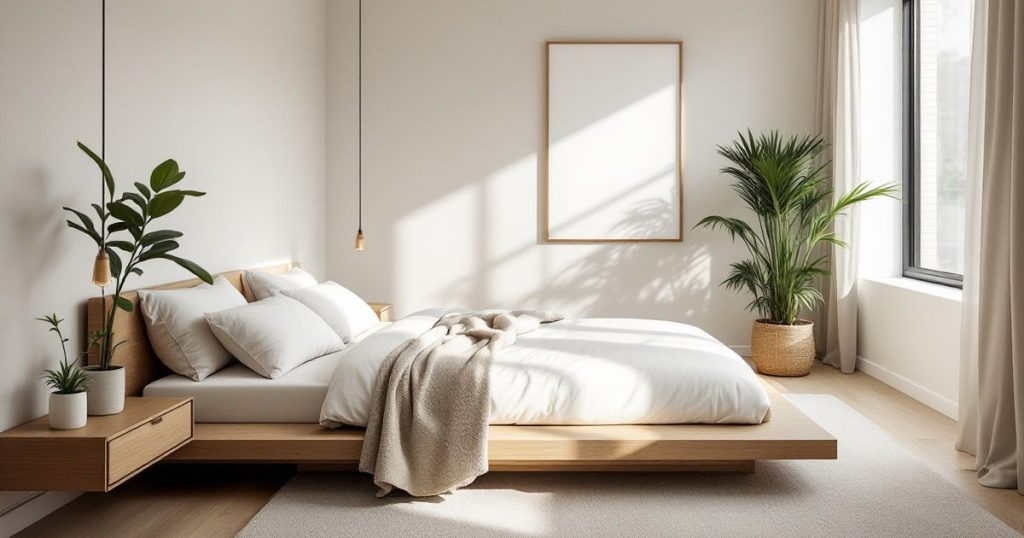
The word minimalist makes people picture one single room: white, bare, a little cold. I get why. But the truth is that minimalism is a method, not a mood, and you can point it at almost any feeling you want.
Keep the clutter out, keep the palette tight, and the same spare bones can read warm and snug, or dark and dramatic, or hushed and expensive. That flexibility is the quiet magic of a pared-back room, and it is the whole reason the look never gets old.
So this is less about rules and more about feeling. Below are ten minimalist bedroom moods, from cozy and warm all the way to dark and elegant, with the handful of moves that create each one. Find the feeling you want to walk into at night.
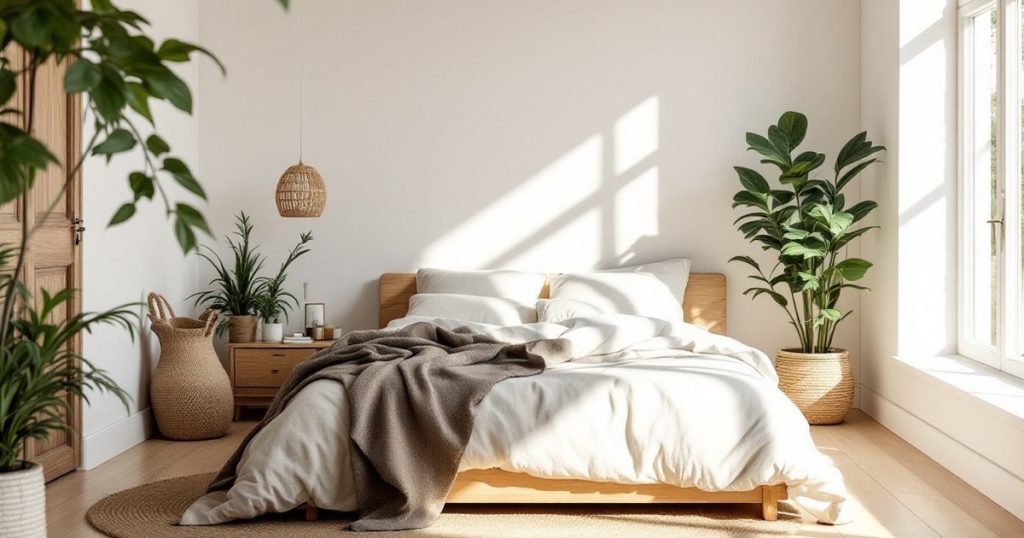
1. Warm Minimalist Bedroom
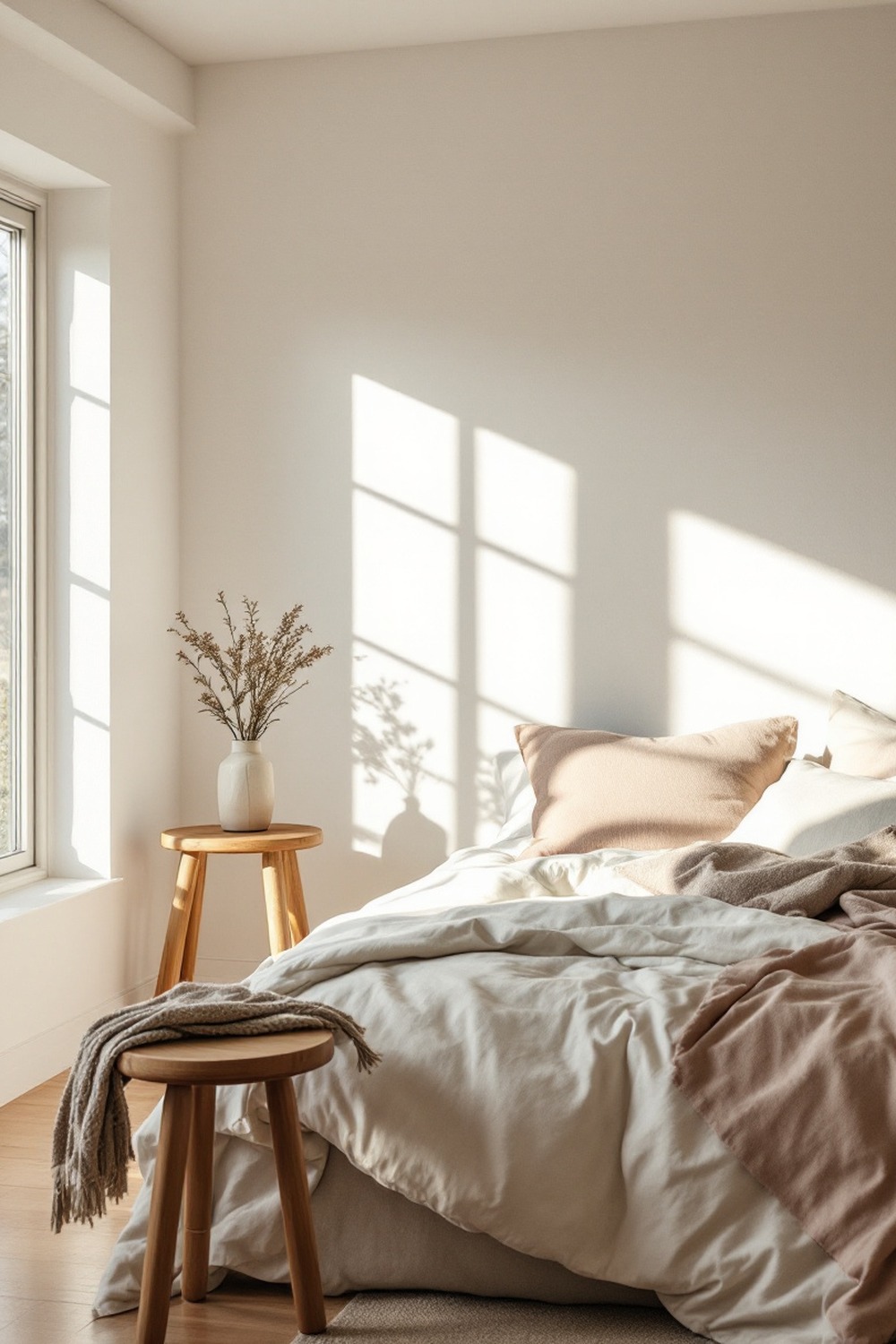
Warmth is the fastest cure for the cold-box reputation. Start with soft white or greige walls, add honey or oak wood tones, and dress the bed in cream and oatmeal linen that invites you in rather than keeping you out.
The secret is color temperature. A warm-white bulb, a little wood, and one earthy accent like clay or terracotta make the whole room feel like late-afternoon sun. Pro tip: swap any cool blue-white bulbs first, before you buy a single new thing.
A sheepskin at the foot of the bed or a wood stool as a nightstand pushes it even warmer.
2. Cozy Minimalist Bedroom
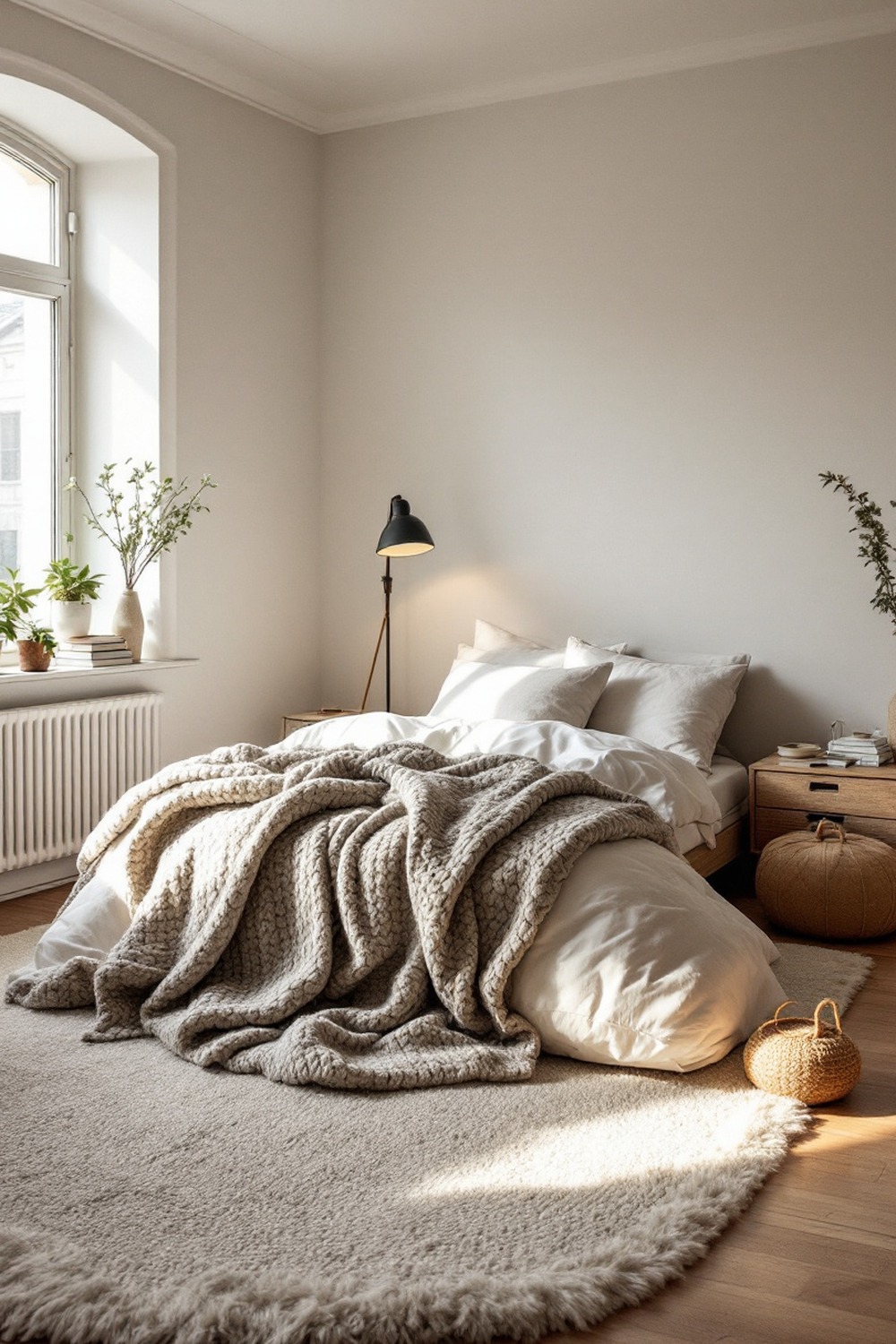
Cozy is warm with a blanket thrown over it. Same restraint, but now you layer soft texture: a chunky knit throw, a deep-pile rug underfoot, linen sheets you want to sink into, and lamplight instead of a harsh overhead.
Keep the count low and the comfort high. Two or three tactile layers do it, so the room still reads calm and clear while feeling like the best place in the house to disappear for an afternoon.
Dimmable bedside lamps let you drop the whole room into soft gold once the sun is down.
3. Simple Minimalist Bedroom
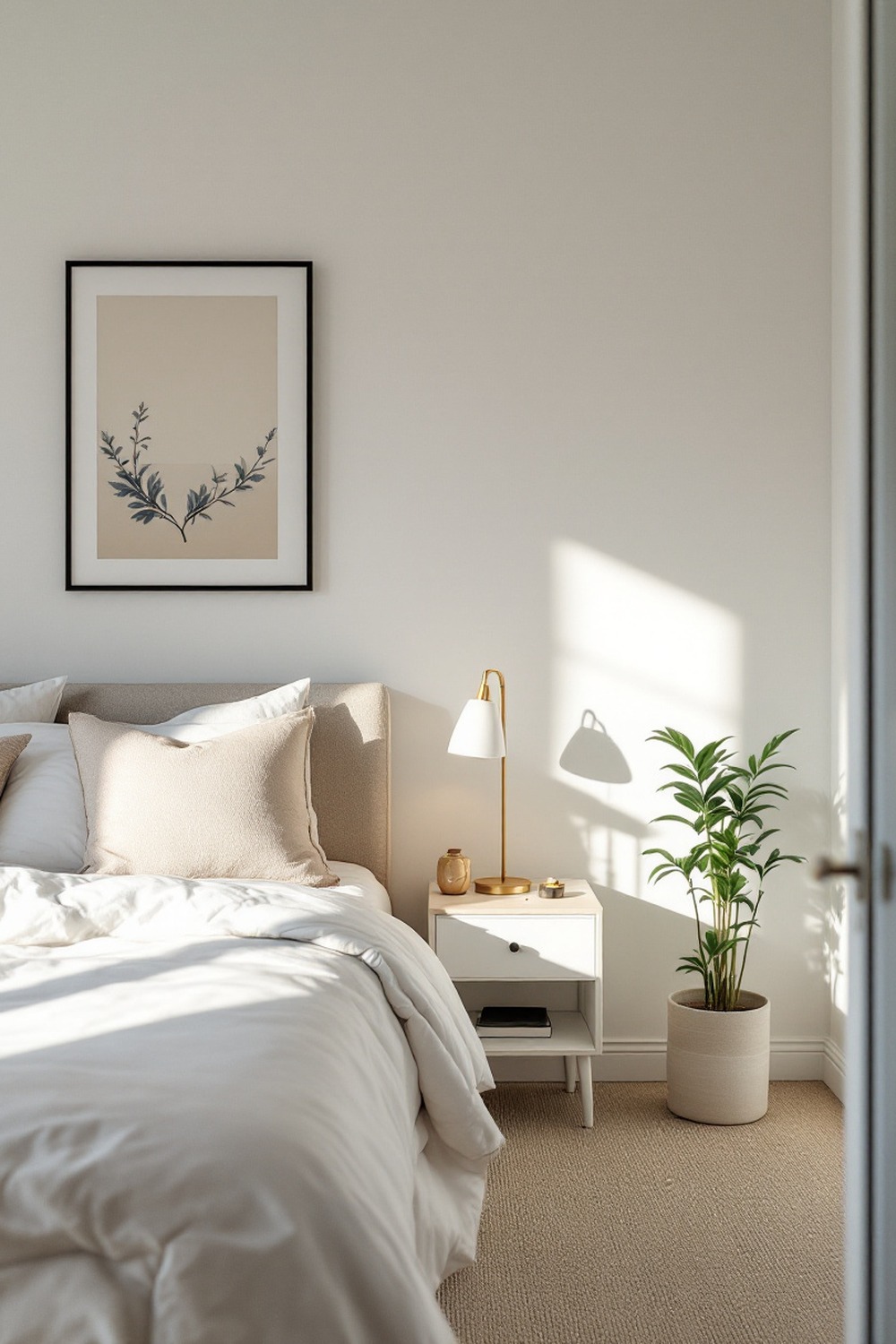
Simple is minimalism at its most honest. A bed, a nightstand, a lamp, a single piece of art, and genuinely nothing you could remove without missing it. The beauty is in how uncomplicated it feels to wake up in.
Clean lines and a tight palette carry it. Choose furniture with no fuss, keep every surface mostly clear, and let the quality of a few good pieces do the talking. It is the easiest mood here to actually live in long term.
A single large piece of art over the bed is often the only wall decoration it needs.
4. Clean Minimalist Bedroom
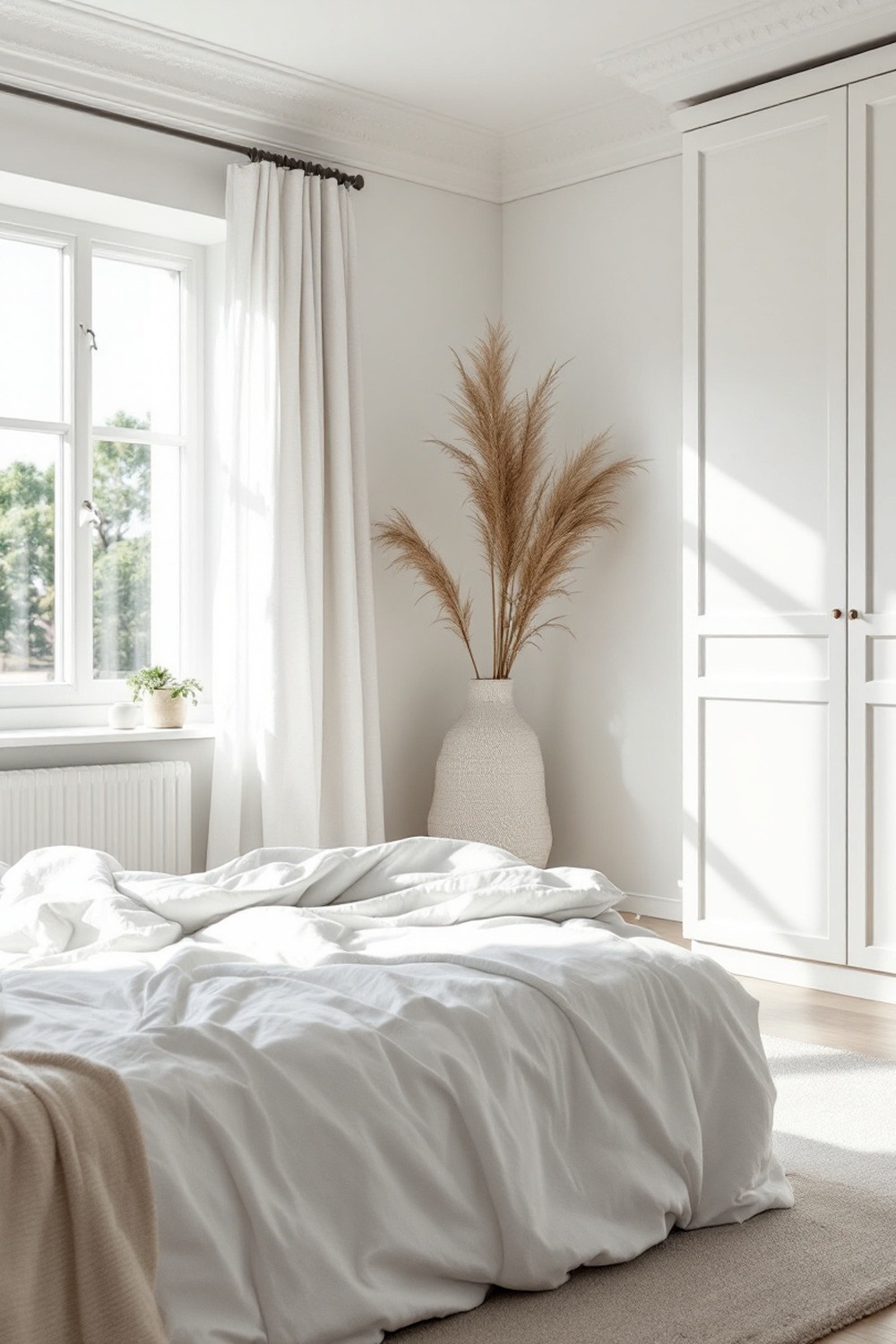
Where simple is about fewer things, clean is about how fresh it all feels. Crisp white bedding, bright even light, pristine surfaces, and that just-reset calm of a room where everything has a place and is in it.
Lean into white and near-white with one soft neutral so it never feels clinical. Closed storage is your best friend, because clean is really just clutter living out of sight. The payoff is a room that feels like a deep breath.
Make the bed first thing and the clean, reset look mostly takes care of itself.
5. Dark Minimalist Bedroom
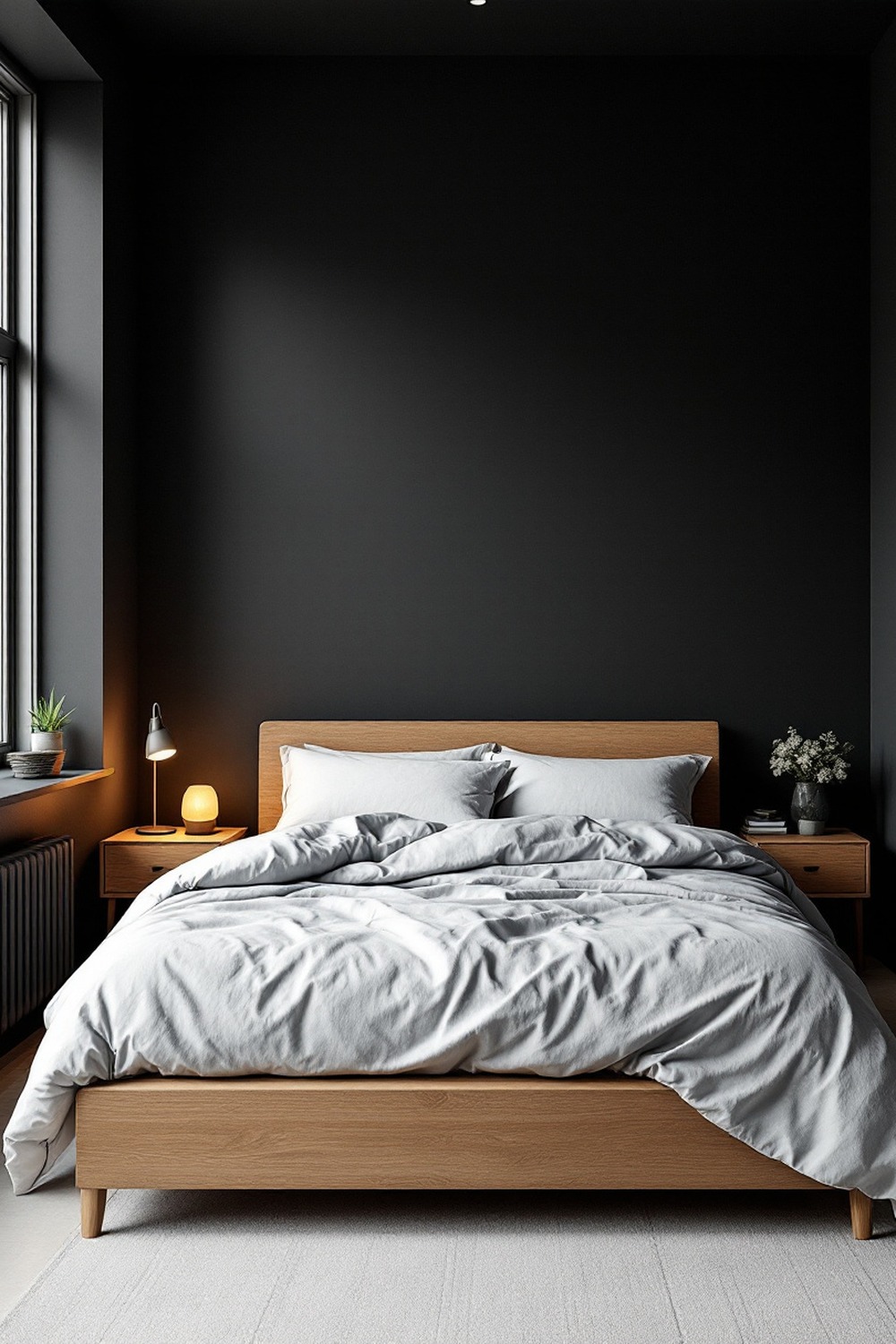
Minimalism does not have to mean pale, and a dark room can be the most restful of all. Deep charcoal or near-black walls wrap the space like a cocoon, and against them, simple bedding and warm wood glow.
The key is to commit. A timid grey reads like a mistake, but a confident deep tone reads like a choice. Keep the surfaces clear and the extras few, and the darkness does all the drama for you.
Matte paint instead of glossy keeps a dark wall feeling soft and deep rather than heavy.
6. Moody Minimalist Bedroom
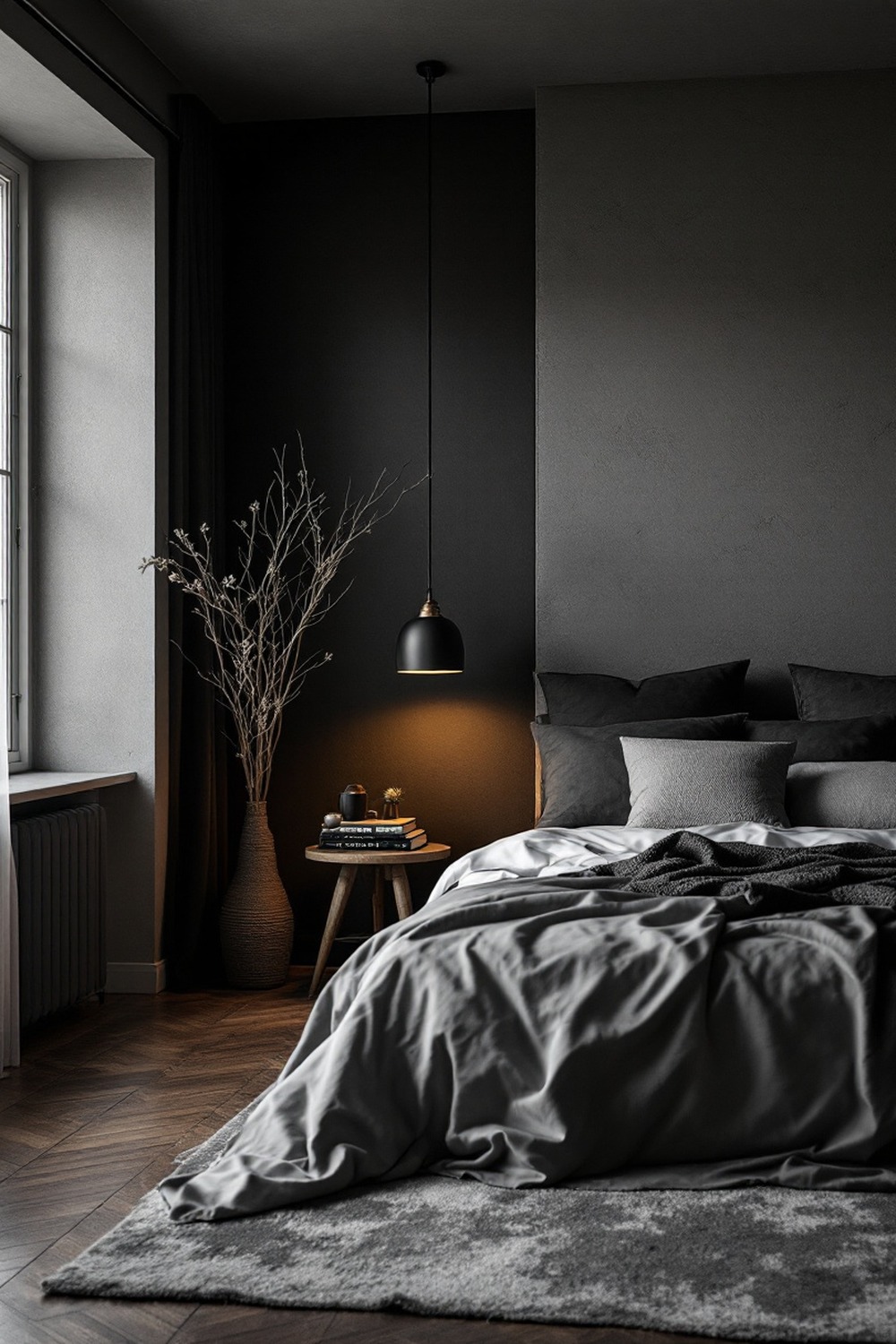
Moody is less about color and more about light and atmosphere. Rich muted tones, soft pools of lamplight, long shadows, and a sense that the room has a bit of mystery to it even when it is nearly empty.
Chase contrast and shadow instead of brightness. One warm lamp in a dim room, a deep accent wall, a single dramatic texture like raw plaster. It is the mood for people who find a bright white room a little too wide awake.
Place the one lamp low beside the bed, so the light falls and the corners stay dim.
7. Luxury Minimalist Bedroom
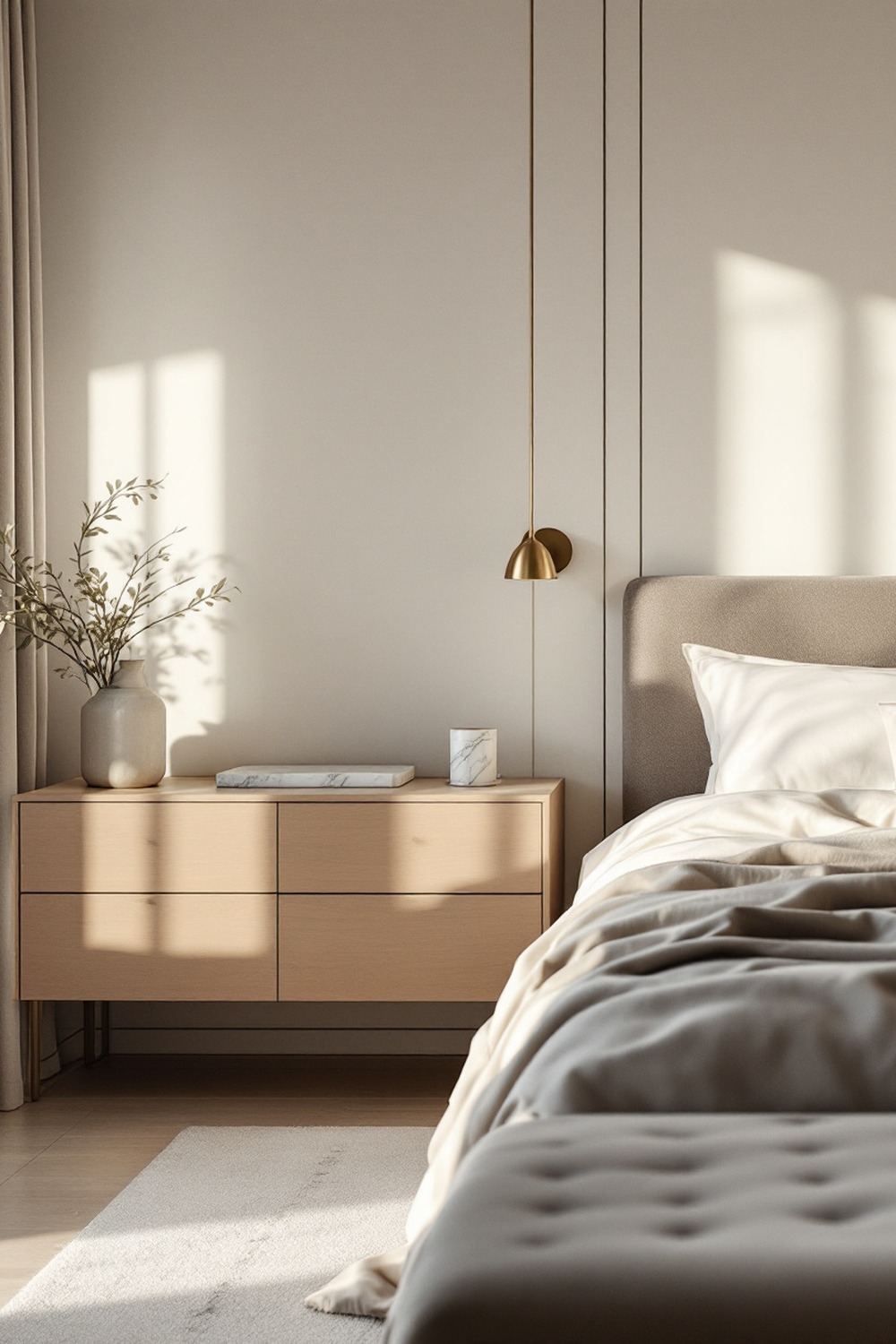
Quiet luxury is minimalism’s most grown-up mood. It is not about more, it is about better: a slab of marble on the nightstand, brushed brass fixtures, a velvet bench, bedding with real weight and drape.
Let the materials be the statement so the room stays spare. One or two premium textures against a calm neutral base reads far richer than a room full of expensive things. Restraint is what makes it look expensive.
An oversized linen headboard adds that quiet, custom-made weight the mood is built on.
8. Classy Minimalist Bedroom
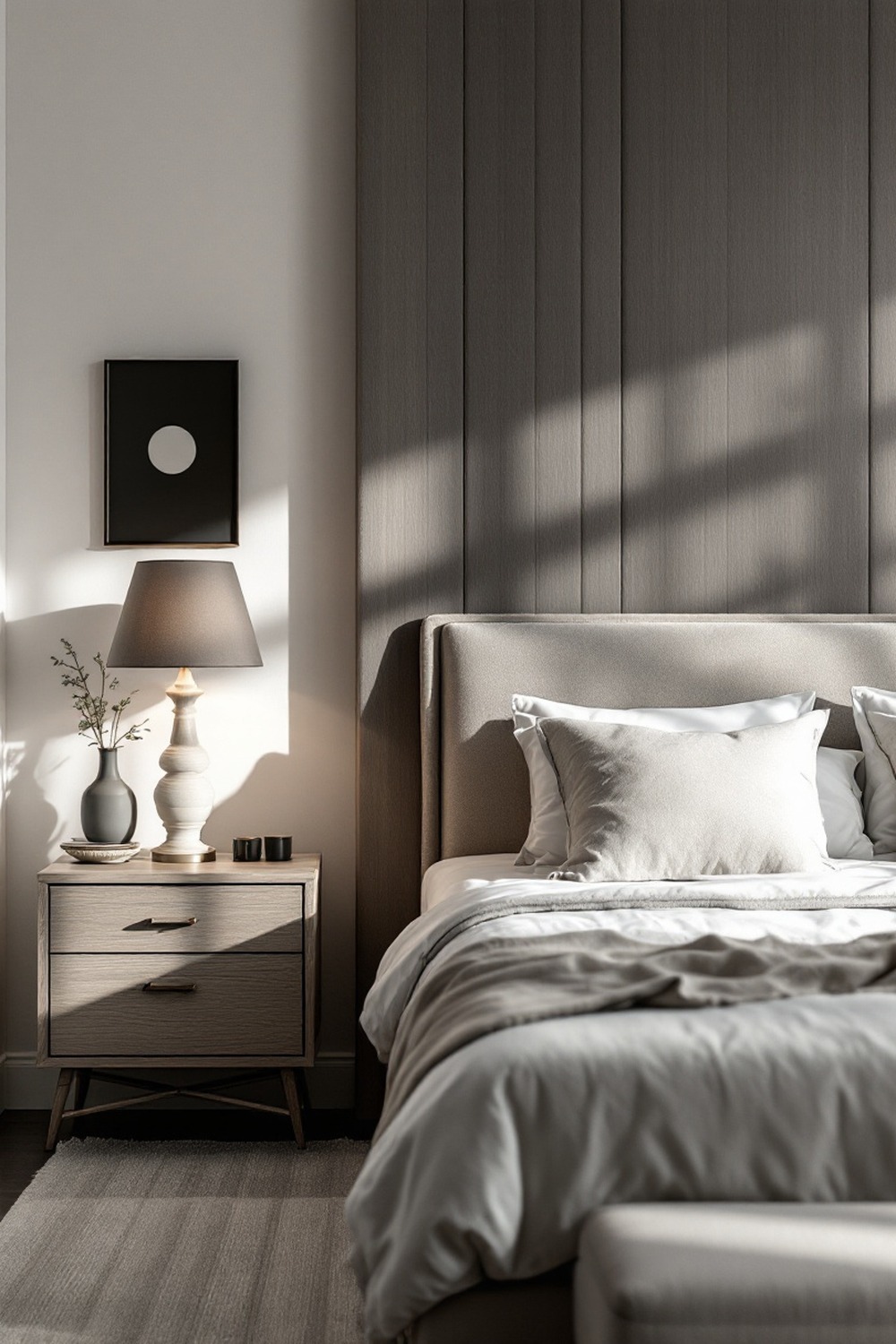
Classy is timeless and tailored, the mood that will still look right in ten years. Think structured furniture, a refined neutral palette, clean symmetry, and details that feel considered rather than trendy.
Symmetry and quality do the heavy lifting. Matching nightstands, a well-made headboard, a disciplined color story. Nothing shouts, everything coordinates, and the result is the kind of understated polish that never goes out of style.
Stick to two neutrals and a single wood tone and the whole scheme stays cohesive.
9. Elegant Minimalist Bedroom
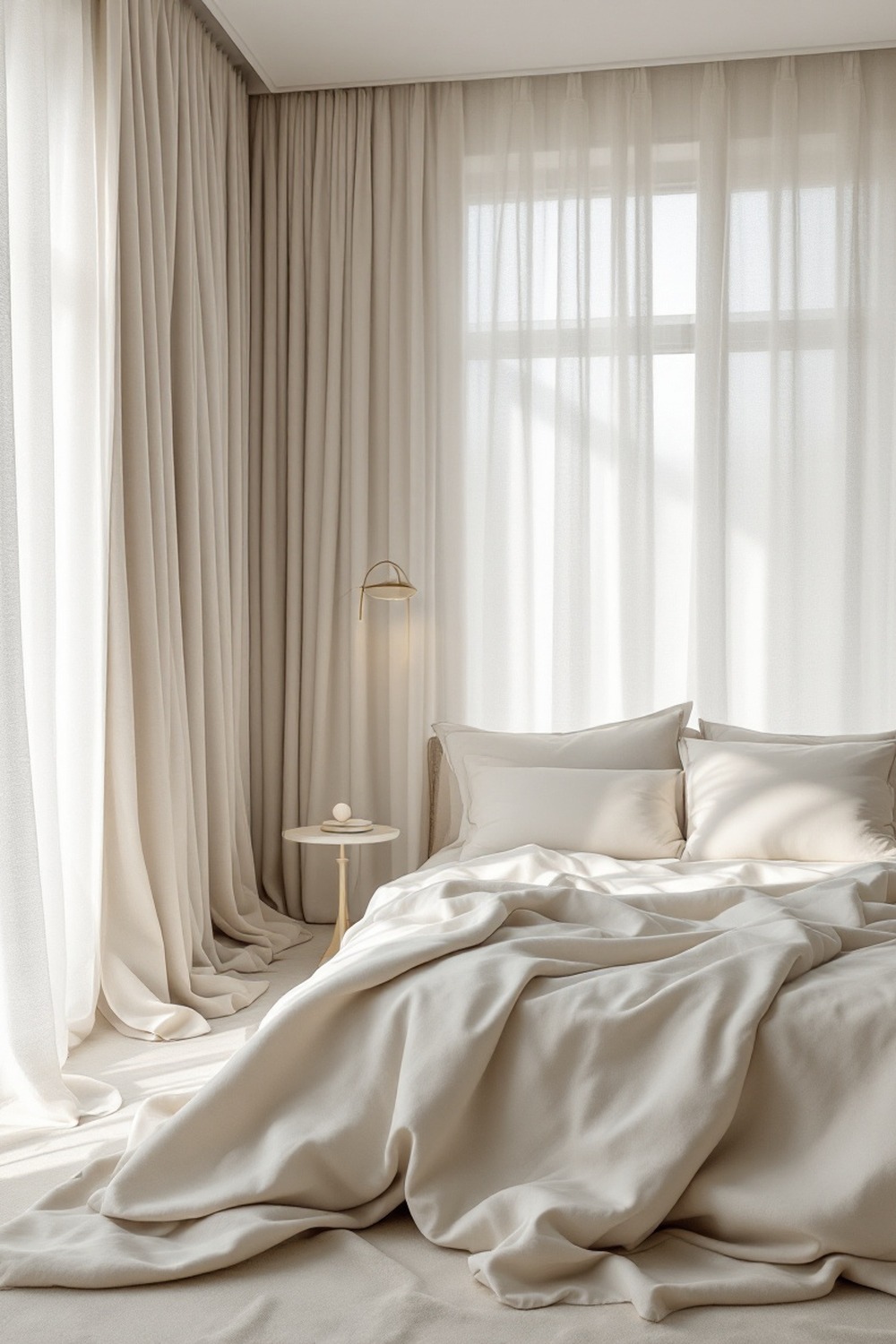
Elegant is classy with the edges softened. Graceful soft neutrals, flowing linen that pools a little at the floor, gentle curves, and a lightness that feels calm and feminine without a trace of fuss.
Reach for softness everywhere: drapey fabrics, rounded shapes, a palette of cream and the palest taupe. One elegant detail, like floor-length curtains or a sculptural light, lifts the whole room into something that feels gently special.
Floor-length curtains that just kiss the floor instantly add grace to the whole room.
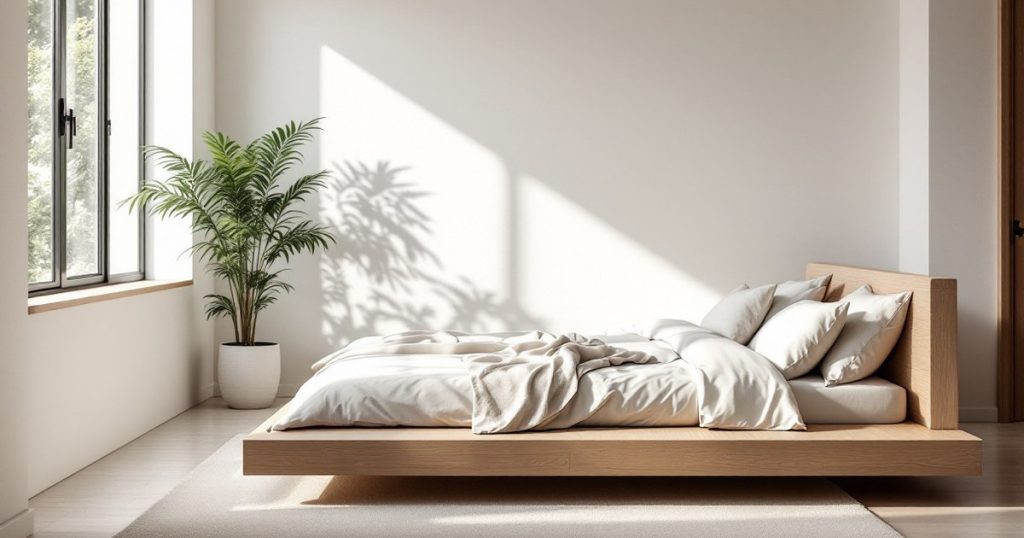
10. Extreme Minimalist Bedroom
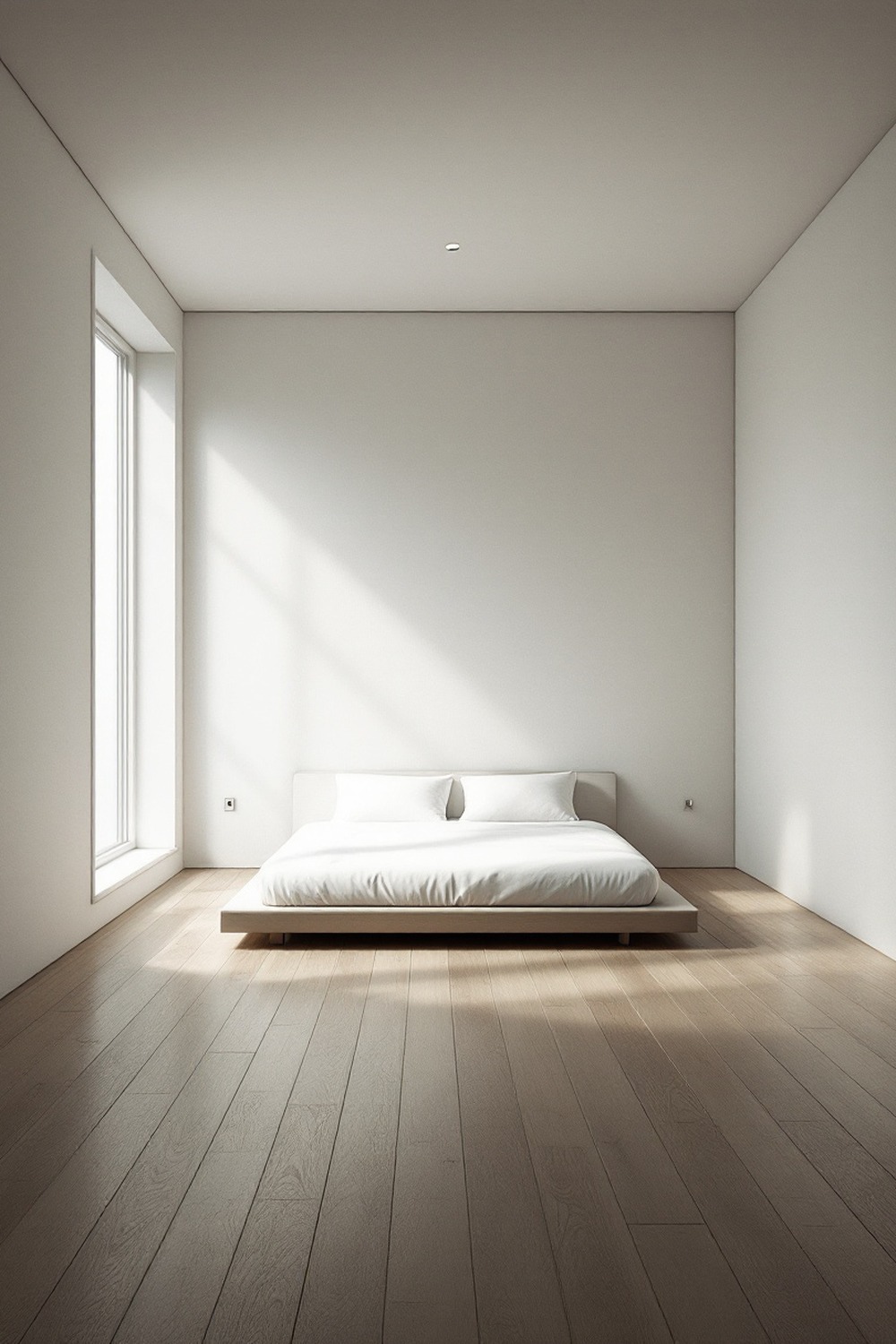
Extreme minimalism takes the whole idea to its quiet limit. A low bed, a single light, bare floors, and almost nothing else. It sounds severe, but in person it feels astonishingly peaceful, like a long exhale.
This one is a discipline more than a decorating scheme. Everything hides away, every surface stays empty, and the empty space itself becomes the feature. It is not for everyone, but for the right person it is pure calm.
A platform bed with built-in storage lets even the essentials disappear from view.
Which Minimalist Bedroom Mood Is Right for You
Start with how you want to feel at the end of the day. If you want to be held and soothed, warm and cozy are your people. If you want calm and clarity, simple and clean will never let you down.
If a plain white room leaves you cold, go the other way entirely. Dark and moody wrap you up, while luxury, classy, and elegant add polish and a little quiet drama without ever adding clutter.
And remember these moods blend. A room can be warm and elegant, or dark and luxurious, at the same time. Pick the feeling that pulls hardest, then borrow a move or two from its neighbors.
If you are genuinely torn, let the season decide. Warm and cozy shine on cold winter nights, clean and simple feel right in spring, and the darker, moodier schemes come into their own on long autumn evenings.
Setting the Mood in a Minimalist Bedroom, Answered
A few questions come up whenever someone tries to give a pared-back room a specific feeling, so here are the quick answers.
What changes the mood of a room the fastest? Light. A warm-white bulb and a dimmer or a lamp will shift a room from cold to cozy in an evening, long before any new furniture arrives.
Can a minimalist bedroom feel warm without clutter? Yes, and that is the whole trick. Warmth comes from materials and light, not quantity. Wood, linen, wool, and a warm bulb do it with nothing added to a shelf.
How do I make a small room feel luxurious? Spend on one or two premium materials and keep everything else quiet. A marble surface or a velvet bench reads as luxury precisely because the room around it is so restrained.
Is a dark bedroom a bad idea for sleep? Not at all. A deep, calm color scheme can feel genuinely restful and cocooning. Just balance it with warm light so the room feels soothing rather than heavy.
Do I have to commit to just one mood? No, and the best rooms rarely do. Most sit happily between two, like warm and elegant or dark and luxurious. Lead with the feeling that pulls hardest and let the second show up in the details.
Whichever mood calls to you, start with the feeling and one small change. Shift the light, pick your palette, and let the room grow into the mood from there. Your evenings will feel different almost right away.
More stories
Share this story