10 Detroit-Style Pizza Spots Across America That Prove the Square Slice Is Something Special

I grew up thinking the highest pizza achievement was a thin New York slice.
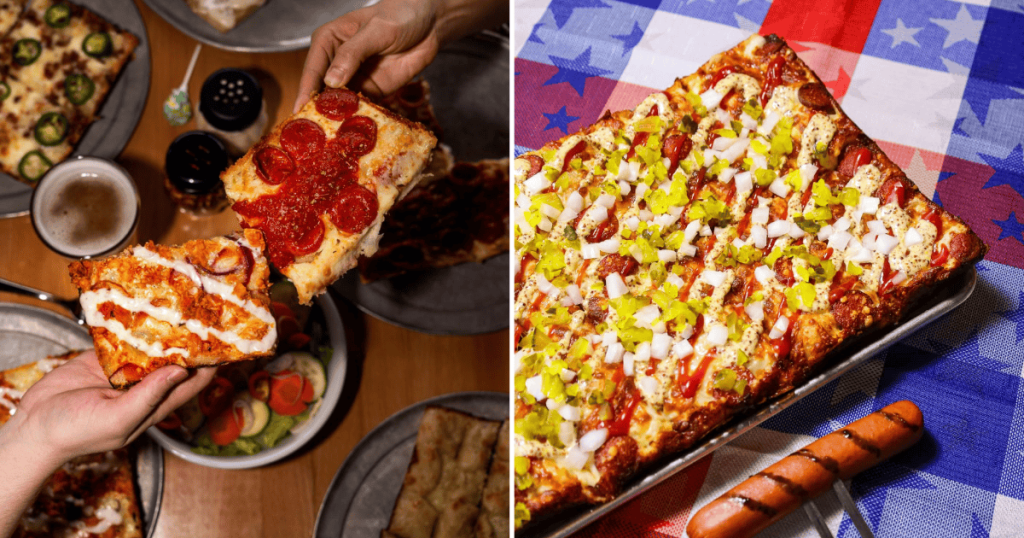
Then someone described Detroit-style — the caramelized cheese edges, the sauce on top rather than beneath, the bottom crust somewhere between focaccia and a fried thing — and I realized I had incomplete information.
Detroit-style pizza has one of the best origin stories in American food. It was born at Buddy’s Rendezvous in 1946, when a cook named Gus Guerra started using rectangular steel trays — originally designed to hold automotive parts — to bake thick-crusted pizzas.
He oiled the pans heavily, pushed the cheese all the way to the edges, and let it caramelize against the pan sides until it formed a crispy browned crust that nobody had planned for, and everybody immediately loved.
The result is a pizza that looks different from everything else and tastes even more different. The corners are the most sought-after pieces — double-crunch of crust and caramelized cheese wall.
Sauce on top keeps everything vivid. The interior is dense but airy, taking real effort before it gives.
It took decades for Detroit-style to gain national attention, but it has arrived fully. Below are ten of the best places in the country to eat it — starting with the Michigan originals that invented the form and extending to the shops proving it works beautifully almost anywhere.
1. Buddy’s Pizza, Michigan
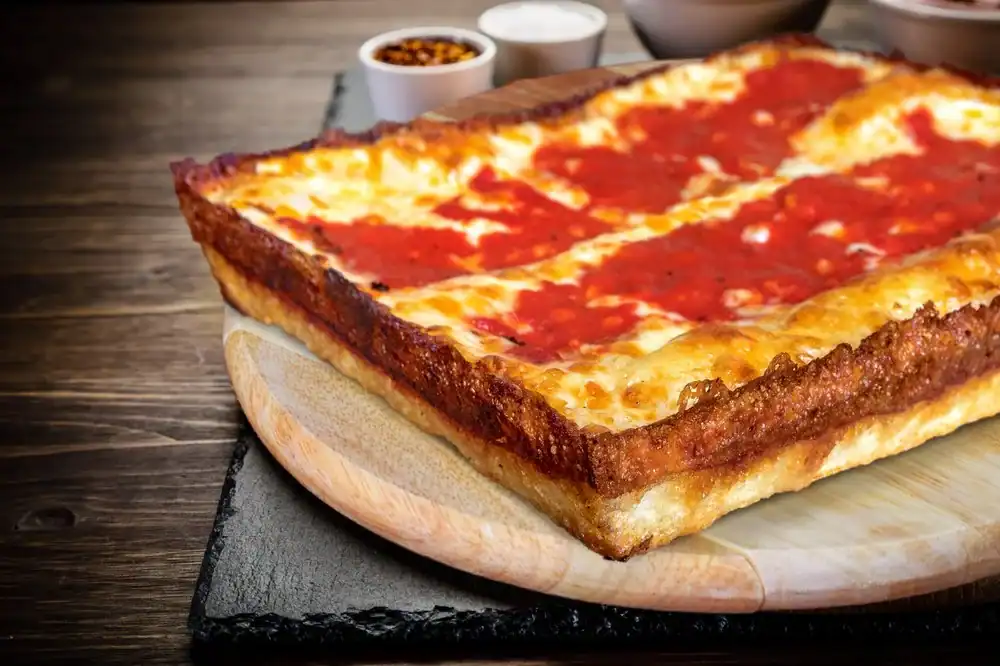
Everything about Detroit-style pizza starts here. Buddy’s Pizza is not only the oldest Detroit-style pizzeria in existence — it’s the place where the style was invented, in 1946, in a converted roadhouse that has since grown into one of Michigan’s most beloved institutions.
The original Conant Street location in Detroit still operates with the same blue steel pans and the same general philosophy Gus Guerra established nearly eighty years ago. The cheese goes to the edges. The sauce goes on top. The corners get fought over at every table.
The pepperoni version, with crispy-cupped rounds sinking slightly into the cheese during the bake, has developed a following that spans generations of Michigan families. Regulars who grew up on Buddy’s describe it as a specific kind of comfort that nothing else quite duplicates.
Multiple locations now operate throughout the Detroit metro area, but the Conant Street flagship carries the weight of everything the style became.
Where: Buddy’s Pizza, 17125 Conant St, Detroit, MI 48212
2. Loui’s Pizza, Michigan
Loui’s Pizza in Hazel Park is the place that serious Detroit pizza people mention alongside Buddy’s with the same reverence, and the two have coexisted as parallel institutions for decades without either one seeming diminished by the comparison.
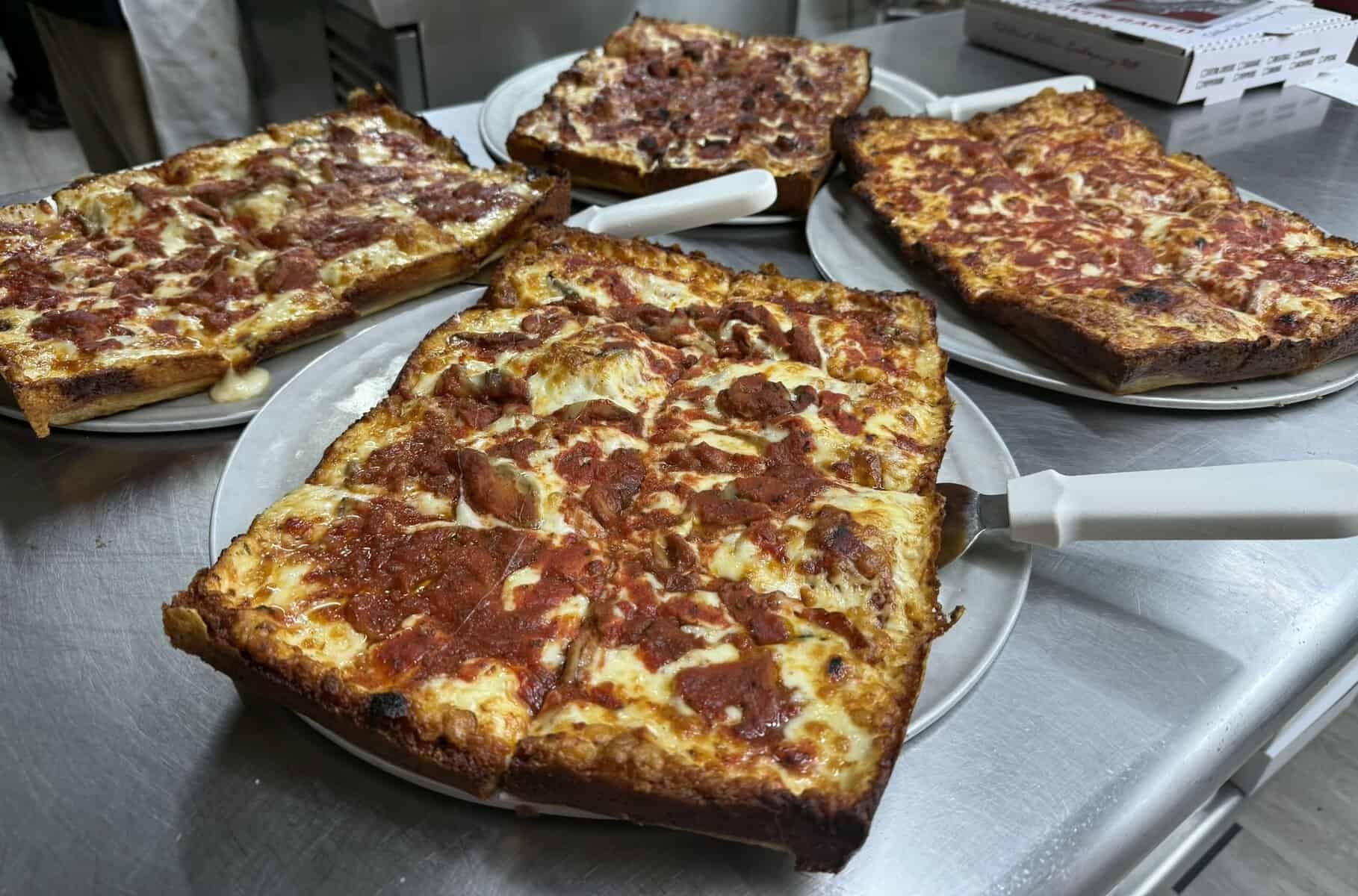
The pies at Loui’s develop a thick and airy interior, with a bottom crust that achieves genuine crunch while staying light rather than heavy.
The caramelized cheese edges have a depth of color and flavor that regulars describe as the standard against which other Detroit pies should be measured.
Loui’s opened in 1977, which makes it a relative newcomer by Buddy’s standards but a deeply established presence in the local imagination. The lack of a digital footprint proportionate to its reputation is part of its character — the pizza does the advertising.
The room is unpretentious in the way that only restaurants confident in their product can be, with service that reflects the same decades-long consistency as what comes out of the oven.
Where: Loui’s Pizza, 23141 Dequindre Rd, Hazel Park, MI 48030
3. Cloverleaf Bar & Restaurant, Michigan
Cloverleaf holds a specific place in the Detroit‑style story: it was the second pizzeria to make the style after Buddy’s, brought there by Gus Guerra when he left the original Buddy’s Rendezvous.
That direct lineage gives Cloverleaf a weight beyond its age — it’s not just old, it’s part of the origin chain.
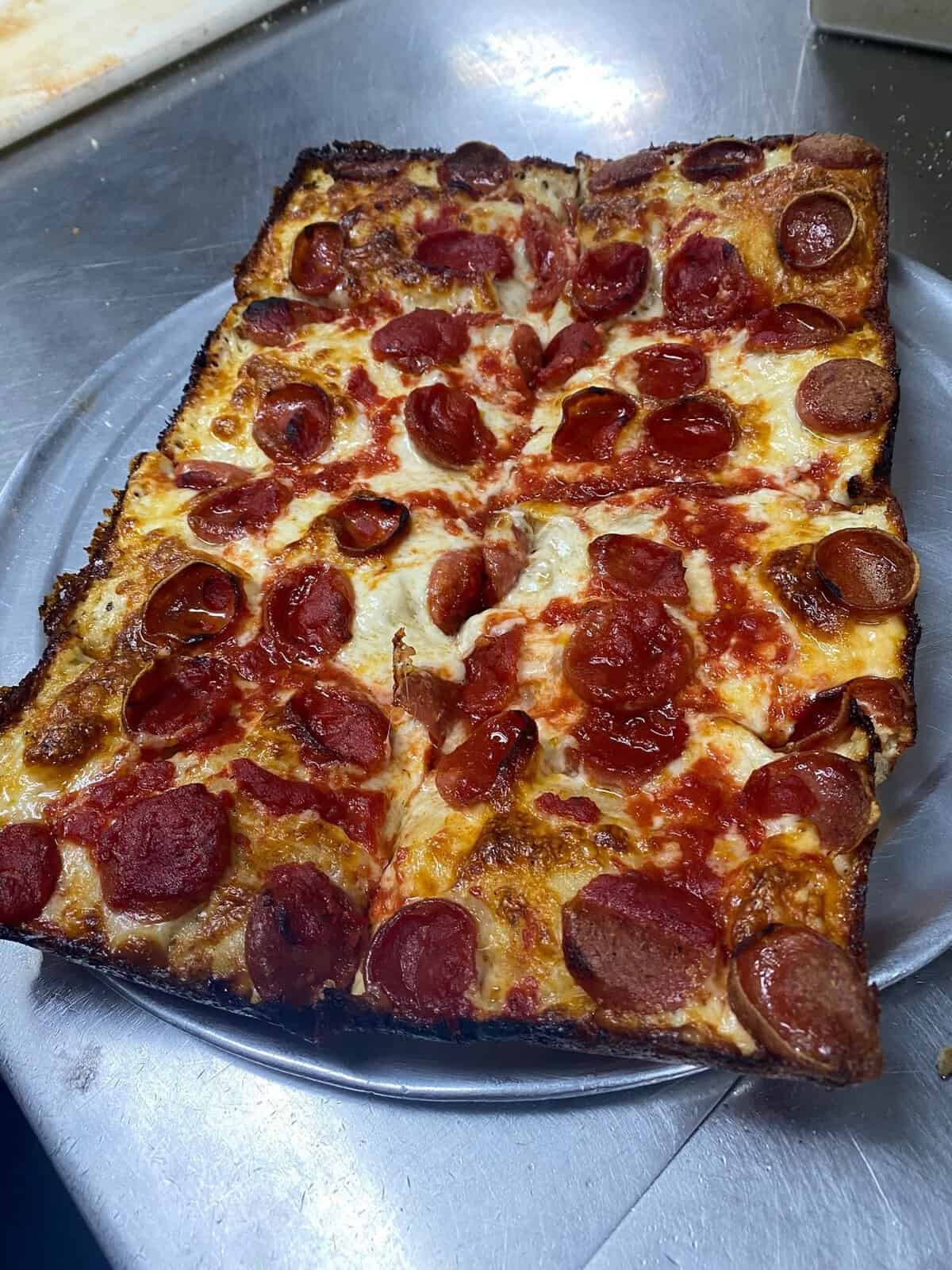
The pizza carries the DNA of the original but has grown into its own character over decades in Eastpointe. The sauce has a brightness regulars point to as its signature, cutting through the richness with clarity.
The bottom crust delivers the style’s hallmark texture with a consistency that speaks to generations of practice — crisp at the base, airy above, sturdy enough to hold.
That history makes Cloverleaf a pilgrimage stop for anyone tracing Detroit‑style pizza back to its roots rather than just its most famous expression. It’s not imitation; it’s continuation.
The bar setting adds another layer. Pizza here isn’t eaten in isolation — it arrives with cold drinks, the hum of conversation, and the comfortable noise of a neighborhood gathering place.
The social context is part of the flavor, proof that Detroit‑style was always meant to be shared in places like this.
Where: Cloverleaf Bar & Restaurant, 24443 Gratiot Ave, Eastpointe, MI 48021
4. Shield’s Restaurant Bar & Pizzeria, Michigan
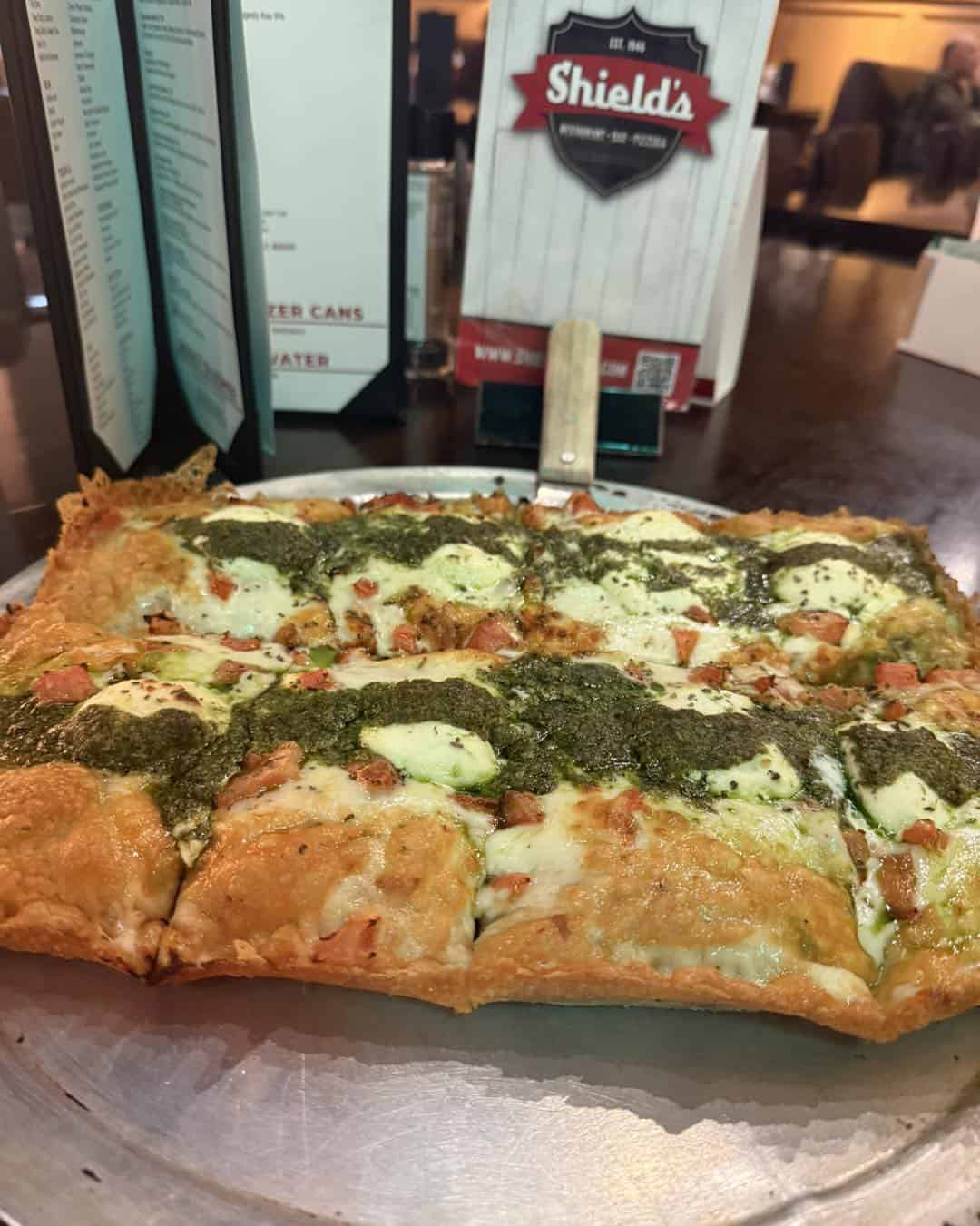
Shield’s has been making Detroit‑style pizza since 1946 — the same year as Buddy’s — which gives it rare seniority in the style’s history.
The St. Clair Shores location has been a fixture in the region’s pizza culture for decades, a place locals return to generation after generation.
The cheese at Shield’s doesn’t just caramelize; it hardens into a deep, lacquered edge that produces a crunch unlike anything in the center of the pan. Regulars know this and order accordingly, angling for the corner or side pieces where that crust is most pronounced.
The menu stretches into broader bar‑and‑grill territory, but the pizza is the reason Shield’s is always part of the Detroit‑style conversation. Everything else plays supporting roles.
What makes Shield’s especially important is its accessibility. For first‑timers, the setting feels approachable, the staff knows how to explain the style, and the pizza itself delivers the defining traits without compromise.
It’s both a neighborhood hangout and a living piece of Detroit’s culinary history — proof that the style isn’t just preserved in one shop, but carried forward by more than one pioneer.
Where: Shield’s Restaurant Bar & Pizzeria, 25101 Little Mack Ave, St. Clair Shores, MI 48081
5. Via 313, Texas
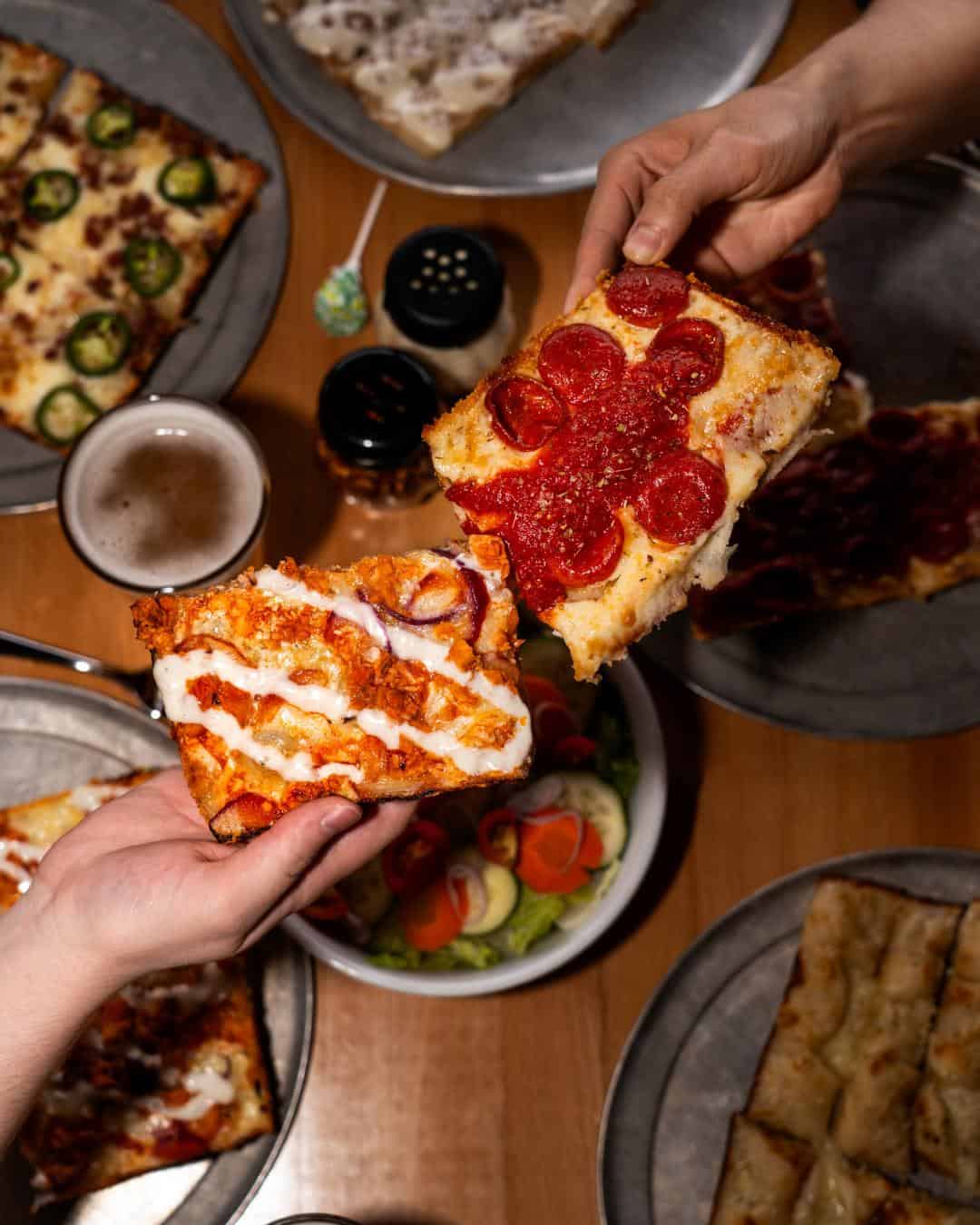
The story behind Via 313 is one of the better origin stories in contemporary American pizza. Two brothers from Detroit moved to Austin, missed the pizza they grew up on, and started making it from a trailer in 2011. The first location was a parking lot. The lines started immediately.
The fact that Via 313 became one of the most celebrated pizza operations in Texas within a few years says something about both the quality of the execution and the appetite that existed for a style most Austinites had never tried before.
The classic Detroit — cheese to the edge, sauce on top, crispy bottom — is the headline, but the rotating specialty pies have developed their own devoted following among regulars who return specifically to see what’s new.
Via 313 now operates multiple Austin locations as well as a San Antonio shop, turning a parking lot trailer into a genuine Texas institution.
Where: Via 313, 1111 E 6th St, Austin, TX 78702
6. Emmy Squared, New York
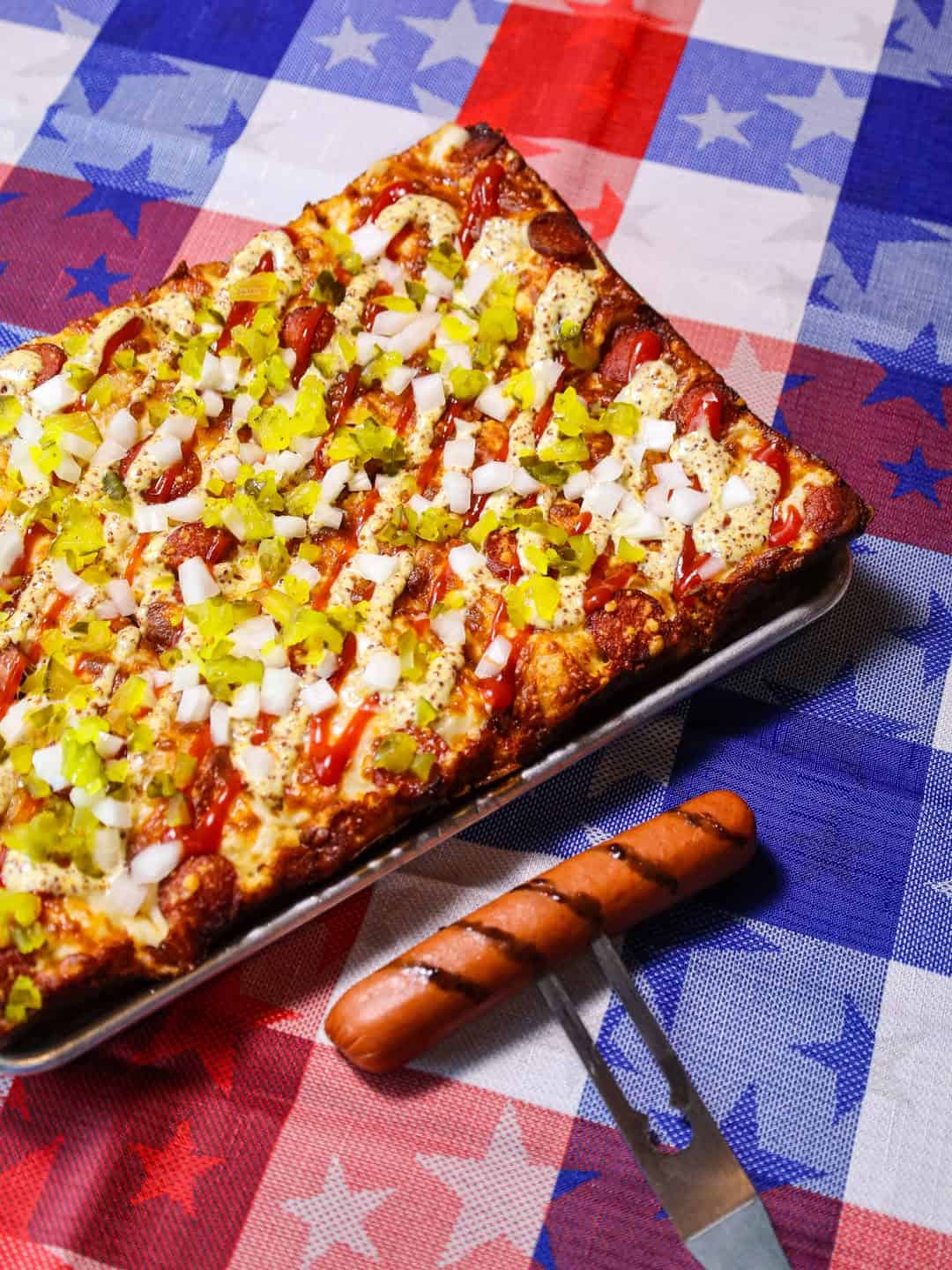
Emmy Squared brought Detroit-style pizza to New York City at a moment when the form was gaining national recognition, and the Brooklyn location proved immediately that the style could thrive in a city with its own deeply defended pizza traditions.
The Emily Burger situation here is worth knowing about — the smash burger developed at Emmy Squared became so famous that it now has its own dedicated concept — but the Detroit-style pizza remains the reason the restaurant exists and remains excellent.
The Roni Supreme, with pepperoni cups and hot honey, is the pie that most first-timers are directed toward, though the plain cheese version demonstrates the fundamentals of the style as clearly as anything on the menu.
Emmy Squared has expanded to multiple cities since Brooklyn, but the Williamsburg location carries the original character and the pizza that launched the brand’s national reputation.
Where: Emmy Squared, 364 Grand St, Brooklyn, NY 11211
7. Blue Pan Pizza, Colorado
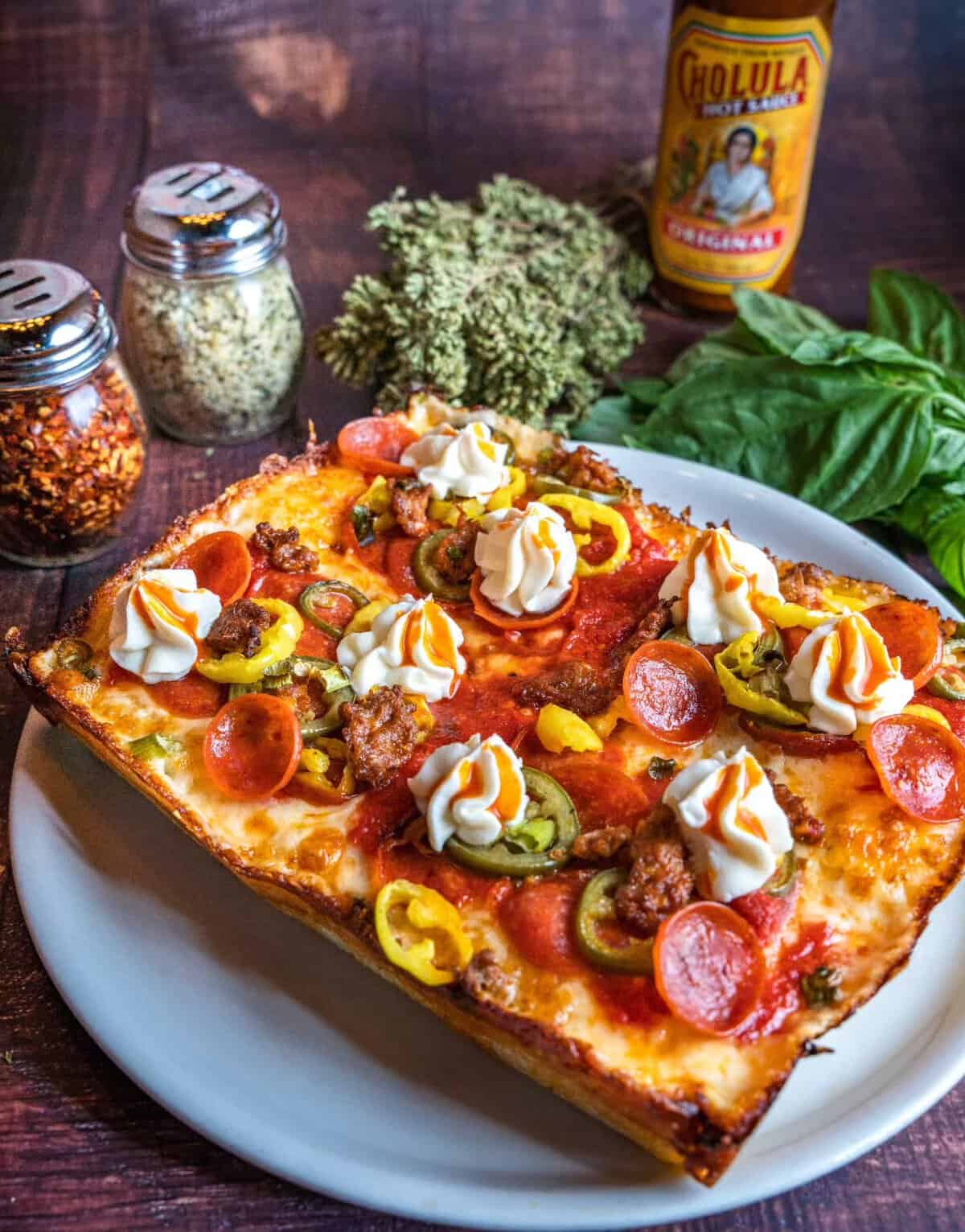
Denver’s Blue Pan Pizza is the restaurant that made Detroit-style pizza a serious conversation in Colorado, and it accomplished this by taking the form seriously in every detail rather than treating it as a novelty import.
The dough ferments over multiple days, producing the open, airy crumb that characterizes the best versions of the style. The oil applied to the pan gives the bottom its characteristic crispness — something between a fried crust and a baked one that is entirely its own category.
Owner Jeff Smokevitch trained under serious pizza makers before bringing the Detroit style to Denver, and the care in the process shows up immediately in the finished pizza.
The East Colfax neighborhood location has become a genuine local institution, earning recognition on national best pizza lists while maintaining the neighborhood feel that makes regulars return weekly.
Where: Blue Pan Pizza, 3930 W 32nd Ave, Denver, CO 80212
8. Square Pie Guys, California

San Francisco’s Square Pie Guys took the Detroit-style format and applied it with the ingredient rigor that the Bay Area demands, producing a pizza that respects the original form while drawing from the same local sourcing culture that shapes how the entire city eats.
The resulting pizza looks unmistakably Detroit — rectangular, thick, cheese pressed to every edge — but tastes specifically Californian in the freshness of its components.
The tomatoes in the sauce and the quality of the cheese reflect a supply chain that the original Detroit auto-tray pies never had access to.
The SoMa neighborhood location has become one of the more enthusiastic pizza destinations in the city, drawing both Detroit transplants who recognize exactly what they’re eating and San Franciscans encountering the style for the first time.
Square Pie Guys represents the second generation of Detroit-style pizza expansion — shops that took the tradition seriously enough to do it right in cities that had no particular obligation to care about Michigan.
Where: Square Pie Guys, 1001 Howard St, San Francisco, CA 94103
The Corner Piece Always Goes First
The corner piece always disappears first. Pick up a Detroit‑style pizza for the first time and instinct takes you straight to the edge — where the bottom crust meets caramelized cheese.
That bite is layered: crunch from below, crunch from the vertical wall of cheese, then the sauce cutting through with brightness at the end.
It’s more than just the best bite on the pan. It’s the whole argument for the style condensed into one corner.
The cheese behaves differently here, pressed against steel and fire until it becomes something closer to architecture than topping.
The crust underneath is sturdy but airy, built to hold. The sauce arrives last, sharp enough to reset your palate before the next bite.
Detroit didn’t invent this out of culinary whim. It came from salvaged automotive steel pans, from necessity turned into invention. That industrial origin is still baked into every slice — utilitarian, satisfying, and unmistakably local.
The places carrying it forward today stretch far beyond Michigan. From the Conant Street shop where it started to an Austin trailer, to a SoMa kitchen in San Francisco, each one proves the corner piece isn’t just tradition.
It’s the defining move of one of America’s most distinctive pizza styles.
And if you’re lucky enough to get the first slice, take the corner. It’s the bite that explains everything.
More stories


Share this story