10 Scenic Train Rides Across America That Make the Journey Better Than the Destination

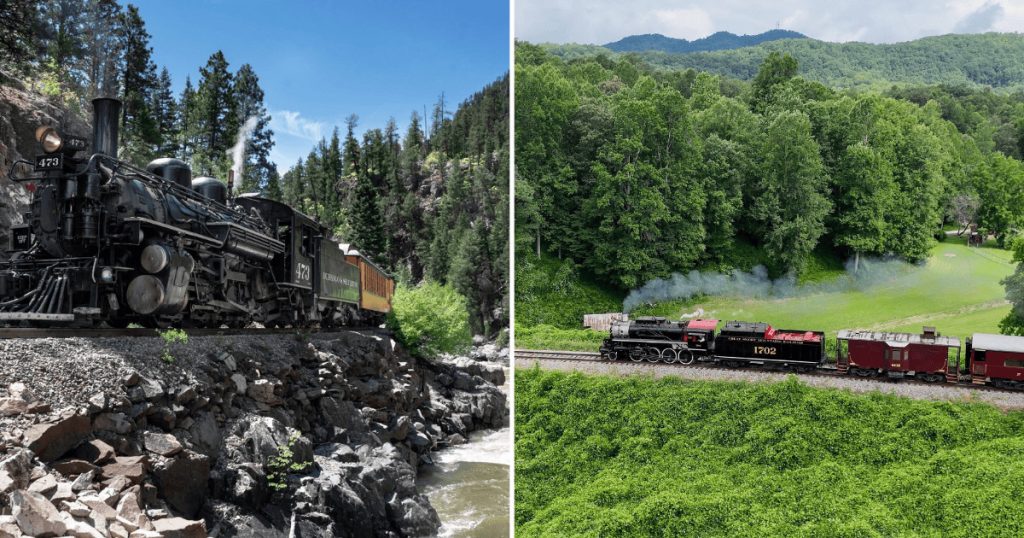
As a kid, I thought the best kind of magic was sitting by a train window and watching the world scroll past — fields blurring into forests, mountains slowly rising on the horizon, the rhythmic rocking that almost dares you not to fall asleep.
Planes skip over that part of travel. You lift off, you land, and the middle disappears. Trains refuse to let you cheat. They insist you watch.
Some of my favorite travel memories come from those unplanned moments — not landmarks or scheduled stops, but scenery that appeared out of nowhere and held my attention completely.
America’s passenger rail history is long and dramatic, and what remains of it is worth experiencing. Some routes still running today pass through landscapes highways can’t reach, and planes fly right over.
Below are ten scenic train rides across the United States that prove the journey itself can be the destination — no arrival required to make the trip worthwhile.
1. California Zephyr, Illinois to California
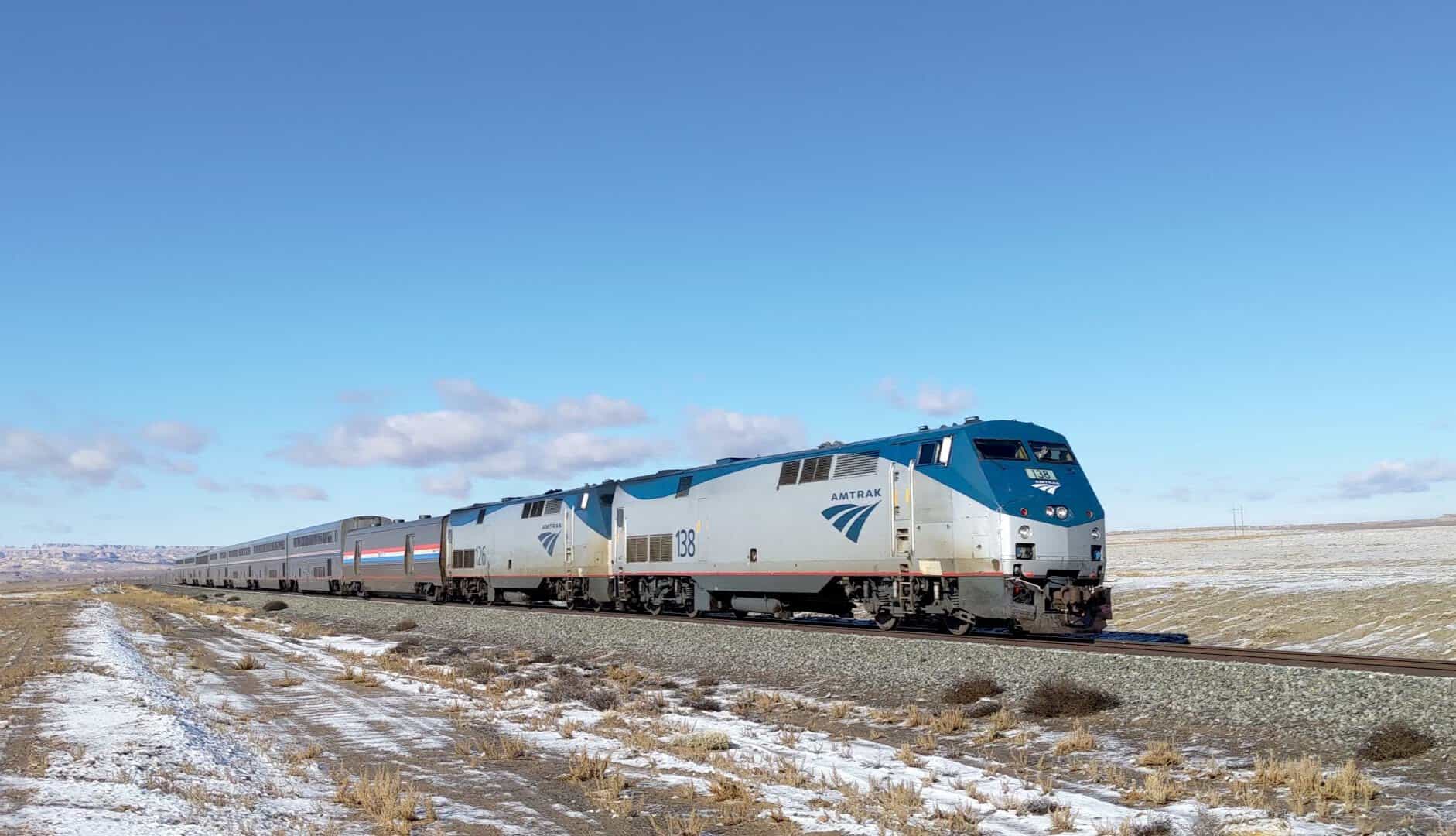
The California Zephyr is widely considered one of the most beautiful long-distance train routes in the world, and it earns that reputation somewhere around the time it enters the Rocky Mountains of Colorado.
The route runs from Chicago to Emeryville, California, covering over 2,400 miles across two time zones.
The most dramatic stretch begins in the Denver area, where the train climbs into the Rockies through tunnels and canyons before cresting the Continental Divide. Passengers crowd the observation car for this section regardless of what time it happens to pass through.
The Sierra Nevada crossing in California comes as a second reward near the end of the journey, winding through forested mountains before descending toward the Sacramento Valley and the bay.
Sleeping car accommodations make the two-night journey genuinely comfortable, turning the train into something between a hotel and a moving observatory.
Where: Departs from Union Station, 225 S Canal St, Chicago, IL 60606
2. Coast Starlight, Washington to California
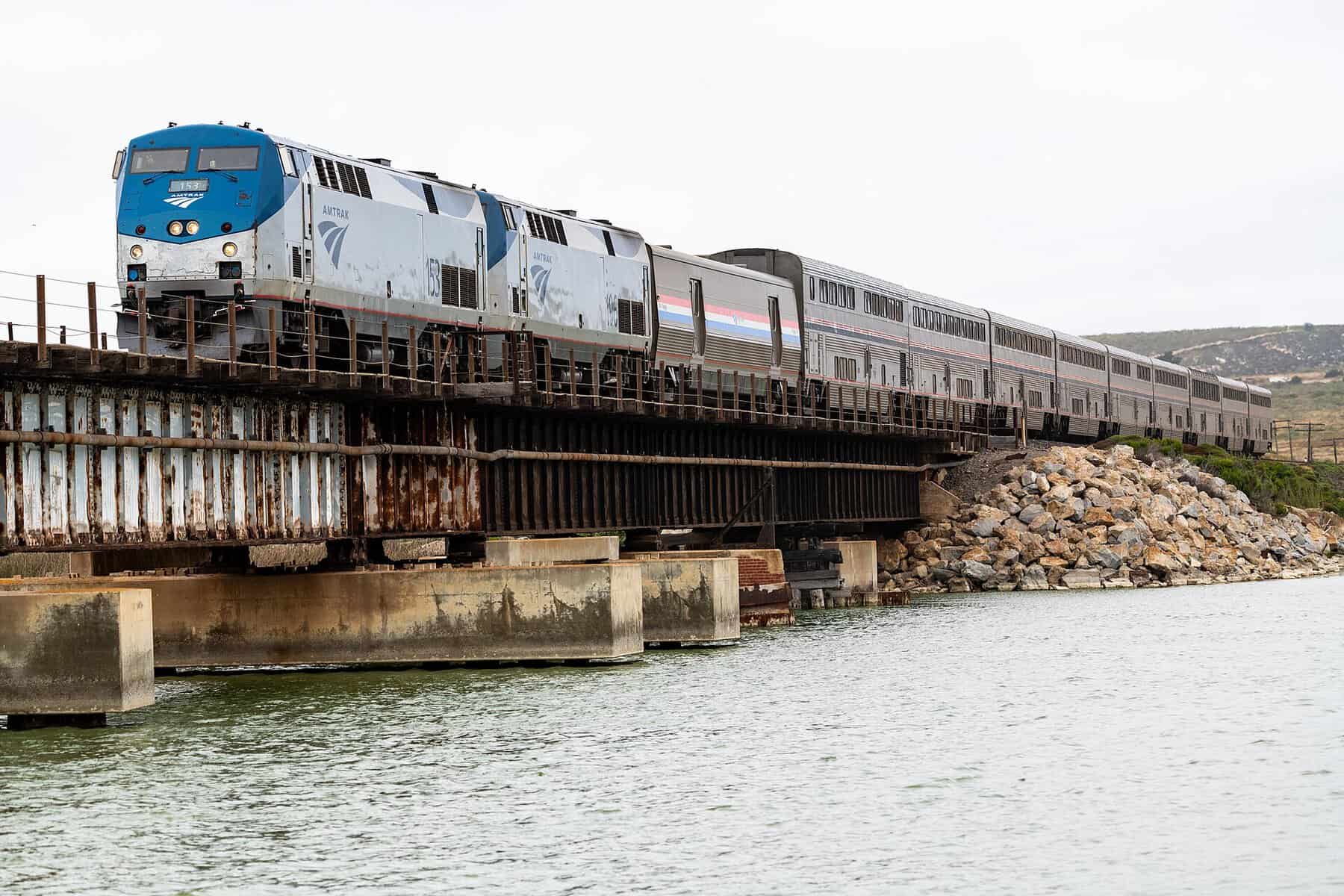
The Coast Starlight travels between Seattle and Los Angeles, hugging the Pacific Coast through Oregon and Northern California in a way that no highway replicates.
Water views appear and disappear dramatically as the train winds through coastal bluffs and forested stretches above the shoreline.
Mount Shasta rises against the sky in Northern California, visible for long stretches of track and striking enough to stop conversations mid-sentence. The volcanic peak dominates the landscape in a way that reminds you just how vast this part of the country remains.
The Starlight Lounge onboard offers wine and cheese tastings inspired by the California wine regions the route passes through, a civilized addition to an already scenic experience.
Seattle’s King Street Station at the route’s northern end is itself a beautifully restored Beaux-Arts building worth arriving at early just to appreciate the architecture.
Where: Departs from King Street Station, 303 S Jackson St, Seattle, WA 98104
3. Durango & Silverton Narrow Gauge Railroad, Colorado
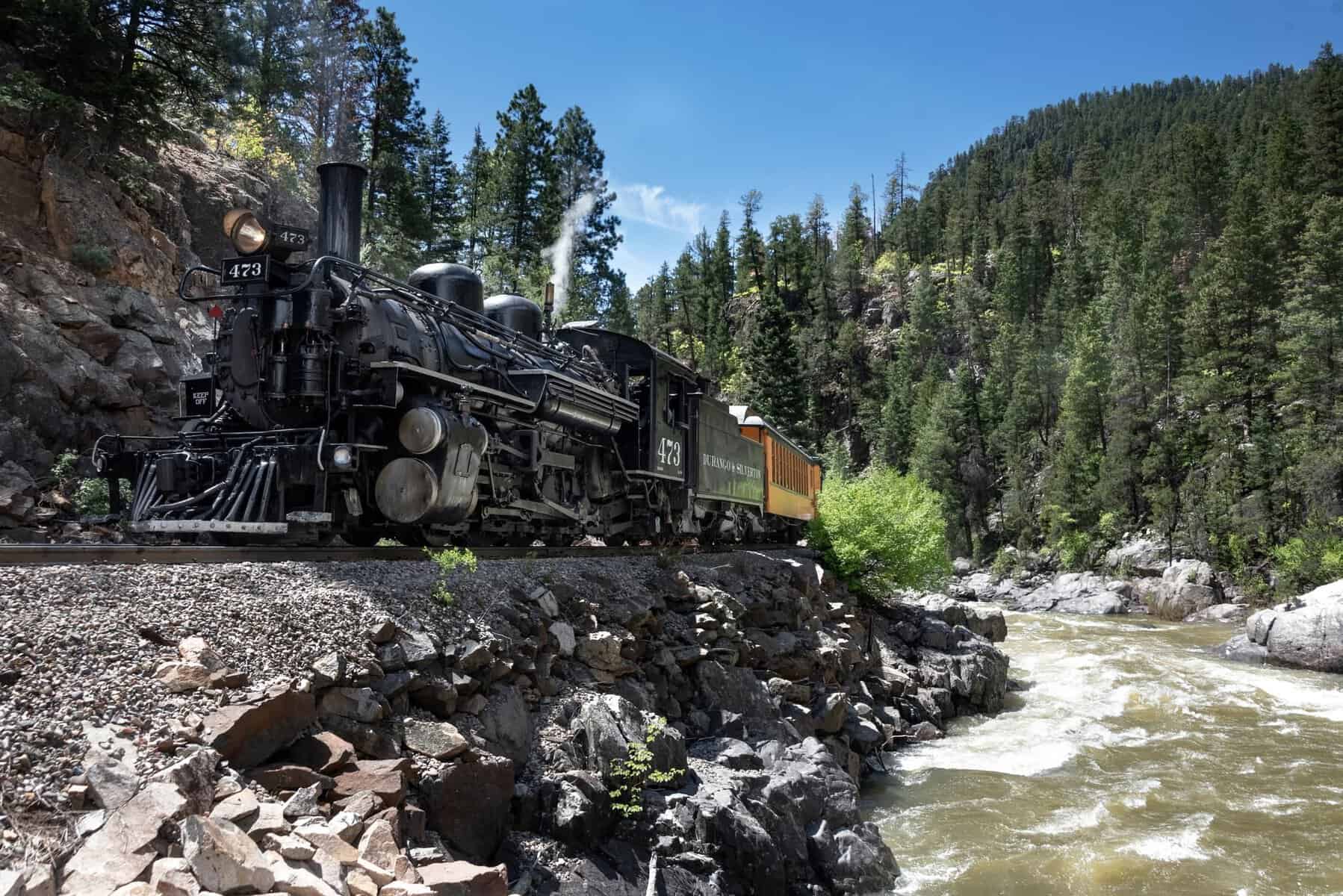
Some trains go places no modern road follows, and the Durango & Silverton is one of them. This historic narrow gauge railroad winds through the Animas River canyon in the San Juan Mountains of Colorado, following a route that has been in continuous operation since 1882.
The train runs on coal-fired steam locomotives, which means the ride comes with authentic billows of smoke and the particular smell of a working steam engine. It’s the kind of sensory detail that photographs simply can’t capture.
The 45-mile journey between Durango and Silverton takes about three and a half hours each way, climbing through canyon walls and crossing wooden trestle bridges above the rushing river below.
Silverton, at the end of the line, is a well-preserved Victorian mining town sitting at nearly 9,300 feet. It rewards those who choose to stay overnight before catching the return train the following day.
Where: 479 Main Ave, Durango, CO 81301
4. Grand Canyon Railway, Arizona
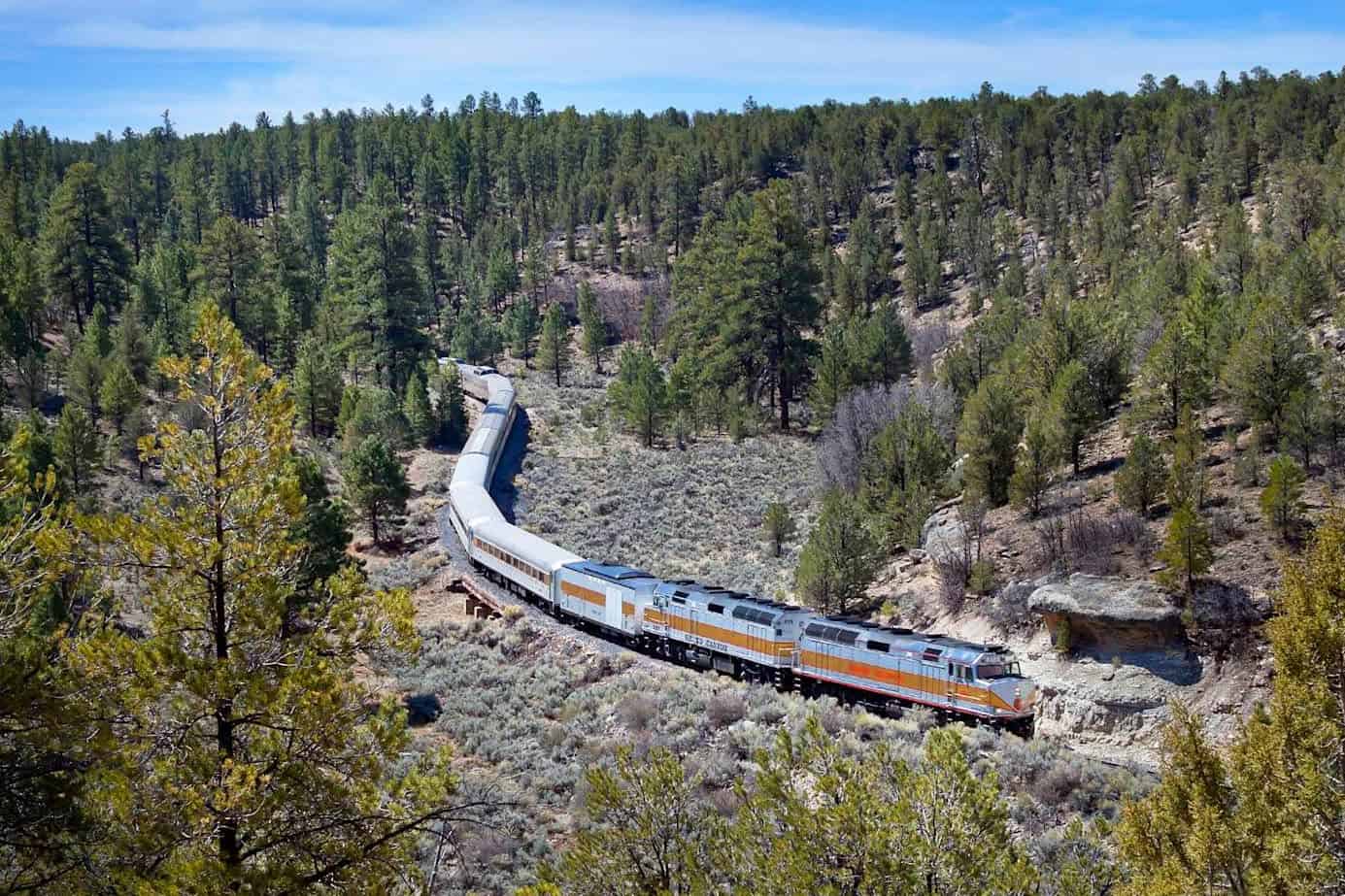
The Grand Canyon Railway solves one of the Grand Canyon’s most persistent problems: parking. Rather than sitting in traffic on the canyon rim, passengers board a vintage train in the small town of Williams and ride 65 miles north directly to the South Rim.
The train passes through Ponderosa pine forests and high desert grasslands, with a Wild West atmosphere maintained throughout — including occasional “train robberies” performed by costumed characters for the entertainment of younger passengers.
Different train classes offer varying levels of comfort, from standard coach seats to luxury dome cars with glass ceilings designed specifically for the scenery above.
Williams, the departure town, sits on Historic Route 66, which adds a bonus layer of American nostalgia to the experience before the train even departs.
The town itself has leaned into its dual identity as both a Route 66 stop and a railroad gateway, with diners, vintage motels, and shops that make it worth arriving a few hours early.
Where: 233 N Grand Canyon Blvd, Williams, AZ 86046
5. Alaska Railroad, Alaska
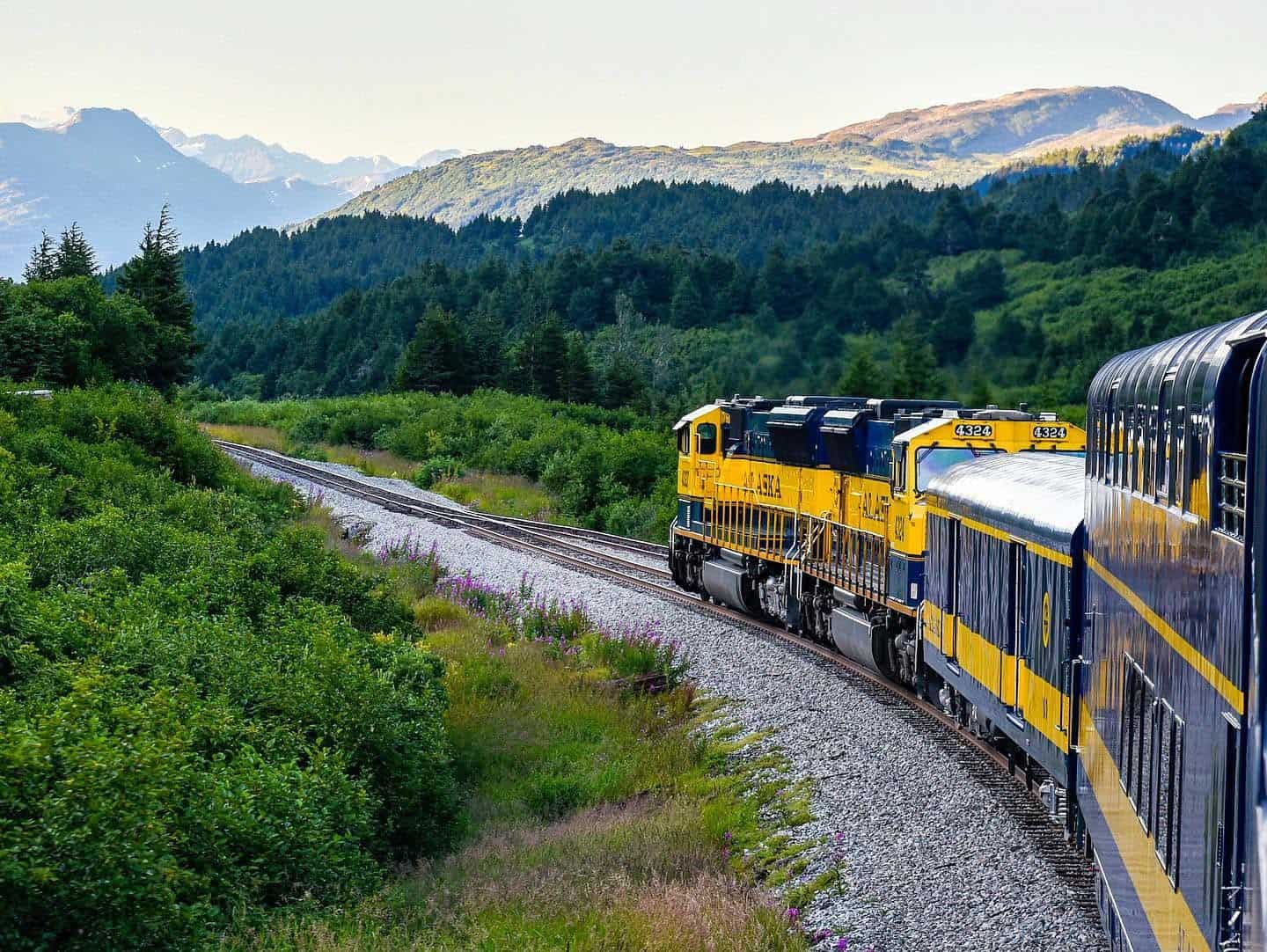
The Alaska Railroad doesn’t just pass through scenic country — it passes through country that most people will never otherwise see.
The flagship Denali Star route runs between Anchorage and Fairbanks, covering 356 miles through a landscape of glaciers, tundra, and mountains that stretch far beyond the horizon.
Denali, the tallest peak in North America at over 20,000 feet, appears along this route on clear days with a scale that takes a few moments to process. Wildlife sightings — moose, bears, eagles — are common enough that passengers are encouraged to keep cameras ready throughout the journey.
The Hurricane Turn route, one of America’s last flag-stop trains, allows passengers to disembark anywhere along a wild section of track with no road access, a throwback to how rural Alaska has always operated.
Glassed-in dome cars maximize the viewing experience, though on clear summer days, many passengers spend the entire trip pressed against the windows regardless of where they’re sitting.
Summer in Alaska also means near-endless daylight, so even late-evening departures arrive with scenery fully illuminated, a detail that reshuffles every expectation about when to travel.
Where: Alaska Railroad Depot, 411 W 1st Ave, Anchorage, AK 99501
6. Cumbres & Toltec Scenic Railroad, Colorado and New Mexico
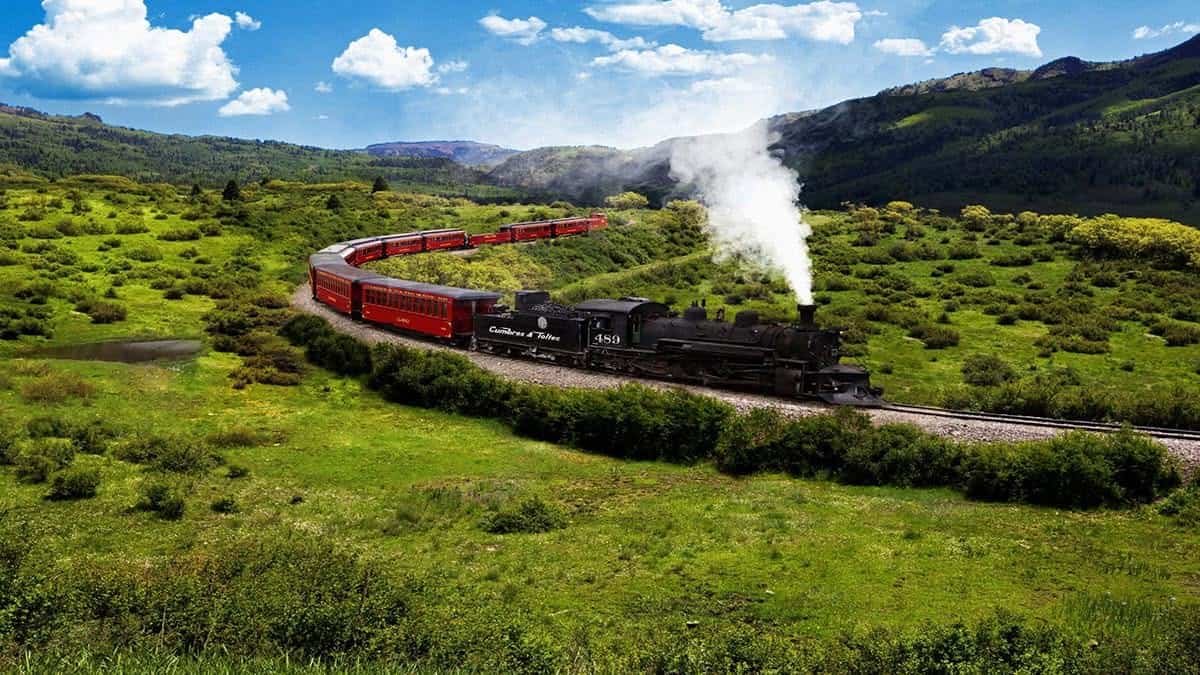
The Cumbres & Toltec Scenic Railroad is the highest and longest narrow gauge steam railroad still operating in the United States, threading through remote mountain terrain on the Colorado-New Mexico border that has changed very little since the tracks were first laid in 1880.
The route between Antonito, Colorado, and Chama, New Mexico, crosses the Cumbres Pass at nearly 10,015 feet, the highest point on any steam railroad in the country. Snow lingers at the summit well into summer, adding drama to the high alpine landscape.
Because the route ends in a different state from where it begins, most visitors choose a mid-route transfer point and return by van, making the experience a full-day excursion rather than a round trip.
The railroad is jointly owned by the states of Colorado and New Mexico, and its National Historic Landmark status reflects its role as a remarkably intact piece of American railroad history.
Chama, New Mexico, at the route’s southern end, is a small, unhurried mountain town worth an overnight stay before or after the journey.
Where: 5234 CO-285, Antonito, CO 81120
7. Empire Builder, Illinois to Washington
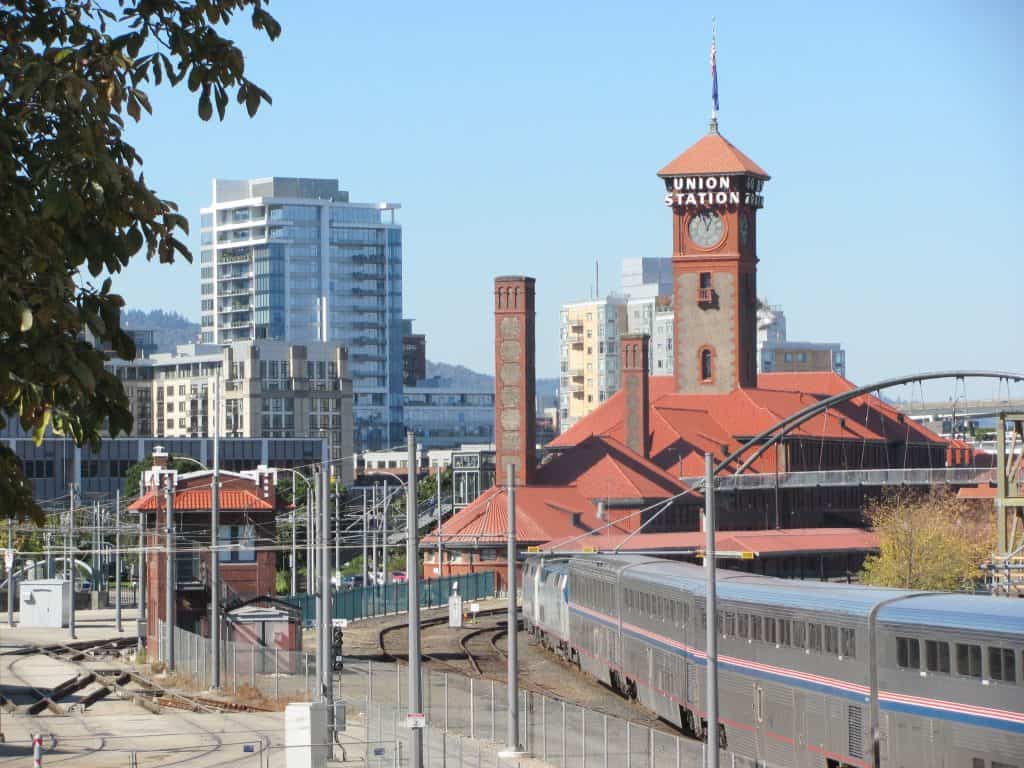
The Empire Builder runs between Chicago and Seattle or Portland, crossing the prairies of Wisconsin and Minnesota before entering the open beauty of North Dakota and Montana.
The Glacier National Park segment, passing through mountains just south of the park boundary, is the journey’s most celebrated stretch.
The train typically passes through the Montana Rockies in the morning hours, rewarding early risers with views of peaks, river valleys, and the occasional glimpse of wildlife along the riverbanks below.
Named after James J. Hill, the railroad magnate who developed the northern rail lines, the Empire Builder has operated along this route since 1929 in various forms.
The two-night journey covers over 2,200 miles and remains one of Amtrak’s most beloved long-distance routes, partly for its scenery and partly for the unhurried pace of crossing the northern half of the continent by rail.
Where: Departs from Union Station, 225 S Canal St, Chicago, IL 60606
8. Mount Washington Cog Railway, New Hampshire
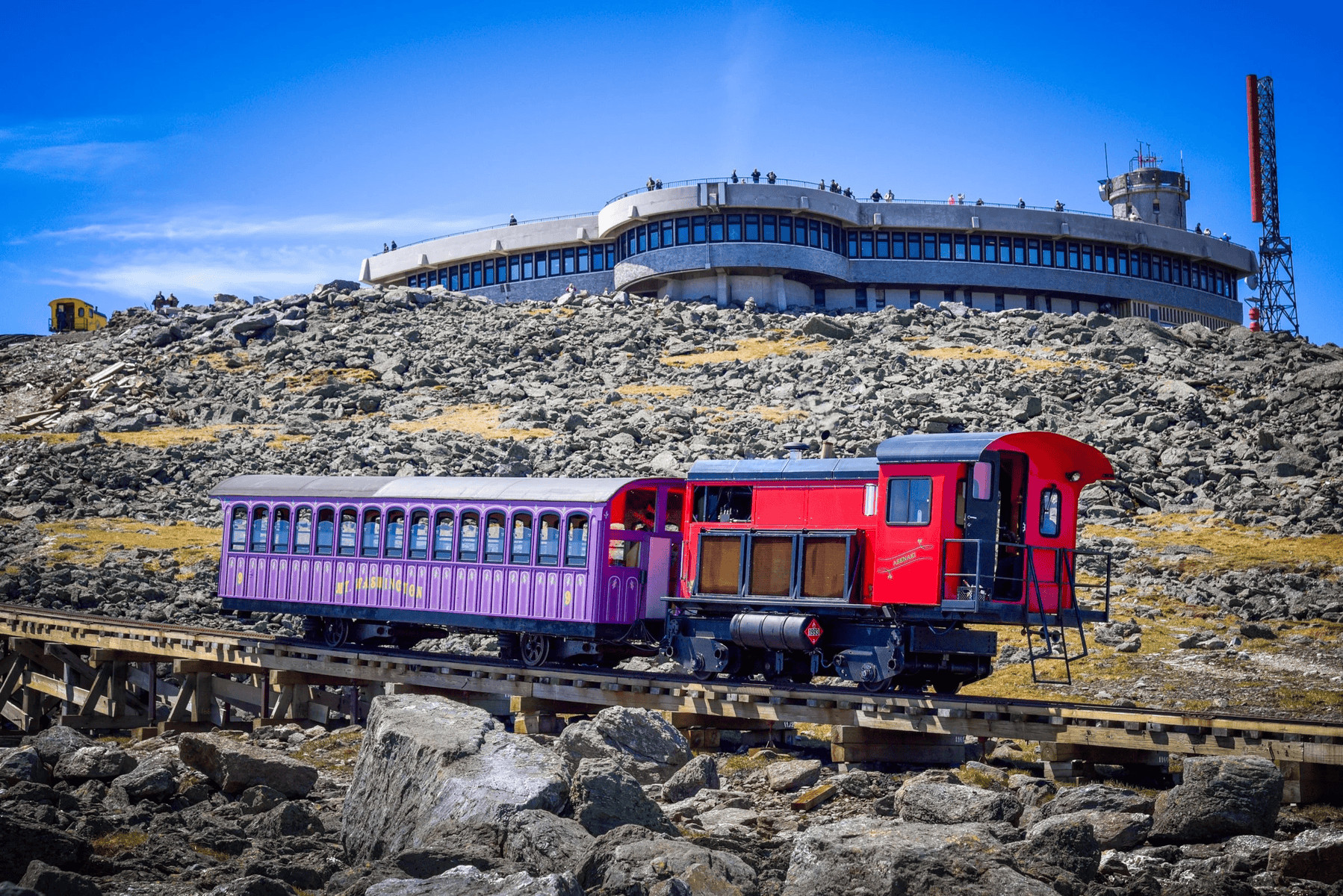
The Mount Washington Cog Railway holds a record worth knowing about: it was the world’s first mountain-climbing cog railway, opening in 1869. The toothed rack rail system allows it to climb grades as steep as 37 percent — a pitch that would send a conventional train sliding backward.
The destination is the summit of Mount Washington, at 6,288 feet, the highest peak in the northeastern United States.
The mountain is also notorious for some of the most extreme weather ever recorded, including a wind speed of 231 miles per hour measured at the summit weather observatory.
The ride up takes about an hour, and the views across the Presidential Range of New Hampshire’s White Mountains unfold gradually with each switchback.
Coal-fired steam trains still operate alongside biodiesel models, and the smell of woodsmoke at the base station sets the tone for a journey that genuinely feels like it belongs to another era.
Where: 3168 Base Station Rd, Marshfield, NH 03589
9. Great Smoky Mountains Railroad, North Carolina
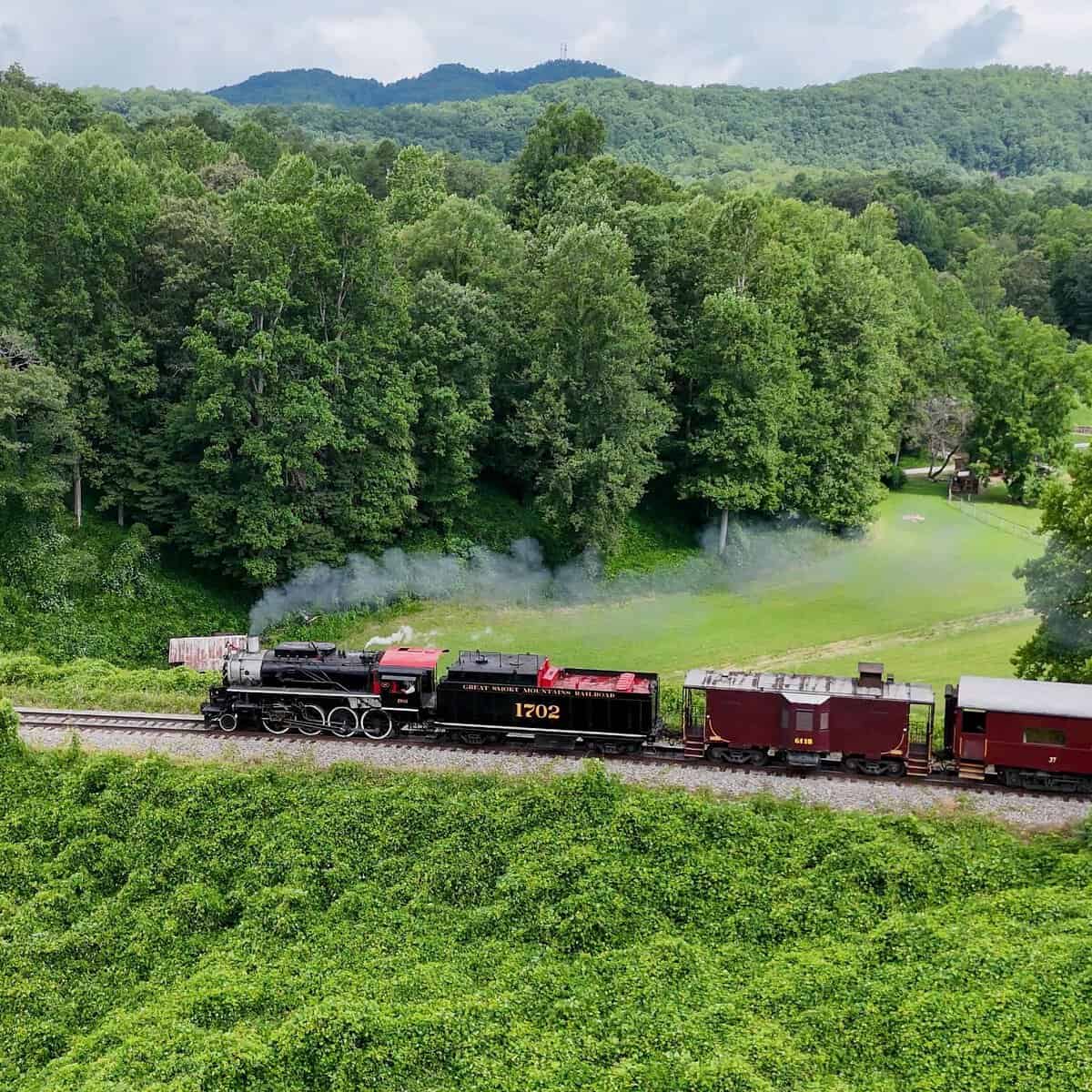
North Carolina’s Great Smoky Mountains Railroad follows river gorges and mountain passes through some of the most beautiful terrain in the southern Appalachians.
The excursion trains depart from Bryson City, a small town at the edge of the Great Smoky Mountains National Park, and travel through Nantahala Gorge.
The Nantahala River runs white and cold through the narrow gorge below the tracks, and rafters and kayakers are often visible on the water as the train passes above them.
Open-air cars allow passengers to feel the cool mountain air directly, which in summer is reason enough to secure a seat in one. The surrounding forest closes in on both sides through long stretches of the route.
Themed excursions run throughout the year, including a popular pumpkin patch run in autumn and a Polar Express experience during the holiday season, making this a train ride that families return to season after season.
Where: 226 Everett St, Bryson City, NC 28713
10. Strasburg Rail Road, Pennsylvania
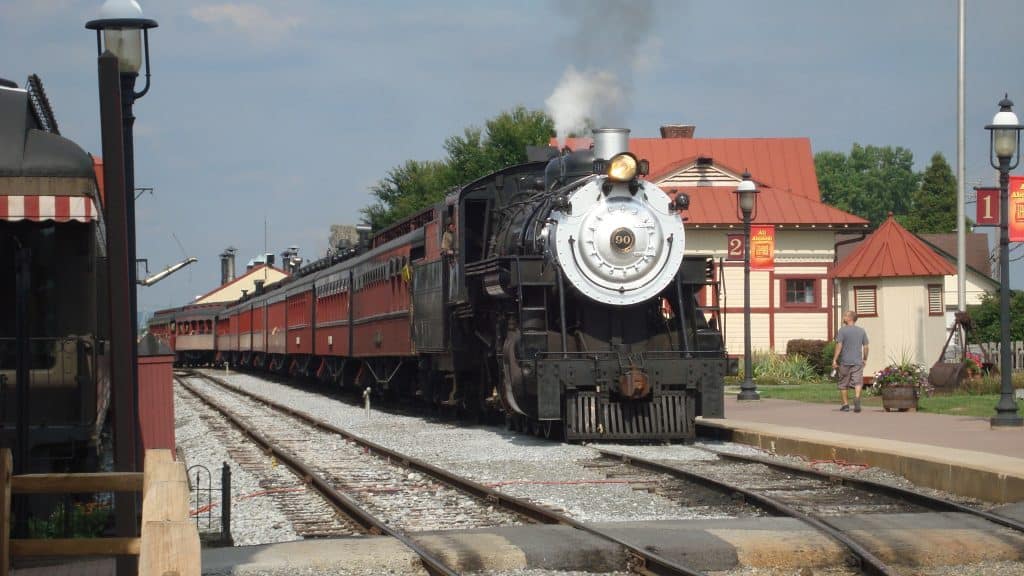
Pennsylvania’s Strasburg Rail Road is the oldest operating short-line railroad in the western hemisphere, running continuously since 1832.
Located in Lancaster County’s Amish country, the nine-mile route passes through farmland worked by horse-drawn equipment in a landscape that has resisted most forms of modern change.
The steam locomotives here are beautifully maintained working antiques, and watching one build a full head of steam at the station before departure is its own small spectacle.
The slow pace of the ride — deliberately leisurely, never rushing anywhere — matches the surrounding countryside perfectly. Quilts dry on farmhouse lines. Horses pull plows across fields in the distance.
The Railroad Museum of Pennsylvania sits directly across the road from the station and houses one of the finest collections of historic locomotives in the country, making the Strasburg stop a full afternoon rather than a quick excursion.
Where: 301 Gap Rd, Strasburg, PA 17579
The Window Seat Is Always Worth It
There’s a shift that happens somewhere between boarding a train and reaching the first stretch of open scenery. The phone goes down. The shoulders drop. The window becomes the only screen that matters.
These ten routes offer that feeling at scales ranging from a nine-mile loop through farmland to a two-night crossing of the Rockies. What they share is a commitment to showing you the country at the speed it actually deserves to be seen.
Road trips have their freedom and flights have their speed, but trains have something neither can offer: the particular luxury of just watching, unhurried, as America moves past the glass.
Book the window seat. You’ll understand why the moment the scenery starts moving outside the glass.
More stories

Share this story