10 Breathtaking Natural Wonders in the U.S. That Will Make You Feel Wonderfully Small

I was maybe eight years old the first time I stood at the edge of something truly enormous in nature. It was just a waterfall on a family camping trip — not a famous one, nothing that would make any list.
But I remember the mist on my face and the sound that seemed to come from inside the earth.
That feeling of being dwarfed by something ancient and indifferent is one I’ve been quietly chasing ever since. There’s a particular kind of peace in realizing that you are very, very small, and the world is far bigger and stranger than your daily routine lets on.
America is extraordinary for this. Within its borders, you can stand at the rim of a canyon carved by millions of years of river work, walk through forests of stone spires, or float above clouds of steam rising from the planet’s own heat.
No passport required. Just a sense of wonder and enough time to let each place do what it does best — stop you in your tracks and make you forget what you were worried about before you arrived.
Here are ten natural wonders across the United States that are worth every mile of the drive to reach them.
1. Grand Canyon, Arizona
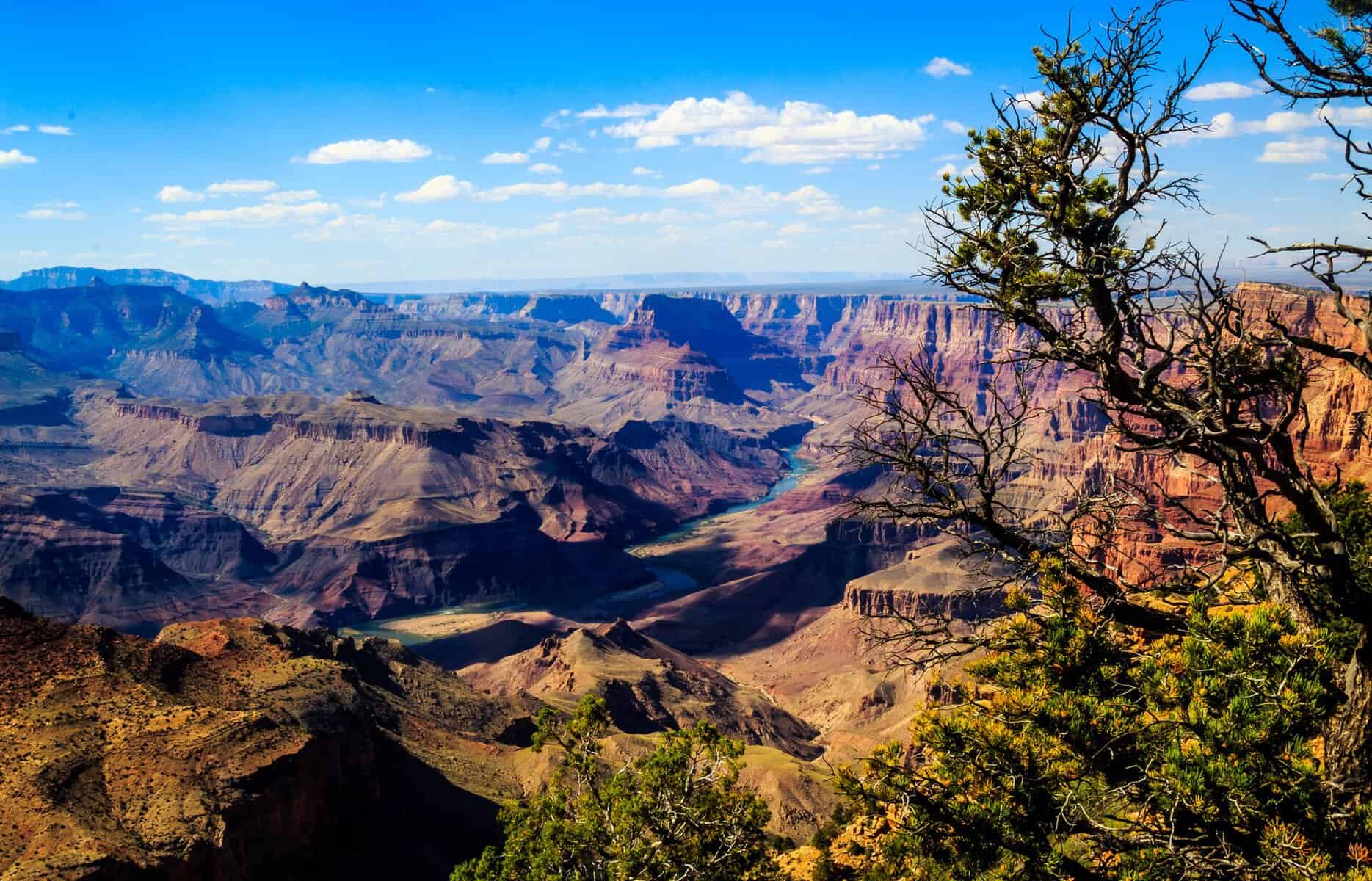
There’s a reason the Grand Canyon tends to silence people when they first lay eyes on it. No photograph, no description, and no documentary quite prepares you for the actual scale of it — roughly 277 miles long, up to 18 miles wide, and over a mile deep in places.
The canyon was carved over millions of years by the Colorado River, cutting through layer after layer of ancient rock and revealing a geological timeline that stretches back nearly two billion years.
The different colored bands of stone visible in the walls represent eras of Earth’s history laid out like pages in a book.
Hiking into the canyon reveals a completely different experience from the rim. Temperatures rise dramatically as you descend, the walls close in, and the distant roar of the Colorado River grows louder with every switchback.
Early morning and late afternoon visits reward patient travelers with extraordinary light, as the low sun turns the canyon walls shades of amber, rust, and deep purple that shift by the minute.
Where: Grand Canyon National Park, Arizona. South Rim Visitor Center: 20 South Entrance Road, Grand Canyon Village, AZ 86023
2. Niagara Falls, New York
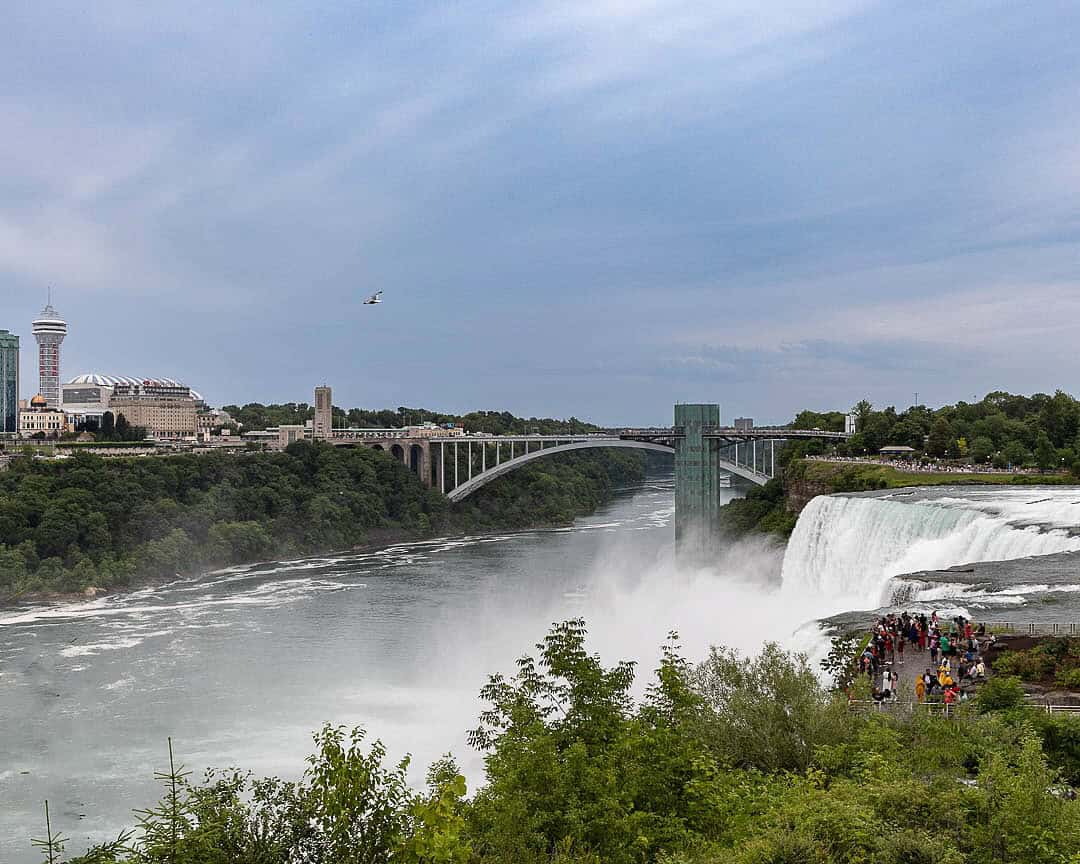
Shared between the United States and Canada, Niagara Falls is one of the most powerful waterfall systems on the planet, and standing near the base of the American Falls makes that power impossible to ignore. The roar alone is enough to interrupt a thought mid-sentence.
The falls are divided into three separate cascades: the American Falls, Bridal Veil Falls, and the larger Horseshoe Falls, which straddles the international border. Combined, they carry more water over their crests than any other waterfall in North America.
Boat tours navigate directly into the mist at the base of the falls, drenching passengers and offering a perspective that no overlook can replicate. It’s the kind of wet, loud, slightly overwhelming experience that people describe for years afterward.
Winter visits carry their own surprising reward, as cold temperatures occasionally cause ice bridges to form at the base of the falls, and the surrounding trees coat themselves in ice, creating a frozen landscape that feels borrowed from another world entirely.
Where: Niagara Falls State Park, 332 Prospect St, Niagara Falls, NY 14303
3. Yellowstone National Park, Wyoming
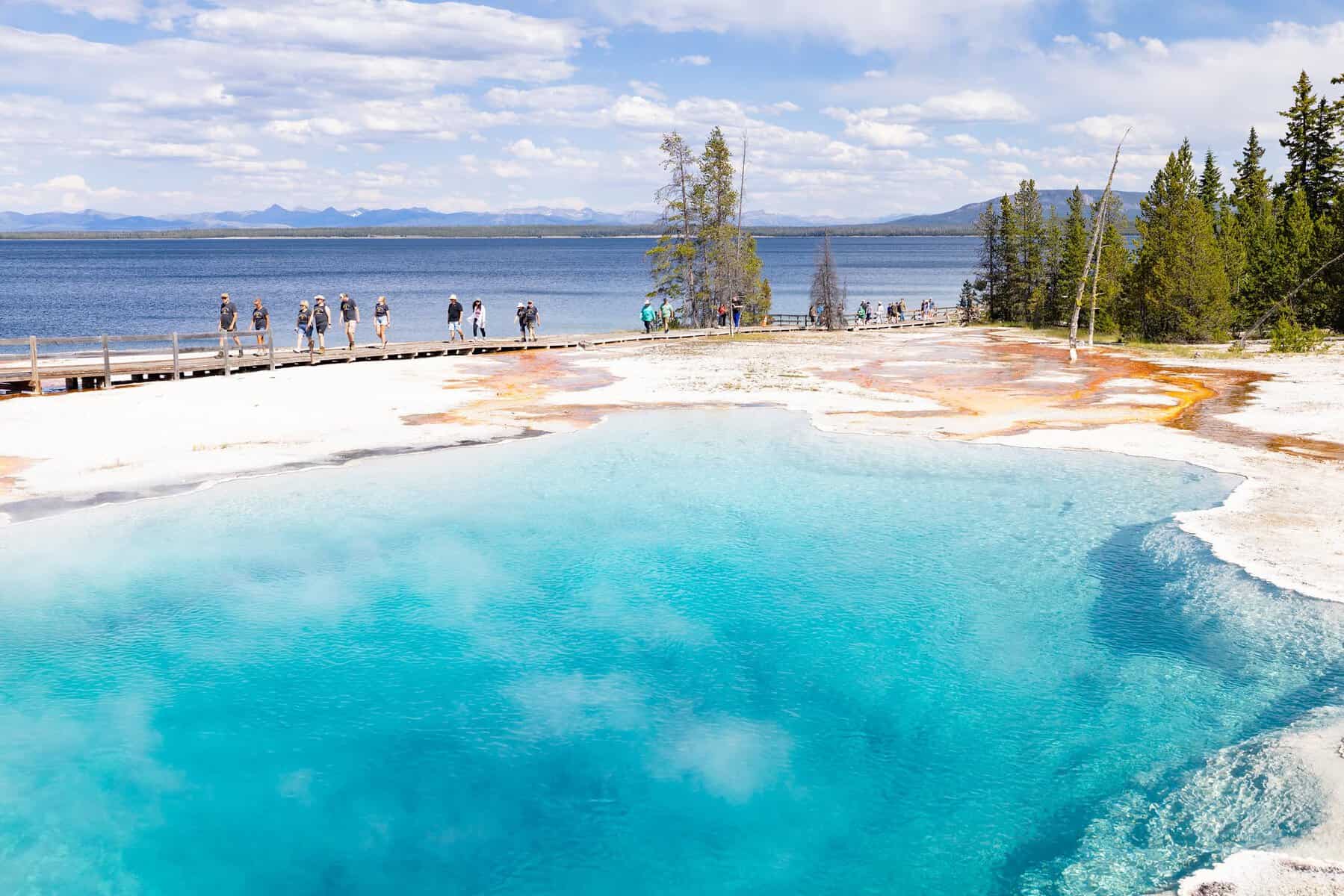
Yellowstone operates on a scale that takes a while to fully absorb. As the world’s first national park, it sits atop one of the largest volcanic systems on Earth, a fact that explains nearly everything unusual about the landscape.
The park contains more geysers than anywhere else on the planet, including Old Faithful, which has been erupting on a remarkably predictable schedule for as long as records have been kept.
Watching it build pressure and then release into a column of steam and water nearly 130 feet tall is quietly thrilling every time.
But geysers are only part of the story. The Grand Prismatic Spring, the largest hot spring in the United States, radiates concentric rings of color from deep blue at its center to vivid orange and yellow at its edges, the result of heat-adapted bacteria that thrive in the mineral-rich water.
Bison herds still roam the park’s wide-open valleys as they have for centuries, often stopping traffic with a calm indifference to cars that makes it clear who the park actually belongs to.
Where: Yellowstone National Park, Wyoming. North Entrance: US-89, Gardiner, MT 59030
4. Antelope Canyon, Arizona
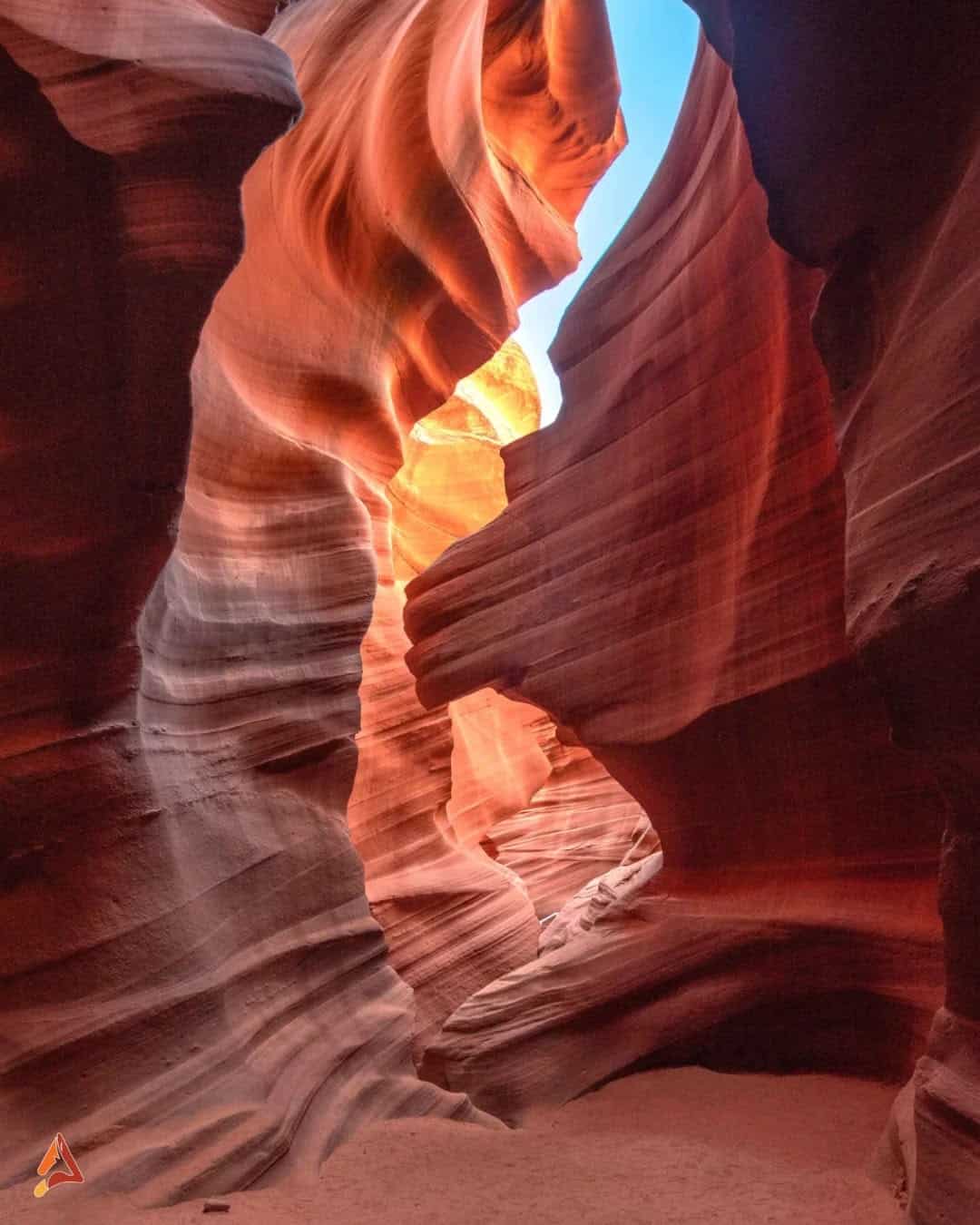
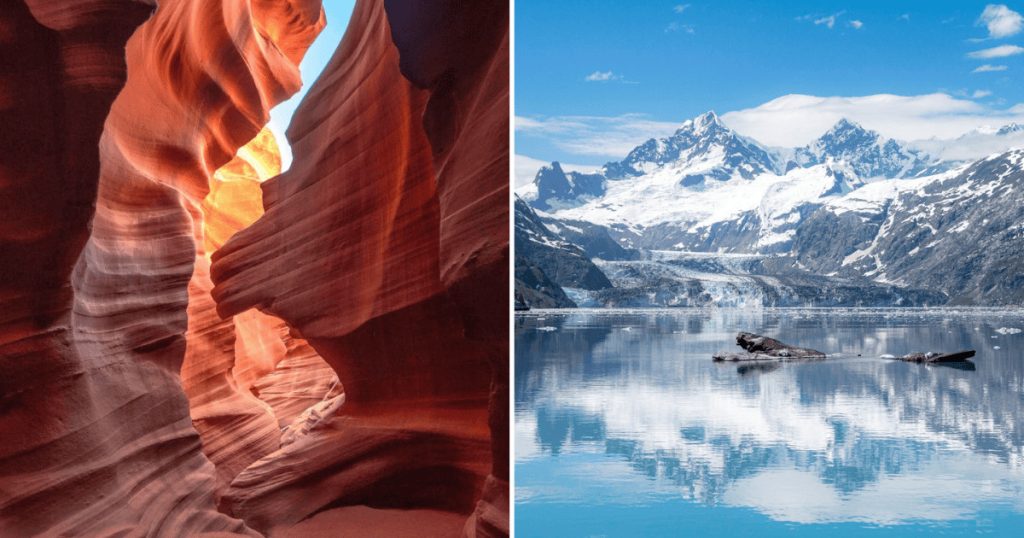
Antelope Canyon is the kind of place that photographers plan entire trips around, and once you’ve seen images of its light beams filtering through the narrow sandstone passages, the obsession makes complete sense.
It was carved by centuries of flash flooding and wind erosion, which sculpted the rock into flowing, wave-like curves.
There are two sections, Upper and Lower Antelope Canyon, both located on Navajo land near Page, Arizona. Upper Canyon is more accessible and receives the famous light beams around midday in the summer months, when shafts of sunlight cut straight through the narrow openings above.
The canyon walls shift in color from deep burgundy to warm orange to pale lavender depending on the angle of light, sometimes changing dramatically within just a few feet of each other. The silence inside adds to the experience in a way that’s hard to anticipate.
Tours are led by Navajo guides and are required for entry, which helps protect the canyon while ensuring every visitor leaves with genuine context for what they’re seeing.
Where: Upper Antelope Canyon, KN Canyon Rd, Page, AZ 86040
5. The Wave, Arizona
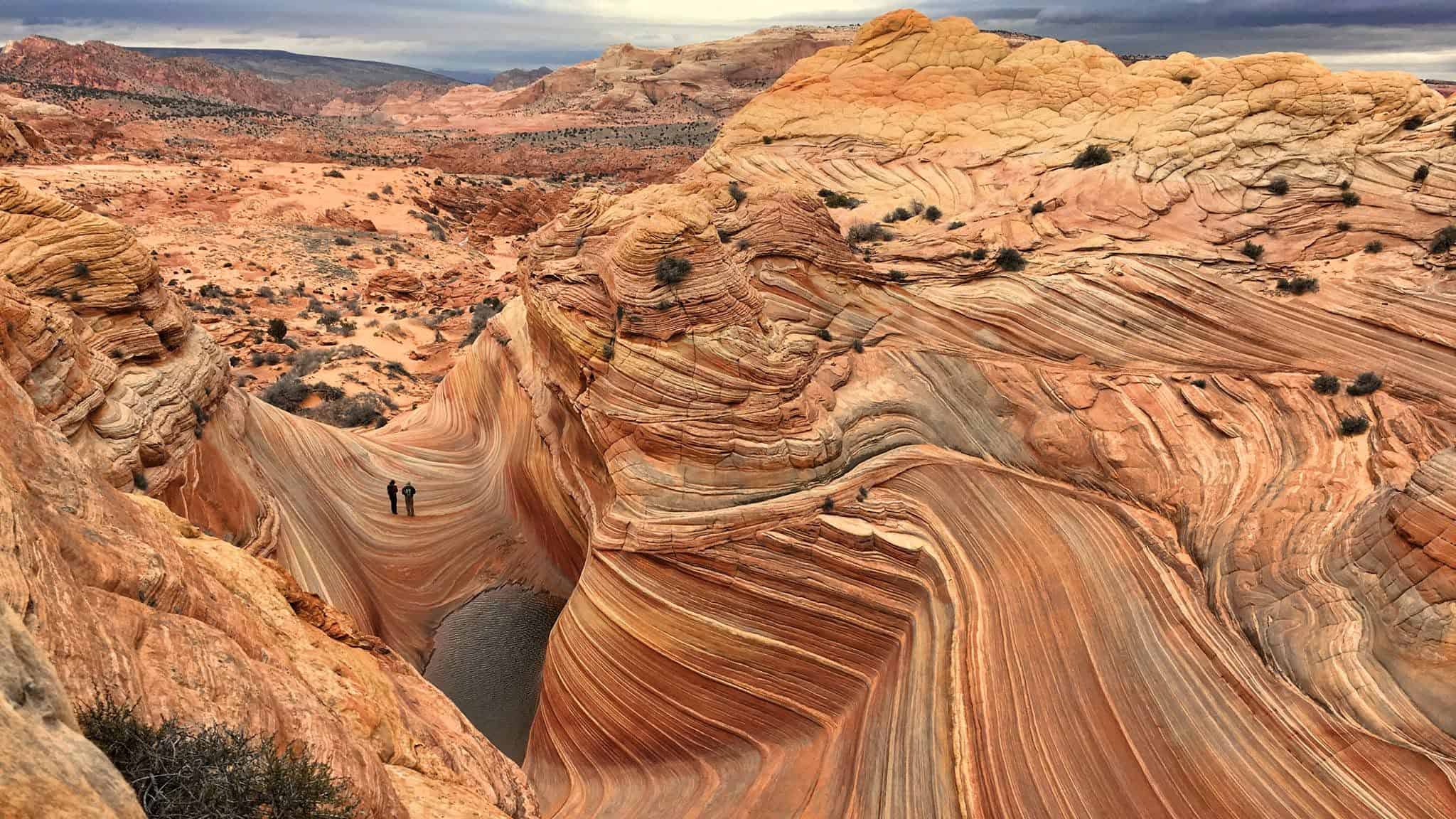
Most people have seen an image of The Wave and assumed it was digital art. The rippling, candy-striped sandstone formation in northern Arizona’s Vermilion Cliffs National Monument looks too perfect to be natural, its curved lines flowing across the rock face as though painted by hand.
Getting there is an adventure in itself. Access is strictly limited through a lottery system that issues only 64 permits per day, split between advance and day-of lotteries. Demand is intense, meaning some applicants wait months before securing a spot.
The hike to reach The Wave covers about six miles round trip with no maintained trail and no shade, making navigation by landmark and map a necessary skill. That level of commitment only adds to the reward once you arrive.
The formation sits near the Utah border in a remote section of Coconino County, surrounded by equally strange and beautiful sandstone terrain that rewards those willing to explore a little further.
Where: Vermilion Cliffs National Monument, Coyote Buttes North, Arizona. The trailhead is accessed from House Rock Valley Road off US-89A near Kanab, Utah.
6. Bryce Canyon National Park, Utah
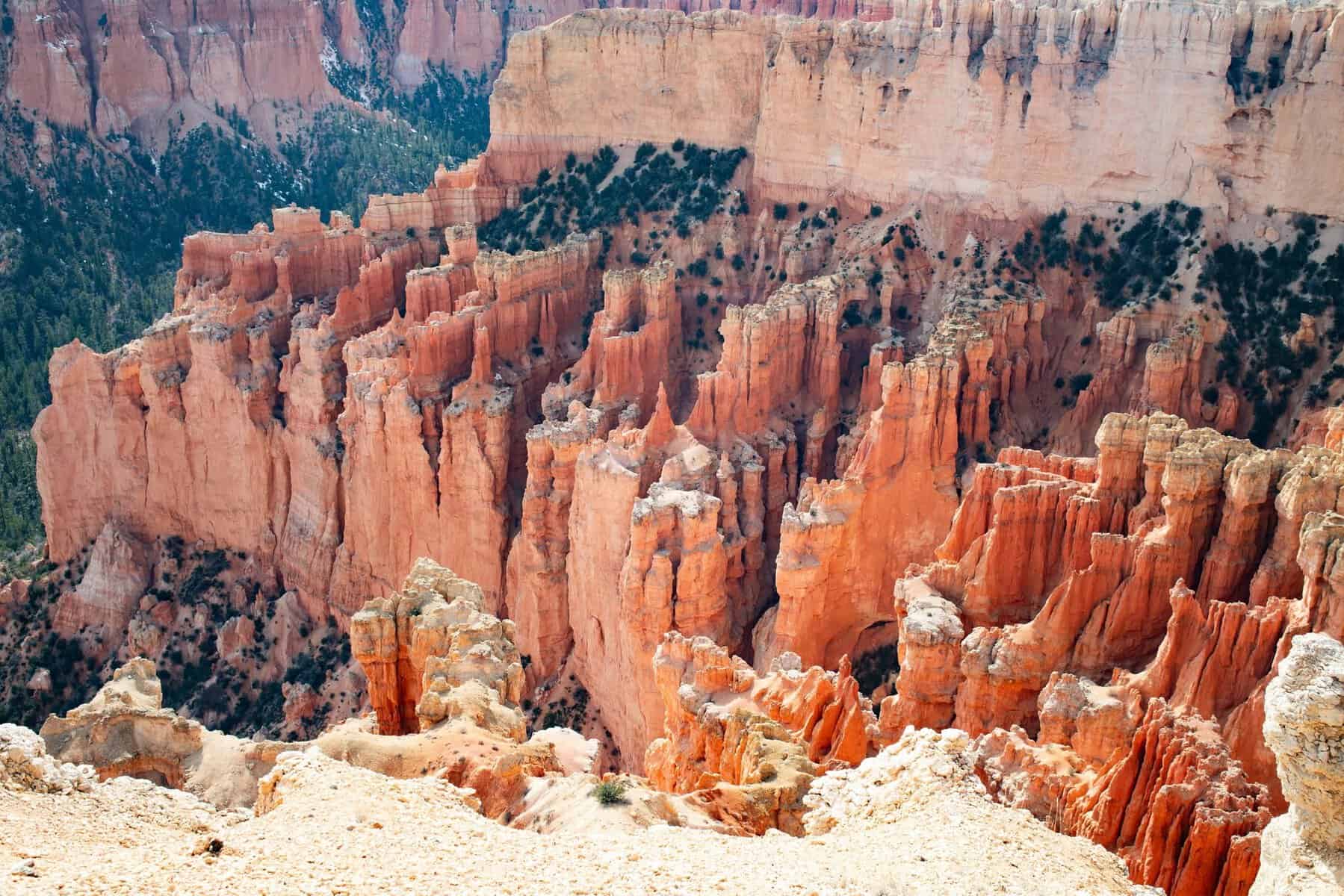
Bryce Canyon isn’t technically a canyon at all, a detail that makes it even more interesting once you understand what you’re actually looking at.
It’s a series of natural amphitheaters filled with thousands of crimson, orange, and white limestone spires called hoodoos, formed by frost and erosion over millions of years.
The effect, especially from the rim at sunrise, is unlike anything else in the American landscape. The hoodoos glow a deep, almost electric orange in the early morning light, casting long shadows across each other in a pattern that shifts by the minute.
Bryce Canyon also sits at a high enough elevation that winter snowfall blankets the hoodoos in white, creating a contrast of red and white that photographers consider some of the most striking conditions the park offers. Snowshoe trails wind through the formations in the colder months.
The Navajo Loop Trail, among the park’s most popular hikes, drops visitors down through the hoodoos rather than simply observing them from above, a perspective that makes the formations feel even more surreal.
Where: Bryce Canyon National Park, Utah. Visitor Center: Bryce Canyon City, UT 84764
7. Redwood National and State Parks, California
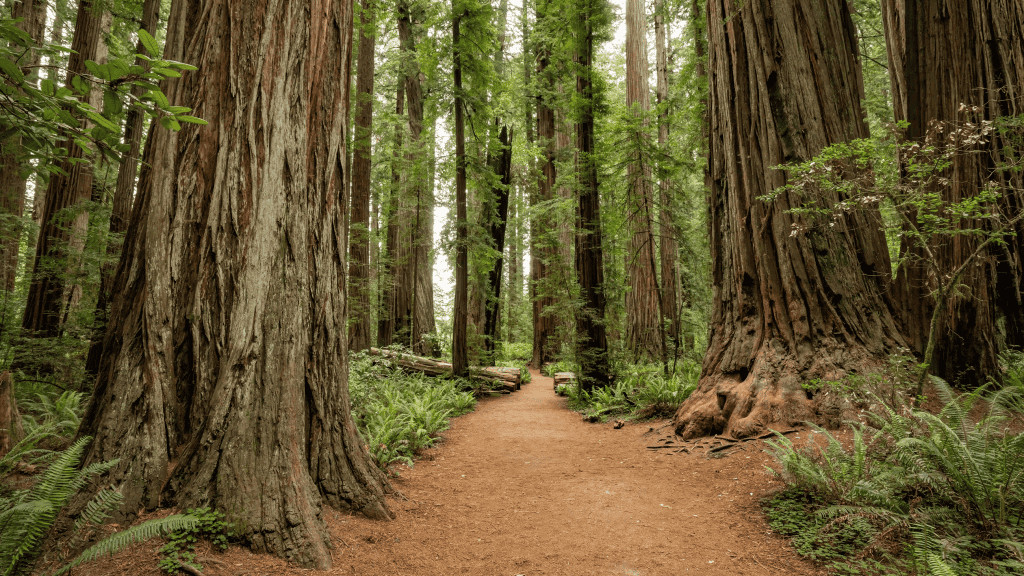
The coastal redwoods of Northern California are the tallest living things on Earth, a fact that only registers fully when you’re standing at the base of one and craning your neck upward into a canopy so far above that light barely filters through.
The tallest known tree in the world, Hyperion, grows somewhere within this park system, though its exact location is deliberately kept secret to protect it.
These trees can live for more than 2,000 years, growing over 350 feet tall and developing trunks wide enough that multiple people struggle to join hands around them. Walking through an old-growth redwood grove produces a hush that feels almost cathedral-like.
The parks protect about 45% of the remaining old-growth coastal redwood forest, a landscape that once stretched across millions of acres before logging reduced it dramatically in the 19th and 20th centuries. Their protection now represents one of the conservation success stories most worth celebrating.
Elk herds graze in the park’s meadows and along its beaches, often visible from the road, providing wildlife encounters that catch visitors completely by surprise.
Where: Redwood National and State Parks, California. Thomas H. Kuchel Visitor Center: US-101, Orick, CA 95555
8. Great Sand Dunes National Park, Colorado
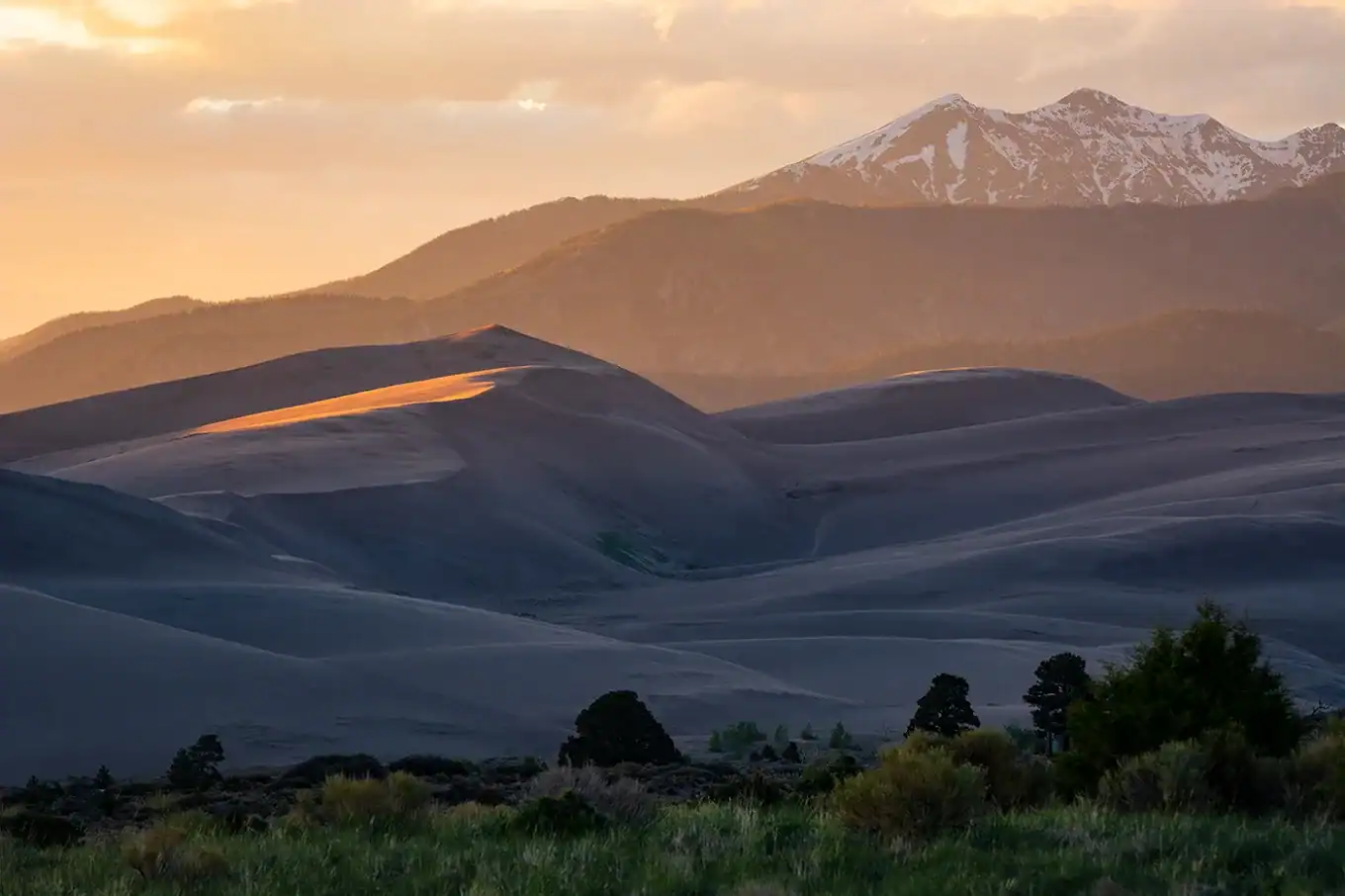
Colorado’s reputation is built on mountains and ski slopes, which is exactly why the Great Sand Dunes tend to catch people off guard. Tucked against the base of the Sangre de Cristo Mountains, this park contains the tallest sand dunes in North America, some rising over 750 feet from the flat valley floor.
The visual contrast between towering dunes and snow-capped peaks behind them creates a landscape that looks almost digitally composited, as though two completely different photographs were stitched together.
In reality, it’s the result of ancient geological forces acting on the San Luis Valley over hundreds of thousands of years.
Medano Creek, a seasonal stream that flows along the dunes’ edge in spring and early summer, adds another unexpected layer to the experience. Children and adults wade through its shallow, cold current before climbing the dunes above it.
Sandboarding and sand sledding are popular activities here in the right conditions, giving the park an almost playful character that most visitors don’t associate with a landscape this dramatic.
Where: Great Sand Dunes National Park, Colorado. Visitor Center: 11999 State Highway 150, Mosca, CO 81146
9. Mammoth Cave, Kentucky
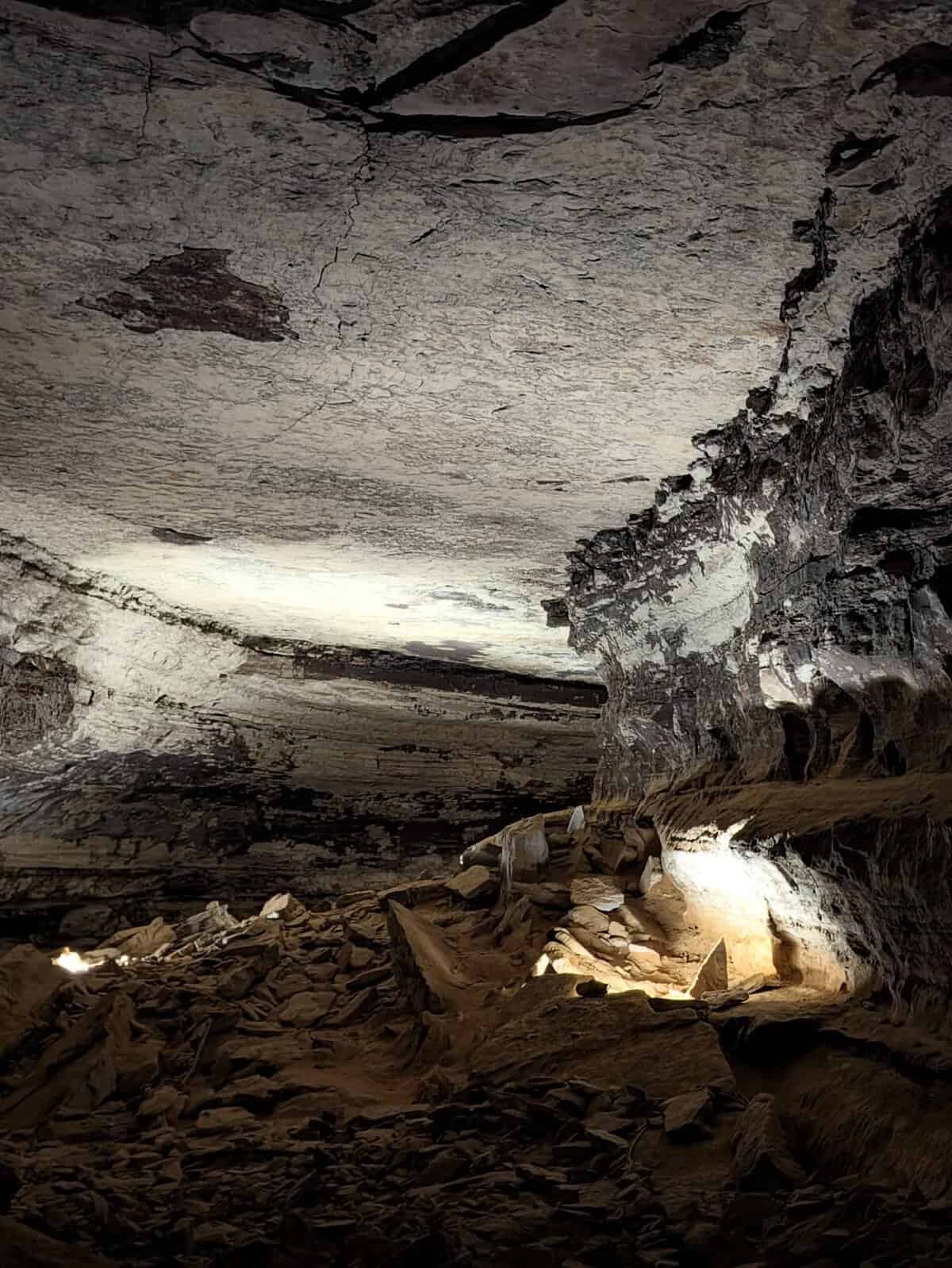
Mammoth Cave is the world’s longest known cave system, stretching for more than 400 miles of mapped passages beneath the rolling hills of central Kentucky. Its name turns out to be entirely appropriate once you’re inside and the walls open into chambers wide enough to contain entire buildings.
The cave maintains a constant temperature of around 54 degrees Fahrenheit year-round, making it a cool escape in summer and a surprisingly warm one in winter.
Early visitors in the 19th century used the cave for saltpeter mining, tuberculosis treatment experiments, and even theatrical performances in its vast underground halls.
Tour options range from short, paved walks through the most accessible passages to multi-hour historic tours that follow the same lantern-lit routes early explorers used in the 1800s. Wild cave tours venture into unmapped sections for those seeking a more adventurous underground experience.
The surrounding park above ground protects a landscape of forested ridges and sinkholes, where the landscape itself reveals the cave system below.
Where: Mammoth Cave National Park, Kentucky. Visitor Center: 1 Mammoth Cave Pkwy, Mammoth Cave, KY 42259
10. Glacier Bay National Park, Alaska
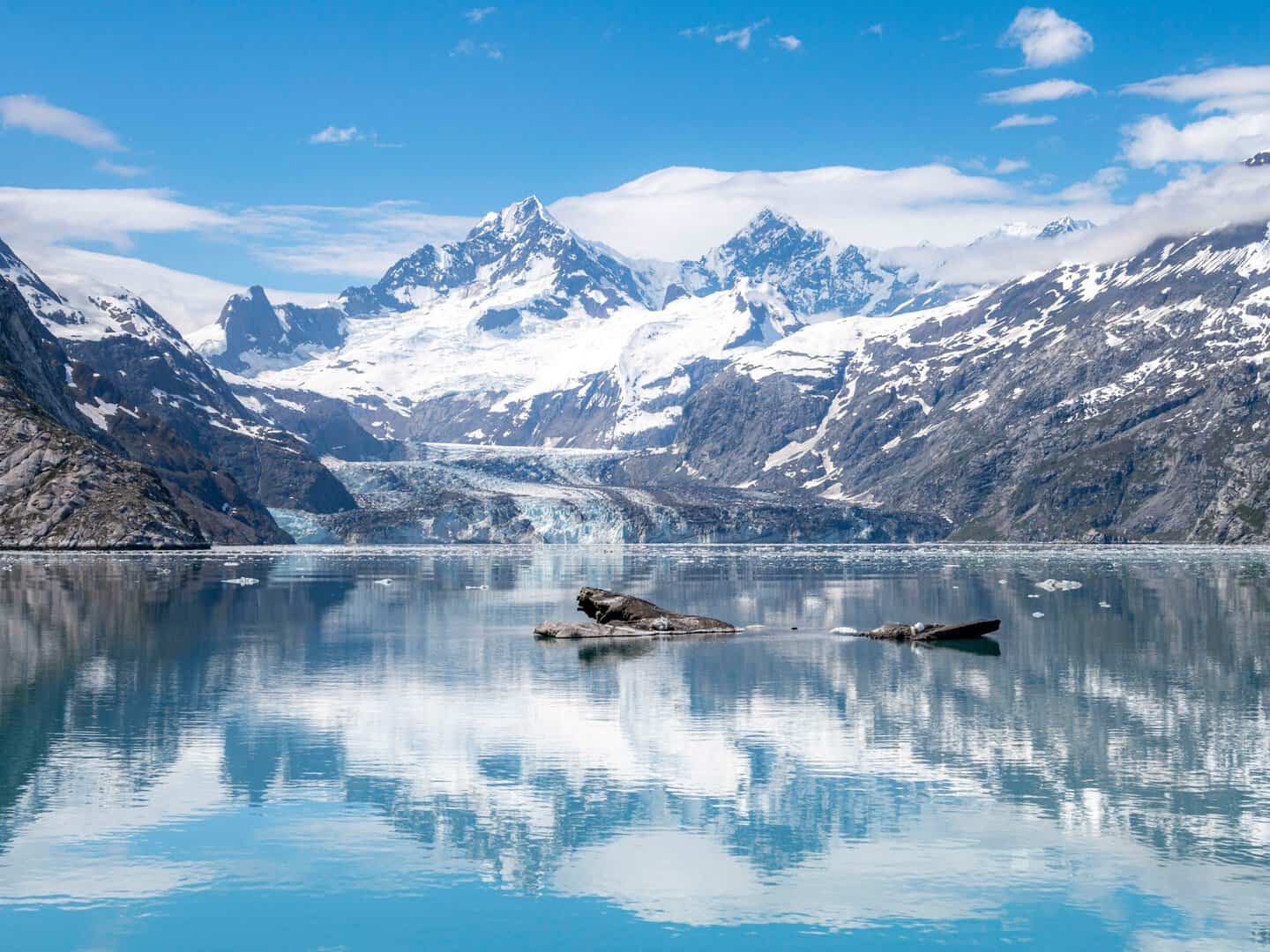
Glacier Bay National Park sits at the edge of the world as most Americans know it, tucked into the southeast corner of Alaska and accessible only by boat or small aircraft. What awaits there is a landscape in the process of dramatic transformation, one of the fastest glacial retreats ever recorded.
Just 250 years ago, the bay was entirely buried under a massive sheet of ice. Today, the glaciers have retreated dramatically, revealing a fjord system filling with new life at a pace scientists can actually measure year to year.
Watching a tidewater glacier calve enormous chunks of ice into the water below is one of the most viscerally powerful natural events accessible to park visitors.
Humpback whales, sea otters, brown bears, and mountain goats all inhabit the park, making wildlife encounters a near certainty on any given day. Kayaking through the calm, glacier-fed waters while surrounded by peaks and ice draws adventurous visitors from around the world.
The lack of roads into the park ensures a quieter, more intentional experience. Those who make the effort to get there tend to describe it as one of the most affecting places they’ve ever stood.
Where: Glacier Bay National Park, Alaska. Visitor Center: 1 Park Road, Gustavus, AK 99826
The Country Has More Wonder Than Most of Us Will Ever See
There’s a strange comfort in knowing these places exist even when you’re nowhere near them. Somewhere right now, the Colorado River is cutting a little deeper into the Grand Canyon.
Somewhere, an Old Faithful crowd is gasping on cue. The redwoods are still growing, the hoodoos are still standing, and the glaciers are still — slowly, dramatically — moving.
Wonder doesn’t run out in this country. It just waits for the right visitor to come along and notice it. Whatever is pulling you toward one of these places, follow it.
The scale of things out there has a way of reshuffling your priorities in the best possible way, and you’ll leave feeling both smaller and, somehow, more alive than when you arrived.
More stories


Share this story