10 Iconic US Bridges Worth Building an Entire Road Trip Around

I’ve always had a soft spot for bridges. There’s something about that suspended, in-between feeling, no longer on one shore and not quite on the other, that makes even a routine crossing feel a little bit like an event.
Growing up, my family had a running tradition of holding our breath every time we crossed a big bridge, a silly game that somehow made even the most ordinary overpass feel like an adventure.
Looking back, I think that game was really just a kid’s way of paying attention, of marking the moment instead of letting it blur past the car window unnoticed.
We never quite made it all the way across without breathing, of course, but that was never really the point. The point was noticing the bridge at all, instead of just driving through it without a second glance.
America is full of bridges worth that same kind of reverence. Some are marvels of engineering, others are steeped in history, and a few are simply so beautiful that the crossing itself becomes the destination.
Below, I’ve rounded up ten of the most iconic bridges in the country, each one worth planning a detour or even an entire road trip around.
From coastal suspension giants to quiet covered bridges tucked into farmland, these ten prove that bridges can be just as memorable as any national park or postcard skyline.
Consider this less a ranking and more an invitation to slow down next time you cross one, and actually notice what’s carrying you across.
1. Golden Gate Bridge, California
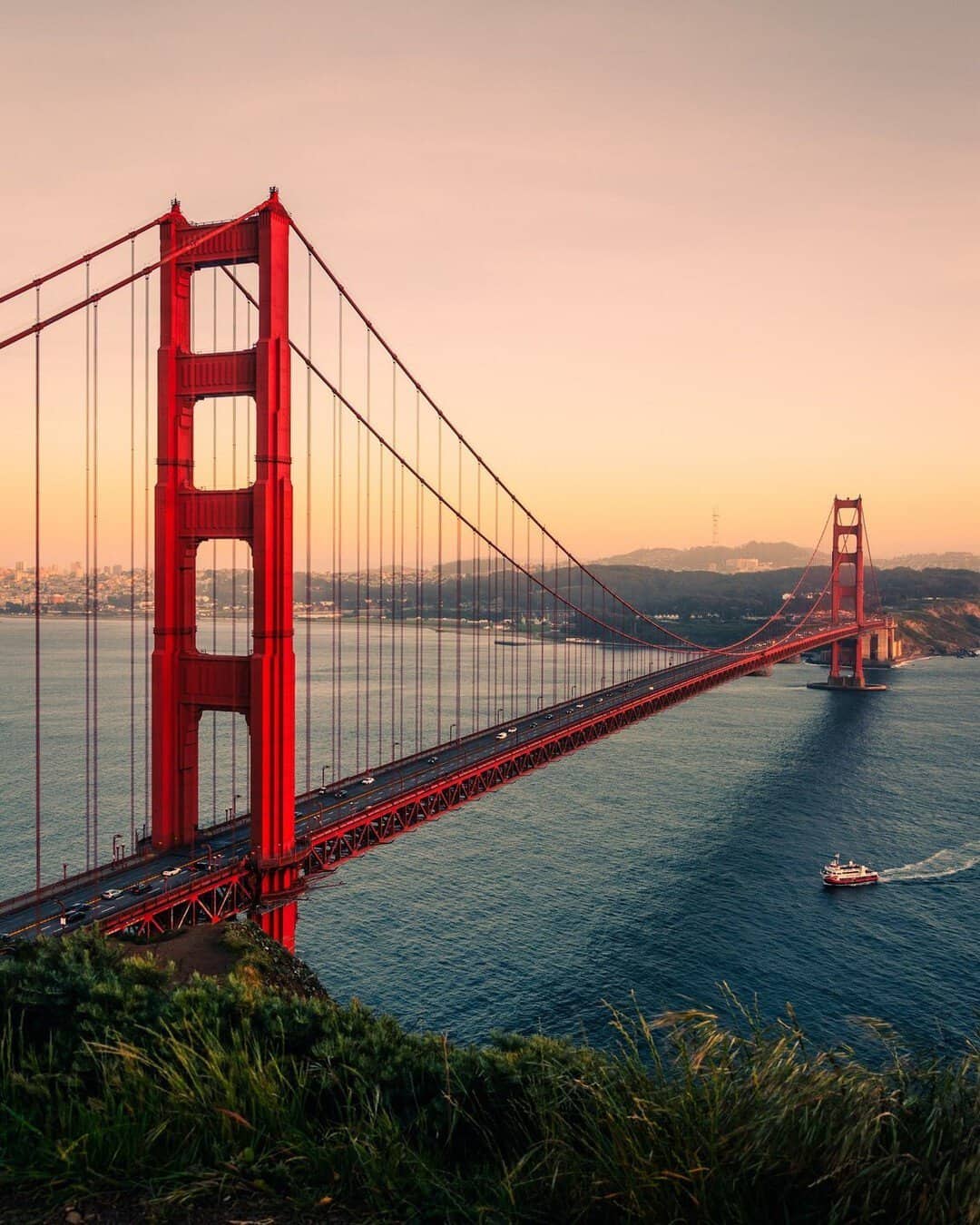
No list of American bridges could start anywhere else. Spanning 1.7 miles across the strait connecting San Francisco Bay to the Pacific Ocean, the Golden Gate Bridge has been an icon since it opened in 1937.
Its unmistakable International Orange color was chosen specifically to stand out against San Francisco’s frequent fog, and on a clear day, the towers rise a striking 746 feet into the sky.
Driving across feels like stepping straight into a postcard, especially when the fog rolls back just enough to reveal the city skyline glowing on the other side of the bay.
For an even better view, pull over at Battery Spencer just north of the bridge, where you can take in both the span and the San Francisco skyline in a single, sweeping photo.
Nearly nine decades after opening, it remains one of the most photographed structures in the world, and somehow the crossing still manages to feel special every single time.
2. Mackinac Bridge, Michigan
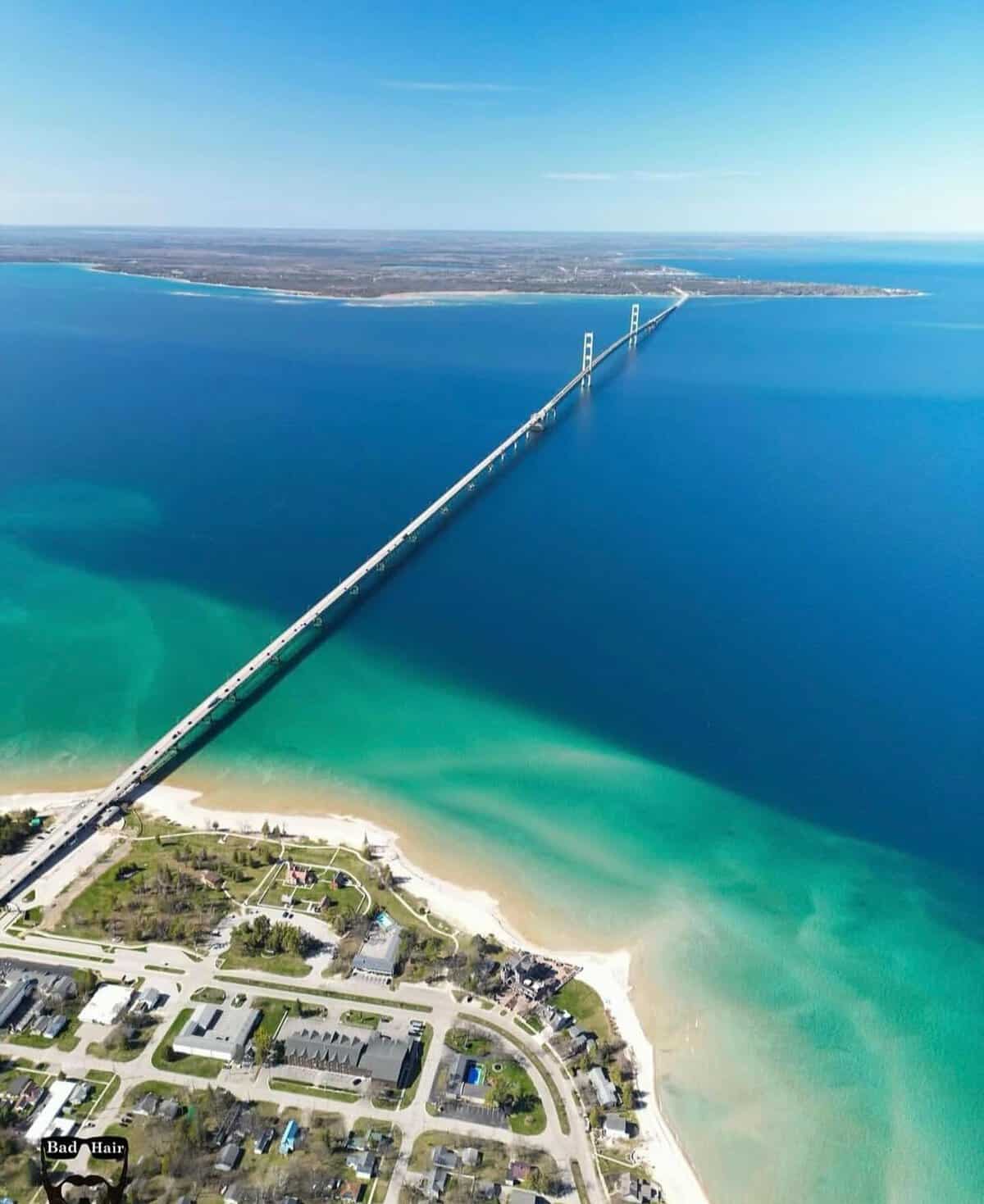
Known affectionately to locals as the “Mighty Mac,” the Mackinac Bridge connects Michigan’s Upper and Lower Peninsulas across the churning waters where Lake Michigan meets Lake Huron.
Stretching nearly five miles, it was the longest suspension bridge in the world at the time of its completion, and its engineer famously overbuilt it to withstand the region’s notoriously fierce winds.
Much of the roadway uses steel grating instead of solid pavement, a design choice meant to let wind pass through rather than push against the bridge, a detail that still surprises first-time drivers.
On a calm summer day, with sunlight sparkling across the water in every direction, the crossing offers one of the most memorable drives in the entire Great Lakes region.
On especially windy days, officials have been known to escort nervous drivers across, a small but reassuring detail that speaks to just how seriously this bridge takes safety.
3. New River Gorge Bridge, West Virginia
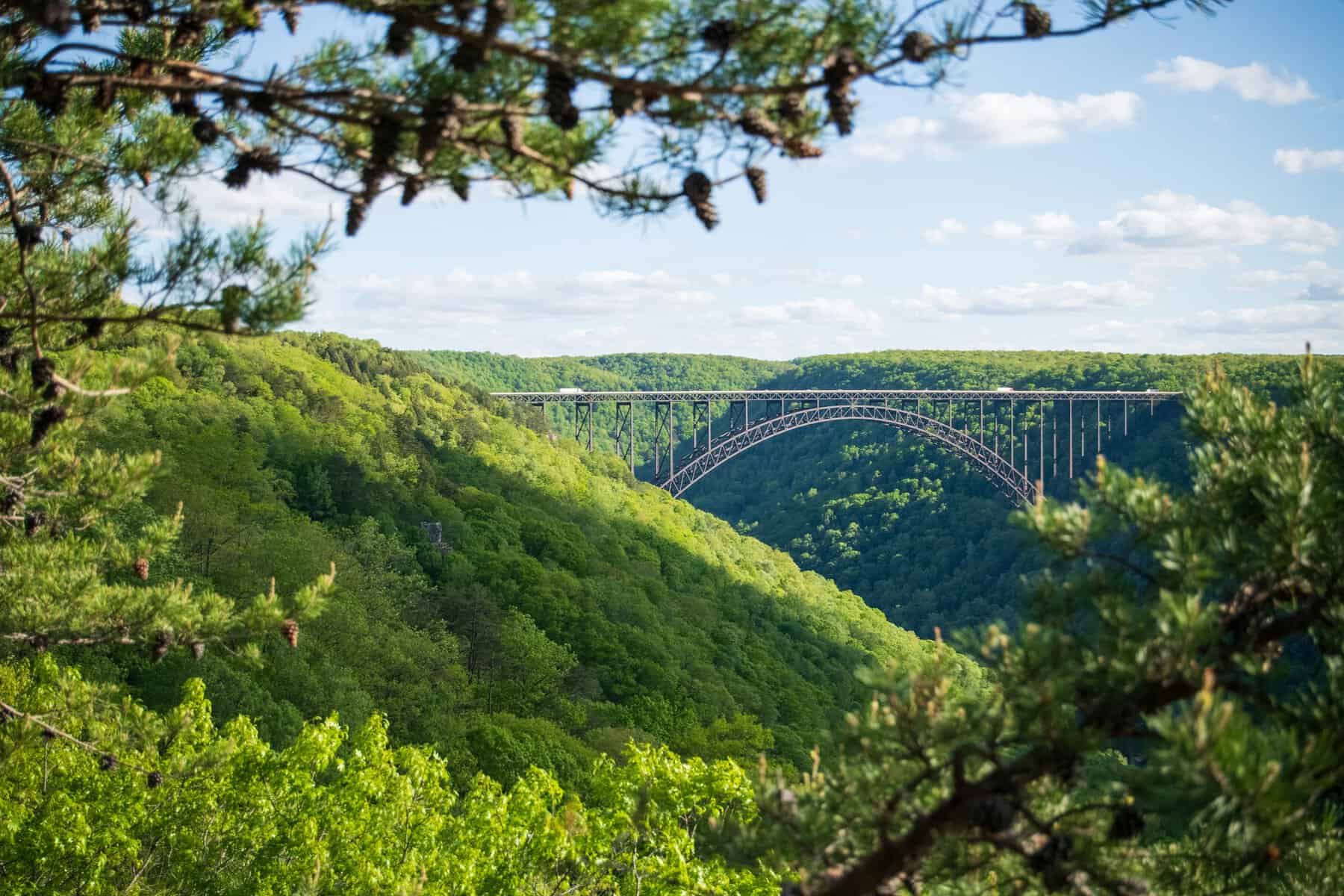
Rising 876 feet above the New River, this steel arch bridge transformed what was once a 45-minute mountain drive into a crossing that takes barely a minute.
Completed in 1977, the bridge required an astonishing 88 million pounds of steel, with engineers building the arch from both sides simultaneously until the two halves met precisely in the middle.
Every October, the bridge becomes the centerpiece of Bridge Day, when it closes to traffic so BASE jumpers can leap from the span and pedestrians can walk out to peer into the gorge below.
Since the surrounding area became New River Gorge National Park in 2020, this bridge has become its most recognizable symbol, and it’s even featured on the West Virginia state quarter.
For a closer look, several overlooks near the visitor center offer sweeping views of the arch against the dense Appalachian forest, a scene that looks especially striking in the fall.
4. Royal Gorge Bridge, Colorado
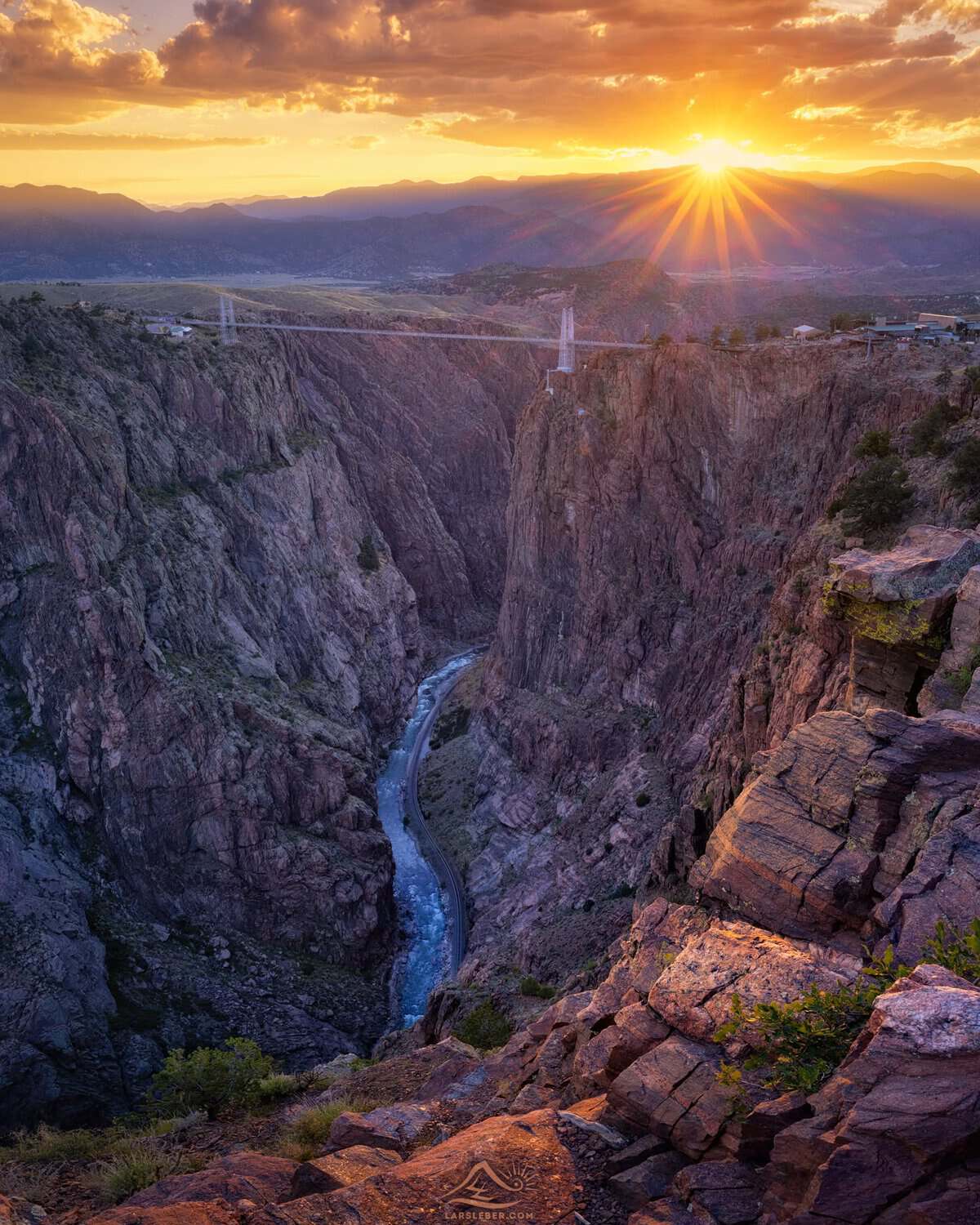
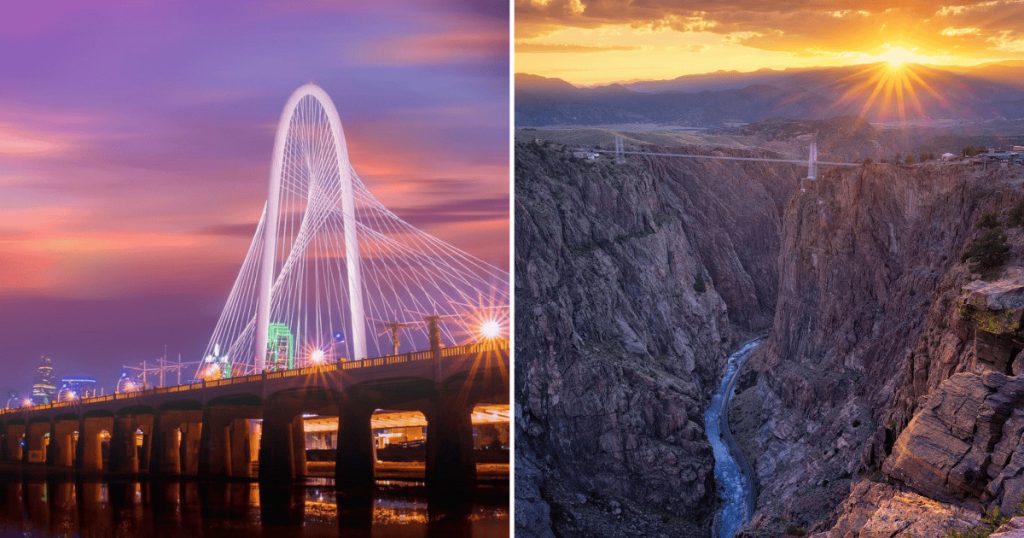
Suspended 955 feet above the Arkansas River near Cañon City, the Royal Gorge Bridge held the record for the world’s highest bridge for more than seven decades after opening in 1929.
Rather than a typical highway crossing, this bridge functions as the centerpiece of a larger park, with visitors walking its wooden-planked deck on foot rather than driving straight across.
A clear-floor gondola now offers an alternative way to take in the same jaw-dropping views, gliding more than 2,000 feet above the canyon floor for anyone hoping to skip the walk.
Bighorn sheep are occasionally spotted along the canyon walls here, adding an unexpected wildlife encounter to what’s already one of Colorado’s most dramatic pieces of engineering.
The surrounding park adds even more to explore, with a zipline and aerial tram offering additional ways to take in the gorge from nearly every possible angle.
5. Cornish-Windsor Covered Bridge, New Hampshire
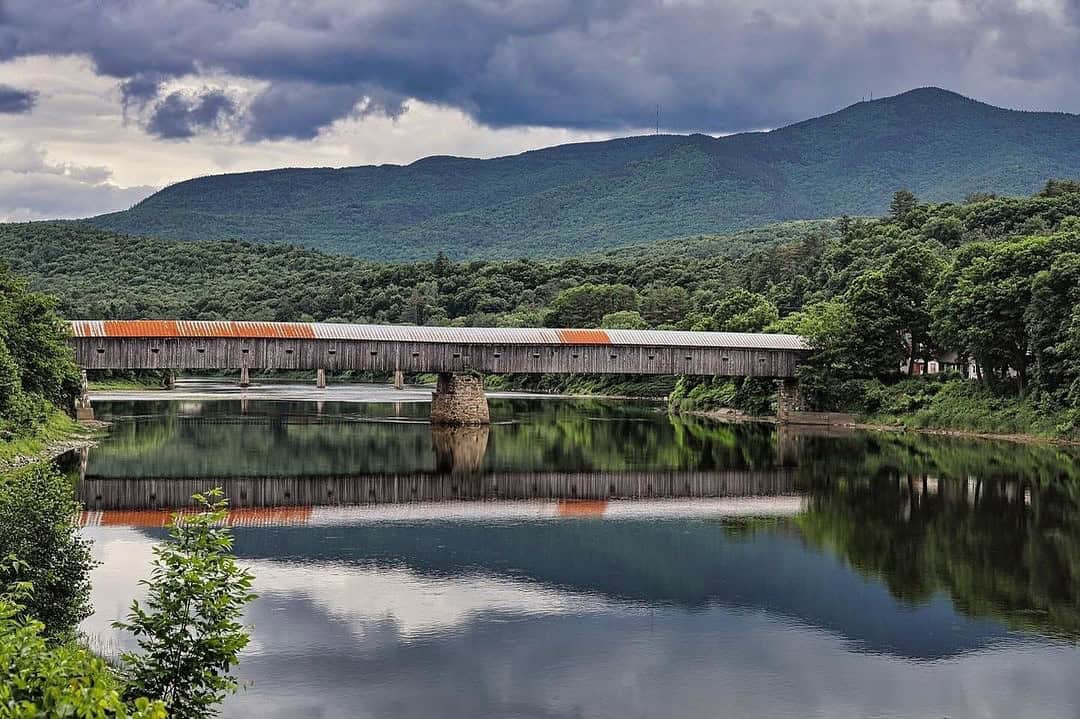
Built in 1866, this 449-foot covered bridge spans the Connecticut River between Cornish, New Hampshire, and Windsor, Vermont, making it one of the rare bridges where a single crossing takes you between two states.
As one of the longest wooden covered bridges still standing in the country, it offers a genuinely old-fashioned driving experience, complete with the creak of timber overhead.
Fall is an especially rewarding time to visit, when the surrounding hillsides erupt in color, and the bridge itself becomes a favorite subject for photographers chasing New England’s famous foliage.
The best vantage point sits just across the New Hampshire side, along Route 12A, where several pull-offs let you park and walk back for a proper photo of the bridge in its full setting.
Crossing it feels like a small trip back in time, a reminder of how travelers once experienced New England’s rivers long before modern steel spans took over.
6. Roseman Covered Bridge, Iowa
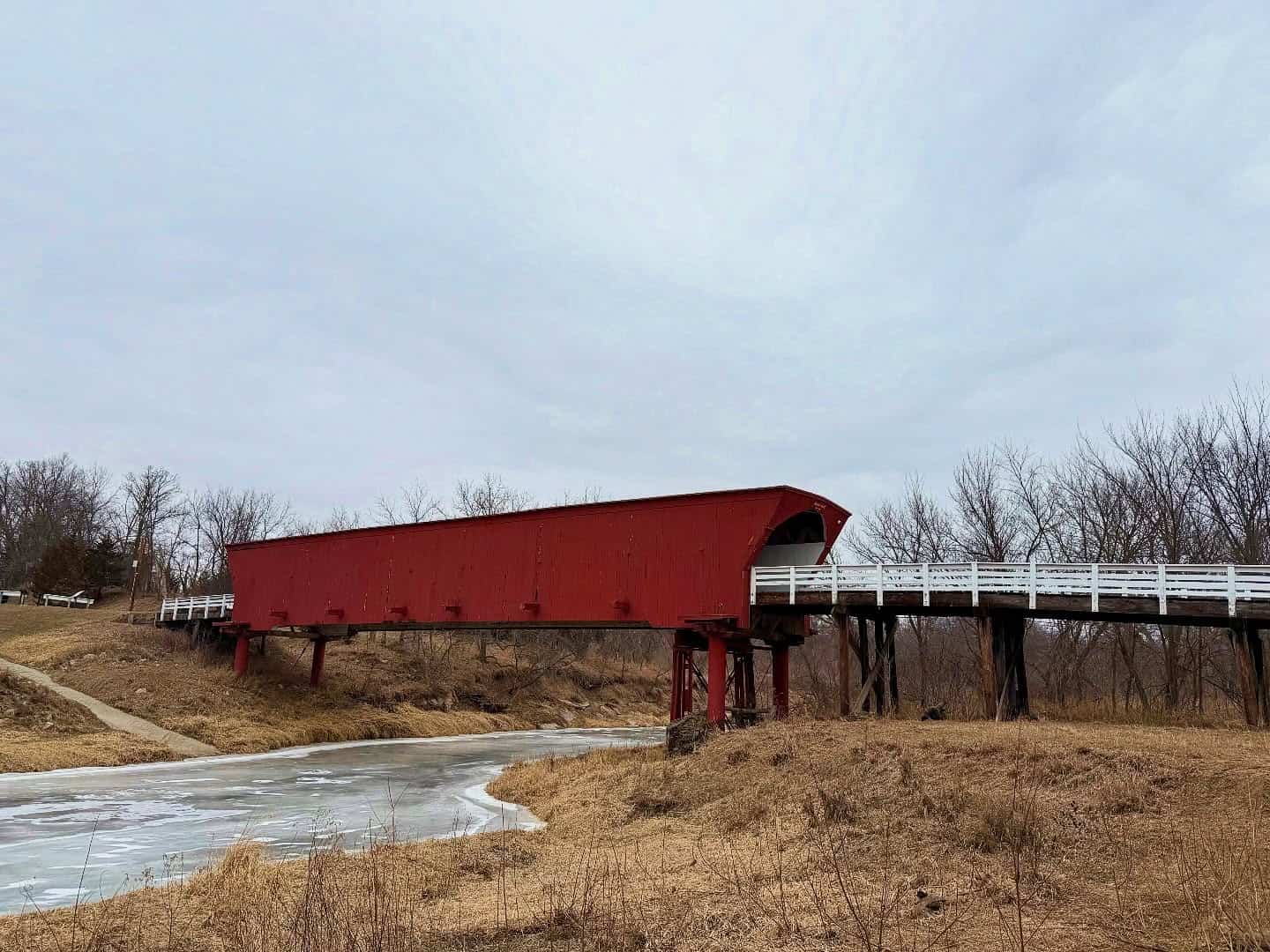
Tucked into the rolling farmland of Madison County, the Roseman Covered Bridge earned lasting fame as one of the settings in “The Bridges of Madison County,” both the novel and the film that followed.
Originally built in 1883 and lovingly restored in 1992, the bridge has since earned a spot on the National Register of Historic Places, preserving its place in both local and pop culture history.
Its red-painted wooden walls and simple, rustic construction offer a quieter, more intimate contrast to some of the massive steel spans elsewhere on this list.
Visiting feels like stepping into the pages of the story itself, especially in early morning light when mist tends to settle over the surrounding fields.
Several other covered bridges dot the same county, making it easy to turn a single stop into a full afternoon spent tracking down each one along quiet country roads.
7. Chesapeake Bay Bridge-Tunnel, Virginia
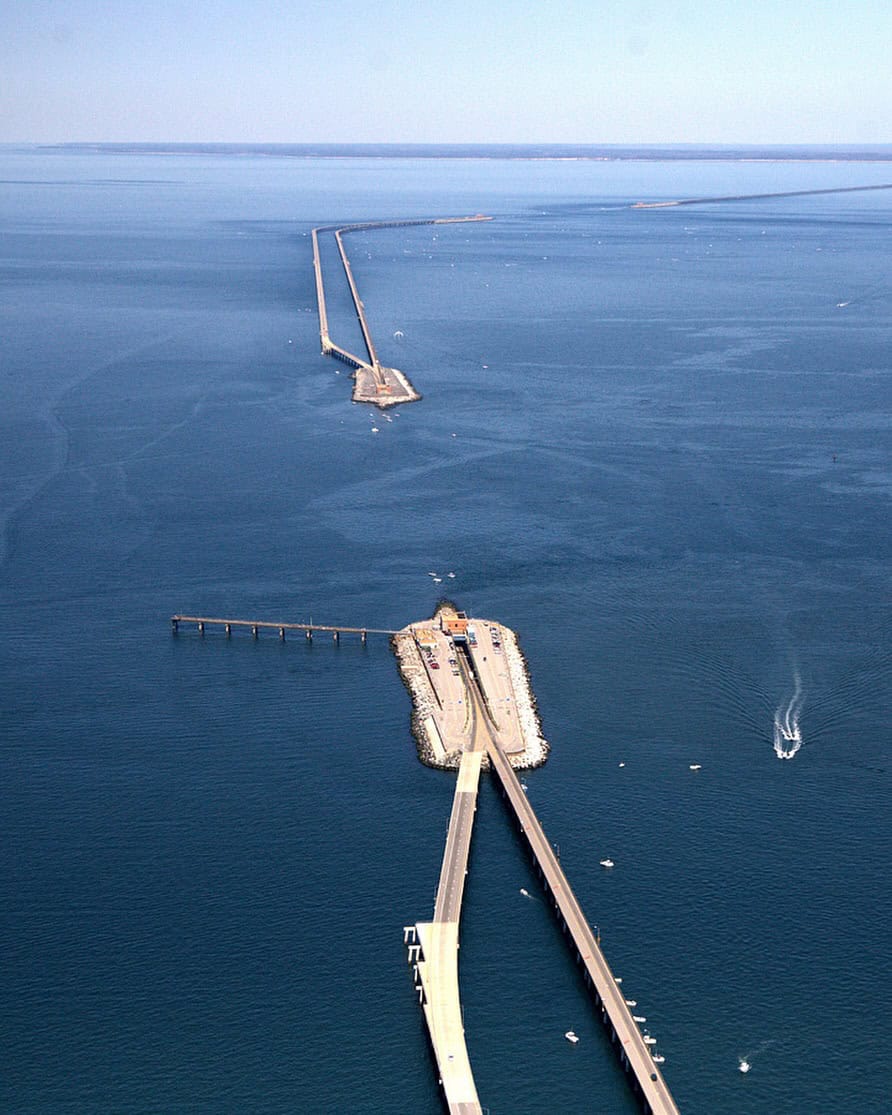
Few crossings in America are as ambitious as this one. The Chesapeake Bay Bridge-Tunnel links Virginia Beach to the Delmarva Peninsula across 17.6 miles that combine bridges, tunnels, and artificial islands.
Opened in 1964, the structure includes two mile-long tunnels that dip beneath the water to allow massive cargo ships to pass safely overhead, an engineering feat that still impresses drivers today.
Along the way, travelers pass through stretches where land disappears entirely from view, replaced by nothing but open water stretching toward the horizon in every direction.
Dolphins are occasionally spotted from the causeway, an unexpected bonus for anyone making the crossing on a calm, clear day.
A second parallel span, added in 1999 to handle growing traffic, means the crossing now moves more smoothly than ever, even during the busiest summer travel weekends.
8. Sunshine Skyway Bridge, Florida
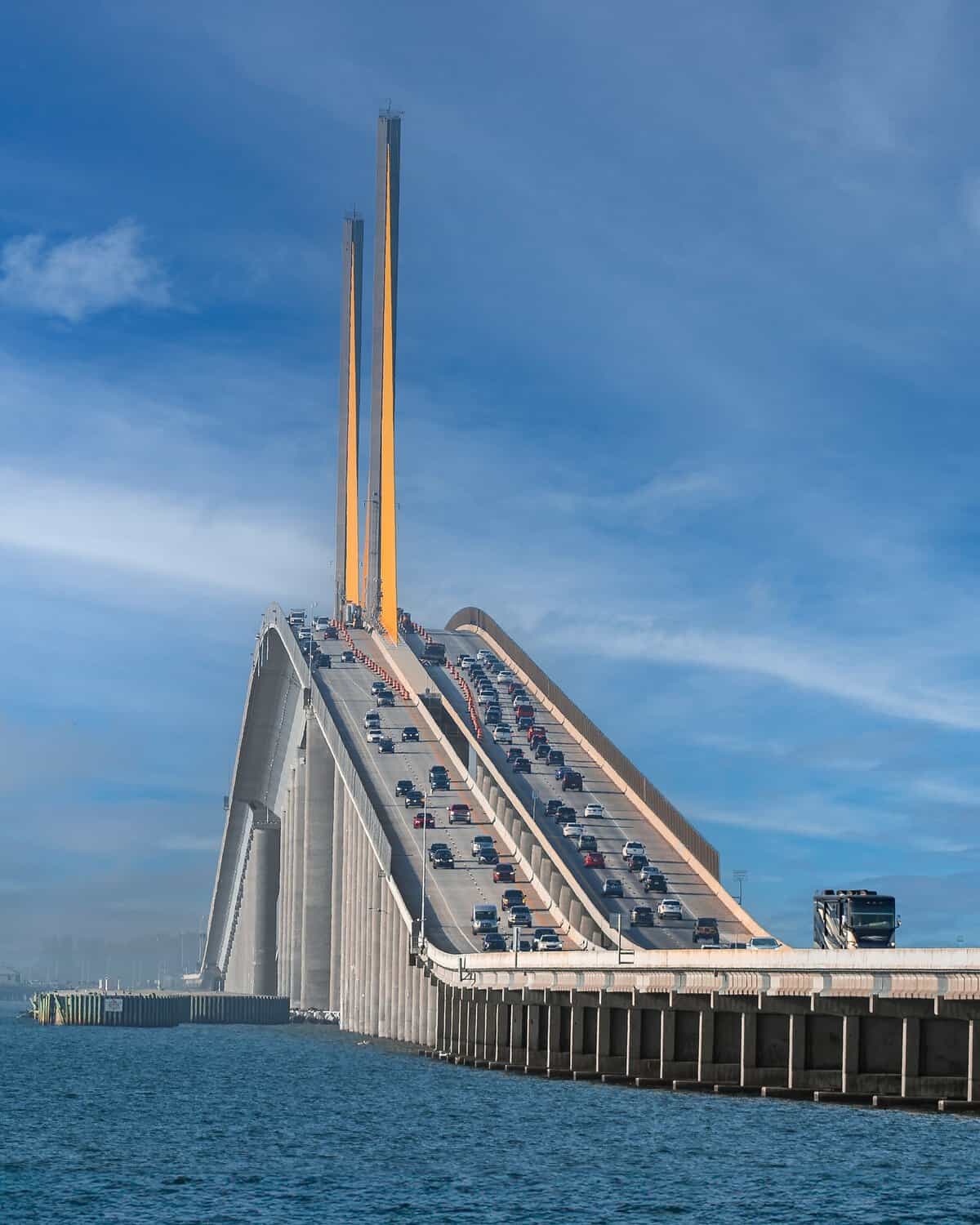
Arcing gracefully across Tampa Bay between St. Petersburg and Terra Ceia, the Sunshine Skyway Bridge is as much a work of art as it is a functional crossing.
Its cable-stayed design, anchored by a striking central pylon, earned the bridge a National Historic Civil Engineering Landmark designation in 2005, a nod to both its beauty and its innovation.
The bridge was rebuilt after a devastating 1980 accident, and its modern design includes generous clearance beneath the main span to safely accommodate today’s much larger cargo ships.
At either end, fishing piers built from sections of the old bridge give visitors a way to enjoy the structure without ever getting behind the wheel, casting a line while the new span glows overhead.
At night, color-coded lights along the cables give the entire bridge a soft, glowing silhouette, making it just as memorable to see from a distance as it is to drive across.
9. London Bridge, Arizona
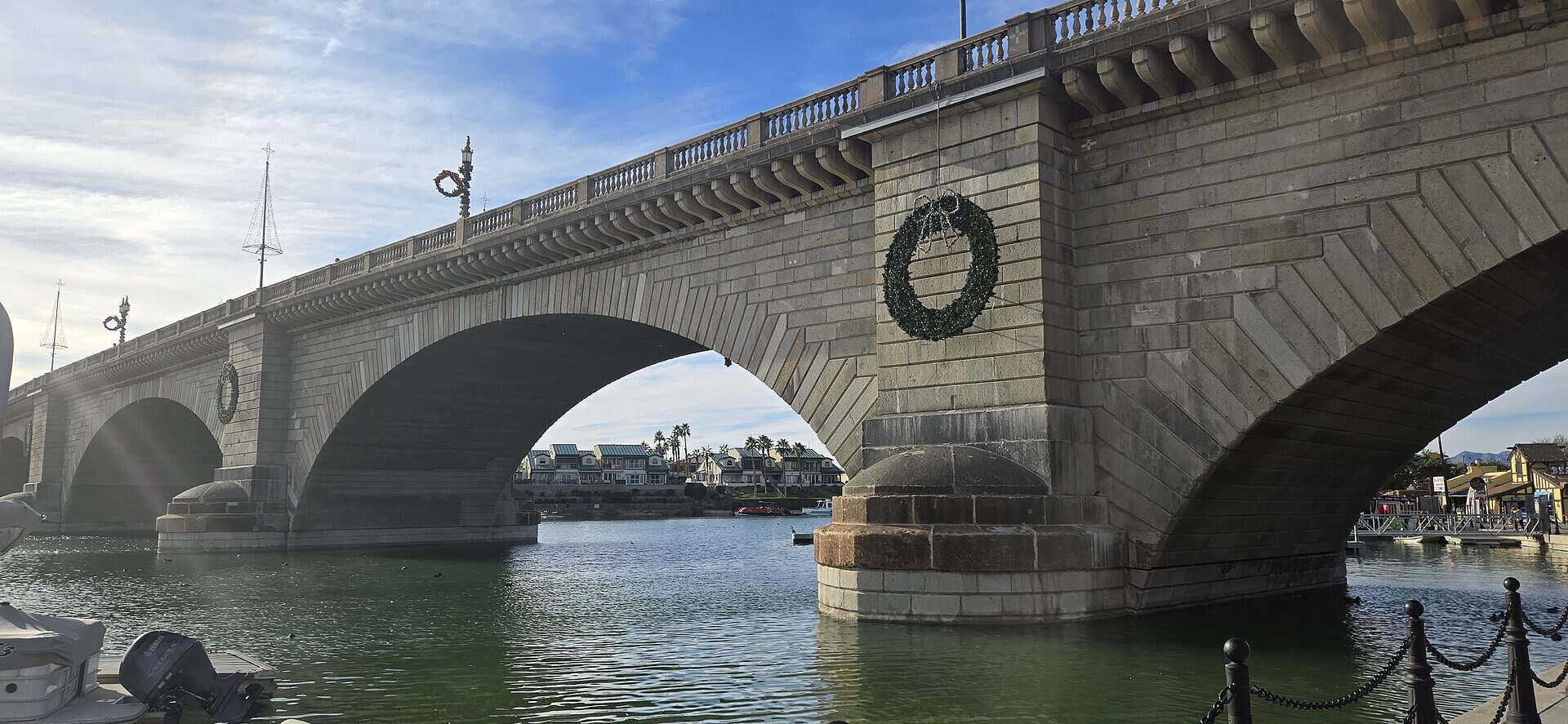
Yes, that London Bridge. In one of the more delightfully unusual stories in American infrastructure, this historic bridge was purchased, dismantled, and shipped stone by stone from England to the Arizona desert.
Reassembled in Lake Havasu City in the early 1970s, the bridge now spans a channel of the Colorado River, complete with an English-themed village at its base, right down to a red phone booth.
Visitors can drive across, walk beneath it, or join a guided tour to learn the full, slightly improbable story of how a piece of London ended up in the middle of the Mojave Desert.
Surrounded by boats, sunshine, and desert scenery, the bridge has become the unofficial symbol of Lake Havasu City, drawing curious travelers who simply have to see it to believe it.
A collection of replica lighthouses lines the nearby shore as well, adding a few more unexpected photo stops to what’s already one of the more surprising detours in the Southwest.
10. Margaret Hunt Hill Bridge, Texas
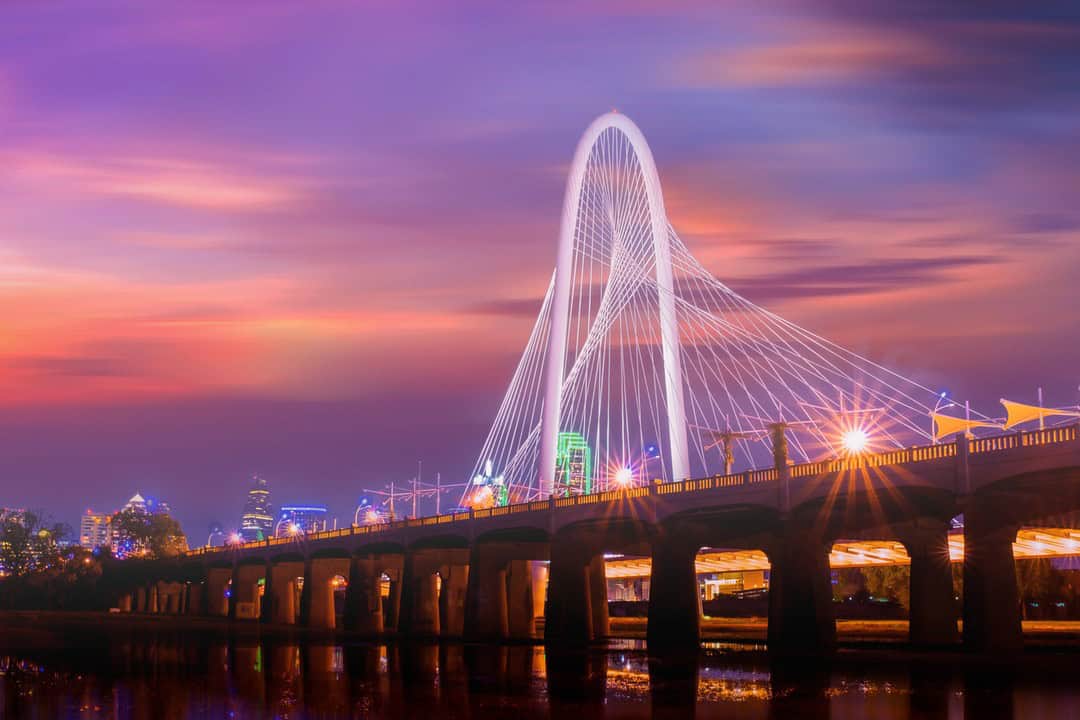
Designed by renowned Spanish architect Santiago Calatrava, the Margaret Hunt Hill Bridge has become one of Dallas’s most photographed modern landmarks since opening in 2012.
Its single, sweeping white arch rises above the Trinity River, held up by a web of cables that give the whole structure a striking, almost futuristic silhouette against the Texas sky.
The bridge is especially stunning after dark, when its arch lights up in vivid color, transforming an already dramatic piece of architecture into one of the city’s signature nighttime views.
Unlike the older, historic bridges on this list, Margaret Hunt Hill proves that America’s bridge-building story is still very much being written, one bold, modern design at a time.
It’s part of a small family of Calatrava-designed bridges planned for the area, a sign that Dallas’s skyline is only expected to grow more distinctive in the years ahead.
Every Crossing Tells a Story
What strikes me most about these ten bridges isn’t just their scale or their engineering, impressive as both are. It’s how differently each one captures a sense of place.
Some, like the Golden Gate and Mackinac, feel monumental, built to be seen from miles away. Others, like Roseman and Cornish-Windsor, feel intimate, more like a secret shared with the surrounding countryside.
A few, like London Bridge, carry stories so unlikely you’d almost need to see them to believe them, proof that not every American landmark actually started as American at all in the first place.
And a few, like Margaret Hunt Hill, remind us that this particular chapter of American ingenuity is nowhere near finished being written.
Together, they’re a reminder that a bridge is never just a way to get from one side to the other. Sometimes the crossing itself is worth the entire trip.
So next time you’re mapping out a road trip, consider routing it around one of these ten spans. Some of the best views in the country are waiting right there in the middle, suspended between two shores.
More stories



Share this story