Three Offbeat “Only in New Jersey” Museums You Should Check Out

New Jersey has always been a state of passionate people.
Thomas Edison. Bruce Springsteen. Meryl Streep. Derek Jeter… Just to get started!
Different fields. Different talents. One common trait: an intense commitment to what they do.
Not everyone channels that passion into inventions, music, acting, or sports.
Across New Jersey, fascinating museums have sprung from the interests of people who simply could not let go of an idea, a collection, or a piece of history they believed was worth preserving.
What these places have in common is the people behind them. Real people.
A pest-control expert who wanted people to appreciate bugs instead of fearing them. A lifelong collector who never outgrew his fascination with miniature cars. Former miners and preservationists who refused to let an important piece of New Jersey history disappear.
None of these museums were created by a committee. They exist because somebody cared deeply about something and decided it was worth sharing with everyone else.
The result is a collection of attractions that are educational, unexpected, and undeniably New Jersey.
Insectropolis
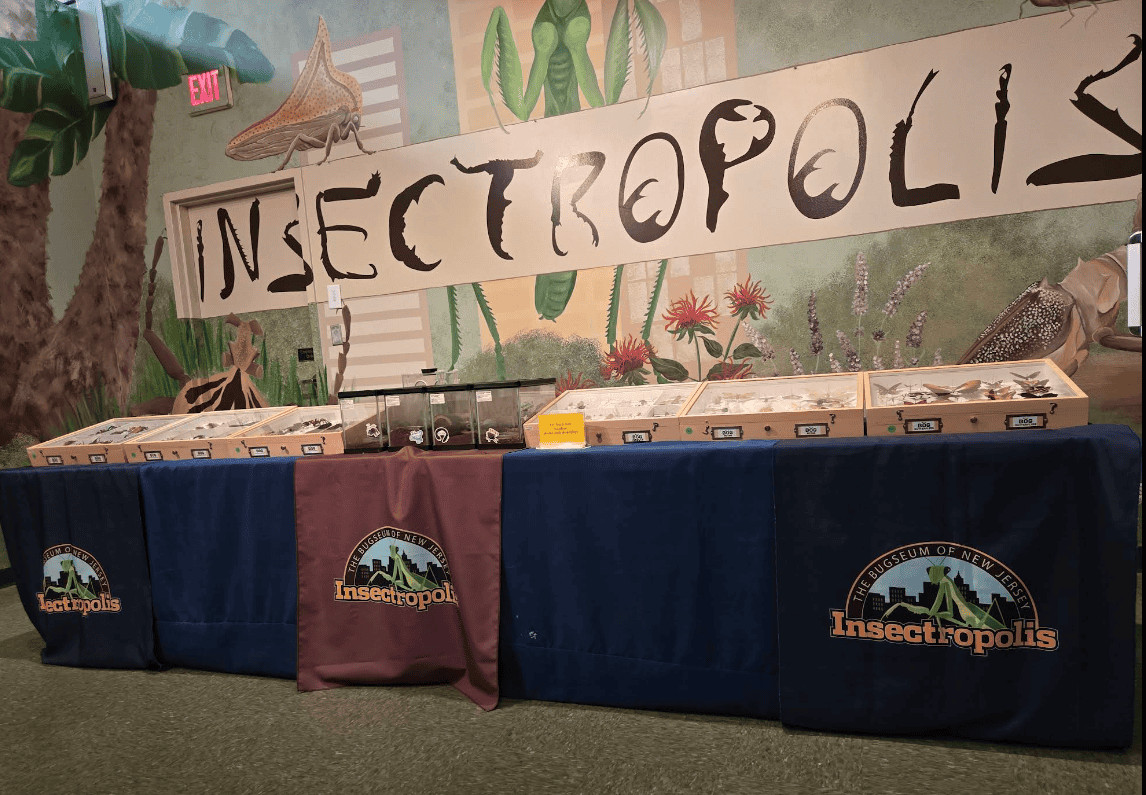
If you are on your way to the Shore through central Jersey, stop at the giant praying mantis in Toms River. You have arrived at Insectropolis, or as it’s more fondly known locally, The Bugseum of New Jersey.
That’s right, New Jersey has its own museum dedicated to educating the public about insects.
The museum’s roots trace back to founder Chris Koerner and his family’s pest-control business. After years of identifying insects for homeowners, Chris became convinced that most people understood very little about the tiny creatures sharing their environment. He believed that if people understood the role bugs played, they would see them in a different light.
And so, Insectropolis was founded. Its mission: replace fear and disgust with curiosity. And maybe, even respect.
Rather than focusing solely on insects as pests, exhibits explore their role as pollinators, decomposers, predators, and essential pieces of larger ecosystems. Visitors encounter giant insect models, displays explaining insect adaptations, and live specimens that often inspire equal parts fascination and unease.
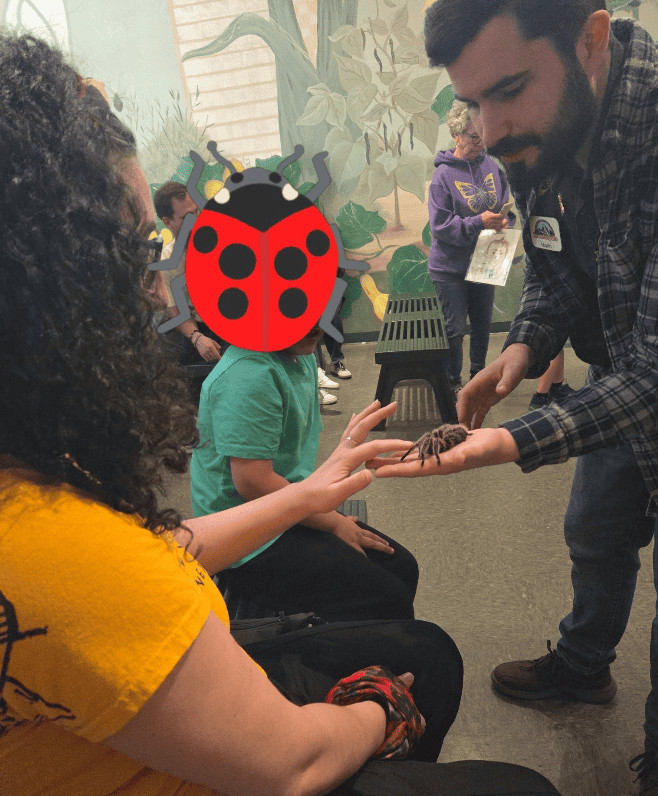
Kids and bigger kids alike come away wowed by exhibits such as Caterpillar Café and Creepy Cavern. The Creepy Cavern specializes in tarantulas. It’s maybe less scary once visitors meet “Rosie,” a favorite tarantula who sometimes poses for drawing classes with school groups.
Drawing classes. Yup! Even birthday parties can be held at Insectropolis. Lucky kids may even be able to “pet” a bug or two.
Insectropolis sits close to New Jersey’s famous beaches. Many visitors associate the region with boardwalks and summer tourism, yet the museum quietly highlights another side of the Shore ecosystem. Coastal marshes, forests, Pine Barrens habitats, and barrier islands support a remarkable diversity of insect life.
And by the way, if you find an interesting bug, the team at Insectropolis is happy to take a look and identify it for you.
Insectropolis visitors often arrive expecting something creepy and leave with a new appreciation for creatures they had never really paid attention to before. Ironically, it took a man from the pest-control business to become one of New Jersey’s most passionate advocates for bugs.
The Sterling Hill Mining Museum
For a state known as The Garden State, mining is probably not the first thing that comes to mind.
New Jersey and sandy beaches? Absolutely.
New Jersey and Rock and Roll? Of course.
But New Jersey and mines? As in rocks and minerals?
And surprisingly, the answer is yes.
Truth: most people don’t realize northern New Jersey was once home to one of the richest zinc ore deposits in the world.
Tucked away in a corner of Sussex County, The Sterling Hill Mining Museum preserves the story of an industry that once helped shape northern New Jersey.
The site operated as a working zinc mine for more than a century and was the last active mine in New Jersey when it finally closed in the late 1980s.
Had a group of former miners, geologists, and preservationists not stepped in, much of that history — and the mine structure itself — might have disappeared forever.
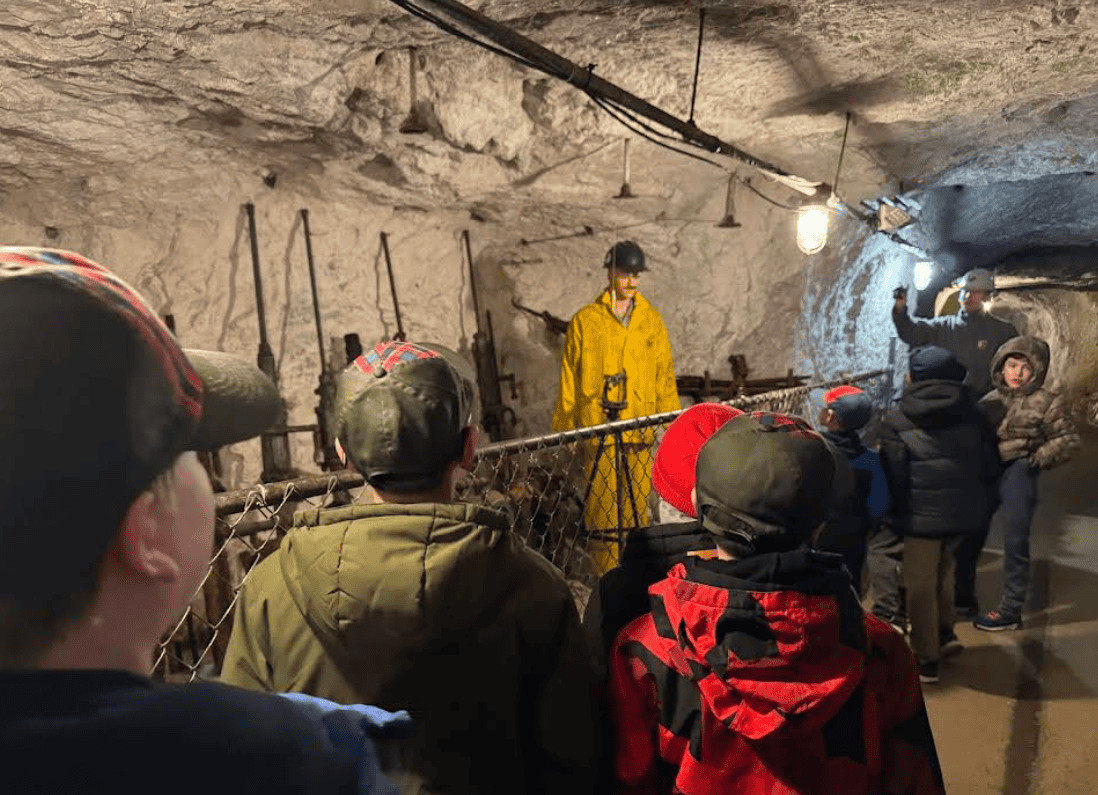
Today, the mine is listed on the National Register of Historic Places, and visitors can take an immersive two-hour tour that offers far more than a typical museum visit.
First, visitors descend underground into the former mine itself. Temperatures drop. The tunnels narrow, and it gets very, very quiet. The experience feels part science museum, part industrial archaeology, and part adventure. Suddenly visitors find themselves standing in spaces where generations of miners once worked.
Then comes the feature that makes Sterling Hill unlike almost any other museum, mining or not, in the country.
Housed in the adjacent mill building is a museum within the museum, featuring nearly 700 fluorescent mineral specimens.
Visitors will first encounter the “Color Wall,” an impressive floor-to-ceiling display of 100 fluorescent mineral specimens. Some are quite small, while others stretch 2 to 3 feet long and weigh more than 100 pounds.
A carefully timed lighting sequence allows visitors to see the minerals first under ultraviolet light, followed by a brief period of darkness, so the phosphorescence — or “afterglow” — of some minerals can be seen.
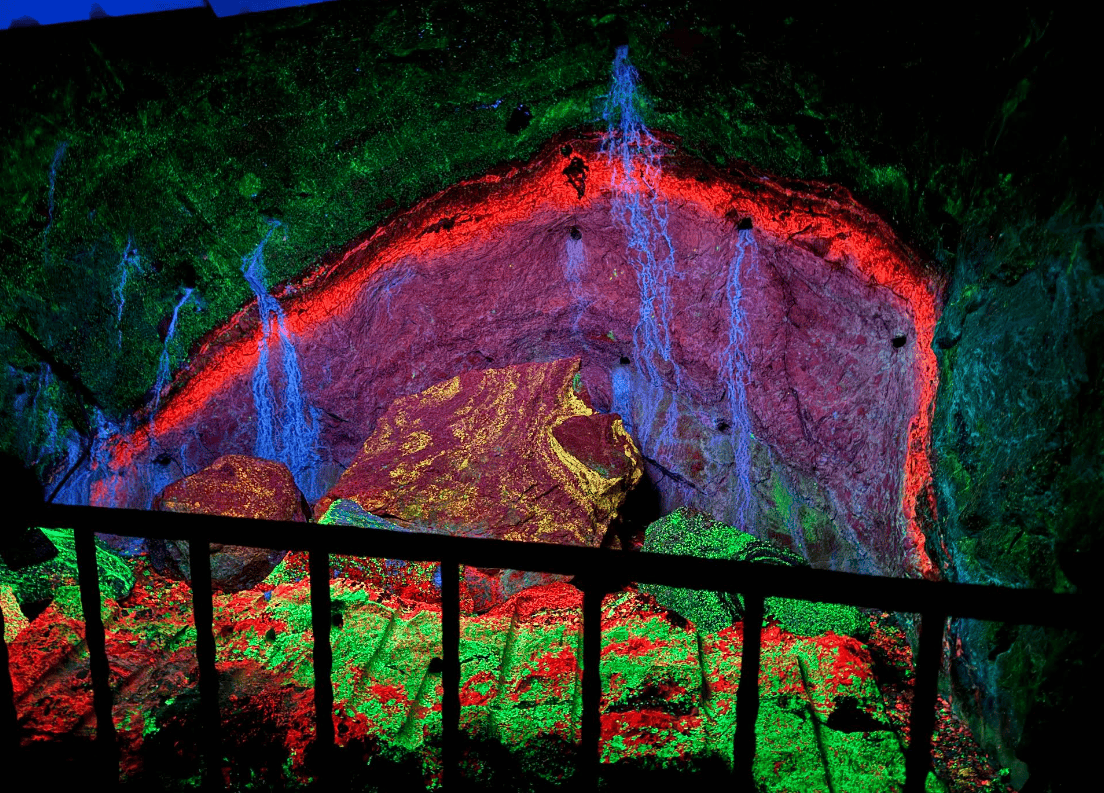
Under ultraviolet light, the mine’s mineral deposits explode into brilliant colors. Neon greens, vivid oranges, glowing reds, and electric yellows transform ordinary-looking stone into something that feels almost otherworldly.
It is a singularly “wow” experience that can only be found at the Sterling Hill mine. For many visitors, it’s the moment they remember long after the tour ends.
The museum tells a larger story as well. New Jersey’s industrial past is often overshadowed by its modern suburban identity. Yet mining, manufacturing, and transportation once powered entire communities across the state.
In its day, the mine attracted thousands of workers of every ethnic background to this rural area: Eastern Europeans, Irish, Cornishmen, and Hispanics from Texas and Mexico. The town, named for its founder Robert Ogden III, grew exponentially because of it.
Even Thomas Edison had a connection to the mine, owning it for a period through family ties to the Ogden family.
Families arrive expecting rocks and leave talking about glowing minerals.
History enthusiasts come for the industrial story.
Science lovers come for the geology.
What unites them is a sense of discovery.
The museum exists because a group of people refused to let a forgotten chapter of New Jersey history disappear into the ground.
Matchbox Museum
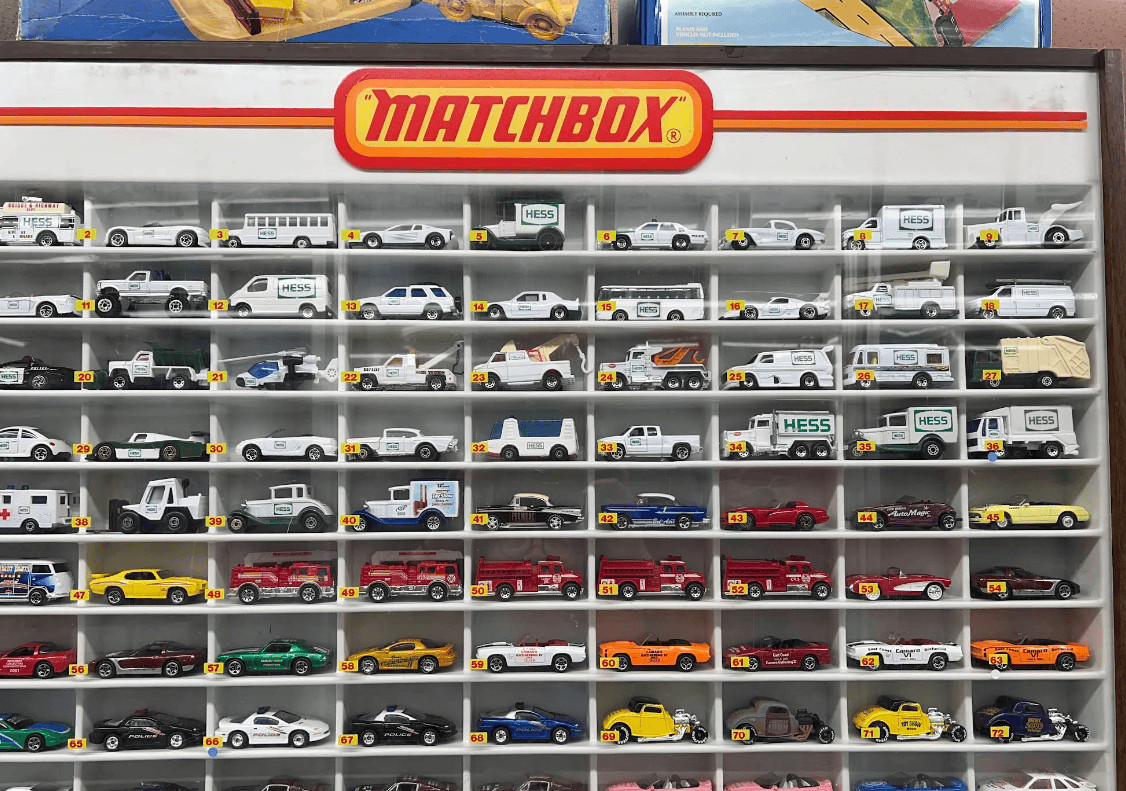
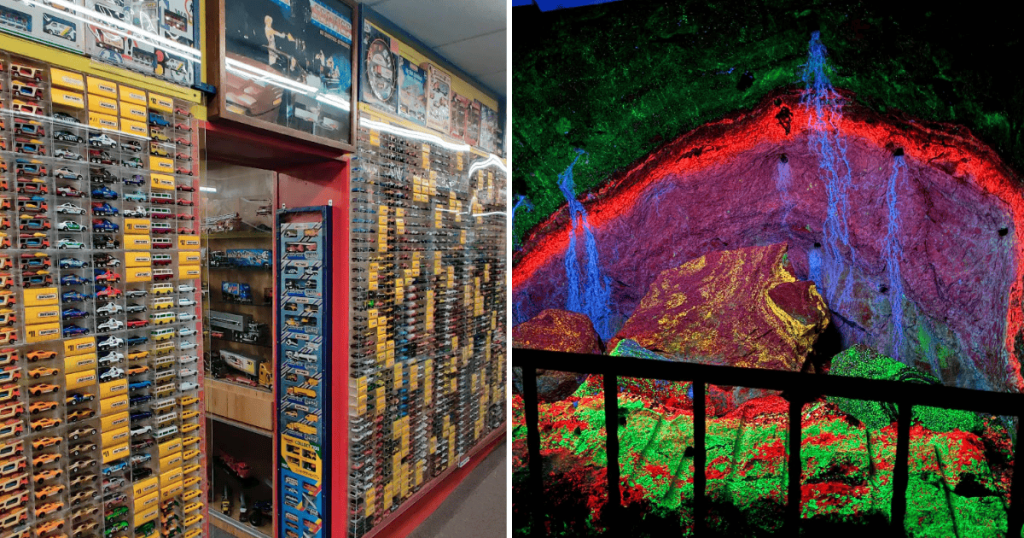
Matchbox cars are part of so many of our core childhood memories. Didn’t we all have our favorite? Maybe we still buy them for the little ones in our lives. They are just iconic.
Located in Newfield, in Gloucester County, a museum houses thousands of these miniature vehicles.
Founder Everett Marshall has had a passion for Matchbox cars since he was a kid. What began as a childhood hobby eventually grew into one of the largest public collections of Matchbox vehicles in the country.
In fact, Marshall estimates that there are 60,000 plus vehicles in the museum, although not all are on display.
For generations of American kids, Matchbox cars represented freedom, adventure, and the ability to create entire worlds on a living room floor. Most children eventually outgrew the hobby. Marshall never did. If anything, his passion began to burn brighter.
The earliest Matchbox vehicles arrived in the United States during the early boom years when automobiles represented optimism and mobility.
The road trip was an achievable fantasy fueled by stylish cars, cheaper gas, and the allure of the open road. And while Matchbox replicas reflected the real cars people drove, admired, and dreamed of owning, they also delivered a little slice of the American Dream.
Visitors encounter everything from fire trucks and construction equipment to sports cars and vintage sedans. Children are awed by the sheer number of Matchbox cars, stacked seemingly to the ceiling.
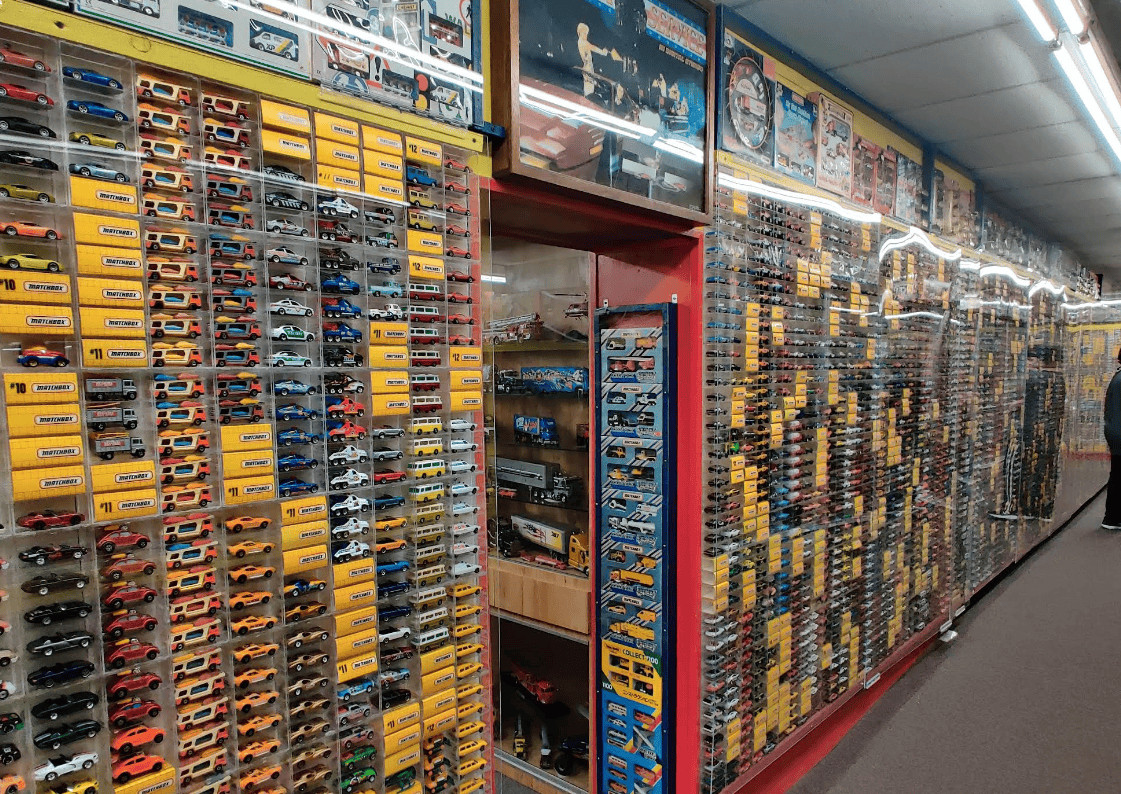
For adults, a visit can feel a bit like walking down memory lane. Many find themselves pointing out models they owned as children or cars that resemble the real-life cars driven by parents and grandparents.
Everett’s collection contains one-of-a-kind Matchbox prototypes, design models, and even his own original cars from the 1950s, which he repainted in “better colors” as a kid, effectively destroying their value as collectibles. But to Everett, they remain meaningful all the same.
And funny enough, some of the cars’ original package boxes are worth more than the vehicles themselves.
What makes the Matchbox Road Museum special isn’t the monetary value of the collection. It is the reminder that ordinary objects can become historical artifacts when someone cares enough to preserve them.
Some people outgrow Matchbox cars. Everett Marshall simply found room for 60,000 more.
More stories


Share this story