7 Stunning Sunset Spots Across America That Deserve a Spot on Every Traveler’s Bucket List

I know a woman who keeps a sunset journal. Not a diary of her day — just the sunsets. One or two sentences, the date, the location, and what color the sky turned at the exact moment the sun disappeared. She’s been keeping it for eleven years.
When I asked her why, she said, “No two are exactly the same, and I got tired of forgetting them.”
That’s the thing about a truly spectacular sunset. It demands to be witnessed properly — not photographed and scrolled past, not glanced at through a window. It asks you to stop, turn toward it, and let the day dissolve in whatever color the sky is offering.
Some places in America make that request impossible to refuse. Below are seven of them, each one capable of producing a sunset that earns a line or two in anyone’s journal.
A small piece of advice that works at all seven of these locations: put the camera down for at least five minutes. The instinct to photograph a beautiful sunset before experiencing it is understandable, and entirely backward.
The photographs will still be there when the light is gone. The light itself won’t. That distinction, practiced regularly, turns out to change the quality of a lot more than just the sunsets.
The seven destinations below will each give you that opportunity. The rest is up to you and whatever color the sky chooses to offer.
1. Mallory Square, Key West, Florida
Key West’s sunset tradition at Mallory Square is something the city invented entirely on its own and has been perfecting since the 1960s, when artists and free spirits began gathering at the waterfront each evening to mark the end of the day with deliberate collective attention.
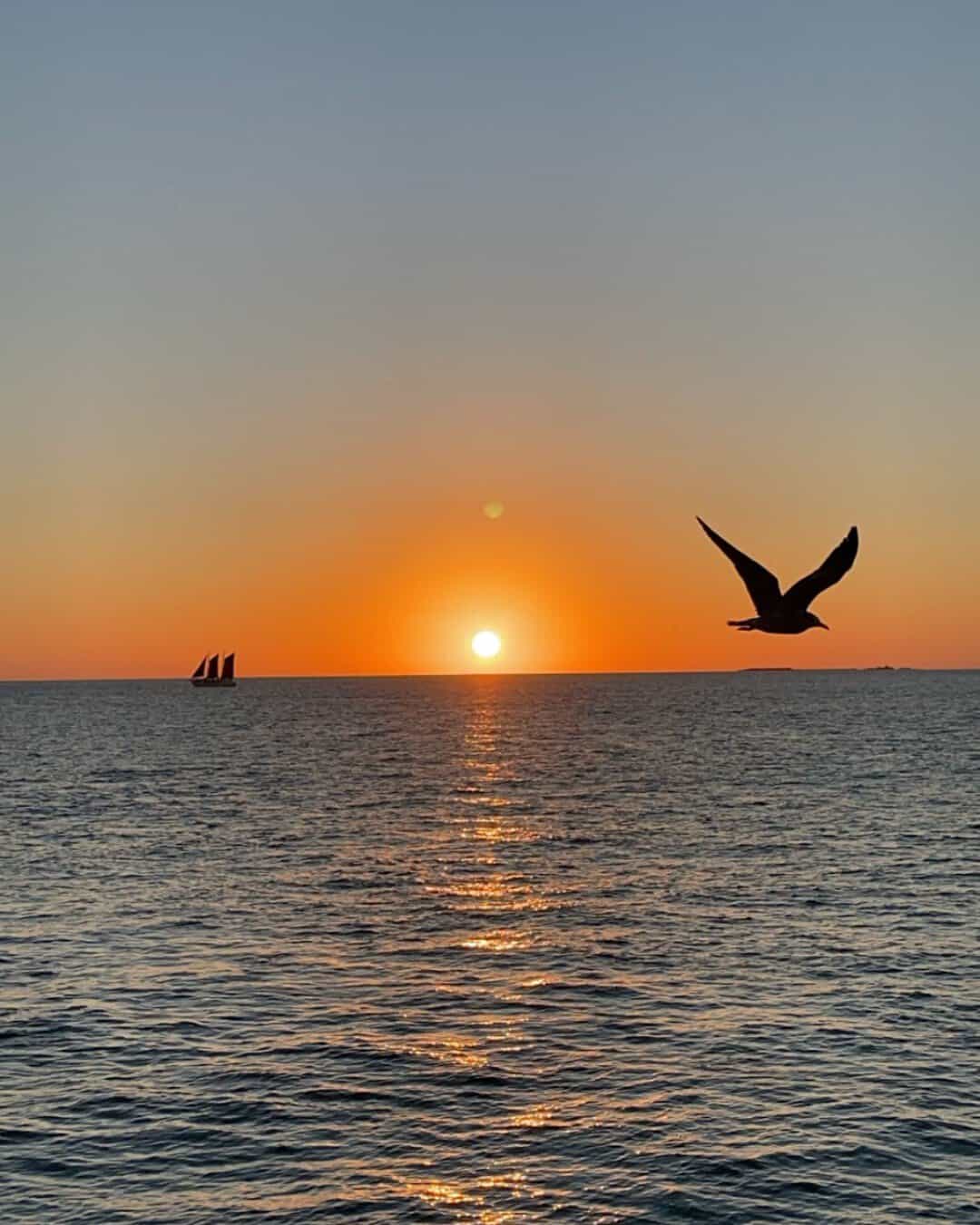
The ritual has grown considerably since then. Street performers, food vendors, and musicians gather at the open-air pier each evening as the sun drops toward the Gulf, and the crowd applauds when it disappears — a gesture that manages to feel entirely sincere rather than theatrical every single time.
The western exposure is perfect. The flat water of the Gulf reflects the light directly back upward, and on clear evenings, the sky passes through pink, orange, red, and deep purple before settling into the dark.
Key West’s downtown bars and restaurants fill with post-sunset crowds immediately after, making the evening feel like a complete experience rather than a punctuation mark on the day.
The walking distance between Mallory Square and most of Key West’s best restaurants means that timing dinner immediately after the sunset celebration is one of the evening’s natural rhythms.
Where: Mallory Square, 1 Whitehead St, Key West, FL 33040
2. Grand Canyon South Rim, Arizona
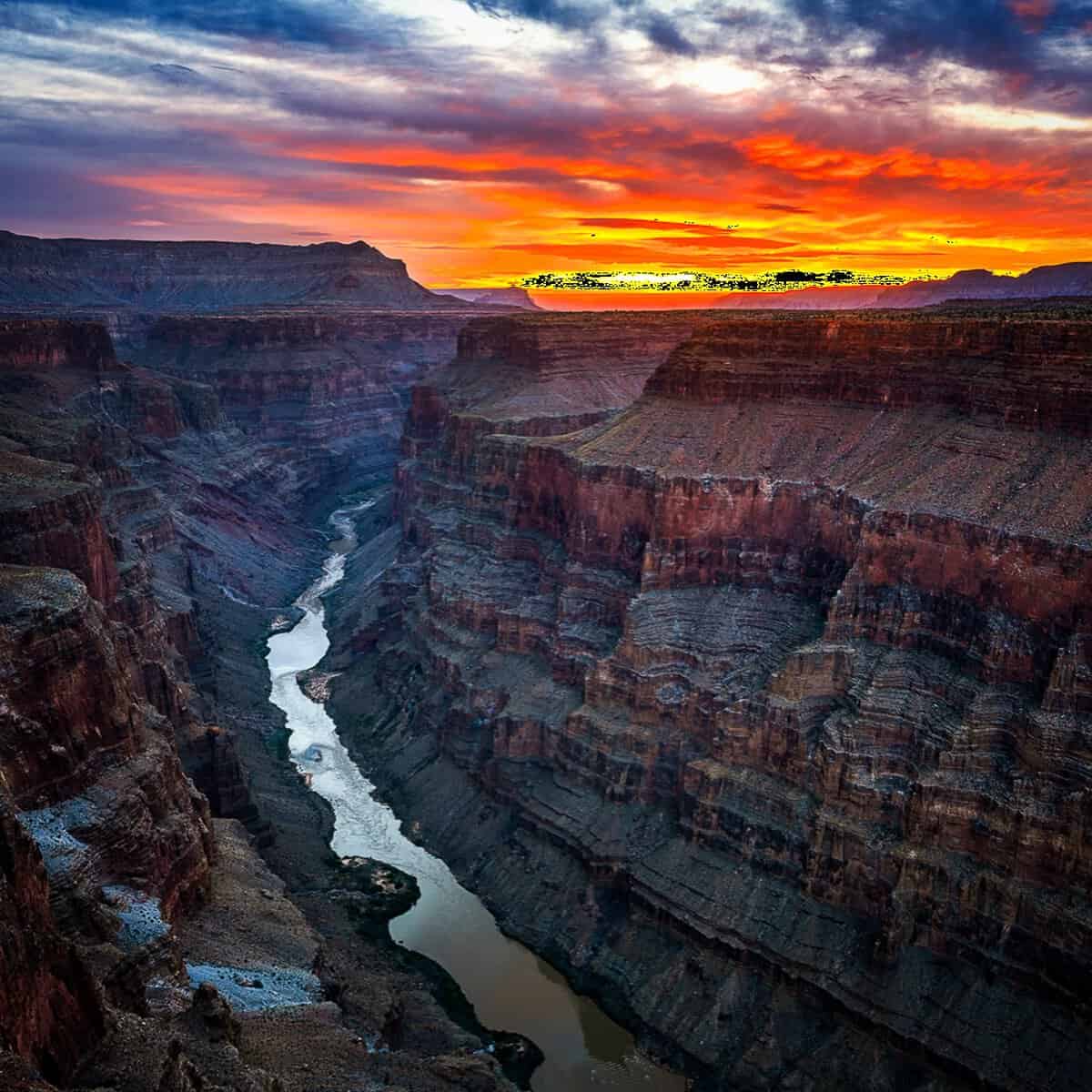
The problem with describing a Grand Canyon sunset is that language runs out before the scene does. Layered walls change color as the sun drops — each stratum responding differently to the same light, producing a gradient that shifts from warm to cool to shadow in real time.
The south rim’s most accessible viewpoints — Mather Point, Yavapai Point, and Desert View — each offer different angles on the canyon’s depth. The sun sets to the west while lighting the eastern walls, which means the canyon glows from the inside during the final minutes before dark.
Crowds gather at the popular overlooks well before sunset during peak season — arriving an hour early is standard practice among those who’ve planned for the experience.
The canyon’s mile-deep drop changes the quality of the light in ways that are difficult to predict and never twice alike. That unpredictability is part of what keeps people returning.
A second night’s sunset from a different overlook almost always looks different from the first — the canyon changes more quickly than most visitors expect, and rewards those who stay long enough to notice.
Where: South Rim Visitor Center, 20 South Entrance Rd, Grand Canyon Village, AZ 86023
3. Big Sur, California
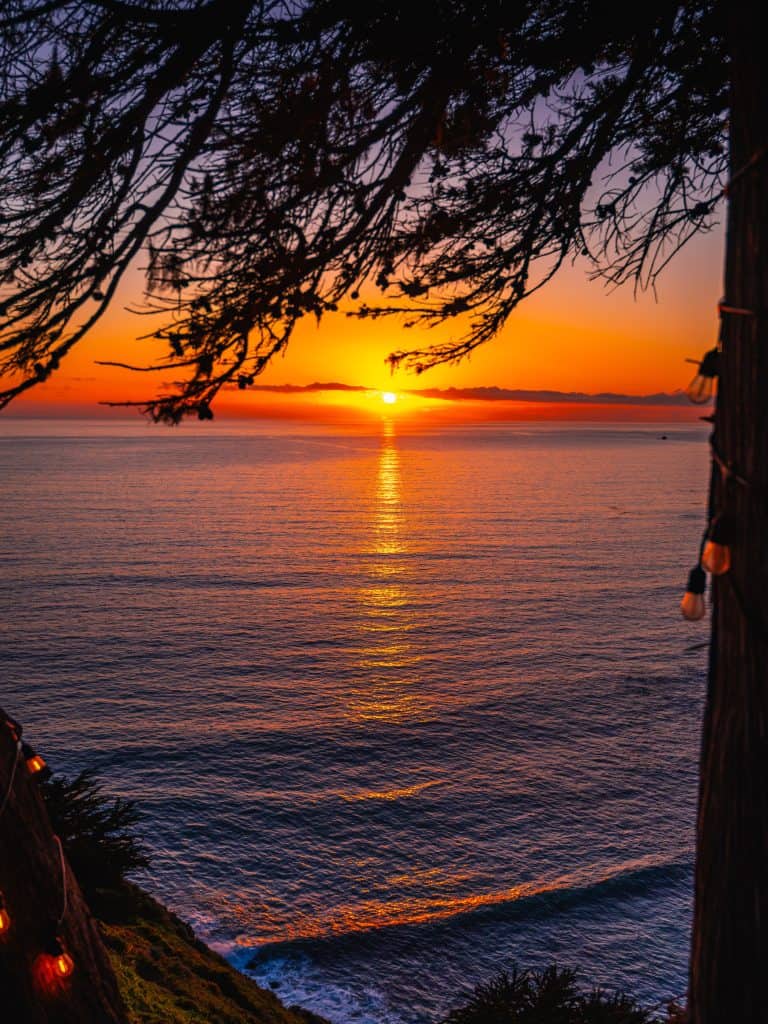
The Pacific Coast Highway through Big Sur delivers one of the most extraordinary driving experiences in America, and the sunset along that California coast belongs in a separate category.
The Santa Lucia Mountains drop directly into the ocean here, creating vertical drama behind the horizontal drama of the Pacific.
McWay Falls in Julia Pfeiffer Burns State Park plunges eighty feet directly onto the beach below, and in the golden hour before sunset, the falls and the cove they feed are lit in a way that photographers describe as nearly impossible to reproduce in print.
The fog that characterizes this stretch of coast most mornings often lifts by late afternoon, and when the Pacific is clear at sunset, the combination of sea stacks, cliff edges, and horizon light produces a sequence of images that changes every few minutes as the sun descends.
Pulling off at any available overlook along Highway 1 between Carmel and San Simeon during the hour before sunset is a reliable decision, regardless of which exact spot you choose.
The narrow, winding nature of the road itself slows traffic to a pace that aligns with the scenery — a rare case where the infrastructure reinforces rather than resists the experience.
Where: Julia Pfeiffer Burns State Park, 52801 CA-1, Big Sur, CA 93920
4. Blue Ridge Parkway, Virginia
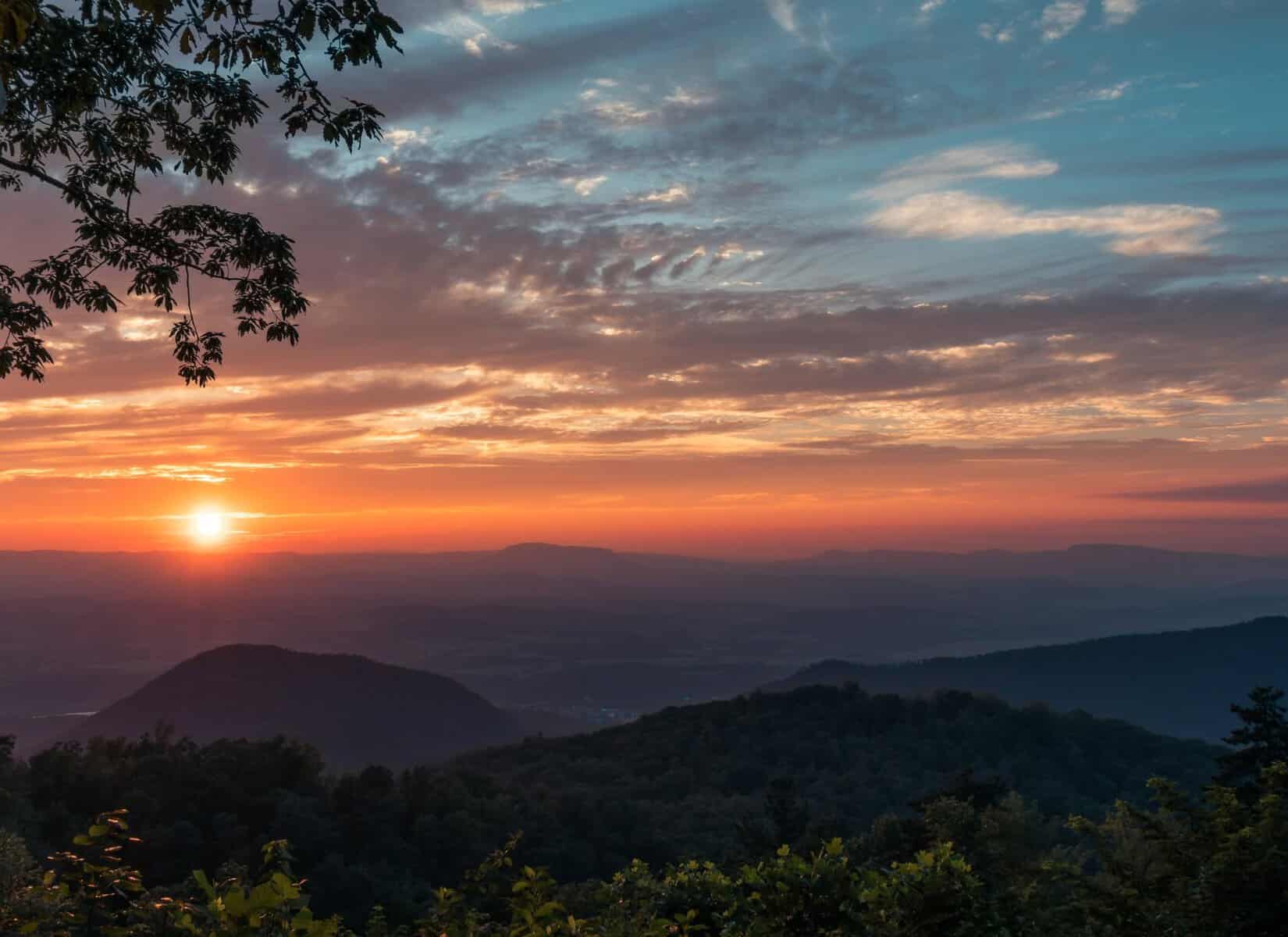
The Blue Ridge Parkway travels 469 miles along the Appalachian ridgeline between Shenandoah National Park and the Great Smoky Mountains, and virtually every mile of it offers a different version of the sunset that unfolds when the sun drops behind the western ridges.
The particular quality of Blue Ridge light at dusk comes from the haze that gives the mountains their name — organic compounds released by trees create a blue-gray atmosphere that catches and filters the low evening sun in a way that produces soft, diffused color rather than hard-edged drama.
The overlooks near Roanoke, Virginia, provide sweeping views of the valley lights beginning to emerge as the sky fades, adding a human dimension to the mountain scenery that makes the transition from sunset to nightfall particularly worth staying for.
Autumn visits along the Virginia section of the parkway compound the effect, with the ridge-top foliage adding warm tones to a landscape that already knows how to perform at this particular hour.
The parkway’s no-commercial-vehicle policy keeps its entire length free of trucks and the signage that typically lines American highways, preserving a corridor of scenery that feels genuinely uninterrupted from one end to the other.
Where: Blue Ridge Parkway Headquarters, 199 Hemphill Knob Rd, Asheville, NC 28803
5. Sleeping Bear Dunes National Lakeshore, Michigan
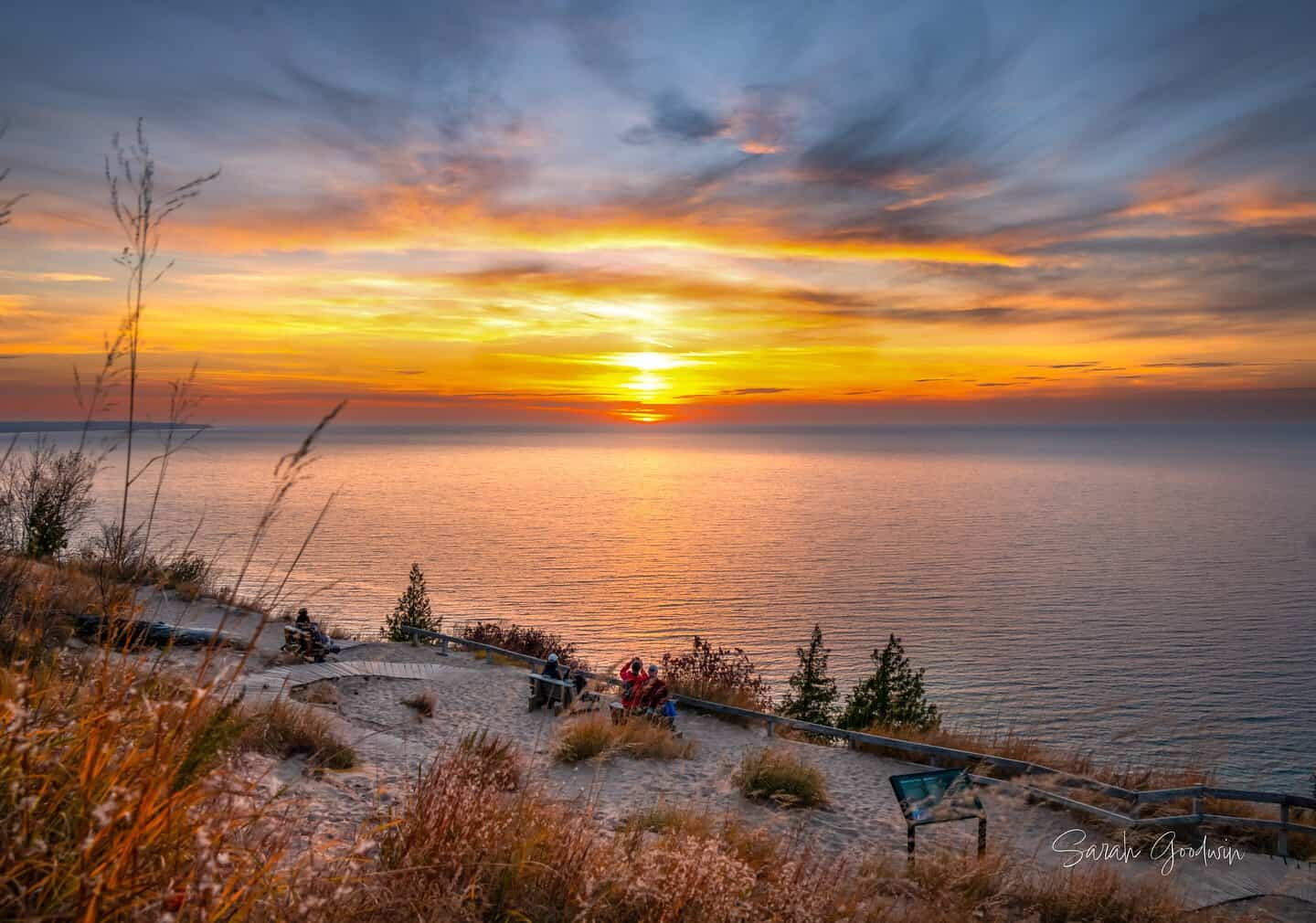
Lake Michigan sunsets deserve their own appreciation. No opposite shore is visible from the western edge, giving the horizon the same clean line as the Pacific.
The difference is color: Lake Michigan’s freshwater turns a particular turquoise in afternoon light that transforms completely under the sunset palette.
Sleeping Bear Dunes National Lakeshore in Michigan provides the elevation to see that transformation from above.
The towering sand dunes rise hundreds of feet above the lakeshore, and climbing to their crests before sunset rewards with a view over the lake that extends further than the eye can comfortably resolve.
The dune climb itself is demanding — the sand shifts underfoot, and the ascent is steep — but returning down a warm slope toward a sunset-lit lake is a particularly satisfying piece of physical reward.
The ghost forest at the base of the dunes, where ancient trees emerge from the sand as erosion advances, adds an eerie and beautiful foreground element to any sunset photograph taken from this location.
The Pierce Stocking Scenic Drive winds through the park and provides multiple overlooks for those who want the views without the dune climb — though the climb is worth it on any evening with a clear western horizon.
Where: Sleeping Bear Dunes National Lakeshore, 9922 Front St, Empire, MI 49630
6. Lake McDonald, Glacier National Park, Montana
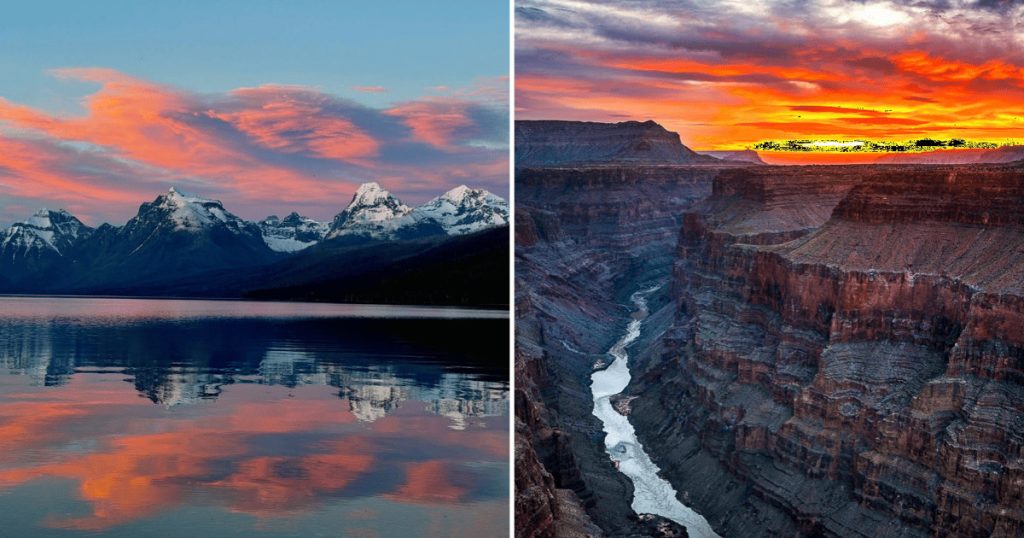
Glacier National Park’s Lake McDonald is famous for its multihued stones, smoothed by glacial action and visible through water so clear that the bottom is legible from the shore. In the ordinary daylight hours, those stones and that clarity alone make the lake extraordinary.
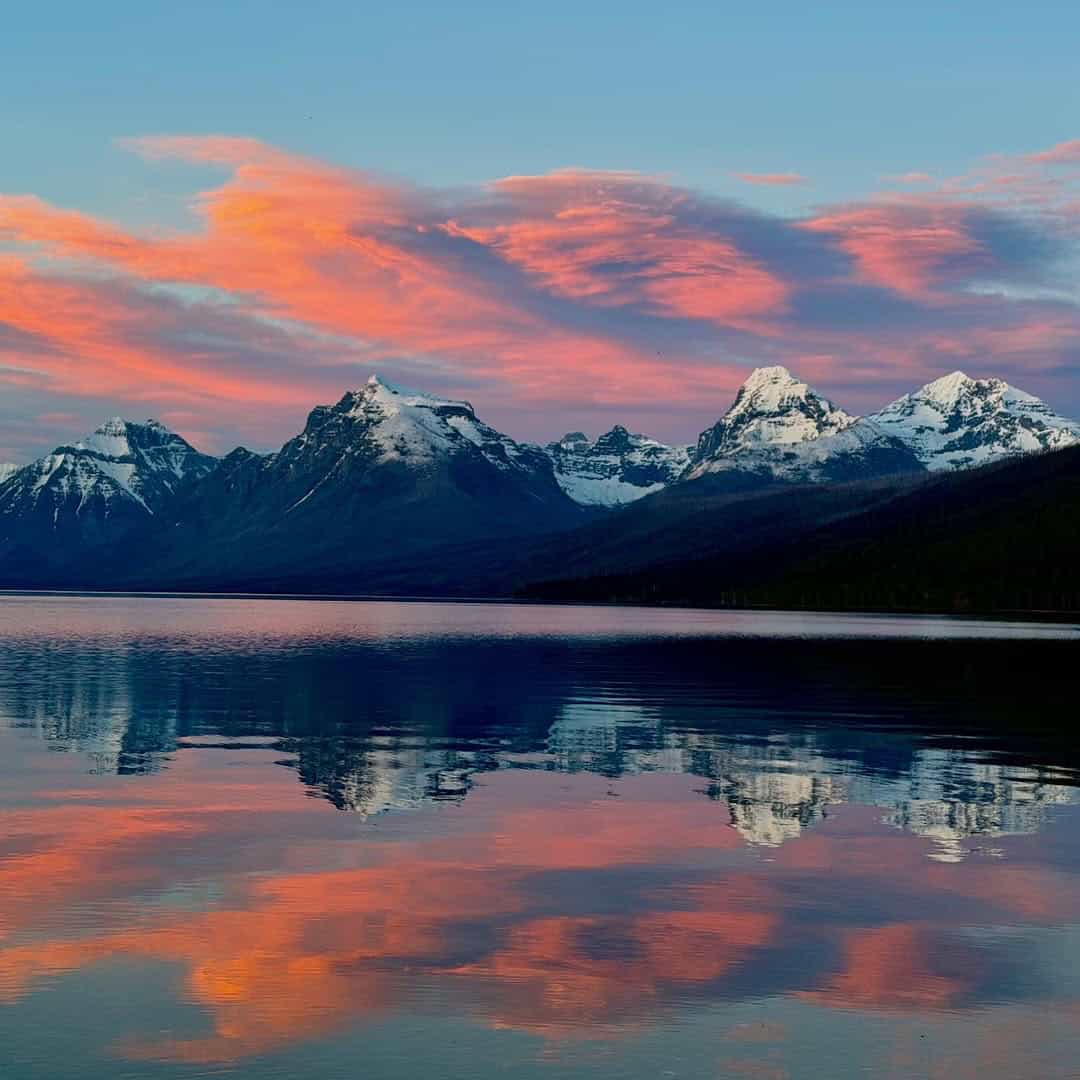
At sunset, the Apgar Range reflected in Lake McDonald’s still surface doubles the mountain scenery.
The setting sun lights both the peaks and their reflections simultaneously — colored rocks in the shallows, reflected mountains at midrange, and colored sky above — a layered composition photographers plan entire trips around.
The lake is accessible from Going-to-the-Sun Road and the village of Apgar at its southern end, where lodges and camping areas make overnight stays straightforward for visitors who want to catch both sunset and the stars that follow in Glacier’s reliably dark skies.
Going-to-the-Sun Road closes seasonally due to snow, so late June through early October represents the primary access window.
The hotel at Apgar Village on the lake’s southern shore provides one of the most atmospherically perfect overnight settings in any national park, with the lake and mountains visible from the porch as the last light fades from the peaks.
Where: Lake McDonald Lodge, Glacier National Park, 11136 US-2, West Glacier, MT 59936
7. Badlands National Park, South Dakota
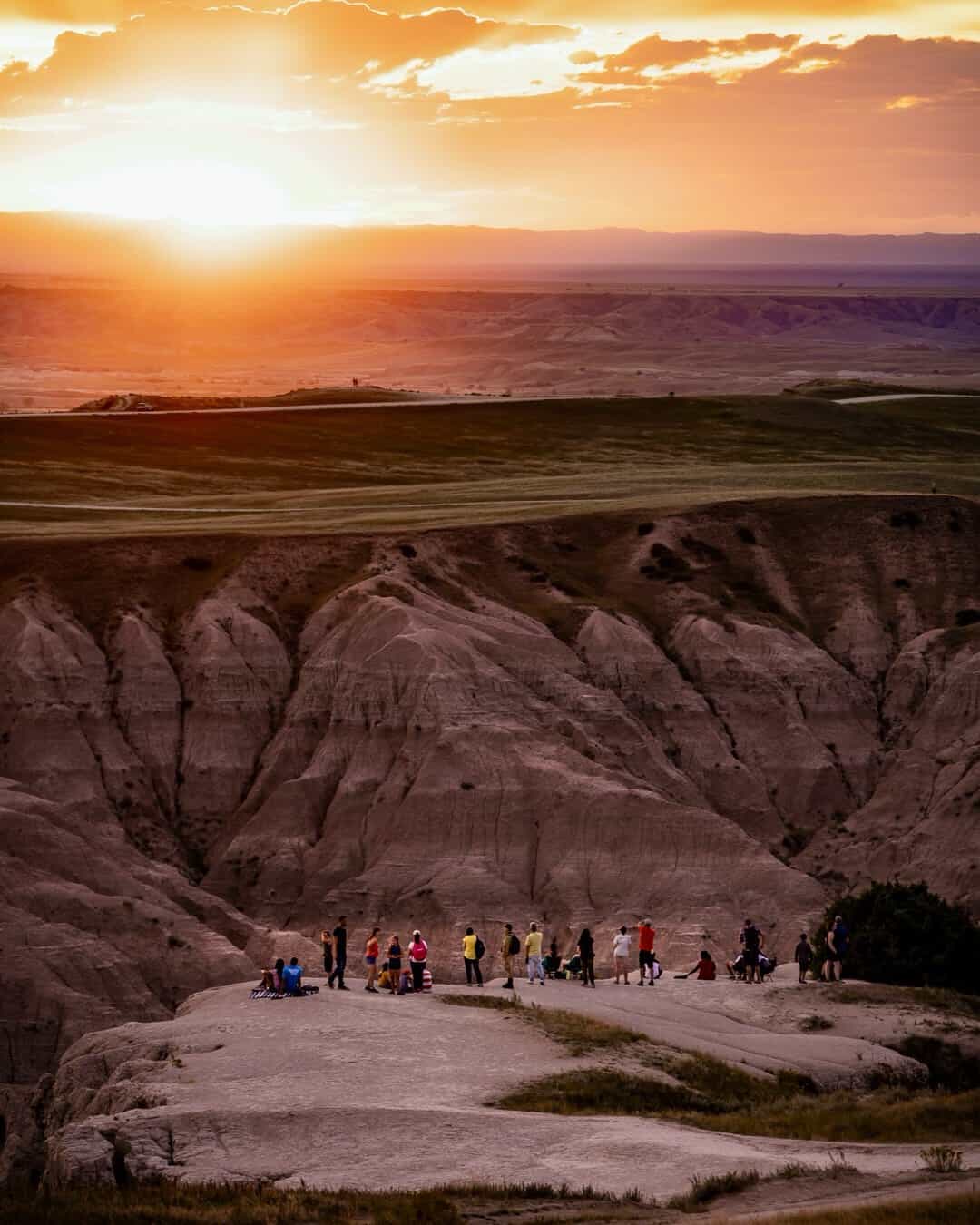
The Badlands of South Dakota earn their dramatic name from the terrain itself — eroded buttes, spires, and gullies carved by wind and water into shapes that look borrowed from another planet.
At sunset, the prairie light that seems ordinary during the day turns those formations into something otherworldly.
The western light at dusk emphasizes every ridge and shadow in the layered rock, producing a depth that midday light completely obscures. Colors — pale lavender, deep burgundy, rust and tan — become most vivid in the hour before dark.
Yellow Mounds Overlook and Pinnacles Overlook are among the most dramatic positions for watching the light work across the formations, and the park’s Badlands Loop Road makes both easily accessible.
After sunset, Badlands National Park is one of the best dark-sky destinations in the Midwest. Staying long enough to see the stars emerge from the last light of evening turns a sunset trip into something considerably more than a single event.
The park’s campground at Cedar Pass sits in the bowl of the formations, and waking up the following morning to those same spires in first light creates a bookend that makes the overnight stay feel like its own reward.
Where: Badlands National Park, 25216 Ben Reifel Rd, Interior, SD 57750
When the Day Deserves a Proper Send-Off
My friend with the sunset journal told me something I think about often. Writing them down wasn’t really about the sunsets, she said — it was about training herself to be present for them, to notice before they were over, to stay put instead of moving on.
That habit, she said, started changing how she moved through everything else.
There’s something about the involuntary nature of a sunset that feels different from other beauty. You didn’t plan the color or arrange the clouds. You just showed up, and the sky delivered — which is its own kind of relief in a world that spends so much energy on optimization.
These seven locations don’t require a journal or a camera or any particular philosophy about presence. They just require showing up, facing west, and letting the sky do what it came to do. Whatever color turns out to be on offer that evening, it will have been worth the stop.
Pick one. Drive there. Arrive an hour before the sun goes down, find a good spot, and don’t look at your phone until the last light disappears. The day is going to end regardless. You might as well be somewhere beautiful when it does.
Then, if you’re the journaling type, write down what color it was. Even a single line. Even just the date and the place and the one word that comes closest. You’ll be glad you did.
More stories


Share this story