These 10 Charming Oklahoma Restaurants Serve Up History With Every Bite

I once asked my grandfather how his favorite diner back home got its name, and he just shrugged and said, “Somebody probably lost a bet.” I laughed it off at the time.
Turns out, that’s a more common origin story than you’d think. Restaurants get born from dice rolls, ghost stories, Dust Bowl tent revivals, and stubborn families who refused to let a building fall down.
Oklahoma seems to specialize in exactly that kind of restaurant. The kind where the building has as many stories as the menu, and the owners will happily tell you both if you ask nicely.
Below are eleven of them, scattered from cattle country to the Wichita Mountains. Bring your appetite, but bring your curiosity too, because the atmosphere here is doing just as much work as the kitchen.
1. Cattlemen’s Steakhouse
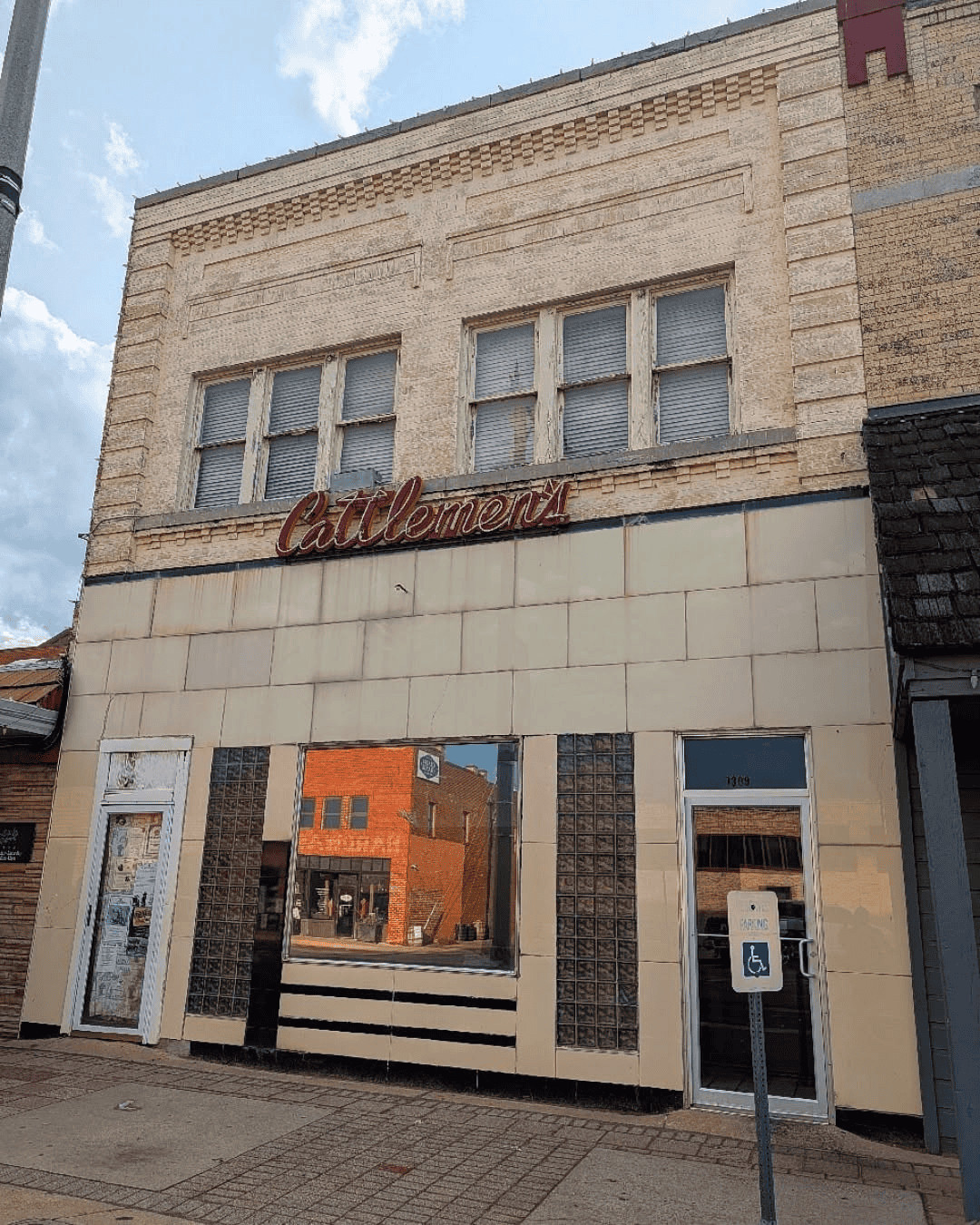
Some restaurants change hands through a sale. This one changed hands through a dice roll, and I can’t think of a better way to start a list about a character.
Back in 1945, owner Hank Fry was deep into a losing streak in a smoke-filled room at the old Biltmore Hotel. Desperate, he wagered the entire restaurant against the life savings of a man named Gene Wade, betting he could roll a “hard six,” two threes.
He lost. Just like that, Gene Wade became a restaurateur overnight, and the “33” brand still hangs on the wall of the Hereford Room to this day as a permanent reminder of that one fateful roll.
Cattlemen’s has been feeding ranchers, cattle haulers, and hungry travelers since almost statehood, which makes it the oldest continuously operating restaurant in Oklahoma.
During Prohibition, it stayed open after dark and earned a reputation for “colorful” company and home-brewed drinks.
That spirit lives on through Cattlemen’s Double Deuce beer, a throwback recipe brewed by another pioneering Oklahoma family at Krebs Brewing.
The steaks here are perfectly aged, the lamb fries are a dare worth taking, and the coffee alone has earned national attention from food shows and magazines.
Where: 1309 S Agnew Ave, Oklahoma City, OK 73108
2. Eischen’s Bar
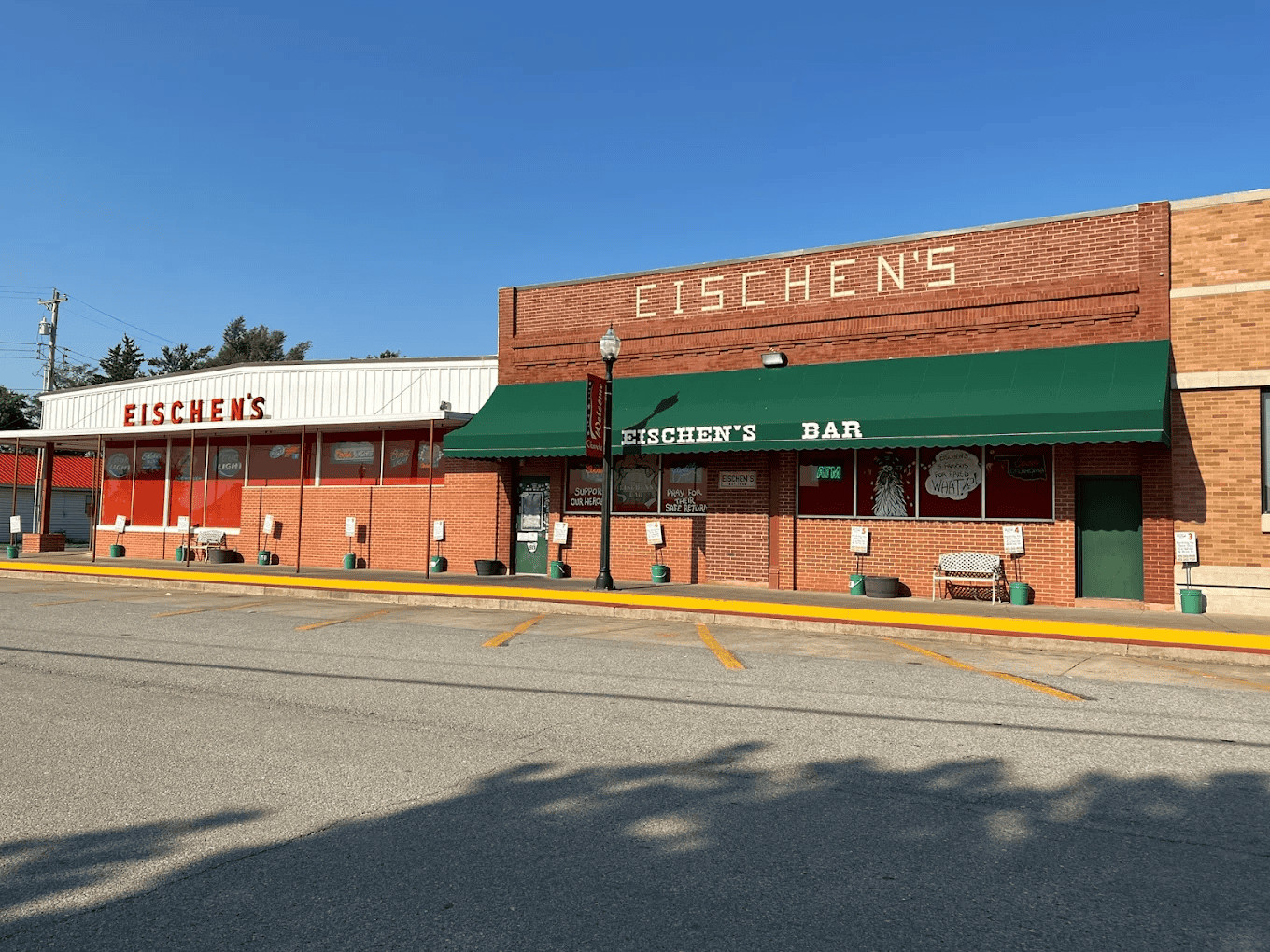
I love any building that’s been standing longer than the state it’s sitting in, and Eischen’s Bar in tiny Okarche fits that bill perfectly. Peter Eischen built it as a saloon back in 1896, more than a decade before Oklahoma was even a state.
It operated until statehood, and Prohibition forced it to close, reopening later under Eischen’s own son and grandson.
The massive back bar inside has quite a journey: hand-carved in Spain in the early 1800s, shipped to California during the Gold Rush, and then somehow landed in Okarche by 1950.
In January of 1993, a devastating fire tore through the building. Only a small remnant of that historic Spanish bar survived, and it’s still on display today alongside other mementos rescued from the ashes. Eischen’s reopened that same year, just months later, proving this place doesn’t know how to quit.
These days, people drive in from Tulsa, Oklahoma City, and well beyond just for the fried chicken, made from the same spice blend the family has used since the 1960s. There’s no coffee on the menu and no online ordering, just cash, check, or card.
Where: 109 S 2nd St, Okarche, OK 73762
3. Royal Bavaria
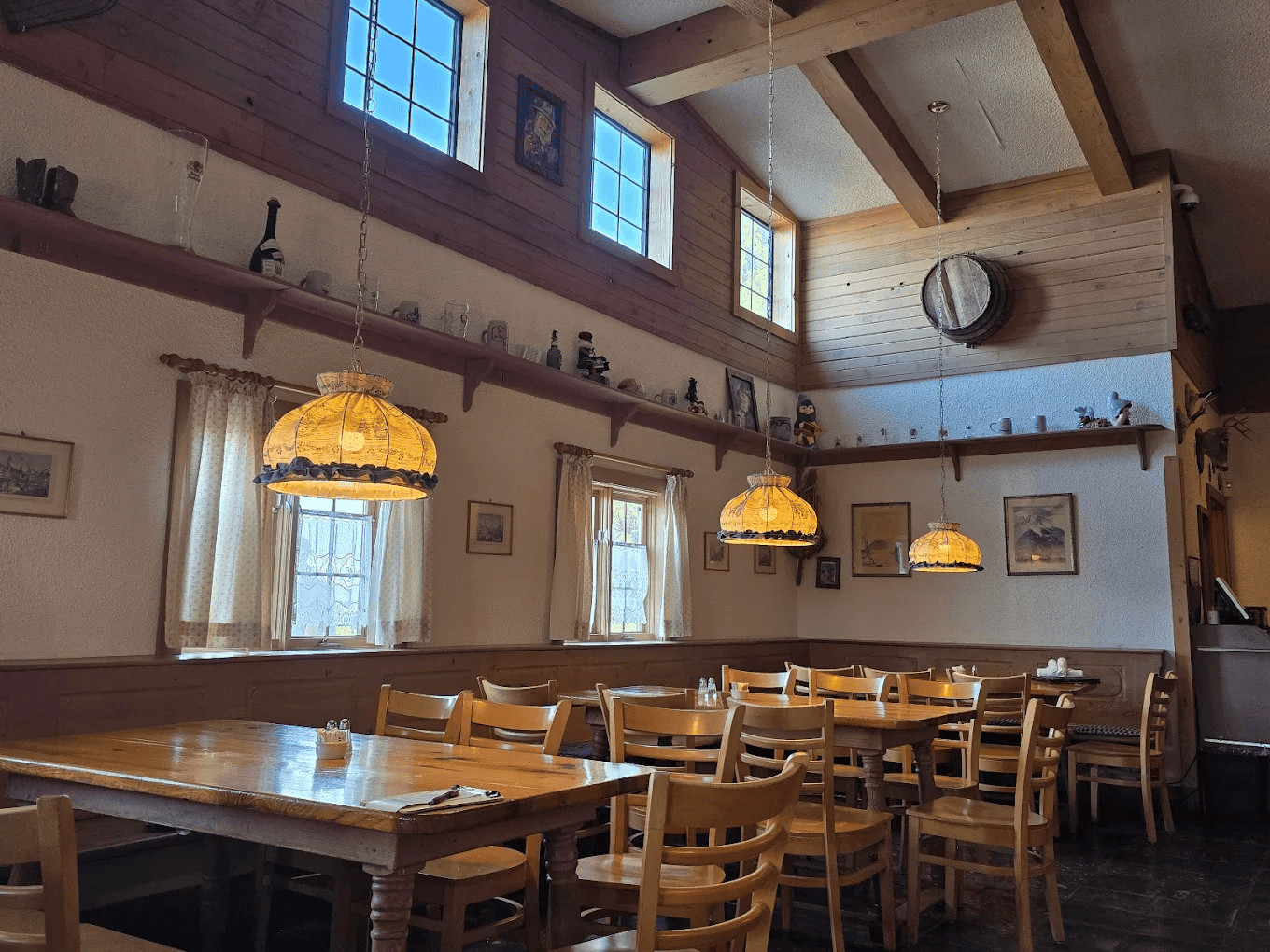
Picture a Bavarian farmhouse, built deliberately out in the open country between two cities, because that’s exactly where a proper Bavarian farmhouse belongs. That’s the entire founding logic behind Royal Bavaria, and I respect the commitment.
Munich businessman Jörg Kühne opened it on November 20, 1992, hoping to bring an authentic German brew pub to Oklahoma.
He picked a spot roughly halfway between Norman and Oklahoma City, then built it to genuinely look like it belonged on a hillside outside Munich instead of along Sooner Road.
The brewhouse itself, an eight-barrel system, was supplied directly by Prince Luitpold of Bavaria.
Executive chef Andy Gmeiner, also from Munich, arrived in early 1994 to build the menu from scratch, and the grand opening that January featured a seven-course dinner for 180 invited guests.
The outdoor beer garden, shaded by huge trees and seating up to 175 people, opened with its own festival that summer. Kühne ran the place for fourteen years before passing the torch to Gmeiner himself in 2007, who still keeps the original vision alive today.
Where: 3401 S Sooner Rd, Moore, OK 73165
4. Rock Cafe
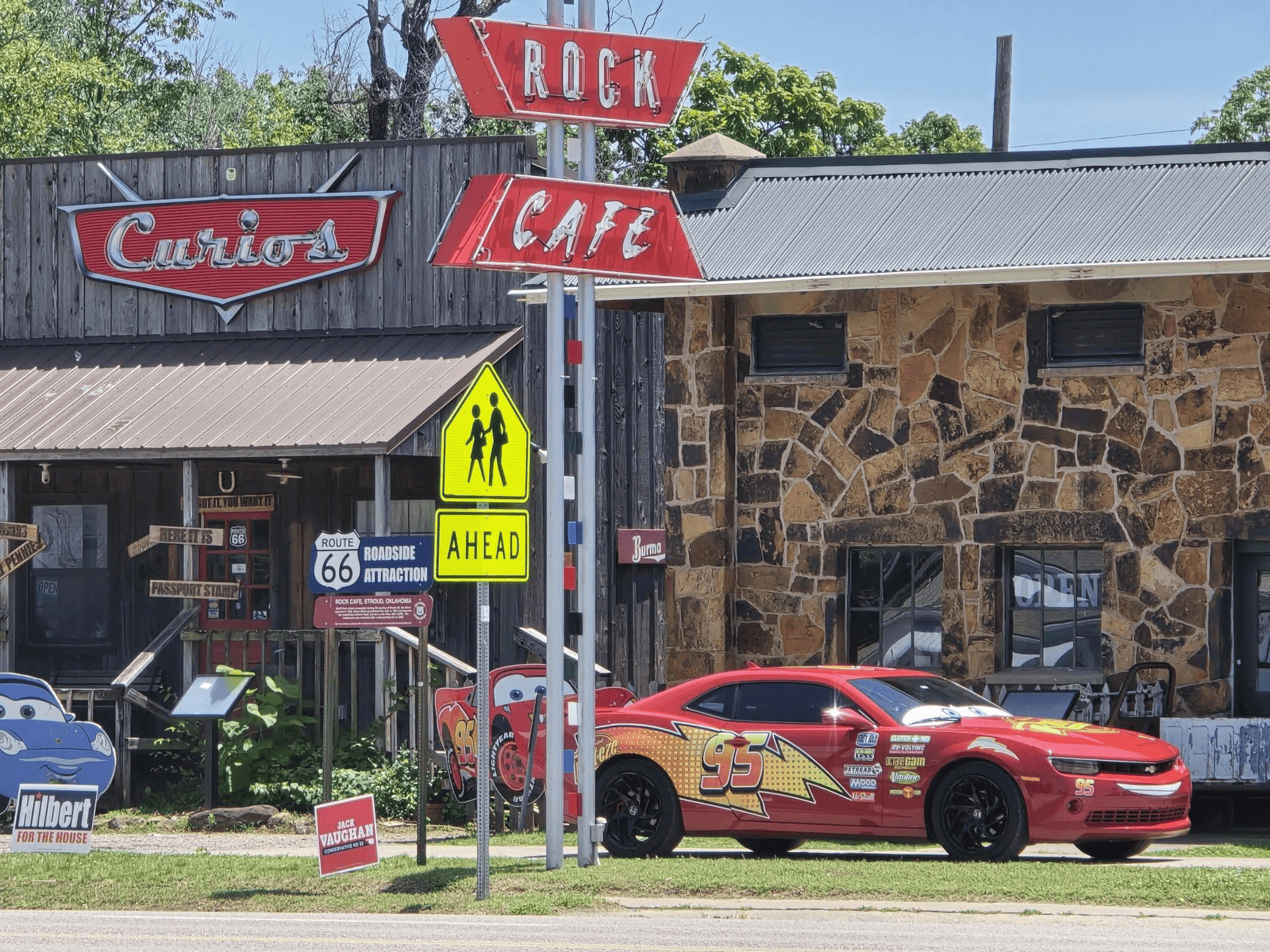
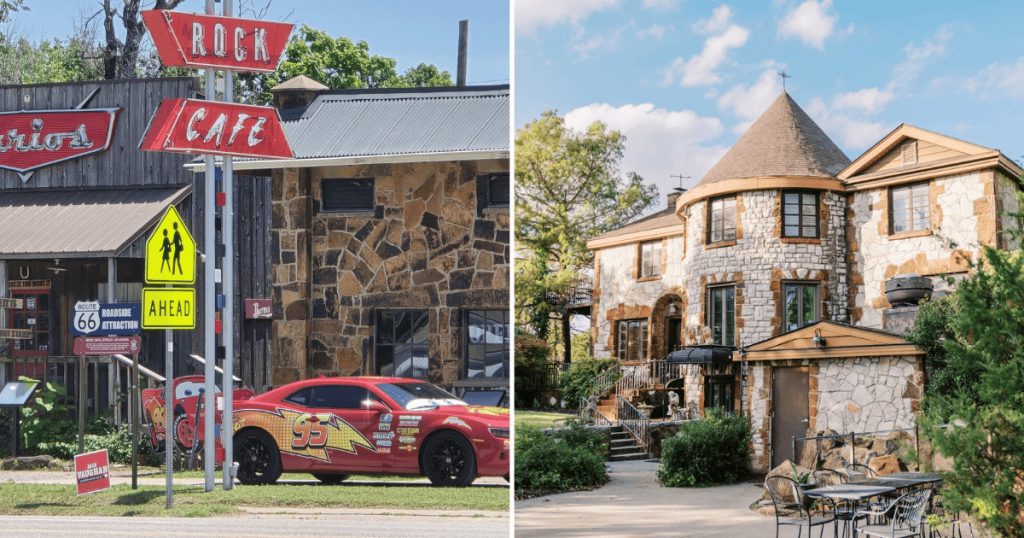
There’s a particular kind of magic that happens when a real place quietly becomes the inspiration for a beloved movie character, and Stroud’s Rock Cafe pulled that off without even trying. The building itself, built from local sandstone back in 1939, already had plenty of personality on its own.
Then, between 2001 and 2005, Pixar director John Lasseter and his research crew kept showing up. They met owner Dawn Welch, and somewhere along the way, she became the inspiration for Sally Carrera, the spunky café owner in the movie “Cars.”
The real star of the kitchen, though, might be Betsy. She’s a Wolfe-brand grill, four feet long, two feet wide, over 200 pounds, and she’s been searing burgers and chicken-fried steaks for more than 75 years and counting.
In 2008, a fire tore through the building and left almost nothing standing except Betsy and four stone walls. She got refurbished, the café got rebuilt, and travelers along Route 66 have been stopping in ever since for whatever’s coming off that legendary grill.
Where: 114 W Main St, Stroud, OK 74079
5. Pops 66 Soda Ranch
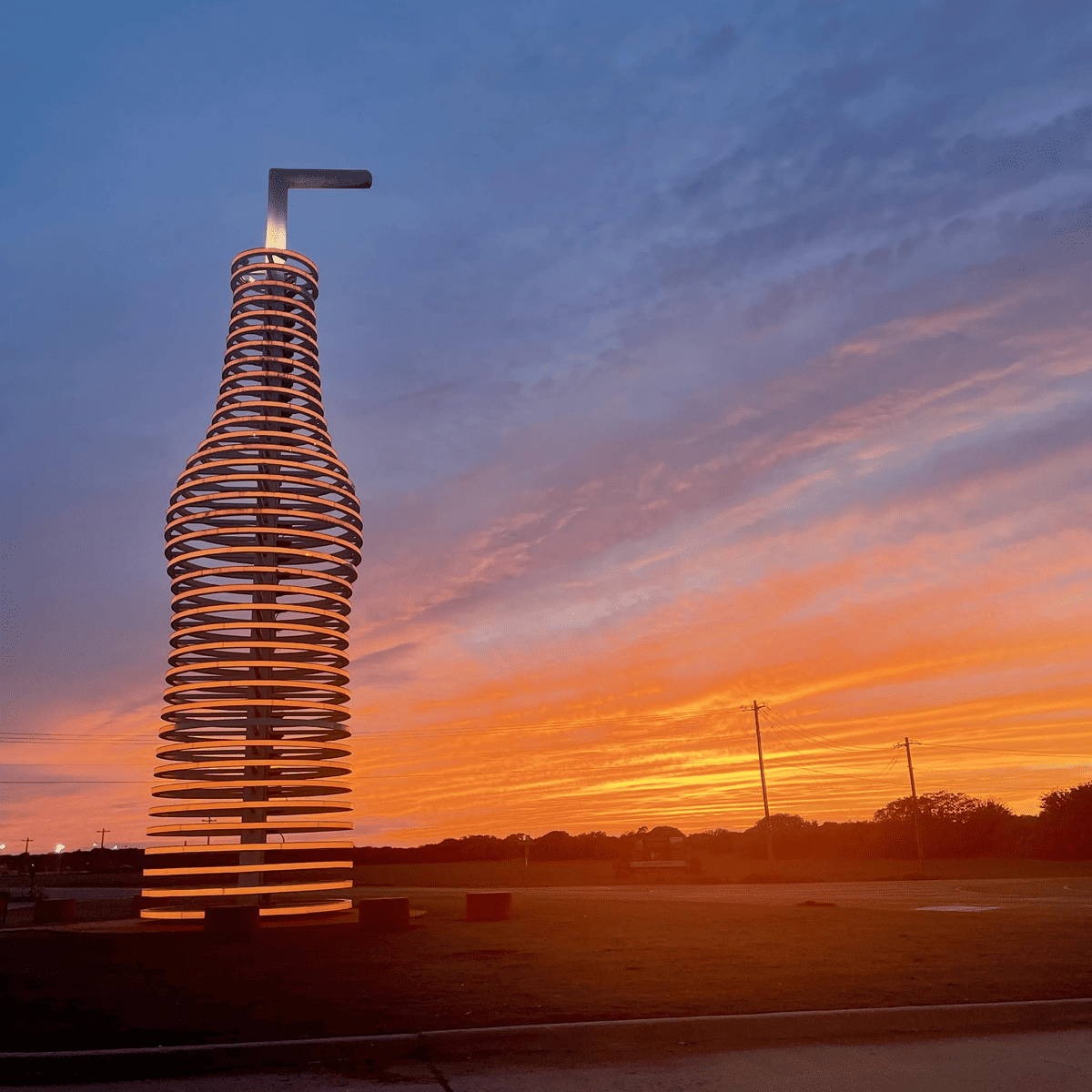
You’ll see this one coming from a mile away, quite literally, thanks to a glowing soda bottle sculpture that stands 66 feet tall against the Oklahoma sky. Pops 66 Soda Ranch in Arcadia doesn’t ease you in. It announces itself.
Step inside and you’ll find hundreds of soda varieties lining the walls in every color imaginable, part convenience store and part candy-colored museum. It’s the kind of place where kids press their faces against the glass and adults end up doing the exact same thing.
The food menu holds its own, too, with solid burgers and classic comfort plates that pair nicely with whatever fizzy soda you’ve picked out. This isn’t trying to be a fine dining destination, and that’s exactly the point.
Pops has become one of the most photographed stops along the Oklahoma stretch of Route 66, and once you’ve seen that bottle lit up at night, you’ll understand why everyone pulls over for a picture.
Where: 660 W Highway 66, Arcadia, OK 73007
6. Lucille’s Roadhouse
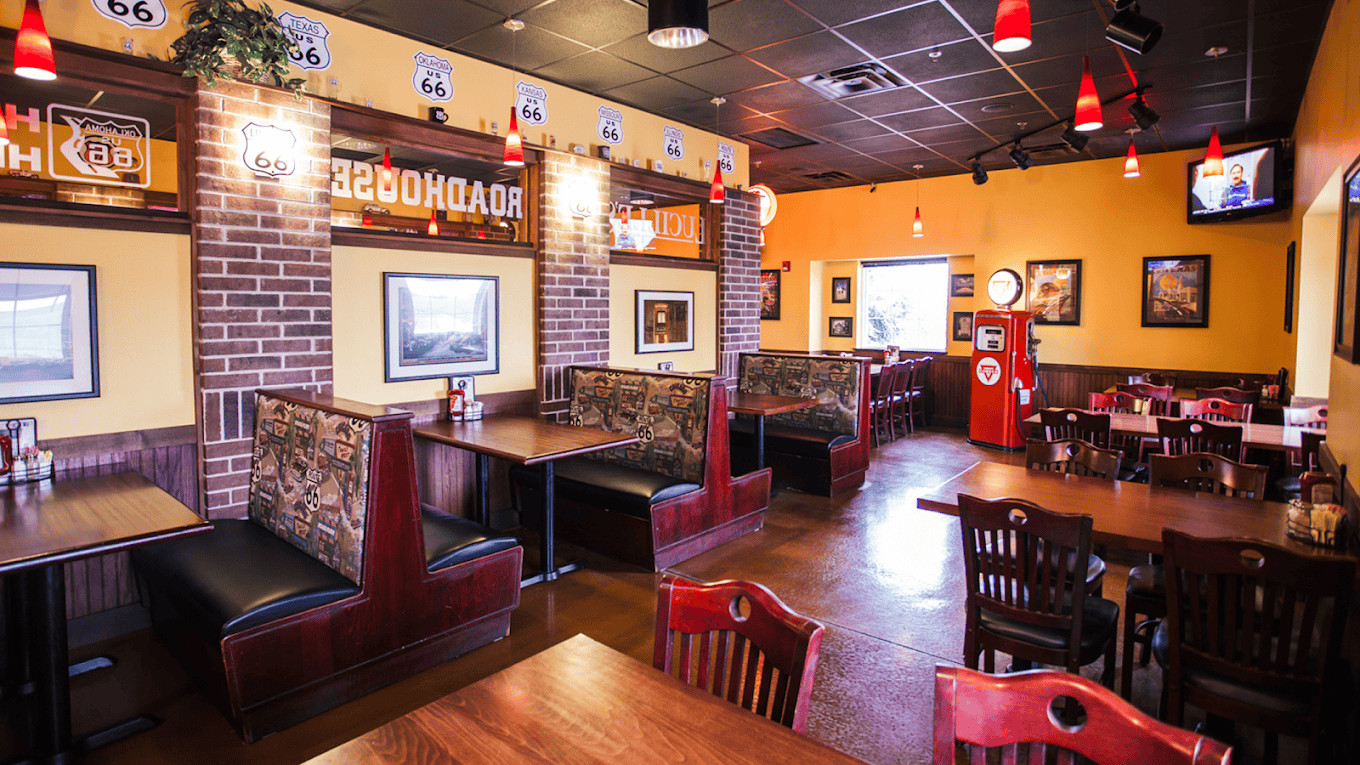
Some restaurants exist to honor a person, and Lucille’s Roadhouse in Weatherford does that beautifully. It’s named after Lucille Hamons, a woman so beloved along Route 66 that travelers nicknamed her the “Mother of the Mother Road.”
For 59 years, Lucille ran a service station, diner, and hotel out of Hydro, Oklahoma, treating every traveler, local or out-of-state, like family. Her original station, the Provine Station, was built in the bungalow craftsman style and earned a spot on the National Register of Historic Places in 1997.
The neon “Hamons Court” sign from her property is now on permanent display at the Smithsonian, and the Oklahoma Route 66 Association inducted Lucille into its Hall of Fame back in 1999, the year before she passed away.
A local Route 66 enthusiast named Rick Koch admired her generosity so much that he restored and maintains her original station for visitors today, while also keeping her hospitality alive through Lucille’s Hotel and restaurant locations in both Weatherford and Clinton.
Where: 1301 N Airport Rd, Weatherford, OK 73096
7. Mama Lou’s Restaurant
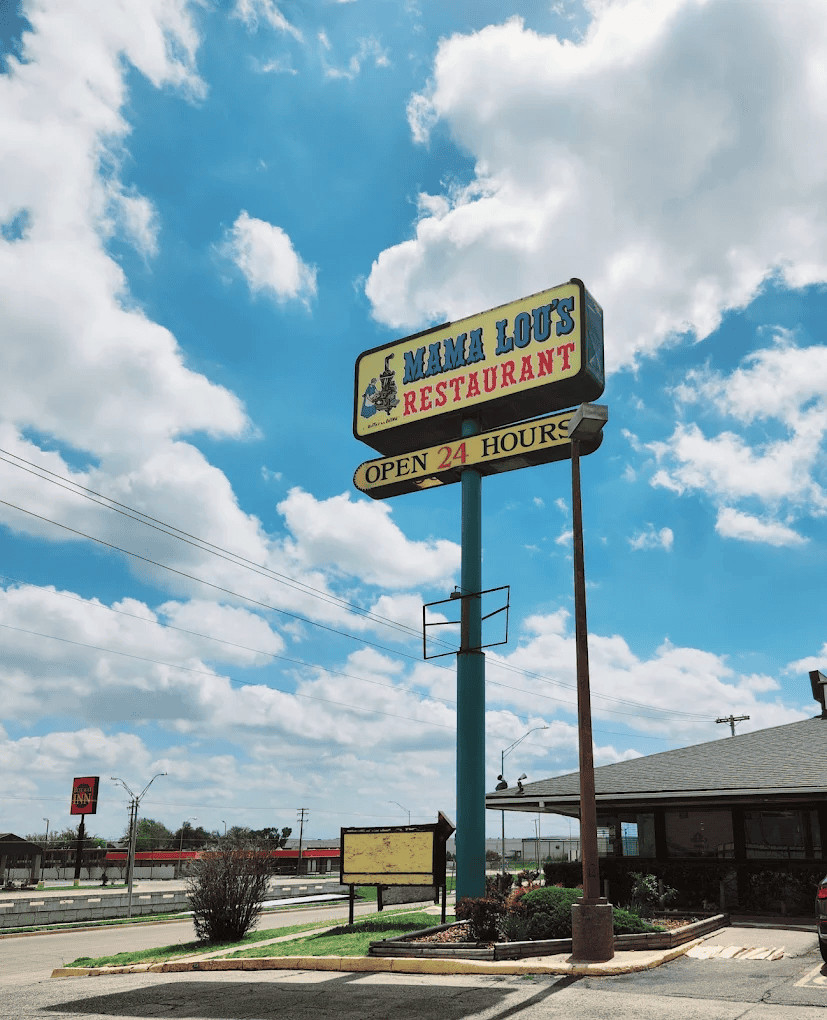
There’s something comforting about a restaurant that simply refuses to close, and Mama Lou’s in Oklahoma City has been open 24 hours a day since the early 1990s. No matter when you show up, somebody’s cooking.
Tucked along the frontage road near I-35, it draws a loyal mix of truckers, late-night workers, and touring musicians passing through town. The vibe is old-school diner through and through, right down to an indoor smoking section that feels like a genuine time capsule.
The food leans into hearty comfort classics: chicken and waffles, chicken-fried steak, biscuits smothered in gravy, and breakfast plates generous enough to fuel an entire shift. It’s the kind of place where the coffee never seems to stop coming.
Regulars describe the staff as warm enough to feel like family, the kind of place where a server remembers your order before you’ve finished saying it. For anyone craving classic American diner food at three in the morning, Mama Lou’s has you covered.
Where: 1427 SE 30th St, Oklahoma City, OK 73129
8. The Old Plantation Restaurant
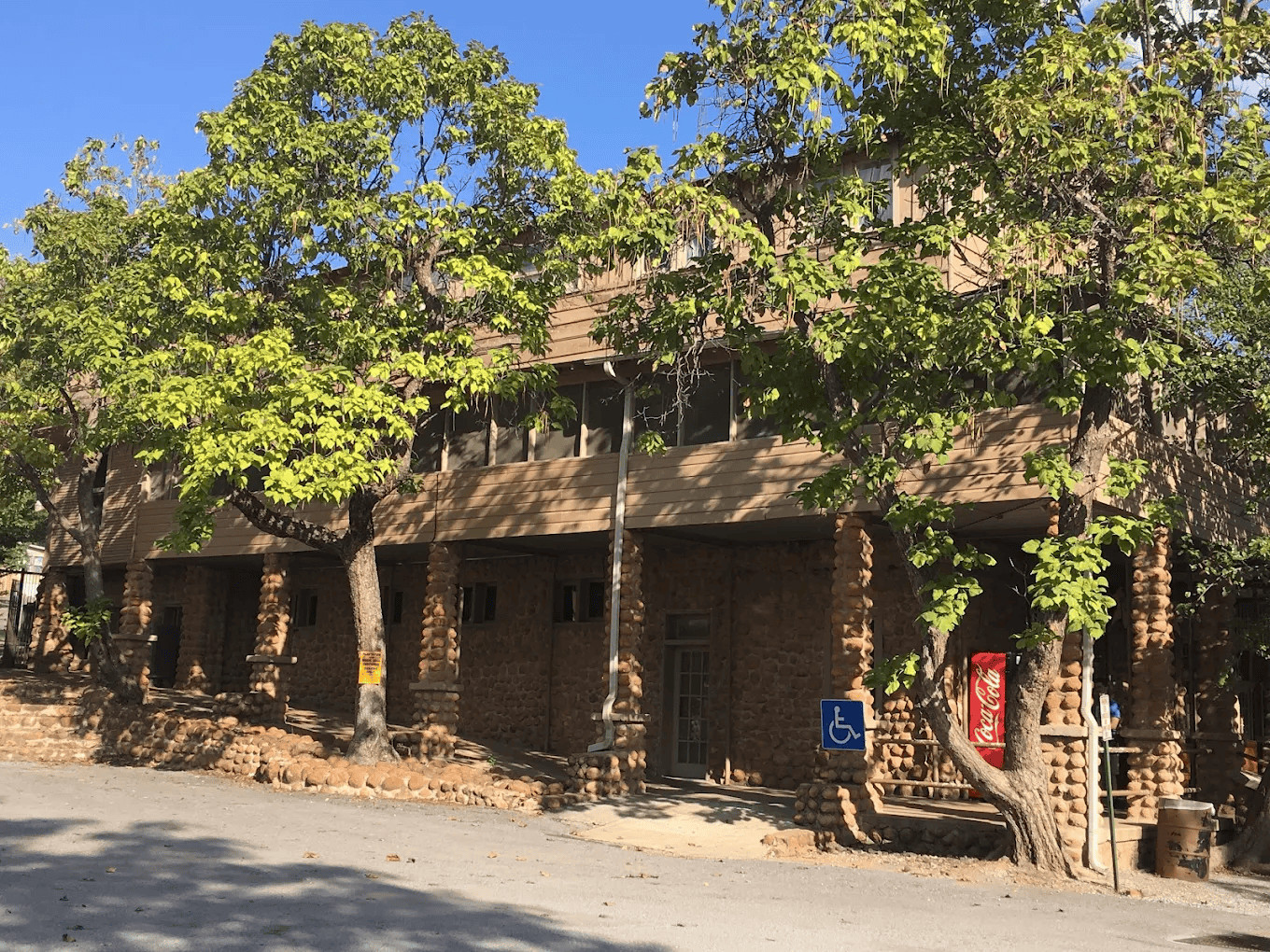
Few restaurants come with a backstory quite as colorful as this one. The building in Medicine Park started life in 1910 as an open-air wooden pavilion before being enclosed and topped with a second story in 1914, eventually becoming a cobblestone hotel called the Outside Inn.
During the Roaring Twenties, Medicine Park became a playground for the wealthy and the notorious alike.
Local legend holds that Bonnie and Clyde, Machine Gun Kelly, and Al Capone all passed through, with whispers of a hidden whiskey still and a gambling room once tucked into the basement.
The hotel changed names and owners several times over the decades before Rex and Ruby “Grandma” Leath reopened it as The Old Plantation Restaurant in 1966. Grandma Leath ran the place for nearly 35 years, famously sharing the building’s wildest stories over plates of her hot rolls.
After closing in the early 2000s, the restaurant got a second life in 2008 under new ownership, and current owners Chad and Jenna Thornton have run it since 2014. Expect hand-cut steaks, chicken-fried steak, and catfish served in a genuinely historic, cobblestone-wrapped setting.
Where: 143 East Lake Dr, Medicine Park, OK 73557
9. Castle Falls
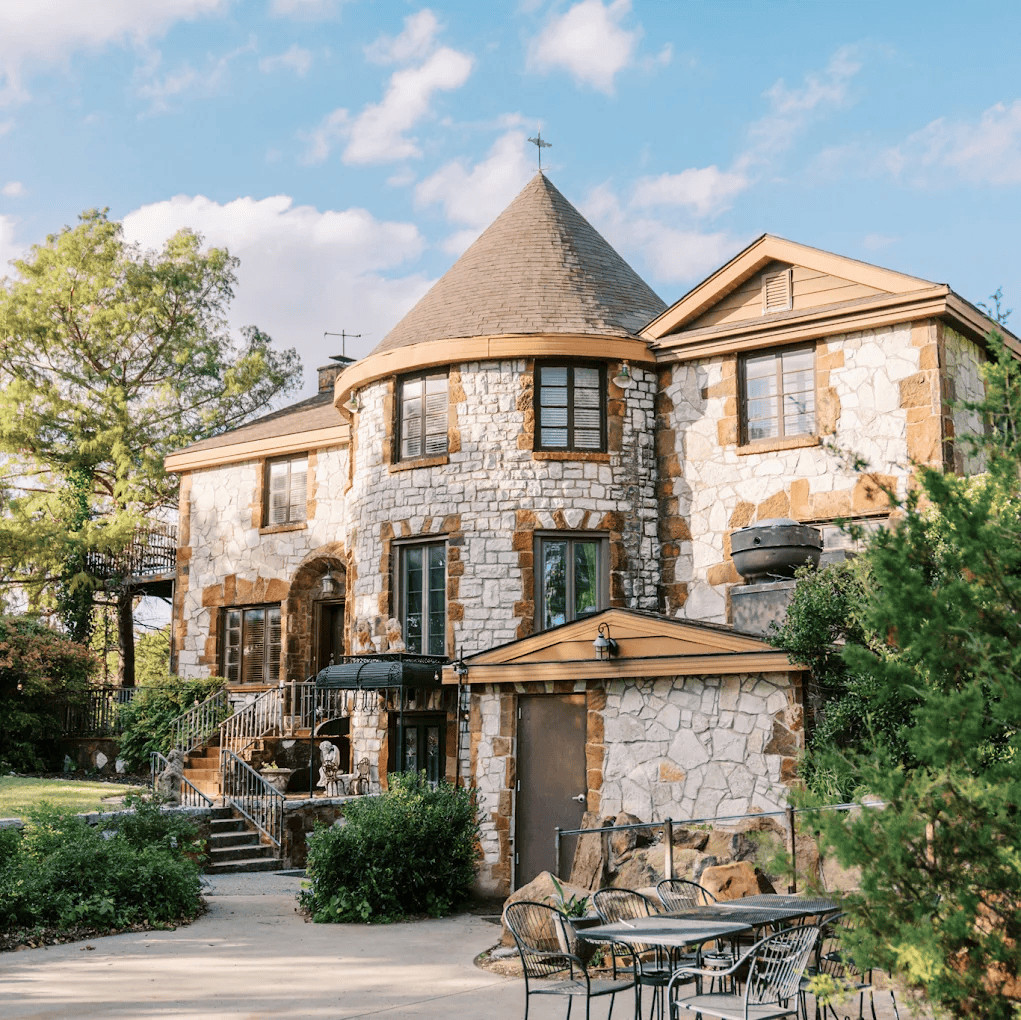
Yes, it really is a castle, and yes, there’s a genuinely good reason why. WWII veteran Bill Blecha built it in 1945 after returning home inspired by a castle he’d seen in Normandy, piecing it together with salvaged artifacts from other architecturally significant buildings.
The land underneath it carries even more weight. Castle Falls sits on Council Grove, the historic ground that hosted Oklahoma City’s very first resident and once served as a Native American council meeting place, long before the castle itself ever existed.
Today, the restaurant has earned a Diner’s Choice Award as one of the Top 100 Most Romantic Restaurants in the entire country. Inside, you’ll find two distinct dining experiences: The Cellar, an intimate space with just nine tables, and The Primrose, which offers a full five-course meal.
Both are open for dinner Thursday through Saturday by reservation, with private dining available by arrangement on other days. Between the five acres of grounds, century-old oak trees, and genuinely castle-like architecture, it’s easy to forget you’re still inside city limits.
Where: 820 N MacArthur Blvd, Oklahoma City, OK 73127
10. White Dog Hill
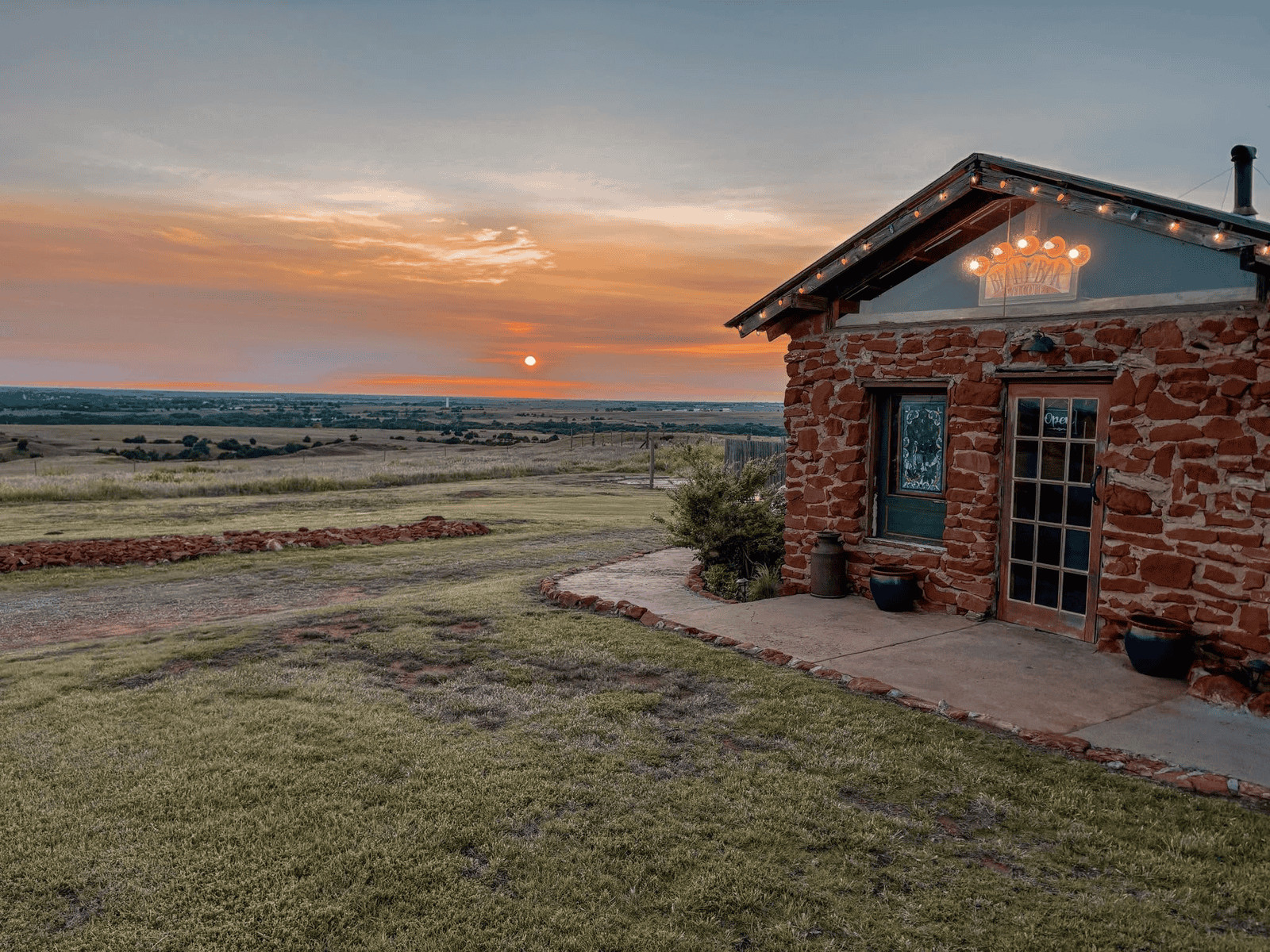
This one might have the single best “how it got its name” story on this entire list. Built in 1925 as the clubhouse for the Clinton Country Club, the building closed in the late 1950s and then sat abandoned, vandalized, and reportedly haunted for decades.
When Nelson King eventually bought the property, local lore says it came with a resident ghost the staff nicknamed “Dottie.” Before opening, King brought in a shaman to perform a cleansing ceremony, because apparently, you handle these things directly out on the Oklahoma plains.
As for the name? King had wanted a bigger dog for his new property, but a local shelter only had a small white one available. He took her anyway, fell for her completely, and named his restaurant in her honor instead of picking something more conventional.
White Dog Hill finally opened in August 2007, perched on a rise with sweeping sunset views over the surrounding ranchland. Today, it’s known for hearty steaks, creative salads, and a connected speakeasy-style space called the Beany Bar, once the property’s old caretaker’s house.
Where: 22901 N Route 66, Clinton, OK 73601
The Charm Was Never a Side Dish
Ten restaurants, ten completely different stories, and not a single boring one in the bunch. That’s the thread tying this whole list together, more than any shared cuisine or decade ever could.
A dice roll built one of these places. A ghost story helped name another. A geological fault line quietly hums beneath a hamburger joint that still uses a tin pie plate as a serving dish.
That’s the kind of detail you can’t manufacture, no matter how big the marketing budget. So next time you’re tempted to drive past one of these spots without stopping, don’t. The story alone is worth the seat at the table.
More stories
These 10 Oklahoma Eateries Are So Unique They Belong On Every Must-Visit List
These 7 Oklahoma Airport Restaurants Are Worth Showing Up Early For
This Oklahoma City Grocery Store Feels Like a European Passport Stamp You Didn’t Plan For
These 8 Oklahoma Pecan Pie Spots Taste Like Home, Wherever Home Might Be
Share this story