This Western Oklahoma History Stop Turns a Highway Into a Time Machine

I’ve never driven all of Route 66, but I’ve been in love with it for as long as I can remember.
That feeling isn’t really about the pavement itself — it’s about the idea that one highway could hold an entire century of American restlessness.
The Dust Bowl families heading west out of desperation. The postwar families heading west for fun. The neon signs promising you’d already arrived somewhere even better just up ahead.
That’s a lot to fit into one strip of asphalt.
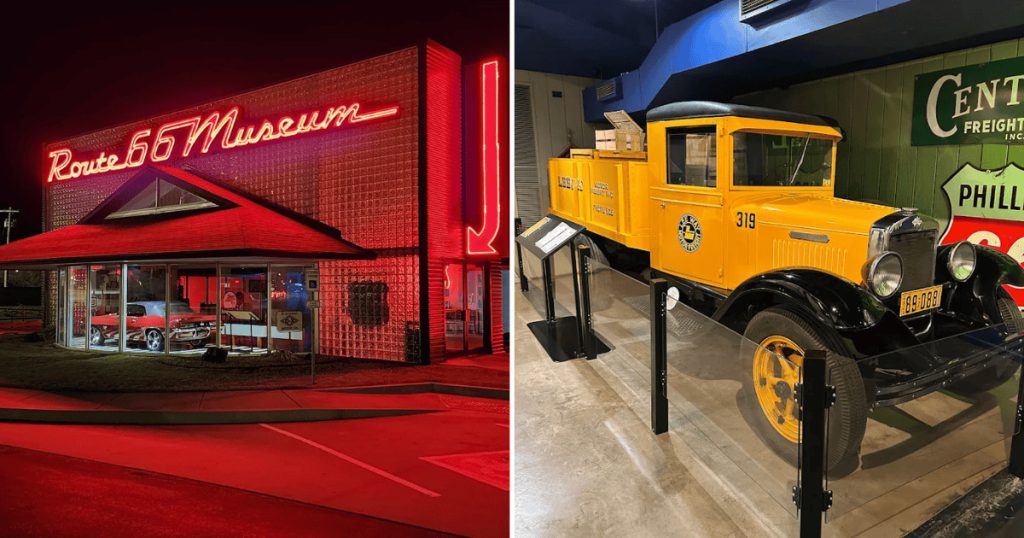
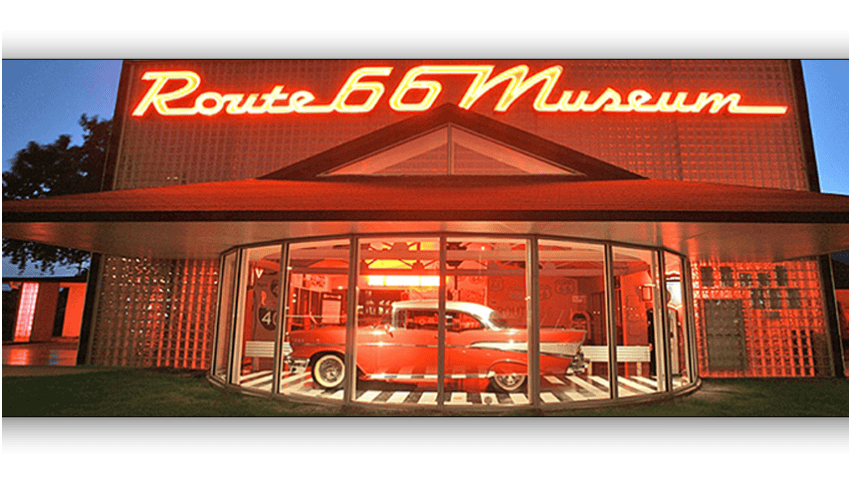
Somehow, a museum in Clinton, Oklahoma, manages to fit it into one building.
A Road That Earned Its Own Museum
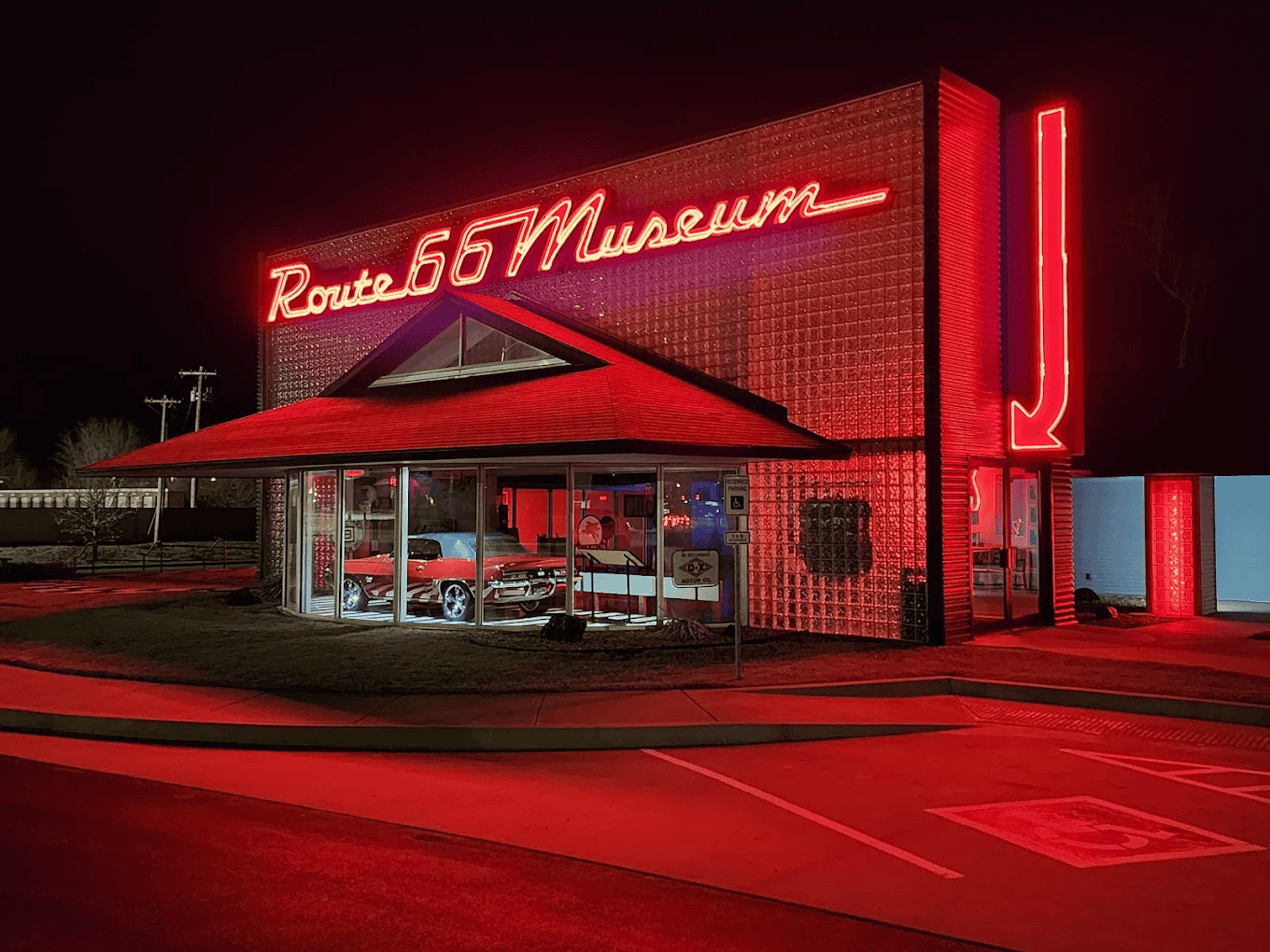
Before this building became a tribute to the Mother Road, it served a different purpose entirely as the Museum of Western Trails.
The transformation made sense. Clinton had already spent decades as a significant stop along the original highway, drawing travelers from across the country who needed gas, food, or a place to sleep before continuing west.
The museum traces the full arc of Route 66, from its official designation in 1926 through its decommissioning in 1985. That’s nearly 60 years of American highway history, distilled into a single well-curated space that visitors consistently describe as more comprehensive than they expected.
“This is one of the best museums I’ve been to honoring Route 66,” one reviewer wrote, having seen quite a few along the way.
Another visitor, who has personally driven the route through Nevada, Arizona, and New Mexico, called the Clinton stop one of the best of the entire journey — a meaningful endorsement from someone with that much comparative experience.
Walking Through the Decades
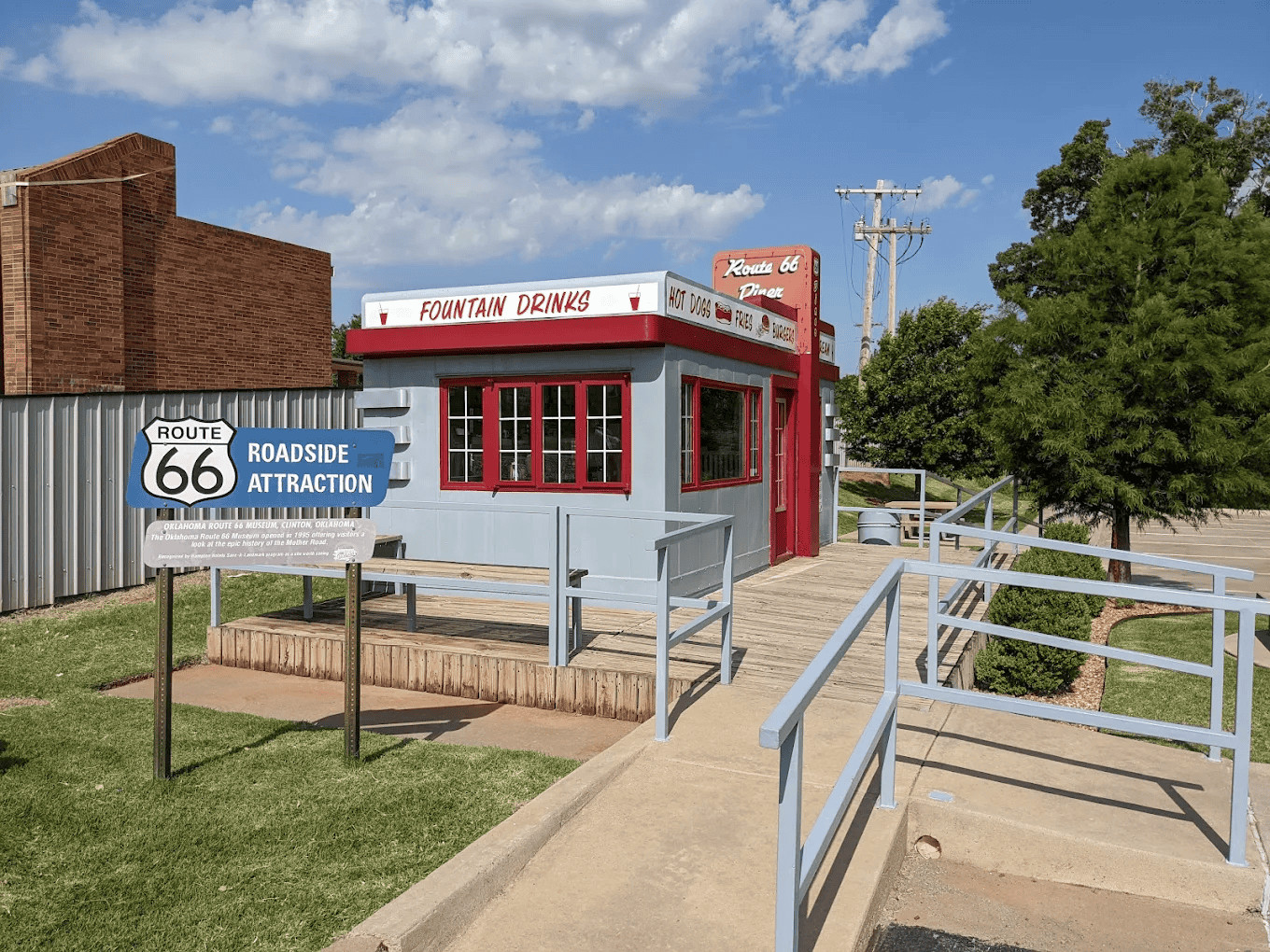
The museum’s design organizes itself by decade, which sounds like a simple curatorial choice but ends up being the thing visitors remember most.
You start in the 1930s, with the Dust Bowl exhibit capturing the desperation that sent thousands of families west along this exact highway in search of a better life. The room carries real weight. It doesn’t sand down the hard parts of that history to make for easier viewing.
Then the tone shifts. As you move into the postwar years, the energy in the exhibits visibly lifts — more color, more confidence, more of the optimism that defined mid-century America.
By the time you reach the 1950s section, reviewers describe something close to electricity. Chrome, bright color, music pulled straight from the era. It’s the decade most people associate with Route 66’s golden age, and the museum clearly knows it.
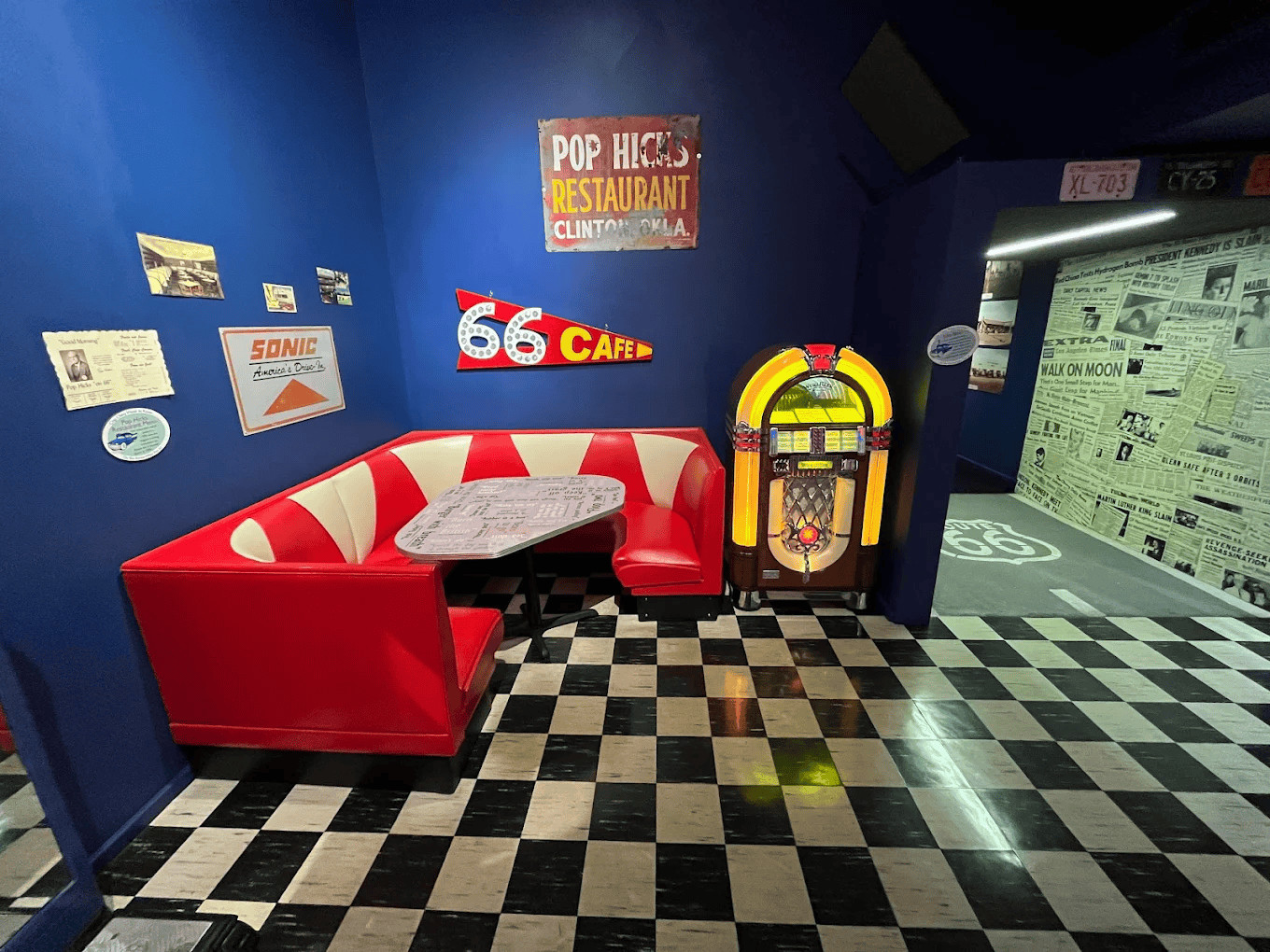
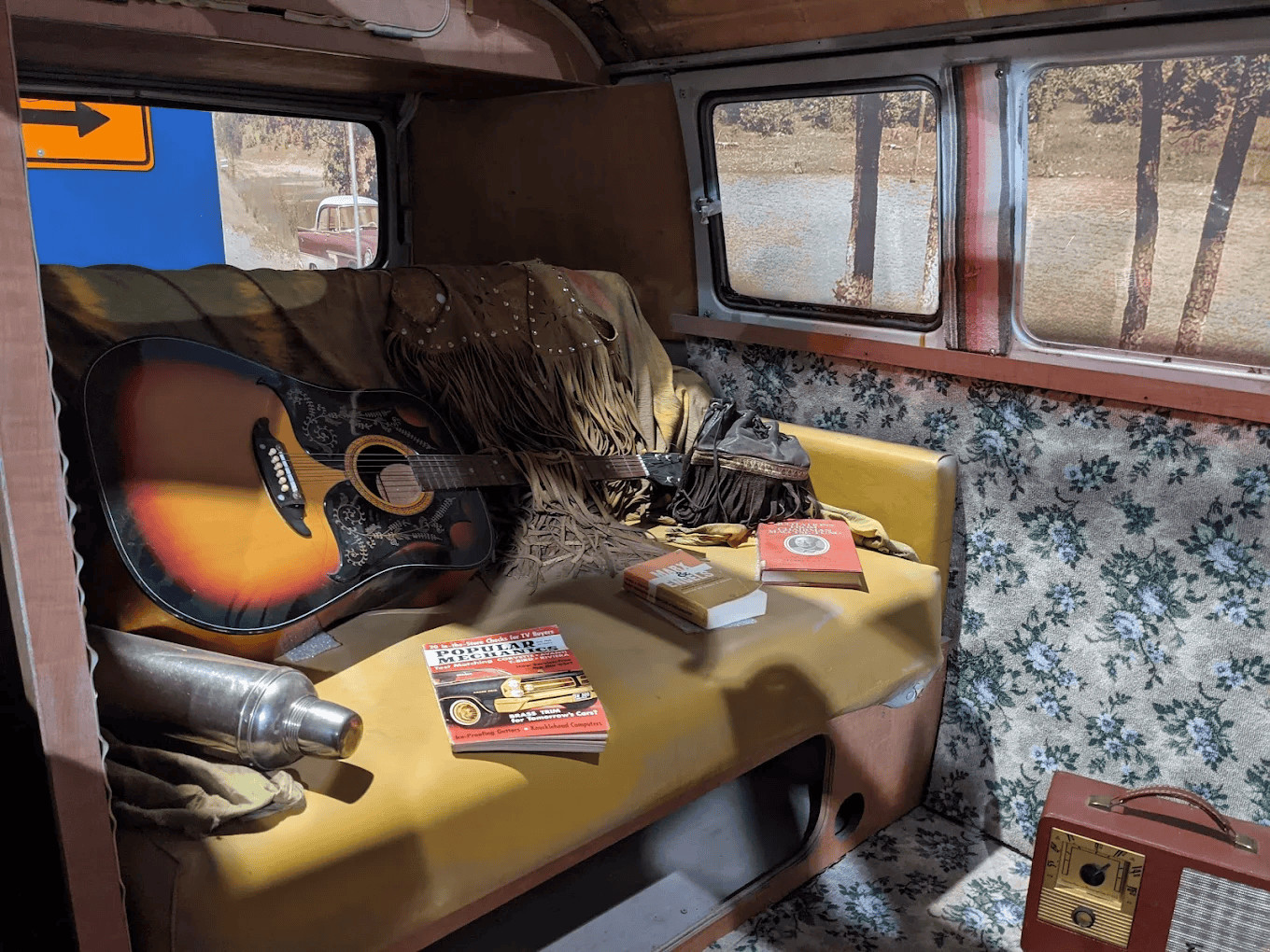
From there, the exhibits carry visitors into the 1960s and 1970s, when the highway’s cultural meaning shifted again — counterculture road trips, changing American attitudes about travel and freedom, and eventually the arrival of the interstate system that would slowly make Route 66 obsolete.
The museum doesn’t shy away from that ending either. It treats the decommissioning with the same care it gives to the highway’s founding.
“This is one review of several due to the amount of photos I have taken,” one visitor wrote, capturing just how much there was to document. She wanted other visitors to take the time to see it in full rather than rushing through.
“Excellent displays link Route 66 to the events that shaped the United States,” another reviewer noted, describing an afternoon spent absorbing mid-20th-century America one room at a time.
One visitor traveling Route 66 from Illinois to Arizona called this particular stop “such a nice spot to explore,” noting the clean, well-organized layout and the staff’s evident knowledge of the subject.
Spending an hour here, by her account, taught her things about the highway’s history she hadn’t expected to learn.
The Cars, the Pumps, and the Neon
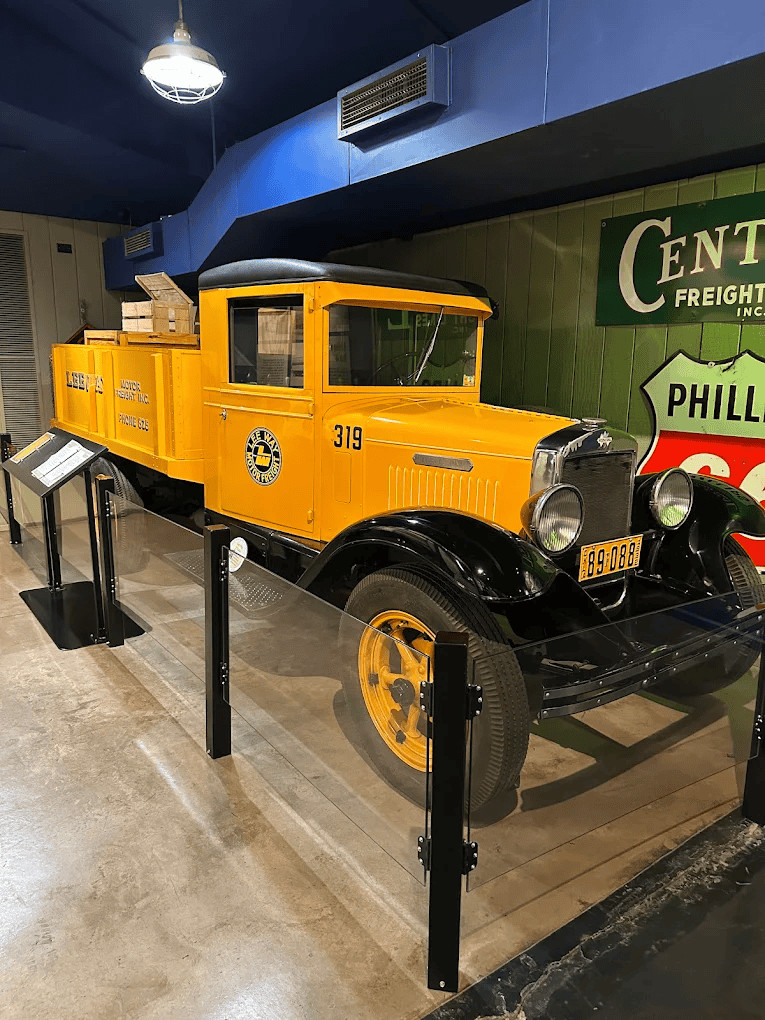
Classic automobiles anchor several of the exhibit rooms, and they are, by a wide margin, one of the most photographed elements of the entire museum.
These aren’t just parked behind glass for decoration. Each vehicle connects to the specific era it represents — a worn 1930s model tells a story of survival and migration, while a gleaming 1950s coupe speaks to postwar prosperity and the simple thrill of having somewhere to go.
Route 66 itself helped build the American obsession with cars as identity rather than just transportation. People didn’t merely drive the highway. They showed off on it — families in loaded station wagons, teenagers in convertibles, the automobile functioning as a rolling statement of freedom and status all at once.
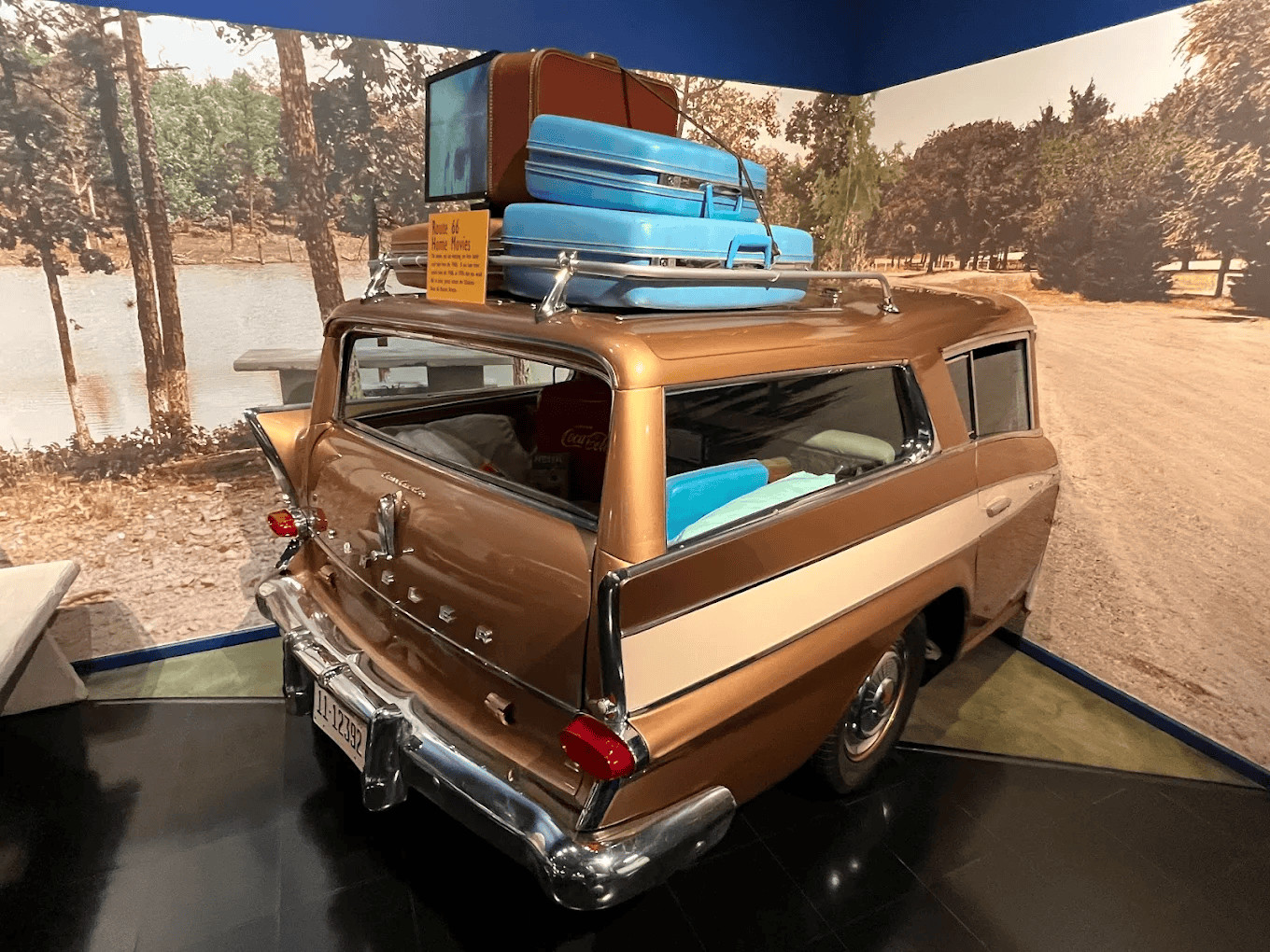
“A few great cars, a lot of dioramas, and a ton of nostalgia,” one reviewer summarized. “Very fun.”
Vintage gas pumps stand throughout the museum like quiet sentinels from an era when filling your tank was something closer to a ritual than a chore.
Alongside them, the neon signage collection captures the visual language that defined roadside Route 66 — every motel, diner, and gas station competing for a traveler’s attention with increasingly elaborate lighting.
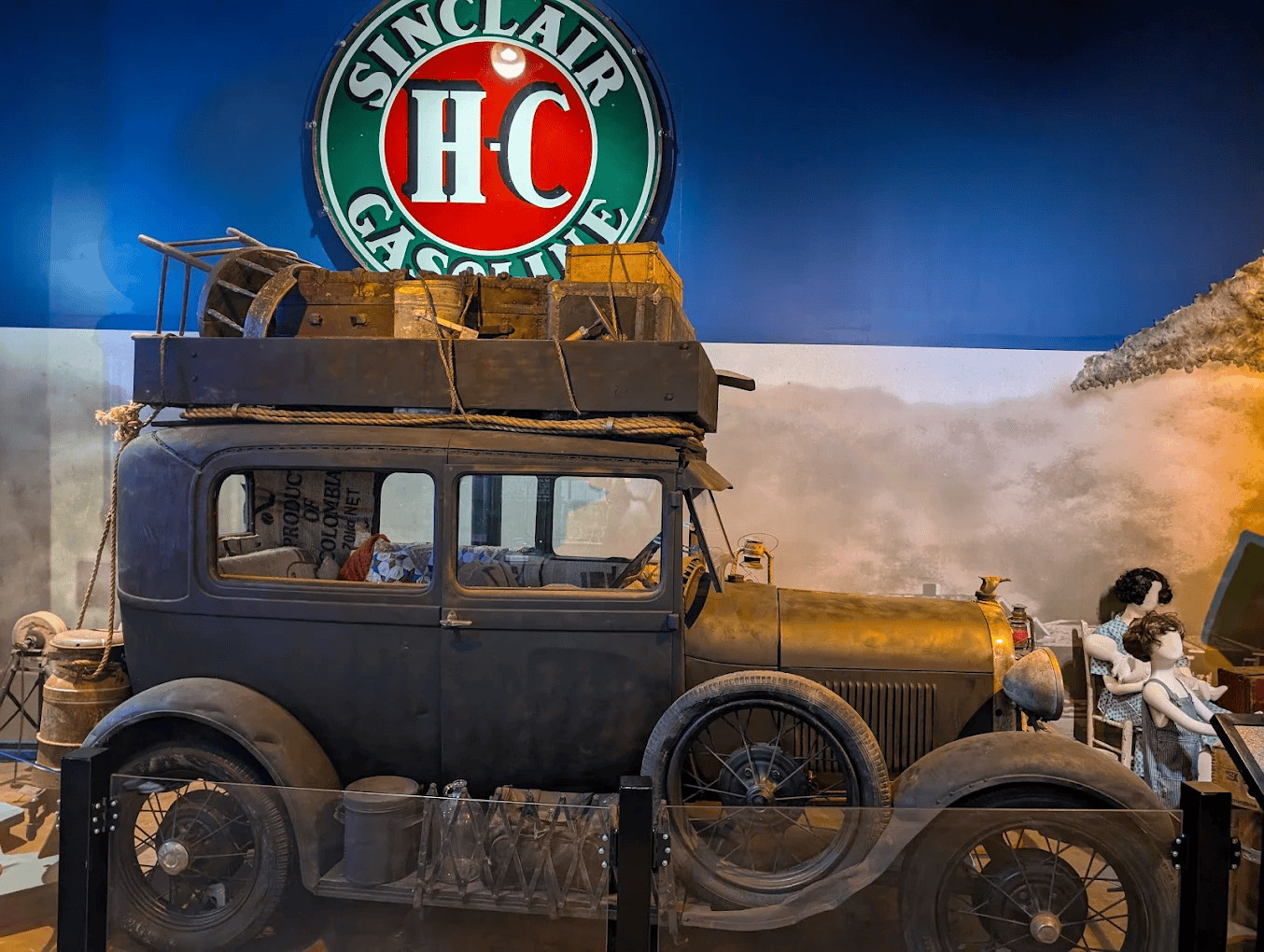
These signs functioned as art and advertising simultaneously, and seeing them preserved and illuminated indoors creates an atmosphere that feels almost cinematic. You can practically picture a vintage convertible pulling up outside for a fill-up.
“About 30 restored vehicles indoors along with hundreds of other antiques,” one visitor counted. “Well worth the admission.”
The Diner You Can Actually Sit In
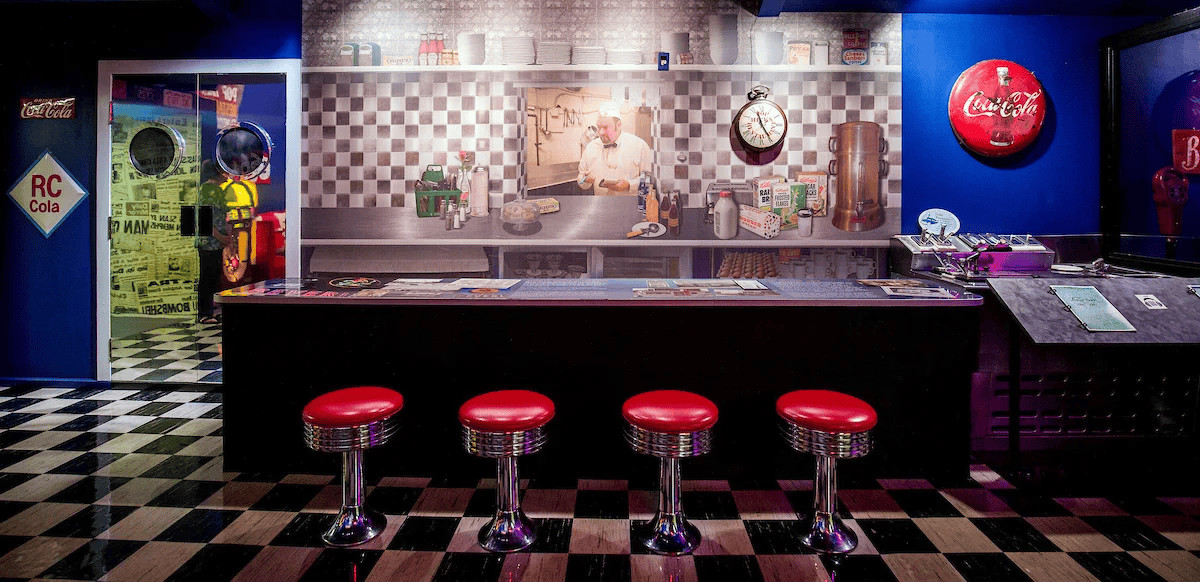
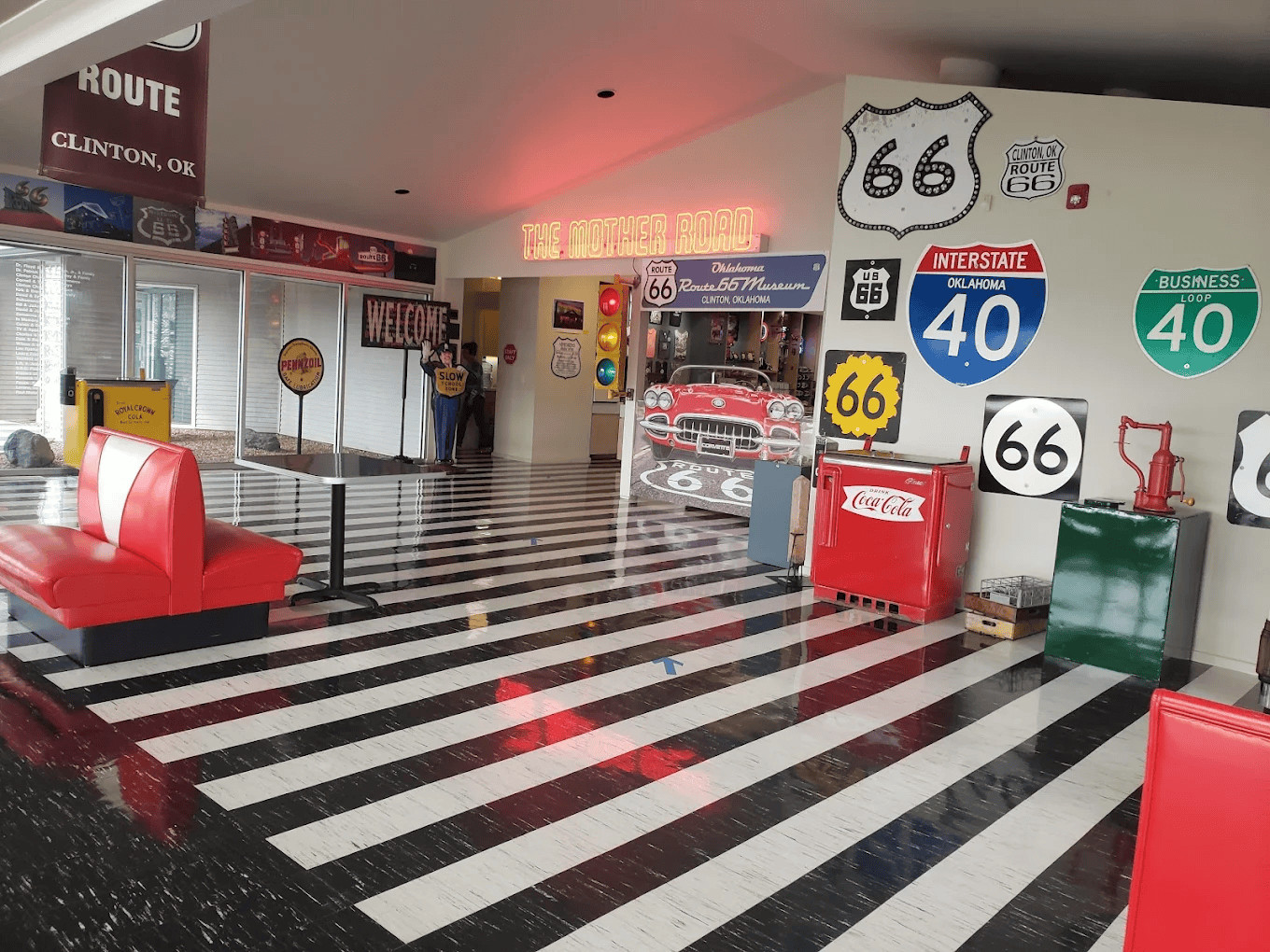
Somewhere between a history exhibit and a daydream, the museum’s recreated 1950s diner occupies its own category entirely.
You’re allowed to sit in the booths. That single detail changes the entire feel of the room — you stop observing the era and start, briefly, occupying it.
The diner recreation leans into period detail: checkered floors, retro booth seating, the kind of design that makes you want to order a milkshake on principle.
Diners like this were genuinely the heartbeat of Route 66 culture, the places where strangers rested together over simple food before continuing in their separate directions.
Clinton’s own Pop Hicks Restaurant represents the real-world version of this exact experience, and the museum’s exhibit honors that legacy with enough conviction that the line between recreation and memory starts to blur.
It is, by most accounts, one of the most-photographed corners of the building.
Music in Every Room
Most museums ask you to look. This one asks you to listen, too.
Each exhibit room comes with music chosen specifically to match its decade. Walk into the 1930s section, and the music carries the appropriate weight. Move into the 1950s room, and something upbeat fills the air before you’ve even processed the shift in lighting and color.
Multiple reviewers specifically call out the audio design as one of the museum’s most effective touches. “Music in each room really put you in that era,” one visitor wrote. Another described it as a detail that “really gets you into the mood of the time.”
Route 66 has a long, genuine relationship with American music — from Depression-era folk songs about westward migration to the rock and roll anthems that later turned the highway into shorthand for freedom itself.
Letting that music actually play throughout the museum isn’t a gimmick. It’s a continuation of the highway’s own cultural history.
“They have music from the time frame for each exhibit, as well as scrapbooks of the time,” one reviewer noted approvingly. The layering of formats — visual, audio, written — is part of what makes the museum feel complete rather than just thorough.
The People Running the Place
If there’s one detail that comes up more than any single exhibit, it’s the staff.
Review after review singles out specific employees by warmth rather than by name — “the two ladies overseeing the museum,” “Pat, who is such a nice lady and knows a lot.”
One “sweet lady” helped a visitor find T-shirt sizes for her entire family with patience that earned its own paragraph in her review.
“The family running the business is absolutely lovely,” one visitor wrote. The museum, it turns out, is genuinely family-run in spirit even though it operates as an official state institution.
It’s the kind of place where the people behind the counter clearly care as much about the subject matter as the visitors do.
The museum’s responses to reviews carry that same personal warmth. Staff remember specific visitors, reference details from their actual conversations, and invite people to stop by again on their way back through town. That’s not a standard customer service script. That’s a small museum staff that genuinely enjoys the job.
“Volunteers very helpful,” reads one of the shorter reviews, and it’s a sentiment that repeats so often across years of feedback that it stops reading like a coincidence.
The Gift Shop
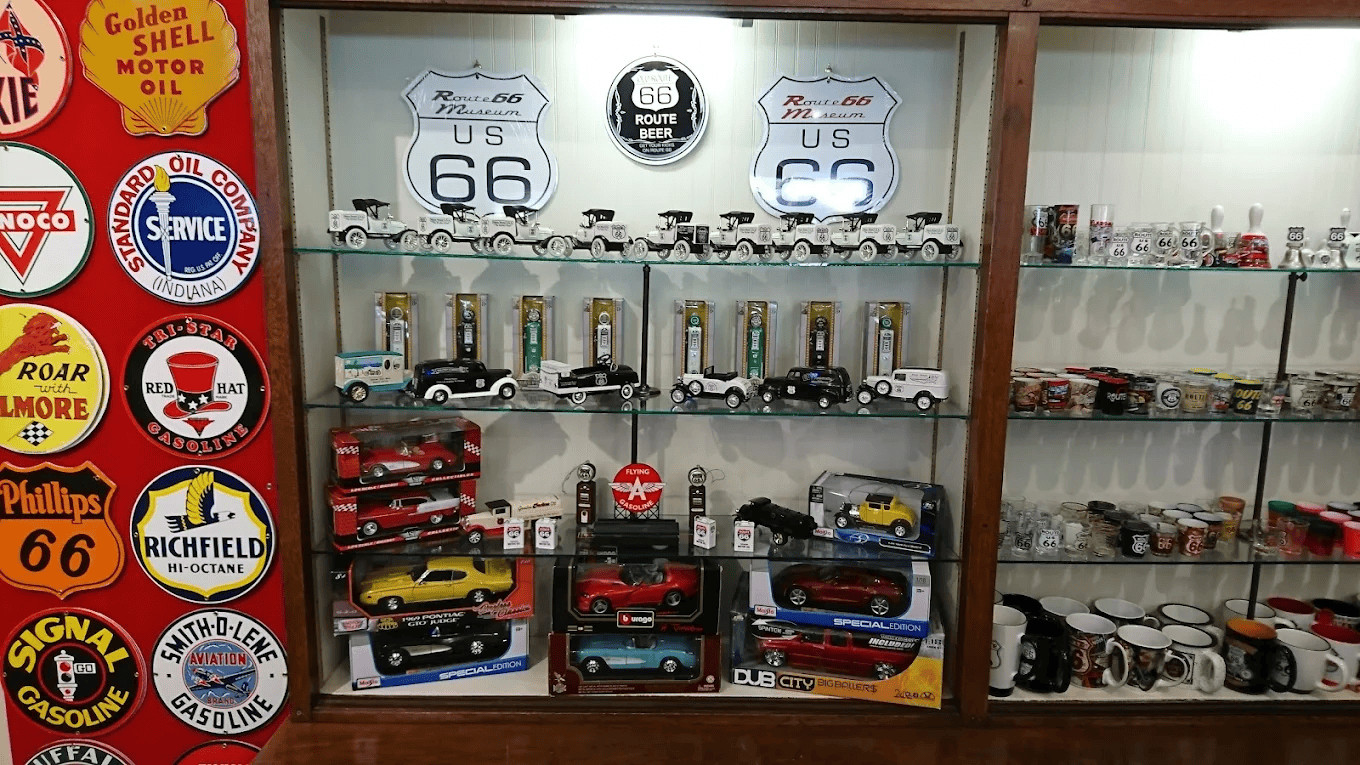
No proper road trip stop is complete without a gift shop worth the detour, and this one earns its reputation.
The shop carries books on Route 66 history, ranging from photographic collections to personal travel memoirs. Route 66-branded signs in various sizes are popular picks for anyone wanting a piece of highway nostalgia for their own garage or den.
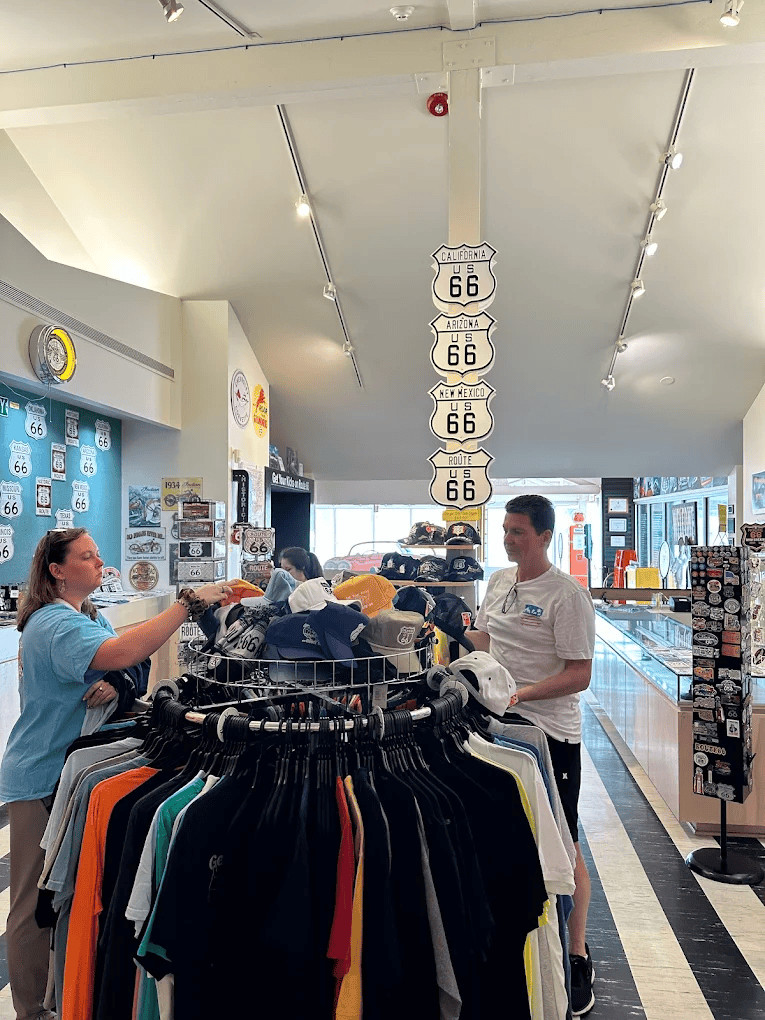
Postcards, magnets, and smaller souvenirs round out the selection for travelers working with a tighter budget or a tighter trunk.
“Wonderful staff and wonderful stepping back in time,” one visitor wrote, having browsed the shop after the exhibits. Another called it “crazy good and not expensive,” which is about as high a compliment as a museum gift shop can earn.
Reviewers consistently note that the shop doesn’t feel like a generic add-on. The merchandise connects directly to what you just experienced inside, which makes browsing feel like an extension of the visit rather than an obligatory final stop before the parking lot.
What to Know Before You Go
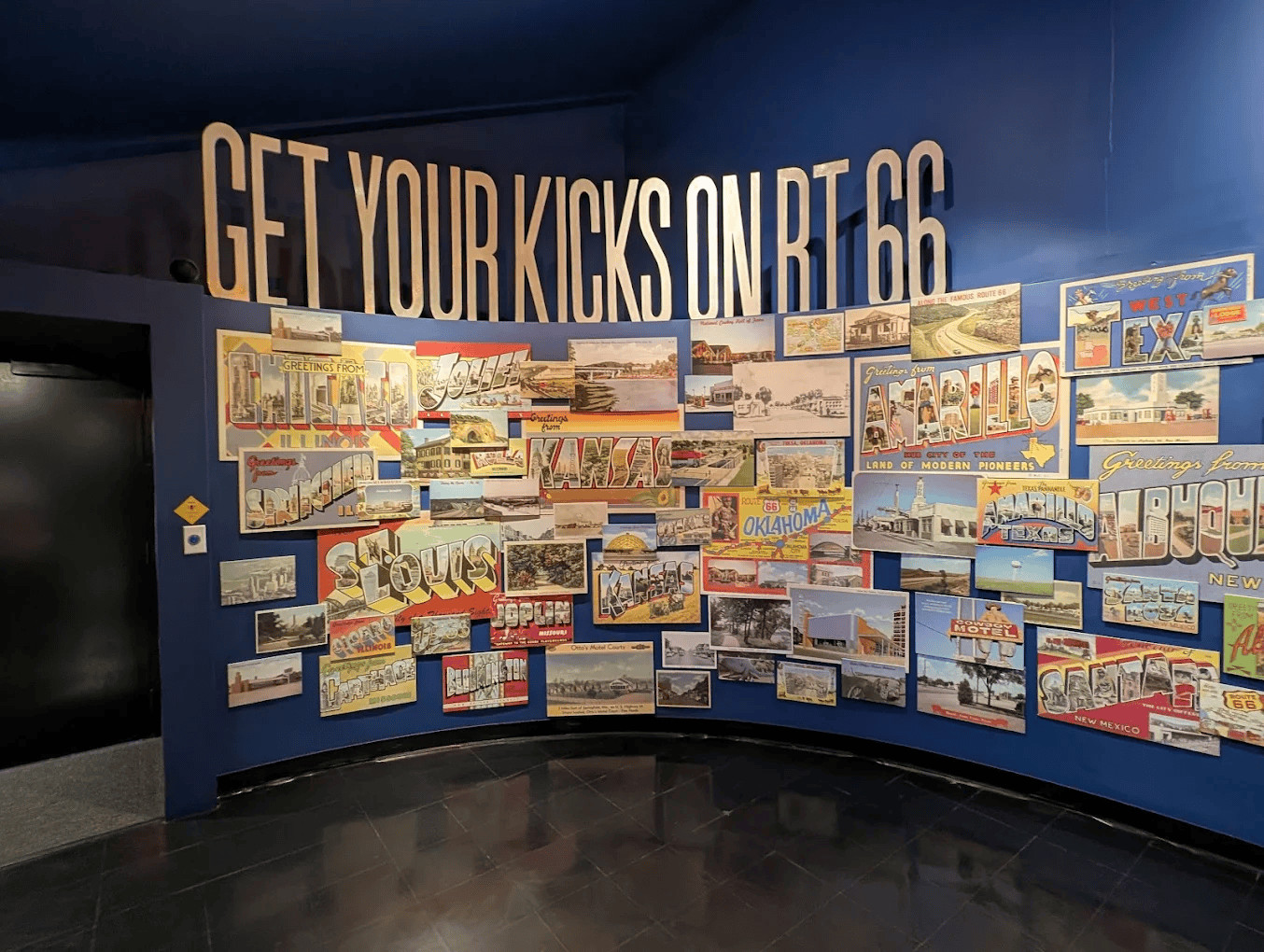
The museum operates as a self-guided walking tour, which means you set your own pace. Some visitors move through in 30 minutes. Others, particularly photography enthusiasts and serious Route 66 history buffs, spend several hours and still feel like they didn’t see everything.
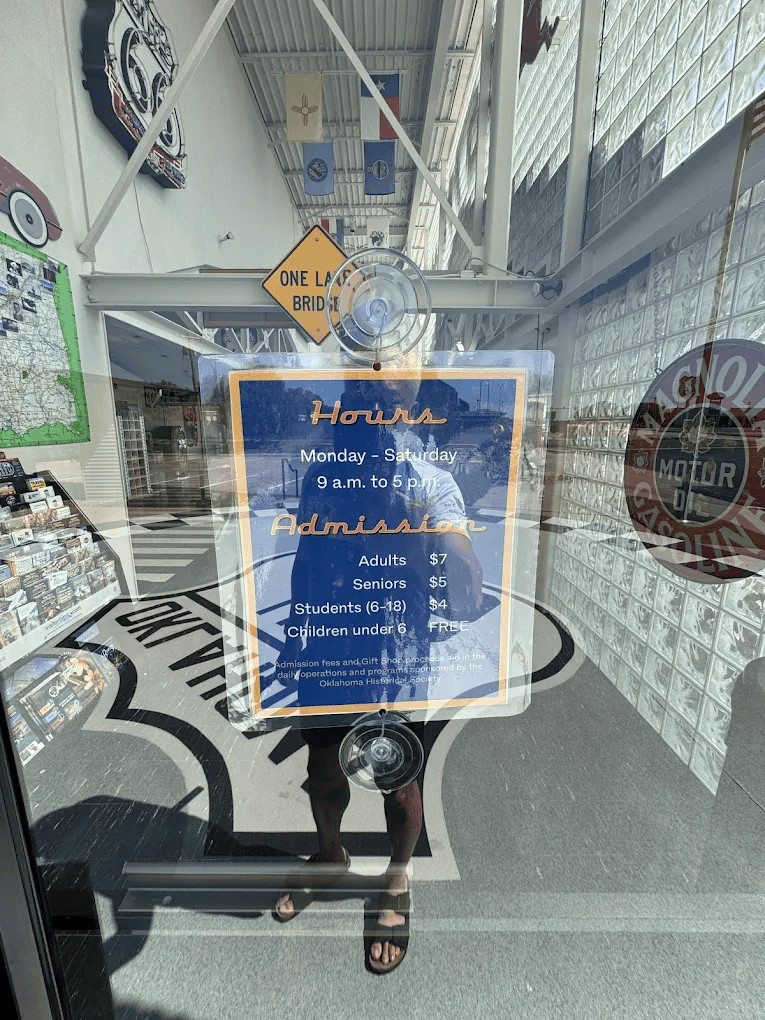
Admission is modest — historically in the range of a few dollars, with senior, military, and child discounts widely available. Multiple reviewers specifically mention that veterans and active military get in free, a detail that comes up with genuine appreciation in review after review.
QR codes placed throughout the exhibits add another optional layer of information for visitors who want to dig deeper into specific artifacts or eras. One reviewer specifically recommended using them to get the full picture of what each room was trying to communicate.
The museum is not open on Sundays, a detail that has caught more than one road-tripper off guard. Several reviewers mention arriving on a Sunday or a holiday only to find the doors locked.
One couple resorted to photographing the building’s exterior signage instead. If you’re planning a stop, check the day of the week before you commit your route.
RV and trailer parking is available, which matters more than it sounds like it should when you’re hauling something large across the state on I-40. One visitor specifically mentioned the convenience of pull-through parking out front while towing a U-Haul.
Getting There
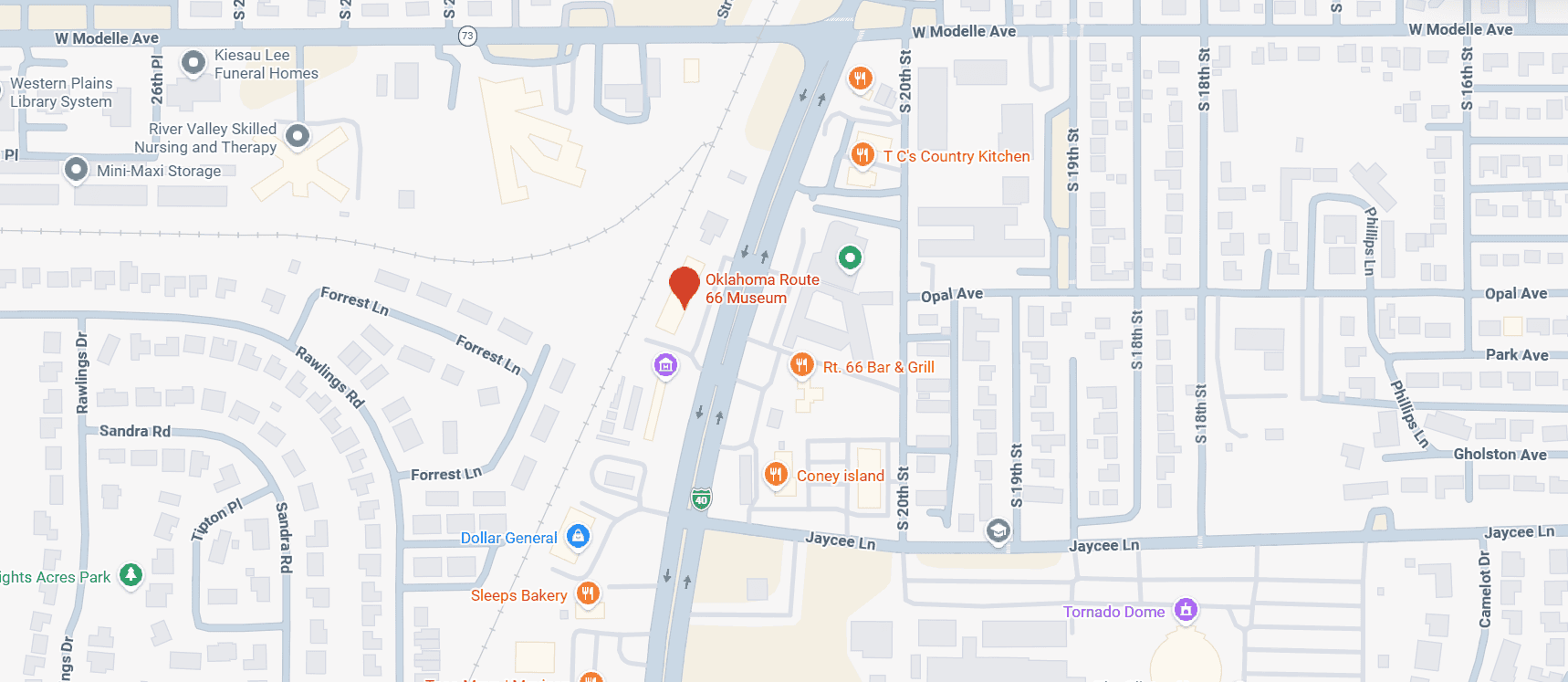
The Oklahoma Route 66 Museum is at 2229 W. Gary Boulevard, Clinton, Oklahoma 73601.
Gary Boulevard itself follows the original Route 66 alignment through Clinton, so the short drive to the museum doubles as its own small time warp — vintage motels, old signage, and stretches of road that still echo the highway’s golden age line the way in.
Clinton sits roughly halfway between Oklahoma City and Amarillo, making the museum a natural midpoint stop for anyone driving I-40 across the state. The location requires no real detour. It’s right there, waiting for the exit you were already planning to take.
One reviewer, comparing it directly to the National Route 66 Museum in nearby Elk City, called the Clinton museum “much more engaging” and noted its sharper, more singular focus on Route 66 itself rather than broader local history.
That’s a meaningful distinction for anyone trying to decide where to spend limited road-trip time.
Whether you’re deep into a full Mother Road pilgrimage or simply taking the next exit because you need a break from the interstate, this is the kind of stop that tends to outperform expectations.
The cars, the neon, the diner booths, and the music all work together to make a piece of American highway history feel like something you can actually walk into.
Route 66 has inspired songs, films, novels, and nearly a century of personal stories from people who drove it for entirely different reasons across entirely different decades.
A small museum in western Oklahoma manages to hold space for all of those reasons at once — the desperation and the joyride, the postwar optimism and the eventual decline, the neon glow and the quiet decommissioning that followed.
That’s a lot of American history for one building just off an interstate exit. Most people don’t expect to find it there. That’s exactly why it’s worth the stop, and exactly why so many road-trippers leave with far more photos than they planned to take.
You came for a quick stretch of the legs. You’ll probably stay for the whole afternoon.
More stories
Share this story